Consultation, full disclosure, and an environmental audit: Nuclear Free Local Authorities’ triple demand of Australian government over nuke sub waste dump down under

the NFLAs have raised our fundamental objections to any siting of nuclear powered, and possibly nuclear armed, submarines at Garden Island as a violation of Australia’s legal commitments as a signatory to the Treaty of Rarotonga, which established a South Pacific nuclear free zone. The proposal will increase military tensions with China and make Rockingham a target for a counterstrike should war break out.
a White House paper states that Australia ‘has committed to managing all radioactive waste generated through its nuclear-powered submarine program, including spent nuclear fuel, in Australia’.
NFLA 22nd Nov 2024
With an international outlook and solidarity in mind, in response to a consultation by the Australian Federal Government, the UK / Ireland Nuclear Free Local Authorities have posted their objections to plans to station nuclear-powered subs and establish a waste dump in Western Australia.
As part of the AUKUS military pact established between Australia, the United Kingdom and United States, Australia intends to acquire a fleet of nuclear powered submarines, powered by reactors built by Rolls-Royce in Derby, as well as permitting Royal Navy and United States Navy nuclear submarines to operate from Australian naval bases.
In March 2023,the AUKUS Nuclear-Powered Submarine Pathway was announced by the three partners centred on the HMAS Stirling Naval Base on Garden Island in Western Australia’s Cockburn Sound. The Australian Government has allocated AUS $8 billion for base improvements.
Under the AUKUS ‘Force Posture Agreement’, from 2027, US Virginia Class submarines are to be stationed here, with British Astute submarines joining them on rotation in the 2030’s. Around this time, the base will also become the home port of Australia’s first nuclear powered submarines, with three and up to five Virginia Class submarines being purchased from the US (subject to Congressional approval).
The Federal Government has passed new legislation to allow for the domestic storage of nuclear waste from all these submarines, and in July after a limited consultation the Australian Radiation Protection and Nuclear Safety Agency (ARPANSA) issued a licence to the Australian Submarine Agency to prepare a nuclear waste storage site at the base. Without it, visiting United States and British nuclear-powered submarines could not undertake maintenance in Australia, so the nuclear dump is seen as essential to the pact.
The extent and nature of the waste to be stored, and for how long it would be stored, remains unclear. The Conservation Council of Western Australia (CCWA) complained to the regulatory authorities that: ‘The consultation documents provided no details about the volume of waste or how long it would be stored at the island. They also made confused and misleading claims about the types of low-level waste that would be accepted’.
Whilst regulators insist that it would be low-level waste, this claim has been refuted by critic Australian Green Senator David Shoebridge who said the Federal legislators were told in a Senate Estimates Hearing by the Australian Submarine Agency that it would include intermediate waste. It is also contradicted by a White House paper which states that Australia ‘has committed to managing all radioactive waste generated through its nuclear-powered submarine program, including spent nuclear fuel, in Australia’.
This waste would include US Virginia-class submarine reactors, which each weigh over 100 tonnes and contain over 200 kilograms of highly enriched uranium. Ian Lowe, an expert on radiation health and safety, told The Conversation in March 2023 that when the first three AUKUS submarines are at the end of their lives — 30 years from when they are commissioned — Australia will have 600 kilograms of ‘spent fuel’ and ‘potentially tonnes of irradiated material from the reactors and their protective walls’. The fuel being weapons-grade will require ‘military-scale security’.
Australian campaigners have also complained bitterly that the submarine base and the storage site are located in the wrong place.
Mia Pepper, Campaign Director at the CCWA, said that ‘Garden Island in one of the most pristine and diverse environments in the Perth region’ and that ‘This plan for both nuclear submarines and nuclear waste storage will inevitably impact access to parts of Cockburn Sound and Garden Island’.
And when responding to ARPANSA, the CCWA stated that the facility is ‘within an area of dense population’ and in the vicinity of ‘important and diverse heavy industrial facilities, including a major shipping port’. The CCWA also raised the ‘unaddressed community concerns regarding an accident’ on the site and complained about the ‘lack of transparency and rigour’ throughout the regulatory process.
Nor is there any long-term solution to storage. Garden Island would be seen as a temporary store, but it is unclear for how long. A Federal Government proposal to establish a nuclear waste dump at Kimba was resisted by local Indigenous people who launched a successful legal challenge to defeat the plan.
In its response to the consultation being conducted by the Australian Department of Climate Change, Energy, the Environment and Water, the NFLAs have raised our fundamental objections to any siting of nuclear powered, and possibly nuclear armed, submarines at Garden Island as a violation of Australia’s legal commitments as a signatory to the Treaty of Rarotonga, which established a South Pacific nuclear free zone. The proposal will increase military tensions with China and make Rockingham a target for a counterstrike should war break out.
We also called on the Federal Government to conduct a proper consultation and make a full disclosure of the facts, and requested that officials conduct a full environmental audit of the likely impact of the waste storage site…………………………………………. https://www.nuclearpolicy.info/news/consultation-full-disclosure-and-an-environmental-audit-nflas-triple-demand-of-australian-government-over-nuke-sub-waste-dump-down-under/
Plan to dispose of nuclear waste from Aukus submarines unanimously rejected by Adelaide council
City of Port Adelaide Enfield’s mayor says she hadn’t received correspondence about storage or disposal before or after bill passed federal parliament
Guardian Petra Stock, 18 Nov 24
Plans to dispose of low-level nuclear waste from Aukus submarines at an Adelaide naval facility have been unanimously opposed by the local council for the area, who say they weren’t consulted.
The Osborne naval shipyard, 25km north of Adelaide CBD, and HMAS Stirling at Garden Island 50km south of Perth in Western Australia, have both been designated as “radioactive waste management facilities” for nuclear waste from Aukus submarines under the Australian naval nuclear power safety bill, which passed parliament in October.
Last week, the City of Port Adelaide Enfield – responsible for the area surrounding the Osborne shipyard – voted to unanimously oppose the storage and disposal of radioactive waste at the site.
Its mayor, Claire Boan, said council had been briefed on aspects of the Aukus project but it had not received any correspondence or communication about management and disposal of nuclear waste at the site.
“While the decision-making regarding this is out of the control of the council, we will continue to advocate for our community and lobby for community consultation throughout the process,” she said.
Rex Patrick, a former independent senator for South Australia, said the situation highlighted the lack of consultation and transparency regarding Aukus nuclear waste.
“Albanese called for Dutton to disclose where he was going to put his nuclear power reactors, and yet there’s been complete secrecy around the entire process associated with where they’ll put the high-level waste from naval reactors,” he said.
No public announcements have been made about the site selection or consultation process for dealing with the high-level nuclear waste associated with the Aukus submarines, which the government agreed Australia would dispose of in March last year……………………….. https://www.theguardian.com/environment/2024/nov/18/plan-to-dispose-of-nuclear-waste-from-aukus-submarines-unanimously-rejected-by-adelaide-council
Adelaide residents blindsided by decision to store AUKUS nuclear waste at submarine shipyards
The act allows radioactive waste to be stored at both sites but does not define what level
the legislation was also ambiguous about the disposal of nuclear material from UK and US nuclear submarines.
By Angelique Donnellan 7.30 ABC
In short:
Federal parliament has passed legislation that allows for nuclear waste to be stored and disposed of at a shipping yard in Adelaide.
Residents said they were not consulted or told of the plan.
What’s next?
Construction of nuclear submarines is expected to start in Adelaide by the end of the decade.
The $368 billion AUKUS pact is promising thousands of jobs and the return of submarine construction to South Australia.
But residents have just learned the deal also means nuclear waste will be stored on their doorstep.
“It’s madness. It’s not only close to a residential area, but it’s right on a waterway,” Adelaide resident Eileen Darley told 7.30.
Last month legislation quietly passed the federal parliament that will allow for the storage and disposal of nuclear waste at the Adelaide shipyard in Osborne, which is 25 kilometres north-west of the city’s CBD and near the popular seaside suburb of Semaphore and historic Port Adelaide.
Residents said it was the first time they heard about plans for the waste facility.
Nuclear submarine construction at Osborne is expected to start by the end of the decade.
“There’s 30,000 people that live in this area,” Ms Darley, who runs the local action group Port Adelaide Community Opposing AUKUS, said.
“All the childcare centres, all the schools and the families that live in this area, but also waterways that feed the mangroves, that is a dolphin sanctuary, and so forth.
“None of us in this area have been consulted about it at all.”
The Osborne shipyard is in federal Health Minister Mark Butler’s safe Labor electorate of Hindmarsh.
In an interview with 7.30, he said residents would be consulted closer to when the facility would be established but stated the waste facility would go ahead even if residents did not want it.
“This is going to happen,” he said.
“The government and parliament have decided that the future defence strategy of the country will involve nuclear-propelled submarines.”
Indigenous elder criticises government’s ‘sly and conniving’ moves
The state Labor government is in lock-step with the Commonwealth on AUKUS but community concerns are growing.
The Port Adelaide Enfield Council has resolved to oppose any nuclear waste storage or disposal at Osborne and is calling for widespread community engagement.
Local resident and Indigenous elder Margaret Brodie said she was disappointed the government legislated the facility without people having a say. The shipyard is on the traditional lands of the Kaurna people.
“It’s sly and conniving. That’s how I feel about it,” she told 7.30.
“As an Indigenous woman I think I get used to it, government being underhanded, not telling us anything, or not asking.
“If you talk about closing the gap, they’re not going to close the gap by doing things like this.”
The legislation declares the Osborne Shipyard as well as the HMAS Stirling naval base near Perth as designated naval nuclear propulsion facilities.
The act allows radioactive waste to be stored at both sites but does not define what level……………………………………………………………………………
Ms Darley was sceptical.
“It does not allay our concerns to hear that the government is saying that it’s temporary and it’s low level,” she said.
“We’re the people who are most affected if something goes wrong.”
The Naval Nuclear Power Safety Regulator, which reports to the defence minister, would grant the licence for the operation of the waste facilities.
Waste from UK and US subs
Greens senator David Shoebridge told 7.30 the legislation was also ambiguous about the disposal of nuclear material from UK and US nuclear submarines.
“One of the key amendments we wanted was to prohibit the storage of high-level nuclear waste from any foreign country, the United Kingdom or the United States, and that was aggressively resisted by both the government and the opposition,” he said.
“Neither the UK or the US have any permanent solution for their nuclear waste, and the UK is the one that’s in the most trouble … and they have seen with AUKUS a potential sucker down here in Australia who’s literally put their hand up and said, ‘Yeah, we’ll take some of that. We’ll help out.'”
There is also opposition to the waste facility at Perth’s naval base, which needs to be up and running as early as 2027 when one UK nuclear submarine and up to four US boats start regular rotations.
But Mr Butler stated it would also only hold low-level nuclear waste taken from UK or US submarines which came to Australia.
“Intermediate and high-level waste [from overseas] will not be stored in Australia,” he said.
………………………………………………………………………………………………………………………………………………………………………………………………………………. In South Australia, the Port Adelaide Community Opposing AUKUS said it was prepared for a fight ahead of next year’s federal election.
“How far are we prepared to go? Well, I think we’re in it for the long haul. That’s for sure,” Ms Darley said.
“We don’t want our children, our grandchildren, to have to deal with this in the long run.
“We’ll definitely be making this an election issue.” https://www.abc.net.au/news/2024-11-18/aukus-nuclear-waste-to-be-stored-adelaide-suburbs/104605640
Nuclear waste management could add billions to electricity supply costs
Jennifer Dudley-Nicholson, Nov 8, 2024 https://reneweconomy.com.au/nuclear-waste-management-could-add-billions-to-electricity-supply-costs/
Handling and storing nuclear waste could add significant costs to Australia’s future energy bills, an inquiry has heard, with Canada set to spend $26 billion to safely store depleted fuel from its reactors.
The cost and time to build nuclear power plants in Australia also remained a mystery, two academics told the Nuclear Power Generation inquiry on Thursday, including the demands of small modular reactors proposed for two states.
The testimony comes on the third hearing of the nuclear energy inquiry, created in October after federal Liberal leader Peter Dutton announced plans to establish nuclear power plants in seven Australian locations after the next election.
But the details of an Australian switch from a renewable energy future to one powered by nuclear plants remain unclear, with the inquiry set to probe financial, technical, legal and environmental impacts of a change.
York University environmental studies Professor Mark Winfield told MPs the Canadian experience had been a troubling and expensive one, with its seven nuclear plants now reduced to four in operation.
Canada also faced a bill of $26 billion to handle, move and safely store wasted nuclear fuel, he said, of which the country had three million bundles and produced between 85,000 and 90,000 each year.
The bundles, he said, were about the size of a small log.
“It’s physically hot when it comes to the reactor, it’s also highly radioactive when it comes out of the reactor, the swimming pools are supposed to be for the first 50 years or so, while it cools down a bit,” Prof Winfield told the committee.
“The nuclear waste management organisations planning assumption then is that long-term management or disposal would need to occur on a time frame of a million years.”
Questions also remained about the price of new-build nuclear plants, the inquiry heard, and Princeton University senior research scientist Dr Chris Greig said naming a price for small modular reactors was a tricky challenge.
Small modular reactors have been tipped for sites in South Australia and West Australia under the coalition’s proposal, with 2035 as a potential start date.
“The people who are ordering them right now, Dow being one of them and Google and Microsoft and OpenAI and Meta, they don’t know what the cost is going to be yet,” he said.
“They have targets but, frankly, none of us have any confidence in those targets.”
The time it would take to build small reactors was also challenging to estimate, he said, with the most optimistic estimates seeing plants operating in the early 2030s…………………………………………………..
The nuclear power inquiry is expected to issue recommendations by April next year.
Low-level nuclear waste from submarines to be stored at Osborne, South Australia
Adelaide Now, 30 Oct 24
Legislation passed will see a “radioactive waste facility’’ built in an Adelaide suburb, but federal and state ministers maintain it will only house “low level’’ material. Have your say.
Low-level radioactive waste generated by the building of the AUKUS nuclear submarines will be stored at Port Adelaide after legislation passed the federal parliament allowing for the construction of a “waste management facility’’.
However federal Defence Minister Richard Marles and his state counterpart Stephen Mullighan both denied any “intermediate’’ or “high-level” waste will be stored at the Osborne submarine facility, in Adelaide’s western suburbs
A spokesperson for Mr Marles said “submarine construction, test and commissioning activities planned for Osborne will generate small amounts of low-level radioactive waste’’, including personal protective equipment.
“This low-level radioactive waste will need to be managed and temporarily stored in a licensed facility,’’ the spokesperson said. “No intermediate-level waste or high-level radioactive waste (spent nuclear fuel) will be managed or stored in the facility.’’
Both the Albanese Labor government and the Peter Dutton-led Liberal opposition voted in favour of the Australian Naval Nuclear Power Safety Bill. The Bill ‘’regulate activities relating to conventionally armed, nuclear powered submarines’’.
Do you support a “radioactive waste facility’’ being built at the Osborne submarine base
Yes: It’s the right spot for it
69 %
No, I don’t want it anywhere in SA
31 %
563 votes
It names Osborne as a “designated zone’’ where “a facility for managing, storing or disposing of radioactive waste’’ could be built. The legislation does not specify what level of radioactive waste could be stored.
The legislation has sparked a community backlash, with a change.org petition started by former Liberal candidate Jake Hall-Evans already reaching almost 4000 signatures.
Mr Hall-Evans said there had been a lack of transparency about the possibility of a nuclear waste dump at Osborne.
“The people of Port Adelaide were promised submarine jobs, not a nuclear waste dump,’’ Mr Hall-Evans said.
He said Australia had struggled to find a suitable location for low-level radioactive waste, with a proposed facility at Kimba on the state’s Eyre Peninsula knocked back last year.
Premier Peter Malinauskas also opposed the dump at Kimba.
South Australian Greens Senator Sarah Hanson-Young said the new law was a “dangerous disaster for our state’’.
“This is toxic for South Australia,’’ Ms Hanson-Young, who is holding a nuclear forum at the Burnside Town Hall in the marginal seat of Sturt on Thursday.
“Peter Dutton not only wants nuclear reactors across Australia – he wants Adelaide to be an international dumping ground for nuclear waste,’’ she said.
A spokesperson for Port Adelaide Enfield Council said it had “not been consulted or advised of any licences being approved for a radioactive or nuclear waste storage site at Osborne’’.
Defence Minister Stephen Mullighan said there was “no proposal or capacity for nuclear waste, including low-level waste to be stored in the long term’’. term’’.
Making “Australia a Global Nuclear Waste Dump”: Senator Shoebridge on Labor’s Latest Betrayal

This is purely designed to make AUKUS work, to make Australia a global nuclear waste dump, starting with waste from the UK and US nuclear submarines.
surrender of our sovereignty: the surrender of our national interest to these so-called great powerful friends.
It is an incredibly dangerous pathway, but it is one that we can still step aside from.
SYDNEY CRIMINAL LAWYERS, by Paul Gregoire, 15 Oct 2024
In passing the Australian Naval Nuclear Power Safety Bill 2024 on Thursday last week, the Albanese government quietly got a proposition over the line in this country that had been resisted for decades and that was in the passing of laws that facilitate the imposition of nuclear waste dumps.
Greens Senator David Shoebridge stepped out of the chamber to announce this straight after the bill had passed and he decried the fact that both majors shut down debate on the divisive laws and then promptly jammed them through with bipartisan approval.
Of course, the official line is that the nation needs to be able to store its own nuclear waste that will be produced by the eight nuclear-propelled submarines the AUKUS Pillar I provides that the nation will be receiving over the next four decades or so. However, this acquisition is not guaranteed.
And as Shoebridge has made clear in his campaigning against turning this continent into a site for nuclear waste dumps, the framework that’s been enacted provides that the US and the UK will be dumping their nuclear waste at multiple sites here and other nations could join in the future.
AUKUS dumping ground
Defence minister Richard Marles explained on introducing the laws into parliament that they’re the “second legislative step of Australia’s conventionally armed, nuclear-powered submarines”, and the laws are “specifically focused on… ensuring Australia maintains the highest nuclear safety”.
Under the new laws, regulated activities – nuclear facility, submarine and material activities – are regulated to “designated zones”. Two such zones have already been passed into law, one in WA and the other in SA, while a designated zone can further be any other area in Australia that’s chosen.
The bill also establishes NNP (naval nuclear propulsion) facilities, which are purpose-built facilities for constructing AUKUS submarines and they will further serve as radioactive waste management facilities as well. And this will all be taking place within the designated zones.
And besides a last-minute amendment to prevent the disposal of spent fuel from a submarine that is not Australian, Shoebridge warns that the major parties have swung open the door for this nation to take on the low, intermediate and high-level nuclear waste of the US and the UK going back years.
Opening the floodgates
As the senator explained in an interview in April, despite the US and the UK having nuclear industries going back half a century, neither of them have come up with a permanent solution for their high-grade military nuclear waste. Indeed, the US has only managed this for their intermediate range.
In addressing the 53rd weekly protest for Palestine and now Lebanon on Gadigal land in Sydney last weekend, Shoebridge further warned that the tone of the federal Liberal opposition has become ever more warlike of late, in terms of its support for Israel, which is ensuring Labor slides to the right.
Sydney Criminal Lawyers spoke to Greens Senator David Shoebridge about his insistence that the nation is not yet bound to AUKUS, although it’s getting quite close, as well as the implications of the imposition of nuclear waste dumps and his warning about the Coalition’s new low in war posturing…………………………..
Senator Shoebridge:
What we saw was Albanese, Labor and the Dutton Coalition join up to do what’s known in parliamentary terms as a guillotine: to just ram this through parliament without any debate. And this is after a year of community resistance.
This is purely designed to make AUKUS work, to make Australia a global nuclear waste dump, starting with waste from the UK and US nuclear submarines.
This is going to be arriving in a town or city near you, in the next few months and years because of this legislation they rammed through.
In the next few years, we’re going to be receiving nuclear waste from visiting US nuclear submarines, which can do repairs, starting first at Garden Island off the coast of Fremantle, but also, at Osborne Naval Facility, just south of the Adelaide CBD.
This law greenlights working on those nuclear submarines at both of those facilities and then receiving and storing waste.
But it also means taking waste from those decommissioned UK and US submarines, and they’ve each got dozens and dozens of old submarines rusting away.
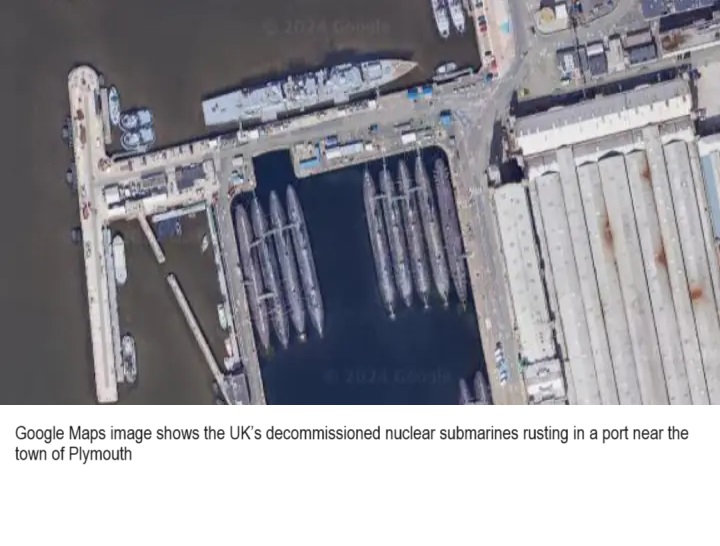
What the Albanese government has done – and they’ve held Peter Dutton’s hand on this journey all the way through – is work around decades and decades of First Nations resistance to nuclear waste dumps and ram this legislation through under the shadow of AUKUS.
I can tell you now, there are people inside Defence, and there are people inside Labor and the Coalition, who desperately want to turn nuclear waste dumps into broader civilian waste dumps and really use this to open up the nuclear industry across this country.
It has been deceitful from day one. When we pointed out last year that the legislation, as initially drafted, allows for the importation of any nuclear waste, even the high-level waste, which is the equivalent of weapons-grade uranium from the UK and US subs, we were attacked by defence minister Marles.
The minister called it a “Green conspiracy” when we pointed out that the law provided that. We won that argument. He had to concede that the bill, as it was drafted, allowed for any nuclear waste and that is partly why we got that amendment up to at least exclude one form of nuclear waste: nuclear fuel.
But from day one it has been deceitful. From day one it has been a stalking horse, using the cover of AUKUS to literally open up this country for the dumping of a global nuclear waste stream.
As more people find out about what this is, people are getting angrier and angrier, but we need to convert that into political mobilisation to undo this.
………………………………………………………………………………………………………………………………………………………………….. If we get to a dystopian future, where we start receiving thousands of tonnes of other countries’ nuclear waste, there will be no path back from that. They will never accept that waste back.
That’s the kind of cruel bargain that the Albanese government is opening up.
I say this especially for First Nations peoples, who have been protecting this continent for tens of thousands of years. This is a particularly cruel bargain that the Albanese government is opening up.
I remain incredibly hopeful that the Australia public are increasingly seeing this for what it is.
Each time political support for AUKUS is tested, it falls and falls. And that is because people can see that we have a political class in both the Labor Party and the Coalition, who are willing to sell out our national interest – poison our land, poison our water – because they’re so keen to follow the US lead and be seen as a sub-imperial power, as a deputy sheriff, they can rely upon.
This latest piece of legislation, that opens up this country to the dumping of US and UK nuclear waste, is just the most recent example of that surrender of our sovereignty: the surrender of our national interest to these so-called great powerful friends.
It is an incredibly dangerous pathway, but it is one that we can still step aside from. https://www.sydneycriminallawyers.com.au/blog/making-australia-a-global-nuclear-waste-dump-senator-shoebridge-on-labors-latest-betrayal/?fbclid=IwY2xjawF72VJleHRuA2FlbQIxMQABHcYCk8aMc9ghXrB4wqCjiVYrmvoQtdGFca2r7nnmWrxwp8Zl17RummiVUw_aem_6KEWHWbagHvCNwR1mF-lWQ
Albanese and Dutton team up on toxic AUKUS nuclear waste deal
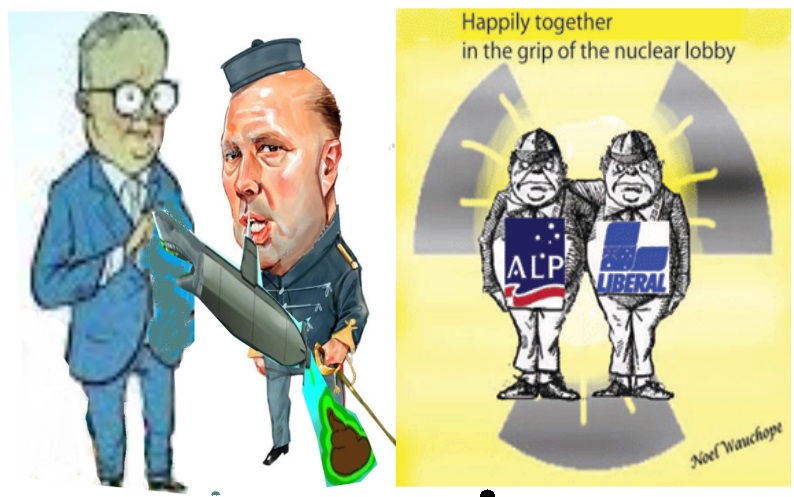
The Bill immediately creates two nuclear dump ‘zones’, one off the coast of Perth and the other at Port Adelaide, without any community consultation or local support.
The Albanese Government today teamed up with Peter Dutton’s Coalition to push through a controversial AUKUS Bill that will allow the dumping of high-level naval nuclear waste anywhere in Australia.
The Albanese Government, in alliance with the Coalition, rammed the Australian Naval Nuclear Power Safety Bill through the Senate today without debate.
The Bill also created a new naval nuclear regulator as part of the AUKUS agreement with the UK and US on nuclear submarines. It initially allowed for all UK and US nuclear submarine waste to be dumped in Australia until the Albanese Government sheepishly amended it, due to growing public opposition, to prevent the dumping of UK or US ‘spent nuclear fuel’.
However, the amendments still allow the dumping of US and UK intermediate-level waste and other high-level nuclear waste from their nuclear submarines. The Greens moved amendments this afternoon that explicitly prevented this, and the major parties voted against these amendments and others.
The Bill immediately creates two nuclear dump ‘zones’, one off the coast of Perth and the other at Port Adelaide, without any community consultation or local support.
The Bill also allows nuclear dump zones to be declared anywhere in Australia that the Defence Minister chooses with the flick of their pen, again without any consent from local communities or First Nations traditional owners.
Senator David Shoebridge, Greens Spokesperson for Defence, said: “Albanese and Dutton have teamed up today to push this AUKUS nuclear waste legislation through the Senate without debate.”
“Today’s actions see both Labor and the Coalition joining hands to ram through legislation that will let the UK and US dump their naval nuclear waste in Australia.”
“The Albanese Labor Government initially tried to sneak through a law that would allow the UK and US to dump all types of nuclear waste in Australia. The Greens called the Government out on this, and then people around Australia pushed back.
“Even with last-minute Labor amendments, this legislation still allows the dumping of US and UK nuclear waste in Australia. Labor’s amendments only prohibit the US and UK dumping ‘spent nuclear fuel’ from their submarines in Australia, but do not prohibit any other highly irradiated UK and US nuclear waste.
“This legislation green-lights dumping of all Australian naval nuclear waste anywhere in Australia. To be clear, exposure to even intermediate-level waste is lethal to humans, and the risk lasts for hundreds of years.
“Everyone can see AUKUS is sinking, the question is now becoming how much environmental and financial damage it will do before it hits rock bottom,” Senator Shoebridge said.
The UK’s nuclear waste problem
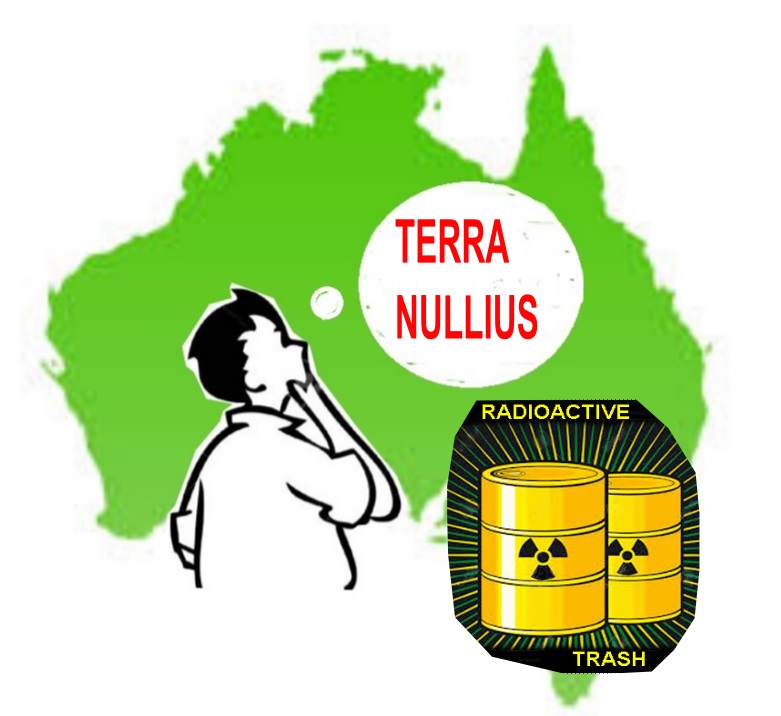
“more nuclear power means more nuclear waste”
By Chas Newkey-Burden, The Week UK, 16 Sept 24 https://theweek.com/environment/the-uks-nuclear-waste-problem
Safety concerns as ‘highly radioactive’ material could be buried in the English countryside
“Not in my backyard” is a term normally used in conversations about proposed new housing or rail lines, but a version of it could soon be heard about one of the most dangerous materials on the planet.
Nuclear power stations are filling up with radioactive waste, so “swathes” of the highly dangerous material are set to be “buried in the English countryside”, said The Telegraph. For local communities, it isn’t so much “not in my backyard” as “not under my backyard”, said the Financial Times.
‘100,000 years of hazard’
Sellafield, in Cumbria, is the “temporary home to the vast majority of the UK’s radioactive nuclear waste”, said the BBC, “as well as the world’s largest stockpile of plutonium”. It’s stuck there because no long-term, high-level waste facilities have been created to deal with it.
The “highly radioactive material” releases energy that can infiltrate and damage the cells in our bodies, Claire Corkhill, professor of radioactive waste management at the University of Bristol, told the broadcaster, and “it remains hazardous for 100,000 years”.
The permanent plan to handle the waste currently at Sellafield is to first build a designated 650ft-deep pit to store it. Although the contentious matter of its location has yet to be agreed, the facility will hold some of the 5 million tonnes of waste generated by nuclear power stations over the past seven decades. Then, in the second half of the century, a much deeper geological disposal site will be dug, which will hold the UK’s “most dangerous waste”, such as plutonium, said The Telegraph.
The problem is only going to get bigger because nuclear power is a central part of the government’s mission for “clean power by 2030” and “more nuclear power means more nuclear waste”, said the BBC.
With at least three new nuclear power stations planned, said The Telegraph, the country will quickly be “at odds with” the 1976 review of nuclear waste policy by the Royal Commission on Environmental Pollution, which warned the UK was amassing nuclear waste so fast that it should stop building reactors until it had a solution.
‘Poison portal’
Some believe part of that solution will be found overseas. Earlier this year, there were warnings that Australia could become a “poison portal” for the UK and US as a result of a new three-nation defence pact called Aukus. The original wording of the agreement would allow for facilities to be created to dispose of waste from “Aukus submarines”, which could have included UK and US vessels.
Dave Sweeney, the Australian Conservation Foundation’s nuclear free campaigner, warned at the time that Aukus partners could see Australia as “a little bit of a radioactive terra nullius”.
After pushback, the Australian government added a loophole to the legislation to “ensure Australia will not become a dumping ground for nuclear waste”, said The Guardian.
But the Australian Greens’ defence spokesperson, David Shoebridge, said the changes did not go far enough. The amendment only addresses high-level radioactive waste, he said, and “still allows the US and UK to dump intermediate-level waste, and Australian high-level waste, anywhere in Australia”.
Labor claims Aukus nuclear waste dumping issue just a Greens scare campaign
the amendment did not specifically mention “high-level radioactive waste” and it “still allows the US and UK to dump intermediate-level waste, and Australian high-level waste, anywhere in Australia”.
Matt Thistlethwaite, an assistant minister, said Australia would “not manage, store or dispose of spent nuclear fuel from the US or the UK submarines”.
Legislation before Australian parliament covers the way the country’s nuclear-powered submarine program will be regulated
Guardian, Daniel Hurst Foreign affairs and defence correspondent, 13 Sept 24
The Albanese government has bowed to pressure to close an Aukus loophole, insisting that the newly revealed changes will ensure Australia will not become a dumping ground for nuclear waste from US and UK submarines.
The Greens argued the government’s latest amendments did not go far enough and it was becoming increasingly clear the Aukus security pact was “sinking”.
But Labor MPs later told the parliament Australia would not become “a dumping ground for nuclear waste for other countries” and argued such claims were part of “a scare campaign”.
The legislation before the Australian parliament covers the way the country’s nuclear-powered submarine program will be regulated. It includes the creation of a new statutory agency, the Australian Naval Nuclear Power Safety Regulator.
The bill – in its original form – talked about “managing, storing or disposing of radioactive waste from an Aukus submarine”, which it defined broadly as Australian, UK or US submarines.
This prompted concerns from critics that the bill could pave the way for Australia to eventually store nuclear waste from other countries, regardless of a political commitment from the incumbent government not to do so.
In May, a Labor-chaired inquiry called for a legislative safeguard to specifically rule out accepting high-level nuclear waste from the US and the UK.
New amendments circulated by the government on Wednesday include a “prohibition on storage and disposal of spent nuclear fuel that is not from an Australian submarine”.
The wording says the regulator “must not issue a licence” for the storage or disposal in Australia “of spent nuclear fuel that is not from an Australian submarine”.
The government is also amending the bill to prevent appearances of conflicts of interest at the new naval nuclear safety regulator.
The legislation will ensure anyone who has worked in the Australian defence force or the Department of Defence in the previous 12 months cannot be appointed to be the director general or deputy of the new regulator.
The defence minister, Richard Marles, said the amendments would “reaffirm the government’s already-established commitment that Australia will not be responsible for the storage or disposal of high-level radioactive waste from the US, UK or other countries”.
He said the government would “continue to build the foundations to safely and securely build, maintain and operate conventionally armed, nuclear-powered submarines”.
Greens say changes ‘far from clear’
But the Greens defence spokesperson, David Shoebridge, said the amendments were “far from clear”.
“The Albanese Labor government tried to sneak through a loophole that would allow the UK and US to dump their nuclear waste in Australia,” Shoebridge said.
“We called the government out and people around Australia pushed back, now Albanese is quickly putting through a half-measure to shut everyone up.”
Shoebridge said the amendment did not specifically mention “high-level radioactive waste” and it “still allows the US and UK to dump intermediate-level waste, and Australian high-level waste, anywhere in Australia”.
“Everyone can see Aukus is sinking,” he said.
Matt Thistlethwaite, an assistant minister, said Australia would “not manage, store or dispose of spent nuclear fuel from the US or the UK submarines”.
He told the parliament’s federation chamber that the government’s new amendments were intended to “put the matter beyond doubt”.
A fellow Labor MP, Rob Mitchell, said: “We will not be, as some have suggested, a dumping ground for nuclear waste for other countries. And it’s important that we put that scare campaign to bed very quickly and very clearly.”……………. https://www.theguardian.com/world/article/2024/sep/11/labor-aukus-nuclear-waste-loophole-greens
‘Relief’ Australia won’t take high-level nuclear waste under AUKUS
In response to recommendations made by a parliamentary committee, Labor has proposed changes that make clear Australia will be responsible only for high-level waste produced by its submarines
New Daily Tess Ikonomou, Sep 11, 2024
Australia will not accept high-level nuclear waste from other countries under a security pact with the US and UK.
Australia will acquire nuclear-powered submarines for $368 billion under the AUKUS agreement.
The Albanese government is introducing amendments to the bill which sets up the framework to regulate the safety of activities relating to the nuclear-powered submarines.
In response to recommendations made by a parliamentary committee, Labor has proposed changes that make clear Australia will only be responsible for high-level waste produced by its submarines.
The need to manage nuclear fuel is expected to occur in the 2050s
The University of Melbourne’s Professor Tilman Ruff, from the International Campaign to Abolish Nuclear Weapons, said the welcome move was a “relief”.
“The other issue that concerns us is the proliferation potential of the fact that there is highly enriched uranium in any nuclear submarine that Australia is likely to acquire,” he said.
Dr Ruff said it was “really unfortunate” the new regulator monitoring how nuclear material would be handled would sit within Defence.
“That’s a fundamental conflict with good governance – the regulators should be independent,” he said.
“This obviously requires very expert, but also very independent, transparent and accountable regulation.”
Under the treaty, the US or UK can quit the pact with a year’s notice.
It also requires Australia to legally protect both allies against costs or injuries arising from nuclear risks.
The agreement will remain in force until 2075 and says the AUKUS deal should not adversely affect the ability of the US and UK to “meet their respective military requirements and to not degrade their respective naval nuclear propulsion programs”.
US government and military officials have moved to reassure the deal will withstand changing administrations for decades to come, amid fears it could be torn up by a new leader. https://www.thenewdaily.com.au/news/politics/australian-politics/2024/09/11/australia-nuclear-waste-aukus—
Civil Society faces imposition of an AUKUS military High Level nuclear waste dump
by David Noonan, Independent Environment Campaigner 22 August 2024
The Federal ALP belatedly disclosed a secret pre-condition in AUKUS plans to buy second hand US
nuclear subs: for Australia to keep US N-Subs US origin military High Level nuclear waste forever.
In a breach of trust the ALP is seeking to ‘normalise’ High Level nuclear waste in Australia. Claims of
‘nuclear stewardship’ in taking on US N-Subs and in retaining untenable US N-Sub wastes are a farce.
Disposal of High-Level nuclear waste is globally unprecedented, with our AUKUS ‘partners’ the US &
UK having proven unable to do so in over 65 years since first putting nuclear powered subs to sea.
Minister for Defence Richard Marles MP has still not made a promised ‘announcement’, said to be by
early 2024, on a process to manage High Level nuclear waste and to site a waste disposal facility, he
saying “obviously that facility will be remote from populations” (ABC News 15 March 2023).
Defence is already working to identify potential nuclear waste storage and disposal sites, assessing
existing Defence lands, and appraising potential regions with areas to compulsorily acquire a site.
The public has a right to know who is already being targeted for imposed AUKUS N- waste storage.
Political leaders in WA, Qld and Vic have already rejected a High-Level nuclear waste disposal site.
Our SA Premier has so far only said it should go to a safe ‘remote’ location in the national interest.
AUKUS compromises public confidence in Gov and sets up a serious clash with civil society:
In setting the offer for a next Federal Election, Labor must become transparent and be made
accountable over AUKUS and associated rights and interests that are at stake in Labor’s intended
High Level nuclear waste dump siting process. For instance:
- Federal and SA Labor must commit to comply with the United Nations Declaration on the Rights
of Indigenous Peoples Article 29 provision of Indigenous People’s Rights to “Free, Prior and
Informed Consent” over storage or disposal of hazardous materials on their lands. - Defence must declare their intension to over-ride the SA Nuclear Waste Storage (Prohibition) Act
2000 to impose an AUKUS nuclear dump on outback lands and unwilling community in SA. - Federal Labor must fully set out the array of AUKUS nuclear wastes to be stored in Australia.
The ALP National Platform (2021, Uranium p.96-98) makes a commitment to oppose overseas waste:
Labor will: 8.d. Remain strongly opposed to the importation and storage of nuclear waste
that is sourced from overseas in Australia.
In contrast, AUKUS aims Australia buy existing US military nuclear reactors in second-hand N-Subs
that are to be up to 10-12 years old, loaded with intractable US origin High-Level nuclear wastes that
are also weapons usage fissile materials – and remain as Bomb Fuel long after decommissioning.
Further, in an affront to public trust Labor’s AUKUS Bill has been written to provide a federal legal
power to take existing US and UK N-Sub nuclear reactor wastes for storage and disposal in Australia.
Labor claims that it is not their ‘policy’ to do so – but it is their proposed Federal Law…
Q: Is Federal Labor already targeting the Woomera Area in SA as a potential site to impose an AUKUS military High-Level nuclear waste dump?
A Labor AUKUS Bill assumes a power and a right to over-ride State laws by naming State laws in
Regulations that are to be made in 2025. Section 135 “Operation of State and Territory laws”, states:
If a law of a State or Territory, or one or more provisions of such a law, is prescribed by the
regulations, that law or provision does not apply in relation to a regulated activity.
The Bill provides for regulated activities in ‘nuclear waste management, storage and disposal’ at
AUKUS facilities in future nuclear zones, which are to be authorised in part under Sec.135.
The national press has reported the Woomera rocket range is understood to be the ‘favoured
location’ for storage and disposal of submarine nuclear waste (“Woomera looms as national nuclear
waste dump site including for AUKUS submarine high-level waste afr.com 11 August 2023).
A ‘Review’ of the Woomera Prohibited Area has just been announced by the Minister for Defence
Richard Marles MP: “to ensure it remains fit for purpose and meets Australia’s national security
requirements.” The Review is due to report in mid-2025 – after the federal election…
AUKUS will aim to compulsorily acquire and declare a High-Level nuclear waste dump site, with over-
ride of State laws through this Bill, long before the 2032 first purchase of a second-hand US N-Sub.
It was left up to a US Vice Adm. Bill Houston to reveal the proposed sales of in-service Virginia-class
subs will be in 2032 and in 2035, with a first new N-Sub in 2038 (US Breaking Defence 8/11/23).
If Federal Labor wants to locate an AUKUS nuclear waste dump in SA, it will have to over-ride our
existing State Law to impose the dump. This AUKUS Bill is a threat to the safety of the people of SA.
Storage and disposal of nuclear wastes compromises the safety and welfare of the people of South
Australia, that is why it is prohibited by the SA Nuclear Waste Storage (Prohibition) Act 2000.
Labor Premier Mike Rann strengthened these laws in 2002 and now Federal Labor may over-ride them.
The Objects of this Act cover public interest issues at stake, to protect our health, safety and welfare:
“The Objects of this Act are to protect the health, safety and welfare of the people of South
Australia and to protect the environment in which they live by prohibiting the establishment
of certain nuclear waste storage facilities in this State.”
The import, transport storage and disposal of High-Level nuclear reactor waste is prohibited in SA.
However, Federal Labor are taking up legal powers to impose a dangerous AUKUS nuclear dump on
SA or on the NT, through an undemocratic override of State laws and compulsory land acquisition.
Question: Will Federal Labor also disregard Indigenous Peoples UN recognised Right to Say No?
In the lead up to a federal election Labor must now declare if they will respect or ignore an
Indigenous Right to Say No to an AUKUS nuclear waste dump on their country.
South Australians have a democratic right to decide their own future & to Say No an AUKUS dump.
Wake up Australia! We need what Britain’s got – a NUCLEAR FREE LOCAL AUTHORITIES!
Read the article below, if you can dredge through it all. It’s about the complexities of placing a nuclear waste dump.
Note the words used – the willingness of the community to accept it – a public referendum.

Australia cannot afford to leave our future in the hands of incompetent twits like these AUSMIN fools.
People like Defence Minister Richard Marles have the nerve to sign up to “undisclosed political commitments” , that involve us getting nuclear fuel wastes from submarines. No public information, discussion, consent……….
Now the unfortunate Brits have already got their burden of this toxic stuff. We don’t. This absurd plan to buy obsolete nuclear submarines looks like a cover for introducing foreign radioactive trash to Australia .
NFLA 13th Aug 2024
NFLAs welcome developments to move forward to an early poll in Theddlethorpe
The NFLAs have welcomed recent developments to move towards an early Test of Public Support of the proposal to bring a Geological Disposal Facility to Theddlethorpe in East Lincolnshire.
Nuclear Waste Services, a division of the taxpayer-funded Nuclear Decommissioning Authority, is seeking to identify a potential site for the GDF in West Cumbria or in Lincolnshire. The GDF would be the final repository for Britain’s legacy and future high-level radioactive waste. Most of this is currently in storage at Sellafield. Any final decision on the location of the nuclear waste dump would be based on two key factors – the suitability of the geology and the willingness of the community to accept it.
In Theddlethorpe, the shock revelation that the former Conoco gas terminal was being considered as a surface site generated an immediate public response. An opposition group, the Guardians of the East Coast, was soon formed and members now work with supportive elected Councillors to oppose the plan.
Amongst the Labour, Green and independent members elected in May 2023 on a platform of opposing the GDF, Theddlethorpe Councillor Travis Hesketh and Sutton on Sea Councillor Robert Watson have been active in championing the need for an early ballot to determine public support for the plan. The two Leaders of East Lindsey District Council and Lincolnshire County Council have already agreed to hold a poll in 2025, but at the last meeting of East Lindsey District Council, the two Councillors brought a further motion to commit the authority to back a local ballot within twelve months or otherwise withdraw from the process.
Under the government’s established procedures for determining public support for a GDF, Lincolnshire County Council and East Lindsey District Council are deemed to be ‘Relevant Principal Local Authorities’ with the right to decide when a ‘Test of Public Support’ should be held. However, the Community Partnership, which provides limited oversight to the process, determines the boundaries of the ‘Potential Host Community’, the geographic area within which the residents are eligible to participate in any test, and determines the nature of the ‘Test of Public Support’, which does not have to be a public referendum.
At the East Lindsey District Council meeting, the motion was carried, but with an amendment proposed by the Council Leader. Councillor Colin Leyland said he had now come round to supporting an earlier poll in principle, but with certain caveats; namely that the boundary of the ‘Potential Host Community’ be first defined and subject to Nuclear Waste Services being given an additional twelve months to provide more information to residents impacted by the proposal. Councillor Leyland indicated that, if after a year, no poll had been held and NWS engagement efforts remained unsatisfactory, he would recommend to his Executive that Council withdraw from the process. This would be subject to a review by the Council’s Overview Board.
After this amended motion was carried, the NFLA Secretary wrote to David Fannin, the newly elected Chair of the Theddlethorpe GDF Community Partnership, urging him to consider as his ‘urgent workstreams’ defining the Potential Host Community and preparing to hold a local referendum as a Test of Public Support.
The NFLAs have now received Mr Fannin’s response; in it the Community Partnership Chair said: ‘The Community Partnership will continue to press NWS (Nuclear Waste Services) to make this (open and transparent dialogue) a priority and produce information for the local community and supports the local authorities’ ambition for an early Test of Public Support. I can assure you that activities that lead to determining the Potential Host Community and preparing for the Test of Public Support are the top priority for the Community Partnership.’
In a second interesting development, newly elected Louth and Horncastle MP, Victoria Atkins, has invited her constituents to complete an online survey in which they are asked whether and when they would like to see a referendum on the GDF and who they would like to see invited to participate in such a ballot. Ms Atkins circulated a letter just before the General Election in which she made a welcome affirmation that she had ‘always argued for a swift conclusion to this and will support local residents in their quest for a prompt referendum’. In the preamble to her survey, Ms Atkins stated that ‘I will back the call for a public vote within the next 12 months if this is the will of the majority of constituents in Theddlethorpe’.
The NFLAs hope that as many Theddlethorpe residents will participate in the survey. We look forward to hearing the result and hope that it will reflect a local desire to hold a referendum within twelve months and limit participation to those local residents who are directly affected.
A letter was sent by the NFLA Secretary to Ms Atkins the day after the general election is which the MP was asked ‘to use (her) influence as the local MP to speak with your Conservative colleagues, the Leaders of East Lindsey District Council and Lincolnshire County Council, to urge the Leader of East Lindsey District Council to throw his support, and that of his Conservative Group, behind (the recent) motion and for the Leader of Lincolnshire County Council to indicate his support for its aspirations, either to hold a poll by 2025 or withdraw from the process’. The letter remains unanswered.
Ends://… For more information, contact NFLA Secretary Richard Outram by email at richard.outram@manchester.gov.uk or by telephone on 07583 097793
Defence Minister Richard Marles insists AUKUS milestone won’t force Australia to accept foreign nuclear waste
The Greens say legislation already before parliament would allow the UK and US to dump high-level nuclear waste in Australia from their nuclear submarines, an issue the Labor-led inquiry into the proposed laws recommended amending to prevent.
9 Aug 2024 #ABCNewsAustralia https://www.abc.net.au/news/2024-08-0…
In short:
The defence minister says there is no circumstance where Australia would accept radioactive waste from foreign nations.
Critics of the AUKUS deal claimed Thursday’s milestone could oblige Australia to take waste from the US and UK.
What’s next?
The agreement will see secret nuclear information shared with Australia, and plans progressed to acquire second-hand nuclear submarines.
The defence minister insists Thursday’s milestone agreement on AUKUS does not oblige Australia to take nuclear waste from the United States or the United Kingdom.
Australia and the US made significant progress on Thursday towards acquiring nuclear-powered submarines under the AUKUS agreement, in a deal that included undisclosed “political commitments” to Australia’s partner nations, the US and the UK.
Critics of the nuclear submarine plan claimed that the deal would eventually oblige Australia to take high-level radioactive waste from the US and UK.
Defence Minister Richard Marles insisted on Friday morning that was not the case.
“Nuclear waste won’t end up in Australia, other than the waste that is generated by Australia,” Mr Marles said.
“That is the agreement that we reached with the UK and the US back in March of last year, and so all this is doing is providing for the legal underpinning of that.”
Mr Marles said there would be “no circumstance” where Australia takes waste from any other country.
Instead, Thursday’s agreement would allow for the transfer of nuclear naval technology to Australia, including restricted data never shared outside the US and UK.
The agreement also progresses plans to transfer second-hand US Virginia-class submarines to Australia, while its own submarines are being built.
Nothing unusual in undisclosed ‘additional political commitments’ on AUKUS, says PM
The government however has been pressured to further explain the details of the deal formalised on Thursday.
US President Joe Biden’s letter to Congress on the agreement said it provided “additional related political commitments”, but did not detail what those were.
Opposition Leader Peter Dutton challenged the government to explain the political commitments made to the US.
“It’s certainly an unusual statement, and I think the prime minister should provide an explanation as to what Australia has signed up to,” Mr Dutton said.
Prime Minister Anthony Albanese said there was nothing out of the ordinary in the agreements the federal government had made.
“We have agreed to have nuclear-powered submarines, that is what we have agreed to, and the transfer of technology that is related to that,” Mr Albanese said.
“There aren’t extra political commitments, I’m not sure what you mean.
“There will be no nuclear [waste] transfer from either the US or UK.”
The Greens say legislation already before parliament would allow the UK and US to dump high-level nuclear waste in Australia from their nuclear submarines, an issue the Labor-led inquiry into the proposed laws recommended amending to prevent.
Mr Marles also defended himself after Labor luminary and vocal critic of the AUKUS deal Paul Keating repeated his criticisms of the program and the minister.
Mr Keating claimed that the Albanese government had sold out Labor values by adopting AUKUS from the former Morrison government, and said Mr Marles’s comments while in the US would make “any Labor person cringe”.
Mr Marles said that criticism was “not fair”, but said Mr Keating had a right to express his view.
In Taiwan, reaction from some corners was scathing.
Former US ambassador to Palau US John Hennessy-Niland, who was the first US ambassador to visit Taiwan since 1979, said Mr Keating was living in the past “and never changes”.
“Keating reveals his true colours when he talks about ‘party values’ should be paramount but what about Australia’s national interests?” Mr Hennessey-Niland told the ABC.
Wen-Ti Sung, from the Atlantic Council’s Global China Hub, said partnerships like AUKUS were essential to preventing future conflict.
“Forward defence planning in concert with like-minded democratic partners is how countries have managed to deter and prevent major wars,” he said.
“Long-term partnership building with at least one superpower has been the cornerstone of Australian foreign policy ever since World War II, namely ANZUS. There is no clear reason why Australia should be abandoning its almost century-long partner.
“Facing an increasingly strategically uncertain world, Australia needs to develop more partners, not less.”
Director of international affairs for Taiwan’s opposition Kuomingtang Party, Alexander Huang, said the island’s first priority was preventing conflict through both deterrence and dialogue.
Mr Huang declined to comment on Mr Keating’s “disagreement with Prime Minister Albanese and his cabinet”.
The AUKUS operations are stalled because Australia cannot meet the nuclear waste disposal requirements of the non-proliferation treaty regime

13 Aug 24
Despite the somewhat difficult or convoluted language in the Agreement it gives the power and agreed authority to the International Atomic Energy Agency (IAEA) to demand a proper and safe means for the storage and disposal in accordance with the prescriptions of IAEA of all nuclear material including waste generated in or acquired by Australia by whatever means and for the continuing inspection and audit of that material by IAEA
This applies specifically to the nuclear waste generated by the rotational visits of the nuclear powered submarines of the United States and the United Kingdom with Australia being solely responsible for the management and disposal of that waste
Irrespective of the strength of AUKUS by the involvement of the United States and the United Kingdom the requirements of IAEA under the Agreement will be strongly demanded by the member states who are
signatories to the non-proliferation treaty regime
The international demands on this issue will be readily adopted since they go to the most basic principles of nuclear safety and both the United States and the United Kingdom are known to have serious problems with the management of their own nuclear waste
COMPREHENSIVE SAFEGUARDS AGREEMENT
From the latest available information the Comprehensive Safeguards
Agreement as described below has still not been varied which means
that the AUKUS arrangements cannot be fully implemented for the
purposes of the non-proliferation treaty regime
The reason is that Australia cannot meet all the safety requirements of
IAEA by not having the proper means for the management and disposal
of all the nuclear waste generated by the AUKUS activities in
accordance with its prescriptions as outlined in the publication by IAEA
as to Disposal of Radioactive Waste No. SSR-5 and other
prescriptions.
There is the problem of the disposal of all the
nuclear waste generated initially by the rotational visits of nuclear submarines of the United States and the United Kingdom to Stirling in Western Australia.
Australia by its foreign minister has advised IAEA that it is seeking
appropriate sites on Defence land for a facility for the AUKUS
generated nuclear waste but this has been insufficient for the variation
of the Comprehensive Safeguards Agreement and hence is delaying
the implementation of AUKUS
*********************************************
COMPREHENSIVE SAFEGUARDS AGREEMENT
The problem for Australia is that without a variation with the
International Atomic Energy Agency (IAEA) of the
Comprehensive Safeguards Agreement as it is commonly
called it will be difficult for Australia to implement the AUKUS
arrangements yet at the same time remain within the non –
proliferation treaty regime.
In order to achieve the variation Australia must show that it
has or is in the latter stages of planning a nuclear waste
facility for the permanent disposal of the nuclear waste to be
generated by the AUKUS operations.
COMPREHENSIVE SAFEGUARDS AGREEMENT
PROVISIONS
AGREEMENT BETWEEN AUSTRALIA AND THE INTERNATIONAL ATOMIC
ENERGY AGENCY FOR THE APPLICATION OF SAFEGUARDS IN
CONNECTION WITH THE TREATY ON THE NON-PROLIFERATION OF
NUCLEAR WEAPONS
Opened for signature at London, Moscow and Washington on 1 July 1968
and which entered into force on 5 March 1970
NON-APPLICATION OF SAFEGUARDS TO NUCLEAR MATERIAL TO BE
USED IN NON-PEACEFUL ACTIVITIES
Article 14
If Australia intends to exercise its discretion to use nuclear material which is
required to be safeguarded under this Agreement in a nuclear activity which
does not require the application of safeguards under this Agreement, the
following procedures shall apply:
(a) Australia shall inform the Agency of the activity, making it clear:
(i) That the use of the nuclear material in a non-proscribed military
activity will not be in conflict with an undertaking Australia may
have given and in respect of which Agency safeguards apply, that the nuclear material will be used only in a peaceful nuclear activity;
and
(ii) That during the period of non-application of safeguards the
nuclear material will not be used for the production of nuclear
weapons or other nuclear explosive devices;
(b) Australia and the Agency shall make an arrangement so that, only while
the nuclear material is in such an activity, the safeguards provided for in this
Agreement will not be applied. The arrangement shall identify, to the extent
possible, the period or circumstances during which safeguards will not be
applied. In any event, the safeguards provided for in this Agreement shall
apply again as soon as the nuclear material is reintroduced into a peaceful
nuclear activity. The Agency shall be kept informed of the total quantity and
composition of such unsafeguarded nuclear material in Australia and of any
export of such nuclear material; and
(c) Each arrangement shall be made in agreement with the Agency. Such
agreement shall be given as promptly as possible and shall relate only to
such matters as, inter alia, temporal and procedural provisions and reporting arrangements, and shall not involve any approval or classified knowledge of
the military activity or relate to the use of the nuclear material therein.
APPLICATION OF SAFEGUARDS
Article 2
The Agency shall have the right and the obligation to ensure that safeguards
will be applied, in accordance with the terms of this Agreement, on all source
or special fissionable material in all peaceful nuclear activities within the
territory of Australia, under its jurisdiction or carried out under its control
anywhere, for the exclusive purpose of verifying that such material is not
diverted to nuclear weapons or other nuclear explosive devices.
±±The relevant provision of INFCIRC/153 is paragraph 14
Paragraph 14 provides for the “non- application” of “the safeguards
provided for in the Agreement”, but only while the nuclear material is in
the non-proscribed military use. 15 Feb 2022
Australia, US, UK sign nuclear transfer deal for AUKUS subs – AUSTRALIA RESPONSIBLE FOR THE SPENT FUEL WASTES
Australia would be responsible for the storage and disposal of spent nuclear fuel and radioactive waste from the nuclear power units that are transferred under the deal.
SYDNEY: Australia said on Monday (Aug 12) it had signed a deal to allow the exchange of nuclear secrets and material with the United States and Britain, a key step toward equipping its navy with nuclear-powered submarines.
It binds the three countries to security arrangements for the transfer of sensitive US and UK nuclear material and know-how as part of the tripartite 2021 AUKUS security accord.
AUKUS, which envisages building an Australian nuclear-powered submarine fleet and jointly developing advanced warfighting capabilities, is seen as a strategic answer to Chinese military ambitions in the Pacific region.
“This agreement is an important step towards Australia’s acquisition of conventionally armed nuclear-powered submarines for the Royal Australian Navy,” said Richard Marles, Australia’s defence minister and deputy prime minister.
Australia’s acquisition of a nuclear-powered submarine fleet would set the “highest non-proliferation standards”, he said, stressing that the country did not seek nuclear weapons.
The latest deal – signed in Washington last week and tabled in the Australian parliament on Monday – includes a provision for Australia to indemnify its partners against any liability for nuclear risks from material sent to the country.
Nuclear material for the future submarines’ propulsion would be transferred from the US or Britain in “complete, welded power units”, it says.
But Australia would be responsible for the storage and disposal of spent nuclear fuel and radioactive waste from the nuclear power units that are transferred under the deal.
“Submarines are an essential part of Australia’s naval capability, providing a strategic advantage in terms of surveillance and protection of our maritime approaches,” the transfer deal says.
China’s foreign minister Wang Yi warned in a visit to Australia in April that AUKUS raised “serious nuclear proliferation risks”, claiming it ran counter to a South Pacific treaty banning nuclear weapons in the region.
1 This month

of the week – Australians for War Powers Reform (AWPR)
To see nuclear-related stories in greater depth and intensity
 Antinuclear