Behind the plans for Australia to become a nuclear dumping ground and leverage synergies with the US military alliance and civilian nuclear

THE FIFTH ESTATE, MURRAY HOGARTH, 22 JULY 2024
The Nuclear Files: The pro-nuke lobby that surrounds the Liberal-National coalition wants Australia to become a fully-fledged nuclear nation – and a permanent dumping ground for the world’s high-level radioactive reactor waste.
“They want it all,” warns long-time anti-nuclear campaigner Dave Sweeney, from the Australian Conservation Foundation (ACF), which is leading the environment movement’s counterattack on the coalition’s nuclear insurgency: “They want Australia to adopt the full nuclear cycle, from cradle to grave.”
The far-reaching ambitions of the pro-nuclear campaign were revealed at their Navigating Nuclear event in Sydney earlier this year, formally opened by the Opposition’s nuclear torchbearer Ted O’Brien MP, and attended by The Fifth Estate.
O’Brien’s enthusiasm for the “big brains” and “calibre of people” in the room at the event, the “big idea” of nuclear energy for Australia, and his job to “listen and learn” is all on show in the video of his opening address.
These nuclear influencers, who have helped to shape the Peter Dutton led coalition’s still-emerging nuclear policy over the past two years, are looking well beyond overturning Australia’s ban on nuclear energy, which would clear the path to build reactors.
Navigating Nuclear, which was promoted as being all about “the facts”, but rapidly descended into a propaganda exercise, heard from one an MIT professor, name about extraordinary ambitions for an all in nuclear Australia:
- Most controversially, becoming the world’s repository for high-level nuclear reactor waste, with America’s output alone worth $US1 billion a year
- Leveraging the AUKUS nuclear submarine military pact with the US and the UK to drive a civilian nuclear industry
- Challenging for the title of global number one uranium producer, which has long been an ambition for the powerful Minerals Council of Australia (MCA) and
- Even building reactors in our arid lands to make the deserts bloom with agriculture fed by nuclear-powered water desalination plants.
However unlikely, crazy or dangerous these plans to go beyond nuclear energy may sound, they are being openly proposed within the pro-nuke lobby.
As the ACF’s Sweeney makes clear, this is because pro-nuclear advocates, both here and internationally, want Australia to take a seat at the table with Big Nuke’. This means participating in multiple aspects of the nuclear fuel cycle, from mining more and more uranium through to high level radioactive waste disposal as a global service.
The only thing off the table, at least for now, seems to be Australia joining ranks of nations that are nuclear weapons capable. But even that deep redline has been flirted with in recent months, with Jim Seth, a WA Liberal state executive extolling the benefits of nuclear weapons
His sentiments were echoed in a recent discussion paper from the Australian Strategic Policy Institute suggesting that uncertainty with the AUKUS deal necessitates that “discrete thinking must start now to address these potentially program-killing issues. A Plan B that raises alternatives must be developed. These must include, if China is indeed perceived as a possibly existential threat, the option of Australian nuclear weapons”.
While Sweeney and other critics of Dutton’s domestic nuclear plan do not see nuclear weapons as the inevitable next step they do loudly warn of the voracious appetite of the ideological drivers of the nuclear push and the dangers of nuclear normalisation and mission creep.
“Australians would be wise to be very cautious”, says Sweeney. “Some of the current crop of nuclear promoters absolutely want an Atomic Australia. Their vision is one of unfettered uranium mining and enrichment, fuel processing, domestic nuclear power, national and international radioactive waste storage and Australia to have or host nuclear weapons and war fighting capacity. If they are successful, we will all be far poorer – forever”.
The sheer scale of nuclear ambition was made clear at the all-day Navigating Nuclear workshop, which as well as being opened by O’Brien, the shadow minister for climate change and energy, was attended by his senior adviser, James Fleay, and another outspokenly pro-nuclear coalition MP, the National Party’s David Gillespie.
This is in spite of the event originally promoted as “politicsfree”.
One of the keynote international speakers, Professor Jacopo Buongiorno, based at the Massachusetts Institute of Technology in Boston a top US outlined the economic opportunity for Australia to take the world’s radioactive waste.
Buongiorno estimated that American reactors alone produce $US1 billion worth of high level waste each year.
Currently this waste in the US has been stored for decade above ground at reactor sites, even after decommissioning, Buongiorno said.
This is the same methodology O’Brien is proposing for the seven preferred sites for reactors that it has identified in Australia, which he has said could have operating lives of 60, 80 or even 100 years.
High-level radioactive waste is a hot button issue for the public. Australia has decades of deeply contested history to find a site to accommodate permanent disposal of low and intermediate level radioactive waste from the Australian Nuclear Science and Technology Organisation’s Lucas Heights facility and other sources such as medical.
Commercial reactor waste is hot dangerous and extremely long lived
Sweeney warns that: “Commercial reactor waste is a whole different ball game – hot, dangerous and extremely long lived, the current international best practice for its long term disposal requires very expensive confinement in purpose built facilities, located deep underground in highly geologically stable areas.”
Ultimately, the waste held indefinitely in so-called “dry casks” spread around America is meant to end up in such facilities, but so far, the Americans have never gotten around to actually doing it, in part at least because it costs a bomb!
It’s difficult to imagine a more controversial proposal for Australia’s future than becoming a nuclear dumping ground for the world’s reactor waste, at least part of which will remain dangerously radioactive for many tens of thousands of years.
Sweeney says: “Previous attempts to advance high level global radioactive waste disposal in WA in the 1990s and more recently in South Australia last decade foundered on the jagged rocks of hostile politics, community concern and deep First Nation opposition. But neither the nuclear industry’s waste, nor its need to be seen to have a pathway for disposing of this, has gone away.”
Overseas observers see Australia offers “a convenient postcode to store a permanent poison,” Sweeney says.
They have followers closer to home, including former Foreign Minister Alexander Downer. In a June 2024 column in Adelaide’s The Advertiser, Downer argued that hospitals, schools and roads could all be paid for by a nuclear waste storage facility servicing Australia and other parts of the world, which could reap tens of billions of dollars in revenue, which he based on a state Labor-commissioned 2016 royal commission report.”
Even the World Nuclear Association, the industry’s own PR front, says:
The radioactivity of nuclear waste naturally decays and has a finite radiotoxic lifetime. Within a period of 1000 to10,000 years, the radioactivity of HLW (high-level waste) decays to that of the originally mined ore. Its hazard then depends on how concentrated it is … Most nuclear waste produced is hazardous, due to its radioactivity, for only a few tens of years and is routinely disposed of in near-surface disposal facilities. Only a small volume of nuclear waste (~3 per cent of the total) is long-lived and highly radioactive and requires isolation from the environment for many thousands of years.
Sweeney has been close to multiple community fights around plans to site global and national radioactive waste facilities throughout remote and regional Australia.
His experience over decades has seen many promises and scant progress. “Radioactive waste is a serious and unresolved management issue here and overseas. It needs to be isolated and secured from people and the wider environment for staggering periods of time – up to 100,000 years. It lasts longer than any politician’s promise and needs serious attention and management. It should always be approached through the lens of responsibility and human and environmental health, not shouted and touted as a revenue stream.”
O’Brien and his senior adviser Fleay were in the Navigating Nuclear audience when Buongiorno, outlined a series of major nuclear related options for Australia, including the world’s waste dump “opportunity”………………………………………………………………………………………..
What about the security risk and the synergy between military alliance and a civilian nuclear industry?…………………………………………………………..
Such security and proliferation concerns were not high on Buongiorno’s radar as he also cited leveraging AUKUS as another key opportunity for Australia, seeing clear synergies between the military alliance and a civilian nuclear industry.
This is despite then Prime Minister Scott Morrison being very clear of a distinction between AUKUS and any domestic nuclear industry when he stated, “Australia is not seeking to acquire nuclear weapons or establish a civil nuclear capability.
Sweeney warns: “But that was then. Now the coalition has landed on nuclear as a key plank in the lead up to the next election, AUKUS is now being promoted as a driver and enabler and a convenient political wedge to attempt to blunt Labor’s sustained criticism.” …….
more https://thefifthestate.com.au/columns/columns-columns/the-nuclear-files/behind-the-plans-for-australia-to-become-a-nuclear-dumping-ground-and-leverage-synergies-with-the-us-military-alliance-and-civilian-nuclear/
HMAS Stirling nuclear waste management facility approval has Rockingham residents worried
By Daryna Zadvirna and David Weber, 19 July 24 https://www.abc.net.au/news/2024-07-19/nuclear-waste-facility-at-hmas-stirling-rockingham/104114228
In short:
Australia’s nuclear safety watchdog has approved a plan to prepare for a radioactive waste facility at HMAS Stirling naval base in Perth’s south, for waste from nuclear submarines.
But local residents are worried about the potential for nuclear accidents and the impact on the environment.
What’s next?
Approval to begin construction will now be sought, followed by licences for control and operation of the facility, which is expected to open in 2027.
Rockingham residents have expressed alarm at the prospect of a radioactive waste facility at HMAS Stirling naval base on Garden Island, following a decision by the nuclear safety watchdog to approve one.
The Australian Radiation Protection and Nuclear Safety Agency (ARPANSA) has given the green light to prepare a site for the facility, which will be a workshop for servicing and repairing the vessels, and will store waste from nuclear powered submarines.
The facility will also need separate approvals for construction and operation.
The facility, about five kilometres off the coast of Rockingham, which is 50 kilometres south of Perth’s CBD, would provide low-level waste management and maintenance support.
BARNGARLA COURT WIN OVER NUCLEAR DUMP.

Jim Green, 18 July 23
Today, in a history making moment, The Federal Court of Australia through Her Honour Justice Charlesworth, handed down a decision which was favourable to the applicant the Barngarla Determination Aboriginal Corporation. This has resulted in the quashing of the decision to place the waste dump site at Napandee near Kimba.
“I am so happy for the women’s sites and dreaming on our country that are not in the firing line of a waste dump. I fought for all this time for my grandparents and for my future generations as well.” – Aunty Dawn Taylor, Barngarla Elder.
“This result today is about truth telling. The Barngarla fought for 21 years for Native Title rights over our lands, including Kimba and we weren’t going to stop fighting for this. We have always opposed a nuclear waste dump on our country and today is a big win for our community and elders.” – Jason Bilney, Chairperson Barngarla Determination Aboriginal Corporation.
“Every Australian, whether First Australians or more recent Australians have the right to independent scrutiny of Government. Today the Federal Court has set aside the declaration for the nuclear waste facility reinforcing how important these rights of independent review are. It has been a significant dispute which has created much pressure on Barngarla and their legal team they should be proud of their efforts to hold the government to account.” – Nick Llewellyn-Jones lawyer for Barngarla.
“The Barngarla have opposed the radioactive waste dump at Kimba since it was first suggested. We have fought for 7 years, to be heard, to be seen and to be respected. We welcome this decision and expect that this will be the end of this threat to our country, heritage and culture. We, the Barngarla have always stood strong and believe that this decision is reflective of staying steadfast; it shows that if you have a voice and want it to be heard, never give up. Continue to be loud. Continue to use your voice. Don’t rely on others to speak for you. Speak up for what’s right. Truth telling is what led us today. We are proud.” – The Barngarla People.
Government moves quietly on towards radiation facility for nuclear submarine programme
ARPANSA approves siting licence for ASA Controlled Industrial Facility
17 July 2024
ARPANSA has issued a licence to the Australian Submarine Agency to prepare a site for the prescribed radiation facility known as the ‘Controlled Industrial Facility’. The proposed Controlled Industrial Facility will provide low-level waste management and maintenance services to support the Submarine Rotational Force – West program, which is being planned at the existing HMAS Stirling Navy Base, Garden Island, Rockingham, Western Australia.
ARPANSA is responsible for licensing Commonwealth entities that use or produce radiation and applies a
strict review and assessment process once a licence application is received………………………..
The siting licence approval is the first stage of a stringent licencing process that requires separate applications for siting, construction, operation and decommissioning.
Parliament is considering legislation to establish a dedicated naval nuclear power safety regulator, the Australian Naval Nuclear Power Safety Regulator (ANNPSR). Until the new regulator is established, ARPANSA will regulate nuclear and radiological safety for ASA.
Future applications for the Controlled Industrial Facility are likely to be made while ARPANSA remains the regulatory authority for nuclear and radiological safety for ASA. The CEO has committed to continuing to invite public comment on all future ASA facility licences considered by ARPANSA……,,, https://www.arpansa.gov.au/arpansa-approves-siting-licence-asa-controlled-industrial-facility?fbclid=IwZXh0bgNhZW0CMTEAAR1xXw4CRdQCPOLg3sp1MqQAl-RCQHby8KJjOf_X_BXL3OxmKyMmq2nH9Xw_aem_gN1-iDIpedU70PUZyyEqJQ&sfnsn=mo
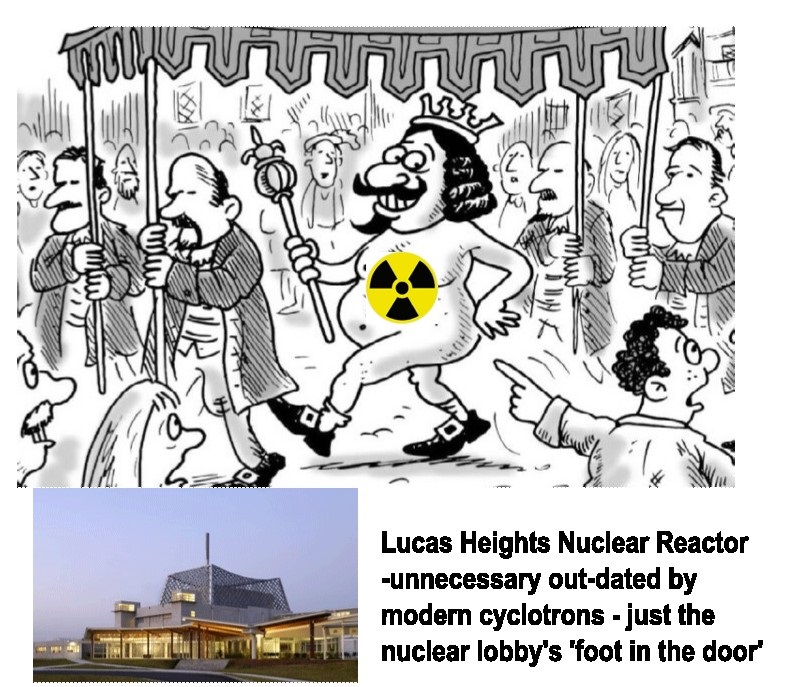
Sealed away in steel and concrete is Australia’s nuclear waste legacy at Lucas Heights in Sydney’s south
ABC News, By political reporter Matthew Doran, 15 July 24
Whenever there is a debate about nuclear power in Australia, one question regularly pops up: What do we do with the waste?
It can’t just be taken to the local dump along with garbage or rubble, and it has to be handled with immense care and stored in particular ways while it remains dangerous — sometimes for decades, and in the case of high level waste up to thousands of years.
Despite nuclear power generation still being a subject of political debate rather than reality, and nuclear-propelled submarines being decades away from being tied up at local docks, many Australians don’t know we are already producing, processing, and storing nuclear waste.
One of the largest repositories is Australia’s Nuclear Science and Technology Organisation (ANSTO) at the Lucas Heights nuclear facility, in Sydney’s south.
The ABC was invited inside……………………………………………………………………………………………………
The type of contaminated waste coming into the vast warehouse for assessment and processing is what’s classified as “low-level”.
Much of it includes items like rubber gloves, gowns, glassware, and old laboratory equipment from ANSTO’s nuclear medicine facility
It’s still contaminated and needs to be meticulously picked through, categorised, and stored away until it’s no longer dangerous, sealed away in the steel drums lining the shelves of multiple warehouses dotted across the Lucas Heights site.
Decades of legacy
Bags and bags of contaminated material sit in bins at the edge of the warehouse we’re standing in.
All the waste comes from ANSTO itself. While the organisation doesn’t store waste for others, it does assist with the material they produce………………. It’s brought into the warehouse, and scanned with high-tech machinery before ANSTO figures out the best way to store it – and for how long.
…. “A lot of the waste that we bring in is really very quickly able to be sent out to the normal tip, because working with nuclear medicine, which generates most of our waste, we have a lot of short-lived isotopes,” Paula Berghofer, head of waste management , says.
…………………………………………………………………………………………………………………… ANSTO’s Lucas Heights site is home to the only nuclear reactor in the country.
It’s a facility used to create radioactive isotopes for use in areas such as nuclear medicine. ……..
Lucas Heights’ OPAL reactor is currently undergoing maintenance.
It’s not used for power generation and doesn’t create waste anywhere near the level of radioactive material that would come from such a reactor.
However, that’s not to say there isn’t decades-old nuclear waste stored at the site.
Some drums and blocks of radioactive material, encased in concrete and steel tombs weighing many tons, have been here for decades.
Among them, are remnants of the original nuclear reactor at Lucas Heights – known as MOATA – which operated between 1961 and 1995, and was decommissioned 15 years ago.
“It will remain here, safely monitored and stored, until Australia has a disposal operation available for us to send it to,” Ms Berghofer says……………………………………………………………………………………………………………………
Offshore processing

There’s another warehouse, which looks a little different, on the Lucas Heights campus.
It’s newer. It’s taller. It’s wrapped in extra layers of security.
When you walk inside, it’s striking how empty it is. Apart from two huge cylinders, standing on their ends, at one side of the building
“While Australia has a very important role in the nuclear space, we are comparatively small, and we certainly don’t have the infrastructure or really the need or desire to install what is a very large price reprocessing facility here,” Ms Berghofer says.
“So it makes sense for us to have those international agreements, so that we can send this overseas to the experts, where they can reprocess it and send us back an equivalent.”
Again, these canisters are also intended for a national nuclear waste dump, once it is established. https://www.abc.net.au/news/2024-07-16/australias-nuclear-waste-legacy-lucas-heights-ansto/104091600
What happens to nuclear waste under Peter Dutton’s Coalition plan to build seven nuclear power reactors?

ABC Illawarra / By Nick McLaren, 21 Jun 2024
In short: Debate on Australia’s nuclear future will need to include clear information on the transportation and storage of nuclear waste.
Currently Australia doesn’t have a national storage facility, so low and medium level waste is kept at more than 100 locations around the country.
What’s next? As Australia debates nuclear power in the lead-up to the federal election, more answers will be needed about where to store radioactive waste and for how long.
…………………………………………………………………..”Each year Australia produces about 45 cubic metres of radioactive waste arising from these [research reactor medical and industrial”] uses and from the manufacture of the isotopes.”
This amounts to about 40 square metres of low-level waste and 5 square metres of intermediate waste, while the UK and France by comparison each produce about 25,000 cubic metres of low-level waste annually.
But of greater concern is the intermediate and high-level waste that will be produced by the seven nuclear reactors the Coalition plans to get up and running in Australia by 2050.
Peter Dutton in announcing the Coalition’s nuclear plan this week used a previously heard line that one standard-sized reactor produces just a handful of nuclear waste each year.
“If you look at a 450 megawatt reactor, it produces waste equivalent to the size of a can of Coke each year,” Mr Dutton said.
…………………..Simon Holmes a Court said the Coke can comment greatly underestimates the amount reactors generate.
“Even the small modular reactors would be 2,000 times as much, and that is just high-level radioactive waste alone,” he said.
“It is a lot more than he says ……………………………….
The waste storage site will be needed for waste from the AUKUS submarines regardless of the Coalition’s nuclear energy plans.
The AUKUS deal is bipartisan, so any change of government is unlikely to scuttle it.
Griffith University emeritus professor and energy specialist Ian Lowe told The Conversation that Australia will have to manage high-level radioactive waste when the submarines are decommissioned in 30 years time.
“So, when our first three subs are at the end of their lives – which, according to Defence Minister Richard Marles, will be in about 30 years time – we will have 600 kilograms of so-called ‘spent fuel’ and potentially tonnes of irradiated material from the reactor and its protective walls,” he said.
“Because the fuel is weapons-grade material, it will need military-scale security,” he said.
Currently Australia’s intermediate level nuclear waste generated at the Lucas Height reactor is taken overseas for processing then returned to Australia for storage.
Remaining unused uranium is removed from the fuel rods with the leftover radioactive waste broken up and mixed with molten glass, then solidified in steel canisters.
The last time this happened, in March 2022, it involved a shipment of radioactive waste brought back to Lucas Heights via a high security operation at Port Kembla in Wollongong.
“Four of those canisters, each containing 500 kilograms of vitrified waste that is radiologically equivalent to 114 rods sent to the UK in a shipment in 1996, were received back from the UK,” according to a statement from Australia’s Nuclear Science and Technology Organisation (ANSTO).
It was logistically a major operation carried out in relative secrecy in the middle of the night with confirmation only occurring afterwards.
Such shipments only tend to occur about once every 10 years, but this all could start to change if and when Australia moves towards embracing a larger role for nuclear. m https://www.abc.net.au/news/2024-06-21/what-happens-nuclear-waste-coalition-plan-/104003454
No nuke waste down under: Nuclear Free Local Authorities spokesperson receives assurance MOD still committed to decommissioning British nuclear subs at home
Nuclear Free Local Authorities, 4 June 24
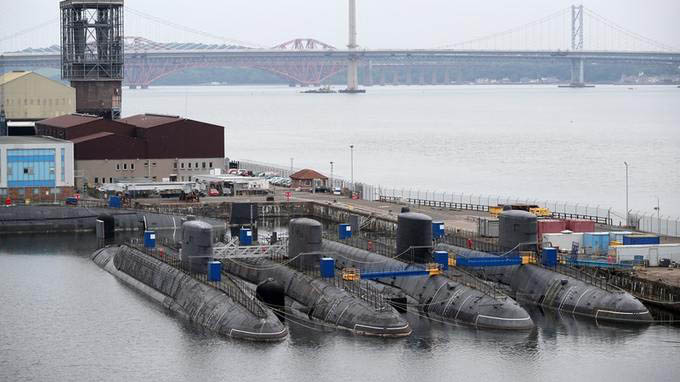
Defence chiefs have written to the NFLA Spokesperson on Nuclear Submarine Decommissioning reassuring him that ‘the Ministry of Defence remains committed to disposing its decommissioned submarines, including the waste they produce, within the UK’.
Councillor Brian Goodall, who represents the Rosyth Ward in Scotland where decommissioning is currently taking place, wrote to the outgoing Defence and Foreign Secretaries on 17 May seeking their assurance that redundant British nuclear submarines will not be sent to Australia for disposal.
In Australia, in relation to the AUKUS defence pact, legislators have proposed a new Naval Nuclear Power Safety Bill 2024, which appears to provide under Clauses 7 and 12 of the Bill for the disposal of high level radioactive waste from British and American submarines on Australian soil, and also for the storage of such materials in Australia from ‘a submarine that is not complete (for example, because it is being constructed or disposed of)’.
Councillor Goodall is concerned that this could theoretically mean the British Government ‘permitting towing redundant UK boats from Rosyth and Devonport down under for disposal’. Councillor Goodall fears that, were this to become practice and not just theory, local expertise and the jobs of his constituents could be lost.
In their response, defence officials say they continue to work on completing the decommissioning of the submarine Swiftsure at Rosyth by 2026 ‘by adopting a unique approach that will maximise the amount of the submarine that can be recycled and minimise the amount of waste that needs to be disposed of’. Radioactive waste will be taken to Capenhurst, Cheshire for interim storage until a Geological Disposal Facility is completed for its eventual disposal. This includes the reactor from each dismantled submarine.
Knowledge acquired as a result of the submarine decommissioning work will be shared by the MOD with Australia.
The letter sent to Lord Cameron and Grant Shapps on 17 May read:……………………………………………………… more https://www.nuclearpolicy.info/news/no-nuke-waste-down-under-nflas-spokesperson-receives-assurance-mod-still-committed-to-decommissioning-british-nuclear-subs-at-home/
Lidia Thorpe warns new laws will turn Australia into “the world’s nuclear waste dump”

Giovanni Torre – May 13, 2024, https://nit.com.au/13-05-2024/11377/lidia-thorpe-warns-new-laws-will-turn-australia-into-the-worlds-nuclear-waste-dump?mc_cid=a41a81cd8c&mc_eid=261607298d
Senator Lidia Thorpe has warned new legislation to regulate nuclear safety of activities relating to AUKUS submarines has left Australia open to becoming “the world’s nuclear waste dump”.
Under the AUKUS deal, the federal government agreed to manage nuclear waste from Australian submarines, but under legislation to be introduced in June, Australia could be set to take nuclear waste from UK and US submarines also, Senator Thorpe warned.
The Gunnai, Gunditjmara and Djab Wurrung independent senator for Victoria called on the government to urgently amend the bill to prohibit high-level nuclear waste from being stored in Australia, a call she said is backed by experts in the field and addresses one of the major concerns raised during the inquiry into the bill.
“This legislation should be setting off alarm bells, it could mean that Australia becomes the world’s nuclear waste dump,” Senator Thorpe said on Monday.
“The government claims it has no intention to take AUKUS nuclear waste beyond that of Australian submarines, so they should have no reason not to close this loophole.
“Unless they amend this bill, how can we know they’re being honest? They also need to stop future governments from deciding otherwise. We can’t risk our future generations with this.”
In March, Senator Thorpe questioned Foreign Affairs Minister Penny Wong about the long-term cost from storage of nuclear waste, and whether Australia would take on foreign nuclear waste under the AUKUS deal. The minister responded that this cost is not included in the current $368 billion estimated for AUKUS, and she could not confirm that foreign waste would not be stored in Australia.
Senator Thorpe noted that the US Environmental Protection Agency warns high-level nuclear waste remains dangerous for at least 10,000 years; managing the risk posed by the decommissioned fuel rods from the AUKUS submarines would require storage and management that is future-proof, something that has proven challenging even in countries with advanced nuclear industries.
She also pointed out on Monday that the bill has also been criticised for lack of transparency and accountability; and allows the Minister of Defense to bypass public consultation and override federal and state laws to determine sites for the construction and operation of nuclear submarines, and the disposal of submarine nuclear waste.
Senator Thorpe said there are serious concerns about a lack of community consultation and the risk of violating First Peoples right to Free, Prior and Informed Consent.
Historically, governments have tried to push the storage of radioactive waste on remote First Nations communities, with successful campaigns in Coober Pedy, Woomera, Muckaty, Yappala in the Flinders Ranges and Kimba fighting off these attempts.
“We’ve seen how far the major parties will go to ingratiate themselves with the US. Labor must amend this bill to prove they’re putting the interests of our country first,” Senator Thorpe said.
“And they need to change the powers that allow the Minister and the Department to choose any place they like for nuclear waste facilities with no oversight or community consultation.
“That’s complete overreach and will undermine First Peoples rights for Free, Prior and Informed Consent under the United Declaration on the Rights of Indigenous Peoples.”
The senator said “time and again” governments have attempted to turn remote communities into nuclear waste dumps, with the risks from nuclear waste always being put on First Peoples.
“I’m concerned that this time it will be no different,” she said.
“The Bill allows the government to contract out liability for nuclear safety compliance, includes no emergency preparedness or response mechanisms, no consideration of nuclear safety guidelines from the Australian Radiation Protection and Nuclear Safety Agency and leaves many other questions on nuclear safety unanswered.”
“This Bill fails to set out a nuclear safety framework for the AUKUS submarines and instead focuses on defence objectives, while sidestepping safety, transparency and accountability. It’s a negligent and reckless bill that should not pass the Senate.”
Nuclear waste from AUKUS nations could be on cards

Greens senator David Shoebridge, who sits on the committee, said the laws would allow the defence minister to designate any area as a nuclear waste facility.
“This runs roughshod not just over local communities but also First Nations peoples who have a long history of protecting their land from nuclear waste, from Muckaty to Kimba,” he said
“This just shows the lengths the Albanese government will go to try and keep the failing AUKUS nuclear submarine deal sputtering along.”
Andrew Brown, May 13, 2024, https://www.thenewdaily.com.au/news/2024/05/13/nuclear-waste-from-aukus-nations-could-be-on-cards
Nuclear safety laws should allow for Australia to accept low-level waste from the UK and US as part of the AUKUS submarine deal, a Senate committee has found.
An inquiry looking at how nuclear safety would be carried out as part of the $368 billion submarine deal found that while Australia should not accept high-level nuclear waste, low-level waste from the submarine programs of AUKUS nations would be accepted.
The Senate committee on Monday recommended the safety laws pass Parliament and extra oversights should be set up for nuclear regulators.
However, opponents say the laws would allow Australia to become a dumping ground for nuclear waste.
Greens senator David Shoebridge, who sits on the committee, said the laws would allow the defence minister to designate any area as a nuclear waste facility.
“This runs roughshod not just over local communities but also First Nations peoples who have a long history of protecting their land from nuclear waste, from Muckaty to Kimba,” he said
“This just shows the lengths the Albanese government will go to try and keep the failing AUKUS nuclear submarine deal sputtering along.”
However, while the committee in its report acknowledged the concern of what would happen to the nuclear waste as part of AUKUS, proper processes would be in place.
“Terms like ‘dumping ground’ are not helpful in discussing the very serious question of national responsibility for nuclear waste of any kind,” the report said.
“There is an important distinction between the categories of nuclear waste which spans from waste with lower levels of radioactivity generated by day-to-day submarine operations … to waste with higher levels of radioactivity, such as spent fuel produced when submarines are decommissioned.”
As part of the AUKUS deal, the US will sell Australia three second-hand Virginia-class submarines in the next decade before a new class of vessels will be used that are co-designed by all three nations in the pact.
In a dissenting report to the inquiry, the Greens also took aim at the oversight of the proposed Australian Naval Nuclear Power Safety Regulator.
Senator Shoebridge said the regulator reporting to the defence minister was out of step with similar bodies set up in other countries.
He said the body should instead report to the federal health minister to ensure its independence.
The report’s findings are set to be considered by the government before being brought back for debate in Parliament.
Australia risks being ‘world’s nuclear waste dump’ unless Aukus laws changed, critics say
Labor-chaired inquiry calls for legislation to rule out accepting high-level nuclear waste from US and UK submarines among other recommendations
Daniel Hurst Foreign affairs and defence correspondent, https://www.theguardian.com/world/article/2024/may/13/australia-aukus-deal-submarines-critics-nuclear-waste
Australia risks becoming the “world’s nuclear waste dump” unless the Albanese government moves to rewrite its proposed Aukus laws, critics say.
A Labor-chaired inquiry has called for the legislative safeguard to specifically rule out accepting high-level nuclear waste from the US and the UK. One of the members of a Senate committee that reviewed the draft laws, independent senator Lidia Thorpe, said the legislation “should be setting off alarm bells” because “it could mean that Australia becomes the world’s nuclear waste dump”.
The government’s bill for regulating nuclear safety talks about “managing, storing or disposing of radioactive waste from an Aukus submarine”, which it defines broadly as Australia, UK or US submarines.
In a report published on Monday, the Senate’s foreign affairs, defence and trade legislation committee said this wording did not reflect the government’s promise not to accept high-level nuclear waste.
It recommended that the government consider “amending the bill so that a distinction is made between Australia’s acceptance of low-level nuclear waste from Aukus partners, but non-acceptance of high-level nuclear waste”.
The government has left the door open to accepting low-level waste from US and UK nuclear-powered submarines when they conduct rotational visits to Western Australia in the first phase of the Aukus plan. Low-level waste contains small amounts of radioactivity and include items such as personal protective equipment, gloves and wipes.
“According to the Australian Submarine Agency, nuclear-powered submarines only generate around a ‘small skip bin’ of low-level naval nuclear waste per submarine per year and that intermediate- and high-level waste will not become a concern until the first naval nuclear reactor requires disposal in the mid-2050s,” the Senate committee report said.
The government has yet to decide on the location for the disposal of radioactive waste from the submarines.
But infrastructure works proposed for HMAS Stirling – the naval base in Western Australia – to support the increased rotational visits are expected to include an operational waste storage facility for low-level radioactive waste.
The Department of Defence has argued any changes to the definitions should not prevent “regulatory control of the management of low-level radioactive waste from UK or US submarines” as part of those rotational visits.
Thorpe, an independent senator, said the call to prohibit high-level nuclear waste from being stored in Australia was “backed by experts in the field and was one of the major concerns raised during the inquiry into the bill”.
“The government claims it has no intention to take Aukus nuclear waste beyond that of Australian submarines, so they should have no reason not to close this loophole,” Thorpe said.
“They also need to stop future governments from deciding otherwise. We can’t risk our future generations with this.”
The government’s proposed legislation would set up an Australian naval nuclear power safety regulator to oversee the safety of the nuclear-powered submarines.
The committee made eight recommendations, including setting “a suitable minimum period of separation” to prevent a revolving door from the Australian Defence Force or Department of Defence to the new regulator.
The main committee report acknowledged concerns in the community that Australia might become a “dumping ground” for the Aukus countries, but it said the term was “not helpful in discussing the very serious question of national responsibility for nuclear waste”.
It also said the bill should be amended to ensure the regulator was transparent about “any accidents or incidents” with the soon-to-be-established parliamentary oversight committee on defence.
The Labor chair of the committee, Raff Ciccone, said the recommendations would “further strengthen the bill” and help “ensure Australia maintains the highest standards of nuclear safety”.
In a dissenting report, the Greens senator David Shoebridge said the legislation was “deeply flawed”, including because the regulator would report to the defence minister.
“The proposed regulator lacks genuine independence, the process for dealing with nuclear waste is recklessly indifferent to community or First Nations interests and the level of secrecy is a threat to both the environment and the public interest,” Shoebridge said.
The defence minister, Richard Marles, was contacted for comment.
Bungled design blamed for cracks in the lining of ANSTO’s new nuclear waste plant
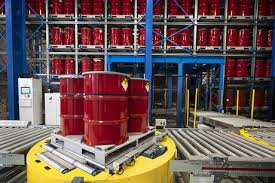
A bitter clash has erupted over who is to blame for cracks appearing in the lining of the “hot cells” of a brand new radioactive waste plant.
Linda Silmalis, Chief Reporter, May 12, 2024, The Sunday Telegraph https://www.dailytelegraph.com.au/news/nsw/bungled-design-blamed-for-cracks-in-the-lining-of-anstos-new-nuclear-waste-plant/news-story/07b3fc1e633cd769bbecb9da90e4932a
The lining within the “hot cells” of the new radioactive waste treatment plant at Lucas Heights has literally been peeling off, with secret details about the defect in the ANSTO-designed facility unveiled during a legal dispute.
The construction of the $27 million plant has been at the centre of a protracted legal battle between ANSTO and the contractor, with each blaming the other for the bungle.
The plant – which will become operation in the late 2020s – has been built to treat waste from the production of a special radioisotope called Mo-99 to be used in medicine.
Contractors were invited in 2017 to build the plant with ANSTO and Icon SI (Aust) – comprising Cockram Construction – awarded a contract for $27 million for the construction of the building.
However, Icon SI has since taken ANSTO to court with the two parties in dispute over the works, including the withholding of payments and who is responsible for the so-called “epoxy defect”.
A technology and construction list statement filed in the NSW Supreme Court late last year by lawyers for Icon IS revealed how ANSTO had noted a “subsisting defect in the epoxy coating”.
However, Icon SI’s lawyers claimed it was ANSTO which had caused the problem – now rectified – as it was its design.
“The defendant’s design at the junctions of steel and concrete failed to take into account the different thermal expansion of the two materials,” the statement said.
“The different thermal expansion of the two materials causes the epoxy coating at the junctions to crack.”
An Icon spokeswoman said the choice of lining within the hot cells had been found to be inadequate, resulting in the delamination and “peeling”.
While ANSTO was trying to “blame the builder”, it had only engaged Cockram under a “construct-only” contract, she said. She also claimed Cockram had been engaged before ANSTO had completed the design, drawings and broader contract documentation for the project.
“ANSTO has consistently tried to blame what are in fact design defects on the builder,” she said.
“One such issue is the lining chosen inside of the hot cell, which contains the nuclear waste. This specification has been found to be inadequate, resulting in delamination/peeling. The design of the hot cell remains unsuitable for its intended purpose.”
The Sunday Telegraph has been told the epoxy coating was applied to the internal floors and walls in the facility, and to the front and back of the hot cells.
The hot cells have yet to receive nuclear waste – which occurs during the “hot commissioning” phase – with the defect detected as it was undergoing cold commissioning. The plant has now been returned to “fit out” stage with defect being rectified by ANSTO.
An ANSTO spokeswoman said it was inappropriate to comment on the matter given the ongoing legal proceedings.
NSW Supreme Court Justice Michael Ball last month sent the matter to arbitration.
Bill lets UK/US “dump nuclear submarine waste here”
Ben Packam 6 May 24
The British company appointed to build Australia’s nuclear submarines says the government’s draft nuclear safety laws would allow the disposal in Australia of high -level radioactive wastes from UK submarines.
BAE Systems chief counsel made observation at committee hearing examining the government’s naval nuclear power safety bill, which is due to be pushed through Parliament after next week’s federal budget………….
Under questioing by Greens Senator David Shoebridge, BAE’s Peter Quinlivian agreed that the wording of the bill opened a pathway for the disposal of high-level British radioactive waste in Australia.
“The legislation as drafted is in language that would accommodate that scenario” he said.
Britain is yet to dispose of any of the nuclear submarines it has decommissioned since the 1980s. It estimates it won’t fully dispose of the boats, plus seven more dure to retire in coming years, until the late 2060s.
Mr Quinlivian said that BAE had not informed the British government of the prospects that Australia could legally dispose of its nuclear waste “because it didn’t immediately strike us”
The apparent loophole flies in the face of Australia’s reassurances that AUKUS won’t require us to become a dumping ground for other countries’ nuclear wastes.
Liberal Senator David Fawcett asked Defence officials in the April 22 committee hearing whether the bill could be amended to avoid unintended consequences, something that the government is understood to be open to.
In a written response, Defence conceded that a tightening of the bill’s language could be needed. It said specifying the “disposal” of only “Australian submarine” nuclear waste would be consistent with government policy, but the government would have to “carefully consider any amendment which excluded the possibility of regulatory control of the management of low level radioactive waste from UK or US submarines……………….
The Australian Radiation Protection and Nuclear Safety agency is poised to declare a site at the HMAS Stirling naval base off Perth as a low level radioactive waste management facility, but a decision on where to store high level waste from Australia’s planned nuclear submarines is years if not decades away

Defence Minister Richard Marles said that after the government announced its nuclear submarine plans in March 2023, Australia would not take nuclear waste from its AUKUS partners
“We’re not talking about establishing a civil nuclear industry, nor are we talking about opening Australia up as a repository for nuclear waste from other countries” he told the ABC.
Senator Shoebridge said that British bureaucrats were almost certainly “rubbing their hands together at the prospect of the Albanese government being foolish enough to pass this bill”
“Minister Marles has now been embarrassed by not only his own department but the very people he signed up to make the nuclear subs” he said.
The Senate standing committee on foreign affairs defence and trade is to release its report on the Australian Naval Nuclear Power Safety Bill 2023 on May 11.
No decisions on site for nuclear waste dump as spin doctor sought

By Karen Barlow – Canberra Times, April 15 2024 – https://www.canberratimes.com.au/story/8591149/the-nuclear-waste-dump-quest-is-waiting-for-its-spin-doctor/
The Albanese government has confirmed it is searching for, and is yet to settle on, sites for both low- and intermediate-level radioactive waste as it seeks a highly skilled PR team to manage likely “high” outrage over possible sites.
In a series of answers to questions from potential suppliers on the federal tender site, the Department of Industry, Science and Resources also advised that there may be a need to reference the future AUKUS nuclear-powered submarine program through the contract, but only in educational materials.
It comes after a major government approach to market was uncovered by The Canberra Times, revealing that a nuclear-specific crisis management team is being sought – six months after the government abandoned plans for a low-level waste dump near Kimba in remote South Australia – to bid for a two-year contract to help manage public discussion of nuclear waste in Australia.
The move has been criticised by the Greens and the Coalition as spin and “steamrolling regional communities,” but the new approach to market appears to address other criticism that nuclear waste dumps are announced and later argued as needed.
Asked by an unnamed potential supplier if the department has a list of sites or communities looking to be engaged over the two-year contract period, the answer is “no.”
“This information is unknown,” the answer reads. “The Australian Radioactive Waste Agency has started work on alternative proposals for the storage and disposal of the commonwealth’s civilian low-level and intermediate-level radioactive waste.”
So that is not just the low-level option that was being sought, but abandoned, at Napandee at the top of the Eyre Peninsula.
The answers to the questions of potential suppliers, which have to bid for the contract, offer greater insight to the process for delivering a secure storage facility, but are limited to current timelines.
“No site has been been shortlisted or selected and no benefits package has been determined, this will be a matter for government,” the department stated.
The department also advises that there are not currently “specific deliverables” that the department is looking to complete. It is also advised there may be some stakeholder engagement activities that involve a role in decision making.
The original approach to market, posted March 26, asked for assistance with “nuclear-specific” public relations and professional communications services during the early stages of a new radioactive waste management approach being identified. This is described as the first three to five years of a 100-year project.
It would involve engagement with “impacted communities”, “stringent preparation for technical and challenging questions” from the public, and support for the public’s “comprehensive understanding of the nation’s radioactive waste inventory, origins and need for safe management.”
“This is a highly specialised high-outrage area and there are times of uplift where urgent assistance is required and additional industry-relevant specialist support is needed, including upskilling staff to undertake these activities in a high outrage environment,” the document reads.
It comes as Australia, as well as AUKUS partners the United States and the United Kingdom, continues to be without a long-term solution for radioactive waste disposal.
Asked by a potential supplier if there is consideration for SSN-AUKUS (nuclear powered submarines under the AUKUS trilateral pact) or visiting nuclear-powered naval capabilities, the department said maybe, but not much.
“While information about Australia’s nuclear-powered submarine program may form a small part of ARWA educational materials, the supplier will not be required to undertake engagement work focused on AUKUS or nuclear-powered submarines,” it responded.
There appears to be no willingness to waive the requirement for baseline security clearance, even for a world-leading technical subject matter expert.
Asked if a waiver was possible for the duties which include assisting in preparing “factually correct nuclear technology and radioactive waste engagement materials”, the department responded, “Any specified personnel must be able to obtain and hold a Baseline Security Clearance.”
Asked further if people with equivalent security clearances from other five eyes nations (the US, UK, New Zealand and Canada) are able to work on the project, the response was the same: “Any specified personnel must be able to obtain and hold a Baseline Security Clearance.”
‘Poison portal’: US and UK could send nuclear waste to Australia under Aukus, inquiry told
Labor describes claims as ‘fear-mongering’ and says government would not accept waste from other nations.
Tory Shepherd, Tue 2 Apr 2024, https://www.theguardian.com/world/2024/apr/02/poison-portal-us-and-uk-could-send-nuclear-waste-to-australia-under-aukus-inquiry-told
Australia could become a “poison portal” for international radioactive waste under the Aukus deal, a parliamentary inquiry into nuclear safety legislation has heard.
New laws to establish a safety framework for Australia’s planned nuclear-powered submarines could also allow the US and UK to send waste here, while both of those countries are struggling to deal with their own waste, as no long-term, high-level waste facilities have been created.
The government introduced the Australian naval nuclear power safety bill in November last year. If passed, it will establish a nuclear safety watchdog, allow for naval nuclear propulsion facilities to be created, including for storing or disposing of radioactive waste from Aukus submarines. A second bill to enable the regulator to issue licenses was introduced at the same time.
Both have been referred to a Senate inquiry, which is due to report on 26 April.
Dave Sweeney, the Australian Conservation Foundation’s nuclear free campaigner, said the issue of waste disposal was “highly disturbing” and that the Aukus partners could see Australia as a “a little bit of a radioactive terra nullius”.
“Especially when it’s viewed in the context of the contested and still unresolved issue of domestic intermediate-level waste management, the clear failure of our Aukus partners to manage their own naval waste, the potential for this bill to be a poison portal to international waste and the failure of defence to effectively address existing waste streams, most noticeably PFAS,” he said.
The defence minister, Richard Marles, has previously accused the Greens of “fearmongering” when they raised similar concerns, saying the government would not accept waste from the other nations.
However, the legislation allows for the creation of facilities for “managing, storing or disposing of radioactive waste from an Aukus submarine”, and defines an Aukus submarine as either an Australian or a UK/US submarine, and “includes such a submarine that is not complete (for example, because it is being constructed or disposed of)”.
The Greens defence spokesperson, David Shoebridge, said HMS Dreadnought, one of the UK’s first nuclear submarines, had been “rusting away” since being decommissioned in 1980.
“You can go on Google Maps and look at them rusting away in real time, can’t you?” Shoebridge asked Australian Radiation Protection and Nuclear Safety Agency (Arpansa) chief regulatory officer, James Scott.
“Yes. There is no disposal pathway yet,” Scott said, adding he was “aware of the UK plans to establish a deep geological repository somewhere in the 2050s to 2060s”.
“There’s no exact date,” he said.
“The UK is pursuing a disposal pathway, and Australia will need to do the same. We are fully aware of this; we are engaging with our own radioactive waste agency, ARWA, on this, and it’s something that needs to be dealt with now, not later.”
The Dreadnought’s nuclear fuel has been removed to be stored safely. This has happened with some but not all of the submarines, but there is still no permanent disposal facility. The US also removes nuclear fuel for temporary storage.
The UK and US could send nuclear waste to Australia under our AUKUS deal
https://www.crikey.com.au/2024/04/02/misbehaving-mps-pay-aukus-nuclear-waste/
The UK and US could send nuclear waste to Australia under our AUKUS deal, the Australian Conservation Foundation’s Dave Sweeney told a parliamentary inquiry.
It’s exploring Labor’s draft Australian Naval Nuclear Power Safety Bill, as Guardian Australia reports, which proposed facilities that could store or dispose of radioactive waste from AUKUS submarines — defined as either an Australian or a UK/US one, the Defence Department’s domestic nuclear policy branch assistant director general Kim Moy confirmed.
Basically, we’d be in prime position to become a poison portal, Sweeney claimed, though Defence Minister Richard Marles has before vowed it won’t happen. In any case, one expert told the inquiry we need a plan to store the nuclear waste from the subs for as long as 100,000 years — and so far, no-one in AUKUS has quite worked it out.
1 This month

of the week – Australians for War Powers Reform (AWPR)
To see nuclear-related stories in greater depth and intensity
 Antinuclear