The dangers of so called intermediate level nuclear waste, include the devaluation of the region’s agriculture
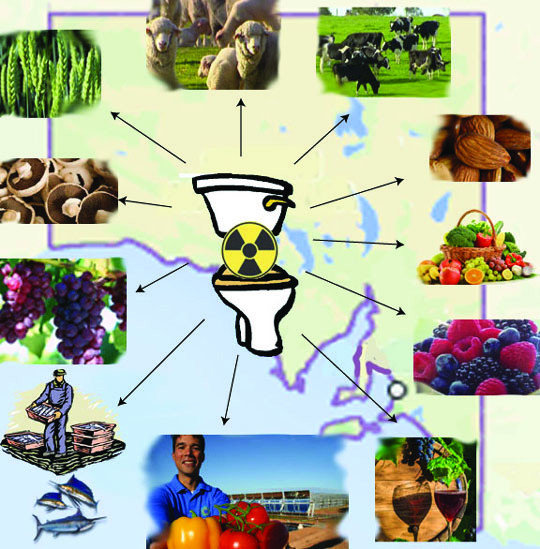
Bev Spriggs Fight To Stop A Nuclear Waste Dump In South Australia, 10 Mar 20, The dangers of so called intermediate level nuke waste, – it is considered high level waste in the countries that want us to take it. Mr Baldock will be astonished to learn of the devaluation of his crops and the rest of his land and that of his neighbours once that poison comes to town. As for the 45 job creations….that may happen during construction, then they will disappear and there will only be 8 to 10 jobs to caretake the facility. The 31 mill promised for the community will happen once only, when it is gone there will be no more. https://www.facebook.com/groups/941313402573199/
Greens Senator Hanson-Young calls for Senate Nuclear Waste Inquiry to meet in Whyalla, South Australia
 Nuclear bill referred to inquiry https://www.whyallanewsonline.com.au/story/6653019/nuclear-bill-referred-to-inquiry/?cs=1550&fbclid=IwAR3AvrninZlnLmX8r79QDkQopkBb5hXoWhguw106lCyiisCDdmWMy714MPM, Louis Mayfield 27 Feb 20, Nuclear bill referred to inquiry https://www.whyallanewsonline.com.au/story/6653019/nuclear-bill-referred-to-inquiry/?cs=1550&fbclid=IwAR3AvrninZlnLmX8r79QDkQopkBb5hXoWhguw106lCyiisCDdmWMy714MPM, Louis Mayfield 27 Feb 20,
The formal process for the federal government’s push for a nuclear waste dump in Kimba will be put under the microscope by the Senate Economics Committee, with a Greens Senator calling for hearing in Whyalla. On Thursday the Greens announced they would be referring the government’s legislation for the Nuclear Radioactive Waste Management Facility to a Senate Inquiry for ‘scrutiny of the laws and the process that led to this point’. South Australian Greens Senator Sarah Hanson-Young requested that the committee organise a public hearing in Whyalla and a visit to the federal government’s chosen site for the facility at Napandee.
“I have requested a hearing in Whyalla because it shouldn’t be left to the suits in Canberra to decide, anything less would be offensive to the communities involved,” she said. Senator Hanson-Young also claimed the site selection for the facility had been ‘dodgy from the start’.
“It’s ripped small communities apart and Traditional Owners have vehemently objected to the proposal,” she said. “It’s clear there isn’t broad community support for a nuclear waste dump in Kimba, despite what former Minister Matt Canavan would have everyone believe.”
“Port Augusta, Whyalla, Port Pirie and Port Lincoln and every town living along potential transportation route, should have been consulted and given an opportunity to have their say,” she said. “The Greens aren’t leaving it to the community of Kimba to hold the line on their own. A Senate Inquiry will give the entire proposal the scrutiny it needs.” The committee has resolved to report on the legislation in June, submissions to the committee are now open and will close at the end of March. |
|

Legislation banning nuclear power in Australia should be retained
| Jim Green, Online Opinion, 27 Feb 2020, https://onlineopinion.com.au/view.asp?article=20758&page=0
Nuclear power in Australia is prohibited under the Environmental Protection and Biodiversity Conservation (EPBC) Act 1999. A review of the EPBC Act is underway and there is a strong push from the nuclear industry to remove the bans. However, federal and state laws banning nuclear power have served Australia well and should be retained.
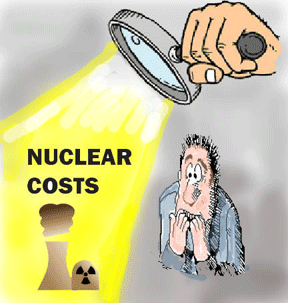
There are many other examples of shocking nuclear costs and cost overruns, including: * The cost of the two reactors under construction in the US state of Georgia has doubled and now stands at A$20.4‒22.6 billion per reactor. * The cost of the only reactor under construction in France has nearly quadrupled and now stands at A$20.0 billion. It is 10 years behind schedule. * The cost of the only reactor under construction in Finland has nearly quadrupled and now stands at A$17.7 billion. It is 10 years behind schedule. * The cost of the four reactors under construction in the United Arab Emirates has increased from A$7.5 billion per reactor to A$10‒12 billion per reactor. * In the UK, the estimated cost of the only two reactors under construction is A$25.9 billion per reactor. A decade ago, the estimated cost was almost seven times lower. The UK National Audit Office estimates that taxpayer subsidies for the project will amount to A$58 billion, despite earlier government promises that no taxpayer subsidies would be made available. Nuclear power has clearly priced itself out of the market and will certainly decline over the coming decades. Indeed the nuclear industry is in crisis ‒ as industry insiders and lobbyists freely acknowledge. Westinghouse ‒ the most experienced reactor builder in the world ‒ filed for bankruptcy in 2017 as a result of catastrophic cost overruns on reactor projects. A growing number of countries are phasing out nuclear power, including Germany, Switzerland, Spain, Belgium, Taiwan and South Korea. Rising power bills: Laws banning nuclear power should be retained because nuclear power could not possibly pass any reasonable economic test. Nuclear power clearly fails the two economic tests set by Prime Minister Scott Morrison. Firstly, nuclear power could not possibly be introduced or maintained without huge taxpayer subsidies. Secondly, nuclear power would undoubtedly result in higher electricity prices.
Former US Vice President Al Gore summarised the proliferation problem: “For eight years in Too slow: Expanding nuclear power is impractical as a short-term response to climate change. An analysis by Australian economist Prof. John Quiggin concludes that it would be “virtually impossible” to get a nuclear power reactor operating in Australia before 2040. More time would elapse before nuclear power has generated as much as energy as was expended in the construction of the reactor: a University of Sydney report concluded that the energy payback time for nuclear reactors is 6.5‒7 years. Taking into account planning and approvals, construction, and the energy payback time, it would be a quarter of a century or more before nuclear power could even begin to reduce greenhouse emissions in Australia (and then only assuming that nuclear power displaced fossil fuels).
Water consumption of different energy sources (litres / kWh): * Nuclear 2.5 * Coal 1.9 * Combined Cycle Gas 0.95 * Solar PV 0.11 * Wind 0.004 Climate change and nuclear hazards: Nuclear power plants are vulnerable to threats which are being exacerbated by climate change. These include dwindling and warming water sources, sea-level rise, storm damage, drought, and jelly-fish swarms. Nuclear engineer David Lochbaum states. “I’ve heard many nuclear proponents say that nuclear power is part of the solution to global warming. It needs to be reversed: You need to solve global warming for nuclear plants to survive.”
By contrast, the REN21 Renewables 2015: Global Status Report states that renewable energy systems “have unique qualities that make them suitable both for reinforcing the resilience of the wider energy infrastructure and for ensuring the provision of energy services under changing climatic conditions.”
To give one example (among many), the National Radioactive Waste Management Act dispossesses and disempowers Traditional Owners in many respects: the nomination of a site for a radioactive waste dump is valid even if Aboriginal owners were not consulted and did not give consent; the Act has sections which nullify State or Territory laws that protect archaeological or heritage values, including those which relate to Indigenous traditions; the Act curtails the application of Commonwealth laws including the Aboriginal and Torres Strait Islander Heritage Protection Act 1984 and the Native Title Act 1993 in the important site-selection stage; and the Native Title Act 1993 is expressly overridden in relation to land acquisition for a radioactive waste dump. No social license: Laws banning nuclear power should be retained because there is no social license to introduce nuclear power to Australia. Opinion polls find that Australians are overwhelmingly opposed to a nuclear power reactor being built in their local vicinity (10‒28% support, 55‒73% opposition); and opinion polls find that support for renewable energy sources far exceeds support for nuclear power (for example a 2015 IPSOS poll found 72‒87% support for solar and wind power but just 26% support for nuclear power). As the Clean Energy Council noted in its submission to the 2019 federal nuclear inquiry, it would require “a minor miracle” to win community support for nuclear power in Australia. The pursuit of nuclear power would also require bipartisan political consensus at state and federal levels for several decades. Good luck with that. Currently, there is a bipartisan consensus at the federal level to retain the legal ban. The noisy, ultra-conservative rump of the Coalition is lobbying for nuclear power but their push has been rejected by, amongst others, the federal Liberal Party leadership, the Queensland Liberal-National Party, the SA Liberal government, the Tasmanian Liberal government, the NSW Liberal Premier and environment minister, and even ultra-conservatives such as Nationals Senator Matt Canavan.
Australia can do better than fuel higher carbon emissions and unnecessary radioactive risk. We need to embrace the fastest growing global energy sector and become a driver of clean energy thinking and technology and a world leader in renewable energy technology. We can grow the jobs of the future here today. This will provide a just transition for energy sector workers, their families and communities and the certainty to ensure vibrant regional economies and secure sustainable and skilled jobs into the future. Renewable energy is affordable, low risk, clean and popular. Nuclear is not. Our shared energy future is renewable, not radioactive. More Information * Don’t Nuke the Climate Australia, www.dont-nuke-the-climate.org.au * Climate Council, 2019, ‘Nuclear Power Stations are Not Appropriate for Australia – and Probably Never Will Be’, https://www.climatecouncil.org.au/nuclear-power-stations-are-not-appropriate-for-australia-and-probably-never-will-be/ * WISE Nuclear Monitor, 25 June 2016, ‘Nuclear power: No solution to climate change’, https://www.wiseinternational.org/nuclear-monitor/806/nuclear-power-no-solution-climate-change Dr. Jim Green is the national nuclear campaigner with Friends of the Earth Australia. |



Barngarla Aboriginal Corporation lobby Senators- to oppose Bill to set up Kimba nuclear waste dump
|
Native title holders will travel to Canberra to lobby senators against the dump, saying they were excluded from community vote on the facility, Guardian, Sarah Martin Chief political correspondent @msmarto, Wed 26 Feb 2020 03.30 The government is pushing ahead with the legislation, despite the ballot being challenged in the federal court by the Barngarla native title holders, who were excluded from the vote because they are not ratepayers. Jason Bilney, chairman of the Barngarla Determination Aboriginal Corporation, said the 200 local native title holders were excluded from the Kimba community ballot despite repeated requests to both the council and the federal government to be included. The corporation is challenging the ballot in the federal court, claiming their exclusion is a breach of the racial discrimination act. The full court of the federal court heard the matter last Friday. “It is a simple truth that had we, as the first people for the area, been included in the Kimba community ballot rather than unfairly denied the right to vote, then the community ballot would never have returned a yes vote,” Bilney told Guardian Australia ahead of a visit to Canberra next month. “Many of our people were born in Kimba, and we have significant native title land near the proposed facility. This native title land allows us to live on and use the land. However, because it is not rateable, we were excluded from the Kimba community ballot on a technicality,” he said. The Barngarla claim the Coalition’s bill has been introduced to make it impossible to challenge the decision to locate a facility at Kimba, even if the court appeal is successful, effectively removing the protections of the Race Discrimination Act. “These amendments would entirely remove any court oversight, right in the middle of existing federal court proceedings. This would entirely deprive any protections for our people,” Bilney said. The group is expected to meet with crossbench senators in Canberra in the current session of parliament, explaining their concerns about the ballot process and pushing for the legislation to be blocked. Centre Alliance has already expressed reservations about supporting the legislation, saying Canavan had not been upfront about what constituted “broad community support” before the results of the ballot were known. “No one goes into a vote without understanding what the pass criteria is,” SA senator Rex Patrick told Guardian Australia. “I support the need for a national facility, but it should only be located where there is broad community support.” Labor discussed the party’s position regarding the legislation in a caucus meeting on Tuesday, with MPs resolving to wait until the bill had been considered by the senate economics committee and until the federal court decision had been handed down. A final decision will then be considered by the shadow cabinet and caucus and will also go through the First Nations caucus committee. Labor’s shadow industry minister, Brendan O’Connor, is expected to outline the party’s concerns when debate gets under way in the House of Representatives on Wednesday, but told MPs that there was a need for Australia to establish a national radioactive waste management facility. ….. https://www.theguardian.com/australia-news/2020/feb/26/south-australia-nuclear-waste-dump-could-face-roadblock-in-senate
|
|

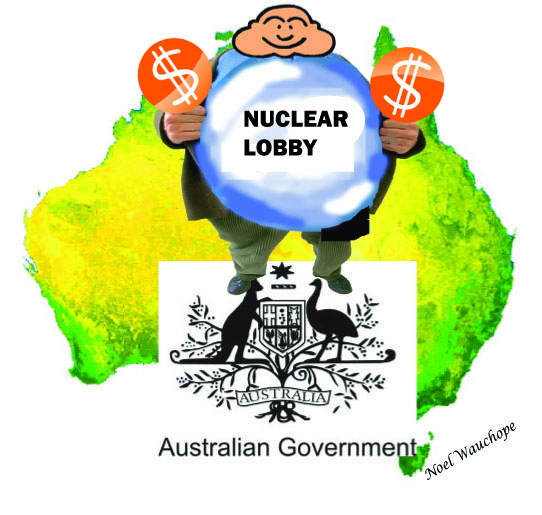
Kimba nuclear waste dump – a total mishandling of the truth from Australian government.
|
IN DAILY – YOUR VIEWS – 25TH FEBRUARY 2020 Fight To Stop Nuclear Waste In The Flinders Ranges
 Leon Ashton, When will the Federal Government finally acknowledge publicly that their process to establish a nuclear waste dump has not worked.? All that they have done to date is to destroy the community bond which is the glue that holds any small community together. Leon Ashton, When will the Federal Government finally acknowledge publicly that their process to establish a nuclear waste dump has not worked.? All that they have done to date is to destroy the community bond which is the glue that holds any small community together.They have portrayed the dump to the key communities as a win-win for all.
This they can do easily because they have only told half the story. The good bits.
They have the money to do this as its taxpayers’ money. If the people of South Australia only delved a bit deeper into the nuclear issue, they would soon discover a total mishandling of the truth from our government.
A few unanswered concerns are:
1) Why won’t the department tell the people of Kimba what the CEO of Lucas Heights told the doctor from Hawker in May 2018 that we are lucky to now be receiving intermediate-level waste, because without it there are very little economic benefits to any community.
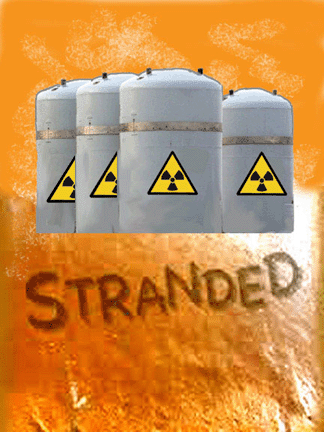 2) The department will not tell the community how long the highly dangerous intermediate nuclear waste will be temporarily stored. There are no such plans in place at the present to permanently bury this waste as it is too cost prohibitive to do so. This could easily end up stranded for hundreds of years to come in the centre of Eyre Peninsula. If the government watchdog ARPANSA agrees that it is to remain at Lucas Heights, where does that leave the community. 2) The department will not tell the community how long the highly dangerous intermediate nuclear waste will be temporarily stored. There are no such plans in place at the present to permanently bury this waste as it is too cost prohibitive to do so. This could easily end up stranded for hundreds of years to come in the centre of Eyre Peninsula. If the government watchdog ARPANSA agrees that it is to remain at Lucas Heights, where does that leave the community.3) Why won’t Sam Chard (Your views, February 19) tell the communities that once legacy waste is collected and stored at the dump, then there will only be about two and a quarter containers annually of low-level waste delivered provided every one chooses to use the dump. This will never provide 45 jobs.
4. A parliamentary enquiry in 2004 in NSW acknowledged it was misleading to the public by ANSTO, rebadging the high-level waste being returned from France and England as intermediate waste.
If Australia has to have a single waste dump for our low and intermediate-level waste then all Australians need to be involved. Not just kept low key on the few hundred citizens that are at present bulldozed into the decision that needs a national answer. https://www.facebook.com/groups/941313402573199/
|
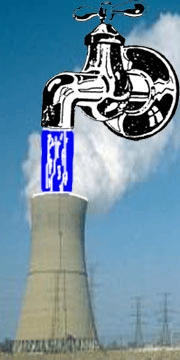
The Kimba nuclear waste dump will take a huge toll on the Murray River’s water
 Annette Ellen Skipworth No Nuclear Waste Dump Anywhere in South Australia, 25 Feb 20
I spent some time as a remote road contractor and I learnt a little bit about roads and site works.
To take the weight of the truck load, a road has to be compacted to gain the strength to take the semi plus the load on the tray.
From asking questions and scouring internet sites, I have found out, the casks containing the high grade nuclear waste.. excuse me ..the intermediate nuclear waste are very very heavy.
It wasn’t advisable to use water that is very salty.. it rises to the top and makes the road slippery.
As Kimba’s only water supply comes from the precious Murray River, and the local underground water is salty and unusable.. where is the water needed coming from?
Whyalla urgently needs a policy to prevent becoming the radioactive trash port
“A question was asked to (Whyalla) council regarding potential use of the port for the transport of intermediate level waste. The response is on the council website under Council Meeting Minutes Monday 17/2/20. There is no current policy.
As a community we should have a policy. We should be standing up on behalf of the divided Kimba community and refuse the use of the port and surrounding roads and rail. It is the responsibility of the council to represent the community, not to bow down and take orders from the state government.” – Mr Andrew Williams.
Link source to Minutes: http://www.whyalla.sa.gov.au/…/council%20minutes%20-%20PUBL…
Bill in Aust Parliament names South Australia as the Nuclear Waste State
the Bill makes provision for the Federal gov. to pass Regulations to name and over-ride specific State Laws. For instance, it may be the case that the Federal gov. requires to pass a Regulation to name and over-ride the public interest protections in the SA “Nuclear Waste Storage (Prohibition) Act 2000”, and potentially to also do so regarding the SA “Aboriginal Heritage Act 1988”.
David Noonan, 24 Feb 20, Bill names SA as the Nuclear Waste State:
The Bill specifies South Australia as a nuclear waste dump state.
And specifies Napandee near Kimba as a Nuclear Waste Store – which effectively also targets Whyalla Port for multiple nuclear waste shipments.
The Bill has been to the HoRep’s and now goes to the Senate:
“to enable the decision about the location of the facility to be subject to Parliamentary scrutiny”
(see the Bill Explanatory Memorandum Outline p.1).
For access to the doc’s and to speeches, and to Track the Bill – so as to receive e updates…
The Bill is expected to be Referred by the Aust Greens around Wed 26th Feb to a short Inquiry by the Senate Standing Economics Legislation Committee. The Bill may go to a vote in Senate in the last week of May.
If the Bill is passed, the Federal gov. then instigates a Licensing process on the NRWM Facility by the nuclear regulator ARPANSA, and in parallel makes a referral for environment assessment of the proposed NRWM Facility under EPBC Act.
ARPANSA are expected to conduct separate Licensing processes for the above ground interim Nuclear Waste Store, and for the so-called Low-Level Waste Disposal Facility. ARPANSA may require the Federal gov. to make separate Licensing Applications for the two types of waste facilities.
The Federal gov. can-not assume that both facilities will be approved by the regulator.
It is arguably likely that Licensing for the NRWM Facility, and in particular for above ground interim Nuclear Waste Store, should and will fail – leaving the amended Act stranded will a failed single specified site and no provision for consideration of any further siting elsewhere in SA or in other States / Territories.
However, the Bill is said by the Minister and the Department to provide ‘certainty’.
Notes on Bill:
The Bill names and specifies South Australia, and omits “the State or Territory”, for siting a NRWM Facility and to register acquired lands;
The Bill specifies Napandee as the NRWM Facility site and amends the 2012 Act to that effect as a single site;
The Explanatory Memorandum (EM, Outline p.2) says: “Additional land will not be able to be acquired to establish a second facility”;
The Bill “Notes on Clauses” p.22 states: “Once established, it is expected to be in operation for 100 years.”
The Bill “Notes on Clauses” p.14 claims: “there is broad support in the community for the project.”
The Bill strengthens the Commonwealth powers to use the 2012 Act to over-ride State laws and to impose the NRWM Facility on unwilling communities;
The Bill specifically asks Senators to vote to approve a set of powers to over-ride any State law (or other Cth law), Continue reading
Barngarla Aboriginal people take legal action against Australian govt’s planned Kimba nuclear waste dump
  Indigenous group fights on to stop SA dump https://www.9news.com.au/national/indigenous-group-fights-on-to-stop-sa-dump/d72f3453-28e8-4182-a9bb-6c9390098bf6?fbclid=IwAR3l91JVzBoJhkIhnf49 Feb 21, 2020 Native title holders on South Australia’s Eyre Peninsula are continuing their court fight to stop the federal government establishing a nuclear waste dump near Kimba. Indigenous group fights on to stop SA dump https://www.9news.com.au/national/indigenous-group-fights-on-to-stop-sa-dump/d72f3453-28e8-4182-a9bb-6c9390098bf6?fbclid=IwAR3l91JVzBoJhkIhnf49 Feb 21, 2020 Native title holders on South Australia’s Eyre Peninsula are continuing their court fight to stop the federal government establishing a nuclear waste dump near Kimba.
The government recently named a site on a local station as the location for the dump which will take Australia’s low to medium level nuclear waste material.
The government’s decision was informed in part by a ballot of local residents which supported the proposal.
But it’s that ballot that the Barngarla people are fighting in new Federal Court action.
They’re appealing against a court judgment last year that the council had not acted wrongly in excluding about 200 native title holders from the vote.
Counsel for the Barngarla, Daniel O’Gorman SC, told the court on Friday that their request to take part in the ballot should have been granted.
“They, therefore, are part of the community,” he said.
“This was a ballot of the community, the Kimba community. They are the native title holders of the land surrounding the sites in question.
“Therefore, we submit, they clearly had an interest in the ballot, they clearly had an interest in the dump and whether it goes ahead or not.
“Their mere standing as native title holders, warranted them being included as part of the community.”
The ballot ultimately returned about 62 per cent support for the dump, which then Resources Minister Matt Canavan accepted as broad community backing.
Those still opposed to the dump going ahead include some locals, environmental groups as well as indigenous communities.
Earlier this month, legislation to allow construction of the waste facility was introduced to federal parliament.
The underpinning laws allow for acquisition of land for the facility as well as a $20 million payment for the community to help establish and maintain the site which is expected to operate for at least 100 years.
The Federal Court’s ruling on the Barngarla appeal is expected to be handed down on a date to be fixed.
|
|
|
No, Mr Baldock, our children do not deserve this dirty, long-lasting, nuclear trash dump
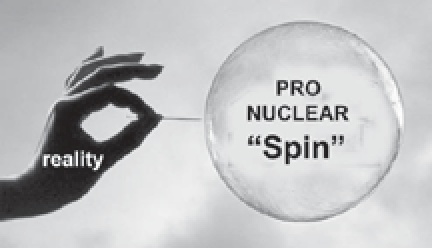 Paul Waldon Fight To Stop A Nuclear Waste Dump In South Australia, 21 Feb 20, People leaving, property values dropping, large tracts of land hitting the market, children’s heritage being sold and/or eroded, a once strong community now divided, people happier to shop outside their community, these are the trademarks of a dying town with poor opportunities.
An aggressive social cancer fueled by a desperate and ignorant nuclear embracing dichotomy trying to grasp the doctrines of the indentured servitude bound nuclear coterie with a vested interest spouting factoids will surely fail to attract new business and people to the region.
Meanwhile Andrew Baldock, nuclear profiteer, social axe man has continued to state “We are doing this for the children!”
Well Baldock my children, my children’s children’s children don’t deserve this. https://www.facebook.com/groups/941313402573199/
Correcting the propaganda: Australia’s nuclear medicine DOES NOT NEED a national radioactive waste dump
|
Commenting on the opinion piece: Kimba nuke decision dumps on Indigenous rights In Daily 21 Feb 20, Once again, Sam Chard (Your views, February 19) glosses over some of the less flattering details of the proposed National Radioactive Waste Management Facility.
A lot of focus is given to the permanent disposal of the so-called ‘gloves and gown’ low-level waste. However, the proposal also includes the temporary above-ground storage of long-lived intermediate level waste. This waste will not be be safe after a half-life of 30 years (as with the low level waste). In fact, it will not be safe after 100 years when the facility is projected to close. This long-lived intermediate level waste is not currently ‘spread across 100 sites’. It is housed in one location in a purpose-built facility at Lucas Heights. This long-lived intermediate level waste is not currently ‘spread across 100 sites’. It is housed in one location in a purpose-built facility at Lucas Heights. There is no future plan, nor funding, to manage this waste in 100 years when the facility closes. The question that South Australians have to ask is; how our grandchildren are going to manage this waste long after the ‘community development’ fund is gone? – Megan Johnson The head of the federal government’s radioactive waste task force stated (Your views, February 19) that the planned national waste facility at Kimba is ‘critical to Australian nuclear medicine’, and went on to assert that ‘radioactive waste from nuclear medicine is currently spread over more than 100 locations across the country, at science facilities, universities and hospitals. It needs to be consolidated into a purpose-built facility, where it can be safely managed’. Sounds reasonable, but is it accurate? With minor exceptions, Australia’s waste from nuclear medicine is managed on a ‘store and decay’ basis. This means it is secured and stored at the site of use until it has decayed to a point where it can be disposed to local landfill. This material does not need any federal facility, and continuing access to nuclear medicine is not dependant on the planned national facility. The facility is related to nuclear medicine in as much as it is planned to house spent nuclear fuel from the Lucas Heights reactor, but not in relation to any need from clinics, Uni’s, hospitals or medical centres that use nuclear medicine. Perhaps the federal department could step up and list the one hundred sites that currently store radioactive material that will no longer need to do so should a national facility ever be built. No doubt they will claim they can’t do so because of security considerations, an explanation that sounds better than because there are few or no sites that need this. Radioactive waste lasts longer than any politician’s promise. Matt Canavan, who signed off on the contested Kimba plan at the start of this month, is now no longer a Minister – but the waste has up to another 10,000 years to go. We need to do better than to try and manage half-lives with half-truths. – Dave Sweeney, Australian Conservation Foundation https://indaily.com.au/opinion/reader-contributions/2020/02/21/your-views-on-nuclear-waste-le-cornu-site-and-holden-demise/ |
|
Greens in the Senate will oppose bill to storage nuclear waste at Kimba farm
 Greens to oppose bill to storage nuclear waste at SA farm, Queensland Country Life, Jamieson Murphy@jamiesonmurph18 Feb 2020, THE government may have to negotiate with the Senate crossbench to get through legislation that will transform a South Australian farm into a nuclear waste facility, after the Greens declared their opposition to the bill. Greens to oppose bill to storage nuclear waste at SA farm, Queensland Country Life, Jamieson Murphy@jamiesonmurph18 Feb 2020, THE government may have to negotiate with the Senate crossbench to get through legislation that will transform a South Australian farm into a nuclear waste facility, after the Greens declared their opposition to the bill.
The Kimba farm, which was voluntarily nominated and chosen after a four-year search, would store medical nuclear waste for 100 years. South Australian Senator and Greens nuclear spokesperson Sarah Hanson-Young said her party would work to block the “offensive” legislation. “The federal government wants to dump on South Australia and we won’t leave it to the community of Kimba to hold the line on their own,” Senator Hanson-Young said. “It is wrong to say there is broad community support. Traditional Owners have rejected the proposal. Once again the Morrison government and [former Resource] Minister Canavan haven’t listened. “A government minister from Queensland thinks South Australia is the place to dump and it’s deeply offensive to the people of SA. “Every South Australian should be concerned this government is more interested in building a radioactive waste dump than they are in investing in renewable energy and our growing potential for green industry.” Labor resource spokesperson Joel Fitzgibbon did not respond to questions about whether his party would support the bill. The recently appointed Resource Minister Keith Pitt introduced the legislation to the House of Representatives last week – just two weeks after the Kimba site was announced – where the government will have the numbers to pass the bill. With the Greens opposing the bill in the Senate and Labor not stating its position, the government will need the backing of either the Centre Alliance or One Nation to carry the bill. A spokesperson for Mr Pitt said the new minister was “working with other parties to deliver the outcome”. “Minister Pitt wants bipartisan support on the National Radiation Waste Management Bill,” the spokesperson said. “This bill has been 40 years in the making and the establishment of a national radioactive waste facility is a national priority.” South Australian Energy and Mining Minister Dan van Holst Pellekaan said the federal legislation would override SA’s state legislation….. https://www.queenslandcountrylife.com.au/story/6635712/greens-to-oppose-bill-to-storage-nuclear-waste-at-sa-farm/?cs=4704&fbclid=IwAR17gRLqP-DpCp_Ya5UqDUHu0Tj7y3siBi04TWo1wktCu-ZqtuBRG-PVyaE |
|
|
South Australia’s grain exports could be at risk, if Kimba nuclear waste dump goes ahead
Paul Waldon Fight To Stop A Nuclear Waste Dump In South Australia, 17 Feb 20,Keeping in mind the safe standard for radioactive contaminated food in Australia is 1200 becquerels, which fails to keep up with the safer standards of Japan at only 100 becquerels per kilo. Not only is Japans standards safer than ours but Australia’s grain export to Japan is about $646 million per year, and that could be in jeopardy if the program to turn Kimba into a radioactive dump proceeds.
Dr Bandazhevsky’s study came with the added problem of finding children of Belarus free of contamination, there was also a health cluster in children now recorded and known as Chernobyl heart, a condition of multiple holes in the heart, due to radioactive exposure.
Australian government pushes on with nuclear dump, tramples on indigenous rights
 Kimba nuke decision dumps on Indigenous rights, https://indaily.com.au/opinion/2020/02/13/kimba-nuke-decision-dumps-on-indigenous-rights/ The federal government’s decision to place a a nuclear waste storage site at Kimba on SA’s Eyre Peninsula turned deaf ears to the opposition of the area’s native title holders, argue Jim Green and Michele Madigan. Kimba nuke decision dumps on Indigenous rights, https://indaily.com.au/opinion/2020/02/13/kimba-nuke-decision-dumps-on-indigenous-rights/ The federal government’s decision to place a a nuclear waste storage site at Kimba on SA’s Eyre Peninsula turned deaf ears to the opposition of the area’s native title holders, argue Jim Green and Michele Madigan.
The federal government recently announced that it plans to establish a national nuclear waste ‘facility’ near Kimba on South Australia’s Eyre Peninsula. It will comprise a permanent dump for low-level nuclear waste, and an ‘interim’ store for long-lived intermediate-level waste. Shamefully, the federal government has decided to move ahead despite the unanimous opposition of the Barngarla Traditional Owners, native title holders over the area. The federal government refused a request from the Barngarla Determination Aboriginal Corporation (BDAC) to include traditional owners in a community ballot held last year. So BDAC initiated a legal action protesting their exclusion. The court case is ongoing and an outcome is expected soon. BDAC also engaged the Australian Election Company to conduct a confidential postal ballot. Not a single Barngarla Traditional Owner voted in favour of the dump. BDAC wrote to the government calling for the dump proposal to be abandoned in light of their unanimous opposition, and stating that BDAC will take whatever steps are necessary to stop it being imposed on Barngarla Country against their will. The National Radioactive Waste Management Act systematically discriminates against Australia’s First Nations. For example, the nomination of a site for a nuclear dump is valid even if Aboriginal traditional owners were not consulted and did not give consent. And the Act has sections which nullify or curtail the application of laws such as the Aboriginal and Torres Strait Islander Heritage Protection Act 1984, and the Native Title Act 1993. The federal government recently announced that it plans to amend the Waste Management Act. While the Act is sorely in need of an overhaul, the planned amendments aren’t those that are needed. Clauses in the Act that dispossess and disempower traditional owners will remain untouched. The SA Labor Party argues that traditional owners ought to have a right of veto over nuclear projects given the sad and sorry history of the nuclear industry in SA, stretching back to the British atomic bomb tests. Deputy Leader of the Opposition Susan Close says that SA Labor is “utterly opposed” to the “appalling” process which led to the recent announcement regarding the Kimba site. Compare that to the federal government, whose mind-set seems not to have advanced from the ‘Aboriginal natives shall not be counted’ clause in the Constitution Act 1900. As Barngarla Traditional Owner Jeanne Miller says, Aboriginal people with no voting power are put back 50 years, “again classed as flora and fauna.” The current debate follows a history of similar proposals ‒ all of them defeated, with traditional owners repeatedly leading successful campaigns. In 2004, after a six-year battle, the Howard government abandoned plans for a national nuclear waste dump in SA. The Kupa Piti Kungka Tjuta ‒ a senior Aboriginal women’s council ‒ congratulated the government for belatedly getting their ‘ears out of their pockets’. In 2016, the plan to import high-level nuclear waste from around the world was abandoned after a Citizens’ Jury noted the lack of Aboriginal consent and concluded that “the government should accept that the Elders have said NO and stop ignoring their opinions.” And last year, the federal government abandoned plans for a national nuclear dump in the Flinders Ranges, a plan that was fiercely contested by Adnyamathanha Traditional Owners. SA Premier Steven Marshall is rightly proud of his record promoting the growth of renewable energy in SA. And he’s proud of his significant role in putting an end to the plan to import high-level nuclear waste from around the world. So where will the Premier ‒ whose portfolio includes Aboriginal Affairs and Reconciliation ‒ stand on this latest nuclear controversy? He needs, as the Kungkas put it, to get his ears out of his pockets and to respect the unanimous opposition of the Barngarla First Nation. Dr. Jim Green is the national nuclear campaigner with Friends of the Earth Australia. Michele Madigan is a Sister of St Joseph who has spent the past 40 years working with Aboriginal people across SA. |
|
Nuclear waste dumping: as the Baldock family sells farming land, is the agricultural market for Kimba now stuffed up?
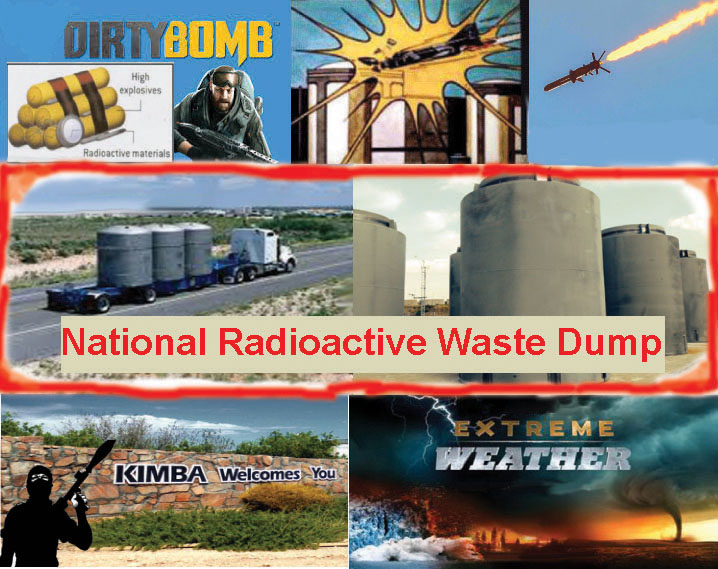
As the Baldock family anticipates the establishment of a nuclear waste dump on Jeff Baldock’s land, they now sell a large chunk of their farming land, along with three other farming families that have made the same decision. (Reported in The Advertiser , 14 Feb 2020)
It looks as if they are getting out fast, before the dirty nuclear waste news is widely known.
And here are some of the many comments on Facebook:
James Shepherdson It is actually about roughly 20ks from the site and has only just been added to the other land for sale. Read into it what you will , but if he’s planning to stay he’s sure sending the wrong message with this move .As far as being approachable, been there done that and got jumped on by council and the gov department and were accused of bullying . this will go down in history as the most undemocratic process in this country
K Bruun I can’t – but at the same time ‘can’ – believe this. I am amazed at how planned this has been. There must be something sociopathic about these people. I still don’t understand how Baldock could spend his nuffield scholarship learning how to keep families on farms together, yet does this. What is the psychology behind people like this? They have effectively harmed their entire community.
Kazzi Jai Paul Waldon “It was sheer elation when I heard,” Baldock says. “I’m 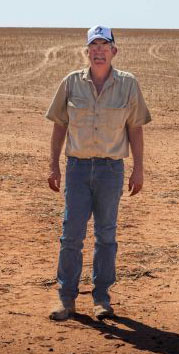 very, very excited about what lies ahead for Kimba. It gives me a great feeling of relief. I’m quite excited to have it on my property and see it develop, to have our kids around it and see some opportunities close to home.”
The Saturday Paper February 8th -14th 2020
Noel Wauchope Perhaps the Baldocks and others look to a “healthy”economic transition for Australia from an agricultural country to the world’s quarry and waste dump.
1 This month
7 April – WEBINAR – Australia and the Doomsday Clock – Preventing nuclear war through NoFirstUse and other policies
Online | Tuesday April 7, 4:00-5:30pm, Australian Eastern Time / 8:00-9:30am Central Europe Time
– Access the registration link
15 April – Zoom –Nuclear Power is Not the Solution
Apr 15, 2026 01:00 AM in Canberra, Melbourne, Sydney

Join the International Physicians for the Prevention of Nuclear War (IPPNW) on Tuesday, April 14th for a timely webinar exploring the risks associated with nuclear power and challenging the myth that it offers a simple, safe, carbon-free solution to the climate crisis

of the week – Australians for War Powers Reform (AWPR)
To see nuclear-related stories in greater depth and intensity
 Antinuclear