The Government will dictate where the high level nuclear dump will be.
@MrRexPatrick, ·Mar 13
The Govt has refused to provide #FOI access to its high level radioactive waste site selection process. But it turns out we don’t need to know because, as uncovered by @DavidShoebridge examining #AUKUS legislation today, the Govt will just tell us where the site will be
The Politics of Nuclear Waste Disposal: Lessons from Australia

22 Jan 2024 | Jim Green and Dimity Hawkins, https://www.apln.network/projects/voices-from-pacific-island-countries/the-politics-of-nuclear-waste-disposal-lessons-from-australia
Click here to download the full report.
In this report, Jim Green and Dimity Hawkins explore Australia’s long and complex engagement with nuclear waste issues. With the failure to remediate atomic bomb test sites, and repeated failures to establish a national nuclear waste repository, the approaches of successive Australian governments to radioactive waste management deserve close scrutiny.
A recurring theme is the violation of the rights of Aboriginal First Nations Peoples and their successful efforts to resist the imposition of nuclear waste facilities on their traditional lands through effective community campaigning and legal challenges. Green and Hawkins argue for the incorporation of the UN Declaration on the Rights of Indigenous Peoples into Australian law, and amendments to the National Radioactive Waste Management Act to remove clauses which weaken or override Indigenous cultural heritage protections and land rights.
In addition, they highlight the need for studies, clean-up and monitoring of all British nuclear weapons test sites in Australia in line with the positive obligations in the Treaty on the Prohibition of Nuclear Weapons (TPNW). In light of the failure to manage existing radioactive waste management challenges, it must be questioned whether the Australian government can successfully manage the challenges of high-level nuclear waste management posed by the AUKUS defence pact and the plan to purchase and build nuclear-powered submarines.
This report was produced as part of a project on Nuclear Disarmament and the Anthropocene: Voices from Pacific Island Countries, sponsored by Ploughshares Fund.
Perth nuclear waste storage facility planned for AUKUS submarines at HMAS Stirling on Garden Island
ABC, By Rebecca Trigger and Isabel Moussalli,18 Dec 2023
Low-level radioactive waste generated by nuclear-powered submarines stationed in Perth could be stored elsewhere, WA’s Premier says, despite new documents revealing plans for a local waste facility.
Key points:
- The ABC has revealed AUKUS nuclear waste will be stored at HMAS Stirling
- WA’s Premier believes it could still be sent elsewhere
- Experts say they aren’t overly concerned, but community perception may be negative
Federal government AUKUS briefing notes obtained by the ABC reveal details of a nuclear waste storage facility being planned as part of general infrastructure works at the HMAS Stirling defence base on Garden Island, south of Perth.
The notes, made public through a Freedom of Information application, say the radioactive material will at least be temporarily stored in WA from 2027.
But WA Premier Roger Cook said where the waste ultimately goes remained unclear.
“Around the issue of low-level radioactive waste, well obviously we have significant capability in that, particularly in South Australia, but that will be an issue that will be decided into the future,” he told reporters on Monday.
Greens Senator Sarah Hanson-Young said any plans for a nuclear waste management facility in Western Australia wouldn’t be popular among the community.
“Australians are vehemently opposed to nuclear waste being stored in Australia, in particular international nuclear waste,” she said.
“We know the South Australian community have been very opposed to this for a long time, our cousins in WA are not going to look on this fondly, either.”
A South Australian government spokesperson said it would listen to advice on the best place to store the waste……………………………………..
he question of what to do with the nuclear waste is an ongoing debate, with a dedicated national agency to manage the subs only created in July………………………………….
However when nuclear-powered subs are decommissioned it will create intermediate and high-level waste that will need to be closely managed as it is weapons-grade material.
Federal government plans for a dump near the South Australian town of Kimba were scrapped earlier this year after traditional owners, the Barngarla people, mounted a Federal Court challenge.
Is there any cause for concern?
Griffith University emeritus professor Ian Lowe said low-level radioactive waste was usually relatively benign but communities have historically rejected proposals to store it in their region.
“We still have no system for managing our low-level radioactive waste let alone the much more intractable waste from nuclear submarines,” he said.
“I wouldn’t be particularly concerned about low-level waste, because if that’s under a couple of metres of earth the radiation at the surface isn’t much more than the background radiation to which we’re all exposed.
“What I would be worried about is that this might be the forerunner to a proposal to store the used reactors from nuclear submarines there, and that’s very nasty waste that I certainly would not want either in my backyard or within 20 kilometres of where I live.”
Professor Lowe, also a past president of the Australian Conservation Foundation, said once the most recent proposal to store low-level radioactive waste at Kimba in South Australia, the federal government then said it would be used to store intermediate-level waste.
“If I were in the environs of this proposal in Western Australia I’d be worried that the same thing might happen,” professor Lowe said……………………………………. https://www.abc.net.au/news/2023-12-18/aukus-submarine-nuclear-waste-disposal-in-perth-hmas-stirling/103242730
A Merry AUKUS Surprise, Western Australia!
December 20, 2023, by: Dr Binoy Kampmark, https://theaimn.com/a-merry-aukus-surprise-western-australia/
The secretive Australian government just cannot help itself. Clamouring and hectoring of other countries and their secret arrangements (who can forget the criticism of the Solomon Islands over its security pact with China for that reason?) the Albanese government is a bit too keen on keeping a lid on things regarding the withering away of Australian independence before a powerful and spoiling friend.
A degree of this may be put down to basic lack of sensibility or competence. But there may also be an inadvertent confession in the works here: Australians may not be too keen on such arrangements once the proof gets out of the dense, floury pudding.
It took, as usual, those terrier-like efforts from Rex Patrick, Australia’s foremost transparency knight, forever tilting at the windmill of government secrecy, to discover that Western Australians are in for a real treat. The US imperium, it transpires from material produced by the Australian Department of Defence, will be deploying some 700 personnel, with their families, to the state. And to make matters more interesting, Western Australia will also host a site for low-level radioactive waste produced by US and UK submarines doing their rotational rounds under the AUKUS arrangements.
The briefing notes from the recently created Australian Submarine Agency reveal that the Submarine Rotational Force-West (SRF-West) will host as many as four US nuclear submarines of the US Navy Virginia-class at HMAS Stirling and one UK nuclear-powered boat from 2027. As part of what is designated the first phase of AUKUS, an Australian workforce of some 500-700 maintenance and support personnel is projected to grow in response to the program before Australia owns and operates its own US-made nuclear-powered boats. Once established and blooded by experience, “This workforce will then move to support our enduring nuclear-powered submarine program and will be a key enabler for SRF-West.”
The ASA documents go on to project that “over 700 United States Personnel could be living and working in Western Australia to support SRF-West, with some also bringing families.” The UK will not be getting the same treatment, largely because the contingent from the Royal Navy will be moving through on shorter rotations.
The stationing of the personnel in question finally puts to rest those contemptible apologetics that Australia is not a garrison for the US armed forces. At long last Australians can be reassured, if rather grimly, that these are not fleeting visits from great defenders, but the constant, and lingering presence of an imperial power jealously guarding its interests.
The issue of storing waste will have piqued some interest, given Australia’s current and reliably consistent failure to establish any long-term storage facility for any sort of nuclear waste, be it low, medium or high grade. But never fear, the doltish poseurs of the Defence Department are always willing to please and, as the department documents show, learn in their servile role.
As Patrick reveals, the documents released under FOI tell us that “operational waste” arising from the Submarine Rotational Force operation at HMAS Stirling will include the storage of low to intermediate level radioactive waste on Australian defence sites. One document notes that, “The rotational presence of United Kingdom and United States SSNs in Western Australia as part of the Submarine Rotational Force – West (SRF-West) will provide an opportunity to learn how these vessels operate, including the management of low-level radioactive waste from routine sustainment.”
The ASA also confirms with bold foolhardiness that, “All low and intermediate radioactive waste will be safely stored at Defence sites in Australia.” The storage facility in question is “being planned as part of the infrastructure works proposed for HMAS Stirling to support SRF-West.”
The Australian Defence Minister Richard Marles has retained a consultant, Steve Grzeskowiak, to the remunerative value of AU$396,000 from February to December this year to identify a suitable site on land owned by the Commonwealth. Absurdly, the same consultant, when Deputy Secretary of Defence Estates, conducted an analysis of over 200 Defence sites in terms of suitability for low-level waste management, finding none to pass muster.
In a troubling development, Patrick also notes that the Australian Naval Nuclear Power Safety Bill 2023, in its current form, would permit the managing, storing or disposing of radioactive waste from an AUKUS submarine, which would include UK or US submarines. Importantly, that waste could well be of a high-level nature. “While the Albanese Government has made a commitment that it will not do so, the Bill leaves the legal door open for possible future agreement from the Australian Government to store high-level nuclear waste generated from US or UK nuclear-powered submarines.”
To round matters off, Australia’s citizenry was enlightened to the fact that they will be adding some $US3 billion (AU$4.45 billion) to the US submarine industrial base. In the words of the ASA, “Australia’s commitment to invest in the US submarine industrial base recognises the lift the United States is making to supporting Australia’s acquisition of nuclear-powered submarines.” This will entail the pre-purchase of “submarine components and materials, so they are on hand at the start of the maintenance period” thereby “saving time” and “outsourcing less complex sustainment and expanding planning efforts for private sector overhauls, to reduce backlog.”
Decoding such naval, middle-management gibberish is a painful task, but nothing as painful as the implications for a country that has not only surrendered itself wholly and without qualification to Washington but is all too happy to subsidise it.
US and UK nuclear waste coming to Australia

A ‘low-level radioactive waste management’ facility is planned for near Perth and US and UK nuclear waste could be stored here as early as 2027, and the latest Newspoll has Labor leading the Coalition 52% to 48% two-party-preferred.
Crikey EMMA ELSWORTHYDEC 18, 2023
DUMPED ON
Australia could start taking radioactive waste from the US and UK as early as 2027, Rex Patrick writes for Michael West Media after FOI-ing documents from Defence, which is somewhat at odds with Defence Minister Richard Marles’ insistence that Australia will not be taking US or UK nuclear waste. The ABC continues that a “low-level radioactive waste management” facility is being planned in Perth, with Australian Submarine Agency briefing documents confirming: “All low- and intermediate-level radioactive waste will be safely stored at Defence sites in Australia.” As many as 700 US personnel will head there to look after up to four US nuclear submarines too — there will be fewer British with shorter rotations, however……….. (Subscribers only) more https://www.crikey.com.au/2023/12/18/us-uk-nuclear-waste-australia/
Barngarla traditional owners win national conservation award for successful radioactive waste campaign news on radioactive waste
16 NOVEMBER 2023, https://www.acf.org.au/barngarla-rawlinson-award-win—
The Barngarla Determination Aboriginal Corporation has been awarded the 2023 Peter Rawlinson Award for a successful seven-year campaign to protect their country in South Australia from the long-term threats posed by radioactive waste.
The award, which celebrates outstanding voluntary contributions to protect the environment, was announced at the Australian Conservation Foundation’s AGM in Melbourne tonight.
“In August 2023, a David and Goliath struggle came to an end when federal Resources Minister Madeleine King announced the federal government would not advance a plan inherited from the former Coalition government to locate a national radioactive waste facility near Kimba on SA’s Eyre Peninsula,” said ACF’s nuclear free campaigner Dave Sweeney.
“The federal waste plan was deeply flawed and inconsistent with international best practice.
“The Barngarla always opposed radioactive waste on their country and repeated calls for Morrison government ministers Matt Canavan and Keith Pitt to scrap the plan were ignored.
“For seven years, against sustained pressure and propaganda, they stood firm.
“In July 2023, the Federal Court found Minister Pitt’s decision to declare the Kimba site was not valid because it was biased, rather than based on an independent and thorough process.
“Federal Labor’s subsequent decision to accept the court’s judgment was a prudent and a proper call and offers an important chance to change the government’s approach to this complex issue.
ACF thanks the Barngarla and acknowledges the sustained and successful efforts of a proud community to honour their past and protect their future. All of us are richer as a result.”
Established in 1992, the Rawlinson Award is given annually in memory of ACF Councillor Peter Rawlinson – a zoologist, lecturer in biological science and environmental campaigner.
Waste site: Govt reveals bill for dumped Kimba nuclear facility

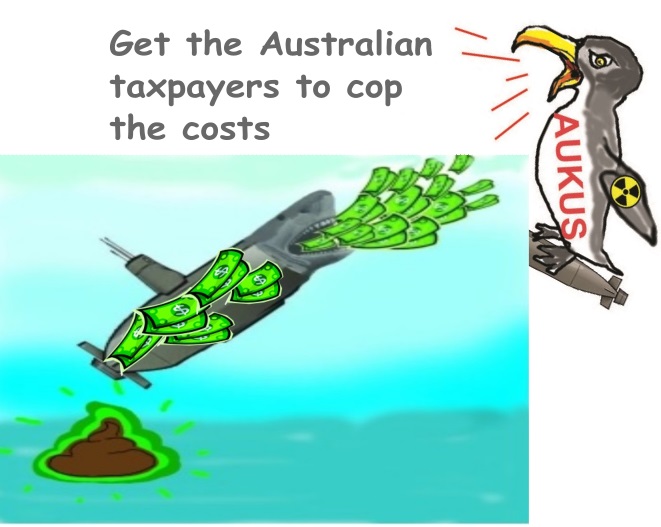
Former SA senator Rex Patrick was concerned the money “wasted” on the failed repository could be replicated with the AUKUS nuclear submarine program.
The high cost of the federal government’s failed bid for a national nuclear waste storage site on South Australia’s Eyre Peninsula has been revealed.
Resources Minister Madeleine King says that $108.6 million was spent on preparations for establishing the now dumped National Radioactive Waste Management Facility near Kimba between July 1, 2014, and August 11, 2023.
The figure was given in response to a Senate Question lodged by Liberal Senator Gerard Rennick on August 11, but information relating to his questions about further expected expenditure of taxpayer dollars around the project was not provided.
King was asked whether the government planned to select a new site before May 17, 2025 – the last date before Prime Minister Anthony Albanese can call a federal election – or whether the Woomera Prohibited Area in SA’s outback was being considered.
“Information on expenditure and site selection will be available once the government has considered options and made decisions in due course,” SA Labor Senator Don Farrell said while answering the question on behalf of King.
The news comes after the federal government announced in August it was walking away from the Napandee plan after seven years of consultation and promises of around $31 million in incentives for the Kimba region.
Its decision was triggered by a Federal Court ruling in favour of the Barngarla Determination Aboriginal Corporation’s battle to stop the low-level waste repository on the Eyre Peninsula.
The costly court battle centred on the Barngarla arguing that Indigenous owners were not consulted by the former Morrison Government when it announced it had won “majority support” of 61 per cent in the community for the Napandee site.
Justice Natalie Charlesworth quashed former Liberal Federal Resources Minister Keith Pitt’s decision to build the National Radioactive Waste Management Facility in Kimba, saying it was affected “by bias”.
InDaily reported last year that in reply to questions on notice, SA senator Barbara Pocock heard that since January 1, 2017, the Commonwealth Government had spent at least $9,905,737 on legal work for the nuclear waste dump and the Australian Radioactive Waste Agency.
Work has now been halted at the Napandee site and King said work already completed would be reversed.
Former SA senator Rex Patrick was concerned the money “wasted” on the failed repository could be replicated with the AUKUS nuclear submarine program.
“It was clear back in February 2018, when I initiated a Senate Inquiry into the selection process for a national radioactive waste management facility in South Australia, that the selection process had gone off the rails,” Patrick said.
“The then government were cautioned about the flawed nature of the process, but ignored the findings and recommendations of the inquiry.
“There is a $110 million dollar lesson for the current Government in the need to engage the community and listen when dealing with these sorts of programs.”
He called on the federal government to be more open with the community with its AUKUS nuclear submarine program in relation to what will happen in relation to nuclear stewardship, operational radioactive waste and dealing with spent nuclear fuel rods.
Federal government spent $100 million on now abandoned nuclear waste dump near Kimba

ABC News, By Ethan Rix, 12Sept 23,
Key points:
- The Federal Resources Minister said the government had spent $108.6 million
- The Commonwealth abandoned plans to build the facility after a Federal Court ruling
- Former SA senator Rex Patrick said the “waste” of taxpayer money could have been avoided
………………………. Senator Rennick also questioned whether the government would find a new location for the NRWMF before May 17, 2025 and if the government would consider placing the facility within the Woomera Prohibited Area.
Ms King said that information about a future site and any further spending would be available once the government had “considered options and made decisions in due course”……………………………………………………………
Former resources minister had ‘foreclosed mind’
Federal Court Justice Natalie Charlesworth found there had been apprehended bias in the decision-making process under then-resources minister Keith Pitt.
Justice Charlesworth found that Mr Pitt — who formally declared the site in 2021 — could be seen to have had a “foreclosed mind” on the issue “simply because his statements strongly conveyed the impression that his mind was made up”.
The court set aside the declaration from 2021 that the site at Napandee, a 211-hectare property, be used for the facility.
Following the Federal Court ruling, Ms King told federal parliament in August that Australia still needed a nuclear storage facility and that the government remained committed to finding a solution that did not involve the Napandee site.
………………………………Mr Patrick said he was concerned that the current Labor government had not learnt any lessons from the recent Federal Court ruling.
“The lesson that needs to be learned, in relation to this, is you need to properly engage [with] a community to get a social licence,” he said.
He said it was clear the government “has their eye on” the Woomera Prohibited Area as a potential location for the facility, which is a military testing range more than 400 kilometres north of Adelaide.
“They are simply not being transparent — they’re not talking about it and that’s going to end up in tears in several years’ time.”
A spokesperson for Ms King said she has instructed her department to develop “policy options” for managing Commonwealth radioactive waste into the future. https://www.abc.net.au/news/2023-09-11/commonwealth-kimba-napandee-nuclear-waste-dump-100-million/102840994
NUCLEAR WASTE – PLANNING RESPONSIBLY FOR THE FUTURE
Dr. Margare Beavis . Medical Assiction for the Prevention of War, 2 Sept 23
MAPW welcomes the Federal Court decision in July to completely set aside approval of the proposed interim national radioactive waste facility at Kimba in South Australia.
We thank the Barngarla Traditional Owners who took this legal action. The Federal Court ruled that former Resources Minister Keith Pitt’s declaration of the Kimba site was affected by apprehended bias. We also acknowledge the work of the “No Radioactive Waste on Agricultural Land in Kimba or SA” group and so many others.
We welcome the decision by Resources Minster Madeleine King not to appeal the court ruling on the 10th of August.
In a shamefully delayed public reassurance, on the same day as the minister’s decision, ANSTO noted it will have sufficient storage capacity for their radioactive waste until a purpose-built facility is established, and that there is no threat to production and supply of nuclear medicines at the Lucas Heights reactor. Lucas Heights has the best facilities, experience and security to hold this waste until a permanent disposal facility is developed.
Now is the right time for a new more responsible approach
The Australian government should now embark on something we have never had: a rigorous, transparent, open to the public and experts, evidence-based, accountable process that comprehensively considers the production and management of radioactive waste in Australia now and in the future and establishes a comprehensive, long-term, best-practice national plan for radioactive waste management, including permanent disposal. Such a process will be required to gain community licence for a permanent national disposal site; considerable trust has to be rebuilt.
We must not repeat yet again the multiple failed attempts by federal ministers to impose a radioactive waste dump on a remote Aboriginal community. We should seek to minimise the future production of intermediate and high-level radioactive waste. We should avoid double-handling of waste, as was planned at Kimba. International experience shows that accidents and theft of radioactive materials occurs most often during transport. Intermediate Level Waste (ILW) and High Level Waste (HLW) present much greater challenges than low level waste (LLW). It is likely that disposal of ILW and any HLW will be most effectively, cost-effectively and securely managed in the same facility. Australia should not store or dispose of radioactive waste from other countries. ARPANSA is the body which should provide regulatory oversight for radioactive waste management in Australia.
We need to recognise the extremely long-term nature of highly toxic ILW. The vast majority of this waste is at Lucas Heights (3753 m3), with a very small volume in non-government sites (industry 3 m3, hospitals 1 m3 and none in research institutions). This waste has been safely stored for decades so there is time for responsible planning.
Future production of ILW at Lucas Heights
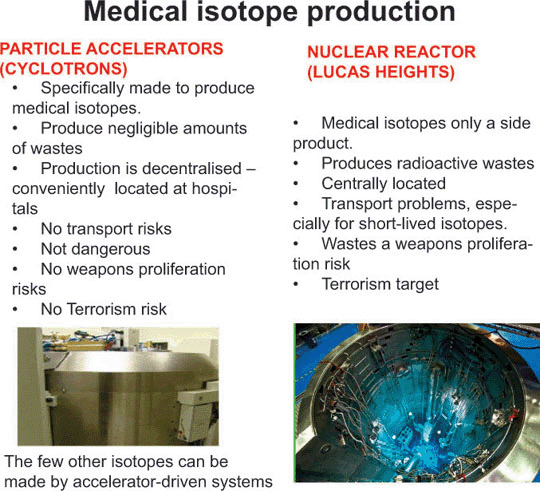
There are now much cleaner accelerator rather that nuclear reactor-based methods for producing nuclear isotopes that are medically and commercially approved internationally. These are the future of production of isotopes for medicine and science. Australia needs to adopt and deploy these methods. ANSTO’s current massive expansion to export reactor-produced nuclear isotopes is nowhere close to true cost recovery and will leave future generations with vastly more ILW than cleaner and cheaper accelerator-based production.
High level nuclear waste
Australia does not currently possess any HLW. However, Australia is to be burdened with a large amount of high level nuclear waste under the proposed acquisition of second-hand US nuclear-powered Virginia-class submarines and then submarines built under the AUKUS agreement. The proposed acquisition of nuclear-powered submarines is very high risk and problematic on many levels, but needs to be borne in mind in planning radioactive waste management.
Currently, all US and UK naval nuclear reactors utilise highly enriched uranium (HEU) fuel. It is therefore likely that proposed new SSN-AUKUS submarines will also be fuelled by HEU. This raises substantial proliferation concerns and risks and complicates implementation of nuclear safeguards. It also means that the naval reactor waste would still be HEU and still be weapons-usable. This adds not only a radiological dimension to the long-term danger of HLW but also a substantial security dimension, as this waste will need to be stored not only contained to minimise any risk to health and the environment over the geological timeframes of its toxicity, but will also need to be subject to military levels of security effectively indefinitely.
Suggestion of completely unsuitable Woomera as nuclear dump site shows gross ignorance

15 Aug 23, The recent suggestion by the Hon. Nick Minchin of using the rocket
range in the relatively remote Woomera region of South Australia for
the disposal of this country’s nuclear waste generated by AUKUS is
quite irrational smacking of gross ignorance.
It has been well known for many years that the Woomera area by its
topography and geological setting is completely unsuitable for any
form of nuclear waste disposal and is clouded – forgive the pun – by
the consequences of the extensive nuclear testing in the region over
seventy years ago.
The consequences of that testing are still being felt by the Aboriginal
peoples of the region and has turned the majority of South
Australia’s general community against any form of nuclear waste
storage in its State.
The Department of Defence already has a significant volume of
nuclear waste held in the Woomera area for which it is seeking a
suitable means of disposal that to a large extent was lost with the federal government recently abandoning its proposals for nuclear waste management at Kimba.
The proof of the pudding is that if the Woomera region were at all
suitable for the disposal or even long term safe storage of nuclear
waste then the defence authorities would have already joyfully
availed themselves of that opportunity.
In his previous ministerial capacity Mr Minchin argued for the
establishment of a national nuclear waste disposal facility to among
other things dispose of the ostensibly large quantities of nuclear
waste held in over a hundred locations throughout Australia but this
in itself was disingenuous since those locations are mainly hospitals
and research facilities developing lower levels of waste which is
invariably disposed by them on site.
In fact the federal government recently acknowledged that if lucky it
would get less than 10% of that waste for disposal at the facility
proposed for Kimba.
It is comments like those now offered by Mr Minchin which make
Australia’s already glaringly limited proficiency in nuclear waste management by international standards to be even more baseless.
It is quite clear that a major one of these consequences is the
attempted successful implementation of the AUKUS arrangements
which Mr Minchin was no doubt trying to achieve with his rather
inopportune suggestion of Woomera
Woomera looms as national nuclear waste dump site

Financial Review, Phillip Coorey, Political editor, 10 Aug 23,
A federal government decision to scrap plans for a nuclear waste dump outside the South Australian town of Kimba has increased speculation it will instead build a bigger facility on defence land at Woomera that could also accommodate high-level waste from the AUKUS submarines.
More than two decades of work by successive governments to find a site to store low- and medium-level waste ended on Thursday when Resources Minister Madeleine King announced the government would not appeal last week’s Federal Court decision against the dump going ahead.
The court ruled on an action brought by the local Barngarla people, angering the Kimba community which had been bracing for the jobs and revenue the facility would have created.
……………………………………………. The dump was also opposed by the state Labor government.
Local Liberal MP Rowan Ramsey, who holds the federal seat of Grey, lashed Ms King and the government in parliament, calling the decision not to appeal as “cowardly, gutless and lacking moral fibre”.
Liberal Senate leader and SA senator Simon Birmingham concurred, especially as the Federal Court ruling was “very narrow” one……………………………………………………………….
[The dump] was not designed to store high-level waste such as the spent reactors from the nuclear-powered subs Australia will acquire and build under AUKUS.
Favoured location
Earlier this week, Defence Minister Richard Marles reaffirmed that the submarine waste would have to be stored on Defence Department land. The Australian Financial Review understands the favoured location is the Woomera rocket range in remote SA, although the selection process has yet to begin.
A high-level waste dump in Woomera would also store low and medium-level waste, ending the decades of conflict that have been caused by trying to choose such sites as Kimba.
In March, former Howard government minister Nick Minchin told the Financial Review that Mr Marles should cut to the chase and identify Woomera as the site for the high-level nuclear waste dump required under the AUKUS pact.
As industry and science minister between 1998 and 2001, the then Liberal senator for SA fought to establish a repository for low- and medium-level waste after initially choosing Woomera but being rebuffed by the Defence Department because of the stigma associated with nuclear waste.
This was despite tonnes of radioactive soil having been stored at Woomera in barrels for years.
“From my long experience of working on this issue, the Commonwealth would be well-advised putting it on Commonwealth land to avoid the states playing politics,” Mr Minchin said.
“Having previously assessed Woomera, it ticks all the boxes in terms of remoteness, stability and space.”…………………………………………….. https://www.afr.com/politics/federal/woomera-looms-as-national-nuclear-waste-dump-site-20230810-p5dvle
Nuclear waste dump plans scrapped for South Australia
By Andrew Brown August 10 2023 –
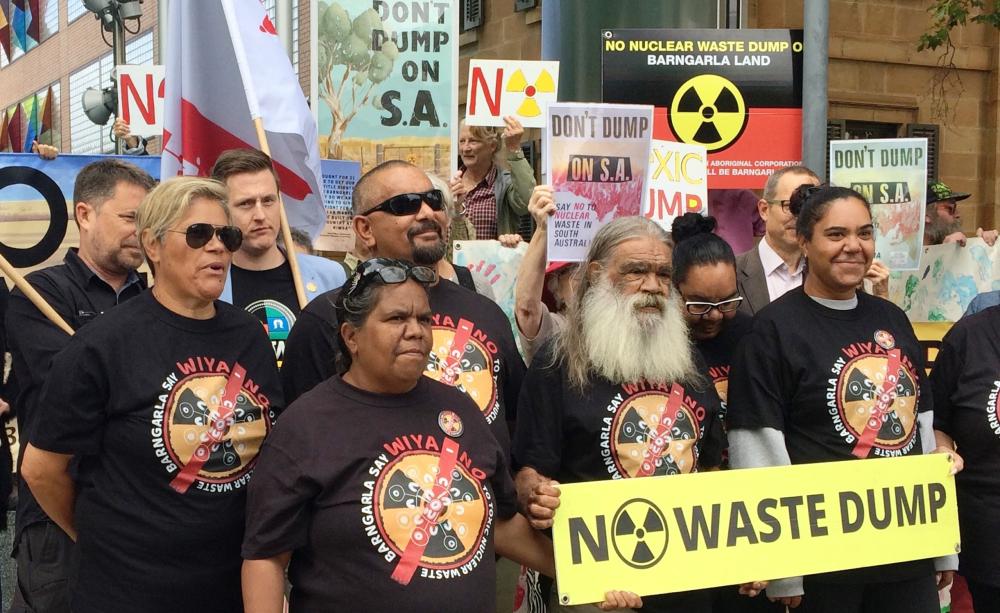
Plans for a nuclear waste dump in regional South Australia have been scrapped by the federal government following a court decision blocking its construction.
The waste facility was earmarked to be built on land at Napandee near the town of Kimba in the Eyre Peninsula by the previous coalition government in 2021.
The decision was challenged in the Federal Court by traditional owners, the Barngarla people, who said the decision was made without them being consulted.
The court ruled in July the facility could not be built.
Resources Minister Madeleine King told federal parliament the government would look for a new location for the nuclear waste storage.
“I’m deeply sorry for the uncertainty the process has created for the Kimba community, for my own department, for the Australian Radioactive Waste Agency workers and for the workers involved in the project,” she said.
“I also acknowledge the profound distress this process has caused the Barngarla people.”
Ms King said any work near Kimba had stopped after the court’s decision.
She said the government would not appeal against the court decision.
“We have to get this right. This is long lasting, multi-generational government policy for the disposal of waste that can take thousands of years to decay,” she said.
“We must consult widely and bring stakeholders including First Nations people along with us. We remain bipartisan in our approach.”…………………………………………………………….. https://www.canberratimes.com.au/story/8303272/nuclear-waste-dump-plans-scrapped-for-south-australia/
Government abandons plan to dump nuclear waste near Kimba, sparking new hunt for dump site
ABC , By political reporter Matthew Doran, 10 Aug 23
Key points:
- The planned nuclear waste site near Kimba, SA, has been formally abandoned
- The Federal Court ruled against Coalition plans to dump nuclear waste there
- The Opposition claims it is a massive setback
…………………………………………………………. In parliament, Federal Resources Minister Madeleine King said the government respected the court decision.
“The Albanese Labor government does not intend to pursue Napandee as a potential site for the facility, nor is the government pursuing the previously shortlisted Lyndhurst and Wallerberdina sites,” Ms King said.
She revealed all work on the Napandee site had ceased.
“Any activities that have already been conducted were non-permanent and will be reversed or remediated,” Ms King said.
“The site is currently being supervised to ensure it remains safe and cultural heritage is protected while we work through dispossession of the land.”
The Coalition immediately took aim at the announcement, accusing Labor of a “legacy failure” and “abandoning years of work”………………………………………………………………………………………………….
Nuclear storage site still needed
Ms King said Australia needed a nuclear storage facility, but argued it could not be at the Napandee site.
……………………………….. “The site of Australia’s only nuclear reactor at Lucas Heights can safely store waste on site for some time, but we must ensure this waste has an appropriate disposal pathway.”
She argued the government remained committed to finding a solution. https://www.abc.net.au/news/2023-08-10/kimba-nuclear-dumping-plan-abandoned/102711320
Australia – an international nuclear wasteland?
By Richard Broinowski, Jul 29, 2023 https://www.europeanleadershipnetwork.org/commentary/to-avoid-nuclear-instability-a-moratorium-on-integrating-ai-into-nuclear-decision-making-is-urgently-needed-the-npt-prepcom-can-serve-as-a-springboard/
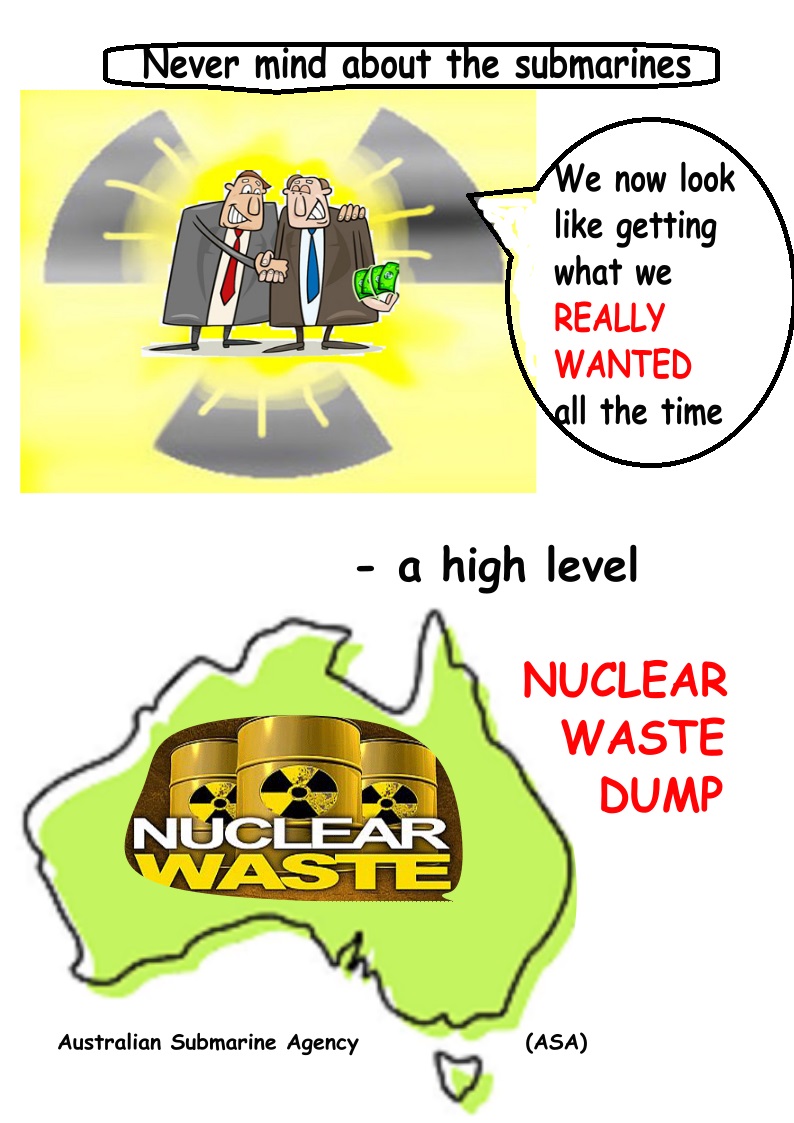
The spectre of an international nuclear waste dump in Australia hangs over AUKUS and what this secretive agreement commits Australia to. Does it oblige us simply to dispose of spent nuclear reactors from our submarines if and when we get them? Or is there a hidden agenda whereby we also take the expired nuclear reactors from US and British submarines? If so, could it lead to Australia becoming a dump for high-level waste from civil nuclear reactors around the world?
Crikey.com is the latest to set speculative hares running. On 26 July it published an article by David Hardaker claiming the Albanese government had struck a secret deal under AUKUS to build a high-grade nuclear waste facility in Australia. Crikey claimed the deal has echoes that resound from 26 years ago.

Indeed it does. In December 1998, a proposal was made by Jim Voss, an American nuclear evangelist, who through his company Pangea proposed constructing an international nuclear waste repository on Billa Kalina, a pastoral lease near Roxby Downs in South Australia. Roxby Downs is a town built to service the giant BHP uranium, gold, copper and silver mine at Olympic Dam. Water for the town and the mine comes from Australia’s Great Artesian Basin.
As I wrote in Fact or Fission – the truth about Australia’s nuclear ambitions (Scribe 2003 and 2022), Voss’s proposal was leaked to the public by Friends of the Earth. Pangea was flying a kite on behalf of Anglo-American and possibly other nuclear interests. It made the unassailable observation that there is a real risk of nuclear weapons proliferation through the theft of plutonium or highly enriched uranium from nuclear power programs. Voss proposed a nuclear waste dump in Western Australia to take about a quarter of the high-level waste from the 445 commercial power reactors in 30 countries around the globe.
This, he claimed, would achieve several things – support international efforts to reduce nuclear weapons proliferation, further the objectives of nuclear disarmament, strengthen Australia’s relations with the United States, protect the global environment, and support the International Atomic Energy Agency (IAEA) and the United Nations. How all this would happen he didn’t say.

Such a repository has also been a gleam in the eyes of the Australian nuclear lobby and several politicians for many years. In 2006, John Howard’s Nuclear Review sought to expand Australia’s nuclear footprint by making nuclear power ‘a practical option’ in Australia’s electricity production. He also envisioned an international nuclear waste dump somewhere in the Outback. In 2014, former Prime Minister Bob Hawke, supported by then South Australian Premier Adam Giles, proposed to put a high-level nuclear waste depository at Muckaty Station north of Tennant Creek in South Australia. Hawke said the money earned would be of immense value to indigenous communities.

Prime Minister Tony Abbott had similar aspirations. So did Malcolm Turnbull, who in 2015 suggested that Australia should not just export uranium oxide (U3O8), but enrich it, process it into fuel rods, retain Australian ownership by leasing the rods abroad, and take them back as spent fuel for permanent disposal in Australia. That way, he said, Australia retained ownership of the uranium, preventing it from being diverted into clandestine weapons programs.
None of these proposals resulted in practical action. Except for qualified acceptance of the export of Australian yellowcake under safeguards to approved civil nuclear energy companies, the Australian public maintained an aversion to all things nuclear. The earlier careless disposal of nuclear tailings at Radium Hill, the contemptuous and ineffective clean-up of highly toxic plutonium in the aftermath of Britain’s nuclear tests at Emu Field and Maralinga in the 1950s, and French nuclear tests in the Pacific in the 1990s, all consolidated Australians’ aversion.
Following negative public reactions to his proposal, Voss quietly closed his Pangea office In January 2002 and retreated to Europe. But several years later, he was given renewed hope.
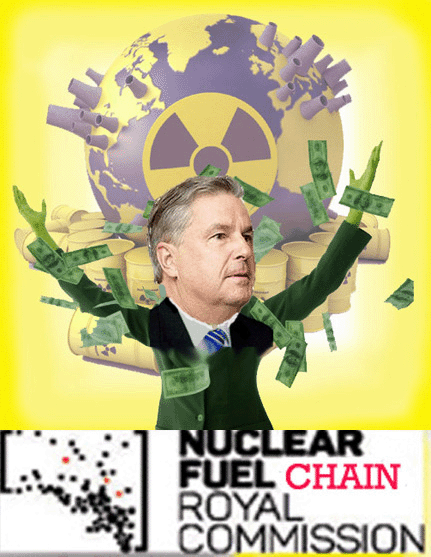
In 2016, the South Australian Nuclear Fuel Cycle Royal Commission under former South Australian governor Kevin Scarce concluded that although nuclear energy in Australia would not be economically viable for the immediate future, research should continue regarding the feasibility of an international spent fuel repository.
Voss returned to Australia in 2022, and took over the optimistically-named Ultra Safe Nuclear Corporation in Melbourne. Safe disposal of nuclear waste remained on his agenda. According to Crikey, Voss reckons very deep boreholes of around three to five kilometres could safely incarcerate spent fuel from the reactors of Australia’s nuclear-powered submarines for thousands of years.
Could such a storage facility attract US or British attention? Could their governments pressure Australia to take their own submarine spent fuel reactors as well as those of Australia?
They have strong motives to do so. Around 90 British spent fuel submarine reactors are said to be lying around Devonport Docks in Plymouth and the Rosyth dock in Fife, safeguarded only at huge expense. The US Navy has many more in open trenches at the Hanford Nuclear Reservation in Washington State. There are plans to process and store their transuranic elements somewhere permanently, but the Yukka Mountain Deep Geological repository in Nevada was de-funded in 2010, and has been subject to complex political manoeuvring ever since.
Given Albanese’s and Marles’ supine acceptance of US conditions to keep the reactors from our own submarines after their service lives, they could also easily be leant on to take US and UK used submarine reactors as well.
Could this in turn lead to Voss’s grand vision of Australia becoming a spent fuel repository for the international nuclear industry? Since we cannot even decide on the location of a repository for low-level nuclear waste from hospitals and materials testing laboratories, let alone places for intermediate and high-level waste, such an expansion seems a pipe dream. But we must not under-estimate the persistence of the Australian nuclear industry or its backers in Federal and State parliaments and in the Murdoch press.
Australia’s nuclear waste
finding a national waste repository is not urgent because it has been stored this way for 60 years.
it’s not even clear if centralising the waste is the best option. ..there’s an implicit risk in transporting the waste from the various sites to a new site, and there should be a safety comparison with leaving it where it is.
Courts have quashed a decision to store water in Kimbra, meaning there is still no centralised repository in the country
Guardian. Tory Shepherd, Sat 29 Jul 2023
More than 20 tonnes of reprocessed nuclear fuel will stay at Australia’s only reactor in southern Sydney, while nuclear waste will remain scattered in “cupboards and filing cabinets” around the country, after the federal court blocked plans for a long-term storage site in outback South Australia.
The site in Kimba was selected more than 40 years after Australia started planning for a centralised repository. But this month, that decision was quashed by the courts.
There is currently no live national facility option, and the waste pile is growing.
Successive governments and agencies have said there are more than 100 sites that are storing nuclear waste littered across the land, in hospital basements and universities, on defence and mining sites and in research laboratories.
There’s no definitive list, because of a licensing split between the federal and state governments, but the vast majority is produced and stored at the Australian Nuclear Science and Technology Organisation (Ansto) facility in Lucas Heights.
A national inventory published last year found Australia’s 2,061 cubic metres of intermediate-level waste (ILW) will more than double to 4,377 cubic metres in the next 50 years.
………….The inventory predicted that the 2,490 cubic metres of low-level waste will more than quadruple to 13,287 within the next five decades. LLW includes gloves, paper, gowns and other ephemera used in nuclear medicine. Much of it can be left to “delay and decay”, and can be disposed of as regular rubbish.
Ansto’s waste makes up about 93% of the LLW, and about 96.5% of the ILW.
Ansto is also responsible for the spent fuel rods from its Opal research reactor at Lucas Heights, in Sydney’s south, which are sent to France, the UK or the US for reprocessing.
Last year, the UK shipped two tonnes of ILW to be stored at Sydney’s Lucas Heights facility until it could be transported to a national facility – it was part of a waste-swap deal after Australia sent spent fuel rods from Opal predecessor to be recycled.
In 2015, 25 tonnes of radioactive waste from France was returned to Australia after reprocessing – that too will be housed at Lucas Heights until a dump is selected and built. Since then, Australia has sent more spent fuel rods to France to have the uranium and plutonium extracted, but their return has not been announced, and it’s not clear what will happen with such deals now that Kimba option is off the table.
The current government policy is to build a National Radioactive Waste Management Facility (NRWMF) to dispose of LLW permanently, and ILW temporarily while a permanent dump is built.

The traditional owners of the land around Kimba, the Barngarla people, took the government to court, and won – former resources minister Keith Pitt’s declaration of the site was cast aside because of his “apprehended bias” and “pre-judgement”.
Now, the process is on hold as the government considers the judgement, and as the case continues with final details to be ironed out.
Top nuclear waste expert, emeritus professor Ian Lowe, says waste is kept in “cupboards and filing cabinets in universities and hospitals”…………“It’s clearly not optimal … the reason it hasn’t been a problem is there’s not actually anything very nasty you can do with low level waste. It’s not very radioactive,” Lowe says.
Ansto says such waste needs “minimal shielding”, while some major hospitals use “delay tanks” and other facilities use drums.
So, Lowe says, finding a national waste repository is not urgent because it has been stored this way for 60 years.
Lowe, who is from Griffith University, says it’s not even clear if centralising the waste is the best option. He says there’s an implicit risk in transporting the waste from the various sites to a new site, and there should be a safety comparison with leaving it where it is.
“I haven’t even seen a crude, back of the envelope calculation,” he says.
With the intermediate level waste, which is “much nastier stuff”, he says he “couldn’t see the point of moving it from temporary storage at Lucas Heights to temporary storage at Kimba while we work out a permanent solution”.
The Australian Conservation Foundation (ACF) and the Greens are pushing for it to remain at Lucas Heights for now.
The ACF’s Dave Sweeney says the waste at Lucas Heights is secure, and that keeping it there could be a “circuit breaker” after years of political wrangling. He accepts that Lucas Heights is not set up to permanently dispose of the waste, but points out that the Australian Radiation Protection and Nuclear Safety Agency has said it is safe there.
And, he says, much of the LLW currently being managed in hospitals was never going to get to Kimba anyway. On top of all that, Kimba was only ever going to hold ILW temporarily until a permanent facility was built.
“We need to actually take a breath and get very serious, systematic and credible about how we advance radioactive waste management,” he says.
“[This shows] the need for and a clear ability to deliver a circuit breaker and inject some responsibility, credibility and respect into this process.”
A spokesperson for resources minister, Madeleine King, said it would be inappropriate to comment on the future of a NRWMF while the Barngarla case is still before the court. The government has lodged a submission to the federal court and could appeal the decision……………………………………
Lowe says only Finland and Sweden have managed to solve the issue with long-term waste storage, and they did it by finding communities who are keen to have the waste in return for investment.
He says permanent disposal of all types of waste will need somewhere geologically stable. “That probably means remote parts of SA, WA, NT, but there’s any number of parts of Australia. “The point is finding a community that’s happy to have it there.” https://www.theguardian.com/environment/2023/jul/29/nuclear-waste-australia-how-much-why-kimba-lucas-heights
1 This month

of the week – Australians for War Powers Reform (AWPR)
To see nuclear-related stories in greater depth and intensity
 Antinuclear