Australia’s nuclear waste

finding a national waste repository is not urgent because it has been stored this way for 60 years.
it’s not even clear if centralising the waste is the best option. ..there’s an implicit risk in transporting the waste from the various sites to a new site, and there should be a safety comparison with leaving it where it is.
Courts have quashed a decision to store water in Kimbra, meaning there is still no centralised repository in the country
Guardian. Tory Shepherd, Sat 29 Jul 2023
More than 20 tonnes of reprocessed nuclear fuel will stay at Australia’s only reactor in southern Sydney, while nuclear waste will remain scattered in “cupboards and filing cabinets” around the country, after the federal court blocked plans for a long-term storage site in outback South Australia.
The site in Kimba was selected more than 40 years after Australia started planning for a centralised repository. But this month, that decision was quashed by the courts.
There is currently no live national facility option, and the waste pile is growing.
Successive governments and agencies have said there are more than 100 sites that are storing nuclear waste littered across the land, in hospital basements and universities, on defence and mining sites and in research laboratories.
There’s no definitive list, because of a licensing split between the federal and state governments, but the vast majority is produced and stored at the Australian Nuclear Science and Technology Organisation (Ansto) facility in Lucas Heights.
A national inventory published last year found Australia’s 2,061 cubic metres of intermediate-level waste (ILW) will more than double to 4,377 cubic metres in the next 50 years.
………….The inventory predicted that the 2,490 cubic metres of low-level waste will more than quadruple to 13,287 within the next five decades. LLW includes gloves, paper, gowns and other ephemera used in nuclear medicine. Much of it can be left to “delay and decay”, and can be disposed of as regular rubbish.
Ansto’s waste makes up about 93% of the LLW, and about 96.5% of the ILW.
Ansto is also responsible for the spent fuel rods from its Opal research reactor at Lucas Heights, in Sydney’s south, which are sent to France, the UK or the US for reprocessing.
Last year, the UK shipped two tonnes of ILW to be stored at Sydney’s Lucas Heights facility until it could be transported to a national facility – it was part of a waste-swap deal after Australia sent spent fuel rods from Opal predecessor to be recycled.
In 2015, 25 tonnes of radioactive waste from France was returned to Australia after reprocessing – that too will be housed at Lucas Heights until a dump is selected and built. Since then, Australia has sent more spent fuel rods to France to have the uranium and plutonium extracted, but their return has not been announced, and it’s not clear what will happen with such deals now that Kimba option is off the table.
The current government policy is to build a National Radioactive Waste Management Facility (NRWMF) to dispose of LLW permanently, and ILW temporarily while a permanent dump is built.

The traditional owners of the land around Kimba, the Barngarla people, took the government to court, and won – former resources minister Keith Pitt’s declaration of the site was cast aside because of his “apprehended bias” and “pre-judgement”.
Now, the process is on hold as the government considers the judgement, and as the case continues with final details to be ironed out.
Top nuclear waste expert, emeritus professor Ian Lowe, says waste is kept in “cupboards and filing cabinets in universities and hospitals”…………“It’s clearly not optimal … the reason it hasn’t been a problem is there’s not actually anything very nasty you can do with low level waste. It’s not very radioactive,” Lowe says.
Ansto says such waste needs “minimal shielding”, while some major hospitals use “delay tanks” and other facilities use drums.
So, Lowe says, finding a national waste repository is not urgent because it has been stored this way for 60 years.
Lowe, who is from Griffith University, says it’s not even clear if centralising the waste is the best option. He says there’s an implicit risk in transporting the waste from the various sites to a new site, and there should be a safety comparison with leaving it where it is.
“I haven’t even seen a crude, back of the envelope calculation,” he says.
With the intermediate level waste, which is “much nastier stuff”, he says he “couldn’t see the point of moving it from temporary storage at Lucas Heights to temporary storage at Kimba while we work out a permanent solution”.
The Australian Conservation Foundation (ACF) and the Greens are pushing for it to remain at Lucas Heights for now.
The ACF’s Dave Sweeney says the waste at Lucas Heights is secure, and that keeping it there could be a “circuit breaker” after years of political wrangling. He accepts that Lucas Heights is not set up to permanently dispose of the waste, but points out that the Australian Radiation Protection and Nuclear Safety Agency has said it is safe there.
And, he says, much of the LLW currently being managed in hospitals was never going to get to Kimba anyway. On top of all that, Kimba was only ever going to hold ILW temporarily until a permanent facility was built.
“We need to actually take a breath and get very serious, systematic and credible about how we advance radioactive waste management,” he says.
“[This shows] the need for and a clear ability to deliver a circuit breaker and inject some responsibility, credibility and respect into this process.”
A spokesperson for resources minister, Madeleine King, said it would be inappropriate to comment on the future of a NRWMF while the Barngarla case is still before the court. The government has lodged a submission to the federal court and could appeal the decision……………………………………
Lowe says only Finland and Sweden have managed to solve the issue with long-term waste storage, and they did it by finding communities who are keen to have the waste in return for investment.
He says permanent disposal of all types of waste will need somewhere geologically stable. “That probably means remote parts of SA, WA, NT, but there’s any number of parts of Australia. “The point is finding a community that’s happy to have it there.” https://www.theguardian.com/environment/2023/jul/29/nuclear-waste-australia-how-much-why-kimba-lucas-heights
AUKUS nuclear dump deal decades in the making by nuclear evangelists with prescience.
David Hardaker 26 July 23 https://www.msn.com/en-au/news/australia/aukus-nuclear-dump-deal-decades-in-the-making-by-players-with-prescience/ar-AA1elV6p
he story of the long, slow journey to a nuclear waste dump being built in Australia as required by the AUKUS agreement is probably best told through one Jim Voss, a nuclear evangelist from America who has been part of the Australian scene for at least a quarter of a century.
Part of a push which began in 1997, he’s one of a handful of international figures who’ve never gone away. Now, arguably, that push has won the day courtesy of a secret deal struck by the Australian government.
Voss’ most recent appearance was at a parliamentary committee hearing into nuclear legislation on May 15. Courtesy of the government’s AUKUS agreement he was now, finally, able to make a link between the benefits of small modular nuclear reactors — the sort sold by his company — and the nuclear-powered submarines Australia has committed to.
It all went to show, as Voss put it, that “a nuclear culture will be essential for this nation in the future”.
Voss could afford to be just a little triumphant that Canberra day. The inspirational words “If at first you don’t succeed then try, try and try again” could well have been written just for him.
Apart from sheer doggedness, the Voss story tells us much about the close connections between the military and commercial worlds when it comes to nuclear energy, as well as the powerful roles played by the UK and the US governments in seeking a solution for a terrible problem they share: how to permanently store nuclear waste. Australia, it emerges, has been a long-term target.
It was only when Scott Morrison came along — later backed by Prime Minister Anthony Albanese — that all that work paid off, with the bonus that it was all done in secret.
Pangea 1997
Voss first came to public attention in Australia courtesy of a Four Corners investigation in the late 1990s. Voss was then general manager of a company called Pangea which was attempting to realise the idea of building a nuclear waste dump in Australia, catering to an international need for a permanent solution for disposing of radioactive waste. The company considered that outback parts of Western Australia met the checklist for safety, remoteness and geological stability.
Voss was joined by a Pangea scientist, Charles McCombie, who would also go on to become a mainstay of international efforts to have a nuclear waste dump built in Australia.
Other now-familiar connections emerged at this time. Pangea, backed by a multimillion-dollar marketing and lobbying budget, brought on board then-rising star of conservative political polling, Mark Textor. Textor was soon to establish the powerful Crosby-Textor (ClT) group with then Liberal Party director, Lynton Crosby. Textor was reportedly paid some $250,000 for his work. (As we revealed in May, ClT’s American arm acts as a lobbyist for the giant US defence company General Dynamic, which builds the US Navy’s nuclear-powered submarines and is set to play a key role in the AUKUS program. It already hosts a growing Australian workforce at its Connecticut shipyards.)
In America, Pangea had signed up a former US nuclear submarine commander, Ralph Stoll, who helped lobby members of the US Congress to back Pangea’s plans for an Australian dump. Not that the US needed much persuading. Back in 1999, Four Corners reported that Pangea’s case found favour with US security and defence officials when it shifted its focus from a commercial venture to play to America’s strategic preoccupation with growing stockpiles of nuclear warheads.
Former US defence official Jan Lodal who had been responsible for running nuclear policy for the Pentagon put it this way:
There are thousands and thousands of tonnes of [nuclear waste] and thousands of tonnes more coming online each year, so to speak, as well as many thousands of tonnes that are derivative from former nuclear weapons programs. And these have to be stored safely and securely for thousands of years, and the world simply doesn’t have a solution to this. And as long as this waste is stored in an imperfect fashion, in which it is now — virtually everywhere — it represents something of a threat.
The Pangea company drew on American expertise but it was essentially a front for the UK government. It was 80% owned by British Nuclear Fuels Limited (BNFL), which in turn was wholly owned by the British government. BNFL and the UK had the same problem as the US: it held the largest stockpile of high-level radioactive waste in the world (after America) kept in canisters cooling beneath the water at its Sellafield facility in the north of England.


CrikeyFollow
AUKUS nuclear dump deal decades in the making by players with prescience
Story by David Hardaker • Yesterday 8:01 pm

(IMAGE: GETTY IMAGES)© Provided by Crikey
The story of the long, slow journey to a nuclear waste dump being built in Australia as required by the AUKUS agreement is probably best told through one Jim Voss, a nuclear evangelist from America who has been part of the Australian scene for at least a quarter of a century.
Part of a push which began in 1997, he’s one of a handful of international figures who’ve never gone away. Now, arguably, that push has won the day courtesy of a secret deal struck by the Australian government.
Why Seniors with private health cover are losing money
Voss’ most recent appearance was at a parliamentary committee hearing into nuclear legislation on May 15. Courtesy of the government’s AUKUS agreement he was now, finally, able to make a link between the benefits of small modular nuclear reactors — the sort sold by his company — and the nuclear-powered submarines Australia has committed to.
It all went to show, as Voss put it, that “a nuclear culture will be essential for this nation in the future”.
Voss could afford to be just a little triumphant that Canberra day. The inspirational words “If at first you don’t succeed then try, try and try again” could well have been written just for him.
Apart from sheer doggedness, the Voss story tells us much about the close connections between the military and commercial worlds when it comes to nuclear energy, as well as the powerful roles played by the UK and the US governments in seeking a solution for a terrible problem they share: how to permanently store nuclear waste. Australia, it emerges, has been a long-term target.
It was only when Scott Morrison came along — later backed by Prime Minister Anthony Albanese — that all that work paid off, with the bonus that it was all done in secret.
Pangea 1997
Voss first came to public attention in Australia courtesy of a Four Corners investigation in the late 1990s. Voss was then general manager of a company called Pangea which was attempting to realise the idea of building a nuclear waste dump in Australia, catering to an international need for a permanent solution for disposing of radioactive waste. The company considered that outback parts of Western Australia met the checklist for safety, remoteness and geological stability.
Voss was joined by a Pangea scientist, Charles McCombie, who would also go on to become a mainstay of international efforts to have a nuclear waste dump built in Australia.
Other now-familiar connections emerged at this time. Pangea, backed by a multimillion-dollar marketing and lobbying budget, brought on board then-rising star of conservative political polling, Mark Textor. Textor was soon to establish the powerful Crosby-Textor (ClT) group with then Liberal Party director, Lynton Crosby. Textor was reportedly paid some $250,000 for his work. (As we revealed in May, ClT’s American arm acts as a lobbyist for the giant US defence company General Dynamic, which builds the US Navy’s nuclear-powered submarines and is set to play a key role in the AUKUS program. It already hosts a growing Australian workforce at its Connecticut shipyards.)
In America, Pangea had signed up a former US nuclear submarine commander, Ralph Stoll, who helped lobby members of the US Congress to back Pangea’s plans for an Australian dump. Not that the US needed much persuading. Back in 1999, Four Corners reported that Pangea’s case found favour with US security and defence officials when it shifted its focus from a commercial venture to play to America’s strategic preoccupation with growing stockpiles of nuclear warheads.
Former US defence official Jan Lodal who had been responsible for running nuclear policy for the Pentagon put it this way:
There are thousands and thousands of tonnes of [nuclear waste] and thousands of tonnes more coming online each year, so to speak, as well as many thousands of tonnes that are derivative from former nuclear weapons programs. And these have to be stored safely and securely for thousands of years, and the world simply doesn’t have a solution to this. And as long as this waste is stored in an imperfect fashion, in which it is now — virtually everywhere — it represents something of a threat.
The Pangea company drew on American expertise but it was essentially a front for the UK government. It was 80% owned by British Nuclear Fuels Limited (BNFL), which in turn was wholly owned by the British government. BNFL and the UK had the same problem as the US: it held the largest stockpile of high-level radioactive waste in the world (after America) kept in canisters cooling beneath the water at its Sellafield facility in the north of England.
Pangea collapses but the dream lives on
Pangea’s best laid, secret plans came unstuck when the British arm of Friends of the Earth came into possession of a corporate Pangea video which the company had produced for the launch of its Australian venture.
The leaking of the video triggered a federal parliamentary backlash, including from the Howard government’s resources minister Senator Nick Minchin, who denounced the idea of Australia being an international waste dump.
Yet Pangea left a legacy to be reckoned with. It had hit on messaging designed to allay community concerns about safety. One line distilled its argument to house the world’s nuclear waste in remote Australia: “There’s no safer place in the world to make the world a safer place.”
Some influential political voices warned this would not be the end of the matter. Australian Democrats senator Meg Lees told Parliament: “Let us look a couple of years down the track. Knowing the pressure that is coming from Britain, combined with pressure from state governments such as Western Australia, I think we may then have a whole different ball game.”
Then federal MP and former WA Labor premier Dr Carmen Lawrence said: “[Pangea] are serious; they are well-funded. They’re people who’ve worked around the mining industry for a very long time. And I think it would be foolish of anybody — government or people such as me opposed to what they’re proposing — to underestimate their long-term commitment to this proposal.”
Speaking to Four Corners from his office in Seattle, Pangea’s chairman (the late) David Pentz had the most prophetic of words:
The idea of an international repository and the benefits it will bring the world is real. We think we have begun to see how we could put the genie back into the bottle, and you know ideas of this size don’t go away.
Never say never
The big idea never went away. Nor did Jim Voss. Among his voluminous collection of writings and presentations, he has covered some eye-catching topics.
He was joint author of the tantalisingly titled “From subs to mines: what would it take for Australia to develop a nuclear-powered submarine capability?” Written in 2013 — a full decade ago — the paper uncannily anticipated the future.
It canvassed issues relating to “procuring, leasing or assembling a complete military off-the-shelf (MOTS) nuclear-powered submarine in Australia”. This happens to be exactly the AUKUS approach which would see the US provide three of its used nuclear submarines to the Australian Navy to bridge Australia’s capability gap.
The paper continued: “This scenario would likely require Australia to develop a nuclear-powered submarine operations, maintenance, refuelling, waste management and possibly decommissioning capability, without presenting Australia with the considerable upfront challenges of developing a nuclear reactor and fuel enrichment supply chain.”
It also raised the possibility that “procurement, leasing or development of nuclear-powered submarine capabilities in Australia” would potentially open the way to “expansion into other aspects of the high-value nuclear energy supply chain, and provide opportunities for increased nuclear power plant deployment capabilities in the future, for instance, with small modular reactors (SMRs)”.
Voss’s Pangea colleague McCombie also stayed close to the action. As Pangea dissolved, McCombie became part of another international not-for-profit organisation called Arius (Association for Regional and International Underground Storage).
2015, and South Australia calls
The big idea of Australia as the site of an international radioactive waste dump came roaring back into contention in 2015. The South Australian government established the Nuclear Fuel Cycle Royal Commission, chaired not by a judicial figure, as custom has it, but by a retired rear admiral of the Australian Navy, Kevin Scarce, the former governor of South Australia.
A wait worth the while
More than 20 years on and with Australia part of the nuclear submarine club with the US and the UK, Voss is back in town, having taken on the reins of the Melbourne office of the exquisitely named and American-headquartered Ultra Safe Nuclear corporation.
Ultra Safe Nuclear is in the business of selling small modular nuclear reactors. Voss shifted into the managing director’s role in late 2020, about nine months before Morrison announced the AUKUS deal. Given his writings of 2013 which explored the business consequences of Australia acquiring nuclear subs, it appears to be a case of a destiny fulfilled. So how does he feel now about Australia’s nuclear embrace and its pledge to — finally — build a nuclear waste facility?
As a seasoned pro, Voss knows better than to be triumphant. This is not a win for him. It is more an opportunity for Australia:
Australia crossed the Rubicon of needing long-term deep disposal in 1958 [when the Lucas Heights nuclear reactor was established]. Starting at that point, Australia is generating long-lived alpha-bearing waste, in other words, waste with plutonium contaminant in it.”
The waste from Lucas Heights is generally regarded as much lower level than the high-grade waste from nuclear submarines, though Voss says it will also require “a deep disposal solution”. He maintains both can be dealt with by a technique called “very deep borehole disposal”. This is three- to five-kilometres deep at a location where the geography and the physics allowed it to be “absolutely secure for the aeons”.
But what about the 100-tonne spent nuclear reactor of a nuclear sub?
“You’re not putting the entire reactor down,” he says. “You’re putting the most highly radioactive alpha-bearing parts of the reactor down such a hole. So the deep borehole solution is quite amenable to the most highly active waste from a fleet of submarines.”
Australia’s eight submarines would need around six boreholes, he suggests, each costing around $200 million to construct. A snip at $1.2 billion.
But what if the deal to bury Australia’s AUKUS waste is just the start? After all, the cost of a nuclear dump is directly related to the amount of material to be buried. He says:
I would say that I do not personally believe that any part of AUKUS is the thin end of the wedge to an international repository. Two reasons. One is I’ve never heard anybody in any corner suggest that linkage. The second is there is a tried and true premise that a country that generates highly active waste is responsible for its management.
But with the UK and the US still seeking a permanent solution for highly active waste, does he agree it’s not a big step to take the waste of the AUKUS allies? “It would not be a huge leap,” he says. “But again, I cannot see the tea leaves politically lining up to support that path.”
Asked to reflect now on warnings from politicians and others 25 years ago that ultimately Australia may host international nuclear waste, Voss agrees that in some respects those words were prophetic: “Yes, I completely agree. With the problems we face today we are always searching for solutions. And sometimes older solutions have a place where they didn’t 25 years ago.
“But I want to emphasise that nobody that I am aware of in Australia, or frankly in the world, is working on an international disposal solution for all parties for highly active waste.”
Voss says Pangea’s failure was due not to government but to the fact that the social licence or community acceptance to operate a nuclear waste facility was lacking. For the record, he has not seen Textor since Pangea days.
The post AUKUS nuclear dump deal decades in the making by players with prescience appeared first on Crikey.
AUKUS’ nuclear waste dump is the secret no-one talks about. So what’ll it cost?
The $360 billion cost of AUKUS might be startling, but on top of that is another undiscussed figure: the cost of building storage for nuclear waste.
Crikey, DAVID HARDAKER, JUL 24, 2023
In late 2021, it came as a shock when Australia woke up to find that its government, under then-prime minister Scott Morrison, had secretly agreed to join the nuclear submarine club with old friends, the US and the UK.
The secret within that secret was that Australia would be responsible for the radioactive waste generated by its involvement in the AUKUS program. For the first time, Australia had signed up to construct a storage facility for high-grade nuclear waste, robust enough to last 1000 years.
Australia had never done it. Nor the US. Nor the UK. Was the iron-clad commitment to building a waste dump part of the deal struck by Morrison when he announced the AUKUS partnership? If so, he didn’t mention it at the time. Nor was it mentioned by US President Joe Biden, UK Prime Minister Rishi Sunak or Australian Prime Minister Anthony Albanese at the official AUKUS announcement in San Diego in March…………. (subscribers only) more https://www.crikey.com.au/2023/07/24/aukus-nuclear-waste-dump-cost-australia/
UK campaigners call on Australian PM to withdraw Kimba nuke dump threat.

UK campaign groups opposed to nuclear waste dumps were ‘delighted’ to hear that their counterparts in Australia, the Barngarla Determination Aboriginal Corporation, have just won their court case against the imposition of a similar dump on their Traditional Lands.
In a historic judgement given earlier this week (18 July), Her Honour Justice Charlesworth in the Federal Court of Australia handed down a decision to quash Federal Government plans to move nuclear waste from the reactor at Lucas Heights to an unwanted waste dump at Napandee near Kimba in South Australia. Justice Charlesworth charged government officials with ‘pre-judgement’ and ‘apprehended bias’.
In March, the UK/Ireland Nuclear Free Local Authorities joined Radiation Free Lakeland, Millom against the Nuclear Dump / South Copeland against GDF, and Guardians of the East Coast, which are local groups fighting plans to locate a so-called Geological Disposal Facility in either West Cumbria or East Lincolnshire, wrote a joint letter to the Australian Government to raise their international objections to the plan.
Our objections were that there was no need for such a dump as the facility at Lucas Heights has capacity to take the waste and that the rights to the land by the Traditional Owners were being wilfully and shamefully disregarded, contrary to international law, with the government giving no proper consideration to the position of the Barngarla.
The attempt to impose a nuclear waste dump is all par for the course in Australia with the ill-treatment of Indigenous Peoples by corporations, political elites and the military over nuclear matters having an established history, with First Nation territories ravaged by uranium mining or shattered by British atomic weapon testing.
Following the damning judgement, the four British organisations have today written to the Prime Minister of Australia Anthony Albanese asking him to ‘take the honourable and courageous course of action’, withdraw the plan and ‘leave the Barngarla in peace’.
A copy of the letter and a message of solidarity will be sent to the Barngarla Determination Aboriginal Corporation. more https://www.nuclearpolicy.info/news/uk-campaigners-call-on-australian-pm-to-withdraw-kimba-nuke-dump-threat/
Prime Minister Albanese must abandon South Australian nuclear waste dump
Friends of the Earth Australia ‒ 18 July 2023
The Federal Court has today quashed the declaration of a proposed nuclear waste dump site near Kimba in SA, citing ‘pre-judgement’ and ‘apprehended bias’. The court case was initiated by Barngarla Traditional Owners, who are unanimous in their opposition to the proposed nuclear dump.
Dr. Jim Green, national nuclear campaigner with Friends of the Earth Australia, said:
“Today’s decision is an incredible victory for Barngarla Traditional Owners. Now Prime Minister Albanese must kill the nuclear dump plan stone dead.
“It is an outrage that the Albanese government has been attempting to impose a national nuclear waste dump on Barngarla country despite the unanimous opposition of the Traditional Owners.
“It is deeply hypocritical that the Albanese government has been championing a Voice to Parliament at the same time as it ignores and overrides the unanimous voice of the Barngarla Traditional Owners.”
Jane Stinson, Chair of the SA Parliament’s Environment, Resources and Development Committee, said last year: “In this day and age, when we’re talking about Voice, Treaty and Truth, we can’t just turn around and say, ‘Oh, well, those are our values but in this particular instance, we’re going to ignore the voice of Aboriginal people’. I think that’s just preposterous and it’s inconsistent with what most South Australians would think.”
Susan Close, now Deputy Premier of South Australia, said in 2019 that it was a “dreadful process from start to finish” that led to the nomination of the proposed Kimba dump site and that SA Labor is “utterly opposed” to the “appalling” process which led to Kimba being targeted.
Susan Close noted in 2020 statement, titled ‘Kimba site selection process flawed, waste dump plans must be scrapped’, that SA Labor “has committed to traditional owners having a right of veto over any nuclear waste sites, yet the federal government has shown no respect to the local Aboriginal people.”
Dr. Green continued:
“It is appalling that the Albanese government has been willing to violate the United Nations Declaration on the Rights of Indigenous Peoples while at the same time professing to support the Declaration.”
The UN Declaration on the Rights of Indigenous Peoples states that: “States shall take effective measures to ensure that no storage or disposal of hazardous materials shall take place in the lands or territories of indigenous peoples without their free, prior and informed consent.”
Dr. Green concluded:
“To date, the issue has been managed by federal resources minister Madeleine King. There appears to have been little or no input from caucus, Cabinet or the Prime Minister’s Office.
“Prime Minister Anthony Albanese needs to take control and declare that the rights of Barngarla Traditional Owners will be respected, today’s Federal Court decision will not be challenged, and the government will now abandon the plan to impose a nuclear waste dump on Barngarla country.
“Federal Labor should adopt SA Labor’s policy giving traditional owners a right of veto over proposed nuclear waste dump sites. That would give traditional owners across the country some confidence that their voices will be heard as the government progresses plans to store and dispose of waste arising from nuclear-powered submarines in the coming decades.”
Contact: Jim Green 0417 318 368
Background: ‘Labor must hear Indigenous voice against Kimba nuclear site’, inDaily, July 17.
Start from scratch call as nuclear dump plan shelved
Yahoo Sport, Tim Dornin, Wed, 19 July 2023
The Commonwealth needs to go back to the drawing board on plans for a nuclear waste dump and put all options back on the table, the South Australian government says.
Following the Federal Court’s move to set aside a decision to build the dump on SA’s Eyre Peninsula, Deputy Premier Susan Close said it was important for the Commonwealth to take a cautious approach to where the facility might best be located.
“I think it’s important they start from the beginning about where it’s most suitable,” she said.
“Where is the material coming from, where is the geological stability and where is the community acceptance?”
Dr Close said the previous coalition government had botched the process, exaggerating the urgency for the facility and excluding the Indigenous community.
“As a result, it’s come a cropper in the court, as it should have,” she said.
The deputy premier said given the level of angst surrounding the Kimba location in SA, it would be best to start from scratch.
The previous government decided to build the dump at Napandee, near Kimba, in November 2021, when it announced it had acquired 211 hectares of land with the proposed facility subject to heritage, design and technical studies…….
But the proposal faced strong opposition from the Barngarla traditional owners and environmental groups.
Earlier this year the Barngarla went to the Federal Court seeking a judicial review of the government’s declaration and on Tuesday Justice Natalie Charlesworth upheld one of their four grounds.
She said the only appropriate order was to set aside the whole of the declaration made by former resources minister Keith Pitt.
The Barngarla Aboriginal Determination Corporation welcomed the decision, describing the fight against the dump as crucial to First Nations people around the country.
Resources Minister Madeleine King said Labor had worked with the Barngarla people in the last term of parliament to ensure they secured the right to seek judicial review of the decision to acquire the site and that she would review the judgment. 2023
https://au.sports.yahoo.com/start-scratch-call-nuclear-dump-072229979.html
Examining the impact of the legal decision against the planned Kimba nuclear waste dump.

Here’s what we know about the Kimba nuclear storage facility decision, By Josephine Lim ABC News 18 Jul 23
This week the federal court ruled in favour of traditional owners who have been fighting against the
development of a nuclear waste facility
The federal government had selected a site in South Australia’s Eyre Peninsula to store low and
intermediate level radioactive waste, but the court’s decision has left the future of the project uncertain.
The uncertainty extends far beyond the court’s decision as the facility will never see the light of day due to i t s c o m p l e t e a n d i n h e r e n t unsuitability which includes the environmental implications and the lack of compliance with international standards and prescriptions relating to nuclear installations and their .safety
Here’s what we know so far. What did the original proposal entail?
In November 2021, Napandee near the town of Kimba, was acquired to be the storage facility for low and
medium-level nuclear waste.
The 211-hectare property was chosen from a shortlist of three sites, including the outback town of
Lyndhurst and Wallerberdina, a property in the northern Flinders Ranges
At the time, Coalition resources minister Keith Pitt said the site would create 45 permanent jobs in
the Kimba community.
Absolute nonsense since based on overseas experience similar but larger facilities employ some 15
people with very minimal external support staff.
T h i s h a s b e e n c o n s t a n t l y disingenuous information by Pitt for which he should be severely taken to task as it developed completely unrealistic expectations by the Kimba community.
Yesterday, he said on ABC’s Afternoon Briefing that he was “incredibly disappointed for the
people of Kimba” following the court’s findings.
If a proper survey were done then
most people of Kimba would be
heartened by and pleased with the
court’s decision as they are
completely against the proposed
facility.
“The piece of land on which this was going to be cited did not have a native title. It is a dryland wheat
farm,” he said.
No, it is not
It is like most of Kimba prone to ground water seepage and basic geological and geophysical surveys
show this to be the case making it grossly unsuitable for the facility
He said more than 60 per cent of the local community supported the project, citing a postal ballot that only local ratepayers were allowed to vote in.
If a proper ballot were now held (which should have been the case in the first place) with the voting accompanied by in favour and a g a i n s t a r g u m e n t s a n d a n unrestricted voting base then the majority against the facility would be significant even if it still excluded the Barngarla people
Why did the Barngarla people fight the plan?
The Barngarla people have a sacred site for women near Kimba, which they fear a facility would destroy.”The Seven Sisters Dreaming is through that area,” Barngarla woman Dawn Taylor said.
“But the Seven Sisters Dreaming means a lot to all of us as women, in each tribe, throughout the country.”
The Barngarla Determination Aboriginal Corporation (BDAC)launched the challenge in the Federal Court in a bid to stop the site from going ahead altogether.
BDAC chairman Jason Bilney said he felt “very emotional” winning a “David versus Goliath” battle.
“It’s the fight that we continue and you feel it from the heart no matter where we are, whether it’s our
Country or other people’s Country,” he said outside court.
D a v i d a n d G o l i a t h is an understatement when the federal government has spent nearly $14
million fighting the application by the Barngarla who have apparently spent less than $700,000 to mount
the review application in totality.
What did the court find?
The Federal Court upheld a complaint by the Barngarla people on the ground there was apprehended bias in the decisionmaking process by former federal minister Keith Pitt in selecting the site
In upholding the apprehension of bias argument, Justice Natalie Charlesworth found that the
Coalition minister, who formally declared the site in 2021, could be seen to have a “foreclosed mind” on
the issue “simply because his statements strongly conveyed the impression that his mind was made
up”
Lawyer for the Barngarla people, Nick Llewellyn-Jones, said findings of apprehended bias against a
minister were “very rare” and the judgement was significant in terms of legal precedent.
“It’s set a precedent for Aboriginal groups to take a stand, it’s set a precedent also in terms, I believe, of what standards are required of Commonwealth ministers,” Mr Llewellyn-Jones said.
“What we’ve had here is a finding of apprehension of bias, we haven’t reviewed the decision fully, but it’s
obviously got some consequence in terms of the conduct the minister did at the time and it will have some authority value in terms of that as well
The bias on the part of Pitt may have been even more than apprehended since well before the passing of the enabling legislation for formal decision of the site he had selected and nominated Napandee as the location for the facility and was upset at the delay in passing that legislation for reasons that to him were unnecessary and lengthy
“Our clients have won and it’s obviously a great victory for them but in fact it’s a vindication of the
entire system that we have that people out there do have options when government affects their
lives.”
Justice Charlesworth also found there was an error of law, but concluded it did not have a “material effect” on the outcome of the declaration of the site.
How has the government responded?
Federal Labor Minister for Resources Madeleine King issued a statement that the court’s decision will be reviewed in detail but declined to comment further.
“Labor worked with the Barngarla people in the last term of Parliament to ensure they secured the right to seek judicial review of the decision to acquire the facility site,” she said
That is absolutely untrue since the Barngarla people had to continue with the review application and the enabling legislation as eventually agreed to by Labor was still well short of what was requested and expected of which I have personal knowledge as among other things I had many discussions with various members of parliament and had assisted in drafting an appropriate amendment to the legislation
When the legislation was eventually passed in the Senate I contacted Minister King who was then shadow minister for resources and explained that it was a totally unacceptable piece of legislation which she strongly and quite ignorantly refuted.
I had previously drafted an amendment to the legislation while it was still at the bill stage in the Senate under which the government and the responsible ministers would have been required to adhere completely to the codes and standards and the prescriptions of the International Atomic Energy Agency (IAEA) which was not accepted
Had this amendment been adopted than none of the present litigation with its accompanying acrimony would have been necessary since IAEA would have ensured that the government completely complied with and adhered to its standards and prescriptions.
“The principle of judicial review is an important process that the Albanese Government fully supports.”
The best way to support this application for a review would have been to agree to the review without
any contest. An appeal by the government will be an absolute lie to this proposition.
What have those in favour of the waste facility said?
Kimba farmer Kerri Cliff said the court outcome was ” pretty devastating for the majority of the
community” and expressed concerns about the economic future of the town.
“It’s a decision being made about Kimba, but not by the people that live here,” she said.
Aside from jobs at the facility, an Australian Government economic impact assessment report found the
project would have brought over $95 million to Kimba and the Flinders Ranges in the first 33 years.
Regrettably, the unconvincing notion that the facility would have brought a new economic life to Kimba is
completely misconceived and untrue
If anything it may have well destroyed a well-established and long-standing agricultural industry in the whole of the Eyre Peninsula.
What happens now?
The future of the project is in severe doubt and legal costs are also yet to be determined. The federal government is yet to say whether it would make an appeal against the court’s decision or look at a different location to store nuclear waste.
The government should be careful in considering a possible appeal since it may in any case face fresh legal opposition to its proposals by the general community at Kimba for failing to comply with all the safety codes and requirements of IAEA Local federal member
Rowan Ramsey told ABC Radio Adelaide’s Jules Schiller that the Australian Radiation Protection and Nuclear Safety Agency said that there would be no more room to store nuclear waste at Sydney’s Lucas Heights site “beyond 2028”
“Given that now the government has to find a new site and build a new facility in five years, you may as well be whistling into the wind,” Mr Ramsey said.
But Australian Conservation Foundation campaigner Dave Sweeney said 95 per cent of radioactive waste had been storedsecurely at the Lucas Heights facility and that “material can remain there securely for decades to come”.
He said he hoped the federal government could use this decision to discuss how to better manage nuclear waste in Australia. “It’s a result that will hopefully draw a line under decades of mismanagement of radioactive waste and inject some responsibility, some respect and some recognitioninto future discussions,” he said
“It’s long overdue now, and particularly against a context of AUKUS nuclear submarines and speculation about domestic nuclear power, we need to be serious and stop playing politics and stop looking for a vulnerable community to dump radioactive waste in.”
Australia must far better manage its nuclear waste This lack of proper management stems from the ignorance and incapacity of the federal government from ministerial level through its various departments and agencies failing to accept or acknowledge the international requirements for that
purpose
In conclusion I can only hope that t h e m e m b e r s o f t h e K i m b a community who feel aggrieved by the court’s decision and are seeking the establishment of the facility as an alternative to the district’s economic growth would actually be bitterlydisappointed if that were to occur
In any case, they should realise that the government is attempting to create a false economy which will
not survive and is based on the wholly unsuitable plan for the facility that will not get the necessary approvals for its establishment.
While it was suggested in an interview on Sky News this morning that many people had left the Kimba
district in the past four years this I understand stems from them being unconvinced and even fearful of the facility’s presence.
If the government as the proponent of the facility were prepared to fund a proper and independent expert review of its plans for Kimba then I am sure that those people will be shocked at the result.
Time for dump to be dumped for good.

The state’s peak environment group has strongly welcomed today’s Federal Court judgement that sets aside the declaration of Napandee (Kimba) as the site for the Australia’s nuclear waste facility.
“Today is an extraordinary vindication of the years’ long struggle by the Barngarla people to stand up for their Country, their Dreaming and their right to be heard,” said Conservation SA Chief Executive Craig Wilkins
“This case was never about whether imposing nuclear waste on Kimba was the right thing to do, but now the court has declared that the process the Federal Government undertook was never even legal.
“The Morrison Government, first with Matt Canavan as Minister, then with Keith Pitt, tried to force through a deeply divisive and deeply flawed proposal.
“They stuffed up the process and their relationship with the local community, particularly the Barngarla Traditional Owners.
“Now this comprehensive judgement has been handed down, there is only one appropriate course of action open for the Albanese Government and the Federal Resources Minister Madeleine King: to declare the Kimba waste dump dead and buried.
“It was Labor’s amendment to the Morrison Government’s legislation that gave the Barngarla their day in court today. The Albanese Government now needs to move quickly to reassure the Barngarla they will shelve the project in its entirety.
“Today’s monumental decision offers an exciting opportunity to reset the relationship between the Federal Government, Aboriginal people and nuclear waste.
“In many ways the real work starts now: to find the final resting place for Australia’s long lived radioactive waste – not a deeply deficient and illegal process to park the waste temporarily in above ground sheds in South Australia.
“Huge congratulations to Jason Bilney, Chair of the Barngarla Aboriginal Determination Corporation, Barngarla Elders and the rest of the community for the stunning result, and for standing strong on behalf of all Australians,” he said.
Nuclear waste on Aboriginal land ?- and the Voice to Parliament?
The Australian government is in the process of holding a referendum that would give the indigenous people a Voice to Parliament. Imposing nuclear waste on Aboriginal land is not a good look, is it?
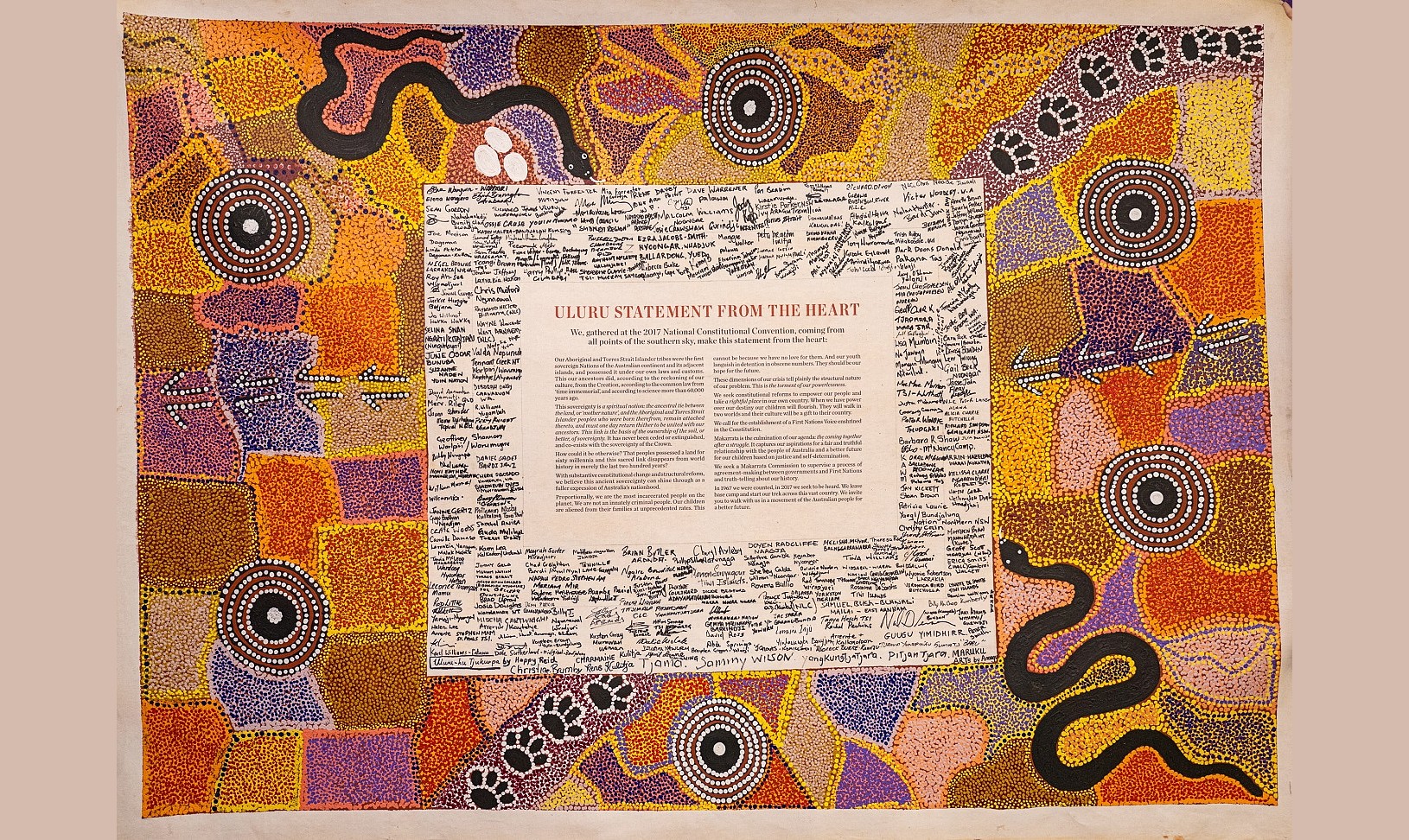
This morning, I heard Professor Ian Lowe, talking to a English journalist, about yesterday’s court decision, which supported the Barngarla people’s opposition to nuclear waste dumping on their land.
Prof Lowe eloquently summarised the importance of this legal decision:
-the Aboriginal people were not consulted when the Morrison Liberal Coalition decided to make a nuclear waste dump on their traditional land.
– this raises problems for the Australian government in selecting any land in this country for nuclear waste dumping
-this has international implications – about any country where the rulers want to impose a nuclear waste dump on indigenous land
-this has implications for the ill-advised (corrupt firm PWC was the advisor) AUKUS decision by the Albanese government to buy U.S nuclear submarines at $369billion. That decision included Australia taking responsibility for the high level radioactive trash from the nuclear submarines. Where to dump that trash?
Of course, the Australian government does have the power to impose the nuclear waste dump anyway, against indigenous wishes, even against South Australian State government wishes,
The Australian government is in the process of holding a referendum that would give the indigenous people a Voice to Parliament. Imposing nuclear waste on Aboriginal land is not a good look, is it?

Labor must hear Indigenous voice against Kimba nuclear site
Jim Green and Michele Madigan, https://indaily.com.au/opinion/2023/07/17/labor-must-hear-indigenous-voice-against-kimba-nuclear-site/—
Ahead of tomorrow’s expected federal court decision on a Barngarla Traditional Owners challenge to the planned Kimba nuclear waste site, Jim Green and Michele Madigan say federal Labor must be consistent on listening to Indigenous concerns.
If the Albanese Labor government wants to restore confidence in its plan for an Indigenous Voice to Parliament, it needs to walk the talk and respect Aboriginal voices.
Currently, the government is ignoring the Barngarla Traditional Owners who are unanimous in their opposition to the government’s plan for a national nuclear waste dump (or ‘facility’) near Kimba on South Australia’s Eyre Peninsula.
Labor inherited the Kimba dump plan from the Morrison Coalition government. Barngarla Traditional Owners were excluded from a so-called ‘community ballot’ by the Morrison government. The results of an independent, professional survey of Barngarla Traditional Owners ‒ which found absolutely no support for the proposed dump ‒ were also ignored.
Jason Bilney, Chair of the Barngarla Determination Aboriginal Corporation, said: “It is a simple truth that had we, as the First People for the area, been included in the Kimba community ballot rather than unfairly denied the right to vote, then the community ballot would never have returned a yes vote.”
Federal parliament’s Joint Committee on Human Rights Committee unanimously concluded in an April 2020 report that the Morrison government was violating the human rights of Barngarla people. Even the Coalition members of the committee endorsed the report.
But the Morrison government continued to ignore the human rights of the Barngarla people.
The Morrison government also tried ‒ but failed ‒ to pass legislation which would deny Barngarla Traditional Owners the right to a judicial review of the nomination of the Kimba dump site. The draft legislation was blocked by Labor, minor parties and independent Senators.
It took 21 years for the Barngarla people to secure Native Title of their country through a court determination. Six months later, the Morrison government nominated Barngarla country for the proposed nuclear waste dump.
It was expected ‒ or at least hoped ‒ that the incoming Albanese Labor government would dump the controversial dump proposal after the May 2022 election. But Labor has pressed ahead with the Kimba dump proposal, led by federal resources minister Madeleine King.
Labor isn’t responsible for the plan to dump nuclear waste on Kimba farming land. But that’s no excuse for continuing with a controversial and strongly-contested proposal.
Labor’s position is that Barngarla Traditional Owners can challenge the dump plan in the courts. And that is what is happening: the Barngarla Determination Aboriginal Corporation launched a legal challenge against the Morrison government’s declaration of the Kimba dump site. The matter is before the Federal Court and a decision is expected on July 18 (with the proviso that an appeal to the full bench of the Federal Court may follow).
There are at least two problems with Labor’s position. Firstly, the government has vastly greater resources to contest a legal challenge. Indeed the government has spent $13 million fighting the Barngarla Traditional Owners in the Federal Court. Barngarla Traditional Owners haven’t even spent half a million dollars; and needless to say they have many pressing demands on their limited resources.
There is no other example in recent Australian history of this level of legal attack on an Aboriginal group.
Secondly, the relevant laws are stacked against the interests of Traditional Owners. In 2007, the Howard Coalition government passed legislation ‒ the Commonwealth Radioactive Waste Management Act ‒ allowing the imposition of a nuclear waste dump on Aboriginal land with no consultation or consent from Traditional Owners.
At the time, Labor parliamentarians described the legislation as “extreme”, “arrogant”, “draconian”, “sorry”, “sordid”, and “profoundly shameful”. But when the Gillard Labor government amended the legislation in 2012 ‒ and renamed it the National Radioactive Waste Management Act ‒ the amendments were superficial and still allowed for the imposition of a nuclear waste dump with no consultation or consent from Traditional Owners.
Even if the Federal Court finds that the government has acted within the law, the plan to impose a nuclear dump despite the unanimous opposition of Barngarla Traditional Owners is immoral.
It contradicts the spirit of the Voice to Parliament currently being championed by the Albanese government. Jayne Stinson, Chair of the SA Parliament’s Environment, Resources and Development Committee, said: “In this day and age, when we’re talking about Voice, Treaty and Truth, we can’t just turn around and say, ‘Oh, well, those are our values but in this particular instance, we’re going to ignore the voice of Aboriginal people’. I think that’s just preposterous and it’s inconsistent with what most South Australians would think.”
The government has spent $13 million fighting the Barngarla Traditional Owners in the Federal Court
It contradicts Labor’s professed support for the United Nations Declaration on the Rights of Indigenous Peoples, which states that “no storage or disposal of hazardous materials shall take place in the lands or territories of indigenous peoples without their free, prior and informed consent”.
Susan Close, now Deputy Premier of South Australia, said in 2019 that it was a “dreadful process from start to finish” that led to the nomination of the proposed Kimba dump site and that SA Labor is “utterly opposed” to the “appalling” process which led to Kimba being targeted.
Close noted in 2020 statement, titled ‘Kimba site selection process flawed, waste dump plans must be scrapped’, that SA Labor “has committed to traditional owners having a right of veto over any nuclear waste sites, yet the federal government has shown no respect to the local Aboriginal people.”
Of course, Close was speaking about the Morrison government but SA Labor continues to call for the federal government to abandon the proposed dump and for Traditional Owners to have a right of veto.
Yet the federal Labor government stubbornly persists.
Sadly, federal Labor has form on these issues. In February 2008, Labor Prime Minister Kevin Rudd highlighted the life-story of Lorna Fejo ‒ a member of the stolen generation ‒ in the historic National Apology to Aboriginal People in Parliament House.
At the same time, the Rudd government was attempting to impose a nuclear waste dump on her country in the Northern Territory. Fejo said: “I’m very, very disappointed and downhearted about that [the National Radioactive Waste Management Act]. I’m really sad. The thing is ‒ when are we going to have a fair go? Australia is supposed to be the land of the fair go. When are we going to have fair go? I’ve been stolen from my mother and now they’re stealing my land off me.”
Labor’s nuclear racism is disgraceful and it diminishes all Australians.
Several steps should be taken to rectify the situation. To date, the issue has been managed by resources minister Madeleine King. There appears to have been little or no input from caucus, Cabinet or the Prime Minister’s Office. That needs to change.
Secondly, Labor will hold its national conference in Brisbane in mid-August. If it hasn’t already done so, Labor should take the opportunity presented by the conference to announce that it will no longer attempt to impose a dump against the opposition of Barngarla Traditional Owners.
So much the better if a national conference resolution adopts SA Labor’s policy that Traditional Owners should have a right of veto over any proposed nuclear dumps. That would give traditional owners across the country some confidence that their voice will be heard as the government progresses plans to store and dispose of waste arising from nuclear submarines in the coming decades.
Court rules in favour of Barngala people, preventing nuclear waste facility in Kimba

Joseph Guenzler – July 18, 2023 https://nit.com.au/18-07-2023/6853/court-rules-in-favour-of-barngala-people-preventing-nuclear-waste-facility-in-kimba
The Barngarla people of South Australia’s Eyre Peninsula are rejoicing as the Federal Court has overturned the decision to construct a nuclear waste facility on their land in Kimba.
The proposed facility was to store radioactive waste categorised as low and intermediate level.
The Barngarla traditional owners took the matter to the Federal Court, seeking a judicial review. They argued that the facility would disrupt a site of great significance and claimed that they were not adequately consulted before the plan received approval in 2021.
“It was important to stop this dump because the Seven Sisters Dreaming goes through there,” said Barngarla Elder Aunty Dawn Taylor, who was born at Kimba.
“Having a waste dump out there would have just destroyed everything.”
The Barngarla native title area covers more than 34,000 square kilometres on Eyre Peninsula, including the town of Kimba.
On Tuesday, the court ruled in favor of the native title group.
As a result, the future of the project is now uncertain as the court has invalidated the federal government’s previous declaration made in 2021, which designated the site for the nuclear waste facility.
Justice Natalie Charlesworth ruled in favor of the Barngarla people, citing a perceived bias in the decision-making process due to “pre-judgment.”
Justice Charlesworth also found there was an error of law, but said it did not have a “material effect” on the outcome of the declaration of the site.
A separate hearing will address the matter of legal costs, which are expected to be substantial.
The decision was met with enthusiasm by opponents of the nuclear facility, who gathered at the Federal Court building and expressed their joy upon hearing the verdict.
Speaking outside the building in Adelaide’s CBD, Barngarla Determination Aboriginal Corporation (BDAC) chairman Jason Bilney said it had been a “David and Goliath” battle that had left him “very emotional”.
“It’s been proud win for Barngarla, as well as other First Nations, to continue this fight and get this message out,” he said.
“The lesson is, it’s about truth telling… and it’s about listening to the First Nations people and who we are today and we’ve prevailed and we’ve won.”
“The money that the government’s spent to take us to court could be better spent for the rest of Australia, everyday Australians and the community, instead of taking First Nations people to court, it’s very disrespectful — we’ve been here over 60,000 years.”
Justice Charlesworth has decided to withhold any definitive orders regarding the judicial review until both parties have had a chance to review her judgment.
However, she has indicated that the most suitable course of action is to invalidate the entire declaration made by former resources minister Keith Pitt concerning the proposed facility.
Barngarla people continue their fight against the proposed Kimba nuclear waste dump
Jason Bilney, Chairperson, Barngarla Determination Aboriginal Corporation. 6 July 23
COURT
We have some news regarding the court; the judgement regarding the Kimba case will be delivered on July 18, 2023 at 10.30am at the Commonwealth Law Courts Building in Adelaide.
BARNGARLA ELDER AWARDED
This year’s NAIDOC Theme is a special one ‘For Our Elders’ Barngarla people have many elders who have led the way as leaders and teachers in our community. Enders who fought long and hard for our Native Title rights and also our ongoing battle with the Federal Government against a nuclear waste dump being built in Canberra. This week one of the BDAC Directors Harry Dare was awarded with the Port Augusta NAIDOC Male Elder of the Year, Uncle Harry was recognised for the role he has played in advocating for Barngarla rights, language and land –including his efforts to elevate the voice of Barngarla People over the nuclear waste dump at Kimba. Uncle Harry expressed his thanks to supporters.
PETITION
In other news, we have been blown away by the response to our online petition started by Mahalia Bilney in February. Today we have 13,349 signatures and we hope to see that grow.
The Petition calls on Minister King and Prime Minister Albanese to listen to the Barngarla people and scrap plans to advance the nuclear waste dump at Kimba.
We thank everyone for signing and sharing. Please continue to share the petition and encourage people to support us: https://chng.it/C2zzvDT56K.
Also we have heard that a group of local and EP residents has formed in Whyalla to actively oppose the Kimba plan and the transportation of nuclear waste through the Port of Whyalla.
Aunty Dawn Taylor attended the inaugural meeting to share Barngarla’s concerns.
This continues to be a David and Goliath battle and we will not give up the fight to protect our country.
Please take a minute to watch our message to Canberra here
Australian Radioactive Waste Agency a “zombie measure”- no funding left by Morrison government

Why a staggering $5BILLION will need to be found to keep the vital MyGov app running, store Australia’s radioactive waste and even monitor high-risk terrorists: ‘Australians were tricked’
By BRITTANY CHAIN, POLITICAL CORRESPONDENT FOR DAILY MAIL AUSTRALIA, 8 May 2023
…………….. According to Finance Minister Katy Gallagher, these funding shortfalls or ‘booby traps’ were left by ex-PM Scott Morrison in the hope they would blow up on the incoming Albanese Government……….
‘For example, there was no money in the budget for the agency responsible for safely storing and disposing of Australia’s radioactive waste,………………………..
Australian Radioactive Waste Agency
The agency is one of the ‘zombie measures’ in which funding was not taken into account beyond this year, Treasurer Jim Chalmers said.
Senator Gallagher said there was actually no money at all in the budget for the agency, despite its responsibility to safely store and dispose of Australia’s radioactive waste……………………………. https://www.dailymail.co.uk/news/article-12032345/Budget-2023-Underfunding-MyGov-app-public-dental-mental-health-revealed-Federal-Budget.html?fbclid=IwAR2I1-FswPxwSyqGUbBetcBPCOtUHyuAqAv_TNk-oBlhGy7b0KW0z7vdZv8
The nuclear lobby to get what it really wants?- a high level nuclear waste dump in Australia
07/05/2023 by Brian Hartiganhttps://www.contactairlandandsea.com/2023/05/07/new-agency-and-new-regulator-to-deliver-nuclear-submarine-program/
In leading the delivery of Australia’s nuclear-powered submarines, the ASA will be responsible for cradle-to-grave management, including:
Disposal
New agency and new regulator to deliver nuclear submarine program
The government will establish a new agency and a new regulator as part of its commitment to delivering Australia’s conventionally armed nuclear-powered submarines.
The Australian Submarine Agency (ASA) will be established by Executive Order and be responsible and accountable for the management and oversight of Australia’s nuclear-powered submarine program.
Work to deliver the pathway is already underway and remains a key priority for the government, in line with the recommendations of the Defence Strategic Review.
In leading the delivery of Australia’s nuclear-powered submarines, the ASA will be responsible for cradle-to-grave management, including:
- acquisition
- delivery
- construction
- technical governance
- sustainment, and
- disposal
ASA will also enable the necessary policy, legal, non-proliferation, workforce, security and safety arrangements.
Royal Australian Navy, led by the Chief of Navy, will continue to be responsible for training submariners and operating Australia’s submarines.
The Nuclear-Powered Submarine Taskforce, which currently operates as part of Defence, will transition to the ASA on 1 July 2023.
t will be headed by a Director General, the appointment of whom will be announced by the government at the appropriate time.
The government will also establish a new independent statutory regulator, the Australian Nuclear-Powered Submarine Safety Regulator.
The new regulator will have the functions and powers necessary to regulate the unique circumstances associated with nuclear safety and radiological protection across the lifecycle of Australia’s nuclear-powered submarine enterprise.
This includes associated infrastructure and facilities.
The regulator will be independent of the Australian Defence Force’s chain of command and directions from the Department of Defence.
This will be a fundamental part of a system of regulation, which will work with existing Australian regulators to support the safety of our submariners, Australian and international communities, and the environment.
Both the ASA and the Australian Nuclear-Powered Submarine Safety Regulator will be non-corporate Commonwealth entities within the Defence portfolio and report directly to the Minister for Defence.
Minister for Defence Richard Marles said the government was delivering on its commitment to the acquisition of nuclear-powered submarines, which is the single biggest investment in our defence capability in our history.
“The establishment of the Australian Submarine Agency and the Australian Nuclear-Powered Submarine Safety Regulator are critical elements of delivering this game-changing capability and will ensure the safe and successful implementation of the pathway for Australia’s acquisition of nuclear-powered submarines,” Mr Marles said.
“The ASA will be responsible and accountable for delivering the ambitious program to acquire Australia’s nuclear-powered submarines.
“A specialised and dedicated regulator – which will be independent of Defence and the Australian Defence Force – will ensure we have the highest standards of nuclear safety and radiological protection across the lifecycle of Australia’s nuclear-powered submarines.”
AUKUS high-level nuclear waste dump must be subject to Indigenous veto
there is no question Defence would require the free, prior and informed consent of Indigenous people before a high-level nuclear waste facility could proceed on their land. …. in those circumstances the government must provide a veto right, because the project would eliminate future access to traditional Indigenous land.
If Plibersek knew about the radioactive waste facility and its intended siting in remote Australia at the time AUKUS was announced she has kept quiet about it.
A far more substantial inequality of power now exists between the Indigenous groups to be consulted about the site of the radioactive waste facility and the Defence Department. The facility has solid bipartisan support. In addition, it is essential to the AUKUS submarine deal, meaning Defence embodies the combined wishes of the Australian, British and United States governments.
Bipartisan secrecy and Defence’s poor record with Indigenous groups at Woomera are red flags for the consultation over AUKUS high-level nuclear waste facility.
Undue Influence MICHELLE FAHY, MAY 6, 2023
This is part one of a two-part series
The federal government had no public mandate for any of the AUKUS decisions: no mandate to enter the agreement, none to acquire eight nuclear-powered submarines for up to $368 billion, and none to establish a high-level radioactive waste facility. On this last, in fact, it had long term evidence to suggest Australians would likely oppose the proposition.
Perhaps this is why both major political parties concealed for 18 months, a period including the federal election, their shared knowledge that AUKUS requires a high-level radioactive waste facility to be built.
The AUKUS agreement was revealed on 15 September 2021. On 14 March 2023, deputy prime minister and defence minister, Richard Marles, announced the nuclear waste facility. Next day, opposition leader Peter Dutton said: ‘The Labor Party signed up to AUKUS knowing they would have to deal with the waste, and now that they’re in government they know that’s a part of the deal.’ The government has not denied Dutton’s claim.

Meanwhile, the Albanese government continues its work to establish an Indigenous Voice to Parliament. Just nine days after the prime minister was in San Diego announcing the AUKUS submarine deal and his deputy Marles came clean about the radioactive waste facility, Anthony Albanese released the proposed Voice wording. The prime minister noted in his speech the importance of consultation, ‘it’s common courtesy and decency to ask people before you take a decision that will have an impact on them’.
Governments have been trying for decades to put a radioactive waste dump in outback Australia. They have been rebuffed time and time again. Yet the Albanese government is trying once more.
Legal experts have pointed out the international legal requirement to obtain the free, prior and informed consent of Indigenous peoples before making significant decisions that affect them. This process includes giving Indigenous peoples full information about a development in advance and respecting their choice to give or withhold consent.
The UN Declaration on the Rights of Indigenous Peoples, which Australia has pledged to support ‘in both word and deed’, says: ‘[No] storage or disposal of hazardous materials shall take place in the lands or territories of indigenous peoples without their free, prior and informed consent.’
As to whether the government can claim ‘national security’ as a reason to avoid these obligations and dictate a radioactive waste site, international human rights law expert John Podgorelec says: ‘States may not derogate from their responsibilities on the basis of national security unless a “state of emergency” has been formally invoked.’
He adds, ‘A lesson to come out of the Iraq calamity is that manufactured or undisclosed national security intelligence cannot be used to subvert democracy.’
Unfortunately, the Defence Department’s fact sheet on nuclear stewardship and waste is light on detail. It does not mention free, prior and informed consent. Defence commits only to ‘consultation and engagement’ – a lesser standard – and adds that it will also consider ‘wider social license and economic implications’. Globally, the ‘economic implications’ of significant projects habitually undermine human rights, particularly those of Indigenous peoples.
Furthermore, Defence has a poor track record of engagement with Indigenous people in one of its key locations, South Australia’s Woomera Prohibited Area (explored further in part two).
Woomera is used by Australian and foreign military forces, in close partnership with multinational weapons corporations, for extensive weapons testing and military training activities.
‘When militaries around the world need a place to test their weapons and fly their new fighter jets, there’s nowhere better than the rugged expanses of South Australia,’ enthused US weapons giant Raytheon in 2016, talking up ‘a further expansion of US-Australian cooperation’.
The Woomera weapons testing range covers one-eighth of South Australia, occupying more than 122,000km2. Before Defence took over, less than a century ago, Indigenous people had inhabited the region for tens of thousands of years.
Despite the international outcry at the destruction of Juukan Gorge, the Defence Department has not changed its behaviour. For example, it continues to use a registered Indigenous heritage site in Woomera as a target zone for high explosive weapons tests. (I visited this and other sites inside Woomera last year at the invitation of Andrew and Bob Starkey, senior Kokatha lawmen and traditional owners.)
Defence is aware of the site’s significance, just as Rio Tinto was aware of the significance of Juukan Gorge. Defence’s heritage management plan, relevant sections of which I have seen, says the site has a ‘high level of Aboriginal heritage value’ and is a place of ‘sensitive cultural significance that can be easily impacted’. The public might wonder how Defence can know this yet still decide it’s acceptable to direct high explosive munitions onto the site.
‘The Commonwealth cannot give with one hand and take with the other,’ says Podgorelec, who acts for the Starkeys, on the tensions between federal commitments to Indigenous heritage protection and to AUKUS. He says there is no question Defence would require the free, prior and informed consent of Indigenous people before a high-level nuclear waste facility could proceed on their land. He also says in those circumstances the government must provide a veto right, because the project would eliminate future access to traditional Indigenous land.
Australia is not alone in being unable to find a radioactive waste solution. The UK has failed for decades to make meaningful progress on dismantling decommissioned nuclear submarines – it currently has 21 of them floating in dockyards awaiting disposal, mirroring its wider failure to resolve its nuclear waste problems. The US has also failed in this regard: spent fuel from its nuclear submarines remains in temporary storage. Griffith University’s Emeritus Professor Ian Lowe has written that the nuclear waste from US military and civilian reactors ‘is just piling up with no long-term solution in sight’.
Defence does not mention this pertinent information in its brief positive account of US and UK nuclear stewardship.
The federal government gave its response to the Juukan Gorge inquiry report in November 2022. Minister Tanya Plibersek, whose Environment portfolio encompasses Indigenous heritage protection, said:
[T]hese are thorough and considerate reports… the recommendations speak to the principles and priorities that will shape our [heritage protection] legislation. Free, prior, and informed consent.
If Plibersek knew about the radioactive waste facility and its intended siting in remote Australia at the time AUKUS was announced she has kept quiet about it.
Free, prior and informed consent requires that intimidation and coercion be avoided. Plibersek is well aware of the possibility of abuses of power in high stakes developments. In her speech, she noted partnership agreements were signed under ‘gross inequalities of power’ between the traditional owners of Juukan Gorge and Rio Tinto.
A far more substantial inequality of power now exists between the Indigenous groups to be consulted about the site of the radioactive waste facility and the Defence Department. The facility has solid bipartisan support. In addition, it is essential to the AUKUS submarine deal, meaning Defence embodies the combined wishes of the Australian, British and United States governments.
Podgorelec is adamant. ‘Australia cannot enact domestic laws that undermine its international legal obligations. If a project will take away Indigenous cultural connection to land forever – as a high-level nuclear waste facility will do – then the government is obliged to give a right of veto.’
Note: The legal basis for free, prior and informed consent was explained by John Podgorelec as lead author of Adelaide University’s submission to the 2015 SA Nuclear Fuel Cycle Royal Commission. Unfortunately, having been available until recently, the Royal Commission’s website is presently inaccessible. Email us if you would like a copy of the submission: undueinfluence@protonmail.com
1 This month

of the week – Australians for War Powers Reform (AWPR)
To see nuclear-related stories in greater depth and intensity
 Antinuclear