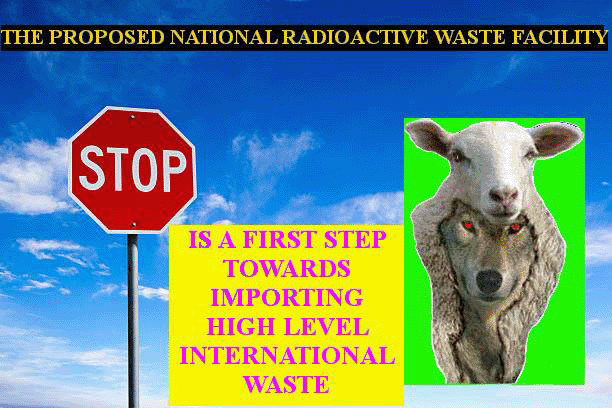
It has been said that this dump will not go ahead if the community is opposed to it, therefore we don’t understand why this discussion is even still happening given that the clear majority of Traditional Owners are so opposed to it?
This area is currently under some protection from the Aboriginal Heritage Act of SA however, we are concerned that the Federal Government may attempt to override this state legislation. This concern is increased given that the government has suspended federal environmental and Aboriginal heritage protections during the siting period for the planned dump.
ATLA is in partnership with IBA in owning the Wilpena Pound Resort and we don’t want a waste dump to affect our tourism future.
It is NOT international best practice to go against the Traditional Owners and we call upon the federal government to stop this proposal immediately
How can you determine Indigenous support, for each process advancement stage, when ATLA was not approached until the project entered phase 2.
 Adnyamathanha Traditional Land Association RNTBC, Submission to the senate inquiry into the Selection process for a national radioactive waste management facility in South Australia. Introduction (Submission No.42)
The Adnyamathanha Traditional Lands Association RNTBC is the peak body for all matters relating to land, culture, heritage, language and native title for Adnyamathanha people. Adnyamathanha country includes the oldest mountain range in the world and we have the oldest living culture in the world.
Adnyamathanha people are important keepers of the knowledge of this country that is recognised worldwide. This is a very important role for each and every one of us to keep this culture strong and to protect this mountain range and surrounding country and ensure our knowledges are understood by future generations.
The Association has been set up on a culturally appropriate model that allows all Adnyamathanha people to have representation on this peak body. We have a governing committee of up to 24 members and each of these members represents a particular group of Adnyamathanha people. Our Board of Directors meet throughout the year to make the decisions in relation to the matters arising and where necessary decisions are brought back to the community for discussion and ratification.
This has been a very successful process for us all with our Consent Determination being handed down in 2009. We have been united in this process and by working together we have really achieved a great deal for our people and for the future generations. We have only achieved this because we work so hard to keep our culture strong and we were able to prove that we know our country and we know our story lines and our language is kept strong.
ATLA is in partnership with IBA to purchase the Wilpena Pound Resort.
Muda
Yura Muda is our term for our spiritual and cultural beliefs, it gives us our law, our rules for living and defines our spiritual beliefs and our boundaries. We believe our Muda in a way that is deeper than most other religions.
Some areas of our Muda have been disturbed or destroyed, by mining and other developments over the years and this causes a great deal of distress to our people. Once the land is destroyed the Muda is gone, we can no longer pass on that cultural and spiritual information to our younger generations and this of course effects our cultural survival.
The Waste Dump
The nuclear waste facility proposed for the Wallerberdina/Barndioota is in our country. We understand that this federal plan seeks to deal with the disposal of low level waste and the interim storage of intermediate level waste for a non-defined period at the facility site. In this submission we refer to the plan as a dump, please note that this refers to both the dump and store concepts. Our organisation has voted on several occasions stating we are totally opposed to the waste dump in that particular area.
We have been opposed to this dump from day one and we have made our views public where ever possible. Continue reading →
May 21, 2018
Posted by Christina Macpherson |
AUSTRALIA - NATIONAL, Federal nuclear waste dump |
Leave a comment
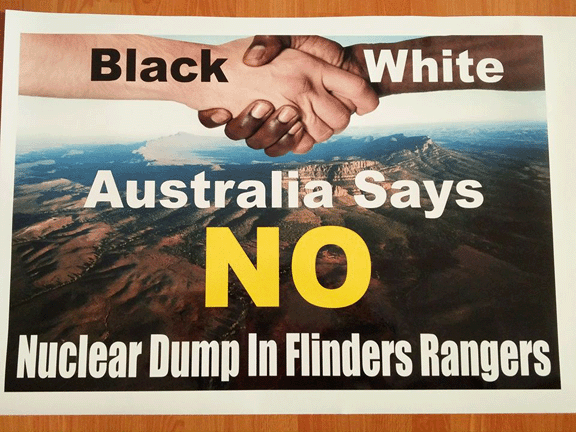
Make peace by defying SA nuclear dump https://www.eurekastreet.com.au/article.aspx?aeid=55371 Michele Madigan 17 May 2018
As Aboriginal elder and justice campaigner Kevin Buzzacott has said: ‘If we can’t make peace for the country, and look after the country — what’s the good of us?’
Sunday 29 April 2018 marked the second anniversary for many such South Australian peacemakers. It was on that date in 2016, at 2.30am, that Adnyamathanha Elder Aunty Enice Marsh heard the news that the federal government had ‘chosen’ the Flinders Ranges to be the ‘top of the list’ site of the proposed national nuclear dump.
Incredulous at hearing this on the 8am news, I rang Aunty Enice. ‘I’m sitting here trying to eat my weetbix and keep my thoughts calm,’ she said. ‘But do you know what I was thinking? Colonisation is again attacking the First Nations people and poisoning their land.’
For her colleague, Regina McKenzie, it was ‘like getting news of a death’: death to a 60,000-year cultural heritage.
Since then, South Australia’s international grain farming area of Kimba has again emerged as an alternative site. At last month’s first joint meeting in Port Augusta, both Kimba and Flinders Ranges peoples opposing the dump reported that after ‘a quiet last few months’, the pressure from the federal government is now back on with a vengeance.
The announcement of $2 million in ‘untied’ government grants to various local applicants in each region has been integral to this. What was surprising to the Kimba opponents, faced with the absence of five of their key colleagues, was the unannounced (at least to them) appearance of the Minister, National Party Senator Matt Canavan, at this announcement.
When challenged about this lack of notice, the senior public servant’s response was that he hadn’t been ‘really sure’ that the Minister was coming. Kimba opponents cite this as just another example of the government campaign strategy: ‘It’s all about stealth.’
The Minister also announced that the Australian Electoral Commission local voting for and against either region becoming Australia’s national nuclear dump would take place on 20 August. Currently there is a Senate Estimates Committee examining the process of site selection and related matters, with its recommendations due on 13 August — leaving hardly time for a dispersion, reading and respectful cognisance of its findings prior to the vote.
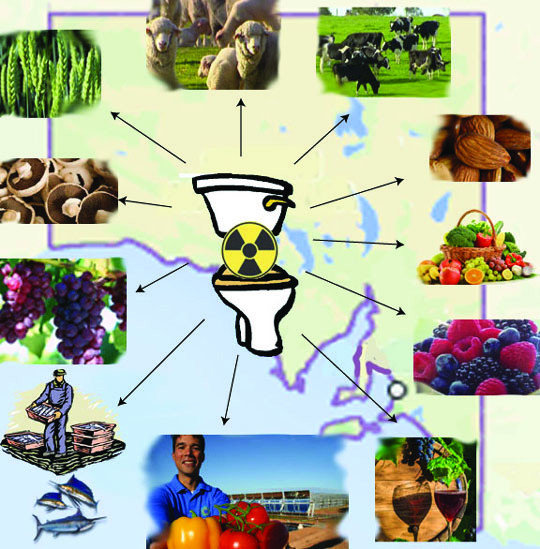
Political maneuvering is again evident in the insistence of the Minister to tightly restrict the voting area — as if the small numbers of local people will be the only ones affected. Kimba farmer opponents warn constantly of the danger to their international markets of other crops and produce (such as Port Lincoln’s seafood trade) on the whole of the Eyre Peninsula region.
The oft-repeated government saying: ‘We will not impose the federal nuclear dump on an unwilling community’ continues to fly in the face of the lately renewed state legislation, which actually forbids the transportation of such waste into South Australia.
On 28 April, some of us ‘southerners’ joined locals at the glorious Wilpena Pound (pictured) site to inform national and international tourists of the Australian government’s intention to make the region home to Australia’s highest level nuclear waste — if permitted.
Predictable reactions to the news (‘Incredible!’ ‘Why?‘) included inquiries about the distance from the Pound. Amazement followed the map sighting: that any government would deliberately jeopardise such an internationally recognised site by proposing, just 40km away, a dump site for nuclear waste. Measured by radioactivity, over 90 per cent of the waste would be intermediate long lived nuclear waste from the Lucas Heights nuclear reactor in Sydney — waste that will be hazardous for thousands of years.
Our dinner at the camping ground was accompanied by ring-necked parrots and, later, flocks of apostle birds. In the morning, my prayer companions included a mother kangaroo, who fossicked among the leaves while keeping herself discreetly behind the wire fence. Her joey however was a close encounter type, constantly circling within a metre of my chair.
The Flinders is an idyllic place. Kimba is important grain farming country. No wonder much of the emphasis in the government campaign, and by local proponents for both regions, continues to be on the low level nuclear waste component.
With the campaign stretching past its third year since the announcement of the respective leaseholders simply ‘offering’ their respective properties, both Aboriginal and non-Aboriginal opponents are rock solid in their constant efforts ‘to look after the country’. But it has come at huge personal and communal costs.
Barry Wakelin, the retired Coalition federal member, is one of the farmers fiercely opposing the plan. In the face of groundwater, transport and serious, hugely long-term safety risks, Wakelin insists, ‘This is a national issue, not something that a regional community should be left to deal with.’
A national response (in the form of a petition being circulated by Conservation South Australia) can be made in solidarity with the country and peoples who will be affected by the proposed site. Click here to sign the petition.
May 19, 2018
Posted by Christina Macpherson |
AUSTRALIA - NATIONAL, Federal nuclear waste dump, politics |
Leave a comment
Janette Thomas Senate Economics References Committee Inquiry into the selection process for a national radioactive waste management facility in South Australia (Submission No 36)
My name is Janette Thomas, resident of Quorn since 2003. My submission is written to explain the adverse effects of The Federal Government Nuclear Waste Dump siting selection process on my local community, my family and myself. I am deeply concerned that a nuclear waste facility is being considered for a site near Hawker on the Hookina flood plain.
Terms of Reference:
a) The financial compensation offered to applicants for the acquisition of land under the Nominations of Land Guidelines:
The Barndioota shortlisting site was publicly announced in November 2015. It was also mentioned in the November 2015 Community Newsletter of the Flinders Ranges Council by our Mayor in his “Mayors Message” stating “The first Council knew of this was calls seeking information from media outlets”.
Attachment 1 – FRC Community Newsletter, November 2015
In December 2015, The Department of Innovation, Industry and Science (DIIS) held information “drop-in” sessions in both Hawker and Quorn. It is not known how many residents availed themselves of this opportunity to learn more, however it is stated in the Mayor’s Message that “only a few residents visited them to find out more about the proposal”. I did take the opportunity to go and see what was being displayed, and spoke to the DIIS representatives. I voiced my concerns strongly, however it did not appear that there were any notes taken – just an attempt by the representatives to rebut any of the issues that I raised.
Attachment 2 – FRC Community Newsletter, December 2015
A presentation by the DIIS was held at the Quorn Town Hall on 15.2.16. The information given to the meeting was all positive and “talked up” the benefits to the community. For example:
- The $10 million dollars the host community would receive if the nuclear waste facility was to be sited in the area.
- 2. The 15 FTE jobs that would be available to operate the facility.
- 3. The annual $2M Community Benefit Package that would be available for local approved applications during the site selection process.
- 4. The tourist opportunities – it was suggested that tourists would come to the area to visit the facility.
- 5. Once the site is chosen the landowner is to receive 3 times the current value for the 100 hectares required.
- 6. The “temporary” storage of the Intermediate Level Waste (ILW) was barely mentioned, if at all, until question time when the panel was repeatedly asked about how it would be stored and for how long.
b) how the need for ‘broad community support’ has played and will continue to play a part in the process
A phone “survey” was undertaken by Orima over the period late February to early March 2016 to gauge the local community support to proceed to Stage 2, ie does the community want the various surveys to be undertaken to evaluate the area as suitable or not, for the storage of nuclear waste.
I answered a telephone call and was asked for the male occupant of the house between certain ages. My partner was over the age requested, and I was not eligible to do the survey, and so our household was not invited to participate. I heard of similar experiences later. I would like to have had the opportunity to make a statement at that time. How is it that a small number of phone calls about such a serious issue of “hosting” a national nuclear waste dump, can then be manipulated to gauge community support to proceed forward to the next stage. It has been suggested that the people who had no opinion were counted as being “in favour”.
Many people had not heard of the short listing of Barndioota, and had not had a chance to think about what they were saying yes, no, or don’t know to. There was publicity given through newsletters and DIIS mailouts, advising that there would be officers visiting from Australian Nuclear Science and Technology Organisation (ANSTO) on a regular basis, who could provide more information and answer any queries, however this all occurred after the decision was announced to proceed to stage 2. I did attend one of their visits voicing my concerns. Their answers were very biased – that there was nothing to be concerned about – refer below: ( f – any other related matters – A).
f) any other related matters
A. The people attending the town meeting 15.2.16 were given the opportunity to ask questions. Many were concerned about the Barndioota site location for many reasons. Some being:
- The Flinders Ranges is renown as being a very seismic active locality. Refer to attachment 3 – Independent Geological Report.
- 2. Barndioota is situated on a flood plain, notorious for extreme periodic flood events and massive historic mud flows. Refer to attachment 3 –
- Independent Geological Report. 3. Question time revealed that there would also be Intermediate level nuclear waste (ILW) stored “temporarily”. When queried how long is temporary – the reply was vague – different figures were quoted. 20, 30 – possibly up to 100 years. If this is the case, I see no reason to move the ILW from its current storage site until a suitable, safe, permanent site is established. Refer to attachment 4 –Quorn Mercury, (Community Meeting pp1-2)
B. The Barndioota site shortlisted, was part of a private leasehold property, and the landholder had not considered or consulted the neighbours or local community before making his application. He had full knowledge of the search for the nuclear waste site having served on three Senate Select Committees related to this industry: Dangers of Radioactive Waste, 23/3/95 to 24/04/96 (Chair from 30/03/95); Uranium Mining and Milling, 08/05/96 to 15/05/97 (Chair from 23/05/96); and Lucas Heights Reactor, 17/08/00 to 24/05/01, but the local community didn’t. This has been a major flaw in the process of a possible nuclear waste dump facility for many reasons.
- Neighbours and community should have been given the opportunity to discuss the ramifications of storing nuclear waste in their area as a matter of respect, similar to the building application process of local government.
- 2. To date there has been millions of dollars spent in “world best practice” obtaining a suitable site for the nuclear waste facility. For example:
a. The Orima Survey undertaken to proceed to the next stage.
b. Staff travel and accommodation costs for the many visits over the last 2 ½ years during the process period.
- Travel and accommodation costs for the numerous groups who have been taken to the Lucas Heights facility.
- d. The travel and accommodation costs of the French group who were asked to give account of the facility in their home country.
e. The $2million Community Benefits Programme made available for application as an incentive during the process to the next stage. Currently there is a second $2million application process underway for the Barndioota site. These processes are currently being replicated in Kimba and will be available for all other sites that proceed to the same stage.
f. The appointment of a full-time Liaison Officer (who appears to be in favour of the facility and not impartial).
g. There are various committees, with members receiving payment to cover their costs of time and travel.
h. There have recently been major costly site surveys undertaken
This will be the process for each of the shortlisted sites therefore multiplying the costly exercises manyfold. Continue reading →
May 18, 2018
Posted by Christina Macpherson |
AUSTRALIA - NATIONAL, Federal nuclear waste dump |
Leave a comment
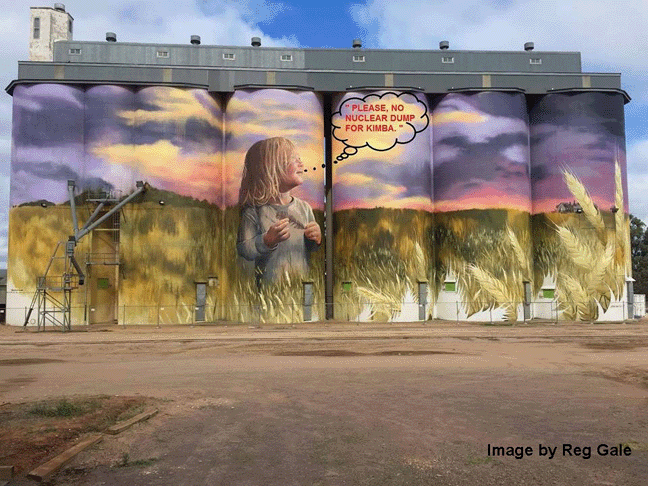
EXTRACT from: A journey to the heart of the anti-nuclear resistance in Australia: Radioactive Exposure Tour 2018, NUCLEAR MONITOR Author: Ray Acheson ‒ NM859.4719, May 2018 “……The federal government of Australia wants to build a facility to store and dispose of radioactive waste in South Australia, either at Wallerberdina Station near Hawker or on farming land in Kimba.
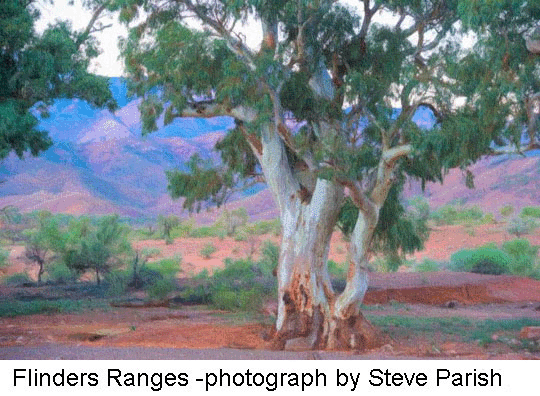
Wallerberdina Station is located in the Flinders Ranges, the largest mountain range in South Australia,  540 million years old. Approaching from the north on our drive down from Lake Eyre can only be described as breathtaking. The red dirt, the brown and green bush, and the ever-changing purples, blues, and reds of the mountains themselves are some of the most complex and stunning scenes one can likely see in the world.
Most people might find it shocking that the federal government would want to put a nuclear waste dump smack in the middle of this landscape. But after visiting other sites on the Rad Tour, it was only yet another disappointment ‒ and another point of resistance.
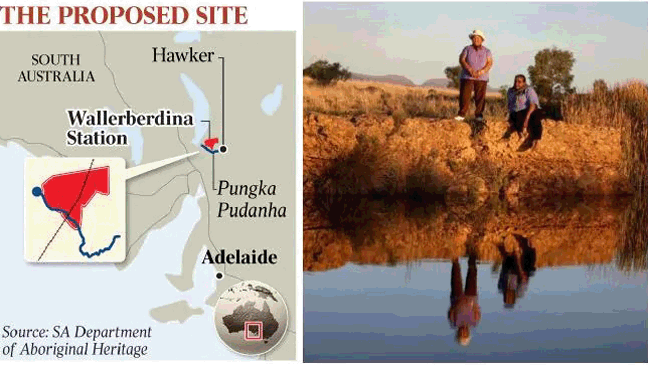
What is known is that the Wallerberdina site is of great cultural, historical, and spiritual significance to  the Adnyamathanha people. It borders the Yappala Indigenous Protected Area, which is a crucial location for biodiversity in the Flinders Ranges. Its unique ecosystem provides a refuge for many native species of flora and fauna, contains many archaeological sites as well as the first registered Aboriginal Songline of its type in Australia, and is home to Pungka Pudanha, a natural spring and sacred woman’s site.
In case that isn’t enough, the area is a known floodplain. Our travels around the proposed site contained ample evidence of previous floods that sent massive trees rushing down the plain, smashing into each other and into various bridges and other built objects. The last big flood occurred in 2006.
The Adnyamathanha Traditional Owners were not consulted before their land was nominated for consideration by the government for the waste dump. “Through this area are registered cultural heritage sites and places of huge importance to our family, our history and our future,” wrote Adnyamathanha Traditional Owners in a 2015 statement. “We don’t want a nuclear waste dump here on our country and worry that if the waste comes here it will harm our environment and muda (our lore, our creation, our everything).”

We met Adnyamathanha Traditional Owners Vivianne and Regina McKenzie, and Tony Clark, at the proposed site. They invited us into the Yappala Indigenous Protected Area to view the floodplains and swim in the beautiful Pungka Pudanha. We’d just been camping at Wilpena Pound in the Flinders Ranges National Park only a few kilometres away. It is impossible to understand the government’s rationale for wanting to build a toxic waste dump on this land so cherished by its Traditional Owners, local communities, and tourists alike.

The McKenzies have been working tirelessly to prevent the proposed dump from being established, as have other local activists. Fortunately, they have some serious recent successes to inspire them. In 2015, the federal government announced a plan to import 138,000 tonnes of high-level nuclear waste from around the world to South Australia as a commercial enterprise. But Traditional Owners began protesting immediately, arguing that the so-called consultations were not accessible and that misinformation was rife. In 2016, a Citizen’s Jury, established by then Premier Jay Weatherill and made up of 350 people, deliberated over evidence and information. In November that year, two-thirds of the Jury rejected “under any circumstances” the plan to import or store high-level waste.24 They cited lack of Aboriginal consent, unsubstantiated economic assumptions and projections, and lack of confidence in the governmental proposal’s validity.
Other battles against proposed nuclear waste dumps have been fought and won in South Australia. From 1998 to 2004, the Kupa Piti Kungka Tjuta, a council of senior Aboriginal women from northern South Australia, successfully campaigned against a proposed national nuclear waste dump near Woomera. In an open letter in 2004, the Kungkas wrote: “People said that you can’t win against the Government. Just a few women. We just kept talking and telling them to get their ears out of their pockets and listen. We never said we were going to give up. Government has big money to buy their way out but we never gave up.”
Connected communities
The attempts by the Australian government and the nuclear industry to impose a waste dump in the Flinders Ranges, just like their attempts to impose waste dumps and uranium mines elsewhere in the country, or their refusal to compensate victims and survivors of nuclear testing, are all mired with racism. They are rooted in a fundamental dismissal and devaluation of the lives and experiences of indigenous Australians, and of proximity to cities but more importantly, to power.The industry and government’s motivations for imposing nuclear violence on these people and this land are militarism and capitalism.
Profit over people. Weapons over wellbeing. Their capacity for compassion and duty of care has been constrained by chronic short-termism ‒ a total failure to protect future generations. The poison they pull out of the earth, process, sell, allow others to make bombs with, and bury back in the earth, wounds us all now and into the future.
But nuclear weapons are now prohibited under international law. New actors are challenging the possession of nuclear weapons in new ways, and nucleararmed states are facing a challenge like never before.
The nuclear energy industry ‒ and thus the demand for uranium ‒ is declining. Power plants are being shuttered; corporations are facing financial troubles. Dirty and dangerous, the nuclear industry is dying.
This is in no small part due to the relentless resistance against it. This resistance was fierce throughout all of the country we visited, from Woomera up to Lake Eyre, from Roxby Downs to the Flinders Ranges. We listened to stories of those living on this land, we heard their histories, witnessed their actions, and supported their plans…..
https://antinuclear.net/2018/05/12/a-journey-to-the-heart-of-the-anti-nuclear-resistance-in-australia-radioactive-exposure-tour-2018/#more-60401
May 18, 2018
Posted by Christina Macpherson |
aboriginal issues, Federal nuclear waste dump, South Australia |
Leave a comment
Anti-Nuclear Coalition South Australia No Nuclear Waste Dump Anywhere in South Australia, 16 May 18 Richard Yeeles is the Policy Director of the Liberal Party of South Australia. In his 2016 submission to the Nuclear Fuel Cycle Royal Commission he recommended:
“That as a demonstration of its strong interest in, and commitment to the further development of a safe and sustainable Australian nuclear industry, and as a first step in such further development, the South Australian Government offers
to host a national facility for storage and disposal of Australia’s own low and intermediate-level radioactive waste with the ultimate aim of securing Federal Government support for hosting an international radioactive waste management facility in South Australia”
Lib Senator Ramsay triggered KImba’s offer whilst Lib ex-Senator & absentee landlord Chapman dumped on the Flinders.
Join the Dots peeps! https://www.facebook.com/groups/1314655315214929/
May 15, 2018
Posted by Christina Macpherson |
AUSTRALIA - NATIONAL, Federal nuclear waste dump, politics |
Leave a comment
Anti-nuclear protests at SA Liberal HQ https://www.eyretribune.com.au/story/5395082/anti-nuclear-protests-at-sa-liberal-hq/?cs=1825 MAY 11 2018
South Australians concerned about the prospect of a radioactive waste facility in the state protested outside of the Liberal Party headquarters in Adelaide this morning to oppose the proposal to both state and federal Liberals with a giant inflatable radioactive waste barrel drawing the attention of peak hour traffic.
The protesters were calling for Premier Steven Marshall and the Liberal government to oppose the federal government’s plan to establish a nuclear waste facility in Kimba or near Hawker.
Don’t Dump on SA member Tadhg Porter said the South Australian Liberal party brought in legislation that made the establishment of a waste dump illegal.
“We want Premier Marshall to defend our state against the prospect of the federal proposal, just like he defended South Australia against the proposal for an international high level radioactive waste facility,” Mr Porter said.
“We call on the federal government to stop this process, stop dividing communities and take a responsible approach to the management of Australia’s nuclear waste.”
May 15, 2018
Posted by Christina Macpherson |
Federal nuclear waste dump, opposition to nuclear, South Australia |
Leave a comment
Sue Tulloch A submission to Senate Standing Committees on Economics – The appropriateness and thoroughness of the site selection process for a national radioactive waste management facility (NRWMF) at Kimba and Hawker in South Australia, noting the Government has stated that it will not impose such a facility on an unwilling community. (Submission No. 32)
Terms of reference:
b) how the need for ‘broad community support’ has played and will continue to play a part in the process, in particular:
 ii) how ‘broad community support’ has been or will be determined for each process advancement stage.
- Untenable site nomination process
- The legitimacy of the Governments’ Orima Survey
- Lack of transparency from the Minister and DIIS Policy Officer
- Shambolic role of the Bardioota Consultative Committee
- whether wider (Eyre Peninsular of state‐wide) community views should be taken into consideration and, if so, how is this occurring or should be occurring
Introduction
I am Sue Tulloch, a resident of Quorn, a town within the Flinders Ranges Council district which includes the site, Barndioota nominated for a NRWMF, a section of the Wallerberdina Pastoral Lease in the northern Flinders Ranges near Hawker. Having with my partner, run the Copley Bakery (northern Flinders Ranges) for 20 years, I know why Australian and overseas visitors want to experience the Flinders Ranges. They perceive the area as having unique wilderness qualities. What would happen if we inserted a National Radioactive Waste Management Facility into this mindset?
Untenable site nomination process
- The site was nominated by one individual, Grant Chapman, previously a Federal Government Senator, particularly interested in Australia’s search for a national nuclear waste site for over 20 years, these facts were not publicised.
- Nobody either next door to the Barndioota site boundary, or in the surrounding areas were notified at the time.
- Mr Chapman does not live on this property. He does not live in the designated area, whereas locals who live within the designated area ( Flinders Ranges Council district) have been suddenly lumped with the responsibility of deciding yes or no to ‘hosting’ the establishment of a NRWMF, the long and short term consequences, impacting all Australians.
- If this site nomination process (Stage 1) is proven to be untenable, so would the ensuring community consultation process, and the ‘Community Sentiment Survey’.
The legitimacy of the Governments’ Orima Survey to access broad community consent to proceed to Stage 2.
The following observations were made after two days of personally studying the governments’ ‘Community Sentiment Survey – Report of Findings’, published by Orima Research in April 2016.
The survey was conducted on behalf of the Department of Industry, Innovation and Science to determine community sentiment for continuing to the next phase of a public consultation process, ( phase 2 technical assessment ) for the establishment of a National Radioactive Waste Management Facility (NRWMF) at six nominated sites. I focused on the nominated site of Barndioota and generally found the whole results conflicting and ambiguous from a layman’s point of view.
That the survey contains too many errors and unsubstantiated generalisations to be considered a formal, interpretive report, being inappropriate for public scrutiny, considering the questionable methodology and data obtained via the pilot and main general population surveys, especially as the future of the whole site selection process apparently seems to depend on it! (ref 1)
Lack of transparency from the Minister and the Policy Officer
- I have been frustrated by the general absence of clear answers to my very specific questions sent to Minister Canavan (ref 2,3) and the Policy Officer, (ref 5, 6)
- I had a battle (representing myself, no other group), to see the Minister when he visited Hawker (Fri 2/6/17), having followed all protocol including forwarding my questions well beforehand and communicating with the Ministers’ diary secretary, I was asked by the Policy Officer if I had permission to attend.
- At the meeting, Minister Canavan did answer my question (ref 3 Q 2) saying, the government had no plans for future disposal of the Intermediate Level Waste proposed for the NRWMF.
- Replies to my correspondence (ref 4, 6) were received, but disappointingly generic in nature.
- At a meeting with the Dept of Industry, Innovation and Science (DIIS) on June 3 2017, my questions, despite of the Ministers’ assertion, (ref 4 4th para) were not addressed.
Shambolic role of the Barndioota Consultative Committee (BCC)
The BCC was established (Nov 2016) by the (DIIS) for ‘ensuring the community is fully engaged and is able to provide input on key aspects of the project throughout its’ next phase’ (NRWMF BCC Guidelines p.1 1.1 2nd para) However my experience as a public observer at the Dec 2017 BCC meeting, was anything but inclusive.
The discussion involved a presentation by consultant about the possibility of excluding Quorn in the next vote to go to Stage 2
- Public observers (myself and another) not especially invited as speakers by the DIIS, were very obviously not welcomed. After being told the whole days’ business could not proceed if we stayed,( an invidious position to be put in), we were individually, forcibly escorted out by the DIIS representative (ref 7) What a farcical example of ‘ensuring the community is fully engaged!
ƒ The BCC ‘is not a decision‐making body and performs an advisory role only’, (BCC Guidelines p1 1.2), however ‘meetings may be open to the public at the discretion of the Committee….’ (BCC Guidelines p7 1.4.4 last para) Is this a decision making role?
ƒ The BCC is overwhelmingly dominated by ‘stakeholders’ wanting the NRWMF to go ahead, including the DIIS representatives. It therefore, appears to be a biased, controlled forum that does not practically encourage broad public consultation, being instead a marketing exercise to manufacture community consent.
ƒ The Deputy Convener of the BCC needs to be: ‘independent of the Department’ and to ‘act impartially with respect to any individual or representative in the community’ (BCC Guidelines pp3,4). His role as Chairperson at the Hawker BCC meeting with Minister Canavan (Fri 2/6/17), was blatantly in favor of the NRWMF going ahead, emphasising the considerable financial benefits for Hawker if the ‘project’ went ahead.
ƒ The Deputy Convener effectively evicted me from the Dec 2017 BCC meeting, (ref 7 para 2) contravening most of the ‘selection criteria for the Deputy Convener’, (BCC Guidelines p4) including;
ƒ An ability to facilitate and manage stakeholder committees in an independent manner ƒ Experience in community relations, facilitation, mediation or public advocacy: ƒ An ability to represent the concerns of a variety of interest groups and an understanding of local issues.
ƒ A willingness to share information with the local community
Meeting minutes (notes) are ‘drafted by the Department at the end of each Committee meeting, in collaboration with the Independent and Deputy Convener’ (BCC Guidelines p6). These notes are often, only, ‘publicly available on the Department’s website’ a week before the next bimonthly meeting if at all.(ref 7 para 3) A further example of the inappropriate, disingenuous role the BCC plays in the site selection process for a NRWMF.
e) whether wider (Eyre Peninsula or state‐wide) community views should be taken into consideration and, if so, how this is occurring or should be occurring.
Definitely, in a democracy such as Australia, wider community views regarding an issue with state and national relevance should be mandatory! Particularly in South Australia in light of the Citizens Jury voting no, to the proposal of deposing overseas high level radioactive waste in South Australia. (SA Nuclear Fuel Cycle Royal Commission Report May 2016). Albeit a separate issue to the NRWMF, it demonstrated the overall negative public attitude towards State and Federal Government radioactive waste proposals.
Most South Australians and Australians are unaware of the NRWMF proposal, believing that since the 2015‐2016 SA Royal Commission, any nuclear waste issues have been ‘done and dusted’. This has proved very handy for the Federal Government, effectively isolating the targeted community groups around Hawker and Kimba, fighting against having a NRWMF imposed on them.
Conclusion
Another resident of Quorn, in correspondence to Mr Bruce Wilson (DIIS advisor to the Minister), sums up my opinion about the appropriateness and thoroughness of the site selection process for a NRWMF at Hawker and Kimba, in SA, noting that the Government has stated that it will not impose such a facility on an unwilling community. ‘The search for a site to dispose of Australian generated LLW and ILW has .… so far, been unsuccessful….. If it is a National problem the answer needs to be found in a nationally collaborative way, with bi‐partisan support, and not palmed off onto remote, vulnerable communities, whose cohesion is split and disrupted by ideology, money and unsubstantiated raised expectations.’ re jobs, tourism opportunities and long term environmental stability.
I appreciate this valuable opportunity to voice my opinions at a Federal Government level and thank Senator Rex Patrick for the chance.
May 14, 2018
Posted by Christina Macpherson |
AUSTRALIA - NATIONAL, Federal nuclear waste dump |
Leave a comment
 These people seem to have no grasp at all of the concerns of people worldwide about the effects of nuclear pollution on the environment and on future generations.
It is as if they have no understanding whatsoever of the risks to South Australia’s precious groundwater, to South Australia’s agricultural reputation, nor of the risks of transport accidents, terrorism, and the longterm situation of stranded radioactive trash.
Just consider these inane comments:
“the majority, we’re just so excited about the possibilities.
“it’s a way of ensuring a future for his young children.”
“I think it’s far safer than my own farming industry”
Decision looms for SA town of Kimba divided over nuclear waste The town of Kimba is struggling for economic growth. Some see nuclear waste as the industry that could help it prosper. https://www.sbs.com.au/news/decision-looms-for-sa-town-of-kimba-divided-over-nuclear-wasteBy Rhiannon Elston, 13 May 18
The small community of Kimba sits roughly halfway across the national highway stretching between South Australia’s east and west coasts. Wheat is the main crop grown here, but mayor Dean Johnson

says it’s marginal farming land. “We’re very reliant on rainfall in our area,” he tells SBS News.
The town’s uncertain future is the reason some residents have thrown their support behind a plan to store the nation’s nuclear waste. Local small business owner and farmer Michelle Raynr and her husband have offered to sell a small parcel of their land to the government for a future radioactive waste facility.
“You kind of just dread to think what the town will be like in another five, ten years if it doesn’t happen,” she says.
It would be a permanent facility for Australia’s low-level nuclear waste, and a temporary site for intermediate level disposal.
Ms Raynr says not everyone has been supportive of her decision. “It’s been a little bit disappointing, people’s reactions,” she says.“But the majority, we’re just so excited about the possibilities.”
Andrew Baldock is one who agrees. His parents have also offered to sell a piece of their land. He says it’s a way of ensuring a future for his young children.
“I’d really like to see something like this to help underpin the community, and perhaps, put us ahead of the other struggling towns in the region,” Mr Baldcock says.
“To me, it’s a lot less scary than the chemicals and the petrol, diesel and everything else that comes through our road here. I think it’s far safer than my own farming industry, to be honest.”
Radioactive waste is currently held across 100 different facilities. The federal government says it wants a central facility, housed in a community willing to support it.
Peter Woolford, Chairman of an anti-radioactive waste group in Kimba, wants the concerns of those who don’t support the project, to be heard.
“They’ve continually said they’re not going to impose it on a community, that it has to have broad community support, but I don’t think they have that in Kimba at all.”
The location for a national facility has been narrowed down to three sites, all in South Australia. Two are in Kimba, and the other is near Hawker, in the Flinders Ranges. The federal government says any facility would be constructed and managed under a strict regulatory framework.
Kimba local Graham Tiller believes any radioactive waste should be stored on existing government land.“There’s just no guarantees that land values won’t depreciate, or that grain won’t be devalued,” he says.
Tina Wakelin, another resident, says she agrees the site must go somewhere, but questions why it has to be in Kimba. “We must not be depicted as trying to stop nuclear medicine, that’s not the aim at all,” she says.“But a little town like ours should not feel responsible for all of Australia.”
Last month, the Resources Minister announced $4 million dollars in community funding grants for both Hawker and Kimba.
Mayor Dean Johnson says dozens of groups benefited from the cash injection.
“There’s the pony club… tennis courts, playgrounds, all sorts of things.”
Graham Tiller’s wife, Janet Tiller, says the money is not worth the impact of such a project. “No amount of money’s worth the health and livelihoods and friendships that have been lost in the town,” she says.
A postal ballot will be held on August 20 to measure community support.
The final decision as to where the waste site will go rests with the Resources Minister, who is expected to make his choice by the end of the year.
May 14, 2018
Posted by Christina Macpherson |
Federal nuclear waste dump, South Australia |
Leave a comment
Fight To Stop Nuclear Waste Dump In Flinders Ranges SA, 14 May 18 It is not just Kimba that needs to be consulted. I live at Whyalla, just up the road. At the very least all of Eyre Peninsula needs to be consulted, better still all South Australia. It will effect and affect us all. Especially the reputation of any agritculture or aquaculture. Unbelieveable that there are some people in Kimba who think this will “save” their town. I believe if it goes ahead, it will be the demise of the town.
Gov thinks that people can be bought – they did with the Shire of Kimba as it is a dying town like many rural towns n those who want this to happen decided $$$$ is what they need to boost it.
When the Mayor decided that the vote should only be for Kimba residents three quarters of the Shire didn’t want it, as everyone I have  spoken to is against it. Somehow the Mayor and Ramsay had found a loophole and they ran with it. People are getting blinded by being healed by Nuclear Medicine saying it’s OK to av this dump but don’t realise that the Nuclear Waste is completely different than Nuclear Medicine.
Yes the gov is trying to cover up the negatives and saying it is harmless but it’s not as it was why then a worker last year when he got contaminated by a work accident is still not well. When the governments put out No Bullying ads why don’t they take action as at the moment that is what they are doing BULLYING US INTO SAYING YES FOR MANY NEGATIVE IDEAS THEY WANT TO DO ALL AROUND AUSTRALIA.
the tax payer as insurance companies hate nuclear, – USA has plenty about it on google and the tax payer pays not the nuclear corporation. I say NO Nuclear dump and people should research and see Medical isotopes have a half life of 3 days, This is not about medical isotopes. https://www.facebook.com/groups/344452605899556/
May 14, 2018
Posted by Christina Macpherson |
Federal nuclear waste dump, opposition to nuclear, South Australia |
Leave a comment
Submission To: Senate Standing Committees on Economics Regards “Selection process for a national radioactive waste management facility in South Australia”Ken and Carole Wetherby (Submission No. 12)
We live on a ‘hobby farm’ 10km east of Cleve which is outside the Kimba District Council.
Terms of Reference, our comments refer to items b, d and e. b)
“Broad community support”, the level of community support required for acceptance should be set at a 2/3 majority- then stick to this figure – don’t ‘waffle’.
d) Essentially the ‘community benefit program’ is a bribe and that is what it should be called.
e) This is the point which we have disagreed with from the outset. The establishment of a radioactive waste management facility at Kimba will have an effect on the whole of Eyre Peninsula, not just the Kimba Council area and we should all be allowed to have our say.
The ‘clean green’ reputation of the agricultural, fishing/aquaculture and tourism industries could be negatively affected. “Hobby farm’ values could also be affected – in our case we retired to our ‘hobby farm’ at Cleve because of Eyre Peninsula’s ‘clean green’ reputation. The agricultural zone on Eyre Peninsula is isolated from other farming areas by Spencers Gulf, the Nullarbor Plain and pastoral land to the north and as such it has a unique ability, as an entity, to claim and retain our “clean green’ reputation.
May 12, 2018
Posted by Christina Macpherson |
AUSTRALIA - NATIONAL, Federal nuclear waste dump |
Leave a comment
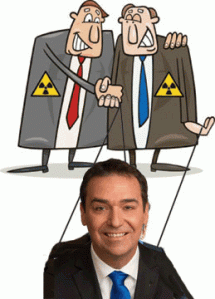 NUCLEAR WASTE DUMP: NOW A FEDERAL ELECTION ISSUE? Mark Simpkin Fight To Stop Nuclear Waste Dump In Flinders Ranges SA, 10 May 18
May 12, 2018
Posted by Christina Macpherson |
Federal nuclear waste dump, South Australia |
Leave a comment
Eddie Hughes Submission to Senate Inquiry on Nuclear Waste Dump Sit Selection Process (Submission No. 57 My name is Eddie Hughes and I am the State Member for Giles. Please accept the speech I gave in Parliament on the 31 May 2017 as my submission for the Senate Inquiry into “The selection process for a national radioactive waste management facility in South Australia”.
I believe that the selection process is deeply flawed as a result of being based on an individual site nomination process.
NUCLEAR WASTE
GRIEVANCE DEBATE – 31 MAY 2017
Mr HUGHES ( Giles ) ( 15:23 ): I rise today to talk about the process that is on the way to determine whether a facility to accommodate domestic nuclear waste is built in South Australia. It is very strange, given the vastness of the Australian continent and, indeed, the concentration of nuclear expertise at Lucas Heights, that the only three sites being considered are all in the electorate of Giles. The reason all the sites are in Giles does not reflect any particular set of comparative advantages.
What it does reflect is a fundamentally flawed site selection process. It is a site selection process that has little regard for the impact on the communities that have been put in the spotlight and a site selection process that has absolutely no regard for the division that has been created.
Let me be clear: we do need to manage our domestically-produced waste in a responsible fashion. The adoption of such a divisive process does not, however, represent a responsible approach. The trigger for the engagement process is at the heart of why this is a seriously flawed approach. If you look at Kimba and the surrounding district, and if you look at Hawker and its district, you will see the division that has been caused. The trigger for the Flinders Ranges site was totally centred on the action of one person. That person does not live in the region; he lives in Adelaide. He is an absentee landlord. This absentee landlord nominated Wallerberdina Station which is under a pastoral lease. The absentee landlord is Grant Chapman, a former Liberal Party Senator.
The process adopted by the Federal Government did not call for communities to nominate a site; it called for individuals with land tenure to nominate sites, a bizarre approach which then left communities to react. The absentee landlord did not consult with his neighbours prior to nominating his property. I understand that he did not discuss his intention with neighbouring pastoralists and he did not consult with the local Aboriginal people, some of whom live on the adjoining property at Yappala Station. I spent a night at Yappala, listening to the concerns expressed by the residents. They were shocked by the nomination and the arrogance of the absentee landlord. We now know that the presence of Aboriginal people in the Flinders Ranges dates back 40,000 years. They are not blow-ins, they are not absentee landlords, they have lived and walked the country for generations.
The nomination of Wallerberdina was marked and will always be marked by a complete lack of respect for the Adnyamathanha. The absentee landlord did not speak to his neighbours, neighbours whose connection to the land he obviously has no appreciation of. We are not all that far from terra nullius. His neighbours were invisible. The nomination and the ongoing process has generated division not just in the European community but also in the Aboriginal community. The nomination process in Kimba also centred on the actions of individuals and has also led to community division. In the lead-up to the Federal election, the people of Kimba were under the impression that the two sites nominated near Kimba had been taken off the table, only to magically reappear after the election.
Most of the waste generated comes from the Eastern States. Lucas Heights can easily accommodate the long-lived intermediate waste for decades to come. That is where the expertise is and that is where the more serious waste is generated. When it comes to that waste and other waste streams, we have ample time to get this right, and a starting point at a national level is to initiate a roundtable process involving all the various interests, including non-government environmental bodies. We have an obligation to do this properly and we can build a consensus about our long-term management of nuclear waste. What has happened to date should become a case study in how not to do it.
May 11, 2018
Posted by Christina Macpherson |
AUSTRALIA - NATIONAL, Federal nuclear waste dump |
Leave a comment
The proposed above ground Store in SA is primarily for ANSTO nuclear wastes
It is axiomatic that site selection at Kimba will require requisition of an Eyre Peninsula Port for decades of intended shipments of ANSTO nuclear fuel waste, first due from the UK in circa 2020-21.
The SA Nuclear Fuel Cycle Royal Commission (2016) concluded that terrorist attack scenarios are conceivable during the transport of nuclear fuel wastes & that if a cask was lost at sea and was irrecoverable the radioactivity that escapes is expected to affect thousands of cubic km of seawater.
ANSTO has produced irradiated nuclear fuel wastes & Intermediate Level Wastes at Lucas Heights for 60 years without any nuclear waste disposal capacity (or even a program to do so) and intends to continue this mal-practice for another 40 years under an OPAL reactor Operating License up to 2057.
It is an untenable fact that the proposed nuclear fuel waste Store in SA is intended to operate “above ground for approx. 100 years”, however responsible management of ANSTO irradiated nuclear fuel wastes requires isolation from the environment for 10,000 years.
A Store in SA is unnecessary given the safe option of Extended Storage at Lucas Heights
This Inquiry should find no manifest need for a nuclear waste Store in SA other than Federal agenda. There is no Safety, Licensing or technical reason to bring these nuclear wastes to SA.
the Federal Minister holds a draconian discretion under the National Radioactive Waste Management Act 2012 (NRWMA) to over-ride both Federal and State Aboriginal Heritage Acts.
Ending the process now is far preferable to “a final right of veto” which forces Aboriginal people through to the end of a divisive demanding site selection process that is harming their community.
An immediate adjoining property to the proposed NRWMF siting in the Flinders is an Indigenous Protected Area, a part of the National Reserve System that is supposed to be under Federal protection. AND the proposed sites and the broader area are part of a precedent registered Story
Line, values that must be respected, under the protection of the SA Aboriginal Heritage Act 1988
However: the Federal Minister holds a draconian discretion under the National Radioactive Waste Management Act 2012 (NRWMA) to over-ride both Federal and State Aboriginal Heritage Acts.
This ERC Inquiry should recognise that Aboriginal people’s ‘voice must be heard and their consent is essential’ as a core part of “broad community consent” and make a Finding that NRWMF siting on Adnyamathanha country in the iconic Flinders Ranges is inappropriate and must stop forthwith.
 David J Noonan B.Sc., M.Env.St. Independent Environment Campaigner . Submission to Senate Economics References Committee Inquiry “Selection process for a national radioactive waste management facility in SA” (Submission No. 31)
RE: Flaws in site selection process, inappropriate indefinite storage floats best practice, failure to follow essential Nuclear Safety Committee advice, and serious threat to human & cultural rights.
Dear Secretary Please accept this public submission & consider my request to appear as a Witness at this Inquiry
This submission focuses on the “appropriateness and thoroughness of the site selection process” & associated matters for the proposed National Radioactive Waste Management Facility (NRWMF).
Specifically: on inappropriate Siting of a proposed indefinite above ground Store for primarily ANSTO irradiated nuclear fuel wastes & long lived Intermediate level reactor wastes in regional SA.
An Executive Summary and a few public interest & Safety Questions for this Inquiry to consider under your Terms of Reference are provided – along with an offer to expand on points raised.
Over the last two full years the Federal government has solely targeted regional communities in SA to site the nuclear waste Store & associated required nuclear Port and waste transport routes.
In doing so, the Federal process is unacceptably inadequate (rather than thorough) in failing to follow essential advice of the Nuclear Safety Committee to the regulator ARPANSA (NSC advice to the CEO, Nov 2016) on the NRWMF: for transparency in decisions and for “The ongoing requirement to clearly and effectively engage all stakeholders, including those along transport routes.”
My submission to the Minister (May 2017) on his decision under the National Radioactive Waste Management Act 2012 to assess two sites near Kimba as potential sites for the proposed NRWMF raised a range of issues that have not been thoroughly addressed since (see Attachment 1).
I request opportunity to appear as a Witness to provide evidence at a Hearing of this Inquiry, and was a Witness as an individual on nuclear waste issues at the SA Parliament Joint Committee Inquiry on the Findings of the Nuclear Royal Commission, held in 2016. Continue reading →
May 9, 2018
Posted by Christina Macpherson |
AUSTRALIA - NATIONAL, Federal nuclear waste dump |
Leave a comment
Gary Cushway
18 Feb 2018 Submission to Senate Inquiry on Selection Process for Nuclear Waste Dump Site. (submission no. 6) Cushway addresses these terms of reference:
b) how the need for ‘broad community support’ has played and will continue to play a part in the process
’Broad community support’ should reflect a large majority, both across the community and within stakeholder groups (including the indigenous community) in favour of moving to the next process advancement stage.
c) how any need for Indigenous support has played and will continue to play a part in the process, including how Indigenous support has been or will be determined for each process advancement stage;
It is not simply enough to say that consultation with indigenous stakeholders and neighbours has occurred, without elaborating on the results.
The ‘Community sentiment survey’ conducted by DISI in April 2016 recorded 3% support from the indigenous community for the Barndioota site to proceed to the next stage. (p10 sec C)
source:
http://www.radioactivewaste.gov.au/site-selection-process/key-documents-andfaqs -Community Sentiment Survey (3.05MB)
A copy of this report has been attached to this emailed submission.
Given the presumably low sample size I would suggest that this likely represents support of one or perhaps two individuals. It is vital that the sample size of this
survey is published.
Additionally, the process behind the decision to disregard the significantly low support in the indigenous community from this survey and to progress the Barndioota site to the next stage should be discussed publicly as a matter of importance.
d) whether and/or how the Government’s ‘community benefit program’ payments affect broad community and Indigenous community sentiment
Although making funds available for ‘community benefit’ is clearly welcomed for any reason, the inclusion of offers of money as a part of the consultation
process has created a few potential problems with regard to whether support from the community can be measured as broad support for the actual proposal or as support for the community benefit money being offered.
This could also create a disparity when trying to effectively gauge ‘broad support’ in the community when some may be receiving significant amounts of money while others may not.
 There also could exist a perceived conflict of interest when bodies such as the Flinders Ranges Council are a recipient of this funding, when the Council may in future be required to make impartial planning decisions on, for example,
infrastructure or local environmental policy that is related to any future facility in the area.
There also could exist a perceived conflict of interest when bodies such as the Flinders Ranges Council are a recipient of this funding, when the Council may in future be required to make impartial planning decisions on, for example,
infrastructure or local environmental policy that is related to any future facility in the area.
Although local community support is vital, in a proposal such as a National
Radioactive Waste Management Facility a broader consent should be sought from across the country.
As the NRWMF is a part of national plan of radioactive waste management any proposed site should require a ‘broad support’ nationally as well as locally.
The current proposal involves the storage of radioactive waste from sites across the country as well as the interim storage of waste returning to Australia from overseas. Federal, state and international governments have a responsibility to ensure that their involvement in the movement of radioactive waste complies with all national, state and international laws, regulations and best practice meaning that these governments and their constituents have a stake in ensuring that the site selection meets their own requirements in terms of legislation and broader social values.
Limiting the consultation to a small local community area inhibits the ability of these stakeholders to have a voice in the process.
May 9, 2018
Posted by Christina Macpherson |
AUSTRALIA - NATIONAL, Federal nuclear waste dump |
Leave a comment
 Others however do not consider that the financial risks are adequate. Their concerns have been articulated in community discussions:
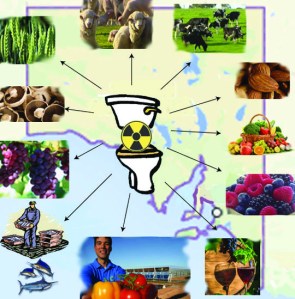
• The loss of value to the spectacular tourist lands of the Flinders ranges
• The damage to farming country near Kimba
• The harm to below surface water tables
• The adverse effect on the prices of livestock and crops, caused by proximity to radioactive waste
• The adverse effect on the prices of land adjoining the site
• The fear that the Commission’s case for a nuclear making a profit is based on inflated estimates of the income and deflated estimates of the costs and risks
The sites near Kimba are in a productive agricultural region. This is in conflict with the National Health and Medical Research Council’s Code of Practice on radioactive waste, which states that radioactive waste disposal sites should have “little or no potential for agriculture”
The question for all of us must be faced. What sort of planet will our children, grand children and great grand children inherit, if this land is used in the way proposed by the Government?
Josephite Justice Office, North Sydney NSW 2060, Submission to Senate Inquiry SELECTION PROCESS FOR A NATIONAL RADIOACTIVE WASTE MANAGEMENT FACILITY IN SOUTH AUSTRALIA Contact Jan Barnett rsj (Submission No. 68)
INTRODUCTION
This submission is presented on behalf of the Josephite Justice Office, a ministry of the Congregations of the Sisters of St Joseph. The Sisters of St Joseph and our Associates (numbering approximately three thousand women and men) were founded in the mid-nineteenth century by Mary MacKillop and Julian Tenison Woods to work with those suffering from poverty and social disadvantage. We educate, advocate and work for justice, for earth and people, especially those pushed to the margins.
We commend this Inquiry into the siting of national radioactive waste management facility (NRWMF) at Kimba and Hawker. It is particularly encouraging to note that the Government has stated unequivocally that it will not impose such a facility on an unwilling community. The controversy surrounding the siting of a NRWMF in any area of Australia over recent years indicates the strength of feeling and the contradictory evidence being argued. It is our belief that until these arguments can be resolved, then even the specific terms of reference nominated for the Inquiry will be grossly inadequate. Continue reading →
May 7, 2018
Posted by Christina Macpherson |
AUSTRALIA - NATIONAL, Federal nuclear waste dump |
Leave a comment






 Antinuclear