AUKUS Fissile or Fizzer? Rex Patrick on the trouble with Virginia Class second hand submarines
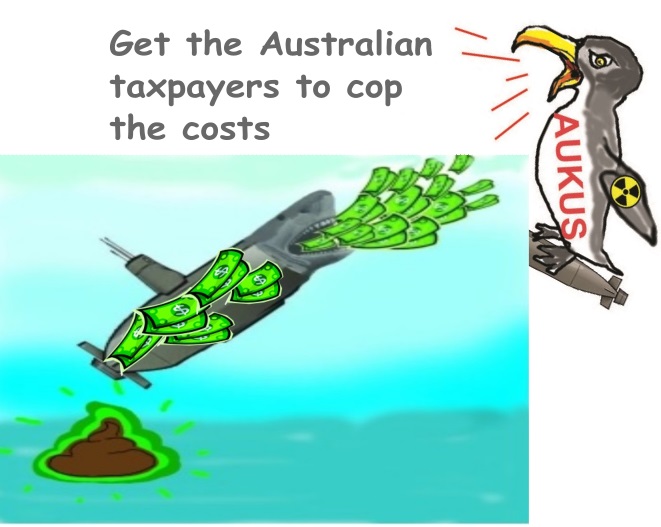
In what Paul Keating has described as ‘the worst deal in all history’, we’ve decided to buy into more second hand military hardware from the US; this time Virginia class nuclear submarines.
ED note – and we are left with their toxic wastes, also
by Rex Patrick | Jun 5, 2023 https://michaelwest.com.au/aukus-fissile-or-fizzer-rex-patrick-on-the-trouble-with-virginia-class-second-hand-submarines/
Former submariner Rex Patrick looks under the hood of the second-hand Virginia-class nuclear submarines to see what Australia has bought. Even AUKUS fans might not like what they see.
February 2011 is a time many in the Royal Australian Navy (RAN) would certainly prefer to forget. Within the month, the Defence Minister Stephen Smith had announced a number of trouble-plagued military landing craft would be disposed of and a review would be conducted into Support Ship Repair and Management Practices. Four months later Chief of Navy, Vice Admiral Russ Crane, was gone.
On February 3, 2011, the biggest storm to have ever hit Queensland crossed the Australian coastline and carved a swath of destruction across the state. The storm displaced 10,000 people and caused $3.5 billion in damage. And the Navy was unable to respond with any amphibious ships to help Queenslanders.
On September 26, 2010, the Defence Minister had been advised that two former US Navy ships, HMAS Manoora and HMAS Kanimbla, were in what was described as an ‘operational pause’. By December the decision was made that Manoora would be decommissioned, although that news never made it to the Minister until January 28, 2011, when a tropical depression was forming off Queensland. The Minister was also advised that Kanimbla was to be unavailable to the RAN for 18 months.
That left HMAS Tobruk, a 30 year old ship, as the standby ship. On February 28, the Navy advised the Minister it was on 48 hours’ notice to go to sea. By February 2, with Yasi now a category 5 cyclone, Tobruk entered dock for emergence repairs. It left the dock two days later but was unfit to sail for any of the Yasi response.
The Navy had failed Australians.
Rust buckets
Manoora and Kanimbla were naval clunkers. The two elderly ships had been picked up from the US Navy as an ‘opportunity buy’. There’s normally a reason things come at a bargain basement price. (Our Air Force made the same mistake after it bought second hand C-27J Spartan light tactical aircraft from the US Air Force that don’t do the job… we never learn.)
The Auditor-General detailed the saga in his September 2000 Amphibious Transport Ship Project Audit. After the RAN inspected the two ships in early 1994 the ships were bought for the grand price of $61 million. A $55 million contract was immediately signed with Newcastle’s Forgacs shipyard to do a quick overhaul.
The quick upgrade went from 14 months to 44 months and the price went to $203 million. As the Auditor finished up his work at the turn of the millennium, the price was closing in on $450 million.
That Defence bought rust buckets and spent almost 10 times the purchase cost repairing them just meant It was ‘operations normal’.
Second hand Virginias
Fast forward to 2023. Have we learned any lessons? It appears not.
In what Paul Keating has described as ‘the worst deal in all history’, we’ve decided to buy into more second hand military hardware from the US; this time Virginia class nuclear submarines.
Under questioning from Senator Jacqui Lambie at Estimates last week, the Navy revealed that the submarines we’ll likely get in the mid-2030s are boats built from 2020.
The estimated reactor life of the Virginia-class boats is 33 years. So we will hope to get about 20-years out of these second-hand vessels. The actual time they’ll be available for operations will be much less when you take into extended maintenance and refits.
The head of the nuclear submarine program, Vice Admiral Mead, suggested that we might get one new boat, if we’re lucky (we’ll get what we’re told by the US Congress).
The Chief of Navy, Vice Admiral Hammond, assured the Senate that we won’t see a repeat of the Manoora and Kanimbla debacle, saying the Navy’s ‘subsafe’ program won’t allow that.
Getting a grip
But even if Admiral Hammond is right (and Defence’s credibility on procurement is pretty well shot), the fact is that the Virginia Class program has some problems Australia is unlikely to be able to deal with.
The first highly noticeable issue with the Virginia class is a problem that has surfaced with the submarine’s acoustic coating that’s designed to reduce the ‘target strength’ of the submarine (how much sound energy from an enemy active sonar bounces off the submarine, back to the enemy).
The coating is prone to peeling off at high speed leaving loose cladding that slaps against the hull, making dangerous noise, and causes turbulent water flow, which also causes dangerous hull resonance (where the hull sings at its resonant frequency, like a tuning fork) and extra propulsion noise. I know a bit about this as a former underwater acoustics specialist.
The issue, reported in 2017 and again in 2019, is easily seen on the side of the submarine andalmost certainly without a fix at this stage.
Admiral Hammond tried to brush off the issue in the Senate. In response to Senator Lambie, he claimed that the photos she had tabled were of submarines that had come to the end of long patrols. But submarines are designed to do long patrols. I wonder how comfortable the Admiral would be landing at Heathrow Airport in London from Sydney, with the aircraft captain advising the parts of the wings normally fall off on long haul flights.
It’s not OK for our submariners to find that the boats they are using to keep us safe become noisy, and thus increasingly vulnerable to detection and destruction, halfway through their deployment.
Lack of availability
The bigger problem for Australia is the challenge the US Navy is encountering keeping (particularly) aging Virginia-class submarines at sea. Part of the problem is parts supply difficulties, with cannibalisation (taking parts from other submarines) regularly happening to keep a diminished number of boats at sea.
A November 2022 press report stated, “The U.S. Navy has nearly twice as many submarines sidelined for maintenance than it should, and those boats in maintenance ultimately require three times more unplanned work than they should, the program executive officer for attacks subs has said”.
It went on to say, “Of the 50 attack subs, [Rear Admiral] Rucker said 18 are in maintenance or waiting for their turn. Industry best practice would call for just 20% to be tied up in repairs, or 10 boats instead of 18”.
If the US Navy is having difficulty with keeping its boats at sea, with significant in-country industrial capability, how will Australia hope to keep our Virginia subs at sea? Our second-hand, ageing boats may spend as much time undergoing maintenance at Australian dockyards, or more likely waiting in a queue at a US dockyard, as they might be available for operations.
We may be eventually end up getting eight AUKUS submarines, only to find we can only keep two, instead of three in a fully operational state.
Absurdity
That would be $368 billion to have only one or two submarines are sea. And that’s just absurd. There were, and still are other, more sensible and cost-effective paths available.
Sometime in the future Australia may face the strategic equivalent of Cyclone Yasi, a defence contingency in which the number of operational submarines we have available will be of vital importance to our national security.
Tragically, however, absurd is ‘operation normal’ for Defence procurement. SNAFU
Aukus ‘expensive’ and not ‘easy to replicate’, Australian officials told foreign diplomats
Exclusive: Documents obtained by Guardian Australia show Australia attempted to reassure countries amid nuclear proliferation concerns
Daniel Hurst, Guardian 29 May 23
Australian officials have told foreign diplomats that the Aukus submarine plan is “expensive” and not “easy to replicate”, as part of an effort to play down concerns about the risks of other countries racing to do the same, a newly released tranche of documents reveals…..
Briefing notes obtained by Guardian Australia under freedom of information laws lay bare the arguments the government is using to defend and explain Aukus to foreign diplomats posted to Canberra………………………………………
China’s mission to the UN said in March that “two nuclear weapons states who claim to uphold the highest nuclear non-proliferation standard” – the US and the UK – “are transferring tons of weapons-grade enriched uranium to a non-nuclear-weapon state”.
The new documents show that many of the answers given by Australian officials at the Aukus briefings aimed to reassure countries about nuclear non-proliferation issues.
The first assistant secretary of Dfat’s Aukus taskforce, Sarah deZoeten, told those in attendance that Australia would retain control of operational waste and spent fuel.
…………………………. Aukus is novel because it will be the first time a provision of the Nuclear Non-Proliferation Treaty regime has been used to transfer naval nuclear propulsion technology from a nuclear weapons state to a non-weapons state……………………………. https://www.theguardian.com/world/2023/may/30/aukus-expensive-and-not-easy-to-replicate-australian-officials-told-foreign-diplomats
Transferring US nuclear subs to Australia far from smooth sailing
26 May 2023 | Andrew McLaughlin Riotact,
A report prepared for Congress on the US Navy’s Virginia Class nuclear-powered attack submarine (SSN) procurement program has highlighted what issues need to be considered and overcome to allow the transfer of US submarines to Australia.
Under Pillar 1 of the AUKUS construct with the US and UK which was announced by the leaders of all three countries in March, Australia is slated to receive between three and five Virginia class nuclear-powered submarines to begin replacing its own Collins Class conventional submarines from 2032.
After this, Australia plans to switch submarine classes and acquire eight SSN-AUKUS submarines under a cooperative program with the UK from 2041……………………………….
The report says Congress needs to consider several factors relating to the legislation, including whether the legislation needs to be considered under the 2024 National Defense Authorization Act (NDAA) or can be deferred, whether the authorisation should be provided for just the first two boats or can be expanded to up-to five SSNs, and when the SSNs would be removed from US Navy service to prepare for the transfer.
While this seems to confirm Australia will receive former US Navy SSNs instead of new-build boats, the report also asks Congress to consider whether that would be the case, whether new-build boats could be made available, or a combination of the two.
It says Congress should also decide, apart from the cost of the submarines, how much of a “proportionate financial investment” Australia will be required to make into US shipyards to expand the US’s submarine industrial base. Despite a plan for two Virginia boats to have been built per year since 2011, this has not been achieved due to ongoing workforce and materials issues, made worse in recent times by the COVID-19 pandemic………………..
The ability of the US shipyards to ramp up sufficiently to cover the sale of Australian boats appears to be somewhat questionable. ……………………………
The report further asks Congress to consider what will be “the net impact on collective allied deterrence and warfighting capabilities of transferring Virginia Class boats to Australia while pursuing the construction of replacement SSNs for the US Navy”.
It points out that supporters of transferring SSNs to Australia rather than keeping them in US Navy service might argue that “the deterrent value of introducing SSNs to Australia’s navy would be greater than the deterrent value of keeping those SSNs in US Navy service because a newly created force of Australian SSNs would present China with a second allied decision-making centre for SSN operations in the Indo-Pacific, which would complicate Chinese military planning”.
Conversely, it says opponents of the proposed transfer might argue that “it could weaken deterrence if China were to find a reason to believe, correctly or not, that Australia might use [its] Virginia-class boats less effectively than the US Navy would have, or that Australia might not involve its military … in a US-China crises or conflicts that Australia viewed as not engaging important Australian interests”.
As if to support this viewpoint, it points out that “Australian Defence Minister Richard Marles in March 2023 reportedly confirmed that, in exchange for the Virginia-class boats, Australia’s government made no promises to the United States that Australia would support the United States in a future conflict over Taiwan”. https://the-riotact.com/transferring-us-nuclear-subs-to-australia-far-from-smooth-sailing/664701
AUKUS may turn out to be the largest financial swindle perpetrated by the United States and the United Kingdom against Australia and other Asia Pacific nations

Now, it appears that Australia is becoming yet another naval base for the deployment of US and British fleets in the Asia-Pacific Region, including the basing of US nuclear submarines in 2026, without any hope of restoring economic ties with China and, consequently, the prior level of welfare in the near future. This is in addition to paying “compensation” under the guise of investing in unfeasible defense plans.
https://journal-neo.org/2023/05/20/aukus-may-turn-out-to-be-the-largest-financial-swindle-perpetrated-by-the-united-states-and-the-united-kingdom-against-australia-and-other-asia-pacific-nations/ 20.05.2023 Author: Bakhtiar Urusov
Equipment for the country’s ground forces “arrives with depressing regularity,” years behind time, and substantially over budget, according to a report issued on April 19 by the British Parliament’s Budgetary Control Committee. For instance, the programs, which provide new Ajax armored fighting vehicles and Morpheus tactical communication and information systems, have faced significant difficulties. According to the MPs’ assessment, the issue is made worse by underfunding of the defense budget expenditures and the pound’s declining purchasing value in relation to the dollar.
Ten days later, on April 28 this year, the Royal Navy informed the public about the decision to decommission the HMS Prince of Wales aircraft carrier, launched just four years ago (in 2019), to be used as a donor for spare parts for the HMS Queen Elizabeth aircraft carrier of the same class. According to the Royal Navy, the $3.72 billion aircraft carrier has docked more frequently than it has participated in naval operations, and the most recent maintenance cost $42 million.
This dispiriting news came just a month after the leaders of the US, the UK, and Australia had disclosed their ambitious long-term plans to build a nuclear-powered submarine fleet for Canberra on the basis of British technology, which will cost the Australian budget $245 billion.
When it comes to extremely sophisticated projects like nuclear submarines, it seems inconceivable that the parties involved would be so irresponsible as to neglect to evaluate the contractors’ capacity to meet their obligations. Still, if you trust the claims made by senior US, British, and Australian officials, the opposite is true in the case of AUKUS. Canberra would never have consented to work together on submarine design and construction with Great Britain’s waning technological strength otherwise. The example of the HMS Prince of Wales aircraft carrier shows that not only is Great Britain unable to complete a big naval project, but it is also facing significant technological difficulties in order to satisfy present ambitions for defense construction and equipment upgrades.
In the realm of economic crime, assigning work to a contractor who is known to be unable to perform is fraud, money laundering, or corruption.
In the context of Anglo-Saxon big politics, this appears to be retaliation against a certain sector of Australia’s elites for Canberra’s departure from a coordinated approach to restrain the PRC back in the day. This is primarily about the carefree era when Australia and China’s trading and economic relations remained unbroken, providing Canberra with significant revenue from exports to the PRC of a wide range of items, from wine and agricultural products to hard coal and other minerals.
Now, it appears that Australia is becoming yet another naval base for the deployment of US and British fleets in the Asia-Pacific Region, including the basing of US nuclear submarines in 2026, without any hope of restoring economic ties with China and, consequently, the prior level of welfare in the near future. This is in addition to paying “compensation” under the guise of investing in unfeasible defense plans.
All nations, including India, Japan, the Republic of Korea, New Zealand, and some ASEAN members that have been invited to participate in the AUKUS, should take a closer look at this alliance.
Bakhtiar Urusov, a political observer, exclusively for the online magazine “New Eastern Outlook.”
Richard Marles and the ‘seamless’ transfer of Australian sovereignty

Deputy PM wants to ‘break down the barriers’ of defence export controls to create ‘seamless’ trilateral industrial base under AUKUS
MICHELLE FAHY, MAY 18, 2023 https://undueinfluence.substack.com/p/richard-marles-and-the-seamless-transfer?utm_source=post-email-title&publication_id=297295&post_id=122152210&isFreemail=true&utm_medium=email
Speaking at the American Chamber of Commerce on Wednesday, deputy prime minister and defence minister Richard Marles opened with an anecdote praising a former PricewaterhouseCoopers partner. It was an interesting choice given the tax leaks scandal engulfing PwC, which is making headlines globally, and last week forced the resignation of its Australian CEO.
But Marles was amongst friends. ‘I’m thrilled to be among so many great American companies contributing to Australia.’ He said the Defence Strategic Review had recommended the Defence Department become ‘a better customer’ to defence industry by adopting a new approach to acquisition. Furthermore, ‘the intimate relationship between the US and Australia at a government level implies an opportunity for the private sectors of both our countries.’ Christopher Pyne, yet again present with Marles, was approving.
In his speech, Marles talked about creating a ‘seamless’ defence industrial base between Australia, the United States and the United Kingdom. This will match the ‘seamless’ interoperability of Australian and US military forces, to be enabled by changes to Australia’s defence laws.
There are many national and international laws and treaties regulating defence industry and its exports, which get in the way of ‘seamless’. (Certain US senators want to TORPEDO them.) Marles sees these regulations as ‘barriers’ that need ‘breaking down’ to facilitate AUKUS.
He set the scene for his speech by delivering his oft-used lines:
We are seeing the biggest conventional military build-up in the world since the end of World War Two. And it is happening right here in our region.
Some rarely-reported facts are necessary for context when considering that claim.
Global military expenditure in 2022 was $2.24 trillion. Of that, the United States accounted for $877 billion (39%). China was second, spending $292 billion (13%) and Russia third, $86.4 billion (3.9%). (All US$.) The US outspent the next ten countries combined.
The US also dominates the world in major arms exports. For the period 2018-22, the five largest weapons exporters were the USA (40%), Russia (16%), France (11%), China (5.2%) and Germany (4.2%), who together accounted for three-quarters of all exports. Countries in North America and Europe accounted for 87% of all arms exports.
In Australia, there is remarkably little hard data on our defence industry. Australian Defence Magazine’s annual top 40 defence contractor listing provides the only snapshot.
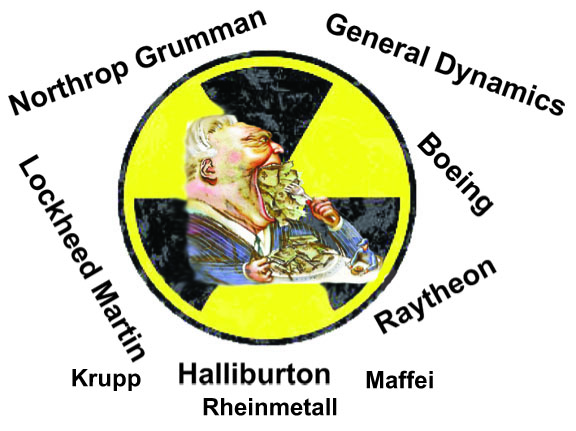
The defence industry in Australia is dominated by some of the world’s largest multinational arms manufacturers: BAE Systems (UK), Thales (France), Boeing (US), Lockheed Martin (US), Rheinmetall (Germany) and Airbus (Europe). For four of the past five years BAE Systems has been the top contractor and Thales has been second. Boeing has been in the top five each time.
In 2017, an analysis by the Australian Strategic Policy Institute (which also used ADM Top 40 data) showed that over the 20 years from 1995-2015, the largest five firms in any given year accounted for, on average, about 65% of total revenue of arms-related contractors. In a chart for 2015, the top 10 took 82% of the revenue and 91% of revenue went to the top 15, leaving less than 10% for the rest, which is where almost all Australian-owned arms companies exist. Updated research is desperately needed, particularly given the significant sums now flowing into this industry.
On the over-hyped subject of jobs, ASPI’s briefing provided useful data: ‘Defence industry accounts for 0.23% of jobs in Australia, and 2.9% of jobs in the manufacturing sector. In terms of annual revenue, defence industry accounts for 0.22% of Australian industry and 1.7% of the manufacturing sector. So, although Australian defence industry is undoubtedly important for our defence force, it represents only a trifling fraction of the overall Australian economy.’ Again, updated research is needed.
In his speech, Marles said the government’s injection of $3.4 billion into a new Advanced Strategic Capabilities Accelerator will ‘help us start delivering advanced, asymmetric capabilities that benefit not just Australia but the US and the UK. And it will start to build a truly trilateral industrial base across our three countries that will see us more seamlessly transfer the skills, workers, and intellectual property we need.’ Australian taxpayers will support the US and UK industries. Why?
He also spoke of ‘breaking down the barriers’ of export controls to facilitate AUKUS.
While there is a shared mission between our countries and an agreement at the highest levels of our governments, there are significant barriers we must break down across our systems… This is particularly true of our export control regimes.
Regulations around transfers of technology, sensitive information and defence materiel are, of course, understandable.
The lip service to regulations being ‘understandable’ was immediately followed by:
But what is really clear is that if we are to realise the ambition of AUKUS, the transfer of technology and information between Australia and the US needs to be seamless…
Australia is committed to breaking down these barriers in our own system while maintaining the robust regulatory and legal frameworks to protect these transfers
The defence minister did not explain how regulatory control could be broken down while concurrently maintaining a robust regulatory framework.
Australia’s defence industry is already dominated by multinational US and UK arms corporations. Local industry (including local subsidiaries of global giants) has been historically lucky if it gained one third of defence acquisition spend, the remainder heading offshore.
If the government removes most of the regulation and creates a ‘seamless’ trilateral industrial base, it is hard to see how anything other than even greater flows offshore to the multinationals will eventuate, despite the political spin.
But what is really clear is that if we are to realise the ambition of AUKUS, the transfer of technology and information between Australia and the US needs to be seamless…
Australia is committed to breaking down these barriers in our own system while maintaining the robust regulatory and legal frameworks to protect these transfers.
The defence minister did not explain how regulatory control could be broken down while concurrently maintaining a robust regulatory framework.
Australia’s defence industry is already dominated by multinational US and UK arms corporations. Local industry (including local subsidiaries of global giants) has been historically lucky if it gained one third of defence acquisition spend, the remainder heading offshore.
If the government removes most of the regulation and creates a ‘seamless’ trilateral industrial base, it is hard to see how anything other than even greater flows offshore to the multinationals will eventuate, despite the political spin.
Very bad advice: $368b nuclear submarines and the Federal budget

Although he knows almost nothing about submarines, Albanese gave the go-ahead to acquire nuclear ones without insisting on a cost effectiveness study showing how they compare to modern conventional versions.
An objective study would’ve shown the latest conventional ones are superior – they are much harder to detect and are operationally available far more often because they don’t suffer few serious maintenance problems.
The program cost of twelve high quality conventional subs is only about $18 billion compared to $368 billion for 11 nuclear ones that repeatedly break down
.
By Brian Toohey https://johnmenadue.com/aukus-very-bad-advice/
At a time when the Reserve Bank’s interest rate rise is adding to cost of living pressures and increasing the chances of a recession, Albanese is finding it hard to justify the staggering $368 billion cost of AUKUS nuclear submarines.
Anthony Albanese says it only took him 24 hours to decide to back the AUKUS pact between Australia, the UK and the US. And not much longer, it seems, to decide to get nuclear submarines, if not precisely how. The rush shows. At a time when the Reserve Bank’s interest rate rise is adding to cost of living pressures and increasing the chances of a recession, Albanese is finding it harder to justify the staggering $368 billion cost of these submarines. As explained below, this is 20 times more than 12 superior conventional submarines would cost.
So he’s taken to claiming the job creation benefits of building a handful of subs in Adelaide is just as important as the national security benefits. During his visit to England for the Coronation, Albanese visited Barrow-in-Furness where the Astute class nuclear submarines were built. The shipyard employs 11,000 people, which is due to rise to 17,000. Albanese said, “I see this is being very similar to what the car industry provided for Australia in the post-war period.” In fact, employment in car manufacturing in Australia was much higher at its peak. Employment dropped by 80,000 between 1973 and 1980, yet it was still 45,000 in 2015. Large sums of government funding failed to ensure car manufacturing survived.
Albanese’s government estimates that 20,000 jobs will be created by building seven submarines, called the AUKUS class, at Adelaide. Although sharing the design work for a highly complex product is rarely successful, it will be done in this case between the three AUKUS countries. The construction jobs won’t start to flow at discernible rate until shortly after 2040. Yet Albanese implies the job benefits will be available before the next election. If job creation is the goal, there are much better ways to achieve it.
Given Albanese’s excitement about the quality of the work done at Barrow-in-Furness, it’s worth looking at what actually happened. The National Interest reported in November 2021 that, although the first boat, HMS Astute, had been laid down in 2001, the key design and production facilities had atrophied, resulting in delays and cost overruns that continue to harry the program today. Basic drafting and engineering skills had deteriorated. Problems emerged with software used to design the sub. After HMS Astute entered service in 2014, the crew suffered from excessive heat. It ran aground during sea trials a month after delivery.
Earlier, the Guardian reported in 2012 that during exercises that year a pipe carrying seawater from the back of the submarine to the reactor sprang a leak, forcing the boat to surface. An investigation revealed that a cap was made from the wrong metal, but construction records said the right metal had been installed. The Guardian also said a lead-lined water jacket surrounding the reactor core was fitted with substandard lead, creating a risk that electrical charges in the lead could generate false readings in instruments monitoring the state of the reactor.
A confidential Ministry of Defence memo obtained by the Guardian says extensive corrosion is “a cause for major concern”. The memo said the damage means “severe problems” can be expected in future and warns that the submarines will have to spend more time than planned under repair. All is now supposed to be going well.
Although he knows almost nothing about submarines, Albanese gave the go-ahead to acquire nuclear ones without insisting on a cost effectiveness study showing how they compare to modern conventional versions. An objective study would’ve shown the latest conventional ones are superior – they are much harder to detect and are operationally available far more often because they don’t suffer few serious maintenance problems. The program cost of twelve high quality conventional subs is only about $18 billion compared to $368 billion for 11 nuclear ones that repeatedly break down.

In the circumstances, Albanese’s failure to consider conventional submarines before going nuclear was deeply irresponsible. Perhaps he wasn’t told by his advisors. In any event, no Australian official has publicly mentioned this huge drawback in acquiring nuclear submarines.
Quoting from secret US Navy documents, Newsweek on April 19 confirmed earlier authoritative reports showing that only a quarter of America’s Virginia class submarines are operationally available at any one time, due to highly complex maintenance problems. The highly regarded American defence analyst defence analyst Winslow Wheeler gave the same figure in 2021.
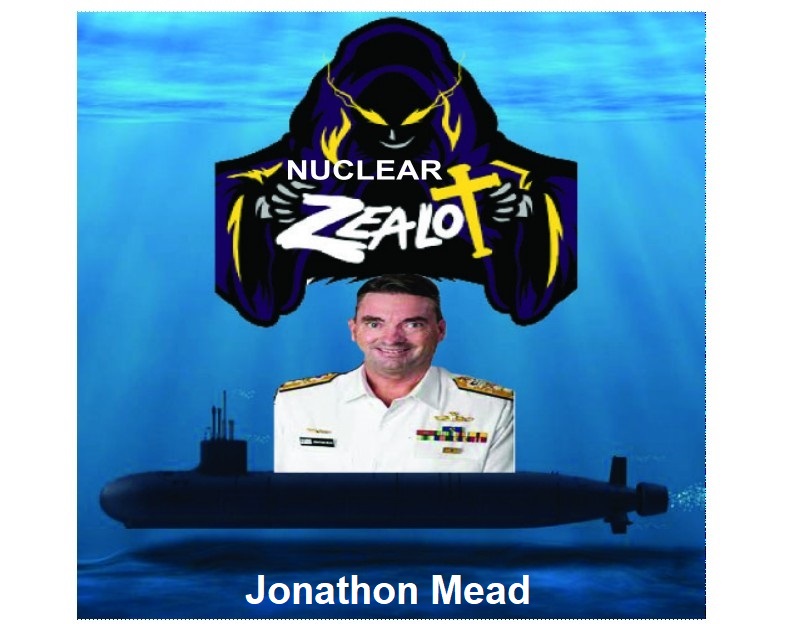
Surely someone in Vice Admiral Jonathan Mead Admiral Mead’s 350 strong advisory team group advising Albanese on nuclear submarines should have stumbled across it.
Mead gave an astonishing interview to the Guardian published on March 8 and 9 this year. Mead wrongly described Australia’s existing Collins class conventional submarines as “the most advanced in the world”. They are certainly not. They lack modern equipment such as fuel cells and advanced batteries that let submarines operate extremely quietly for sustained periods without having to rise to the surface to recharge their batteries every day or two, unlike the Collins class. Modern German, Japanese and South Korean ones are in this category. These submarines have low sustainment costs, unlike the Collins class where this burden has hit almost $700 million a year, not including fuel and crew costs. Taking the Collins out of service would free up billions in funding for new conventional submarines.
Because nuclear subs are significantly bigger than most conventional subs, they are easier to detect as they move through the earth’s magnetic field and the water column. Rapid advances in sensor power and computer processing increase the chances of subs’ detection – and destruction. Mead said he had taken account of the prospect oceans would become more transparent by 2050. His solution is to use underwater drones in places where you don’t want a nuclear submarine to be detected. That would be just about everywhere that the presence of nuclear submarine was supposed to be important. Apparently, the nuclear sub would control a drone at a safe distance. In this case, far cheaper platforms can be used to control the drones.
Budget reveals cutbacks on funding for Australia’s military and navy, in order to pay $billions for nuclear submarines.
Budget reveals pressures on Defence for savings to fund nuclear-powered submarines, The Strategist, 10 May 2023|
,,,,,,,,,,,,,,,,,,,,,,,,,,,,,,,,,,,,,,,,,,,,,,,,,,,,,,,,,,,,,,,,,,,,,,, Spending is rising faster than inflation in each year, broadly following the profile set out in the 2020 Defence Strategic Update, but the two big changes over the past year—incorporating the switch from the French conventionally-powered submarine to the AUKUS SSNs, and the unexpected surge in inflation—are squeezing real spending relative to the budget planning ahead of last year’s election.
……………………..AUKUS is a long-term program and the budget forward estimate period, out to 2026-27, only contains the very beginning of spending on the submarines. However, the Defence Department’s portfolio budget statement shows that initial commitment is expected to reach $5.6 billion over the next four years. The statement shows an initial $515 million will be spent in 2023-24, which will include the establishment of the Australian Submarine Agency to manage the project.
The portfolio statements show a big payment of $3.7 billion on submarines in 2025-26, however they say the final allocation of spending will be decided ahead before the end of June.
Capital spending on new capabilities is taking a hit elsewhere. The downsizing of the Army’s planned purchases of infantry fighting vehicles will have an impact over the budget period, with capital outlays in 2024-25 and 2025-26 falling 7.6% from last year’s estimate to $8.5 billion. Capital spending in the Air Force is down 13.1% to $6.9 billion in the same period.
The Navy is also taking a hit on capital outlays. Defence has split out the naval shipbuilding and sustainment program from general acquisition of naval capabilities while the cancellation of the French program also makes direct comparison with last year’s portfolio budget statements difficult. However, Navy capital spending, excluding the shipbuilding and the nuclear submarine program show a 35% or $5.3 billion fall out to 2025-26. The naval shipbuilding program is only $891 million over that period.
……… The portfolio statement highlights the difficulty Defence has had in meeting its staffing targets with the total workforce of 75,464 people falling 3600 short of the goal set last year. The army has had the greatest problem, missing its target by 8.3%, reflecting a higher number of resignations. The Defence department public service met its recruitment target.
Location for nuclear subs base ‘close to a decade’ away as selection process rebooted
ABC Illawarra / By Tim Fernandez 3 May 23
The federal government has revealed it will spend almost a decade choosing a location for an east coast submarine base.
Key points:
- Matt Thistlethwaite says all options are on the table regarding the selection of an east coast submarine base
- The process of selecting a location for a base is expected to be almost a decade
- Unions claim the lengthy selection period will hurt business interests in Port Kembla
Scott Morrison identified Brisbane, Newcastle and Port Kembla last year as the three options for the home of an Australian nuclear submarine fleet as part of the AUKUS agreement.
The ABC understands Illawarra harbour was strongly favoured by the Department of Defence and industry figures.
In a recent briefing with Illawarra industry, community and business leaders, Assistant Defence Minister Matt Thistlethwaite said other locations would be considered.
“Everything is on the table,” he said.
“There are a number of factors — deepwater ports are essential, ensuring that there is a domestic industry base that can service a base like that, ensuring there is a skilled work force.
…………………….. “We are looking at close to a decade before that decision is made.”
Other locations ‘hot potatoes’
The announcement opens the door for defence to reconsider the Garden Island naval base in Sydney and Jervis Bay on the NSW south coast.
The sites were among the top locations identified by Defence in a 2011 report obtained by former South Australian Senator and submariner Rex Patrick under freedom of information laws.
“I think the other sites are political hot potatoes and the government is seeking to diffuse those aspects of this particular AUKUS program,” Mr Patrick said.
“Garden Island in Sydney is a significant population site surrounded by the residents of Sydney who simply will be uncomfortable with the stationing of a nuclear submarine in the harbour.
He said winning community support for a base in Jervis Bay would also be a difficult proposition due to the environmental sensitivity of the site.
“There have been many campaigns over the years to stop the navy conducting activities in Jervis Bay, even though it is a pretty good environmental tenant,” he said.
“I can see huge problems with government trying to impose a nuclear base in that pristine environment.”
‘The air has to be cleared’
The government is also facing a challenge at Port Kembla, where the Illawarra community also has a long history of opposing nuclear projects and has already begun rallying opposition to a base.
NSW Ports, which operates the harbour, has released plans for an off-shore wind turbine assembly facility at Outer Harbour, a site which is already being scouted by Defence. https://www.abc.net.au/news/2023-05-03/nuclear-submarine-base-decision-delayed/102293870
$123B Contingencies for Nuclear Subs Unveiled
“The Albanese government is giving Defence a totally unprecedented $122 billion stuff-up fund. This is a license to fail on contract negotiations and project delivery for the AUKUS submarine deal.
“It’s extraordinary that a whopping one third of the $368 billion nuclear submarines budget comes with no strings attached.
https://www.miragenews.com/123b-contingencies-for-nuclear-subs-unveiled-996385/ 30 APR 2023
An extraordinary $122.9 billion, that’s one-third of the $368 billion dollar price tag for nuclear submarines, has been allocated to a so-called “contingency” budget, according to new figures released by the Parliamentary Budget Office, commissioned by the Greens.
The PBO analysis, which is based on Defence figures, for the first time shows that $122.9 billion dollars has been earmarked for “contingency” funding as part of the government’s projected budget. The amount of contingency funding is setting off alarm bells about the sheer scale of no-strings-attached public funding allocated to the deal.
The PBO figures also show the unfair intergenerational impact of the AUKUS subs. Hundreds of billions in costs will be heavily skewed to future budgets, forcing deep cuts to public spending for decades.
Australian Greens Defence Spokesperson Senator David Shoebridge said:
“The Albanese government is giving Defence a totally unprecedented $122 billion stuff-up fund. This is a license to fail on contract negotiations and project delivery for the AUKUS submarine deal.
“It’s extraordinary that a whopping one third of the $368 billion nuclear submarines budget comes with no strings attached.
“The scale of this contingency fund demonstrates that the government has no real idea how they will deliver these hugely expensive submarines or what the true costs of the nuclear sub deal will be.
“No serious project planner in any other industry would be allowed to have a third of the total budget as contingency – this is worse than a blank cheque, it’s an incentive for profligate Defence spending.
For the AUKUS subs deal Defence has persuaded the Albanese government to take away any restraint on future spending or project delivery. When you add in the repeated failures of Defence to deliver past projects on time or on budget this is worse than negligent.
“To help sell the deal the Albanese government is burying the most exorbitant expenditure across future budgets, in a brazen attack on future generations. This is deceptive and reckless budgeting and it means young people and future generations will inherit a savage debt.
“Babies who haven’t even been born yet will spend their lives paying for these nuclear subs rather than getting essential public services and support because Labor has signed up to this toxic deal.
“It’s grossly unjust to steal from future generations to pay for today’s political mistakes, but that’s exactly what is happening here with our children and grandchildren saddled with the bulk of the $368 billion bill, ” Senator Shoebridge said.
AUKUS nuclear submarine cost includes 50% fund for unexpected overruns

SYDNEY, April 28 (Reuters) Reporting by Kirsty Needham; Editing by Robert Birsel– https://www.reuters.com/business/aerospace-defense/aukus-nuclear-submarine-cost-includes-50-fund-unexpected-overruns-2023-04-28/Australia’s defence minister said on Friday the government was being “upfront and transparent” about the cost of its AUKUS nuclear submarine programme, after an analysis showed the forecast A$368 billion cost included a 50% contingency fund.
The Greens party, which commissioned the analysis by the Parliamentary Budget Office, said it showed the “huge” uncertainty over the project.

U.S. President Joe Biden, Australia Prime Minister Anthony Albanese and British Prime Minister Rishi Sunak unveiled details in March of a plan to provide Australia with nuclear-powered attack submarines, a major step to counter China’s ambitions in the Indo-Pacific.
Under the deal, the United States intends to sell Australia three U.S. Virginia class nuclear-powered submarines, which are built by General Dynamics, in the early 2030s, with an option for two more.
In a second phase, Australia and Britain will build an AUKUS class submarine, with Australia receiving its first submarine in the early 2040s. The vessels will be built by BAE Systems and Rolls-Royce.
Australia’s Parliamentary Budget Office has reported the cost estimate over three decades includes a contingency of A$123 billion. A contingency is a future cost not currently known due to delays, budget overruns and other factors.
Greens Senator David Shoebridge said in a statement the scale of the contingency fund was “unprecedented” and highlighted “the huge level of uncertainty in the AUKUS submarine deal”.

Defence Minister Richard Marles said the plan to build a nuclear powered submarine in Australia by the early 2040s was a “massive challenge for the country” and the government was “prudently budgeting here for the unexpected”
“We have sought to be as upfront and transparent as we possibly can be,” he told ABC radio.
The Department of Defence did not release the sale price of the U.S. Virginia Class submarines that Australia will initially purchase, the budget office said.
The report showed most of the cost of the submarine programme will be incurred in the two decades from 2033.
We are being seduced into war again by the US, this time over Taiwan
China is not a military threat to either the US or Australia. The military threat is trumped up by the US and its acolytes with their own agenda.
There is one critical and urgent thing the Australian Government should do, and that is to make it clear to the US that we will not be involved in any way with a war between China and the US over Taiwan and that none of our facilities can be used for that purpose – Pine Gap, Darwin or Tindal.
By John Menadue, 27 Apr 23 https://johnmenadue.com/we-are-being-seduced-and-trapped-into-war-again-by-the-us-this-time-over-taiwan/
The US must be told that we will not be involved in any way in a war with China over Taiwan.
After Vietnam, Iraq and Afghanistan the signs of our entrapment again in US war planning are everywhere.
The 2014 Force Posture Agreement with the US cedes control of certain military operations from our territory to the US eg Marines in Darwin and US B52’s in Tindal.
The 2021 AUSMIN ministerial meeting endorsed :
- Enhanced air cooperation through the rotational deployment of U.S. aircraft of all types in Australia and appropriate aircraft training and exercises.
- Enhanced maritime cooperation by increasing logistics and sustainment capabilities of U.S. surface and subsurface vessels in Australia.
- Enhanced land cooperation by conducting more complex and more integrated exercises and greater combined engagement with Allies and Partners in the region.
- Establishment of a combined logistics, sustainment, and maintenance enterprise to support high end warfighting and combined military operations in the region.
The 2021 AUKUS agreement was a clear sign to our region that instead of building bridges to our region we have decided to be a spear carrier for the US and UK- the Anglosphere. AUKUS is not to defend Australia but to support US operations against China in the South China Sea.
Our Defence Strategic Review (DSR)released this week has been’ authored’ by the United States Studies Centre(USSC), an arm of the US government. It is a tainted review. Have we no national pride in letting this happen!
Our Washington centric media don’t seem to think that it is unusual or even outrageous for a foreign agency to author an Australian defence review!!
Our seduction by the US is assisted by our Department of Defence with its close links to the Pentagon. It secretly employs US Admirals to advise on submarines. And if that is not enough we are now going to have a retired US Admiral heading the coming Naval Review. What is wrong with our Navy that an Australian can’t do the job? Has integration gone so far that we don’t have a Navy of our own that is worth the name.
And don’t think for one moment in this humiliation that Albanese and Marles thought up this US Admiral. They would have been put up to it by our defence establishment in lock step with the Pentagon.
The ADF has become a unit of the US military machine.
There is more.
The Government has rejected the Australian War Powers Reform proposal that Parliament approve any commitment to war. This is essential because we have an awful history of rushing to war. In 1914, we decided to send troops to WWI before Britain declared war. Menzies committed Australia to war in Vietnam before we even received a request. Howard committed us to the illegal war in Iraq based on false intelligence. Now the Labor Party has committed us to AUKUS in less than 24 hours despite the enormous implications. Albanese says he is proud of how quickly he agreed with Morrison!
Changes to our Defence Act are also being considered which would allow the ADF inter alia to conduct operations below the threshold of war, known as ‘grey zone’ operations. These amendments could have far reaching consequences.
At our universities, Peace Studies are run down in favour of ‘Strategic Studies’ with their US loyalists regularly appearing on our media. Think Tanks like the Australian Strategic Policy Institute are fronts for US defence interests.
Entrapment of our minds in the anti China hysteria is the work in progress of our Main Stream Media. Our fourth estate has been captured and imbedded in the US propaganda machine. The US cultural and media domination is everywhere. Alternative views are shunned. The White Man’s Media is on full display.
The disgraceful ‘Red Alert’ is the tip of a giant iceberg. The anti China propaganda is an every day event in our media including the ABC and SBS .
In the past, the ALP said NO on Vietnam and Iraq even though it was difficult at the time. As Paul Keating put it at the National Press Club recently ‘Labor has invariably got the big international (decisions) right’. But today the ALP has gone AWOL. Concerns about entrapment by the US and loss of sovereignty are brushed aside. What many of us thought were Labor policies and values count for little.
Penny Wong suggests that Keating has not kept up to date and has not had the benefit of Intelligence briefings!! But the reverse is true. The Labor Government is reverting to our colonial past, our colonial cringe – Five Eyes, AUKUS and the Anglosphere.
Wong plays with words to avoid asking or knowing whether B52’s in Tindal will be nuclear armed against China. She tells us that US forces are ‘rotated’ though Darwin and Tindal and not ‘based’ there.
The US is persistently goading China into war over Taiwan. This is consistent with US behaviour over centuries. It is driven by its self righteous belief in its ‘exceptionalism’ and the pressure of its military/industrial/security complex for endless wars. It expects other major powers like China to behave as aggressively as it has. China has no Monroe Doctrine which Americans believe gives them the God given right to interfere in other country’s affairs.
Australia has a sorry history of fighting other empires wars, first with the British and now with the US. The great risk and problem for us is that imperial powers are almost always at war.
Since its founding in 1776, the US has been at war 93% of the time. Since the end of WWI, the US has launched 201 armed conflicts around the world. During the Cold War it tried to change governments 72 times. It assassinated foreign leaders and still assassinates with drones guided from Pine Gap. It has 800 bases around the world, many of them in Japan and ROK directed at China. With our cooperation, US fleets cruise and sight see up and down the Chinese coast. At the same time as criticising China, the US refuses to ratify the UN Convention on the Law of the Sea. The US would have national convulsions if Chinese vessels patrolled off the Californian coast or China established military bases in Mexico!
The US is the most aggressive and violent country in the world . It lurches from one war to another. That violence abroad is mirrored in its violent gun culture at home. There is a pervasive sickness and it is not just Trump!
When we tagged behind imperial powers in the past there was little military risk to Australia. But that is not so today, with the reckless US goading of China over Taiwan. If we were involved in support of the US against China over Taiwan the results could be catastrophic for us.
China is certainly growing in influence and confidence. That is not surprising after over a century of western and Japanese invasion and humiliation. But China is not a military threat to either the US or Australia. The military threat is trumped up by the US and its acolytes with their own agenda.
In brazen mendacity Marles highlights the rapid increase in China’s military spending. But he failed to tell us that the US spends more on defence than the next nine countries combined. The US spends 3.5% of its GDP on defence. China spends 1.6%.
The Stockholm International Peace Institute only a few days ago put military spending in perspective – The United States remains by far the world’s biggest military spender. US military spending reached $877 billion in 2022, which was 39 per cent of total global military spending and three times more than the amount spent by China, the world’s second largest spender.
Surrounded by numerous US bases and the US Fleet -an itinerant naval power in the SCS as described by Paul Keating-it is not surprising that China is increasing its defence spending.
But China is a challenge to US hegemony and the US empire around the globe. The US is unwilling to come to terms with China’s success and share power and responsibility. The US insists on its own rules and domination across the globe. Empires are like that.
How do we break out of the US entrapment, the FPA, AUKUS, AUSMIN and a lot more? How can we cut through this maze of entrapment.
Peter Dutton has warned us that is ‘inconceivable that Australia would not join the US to defend Taiwan’.
There is one critical and urgent thing the Australian Government should do, and that is to make it clear to the US that we will not be involved in any way with a war between China and the US over Taiwan and that none of our facilities can be used for that purpose – Pine Gap, Darwin or Tindal.
For decades we have maintained that Taiwan is part of China.
Paul Keating has said many times that ‘Taiwan is not a vital Australian interest’. Even Defence Minister Marles, ever so close to the US, told ABC Insiders last month that ‘Australia has absolutely not given the US any commitment as part of the AUKUS negotiations that it would join (the US) in a potential war over the status of Taiwan’.
But we need to tell the US explicitly and well in advance of any possible conflict over Taiwan that we will not support the US. In a crisis it will be too late to assert our sovereignty.
New Zealand-Australia testiness over citizenship resolved, but nuclear sensitivities remain
Stuff, Thomas Manch, Apr 24 2023
A thorny trans-Tasman citizenship issue has been resolved, but Prime Minister Chris Hipkin’s Brisbane trip showed nuclear sensitivities are set to linger between New Zealand and Australia.
……………………….questions then centred on an emerging long-term issue – Australia’s planned acquisition of nuclear-powered submarines – questions Albanese was unwilling to answer.
At a joint press conference on Sunday afternoon, after a citizenship ceremony where more than 200 Kiwis pledged allegiance to Australia, Prime Minister Chris Hipkins said he had discussed with Albanese his country’s new Aukus pact.
The pact between Australia, United Kingdom and the United States, will have Australia acquire nuclear-propelled in the coming three decades.
“New Zealand, like Australia, is clear eyed that there is a challenging strategic environment in the Indo-Pacific region,” Hipkins said.
……………….Albanese, asked twice at the press conference about New Zealand’s possible involvement in Aukus, veered away from answering the question, talking instead about the Pacific Island Forum and both countries co-operating on climate change.
New Zealand maintains a strong nuclear-free stance, and Hipkins on Sunday said he welcomed Albanese’s reassurance Australia remained committed to the non-proliferation of nuclear weapons.
Despite this, Defence Minister Andrew Little has said New Zealand was interested in joining a second “pillar” of the Aukus arrangement, that would involve the sharing of non-nuclear defence technologies associated with the submarines.
……………………Hipkins was unwilling to answer a hypothetical question about whether he would deny entry to nuclear-propelled Australian vessels into New Zealand waters, but said New Zealand’s nuclear-free policy, “which includes nuclear-propulsion”, had not changed. https://www.stuff.co.nz/national/politics/131848153/transtasman-testiness-over-citizenship-resolved-but-nuclear-sensitivities-remain—
‘Stupidly dangerous’: AUKUS won’t cause a Chernobyl but experts are still worried
The Greens dubbed them ‘floating Chernobyls’. Hyperbole, perhaps, but experts say there are real reasons to fear the nuclear submarines.
It’s the $368 billion friendship bracelet that the Greens suggested would lead to “floating Chernobyls” off the coast of our major cities, and marks the first transfer in history between a nuclear-weapon state of nuclear-powered submarines to a non-nuclear state.
So just how dangerous are the three AUKUS-born nuclear submarines we’re getting from the US, and the eight we plan to build by 2055? And is there enough nuclear material onboard or around for us to be afraid of a meltdown or malfunction?
Following the announcement of the deal in September 2021, Greens Leader Adam Bandt told the ABC it was a “dangerous decision that will make Australia less safe by putting floating Chernobyls in the heart of our major cities”………………..(Subscribers only)
The dangerous one is the U.S. -not China

As for Taiwan, let’s remember that the international community recognises Taiwan as part of China and Taiwan has no seat by itself in the United Nations.
By Colin Mackerras, Apr 16, 2023 https://johnmenadue.com/the-dangerous-one-is-the-u-s/
The implication of AUKUS is that China constitutes a danger to Australian security. It borders on official Australian policy that China is an aggressive power bent on domination. But the history of the People’s Republic suggests its military is for defence, not aggression and that the cases where it has used external military force are very few. Under Xi Jinping it may be assertive and keen to extend influence, especially economic, but it shows no signs of political/military aggression. On the contrary, it is the U.S. that constantly uses external military force and is bent on maintaining domination at all costs.
It was less than a year after the birth of the People’s Republic of China (PRC) on 1 October 1949 that the Korean War broke out. Korean history of the first years after World War II is too complex to pursue here. But essentially no sooner was Korea independent of a defeated Japan in 1945 than a divided country emerged, with the U.S. setting up the Republic of Korea (South Korea) on 15 August 1948 and the Democratic People’s Republic (North Korea) following on 9 September. Under U.S. dominance, it was the south that moved first formally to divide the country.
When the north attacked the south in June 1950, the U.S. got the United Nations to intervene under its own American leadership. China became involved only in October 1950, after the U.S. actively threatened to move north to invade the fledgling PRC. Yet, at U.S. behest, China was condemned for aggression.
Let’s be very clear: the U.S. was the first foreign power to be involved in this war, not China. After a truce reached in 1953, Chinese troops withdrew fully from the north by 1958, while American troops remain in the south to this day. The dangerous one is the U.S., which assumes its God-given right to control the world, not China. There is no peace treaty covering Korea to this day.
Following the Korean War, China has only rarely been involved in wars outside its own borders. In 1962, it fought a brief border war with India, but it is important to note that the rights and wrongs of this are extremely controversial. Although the Western media reported almost entirely India’s version of events, scholars such as the late Neville Maxwell (1926-2019) and Gregory Clark have shown convincingly that China had a perfectly respectable case.
The most recent time China sent troops to attack another country was in Vietnam in February and March 1979 in response to Vietnam’s invasion of Cambodia. During this very brief war, China made no attempt to take the capital or to change the Vietnamese government. It withdrew unilaterally.
In short, the longest war since 1949 to see Chinese troops fight outside their borders is still the Korean war. It was unfairly condemned of aggression by the first foreign power to participate in the war, with the U.S. version of events sticking for decades because of its world power.
Since the Korean War, the U.S. continues to be involved in numerous wars, Vietnam, Iraq, Afghanistan, among others, with Australia simply taking part to follow the boss. What’s striking is that the U.S. has lost these wars and ended up withdrawing humiliated. The U.S. has attempted to invent an ideological justification but frequently been attacked by protests from within its own borders. It has also been involved in proxy wars, some such as the present Ukraine war large in scale.
In contrast to China, the U.S. has hundreds of military bases outside its own borders and has installed numerous governments in foreign countries replacing those that don’t conform to its ideology it calls “democracy”.
Many in the West assume that under Xi Jinping China has become an aggressive nation, even if it was not before. It is true China is much more assertive in world affairs. But I see no sign that China has become aggressive. It shows no sign of wanting to use its armed forces outside its own territory.
As for Taiwan, let’s remember that the international community recognises Taiwan as part of China and Taiwan has no seat by itself in the United Nations. The U.S. may be goading China to retake Taiwan with violence, but has not succeeded up to now. China’s policy is now, and has always been, that it wants to reunify the country by retaking Taiwan, but it wants peaceful reunification, using force only as a last resort.
China extends its influence through trade and investment. We know that its Belt and Road Initiative has expanded China’s economic and to some extent political influence throughout Central Asia, Africa and Latin America, and even the South Pacific. We even hear increasing reports of China’s replacing the U.S. dollar as the reserve currency by trading in the Chinese yuan and other currencies.
Western countries, especially the U.S., express alarm at the increase of Chinese influence and have taken increasingly severe measures to thwart it. However, what the Chinese have not done is establish military bases, overthrow local regimes or even try to spread their ideology to those countries with which they trade. In this sense they are far less dangerous than the U.S.
Xi Jinping talks of a common shared future of humanity, not of dominance. Western commentators tend to assume that’s just words, and really he hides deception and conquest in his heart. I don’t see the evidence for that.
What China wants, and what seems to me in China’s interests, are two things. One is to protect China against external attack. The other is a multipolar world, in which China is one of the important poles. It does not want or aim for a Chinese-dominated unipolar world. True, it is becoming involved in the Middle East and in peace processes to an unprecedented extent, at the same time as the U.S. is in decline relative to China (and other countries). Personally, I can’t see why it should not. As a great civilisation, it has a right to extensive influence. Influence is quite different from dominance.
The U.S. currently assumes it is number 1. Its main aim is to retain that position. Its policies are geared to that end, to keep China down. What alarms the U.S. is China’s success. How can a country so recently impoverished and backward actually be prosperous enough to enjoy a life expectancy at birth longer than the U.S.? (World Bank data for 2020 have China at 78, and the U.S. at 77).
The way Australia has submitted itself to this dangerous and untrustworthy country, the U.S., is shameful. Our track-record of blindly following allies into wars that don’t concern us is unworthy of the independent country we should be and aspire to be.
Rex Patrick on AUKUS submarines: “an astonishingly bad deal”

by Rex Patrick | Apr 14, 2023 https://michaelwest.com.au/rue-britannia-britannia-and-rue-aukus-subs/
The Defence Department has outdone itself with the AUKUS submarine project. In Paul Keating’s words, “it’s the worst deal in all history”. That’s not just because of the staggering $386 billion price tag, but because of the form the program is to take. Former submariner Rex Patrick looks at the most astonishingly irrational part of the announcement.
Our senior Defence bureaucrats, both uniformed and civilian, have a remarkable but unexplainable knack when it comes to acquiring new equipment. When simplicity confronts them, they always find some way to make it complex. In the face of something manageable, they’ll always find a way to make it unmanageable. SNAFU is the order of the day.
But, for Defence, it’s all OK – the admirals, air marshals, generals and top level public servants are immune from the consequences of failed procurement – no matter how big the disaster. No-one’s ever been fired from Defence for stuffing up an equipment purchase; after all, the wasted money is not theirs, it’s mine and yours.
Looking at the AUKUS plan, which some are now labelling USUKA [pronounced “you sucker”] after Paul Keating called it “the worst deal in all history,” Australia will initially acquire three second-hand but proven and highly capable Virginia Class submarines, but then jump off that safe pathway to a high-risk program involving a country that has a track record of being late, and over budget, on its past and current submarine programs.
It’s just reckless.
Virginia submarines, what we could do
The Virginia Class nuclear attack submarine is sea proven but also an evolving design. It’s even fitted with the combat system and weapons that we already have on our Collins Class submarines, or will acquire.
AUKUS is a bad deal. It comes at eye-watering cost, has huge opportunity costs and effectively puts all our Defence eggs in one basket.
It’s not going to deliver a capability within an even remotely sensible time frame either to help deter, let alone fight in, the very conflict Defence purports we need it for.
But if I put that aside and just went along with the whole thing, I’d advise that we could, and should, buy three US built Virginia Class submarines and then build our own, effectively providing the third Virginia shipyard (there are two shipyards in the US, both struggling with capacity).
That’s of benefit to us, and to the US, who would enjoy a surge build capability through us.”
But instead, we will pay to increase US industrial capability and then turn to the British.
Not a shadow of its old self
“Rule Britannia, Britannia rules the waves. Britons never, never, never shall be slaves.” It’s a song derived from a 1730s poem.
But like the billowing gowns and petticoats that were worn over dome-shaped panniers by women of the 1730s, “Rule Britannia” is no longer in fashion.
The Royal Navy is not even a shadow of its old self. The French Navy and Spanish Armada outnumber Royal Navy frigates and destroyers 32 to 18. Admiral Horatio Nelson would be turning in his grave.
And to make matters worse, the “great” left “Great Britain” soon after Brexit.
(Not so) Astute submarines
Back to the topic at hand, Britain’s recent submarine projects have been project management cluster fiascos.
The Royal Navy’s current Astute class nuclear-powered attack submarine program was approved by the British Government in 1997. Three boats were to be built for £2.6 billion, with the first boat to be in service in 2005. The first boat went in the water five years late, in 2010, and the first three boats blew out in cost by £1.9 billion. And by the way, the UK contracted the US submarine company, General Dynamics Electric Boat, to help them sort out some ‘issues’ within the Astute project in 2004.
Starting with approval for a fourth boat in 2007, the program has grown to seven boats all up. The last four “Batch II” boats were supposed to cost £5.7B but are now expected to total £6.7 billion. The latest boat, HMS Anson, was delivered 25 months late.
Dreadnought submarines
The parallel Dreadnought nuclear ballistic missile submarine is on track. On track to be late and over budget.
The Ministry of Defence established its Future Submarine Integrated Project Team in October 2007. The initial approval of the program was in May 2011, with an estimated cost for four submarines of between £11 and £14 billion. The first submarine was intended to be in service in 2028.
The most recent cost estimate for the four ballistic missile platforms is £31 billion. Bizarrely, as the program has advanced, less seems to be known about the in-service date. No-one is saying when the first boat will arrive, other than “some time in the 2030s.”
Refits and retirements
The first of the Royal Navy’s current nuclear ballistic missile submarines, HMS Vanguard, has just come out of refit. The refit was programmed for three years and was to cost around £200 million. It took seven long years and around £500 million. Nearly one quarter of Vanguard’s service life will have been spent in dock undergoing repairs and maintenance.
Earlier this year, a public scandal erupted when it was revealed that the lead contractor had concealed broken bolts in the submarine’s reactor compartment.
In terms of programmatic failure, even more disturbing is the state of dismantling retired Royal Navy nuclear submarines.
The first ever British nuclear-powered submarine, HMS Dreadnought, entered service 60 years ago and served for 17 years. For the last 43 years, it’s been sitting alongside a wharf in the UK. It’s not been dismantled. But neither have any of the other 21 retired Royal Navy nuclear-powered submarines.
It’s a national disgrace. The National Audit Office examined the issue in 2019 and estimated that the cost of maintaining these retired submarines alongside various docks had exceeded £500 million, and the total cost of dismantling the retired and in-service submarines would likely exceed £7.5 billion. Perhaps this will be covered by the AUKUS overheads.
Nuclear disaster
The state of Britain’s submarine enterprise is nothing short of a disaster. And yet the Australian Department of Defence thinks that for the next fifty years, maybe longer, we should hitch ourselves to the clapped out wagon that is Britain’s submarine construction industrial base.
Paul Keating had it right about the AUKUS strategic architecture. Instead of moving forward with focus on a relevant local team like the QUAD (Australian, India, Japan and the United States), we’re committing to a subordinate role with our US ally and an Anglosphere arrangement that’s a hangover from the former, now almost forgotten, British empire.
Yet it’s all “keep calm and carry on” in the Australian Department of Defence. They have no need to worry because all the bigwigs will have retired and moved onto highly paid consultancies and ‘think tanks’ before the proverbial hits the fan.
Pretty much the same goes for the few, timid, politicians who’ve signed off on all this, a gargantuan splurge of taxpayers’ dollars, because they’re all fearful they might be accused of being “weak on defence” if they don’t swallow the Department’s nuclear Kool Aid.
I guess I’ll just keep going to bed each night worrying about the Defence of Australia. Not about some country invading us, but by how much of my money, and your money, the Department’s going to waste tomorrow, next week, next year and for decades to come.
1 This month
To see nuclear-related stories in greater depth and intensity
– go to https://nuclearinformation.wordpress.com/


 Antinuclear