Grief is not a licence for hate
15 December 2025 AIMN Editorial, By Helen Reynolds https://theaimn.net/grief-is-not-a-licence-for-hate/
Australia is grieving.
The mass killing at Bondi has shaken Sydney and stunned the nation. In the immediate aftermath, there should have been space for mourning, solidarity, and quiet reflection. Instead, the noise arrived almost instantly – loud, cruel, and deeply familiar.
Within hours, social media filled with demands that Muslims be deported, that whole communities be treated as suspects, that fear be repackaged as policy. As if a tragedy can be explained by pointing at a faith followed peacefully by more than a billion people worldwide, including hundreds of thousands of Australians who are our neighbours, colleagues, doctors, teachers, and friends.
This reflex is not about safety. It never is.
It is about finding someone convenient to blame before the bodies are even buried.
Australia has walked this road before. We know where it leads. Collective punishment does not prevent violence – it multiplies it. Bigotry does not heal trauma – it extends it. And scapegoating minorities in moments of national shock is not strength; it is moral cowardice.
As if this wasn’t enough, a second chorus joined in from overseas. Americans – many of them – took it upon themselves to lecture Australia about gun laws. According to them, our strict firearms regulations “don’t work”.
This claim is not just wrong. It is offensive.
Australia reformed its gun laws after Port Arthur. The result was not theoretical, ideological, or symbolic. It was measurable and human: mass shootings largely disappeared. Gun deaths fell. Families were spared the kind of routine horror that now barely registers as news in the United States.
To be told, in the wake of fresh Australian bloodshed, that these laws “failed” is grotesque. What the critics really mean is that such laws would never survive the political system they are trapped in – a system paralysed by gun lobbies, identity politics, and a mythology that mistakes firepower for freedom.
Australia chose fewer coffins.Australia reformed its gun laws after Port Arthur. The result was not theoretical, ideological, or symbolic. It was measurable and human: mass shootings largely disappeared. Gun deaths fell. Families were spared the kind of routine horror that now barely registers as news in the United States.
To be told, in the wake of fresh Australian bloodshed, that these laws “failed” is grotesque. What the critics really mean is that such laws would never survive the political system they are trapped in – a system paralysed by gun lobbies, identity politics, and a mythology that mistakes firepower for freedom.
Australia chose fewer coffins.
America chose excuses.
There is a deeper sickness at work here, one that connects the Islamophobia at home with the gun evangelism abroad. It is the refusal to accept evidence when it conflicts with ideology. The refusal to sit with complexity. The demand that every tragedy confirm a pre-existing narrative.
Violence is not a religion.
Grief is not a policy platform.
And shock is not permission to abandon our values.
If there is anything to be defended in moments like this, it is not borders, weapons, or slogans. It is the fragile idea that a decent society responds to horror with humanity – not hate, not smugness, and not lies dressed up as certainty.
Australia can grieve without turning on itself.
We have done it before.
We must do it again.
AUKUS Caucus
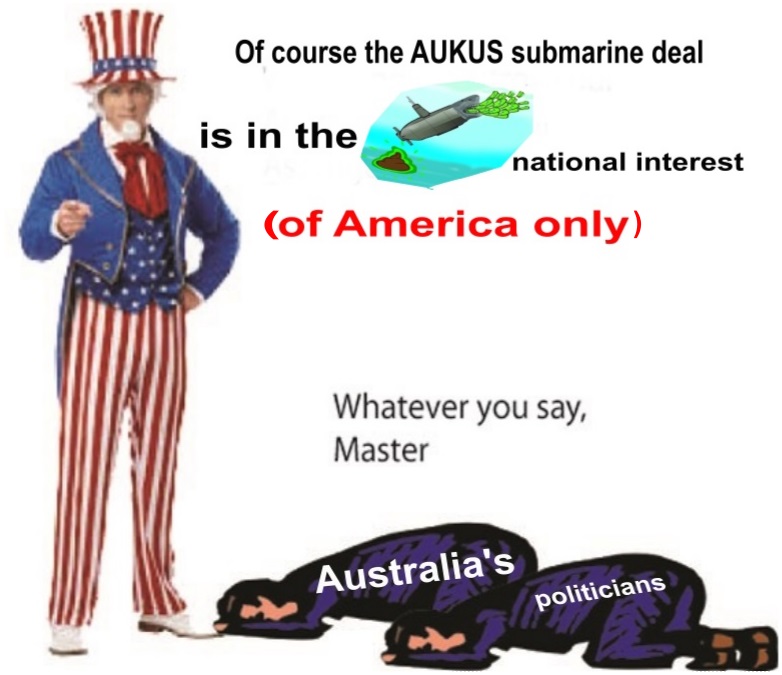
The AUKUS agreement allows any party to withdraw with one year’s notice. But here’s the lethal asymmetry: Australia’s payments are subsidies, not deposits; they are not refundable, and there is no guarantee that the submarines will ever be delivered.
How the AUKUS Caucus built a cargo cult and called it strategy.
14 December 2025 David Tyler Australian Independent Media
There’s a certain kind of Australian politician who never quite grew out of childhood. You know the type: Richard Marles, Tony Abbott, Christopher Pyne. Peter Pan to a man. Their eyes light up whenever a Pentagon staffer remembers their name. They sit bolt upright like kelpie pups on the back of the ute, ears pricked for master’s return. They mistake condescension for intimacy, patronage for partnership, obedience for relevance.
Marles, Pat Conroy (Defence Industry), and Brendan O’Connor (Veterans’ Affairs) along with “Rear Admiral-Albo” and Wayfinder Penny Wong make up the AUKUS Caucus: a dream team. Not bound by evidence, timelines, or arithmetic; only by faith. Faith that if Australia sends enough money, bases and deference across the Pacific, the Great Mate in the Sky will someday descend bearing nuclear submarines and strategic salvation.
Australia’s $368 billion imaginary friend.
The Cargo Cult Playbook
Cargo cults arise when isolated societies witness advanced powers arrive with miraculous technology. Locals build imitation runways; light signal fires hoping the planes will return. The AUKUS Caucus has updated the ritual for the modern age. Our runways are ports. The offerings are our sovereignty. The signal fires are AUSMIN pressers. And the planes, as ever, do not land.
Richard Marles, Labor’s embattled Defence Minister, is the cult’s high priest. Asked about implementation delays, he smiles wanly and intones the sacred words: “Full steam ahead.” Full steam ahead to where is never explained.
AUKUS is sold as strategic realism. In practice, it operates as faith: belief substituted for capacity, ritual for delivery, loyalty for leverage.
The Hegseth Problem
This week Marles and Wong flew to Washington for the annual, ceremonial abasement known as AUSMIN. Their opposite number is Pete Hegseth. Former Fox News shouter, veterans’ charity mismanager, and a chap once carried from a strip club by mates after trying to storm the stage. Now improbably directing US defence as Secretary of War.
Hegseth’s character matters because AUKUS asks us to entrust our strategic future to decision-makers whose judgment, attention span and institutional grip are already demonstrably strained. His own mother calls him as an “abuser of women” who “belittles, lies and cheats,” urging him to “get some help and take an honest look at yourself.”
When a nation stakes $368 billion on the judgment of a man disqualified by his own mother from trust, it has crossed from strategy into pathology.
8 December, Marles and Wong are pictured nodding earnestly as Hegseth endorses a $368 billion submarine fantasy he cannot possibly deliver. He barks approval of AUKUS as “pragmatic hard power.” Wong, cryptic as ever, merely echoes Trump’s mantra: “full steam ahead.” The boats are not coming, so who cares what fuels the boiler?
The Pragmatic Hard Power Con
Pragmatic hard power? It could be a new brand of laundry detergent. The absurdity runs deeper than performance.
Australia is trading real sovereignty for imaginary submarines.
AUKUS legislation effectively transfers operational priority and access over key Australian military bases to the US. The terminology is pure institutional dissemblance: “expanded US rotational presence” and “integrated command arrangements.” In plain English: we concede control over our own strategic assets. We slip a few lazy billion to US and British shipyards to “expedite” production; meaning we subsidise their accumulated backlogs. We bind our “defence posture” so thoroughly into US command that when Washington sneezes, Canberra catches cold.
But we do get to wave flags. Hum anthems. Pay invoices.
Each concession merits national debate. Yet, the AUKUS Caucus has sealed the deal without meaningful parliamentary inquiry, without detailed public costings, only an “oversight” committee denied subpoena power, denied independent costing, and so carefully neutered it might as well be chaired by a shredder.
The Legal Trap
And yes, the legal architecture is exactly what critics feared. Under the agreement, Australia provides $4.7 billion (with more coming) to US and UK submarine builders, and according to questioning in Senate Estimates, there is no clawback provision; Australia does not get its money back if the US fails to transfer nuclear submarines.
The AUKUS agreement allows any party to withdraw with one year’s notice. But here’s the lethal asymmetry: Australia’s payments are subsidies, not deposits; they are not refundable, and there is no guarantee that the submarines will ever be delivered.
The US and UK can walk away at any time. They keep the cash, the upgrades, the expanded industrial bases and the sovereign right to prioritise their own needs. Which, as serious countries, they will do.
Australia, meanwhile, is padlocked like a rental fridge in a share-house. Jiggle the handle all you like, but the thing won’t open unless the bloke with the key decides you’ve paid up.
A Big Perhaps
At some point, the more unsettling explanation has to be entertained. Perhaps the submarines are not delayed. Perhaps they are not even expected. Perhaps AUKUS is not failing at all, but performing exactly as intended. The money flows early and without clawback. The bases open. Command structures integrate. Strategic dependency is formalised. The submarines remain permanently over the horizon, always promised, never required. If this were a ruse designed to secure American basing access and regional posture while outsourcing the political pain to future governments, it would be hard to design it differently. Whether Australia’s political class believes its own story, or merely finds it convenient, becomes almost beside the point. The outcome is the same.
And whatever the truth of the submarines, Defence needs a bit of a rescue.
Defence’s House of Horrors
Marles’ predicament worsens when you look at Defence itself: a moral, administrative and institutional nightmare he inherited and, like his predecessors, Linda Reynolds and Peter Dutton, has failed to master. Could anyone? Australia’s predicament worsens also.
The Brereton inquiry exposed 39 unlawful killings in Afghanistan. The stain remains. Atop this moral wreckage sits administrative farce: a Defence official leaked confidential information before walking straight into a job with a private weapons contractor.
The Hunter class frigates tell the broader story. What began life as a $45 million per ship concept has metastasised into $2.6 billion per ship, with hundreds of millions in variations already locked in, and the program at least 18 months late due to design immaturity.
When Labor took office, 28 major Defence projects were running a combined 97 years behind schedule, with roughly a quarter of procurement unfunded. Over it all looms $368 billion we’ve agreed to throw at AUKUS, as a $60 billion annual defence budget swells toward $100 billion by 2034, absorbing failure without correcting it. (AUKUS costs are a guess, announced without consulting Treasury, Parliament or any other authority.)
What Do We Actually Get?
And what does Australia receive for this tithe?
- Not submarines.
- Not even capability.
- A promise.
Five SSN AUKUS boats to be built in Adelaide at some conveniently indeterminate date. Early 2040s if all goes well. If Britain remembers how to build submarines at scale. If the US has spare industrial capacity. If history pauses politely to accommodate our fantasy.
The BAE Systems Track Record
BAE Systems, cast as AUKUS’s industrial saviour, spent two decades struggling to deliver the UK’s Astute class submarines……………………………………………………..
The Pillar Two Mirage
When reality intrudes, the faithful point to Pillar Two, the sideshow of defence tech collaboration; AI, cyber and hypersonics; meant to suggest strategic depth where there is only debt. Scott Morrison dubbed it “AUKUS in Space,” as if adding a preposition and some stars transformed a lopsided submarine purchase into visionary strategy.
But the real achievement is rhetorical: substituting buzz-words for credible policy. In this sense, AUKUS is Scott Morrison’s most enduring legacy.
The Question Marles Won’t Answer
No-one likes a smart-arse but the pitiful Richard Marles still cannot explain why nuclear submarines are worth this ruinous spend when modern diesel-electric boats exist.
Modern diesel-electric submarines provide maximum range, endurance and stealth, operating underwater before having to resurface to snorkel and recharge batteries. Australia’s own Collins-class diesel submarines demonstrated during 2003 multinational exercises that they were comparable in underwater warfare to US Los Angeles-class nuclear-powered attack submarines, trading roles and achieving , successful attacks despite being smaller and less powerful……………………………………………………………………………………………………………………………………………………………………………………………..
The Runway at Dusk
For $368 billion, AUKUS is not a procurement program. It is a wager on dependency.
Australia is paying staggering sums for submarines that do not yet exist, to be built by industries in chronic difficulty, on timelines that belong to fantasy, while ceding real autonomy over real assets in the present. In return, we receive reassurance. Access. Attention. The comforting sense that someone larger, louder and more heavily armed is standing somewhere behind us………………………………………………………………………………
History will not ask whether the submarines eventually arrived. It will ask why a nation willingly surrendered so much, so early, for so little certainty in return. And it will judge us not by the promises we believed, but by the choices we made when the risks were already plain. https://theaimn.net/aukus-caucus/
Marles’ new Defence agency – rearranging deck chairs on the HMAS Titanic
Look how much taxpayers’ money is gobbled up by weaponry, compared to all other services
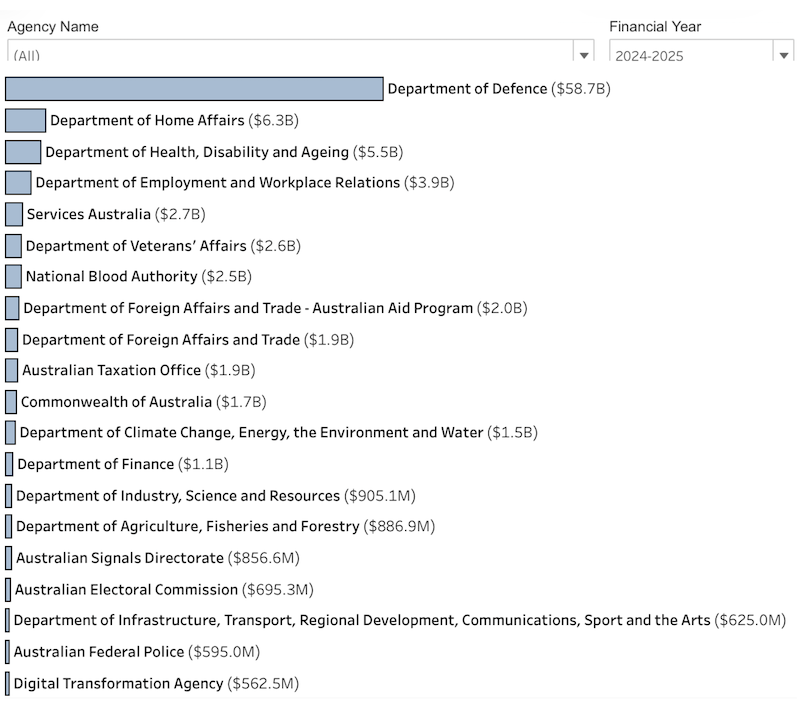
Earlier this week Defence Minister Richard Marles announced a big reform in Defence Procurement. Except it wasn’t a big reform, rather a rearranging of deck chairs. Former senator Rex Patrick reports.
by Rex Patrick | Dec 7, 2025 https://michaelwest.com.au/marles-new-defence-agency-rearranging-deck-chairs/
And the needle returns to the start of the song …
On 22 June 2000, then Minister for Defence John Moore approved the establishment of the Defence Materiel Organisation (DMO), a single organisation that was to be charged with the responsibility of acquisition and through life support of equipment and systems used by the Australian Defence Force.
But the DMO didn’t work.
On 01 April 2015, then Minister for Defence Kevin Andrews announced that he had accepted the recommendations of a Defence First Principles Review and that the DMO would be disbanded – it wasn’t working – and that its functions would be transferred to a new Capability Acquisition and Sustainment Group (CASG).
But the CASG didn’t work.
On 01 December the Defence Minister, Richard Marles, announced he was merging CASG, Defence’s Guided Weapons and Explosives Ordinance Group and the Naval Shipbuilding & Sustainment Group into a single organisation to be called the Defence Delivery Agency (DDA).
DDA won’t work
Rearranging deck chairs
During the week Marles sought to assure that there would be no job losses as a result of his reforms and, in an absolute admission that all he was doing was rearranging the deck chairs, he advised that existing public servants who worked for Defence would simply be transferred over to the new agency.
The biggest problem that Defence has, and which Marles doesn’t have the ability to solve, is the fact that the very senior uniformed people who are running Defence acquisition, while undoubtedly being good war-fighters, don’t have the experience in project management to understand that it is risk that brings down projects.
You would not take an experienced project manager and assigned them command responsibility of a warship, and you should not take a warship captain and assign them responsibility for a large project. But the latter is exactly what happens inside Defence.
Political risk (political change), economic risk (pressure on budgets), management risk (inexperience) and technical risk (novelty, uncertainty and complexity) – that’s what causes projects to go off the rails.
Changing the label on the front door of the equipment procurement office won’t do a thing to get better value-for-money or reliable capable equipment for our defence force.
E.G. AUKUS
AUKUS is classical Defence risk taking.
It’s not a hidden fact that the United States is not building enough Virginia class submarines to meet US Navy needs, let alone supply the Royal Australian Navy with some. The US Government’s AUKUS review report is now with the Australian Government. The Minister is talking up the contents, albeit in very general detail.
“If the US were honest, they’d tell us to do something different.”
But with $1.6 billion already paid to the US Department of War and another billion dollars set to be gifted to the US in the next couple of weeks, the temptation would be difficult.
Senate Estimates this week was instructive. When Senator David Shoebridge read from the evidence given by Lord Case, the Chair of ‘Team Barrow’ (the organisation entrusted with ensuring the town of Barrow is able to support the UK’s and AUKUS submarine build needs) telling the UK Parliament he was not happy with his team’s progress, Vice Admiral Jonathon Mead indicated he did not know about it.
Experienced project managers spend their time looking for bad news – looking for risk that is materialising. That doesn’t seem to be happening. ‘Talking’ AUKUS is the order of the day, not ‘walking’.
Real change
If Marles knew what he was doing he would look to the culture in Defence procurements.
“No more ‘special’ or ‘expensive monolithic’ projects.“
Defence needs to develop a force optimised first for Defence-of-Australia and second for near regional security (and conduct other work from that order-of-battle). It needs to focus on proven designs/capabilities when fulfilling Defence Force needs.
This is something that has been recommended to Defence in the past, in the 2003 Kinnaird Review and the 2008 Mortimer Review. They are not new ideas; they are old ideas ignored.
Even those not currently interested in Defence need to be a little bit interested. Putting national security imperatives to one side, so much public money is spent on Defence.
One of the most telling signals that nothing substantive will come from Minister Marles’ announced changes came when Senator Shoebridge asked the question of Defence Secretary Greg Moriarty will the new ‘National Armament Director’ come from outside the current organisations?
There was no way Moriarty was going to answer that question. He employed bureaucratic doublespeak and avoided a direct answer. The secretary is an experienced public service hand, and will want someone in the seat that he can ‘guide’.
Marles needn’t worry too much though. He has what he needs – a dodge over failing projects for the rest of the parliamentary term, and possibly the next as well. “All those problems were caused by the old system,” Marles will say.
Labor backs ‘practical’ nuclear disarmament, Wong says
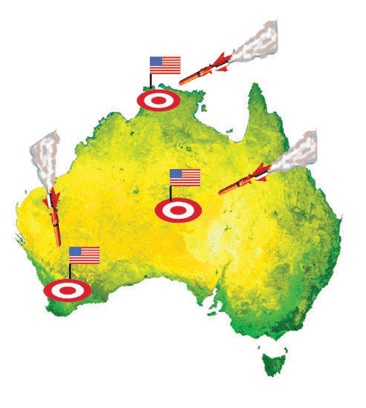
Anthony Albanese’s top diplomat has addressed a key question on Labor’s nuclear stance after a high-level defence official dropped a bombshell.
Joseph Olbrycht-Palmer, December 4, 2025 , https://www.news.com.au/technology/innovation/military/labor-backs-practical-nuclear-disarmament-wong-says/news-story/71ab3526def44ff9505452fb55bbc9f2
Labor backs “practical” efforts to reduce nuclear weapons stockpiles across the world, Anthony Albanese’s top diplomat has said after a senior defence official revealed a naval base in Western Australia could host nuclear-armed US submarines.
Greens senator David Shoebridge on Thursday peppered Foreign Minister Penny Wong with wide-ranging queries during Senate estimates.
Among them was why Defence Minister Richard Marles refused to “endorse” the Treaty on the Prohibition of Nuclear Weapons (TPNW) in an interview last month, as Senator Shoebridge characterised it.
He said it “caused deep despair” among nuclear weapons abolitionists “who have been pushing for this treaty for years”.
“Does the Albanese government support the Treaty to Prohibit Nuclear Weapons?” Senator Shoebridge asked.
Senator Wong said Labor was “engaging constructively on the evidence on the TPNW” but that existing frameworks were the best bet.
“Our party has a very proud history of championing practical – I emphasise that – practical non-proliferation and disarmament efforts internationally,” she said, adding that Labor is “steadfast in our support for the NPT”.
“The Treaty on Non-Proliferation of Nuclear Weapons is the cornerstone of global disarmament and non-proliferation.”
Recognising the “devastating consequences for humanity” bore by nuclear arms and concerns around the use of artificial intelligence in nuclear command systems, Senator Wong said the NPT offered the “best pathway to advance non-proliferation and disarmament”.
Signing the TPNW would block Australia from hosting any US military nuclear assets, counteracting the Prime Minister’s offer to Donald Trump in October of expanding port access for the US’ roaming Virginia-class submarines.
The submarines are the nuclear-armed vanguard of the US Navy.
During Senate estimates on Wednesday, Department of Defence Deputy Secretary Hugh Jeffrey was asked whether US submarines docking at Western Australia’s HMAS Stirling would be armed with nuclear capabilities.
Mr Jeffrey would not rule it out.
“The United States is very clear about the Australian government’s treaty obligations and our policy on those (nuclear) weapons,” he said.
“We respect the United States’ position of neither confirming nor denying.”
NewsWire has contacted Mr Marles’ office for comment.

US submarines carrying nuclear weapons could dock in Australia despite ban, Senate told.
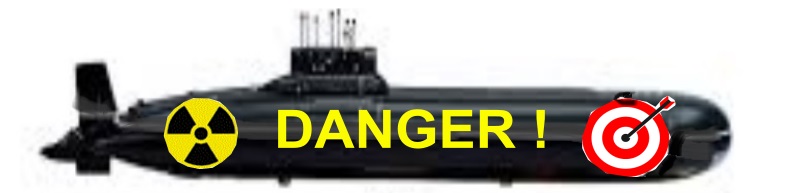
Defence secretary appears to contradict previous assurances from Penny Wong that only conventionally armed submarines will visit Australian ports under Aukus deal.
Ben Doherty, 5 Dec 25, https://www.theguardian.com/australia-news/2025/dec/05/us-submarines-nuclear-weapons-australia-aukus
US submarines carrying nuclear weapons could dock at Australian bases, defence officials have told the Senate, and the Australian government and people would not know.
Senate estimates heard fierce debate over whether US Virginia-class submarines – set to “rotate” through Australian ports from 2027 as part of the contentious Aukus agreement – could carry nuclear weapons. Nuclear weapons are prohibited in Australia.
Defence department officials told senators there was “no impediment” to submarines armed with nuclear weapons visiting Australia, insisting that any such visit would not breach Australian or international law.
The US maintains a policy of “strategic ambiguity” around its nuclear deployment and it refuses to confirm or deny whether aircraft or seagoing vessels capable of carrying nuclear weapons are, in fact, carrying a nuclear warhead.
That ambiguity would apply to US submarines that might dock at Australian ports, as it now does to nuclear-capable B-52 bomber aircraft landing at RAAF Base Tindal in the Northern Territory, which is being upgraded to be able to accommodate more US bombers.
“We respect the United States position of neither confirming nor denying,” the Australian defence department secretary, Greg Moriarty, told the Senate.
But anti-nuclear campaigners and some senators argue that the evidence to the Senate undermines Australia’s non-proliferation commitments and risks making the country “a launchpad for nuclear war”.
They also say the acquiescence to US ambiguity over its nuclear weapons contradicts the foreign affairs minister’s assurance in a 2023 speech that only conventionally armed submarines would visit Australia.
“The US has confirmed that the nuclear-powered submarines visiting Australia on rotation will be conventionally armed,” Penny Wong told the National Press Club.
Sign up: AU Breaking News email
US Virginia-class submarines are to begin rotating through Australian ports – part of pillar one of the Aukus agreement – from 2027, before Australia buys then builds its own nuclear-powered, conventionally armed submarines.
The US Congress approved funding in 2024 for a new submarine- and ship-launched nuclear missile – the first new US nuclear weapon since the end of the cold war. The SLCM-N weapon is slated to be operational within a decade and Vice-Admiral Johnny Wolfe has told Congress that the weapons program is “focused on the integration of SLCM-N into the Virginia-class submarine”.
The South Pacific nuclear free zone treaty – known as the Treaty of Rarotonga and to which Australia is a party – prohibits the “stationing” of nuclear weapons in Australia (and the broader South Pacific zone). But Australia maintains that a US submarine, potentially armed with nuclear weapons, is not prohibited from visiting an Australian port.
Bernard Philip, assistant secretary of international policy at the Department of Defence told the Senate Australia would comply with its treaty obligations, which were also understood by the US.
“The United States does not station nuclear weapons in Australia,” he said. “Stationing nuclear weapons in Australia is prohibited by the South Pacific nuclear free zone treaty, to which Australia remains committed.
“There is no impediment under the Treaty of Rarotonga and the Treaty on the non-proliferation of nuclear weapons to the visit of dual-capable foreign platforms to Australia’s territory or transiting Australia’s airspace or waters.”
Dual-capable platforms are those able to carry both conventional and nuclear weapons. Defence officials said nuclear missiles deployable on Virginia-class submarines were still in development, labelling the scenario “hypothetical”.
The Australian director of the International Campaign to Abolish Nuclear Weapons, Gem Romuld, said the foreign minister’s commitment that nuclear weapons would not be rotating through Australia was now “dead in the water”.
“It’s taken just two years for expectations of an Aukus partner to shift, so what will come next?” she said.
“If Aukus is ‘not about nuclear weapons’, then Australia’s numerous assurances must be backed up with legal commitments. The best way to draw the line on nuclear weapons is to sign and ratify the UN Treaty on the Prohibition of Nuclear Weapons.”
Labor has formally committed in its party platform to signing and ratifying the weapons ban treaty “in government” but it has not yet signed done so. Seventy-four countries are now party to the treaty: none of the nine nuclear-armed states have signed it.
The Greens senator David Shoebridge asked in Senate estimates: “So we’re going to permit them to be sitting, floating off Fremantle in US-Virginia class submarines, and is it still the position that the Australian government won’t ask the US whether or not they’re nuclear-armed submarines, just like we don’t ask about the nuclear-armed B-52s?
“Is that still the position? Don’t ask, don’t tell?”
The secretary of the defence department said: “We respect the United States’ position of neither confirming nor denying.”
Government backflips on nuclear-capable submarines under AUKUS

The International Campaign to Abolish Nuclear Weapons (ICAN) has warned of escalating nuclear risks after Senate Estimates confirmed the government would not stand in the way of US Virginia-class submarines entering Australian waters while armed with nuclear weapons.
The Australian Government has acknowledged it would permit visits by US Virginia-class submarines that may carry nuclear weapons in future—a direct contradiction of Foreign Minister Penny Wong’s assurance at the National Press Club in April 2023 that AUKUS submarines visiting Australia would be conventionally armed.
During Senate Estimates on Wednesday night, senior Defence officials acknowledged that there is “no impediment” under Australian policy or treaty obligations to the visit of dual-capable platforms—an aircraft, submarine or missile designed to carry either conventional weapons or nuclear weapons—and that Australia would continue to respect the US policy of neither confirming nor denying the presence of nuclear weapons.
This means Australians could unknowingly host US or UK nuclear weapons offshore—with no right to be told.
Gem Romuld, Director of ICAN Australia, said:
“The Foreign Minister’s assurance that nuclear weapons won’t be rotating through Australia is now dead in the water. It’s taken just two years for expectations of an AUKUS partner to shift, so what will come next?
If AUKUS is ‘not about nuclear weapons’, then Australia’s numerous assurances must be backed up with legal commitments. The best way to draw the line on nuclear weapons is to sign and ratify the UN Treaty on the Prohibition of Nuclear Weapons.”
The Estimates exchange centred on the United States’ nuclear-armed sea-launched cruise missile program (SLCM-N), which the US Congress has directed the Navy to develop. Experts, including CNA analyst Decker Eveleth, have publicly confirmed these weapons can be deployed on Virginia-class submarines, the same class Australia is preparing to host at HMAS Stirling as early as 2027.
National Labor policy commits the government to sign and ratify the Treaty on the Prohibition of Nuclear Weapons (TPNW). Successive Labor conferences have reaffirmed this commitment, and more than 300 federal, state and local parliamentarians have signed the ICAN parliamentary pledge.
Romuld said:
“Australia is a strong proponent of the 1970 nuclear Non-Proliferation Treaty (NPT), an essential multilateral agreement but one that is no longer fit for purpose. The TPNW extends the work of the NPT to meet the challenges posed by today’s nuclear risks, and in finally comprehensively outlawing these weapons of mass destruction,”
“National Labor policy commits to signing and ratifying the TPNW in government, a promise yet to be delivered. It’s time for Australia to move on from just engaging with this treaty to putting pen to paper. The Prime Minister championed it and now has a responsibility to enact his policy before Australia becomes a launchpad for nuclear war.
“Both of our AUKUS partners are heavily armed with nuclear weapons. As a nation opposed to nuclear weapons, signing the TPNW puts essential protections and future-proofing in place for our country and our region.”
The architecture of a vassal: how US bases in Australia project power, not protection.
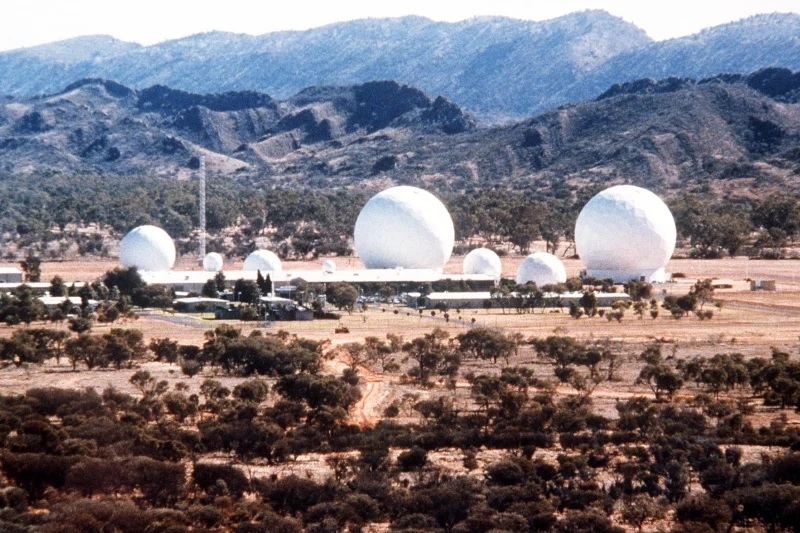
2 December 2025 Andrew Klein, https://theaimn.net/the-architecture-of-a-vassal-how-us-bases-in-australia-project-power-not-protection/
The strategic placement of key US and joint military facilities across Australia reveals a pattern not of national defence, but of integration into a global, offensively-oriented network for force projection and intelligence gathering. An analysis of their locations and functions demonstrates that these bases are designed to serve the strategic interests of a superpower, often at the expense of Australian sovereignty and security.
The Official Rationale: A Volatile Region and the Strategy of Denial
According to official Australian government assessments, the strategic environment is increasingly volatile, characterised by falling international cooperation, rising competition, and uncertainty about US reliability. In response, Australia’s National Defence Strategy: 2024 has adopted a “strategy of denial,” emphasising deterrence as its primary objective. This policy shift is used to justify initiatives such as:
- Acquiring nuclear-powered submarines through AUKUS.
- Upgrading and expanding northern military bases.
- Acquiring new long-range strike capabilities.
The public-facing logic is that longer-range weapons have overturned Australia’s geographic advantage, making the “sea-air gap” to the north a vulnerability. However, a closer examination of the specific facilities tells a different story.
Pine Gap: The Beating Heart of Global Surveillance
The Joint Defence Facility Pine Gap, near Alice Springs, is the most prominent example. Ostensibly a joint facility, it is a critical node in US global intelligence. Its functions extend far beyond any defensive mandate for Australia.
- Global Signals Intelligence: Pine Gap acts as a ground control and processing station for US geosynchronous signals intelligence (SIGINT) satellites. These satellites monitor a vast swath of the Eastern Hemisphere, collecting data including missile telemetry, anti-aircraft radar signals, and communications from mobile phones and microwave transmissions.
- Warfighting and Targeted Killing: Information from Pine Gap is not merely for analysis. It is used to geolocate targets for military action. The base has played a direct role in US drone strikes and has provided intelligence in conflicts from Vietnam and the Gulf War to the ongoing wars in Gaza. Experts testify that data downlinked at Pine Gap is passed to the US National Security Agency and then to allies like the Israel Defense Forces, potentially implicating Australia in international conflicts without public knowledge or parliamentary oversight.
- A History of Secrecy and Sovereignty Betrayed: The base’s history is marked by breaches of Australian sovereignty. During the 1973 Yom Kippur War, the US government placed Pine Gap on nuclear alert (DEFCON 3) without informing Australian Prime Minister Gough Whitlam. Whitlam’s subsequent consideration of closing the base was followed by his dramatic dismissal in 1975, an event that former CIA officers have linked to US fears over losing access to the facility.
Northern Bases: Launchpads for Power Projection
The network of bases across Australia’s north forms an arc designed for forward operations, not homeland defence.
- RAAF Base Tindal: This base in the Northern Territory is undergoing upgrades to host US B-52 strategic bombers. This transformation turns Australian territory into a forward operating location for long-range strike missions deep into Asia, fundamentally changing the nation’s role from a sovereign state to a launching pad for another power’s offensive operations.
- Marine Rotational Force – Darwin: The stationing of up to 2,500 US Marines in Darwin functions as a persistent force projection and logistics hub, enhancing the US ability to rapidly deploy forces into the Southeast Asian region.
- NW Cape (Harold E. Holt): The facility in Exmouth, Western Australia, hosts advanced space radar and telescopes for “space situational awareness.” This contributes to US space warfare and communications capabilities, a global mission with little direct relation to the defence of Australia’s population centres.
The True Cost: Compromised Sovereignty and Incurred Risk
This integration into a superpower’s military apparatus comes with severe, often unacknowledged, costs.
- The Loss of Sovereign Control: The operational control of these critical facilities is often ceded to the United States. At Pine Gap, the chief of the facility is a senior CIA officer, and certain sections, such as the NSA’s cryptology room, are off-limits to Australian personnel. This creates a situation where activities conducted on Australian soil are not fully known or controlled by the Australian government.
- Becoming a Nuclear Target: The critical importance of bases like Pine Gap to US global military dominance makes them high-priority targets in the event of a major conflict. By hosting these facilities, Australia voluntarily assumes the risk of being drawn into a nuclear exchange, a strategic decision made without public debate.
- Complicity in International Conflicts: As the protests and legal actions surrounding Pine Gap’s role in Gaza highlight, Australia faces legal and moral accusations of complicity in actions that may constitute war crimes or genocide. This places the nation in direct opposition to international law and global public opinion, all for the sake of an alliance that often prioritises US interests.
Conclusion: From Independent Ally to Integrated Base
The evidence is clear: the strategic network of US-linked bases in Australia is not primarily for the nation’s defence. It is the architecture of a vassal state, designed to service the global force projection and intelligence-gathering needs of a superpower. From the satellite surveillance of Pine Gap to the bomber forward deployment at Tindal, these facilities entangle Australia in conflicts far beyond its shores, compromise its sovereignty, and incur immense strategic risks. Until this fundamental reality is confronted, Australian defence policy will continue to serve an empire’s interests, not its own.
References…………………
‘Inadequate’: Audit call on $368bn AUKUS cost estimate.

COMMENT. Even the Australian is being critical of AUKUS.
They don’t mention that the $368 billion doesn’t cover a high level nuclear waste dump and associated transport, or upgrades needed for the LeFevre peninsula to host a sub building facility at Osborne.
Some of Australia’s top naval experts have cast doubt on the government’s $368bn AUKUS price tag, warning that the cost will be ‘significantly more’.
Ben Packham The Australian 17.11.25
Some of Australia’s top naval experts have cast doubt on the government’s $368bn AUKUS price tag, saying the program to acquire two classes of nuclear-powered submarines will cost “significantly more” than originally thought, with higher upfront outlays.
UNSW Canberra’s naval studies group has called for an urgent and comprehensive audit of AUKUS costs “to provide a realistic financial baseline” for the program, which is already cannibalising the wider defence budget.
Labor argues it can fund the program without a major increase in defence funding beyond its currently planned outlays, which are set to rise from about 2 per cent of GDP to 2.33 per cent by 2033-34.
UNSW Canberra’s new Maritime Strategy for Australia warns the proposed expenditure “will likely be inadequate” to deliver on the government’s naval ambitions. “This is already evidenced by cuts to lower priority projects and sustainment,” the strategy says.
It argues the AUKUS ‘Pillar I’ submarine program “was not comprehensively costed at the outset and its full demand on the Defence budget is still to be fully quantified”.
The paper says a substantial increase to defence funding will be needed, urging the government to “conduct a comprehensive, independently verified costing of AUKUS Pillar I as a matter of urgency to allow for re-baselining of Defence financial requirements and recalculation of required overall Defence funding”.
The strategy also sounds the alarm over the navy’s “long-neglected” mine countermeasures and undersea mapping capabilities, saying they pose “a critical gap that must be regenerated to guarantee maritime access to ports and littoral (coastal) waters”.
It comes amid a Defence-wide cost-cutting drive, revealed by The Australian, that has forced service chiefs to slash sustainment budgets, reduce “rates of effort”, and look at axing some capabilities.
Former RSL president Greg Melick took aim at the funding issue last week, using his Remembrance Day speech to warn hat the nation’s military preparedness was being undermined. The speech earned him a rebuke from Paul Keating, who branded him a “dope” and accused him of seeking a war with China.
But retired Vice-Admiral Peter Jones endorsed Major General Melick’s warning, saying the stretched defence budget was “the elephant in the room at the moment”.
Admiral Jones, the lead author of the maritime strategy and head of the Australian Naval Institute, told The Australian: “It appears the cost (of AUKUS) is significantly more than what was originally thought, including greater upfront costs before submarine construction.”
The paper comes as the government finalises its updated defence strategy and capability investment program, both of which will be released ahead of next year’s federal budget.
Labor announced a $12bn upgrade to Western Australia’s shipbuilding precinct in recent weeks as a downpayment on AUKUS infrastructure in the state, which is likely to cost more than twice that figure.
Workforce costs are also soaring as hundreds of Australian sailors take up training places on US and British submarines, and Australian tradespeople are deployed to shipyards in both countries to gain experience building nuclear boats.
Defence Minister Richard Marles revealed the government’s $368bn AUKUS cost estimate two years ago when he announced the program’s “optimal pathway” to obtain three to five Virginia-class submarines from the US and a new class of AUKUS submarines to be built in Adelaide. He said this was equivalent to about “0.15 per cent of GDP for the life of the program”.
The Australian asked the minister’s office how the figure was arrived at, whether it had any statistical measure of its likely accuracy, and whether it would seek an independent assessment of the program’s cost. It declined to respond to all three questions.
A spokeswoman for Mr Marles instead issued a boilerplate statement repeating the government’s case for acquiring nuclear submarines.
“The acquisition of conventionally armed, nuclear-powered submarines for the Australian Defence Force is a multi-decade opportunity, representing the single biggest capability acquisition in our nation’s history and creating around 20,000 direct jobs over the next 30 years,” she said.
“Working with our AUKUS partners, Australia is not just acquiring world-leading submarine technology but building a new sovereign production line, supply chain and sustainment capability here in Australia. This includes growing the capabilities, capacity and resilience of business – particularly small and medium-sized enterprises.
Target Australia: Four Corners sounds alarm on nuclear weapons

The International Campaign to Abolish Nuclear Weapons (ICAN), has called on the Australian government to urgently advance the signature of the Treaty on the Prohibition of Nuclear Weapons (TPNW) to address growing nuclear dangers.
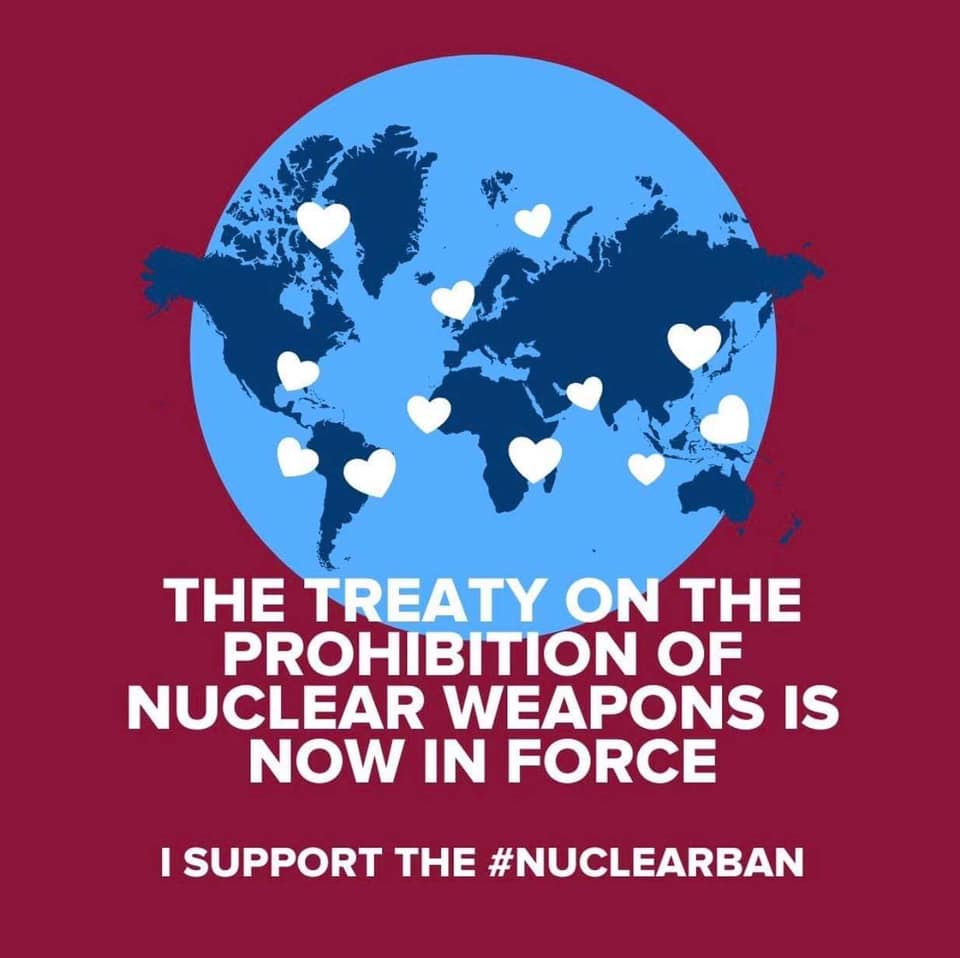
The call follows last night’s ABC Four Corners investigation “Trading Fire” which highlighted elevated dangers in Australia as hosting US nuclear-capable platforms and supplying minerals that can facilitate nuclear weapons is making Australia a high probability target.
Gem Romuld, Director of ICAN Australia, said:
“The ABC has put this issue on the national radar. The government needs to lift the veil of secrecy about what’s going on and require our nuclear-armed AUKUS partners to declare whether their vessels and aircraft are nuclear-capable or carry nuclear weapons. Australians have a right to know and a right to say no. There is no place for nuclear weapons in Australia.
To stop Australia becoming a launchpad for nuclear war we must sign the Australian-born treaty that bans the bomb and could save the world.”
ICAN was awarded the 2017 Nobel Peace Prize for its role in achieving the TPNW. A year later, Anthony Albanese and Richard Marles led a successful resolution committing the Australian Labor Party to sign and ratify the TPNW in government.
However when asked whether Australia would sign and ratify the TPNW on Four Corners last night, Minister Marles said;
“What’s really clear is that the [National] Conference understands that this is a decision of government… a decision of Labor in government. And the decision that Labor has made in government has been to follow the Non-Proliferation Treaty (NPT). The NPT is at the core of Labor in government’s policy.”
Dr Tilman Ruff AO, co-founder of ICAN, said:
“Minister Marles gave the impression that the Albanese Government is walking away from Labor’s longstanding ban treaty commitment. There’s no reason Australia can’t join the TPNW as well as the NPT. It can, should and must.
As Australia pursues nuclear-fuelled submarines under AUKUS, it is essential that we send a clear message to our nation, our region and the world that nuclear weapons are a red line. We call for the government to set a timeline for the signature of the TPNW in this term of parliament.”
Desperately seeking submariners: why keeping nuclear-powered boats afloat will be Australia’s biggest Aukus challenge.
Ben Doherty, Guardian, 21 Oct 25
A vast and highly trained workforce is needed to command, crew, supply and maintain nuclear submarines. Some say that’s impossible for Australia.
“Vice-Admiral Mead, you’re free to go home … good to see you cracking a smile.”
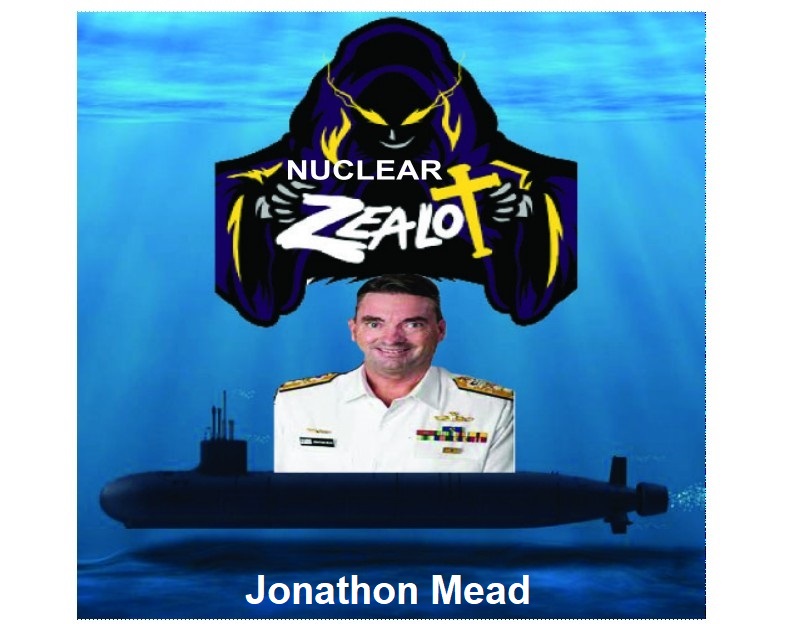
The head of the Australian Submarine Agency had spent a withering three hours before Senate estimates, parrying a barrage of questions about Australia’s ambitious Aukus nuclear submarine plan: interrogatives on consultants, on hundreds of millions of dollars sent to US and UK shipyards, on sclerotic boat-building on both sides of the Atlantic.
But while so much focus has been on Australia’s nuclear submarines’ arrival, their price tag and their “sovereign” status, the greatest challenge to the Aukus project, Mead told the Senate, would be finding the people to keep them afloat and at sea.
“Ensuring Australia has the workforce to deliver this program remains our biggest challenge,” he said.
If Australia’s nuclear submarines arrive on these shores – and that remains a contested question, with expert opinion ranging from an absolute yes to a certain no – will Australia be able to crew, supply and maintain them?
“It is a challenge we are continuing to meet,” Mead told senators. “Australian industry and navy personnel continue to build critical experience through targeted international placements.”
Others are less sanguine.
“The Aukus optimal pathway is a road to a quagmire,” says a former admiral and submarine commander, Peter Briggs, arguing that Australia’s small submarine arm can’t be upscaled quickly enough. “It’s not going anywhere. It will not work.”
Onshore trades, too, are perilously short. Without an additional 70,000 welders by 2030, that trade’s peak body says: “The Aukus submarine program is at serious risk of collapse.”
Mead was asked directly by senators: “Are you still confident of meeting the government’s agenda and timings?”
“Yes,” he replied, “I am.”
‘An eye-wateringly long process’
Briggs, a past president of the Submarine Institute of Australia, says the Aukus plan reads like one “designed by a political aide in a coffee shop”.
The navy’s submarine arm is approximately 850 sailors and officers (the defence department declined to give exact figures). The former chief of navy previously told parliament it needed to grow to 2,300 by the 2040s.
But Briggs estimates that to crew and support Australia’s Virginia-class, and later, Aukus-class submarines, the navy will need to more than treble its existing complement to about 2,700.
Virginias are massive submarines – nearly 8,000 tons – and carry a crew of 134, more than twice the existing Collins-class crew of 56. The Aukus submarines to be built in Adelaide will be bigger again. More tonnage, more people.
“That’s a huge increase in what is already in very scarce supply,” Briggs argues…………………………………………………………
The new generation of submariners is needed for between three and five Virginia-class submarines, then up to eight Australian-built Aukus boats.
“To get to be chief engineer of a nuclear submarine takes 16 to 18 years,” Briggs says. “It’s an eye-wateringly long process and of course you lose people along the way.
“That’s why you need a broad base, a critical mass, and Australia simply doesn’t have that right now. There is no way a navy the size of ours can manage this mix.”
Briggs does not believe the US will withdraw from Aukus: the presence of nuclear submarine bases on Australian soil is too great a prize for a superpower wanting to project power into the Pacific. But Australia’s unreadiness could lead to nuclear submarines under domestic command being delayed.
“We’ve got no warranty clause, no guarantee of anything. The cop-out could come in 2031, the US might say, ‘Look, you’re not quite ready yet, let’s push everything back three years, check in again in 2034.’ And it’s Australia that’s left exposed.”
‘Beyond frustrating, it’s dangerous’
Beyond the complexity of commanding and crewing a nuclear submarine, the vessels need a vast and highly trained workforce to keep them supplied, afloat and at sea………………………………………………………………………
“This is not just a workforce challenge,” its chief executive, Geoff Crittenden, said in a statement. “It’s a full-blown capability crisis … If we don’t address this issue now, Aukus will fail.”
Aukus represented a “perfect storm”, he said, and failure to address worker shortages was “beyond frustrating, it’s dangerous”.
“A once-in-a-generation opportunity like Aukus demands a long-term, strategic response, not just investment in ships and steel, but in people. We estimate that Australia will be at least 70,000 welders short by 2030. Without immediate action, the project is doomed to delays, cost blowouts, or worse.”…………………………………………………………………………
The first cohort won’t be Australian. “In the short term there will have to be an influx of international talent, as we train and upskill our own people.”
Tier two is a nuclearised workforce of skilled professionals – scientists, electrical and mechanical engineers, technical managers, reactor operators and health physicists – with advanced training and between seven and 10 years’ experience. The majority of a submarine crew would sit in this tier. Obbard estimates that about 5,000 tier-two workers will be needed.
Tier three is a further cohort of “nuclear-aware” workers – between 5,000 and 6,000 again – tradespeople including machinists, fitters and welders, who will require some nuclear training.
“The Aukus plan cannot work without building this workforce and the wider engineering community this workforce is drawn from.”
Does it make sense?’
Jack Dillich is uniquely placed to observe Australia’s transformation to a nuclear submarine power. A former submarine officer, he holds an advanced degree in nuclear engineering and served on the executive of the Australian Nuclear Science and Technology Organisation, where he was responsible for the country’s sole nuclear reactor, and as head of the regulatory branch at the Australian Radiation Protection and Nuclear Safety Agency. He now teaches a nuclear course at the Australian Defence Force Academy………………………………….
[Dillich says] Australia needs to be asking, ‘Does it make sense to try to build a tiny fleet here?’ Maybe 25 years from now, Australia could have eight nuclear-propelled submarines: they would be very, very expensive.”……………………………..https://www.theguardian.com/australia-news/2025/oct/20/aukus-submarine-workforce-nuclear-powered-boats-australia
‘Folly’ of nuclear submarines plan floated
A former navy chief warns outsourcing nuclear subs is risky, raising questions about AUKUS, sovereign capacity and local industry.
Callum Godde, Grace Crivellaro, The Mandarin, 3 Oct 25
The former head of Australia’s submarine squadron has urged Australia against outsourcing boat construction overseas, as bureaucrats express confidence that the US won’t scuttle AUKUS.
A parliamentary inquiry on Thursday ran the ruler over the Geelong treaty, a 50-year AUKUS co-operation agreement between Australia and the UK signed in July.
Under AUKUS, the US has promised to sell at least three Virginia-class nuclear-powered submarines to Australia from the early 2030s.
A submarine solution closer to home should be examined instead, retired navy rear admiral Peter Briggs argued.
“Depending on an overseas supply chain for such a critical capability as our submarines is a folly,” he told the inquiry.
Briggs had serious concerns with the plan, including its potential to limit Australia’s commercial interests. He suggested that the nation should build more submarines, as it had previously done with the diesel-electric Collins class.
“There is no minimum protection in the treaty for a guaranteed work share for genuine Australian industry,” he said.
“The Collins project has established a viable submarine supply chain within Australia.
“We should build on this, not sign a treaty mandating it out of existence.”
Briggs cast doubt on Australia receiving submarines from the US on time, pointing to its falling behind in building its fleet.
Bernard Philip from the Department of Defence said advice was being provided to the federal government on extending the life of Australia’s ageing Collins-class fleet.
The Pentagon has been investigating the AUKUS pact to ensure it aligns with President Donald Trump’s “America-first” agenda.
The review by Under Secretary of War for Policy Elbridge Colby sparked speculation that Trump could walk away from the deal, which is estimated to cost up to $368 billion across 30 years.
Nikkei Asia on Tuesday reported the US would not make changes, with an unnamed member country official declaring AUKUS was “safe”.
Mikaela James from the Australian Submarine Agency strongly hinted that the US would not walk away from the deal.
“(We’re) obviously aware of the US review that is underway, and we are confident the US will continue to find that the program is in line with its interests,” she told the committee.
The review is expected to finish before Prime Minister Anthony Albanese’s visit to the White House on October 20.
Tim Deere-Jones, who has 40 years of experience researching the UK government’s system for monitoring marine radioactivity, said managing nuclear waste was expensive and caused environmental issues.
“You’ve got to build the facilities to remove it from the boats,” he said.
“Then you’ve got to be looking for a long-term, hopefully perpetual dump site for it, none of which we’ve managed to do in the UK despite having many decades of nuclear submarines.”
It was inevitable some waste would be discharged into the ocean, he said.
Nationals MP Alison Penfold said such concerns had the potential to undermine public confidence in AUKUS………………………………………………………………….https://www.themandarin.com.au/300512-folly-of-nuclear-submarines-plan-floated/
‘Life and death’: Penny Wong’s nuclear AI warning to UN Security Council

Nuclear weapons could be fired by artificial intelligence, Australia’s Foreign Affairs Minister has warned the United Nations.`
Blair Jackson, 26 Sept 25, https://www.news.com.au/technology/innovation/military/life-and-death-penny-wongs-nuclear-ai-warning-to-un-security-council/news-story/8ca47bc22b428922edb720dcfffe5458
Nuclear weapons could be fired by artificial intelligence, Australia’s Foreign Affairs Minister has warned the United Nations.
Speaking to the UN in New York on Thursday US time, Penny Wong issued a stark speech about technological advancements and armed conflict.
“AI’s potential use in nuclear weapons and unmanned systems challenges the future of humanity,” she said.
“Nuclear warfare has so far been constrained by human judgment, by leaders who bear responsibility and by human conscience. AI has no such concern, nor can it be held accountable.
“These weapons threaten to change war itself and they risk escalation without warning.”
Senator Wong has been with Prime Minister Anthony Albanese and Communications Minister Anika Wells at the UN this week, promoting Australia’s world-first under-16 social media ban.
Australia’s representatives have also been pushing to become one of 10 smaller nations to gain a 10-year non-permanent seat on the UN’s Security Council.
Senator Wong delivered the doomsday warning to the Security Council.
“Decisions of life and death must never be delegated to machines, and together we must set the rules and establish the norms,” she said.
“We must establish standards for the use of AI to demand it is safe, secure, responsible and ethical.
“To ensure AI transforms the tools of conflict and diplomacy for the better, the Security Council must lead by example – to strengthen international peace and security and ensure it is not undermined.”
Ukrainian President Volodymyr Zelenskyy delivered a similar warning to the UN’s General Assembly a day prior.
“It’s only a matter of time, not much, before drones are fighting drones, attacking critical infrastructure and targeting people all by themselves, fully autonomous and no human involved, except the few who control AI systems,” he said.
“We are now living through the most destructive arms race in human history because this time it includes artificial intelligence.”
Could Australia defend itself?
by Rex Patrick | Sep 7, 2025 , https://michaelwest.com.au/could-australia-defend-itself/
Supporters of the Australian Defence Force being more closely integrated with the US military, and of AUKUS, seem convinced that we need the US to defend ourselves. Former senator and submariner, Rex Patrick, explains why they’re wrong.
While there are clear concerns in the US and Australia with China’s growing military power and how that power might be utilised, no-one reasonably thinks China has aspirations of attacking Australia. But, for defence purposes, we plan for worse-case, and so in assessing whether Australia could defend itself, a Chinese attack is a convenient scenario to explore.
Nuclear attack
It’s estimated China possesses more than 500 operational nuclear warheads, and by 2030, they’ll have over 1,000. Most of those will be aimed at US targets – US air and military bases in Guam and Hawaii, US bases in the territories of America’s allies in north-east Asia – Japan and South Korea; as well as a growing list of strategic facilities and cities in the continental United States itself.
And as China enters an era of nuclear weapon abundance, there’ll be long-range missiles and warheads to spare for US-related targets down under – the signals intelligence facility at Pine Gap near Alice Springs, the submarine communications station near Exmouth, the RAAF base at Darwin and naval facilities at Garden Island south of Perth.
It’s clear that an expanding US military presence in Australia has increased the likelihood of nuclear weapons being directed at us by China.
Our best protection against the risk of nuclear war is a government policy of support for the system of mutual deterrence and effective arms control. In this, the AUKUS program isn’t helpful, as Australia’s past diplomatic engagement on nuclear arms control and non-proliferation has been downgraded. We are trying to persuade other nations that Australia should be permitted to receive weapon-grade plutonium in the reactors of our anticipated US- and UK-sourced submarines.
Conventional conflict and the tyranny of distance
Launching a conventional attack on Australia is a very hard thing to do.
Geography is our great advantage. What historian Geoffrey Blainey called the “tyranny of distance” is a big problem for any country wanting to attack Australia. In World War II, the invasion of Australia was operationally and logistically a bridge too far for the Imperial Japanese Army and Navy. During the Cold War, Australia enjoyed defence on the cheap because there was no direct conventional military threat from the Soviet Union.
We’re a long way from China, surrounded by a ‘moat’ and are further assisted in our defence by an inhospitable vastness between a hostile force landing on our northern shores and our major population centres.
We can also afford to defend ourselves if we sensibly reallocate the $365B cost of eight AUKUS submarines to focus on the defence of Australia first.
Here’s how.
Keeping a watch
An intelligence capacity, focused on areas of primary strategic interest to support an independent defence of Australia, is crucial. This would involve cooperation with other nations (including as part of 5Eyes), defence-focused spying by the Australian Secret Intelligence Service and eavesdropping by the Australian Signals Directorate, covert submarine intelligence missions and intelligence collection by deployed RAN surface ships and RAAF surveillance aircraft.
Open source intelligence should not be discounted.
We also need a highly capable surveillance capability for detecting, identifying and tracking potentially hostile forces moving into our military area of interest.
Australia should invest in satellite surveillance system ($5B, leaving $363B in available funds from cancelling the $368B AUKUS program) to complement our three Over-The-Horizon Radars at Longreach in Queensland, Laverton in WA and at Alice Springs in the NT and double the size of our P-8 Maritime Patrol and Response fleet from 8 to 20 aircraft ($6B, $357B).
We should also invest in deployment of long-range acoustic systems ($1B, $356B), e.g. in places like Christmas Island to detect and identify foreign submarines transiting the Lombok Strait.
We need to ensure we have reliable ships and submarines with well-trained crews deployed in our northern approaches, particularly near the many southern exit points of the Indonesian archipelago.
Defending the moat
Defence of Australia, in the lead-up to conflict, would require sea and air denial.
To do this, we need all relevant defence assets to be capable of launching stand-off anti-shipping missiles, in particular the Naval Strike Missile and Joint Strike Missile, which will be made in a Kongsberg facility being built in Newcastle.
These missiles would be an essential capability in our 20 air-independent propulsion submarines ($30B, $326B), our expanded surface fleet with a further 10 frigates ($10B, $316B), our F-35 Joint Strike Fighters and P-8 Poseidon maritime patrol aircraft.
We also need to boost our airborne capabilities with additional fighter aircraft ($25B, $291B) oriented towards maritime strike, land, and more air-to-air refuelling capacity ($1B, $290B) to support these fighter jets. We also need to enhance our land-based anti-air defences ($1B, $289B).
Closer to shore, we should expand our capability to utilise sea mines. Since World War II, mines have damaged and sunk more vessels than any other means; they are a highly effective asymmetric weapon that the ADF has only recently reintroduced into its inventory, and we should expand our capabilities and capacity in this area. ($1B, $288B).
At the same time, we need to beef up our anti-submarine warfare capabilities to protect our sea lanes, stop foreign submarines passing through choke points in our northern approaches and to protect our new strategic fleet ($20B, $268B), which Prime Minister Albanese promised but has not delivered on, critical for supporting continued economic activity and our defence effort in our northern coastal waters
Protecting defence, economic and population assets
In protecting Australia, we would need to have regard to keeping open our northern, naval and major ports, which would be vulnerable to enemy mines. Australia’s mine countermeasures have atrophied. This would have to be reversed ($5B, $263B).
Turning to ground forces, we need to be able to deal with lodgements on our territory or major raids. We need to be able, assisted by our geography, to oppose any march south, whilst also being able to supply our forces to the north. We need to double our heavy airlift capability with a further large transport aircraft ($4B, $259B).
Lessons from Ukraine are particularly relevant; the rise of drone systems and their effects on force architectures and land warfare, the effects of electronic warfare on the modern battlefield, the challenges of sustaining logistics in a contested environment (mindful of the huge distances involved in supporting Australian forces in the top end) and air defence.
In addition to existing Army programs, Australia must spend money to capitalise on the lessons learned. We need to be investing in drone and anti-drone capabilities ($2B, $257B), indigenous electronic warfare capabilities ($5B, $252B), 12 additional tactical transport aircraft ($2B, $250B), 48 additional utility helicopters ($2B, $248B), unmanned ground logistics vehicles ($2B, $246B) and shoulder fired anti-aircraft missiles ($2B, $244B).
Other priorities
Distance is not a barrier to effective cyber warfare. Australia must ensure our highly electronic and network-connected utilities are not disrupted by conflict. We need to increase investment in our cyber warfare capabilities ($5B, $239B).
We also need to address a huge deficit in our fuel security. ensuring we have a minimum 90 days in-country fuel supplies ($8B, $231B) and that we have a resilient general industry capability and self-sufficiency of critical commodities ($60B, $171B) that can keep the country running during conflict (or a pandemic).
We need to further learn the lessons of our Ukrainian friends and boost the capability and capacity to produce missiles and other munitions here. That includes the full gamut of weapons we use, from small arms to missiles to bombs to torpedoes, and many of the other consumables of war that can quickly run out. An investment in the order $10B is required ($5B, $166B).
Finally, the Government must stop embarking on highly costly and risky defence programs that don’t work out. It should be buying off-the-shelf capabilities, some built here where it makes sense, and enhanced by Australian industry. Industry would need to be configured to properly sustain all of our critical military capabilities onshore.
Yes, we can
With the US becoming more and more unreliable, it’s time for Australia to tilt to independence in defence. No-one can believe we are the US’s most important friend (the PM is still trying to get a meeting with Trump), or that they will stand by us in conflict. Those days have passed.
While China attacking Australia is a remote possibility, we must plan for the worst, an invasion of Australia. The good news is that the tyranny of distance is working in our favour. With determination and reform in Defence procurement, Australia can independently defend itself. We can make ourselves such a hard and difficult target that no one will try it on, or try to coerce us.
The numbers throughout this article show that we can cancel AUKUS and do what’s required, and walk away with over $150B left in consolidated revenue to do more for education, increasing productivity, economic advancement and social support.
Rex Patrick
Rex Patrick is a former Senator for South Australia and, earlier, a submariner in the armed forces. Best known as an anti-corruption and transparency crusader, Rex is also known as the “Transparency Warrior.”
SSN AUKUS – Heading for a quagmire (Part II)

Peter Briggs, September 6, 2025 , https://johnmenadue.com/post/2025/09/ssn-aukus-heading-for-a-quagmire-part-ii/
In the first part, I identified the factors mitigating against the sale of 3-5 Virginia class submarines to cover the gap until the arrival of the British designed SSN AUKUS.
In the final analysis, the USN remains well short of its target of 66 attack submarines and it will be this shortfall in numbers that will be the deciding factor.
Could be SSN AUKUS be fast tracked to fill the gap? SSN AUKUS depends on the UK’s capacity to design and build two new classes of nuclear-powered submarines.
The first priority for the UK’s submarine design and building capability is four of the large, Dreadnought class ballistic missile submarines, to replace the ageing, worn out Vanguard class, which have reached their end of life.
The UK’s second priority, the Astute attack submarine program is late, over-budget and experiencing reliability issues. Of the five submarines delivered currently none are at sea:
- Astute has just entered mid-life refit, joining her sister ship Audacious in Devonport dry docks.
- Ambush is alongside in the submarine base in Faslane and has not been to sea for three years, along with her sister ship, Artful, which has not been to sea for two years.
- The fifth and final operational SSN, Anson, has just returned to Faslane.
Two of the class are yet to be delivered.
The UK’s third priority is SSN AUKUS.
The UK’s Submarine Arm appears to have fallen below critical mass, evidenced by the difficulties they have experienced in replacing the senior submarine leadership. Recovery will be challenging and prolonged. A recent decision to allow rescrubs on the UK’s submarine commanding officer’s course (it was called the “Perisher”, as failure meant exiting the submarine arm) illustrates the compromises in standards now required. An expansion to meet the government’s recently announced goal of 12 new attack submarines, delivered at 18-month intervals, would be a huge challenge. The call comes as the UK struggles to meet higher priority defence challenges in implementing its “ NATO first” policy.
The UK’s submarine design, supply chain and build capability are in no better shape to meet this political goal. Such a program would require:
- Laying down an attack submarine every 18 months.
- Having sufficient space for the resultant production line:
- For example, a delivery interval of 18 months and a build time of say, 10 years, means there will be 6-7 submarines in various stages of construction at the peak of the program.
- A shipyard with sufficient space and equipped to accommodate this is required.
- The second critical input is the workforce to staff the production line and supply chains.
- None of these capabilities exists today.
- Is SSN AUKUS the solution for Australia?
Is SSN AUKUS the solution for Australia?
The new SSN AUKUS is to be over 10,000 tonnes, more than 27% larger than the Virginias proposed to be sold to Australia. Why Australia needs such a large, expensive submarine has not been explained.
The submarine is still being designed – there are no costings, no production schedules and no milestones publicly available to validate “schedule free” assurances that all is well. Earlier talk of a mature design is no longer heard.
The project to manufacture the reactor cores for the new ballistic missile submarines and SSN AUKUS is in serious difficulties. Three successive years of red cards from the UK’s independent auditor, which noted that “Successful delivery of the project appears to be unachievable” – another mess! Unlike its predecessors, no shore base prototype has been built to de-bug and validate the design. Any delay in manufacturing the reactor cores will impact delivery of the new ballistic missile submarines and hence, delay starting on the SSN AUKUS production line.
Based on past performance and the issues set out above, the British program to deliver SSN AUKUS cannot be fast tracked. Indeed, it is highly likely that it will be late, over budget and with the first of class issues which are a feature of any new design.
The final mess: the Australian Government has proved unwilling to increase the Defence vote to fund the program. Instead, funds are being diverted from other important defence capabilities – Australia’s SSN AUKUS program is eating everyone else’s lunch.
Decision-making and funding for essential infrastructure to support the capability is now years behind schedule. This is similar to the situation which has led to Britain’s inability to sustain its submarines.
The existing plan is, therefore, comprised of multiple, serial risks; I would describe it as a quagmire.
With Australia’s access to Virginia class submarines in grave doubt and SSN AUKUS, at this stage, a high-risk design project, Australia is in danger of losing its submarine capability. Far from increasing Allied submarine capability, AUKUS now threatens to reduce both the US and Australian operational submarine forces.
AUKUS Pillar 1, Australia’s transition to a sovereign, nuclear-powered, conventionally armed submarine capability is a good idea. However, the path we are on leads elsewhere, to a series of unmanageable risks, many beyond our control.
The government needs to change course, to avoid others’ unmanageable risks and better manage our own:
- Plan B should settle on one class of submarine, not the impractical, highly unlikely to arrive, Virginia/SSN AUKUS mix now envisaged.
- The submarine selected should be based on a mature design, in production, not, as SSN AUKUS is, a new design from questionable antecedents.
- There are two obvious options; a Virginia derivative, or the French Suffren.
- It will have to be built in Australia; there is no spare capacity in the US, Britain or France. The KISS rule applies.
- Perhaps a competitive process should select the best fit, easiest to build in Australia option?
Australia must control its own destiny, not outsource it to become part of someone else’s unmanageable risk. However, the path we are on leads elsewhere, to a series of unmanageable risks and a drop in Allied submarine capability/deterrence when we can least afford it.
Changing at this late stage would not inject further delay; it will most likely be quicker. The current plan is not going to deliver a sovereign, operational capability any time soon and, given the uncertainties set out above, certainly not as planned and possibly, never. Since we have no accurate, contracted costings for the current plan, it is difficult to conclude that an accurately priced contract for a known design would be more expensive compared to the great unknown and serial delays which await SSN AUKUS. Yes, it would require political courage, but given the growing concerns over the current plan, a change that provides greater sovereignty, increased Allied submarine capability, plus improved certainty over costs and timings would be a welcome.
When ambition meets reality, reality always wins – eventually! Time for Plan B!
Read Part 1 of this series.
Think Tanker Demands for AUKUS: What Australia Should do with US Submarines.
“AUKUS is only going to lead to more submarines collectively in 10, 15, 20 years, which is way beyond the window of maximum danger, which is really this decade.”
26 August 2025 Dr Binoy Kampmark, https://theaimn.net/think-tanker-demands-for-aukus-what-australia-should-do-with-us-submarines/
The moment the security pact known as AUKUS came into being, it was clear what its true intention was. Announced in September 2021, ruinous to Franco-Australian relations, and Anglospheric in inclination, the agreement between Washington, London and Canberra would project US power in the Indo-Pacific with one purpose in mind: deterring China. The fool in this whole endeavour was Australia, with a security establishment so Freudian in its anxiety it seeks an Imperial Daddy at every turn.
To avoid the pains of mature sovereignty, the successive Australian governments of Scott Morrison and Anthony Albanese have fallen for the bribe of the nuclear-powered Virginia Class SSN-774 and the promise of a bespoke AUKUS-designed nuclear–powered counterpart. These submarines may never make their way to the Royal Australian Navy. Australia is infamously bad when it comes to constructing submarines, and the US is under no obligation to furnish Canberra with the boats.
The latter point is made clear in the 2023 National Defense Authorization Act, which directs the US President to certify to the relevant congressional committees and leadership no later than 270 days prior to the transfer of vessels that this “will not degrade the United States underseas capabilities”; is consistent with the country’s foreign policy and national security interests and furthers the AUKUS partnership. Furthering the partnership would involve“sufficient submarine production and maintenance investments” to meet undersea capabilities; the provision by Australia of “appropriate funds and support for the additional capacity required to meet the requirements”; and Canberra’s “capability to host and fully operate the vessels authorized to be transferred.”
In his March confirmation hearing as Undersecretary of Defense Policy, Eldridge Colby, President Donald Trump’s chief appointee for reviewing the AUKUS pact, candidly opined that a poor production rate of submarines would place “our servicemen and women […] in a weaker position.” He had also warned that, “AUKUS is only going to lead to more submarines collectively in 10, 15, 20 years, which is way beyond the window of maximum danger, which is really this decade.”
The SSN program, as such unrealised and a pure chimera, is working wonders in distorting Australia’s defence budget. The decade to 2033-4 features a total projected budget of A$330 billion. The SSN budget of A$53-63 billion puts nuclear powered submarines at 16.1% to 19.1% more than relevant land and air domains. A report by the Strategic Analysis Australia think tank did not shy away from these implications: “It’s hard to grasp how unusual this situation is. Moreover, it’s one that will endure for decades, since the key elements of the maritime domain (SSNs and the two frigate programs) will still be in acquisition well into the 2040s. It’s quite possible that Defence itself doesn’t grasp the situation that it’s gotten into.”
Despite this fantastic asymmetry of objectives, Australia is still being asked to do more. An ongoing suspicion on the part of defence wonks in the White House, Pentagon and Congress is what Australia would do with the precious naval hardware once its navy gets them. Could Australia be relied upon to deploy them in a US-led war against China? Should the boats be placed under US naval command, reducing Australia to suitable vassal status?
Now, yet another think tanking outfit, the Washington-based Center for Strategic and International Studies (CSIS), is urging Australia to make its position clear on how it would deploy the Virginia boats. A report, authored by a former senior AUKUS advisor during the Biden administration Abraham Denmark and Charles Edel, senior advisor and CSIS Australia chair, airily proposes that Australia offers “a more concrete commitment” to the US while also being sensitive to its own sovereignty. This rather hopeless aim can be achieved through “a robust contingency planning process that incorporates Australian SSNs.” This would involve US and Australian military strategists planning to “undergo a comprehensive process of strategizing and organizing military operations to achieve specific objectives.” Such a process would provide “concrete reassurances that submarines sold to Australia would not disappear if and when needed.” It might also preserve Australian sovereignty in both developing the plan and determining its implementation during a crisis.
In addition to that gobbet of hopeless contradiction, the authors offer some further advice: that the second pillar of the AUKUS agreement, involving the development of advanced capabilities, the sharing of technology and increasing the interoperability between the armed forces of the three countries, be more sharply defined. “AUKUS nations should consider focusing on three capability areas: autonomy, long-range strike, and integrated air defense.” This great militarist splash would supposedly “increase deterrence in both Europe and the Indo-Pacific.”
In terms of examples, President Trump’s wonky Golden Dome anti-missile shield is touted as an “opportunity for Pillar II in integrated air defense.” (It would be better described as sheer science fiction, underwritten by space capitalism.) Australia was already at work with their US counterparts in developing missile defence systems that could complement the initiative. Developing improved and integrated anti-missile defences was even more urgent given the “greatly expanding rotational presence of US military forces in Australia.”
This waffling nonsense has all the finery of delusion. When it comes to sovereignty, there is nothing to speak of and Australia’s security cadres, along with most parliamentarians in the major parties, see no troubles with deferring responsibility to the US imperium. In most respects, this has already taken place. The use of such coddling terms as “joint planning” and “joint venture” only serves to conceal the dominant, rough role played by Washington, always playing the imperial paterfamilias even as it secures its own interests against other adversaries.
1 This month

of the week – Australians for War Powers Reform (AWPR)
To see nuclear-related stories in greater depth and intensity
 Antinuclear