War over Taiwan: Australia’s Gang of Five
Australian Independent media March 8, 2023 Dr Binoy Kampmark

Diligently, obediently and with a degree of dangerous imbecility, a number of Australian media outlets are manufacturing a consensus for war with a country that has never been a natural, historical enemy, nor sought to be.
But as Australia remains the satellite of a Sino-suspicious US imperium, its officials and their dutiful advocates in the press seem obligated to pave the way for conflict.
The latest example of this came in articles run in the Sydney Morning Herald and The Age of Melbourne. The premise is already clear from the columnists, Peter Hartcher and Matthew Knott. Australia faces a “Red Alert”, and, to that end, needs a warring fan club. Not since the domino theory bewitched strategists and confused military planners have Australians witnessed this: a series of articles featuring a gang of five with one purpose: to render the Australian public so witless as to reject any peaceful accommodation.
First, the provocative colouring for the article, “How a conflict over Taiwan could swiftly reach our shores.” The Australian continent is shown bathed in a sea of red. Various military bases and facilities are outlined. For good measure, there is a picture of Australian soldiers firing an artillery piece in “military exercises in 2018 at Shoalwater Bay, Queensland.”
Then, the blistering opening lines of terror. “Within 72 hours of a conflict breaking out over Taiwan, Chinese missile bombardments and devastating cyberattacks on Australia would begin. For the first time since World War II, the mainland would be under attack.” The authors already anticipate a good complement of US troops to occupy the Australian north, some 150,000 “seeking refuge from the immediate conflict zone.”
The Red Alert panellists, anointed as “defence experts”, brim with such scenarios. All, as they state in a joint communique, agree on one thing: “Australia has many vulnerabilities. It has long and exposed connections to the rest of the world – sea, air and undersea – yet is incapable of protecting them.”
Leading the gang of five is Peter Jennings, who has had an unshakeable red-under-the-bed fantasy for years. A former deputy secretary for strategy in the Australian Defence Department, and steering the Australian Strategic Policy Institute (ASPI) for a decade (that’s Canberra’s revolving door for you), Jennings is adamant and steely. “As I think of a conflict over Taiwan, what I’m thinking about is something that very quickly grows in scale and location.”
There is no reason at all why such a growth in scale or location should happen, but this is not the purpose of the exercise. The point of the Red Alert fantasy is to neutralise the significance of Australia’s natural boundaries – some of the most formidable on the planet – and dismiss them in any conflict with Beijing. “Distance is no longer equivalent to safety from our strategic perspective,” ponders Jennings.
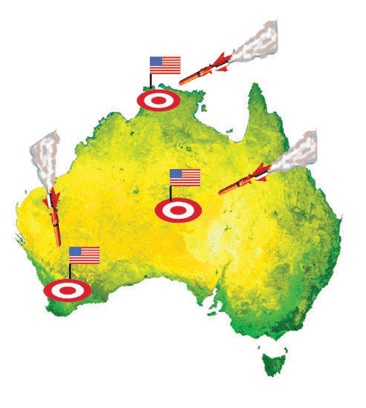
Jennings inadvertently reveals the case against war, which can only be an encouragement to activists and officials keen to reverse the trend of turning Australia into a US imperial outpost of naval and military bases that would be used in any Taiwan conflict. “If China wants to seriously go after Taiwan in any military sense, the only way they can really contemplate quick success is to pre-emptively attack those assets that might be a threat to them. That means Pine Gap goes.” Pine Gap remains that misnamed joint US-Australian signals facility that has facilitated illegal drone strikes in foreign territories most Australian politicians would fail to find on a map.
……….. Lavina Lee, another Red Alert panellist, is also into the business of softening the Australian public for war,………
Australia’s former chief scientist, Alan Finkel, dolls out his own catastrophic scenario………..
Retired army major-general Mick Ryan makes his contribution by wishing Australia to be readied for war. In a message common to most military officers, the civilians should really do more about giving his brethren more cash. ……………
Lesley Seebeck, former head of the Australian National University’s Cyber Institute, completes the crew of five, …………
A few things are worth noting in this frothy mix of fantabulation and establishment fire breathing. In the quest to gather such a panel, no effort has been made to consult the expertise of a China hand. That lobby, able to provide a more nuanced, less heavy-footed approach, is being shunned, their advice exorcised in any effort to encourage war.
Bizarrely, the panellists offer an increasingly popular non-sequitur that has creeped into the warmonger’s manual: Would Australia’s leaders, in war, pass the Zelensky test? This somehow implies that the Ukraine conflict offers salient lessons over a war over Taiwan, an absurd comparison that muddled strategists are fond of making.
Most of all, Beijing’s own actual intentions over Taiwan are to be avoided. The presumption in ASPI-land is that a war is imminent, and that Beijing would want to go to war over the island as a matter of course. China’s President Xi Jinping’s main advisor on the subject, veteran ideologue Wang Huning, suggests an approach at odds with such thinking.
The Red Alert exercise has drawn necessary and important criticism. Former Australian Prime Minister Paul Keating did not mince his words in a fuming column for Pearls and Irritations. “Today’s Sydney Morning Herald and The Age front page stories on Australia’s supposed war risk with China represents the most egregious and provocative news presentation of any newspaper I have witnessed in over fifty years of active public life.” One might even go further back than that. The war times are coming, and as are those gangs seeking to encourage them. https://theaimn.com/war-over-taiwan-australias-gang-of-five/
For Australia, horror of war over Taiwan is not inevitable
Pearls and Irritations, By Geoff Miller, Mar 9, 2023
Contributors to the “War with China over Taiwan” horror show which began in the Nine newspapers this week assume that a war between China and the United States is likely, and some of them then explicitly say that Australia would be involved. Australia should instead regard the Taiwan issue as one for us to “sit out”.
Mick Ryan, for example, says that “we have made our choice. If the United States goes to war with China over Taiwan, we are going to support them one way or the other”. Lavina Lee speaks of “the outbreak of war and Australia’s inevitable participation”.
They speak so glibly that one wonders whether they have thought at all about what a war between two nuclear powers, the biggest and second biggest economies in the world, would be like. Nor do they seem to have given any thought to what various government Ministers have said is Australia’s prime strategic goal in the Asia-Pacific, and that is to prevent war.
Why all this drama at this time? There are some events coming up which may have an influence; the releases of the Defence Strategic Review and the nuclear submarine study are two of them, and the coming budget is another. They will all involve spending very large sums of money on defence projects, and both the Defence organisation and firms which stand to benefit from Government spending may well welcome some “preparing of the audience”.
Our ally, the United States, may also have an interest. Under various defence arrangements we can expect to see an increasing amount of United States basing and military involvement in Australia. This has not been universally welcomed in the past, and the United States Government, and its defence firms which would be involved in an expansion of the US military presence in Australia as well as in an increase in our own defence spending, could well welcome the dramatisation of the “China threat” the Nine newspapers are providing this week.
How real is the China threat? It’s certainly seen as real by some Americans, who see China as the “peer competitor” they cannot tolerate. According to some accounts China is already clearly ahead of the US in a number of key technologies, which gives added emphasis to the military in US eyes, since the US is clearly superior militarily; despite the recent planned increase of 7% in Chinese military spending the US increase is even bigger, at 8%. The urge to maintain their predominance in the Pacific, and elsewhere, is probably why some very senior American military commanders seem to be anticipating and even looking forward to a war with China before long, with Taiwan as its probable rationale.
Australian Ministers and senior officials, on the other hand, have frequently spoken of the need to find a balance in the Pacific which gives appropriate place and weight to both the United States and China…………………………………………………………….
Taiwan is a very special case. We have no formal obligation to it. We recognised China, acknowledging that it maintained there is only one China, and that Taiwan is part of that. The current situation is complex and complicated: for example despite all the mutual abuse China and Taiwan have a substantial economic relationship; many people from Taiwan live and work in China. Recent polls show that a large proportion of Taiwanese believe that in the end Taiwan will be re-united with China, and are not keen to fight China to prevent that. The current state of affairs has come about as the result of the struggle for predominance in the Asia-Pacific between the US and China, the world’s two largest economies, both nuclear-armed and themselves in a complex and many-sided relationship.
We want the US to continue to play a major role in the Asia-Pacific, but there must be an appropriate place for China as well. As the former Secretary of DFAT, Peter Varghese, wrote in September last year: “If we tether ourselves to the cause of US primacy we leave ourselves exposed to US policies that may make sense for the US but not necessarily for Australia. We risk structuring our defence forces to fight alongside the US rather than primarily for the defence of Australia. We risk buying into a narrative of democracy versus autocracy which, however inspiring, misreads the strategic and historical drivers of China’s actions and has little resonance in our region.”
Australia, with its small and presently ill-equipped armed forces, could contribute almost nothing to a clash between the United States and China that has nothing to do with us. The US is such a large and globally important country that its relationships can in the end be repaired even with countries with which it has been in conflict. That does not apply to us, and if we joined the US in fighting China over Taiwan, not only would we not make any appreciable difference but our relationship with our biggest trading partner would be destroyed for years.
We should regard the Taiwan issue as one for us to “sit out” https://johnmenadue.com/war-over-taiwan-is-not-inevitable-for-australia/
Australia ‘to buy up to five US nuclear submarines’ under AUKUS pact

By Richard Wood • Senior Journalist, Mar 9, 2023 https://www.9news.com.au/world/aukus-update-nuclear-powered-submarines-deal-to-create-ten-thousands-jobs/f2b65469-d7ca-468b-938b-e67c131a3aaa
Australia is expected to buy up to five US Virginia class nuclear-powered submarines in the 2030s under the AUKUS defence pact between Washington, Canberra and London, reports say.
US officials, speaking on the condition of anonymity, said after the annual port visits, the US would forward deploy some submarines in Western Australia by around 2027, the Reuters news agency reported today.
Australia would buy three Virginia class submarines in the early 2030s and have the option to buy two more, the sources said.
Australia’s new fleet of nuclear-powered submarines will be based on a modified British design with US parts and upgrades, the report said.
Prime Minister Anthony Albanese will travel to the US next week to unveil the choice of submarine design for the Royal Australian Navy (RAN).
More than 10,000 jobs will be created from Australia’s acquisition of nuclear-powered submarines under the AUKUS defence pact, according to the country’s navy.
Australian Media Are Outright Telling Us They Are Feeding Us War Propaganda About China
Caitlin’s Newsletter, 8 March 23
The mass media in Australia have been churning out brazen propaganda pieces to manufacture consent for war with China, and what’s interesting is that they’re basically admitting to doing this deliberately.
Australians are uniquely susceptible to propaganda because we have the most concentrated media ownership in the western world, dominated by a powerful duopoly of Nine Entertainment and the Murdoch-owned News Corp. Both of those media megacorporations have recently put out appalling propaganda pieces about the need for Australians to rapidly prepare to go to war with China in defense of Taiwan, and in both of those instances have straightforwardly told their audiences that there’s an urgent need to effect a psychological change in the way all Australians think about this war.
Nine Entertainment’s Sydney Morning Herald and The Age have been busy flooding the media with testimony from a panel of war machine-funded “experts” who say Australia must hasten to get ready to join the United States in a hot war with China in the next three years. Yesterday’s dual front-page propaganda assault featured imagery of Chinese war planes flying straight at the reader, awash in red and emblazoned with the words “RED ALERT” to help everyone understand how evil and communist China is.
“Today’s Sydney Morning Herald and Age front-page stories on Australia’s supposed war risk with China represents the most egregious and provocative news presentation of any newspaper I have witnessed in over 50 years of active public life,” former Australian Prime Minister Paul Keating opined in response to the publications.
“Apart from the outrageous illustrations of jet aircraft being shown leaving a profiled red-coloured map of China, the extent of the bias and news abuse is, I believe, unparalleled in modern Australian journalism,” he added.
In the first installment of their “Red Alert” propaganda series, SMH and The Age share that their empire-funded panelists believe there’s a need to bring about a “psychological shift” in the public’s attitude toward war with China, with one panelist asserting that “the nation’s leaders should trust the public enough to include them in what can be a confronting discussion” about the need to prepare for that war.
In the second “Red Alert” installment, this same message is repeated, saying that “Australia’s vulnerabilities are not only physical, but psychological,” and again repeating the need to get everyone talking and thinking about the possibility of war with China.
“It is a real national taboo to think about the likelihood of a conflict in anything other than the most remotely theoretical perspective,” says Peter Jennings of the war machine-funded propaganda firm Australian Strategic Policy Institute, countering that “we will sleepwalk into disaster unless we openly discuss unpalatable scenarios.”
Saying that the real threat is “complacency rather than alarmism,” think tanker Lavina Lee urges Australia to confront “the possibility that we might go to war and what would happen either way. We should talk about what the world would look like if we win and what it would look like if we lose.”
Over and over again they are telling us that something must be done to change the way Australians think and talk about a war with China, in articles designed to change the way Australians think and talk about war with China. They are doing the exact thing they say must be done, while explaining why it needs to be done. They are brainwashing us with propaganda while explaining why it is necessary to brainwash us with propaganda.
Last month Murdoch’s Sky News Australia released an astonishingly propagandistic hour-long special titled “China’s aggression could start new world war,” which in its attempts to show “China’s aggression” hilariously flashed a graphic of all the US military operations currently encircling China. The segment features footage of bayonet-wielding Chinese forces overdubbed with ominous cinematic Bad Guy music, and in Sky News’ promotions for the special all the footage from China was tinged red to help viewers understand how evil and communist China is.
Toward the end of the special, Sky News’ empire-backed “experts” tell their audience that Australia needs to double its military spending, and that those in power need to explain to them why this is so important…………………………………….
Again, they’re saying there’s a desperate need to explain to Australians why they need to make sacrifices to prepare for war with China, while explaining to Australians that they need to make sacrifices to prepare for war with China. They are openly telling us that we need to be propagandized for our own good, while filling our heads with propaganda.
They’re not just filling our minds with war propaganda, they are openly telling us that war propaganda is good for us.
………………………….. This latest propaganda piece says that in the event of a hot war with China, our nation may be struck with intercontinental ballistic missiles, we may find ourselves cut off from the world while the fuel supplies we rely on dry up in a matter of weeks, and we may find our infrastructure rendered useless by massive Chinese cyberattacks.
The empire-funded “experts” acknowledge that this will not be because China is just randomly hostile to Australia, but because we are a US military and intelligence asset who will support the US empire in its war:
But why would China use its limited resources to attack Australia instead of focusing solely on seizing Taiwan? Because of the strategically crucial role Australia is expected to play for the United States in the conflict.
“Our geography means we are a southern base for the Americans for what comes next,” Ryan says. “That’s how they’re seeing us. They want our geography. They want us to build bases for several hundred thousand Americans in due course like in World War II.”
Interestingly, the article contains a rare acknowledgement in the mainstream press that the presence of the American surveillance base Pine Gap makes Australia a legitimate target for ICBMs:
At no time is it ever suggested that the fact that going to war with China could cost Australia its shipping lanes and infrastructure and even get us nuked means we should probably reconsider this grand plan of going to war with China. At no time is it ever suggested that riding Washington’s bloodsoaked coattails into World War Three against our primary trading partner might not be a good idea. At no time is it ever suggested that de-escalation, diplomacy and detente might be a better approach than rapidly increasing militarism and brinkmanship.
And at no time is it ever suggested that we should reconsider our role as a US military/intelligence asset, despite the open admission that this is exactly what is endangering us. We’re not being told to prepare for war with China because China is going to attack us, we’re being told to prepare for war with China because our masters in DC are planning to drag us into one. We’re not being told to prepare for war to defend ourselves, we’re being told to prepare for war because our rulers plan to attack China.
We see this in the way Australia is assembling its war machinery, buying up air-to-ground missiles that cannot possibly be used defensively because their sole purpose is for taking out an enemy nation’s air defenses. We see it in the way Australia is buying up sea mines, which as journalist Peter Cronau has noted is less suitable for protecting our 34,000 km of coastline than for blockading the shipping lanes of an enemy nation you wish to lay siege to. We see it in the fact that China’s military budget remains steady at around one and-a-half percent of its GDP, while the US spends 3.4 percent and Australia is being persuaded to double our share from two to four percent.
We’re not being prepared for a war to defend ourselves, we’re being prepared for a war of aggression to secure US unipolar hegemony — one that has been in the works for many years. We must resist this, and we must resist the tsunami of mass media propaganda that is designed to manufacture our consent for it. China https://caitlinjohnstone.substack.com/p/australian-media-are-outright-telling?utm_source=post-email-title&publication_id=82124&post_id=107109488&isFreemail=true&utm_medium=email
Fixing a fatal, nuclear flaw in AUKUS
With an AUKUS announcement imminent, nonproliferation expert Alan Kuperman says there’s still time to make sure Australian subs use less dangerous low-enriched uranium and make the world safer.
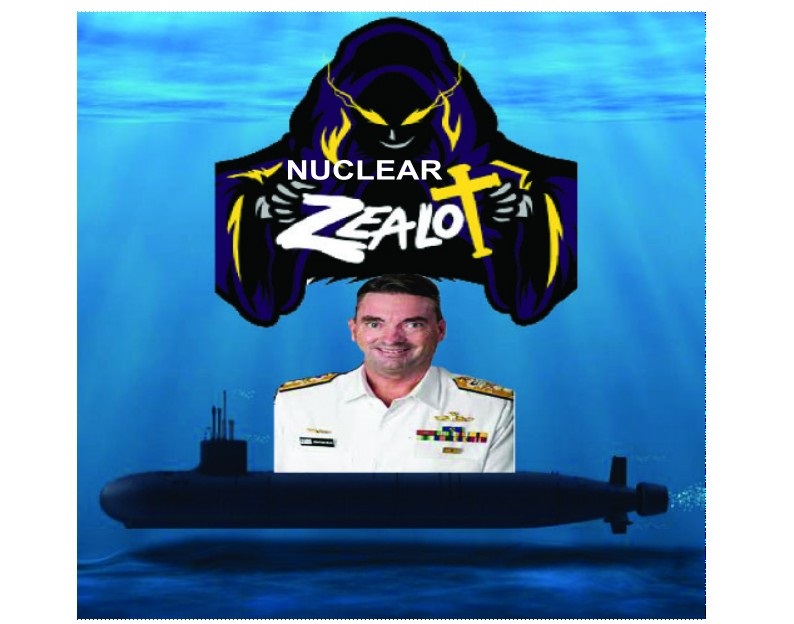
In Australia, the admiral who leads the AUKUS task force disclosed on national television last month, when asked if Australia wanted HEU or LEU, “We will accept the reactor they give us.”
Since Australia cannot obtain its first nuclear submarine until “well into the 2040s,” according to the US Navy’s top admiral, there is still time for the United States to design that ship’s reactor for LEU fuel.
(Jonathon Mead probably does not understand the significance of this)
By ALAN J. KUPERMAN March 07, 2023 https://breakingdefense.com/2023/03/fixing-a-fatal-nuclear-flaw-in-aukus/
In coming days President Joe Biden is expected to host a much-anticipated summit to announce how the United States and United Kingdom will provide nuclear-powered submarines to Australia – the centerpiece of the trilateral AUKUS partnership dramatically unveiled 18 months ago.
When first publicized in September 2021, the deal sounded like a win for all three countries. The United States would get Australia to buy submarines that effectively would come under US command. Australia would increase the likelihood of the United States defending it from China. And the United Kingdom would bolster its ship-building industry.
However, the current implementation plan, as confirmed recently by a senior Australian official, contains a fatal and unnecessary flaw: Australia’s submarines would be fueled by tons of nuclear weapons-grade, highly enriched uranium (HEU) – an amount sufficient for hundreds of nuclear weapons – setting a precedent that would foster nuclear proliferation.
President Biden can and should insist on a safer nuclear fuel that could preserve both AUKUS and nonproliferation.
Weapons-grade uranium is arguably the most dangerous substance on earth. Terrorists could make a Hiroshima-sized bomb from just 100 pounds of it. Using more advanced methods, a country could produce an equivalent explosion from only 20 pounds [PDF]. Yet, Australia would acquire up to 10,000 pounds of it [PDF] – in reactors for “at least eight nuclear-powered submarines” under AUKUS.
Because HEU is so dangerous, the United States has striven for half a century to eliminate its use globally, except in nuclear weapons, by converting domestic facilities to use safer, low-enriched uranium (LEU), and then persuading other countries to follow suit. Around the world, some 71 nuclear reactors and all major producers of medical isotopes have already switched to LEU. In 2018, the United States also declared that Army reactors would use LEU fuel, and in 2020 expanded that to NASA reactors [PDF].
The only US exception has been for Navy reactors in submarines and aircraft carriers, which still rely on HEU fuel. However, in a 2016 report to Congress [PDF], the Navy said that it too could probably switch to LEU fuel. Yet the Navy has failed to do so, dismissing proliferation concerns on grounds that the United States already has nuclear weapons.
That excuse clearly does not apply to Australia, a country that has pledged under the Nuclear Non-Proliferation Treaty (NPT) never to acquire nuclear weapons.
The precedent of such a state acquiring tons of weapons-grade uranium could unravel the global nonproliferation regime, because other countries would demand the same right. If the United States refused to provide them bomb-grade fuel, they could construct their own uranium enrichment facilities to produce it for naval or other reactors, on grounds that Australia had sundered the decades-long international taboo against HEU fuel.
Several countries rang the alarm last summer at the United Nations’ NPT review conference. Indonesia warned that “HEU in the operational status of nuclear naval propulsion” would endanger “the global non-proliferation regime” [PDF]. China asserted that it “sets a dangerous precedent for the illegal transfer of weapons-grade nuclear materials from nuclear-weapon states to a non-nuclear-weapon state” [PDF]. Even close US allies — the Netherlands, Norway, and South Korea — admonished the AUKUS countries by reaffirming that, “Efforts to reduce stocks of HEU and to minimize and eventually eliminate the use of HEU are a form of permanent threat reduction.”
The good news is that nuclear submarines do not require – and Australia has not demanded – weapons-grade fuel. France and China use LEU fuel in their submarines even though they possess HEU for nuclear weapons. Even the United States has been researching LEU naval fuel since 2016 [PDF], which also could be applied to British submarines that depend on US reactor designs and fuel.
In Australia, the admiral who leads the AUKUS task force disclosed on national television last month, when asked if Australia wanted HEU or LEU, “We will accept the reactor they give us.” Since Australia cannot obtain its first nuclear submarine until “well into the 2040s,” according to the US Navy’s top admiral, there is still time for the United States to design that ship’s reactor for LEU fuel.
That means it is entirely up to Biden to determine whether the AUKUS submarines will undermine the international nonproliferation regime by needlessly using tons of weapons-grade uranium fuel, or instead will reinforce that regime by complying with the international norm against HEU.
The wrong decision would set a precedent that many countries could exploit to produce HEU ostensibly for reactor fuel but in fact for nuclear weapons. In that case, AUKUS would create many more problems than it possibly could solve.
Alan J. Kuperman is associate professor and coordinator of the Nuclear Proliferation Prevention Project (www.NPPP.org) at the LBJ School of Public Affairs, University of Texas at Austin.
Nuclear submarine zealot Jonathon Mead tries hard to reassure Australians about the “sovereignty” safety etc of the $171 billion submarine purchase, (avoids mention of costs and wastes)
Australia will put nuclear safety ‘above all else’ as it builds submarines, vice admiral says
In interview with Guardian Australia, Jonathan Mead moves to allay concerns as Aukus partners prepare to announce detailed plans
Daniel Hurst Foreign affairs and defence correspondent, Wed 8 Mar 2023 https://www.theguardian.com/world/2023/mar/08/australia-will-put-safety-above-all-else-as-it-builds-nuclear-powered-submarines-vice-admiral-says
Australia will put nuclear safety “above all else” as it begins the “generational challenge” of building and operating nuclear-powered submarines under the Aukus pact, the government’s top adviser has said.
Vice Admiral Jonathan Mead has moved to allay concerns – both at home and across the region – about nuclear safety as Australia, the US and the UK prepare to announce their detailed plans within days.
The head of the Australian government’s nuclear-powered submarine taskforce has also insisted that the likely presence of American and British personnel on Australian boats would not inhibit Australian command and control.
In an interview with Guardian Australia, Mead said there were likely to be more Australians onboard British and American nuclear-powered submarines as part of the training process. He said as many as 40 Australians may potentially be onboard a US submarine at any one time.
The US president, Joe Biden, is due to welcome the Australian prime minister, Anthony Albanese, and the British PM, Rishi Sunak, to the US for a joint announcement early next week about the practicalities of Australia acquiring at least eight nuclear-powered submarines
Mead, who leads a taskforce of more than 350 Australian officials who have been working on the plans, said this would be “a generational challenge for Australia and will probably redefine Australia’s strategic personality”.
But he sought to reassure partners in south-east Asia and the Pacific about Australia’s intentions. “I can give them a commitment that we will hold the standards of safety above all else,” Mead said on Wednesday.
“Look at the track record of US and UK nuclear submarines previously, look at Australia’s own track record in the way we manage our research reactor at Lucas Heights, and the way that we have managed visiting nuclear-powered ships and submarines over the past 60 years.”
Mead described nuclear safety as “the No 1 consideration as we build, operate, maintain and regulate the nuclear powered submarines”.
This would include safety of the submarine crew, safety of the community, and environmental protection.
He said Australia had received “a very clear message from the US and the UK that safety is paramount” but added: “I think the Australian people would absolutely expect that, so we’re going to make sure that we set a gold standard when it comes to safety.”
‘Welded, shielded and sealed’ for 33 years
Some nuclear experts have argued the Aukus arrangement depends on “a glaring and worrying loophole” in safeguards that could be exploited by others.
The Nuclear Non-Proliferation Treaty (NPT) does not ban non-nuclear weapon countries such as Australia from having nuclear-powered naval vessels.
The Chinese government has also sought to sow doubt about Aukus, arguing the deal would have “a grave nuclear proliferation risk and violates the object and purpose of the NPT”.
But Mead said each nuclear reactor would “come to us welded, shielded and sealed” and Australia was in continuing dialogue with the International Atomic Energy Agency.
He said they were making “excellent progress” on an inspection and verification regime, while acknowledging the need “to protect very sensitive technology of the US and UK”.
“Nuclear-powered submarines are not prohibited under the NPT,” Mead said.
“Yes, the reactors will be with highly enriched uranium. But once again, they are welded, shielded and sealed for the life of the reactor. That’s 33 years.
“We will implement the most stringent of security protocols to make sure that those reactors are not opened for the life of the submarine.”
Sovereign control
Mead was tight-lipped about the design of the submarine, the timeframes and the cost – all of which will be announced soon.
But he again defended the plans against concerns raised by former prime ministers Malcolm Turnbull and Paul Keating over their potential impact on Australian sovereignty.
“When we take our own sovereign control, we will clearly have some US and UK sailors there – and they may be there to provide technical advice on the reactor, or they may be upfront working with us in the combat system,” Mead said.
“We welcome that technical advice, we welcome subject matter expertise. And I think that we will continue to have US and UK people in our submarines, as we will have our own people onboard their submarines.”
But Mead said such arrangements would not inhibit Australian command and control.
“It doesn’t matter who is onboard. If that is an Australian flagged submarine with an Australian commanding officer, there is absolutely no ambiguity when it comes to sovereign control,” he said.
Asked what would happen if that technical advice was withdrawn, Mead said Australia was determined to “develop a sovereign ability to build a nuclear-powered submarine, operate a nuclear-powered submarine, maintain a nuclear-powered submarine and regulate a nuclear-powered submarine”.
“So there’s an expectation by our partners, and I think Australians would have an expectation, that we must be able to do this ourselves,” Mead said.
“But yes, we will have assistance, something we have assistance with many of our major programs. The US and the UK will assist us and as we develop more and more understanding of the technology, then we would be probably have less of those people in Australia.”
Mead said the looming announcement would show that the plans were “really a trilateral partnership” with the US and the UK, rather than a binary choice.
He said his taskforce was working closely with the South Australian government and unions to develop a supply chain and vendor base in Australia that could feed into US and UK programs.
On Wednesday the British high commissioner to Australia, Vicki Treadell, rebuked the Australian opposition leader, Peter Dutton, for saying the government should pursue US Virginia class submarines over a British alternative.
Treadell said she had spoken with Dutton and told him he was “commenting on an outcome he doesn’t yet know”. She told the National Press Club: “I was simply pointing out that I did not think such expressions were helpful on what is a genuine trilateral partnership started under his government.”
Movie Premiere -“The Road to War”- Australia is being set up to be the US proxy in its coming war with China.
As international tensions rise to a new level, with the Ukraine war passing its first anniversary and the Albanese Government set to announce its commitment of hundreds of billions of dollars to new weaponry, nuclear propelled subs, Stealth bombers etc, The Road to War brings into sharp focus why it is not in Australia’s best interests to be dragged into an American-led war with China.]]

The Road to War is directed by one of Australia’s most respected political documentary filmmakers, David Bradbury. Bradbury has more than four decades of journalistic and filmmaking experience behind him having covered many of the world’s trouble spots since the end of the Vietnam war — SE Asia, Iraq, East Timor, revolutions and civil war in Central and South America, India, China, Nepal, West Papua.
“I was driven to make this film because of the urgency of the situation. I fear we will be sucked into a nuclear war with China and/or Russia from which we will never recover, were some of us to survive the first salvo of nuclear warheads,” says the twice Oscar-nominated filmmaker.
We must put a hard brake on Australia joining in the current arms race as the international situation deteriorates. We owe it to our children and future generations of Australians who already face the gravest existential danger of their young lives from Climate Change,” says Bradbury.
There is general concern among the Defence analysts Bradbury interviews in the film that Australia is being set up to be the US proxy in its coming war with China. And that neither the Labor nor LNP governments have learnt anything from being dragged into America’s wars of folly since World War II — Korea, Vietnam, two disastrous wars in Iraq and America’s failed 20 year war in Afghanistan which ripped that country apart, only to see the Taliban warlords return the country and its female population to feudal times.
We must put a hard brake on Australia joining in the current arms race as the international situation deteriorates. We owe it to our children and future generations of Australians who already face the gravest existential danger of their young lives from Climate Change,” says Bradbury.
There is general concern among the Defence analysts Bradbury interviews in the film that Australia is being set up to be the US proxy in its coming war with China. And that neither the Labor nor LNP governments have learnt anything from being dragged into America’s wars of folly since World War II — Korea, Vietnam, two disastrous wars in Iraq and America’s failed 20 year war in Afghanistan which ripped that country apart, only to see the Taliban warlords return the country and its female population to feudal times.
“Basing US B52 and Stealth bombers in Australia is all part of preparing Australia to be the protagonist on behalf of the United States in a war against China. If the US can’t get Taiwan to be the proxy or its patsy, it will be Australia,” says former Australian ambassador to China and Iran, John Lander.
Military analyst, Dr Richard Tanter, fears the US military’s spy base at Pine Gap near Alice Springs, will be the first target of any direct confrontation between the US and Russia or China.
“The US military base at Pine Gap is critical to the US military’s global strategy, especially nuclear missile threats in the region. The generals in Moscow and Beijing would have it as a top priority on their nuclear Hit List,” says Dr Tanter whose 40 years of ground-breaking research on Pine Gap with colleague, Dr Des Ball, has provided us with the clearest insight to the unique role Pine Gap plays for the US. Everything from programming US drone attacks to detecting the first critical seconds of nuclear ICBM’s lifting off from their deep underground silos in China or Russia, to directing crippling nuclear retaliation on its enemy.
Military analyst, Dr Richard Tanter, fears the US military’s spy base at Pine Gap near Alice Springs, will be the first target of any direct confrontation between the US and Russia or China.
“The US military base at Pine Gap is critical to the US military’s global strategy, especially nuclear missile threats in the region. The generals in Moscow and Beijing would have it as a top priority on their nuclear Hit List,” says Dr Tanter whose 40 years of ground-breaking research on Pine Gap with colleague, Dr Des Ball, has provided us with the clearest insight to the unique role Pine Gap plays for the US. Everything from programming US drone attacks to detecting the first critical seconds of nuclear ICBM’s lifting off from their deep underground silos in China or Russia, to directing crippling nuclear retaliation on its enemy.
“Should Russia or China want to send a signal to Washington that it means business and ‘don’t push us any further’, a one-off nuclear strike on Pine Gap would do that very effectively, without triggering retaliation from the US since it doesn’t take out a US mainland installation or city,” says Dr Tanter.
“It’s horrible to talk about part of Australia in these terms but one has to be a realist with what comes to us by aligning ourselves with the US,” Tanter says.
“Studies show in the event of even a very limited nuclear exchange between any of the nuclear powers, up to two billion people would starve to death from nuclear winter,” says Dr Sue Wareham of the Medical Association for the Prevention of War.
“The Australian Government, Prime Minister Anthony Albanese and Defense Minister Richard Marles, have a serious responsibility to look after all Australians. Not just those living in cities. Were Pine Gap to be hit with even one nuclear missile, Health Minister Mark Butler would be hard pressed to find any volunteer nurses and doctors willing to risk their lives to help survivors in Alice Springs, Darwin and surrounding communities from even one nuclear missile hitting this critical US target,” says Dr Wareham.
The Road to War. Latest Film by David Bradbury
Premiere in Melbourne March 22 at the Carlton Nova cinema
Hobart screening State Cinema March 23 with special guest Bob Brown
Adelaide screening Capri cinema March 29
Further information or interviews with David Bradbury:
Mobile 0409925469
Darwin, Australia in the forefront for USA’s Pacific war against China

preparing for possible island battles in the Western Pacific by acquiring additional bases in the area.
The first such installation to be established is the Marine Rotational Force (MRF) in Darwin, Australia. Located by the Timor Sea in Australia’s Northern Territory, the MRF facility is closer to the southern Philippines and the South China Sea than to, say, Sydney or Melbourne. As a result of an agreement signed by President Obama during a visit to Australia in 2011, the U.S. presence has grown from just 200 Marines in the first rotation to approximately 2,500 today. While in Australia, these troops engage in a six-month stint of training and exercises, usually in conjunction with Australian military personnel. In the event of a war with China, the Darwin facility could also be used to support combat operations throughout the South China Sea area.
Restructuring the Force
With China now identified by the U.S. Department of Defense as the most dangerous, or “pacing” threat to U.S. national security, all of the military services have been instructed to prepare for a U.S.-China conflict. Accordingly, both the U.S. Army and the Marine Corps are restructuring their Asia-oriented forces — those committed to the Pentagon’s Indo-Pacific Command (INDOPACOM) — to be capable of conducting multiple offensive and defensive operations throughout the Western Pacific. This has generally entailed lightening their arms and equipment to allow for easy deployment and acquiring more forward operating bases in the region. Both also seek new mobile missile systems (often called “precision fires”) for attacks on enemy ships and land installations.
Pentagon Prepares for Island Combat in the Pacific as US-China Tensions Rise The U.S. has been securing new basing facilities and conducting large-scale combat exercises in the Western Pacific. By Michael T. Klare , TRUTHOUT, February 28, 2023
“………………………………………………… the notion of another major amphibious campaign in the Pacific has largely evaporated. Recently, however, the U.S. Army and Marine Corps have begun preparing for precisely such a contest as China has emerged as the principal adversary to U.S. hegemony and neighboring Pacific islands have acquired fresh strategic significance.
Any major U.S. conflict with China, it is widely believed, will largely entail air and naval operations in China’s maritime areas, notably the East and South China Seas and the waters surrounding Taiwan. Such a clash, strategists assume, will involve intense air and sea battles for control of these areas. But, as in World War II, the fighting will also envelop any islands housing the air and naval bases of either side, such as China’s installations on islands in the South China Sea and U.S. bases in Japan, Okinawa and the Philippines. Aside from air and missile attacks on these island facilities, either or both sides may seek to occupy them through amphibious assault, resulting in the sort of brutal combat seen in those same areas during World War II.
These islands are all part of (or enclosed within) what Chinese strategists call the “the first island chain” — the long string of archipelagos stretching from Japan in the north to the Ryukyus and Taiwan in the middle and the Philippines and Borneo in the south, together acting as a sort of barrier to Chinese naval projection into the greater Pacific. (Strategists also speak of a second, outer island chain, consisting of the Mariana Islands and the western Caroline Islands.)
The United States has long maintained a major military presence on islands up and down the first chain, both to project U.S. power into the region and to sustain U.S. combat operations in the event of a war. These include the major concentration of Air Force and Navy forces in Japan, the large Marine Corps contingent on Okinawa and bare-bones facilities in the Philippines. Along with any U.S. ships in the area, these bases would be among the primary targets for Chinese air and missile attacks at the onset of a U.S.-China conflict, followed, conceivably, by amphibious assaults aimed at occupying or demolishing them — which would no doubt provoke an aggressive U.S. response.
Located between the Chinese coastline and the first island chain are several contested island groups — the Spratly Islands in the South China Sea and the Senkaku Islands in the East China Sea — that could also become sites of U.S.-Chinese fighting in the event of a future conflict. The Spratlys are claimed in their entirety by China and in part by Brunei, Malaysia, the Philippines and Vietnam; the Senkakus (called the Diaoyu by the Chinese) are claimed by both China and Japan.
Both island groups have witnessed clashes between Chinese vessels and those of the other claimants in recent years, and the U.S. has vowed to assist its allies in defending their territorial claims against future Chinese harassment. Should China attempt to test this pledge in some significant fashion — say, by seizing islands now occupied by Filipino personnel — U.S. forces might engage in an amphibious operation to repel such an attack. A Chinese attempt to occupy the Senkakus — now administered by Japan — could produce a similar result, especially given President Biden’s recent assertion that the U.S. mutual defense treaty with Japan extends to the Senkakus.
To further complicate the picture, China has established military installations on some of the islands and atolls it claims in the South China Sea, in some cases using sand dredged from the seafloor to expand their size to allow the construction of airstrips. These installations, outfitted with an array of anti-air and anti-ship missiles, pose a potential threat to U.S. and allied warships operating in the area and so would constitute a prime target for amphibious assault in the event of a major U.S.-China conflict.
Restructuring the Force
With China now identified by the U.S. Department of Defense as the most dangerous, or “pacing” threat to U.S. national security, all of the military services have been instructed to prepare for a U.S.-China conflict. Accordingly, both the U.S. Army and the Marine Corps are restructuring their Asia-oriented forces — those committed to the Pentagon’s Indo-Pacific Command (INDOPACOM) — to be capable of conducting multiple offensive and defensive operations throughout the Western Pacific. This has generally entailed lightening their arms and equipment to allow for easy deployment and acquiring more forward operating bases in the region. Both also seek new mobile missile systems (often called “precision fires”) for attacks on enemy ships and land installations…………………………………………………………………………………………………………………………………………………………
Training for Pacific Island Wars
To put all these plans into practice, both military branches have been conducting large-scale combat exercises in the Western Pacific and securing new basing facilities there.
Especially indicative of the Marines’ new thinking is a series of exercises called “Resolute Dragon,” held in conjunction with the Japan Self-Defense Forces (JSDF) over the past two years. Although ostensibly focused on defending Japan’s main islands, the exercises appear to embody a larger strategic sweep, involving joint amphibious operations throughout the region.
During Resolute Dragon 2021, held December 4-17 of that year, some 2,650 Marines and 1,400 soldiers from the JSDF engaged in simulated maritime assault operations. …………………………………
Resolute Dragon 2022, held last October, retained many features of the 2021 version but included an additional twist: while 1,600 U.S. Marines were training alongside JSDF soldiers in Japan, another 1,900 were partnered with Philippines Marine Corps personnel in a parallel exercise,…………….. also involved participation by the JSDF Amphibious Rapid Deployment Brigade and Republic of Korea Marines, suggesting the multinational and region-spanning nature of U.S. planning for future amphibious operations.
………………………………………………. Guam was again the site of a simulated airborne assault one year later,
…………………………………. Acquiring Forward Operating Bases
In addition to these training and restructuring efforts, the Army and Marine Corps are preparing for possible island battles in the Western Pacific by acquiring additional bases in the area.
The first such installation to be established is the Marine Rotational Force (MRF) in Darwin, Australia. Located by the Timor Sea in Australia’s Northern Territory, the MRF facility is closer to the southern Philippines and the South China Sea than to, say, Sydney or Melbourne. As a result of an agreement signed by President Obama during a visit to Australia in 2011, the U.S. presence has grown from just 200 Marines in the first rotation to approximately 2,500 today. While in Australia, these troops engage in a six-month stint of training and exercises, usually in conjunction with Australian military personnel. In the event of a war with China, the Darwin facility could also be used to support combat operations throughout the South China Sea area.
Just recently, on February 2, Secretary of Defense Lloyd Austin signed an agreement with Philippine President Ferdinand Marcos Jr. affording the U.S. military access to four more bases in his country, in addition to four other facilities the Pentagon has been allowed to use under a previous accord.
The acquisition of these bases, along with all the other developments described above, demonstrate just how far the Army and Marine Corps have proceeded in their efforts to prepare for major combat operations in the Western Pacific. Clearly, senior Pentagon officials believe that a war with China is becoming increasingly likely, and that, when and if such a conflagration erupts, it will entail heavy fighting over key islands in that region.
………………………………… With diplomacy making little progress in resolving U.S.-China tensions, both sides are continuing to arm and train their forces for combat over the critical island bases of the Western Pacific. And while these contests may not resemble those of World War II in every respect, the simulated battles enacted in exercises like Forager and Resolute Dragon suggest they will be equally ferocious and bloody. https://truthout.org/articles/pentagon-prepares-for-island-combat-in-the-pacific-as-us-china-tensions-rise/?eType=EmailBlastContent&eId=b8136138-3739-4340-98df-2fe56169438b
UK, US or a hybrid? Intense speculation as Australia’s $170bn nuclear submarine choice looms
Tory Shepherd Guardian, 6 Mar 23,
UK and Australian ministers have been hinting at a trilateral design for the eight boats, but all options are still on the table in Australia’s biggest defence purchase.
Australia is set to within a couple of weeks learn some basic details about a program that could cost more than $170bn and will run for decades.
The opposition leader, Peter Dutton, this week warned against opting for a new UK design. For now though, the Aukus submarine program is a “black box”, says Tom Corben, a foreign policy and defence research fellow at the University of Sydney’s United States Studies Centre.
“We’re just speculating until we get the announcement,” he says, adding that the secret has been very well kept, considering the prime minister, Anthony Albanese, is set to go to the US to announce it in March……………………………..
The US is currently building 19 Virginia class submarines (known as SSNs, the US classification code for nuclear-powered attack submarines – as opposed to SSBNs, which are nuclear-powered ballistic missile submarines).
These are more than 140m long and require a crew of 132. They displace (or weigh) more than 10,000 tonnes and carry Tomahawk cruise missiles.
From the mid 2030s, the Virginia class will be replaced with the next-generation SSN(X). That “X” means the design hasn’t been finalised yet. The US navy has described it as an “apex predator” that will be faster, stealthier, and bristling with more weapons.
The UK’s Astute class also carry Tomahawk cruise missiles, which allow the submarine to hit targets 1,000kms away and send back images of the battlefield. It also has Spearfish torpedos designed to destroy enemy submarines.
It has a crew of about 100, is almost 100m long and has displacement of 16,000 tonnes.
The UK, too, is thinking about the next generation. The SSN(R), which is still being designed, will replace the Astutes………………..
These are not submarines that can be plucked “off the shelf” from some global supermarket. The newer ones, still in the design phase, are years away from even starting trials. The older ones are desperately needed by their own navies. https://www.theguardian.com/australia-news/2023/mar/05/uk-us-or-a-hybrid-intense-speculation-as-australias-170bn-nuclear-submarine-choice-looms
AUKUS nuclear sub announcement surfaces as PM heads to India
Andrew Tillett 6 Mar 23
Prime Minister Anthony Albanese over the next week will seek to boost trade and security ties with emerging partner India before unveiling how the navy will acquire nuclear-powered submarines from Australia’s oldest allies, the United States and Britain.
British media is reporting Mr Albanese, US President Joe Biden and British Prime Minister Rishi Sunak will meet in San Diego next week for a “trilateral summit” to announce how they will share top-secret nuclear technology under AUKUS. The Financial Times and US military website Breaking Defense said the announcement could be made on March 13.
Mr Albanese’s office declined to confirm the report about his travel plans. San Diego is home to America’s major west coast naval bases, including Los Angeles-class nuclear-powered submarines.
The AUKUS announcement will outline the design of the submarine for Australia – with suggestions it will be the next generation British submarine but with a US combat system and weapons – the cost, timelines and measures to avoid a capability gap with the Collins-class subs before the new boats are delivered.
It will also outline the mammoth task to grow the workforce, including training nuclear submariners to crew the boats and the trades and professionals needed to build them, as well as establish a regulatory and safety regime………………………… https://www.afr.com/politics/federal/aukus-nuclear-sub-announcement-surfaces-as-pm-heads-to-india-20230307-p5cpzm
Don’t ask the government about the next war
By Alison Broinowski, Feb 22, 2023 https://johnmenadue.com/dont-ask-the-government-about-the-next-war/
This is war protest month, with more to follow. Will efforts against the Iraq war, that failed twenty years ago this week, succeed in heading off the next one?
On Sunday 19 February thousands protested at the Lincoln Memorial in Washington, DC against US militarism, proxy warfare, and the threat of nuclear conflict. The ANSWER Coalition plans a March on 18 March, marking the 20th anniversary of the Iraq invasion. They will demand ‘Negotiations not Escalation’ in Ukraine, and an end to US militarism abroad.
In London a rally organised by Stop the War UK and others on 25 February will call for immediate talks to end the war in Ukraine. They oppose the Russian invasion, as well as NATO’s role in Ukraine, and nuclear war. No2Nato
In Australia, the ABC broke its discreet silence on 20 February with a two-part series of interviews by John Lyons with four non-ASPI defence experts, all of whom agreed that for Australia to join in an American war with China would be disastrous. Part 1 and part 2
And this week Greenleft publicised anti-AUKUS events in six Australian cities on 24 February. Protesters will gather outside the electorate offices of Penny Wong in Adelaide, Jim Chalmers in Brisbane, Richard Marles in Melbourne and Geelong, Pat Conroy in Newcastle, and Anthony Albanese in Sydney. Take action against AUKUS, militarisation on Feb 24
This belated upsurge of anti-war protest takes its cue from 15 February 2003, when 30 million people around the world marched in opposition to the prospect of war in Iraq. Many had never joined a mass demonstration before. They were ignored, and the US-led invasion went ahead on 20 March.
The protestors knew they were lied to by political leaders who claimed Saddam Hussein had weapons of mass destruction, chemical, biological and nuclear. The covert purpose of invading Iraq was to gain control of its oil, and assert US dominance over seven Middle East states: Iran, Iraq, Lebanon, Libya, Somalia, Sudan, and Syria.
The war began, and spread to Libya, Yemen, Somalia, and Syria, provoking retaliation from al-Qaeda and its Islamic State successors. All of the invaded countries, including Afghanistan and Iraq, remain blighted. Millions are dead or displaced. To achieve this, the world’s nations, led by the US, spent sums surpassing $2tn on weapons of war in the past year.
On 5 February 2003, the Australian Senate voted against the Iraq war. In the House of Representatives, ALP leader Simon Crean spoke fervently against Australian participation. Soon after, ignoring both Houses, Prime Minister Howard sent elements of the ADF to join the SAS who had already been dispatched in secret.
Crean’s successors, now in government, might reflect on his remarks, selected here.
Two weeks ago, prime minister, you committed Australia’s young men and women to a war not yet declared, knowing all along that you couldn’t pull them out.
You committed them without the mandate of the Australian people, the Australian parliament or the United Nations. You committed them solely on the say so of George W Bush. You haven’t consulted the Australian people. You haven’t consulted your party. But you have consulted President Bush.
You said you were sending these troops because it was in the national interest. I want to know, prime minister, which nation?
You said yesterday that you are going to Washington to inform George Bush of the views of the Australian people. Well let me tell you what those views are. The Australian people don’t want peace at any cost, but they don’t your war at any price.
The US alliance has endured for over 50 years. It has always had bipartisan support. But it does not mean that we have to agree with every policy position of every US administration.
The prime minister must stop treating the Australian people like mugs…Only Labor governments have been prepared to tell our allies no when it’s been in our national interests.
Eight months after the invasion of Iraq, the Sydney Morning Herald published an open letter to President George W Bush. It was signed by 41 ALP MPs and Senators, and was headed, ‘Mr Bush, here is why we opposed the Iraq war’.
The writers stressed the dangerous precedent the Iraq war was setting, and described it as a mistake. They wrote: ‘The ALP firmly believes that international conflict should, wherever possible, be dealt with peacefully and through international co-operation under the auspices of the United Nations. When all attempts for a peaceful resolution have been exhausted, United Nations sanction is vital if force is to be used.’
The signatories included parliamentarians Anthony Albanese and Penny Wong, then in Opposition.
As Foreign Minister, Penny Wong has recently abandoned peaceful resolution of conflict, and doesn’t mention UN Security Council resolutions authorising war. She has joined Defence Minister Richard Marles in lockstep with the US in a predictable slide into war over Taiwan or the South China Sea.
Three American generals have recently anticipated war with China in the next two to five years. If the US preference for proxy wars – as in Ukraine – is an example, Australia and Japan could be the proxy fighters against China, with similar prospects.
No Australian leader has supported the UN Secretary-General’s appeals to member states to stop inflaming worse wars. Instead, they are spending more extravagant sums on new weapons systems which will be provocative, and if they are ever delivered, probably outdated and unfit for purpose. The remaining option is nuclear: and Australia refuses to ratify the Treaty for the Prohibition of Nuclear Weapons which ICAN initiated.
This month, Senator Wong re-stated the government’s commitment to the status quo on how Australia goes to war. She told Parliament on 9 February that it will not change, just as Marles did in September 2022.
She compounded that with a self-contradictory statement about US nuclear weapons ‘stationed’ in Australia. Backing Defence Department Secretary Greg Moriarty, Senator Wong claimed that Australia adheres to the South Pacific Nuclear Free Zone Treaty, and yet supports the ‘stationing’ of US B-52 and B-2 bombers in Australia without knowing if they are nuclear armed or not.
This, we now learn, has been going on quietly since at least 2005 (“‘Don’t ask, don’t tell’ Top End nuke policy”, Australian, 16 February 2023: 2). As Crean said, the prime minister must top treating Australians like mugs.
Isn’t it exciting? The USA is letting Australia buy air-to ground missile for attacking China

US State Department clears $500 million in anti-radiation missiles for Australia
The AARGM-ER is a medium-range air-to-ground missile, employed for the suppression or destruction of enemy air defense systems.
By AARON MEHTAon February 27, 2023 https://breakingdefense.com/2023/02/us-state-department-clears-500-million-in-anti-radiation-missiles-for-australia/
WASHINGTON — The US State Department has approved a potential Foreign Military Sale to Australia of Advanced Anti-Radiation Guided Missiles-Extended Range (AARGM-ERs), with a estimated price tag of $506 million.
Sales announcements are not final; Foreign Military Sales (FMS) cases announced like these have been approved by the executive branch, and now Congress must weigh in or do nothing. Should the Hill not object — an almost unfathomable situation, given relations with Australia — the quantities and dollar values in the deals can change during negotiations with industry.
The AARGM-ER is a medium-range air-to-ground missile, employed for the suppression or destruction of enemy air defense systems. According to the Pentagon, the weapon is compatible with the F/A-18C/D, FA-18E/F, EA-18G, Tornado IDS/ECR, F-16 C/J and the F-35 joint strike fighter — the latter of which is set to be the core of Australia’s military aviation fleet for years to come.
Australia is seeking to buy up to 63 AARGM-ERs and up to 20 AARGM-ER Captive Air Training Missiles (CATMs). Also included, per the announcement, are “Dummy Air Training Missiles (AARGM-ER DATMs), containers, component parts and support equipment; Repair of Repairables; software (Classified and Unclassified); publications (Classified and Unclassified); training (Classified and Unclassified); transportation; U.S. Government and Contractor engineering support; and other related elements of logistical and program support.”
This would be the second batch of AARGM-ERs approved by State for the Lucky Country in the last year. In June 2022, DSCA announced a $94 million agreement for 15 of the weapons.
Per the DSCA, “The proposed sale will improve Australia’s capability to meet current and future threats by suppressing and destroying land- or sea-based radar emitters associated with enemy air defenses. This capability denies the adversary the use of its air defense systems, thereby improving the survivability of Australia’s tactical aircraft.”
If the nuclear submarines aren’t ready in time – no worries – Australia will get lots of fun weaponry against China.
Mind the capability gap: what happens if Collins class submarines retire before nuclear boats are ready?
Nuclear subs are the first ‘pillar’ of Aukus, but defence experts are pointing to the second pillar – hypersonic weapons, AI and drones
Tory Shepherd, Guardian, 28 Feb 23,
“………….. The federal government is considering the defence strategic review and advice from the submarine taskforce on acquiring a fleet of nuclear-powered submarines, but there are concerns that they will not be in service in time for a seamless handover from the Collins class.
The defence minister, Richard Marles, has been sounding increasingly positive that there will be no such gap.
“I’m feeling confident about our ability to deal with this,” he told Guardian Australia in January, adding it would be part of “the optimal pathway” to be announced soon…………….
Acquiring that fleet of at least eight nuclear-powered submarines is the first “pillar” of the Aukus partnership between Australia, the United Kingdom and the United States, but the second pillar, which includes hypersonic weapons, artificial intelligence and underwater drones, will be needed in the short term.
It will be at least a decade before even the first submarine is delivered and some estimates even push the timeline out to 2050.
The prime minister, Anthony Albanese, is expected to meet with both the US president, Joe Biden, and the UK prime minister, Rishi Sunak, in the US in March, to announce the governments’ plans.
Marles has emphasised the “genuinely trilateral” nature of the Aukus agreement between the three countries, leading to speculation a new hybrid submarine to replace the ageing Colins class fleet will be built using elements of both the US and the UK’s boats.
The life of the Collins fleet will be stretched out as much as possible with life-of-type extensions, but the boats are still set to be retired by the end of the next decade.
When former prime minister Scott Morrison announced he was scrapping the deal with France to build 12 boats in favour of the Aukus deal to build “at least” eight submarines in South Australia in 2021, he also announced plans to acquire various missiles, including hypersonic and precision strike guided missiles over the next decade.
On top of the missiles, there is a second pillar of Aukus that includes working with the UK and the UK on underwater drones, quantum technology, artificial intelligence and autonomous technology, advanced cyber capabilities, electronic warfare, and other innovations.
………………………… In a statement last year, the White House said the Aukus partners had made “strong progress” on the advanced capabilities. Trials of autonomous vehicles are set to begin this year, it said, and trials of quantum technologies for position, navigation and timing, would happen over the next three years.
Work had already started on autonomous and artificial intelligence-enabled systems to improve the speed and precision of decision-making processes, while the three countries were also strengthening their defences against cyber-attacks, sharing information on electronic warfare, developing advanced hypersonic and counter-hypersonic capabilities.
The director of the Lowy Institute’s international security program, Sam Roggeveen, said there were other capabilities Australia could buy that could do “similar things” to submarines – such as sinking ships.
“One area we’re already getting into is mine warfare,” he said.
“But we’re also investing in anti-ship missiles that can be fired from the air and we’re even getting some land-based missile capability.”
Other options that have been floated include building entirely new air warfare destroyers equipped with more than 100 missile launching cells, in order to bolster firepower, or building an interim conventional submarine……………….. more https://www.theguardian.com/australia-news/2023/feb/28/mind-the-capability-gap-what-happens-if-collins-class-submarines-retire-before-nuclear-boats-are-ready
Avalon Militarism
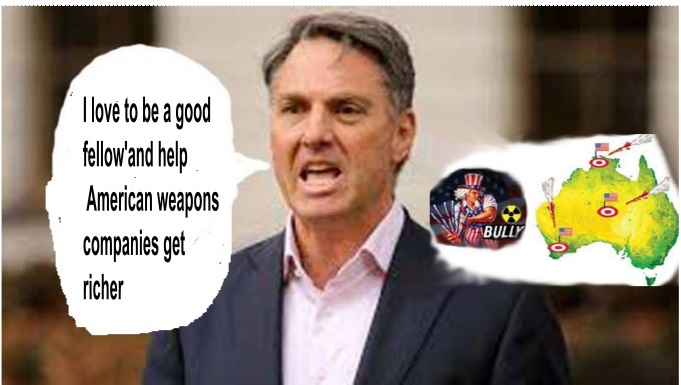
With this military bonanza unfolding on February 28, the Australian Defence Minister, Richard “Call me Deputy Prime Minister” Marles, has tooted his justifications for more hardware, more military merchandise and more engagement with the defence industry.
His address to the Avalon 2023 Defence and Industry Dinner revealed a boyish credulity typical in so many who lead that portfolio. The boys-with-toys credo becomes all seducing. Air forces, he noted, “are the coolest part of any military.” Trying to amuse, he called Top Gun Maverick “an important and insightful documentary.”
https://theaimn.com/avalon-militarism/, February 28, 2023, Dr Binoy Kampmark
The global pandemic was not completely catastrophic in its effects. It led to the cancellation, and postponement, of wasteful projects and events. It spared public money. But as the pandemic slides into the shadow of policymaking, bad habits have returned. The profligates are here to stay.
One such habit is the Avalon air show, a celebration of aeronautical militarism in the southern hemisphere best done without. In 2021, the organisers announced with regret that the event would be cancelled due to COVID-19 restrictions and uncertainty. Last October, however, organisers promised a return to form in 2023. Those with tickets “can look forward to a whole new program with jaw-dropping aerial displays, a refreshed food and beverage offering, and live entertainment.”
Also known as the Australian International Airshow and Aerospace and Defence Exposition, Avalon2023 promises to “showcase” much in the “dynamic world of aviation, aerospace and space, new materials, fuels and ways of flying.”
The program features both a specialist dimension and complimentary conferences “open to any accredited Trade Visitor.” The specialist aspect will feature presentations from, among others, the Royal Australian Air Force, Australian International Aerospace Congress, Australian Association for Unscrewed Systems (AAUS), Australian Industry Defence Network (AIDN), and the Australian Airports Association.
With this military bonanza unfolding on February 28, the Australian Defence Minister, Richard “Call me Deputy Prime Minister” Marles, has tooted his justifications for more hardware, more military merchandise and more engagement with the defence industry. His address to the Avalon 2023 Defence and Industry Dinner revealed a boyish credulity typical in so many who lead that portfolio. The boys-with-toys credo becomes all seducing. Air forces, he noted, “are the coolest part of any military.” Trying to amuse, he called Top Gun Maverick “an important and insightful documentary.”
With that treacly tribute out of the way, Marles could get down to the business of frightening Australians and delighting the military industrial mandarins. Australia faced “the most challenging and complex set of strategic circumstances we’ve seen since the Second World War.” The “global rules-based order” had been placed “under immense pressure”, largely due to the Russian invasion of Ukraine. “The post-Cold War era – a period of democratic expansion and unprecedented integration of global trade and investment – is now over.”
The scriptwriter had evidently gone to sleep in drafting such words. The post-Cold War era was streaked by brutal invasions and interventions (Iraq and Libya, to name but two instances), supposedly by the rules-abiding types in Washington, London and Canberra. The Russian invasion did feature the imposition of will by a larger state on a smaller neighbour using “power and might”, but the US-led invasion that kicked the hornet’s nest of sectarian violence in 2003 came from the same stable of thought.
The speech then follows a familiar pattern. First, call out the Russians. Then highlight the Oriental Armed Scourge to the North. “In the Indo-Pacific, China is driving the largest conventional military build-up we’ve seen anywhere in the world since the Second World War. And much of this build-up is opaque.”
Australia’s security, assured by its remote location and geography, could no longer be taken seriously. “Today we face a range of threats – including longer-range missiles and hypersonics and cyber-attacks – which render our geographic advantages far less relevant.”
The enemy could do damage from afar, causing harm “without ever having to enter our territorial waters or our air space.” It was therefore important to place Australian defence upon the footing of “being able to hold any potential adversaries at risk much further from our shores.”
This was a rather devious way of laying the ground for more cash and larger budgets, ignoring the clear point that Australia has no truly mortal enemies, but wishes to make them as Washington’s obedient deputy.
One particular product is meant to take centre stage. The Australian Defence Force is lagging in the department of murderous drone technology. One promises to be unveiled at Avalon. As reported by the national broadcaster, “The unscrewed air system has been developed by BAE Systems Australia and is designed to be stored in shipping containers.” The device is allegedly capable of carrying a lethal payload in excess of 100 kilograms.
Australia’s Chief of Air Force, Air Marshal Robert Chipman, has made no secret of his desire for low-cost killer drones. “We’ve seen a proliferation of low-cost drones and loitering munitions delivering both ISR [intelligence, surveillance and reconnaissance] and fires to great effect,” he told a Melbourne audience filled with foreign air force chiefs and senior officials, “they don’t replace the roles of contemporary combat aircraft, but they might serve as a useful complement.”
With that in mind, the RAAF was “considering the potential of low-cost drones that bring mass to our air combat system, and we’re considering what new measures are necessary to defend against them.” Such views thrilled the war mongering offices at The Australian, which expressed satisfaction that Australian military policy was finally “moving in the right direction.”
Chapman has been particularly busy in the leadup to the Avalon airshow, walking the tightrope of defence propaganda. Self-praise and capability must be balanced against a fear of achievement on the part of an adversary.
In an interview with the Australian Financial Review last week, the Air Marshal revealed that the RAAF had also joined the hysteria about targeting high altitude surveillance balloons. He also defended the merits of the F-35 fighter jet, praising their pilots as having “retained an edge over drones or other unscrewed platforms despite advances in technology.”
China, however, was causing jitters in the area of hypersonic missiles, capable of delivering a warhead at five times the speed of sound with extreme manoeuvrability. “I think China is in front when it comes to hypersonics […] and that is something we are actively working to address.” Thank goodness, then, for the Avalon Air Show, even if the organisers were not sagacious enough to invite both Chinese and Russian manufacturers.
Margaret Beavis | Here’s how to tone down the nuclear threat

We are at a turning point.
By signing the UN Treaty on the Prohibition of Nuclear Weapons, Australia would join 122 countries who supported the treaty at the United Nations. Although the US will very actively discourage such action, Thailand, New Zealand and the Philippines are all signatories and remain US allies.
By Margaret Beavis, February 27 2023 https://www.canberratimes.com.au/story/8100096/nuclear-war-is-not-winnable-heres-how-to-eliminate-the-threat/
With the invasion of Ukraine and now Putin suspending the New Start Treaty, the risk of both nuclear proliferation and nuclear war is increasing. But we can play a role in preventing this.
For more than seven decades we have been told that nuclear weapons are an essential political tool that make us safer, but in reality, each day we wake up without nuclear conflict is indeed a lucky day.
Myths come into being through the telling and re-telling of stories. Myths exist to help us make meaning of our world and our lives, however, not all myths are true.
There are three big myths about nuclear weapons.
The first myth is that a nuclear war is “winnable”. The research, however, is both clear-cut and horrifying. Even a “small” regional nuclear exchange – say between Pakistan and India – using less than 1 per cent of the global nuclear arsenal, would kill around 100 million people.
Massive fires would loft millions of tons of smoke into the stratosphere. Decade-long global cooling will follow. Crop yields of rice, wheat and corn would fall 15 to 30 per cent.
Conservatively estimated, around 2 billion people would starve.
If the US and Russia used their 1800 deployed weapons, food production would cease in most parts of the world. Most, if not all, of the human race would starve.
The second myth is an outdated, dogmatic belief that nuclear weapons make us safer. Nuclear deterrence assumes the threat of mutually assured destruction will prevent the use of nuclear weapons.
However, risk analysis demonstrates the reverse is true. Given increasing conflict, brinkmanship, and unpredictable world leaders, plus the risks posed by cyberattacks and extremists, it’s hard to rely on a mutually assured destruction strategy.
But the biggest risk, looking at history, is inadvertent use. We have – at least seven times – come within a hair’s breadth of global conflagration, due to human, computer or radar error, unusual weather patterns and even a faulty computer chip.
The US and Russia have come close on five occasions since 1979. It is inevitable that eventually our luck will run out.
The third myth is that nuclear disarmament is irresponsible. But it is hopelessly unrealistic to assume these weapons will never be used.
We are at a turning point.
By signing the UN Treaty on the Prohibition of Nuclear Weapons, Australia would join 122 countries who supported the treaty at the United Nations. Although the US will very actively discourage such action, Thailand, New Zealand and the Philippines are all signatories and remain US allies.
1 This month
17 October, Free Public Talk on Nuclear Issues in South Australia
David Noonan will speak on public interest concerns over the new Roxby Downs Indenture Act 2026 on BHP copper-uranium mining and ore processing in SA, and on how AUKUS may face SA with a High-Level nuclear waste agenda.
Dr Jim Green will discuss international developments in the field of nuclear power including ‘small modular reactors’ and Generation 4 ‘advanced’ nuclear reactor concepts.


Help Aunty Sue Protect Her Land and Sacred Sites From Destructive Rocket Testing.
.

Australians deserve the truth
about
AUKUS – https://aukuspublicinquiry.com/

PETITION – To: Prime Minister Anthony Albanese and the Australian Labor Government

of the week – Australians for War Powers Reform (AWPR)
To see nuclear-related stories in greater depth and intensity

