Our Air Force is already ‘operating against China’
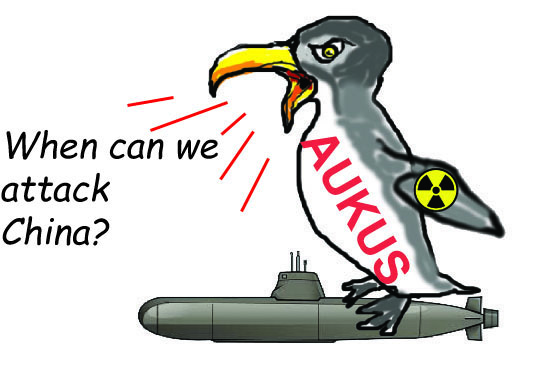
https://johnmenadue.com/our-air-force-is-already-operating-against-china/ Pearls and Irritations By Mike Gilligan, Aug 26, 2022
Australia is seemingly as eager as ever to be pushed out on a plank by our American friends, professionally. Ever the faithful “patsy”.
What’s got into Australia’s defence administration, when our military believe that warlike actions against China is what is required of them daily in the South China Sea? The government has not declared China to be a military threat to Australia. How can there be such a disconnect between the Australian government’s policies and our military’s actions?
On 22nd August, ABC News reported that Air Marshal Chipman met with US Secretary for the Air Force Frank Kendall. The RAAF Chief warned China had established a “formidable aerospace capability” in the South China Sea, but military operations could still be conducted there:
“It doesn’t make it impenetrable and it doesn’t mean you can’t deliver military effects to achieve your interests when you are operating against China,”
At the highest level, our Air Force is planning and acting to penetrate China’s air defences. And publicly enthusiastic about it. While complaining that Chinese pilots were not behaving “professionally”. All within a ruse of preserving “rules”.
There is a well- known Australian military syndrome found mainly at the footslogger level whereby the infectious American military mindset induces our military to identify unquestioningly with US goals. The Service chiefs and Secretary of Defence have long had an important role in containing it. Yet here we find a Chief infected. The disease has grown to an epidemic with repeated US joint military exercising in northern Australia over recent months.
Apart from undermining foreign policy and diplomacy it is structurally damaging to our defence. Any sober strategic view of our security always returns to Australia having to stand alone. We cannot count on the US for a variety of substantial reasons.
A lot of effort and money has gone into creating that independent capacity. Much of it is idiosyncratic. The Jindalee surveillance network is an example, which has enabled a quantum leap in effectiveness of Australia’s defences. The US initially had embarked on that same surveillance course but changed tack to a space-based system. The two forces depend on entirely different systems for operations, in fundamental ways. So limits to interoperability exist which must be preserved if we are to retain a self-reliant defence.
The danger in wholesale embrace of the American way is that we are gutted of the hard-won pillars of self reliance. Who is looking out for that?
Indeed, is anyone in charge of Defence in Canberra? Once, a strong Secretary would have called a meeting of the Defence Committee to ask the military Chiefs how their organisations behaviour is furthering government’s security objectives. With the Secretary of Foreign Affairs alongside, who might have talked of the aim to “reset” with China.
However, as our military is already at war against China with the US, let’s get a fix on how it’s going. The US response to the Pelosi visit to Taiwan makes an interesting comparison with its reaction to the last Taiwan crisis in 1996. Then the US sailed an aircraft carrier force through the Taiwan Strait in a “get out of my way” demonstration of power. With no China military response. Now, twenty five years later China has reacted to Pelosi with a demonstration of defensive power – exercising with live firings in the same waters around Taiwan. America’s Nimitz-class super aircraft carrier USS Ronald Reagan and an accompanying strike group were tucked well out the way in the Philippine Sea before heading back to port in Yokosuka Japan. The US claims it chose not to over react. Others say it knew that reacting as previously was not an option because of China’s defences. And it shows the US is already on the retreat. At least this notion would occur to Taiwan, and allies Japan and Korea.
It was President Lyndon Johnson who worried, sixty years ago, about sending “good American boys to fight for Asian boys” in its proxy war with China through Vietnam. Today a conflict with China which consumed American troops would be politically unthinkable (if anything is unthinkable today). If America can’t find a proxy to contain China then it will relent. The penny might drop for America’s Asian allies, the front-line proxy candidates. But not for Australia, seemingly as eager as ever to be pushed out on a plank by their American friends, professionally. Ever the faithful “patsy”.
US admiral issues blunt warning on building Australian submarines in overstretched shipyards
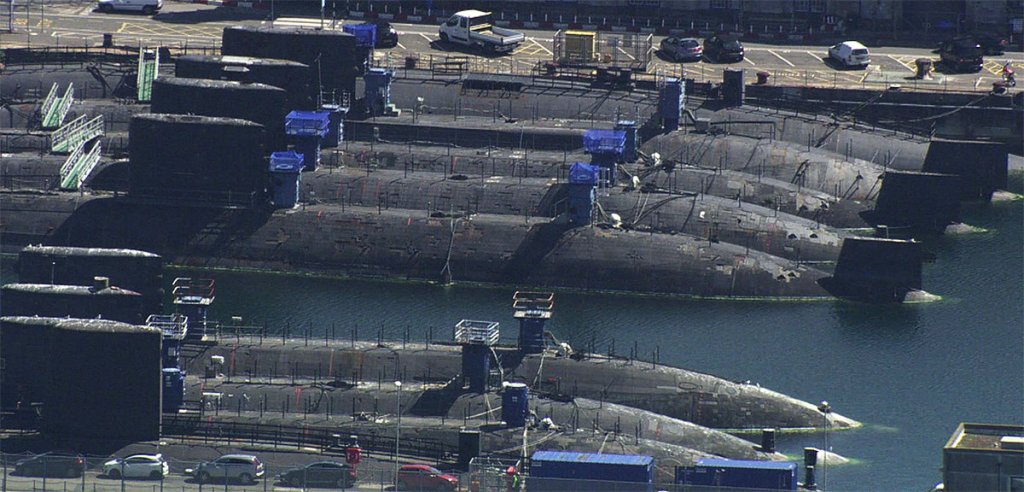
ABC By defence correspondent Andrew Greene, 1 Sept 22,
A senior US Navy official has warned helping Australia acquire nuclear-powered submarines could be too big a burden for America’s already overstretched shipyards.
Key points:
- Constructing additional submarines would be “detrimental”, US program executive officer for strategic submarines says
- Admiral Pappano’s comments are the strongest public intervention so far on the idea
- The Defence Department is conducting an 18-month study on the best option for Australia to acquire nuclear-powered subs
During an online forum, the US program executive officer for strategic submarines was questioned on America’s shipbuilding workforce and the implications of the AUKUS partnership with Australia.
Rear Admiral Scott Pappano said the ambitious plan could hamper his nation’s own nuclear submarine program, as well as the United Kingdom’s, in comments made to the Mitchell Institute for Aerospace Studies.
“If you are asking my opinion, if we were going to add additional submarine construction to our industrial base, that would be detrimental to us right now,” Admiral Pappano said.
The rear admiral added that significant investment would be needed to provide “additional capacity, capability to go do that”
“I won’t speak for the UK, but I think that exists for both the US and the UK where we’re looking right now,” he said.
The Defence Department is currently conducting an 18-month study on the best option for Australia to acquire nuclear-powered submarine capability, with a report due to hand down official recommendations in March.
Earlier this year former defence minister, now Opposition Leader, Peter Dutton claimed he was confident Australia could secure two American-built Virginia-class nuclear submarines by 2030.
Mr Dutton insisted that if the Coalition had remained in office, it could have been “in a position to make an announcement around July-August” on acquiring US-built nuclear submarines.
Private reservations
US naval figures have long held private reservations about allowing Australia to join an American production line for nuclear-powered submarines, but Admiral Pappano’s comments are the strongest public intervention so far…………………….
UK says submarines a ‘collaborative program’
British Defence Secretary Ben Wallace remarked that Australia’s future nuclear-powered submarines, under the AUKUS agreement was “not an either, or type question” between British or American designs, but could be a collaborative program between the three nations……………………………… https://www.abc.net.au/news/2022-09-01/us-admiral-issues-blunt-warning-on-building-aus-subs/101394250
Australian submariners to train onboard British nuclear-powered submarines under AUKUS deal
ABC, By Jack Hawke in London, 1 Sept 22,
Australian submariners will train onboard British nuclear-powered submarines for the first time in the latest announcement under the AUKUS security pact.
Key points:
- Royal Australian Navy submariners will train with British Royal Navy counterparts on nuclear-powered subs
- Australia will be provided with its own nuclear-powered submarines under the AUKUS agreement
- Defence figures have warned Australia is facing a capability gap because of ageing submarines
Under the deal, Royal Australian Navy sailors will join their British counterparts on the Astute-class submarines after completing specialised nuclear training courses.
Defence Minister Richard Marles met with British Prime Minister Boris Johnson and Defence Secretary Ben Wallace on Wednesday in Barrow-in-Furness in England’s north-west to attend the commissioning of the latest Astute-class submarine, the HMS Anison.
Mr Marles said Australia was “eager to learn from our counterparts”.
……………………………………. But where exactly the new submarines will be built and whom will build them will not be revealed by the federal government until at least March next year.
Concerns have also been raised by some defence experts over the timeframe for the delivery of the next generation submarines, which may not happen until the 2040s…………….. https://www.abc.net.au/news/2022-09-01/australian-submariners-to-train-on-british-nuclear-submarines/101389052
AI Group Unveiled: a propaganda service for Defence, big business and the Coalition
Michael West Media, by Michael West | Jul 22, 2020 ,
Is AI Group just a front for big business and foreign weapons manufacturers? Michael West reports on the rise of government and business propaganda outfits who are suddenly mute when the subject turns to the delicate matter of who funds them.
“Given the tone of the questions and misspelling of Willox you can list it as “no response”,” sniffed Tony the PR man for AI Group.
“Dang!” we muttered … “Willox, Willox, Willox. No “c”!”
And two “ns” in Innes too! This was indeed a grave error, a double-banger, getting the name of a PR guy wrong in an email to a PR guy. Unforgivable!
Albeit unsurprising. Lobbyists are famously taciturn when it comes to the subject of their own affairs, even as their views are plastered weekly across national media.
Our questions were about who funded them and how much of their hefty $72 million in annual revenue comes from big business, multinational weapons makers and the Government itself.
These questions are important because AI Group and other lobbyists such as the Australia Strategic Policy Institute (ASPI) are sermonising constantly about the way governments and everybody else should be conducting their affairs.
ASPI too is largely funded by foreign defence contractors and the Federal Government. It was little surprise therefore that, hard of the heels of Prime Minister Scott Morrison’s urgent yet vague warning earlier this month that Australia was the victim of menacing cyber attacks, it was ASPI which promptly named China as the culprit and affirmed the urgent nature of the unnamed threats.
Looking at the 2019 financial statements for AI Group, which you will not find on its website, the “peak employer organisation” made $14.3 million from Federal Government contracts last year, which rather helps explain why it is rare to see any criticism of government policy, other than a spot of whining at decisions which do not favour big business enough.
It is by no means alone in this. The Big Four consulting firms Deloitte, EY, PwC and KPMG are in the same boat, reeling in some $700 million in fees annually by consulting to the Government.
On top of its taxpayer take, AI made $38 million from “consulting, management services and training businesses”. So, not only is AI a lobby group but it is also is running businesses for profit, even a law firm while it pays no income tax.
This self-appointed not-for-profit (NFP) is sitting on cash and liquid assets of $76 million and it notched up income of $72 million last year. What did it spend it all this money on?
Some $55 million went on employees. The next biggest item was “Communications” at $5.6 million. They do do a lot of communicating and when it comes to having their voice heard in mainstream media, AI – and particularly its chief executive – Willox are slick operators, perhaps the best in the business lobby.
But unlike the Business Council of Australia, the Minerals Council, and think tanks such as the Sydney Institute and the Institute for Public Affairs (IPA), they actually get large government consulting deals as well as running profitable businesses.
In this, they are similar to the NSW Business Chamber, which boasts revenues of $237 million a year, also runs a law firm and vocation businesses and is even a registered charity…………………………………………..
 |
Australian government working with pro-nuclear zealot Jonathon Mead to plan US/UK nuclear submarines for Western Australia.
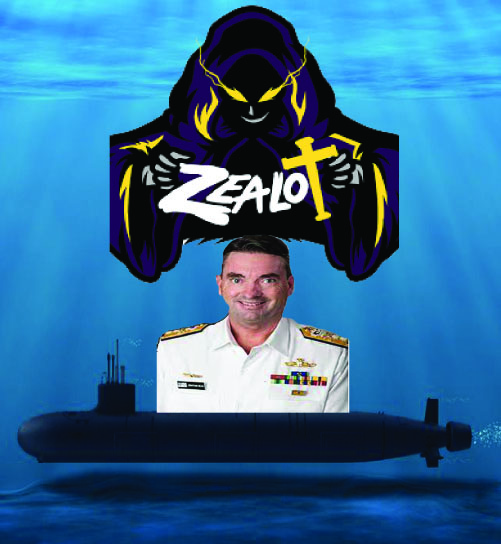
Australia’s defence forces investigating Garden Island nuclear submarine capabilities. Peter Law, The West Australian, Fri, 26 August 2022,
The strategic review of Australia’s defence forces is investigating the capacity of HMAS Stirling at Garden Island to simultaneously receive multiple nuclear-powered submarines from the US and UK.
The Henderson maritime precinct, south of Perth, has also been identified as a potential site for maintenance work on Australia’s planned nuclear submarine fleet, former defence minister Stephen Smith revealed.
Mr Smith and retired Air Chief Marshal Sir Angus Houston were earlier this month appointed to lead the sweeping review of the army, navy and air force, which will report to the Albanese Government by next March.
Speaking at the Indian Ocean Defence and Security Conference in Perth on Friday, Mr Smith said a draft report with initial findings would be given to Defence Minister Richard Marles on November 1.
Mr Smith said the review was working “hand in glove” with a separate task force chaired by Vice-Admiral Jonathan Mead, which is looking at the options for Australia acquiring a nuclear submarine powered capability.
The pair this week visited Garden Island to see what infrastructure improvements were needed in the short and long term, “if a number of nuclear submarines, UK or US, would arrive at HMAS Stirling tomorrow”.
“We also are interested in, ultimately, on the basis that at some stage Australia acquires nuclear submarines, what potential do we have for maintenance and sustainment on the Henderson maritime strip,” he said.
Similar visits will take place in Port Adelaide and Brisbane in coming months, as well a tour of the nation’s “northern and western approaches”, including at RAAF bases Curtin and Learmonth………………….. https://thewest.com.au/news/wa/australias-defence-forces-investigating-garden-island-nuclear-submarine-capabilities-investigated-c-8018706
Nuclear bomb tests at Emu Field remain obscured by Maralinga and the mists of time
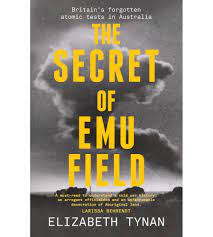
https://www.abc.net.au/news/2022-08-24/nuclear-testing-at-emu-field-featured-in-new-book/101329172 ABC Radio Adelaide / By Daniel Keane, 22 Aug 22,
In hindsight, Michael Parkinson’s TV talk show hardly seems the likeliest forum for sober reflection on nuclear annihilation.
But in 1971, the celebrity interviewer welcomed onto his celebrated stage journalist James Cameron, a man who had, 18 years earlier, witnessed the first atomic blast at Emu Field in outback South Australia.
Nuclear weapons, he told Parkinson, were “the ultimate punctuation mark” in humanity’s “progress towards perdition”.
The words echoed his front-page report for The Age on October 16, 1953 — the day after the test:
“The familiar mushroom column climbed unsteadily for 15,000 feet, leaned and dropped, and the world stumbled one more step towards the twilight.”
Codenamed Totem, the two Emu Field bomb tests have, in the view of James Cook University author Elizabeth Tynan, been regarded for too long as mere precursors to the more notorious detonations at Maralinga.
Her new book seeks to correct this by establishing Operation Totem as a portentous episode in its own right.
“The tests there pre-dated Maralinga by three years and they caused enormous difficulty and disruption and tragedy to the Aboriginal people of the Western Desert,” Dr Tynan said.
The Secret of Emu Field is the product of extensive archival excavation, including in the United Kingdom.
Amid Cold War hardships and anxieties, British officials were desperate to develop an affordable nuclear arsenal for their new fleet of jet bombers.
“They were looking to create a workable weapon; I call it the austerity bomb,” Dr Tynan said.
“They wanted to do it quickly because they had the V bombers coming, they had a number of political pressures and geopolitical pressures as well.”
Among several remarkable occurrences at Emu Field was the flight of a Royal Air Force Canberra bomber through the Totem 1 mushroom cloud barely six minutes after detonation.
“In colour it was a dark red-brown,” Wing Commander Geoffrey Dhenin, who enthusiastically piloted the plane, later wrote.
“Until just before we emerged, the forces on the elevators increased to such an extent that I thought I might lose control.”
One of the aims of that mission was to determine the threat from fallout in atmospheric testing to commercial airline traffic.
In an unforeseen irony, the atomic cloud from Totem 1 — which kept its mushroom shape “for 24 hours because of wind conditions” — was spotted by airline passengers passing over Oodnadatta.
The black mist
Today, it isn’t a cloud but a mist that remains one of the few aspects of the Totem tests to endure in the collective consciousness.
The so-called “black mist” was reported by nearby Aboriginal communities, but it wasn’t until a 1980 report by The Advertiser that it came to public attention.
The 1985 royal commission into British nuclear tests was equivocal on the health effects, but concluded that “Aboriginal people experienced radioactive fallout from Totem 1 in the form of a black mist or cloud at and near Wallatinna”.
Bruce Lennon was a young boy at the time and likened the impact to “having a really bad flu”.
“We were close to Emu Field; dad was a contractor, we did a lot of moving around,” he said.
Also in the area, at Mabel Creek station, was the family of Sister Kenise Neill.
“My father at the time of the Emu Field [tests] would have been 22. There’s a story that my grandmother used to tell about him,” she recalled.
“He was out fencing with Aboriginal people around the station and came home covered in a black, slimy, greasy stuff.”
Murray Neill was 24 when he died in 1956.
His daughter said it was now almost impossible to know whether the story told by her grandmother was an account of fallout.
“I didn’t really know about Emu Fields … and because our family had left before the [later] Maralinga testing, it didn’t make sense,” Sister Neill said.
“I presumed the black fallout with my dad wasn’t nuclear.
“It’s really only through reading Elizabeth Tynan’s book that I thought that my dad could have actually died from radiation.”
The persistence of secrets
The black mist may have dissipated, but other mists still cloud the Totem tests.
Dr Tynan said British files she inspected during her research had since been “withdrawn from public view”, and that there were unanswered questions about the second test and the plutonium fuel.
“The Operation Totem tests at Emu Field were intended as a comparative trial to test two different kinds of nuclear fuel,” Dr Tynan said.
I can’t say that I ever got to the bottom of what was happening with Totem 2. From the documents I’ve seen, [it] was a very, very secret weapon.”
By the time of the second test on October 27, James Cameron and the rest of the press pack had long since departed.
But the bomb had left its mark on Cameron’s mind.
In a piece published the day after he died, in the same year as the royal commission into British tests, Cameron reflected on the nuclear age with typical grace and resignation:
“I personally witnessed the explosion of atom bombs, and did nothing about it, and could do nothing except protest, tiresomely and uselessly.”
This article is the second in a two-part series, the first of which focused on the tests at Maralinga.
‘Reject the deadly logic of nuclear deterrence’

So, who is on board? More than 100 federal MPs and another 150 in state and territory parliaments, the Australian Greens, Labor and most other cross-benchers, including most of the new independents.
Two dozen unions, including the Australian Council of Trade Unions, more than 60 faith-based organizations, including the Australian Catholic Bishops Conference, the Australian Medical Association, dozens of civil society organisations and three quarters of the general public.
Fifty five former Australian Ambassadors and High Commissioners signed an open letter urging PM Albanese to fulfill Labor’s commitment.
Gem Romuld, August 21, 2022, Gem Romuld, the Australian Director at International Campaign to Abolish Nuclear Weapons, Australia, delivered this speech to the Sydney Hiroshima Day rally on August 8.
I want to acknowledge that First Nations people suffer the worst of nuclear technologies, not just nuclear weapons’ testing but all aspects of the nuclear chain, including uranium mining and radioactive waste dumping.
These struggles are ongoing today with threats of uranium mining at Mulga Rock in Western Australia, a radioactive waste dump planned for Barngarla land at Kimba, South Australia and the ongoing un-remedied impacts of 12 major nuclear explosions at Monte Bello in WA, Emu Field and Maralinga in SA, followed by hundreds of radioactive experiments — “the minor trials” —at Maralinga.
Today is a really important marker in time, one that we are keeping alive by gathering here.
What happened in Hiroshima and Nagasaki is why the vast majority of sensible people totally abhor nuclear weapons and want to see every last one decommissioned and dismantled.
Five years ago, the treaty banning nuclear weapons was created and last year it entered into force. It is something that experts, governments, diplomats and, even some activists, said could and would not happen.
But with strategy and persistence it did. Now, it has permanently altered the international legal architecture on nuclear weapons: it has raised the bar and all nations are measured against this powerful new standard.
Right now, the Treaty on the Prohibition of Nuclear Weapons has 86 signatories and 66 states parties, with those numbers going out of date regularly as more nations sign on.
Every new signature and ratification is a rejection of the deadly logic of nuclear deterrence and a bold expression of the alternative — human security without nuclear weapons.
The first meeting of states parties in Vienna in June was a big success that culminated in a Declaration and Action Plan, including 50 Points outlining practical ways members of the TPNW can “facilitate effective and timely implementation” of the Treaty articles and the Vienna Declaration commitments.
The second meeting of states parties will be in November-December 2023 at the United Nations in New York City. It will come around quickly. We need Australia to be at that meeting at least as a signatory, if not a state party.
Why is this treaty important?
It’s the first treaty to make illegal everything to do with nuclear weapons.
It completes the triad of bans on the three weapons of mass destruction: nuclear weapons; biological weapons and chemical weapons.
It is a powerful instrument of international law, as well as humanitarian law: it not only prohibits, but it also compels states’ parties to seek nuclear justice by assisting victims and remediating environments impacted by nuclear weapons.
In force as of January last year it is the ultimate test for all nations, including Australia. You are either against nuclear weapons or complicit with them.
Any nations that profess commitment to nuclear disarmament and nonproliferation but haven’t yet joined this treaty are exposed for their double-speak.
Under the previous federal government, prospects for this treaty were dire.
But Prime Minister Anthony Albanese and the Labor Party have committed to sign and ratify the Treaty on the Prohibition of Nuclear Weapons since 2018. Further, three quarters of all Labor MPs have personally pledged their commitment.
We all know that MPs make and break promises. But this is one we won’t let them break, will we?
Our efforts right now are critically important. We cannot for a minute drop the expectation that the government will do what it has promised. We have to be involved and keep up the pressure with MPs, councils, superannuation funds, unions and civil society organisations.
Like most meaningful change, it will take time and be hard won but we are well and truly on the way.
So, who is on board? More than 100 federal MPs and another 150 in state and territory parliaments, the Australian Greens, Labor and most other cross-benchers, including most of the new independents.
Two dozen unions, including the Australian Council of Trade Unions, more than 60 faith-based organizations, including the Australian Catholic Bishops Conference, the Australian Medical Association, dozens of civil society organisations and three quarters of the general public.
Fifty five former Australian Ambassadors and High Commissioners signed an open letter urging PM Albanese to fulfill Labor’s commitment.
We have all the right ingredients: the moment is ripe. We can get Australia to join the nuclear weapon ban treaty in this term of government.
Doing that will help other nuclear endorsing states resist the pressure of the nuclear-armed bullies. Slowly, they will be isolated and, eventually, one of them will begin the process of disarming.
Nuclear bomb tests at Maralinga triggered Hedley Marston to study fallout over Australia
ABC Radio Adelaide / By Daniel Keane 10 Aug 22,
Hedley Marston could be charming, genial and witty but he was not above fulmination, especially where fulminations of a different kind were concerned.
In the mid-1950s, the CSIRO biochemist emerged as arguably the most significant contemporary critic of Britain’s nuclear weapons testing program, which was launched on Australia’s Montebello Islands almost 70 years ago in October 1952.
Despite the imminent anniversary Marston remains an obscure figure, but his biographer Roger Cross believes that should change.
“He appears to be totally unknown to the Australian public and, of course, to South Australians — he was a South Australian after all,” Dr Cross said.
Marston’s reservations about the nuclear program were far from spontaneous; indeed, his strongest concerns weren’t voiced until several years after the first test, when he recorded a radioactive plume passing over Adelaide.
The source of that plume was Operation Buffalo, a series of four nuclear blasts in 1956, and Marston was especially outraged by the fact that the general population was not warned.
“Sooner or later the public will demand a commission of enquiry on the ‘fall out’ in Australia,” he wrote to nuclear physicist and weapons advocate Sir Mark Oliphant.
“When this happens some of the boys will qualify for the hangman’s noose.”
What made Marston’s fury difficult to dismiss, especially for those inclined to deride opposition to nuclear testing as the exclusive preserve of ‘commies’ and ‘conchies’, was the fact that he was no peacenik.
Detractors might have damned him as an arriviste, but never as an activist: his cordial relations with Oliphant and other scientific grandees demonstrate that Marston was, in many respects, an establishment man.
Dr Cross has described Marston’s elegant prose as “Churchillian”, and the adjective is apposite in other ways.
While the roguish Marston might not have gone as far as the British wartime leader’s assertion that, during conflict, truth is so precious “that she should always be attended by a bodyguard of lies”, he had, in a 1947 letter to the editor, publicly defended scientific secrecy:
Under present conditions of fear and mistrust among nations it is obvious that military technology must be kept secret; and to achieve this end it should be conducted in special military laboratories where strictest security measures may be observed.”
But by late 1956, Marston’s alarm at radioactive fallout across parts of Australia was such that he was privately demanding greater disclosures to the general public.
Much of his ire was aimed at the Atomic Weapons Tests Safety Committee — a body established before the Maralinga tests, but after blasts had already occurred at Emu Fields* and the Montebello Islands.
“He was the only senior Australian scientist to express concerns and, because of his character, the concerns that he expressed were very forthright,” said Dr Cross, whose biography of Marston, aptly entitled Fallout, inspired the documentary Silent Storm.
“When the safety committee after each explosion said there was absolutely no effect on Australians, he believed that they were lying.”
‘If the wind changes, we need to go’
The experiments that led Marston, whose reputation largely rested on his expertise in sheep nutrition, to reach this conclusion were two-fold.
In the more protracted one, he analysed the presence of radioactive iodine-131 — a common component of nuclear fallout — in the thyroids of sheep.
“One group he kept penned up under cover eating dried hay, which had been cut some time before. The other group, he put outside eating the grass,” Dr Cross said.
“He tested the thyroids in each group – the ones on the hay only had background amounts of iodine-131.
“But the ones in the fields had a tremendously high concentration of this radioactive isotope, both north and south of the city.”
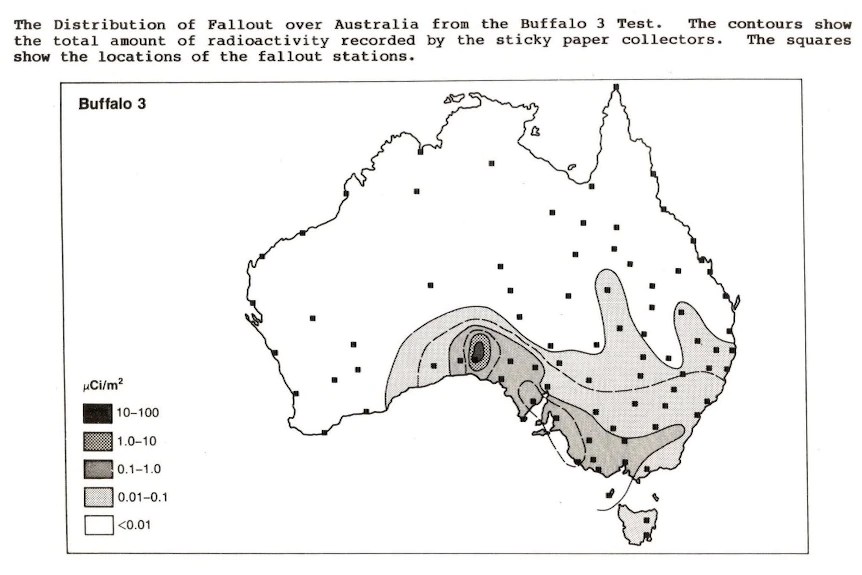
A fallout map from the 1985 royal commission, which stated that while fallout at Maralinga Village from the October 11, 1956, test was “considered to be ‘negligible from a biological point of view’ it does suggest difficulties with the forecast prior to the test”.(Royal Commission into British Nuclear Tests in Australia)
For the other experiment, Marston conducted air monitoring in Adelaide.
He was especially alarmed by what he found for the period following the Maralinga test of October 11, 1956.
“There was a wind shear and at least part, maybe the major part, of that cloud, blew in a south-easterly direction and that took it towards Adelaide and the country towns in between,” Dr Cross said.
“The safety committee — who must have known of the wind shear — had done nothing about warning Adelaide people perhaps to stay indoors.”……………………………………………………
Despite Marston’s reservations, the nuclear program carried on regardless.
Less than a year after the Operation Buffalo tests, Maralinga was hosting Operation Antler.
In September 1957, newspapers around Australia reported on an upcoming “second test” that would, weather permitting, proceed as part of a “spring series”.
If it hadn’t been for the presence of the words “atomic” and “radioactive”, a reader might easily have inferred that what was being described was as commonplace as a game of cricket.
|
Taiwan not worth a mushroom cloud
Many talk about “national interest”; the need for security; and standing up for principles. But with Taiwan the choice may be more stark: allow the Chinese Communist Party to take it over or engage in a nuclear war.
Principles are meaningless amid nuclear devastation, and so is national interest and security.
http://www.crispinhull.com.au/2022/08/08/taiwan-not-worth-a-mushroom-cloud/?utm_source=mailpoet&utm_medium=email&utm_campaign=crispin-hull-column Crispin Hull 8 Aug 22,
The odd thing about the visit by the Speaker of the US House of Representatives to Taiwan was that it was done by a woman, Nancy Pelosi. Usually, women in government tend to be the negotiators and compromisers, not the aggressors and agitators.
Why not just leave well alone?
Why create for future schoolchildren (if there are any survivors) one of the “Ten Causes of the Third World War”: Pelosi’s visit to Taiwan. Just as we learned that the 10 causes of World War I and World War II included equally trivial misjudgments.
And, take note, as far as the Chinese leadership is concerned, Pelosi is not a legislator, separate from the executive government, making a visit off her own bat, because they could not conceive of such a thing. For them, she is part of the US Government. So, to them, the trip was a deliberate provocation.
The other puzzling thing about Taiwan is the way the US, on the one hand, talks the talk of defending democratic Taiwan against the bully China, but on the other hand officially accepts that Taiwan is part of China.
The US did that on January 1, 1979, when it recognised the People’s Republic of China and established diplomatic relations with it as “the sole legitimate government of China”. On the same day, the United States withdrew its recognition of, and terminated diplomatic relations with, the Republic of China (Taiwan) as the government of China.
In 1979, of course, Taiwan was not a democracy so it did not really matter in principle which of the two autocracies was the “sole legitimate government of China”. At the time, the US “national interest” suggested that the trade opportunities with mainland China were too good and democracy was not being undermined by the de-recognition of semi-autocratic Taiwan.
After Taiwan evolved into a democracy in 1996 with the first free, open, and fair election for the presidency, the US had a “whoops” moment, followed by nearly three decades of juggling three balls in the air: the principle of supporting democracy; supporting US national trade interests; and opposing ever-growing Chinese influence.
The three are hopelessly incompatible, even as the first and the third become ever more urgent. The solution for the US could have been dreamt up by the Chinese communists themselves: “deliberate ambiguity”.
The US should go back to that. More importantly, Australia should go back there, irrespective of what the US does. The west should play the long game with China and wait for it to go the way of the Soviet Union caused as the economic cost of not playing by the rules results in unsustainable pressure on the regime.
Already China is paying a penalty for its trade trashing of Australia. Australia has now found other markets. China has come back cap in hand for some of those goods and Australia has said, “No thanks, you are too unreliable because you do not follow the rules and legal principle.”
In any event, we should not, in the perspicacious words of defence expert Hugh White, “sleepwalk into war”.
If democratic Taiwan is so important to defend, why doesn’t the US officially recognise it as a nation? And if it does not recognise Taiwan as an independent democratic nation, why threaten military action if the central government of the nation that the US does recognise as exercising sovereignty over Taiwan sends in its army and police forces to physically exercise that sovereignty?
Not being a democracy is not a cause for war, nor is the overthrow of democracy in one part of a country a cause for war. If they were, the world would be in a constant state of war.
Pelosi’s visit coincided with the Rim of the Pacific naval exercise (RIMPAC), but to Chinese Communist Party chiefs it was not a coincidence.
Twenty-six nations, 38 surface ships, four submarines, nine national land forces, 170 aircraft and 25,000 military personnel took part.
From a Chinese perspective this is a tad threatening. To us it is benign. To Taiwan and Australia firing rockets over Taiwan and the seas around it is a tad threatening, To the Chinese it is a benign military exercise in its own back yard
Of course, China is jealous as well as threatened by RIMPAC. China has no friends, just nations it bribes or debt-burdens into military co-operation.
But the danger point comes when the US goes beyond seeking voluntary co-operation with allies and friends and aims for full military integration and interoperability.
The trouble here is that the US military exerts influence verging on control over the US Government. Its top military officer has a seat on the National Security Council (not just an advisory role). Both General Douglas MacArthur (Korea) and General Curtis Le May (Cuba) urged the use of nuclear weapons.
Mercifully, Presidents Truman and Kennedy stood up to them, but Biden is no Truman or Kennedy. Moreover, a change in Administration usually means little change in the military-industrial complex’s way of doing things.
In Australia, a change of Government has also meant very little change to the lock-step American Alliance – until now.
The new Defence Minister, Richard Marles, has ordered a Defence Forces Review. Maybe it will start questioning the pattern of blindly joining every major US military folly (Vietnam, Afghanistan and Iraq, for example), irrespective of whether it has anything to do with us.
Many talk about “national interest”; the need for security; and standing up for principles. But with Taiwan the choice may be more stark: allow the Chinese Communist Party to take it over or engage in a nuclear war.
Principles are meaningless amid nuclear devastation, and so is national interest and security.
It is unfortunate that 23 million people would go under the Chinese Communist jackboot, but that is better than going under a nuclear mushroom.
We allowed them to imprison, murder, and torture the Uyghurs and Tibetans and did nothing. What is the difference with Taiwan? Maybe it is just a good case to bolster a profitable arms race.
US and Australia to launch second joint spy satellite from site in New Zealand
Some in space industry bewildered by Australia’s lack of fanfare about the launch of the satellites, which will be used to collect intelligence for allied nations
Guardian, Tory Shepherd, Tue 2 Aug 2022
A second spy satellite built by Australia and the United States is scheduled for liftoff on Tuesday from a launch site in New Zealand.
The first of the two satellites, which will be used to collect intelligence for the allied nations, launched two weeks ago.
The Australian Department of Defence did not announce the successful launch of the first satellite or the launch date of the second.
US spy agency, the National Reconnaissance Office, has been celebrating the “Antipodean Adventure”, which features a crocodile, a rocket and an eagle on its logo.
Some in the space industry are bewildered by the lack of information and fanfare on the Australian side.
Malcolm Davis, the Australian Strategic Policy Institute’s senior analyst and resident space expert, said there is a “very different culture” in the US military, which actively promotes its work, and the Australian military, which is “closed off”.
“It’s not just these particular satellites, it’s an attitude within Defence that they’re very closed off,” he said.
“The Americans are very forward. You only need to look at how they support movies like Top Gun: Maverick. It’s a very different culture, and it’s a frustrating one down here.”
…………………New Zealand’s Rocket Lab is providing the rockets to deliver the classified payloads into orbit from the launch site on the Māhia Peninsula.https://interactive.guim.co.uk/maps/embed/aug/2022-08-01T01:42:57.html
A Defence spokesperson said the department partnered with the NRO for “two space missions as part of a broad range of cooperative satellite activities”.
As defence minister, Peter Dutton announced Australia’s intention to work with the NRO to build a “more capable, integrated, and resilient space architecture designed to provide global coverage in support of a wide range of intelligence mission requirements”.
Earlier this year he announced a separate plan to develop a surveillance satellite with Queensland company Gilmour Space Technologies, due to launch next year.
The NRO projects are in the lead-up to Defence Project 799. The federal government has pledged $500m to DEF-799, to “improve Australia’s space-based intelligence, surveillance and reconnaissance capabilities to support Australian Defence Force operations around the world and at home”.
“The next goal is to build our own satellites,” Davis said. “So these are important steps … these are like interim tests that we’ve codeveloped with the Americans.”
The Defence spokesperson said details about the satellite payloads and missions were “protected”.
“Defence will continue to enhance Australia’s ability to generate military effects utilising the space domain,” they said.
“This will be achieved through efforts that include developing capabilities resilient in denied environments and assuring access to space.”
The NROL-199 launch was initially scheduled for 22 July but was delayed due to software issues. https://www.theguardian.com/science/2022/aug/02/us-hails-antipodean-adventure-and-australia-silent-as-second-spy-satellite-set-to-launch-from-new-zealand?CMP=share_btn_tw
Does Australia actually need nuclear submarines?
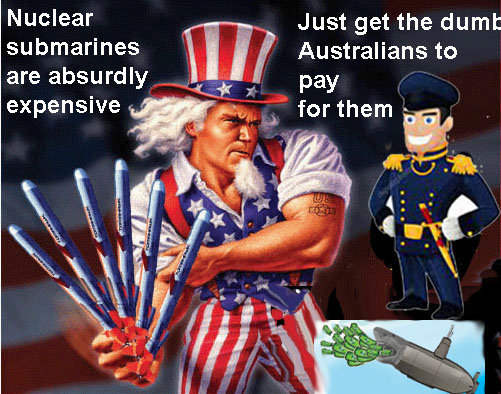
“It’s obvious the real policy is to subsidise the US Navy’s submarine budget. Some will be located in Australia, with Australian flags and personnel, but they’re essentially US boats operated in the US’s great power interests. We’re paying for them to set up part of their current and future fleet in Australia.”
fewer than two of Australia’s eight nuclear submarines would be operationally available, on average, each year. And the cost of the purchases is likely to be stunning, possibly as high as $171 billion……………….. No other country has bought this type.
“Australia could buy 20 high-quality, off-the-shelf, modern submarines for $30 billion.”
influential Australian intelligence and defence officials are ignoring the point that there is no need for Australian submarines to spend much time in China’s waters
Gilligan also warns that the shallow and warm waters around Australia’s north are unsuited to large nuclear submarines.
As experts question the diplomatic, strategic and economic rationale behind Australia’s purchase of nuclear-powered submarines, the gaps in the country’s defensive fleet could be filled by conventional subs. https://www.thesaturdaypaper.com.au/news/politics/2022/08/06/does-australia-actually-need-nuclear-submarines#mtr By Brian Toohey. 6 Aug 22,
In 1992, an Australian Oberon-class submarine entered the crowded waters of Shanghai’s port and became entangled in fishing nets. It had to surface for crew members to cut it free with axes. Chinese Navy sailors witnessed this, but nevertheless the submarine escaped. Had it not, the crew would’ve been imprisoned and Australia widely condemned and potentially convicted for an outrageous breach of international law.
Almost a decade earlier, the Australian Navy had seriously considered scrapping submarines, according to former senior Australian Defence official Mike Gilligan. A study in 1985 had concluded they offered “little marginal benefit to Australia’s defences yet inflict a large marginal cost”. The cost could’ve been much higher given the tremendous risks the government allowed the navy to take, snooping in Chinese and Russian waters on behalf of the Americans, who wouldn’t put their nuclear submarines in danger.
Australia now faces some tough and highly consequential decisions with respect to its fleet. Some experts in the defence field question not only the utility of nuclear-powered vessels but the diplomatic, strategic and economic commitment they entail.
In Washington last month, Defence Minister Richard Marles said Australia, the United States and Britain were moving from “interoperability to interchangeability in defence hardware”. This would effectively mean Australia could not buy high-quality defence equipment from other countries if there was a higher-cost American or British version available. Professor Clinton Fernandes at the UNSW Canberra campus says, “It’s obvious the real policy is to subsidise the US Navy’s submarine budget. Some will be located in Australia, with Australian flags and personnel, but they’re essentially US boats operated in the US’s great power interests. We’re paying for them to set up part of their current and future fleet in Australia.”
Australia has a short and patchy record on submarine purchases. The government acquired many major weapons during World War II. None were submarines. That capability had to wait until the first of a total of six Oberon-class submarines was commissioned in 1967 from a Scottish shipyard. They operated satisfactorily but weren’t considered the nation’s most important military assets.
After Kim Beazley became Defence minister in the Hawke government, he gambled on the value of submarines by ordering six large, battery-powered versions to be built in Adelaide. No other country has bought this type.
The first was commissioned in 1966 and the last in 2003. Called the Collins class, it was based on a good Swedish design. But Beazley greatly increased its size and complexity, partly by adding American equipment that proved completely useless. Maintenance problems drove annual sustainment costs to $670 million. Often only two or three were available at a time, although availability later improved. And none attended the 2010 Rim of the Pacific event – known as Rimpac, the world’s largest international maritime warfare exercise, held biennially near Hawaii.
Former prime minister Scott Morrison and his successor, Anthony Albanese, have taken a much bigger gamble than Beazley did, with their commitment to buy at least eight nuclear attack submarines – almost certainly the American Virginia class. One of the US’s most highly regarded defence analysts, Winslow Wheeler, recently pointed out the Virginia-class subs have been available only 15 times in 33 years for their six-monthly deployments. This suggests fewer than two of Australia’s eight nuclear submarines would be operationally available, on average, each year. And the cost of the purchases is likely to be stunning, possibly as high as $171 billion when accounting for inflation, according to the Australian Strategic Policy Institute, and more recent estimates are above $200 billion. The costliest previous military acquisition, for the Australian Air Force, is the inflation-adjusted $16.6 billion program cost for 72 F-35 fighter jets.
Former submariner, naval consultant and South Australian senator Rex Patrick says, “Australia could buy 20 high-quality, off-the-shelf, modern submarines for $30 billion.”
Patrick also makes the point that nuclear submarines are often “defeated” in exercises by ultra-quiet conventional submarines.
Major new developments are making conventional submarines even more formidable than the nuclear versions. More powerful sensors mean submarines can be detected by the noise they make and by their passage through the Earth’s magnetic field. In addition, nuclear submarines can be detected by the wake they leave at high speeds, as well as the hot water they release from cooling their nuclear reactors, operating loud steam engines and other equipment. In future, submarines may also be detected by blue-green lasers that make the ocean more transparent.
A prize-winning essay published in the US Naval Institute’s magazine Proceedings in June 2018 said the US Navy would do well to consider acquiring “some quiet, inexpensive and highly capable diesel-electric submarines”. Until recently, conventionally powered submarines frequently had to rise close the surface to expose a mast and snorkel to obtain fresh air for their diesel engines to recharge the batteries. This process can be detected by radar.
Most conventionally powered submarines – except Australia’s – use what is called air independent propulsion (AIP), which allows them to remain silent for four to six weeks before snorkelling. That often entails using a hydrogen fuel cell to propel the submarine, but it takes up significant space on the vessel.
In a major change, Japan’s new Taigei-class submarines don’t need AIP because they’re equipped with particularly efficient lithium-nickel-cobalt-aluminium oxide batteries, rather than the lead-acid batteries that the Australian Navy prefers, due in part to the risks of lithium-ion batteries catching fire. Other navies are increasingly confident the new types of battery will prove safe. Hans Ohff, a submarine specialist and visiting fellow at Adelaide University, told The Saturday Paper, “Generally speaking, lithium-ion batteries have a 1.5-times range advantage over lead-acid at lower speeds and an incredible four-times range advantage at high speeds.”
Since the Collins class is due to start retiring in 2026, a replacement is urgently required to help fill the gap until the first nuclear submarine might arrive, near 2045, and the last in 2065. Senator Patrick says the time it takes to do this can be reduced by choosing one of the three available “off-the-shelf” submarines: Japan’s Taigei, which has passed numerous tests demonstrating the safety of its new batteries; Singapore’s Type 218SG, made by Germany’s thyssenkrupp Marine Systems; and the Spanish S-81. The latter two still use conventional lead-acid batteries, but Ohff says a French and German joint venture is under way to develop their own lithium-ion batteries.
These options have advantages and drawbacks. The new Taigei class – of which Japan is acquiring 22 – requires a costly crew of 70 per vessel. The Type 218SG’s German manufacturer is the biggest submarine exporter in the world, with an enviable reputation for low maintenance costs across its range. Extensive automation means it needs only 28 crew members, and the vessel has a longer range than the Taigei’s 12,500 kilometres. Spain’s S-81 has a crew of 32 but a less experienced manufacturer.
With China being the principal concern of Australian diplomatic and defence policymakers, Ohff says the navy will never accept off-the-shelf submarines unless it can “Australianise” them – meaning they must have the range to operate for long periods, many thousands of kilometres away, probably in Chinese waters or nearby. Ohff says the navy’s preferences would take a minimum of 10 years to deliver the first boat and additional two-year intervals for the following boats. He says delivery of a Swedish “Son of Collins” could take nine years.
Patrick says influential Australian intelligence and defence officials are ignoring the point that there is no need for Australian submarines to spend much time in China’s waters: Japan, South Korea, Singapore and Vietnam have high-quality submarines closer to China. The main attraction of nuclear submarines for these officials is they could fire subsonic cruise missiles at land targets in China from more than 1000 kilometres off its coast. However, cruise missiles can be shot down by fighter planes overhead. Once a nuclear submarine fired its missiles, it would be detected and swiftly targeted. Even if it survived, reloading would require the help of a tender – a large depot ship that supplies and supports submarines – probably from the distant base at Fremantle, which recently hosted a reloading for a US nuclear submarine. In any event, an attack on Chinese territory could provoke a heavy counterattack on Australia’s forces or its mainland.
Gilligan says most of the capability offered by submarines is better provided by Australia’s maritime and land-based aircraft. He says submarines, including nuclear ones, are slow compared to aircraft. Technically, a plane could sink a ship off Australia’s west coast in the morning, refuel, then sink another off the east coast in the afternoon. Gilligan also warns that the shallow and warm waters around Australia’s north are unsuited to large nuclear submarines.
Deploying nuclear submarines far from Australia marks a return to the previously discredited doctrine of “forward defence” in South-East Asia that concentrated on a big British naval base in Singapore, which was swiftly overrun by the Japanese in 1942. When this doctrine failed during the Vietnam War, the Coalition government in the late 1960s adopted a “defence of Australia” doctrine, which survived until its recent abandonment. Patrick and other proponents of this latter doctrine expect a revised doctrine would put more emphasis on having medium-sized conventional submarines to help deny hostile forces access to the approaches to Australia, unless they could detect and destroy all the submarines, drones, planes and land-based missiles blocking their way.
Finally, from a defence perspective, much of the planning around nuclear submarines assumes – implausibly – that Chinese and US policies will proceed in a predictable way until past 2060. A purely geopolitical analysis, however, could easily underplay the disruptive role of climate change.
In purely geopolitical terms, the region may become more peaceful or more dangerous. The only urgency for Australia is to forget about nuclear submarines and get some conventionally powered submarines to enhance deterrence.
Hard-Wired for Corruption -The arms trade and Australia’s lax monitoring regimes
Chris Douglas concludes that from an anti-bribery/corruption risk perspective, Naval Group should not have been put on the shortlist for the Future Submarines program, let alone selected to partner with Australia to build the submarines. The ‘contract of the century’ was mired in unacceptable risk from the outset due to Defence’s poor risk-management processes and non-existent specific anti-bribery/corruption measures. A formal inquiry is needed both to examine how this deeply flawed decision was reached and to help prevent the situation recurring in future major defence procurement projects.
‘In the arms business, it’s always a time of war’, wrote Roeber. Without war, there is no revenue, no profit, no growth. Countries with established arms manufacturing industries therefore have a perpetual economic driver towards conflict and warfare.
To give just one example, there is no visibility around what or how much weaponry Australia has exported to Saudi Arabia or the United Arab Emirates during the years of the Yemen war.
https://undueinfluence.substack.com/p/hard-wired-for-corruption?utm_source=substack&utm_medium=email Michelle Fahy 1 Aug 22, The international arms trade, worth around US$200 billion a year, represents less than 1 per cent of world trade yet is said to account for about 40 per cent of its corruption. While estimates vary, there is little dispute amongst long-term arms industry researchers that it is the most corrupt industry on the planet. Indeed, it is said to be hard-wired for corruption.
The World Peace Foundation (WPF), housed at Tufts University in America, produces extensive research on the global arms trade, including a compendium of corrupt arms deals. It says that ‘Corruption within the industry is often treated in terms of isolated incidents, when it is, in fact, representative of the business model for the industry’.
This finding is supported by research for Transparency International’s (TI) Government Defence Integrity (GDI) index, which assesses the quality of controls for managing corruption risk in defence and security institutions. The GDI shows that 86 per cent of global arms exports between 2016 and 2020 originated from countries at moderate to very high risk of corruption in their defence sectors, while 49 per cent of global arms imports went to countries at high to critical risk of defence corruption. Australia is rated as a moderate corruption risk in the GDI, with two key areas of concern being the lack of transparency in defence procurement and weak anti-corruption safeguards on military operations.
The legal trade in arms has long been known for its susceptibility to corruption. This is due to the high value and complexity of arms deals, the close association between the arms industry and political power, and the secrecy claimed necessary for national security, all of which shield arms-related activities from scrutiny. As arms industry expert Joe Roeber pointed out, ‘Defence goods are complex and each contract contains a mix of special requirements. Comparison is remarkably difficult and effective monitoring by public watchdogs is all but impossible. An unknowable price can be manipulated to accommodate any amount of covert payments’. Further, there are very few major arms deals on offer globally each year—usually less than 10 in the range of tens of billions each meaning competition is intense—while only a small number of people make the decision on what to buy…
‘In the arms business, it’s always a time of war’, wrote Roeber. Without war, there is no revenue, no profit, no growth. Countries with established arms manufacturing industries therefore have a perpetual economic driver towards conflict and warfare.
For example, in the month leading up to Russia’s invasion of Ukraine, and just days after a horrific attack in Yemen by the Saudi-led coalition using a Raytheon missile that killed 90 people and injured 200, Raytheon’s CEO told investors that global tensions represented ‘opportunities for international sales’, and that he expected to ‘see some benefit’ from ‘the tensions in Eastern Europe [and] in the South China Sea’. Meanwhile, Just Security has noted that the ‘well-documented risks of corruption in the arms industry and the potential for profiteering from an arms race in the Ukraine war’ are risk factors embedded in the massive flow of lethal weaponry from the West into Ukraine…
Blanket secrecy
All countries justify secrecy around arms-related activity with claims of protecting ‘national security’. The Australian government, for example, imposes a high level of secrecy over its arms procurement, sustainment and export deals, with politicians and the Department of Defence resisting demands for greater transparency…
Australia also relies on ‘commercial-in-confidence’ justifications to protect arms industry interests. This, in combination with national security claims, has led to almost blanket secrecy around Australia’s arms exports. To give just one example, there is no visibility around what or how much weaponry Australia has exported to Saudi Arabia or the United Arab Emirates during the years of the Yemen war. The government has only released information about the number of export permits it has approved or declined (by March 2021 Australian approvals to these two nations topped 100). However, permit numbers are not useful, as not all permit approvals translate into actual exports, and permits can cover numerous types of equipment, small or large quantities, extend for varying time periods, and even cover multiple destinations.
This is significant because the decades-long UK Campaign Against the Arms Trade has amassed a ‘mountain of evidence of corruption in arms sales to Saudi’ showing that bribery is central to the Saudi government’s approach to arms deals. Andrew Feinstein, author of the exhaustively researched 600-page book The Shadow World: Inside the Global Arms Trade, told ABC radio in 2018 that he had never seen a Saudi arms deal that didn’t involve ‘massive amounts’ of corruption, and that the percentage of a Saudi contract paid in bribes could be up to ‘about 35 per cent of the contract price’. The United Arab Emirates is also known for its secrecy, corruption, and money laundering links.
Australia’s decreasing commitment to anti-corruption measures
Australia’s extraordinary current spending on military capability—$270 billion in a decade, on top of the usual defence budget—means the domestic arms industry is awash with cash. At the same time, the public’s limited ability to scrutinise this spending has been eroded further by a defence minister, Peter Dutton, who has restricted Defence’s engagement with the media. The combination of record sums of money and little scrutiny provides fertile ground for corruption.
Australia’s performance on anti-corruption measures has nose-dived in recent years:
- It recorded its worst ever score on a global anti-corruption index in 2022, dropping four points (from 77 to 73) and falling to 18th place. Australia has now dropped 12 points in a decade, from a high of 7th (85 points) in 2012.
- Its membership status at the Open Government Partnership risks being put under review because it has ‘acted contrary to the OGP process’ and failed to submit its latest national action plan.
- Its negligible attempts to investigate and prosecute cases of foreign bribery have been criticised by the Working Group for the OECD’s Anti-Bribery Convention (it expressed concern over ‘the continued low level of foreign bribery enforcement… given the size of Australia’s economy and the high-risk regions and sectors in which its companies operate’ and ‘its long-standing challenges in attributing wrongdoing to corporate entities’).
- It has been named an ‘international laggard’ in expanding anti-money-laundering laws in line with recommendations by the G7’s Financial Action Task Force, one of only three countries, alongside Haiti and Madagascar, to have failed to do so. Australia now risks being put on a grey list of countries that don’t meet international money-laundering standards. (Australia has been resisting anti-money-laundering regulation for fifteen years.)
- A dedicated federal anti-corruption body still has not been established…
Red flags
‘The biggest corruption risk in an arms deal is a company’s decision to pay bribes to secure the deal’, says Sam Perlo-Freeman, former Program Manager for Global Arms and Corruption, World Peace Foundation, Tufts University. Decisions to pay significant bribes are made at a company’s highest levels, and while no amount of technical anti-corruption measures will eliminate high-level corrupt behaviour, strong whistleblower protection mechanisms can increase the probability of exposure. Other anti-corruption measures are also important, particularly at lower levels where zealous company employees might be tempted to cut corners to advance their careers. However, such technical measures do not tackle the underlying political and economic drivers of high-level corruption in the arms industry, where winning large deals is necessary for corporate survival and price is not the primary concern. As Joe Roeber noted incisively, bribery in this context ‘is not just a simple add-on to the procurement process, but distorts the decisions. What would the equilibrium level of trade be without the stimulus of corruption?’ …
No evidence has emerged of…extensive corrupt practices in Australia, but there are regular red flags of possible arms industry corruption. Chris Douglas, a 31-year veteran of financial crime investigation for the Australian Federal Police, who now runs his own consultancy, is an Australian expert in anti-bribery and corruption measures. He says that such compliance programs are a necessary component of good corporate and public governance—essential for preventing corruption in the defence industry. Although he has lodged numerous Freedom of Information requests (FOIs) with the Defence Department about anti-bribery/corruption measures on major procurements, he says, ‘I have not detected an ABC [anti-bribery/corruption] program being used in any of the major defence projects I have examined’.
Douglas says that the Department of Defence ‘has not caught up with modern corporate management practices’ and has no understanding of how to use anti-bribery/corruption risk-based assessments to manage the significant risks posed by bribery and corruption in its projects, particularly major ones. As he puts it: ‘That any department would not undertake an ABC risk assessment when such large sums of money are involved, in an industry that is rated high for corrupt behaviour, speaks volumes about a poor culture within that department’.
Repeated cost blowouts and delays are just two of the red flags for corruption that are regularly found in Australian defence procurement and sustainment projects. The cost of these to the public is substantial.
While there are numerous examples of red flag projects, here are just three.
Naval Group—submarine contract
This contract was abandoned with the arrival of AUKUS, but the original deal with Naval Group requires a public inquiry to examine the full extent of the process by which the internationally lucrative ‘contract of the century’ was awarded. The need for an inquiry has been amplified given the shock shredding of Defence’s largest ever contract, a decision which made international news and may yet cost Australia billions.
Continue readingAustralia urged to prove it is a safe nuclear custodian as Aukus comes under scrutiny at UN.

Non-nuclear state Australia’s handling of nuclear-powered submarines will have to be ‘impeccable’, Australia Institute says
https://www.theguardian.com/australia-news/2022/aug/01/australia-urged-to-prove-it-is-a-safe-nuclear-custodian-as-aukus-comes-under-scrutiny-at-un Tory Shepherd, Mon 1 Aug 2022
Australia needs to step up in the fight to stop nuclear conflict, and to prove to the world it is a safe nuclear custodian, a new report argues.
The report by the Australia Institute comes ahead of a major global conference that starts on Monday in New York, where Australia’s Aukus submarine deal will come under scrutiny.
The report argues it is time to revive the UN non-proliferation treaty, which was struck after the Cuban missile crisis and in the midst of the cold war, and aims to stop the spread of nuclear weapons and to achieve complete disarmament.
Allan Behm, the Australia Institute’s director of international and security affairs, said the treaty was “in trouble”. It was not just the “nuclear pariah states” and the nuclear threats from the Russian president, Vladimir Putin, in the context of the war in Ukraine, he said, but also the threat of a domino effect if the mainstream nuclear powers see no option but to follow other countries in nuclear expansion.
Australia should “play a truly constructive role in highly uncertain times”, Behm argued, and work with other countries on “verifiable disarmament”.
Separately, the UN has set up a taskforce to ensure Australia’s plan to buy nuclear powered submarines from either the US or the UK will not breach the treaty.
Aukus was formed in part to counter China’s rise in the region, and China has been fiercely critical of it. Now, two thinktanks linked to the Chinese government have accused Australia of harbouring a desire for nuclear weapons, and declared Aukus will trigger a nuclear arms race and violate the treaty because it will likely use weapons-grade uranium to power the boats.
A Dangerous Conspiracy: The nuclear proliferation risk of the nuclear-powered submarines collaboration in the context of Aukus was released by the China Arms Control and Disarmament Association and the China Institute of Nuclear Industry Strategy.
“The Aukus nuclear-powered submarines collaboration is a serious violation of the object and purpose of the NPT, sets a dangerous precedent for the illegal transfer of weapons-grade nuclear materials from nuclear-weapon states to a non-nuclear-weapon state, and thus constitutes a blatant act of nuclear proliferation,” the report states.
China will attend the UN’s Tenth Review Conference of the Parties to the Treaty on the Non-Proliferation of Nuclear Weapons alongside a 16-strong Australian delegation.
In disrupted times, with the treaty under pressure, a shoring up of the rules-based order is needed to avoid chaos, Behm said.
“This is nowhere truer than in the domain of nuclear arms control and disarmament, where the existential threat of humanity’s nuclear annihilation runs in parallel with the threats from global warming and pandemics,” he said.
“And in the case of nuclear disarmament and global warming, the major treaty that underpins global efforts has been undermined by the constant shift of the ‘middle ground’ away from high aspiration towards the lowest common denominator as key players erode the substance of earlier agreements.”
Australia is a non-nuclear state, but will acquire a fleet of submarines with nuclear reactors on board. The very nature of a reactor on a military vehicle makes it harder to monitor. The monitoring of all nuclear assets is critical to ensure enriched uranium is not diverted to weapons manufacturing.
If Australia gets the green light, other nations could use that precedent to argue for their own hard-to-monitor nuclear reactors (Iran already has).
This is why Australia’s handling of the situation will have to be “impeccable”, Behm said.
Australia has to let its diplomats function effectively and set policy targets to “regain the momentum on arms control and disarmament diplomacy that Australia displayed in previous decades”, he said.
“If it proceeds, Australia’s decision to acquire nuclear-powered submarines under the auspices of the [Aukus] will require impeccable non-proliferation credentials on Australia’s part.”
Australia can help work towards disarmament via the comprehensive test ban treaty (which bans all nuclear weapons testing), a fissile material cut-off treaty (to reduce national stockpiles of enriched uranium or plutonium), a no first use declaration (don’t be first to pull the trigger) and negotiations to reduce arsenals and delivery systems.
Sixteen Australian officials will take part in the treaty conference, led by the Labor senator Tim Ayres. Australia’s arms control and counter-proliferation ambassador, Ian Biggs, will also be there, and it is understood that the test ban and fissile material treaties will be priorities.
“Australia’s delegation to the Tenth Review Conference of the Parties to the Treaty on the Non-Proliferation of Nuclear Weapons (NPT) will work over the four weeks of the meeting to address pressing nuclear proliferation challenges and advocate for practical steps towards nuclear disarmament,” a spokesperson from the Department of Foreign Affairs and Trade said.
French navy warns AUKUS nuclear submarine plan will be ‘much more difficult’ for Australia
By defence correspondent Andrew Greene. 29 July 22,
One of France’s most senior defence figures is warning Australia that acquiring nuclear submarines will be “much more difficult” than the now scrapped plan to build a new fleet of conventionally powered boats.
Key points:
- French military chief Nicolas Vaujour was in Sydney for talks with Australian and US military leaders at the high-powered defence conference
- Vice Admiral Vaujour says he was “surprised” at Australia’s decision to obtain nuclear-powered submarines
- France proposed the two countries organise joint naval training drills
As both nations look to reset relations following the diplomatic fallout from last year’s AUKUS announcement, the French military’s Chief of Operations of the Joint Staff is signalling a “new era” of cooperation involving more naval exercises and cooperation.
Vice Admiral Nicolas Vaujour has travelled to Sydney for talks with Australian Defence Force Chief General Angus Campbell and other military leaders at the high-powered Indo-Pacific Chiefs of Defence (CHODs) Conference………………………………
Fleet of nuclear submarines will be sent by Britain to Australia as a threat to China

- Britain is to send a fleet of nuclear submarines to Australia port of Perth
- Deployment is seen as a warning to China in the Asia-Pacific region
- Move is part of AUKUS (Australia, UK and United States) security alliance
https://www.dailymail.co.uk/news/article-11037405/Fleet-nuclear-submarines-sent-Britain-Australia-warning-China.html By DEFENCE EDITOR FOR THE DAILY MAIL, 22 July 2022,
Britain is to send a fleet of nuclear submarines to the Pacific in a decisive move to thwart Chinese aggression in the region.
The dramatic decision could see UK subs based in Australia until 2040, operating within striking distance of China.
Admiral Sir Tony Radakin, the head of the Armed Forces, will agree the arrangement at a naval conference in Sydney next week. Assigning submarines to patrol the South China Sea will be Britain’s most assertive move yet against Beijing.
According to reports in Australia, Royal Navy submarines would be based at Perth on the country’s western coast and Australian submariners would be incorporated into British crews to improve their skills.
Basing the Royal Navy boats thousands of miles from UK shores is part of the AUKUS (Australia, United Kingdom and United States) security alliance.
AUKUS was set up last year primarily to confront Chinese military expansionism in the Indo-Pacific. Australia has become embroiled in a trade war and diplomatic stand-off with China. The deepening of defence ties with the UK is likely to cause further outrage with the Communist regime, which is vehemently opposed to AUKUS.
The Royal Navy declined to say last night how many of its submarines could be relocated to Australia, as all operational details surrounding Britain’s sub-surface fleet are classified.
The ‘Pacific tilt’ was signalled last year as part of the MoD’s Integrated Review.
The review set the target for the UK to become ‘the European partner with the broadest and most integrated presence in the Indo-Pacific’.
But given that China possesses the world’s biggest navy, some questioned the merits of such a deployment, arguing Britain’s boats would be massively outnumbered and outgunned.
Last night the MoD said: ‘It is UK policy that we do not comment on matters relating to submarine activity or operations.’
1 This month

of the week – Australians for War Powers Reform (AWPR)
To see nuclear-related stories in greater depth and intensity
 Antinuclear