Scandalous conflicts of interest in Australia’s advice from USA on nuclear submarines.


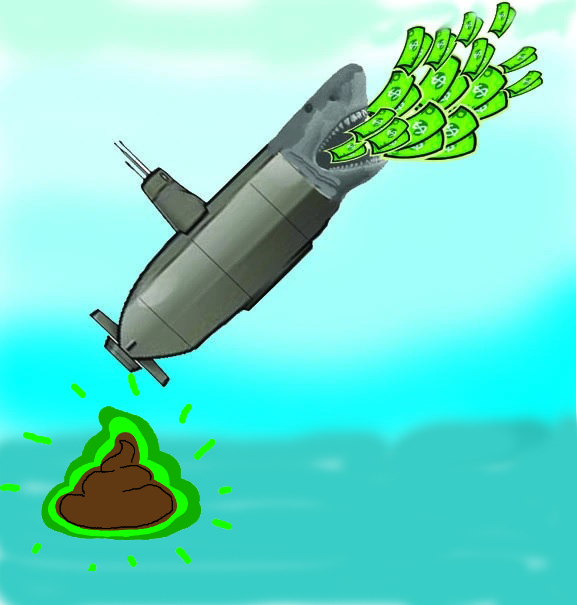
To an extraordinary degree in recent years, Australia has relied on high-priced American consultants to decide which ships and submarines to buy and how to manage strategic acquisition projects. In addition to the six retired U.S. admirals, the government of Australia has hired three former civilian U.S. Navy leaders and three U.S. shipbuilding executives.
RETIRED U.S. ADMIRALS ADVISE AUSTRALIA ON DEAL FOR NUCLEAR SUBMARINES,
Washington Post, By Craig Whitlock and Nate Jones 19 Oct 22, Since 2015, Australia has hired the admirals and other former Navy officials as high-dollar consultants on shipbuilding,
Two retired U.S. admirals and three former U.S. Navy civilian leaders are playing critical but secretive roles as paid advisers to the government of Australia during its negotiations to acquire top-secret nuclear submarine technology from the United States and Britain.
The Americans are among a group of former U.S. Navy officials whom the Australian government has hired as high-dollar consultants to help transform its fleet of ships and submarines, receiving contracts worth as much as $800,000 a person, documents show.
All told, six retired U.S. admirals have worked for the Australian government since 2015, including one who served for two years as Australia’s deputy secretary of defense. In addition, a former U.S. secretary of the Navy has been a paid adviser to three successive Australian prime ministers.
A Washington Post investigation found that the former U.S. Navy officials have benefited financially from a tangle of overlapping interests in their work for a longtime ally of the United States. Some of the retired admirals have worked for the Australian government while simultaneously consulting for U.S. shipbuilders and the U.S. Navy, including on classified programs.
One of the six retired U.S. admirals had to resign this year as a part-time submarine consultant to the Australian government because of a potential conflict of interest over his full-time job as board chairman of a U.S. company that builds nuclear-powered subs.
Australia has leaned heavily on former U.S. Navy leaders for advice during its years-long push to upgrade its submarine fleet, a seesaw effort that has rattled long-standing alliances and remains beset by uncertainty. After abruptly canceling a pact with France last year, Australia is now trying to finalize a deal with the United States and Britain to build a fleet of nuclear-powered submarines that could cost an estimated $72 billion to $106 billion, when adjusted for inflation over the length of the program.1
The outcome will have global ramifications and could alter the military balance of power among the United States, its allies and China. Helping the Australians build nuclear-powered submarines would enhance U.S. national security in Asia overall but could strain U.S. shipyards and delay the Pentagon’s own plans to add more subs to its fleet, according to U.S. military officials and defense analysts.
The Australian government has kept details of the Americans’ advice confidential. The Post was forced to sue the U.S. Navy and State Department under the Freedom of Information Act (FOIA) to obtain documents that shed light on the admirals’ involvement.
Under federal law, retired U.S. military personnel as well as reservists must obtain approval from the Pentagon and the State Department before they can accept money or jobs from foreign powers. The law applies to retirees — generally those who served at least 20 years in uniform — because they can be recalled to active duty. Records show that each of the six retired admirals followed the rules and received U.S. authorization to work for the government of Australia.
Between 2015 and 2021, the Navy received 95 applications from retirees to work for foreign governments — and approved every one, according to the documents that The Post obtained under FOIA. Government lawyers fought the release of the records, arguing that they were of little public interest and that disclosing basic details would violate the retirees’ privacy
For three of the retired admirals on Australia’s payroll, the U.S. Navy spent less than a week reviewing their paperwork before granting permission, the documents show. Two of the admirals applied to work for the Australians within one month of their retirement from the military.
Officials at the White House and the U.S. Navy declined to comment for this article.
Compared with the U.S. Navy, which has about 290 deployable ships and submarines, Australia’s fleet is small, with only 43 vessels. But Australia’s strategic importance looms large because of its proximity to the Indian and Pacific oceans, as well as the world’s busiest shipping lanes, near the contested waters of the South China Sea.
If Australia acquires nuclear subs, it will become the seventh country to do so. With only 26 million people, Australia would be by far the least populous member of the club.
To an extraordinary degree in recent years, Australia has relied on high-priced American consultants to decide which ships and submarines to buy and how to manage strategic acquisition projects. In addition to the six retired U.S. admirals, the government of Australia has hired three former civilian U.S. Navy leaders and three U.S. shipbuilding executives.
Since 2015, those Americans have received consulting deals worth about $10 million combined, according to Australian contracting records posted online.
The six retired U.S. admirals who have worked for the Australian government declined to be interviewed or did not respond to requests for comment.
Some Australian lawmakers and defense analysts have expressed doubts about whether the U.S. consultants have been worth the expense. The Americans’ recommendations have influenced a series of ill-fated decisions by Australian officials that could delay the arrival of any new submarines until 2040, almost a decade later than planned.
“We were paying a lot of money [for advice] and it wasn’t obvious to me that we were getting value for money,” said Rex Patrick, a former member of the Australian Senate who has criticized the government’s submarine acquisition plans.
$6.8 million for advice on an aging fleet
In September 2021, after years of futile attempts to replace its aging fleet of six submarines, the government of Australia announced two decisions that surprised the world.
First, it abruptly canceled a long-standing $66 billion agreement to buy a dozen French diesel-powered subs. Then it revealed it had reached a historic accord instead to acquire nuclear propulsion technology for submarines from the United States and Britain……………………………………………….
As Australia negotiates with the United States, it is paying for expert advice from two people who once served in American uniforms: retired U.S. admirals William Hilarides and Thomas Eccles……………………………………….
The influx of American shipbuilding consultants in Australia began eight years ago…………………………………………………………………………………..
The Australian government created additional naval advisory committees — and stocked them with Americans.
In October 2016, Australian officials announced a new Naval Shipbuilding Advisory Board with Winter, the former Navy secretary, serving as the chairman. He was joined by three retired admirals: Eccles, Hilarides and Sullivan.13………………………………………
Marcus Hellyer, a senior defense analyst with the Australian Strategic Policy Institute, a nonpartisan think tank based in Canberra, said the advisory panels could have used more European perspectives to balance out those of the Americans. Unlike the U.S. Navy, he noted, the Australian navy does not design its own ships from scratch and is accustomed to relying on foreign models.
“It’s a very different kettle of fish to the U.S. system,” he said.
A carousel of consultants
By 2019, Australia’s landmark submarine deal with France appeared to be in jeopardy. Delays plagued the design phase. Projected costs rose. Doubts spread about whether the Shortfin Barracudas, which the Australians dubbed their Attack class of subs, would be capable of deterring China’s more imposing undersea fleet.
The American carousel of hired help continued to spin. Sullivan, the retired vice admiral, left the shipbuilding advisory board in 2019. That same year, Johnson resigned as Australia’s deputy defense secretary. But the Australian government added three more U.S. civilian consultants to its advisory panels.
Australian lawmakers grew impatient with the submarine program’s delays and irritated by the Australian government’s unwillingness to let its highly paid U.S. advisers answer questions.
The American carousel of hired help continued to spin. Sullivan, the retired vice admiral, left the shipbuilding advisory board in 2019. That same year, Johnson resigned as Australia’s deputy defense secretary. But the Australian government added three more U.S. civilian consultants to its advisory panels.
Australian lawmakers grew impatient with the submarine program’s delays and irritated by the Australian government’s unwillingness to let its highly paid U.S. advisers answer questions.
‘It’s confidential’
In June 2021, worried about the fate of the submarine agreement with France, the Australian Senate insisted on hearing directly from Hilarides and senior Australian defense officials.
Lawmakers wanted answers: Had the American consultants urged the Australian government to consider modifying, or even killing, the Attack-class submarine deal?
Testifying remotely from the United States, Hilarides was as tight-lipped as Winter had been.
“Because that advice is used to support government decision-making, it’s confidential,” Hilarides said.
Three months later, the Australian government canceled the submarine contract with the French. It also announced a new three-way defense alliance with the United States and Britain, including an agreement to admit Australia to the exclusive club of nations with nuclear-powered submarines.
Only four other countries — China, Russia, France and India — operate nuclear subs. Brazil is trying to develop nuclear reactors for submarines, but its progress has been slow.
Left undecided was whether Australia would buy U.S. or British nuclear subs, and where they would be built. But defense analysts predicted the United States would probably win out.
Australian lawmakers soon began to raise questions about the American consultants and their connections to the U.S. submarine industry.
Donald, the retired four-star admiral on Australia’s Submarine Advisory Committee, has also served as chairman of the board of Huntington Ingalls Industries since 2020. The defense contractor, based in Newport News, Va., is the maker of Virginia-class submarines, the same model that the government of Australia was now thinking about buying.
At a parliamentary hearing in October 2021, a senior Australian defense official acknowledged that Donald’s role with Huntington presented a potential conflict of interest. But the official said the Australian government and Donald hadn’t yet decided if it was necessary for him to resign as a consultant.
Donald remained on the committee for six more months. In his written response to questions, Donald said he resigned in April to avoid any conflicts after “it became evident” his committee “would need to become involved in providing independent critical assessment” on acquiring nuclear-powered subs.
But Australia is still paying other Americans for advice on how to negotiate with the U.S. government.
Winter, the former U.S. Navy secretary, registered with the U.S. Justice Department in September 2021 as a foreign lobbyist working for the Australian prime minister’s office. In his disclosure form, Winter said he would be paid $6,000 a day, plus expenses, to support Australia during its nuclear submarine talks with Washington.15………………………………………………………
Australia will almost certainly have to buy its first nuclear subs off American or British production lines.
U.S. Navy and British Royal Navy officials, however, say their shipyards are booked solid making their own submarines. The only way to squeeze in orders from Australia would be to spend billions expanding U.S. or British shipyards.
Hellyer, the Australian defense analyst, said it is hard to envision a scenario under which Australia would receive its first nuclear submarine before 2040. With the Collins-class vessels scheduled for retirement a decade from now, that could leave Australia without submarines for eight years.
“I can’t really see what the way forward is at the moment,” he said. “The whole thing has been completely disastrous.”
About this story
Photos used in the card illustrations from Department of Defense.
Editing by David Fallis and Sarah Childress. Research by Alice Crites. Copy editing by Martha Murdock and Christopher Rickett. Photo editing by Robert Miller and Wendy Galietta. Video editing by Jason Aldag. Design and development by Frank Hulley-Jones, Stephanie Hays and Talia Trackim. Design editing by Christian Font and Matt Callahan. Project management by Wendy Galietta. https://www.washingtonpost.com/investigations/interactive/2022/australia-nuclear-submarines-us-admirals/?itid=ap_craigwhitlock
Concerns in outback SA grow as federal government plans to store defence waste at planned Kimba nuclear dump
ABC By Sara Tomevska, 18 Oct 22,
The federal government is facing questions over how it will dispose of highly-radioactive waste produced by Australia’s future nuclear-powered submarine fleet, as concerns about a controversial nuclear dump in outback South Australia grow.
Key points:
- The federal government chose a site near Kimba for its nuclear waste site in 2021
- Locals are now concerned high-level nuclear defence waste could be stored at the site
- There are two legal challenges underway to block the site from going ahead
After 40 years of searching, the federal government last year announced it had chosen Napandee, a 211-hectare property near the town of Kimba, to consolidate Australia’s low-and-intermediate nuclear waste……….
last June, the federal parliament passed a range of amendments to the National Radioactive Waste Management Act.
One of the changes allows defence waste to be stored at the site too.
Fourth generation wheat farmer Terry Schmucker has long opposed the dump, fearing the site could lead to contamination.
“As a farmer have become connected to the land and I’ve come to realise how precious topsoil and agricultural land are,” he said.
He said the changes to legislation had added to his anxiety. “I always expected that the dump was the thin end of the wedge … but it’s disappointing that the government hasn’t come straight out and said ‘this is how it is’,” he said.
A Department of Defence spokesperson said Australia’s defence programs already generated a “range of low-level radioactive waste” which was currently stored in two temporary facilities.
In September 2021, three months after the amendment bill passed through parliament, former Prime Minister Scott Morrison announced Australia would acquire nuclear-powered submarines as part of the AUKUS defence pact.
Mr Schmucker said the deal raised “serious questions” about how and where the federal government would dispose of high-level radioactive waste generated by the submarines.
“I think it’s going to come here, that’s just the way it is,” he said.
“If the waste site is set up at Kimba, there’s nothing to stop [the government] from bringing even worse stuff than what’s going to come out of the submarines and putting it here in agricultural land.”
Could submarine waste really end up in Kimba?
The legislation explicitly prevents high-level radioactive waste or spent nuclear fuel — which is what the submarines would produce — from being dumped at the Napandee site.
Barngarla Determination Aboriginal Corporation (BDAC) chairman Jason Bilney said he was concerned that could be changed with the stroke of a pen.
“We all know what the government is like, the government can change that at any given time and try and slip it through,” he said.
Former senator and submariner Rex Patrick was part of the parliament that passed the legislation, and said he believed it was unlikely that protection would ever be removed.
“The parliament that passed the facility were of the clear understanding that high-level material would not be stored at the site,” he said.
“Now, of course, [legislation] can be changed by a future parliament. And so, there is a risk there. https://www.abc.net.au/news/2022-10-18/kimba-dump-controversy-continues/101537270?utm_campaign=abc_news_web&utm_content=facebook&utm_medium=content_shared&utm_source=abc_news_web&fbclid=IwAR2plCSj2ctHNmhZEHJTvacBN5nsIb-LVQD-pyhMIcnEDkQh0OMdFOCp-Ec
70 years since Operation Hurricane: the shameful history of British nuclear tests in Australia
Red Flag, by Nick Everett, Sunday, 16 October 2022
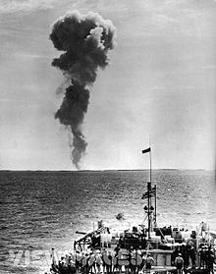
At 9.30am on 3 October 1952, a mushroom cloud billowed up above the Monte Bello Islands, 130 kilometres off the coast of Western Australia. The next day, the West Australian reported: “At first deep pink, it quickly changed to mauve in the centre, with pink towards the outside and brilliantly white turbulent edges. Within two minutes the cloud, which was still like a giant cauliflower, was 10,000 feet [three kilometres] high”.
Derek Hickman, a royal engineer who witnessed the blast aboard guard ship HMS Zeebrugge, told the Mirror: “We had no protective clothing … They ordered us to muster on deck and turn our backs. We put our hands over our eyes and they counted down over the tannoy [loudspeaker]. There was a sharp flash, and I could see the bones in my hands like an X-ray. Then the sound and the wind, and they told us to turn and face it. The bomb was in the hull of a 1,450-ton warship and all that was left of her were a few fist-sized pieces of metal that fell like rain, and the shape of the frigate scorched on the seabed.”
Operation Hurricane was, up until that moment, a closely guarded secret. ……………………….
Throughout 1946, negotiations took place between the British and Australian governments, culminating in an agreement to establish a 480-kilometre rocket range extending northwest from Mount Eba (later moved to Woomera) in outback South Australia.
On 22 November 1946, Defence Minister John Dedman informed parliament of cabinet’s decision to establish the rocket range. Peter Morton, author of Fire Across the Desert: Woomera and the Anglo-Australian Joint Project 1946–1980, explains that Dedman reiterated claims made in a report by British army officer John Fullerton Evetts that related to the original proposed site at the more remote location of Mount Eba, not Woomera. Dedman told parliament that Australia was the only suitable landmass in the Commonwealth for such testing, the designated area was largely uninhabited and that impacts on the Aboriginal population in the Central Aboriginal Reserves would be negligible. According to Morton, there were approximately 1800 Aboriginal people living on the reserves at the time. The Committee on Guided Projectiles would immediately begin consultations with the director of Native Affairs and other authorities, Dedman told parliament.
Dedman’s announcement ignited fierce opposition. In her book Different White People: Radical Activism for Aboriginal Rights 1946-1972, Deborah Wilson describes the independent Labor member for Bourke, Doris Blackburn, spearheading a peace movement strongly supported by the Australian Communist Party. She published her speeches in the CPA newspaper, Tribune. Blackburn was the widow of lawyer and parliamentarian Maurice Blackburn, whose left-wing views resulted in his expulsion from the ALP.
Blackburn insisted that the rocket range amounted to a grave injustice against a “voiceless minority”, Australia’s First Nations people. In March 1947, medical practitioner Charles Duguid told a 1300-strong Rocket Range Protest Committee meeting in Melbourne that he was appalled by the government’s blatant “disregard” for the rights of Aboriginal people. According to a Tribune report, he asked those present: “Shot and poisoned as they were in the early days, neglected and despised more lately, will most of our Aborigines [sic] now be finally sacrificed and hurried to extinction by sudden contact with the mad demands of twentieth century militarism?”
Dedman, supported by the Menzies-led opposition, dismissed concerns expressed by Duguid and anthropologist Donald Thompson that contact between military personnel and Aboriginal people living in the military zone would have devastating consequences for their traditional way of life. Deploying assimilation arguments, Dedman insisted that contact between military personnel and “natives” in the area would simply accelerate an inevitable process of detribalisation.
Meanwhile, Liberal and Country Party politicians railed against Duguid and other opponents of the project, labelling them dupes of communism with a lax attitude to the nation’s security, according to Wilson. They called on the Chifley government to follow the example of the Canadian royal commission established to weed out alleged communist spies in public sector employment…………….
In June 1947, federal parliament rushed through the Approved Defence Projects Protection Bill, a gag tool preventing critical commentary about the government’s defence policy. Transgressors were threatened with fines of up to £5,000 or a 12-month prison sentence.
Under the cover of “national security”, federal bans were imposed on union officials visiting the Woomera rocket range site, now a no-go area for anyone other than sanctioned military personnel. Anti-communist fearmongering helped set the scene for the Chifley government’s establishment of a new and powerful security organisation, the Australian Security Intelligence Organisation (ASIO), in 1949.
In mid-1947, 446 kilometres north of Adelaide, the Woomera township was swiftly constructed on the traditional lands of the Kokatha people. By mid-1950, its population had grown to 3,500 and, over the following decade, doubled to 7,000. Roads gouged through Aboriginal country. Electricity and telegraph lines soon followed, connecting the military base with centres of political power.
The nature of the missile testing remained a top secret to all but those firmly ensconced within the upper echelons of the Department of Defence. However, rumours of a nuclear testing program abounded. The detonation of a 25-kiloton nuclear weapon off the Monte Bello Islands made Britain’s nuclear ambitions, and the Australian government’s complicity, visible for the world.
In the film Australian Atomic Confessions, witness May Torres, a Gooniyandi woman living at Jubilee Downs in the Kimberley, described observing a cloudy haze that remained in the sky for four or five days. At the time she did not know that it carried radioactive particles that were to contribute to cancer and an early death for many of her community, including her husband, in the early 1960s.
Another witness, Royal Australian Air Force pilot Barry Neale, described aircraft operating out of Townsville identifying nuclear particles in the air three days after the detonation. Two days later, New Zealand Air Force aircraft similarly observed radioactive particles that had emanated from Operation Hurricane. Still today, signs on the Monte Bello islands warn visitors about the dangers of elevated radiation levels.
In October 1953, two nuclear tests (Operation Totem) took place at Emu Field, 500 kilometres northwest of Woomera. In May and June 1956, nuclear testing returned to the Monte Bello Islands. Operation Mosaic detonated the largest ever nuclear device in Australia: a 60-kiloton weapon four times as powerful as that which had destroyed Hiroshima.
My aunt was among the children who witnessed the Monte Bello explosion from the jetty in the Pilbara town of Roebourne. The spectacle left her and her siblings covered in ash, oblivious to the toxicity of the fallout they were exposed to.
Meanwhile, west of Woomera, Aboriginal people were being relocated from their traditional lands. In preparation for Operation Buffalo, a series of four nuclear tests at the Maralinga Testing Ground, an 1,100 square kilometre area was excised from the Laverton-Warburton reserve and declared a no-go area.
Two patrol officers, William MacDougal and Robert (Bob) Macaulay, were given the nearly impossible task of keeping Aboriginal people out of the no-go area. The pair’s reports to the range superintendent were frequently censored, according to Morton.
In December 1956, a Western Australian parliamentary select committee, led by Liberal MLA William Grayden, visited the Laverton-Warburton Ranges. The select committee’s report (the Grayden Report) identified that displaced Aboriginal people suffered from malnutrition, blindness, unsanitary conditions, inadequate food and water sources, and brutal exploitation by pastoral interests.
News reports in the Murdoch-owned Adelaide News dismissed the committee’s findings, insisting that the claims could not be substantiated. Responding to the Murdoch media whitewash, Tribune reported on 9 January 1957 that the committee had “ripped aside the screen that has veiled the cruel plight to which our [g]overnments condemn Australian Aborigines”.
Tribune asserted that “huge areas of the most favourable land are being taken from [Aboriginal] reserves and provided for mining interests, atomic and guided missile grounds, and other purposes”.
A subsequent Tribune article reported a week later on the observations of Pastor Doug Nicholls, who accompanied the West Australian minister for native welfare, John Brady, on a tour of the Warburton-Laverton district. According to Tribune:
“Pastor Nicholls said that at Giles weather station, deep in the heart of the best hunting grounds in the Warburton reserve—a region that the Government had stolen as part of the Woomera range—the white people lived like kings, and the Aboriginal people worse than paupers … The Commonwealth had spent a fortune on Woomera, but has not even supplied a well for the Aboriginals.”
The Grayden Report deeply shocked the public. A film documentary produced by Grayden and Nicholls, Their Darkest Hour, further exposed these crimes. Wilson describes scenes from the film:
“Images of malnourished, sick and poverty-stricken Aboriginal people bombard the viewer. A mother’s arm has rotted off with yaws. A blind man with one leg hobbles grotesquely on an artificial leg stuffed with furs and bandaged into an elephant-like stump. Malnourished children with huge swollen bellies stare blankly at the camera. A baby lies deathlike beside a mother too weak to walk. A sickening close-up of a toddler who fell into a fire reveals cooked flesh covered with flies. Skeletal remains of a man, dead from thirst, lie beside a dried-up waterhole. As the film concludes, his body is buried in an unmarked grave.”
The detrimental impact of British nuclear testing in Australia wasn’t limited to traditional Aboriginal people. It also exposed thousands of military personnel and their families to nuclear radiation, survivors still feeling the effects seven decades on, according to submissions received by the 1985 McClelland Royal Commission into British Nuclear Tests in Australia.
In 2001, a group of Melbourne scientists made a startling discovery: thousands of jars of ashed human bone that all contained strontium 90, a by-product of nuclear testing that can cause bone cancer and leukaemia. All had been collected from autopsies without the consent of family members, according to a 2002 report by the Australian Health Ethics Committee. This officially sanctioned “body-snatching” provided vital, and until then hidden, evidence of radioactive contamination with widespread effects on human health.
In the mid-1950s, CSIRO scientist Hedley Marston was tasked by the Atomic Weapons Tests Safety Committee (AWTSC) with studying the radioactive iodine uptake in sheep and cattle as part of wider effort to monitor the biological effects of radiation caused by atomic-bomb testing in Australia. Marston argued that radioactive iodine found in the thyroids of animals indicated the presence of radioactive strontium in the food chain, which would endanger the health of humans, particularly children. Marston’s discovery put him in conflict with the AWTSC, who denied the tests resulted in significant radioactive contamination.
According to the Australian Health Ethics Committee, between 1957 and 1978, the AWTSC and its successor, the Australian Ionising Radiation Committee, covertly took samples of bones from 22,000 human remains during autopsy to test for the presence of strontium 90. The surviving samples located in 2001 suggested that radioactive contamination was far more widespread than previously admitted.
The winding down of the British nuclear testing program in Australia in 1953 did not bring an end to the Australian government’s role in the global nuclear industry. Since 1954, Australian uranium has supplied nuclear reactors around the world, including to the Fukushima reactor in Japan, which in 2011 was the site of the most severe nuclear disaster since the 1986 Chernobyl meltdown. Australia has also committed to acquiring nuclear-powered submarines to better pursue its imperial interests, and those of its allies, in the Asia-Pacific. And the nuclear industry is trying to promote itself as a viable alternative to polluting fossil fuel industries.
Its shameful history, and the dire threat it poses to humanity, must not be forgotten. https://redflag.org.au/article/70-years-operation-hurricane-shameful-history-british-nuclear-tests-australia
Radiation ‘hotspots’: legacy of British nuclear tests lingers on idyllic islands in Western Australia
Tourists warned not spend more than an hour at the Montebello Islands sites – as a new study examines the effect of radioactive sands on marine life.
Guardian, Narelle Towie, @narelletowie 8 Oct 22,
The white ocean sands of Western Australia’s Montebello Islands may appear inviting, but 70 years ago they were the site of Britain’s first nuclear tests.
Now researchers are working to uncover how much and what type of radioactive material persists in sediment on the ocean floor of the archipelago, made up of 265 low-lying islands and islets, 1,200km north of Perth. They hope to get a clearer idea of its effects on the area’s abundant marine life and any lingering dangers to people who visit the islands for tourism or fishing.
The nuclear fallout from atomic blasts in the 1950s have been well studied on land, but little is known about how radioactive sands affect the 60,000-hectare marine park’s ecosystem.
In June 2020 a team led by Madison Hoffman, an environmental radioecologist at Edith Cowan University, collected hundreds of kilograms of sediment from an area near the blast sites, 120km west of Dampier, for analysis.
Hoffman says they detected levels of radioactivity higher than background levels, as expected.
“Those levels are highest in areas around where those three detonations took place, but we also have some areas which have come up with levels a little higher than we expected for where we found them.”
Advertisement
The 12 nuclear tests carried out between 1952 and 1957 – including three in the Montebellos – were part of a secretive deal between Britain and Australia that was championed by the then prime minister, Robert Menzies. Further “minor trials” were carried out in South Australia until 1963.
The first test, codenamed Operation Hurricane, took place on 4 October 1952 at a lagoon off Trimouille Island in the Montebellos.
A decommissioned warship, HMS Plym, was rigged up with a 7kg plutonium device, sending tonnes of seawater and mud 3,000 metres into the air and impregnating the ocean sand with radioactive isotopes.
On 16 May and 19 June 1956 two more bombs were set off from towers at Trimouille and Alpha islands as part of Operation Mosaic. The bombs were boosted with hydrogen and lithium and were the biggest ever detonated in Australia.
Hoffman says while some radionuclides, or radioactive atoms, are blasted inside sand grains, others attach to the surface of sediment and shift in rough weather, such as during cyclonic activity.
“When we know what radionuclides there are and what ratios they are in, they can act like a fingerprint, kind of like a forensics tool that is distinct to the Montebellos,” Hoffman says.
“When sediment rock gets moved from point A to point B, it is taking those radionuclides with it and potentially moving those hotspots and migrating them around.”
Hoffman wants to know where these hotspots are so she can study how the radiation exposure affects sediment-dwelling marine life. The area is home to a rich variety of marine species including dugongs, turtles, whales, hundreds of fish species and mangroves………………….
Darren Koppel, a marine contaminant expert with the Australian Institute of Marine Science, says low levels of radiation over long periods can cause chronic toxicity to plants and other organisms.
“We do not have much data on the chronic effects of radiation to marine organisms, so this type of research is critical to fill those data gaps,” Koppel says.
“The most likely effect is that sensitive organisms and plants will have stopped living or growing in the areas with higher radioactivity, leaving only the more tolerant species.”
The Montebello Islands are managed by the WA Department of Biodiversity, Conservation and Attractions.
It says there are still “slightly elevated radiation levels” at Trimouille and Alpha islands and warns tourists not to camp or spend longer than one hour at those sites.
Tourists travel from the nearby towns of Karratha, Port Hedland, Onslow and Dampier on fishing trips. Despite warning signs , the department has found evidence of campers on the islands in recent years.
In the Great Victoria Desert, in outback South Australia, authorities spent millions trying to clean up radioactive fallout from nuclear testing at Maralinga, where the British detonated seven atomic bombs.
According to researchers at Monash University, residual plutonium and uranium still contaminate the land at Maralinga as tiny radioactive grains in the soil.
Little heed was given to the Anangu Pitjantjatjara people who lived on the land, who lived with the legacy of the explosions for decades afterwards. It wasn’t until 1994 that the Australian government paid $13.5m in compensation for what had been done to the land.
British and Australian servicemen exposed to radiation by the blasts have also fought long campaigns for the effects on their health to be recognised and adequately compensated…………………
Hoffman says that key technical documents about the nuclear testing, which could help with her research, were reclassified by the UK in 2018.
“We have so little documentation or information about what really happened,” Hoffman said.
“Without that information and all the really crucial statistics [about the blasts] it is really difficult to make sense of the answers we have now in relation to what originally happened.” https://www.theguardian.com/australia-news/2022/oct/08/radiation-hotspots-legacy-of-british-nuclear-tests-lingers-on-idyllic-islands-in-western-australia
What do you think the arms trade is, a charity? Actually yes, that’s what it is
Michael West Media, by Callum Foote | Oct 7, 2022,
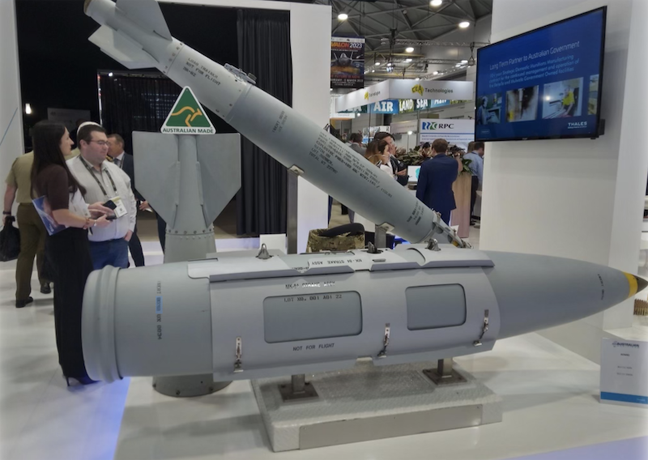
All’s not fair at the warfare Expo, where taxpayer-funded arms merchants hobnob with military types by invitation only. “Aggressive” journalists not allowed. Persona non grata Callum Foote reports on Land Forces 2022, Australia’s biggest War Fair.
Land Forces is the annual exposition for the defence industry, or the most profitable corporate welfare exercise in the country.
Australia is the fourth largest importer of weapons in the world, behind Saudi Arabia, India and Egypt. It is roughly the 20th largest exporter of weapons. This is a disparity former Defence Minister Christopher Pyne, now a defence industry consultant, set out to rectify in 2018 with the launch of the $3 billion Defence Export Strategy after meeting with Abu Dhabi’s Crown Prince Mohamed bin Zayed al Nahyan. Pyne, who was in attendance at Land Forces 2022, stated at the time the goal of making Australia a top-10 exporter.
Over the next decade, the Australian government will invest $200 billion in the Defence Force with an eye to support the weapons export industry. In line with these goals, Australian military spending has shot through the roof – from $10 billion in 2000 to just under $50 billion in the last budget. The big winners? Largely foreign multinational defence contractors, and plenty of small local ones too; they’re growing along with the public spending.
Land Forces is their gathering, the gathering of the year for those looking to earn a profit from this public investment. The conference brings in interest from international weapons makers such as Boeing and Thales as well as 700-odd smaller Australian manufacturers and service providers hoping to get in on the action.
Alms for arms
The company behind Land Forces, AMDA, formerly the Aerospace Maritime and Defence Foundation of Australia, is part of a group of companies registered with Australian Charities and Non-for-profit Commission which operates around the country.
Yes, that’s right: AMDA is a weapons charity; and despite its income of $10m-plus from defence contractors and governments, it also helped itself to JobKeeper subsidies, despite rising profits during the Pandemic.
t has 24 full-time-equivalent employees and had a total revenue in 2021 of $8.5 million – 13% of which came from government grants.
While revenue in 2021 was down from 2020, where the ‘‘charity’’ pulled in $10.5 million, profit was actually up from $2.1 to $3.5 million. Sales revenue also rose slightly in 2021 from $7.2 million to $7.4 million.
Where this charity’s financials differ from most, not even to begin discussing its purpose, is that as of 2021 AMDA has $32.5 million in assets, up from $28 million the year before, with over $10 million of that being in cash or cash equivalents. Were it not for JobKeeper, its large cash reserves would still be large but not quite so large.
With all this cash, one would think that AMDA could weather any storm. Not so, according to the board which includes not one but two former chiefs of the Australian Navy, a former chief of Army and Air Force and a former CEO of Lockheed Martin Australia, who decided to take JobKeeper payments.
That’s right, over 2020 and 2021 AMDA took $1.2 million in JobKeeper payments, $870,000 in 2021 and $360,000 in 2020.
In the same period the total remuneration to the key management personnel of the charity, people such as the CEO and the board members, was $1.5 million and $1.4 million respectively.
Despite the fact that this is public money, AMDA has refused to comment on whether it will be returning the taxpayer subsidies it took to line the coffers of its charity while increasing executive pay.
Embedded with the activists
The activists protesting outside the arms fair are up against a powerful foe, and they know it.
While protesting under the banner of Disrupt Land Forces, a campaign organised under the flag of activist organisation Wage Peace, the activists are reluctant to claim that they are a part of any organisation at all. It’s more of a community, they say.
Most protesters are wary of the media and wish to remain anonymous. There are members of more ‘‘hardcore’’ organisations such as Extinction Rebellion and Blockade Australia, 12 of which were arrested last June during civil action related to climate change.
On Tuesday morning, around 50 or so of the protesters gathered outside the Brisbane Convention and Exhibition Centre entrance where a rally received moderate media attention from SBS and Channels 10 and Seven.
These media outlets were really only interested in the Greens politicians, led by Senator David Shoebridge, who briefly talked to the activists before clearing off. The cameras then left with them, leaving the activists to the rest of the weeks activities.
Depending on who you ask, the goal of the protesters is to either meaningfully decrease the attendance of the conference or increase the cost of putting it on……………………………………………………..
A likely Coalition
Many of the protesters have been involved in activism for decades, such as Margie Pestorius, a spokesperson for Wage Peace who has been protesting since the late 1980s.
“I was part of the Melbourne Rainforest Action Group [MRAG] at its height in 1989. We blockaded ships carrying Malaysian rainforest timber threatening the livelihoods and lives of the Indigenous Penan and the ecosystems they had nurtured and lived with.”
Pestorius has since pivoted to anti-militarism activism, which lacks the same support as environmental causes here in Australia.
Among the protesters are Aunty Sue Haseldine, Indigenous elder from Kokatha country who has had to deal with the fallout of atomic weapons testing in her country. Now she has learnt that Souther Launch, an Australian space company who has “aligning their business goals with defence industry priorities” according to Thales will be testing on her land once again.
Aunty Sue says she will refuse to leave if testing goes ahead “If they’re going to destroy heritage then they’re going to destroy me too. That country out there is our church, our school, our spirituality, our pharmacy. It is shameful to know that these weapons will be tested on our country which will then be used to commit atrocities across the world” she told a crowd outside Thales’ office in Brisbane.
Uncle George Dimara from West Papua also spoke outside Thales, decrying the use of Australian-built Thales Bushmasters being used by Indonesian forces in West Papua.
Others include members from Teachers for Peace, a group of Australian teachers who are pushing back against what they see as the encroachment of defence industry spending in the education sector.
The protests lack the wide-scale support seen in the environmental movement such as the thousands strong marches that have taken place in Australia’s major cities over the past few years, but that doesn’t mean these activists are dismayed.
According to Adrian Heaney, a spokesperson for Wage Peace, “these protests have demonstrated our commitment to resisting the profit-fuelled arms race enabled by institutions like Land Forces. Arms fairs of this kind in Australia have been stopped before by people power—it’s our responsibility to continue this tradition. There is no time left for more murder, more destruction. We need collaboration, not more conflict.” https://michaelwest.com.au/what-do-you-think-the-arms-trade-is-a-charity-actually-yes-thats-what-it-is/
Never mind Australia’s economic problems, health crisis etc – Weapons for Zelensky is the big need.

Zelensky: Australia to deliver ‘significant’ new support for Ukraine, The Age Matthew Knott, October 6, 2022 Ukrainian President Volodymyr Zelensky has revealed Australia is preparing to ramp up support for his nation’s war against Russia by announcing a new tranche of military assistance, including donations of heavy weapons.
In an appearance via video link at the Lowy Institute think tank in Sydney, Zelensky urged the global community not to give in to Russian President Vladimir Putin’s “nuclear blackmail”………………..
Asked what Australia could do to help Ukraine, Zelensky said the Albanese government had been preparing a “significant package” of assistance that will be announced soon.
“This process is ongoing as we speak and I’m very grateful to that,” he said. “It’s not only small arms but heavy weapons as well.”
Zelensky said that, for the upcoming round of assistance, Australia had been negotiating with other countries to announce a joint support package for Ukraine.
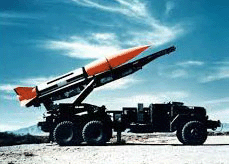
Ukrainian Ambassador to Australia Vasyl Myroshnychenko has publicly asked Australia to provide Ukraine with a supply of anti-ship missiles known as Harpoons and howitzer long-range weapons.
Ukraine is also asking for an additional fleet of 30 four-wheel drive vehicles on top of the 60 already provided…………………..
He also called for “new and tough sanctions against Russia” as a punishment for its invasion of Ukraine. https://www.theage.com.au/politics/federal/zelensky-australia-to-deliver-significant-new-support-for-ukraine-20221006-p5bnrm.html
Pacific islanders want nuclear legacy aid
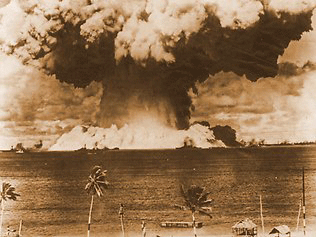
https://www.canberratimes.com.au/story/7931308/pacific-islanders-want-nuclear-legacy-aid/ By Emma Farge, October 5 2022,
Nuclear powers have criticised an effort led by the Marshall Islands and backed by Australia at the United Nations to seek help on dealing with the consequences of nuclear testing.
The issue is before the UN’s Human Rights Council and involves the United States, Britain, Russia, India and China, all of them nuclear-armed.
Pacific islanders, who are particularly threatened by rising sea levels from climate change, are becoming more vocal in seeking redress from former colonial powers and wealthy countries on environmental and climate issues which they say affect their human rights.
This motion brought to the Human Rights Council on Monday by the Marshall Islands, Fiji, Nauru, Samoa and Vanuatu and backed by Australia requests assistance from the UN rights office; seeks a report from its boss; and calls for a future debate at the council.
“The nuclear legacy is a lived reality for us that must be addressed,” Samuel Lanwi, deputy permanent representative of the Republic of the Marshall Islands (RMI) in Geneva told Reuters.
The United States conducted 67 nuclear weapons tests in the Marshall Islands from 1946 to 1958 including “Castle Bravo” at Bikini Atoll in 1954 – the largest US bomb ever detonated. Islanders still suffer the health and environmental effects such as high cancer rates and enduring displacement from contaminated areas.
The Marshall Islands Ambassador to the UN in Geneva, Doreen de Brum could not join the talks because she is on leave following her daughter’s death from cancer. “My fight for nuclear justice is personal,” she said on Twitter.
While the motion does not mention the United States by name, some see it as an attempt to wield leverage over Washington in ongoing negotiations on a Compact of Free Association (COFA) that governs US economic assistance to the RMI. Marshallese diplomats deny this.
The nuclear legacy has been a major sticking point in the talks, although last week US President Joe Biden’s administration acknowledged it and said it remained committed to addressing concerns.
The Marshall Islands, one of 47 voting members on the rights council, is a key Western ally including on human rights, such as on scrutiny of China’s rights record.
Three sources who attended the Geneva talks told Reuters they were surprised by the level of resistance to a resolution seeking “technical assistance” – a term that could take the form of legal and political advice – rather than a formal probe.
“Nuclear powers were converging in their determination to protect themselves from any future accountability and there were attempts to empty out the resolution of any significance,” Yves Lador from Earthjustice said.
Diplomats say there were concerns about opening the door for future litigation. Past nuclear test sites include French Polynesia, Algeria, Kazakhstan and China’s Xinjiang.
The United States, Britain and India all argued that the rights council was not the appropriate forum to raise the issue and sought to strip out references to the new UN right to a clean and healthy environment, according to the sources.
China and Russia also argued for the latter, they said.
The British and Russian missions declined to comment. India’s did not respond. A spokesperson for China’s mission said they had “constructively participated” in the talks.
A vote might be called later this week – something that happens in a minority of cases when countries cannot agree.
Who are the war criminals?
Pearls and Irritations , By Brian Toohey, Sep 29, 2022
One of the few heartening things to come out of Russia’s war against Ukraine is the renewed emphasis on how it’s a crime for national leaders to start a war of aggression. Putin is not the only one who can reasonably be accused of committing war crimes. Most US president since World War II have done so. So have some Australian Prime Ministers.
None of the wars Australia has fought in since World War II were necessary for defence. Instead, they all involved dispatching military expeditions to intervene in countries that posed no threat to Australia. All were wars of aggression, or soon became so, after the initial goal had been quickly achieved…………………………………………………….
The Labor leader Arthur Calwell gave a parliamentary speech demolishing Menzies rationale that North Vietnam was a Chinese puppet. He explained that Vietnam had a “1000-year history of hostility towards China” and said Labor opposed a “cruel, costly and interminable” civil war that would “prolong and deepen the suffering” of the Vietnamese people.
In a particularly despicable war crime, the US dropped more bombs on tiny Laos than the combined total on Europe and Japan during World War II. The total for Laos was the equivalent of a bomb load dropped every eight minutes, 24 hours a day, for nine years. Many were mines or unexploded cluster bombs that continue to kill. The US called this a “secret war”. It was no secret to the Laotians beneath the falling bombs.
The people of Indo-China were no threat to Australia or the US. But the invading forces subjected them to death and disfigurement from carpet bombing, deliberate crop destruction, torture, massacres, assassinations, napalm, and dioxin – the persistent poison that still condemns anguished mothers to give birth to terribly deformed children they spend years nursing.
About 60,000 Australian troops, including 19,000 conscripts, were sent to the war. A total of 521 died and over 3000 were wounded. Estimates of the number of Vietnamese, Cambodians and Laotians killed vary from 1.2 million to over 3.8 million. Far higher than is likely for the war in Ukraine.
While John Howard was Australia’s prime minister in 2003 he made a demonstrably false statement in his March 2003 television address at the start of the illegal invasion of Iraq. He said Iraq possessed chemical and biological weapons that, “Even in minute quantities are capable of causing destruction on a mammoth scale”. Iraq had not produced any new chemical and biological weapons since they were disarmed by UN weapons inspectors in 1991.
Howard also claimed that the supply of intelligence was a “priceless component” of the relationship with the US and the UK. Far from priceless, the intelligence on WMD was worse than useless: it provided the rationale for a disastrous invasion. With few exceptions, the Australian media peddled nonsense in support of invasion.
Unlike Bush and Blair, Howard has never admitted that he was wrong to help invade Iraq. In 2016, Sir John Chilcot’s devastating report on the British involvement on the war found that the “benefit of hindsight was not needed to understand the intelligence was flawed”. But Howard told journalists he wouldn’t “retreat” from his decision to invade. Howard’s grotesque mistakes reinforce the need for the full Parliament to authorise a decision to go to war.
Howard also announced the dispatch of Australian SAS and other troops to Afghanistan to combat the Al Qaeda terrorist group. This group escaped in the opening months of the war. With the terrorists gone, there was no rationale for the US or Australia to stay. Their continued participation in a war of aggression was a war crime. No Afghanis took part in the September 11 attacks or helped al-Qaeda plan these atrocities. Before September 11, the Taliban government in Kabul offered to hand bin Laden over to the US. The offer was ignored……………………………………..
The last of the Australian military left in April 2021 after 41 had died and 260 were wounded or injured. How many they killed is unknown. The financial cost of the Australian contribution was $8.4 billion.
On August 30, 2021 the last of the US forces left Afghanistan behind with a rapidly growing humanitarian crisis in which starvation is rife……………………..
By the standards now rightly being applied to Vladimir Putin, the American and Australian leaders who brought devastation to Iraq and Afghanistan, George W Bush, Tony Blair and John Howard should arguably appear in the dock, subject to the presumption of innocence. Justice also demands a reasonable effort be made to bring them before a court. That hasn’t happened and won’t until the public demand justice. https://johnmenadue.com/who-are-the-war-criminals/
Aukus plan to expedite Australia’s nuclear sub construction an act of nuclear proliferation under ‘naval nuclear propulsion’ cover: Chinese mission to UN.
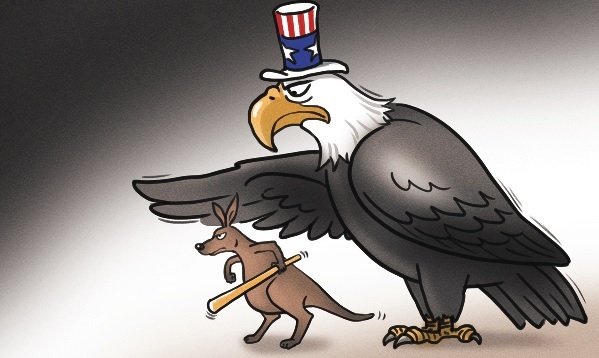
https://www.globaltimes.cn/page/202209/1276076.shtml By Leng Shumei and Hu Yuwei , Sep 26, 2022 , The Chinese mission to the UN in Vienna warned in an exclusive statement sent to the Global Times on Sunday that the latest move by AUKUS to plan to expedite Australia’s nuclear submarine construction is a blatant defiance of and trampling on the international nuclear non-proliferation system, and is an act of nuclear proliferation under the pretext of “naval nuclear propulsion.”
A spokesperson of the Chinese mission to the UN and other international organizations in Vienna made the comment after leaders of the US, UK and Australia said on Friday marking the one-year anniversary of the AUKUS security pact that they have made “significant progress” toward Australia acquiring a nuclear-powered submarine.
In disregard of the serious concerns of the international community on the trilateral nuclear submarine deal, the US is insisting on and even making reckless remarks about accelerating the deal, which is a blatant defiance of and trampling on the international nuclear non-proliferation system, the spokesperson told the Global Times in the statement.
China has repeatedly pointed out that the nuclear submarine deal among the three countries violates the Treaty on the Non-Proliferation of Nuclear Weapons (NPT), the IAEA Comprehensive Safeguards Agreement (CSA) and Additional Protocols (AP). It is an act of nuclear proliferation under the pretext of “naval nuclear propulsion,” the statement noted.
The US regards China as an “imaginary enemy.” The act of inciting Indo-Pacific competition seriously undermines regional peace and stability, which shows that the US has a wrong understanding of China, of the world and of itself, it said.
We hope that the US side will abandon the Cold War mentality, abandon the use of nuclear submarine cooperation among the three countries to contain China, abandon the trampling of international rules for geopolitical purposes, and work with China to implement the important consensus of the two heads of state, and practice mutual respect, peaceful coexistence, win-win cooperation, and shoulder the responsibility of a major country, read the statement.
Leaders of the US, UK and Australia said in a statement on Friday “We are steadfast in our commitment to Australia acquiring this capability at the earliest possible date,” according to Reuters.
The Biden administration is exploring an arrangement to expedite Australia’s acquisition of nuclear-powered submarines to respond to China’s growing military might by producing the first few submarines in the US, The Wall Street Journal reported on Saturday, citing some Western officials.
The idea is to provide Australia with an initial nuclear-powered fleet by the mid-2030s, while a longer-term effort is under way to give Australia the capability to produce nuclear-power submarines at home, according to The Wall Street Journal.
Chinese experts warned that Australia should also be alert that it is sleepwalking into a US trap to serve as the latter’s pawn in the US’ strategy against China. But they also believed that it would not be easy to implement the plan given the lack of spare shipbuilding capacity in the US and in Britain.
In August, the US admiral in charge of building new Columbia-class ballistic missile submarines said producing nuclear-power subs for Australia would interfere with the US’ efforts to build its own submarines unless a major effort was made to expand the American industrial base, according to the Wall Street Journal.
It is questionable how feasible the plan actually is, Chen Hong, president of the Chinese Association of Australian Studies and director of the Australian Studies Centre at East China Normal University, told the Global Times on Sunday.
The nuclear-powered submarine deal under AUKUS is a blatant, irresponsible act of nuclear proliferation, and once again proves that AUKUS countries are practicing a “double standard” on nuclear non-proliferation and using the deal as a tool for geopolitical gamesmanship, Ambassador Wang Qun, China’s Permanent Representative to the United Nations in Vienna, told the Global Times in a recent exclusive interview.
Song Zongping, a Chinese TV commentator, warned it is already a fact that the US is dedicated to nuclear weapons proliferation.
But more importantly, the US is pushing its frontier against China to Australia by weaponizing Australia with nuclear submarines. The Australia’s nuclear-submarine fleet would be a squadron of and be controlled by the US, Song noted.
In the Friday statement, the AUKUS leaders – US President Joe Biden, UK Prime Minister Liz Truss and Australian Prime Minister Anthony Albanese – also said they had made “significant strides” in other areas, including hypersonic weapons, cyber, electronic warfare capabilities and additional undersea capabilities, according to Reuters.
Chen warned that by enhancing cooperation under AUKUS in these aspects, Australia does not understand that it is actually sleepwalking into a trap to serve as a pawn for the US’ strategy against China.
Currently, the nuclear-powered submarine deal under AUKUS attracts the most attention, but cooperation under AUKUS is far more complex as the organization’s long-term strategic aim is to contain China’s development, Chen noted.
Australia is being pushed into the teeth of the storm in the US’ strategy against China. It should be on high alert that it probably is sacrificing its own national security for other countries’ national interests, Chen warned.
South Australia’s premier says buying nuclear submarines directly from US would degrade Australian shipbuilding
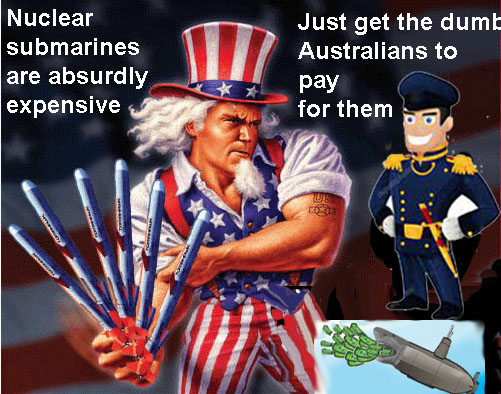
Proposal to fast-track submarines by having them produced by US ‘would not be acceptable’, Peter Malinauskas says
Guardian Sarah Martin, @msmartoSun 25 Sep 2022
The South Australian premier, Peter Malinauskas, has criticised a proposal for Australia to buy nuclear submarines directly from the US, saying it would “not be acceptable” for his state to miss out on promised submarine manufacturing jobs.
A report in the Wall Street Journal on Saturday suggested the Biden administration was considering a plan with the UK and Australia to fast-track nuclear-powered submarines for Australia by the mid-2030s by producing the first few submarines in the US.
However, given existing production constraints at US shipyards, the deal would depend on Australia making a financial commitment to expand the US’s submarine-production capacity to ensure it could also meet its domestic demands.……………………………………….
When asked if it would be acceptable for the Australian government to purchase submarines from the US without training an Australian workforce as part of the deal, Malinuaskas was clear.
“No, that would not be acceptable from the state government’s perspective, because that would represent a degradation of what has been promised, and that is that these subs are being built in Australia,” he said.
“It all depends on the pathway, and that detail really matters here – not just for the economic interests of the state, but also from our sovereign submarine-building capacity, which is such a central tenet of de-risking Australia’s security position.”
How Australia intends to fill the capability gap between its existing Collins Class fleet and the new fleet of up to 12 nuclear-powered submarines is the subject of a federal government review that is due to report by March next year.
On Sunday the defence minister, Richard Marles, said the review, being undertaken by former defence minister Stephen Smith and former Australian defence force chief Angus Houston, would consider how best to fill the capability gap that would otherwise see Australia wait until the mid-2040s for new submarines……………………………………………………………
In a joint statement released last week to mark one year of the Aukus pact, the leaders of Australia, the UK and the US said that the group had made significant progress towards Australia acquiring conventionally armed, nuclear-powered submarines.
“We are steadfast in our commitment to Australia acquiring this capability at the earliest possible date,” the statement said. https://www.theguardian.com/world/2022/sep/25/sa-premier-says-buying-nuclear-submarines-directly-from-us-would-degrade-australian-shipbuilding
25 September – anniversary of nuclear bombing at Maralinga – causing Aboriginal deaths, and later deaths of soldiers exposed to radiation.
David Jarvis
On 25 September 1957, a 6 kiloton nuclear device was exploded at Maralinga range South Australia. None of the aboriginals whose bodies were discovered by the armed service personnel were living.
The Aussie and British Defence personnel all died in their fifties from cancers. Australia spent over 100 $million cleaning up the English’s nuclear explosions and the smaller and more dangerous tests that occurred in the hundreds!
After a long and difficult legal battle, the indigenous families received less than $14 million aud in compensation for their losses of habital land and family deaths and ongoing radioactive damage done to their genome.
In three days time will the Australian government hold a day of mourning for those lost lives?
China, and others, see the International Atomic Energy Agency as biased in supporting AUKUS nuclear submarines plan

Ed note. My problem with the IAEA is that it is NOT an impartial body, on matters nuclear
China accuses IAEA of issuing a ‘lopsided’ report on AUKUS nuclear submarines plan, more https://www.abc.net.au/news/2022-09-14/china-iaea-lopsided-aukus-nuclear-submarines-report/101441254 By foreign affairs reporter Stephen Dziedzic 15 Sept 22
China’s Foreign Affairs Ministry has launched a furious attack on the UN nuclear watchdog over AUKUS, accusing the International Atomic Energy Agency (IAEA) of issuing a “lopsided” report about Australia’s plan to build nuclear submarines while ignoring widespread concerns about its ramifications for non-proliferation.
Key points:
- The IAEA issued a report to member states which said it was “satisfied with the level of engagement” from Australia, the UK and US
- A Chinese Foreign Ministry spokeswoman slammed the report, saying China was “gravely concerned about the substance” of it
- China has lobbied against AUKUS accusing the three countries of undermining the non-proliferation treaty
Last week the IAEA sent member states a confidential report on Australia’s move to develop the submarines drawing on nuclear submarine technology provided by the United States and the United Kingdom.
China has lobbied relentlessly against the deal in international forums, accusing the three countries of undermining the non-proliferation treaty and fuelling a regional arms race.
However Reuters reported last Friday that the IAEA issued a confidential report to member states which said it was “satisfied with the level of engagement” with the agency from all three nations so far.
Earlier this week the IAEA Director General Rafael Grossi struck a similar tone while addressing the agency’s Board of Governors, saying the Secretariat had held four “technical meetings” with the three AUKUS members so far and suggesting it was comfortable with the way they were handling the matter.
But on Tuesday Chinese Foreign Ministry spokeswoman Mao Ning slammed the report, saying China was “gravely concerned about the substance.”
“This report lopsidedly cited the account given by the US, the UK and Australia to explain away what they have done, but made no mention of the international community’s major concerns over the risk of nuclear proliferation that may arise from the AUKUS nuclear submarine cooperation,” she said.
“The report turns a blind eye to many countries’ solemn position that the AUKUS cooperation violates the purpose and object of the NPT.”
IAEA report finds AUKUS non-proliferation risks ‘limited’
While China has repeatedly attacked Australia, the United States and the United Kingdom over the agreement, this is the first time it has publicly excoriated the IAEA over the matter.
US and Australian officials have privately accused Beijing of gross hypocrisy over its public attacks on AUKUS, pointing out that China has been rapidly developing its own fleet of nuclear powered submarines — including submarines capable of launching nuclear weapons.
But nuclear non-proliferation advocates have also raised serious concerns about AUKUS, suggesting that it will establish a dangerous precedent by allowing a non-nuclear state to acquire nuclear propulsion technology for the first time.
Indonesian diplomats have also repeatedly made it clear they’re uneasy about the plan, and the country’s foreign ministry recently claimed recently that it won widespread support at the United Nations nuclear non-proliferation review conference for its plan to monitor nuclear material in submarines more closely.
Reuters reported last week that the IAEA report acknowledged Australia’s argument that the non-proliferation risks posed by AUKUS were limited because it would only be provided with “complete, welded” nuclear power units which would make removing nuclear material “extremely difficult.”
It reportedly also said the material within the units could not be used in nuclear weapons without chemical processing which requires facilities which Australia does not have and will not seek..
Australia needs a non-nuclear submarine – the TKMS TYPE 218SG would be fine – just do it, Richard Marles!

This article is definitely worth the read! Highly possible we may not be getting nuclear subs in Australia – and the reasons why!
National Times The Answer is staring Richard Marles in the Face. ( Article by Politics Australia) 17 Sept 22.

It was fomer Australian Prime Minister Scott Morrison’s rank incompetence, stupidity and arrogance that has landed Australia in its Submarine replacement program dilemma
But all this goes back the Liberal Party and its bizarre idea to buy French Nuclear Submarines and have them convert back to a conventional propulsion system. This meant a complete redesign of the existing hull to accommodate diesel engines, fuel tanks and bank of batteries.
Just what were our Defence Planners thinking, obviously the French must have been laughing all the way to the bank.
All this was done in the face of existing and proven conventionally designed submarines. Submarines that were available at the time.

It was only because Scott Morrison wanted to appear the big man by cancelling the French submarine contract and tugging his forelock to the British and the Americans who held out the distant promise of Australia buying British or American Nuclear Submarines. In reality it was about basing existing American submarines here for them to operate out of Australia.
As it turns out the current and forecast British and American building programs have no scope to add in an extra eight or so submarines for Australia’s needs and never intended to.
Then there was Peter Dutton’s desperate political pitch that Australia could lease a couple of Nuc Boats from the Americans, another stupid idea.

At present Richard Marles is doing an ‘all the way with LBJ’ routine, sticking to the script with Australia purchasing Nuclear Submarines. Having Nuc Boats isn’t just a matter of tying them up at the Port of Darwin, Freemantle, or Sydney. There needs to be specific infrastructure to accommodate, service and maintain these expensive pieces of kit and that is something Australia does not have.
Sure, the proponents of Nuclear Submarines will argue that Nuc Boats have unlimited range and would be able to conduct long range patrols right up into the South China Sea, in cooperation with the Americans, and remain on station undetected for weeks and weeks on end.
While in theory this is true, Nuc Boats and to a lesser degree conventional submarines are governed by the same logistical problem that faced the Germans in WWII and that is the amount of food they need to carry.
Politics Australia can assure our readers that a Nuc Boat’s endurance is governed by the amount food it can carry which obviously limits its time on station.
So, let’s look at some basic economics.
If it were to occur, Australia might purchase a current Virginia class submarine which costs $US3.6 billion ($5.2 billion) but as reported in the Australian Financial Review by Andrew Tillett who reports that estimates for the new design put the price tag at between $US5.8 billion ($8.4 billion) and $US6.2 billion ($9 billion) per boat.
However, the cost of a German 218 class submarine is $1.36 Billion.
For instance, the German 212A, 214 and 218 class submarines are very capable and are equipped with Air Independent Propulsion.
The Air Independent Propulsion allows submarines to stay underwater longer before surfacing to recharge the battery that powers its systems. The battery is charged by a diesel engine that needs air to operate.
As such, the Type 218SG Submarine can last underwater two times longer than Australia’s current Collins Class submarines. “That makes the submarine even more stealthy and mysterious because it can be all over the place without coming up,”
They have a crew of 30 and can stay submerged for 3-4 weeks.
Australia could buy 10 class 212A or 218 submarines off the shelf for approximately $15B by around 2030,
It’s widely known the Germans are very keen to do a deal with Australia over Submarine purchases.
The conventional Submarines are quieter than nuke boats and could be maintained in Australia.
Nuclear submarines are unmaintainable in Australia and would have to be maintained in the USA. Crews in the vicinity of 100 to 137 add to the costs, and if ever delivered, it won’t be until at least 2045 at a cost of more than $150B.
Food for thought, isn’t it?
Richard Marles has to stop dithering and tugging his forelock to the Americans and think about Australia’s needs first and not those of the Americans and their anti-China stance.
Richard Marles can order German, Japanese, Spanish or Swedish conventional submarines and have them delivered in a timely manner whilst still maintaining Australia’s best interests.
Stop dithering Richard Marles and just ‘do it’
Aw gee shucks – Australia can be IMPORTANT if we lead USA’s attacks with our AUKUS submarines !
Marles said nuclear subs would make “the rest of the world take us seriously”,
Final design and cost of Australia’s nuclear submarines to be known in early 2023, Defence minister Richard Marles links the cutting-edge technology to Australia’s economic and trade success
Guardian, Josh Butler, Thu 15 Sep 2022 The defence minister, Richard Marles, says Australia’s pathway to acquiring nuclear submarines is “taking shape”, flagging key decisions within months about which ship to use, how to build it and boosting the country’s defence-industrial capability.
On the first anniversary of the Aukus pact, Marles said nuclear subs would make “the rest of the world take us seriously”, linking the cutting-edge technology to Australia’s economic and trade success.
Final design and cost of Australia’s nuclear submarines to be known in early 2023
Defence minister Richard Marles links the cutting-edge technology to Australia’s economic and trade success…………………………….
On the first anniversary of the Aukus pact, Marles said nuclear subs would make “the rest of the world take us seriously”, linking the cutting-edge technology to Australia’s economic and trade success.
“The optimal pathway is taking shape. We can now begin to see it,” he said. “With Aukus there’s a really huge opportunity beyond submarines of pursuing a greater and more ambitious agenda.”……..
Marles, also the deputy prime minister, said the first steps toward acquisition of nuclear submarines were on track. In a briefing call with journalists this week, he said the current timeline had Australia slated to make initial announcements in the first part of 2023.
The government plans to give answers to five questions by that time: the final design; when it can be acquired; what capability gap that timeline will create and solutions to plug it; the cost; and how Australia’s plans comply with nuclear non-proliferation obligations.
The government is said to be choosing between building American or British ships, or some hybrid. Marles said the government was not ready to announce which type of submarines would be built but hinted Australia’s design could be “trilateral” in nature………..
In a press conference with Marles in the UK earlier this month, the British defence secretary, Ben Wallace, said future submarine designs may see a combination of British, American and Australian components.
“We are on to our next design and our new one and that might well be fully shared with all three nations as a collaborative design,” he said.
The cost of the submarine program is not yet known but is expected to be in the tens of billions. Marles linked the Aukus arrangement not only to military but economic security, saying a boosted submarine fleet would protect freedom of navigation through vital shipping routes.
“We need a highly capable defence force which has the rest of the world take us seriously and enables us to do all the normal peaceful activities that are so important for our economy,” he said………

V Adm Jonathan Mead, the chair of the nuclear submarine taskforce, also spoke of protecting “sea lanes” on the call.
Mead said the navy was investigating workforce challenges, such as how to build and crew the ships – which may involve placing Australian staff in British and American nuclear schools or agencies, laboratories and shipyards
“The exchange of these personnel will be both ways and won’t just involve our submariners,” he said.
Facilities to build and maintain the submarines in Australia are part of the equation. Defence this year pinpointed Brisbane, Newcastle and Port Kembla as possible sites for an east coast nuclear base and consultation with those communities is said to be in its early stages.
Marles also spoke of building Australia’s defence-industrial capability on the back of the nuclear process…………………..“We hope Aukus can help develop a genuinely seamless defence industrial base across the US, the UK and Australia.”…………………….
A report from the Australian Strategic Policy Institute (Aspi), released on Thursday, recommended further investment in other Aukus streams like hypersonic missiles and artificial intelligence technology, to help plug a capability gap while the submarines are built………..
Such short-term investment may force government to make “difficult choices and trade-offs” in its defence strategic review, also slated for March, Aspi said. https://www.theguardian.com/australia-news/2022/sep/15/final-design-and-cost-of-australias-nuclear-submarines-to-be-known-in-early-2023
Australia needs a non-nuclear submarine – the TKMS TYPE 218SG would be fine – just do it, Richard Marles!
This article is definitely worth the read! Highly possible we may not be getting nuclear subs in Australia – and the reasons why!
National Times The Answer is staring Richard Marles in the Face. ( Article by Politics Australia) 17 Sept 22
It was fomer Australian Prime Minister Scott Morrison’s rank incompetence, stupidity and arrogance that has landed Australia in its Submarine replacement program dilemma.
But all this goes back the Liberal Party and its bizarre idea to buy French Nuclear Submarines and have them convert back to a conventional propulsion system. This meant a complete redesign of the existing hull to accommodate diesel engines, fuel tanks and bank of batteries.
Just what were our Defence Planners thinking, obviously the French must have been laughing all the way to the bank.
All this was done in the face of existing and proven conventionally designed submarines. Submarines that were available at the time.
It was only because Scott Morrison wanted to appear the big man by cancelling the French submarine contract and tugging his forelock to the British and the Americans who held out the distant promise of Australia buying British or American Nuclear Submarines. In reality it was about basing existing American submarines here for them to operate out of Australia.
As it turns out the current and forecast British and American building programs have no scope to add in an extra eight or so submarines for Australia’s needs and never intended to.
Then there was Peter Dutton’s desperate political pitch that Australia could lease a couple of Nuc Boats from the Americans, another stupid idea.
At present Richard Marles is doing an ‘all the way with LBJ’ routine, sticking to the script with Australia purchasing Nuclear Submarines. Having Nuc Boats isn’t just a matter of tying them up at the Port of Darwin, Freemantle, or Sydney. There needs to be specific infrastructure to accommodate, service and maintain these expensive pieces of kit and that is something Australia does not have.
Sure, the proponents of Nuclear Submarines will argue that Nuc Boats have unlimited range and would be able to conduct long range patrols right up into the South China Sea, in cooperation with the Americans, and remain on station undetected for weeks and weeks on end.
While in theory this is true, Nuc Boats and to a lesser degree conventional submarines are governed by the same logistical problem that faced the Germans in WWII and that is the amount of food they need to carry.
Politics Australia can assure our readers that a Nuc Boat’s endurance is governed by the amount food it can carry which obviously limits its time on station.
So, let’s look at some basic economics.
If it were to occur, Australia might purchase a current Virginia class submarine which costs $US3.6 billion ($5.2 billion) but as reported in the Australian Financial Review by Andrew Tillett who reports that estimates for the new design put the price tag at between $US5.8 billion ($8.4 billion) and $US6.2 billion ($9 billion) per boat.
However, the cost of a German 218 class submarine is $1.36 Billion.
For instance, the German 212A, 214 and 218 class submarines are very capable and are equipped with Air Independent Propulsion.
The Air Independent Propulsion allows submarines to stay underwater longer before surfacing to recharge the battery that powers its systems. The battery is charged by a diesel engine that needs air to operate.
As such, the Type 218SG Submarine can last underwater two times longer than Australia’s current Collins Class submarines. “That makes the submarine even more stealthy and mysterious because it can be all over the place without coming up,”
They have a crew of 30 and can stay submerged for 3-4 weeks.
Australia could buy 10 class 212A or 218 submarines off the shelf for approximately $15B by around 2030,
It’s widely known the Germans are very keen to do a deal with Australia over Submarine purchases.
The conventional Submarines are quieter than nuke boats and could be maintained in Australia.
Nuclear submarines are unmaintainable in Australia and would have to be maintained in the USA. Crews in the vicinity of 100 to 137 add to the costs, and if ever delivered, it won’t be until at least 2045 at a cost of more than $150B.
Food for thought, isn’t it?
Richard Marles has to stop dithering and tugging his forelock to the Americans and think about Australia’s needs first and not those of the Americans and their anti-China stance.
Richard Marles can order German, Japanese, Spanish or Swedish conventional submarines and have them delivered in a timely manner whilst still maintaining Australia’s best interests.
Stop dithering Richard Marles and just ‘do it’
1 This month
17 October, Free Public Talk on Nuclear Issues in South Australia
David Noonan will speak on public interest concerns over the new Roxby Downs Indenture Act 2026 on BHP copper-uranium mining and ore processing in SA, and on how AUKUS may face SA with a High-Level nuclear waste agenda.
Dr Jim Green will discuss international developments in the field of nuclear power including ‘small modular reactors’ and Generation 4 ‘advanced’ nuclear reactor concepts.


Help Aunty Sue Protect Her Land and Sacred Sites From Destructive Rocket Testing.
.

Australians deserve the truth
about
AUKUS – https://aukuspublicinquiry.com/

PETITION – To: Prime Minister Anthony Albanese and the Australian Labor Government

of the week – Australians for War Powers Reform (AWPR)
To see nuclear-related stories in greater depth and intensity

