UN Security Council ceasefire resolution a turning point in Gaza war
March 26, 2024, by: The AIM Network, m https://theaimn.com/un-security-council-ceasefire-resolution-a-turning-point-in-gaza-war/
Australian Council for International Development Media Release
Australia’s peak body for international humanitarian organisations welcomes the United Nations Security Council’s resolution calling for an immediate ceasefire in Gaza and release of all hostages as a crucial turning point in the war.
Australian Council for International Development (ACFID) CEO Marc Purcell said it marked a significant breakthrough despite the United States’ decision to abstain from voting.
“This passage of this binding resolution, following four failed attempts since the start of the war, shows global leaders are no longer willing to accept the deaths of tens of thousands of civilians, many of them children, as collateral,” he said.
“The US’ decision to abstain is disappointing, particularly since it put forward its own failed proposal for a ceasefire just days ago. It is essential the US use its influence and relationship with Israel to obtain a permanent ceasefire.
“We are hopeful the passage of this resolution overnight marks a crucial turning point in the war that has killed nearly 32,000 civilians through bombing, starvation and dehydration.
“It is vital that both the state of Israel and militant groups immediately lay down arms to allow for the passage of humanitarian assistance, which is still being blocked from entry into Gaza, and the release of all hostages.”
ACFID is urging the Australian government to commit additional and ongoing funding for the humanitarian response in Gaza and the West bank, including for Australian non-government organisations providing lifesaving assistance.
AUKUS: Red flag for arms industry corruption

There has been almost no public commentary about the likely influence of the arms industry in the secretive AUKUS deal.
MICHELLE FAHY, MAR 22, 2024, https://undueinfluence.substack.com/p/aukus-red-flag-for-arms-industry?utm_source=post-email-title&publication_id=297295&post_id=142851171&utm_campaign=email-post-title&isFreemail=true&r=1ise1&triedRedirect=true&utm_medium=email
The arms trade is known for being one of the most corrupt of all legal international trades.
UK research shows that this corruption drives and distorts arms procurement decisions. Arms purchases that were not previously being considered can suddenly appear on the agenda.
Before delving into AUKUS, an egregious distortion in Australian defence procurement, I’ll briefly revisit the original French submarine contract.
The research shows that submarines, in particular, are a procurement area where a very high proportion of the small overall number of deals involve major corruption.
French multinational Naval Group had been wrangling with Malcolm Turnbull’s government for almost two years trying to get the formal contract signed.
In August 2018, Scott Morrison became PM.
Soon after, Naval Group hired David Gazard, well-connected lobbyist, former Liberal candidate, and close friend of Scott Morrison, to help them get the deal over the line.
Within months, the Morrison government had signed the contract.
In early 2019, the ABC reported, ‘Naval Group confirmed the arrangement but did not disclose how much Mr Gazard’s company was being paid for its lobbying services’.
Mr Gazard’s company, DPG Advisory Solutions, declined to comment to the ABC about its role. I sent similar questions to Mr Gazard this week and received no response by deadline.
At the time Australia put Naval Group on the shortlist, the company was under investigation for corruption in three other arms deals: two for submarines (Pakistan and Malaysia) and one for frigates (Taiwan). The Abbott government would have known this.
These were not minor corruption cases: all involved murder.
French authorities commenced another corruption investigation into Naval Group (submarines; Brazil) in late 2016, after Australia had awarded Naval Group the deal, but before we signed the contract.
How did the Abbott, Turnbull and Morrison governments shortlist, select, and then sign a contract with a company being investigated in four separate corruption cases?
Murder, corruption, bombings – the company at centre of Australia’s submarine deal
Naval Group was selected by the Australian government to build its new fleet of submarines while at the centre of a deadly criminal saga and numerous global corruption scandals. How did this happen? MICHELLE FAHY, OCT 24, 2020
AUKUS submarines
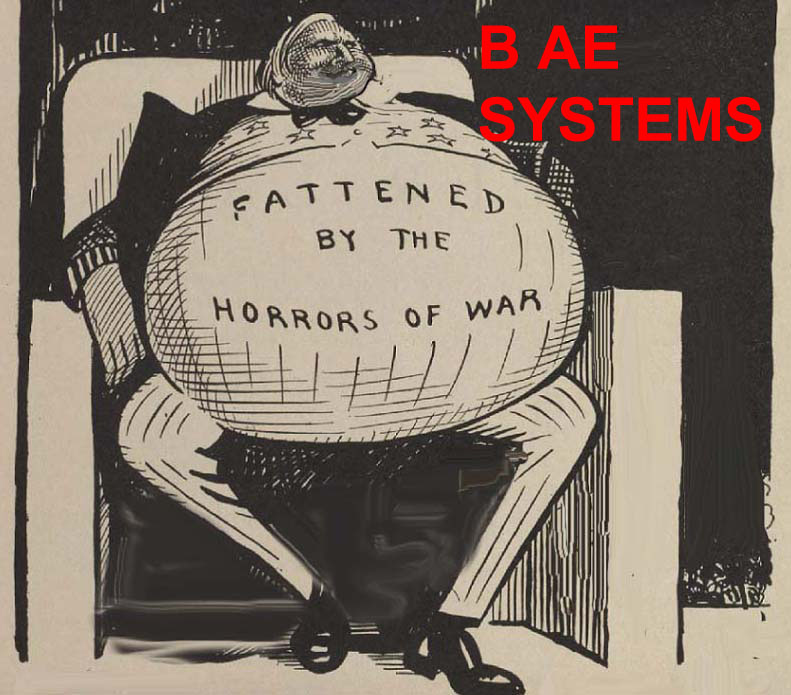
BAE Systems Australia is Defence’s largest contractor and has been for six of the past eight years.
BAE Systems is set to be a significant beneficiary of AUKUS.
Six months ago, the UK Government awarded the company a £3.95 billion (A$7.5 billion) contract for the detailed design phase of the AUKUS submarines.
On Friday, Defence Minister Richard Marles announced that Australia will send $4.6 billion (£2.4 billion) to the UK. Australia’s money will contribute to BAE’s detailed design phase of the AUKUS submarines and will also help clear bottlenecks in the Rolls Royce nuclear reactor production line.
This $4.6 billion expenditure is in addition to the $3 billion of Australian money already committed to support US naval shipyards.
The UK’s current submarine programs (managed by BAE) are running well behind schedule raising questions about whether BAE can deliver on the AUKUS agreement.
BAE Systems also provides perhaps the best-known example of systematic high-level arms industry corruption.
Britain’s series of arms deals with Saudi Arabia was, and remains, its biggest ever arms deal. It earned BAE Systems at least £43 billion in revenue between 1985 and 2007, with further deals still ongoing. The deal included £6 billion pounds in ‘commissions’ (bribes), paid to the Saudis.
In addition, during the 1990s and 2000s, in ‘a deliberate choice that came from the top’, BAE Systems maintained a shell company registered in the Cayman Islands called Red Diamond Trading. This vehicle channelled hundreds of millions of pounds of bribes around the globe to key decision makers in a succession of arms deals.
The Guardian’s BAE Files contain 15 years of reporting on this subject.
Sinking billions: Undergunned and overpriced. Missing records, billions in over-runs, conflicts of interest, and flawed ships. How the Defence Department’s new frigates project is a boondoggle for a British weapons-maker. MICHELLE FAHY, JUL 03, 2023
It has also been revealed that BAE Systems was given the Hunter class frigate contract despite ‘long-running concerns’ inside Defence about BAE’s alleged inflation of invoices by tens of millions of dollars on the earlier Adelaide class of frigates.
Detailed allegations of fraud in the Adelaide-class contracts, including by Thales Australia, were published in three separate articles by The Weekend Australian in May 2019.
A Defence internal audit had reportedly found that BAE’s contract was ‘riddled with cost overruns, with the British company consistently invoicing questionable charges’.
Defence launched a second investigation.
18 months later, I asked Defence about the outcome of its second investigation. This was their response:
An independent internal review of this matter found no evidence of inappropriate excess charges by BAE and Thales. The investigation did find some minor administrative issues which have been subsequently addressed through additional training. This training is now part of the normal cycle and is routinely refreshed.
The ‘independent’ review was conducted in secret by an existing defence contractor. His report was not made public.
Defence said ‘no evidence’ was found of inappropriate excess charges. Yet the allegations were apparently so serious they were referred to Defence’s assistant secretary of fraud control who then referred several matters to the Independent Assurance Business Analysis and Reform Branch of Defence.
Recently, I have been collaborating with UK colleagues trying to uncover more about the Adelaide-class contracts. Freedom of Information requests have been lodged. Defence has blocked them, refusing to release a single page.
An appeal was submitted, Defence blocked that too. We have now appealed to the Information Commissioner.
If this was merely ‘a minor administrative issue’ that has been resolved by ‘additional training’, why the aggressive blocking of any release of information through FoI?
Undue influence and the revolving door
I will finish by outlining a mini case study of undue influence and the revolving door – that of former CEO of BAE Systems Australia, Jim McDowell.
I am not implying any illegality on the part of Mr McDowell. I am simply laying out an array of his government appointments – not all of them – to highlight the extensive influence that just one person can have.
Jim McDowell had a 17-year career with BAE Systems including a decade as its chief executive in Australia, then two years running its lucrative Saudi Arabian business. He resigned from BAE in Saudi Arabia in December 2013.
In 2014, McDowell was appointed by the Coalition to a four-person panel undertaking the First Principles Review of Defence. This Review recommended sweeping reforms to the Defence Department, including its procurement processes, which have largely benefited major arms companies.
In 2015, the Coalition appointed McDowell to a 4-person expert advisory panel overseeing the tender process for the original submarine contract. When he announced McDowell as being part of this panel, Defence Minister Kevin Andrews didn’t mention McDowell’s long history with BAE Systems, which had ended only 18 months earlier. It was highly relevant, as BAE designs and manufactures Britain’s submarines.
In late 2016, then-defence industry minister Christopher Pyne hired McDowell as his adviser to develop the Naval Shipbuilding Plan. The appointment was not announced publicly. At that time, McDowell was also on the board of Australian shipbuilder Austal.
Under the shipbuilding plan, Austal subsequently won a contract to build six more Cape-class patrol boats while BAE Systems won the biggest prize, the Hunter-class frigate contract.
After the frigate deal was announced, South Australian premier Steve Marshall hired McDowell to head his Department of Premier and Cabinet. SA was the state that gained most from the shipbuilding plan.
In 2020, McDowell left the South Australian public service to become CEO of Nova Systems, a key defence contractor.
Last year, McDowell moved back through the revolving door into a senior role with the Defence Department. He is now Deputy Secretary for Naval Shipbuilding and Sustainment, reporting directly to defence secretary Greg Moriarty.
When appointed, McDowell said his new role was an opportunity he couldn’t turn down because it ‘provides the ability for me to shape the future of Australia’s shipbuilding and sustainment’.
In my view, McDowell’s long list of sensitive senior appointments should not have been possible. He cannot be the only person in the country qualified to undertake each of these roles.
This was a brief discussion of some aspects of the undue influence of the arms industry in Australia. I raise these issues in this AUKUS context because there has been almost no public commentary about the likely influence of the arms industry in the AUKUS deal.
This is an edited and updated version of a speech given on 12.3.24 at the Independent & Peaceful Australia Network (IPAN) forum, ‘AUKUS and Military Escalation: Who Pays and Who Benefits?’. The other speakers were Allan Behm, Dr Sue Wareham and Professor Hugh White. Speeches can be viewed here.
Sinking billions: undergunned and overpriced

Missing records, billions in over-runs, conflicts of interest, and flawed ships. How the Defence Department’s new frigates project is a boondoggle for a British weapons-maker.
MICHELLE FAHY, JUL 3, 2023, https://undueinfluence.substack.com/p/sinking-billions-undergunned-and?utm_source=post-email-title&publication_id=297295&post_id=132705738&isFreemail=true&utm_medium=email
Part one of a two-part series.
In this two-part investigation, Declassified Australia examines the flawed contracting process that led to a $46 billion naval ship-building deal that has been found to be suffering what an investigative audit described as ‘corruption vulnerabilities’.
The company at the centre of the scandal, UK arms giant BAE Systems, is revealed to have lied to Australia’s Defence Department about the planned ship’s design.
Crucial departmental records of key decision-making meetings have gone missing, while no overall assessment of whether the selected BAE design was value for money was ever made.
The Australian National Audit Office (ANAO) reported in May its findings on the multi-billion dollar contract Australia signed in December 2018 with BAE Systems to build nine Hunter-class frigates.
The ANAO found that BAE had overstated – bureaucratic language for lied – the level of development of the frigate’s design, which meant cost inflation and schedule slippage were severely under-estimated.
BAE exaggerated the maturity of its design to get around a key government objective requiring the ship to be based on an existing military-off-the-shelf design with a minimum level of change.
Defence selected the BAE Systems frigate even though the two other ships on its shortlist were considered the two most viable designs.
Business as usual
Conflicts of interest, secret consulting deals, and revolving door appointments all undermine democracy, yet this is business-as-usual at the Defence Department, the nation’s biggest procurement agency.
Former senior BAE executives have been placed at the heart of Australia’s naval procurement. They have helped write government shipbuilding policy, overseen the navy’s largest tenders, and have even been hired by the government to negotiate on its behalf with their former employer on a deal now found to be riddled with probity concerns.
Granting preferential access to certain arms industry insiders escalated under previous Liberal-National coalition governments and since 2022 has continued under the Albanese Labor government, making this a story about state capture as well, when a corporation has the power to bend governments to its will.
When combined with departmental corruption or incompetence, or both, the result is defence procurement projects that are billions of dollars over budget and running years late. As a result, the navy is facing massive capability gaps.
Continue reading this story at Declassified Australia…
Turnbull says Australia ‘mugged by reality’ on Aukus deal as US set to halve submarine build
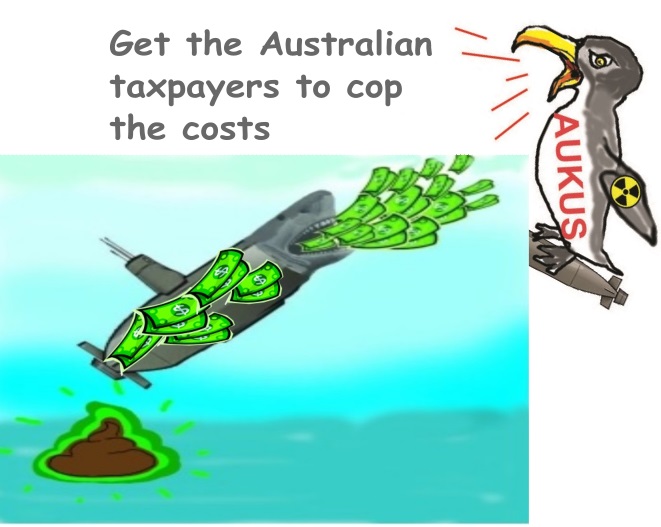
“Australian taxpayers should not be footing the bill for America’s dockyards.
We are on the hook to the tune of $3bn as soon as next year as a downpayment for subs that might never arrive and be useless on delivery,”
Former PM says the reality is the US will not make their submarine deficit worse by giving or selling submarines to Australia
Amy Remeikis, Wed 13 Mar 2024 , https://www.theguardian.com/world/2024/mar/13/turnbull-says-australia-mugged-by-reality-on-aukus-deal-as-us-set-to-halve-submarine-build
Australian taxpayers should not be footing the bill for America’s dockyards.
We are on the hook to the tune of $3bn as soon as next year as a downpayment for subs that might never arrive and be useless on delivery,”
The former prime minister Malcolm Turnbull said Australia has been “mugged by reality” over the Aukus submarine deal after the US announced it will halve the number of submarines it will build next year, throwing the Australia end of the agreement into doubt.
With the US president, Joe Biden, continuing to face a hostile Congress, the Pentagon budget draft request includes construction of just one Virginia-class nuclear submarine for 2025.
Under the Aukus agreement, production is meant to be ramped up to ensure Australia will have access to at least three Virginia-class submarines from the US in the 2030s. That is to fill a “capability gap” before nuclear-powered submarines to be built in Adelaide enter into service from the 2040s.
The prime minister, Anthony Albanese, played down the impact of the US budget announcement, insisting that “our plans are very clear”.
“We have an agreement that was reached with the United States and the UK,” Albanese told reporters in Darwin on Wednesday. “That legislation went through the US Congress last year. That was a product of a lot of hard work.”
The defence minister, Richard Marles, said earlier that the US remained committed to the deal.
“As we approach the one-year anniversary of Aukus, Australia, the United States and United Kingdom remain steadfast in our commitment to the pathway announced last March, which will see Australia acquire conventionally armed, nuclear-powered submarines,” he said.
“All three Aukus partners are working at pace to integrate our industrial bases and to realise this historic initiative between our countries.”
Greens senator David Shoebridge, who has been critical of the Aukus deal from the start, said the US budget announcement was the beginning of the end of Aukus.
“When the US passed the law to set up Aukus, they put in kill switches, one of which allowed the US to not transfer the submarines if doing so would ‘degrade the US undersea capabilities’. Budgeting for one submarine all but guarantees this,” he said on X.
4/ The failure is almost too big to wrap your head around.
We are providing billions of dollars to the US, have given up an independent foreign policy and made Australia a parking lot for US weapons. In exchange, we get nothing.
Nothing but a big target and empty pockets.— David Shoebridge (@DavidShoebridge) March 12, 2024
The US budget does include increased spending on the submarine industrial base, which was a key component of the Aukus pillar one deal, as it laid the groundwork to increase production in the coming years.
But Turnbull, an architect of the French submarine deal which was unceremoniously dumped by the Morrison government in favour of the Aukus deal, said Australia was now at the mercy of the United States for a key part of its defence strategy.
He said that the US needed to increase submarine production to meet its own needs before it was able to transfer boats to Australia, but were now only producing about half as many that were needed for the US navy and were struggling to maintain the boats they held, due to labour shortages.
“What does that mean for Australia? It means because the Morrison government, adopted by Albanese, has basically abandoned our sovereignty in terms of submarines, we are completely dependent on what happens in the United States as to whether we get them now,” he told ABC radio.
“The reality is the Americans are not going to make their submarine deficit worse than it is already by giving or selling submarines to Australia and the Aukus legislation actually sets that out quite specifically.skip past newsletter promotion
“So you know, this is really a case of us being mugged by reality. I mean, there’s a lot of Aukus cheerleaders, and anyone that has any criticism of Aukus is almost described as being unpatriotic. We’ve got to be realistic here.”
The ALP grassroots activist group, Labor Against War, want the Albanese government to freeze Aukus payments to the US so as not to “underwrite the US navy industrial shipyards”.
The national convenor of Labor Against War, Marcus Strom, said Australian taxpayers should not be footing the bill for America’s dockyards.
We are on the hook to the tune of $3bn as soon as next year as a downpayment for subs that might never arrive and be useless on delivery,” he said.
“This Labor government managed to junk Scott Morrison’s tax plan. Why would it be so stupid to continue with his war plan?”
While the Pentagon has sought to assure Australia its submarine production will be back on track by 2028, the looming threat of Donald Trump returning to the White House has raised further concerns the deal will be scuttled.
“On Aukus pillar 1 we are effectively in conflict with the needs of the US navy, and you know as well as I do the American government, when it comes to a choice between the needs of the US navy and the Australian navy, are always going to back their own,” Turnbull said.
Marles has previously denied Aukus will erode Australia’s sovereignty. In a speech to parliament last year, Marles said Australia would “always make sovereign, independent decisions on how our capabilities are employed”.
Additional reporting by Daniel Hurst
How Biden’s budget plunged the Aukus submarines pact into doubt
Alarm in Australia as the US suddenly struggles to fortify its own fleet
Matt Oliver, INDUSTRY EDITOR, 18 March 2024
A year on from the trio’s meeting, the Aukus partnership is suddenly
looking decidedly more fragile. Inside defence circles, there are growing
doubts about America’s ability and willingness to deliver following a
shock proposal from the Biden administration that cuts to the heart of the
deal.
Amid a row at home over government budgets, the White House this
month suggested halving the number of Virginia-class submarines it builds
next year – the very same type it has promised to Australia under Aukus.
That means the US faces a shortfall itself, raising the prospect it may
refuse to sell its existing vessels and leave Canberra in the lurch.
Telegraph 18th March 2024
Huge UK £286bn nuclear submarine deal with US at risk for one reason warns ex Navy chief

The construction of modern nuclear submarines requires more expertise than it took to land a man on the Moon, says the former chief of the Royal Navy.
EXPRESS UK, By CIARAN MCGRATH, Senior News Reporter, Sat, Mar 16, 2024
The first will see the US and UK share technology with Australia in order to develop a new class of nuclear-powered submarines, the SNN-AUKUS, while the second pillar will focus on cyber capabilities, artificial intelligence, quantum technologies, and additional undersea capabilities.
However, speaking earlier this month, Hugh White, an emeritus professor of strategic studies at the Australian National University, voiced his doubts about the long-term viability of AUKUS, citing estimated costs of up to £286 billion between now and the 2050s.
Prof White told ABC RN’s Global Roaming: “I think the chance of the plan unfolding effectively is extremely low.”
Meanwhile, in an analysis published last week, Allan Behm, director of Australia’s International and Security Affairs Program, wrote: “The 2021 AUKUS announcement came with the promise of a sovereign Australian fleet of nuclear-powered submarines.
“Nearly 18 months on, however, it remains unclear if these submarines will ever be delivered – or if Australia actually needs them.”………………
He explained: “Pillar Two is very useful, and there’s a discussion about whether Japan be allowed to get involved, should Canada be involved, etc, that’s great.
“But with Pillar One, there are a number of complications. So, yes, there’s a cost which is huge, and the Australians seem to be committed to it.
“But there are now a number of voices in Australia saying, can we really do this, as one would expect
“The other thing is the Americans themselves, who are going to be selling four Virginia class submarines to the Australians as a stop-gap.
“They are short of nuclear attack submarines and so there are people in America who are saying, ‘well, how are we sure we want to do this because we can’t build enough quickly enough to fill up the gap when we get rid of the ones we’re giving to Australia’.”
The Royal Navy currently operates six fleet submarines (SSNs), of the Trafalgar and Astute classes, with two more Astute-class boats currently under construction, and four ballistic missile submarines (SSBN), of the Vanguard class, equipped with nuclear weapons. All are nuclear powered.
However, Lord West emphasised that such vessels did not simply “come off the conveyor belt”.
He explained: “The Astute class submarines are more complex than the technical work to land a man on the moon. That is how incredibly complex the technology is. https://www.express.co.uk/news/world/1877871/aukus-deal-australia-royal-navy-astute-class
AUKUS anniversary brings a sinking feeling.

The Age, By Matthew Knott, March 13, 2024 —
As anniversaries go, this one has turned out to be quite a downer.
A year since Anthony Albanese, Joe Biden and Rishi Sunak stood at a naval base in San Diego to unveil Australia’s plan to acquire a fleet of nuclear-powered submarines, critics of the AUKUS pact are cock-a-hoop and its backers are on the defensive.
It’s a turnaround from December, when AUKUS’s champions were celebrating the fact that the notoriously dysfunctional and divided United States Congress had passed legislation authorising the sale of three Virginia-class submarines to Australia.
“This is a very significant accomplishment for all the parties involved,” declared US Congressman Joe Courtney, co-chair of the Congressional Friends of Australia Caucus.
“A lot of people have been holding their breath to see whether Congress takes this seriously.”
Yet in the lead-up to the one-year milestone, prominent commentators have been promoting a sense of gloom around the submarine plan.
“Dead in the water: the AUKUS delusion,” screams the bright yellow cover of the current edition of the Australian Foreign Affairs journal.
In the lead essay, defence expert and longtime AUKUS sceptic Hugh White argues the submarine plan will “almost certainly fail”, effectively reading AUKUS’s last rites before the pact has even reached teething age.
After laying out multiple ways in which the submarine plan could fall apart, White predicts the crunch is “perhaps most likely to come in Washington, where a number of hurdles could prove fatal to America’s willingness to sell us Virginia-class subs”.
Esteemed Financial Times foreign affairs columnist Gideon Rachman ventilated these anxieties to an international audience in February in a piece titled, “The squawkus about AUKUS is getting louder”.
Then came the Tuesday release of the Biden administration’s 2025 defence budget request, revealing it was only seeking funding for one Virginia-class submarine to built in the coming year. That is down from the two previously expected and well below the production rate of 2.33 subs a year the US says is necessary to sell any submarines to Australia.
As it tries to compete with China for supremacy in the Indo-Pacific, the US Navy is currently 17 attack submarines below its target of 66 – raising obvious questions about whether it will agree to hand over three boats to Australia beginning in 2032.
The legislation passed by Congress last year requires the president of the day to certify that the transfer of the submarines “will not degrade the United States undersea capabilities” and would be contingent on the US “making sufficient submarine production and maintenance investments” to meet its own needs.
The US navy is struggling to cope with supply chain blockages and worker shortages, so much so that the defence sector bought prime-time advertisements during the Oscars telecast to convince welders, forklift drivers, plumbers and marine biologists to help make AUKUS a reality.
Far from elated, AUKUS’s biggest champion in the US Congress is now furious. Describing the budget request as a “hard rudder turn”, Courtney said the decision to produce just one Virginia-class boat in a year “makes little or no sense” and would have a profound impact on both the US and Australian navies.
Former prime minister Malcolm Turnbull, who has long argued Australia would be better off under the deal he struck with France to acquire conventional diesel submarines, leapt onto ABC radio to say he told us so.
“This is really a case of us being mugged by reality,” Turnbull said.
“We are bobbing along as a cork in the maelstrom of American politics…Unless the Americans are able to dramatically change the pace at which they’re producing submarines, and there’s no reason to believe they will be able to do so, we will not ever get the submarines that were promised.”
The Australian and US governments have tried to push back on the doubters, with Defence Minister Richard Marles insisting the three nations “remain steadfast in our commitment to the pathway announced last March”.
The US Navy argues it is pouring $11 billion into the US industrial base over five years, with a plan to produce two Virginia-class submarines by 2028 and the 2.33 required to meet its AUKUS commitments soon after that.
……………………………………………………….. depends on how optimistic you feel about the American political system and the strength of the US-Australia alliance. Meanwhile, we have to contend with the possibility of Donald Trump’s return to the White House and no one knows what he would do about AUKUS…………………………….
From the moment it was announced a year ago, it has been clear the submarine plan was courageous in the Yes, Minister sense of the word: a hugely ambitious and risky endeavour that could come unstuck in several ways. While it is vastly premature to declare AUKUS dead, immense challenges remain.
Ultimately, only the delivery of the promised submarines will silence the doubters – not soothing words from Washington and Canberra. https://www.theage.com.au/politics/federal/aukus-anniversary-brings-a-sinking-feeling-20240313-p5fc0y.html
Pentagon sparks fresh AUKUS doubts on anniversary of Australia’s nuclear-powered submarine plans
ABC, By defence correspondent Andrew Greene, 13 Mar24
- In short: Defence Minister Richard Marles says AUKUS partners are working to help Australia acquire nuclear-powered submarines despite changes to procurement plans in the US.
- The US Navy says it will order just one fast-attack nuclear submarine in 2025, rather than two.
- What’s next? As part of the AUKUS deal, Australia will provide more than $4.5 billion to bolster America’s submarine industrial base
………………………………………Already the US is struggling to ramp up its submarine production rate to an annual target of 2.33 so it can replace retiring boats in its own fleet and begin transfers of second-hand stock to Australia in the early 2030s.
At present, the US is only achieving around 1.2 to 1.3 boats each year due to labour shortages and supply chain delays following the COVID-19 pandemic, with the Navy not expected to consistently hit a two-per-year target until 2029.
Former prime minister Malcolm Turnbull told the ABC Australia’s future defence had become completely dependent on the United States.
…………………………………….. This week marks one year since Prime Minister Anthony Albanese joined British counterpart Rishi Sunak and US president Joe Biden at a San Diego Naval Base to outline the AUKUS “optimal pathway” for Australia to acquire nuclear-powered submarines.
Greens senator David Shoebridge described the latest US defence budget request as a failure for the AUKUS partnership that was “almost too big to wrap your head around” and predicted Australia would end up with “nothing”.
“When the US passed the law to set up AUKUS they put in kill switches, one of which allowed the US to not transfer the submarines if doing so would ‘degrade the US undersea capabilities’. Budgeting for one submarine all but guarantees this,” he warned
………………………….Budget changes under new proposal
As part of the AUKUS deal, Australia will provide more than $4.5 billion to bolster America’s submarine industrial base, while the US aims to contribute a similar amount contingent on congressional negotiations over defence spending that are complicated by the Ukrainian war.
However, this week’s Pentagon budget proposal requests Congress to appropriate a further $US4 billion for the US submarine industrial base in 2025, and $US11.1 billion over five years, for a “historic” investment to expand production.https://www.abc.net.au/news/2024-03-13/us-defence-announcement-raises-questions-on-aukus-anniversary/103578408
Issues Changing the Nation: Never Ending AUKUS Submarine Policy Sagas

March 14, 2024 : The AIM Network, By Denis Bright
The issue of AUKUS has resurfaced from the murky depths of undersea politics. ABC News graphics remind readers of the latest additional payment to fast track the AUKUS deal with its proposed cost of at least $US368 billion.
Public policy interest in the AUKUS submarine saga is now being propelled by doubts about US construction deadlines for the high technology nuclear-powered submarines. The US Navy confirmed that it will halve the number of nuclear-powered submarines on offer in its 2025 budget. Second-hand LA Class submarines will not be available for sharing with Australia as they will be needed in the USA. Even the construction schedule for AUKUS-class submarines in Adelaide is now in doubt (ABC News 13 March 2024).
For readers who are new to this issue, I might restate some background to the AUKUS deals. The commercial military industrial complexes do not advertise their hidden details. Making a request to Gemini-Google Bard provided this summary for verification by readers:
- US Virginia-class submarines: Australia will acquire at least three (and potentially up to five) Virginia-class nuclear-powered attack submarines from the US. The first of these might be in early 2030s. The leading corporations from the US military industrial complexes are General Dynamics and Huntington Ingalls Industries (Newport News Shipbuilding). Numerous supportive technology companies engage in preparations for these developments including involvement from Boeing.
- AUKUS-class submarines: Provided through US and British commercial providers of a new class of nuclear-powered attack submarines during the 2040s. The British firms particularly embedded in the AUKUS Programme are:
: BAE Systems will play a critical role in the construction of the AUKUS submarines.
: Babcock International will be involved in construction and maintenance.
: Rolls-Royce will be involved in design and delivery of the nuclear reactors.
- Temporary Rotational Deployment UK Astute-class and US Virginia-class submarines are planned on a rotational basis to HMAS Stirling in Western Australia.
The US Studies Centre in Sydney (9 February 2024) offered commentary by its Director Professor Peter Dean and research associate Alice Nason:
AUKUS has become a case study in generational politics. Public opinion polling reveals only 33 per cent of Gen Z and millennial voters believe it’s a good idea for Australia to have nuclear-powered submarines, compared with 66 per cent of voters aged sixty-five and over.
Still, on some things, all generations agree: a plurality of Australian voters feel nuclear-powered submarines are not worth the cost to Australian taxpayers. Only 21 per cent of voters believe the submarines warrant their $368bn price tag.
These apprehensions, especially among young people, should alarm our policymakers. The people who are expected to staff Australia’s new submarine enterprise as of now don’t support it. This is only the tip of the iceberg for Australia’s workforce challenge.
Australia will build up a sizeable military industrial complex over the next half-century if the AUKUS deals proceed as planned. Lobbying in support of AUKUS has attracted retired political leaders from both sides of politics who are committed to the goal of a more militarized Australia (Anton Nilsson Crikey.com 23 January 2024).
From the far-off United States, Anna Massoglia and Dan Auble from the Open Secrets site were able provide details of lobbying by major corporations in during 2023 just in support of AUKUS. Boeing, Lockheed Martin and General Dynamics topped the lobbying spending with a combined expenditure of over $US80 million.
David Hardaker of Crikey.com exposed the roles of conservative lobbyists in support of the efforts of the military corporates (31 May 2023). This is an exercise in investigative journalism at its best:
A Crikey investigation into the power of conservative political lobbyists CT Group has revealed that two US companies represented by CT are set to be among the biggest winners of the “forever” AUKUS defence deal hatched by former prime minister Scott Morrison.
One of the companies, General Dynamics, is the lead contractor for constructing the US navy’s fleet of nuclear-powered submarines. The other company, Centrus Energy, is the leading provider of nuclear fuel for US national security purposes and for naval reactors.
CT’s US entity, CTF Global LLC, has acted as a lobbyist for General Dynamics and Centrus Energy since it set up shop in Washington in 2018, taking on the client list of long-term lobbyist Larry Grossman who was seeking to extend the global reach of his firm.
The evolution of the CIT Group as defence lobbyists came as it reached the peak of its political influence in Australia at the end of 2018 with its then-Australian CEO Yaron Finkelstein joining Morrison’s staff as principal private secretary.
In parallel with Australia, the CT Group also enjoyed the closest of relationships with then-UK prime minister Boris Johnson. David Canzini, a former CT executive, was part of Johnson’s team as a deputy chief of staff.
Readers can follow the investigative trails offered through Crikey.com:
Explore the Series
In this era of cost-of-living politics, no one on either side of politics seems to worry about the irregular additional costs of the AUKUS deals. There was an unexpected allocation of $A835 million to France was imposed on the Labor Government for breach of contract from the cancellation of Malcolm Turnbull’s submarine deal.
- Crosby Textor: the pollsters that took over the Liberal Party and became a global power.
- Mere coincidence? Crosby Textor is the common link in Morrison’s AUKUS deal.
- Scott Morrison issues blanket denial on nuclear submarine questions.
- Spooks and spies: Crosby Textor moves into shadowy territory.
- Crosby Textor group’s influence on the Liberals has been pervasive. Is it time to cut the link?
- Crosby Textor’s influence on prime ministers helped it dominate the Anglosphere.
The Register of Lobbyists and the Foreign Influence Transparency Scheme (the Scheme) from the Attorney-General’s Department do not provide easy access to the specific roles played by lobbyists for firms associated with military industrial complexes. Just knowing which lobbyists have an association with a company like the CT Group is of little practical purpose in investigative journalism. This is a sample register extract for the CT Group which was mentioned in the Crikey.com articles.The LinkedIn site offers more clues by showing which ex-politicians or former military personnel and policy advisers with links to Australian and global military industrial companies through both lobbying activities or the convening of forum events or other corporate links. There is nothing sinister about the openness of the opportunities offered through LinkedIn which opens a new world of connections for further investigation by journalists.
Here are just three examples. Arthur Sinodinos, Joel Fitzgibbon, Lynton Crosby
…….. Critical discussion might be painful to political elites. Armed conflicts in a nuclear age are even worse. Let’s pause for some reflection before more jingoism gets Australia into real trouble through over-commitment to global corporate military industrial complexes and the expansion of a stronger home-grown variant in Australia. https://theaimn.com/issues-changing-the-nation-never-ending-aukus-submarine-policy-sagas/
AUKUS: Are nuclear-powered submarines a good idea for Australia?

“[So] the question for us is, is it sensible for Australia to commit itself to go to war with the US against China — a war we have no reason to believe the US can win, in order to acquire submarines that we don’t need?”
ABC RN / By Nick Baker and Taryn Priadko for Global Roaming 5 Mar 24
There were always going to be questions about a nuclear-powered submarine deal with a (stated) price tag of up to $368 billion.
But, as the dust settles on the AUKUS security pact and Australians patiently wait for the subs that come with it, some defence experts are warning that the deal could fall apart.
“I think the chance of the plan unfolding effectively is extremely low,” Hugh White, an emeritus professor of strategic studies at the Australian National University, tells ABC RN’s Global Roaming.
Professor White was a defence adviser to the Hawke government and worked as a deputy secretary for strategy and intelligence in the Department of Defence. He’s also been a big critic of AUKUS.
So could AUKUS sink? And what would that mean for Australia’s defence plans?
What is AUKUS?
On September 15, 2021, a new trilateral security partnership between Australia, the UK and the US was announced, called AUKUS (A-UK-US).
Australia was scrapping its earlier $90 billion deal with France for 12 conventional-powered submarines and instead securing nuclear-powered submarines through AUKUS.
More details were announced on March 13 last year, including around the two so-called “pillars” of AUKUS.
Pillar One, which has received the most attention, is the submarines.
The plan is for Australia to buy at least three nuclear-powered Virginia class submarines from the US in the early 2030s.
We will then build at least five of a new, nuclear-powered submarine class dubbed the SSN-AUKUS, likely in Adelaide, in the 2030s, 2040s and beyond.
Pillar Two involves the sharing of technology, in areas like quantum computing, artificial intelligence and hypersonic missiles.
Former prime minister Scott Morrison called AUKUS “the best” decision of his government, while current Prime Minister Anthony Albanese has said it would “strengthen Australia’s national security and stability in our region”.
AUKUS worries
Professor White has two main worries around AUKUS.
“We do need submarines. I think submarines are a very important part of a defensive posture for Australia … [But] I don’t think we need nuclear-powered submarines,” he says.
“They’re so much more expensive. They’re so much more difficult to make. They’re so much more difficult to operate. We’ll end up with far fewer of them in our fleet.”
He says his second concern is far bigger: “I don’t think we’re going to get [the submarines].”
He claims the plan is overly reliant on future decisions and assistance from the US and UK governments, and also full of near-insurmountable technical tasks for Australia.
“I think what’s going to happen … is within the next few years, the whole thing will just come apart in our hands. And we’ll be back to square one trying to work out how to get some more conventional [submarines].”
Allan Behm, the director of the international and security affairs program at the Australia Institute, also doubts the likelihood of the AUKUS deal going ahead as planned.
One reason, he says, is that the technologies, skills and workforce that are required from a country like Australia to build and maintain nuclear-powered subs is pushing our limits, even with the involvement of the US and UK.
“We’re going into a technological domain with which we are totally unfamiliar,” says Mr Behm, who has a 30-year career in the Australian public service and was senior advisor to then-shadow minister for foreign affairs Penny Wong.
“We’re talking about a number of submarines with nuclear propulsion systems in them. And we’ve only got one nuclear reactor in Australia, which is nothing like the very, very highly enriched uranium reactors, the pressure water reactors that exist in nuclear-powered submarines,” he says.
“I think the best parallel would be, how would Australia imagine that it would undertake, conduct and retrieve a moon launch?”
US versus China
If AUKUS goes ahead as planned, is it the best way to keep Australia safe?
It’s been framed as a massive deterrent to China, which keeps building up its military.
Mr Morrison told the ABC last year, AUKUS helps to “change the calculus for any potential aggressors in our region”.
But Professor White says there are pitfalls with this strategy too.
He claims AUKUS could pull Australia into a future US-China conflict over Taiwan, which he contends the US may not win.
“China has focused so strongly and so effectively on building precisely the kinds of forces it needs to prevent the US projecting power by sea and air into the Western Pacific,” he says.
“[So] the question for us is, is it sensible for Australia to commit itself to go to war with the US against China — a war we have no reason to believe the US can win, in order to acquire submarines that we don’t need?”
While Australia has made clear it will have full control over the nuclear-powered submarines under the deal, Professor White says the US may still expect us to support them in a future war.
Cost concerns
The estimated cost of the submarine program will be up to $368 billion over the next 30 years. It’s a figure that has attracted no shortage of criticism.
“It puts so many of our defence eggs in one super expensive basket,” Mr Behm says.
“Short of expanding our defence budget by a considerable amount … we would find ourselves with very constrained capabilities in other fields in order to meet the expenditure targets of this project.”
And, based on other defence projects, he contends there will be cost blowouts.
“Whenever [the Department of] Defence says it’s going to cost you $1, always multiply it by three. And so your $368 billion is, in effect, a lifetime cost of $1 trillion,” he says.
“And you can do a hell of a lot with $1 trillion.”
A safer Australia?
The AUKUS critics have their critics too.
Peter Dean, the director of foreign policy and defence at the University of Sydney’s US Studies Centre, says he has a “diametrically opposed” outlook to Professor White and Mr Behm………………………………………………
Scrap AUKUS, totally rethink defence?
Meanwhile, Professor White, from the anti-AUKUS camp, is advocating a totally different approach to AUKUS.
He says Australia should pivot away from the US and think about “how we can develop our national capability to defend ourselves independently against a major Asian power?”
“Traditionally, Australians have believed that as a very big continent with a relatively small population … we couldn’t possibly defend ourselves. But I don’t think that’s right.”
But he says this would need a change in priorities…………………………………………………
A missing part of the discussion
Mr Behm, also from the anti-AUKUS camp, says there’s an element sometimes missing in discussions about defence.
Diplomacy has got to be central to the way in which you think about your long-term national security,” he says.
“You get much more return on your investment in diplomacy than you ever get out of defence systems, which in the life of almost all of them you never use.”………………………………….
Mr Behm advocates for more emphasis on “how you use the intellectual and cultural resources of the nation to both protect and to promote its deep and long-term security”.
“[So] I would be prepared to argue that the pivot on which our national security rests is the foreign minister.” https://www.abc.net.au/news/2024-03-05/aukus-set-to-sink/103534664
Australian defence: from self-reliance to subsidising US war with China
Pearls and Irritations, By Mike GilliganFeb 23, 2024
Our leaders have rendered us America’s pawn, contractually. Australia has abrogated the right to choose peace with China. Dumbly. Unnecessarily. Deceitfully. For political ends. We once had a leader who put Australia’s security before the desires of a distant, powerful protector. What is the prospect of chancing upon another of Curtinian quality?
Periodically, it is fashionable among Australia’s geostrategic glitterati to ask what to do about America, as if that’s never really been addressed. Of course, the question has dogged Australian governments and officialdom at least from the day Foreign Minister Percy Spender signed the ANZUS treaty in San Francisco in 1951. Having obtained a treaty we then wondered what it meant?
As a face-saver America agreed to a “treaty” with a non-committing clause – to “consult” should one or other party be threatened. But ever alert to political opportunity, PM Menzies acclaimed ANZUS to the Australian public as if it contained NATO’s Article 5 security for Australia. The bluster and deceit has been maintained by Australian governments and media to this day. Today most Australians believe that the US guarantees our security.
At the time even the hard-heads in Defence and Foreign Affairs were hopeful that the treaty might be interpreted generously by the Americans. But it didn’t take long for that optimism to evaporate. Repeatedly, over the first twenty years, America made it clear that it saw the treaty running in its direction. On issues with Indonesia (eg konfrontasi) Australia had unambiguous signals that we were expected to deal with regional issues independently. Meanwhile we were sending our forces into faraway situations created by the US, suffering heavy consequences viz Korea, Vietnam.
The unlikely choice of self reliance
Then in 1969 President Nixon announced the Guam doctrine – each US ally nation in Asia was considered by the US to be in charge of its own security. After two decades of Australia faffing over ANZUS, clarity emerged. The major political parties were at one that Australia should take responsibility for its own defence.
Looking back, that was an extraordinary step for Australia. We acted promptly by restructuring the defence assets – the three military arms were folded into a Defence Force with the organisation overseen jointly by a civilian and military head. Which portended a revolution in thinking.
By 1976 a comprehensive blueprint was ready. Australia’s first ever White Paper on Defence spelt out the intellectual, practical and financial basis for an Australia secured by self-reliant defences:
“A primary requirement is for increased self reliance… we no longer base our policy on expectation that Australia’s forces will be sent abroad to fight as part of some other nation’s force.
we believe that any operations are much more likely to be in our own neighbourhood than in some distant or forward theatre… we owe it to ourselves to be able to mount a national defence effort that would maximise the risks and costs of any aggression.“
For the transformation to work clarity was necessary around America’s role. Our concepts would be directed to defence of Australia. Our scarce resources would not be applied to anyone else’s priorities. It was agreed that American forces would have no operational role in our defence planning. Should America request armed assistance from us and it was judged in our interest, any contribution would be drawn from assets acquired for our own defences. But only after any competing Australian needs were met.
America fully supported this regime throughout the decades.
Australia’s defence policy unambiguously pursued self- reliance over many and varied governments. The objective was articulated in every government review and white paper – until the ascent of PM Abbott. ………………………………………………………………………………………….
Donate »
AUKUS, DEFENCE AND SECURITY, INTERNATIONAL RELATIONS, POLITICS, TOP 5
Australian defence: from self-reliance to subsidising US war with China
Our leaders have rendered us America’s pawn, contractually. Australia has abrogated the right to choose peace with China. Dumbly. Unnecessarily. Deceitfully. For political ends. We once had a leader who put Australia’s security before the desires of a distant, powerful protector. What is the prospect of chancing upon another of Curtinian quality?
Periodically, it is fashionable among Australia’s geostrategic glitterati to ask what to do about America, as if that’s never really been addressed. Of course, the question has dogged Australian governments and officialdom at least from the day Foreign Minister Percy Spender signed the ANZUS treaty in San Francisco in 1951. Having obtained a treaty we then wondered what it meant? It fell short of what we asked for, which was one just like NATO’s with Article 5, please. But what Spender obtained was most unlike NATO. ANZUS holds no assurance that America will assist with armed force if Australia is attacked. It was no oversight. America tenaciously rebuffed such commitment.
As a face-saver America agreed to a “treaty” with a non-committing clause – to “consult” should one or other party be threatened. But ever alert to political opportunity, PM Menzies acclaimed ANZUS to the Australian public as if it contained NATO’s Article 5 security for Australia. The bluster and deceit has been maintained by Australian governments and media to this day. Today most Australians believe that the US guarantees our security.
At the time even the hard-heads in Defence and Foreign Affairs were hopeful that the treaty might be interpreted generously by the Americans. But it didn’t take long for that optimism to evaporate. Repeatedly, over the first twenty years, America made it clear that it saw the treaty running in its direction. On issues with Indonesia (eg konfrontasi) Australia had unambiguous signals that we were expected to deal with regional issues independently. Meanwhile we were sending our forces into faraway situations created by the US, suffering heavy consequences viz Korea, Vietnam.
The unlikely choice of self reliance
Then in 1969 President Nixon announced the Guam doctrine – each US ally nation in Asia was considered by the US to be in charge of its own security. After two decades of Australia faffing over ANZUS, clarity emerged. The major political parties were at one that Australia should take responsibility for its own defence.
Looking back, that was an extraordinary step for Australia. We acted promptly by restructuring the defence assets – the three military arms were folded into a Defence Force with the organisation overseen jointly by a civilian and military head. Which portended a revolution in thinking.
By 1976 a comprehensive blueprint was ready. Australia’s first ever White Paper on Defence spelt out the intellectual, practical and financial basis for an Australia secured by self-reliant defences:
“A primary requirement is for increased self reliance… we no longer base our policy on expectation that Australia’s forces will be sent abroad to fight as part of some other nation’s force.
“we believe that any operations are much more likely to be in our own neighbourhood than in some distant or forward theatre… we owe it to ourselves to be able to mount a national defence effort that would maximise the risks and costs of any aggression.“
For the transformation to work clarity was necessary around America’s role. Our concepts would be directed to defence of Australia. Our scarce resources would not be applied to anyone else’s priorities. It was agreed that American forces would have no operational role in our defence planning. Should America request armed assistance from us and it was judged in our interest, any contribution would be drawn from assets acquired for our own defences. But only after any competing Australian needs were met.
America fully supported this regime throughout the decades.
Australia’s defence policy unambiguously pursued self- reliance over many and varied governments. The objective was articulated in every government review and white paper – until the ascent of PM Abbott. With bipartisan acceptance, even though it meant hard, big decisions from governments. The Hawke government scrapped Navy’s aircraft carrier, to reorient our focus to land-based defences. Large expenditures went preferentially to new equipment, infrastructure and bases across the north. Our ports were a focus for anti-mining measures. We developed a peculiar hybrid of technology which overcame the tyranny of vast maritime surrounds making them a singular strength -our over- the- horizon radar network is unique, unmatched anywhere. Our confidence in detecting air movements all across our northern approaches and beyond went from zero to 95%. Similar numbers apply to ships. A profound increment in the fundamentals of maximising risk for any aggressor, with pervasive synergies.
Three decades after embarking on the self-reliance journey Australia had created a formidable capacity to “maximise the risks and costs of any aggression”. We did it our way, overcoming seemingly insurmountable barriers. With political unity generally.
Sadly, no Defence Minister ever took the trouble to explain to Australians what had been achieved – how and why we should be confident of our security without American forces.
Receding self reliance
Things changed abruptly with the Obama presidency, and its geostrategic “tilt to Asia”. President Obama’s visit here in 2010, grasped as electorally advantageous by the waning Gillard government, put an end to pursuit of self- reliance. The principles of our hard-won independence were eroded almost overnight. Unsaid. Infused with political gratuity. Obama was applauded by our Parliament in announcing that henceforth the US would rotate marine soldiers through northern Australia in increasing numbers.
At the time it looked like a US attempt to turn Australia to joining US competition with China. Ever since it has looked more and more exactly that. We are now fourteen years on from the Gillard capitulation. That period has seen continual sly, escalating obeisance to Americas objectives against China. With no heed to the contradiction that while America identifies China as its chief strategic opponent, it is both the centre of our region and Australia’s foremost trading partner.
In 2014 Foreign Minister Julie Bishop signed a “Force Posture Agreement” (FPA) with US Secretary of State John Kerry, who dines on foreign ministers. The FPA permits US naval and air forces to be based in Australia, to mount operations into our region. At America’s discretion and sole direction, with token consultation. The obvious object being China. The stationing of B52 bombers at Tindal equipped with long stand-off nuclear tipped cruise missiles (near impossible to intercept), makes the devastation of China’s big eastern cities achievable any day, by lunchtime, with confidence, on a signal from Washington.
China must now see that Australia is a permanent threat to its existence, and we have no say in that role. Because America can attack China freely from our shores the FPA effectively means that if US operations are mounted against China, from anywhere, Australia will find itself automatically at war with China.
The Abbott government knew what it was conceding to America in the FPA. Peter Dutton later as a minister of the Morrison government observed that it would be “inconceivable” for Australia not to join a US conflict against China. Yet not a murmur was heard from our Parliament following Bishop signing away our sovereignty. Or even since, ten years on. PM Albanese recently made virtue of the acquiescence saying national security was purposely quarantined from criticism when Labor was in opposition.
A profound blunder by Abbott and Bishop, impossible to overstate. Compounded by a decade of Parliamentary ignominy.
No longer is our defence spending solely for Australia’s priorities. Increasingly since the Obama visit, funds appropriated for Australia’s defence have been directed towards subsidising US confrontation with China. Alongside American staff being internalised here.
The zenith of our conservative governments’ distorting profligacy is the nuclear submarine of AUKUS. Designed to attack China’s nuclear submarines in and around its waters, it is said that PM Morrison created the arrangement in order to “make a meaningful contribution” to US operations against China. All of this project is madness- most obviously the cost borne by us. The project could only be confected by an authentic fool. Any number of credible authorities condemn it. See Hugh White recently
The Albanese government’s Defence Strategic Review (DSR) was drafted by a US- educated academic without experience of Australia’s defence or its intellectual capital. Necessarily delivering a view built on books and American perspective; now at the United States Studies Centre at Sydney University, underwritten by our Defence outlays and US patronage.
That DSR recommended that our Army be developed for amphibious attack operations -such as is embedded in US plans for combat in the Island Chain off China with US marines. One wonders how Australia’s Army greets this role- itself deeply encultured with the primacy of the direct defence of Australia.
Minister Marles then appointed a former US admiral to further review Australia’s naval future. The criteria are withheld but it’s a sound bet that the China strategy of the Pentagon was more a factor than was Australia’s self- defence. That report is in and only just responded to by government.
One could go on. Enough has been said to demonstrate that every Australian government since Gillard’s has led Australia into an embrace of US Indo- Pacific re-posturing against China – quietly, slyly, progressively conceding sovereignty and diverting effort and scarce resources from our own hard-won and capable sovereign defence prowess. Without ever frankly saying that the days of self- reliance are over: ie that Australian defence policy is now consumed by something else, contradictory to the policy of preceding decades, which essentially we have no control over……………………………………………………………………….
Australia’s leaders have deceived us into America’s service. Dumbly. Unnecessarily. For political ends. We once had a Prime Minister who, against formidable might, put Australia’s interests before the desires of a distant, powerful protector. John Curtin knew when a new time had to come. What is the prospect of Australia finding another of Curtinian quality? Able to discern and protect Australia’s interest above all others’, against the tide. The rest would follow.
(Postscript: I had the privilege of a working career in the body created to steward the transformation of the 1976 White Paper, “Force Development and Analysis Division” in Defence.) https://johnmenadue.com/australian-defence-from-self-reliance-to-subsidising-us-war-with-china/?fbclid=IwAR0fPj_1371XgvhwCoMD5-mqO8TFydpNE6a84LWapaC94FV27vJlyBOZLTM
Why Australia should ditch the AUKUS nuclear submarine and-pivot-to-pitstop-power
Dr Elizabeth Buchanan is an expert associate of the ANU National Security College. This is an excerpt from the latest issue of Australian Foreign Affairs.
There is an elephant in the room, even though it is not a concern for current AUKUS leaders and key backers because it won’t need attention for a decade or so.
Nonetheless, the quandary exists, and we should acknowledge it: the SSN-AUKUS probably won’t materialise. Domestic tensions in both the US and UK are simmering away, with Washington already stating it has no plans to ever operate the boat.
Pillar One does have elements worth salvaging. The sale by Washington to Canberra of at least three Virginia-class SSNs from as soon as the early 2030s is reasonable. As is the exchange of expertise through the embedding of personnel and injection of capital into shipyard infrastructure. Increasing SSN visits to Australian ports by our UK and US partners via the Submarine Rotational Force West is also sensible. Indeed, the SRF-W should be put on steroids.
But the design and attempted construction of a future submarine – the SSN-AUKUS – should be scrapped. This would save us time and money, given the high likelihood the SSN-AUKUS won’t eventuate. With the US not intending to operate the SSN-AUKUS and committing to the SSN-X instead, Canberra is left to rely on London. This is precarious to say the least.
Canberra should focus its efforts on interoperability with the US in our maritime backyard. After all, Washington is geographically wedded to the same Pacific arena. It is clear our long-term regional maritime interests align more with Washington than with London.
We should acquire as intended the three Virginia-class subs and get behind the US’s SSN-X. If the UK fulfils the ambitious SSN-AUKUS project, it will likely share similar elements to the SSN-X in any case – not least the weapons and propulsion systems. Theoretically, Australia would provide maintenance and support for the UK’s SSN-AUKUS via SRF-W, as we will for the Virginia-class subs and probably for the SSN-X too.
This more sensible AUKUS pathway takes advantage of Australia’s pit-stop power. Our value proposition to partners is our enhanced ability to maintain and host their SSN capabilities, while also bringing our own capabilities to the table. Come 2030 and through to the 2040s, Australia’s SRF-W is likely to contain no less than five different submarine classes. We could see our trusty but aged Collins-class aside a single visiting British Astute, up to nine Virginias, as well as the SSN-X and, of course, the mystical SSN-AUKUS.
This is surely more submarine capability housed in the Indo-Pacific than the AUKUS partners could poke a stick at, which is good news for Canberra. Keeping the waters of the Indo-Pacific free from coercion and potentially armed conflict is a binding mutual interest for Australia, the US and the UK. This is also true for Australia’s global partners and allies, as maritime security challenges originating in the Indo-Pacific ripple across the globe. Of course, our competitors – and states we don’t see eye to eye with – also want the continued facilitation of maritime trade throughout the world. But the capabilities to marshal and control the world’s seas are strengthening and not necessarily in our favour, with vast military modernisation processes under way in our neighbourhood.
In the wise words of Sean Connery’s naval captain in The Hunt for Red October, “one ping” tells us only part of the picture. The optimal pathway tabled by AUKUS leaders is merely one approach to SSN capability for Australia. There are many options for achieving the right capability. We’ve committed to a pathway that has welcomed extremely limited consultation or public debate. One ping, one approach, offers only part of the picture.
Defence acquisition is an enduring process, involving constant review and revision. But even a capability novice must accept that pursuing a “Frankenstein” approach to delivering an SSN is beyond the pale in terms of risk. This is not a call to walk back on the plan to acquire nuclear-powered submarines.
As the island continent smack bang in the middle of the Indian and Pacific Ocean theatres, Australia cannot bunker down and avoid the fallout of sharpening competition on its doorstep. But nor should Canberra expect to sidestep the competition. As a net beneficiary of the extant rules-based order, secured and administered primarily by our partners, namely Washington, Australia ought to be providing security too.
For our allies and partners, Australia’s geography is unbeatable in an era of Indo-Pacific strategic competition. Our pit-stop power is a potential solution to a glaring problem: the SSN-AUKUS might not ever eventuate. While this would not necessarily be detrimental to Australia, we need an SSN capability. We can arrive at one by putting SRF-W at the centre of AUKUS, making the most of our pit-stop power to support the enhanced operation of partner SSN presence in our backyard, while continuing efforts to acquire and operate our own SSN capability. Any optimal pathway surely needs to be sensible too.
Pacific wants open discussion on AUKUS to ensure region is nuclear free
Eleisha Foon, RNZ Pacific Journalist, @eleishafoon, more https://www.rnz.co.nz/international/pacific-news/508948/pacific-wants-open-discussion-on-aukus-to-ensure-region-is-nuclear-free 12 Feb 24
Keeping the Pacific nuclear-free, in line with the Rarotonga treaty, was a recurring theme from the leaders of Tonga, Cook Islands and Samoa to New Zealand last week.
The New Zealand government’s Pacific mission wrapped up on Saturday with the final leg in Samoa.
Over the course of the trip, defence and security in the region was discussed with the leaders of the three Polynesian nations.
In Apia, Samoan Prime Minister Fiamē Naomi Mataʻafa addressed regional concerns about AUKUS.
New Zealand is considering joining pillar two of the agreement, a non-nuclear option, but critics have said this could be seen as Aoteroa rubber stamping Australia acquiring nucelar-powered submarines.
“We would hope that both administrations will ensure that the provisions under the maritime treaty are taken into consideration with these new arrangements,” Fiamē said.
New Zealand’s previous labour government was more cautious in its approach to joining AUKUS because it said pillar two had not been clearly defined, but the coalition government is looking to take action.
Prime Minister Fiamē said she did not want the Pacific to become a region affected by more nuclear weapons.
She said the impact of nuclear weapons in the Pacific was still ongoing, especially in the North Pacific with the Marshall Islands, and a semblance of it is still in the south with Tahiti.
She said it was crucial to “present that voice in these international arrangements”.
“We don’t want the Pacific to be seen as an area that people will take licence of nuclear arrangements.”
The Treaty of Rarotonga prohibits signatories – which include Australia and New Zealand – from placing nuclear weapons within the South Pacific.
Cook Island’s Prime Minister Mark Brown said Pacific leaders were in agreement over the security matter.
“I think our stance mirrors that of all the Pacific Island countries. We want to keep the Pacific region nuclear weapons free, nuclear free and that hasn’t changed.”
Reflecting on dicussions during the Pacific Islands Forum in 2023, he said: “A review and revisit of the Rarotonga Treaty should take place with our partners such as New Zealand, Australia and others on these matters.”
“It’s timely that we have them now moving forward,” he said.
Last year, Fiji’s Prime Minister Sitiveni Rabuka proposed a Pacific peace zone which was discussed during the forum leaders’ meeting Rarotonga.
This year, Tonga will be hosting the forum and matters of security and defence involving AUKUS are expected to be a key part of the agenda.
Tonga’s Acting Prime Minister Samiu Vaipulu acknowledged New Zealand’s sovereignty and said dialogue was the way forward.
“We do not interfere with what other countries do as it is their sovereignty. A talanoa process is best,” Vaipulu said.
Foreign Minister Winston Peters and Health and Pacific People’s Minister Shane Reti reiterated that they care and have listened to the needs outlined by the Pacific leaders.
They said New Zealand would deliver on funding promises to support improvements in the areas of health, education and security of the region.
Worst places in Australia to be if World War Three hits

For Australia, the question isn’t where to hide in the event of a nuclear war. It’s where not to be — and this is the top of the list.
news.com.au Jamie Seidel Jamie Seidel is a freelance writer | @JamieSeidel 12 Feb 24
For Australia, the question isn’t where to hide in the event of a nuclear war. It’s where not to be. And how to cope afterwards.
………………………………………the bomb is back.
And international analysts fear there’s a growing will to use them…………………………………………………………………………….
The Bulletin of the Atomic Scientists chose to keep their “Doomsday Clock” at 90 seconds to midnight late last month – the closest it has ever been to an apocalypse.
They cited the danger of the Russia-Ukraine war, the slaughter in Gaza, and the worldwide diplomatic, economic and environmental toll associated with 2023 being the hottest year in recorded history.
All it takes is one “incident”. Then the domino effect of “Mutually Assured Destruction” kicks into play.
Those with the largest arsenals – China, Russia and the United States – are still likely to hit strategic targets. At least in the first wave of a nuclear exchange.
Australia in the firing line
……………………………………………………“Once we enter the slippery slope of even limited nuclear exchanges, the end result will be escalation to mutual annihilation — something about which both Vladimir Putin and Xi Jinping may need reminding,” says ANU emeritus strategic studies professor Paul Dibb.
PINE GAP has long been known to top the list. This highly secret US military installation exists to detect and track nuclear missiles. Removing it early in any war would degrade the ability of the US to defend its own soil.
“In the late 1970s, it was made quite clear to me during talks in Moscow that Pine Gap was a priority Soviet nuclear target,” Professor Dibb said in a recent ASPI critique.
“And in 2016, I was warned: ‘In the event of nuclear war between Russia and America, you Australians will find that nuclear missiles fly in every direction.
HAROLD E HOLT Naval Communications Station at Northwest Cape, near Exmouth, Western Australia, is in a similar category. This enormous communications facility has been built to communicate with submarines at depths of up to 30 metres. Eliminating it would sow confusion among US attack and ballistic missile submarine commanders.
From here, the list gets more controversial.
RAAF TINDAL near Katherine in the Northern Territory has recently been adapted to host nuclear-capable US B-52 bombers. Any nuclear-capable delivery system is a likely nuclear target…………………….
HMAS STIRLING, the naval base in Perth’s southern suburbs, is slated to become a regular pitstop call for US and UK nuclear-powered submarines. Eventually, it is hoped to also house Australia’s own. But such submarines are incredibly high-value targets because they combine immense firepower, globe-circling range and virtual invisibility.
OSBORNE NAVAL SHIPYARD in Port Adelaide could potentially join its US and UK cousins on a nuclear warhead list. The nuclear-powered submarines it is expected to begin assembling are among the most lethal ships in the sea. But also the hardest to build, maintain and repair.
“Armed with nuclear submarines, Australia itself will be a target for possible nuclear attacks in the future,” Communist Party mouthpiece Victor Gao threatened shortly after then Prime Minister Malcolm Turnbull dropped the AUKUS nuclear submarine pact bombshell in 2021.
“Do you really want to be a target in a possible nuclear war, or do you want to be free from nuclear menace,” he menaced. [ Ed note – “menaced” – I thought it was a fair question]
MARINE ROTATIONAL FORCE – DARWIN is a rotating force of 2500 US Marine troops, aircrew and sailors based in and around Darwin and at RAAF Base Darwin. While small, it does represent the core upon which a much larger force can be built. And it’s a high-profile US presence far from home shores.
RAAF BASE WILLIAMTOWN, 40km north of Newcastle, NSW, is home base to Australia’s small fleet of F-35 Lightning II stealth fighters. But the one thing these aircraft were explicitly designed to do – be invisible to radar – makes attacking their undefended airfields an obvious shortcut.
GARDEN ISLAND NAVAL BASE, Sydney, is already home to a disproportionately large number of Australia’s otherwise limited number of major surface (and subsurface) combat vessels. And while there are no plans for US or UK nuclear attack submarines to visit, Australia’s own will likely operate from this centralised hub. https://www.news.com.au/national/worst-places-in-australia-to-be-if-world-war-three-hits/news-story/1c0180b0a5f8652b024bfc1fe9444313
When Times Were Better: Victoria’s Ties with Israel’s Defence Industry
But now, of course, there’s a live domestic debate about the war, and … most people are concerned about civilian casualties.”………… Israel’s predatory policies towards Palestinians since 1948 can be dismissed as peripheral and inconsequential to the current bloodbath (?)
Given the federal government’s brusque termination of previous agreements entered into by Victoria with purportedly undesirable entities, the Albanese government has a useful precedent.
Complicity with genocide – actual, potential or as yet unassessed by a court – can hardly be in Canberra’s interest. Over to you, Prime Minister Anthony Albanese.
February 9, 2024 Dr Binoy Kampmark, https://theaimn.com/when-times-were-better-victorias-ties-with-israels-defence-industry/
Times were supposedly better in 2022. That is, if you were a lawmaker in the Australian state of Victoria, a busy Israeli arms manufacturer, or cash counting corporate middleman keen to make a stash along the way between the two. That view is premised on the notion that what happened on October 7, 2023 in Israel was stunningly remarkable, a historical blot dripped and dribbled from nothingness, leaving the Jewish state vengeful and yearning to avenge 1200 deaths and the taking of 240 hostages. All things prior were dandy and uncontroversial.
Last month, word got out that the Victorian government had inked a memorandum of understanding (MoU) with the Israeli Defence Ministry in December 2022. “As Australia’s advanced manufacturing capital, we are always exploring economic and trade opportunities for our state – especially those that create local jobs,” a government spokesperson stated in January. It’s just business.
No one half observant to this should have been surprised, though no evidence of the MoU, in form or substance, exists on Victorian government websites. (It is, however, listed on the Australian government’s Foreign Arrangements Scheme register.) For one thing, Israel’s Ministry of Defense had happily trumpeted it, stating that its International Defense Cooperation Directorate (SIBAT) and the Victorian statement government had “signed an industrial defense cooperation statement” that December. Those present at the signing ceremony were retired General Yair Kulas, who heads SIBAT and Penelope McKay, acting secretary for Victoria’s Department of Jobs, Precincts, and Regions.
That an MoU should grow from this was a logical outcome, a feature of the State’s distinctly free approach to entering into agreements with foreign entities. In April 2021, the previous Morrison government terminated four agreements made by the Victorian government with Iran, Syria and China. The agreements with Iran and Syria, signed in November 2004 and March 1999 respectively, were intended as educational, scientific and training ventures. The two agreements with China came in the form of an MoU and framework agreement with the National Development and Reform Commission of the PRC, both part of Beijing’s Belt and Road Initiative (BRI).
The Israeli arms industry has taken something of a shine to Victoria. One of its most aggressive, enterprising representatives has been Elbit Systems, Israel’s prolific drone manufacturing company. Through Elbit Systems of Australia (ELSA), it established a Centre of Excellence in Human-Machine Teaming and Artificial Intelligence in Port Melbourne after announcing its plans to do so in February 2021.
Continue reading1 This month

of the week – Australians for War Powers Reform (AWPR)
To see nuclear-related stories in greater depth and intensity
 Antinuclear