Northern Water Desalination Plant

By Philip White on Jan 22, 2026
Friends of the Earth Adelaide has lodged a submission to a Commonwealth Government environmental review into the proposed desalination plant at Mullaquana Station near Whyalla. The submission related to the referral of the ‘Northern Water Desalination Plant and Water Transfer System Infrastructure Project’ under the Environment Protection and Biodiversity Conservation Act (EPBC Number: 2025/10397, closing date for submissions 21/01/2026).
According to the Northern Water Project web site,
“This would be achieved by constructing a seawater desalination plant and a transfer pipeline to supply industry in the Upper Spencer Gulf and Far North.”
“Northern Water aims to deliver a secure, climate-resilient water source to meet the growing needs of existing and emerging industries in South Australia’s Upper Spencer Gulf and Far North. It will unlock the economic growth potential of the region … and will reduce reliance on precious water resources including the Great Artesian Basin and the River Murray.
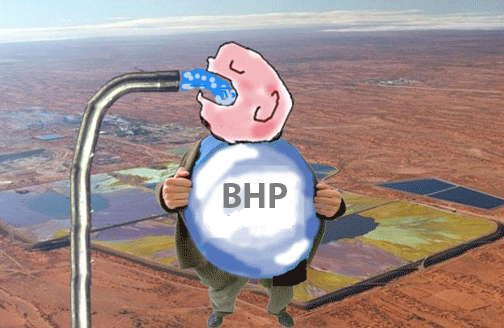
We certainly support reducing reliance on precious water resources of the Great Artesian Basin (GAB) and the River Murray, but we want stronger assurances that the mound springs (formed by pressurised water from the GAB forcing its way to the surface) will be protected. The vast quantities of water drawn from the GAB by BHP to mine copper, uranium, etc. have caused many mound springs to dry up and threaten those that remain.
We also question whether the Giant Australian Cuttlefish will be adequately protected and wonder why Mullaquana Station was chosen over Cape Hardy, which is further south and was originally the preferred site.
Our submission focused on two issues:
1. Giant Australian Cuttlefish, and
2. Mound Springs (Great Artesian Basin).
We made the following three recommendations:
- An independent comparative environmental analysis of the Mullaquana Station and Cape Hardy sites should be published before a final decision is made.
- The positive and negative impacts of the project on the Great Artesian Basin, the Mound Springs and the River Murray should be included in the assessment.
Water is under pressure in the Great Artesian Basin.
The Great Artesian Basin covers a fifth of Australia and contains water that has been there for millions of years. Now, decades of extraction are taking their toll and traditional owners are fighting a mining giant for compensation.
ABC News, Words by Leah MacLennan & images by Lincoln Rothall, 23 Nov 25
“Each spring carries a story that connects it to the traditional owners — the Arabana people. But they say the environment — and their cultural connection to it — is under threat. Some of the springs have dried up, and the health of others has deteriorated.
“The Arabana people are now fighting mining giant BHP for compensation over what they say is damage to their cultural heritage and the loss of kuta, the Arabana word for water.”
“The federal government estimates business activity in the basin — including agriculture and mining — contributed $33.2 billion to the economy last year.
“Just a few kilometres away from the springs on Arabana Country is a BHP-owned wellfield — known as Wellfield A — that, according to the company, pumps more than four million litres of water per day to its Olympic Dam mine
“The company takes another 29 million litres per day from another area — Wellfield B — further to the west.
“There’s plenty of monitoring data that shows that the extraction that BHP have engaged in supporting the Olympic Dam project has caused draw down and significant reductions in the pressure of the GAB aquifer or aquifers near their site,”
“The company says over the past 15 years it’s reduced its reliance on Wellfield A, and will stop taking from it in the mid 2030s — when there are plans for a government-built desalination plant to service the region.” https://www.abc.net.au/news/2025-11-23/water-is-under-pressure-in-the-great-artesian-basin/106002448
Peter Dutton insists there’s enough water for his seven nuclear plants, contradicting shadow frontbencher.

ABC News, By chief digital political correspondent Jacob Greber, 17 Apr 25
In short:
Voters are getting mixed messages about whether Peter Dutton’s nuclear power plan takes account of water needs.
The opposition insisted in Wednesday’s ABC Leaders Debate that allocations for all seven sites have been assessed.
What’s next?
But Nationals MP Darren Chester said water requirements would be based on experts’ “facts not opinions” and take up to 2 ½ years to determine.
The Coalition has sent voters contradictory messages about whether it has accounted for the vast water requirements of its seven proposed nuclear plants after Peter Dutton declared the issue all but resolved.
In Wednesday night’s ABC News Leaders Debate the opposition leader said he has already assessed water allocations for “each of the seven sites” where he plans to build nuclear power plants.
When challenged by ABC debate host David Speers whether “you need more” water for nuclear, Mr Dutton replied: “We’re comfortable with the analysis that we’ve done”…………………………………….
The Coalition’s mixed messaging on water comes amid signs the opposition is struggling to sell its vision of a nuclear powered future, including from groups that say they are close to the Liberal Party.
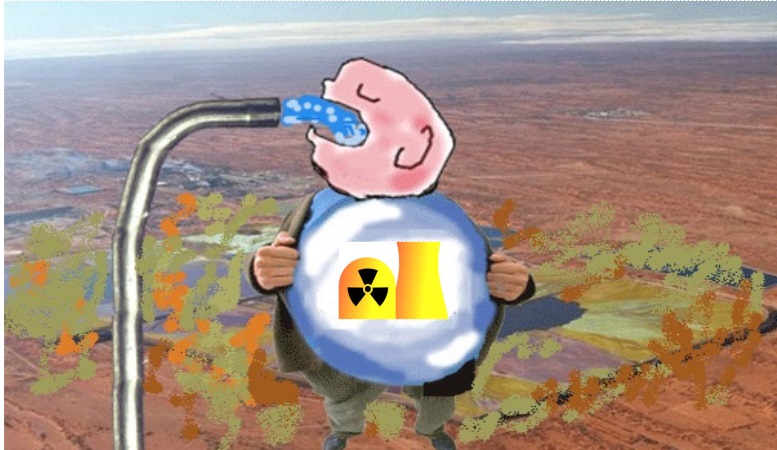
Part of the challenge is that nuclear power stations would require a large quantity of water in addition to what is already earmarked for agriculture, environmental flows and remediation of old coal sites, raising fears of major shortfalls during inevitable periods of drought.
A report this month by Australian National University visiting fellow Andrew Campbell, commissioned by Liberals Against Nuclear, found the Coalition’s plan would require 200 gigalitres of water a year.
Professor Campbell found that half of the proposed nuclear capacity would not secure enough water and that another 40 per cent of the proposed nuclear generation would be curtailed during dry seasons…………………………………….
Mr Dutton was also under pressure to explain whether he would use federal powers to override community and potential state opposition to nuclear power.
“If we can’t find consensus then we’ll do what’s in our country’s best interests,” he said…………………………………………………………………………. https://www.abc.net.au/news/2025-04-17/dutton-insists-theres-enough-water-nuclear-plants-election-2025/105189220?utm_campaign=abc_news_web&utm_content=facebook&utm_medium=content_shared&utm_source=abc_news_web&fbclid=IwY2xjawJxL1RleHRuA2FlbQIxMQABHmHPsgVOo6Uz9Yr3ZWf15QmjweMROqNxdmS8gyIkjOYfN9f5ywdwGVn-ibIM_aem_l8Clv5SwBwgY5pBtNlEZ5g
Peter Dutton insists there’s enough water for his seven nuclear plants, contradicting shadow frontbencher
ABC By chief digital political correspondent Jacob Greber, 17 Apr 25
In short:
Voters are getting mixed messages about whether Peter Dutton’s nuclear power plan takes account of water needs.
The opposition insisted in Wednesday’s ABC Leaders Debate that allocations for all seven sites have been assessed.
What’s next?
But Nationals MP Darren Chester said water requirements would be based on experts’ “facts not opinions” and take up to 2 ½ years to determine.
The Coalition has sent voters contradictory messages about whether it has accounted for the vast water requirements of its seven proposed nuclear plants after Peter Dutton declared the issue all but resolved.
In Wednesday night’s ABC News Leaders Debate the opposition leader said he has already assessed water allocations for “each of the seven sites” where he plans to build nuclear power plants.
When challenged by ABC debate host David Speers whether “you need more” water for nuclear, Mr Dutton replied: “We’re comfortable with the analysis that we’ve done”.
The remarks undermine comments given just hours earlier by a senior Coalition frontbencher who represents one of the potential nuclear sites and who insisted the issue would first need to be resolved by water “experts in the field”.
Darren Chester, the member for the Victorian coastal seat of Gippsland, told local ABC radio that there would be a two- to two-and-a-half-year investigation to determine whether enough water was available.
They would also consider other risks, including the potential for earthquakes.
“What that means [is that] the experts in the field would be required to report on all seven sites around issues surrounding water and seismology, so earthquake risk … and the question around the viability in terms of access to the network” via transmission lines, he said.
“You have to do a full site characterisation study based on facts not opinions … to find out what water is available and what’s possible at each of the seven sites.
The Coalition’s mixed messaging on water comes amid signs the opposition is struggling to sell its vision of a nuclear powered future, including from groups that say they are close to the Liberal Party.
Part of the challenge is that nuclear power stations would require a large quantity of water in addition to what is already earmarked for agriculture, environmental flows and remediation of old coal sites, raising fears of major shortfalls during inevitable periods of drought.
A report this month by Australian National University visiting fellow Andrew Campbell, commissioned by Liberals Against Nuclear, found the Coalition’s plan would require 200 gigalitres of water a year.
Professor Campbell found that half of the proposed nuclear capacity would not secure enough water and that another 40 per cent of the proposed nuclear generation would be curtailed during dry seasons.
Mr Chester, who is a member of the Nuclear Energy Select Committee, indicated he supports nuclear energy as long as it stacks up…………………………………………………….https://www.abc.net.au/news/2025-04-17/dutton-insists-theres-enough-water-nuclear-plants-election-2025/105189220
Proposed Queensland nuclear power plants risk contaminating water supplies in event of disaster, research finds
Queensland Conservation Council analysis finds reactors could strain water supplies even under normal operations.
Joe Hinchliffe, Guardian, 23 Mar 25
Proposed nuclear power plants in Queensland could strain water supplies, even under normal operations, and risk contaminating them in the event of a nuclear disaster, critics warn.
Analysis by the Queensland Conservation Council (QCC) has found that one of the two nuclear reactors proposed for the sunshine state, under the energy plan that the Coalition will take to the upcoming federal election, could require double the water currently used by the existing Callide coal-fired power station. The other, Tarong, could use 55% more water than its existing coal station.
Tarong’s primary water source is the Boondooma Dam, from which it is allocated 30,000 megalitres a year, and which also supplies drinking water for the nearby town of Kingaroy and irrigates the rich agricultural land along the Boyne River. But Tarong also has a pipeline to the Wivenhoe Dam, the main supply of water for Brisbane and Ipswich, which – due to substantial premiums – it only uses when Boondooma Dam levels are low.
The QCC report also raises concerns about additional water that would be required to prevent a meltdown in the event of disaster.
About 1.3m tonnes of seawater was required to cool Japan’s Fukushima nuclear reactors and prevent a complete meltdown in 2011 – water which has been stored on site for more than a decade and which began being gradually released into the ocean through an undersea tunnel about one kilometre long in 2023.
The report has been described as “flawed and highly politicised” by the Coalition.
But the director of QCCC, Dave Copeman, said there “simply is not enough water” available to run nuclear facilities in the proposed locations and “no plan for where to store irradiated water required for heat reduction in the case of an emergency”…………………………………….
The Callide coal-fired power plant has an annual water allocation of 20,000 ML from the Callide Dam, which is fed by the Awoonga Dam. As of Wednesday, Awoonga – which supplies the city of Gladstone’s water – was at 46% capacity, and Callide – which supplies drinking water to Biloela – was at 16.5% capacity. Callide Dam is also used to replenish aquifers that irrigate crops in the Callide Valley.
Callide would have to find an additional 27,000 ML of water to power the kind of power plants implied by the Coalition’s nuclear plan, the QCC report found – with Copeman saying there was simply “not enough water available”.
The renewable energy engineer for the QCC, Clare Silcock, who crunched the numbers on the report, said the Coalition’s nuclear proposal was scant on details. Instead she drew upon the Frontier Economic’s modelling that the opposition has relied upon to argue its nuclear vision for seven reactors across the country would be 44% cheaper than the government’s renewables-led plan.
That report models just over 100,000 gigawatt hours of nuclear electricity in the National Electricity Market (NEM) – which covers Queensland, New South Wales, the Australian Capital Territory, Victoria, Tasmania and South Australia – by 2050.
Six of the proposed nuclear sites are within the NEM, and so the QCC report assumes the generation would be spread equally across those sites.
Ian Lowe, emeritus professor at Griffith University’s school of environment and science, said that a rule of thumb was that a nuclear power station needed about 15% more water than a coal-fired power station of the same capacity.
“[But] if we were to build the amount of nuclear power proposed in the Frontier Economics report as part of the Coalition’s long-term approach for 2050 electricity, there would not be enough water for Tarong and Callide to provide the proposed share of power,” he said.
That meant that the Frontier report was “implicitly assuming that the nuclear power program would be expanded” beyond the sites already identified by the Coalition.
“So it would be reasonable to ask the question: if the much larger nuclear program proposed in the Frontier Economics report were to go ahead, where would all the extra power stations be sited?” Lowe said………………………………………..
The Coalition minister pointed to the Palo Verde Nuclear power plant in the Sonoran desert, one of the United State’s largest power producers and the only one in the world not near a large body of water as it uses treated wastewater from nearby cities.
Associate professor Martin Anda, with Murdoch University’s centre for water, energy and waste, said US comparisons were “not relevant to Australia”.
Anda said he was not “100% against nuclear” – and that it would “probably be a good solution” in the Arctic regions of the US and Europe, for example, where water abounds, renewable energy opportunities are more limited and the nuclear industry is established.
Australia, though, not only lacked for an abundance of water, but also the kind of regulatory frameworks and safeguards that could take years to establish.
https://www.theguardian.com/australia-news/2025/mar/23/proposed-queensland-nuclear-power-plants-risk-contaminating-water-supplies-in-event-of-disaster-research-finds-ntwnfb
Reactors thirsty for water
Anne O’Hara, Wanniassa, ACT, https://www.afr.com/politics/federal/delve-into-details-before-voting-for-dutton-s-nuclear-vision-20250304-p5lgrs 4 Mar 25
Thanks to The Australian Financial Review for a balanced and informative article on the Coalition’s nuclear policy (“Dutton’s nuclear bid short on detail, but who cares?”). It’s no wonder numerous studies show nuclear power to be one of the least popular energy sources for Australian voters
Cost and time are two major drawbacks. The 10-year delay in building the reactors is set to blow Australia’s carbon budget right out of the water. Speaking of which, where will the water come from to operate these reactors? The proposed reactors would use up to three times the amount needed for coal, posing a threat to drinking supply and irrigation for farms.
Despite the loud opposition to wind and solar projects by a small minority, research shows that over two-thirds of people in the regions already support renewables. A nuclear energy policy will hardly be a vote-winner in rural areas, where water supply is crucial.
Revealed: The water supply risks posed by Dutton’s nuclear plan
The Age, By Mike Foley, February 13, 2025
Opposition Leader Peter Dutton’s proposed nuclear plants will suck more water from nearby rivers than the coal plants they would replace, posing a challenge to maintaining drinking supply for local communities and irrigation for farms.
The federal government cites its own modelling to claim nuclear would use up to three times more water than the coal plants that are critical for the opposition’s pledge to help households with power prices and reach net zero emissions by 2050.
A secure water supply is crucial for the communities the opposition has selected as sites for the seven nuclear plants it has pledged to build if it wins the election, due by May.
There is no water to spare in the local rivers that supply the coal plants the Coalition has selected to host a nuclear reactor, where state governments issue licences to manage the competing needs of residents, farming and environmental requirements.
Greater water consumption from nuclear energy could shrink the size of the agriculture sector. Introducing a government buyer into the market would also likely raise water prices for the farmers who remain and create tension between key Coalition voter groups.
For example, Lithgow’s Mt Piper coal power station about 140 kilometres west of Sydney, a site earmarked for a nuclear plant, is located in the Macquarie water catchment where cotton, wine grapes and grains are grown.
Departmental data released by Labor on Wednesday states the opposition’s seven nuclear plants would collectively use 500 gigalitres – roughly the same volume as Sydney Harbour – to generate the amount of power they plan to supply to the grid each year.
The seven coal plants earmarked to be replaced by nuclear use 168 gigalitres a year, generating 48-terawatt hours of electricity.
Why does nuclear need more water than coal?
Coal and nuclear plants both use their heat source to boil water, make steam and spin turbines to generate electricity. This steam is cooled back to water (when most water loss occurs) and then re-used in the plant.
The opposition’s energy policy stipulates their nuclear plants would run at near full capacity every day of the year to recoup costs.
That means nuclear would need to draw on more water, far more often than some of the coal plants they replace, which run about 60 per cent of the time.
What do experts say?
The government cited an Australian National University study to make its claim that nuclear plants use 40 per cent more water than coal plants on average because their cooling processes tend to be less efficient.
ANU engineering professor Andrew Blakers said he stood by his findings.
“The key point is coal and nuclear and thermal power stations need water cooling,” Blakers said. “Solar and wind use vastly less because they don’t need any water for cooling.”…………………………………………………………..
What do farmers say?
NSW Irrigators Council chief executive Claire Miller said “water is a very scarce resource” and all the available supplies around Lithgow and the Hunter Valley are committed to existing industries.
“Governments need to consider very carefully any industries coming in that increase the competition for that resource and what the impacts would be on other water users, including farmers.” https://www.theage.com.au/politics/federal/thirsty-nuclear-plants-will-suck-crucial-water-from-farm-communities-20250212-p5lbfr.html
“South Australia’s Copper Strategy lacks ‘social license’ and fails contemporary public interest expectations and environmental and legislative standards”
Re: “South Australia’s Copper Strategy”, Submission To: The Department of Energy and Mining c/o DEM.engagement@sa.gov.au
“SA’s Copper Strategy lacks ‘social license’ and fails contemporary public interest expectations and environmental and legislative standards”
By: Mr David Noonan B.Sc., M.Env.St., Independent Environment Campaigner and Consultant, 12 Dec 2024
The SA Copper Strategy is potentially an important way forward for the SA Gov to instigate and require needed reform in the copper – uranium mining sector in our State.
As an individual I provide this public input and 8 x Public Interest Recommendations (p.11) toward required reform in the sector ‘as part of the development of the refreshed SA Copper Strategy’ due to be released in 2025.
The Department of Energy and Mining should provide a Public Forum on the Copper Strategy before finalisation, I request to attend and participate and offer to be a Member of a Panel Discussion. I raise part of my relevant Background at p.12.
At this stage, the SA Copper Strategy lacks ‘social licence’ and the BHP run copper sector continues to fail contemporary public interest expectations and proper environmental and legislative standards.
Further, the core related Northern Water Project lacks needed ‘social license’ as the SA Gov has to date failed to set clear public commitments to ‘shared benefits’ in protection for the Mound Springs.
It is most important for SA’s Copper Strategy and Northern Water Project realise priority protection for the unique and fragile Mound Springs of the Great Artesian Basin (GAB) with a clear commitment to replace BHP extraction of GAB waters across both Wellfields A and B.
And it is axiomatic the SA Premier can-not credibly look to spend billions of dollars of public monies on water supply and not respect, save and protect the Mound Springs of GAB. – as gems of our State.
Social license, the Gov’s political credibility and public interest standing depend on this outcome.
Please feel free to contact on any aspect of these issues.
Yours sincerely
David Noonan B.Sc., M.Env.St., Independent Environment Campaigner and Consultant, Conservation SA Representative on the Northern Water Project ‘Stakeholder Reference Group’, Seaview Downs, South Australia
BHP’s untenable extraction of Great Artesian Basin waters for the Olympic Dam copper-uranium mine.
Jim Green, 26 Oct 24. BHP has had to move on Mound Springs protection issues regarding untenable extraction of GAB waters for the Olympic Dam copper-uranium mine, and an important Springs Study had now been released by SA Gov modelling reduced water extraction scenarios and affects on Springs & GAB waters.
A significant – if belated and partial – formal public commitment from BHP:
Milestone : FY2030 – cease abstraction from Wellfield A through switching to coastal desalination supply in partnership with the South Australian Government on the Northern Water Supply Project.
This partial win is a key if limited step toward proper protection for the unique and fragile Mound Springs of the GAB in SA, requiring:
is a key if limited step toward proper protection for the unique and fragile Mound Springs of the GAB in SA, requiring:
- closure of untenable BHP Wellfield A operations as soon as possible, that is warranted far sooner than by end of FY2030;
- BHP could prioritise and pay for whatever extent of water recovery at Olympic Dam to replace continued extraction from Wellfield A, which is projected to be run at 3.9 million litres a day ( Ml/d ) over next few years – about 10% of the volume BHP water take from the GAB;
- a campaign path to realise a phase out of the far larger adversely impacting Wellfield B operations that runs at 32 Ml/day, at least from when Northern Water supply becomes available at/after 2028 (this is difficult as BHP & SA Gov now think closing Wellfield A is all they have to do);
- a continued public interest campaign building on a lot of people’s roles and contributions over time…
an important Springs Study:
“Potential Impacts of Reducing Groundwater Abstraction from the Southwestern Great Artesian Basin: Modelled Aquifer Pressure and Spring Flow Response”
By Daniel Partington, Andrew Love, Daniel Wohling, Mark Keppel.
Goyder Institute for Water Research Technical Report Series No. 2024/01https://yoursay.sa.gov.au/84866/widgets/401081/documents/297652
see an extract from Goyder Institute Springs Study (at p.21 of doc & at p.31 of the pdf file, my bold below) citing the BHP commitment:
3.5 Output From the Modelled Scenarios Six experimental abstraction scenarios were proposed by Infrastructure SA to provide a spectrum of stimuli to assess the responsiveness of the aquifer to a change in abstraction volumes. The future abstraction rates from Wellfield A and B have not been confirmed, however there has been public commitment to cease abstraction from Wellfield A if water from the Northern Water project is available (see Olympic Dam Context- Based Water Targets).
How much water does nuclear really need?

The Coalition’s plan for atomic energy has raised concerns about the amount of water that reactors will use in a hotter and drier Australia.
AFR, Christopher Niesch, 5 Sept 24 .
Opposition Leader Peter Dutton’s proposal to build seven nuclear reactors in five states has put nuclear energy in the spotlight. While Dutton claims nuclear power is a zero emissions solution to the energy transition, Anthony Albanese’s Labor government says it will take too long to build, be too costly, and will use too much water.
Under the Coalition plan, there would be five large-scale power plants and two small modular reactors, with the first to be operational by either 2035 or 2037.
Based on the scant detail so far available, the CSIRO has estimated a total build cost of about $60 billion in today’s dollars for these facilities. Other estimates, based on actual build costs abroad, are much higher.
But Labor has raised concerns about the amount of water that the reactors would consume, especially in a hotter and drier climate more prone to drought in the 2030s and 2040s…………………………………………………………………………………………………………………..
In an interview with Sky News in July, then agriculture minister Murray Watt said nuclear power uses “substantially more” water than coal does.
“There’s a real question about where that water is going to come from, whether some of that water is going to need to be taken off farmers, and what farmers are going to have to pay for their water if there’s a competing use for that water,” he said.
Watt also said that based on international practice, farmers would need to take expensive steps during a nuclear leak and would need to inform their customers that they operate within the fallout zone.
Queensland Premier Steven Miles has also said nuclear power could risk the state’s water security, with water consumption at the proposed stations depleting water reserves during droughts.
As coal stations were decommissioned they would have given up their water rights, but nuclear power stations would have to use that water for their 80-year lifetime, Miles says.
…………………………………………………………………………Where will water for the reactors come from?
The water would be from the same sources that existing coal-fired plants use.
Dutton says that if elected to government the Coalition would build nuclear reactors at locations where there are closed or scheduled-to-close coal-fired power stations.
“Each of these locations offer important technical attributes needed for a zero-emissions nuclear plant, including cooling water capacity and transmission infrastructure,” he says. “That is, we can use the existing poles and wires, along with a local community which has a skilled workforce.”
None are now owned by the commonwealth, which Dutton suggests could be overcome by compulsorily acquiring the sites.
Five full-scale reactors would be built in NSW, Victoria and Queensland, with small modular reactors in Western Australia and South Australia.
How much water does green power use?
Johanna Bowyer, an analyst at the Institute for Energy Economics and Financial Analysis, notes that solar and wind energy don’t rely on water and so the water currently used by coal-fired power stations could be used for agriculture instead.
And wind and solar energy could keep running at full capacity during times of drought, unlike coal or nuclear power.
Bowyer notes that there have been instances where coal-fired power stations have had to reduce their output during drought.
In 2007, the Tarong Power Station in Queensland cut its generation by 25 per cent in January and followed up with another 45 per cent cut in March to save water during the drought.
That water was also being used for drinking, so they prioritised that usage over the power station usage,” she says.
“Who knows what the future holds, but there’s some historical basis there for potential challenges, particularly during droughts. But it all depends on … the water cooling design for the nuclear power plant and it depends on how exactly they satisfy their water cooling requirements.
“That’s all really yet to be detailed in the Coalition’s plan.”
Where does all this leave the Coalition’s plan?
Dutton hasn’t released much more detail about his plans, so we can’t know exactly how much water they will use.
Nor is it clear how much water the small modular reactors (SMR) the Coalition is planning will use. more https://www.afr.com/companies/energy/how-much-water-does-nuclear-really-need-20240826-p5k5b6
Water Wars: Cooling the Data Centres

August 6, 2023, Dr Binoy Kampmar, https://theaimn.com/water-wars-cooling-the-data-centres/
Water. Data centres. The continuous, pressing need to cool the latter, which houses servers to store and process data, with the former, which is becoming ever more precious in the climate crisis. Hardly a good comingling of factors.
Like planting cotton in drought-stricken areas, decisions to place data hubs in various locations across the globe are becoming increasingly contentious from an environmental perspective, and not merely because of their carbon emitting propensities. In the United States, which houses 33% of the globe’s data centres, the problem of water usage is becoming acute.
As the Washington Post reported in April this year, residents in Mesa, Arizona were concerned that Meta’s decision to build another data centre was bound to cause more trouble than it was worth. “My first reaction was concern for our water,” claimed city council member Jenn Duff. (The state already has approximately 49 data centres.)
The move to liquid cooling from air cooling for increasingly complex IT processes has been relentless. As the authors of a piece in the ASHRAE Journal from July 2019 explain, “Air cooling has worked well for systems that deploy processors up to 150 W, but IT equipment is now being manufactured with processors well above 150 W where air cooling is no longer practical.” The use of liquid cooling was not only more efficient than air cooling regarding heat transfer, but “more energy efficient, reducing electrical energy costs significantly.” The authors, however, show little concern about the water supplies needed in such ventures.
The same cannot be said about a co-authored study on the environmental footprint of US-located data centres published two years later. During their investigations, the authors identified a telling tendency: “Our bottom-up approach reveals one-fifth of data center servers’ direct water footprint comes from moderately to highly stressed watersheds, while nearly half of servers are fully or partially powered by power plants located within water stressed reasons.” And to make things just that bit less appealing, it was also found that roughly 0.5% of total US greenhouse gas emissions could also be attributed to such centres.
Google has proven to be particularly thirsty in this regard, not to mention secretive in the amount of water it uses at its data hubs. In 2022, The Oregonian/Oregon Live reported that the company’s water use in The Dalles had almost tripled over five years. The increased usage was enabled, in no small part, because of increased access to the municipal water supply in return for an upgrade to the water supply and a transfer of certain water rights. Since establishing the first data centre in The Dalles in 2005, Google has also received tax breaks worth $260 million.
The city officials responsible for the arrangement were in no mood to answer questions posed by the inquisitive paper on Google’s water consumption. A prolonged 13-month legal battle ensued, with the city arguing that the company’s water use constituted a “trade secret”, thereby exempting them from Oregon’s disclosure rules. To have disclosed such details would have, argued Google, revealed information on how the company cooled their servers to eager competitors.
In the eventual settlement, The Dalles agreed to provide public access to 10 years of historical data on Google’s water consumption. The city also agreed to pay $53,000 to the Reporters Committee for Freedom of the Press, which had agreed to represent The Oregonian/Oregon Live. The city’s own costs had run into $106,000. But most troubling in the affair, leaving aside the lamentable conduct of public officials, was the willingness of a private company to bankroll a state entity in preventing access to public records. Tim Gleason, former dean of the University of Oregon’s School of Journalism and Communication, saw this distortion as more than just a touch troubling. “To allow a private entity to essentially fund public advocacy of keeping something out of the public domain is just contrary to the basic intent of the law.”
Instead of conceding that the whole enterprise had been a shabby affront to local residents concerned about the use of a precious communal resource, compromising both the public utility and Google, the company’s global head of infrastructure and water strategy, Ben Townsend, proved benevolent. “What we thought was really important was that we partner with the local utility and actually transfer those water rights over to the utility in a way that benefits the entire community.” That’s right, dear public, they’re doing it for you.
John Devoe, executive director of the WaterWatch advocacy group, also issued a grim warning in the face of Google’s ever increasing water use, which will burgeon further with two more data centres promised along the Columbia River. “If the data center water use doubles or triples over the next decade, it’s going to have serious effects on fish and wildlife on source water streams, and it’s potentially going to have serious effects for other water users in the area of The Dalles.”
Much of the policy making in this area is proving to be increasingly shoddy. With a global demand for ever more complex information systems, including AI, the Earth’s environment promises to be stripped further. Information hunger risks becoming a form of ecological license.
Minister off-target with claim Labor cut billions from defence

AAP.com, William Summers March 14, 2022,
WHAT WAS CLAIMED Labor cut billions of dollars from the defence budget when it was last in government.
OUR VERDICT Misleading. Labor cut defence spending in two years while in office, but overall real-term spending went up while in government.
Defence Minister Peter Dutton has questioned the opposition’s commitment to national security by claiming Labor cut “literally billions” from the Defence budget when the party was last in office.
The claim is misleading. Labor increased overall spending on Defence when in government between 2007 and 2013, both in nominal terms and real terms. However, Labor did cut $1.9 billion from the portfolio in 2012/13, its last full year in office.
Mr Dutton made the claim during an appearance on ABC’s Radio National on March 8 in response to comments made by Labor’s shadow defence minister Brendan O’Connor about the need to consider the future role of Australia’s military during natural disasters.
Mr Dutton said: “Defence has record funding. A bit ironic to hear that from Brendan (O’Connor) when (Labor) pulled literally billions out of defence when they were last in government.” (audio mark 6 min 45sec)
When contacted by AAP FactCheck about the basis of the claim, Mr Dutton’s office pointed to budget papers from Labor’s time in office without providing further information. By that measure, Mr Dutton’s claim does not stack up.
Historical Defence portfolio budget papers provide detailed figures on projected spending as well as actual spending that took place in the previous budget year.
The Australian Strategic Policy Institute (ASPI) – a think tank majority-funded by the Department of Defence and other federal government agencies – has collated these figures going back to 1997/98 (see here). Its figures include spending on the Australian Signals Directorate, which provides cyber intelligence and other capabilities and falls under the Defence portfolio.
The previous Labor government was elected on November 24, 2007, and lost office on September 7, 2013. Therefore, to judge Labor’s spending record, AAP FactCheck looked at spending from 2007/08 – the fiscal year Labor first came into office – to 2012/13, Labor’s final full year in office.
……………………… Misleading – The claim is accurate in parts but information has also been presented incorrectly, out of context or omitted. https://www.aap.com.au/factcheck/minister-off-target-with-claim-labor-cut-billions-from-defence/
Uranium miner BHP under criticism for guzzling precious artesian water, and for not keeping its word to Aboriginal native title holders
Environment campaigner and consultant David Noonan, who provided submissions to the Juukan Inquiry, is sceptical of the desalination plant announcement.
Mr Noonan says even if it was built, BHP could be taking GAB water until the end of the decade. He wants to hear a formal commitment about alternative water sources.
Why BHP is facing a minefield, CHRIS MITCHELL, Adelaide Now, 4 Mar 22,
AUSTRALIA’S biggest company and the world’s secondbiggest miner, BHP, may disappoint conservationists and Aboriginal native title holders who had hoped for commitments to reform of heritage issues and underground water use at its Olympic Dam mine before the March 19 state election BHP, the Big Australian, with market capitalisation of $230bn, paid the state government royalties of $136m last year. Its Olympic Dam project 560km north of Adelaide is South Australia’s largest mining venture and the world’s biggest uranium mine, a global top-four copper mine and producer of gold and lead. BHP is powerful in SA.
Premier Steven Marshall is Aboriginal Affairs Minister but it would be fair to say native title holders do not wield the sort of power in Adelaide that big miners do.
Yet BHP has flagged some changes to the way it operates that could reduce its own power over its own asset.
Under the 1982 Roxby Downs (Indenture Ratification) Act signed with former mine owner Western Mining, BHP, which bought the mine in 2005, has almost unprecedented powers over resources and water within its 12,000sq km Stuart Shelf exploration lease.
BHP has been criticised by conservation groups and Aboriginal interests in last year’s report into rival Rio Tinto’s destruction of Juukan Gorge in Western Australia. The report includes criticism from the Arabana tribe of the mine’s heavy reliance on water from the Great Artesian Basin (GAB), and particularly from the so-called “Mound Springs” Aboriginal heritage sites north of the mine.
On February 15, The Advertiser revealed BHP would back a new $15m study, partly funded by state and federal governments, into a Spencer Gulf desalination plant to pump water to SA’s northern mines. But BHP is still far short of publicly committing to end its use of GAB water.
Conservationists say BHP is trying to control the water agenda, to maintain its privileges under the Indenture Act. But some hope it will be pragmatic enough to cut water demand from the GAB if it eventually decides to proceed with its Oak Dam copper-gold-uranium mine 65km southeast of Olympic.
Asked last week if BHP was formally committed to ending GAB water use, a spokesman said: “We continuously monitor and publicly report our water draw under a program approved by the SA government.”
BHP is not just under pressure for environmental reasons.
It is in discussion with three native title groups about the Olympic Dam Agreement it settled in 2008 with the Kokatha, Barngarla and Kuyani.
Of these, only the Kokatha have been granted formal native title over parts of BHP’s Stuart Shelf.
BHP’s problem now is how to balance the very valuable 40-year-old legal rights it has under the indenture with rights found in a native title determination in favour of the Kokatha in 2014……….
The Kokatha fought a long, 18-year battle to win their native title in 2014. Kokatha directors say dealing with BHP on the ODA before and after their native title court win has been challenging.
At this point, they are not receiving mining royalties and are unhappy with employment opportunities for Kokatha people.
Michael Turner, a former Kokatha director and current adviser on the Kokatha Native Title Compensation Settlement and Kokatha Charitable trusts, says he has been dealing with BHP for much of his adult life.
At this point, they are not receiving mining royalties and are unhappy with employment opportunities for Kokatha people………
negotiations on BHP’s Olympic Dam Agreement had been disappointing.
“We have been calling for a review of the ODA for many years and it has constantly been deferred,” he said.
“They’re refusing to move forward. It would be great if BHP could keep to its word and respect the wishes of the Kokatha people and review the ODA for the benefit of generations to come.”…………….
The final report into the May 24, 2020 destruction by Australia’s second-biggest miner, Rio Tinto, of the Juukan Caves in Western Australia’s Pilbara was released in October. In it, Arabana chair Brenda Underwood says: “Unfortunately, our springs are disappearing. The cause … is water taken from the GAB by BHP’s mine at Roxby Downs.”
BHP and the state government believe the springs remain healthy but environmentalists fear a possible expansion to the Oak Dam could take daily GAB water use well beyond 50 million litres a day. BHP says it is averaging 34 million litres a day.
Environment campaigner and consultant David Noonan, who provided submissions to the Juukan Inquiry, is sceptical of the desalination plant announcement.
Mr Noonan says even if it was built, BHP could be taking GAB water until the end of the decade. He wants to hear a formal commitment about alternative water sources.
BHP’s Aboriginal engagement team is mindful expectations have changed across the industry since Juukan and BHP will need to be seen to be engaging seriously with traditional owners. Some believe an ODA negotiated before the Kokatha achieved native title should be written off and a new agreement established………………………………………
 | |||
Amid climate change threat to the Murray Darling river system, the States haggle
|
No water, no leadership: new Murray Darling Basin report reveals states’ climate gamble, The Conversation
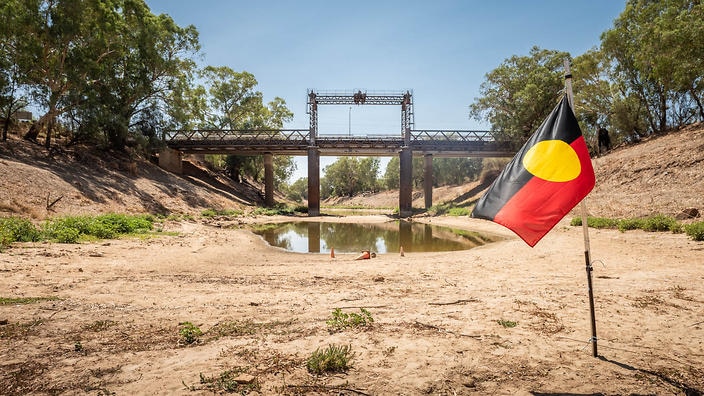
April 17, 2020 Daniel Connell, Research Fellow, Crawford School of Public Policy, Australian National University A report released today investigating how states share water in the Murray Darling Basin describes a fascinating contrast between state cultures – in particular, risk-averse South Australia and buccaneering New South Wales. Perhaps surprising is the report’s sparse discussion of the Murray Darling Basin Plan, which has been the focus of irrigators’ anger and denunciation by National Party leaders: Deputy Prime Minister Michael McCormack and NSW Deputy Premier John Barilaro. In general terms, the Murray Darling Basin Plan was originally intended to make water management in the Murray Darling Basin more environmentally sustainable. Its critics see it as a restraint on development, and complain it has taken water away from irrigators during a time of extreme drought. In response to McCormack and Barliaro’s criticisms of the plan in late 2019, federal water minister (and senior National Party figure) David Littleproud commissioned Mick Keelty as Interim Inspector General of MDB Water Resources. For the new report, Keelty investigated the changing distribution of “inflows” – water flowing into the River Murray in the southern states. Climate change has brought the inflow to just a trickle. This dramatic reduction over the past 20 years is what Keelty has described as “the most telling finding”. He also investigated the reserve policies under which the three states choose – or don’t choose – to hold back water in Hume and Dartmouth Dams to manage future droughts. Keelty says there’s little transparency or clarity about how much water states are allocated under the Murray Darling Basin Agreement (the arrangement for sharing water between the states which underpins the Basin Plan). This failure in communication and leadership across such a vital system must change. Sharing water across three statesOne major finding of Keelty’s inquiry is that the federal government has little power to change the MDB Agreement between the three states, which was first approved in 1914-15. Any amendment requires the approval of all three governments. To increase the volume of water provided to NSW irrigators, South Australia and Victoria would need to agree to reduce the volumes supplied to their own entitlement holders. That will not happen. Why has the agreement lasted so long? Over the past century it has proved robust under a wide range of conditions. Its central principle is to share water with a proportion-of-available-flow formula, giving each state a percentage of whatever is available, no matter whether it’s a lot, or not much. After receiving its share of the River Murray flows, each state is then free to manage its allocation as it wishes. …… Reliability of water supply What’s more, each state makes its own decision about how its state allocation is shared between its entitlement holders (95% of water goes to irrigators the rest supplies towns and industry). South Australia chooses to distribute a much smaller proportion to its entitlement holders than New South Wales. It also restricted the number of licences in the 1970s. That combination ensures a very high level of reliability in supply. Victoria took a similar approach…….. When climate change is taken into account these differences between the three states result in their irrigators having significantly different risk profiles. The climate change threat to the basin is very realDespite climate denial in the National Party, the threat is very real in the MDB. The report describes a massive reduction in inflows over the past 20 years, approximately half compared with the previous century. One drought could be an aberration, but two begins to look like a pattern. The report also suggests that in many cases irrigator expectations of what should be normal were formed during the wet period Australia experienced between the second world war and the 1990s. Added to this have been business decisions by many irrigators to sell their entitlements and rely on the water market, a business model based on what now seems like unrealistic inflow expectations. In effect, successive New South Wales governments – a significant part of the state’s irrigation sector in the southern part of the state and the National Party – gambled against the climate and are now paying a high price. In desperation, they’re focusing on alternative sources. This includes the water in Hume and Dartmouth held under the reserves policy of the two other states; environmental entitlements managed by the Commonwealth Environmental Water Holder; the very large volume of water lost to evaporation in the lower lakes in South Australia; and the possibility of savings resulting from changes to management of the system by the Murray-Darling Basin Authority. Failure in leadership and communicationFor reasons already outlined, the state reserves policy is not likely to change and use of the Commonwealth Environmental Water Holder environmental water entitlements would not be permitted under current legislation. Management of the lower lakes is being reviewed through another investigation so is not discussed in the report. The report also states that management of the MDB Authority is subject to regular detailed assessment by state governments, and they have assessed its performance as satisfactory. However the report was critical of the performance of all MDB governments with regard to leadership and communications suggesting that failures in those areas were largely responsible for the public concern which triggered its investigation. https://theconversation.com/no-water-no-leadership-new-murray-darling-basin-report-reveals-states-climate-gamble-136514 |
|
Drinking water threatened by forest fires
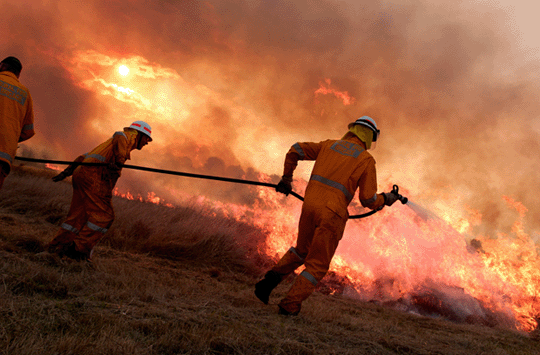 As forests burn around the world, drinking water is
  at risk https://www.westhawaiitoday.com/2020/01/31/features/as-forests-burn-around-the-world-drinking-water-is-at-risk/
In Australia’s national capital of Canberra, where a state of emergency was declared on Friday because of an out-of-control forest fire to its south, authorities are hoping a new water treatment plant and other measures will prevent a repeat of water quality problems and disruption that followed deadly wildfires 17 years ago.
|
“The forest area burned in Australia within a single fire season is just staggering,” said Stefan Doerr, a professor at Swansea University in England who studies the effects of forest fires on sediment and ash runoff. “We haven’t seen anything like it in recorded history.” The situation in Australia illustrates a growing global concern: Forests, grasslands and other areas that supply drinking water to hundreds of millions of people are increasingly vulnerable to fire due in large part to hotter, drier weather that has extended fire seasons, and more people moving into those areas, where they can accidentally set fires. More than 60% of the water supply for the world’s 100 largest cities originates in fire-prone watersheds — and countless smaller communities also rely on surface water in vulnerable areas, researchers say. Continue reading |
1 This month
To see nuclear-related stories in greater depth and intensity
– go to https://nuclearinformation.wordpress.com/


 Antinuclear