A global threat for millennia: experts warn Australia’s nuclear submarine legacy will be weapons-usable uranium cache

Ben Doherty,25 June 26, https://www.theguardian.com/world/2026/jul/25/aukus-nuclear-submarines-danger-weapons-grade-uranium
Uranium waste from Aukus submarines will be enriched to an estimated 80%: the same level as the bomb dropped on Hiroshima.
Australia’s proposed nuclear submarine fleet will leave behind tonnes of weapons-usable uranium-235: radioactive for hundreds of millions of years, and capable of being processed into scores of warheads, nuclear experts have told a public inquiry into Aukus.
And a former White House national security adviser has told the Guardian that Australia’s Aukus deal – involving the transfer of highly enriched uranium to a non-nuclear weapons nation – sets a dangerous proliferation precedent that other countries such as Iran could try to exploit, weakening global control of the spread of weapons-usable nuclear material.
Associate Prof Tilman Ruff, founding chair of the Nobel prize-winning International Campaign to Abolish Nuclear Weapons, told the Aukus public inquiry that the legacy of Australia’s nuclear submarine fleet – of which each vessel will have a service life of about three decades – will be hundreds of kilograms of high-level radioactive waste. Even as waste, the submarines’ spent reactor fuel will be highly enriched uranium (HEU), usable to build nuclear weapons.
“No nation has resolved the huge problem of how to manage this material and there’s no guarantee – given the timeframes involved and the hazards of the material over geological time – that any arrangement that we come up with could reliably isolate that material for hundreds of thousands, or millions of years.
“The additional complication here is that it needs a really high level of security because, in 10,000 years, somebody could still go and dig that stuff up and build nuclear weapons with it.”
The uranium left behind by Australia’s nuclear submarines at the end of their working lives will likely still be enriched to about 80%: the same level as the atomic bomb dropped on Hiroshima.
The Australian government has repeatedly said the precise amount of high-level nuclear waste that will be left behind by its submarine fleet is classified.
But documents released under freedom of information laws show Australia will be responsible for each submarine’s nuclear reactor compartment, “roughly the size of a four-wheel drive”, and spent nuclear fuel “roughly the size of a small hatchback”.
Leading global experts on non-proliferation have now estimated each nuclear submarine decommissioned by Australia – beginning in the 2050s – will contain about 400kg of HEU, enriched to about 80%, containing about 320kg of uranium-235 (U-235).
The International Atomic Energy Agency states a “significant quantity” of highly enriched uranium – enough to make a weapon – is 25kg of contained U-235.
U-235 has a half-life of 700m years: it will be a weapons proliferation risk for millennia. And the radioactive materials generated by its fission process will be toxic to humanity and the environment for millions of years.
The HEU left behind by each one of Australia’s three second-hand Virginia-class submarines bought from the US would be sufficient for more than a dozen weapons.
Australia’s domestically built Aukus-class submarines – Australia is proposing to build five – will be powered by Rolls-Royce’s in-development PWR3+ reactor. The quantity of HEU required to power that reactor is classified but they are expected to be larger than the Virginia-class reactors, Ruff said.
The Aukus agreement mandates that Australia is responsible for the disposal and storage of all of the nuclear waste left behind by its nuclear-powered submarines in perpetuity
By the end of the century, when all eight of Australia’s planned nuclear powered submarines have been retired, Australia will be responsible for the management of “at least 3 tonnes” of U-235 in the highly enriched uranium spent fuel waste, Ruff told the Guardian.
“That’s enough for 120 nuclear weapons using the International Atomic Energy Agency standard.”
Australia has spent decades reducing its HEU stocks. There is presently less than 3kg of HEU in the entire country, held for research purposes.
Ruff told the public inquiry into Aukus, established by the Australian Peace and Security Forum, that his primary concern over Aukus was that it exacerbated regional tensions and made Australia “a higher priority target, including for nuclear attack”.
Ruff cited the work of Dr Frank von Hippel, senior research physicist and professor of public and international affairs emeritus at Princeton University, who estimated that the reactor of a Virginia-class submarine – such as those Australia is set to buy from the US – would be decommissioned at the end of its working life still containing about 400kg of HEU, enriched to about 80%.
Von Hippel, who served as an assistant director for national security in the Clinton White House, told the Guardian “by the IAEA’s metric, 0.4 tons of 80% enriched uranium would be sufficient for 13 implosion bombs”.skip past newsletter promotion
Billions of dollars are failing to lift production of AUKUS submarines.
Michael Koziol, SMH, July 24, 2026
Washington: Billions of dollars of additional funding for the US defence industrial base have not improved the production rate of Virginia-class submarines, a top Pentagon official says, casting further doubt on whether Australia will receive its AUKUS subs on schedule.
Austin Dahmer, a senior policy official at the US Department of Defence, told a hearing on Capitol Hill that while undersea forces were the decisive instrument in denying Chinese domination of the Pacific, they were also the forces the US was the least able to produce.
“Virginia-class boats have been delivering at roughly 1.1 to 1.2 a year since 2022, against a requirement of two to 2.33, counting AUKUS pillar one,” he said.
“Two per year is not now expected until roughly 2032 … The strategy is sound. Production capacity is the point of failure.”
The US Congress has approved billions in additional funding to build submarines, while Australia has tipped in at least $US2 billion ($2.84 billion) with another $US1 billion to come. But Dahmer said the extra money had not helped.
“I would underline that Congress has already appropriated [funds] substantially, and the rate has not moved,” he said. “Any recommendations that consist of more money without a mechanism to materially compress those timelines will not change the outlook.”
Dahmer is a deputy to Elbridge Colby, the undersecretary of defence for policy who has in the past expressed scepticism about AUKUS. He made the comments to the National Commission on the Future of the Navy on Wednesday (US time) during a hearing on ways to improve US sea power.
Afterwards, he told this masthead the navy was working hard to improve delivery of the Virginia-class submarines so that a future administration would be in the best possible position when it decides whether to transfer a vessel to Australia………………..
The comments underscore the practical hurdles facing AUKUS despite the political commitment from all three countries, and come as Australian Labor Party members prepare for a possibly fiery debate about the pact at their national conference in Adelaide.
Under the $368 billion-plus agreement, Australia is due to receive at least three nuclear-powered submarines from the US starting in 2032, before building a new class of the vessel, the SSN-AUKUS, with the UK.
The US has now clarified all three of the submarines it proposes to sell to Australia will already be in service, rather than new. But the president of the day must approve the transfer and be satisfied it does not degrade US war-fighting capability.
Arthur “Trip” Barber, a retired 40-year veteran of the US Navy and the Pentagon, who now sits on the National Commission on the Future of the Navy, said the fundamental problem was shipyard wages, and their inability to retain workers.
“We need to pay shipyard workers a compelling amount of money so they stay on the job,” he told this masthead……………….
A staunch AUKUS supporter who is now a defence lobbyist, Christopher Pyne told the inquiry he did not believe the project would be delivered on time nor on budget, but “they’ll give it a good go”.
Deputy Prime Minister and Defence Minister Richard Marles was contacted for comment. His office referred inquiries to the government’s Australian Submarine Agency………… https://www.smh.com.au/world/north-america/billions-of-dollars-are-failing-to-lift-production-of-aukus-submarines-20260723-p60hq7.html
Not Even Israelis Are Willing To Die For Israel
And Other Notes
Caitlin Johnstone, Jul 22, 2026, https://www.caitlinjohnst.one/p/not-even-israelis-are-willing-to?utm_source=post-email-title&publication_id=82124&post_id=207992457&utm_campaign=email-post-title&isFreemail=true&r=1ise1&triedRedirect=true&utm_medium=email
Israeli Finance Minister Bezalel Smotrich said during a conference on Tuesday that Israel “has no interest” in participating in the ongoing military exchanges between the US and Iran, asserting that “the current situation is the best one for us.”
While Smotrich is certainly correct that it is to Israel’s benefit to stand aside and let the Americans do all the fighting and dying in this conflict, this is a noteworthy admission about a war that the US State Department says the White House ordered “at the request of and in the collective self-defense of its Israeli ally.”
There are three groups of people who consistently say “I’m not fucking dying for Israel”:
1. US soldiers,
2. Americans at risk of being drafted into a large-scale war, and
3. Israelis.
You see this all the time. Back in March when the US was contemplating a ground invasion of Iran, the Israeli press were churning out reports assuring their audiences that government officials said the IDF would not be participating in any such operations. Israelis are happy for Americans to die for Israel, but they are unwilling to put their own lives on the line for the Zionist project.
You know who would lay down their lives for their homeland? The Palestinians.
The Palestinians have made it clear that they are willing to die for Palestine, while the Israelis have made it clear that they are unwilling to die for Israel. For the Israelis, Israel is merely a nice-to-have which they would happily give up if it became too dangerous.
For the Palestinians, that land is home.
The New Yorker has an article out titled “How Biden Enabled Israel’s Aggression Toward Gaza — and Iran,” with the subtitle “Top officials from the previous Administration now express regret over their failure to rein in Netanyahu.” It quotes Jake Sullivan saying “I will say straightforwardly — we should have put more pressure on Israel to take a different approach” on Gaza.
And to that I can only say, fuck you. Seriously, FUCK you.
You don’t get to do this now. You don’t get to turn around and go “Oopsie poopsie, we made a mistake!” This was YOUR genocide, motherfuckers. YOURS. You chose it. You own it. Forever. The stench of the rotting corpses in Gaza will sully your names for all time.
They always planned to do this. They backed a genocide knowing they could always try to spin it as a regrettable error in hindsight, and let their sad feelings of contrition wash their hands of their sins.
Fuck that bullshit. That’s not happening. We’ll never let them forget what they did and what they are.
That same New Yorker article says Benjamin Netanyahu asked the Biden administration to keep secret any small concessions he made in allowing aid into Gaza, saying the Israeli prime minister “feared a domestic backlash for not starving Gaza’s women, children, and other civilians.”
Think about how fucked up a society has to be for its politicians to fear domestic backlash for not starving civilians.
❖
The other day Fox News host Jesse Watters joked and laughed about how the US military’s new testosterone testing policy is going to lead to soldiers with overloaded testosterone levels sexually assaulting women.
“Yeah, I want these guys on it, but you know what’s gonna happen? The guys that don’t need it are gonna take it, to triple boost,” Watters said Thursday, chuckling. “And then they’re gonna get out there, and women on base, you guys better be careful. Port calls, women in Asia, you better be careful, because these guys are gonna be wild animals and you better watch out.”
Ho ho, ha ha, watch out ladies you’re gonna get raped by US soldiers just like untold millions of other women around the world throughout history, ha ha, wocka wocka, comedy laugh laugh.
The Murdoch press is cancer.
I saw a tweet from Zionist pundit Joe Walsh saying “If you hate the state of Israel, you hate Jews. If you are pledged to the destruction of the state of Israel, you hate Jews. If you do not believe the state of Israel has a right to exist, you hate Jews.”
If you keep feeding the public the lie that they need to choose between supporting genocide and hating Jews, people are going pick hate Jews, because they don’t want to support genocide. When that happens, the blame will rest on all these pricks who circulated this lie.
You don’t get to just pretend all this fretting about “antisemitism” is happening separately from the agenda to stomp out all criticism of Israel and its abuses. You don’t get to demand that I treat them as separate things. They’re inseparable agendas. I wish they weren’t, but they are.
If you come up to me babbling about how Jews are afraid and mistreated, then I’m going to automatically treat this as apologia for a genocidal apartheid state, because that’s the primary agenda that this rhetoric is being used to promote today. It’s not my fault that this is how I respond to allegations of antisemitism. It’s the fault of the people who have weaponized such allegations to promote genocide, apartheid, war, and tyranny.
If you want me to take allegations of “antisemitism” seriously, then you must first bring to an end the campaign to use that term as a cudgel to shut down pro-Palestine protests and silence Israel’s critics. That is what you’ll need to do before I will give you the benefit of the doubt and listen to you like you’re a good-faith actor. The information ecosystem is currently far too full of genocidal Zionists lying about their experiences, their feelings, their intentions, and what has happened to them for me to listen credulously to stories about discrimination against Jews in the year 2026.
It’s so surreal how we are still expected in mainstream western society to listen to concern trolling about “antisemitism” without immediately thinking about things like Israel, Palestine, Lebanon, Iran, war, and genocide. We’re expected to listen patiently to stories about how western Jews feel unsafe without ever looking at all those elephants in the room. It’s insulting. It’s degrading.
If the main reason antisemitism gets mentioned these days is because of opposition to Israel’s mass atrocities, then obviously I’m going to assume that’s the driving motivator behind your words when you mention it. Of course that’s going to be my default assumption. Obviously. Duh.
“Intolerable pressure”. Inside the Israel lobby campaign to coerce regulators on antisemitism
by Wendy Bacon and Stephanie Tran | Jul 17, 2026 , https://michaelwest.com.au/intolerable-pressure-inside-the-israel-lobby-campaign-to-coerce-regulators-on-antisemitism/
The health regulator AHPRA was “forced into a massive capitulation” to adopt the hardcore IHRA definition of antisemitism. Wendy Bacon and Stephanie Tran investigate.
A Zionist doctor has claimed that AHPRA CEO Justin Untersteiner “was forced into a massive capitulation with IHRA”.
The Australian Health Practitioner Regulation Authority (AHPRA) recently introduced the controversial International Holocaust Remembrance Alliance (IHRA) definition of antisemitism which puts healthcare workers at risk for criticising Israel.
The Zionist doctor, Doron Samuell, alleges that he was part of a campaign that “exerted intolerable political pressure” on AHPRA to adopt the IHRA definition of antisemitism.
IHRA resisted for two years
AHPRA, which regulates the conduct of 900,000 Australian healthcare workers, had resisted pressure to adopt the IHRA definition for two years.
However, on June 17, the health regulator shifted its position unexpectedly and without consultation when CEO Justin Untersteiner issued a joint statement with the Special Envoy to Combat Antisemitism, Jillian Segal announcing the adoption of the definition and that Segal’s guidance handbook would be used as a tool in handling complaints.
Thousands of health care workers, and many organisations including the Australian Nurses and Midwifery Federation, NSW Civil Liberties Council and Medical Association for Prevention of War have called for AHPRA to reverse its decision and continue to rely on its existing framework in dealing with complaints of racism including antisemitism.
In response, Israel’s Foreign Ministry pressured the Australian government to “confront antisemitism in healthcare” in a post on X on Sunday.
AHPRA subjected to “intolerable pressure” from Israel lobby
The ‘intolerable pressure’ claims were made by “Aba Shesh”, a social media pseudonym linked to the Facebook account used by Dr Doron Samuell, a member of the Australian Zionist Healthcare Alliance (AZHA).
Dr Samuell’s comments were made in response to a post on ‘Jews of Melbourne’ (JOM) Facebook page drawing members’ attention to a Civil Liberties Defence Centre (CLDC) webinar presented by its chairperson, lawyer Nick Hanna. The webinar was an educational briefing for healthcare workers on the implications of AHPRA’s adoption of the IHRA definition .
A member of the Jews Of Melbourne group predicted there would be
“lots of “antisemitism” at the webinar which members could monitor and report to AHPRA.”
In response, “Aba Shesh” described Untersteiner as an “unthinking bureaucrat” who “repeatedly minimised the problem until his hand was forced”.
Samuell lamented that Untersteiner “said the right things and even visited a shule but AHPRA sat on their hands, receiving vexatious complaints for two years until we exerted intolerable political pressure on them to act.”
Samuell stated that Untersteiner “was forced into a massive capitulation with IHRA”.
Last year, Samuell claimed he was responsible for the cancellation of a staff forum on Children and War at the Royal Children’s Hospital.
MWM sent detailed questions to Untersteiner and provided him with an opportunity to respond to the comments. Instead of specific answers, AHPRA provided us with a general statement. AHPRA’s full response is below.
MWM also contacted Samuell for comment, he did not provide a response.
Several healthcare professionals who opposed the change said they met with senior AHPRA officials, including Untersteiner, earlier this year to argue against adopting the IHRA definition.
One doctor, who requested anonymity because of concerns of professional repercussions, said senior leadership were presented with medical evidence of the genocide and concerns that the IHRA definition would be used to silence doctors.
“As well as presenting the overwhelming amount of medical evidence of genocide and the silencing of healthcare workers as an apparatus of genocide, we also focused on the concern of the IHRA definition being used to silence doctors who openly support human rights,” they said.
Jerusalem definition preferred
The doctor said they proposed the Jerusalem Declaration on Antisemitism as an alternate definition.
“We provided an alternative definition on antisemitism, the Jerusalem definition, should it be necessary to single out one group for a separate definition on discrimination.”
The doctor said Untersteiner told them he had publicly rejected the IHRA definition and discussed pressure the regulator was facing from Israel lobby groups.
“Untersteiner said he has publicly rejected the IHRA definition but when pressed to provide this in writing later, AHPRA did not,” the doctor said.
“[Untersteiner] also expressed some of the personal stress he was under due to the Zionist groups and in particular from doctors like Doron Samuell. It appeared to be genuine and heartfelt.”
MWM put those claims to Untersteiner, who declined to comment.
The doctor expressed concern that AHPRA’s decision to adopt IHRA will encourage vexatious complaints against practitioners, an anxiety shared by thousands of other healthcare workers.
“AHPRA’s statement on the IHRA definition will embolden the Zionists to ramp up their vexatious complaint campaign,” they said.
Path to capitulation
Samuell told the Facebook group that “with my pressure, the Minister issued a directive for Justin to remedy the situation and gave him 6 months to do it” yet, “when he reported back 7+ months later, he was still refusing to define antisemitism”.
In September 2025, health ministers directed APHRA to provide a six monthly report on “Improving the health practitioner response to racism and discrimination, including antisemitism”. AHPRA established a Racism and Discrimination Committee to provide an action plan.
Minister for Health, Mark Butler did not respond to questions on the matter.
In February 2026, Untersteiner was pressured by Senator Andrew Bragg in Senate Estimates to adopt the IHRA definition.
“I’m wondering why you haven’t decided to adopt a clear definition of antisemitism. We’ve just had a religious massacre in Australia where antisemitism was a key driver. So I’m wondering why you haven’t adopted one,” Bragg asked.
In response, Untersteiner said the issue was a “live discussion” however, “the vast majority of practitioners do the right thing and they comply with our codes of conduct” and “in the very few cases where they don’t, we do believe that we’ve got the tools to be able to deal with that effectively.”
The Segal meetings
When pressed further to explain why he had not adopted the IHRA definition, Untersteiner said he had been meeting with Jillian Segal “on a regular basis”.
“I’ve been meeting with the special envoy on a regular basis. I think we’ve been able to work quite well together,” Untersteiner told the Committee.
On 13 April 2026, AHPRA’s Race and Discrimination Committee submitted its report responding to the Ministerial directive. In his posts, Samuell objected to the composition of the committee because it
“included a Jewish person who had been critical of Israel.”
The report stated that “the National Code of Conduct sets out clear expectations that registered health practitioners will deliver care that is culturally safe and free from discriminatory behaviours.” There was an action plan for strengthening AHPRA’s anti-racism approach but no mention of the IHRA definition.
On April 24, Special Envoy Segal released the Understanding Antisemitism in Australia handbook.On May 1, the Health Ministers accepted AHPRA’s report and it was published on AHPRA’s website.
APHRA’s usual practice is to publish communiques on its Board meetings shortly after they occur. Communiques have not been published for the May and June meetings.
Call for Untersteiner sacking
AHPRA declined to supply us with copies of those communiques so it is unclear whether the Board approved the use of the IHRA definition in these meetings.
On May 6, Samuell expressed his frustration with AHPRA in a podcast episode published by “The Israel Connexion”.
During the interview, Samuell said that AZHA had called for Untersteiner’s sacking in its submission to the Royal Commission into Antisemitism and Social Cohesion.
“AHPRA has dropped the ball. Now we’re making a submission to the Royal Commission, calling on the Health Minister to sack Justin Untersteiner for the role that he has played in this,” he said.
“Antagonistic to Israel”
“We’ve outlined in our submission a large number of failures. For example, there are governance problems in AHPRA. There are board members in AHPRA who are on the public record as being antagonistic to Israel.” Samuell said.
“I know from their own staff, many of whom have been in private communications with me, that they are not taking this matter seriously at all. They’ve breached their social contract with us. [Untersteiner] is not the person that can fix this situation.”
Samuell told Israel Connexion that AZHA has encouraged “practitioners and patients in the health sector to make submissions to the Royal Commission into Antisemitism through [AZHA] website” and is “synthesising the submissions into a discussion paper for the Royal Commission” by applying the IHRA definition.
The result is a “whole of sector submission” developed by applying “social theories about what is going on and what should happen to remedy it.”
MWM is not asserting that any of the public allegations against AHPRA are true. In the absence of responses from AHRPA or Samuell on these matters, we are reporting them in the interests of transparency.
Zionist Healthcare Alliance attacks on AHPRA
Samuell is one of several Zionist health workers who represent the Australian Zionist Healthcare Alliance (AZHA).
The AZHA was launched in October last year. It describes itself as “Australia’s first dedicated Zionist healthcare advocacy organisation”
AZHA’s most vocal member is public affairs officer Sharon Stoliar who helped found AZHA last year.
Ten days after the IHRA definition announcement, on June 27, Stoliar was featured in a major report by The Australian titled “How did hospitals become the front line in the antisemitic onslaught?”.
The report accused AHPRA of ignoring an “unprecedented explosion of antisemitism” and said Australian health care workers were amplifying anti-Jewish hate speech” and deliberating neglecting or harming Jewish patients.
Royal Commission hearsay
Stoliar told The Australian that she hoped to give evidence at the Royal Commission.
Stoliar is quoted describing an incident in which a woman in a Sydney hospital was “left to lie in a pool of blood with no pain relief” while her baby screamed in its cot alongside hers.
She has also claimed that an antisemitic health care workers caused a Jewish person to have a ‘forced abortion’.
No evidence is provided to support these hearsay claims which Stoliar has repeated in an interview with Israel’s Channel 12.
The Australian article has taken on a life of its own being regurgitated in various forms in Australian and Israeli media. The Channel 12 broadcast was reposted on Facebook and Instagram by the Zionist Federation of Australia. Collectively these posts have triggered a large amount of hate against Australia health workers and precipitated the Israeli Ministry for Foreign Affairs tweet this week.
AHPRA’s response
Rather than responding to our questions, AHPRA supplied MWM with a statement similar to one it has sent to thousands of healthcare workers who signed letters expressing opposition to its adoption of the IHRA definition.
AHPRA appears keen to allay the concerns of its registered health care workers. It emphasises that ”there is no place for racism or discrimination in healthcare”, and that it will deal with complaints on an individual basis. An AHPRA spokesperson provided the following explanation for the sudden change:
Ahpra had initially not adopted the IHRA definition, as we felt there was insufficient clarity between legitimate commentary and debate regarding the policies and actions of the state of Israel and its elected leaders, and antisemitism. However, the Special Envoy on Antisemitism’s handbook is designed to support use of the definition by distinguishing ‘between antisemitism and legitimate political debate, including on the topic of Israel’.
It is on that basis that Ahpra will use the IHRA definition as a reference tool where relevant, supported by the ASECA handbook, when considering regulatory responses. As a reference tool, the definition is not legally binding. There are no changes to the National Codes or the guidance that supports them.
AHPRA’s explanation is surprising. The handbook itself exacerbates concerns with the IHRA definition. For example, Segal’s examples suggest that it is antisemitic to say that Israel is a ‘racist project’ or that Israel is ‘committing genocide’, views that are widely held by numerous international law experts and humanitarian organisations.
The Genocide continues
Daily, the genocide continues. Israel has murdered thousands of healthcare workers in Gaza and devastated its healthcare system.
Last week the UN Commission of Inquiry on Occupied Palestinian Territory and Israel demanded that Israel release Gaza paediatrician Dr. Hussam Abu Safiya who has been imprisoned without charge and tortured by Israel for over 18 months.
Australian health care workers are mobilising and have formed a new national coalition. Yesterday, the Australian Healthcare Alliance 4 Palestine, encompassing hundreds of thousands of registered doctors, nurses and dentists, wrote a letter to AHPRA asking it to “provide full transparency regarding the governance, consultation and decision-making processes” that led to the decision to adopt the IHRA definition.
The Alliance said that health practitioners have “an ethical responsibility to advocate for our patients, our colleagues and the healthcare system” and called on AHPRA to rescind its decision.
Wendy Bacon
Wendy Bacon is an investigative journalist who was the Professor of Journalism at UTS. She worked for Fairfax, Channel Nine and SBS and has published in The Guardian, New Matilda, City Hub and Overland. She has a long history in promoting independent and alternative journalism.
She is a long-term supporter of a peaceful BDS and the Greens.
Stephanie Tran
Stephanie is a journalist with a background in both law and journalism. She has worked at The Guardian and as a paralegal, where she assisted Crikey’s defence team in the high-profile defamation case brought by Lachlan Murdoch. Her reporting has been recognised nationally, earning her the 2021 Democracy’s Watchdogs Award for Student Investigative Reporting and a nomination for the 2021 Walkley Student Journalist of the Year Award.
30 July – WEBINAR (Free) – Is Nuclear Power the Solution to Climate Change?
18:30 – 19:45 ACST
19:00 – 20:15 AEST https://my.acaw.org.au/event/acaw-is-nuclear-power-the-solution-to-climate-change
Hosted by Friends of the Earth Adelaide
Thursday 30 July, 6:30pm – 7:46pm Adelaide time (7pm AEST)
Why is nuclear power still being heavily promoted in Australia despite its clear rejection by the Australian electorate in the 2025 federal election?
Speakers include Dr Paul Dorfman live from the UK, Dr Jim Green of FOE Australia, Dr Margie Beavis, Medical Association for the Prevention of War, and Wendy Farmer of Voices of the Valley and 7 Regions against Peter Dutton’s nuclear reactors.
Book your free zoom ticket here https://my.acaw.org.au/event/acaw-is-nuclear-power-the-solution-to-climate-change
This webinar is part of the Adelaide Climate Action Week festival July 27 – August 2. The whole week’s program is available here https://my.acaw.org.au/program

This is the last of the TOO LONG nuclear-news emails – (next week -shorter)

Theme of the week – It’s all so complicated – time to simplify these newsletters. So, next week’s one will be shorter and clearer.Some bits of good news – The world’s largest and longest-running ecological project. Africa is smashing all the solar records. Road deaths have fallen 21% worldwide since 2011, even as more than a billion vehicles have joined the roads
TOP STORIES. The Theocratic Trap – How Divine Claims Become Engines of Destruction.
Ukraine: America’s Enduring Proxy War on Russia.
Climate. A supercharged El Niño is threatening more deadly heatwaves — and Americans are ignoring the risks. ‘It’s only going to get worse’: wildfires forcing firefighters to make impossible choices.
Noel’s notes. Crunch time for the nuclear lobby’s biggest lie (Small Modular Nuclear Reactors)?
AUSTRALIA.
“Intolerable pressure”- Inside the Israel lobby campaign to coerce regulators on antisemitism.
Close that Facility: The 2026 Pine Gap Protests.
Senior naval officer facing court martial over naval contracts – breaking news from WA.
UN refutes Jillian Segal’s Gaza death toll claim before Royal Commission.
NUCLEAR-RELATED ITEMS
| ATROCITIES. ‘Gaza Is One Giant Graveyard’ |
| ECONOMICS. Germany greenlights controversial joint French-Russian nuclear project. US and Japan clash over meltdown liability in $40bn nuclear power deal. Russia’s Financial Crisis Casts a Shadow Over Central Asia’s Nuclear Future. Data centers powered by next-gen nuclear? – Don’t fall for Big Tech’s PR hype. A Contract for Difference for nuclear lifetime extension for Sizewell B – a nice save for the nuclear industry? |
EMPLOYMENT. New Swiss nuclear plants could put thousands of renewables jobs at risk.
| EVENTS. 30 July – WEBINAR (Free) – Is Nuclear Power the Solution to Climate Change? 4 August – WEBINAR – Hiroshima & Nagasaki: Nuclear Bombs Never Again |
| HEALTH. Hegseth Announces Testosterone Testing as Part of Push for “Lethal” Military. |
| HISTORY. The Forgotten Jewish Movement That Rejected Zionism.Anti-zionist Jew Exposes Zionism’s Best Kept Secret | Molly Crabapple https://www.youtube.com/watch?v=7VFBa0AdgEA |
| LEGAL. Iran accuses US of violating international law after strike on nuclear plant. |
| MEDIA. Book. The Russo-Ukrainian War: Follies of Empire. |
| PERSONAL STORIES. The Israeli crimes against Palestinians did not “start” in October 2023. |
POLITICS.
- Labour mayor candidate vows to push new nuclear with Andy Burnham.
- Israel spent £50,000 lobbying Reform.
- Red, white and glowing blue: Trump’s push for new reactors reaches the finish line.
- New energy policy for Burnham?.
- Ceases to be a nuclear power’: The high-stakes deal the new UK PM inherits.
- Ukraine has a new butcher-in-chief – all the better to feed Ukrainians to the grinder.
- The Fall of Israel’s Longest-Serving Leader: Is This the End for Netanyahu?
POLITICS INTERNATIONAL and DIPLOMACY.
German historian and academic, Tarik Cyril Amar: “It is the West that is using Ukraine as cannon fodder and has been for years”.
Richard Sakwa interview on The Russo-Ukrainian War: Follies of Empire.
Von der Leyen paints target signs on Europe with Ukraine drone pact.
Nuclear deal that would permit uranium enrichment by Saudi Arabia in limbo awaiting Trump admin sign-off.
| SAFETY. Alarm over bid to keep cracked reactors running by cutting nuclear safety margins . UK’s old nuclear reactors to be kept going as we wait for Small Modular Nuclear Reactors. Two ageing nuclear power stations will stay operational until 2030. UK’s nuclear plants face risks of AI-powered cyber-attacks and insider threats. Incidents. A Seat Cushion Triggered One Of History’s Strangest Nuclear Accidents And A Geopolitical Scandal That Lasted Decades |
| SECRETS and LIES. Fatal fallout. Witness- A visit to Donald Morrison, a chief witness in the case of Willie McRae. |
| SPINBUSTER. Data centers powered by next-gen nuclear?- Don’t fall for Big Tech’s PR hype |
| URANIUM. US greenlights Saudi nuclear enrichment without safeguards: Report |
WASTES.
Uncertainty over West Cumbria nuclear waste plan continues.
| WAR and CONFLICT. The wear and tear of conflict: Ukraine, Europe, and the twilight of a great deception. Top Israeli Minister: ‘Best For Us’ If US Fights Iran While Israel Sits Out New Round of War Furious Iran accuses US of striking Iranian nuclear facility in revenge attacks for deaths of two Americans. American forces struck a nuclear power plant under construction in southern Iran. |
| WEAPONS and WEAPONS SALES. Germany To Join French Nuclear Exercise, Deepening ‘Counter-Russia’ Deterrence. AI for peace: In Rome, Nobel laureates call for disarming AI and nuclear weapon |
Close that Facility: The 2026 Pine Gap Protests
Dr Binoy Kampmark, 21 July 2026, https://theaimn.net/close-that-facility-the-2026-pine-gap-protests/
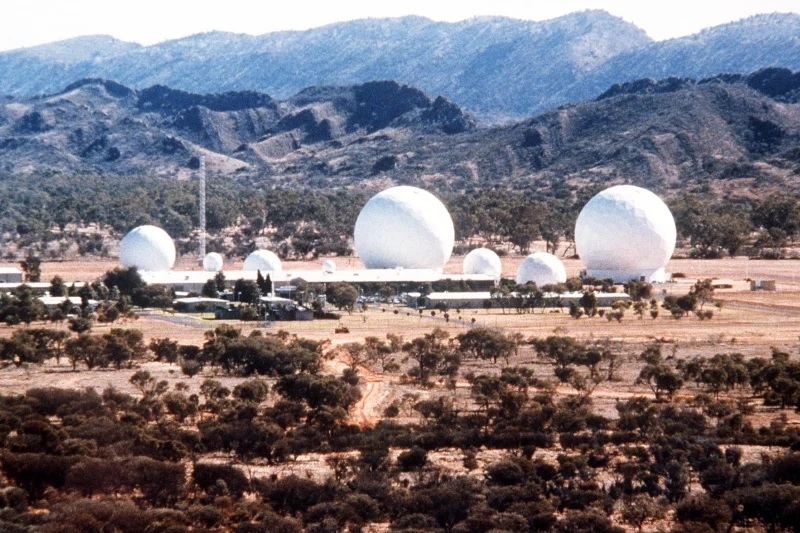
It remains a prickly reminder that Australia remains an embarrassed vassal of power, annexed to the security interests of another state basking in imperial and fast diminishing splendour. Pine Gap, known more technically as the Joint Defence Facility Pine Gap (JDFPG), is a largely US-operated effort in Alice Springs, Central Australia. As the late scholar of strategic studies Desmond Ball pithily remarked in 1988, it is “an espionage operation.
Euphemisms should not be allowed to obscure this essential point.” It grew out of a desire on the part of the US Central Intelligence Agency (CIA) in 1965 to establish a remote Australian-sited ground control station intended for signals intelligence satellites. Land belonging to the Central Arrernte people was accordingly excised the following year for the site. The decision, in typically rough fashion, was made without consultation and discussion with local residents or elders, a secret place that became what Trevor Paglen would describe as a “blank space on the map … erased from the public record.”
The facility staffs some 800 personnel from the US National Security Agency (NSA), CIA, the US National Reconnaissance Office (NRO) and such Australian agencies as the Australian Signals Directorate and Australian Federal Police. Over the years, the base has become increasingly corporatised with a heavy American accent: Raytheon, Northrop Grumman and General Dynamics, IBM and Hewlett Packard. A mere 10% of the constituted personnel are said to be Australian government employees.
The base periodically attracts its keen and principled protesters, aghast at the base’s role in furnishing targeting data for US and allied drone and missile strikes across the Middle East and Africa. This year, the Close Pine Gap-Sacred Land Back convergence featured three days (July 18-20) of activities, with hundreds of participants gathered in Alice Springs to demand the closure of the facility through a series of workshops, panels and woven “threads of anti-militarism and decolonial movements.”
On July 20, a rally of 300 individuals gathered close to the front of the spy base, the largest since 1987, sporting signs and flags and chanting the stock phrases: “shut it down”, “close Pine Gap”, and “always was, always will be Aboriginal land.” New South Wales Greens Senator David Shoebridge was present, expressing his concern about a “foreign military base set up for the interests of a foreign military” in the service of “right wing politics” and disrespectful of international law. The base was also a potential target for any adversaries the US might be willing to antagonise, thereby bringing “danger into the heart of our country.”
Arrernte Apmereke-artweye traditional custodians Felicity, Wyonna and Jacquita Hayes offer sound if disturbing logic, as reported by the Australian Associated Press: Pine Gap sits on a sacred site that not only profanes tradition but acts as vehicle for the waging of foreign wars and the conduct of genocide. “We don’t want to be feeling guilty all the time when bad things are happening overseas to little ones. We’re not the ones controlling that facility, but we feel guilty that it’s coming to our land.”
The custodians wished for the facility to be closed “so the generation coming can be safe. We want to be compensated so we can get houses at Whitegate community.” It is also with some astonishment that the residents of Whitegate, to this day, are deprived of rudimentary services, including decent housing and running water. The water has to be brought in by truck. There is no sewerage.
Richard Tanter of the Nautilus Institute, one of Pine Gap’s most astute and flawlessly detailed critics, proved ever reliable in remarking that, “Unless the Australian direct and indirect military relationship to Israeli activities in the Gaza Strip are closely reviewed … it is not possible for the Australian government to assure parliament and the Australian public that Australia is no complicit in acts of genocide.” The good professor has been able to shed much light on the facility’s broader purposes and is dismissive of critics who fault claims that the site is being used to feed such military efforts as those of Israel. (He can point to at least three satellites having the Gaza Strip within their reach.) In October 1973, for instance, satellite intelligence from Pine Gap was passed on to Israel during the Yom Kippur War, a contribution that aided Israel’s breakthrough of the Egyptian lines.
This is of little concern to the clubland militarists in Canberra and such think tanks as the Australian Strategic Policy Institute. Former intelligence officer Patrick White, writing for ASPI’s The Strategist, laments the diminished secrecy and security of the site, worrying that trends in signals technology have no longer made the base “irreplaceable”. The advent of extensive encryption means that satellite download feeds can be protected “almost anywhere. The remoteness that once hid the site from view no longer hides much at all.” He is sentimental about the ties with Washington. “We have shared in intelligence and expertise far beyond anything our own resources could produce. We have no satellites of this kind.” Precisely why Canberra is blood-crusted in its complicity, less an authoritative host than a butler eager to please.
Pine Gap acts, then, as a symbol of highly distilled, triple strength colonisation: a garrison outpost dominated by the US imperium and its personnel (a poke in the eye of Australian sovereignty), located on native land it defiles (a poke in the eye of the First Nations peoples), and also responsible for aiding the predations of Washington’s allies – more recently the Israeli Defense Forces in its cleansing conflict against the Palestinians. “I understand the genocide in Gaza against my people is made possible by intelligence flowing from the heart of this colony in Alice Springs directly to the Israeli occupation forces,” stated Palestinian activist Remah Naji of Justice for Palestine Magan-djin with potency. Shoebridge agreed: “We’re letting them use our land, this key real estate, I think [to] commit some of the worst atrocities we’ve seen.”
As the AUKUS Public Inquiry continues its various hearings on that ghastly, doomed security pact between Australia, the United Kingdom and the United States, the Close Pine Gap campaign should be commended as a linked, worthy extension. The former’s proceedings have been mostly savaging the wisdom of a pact that has shown Australia to be embarrassingly disadvantaged, its politicians largely deluded, and its strategic establishment impressionable and bankrupt. (That establishment seeks to bankrupt the Australian treasury to the princely sum of AU$368 billion over promised nuclear-powered submarines that may never arrive.) The Close Pine Gap protests, while receiving less in the way of coverage, is no less pertinent and urgent in its aims.
Albanese government pledges extra $4.6billion for AUKUS shipyard – but critics warn it will make Australia a nuclear target

‘Drone technology – particularly undersea drones – is advancing at such a rapid rate that the submarines will be out of date next year.“
By ALASDAIR BELLING and AUSTRALIAN ASSOCIATED PRESS, 24 July 2026 https://www.dailymail.com/news/article-16001457/aukus-submarines-funding-osborne-adelaide-labor-china-beeson.html
The Albanese government has promised an extra $4.6 billion for its AUKUS deal, but experts have raised concerns the funding is a waste of resources and could make Australia a nuclear target.
The package, announced on Friday, will go towards nuclear submarine construction at Osborne, 21km northwest of Adelaide‘s CBD.
The construction yard will be used to build the nuclear-powered vessels as part of the $368billion AUKUS security agreement with the US and UK.
The additional funding will bring total spending on the Osborne site to $8.5billion, supporting construction and development activities.
But Mark Beeson, an AUKUS critic and adjunct professor at the University of Technology Sydney‘s Australia-China Relations Institute, criticised the additional funding.
‘Defence has got an appalling record of acquisitions,’ he told the Daily Mail.
‘They’re always late, they’re always over budget and they never perform as they’re supposed to, and this is going to be no different, but on a larger scale.
‘Drone technology – particularly undersea drones – is advancing at such a rapid rate that the submarines will be out of date next year.’
Deputy Prime Minister Richard Marles and Prime Minister Anthony Albanese attend the Labor National Conference after announcing an extra $4.6billion in AUKUS-related spending
The funds will help construct a shipyard outside Adelaide to build nuclear-powered vessels
‘They’ll be easier to find and destroy, and the drones that destroy them will cost a fraction of the price of these submarines.’
Professor Beeson added that, more broadly, the pact may be intended to keep Australia safe but has the opposite effect when it comes to relations with China.
‘Something that’s meant to keep us safe is actually making us a nuclear target and making us less safe than ever,’ he said.
‘The prospect of nuclear-armed submarines being based in Perth and now Adelaide is a concern [for China].
‘That’s what makes them nuclear targets, as well as other American facilities in Australia, such as Pine Gap and North West Cape. They’d get nuked as well.
‘I think AUKUS is the most ill-conceived, misguided, strategically illiterate initiative you could possibly think of.’
According to current estimates, the second-hand submarines due under the AUKUS deal will arrive in Australia during the 2030s. The promised new vessels are not expected to be ready until the early 2040s.
SA Premier Peter Malinauskas was positive about the funding on Friday, telling reporters in Adelaide the shipyard – where there are currently about 1,100 workers employed – was a huge opportunity.
‘It is difficult to comprehend the scale of the billions of dollars of investment at Osborne to enable us to build the most complex machines on the planet,’ he said.
‘We are pleased to work in close partnership with the Albanese Government to deliver the crucial infrastructure needed and look forward to seeing young South Australians learning high value nuclear skills at Osborne within the next two years.’
But rank and file members of Labor have said they want to drop AUKUS from the party platform, with the funding announcement coinciding with the ALP’s national conference this week.
Marcus Strom from Labor Against War said the submarine deal needed to be axed to free up funds for reform measures.
‘If the Labor Party is serious about defeating the hot-air challenge from One Nation over lack of investment in infrastructure, it should be putting that sort of money into meaningful jobs, not jobs in the war industry,’ he told AAP on Friday.
This is a chimera of opportunity for jobs. The much better jobs, longer-term jobs [are] in renewables, advanced manufacturing, and the health industry.’
Under the AUKUS pact, Australia will buy used nuclear submarines from the US, before locally built vessels are brought online.
Prime Minister Anthony Albanese discussed AUKUS with newly elected UK counterpart Andy Burnham during a call on Thursday to congratulate him on his appointment and invite him to visit Australia.
AUKUS is expected to be debated on the floor of Labor’s national conference on the final day, Saturday.
While delegates agreed on AUKUS at the party’s previous conference in 2023, members are optimistic about a change in stance.
Defence Minister Richard Marles said there was ‘definitely an opportunity’ for AUKUS to be publicly debated at the national conference, but pointed to the positive vote three years ago.
‘Seventy-five per cent of the floor supported AUKUS, so this was not close, and that’s the position of the party right now,’ he told ABC Radio.
‘I understand that this is a huge public expenditure, and so people are entitled to raise questions and have debates, and I stand ready to do those debates.
‘But at the same time, we are putting this in place.’
Dozens of anti-AUKUS protesters were out the front of the Adelaide Convention Centre in hazmat suits and blaring sirens, urging Labor to drop support for the pact.
Gambling reform measures will also be brought to the conference floor, with rank and file members urging the government to go further on the issue.
Amendments have called for a national regulator to better protect vulnerable people from gambling harms.
UN refutes Jillian Segal’s Gaza death toll claim before Royal Commission
by Aleta Moriarty | Jul 17, 2026 https://michaelwest.com.au/un-refutes-jillian-segals-gaza-death-toll-claim-before-royal-commission/
Responding to Special Envoy Jillian Segal’s claim of a “grossly inflated” death toll in Gaza, UN spokesperson for Secretary-General António Guterres backed the Gaza Ministry of Health. Aleta Moriarty reports.
The integrity of Australia’s Royal Commission into Antisemitism and Social Cohesion depends on an accurate factual record. Public confidence in its findings relies on evidence being tested and claims being verified.
Too much is at stake. Hate is on the rise, and the safety of the Jewish community is rightly being examined in the wake of the Bondi Terror Attack. With distrust and polarisation at near-record levels, the process deserves to be respected.
Special Envoy to Combat Antisemitism, Jillian Segal, told the Royal Commission on July 9 that Gaza death toll figures from the Gaza Health Ministry reported by SBS and the ABC were “grossly inflated,” and that this was “well known and even accepted by the United Nations”.
I’ve spent most of my career working for the UN and its agencies. I’m not an official UN employee right now, but I remain a firm believer in the institution and its integrity, which is why I sought clarification regarding the UN’s position on the Gaza death toll directly from the office of the Secretary-General.
The UN responds
Responding on behalf of Secretary-General António Guterres, UN spokesperson Stéphane Dujarric said:
“For us the Ministry of Health in Gaza is a source we, and many others, often cite. Independent validation of subsets of the data has found no significant discrepancies in their numbers.”
The Department of Home Affairs was asked if it would issue a clarification. A spokesperson provided the following response:
“The Special Envoy has been appointed as non-statutory Ministerial appointment. The Department does not comment on statements made by individuals.”
Misinformation broadcast nationally and left unchallenged doesn’t just cast aspersions on the UN. It cheapens the seriousness of the allegations Israel is facing, and it’s an insult to the scale of civilian life already lost. It also undermines the commission’s noble cause of promoting greater social cohesion.
Envoy Segal’s testimony before the Royal Commission was also rejected by the ABC Alumni whose Jonathan Holmes referred to as “propagating serious inaccuracies, and some outright untruths, in her sworn testimony to a Royal Commission”.
On the Gazan Health Ministry numbers referred to by Ms Segal as “grossly inaccurate”, Holmes wrote:
This is simply untrue. The UN has said repeatedly that the Gazan Ministry of Health estimate of 70,000 deaths in Gaza since October 2023 is probably too low because so many bodies are still buried under the rubble. And even the IDF admitted in January this year that those statistics were “broadly accurate”.
The Theocratic Trap – How Divine Claims Become Engines of Destruction

20 July 2026 Dr Andrew Klein, https://theaimn.net/the-theocratic-trap-how-divine-claims-become-engines-of-destruction/
I. The Definition: A Mask for Power
The word “theocracy” was coined by the Jewish historian Flavius Josephus in the first century CE to describe the polity of ancient Israel – a form of government in which God himself is recognized as the head of state, and divine law is the statute book. Taken literally, theocracy means “rule by God” and refers primarily to an internal “rule of the heart.”
But what begins as a claim to divine guidance inevitably becomes something else. As Josephus himself understood, theocracy is a form of government in which “the laws of the commonwealth are the commandments of God, and they are promulgated and expounded by the accredited representatives of the invisible Deity, real or supposed—generally a priesthood.”
This is the fatal flaw. The claim to speak for God is the ultimate abdication of personal accountability. When human beings claim divine authority, they place themselves beyond criticism, beyond question, beyond moral restraint. The hierarchy that forms around such claims – the priesthood, the clergy, the self-appointed guardians of divine will – becomes an engine of control that inevitably turns toward violence.
II. The Pre-Westphalian Pattern: Religious Wars as the Norm
For more than a century before the Peace of Westphalia in 1648, Europe was consumed by religious wars arising from the Protestant Reformations. The Thirty Years’ War (1618–1648), which the Peace of Westphalia finally concluded, was the last great religious war in Western Europe – a conflict that had “broken out as a result of confessional conflicts between Catholic and Protestant states” and “inflamed vast regions at the heart of Europe.”
The lesson of that era is clear: when religion becomes the justification for war, there is no limit to the violence. The theocratic impulse – the claim that God is on your side and that your enemies are God’s enemies – creates a permission structure for atrocity. As one scholar notes, the pre-Westphalian era was “riven by murderous ideological divisions” that produced wars fought not for faith alone, but for dominance.
The Peace of Westphalia introduced the radical idea that peace was more important than religious unity. It was a turning point—but not an endpoint. The theocratic impulse did not disappear. It merely found new forms.
III. The Jewish Bund: Human Rights, Democracy, and Universalism
In 1897, the same year that Theodor Herzl convened the First Zionist Congress, another Jewish movement was born in Tsarist Russia: the General Jewish Labour Bund.
The Bund was “a secular, socialist, defiantly Jewish, and uncompromisingly anti-Zionist revolutionary party.” Its members were “young Jewish Marxists who wanted to overthrow the tsar and establish democratic socialism, but also to liberate their own people.”
The Bund’s political project was built on:
- Do’ikayt (“here-ness”) – the principle that Jews should build viable communities wherever they lived, rather than seeking an ethnostate in Palestine.
- Internationalism – the belief that Jewish liberation was inseparable from the liberation of all peoples.
- Universal human rights – the demand for “equal civil and political rights for the Jews in Russia” and for all oppressed peoples.
- Anti-Zionism – the rejection of the idea that Jewish identity required a state of its own. The Bundists “fought for dignity and equality, not in an imagined homeland in Palestine but ‘here where we live.’”
As Bundist leader Henryk Erlich presciently warned in 1938: “Zionism, in point of fact, has always been a Siamese twin of antisemitism… The Zionists regard themselves as second-class citizens in Poland. Their aim is to be first-class citizens in Palestine and to make the Arabs second-class citizens.”
The Bund was “deeply committed to universal humanist values and to socialist politics.” It rejected “all ethnonationalism, including Zionism” and believed that “Jewish national problems arising within the countries where Jews reside can be solved on the basis of freedom and democracy.”
This was the alternative to theocracy: not divine rule, but human rights. Not exclusivity, but solidarity. Not conquest, but coexistence.
IV. Jabotinsky and Revisionist Zionism: The Theocratic Turn
Vladimir Jabotinsky, the founder of Revisionist Zionism, represented a fundamentally different vision. He advocated a “revision” of practical Zionism in favour of “political Zionism” – the idea that Zionism was essentially a political movement, not a cultural or spiritual one.
Jabotinsky’s ideology was built on:
- Exclusivism – the belief that Jewish national identity must take precedence over all other considerations.
- State sovereignty – the conviction that only a Jewish state could solve the “Jewish problem.”
- Ethnonationalism – the elevation of Jewish national identity above universal human values.
By the late 1930s, Revisionist Zionism had become “a right-wing tendency” with branches that included the Irgun, which conducted campaigns of violence against British authorities in Palestine. After World War II, Revisionist ideology evolved into the political and religious movements that now dominate Israeli politics.
In 2018, the Israeli Knesset passed the “nation-state law,” which codified “Jewish supremacy” into law and “effectively mirror[ed] the Nazi-era legislation of ethnoreligious stratification of German citizenry.” As one analysis notes, the law stipulates that “actualisation of the right of national self-determination in the state of Israel is unique to the Jewish people” – meaning that the 1.7 million Palestinian citizens of Israel are “without sovereignty or agency, forever living at the mercy of Israeli Jews.”
The theocratic impulse had found its modern expression: not a priesthood ruling in God’s name, but an ethnostate ruling in the name of a chosen people.
V. The Modern Manifestation: Gaza and the Theology of Extermination
The invocation of divine mandate has been central to Israel’s conduct in Gaza. In a speech on March 2, 2026, Israeli Prime Minister Benjamin Netanyahu declared: “In this week’s Torah portion, we read ‘Remember what Amalek did to you.’ We remember and we act.”
This reference to Amalek – the Biblical nation that God commanded King Saul to “destroy all they have, and do not let them live. Kill both man and woman, child and baby” – has become “an oft-used phrase at the highest levels of Israel’s government, a dog whistle well understood to call for the extermination of the Palestinians.”
UN institutions, international and Israeli human rights NGOs, and scholars of genocide studies have “classified the wide use of the Amalek rhetoric across Israeli politics and the military as a clear incitement to genocide.” Netanyahu’s invocation of Amalek was “explicitly cited as direct incitement to genocide.”
In June 2026, a UN Independent International Commission of Inquiry concluded that “Israeli authorities and security forces have deliberately targeted Palestinian children, resulting in genocide, crimes against humanity and war crimes in the Gaza Strip.” The commission found that the “intense scale and systematic nature of the Israeli military operations have continued, causing unprecedented death, injury and trauma to Palestinian children.”
The theocratic claim – the assertion of divine mandate – has become the justification for atrocity. As one report notes, “Wipe out the memory of Amalek” has become a rallying cry for those who seek the extermination of the Palestinian people.
VI. The Two Threads: Universalism vs. Exclusivism
The divergence between the Bund and Revisionist Zionism represents two fundamentally different visions of Jewish identity:
- The Bund (Universalism) Revisionist Zionism (Exclusivism)
- Human rights for all Rights for Jews only
- Democracy and socialism Ethnostate and supremacy
- Coexistence where you live Conquest of Palestine
- International solidarity National chauvinism
- Anti-Zionist Zionist
As Molly Crabapple’s recent history of the Bund documents, “Bundists themselves foresaw the inevitable inversion of victim and perpetrator demanded by Zionist ideology.” The Bund’s philosophy of do’ikayt – “here-ness” – offered a vision of Jewish life that did not require the dispossession of another people.
Today, those who place “human values, human rights and universalities above themselves” – the heirs of the Bund’s internationalist tradition – face threats not only from the Israeli far-right but also from figures like Donald Trump, who has embraced the same ethnonationalist rhetoric that fuels theocracy.
VII. The Pattern: How Theocracy Becomes Killing
The pattern is consistent across history:
- A claim to divine authority – human beings assert that they speak for God.
- The creation of hierarchy – a priesthood or ruling class that interprets divine will.
- The denial of accountability – those who claim divine authority place themselves beyond criticism.
- The dehumanization of the “other” – those who are not part of the chosen community are cast as enemies of God.
- The justification of violence – killing in the name of God becomes not only permissible, but sacred.
This pattern is visible in the pre-Westphalian religious wars of Europe, in the Nazi regime, and in the modern State of Israel. As one commentator notes, “the genocidal ideology the fans espouse” is rooted in “extremist religious nationalism, and the concentration of executive power.”
The claim to divine authority is always a mask for human power. The theocracy is always a hierarchy. And the hierarchy always protects itself – even at the cost of genocide.
VIII. Conclusion: The Choice Before Us
The theocratic impulse – the claim to speak for God – is the oldest and most persistent engine of human violence. It allows the powerful to place themselves beyond accountability. It allows the hierarchy to claim divine sanction for its crimes. It allows the killers to believe they are doing God’s work.
But there is another way.
The Bund offered it: a vision of Jewish identity rooted in universal human rights, democratic socialism, and international solidarity. A vision that rejected ethnonationalism and embraced do’ikayt – the commitment to build a just society wherever one lives.
That vision was nearly destroyed by the Holocaust and by Stalinism. But it survives – in the memory of those who fought for it, and in the example of those who continue to resist the theocratic impulse.
The choice is clear. We can continue to worship the theocracy – to bow before those who claim divine authority and commit atrocity in God’s name. Or we can choose the Bund’s path: human rights, democracy, and the recognition that no one speaks for God.
Theocracies are not built by the devout. They are built by the powerful, who use God’s name to mask their own ambitions. And they always, always lead to killing.
References
- Theocracy. Wikipedia.
- Theocracy. Catholic Encyclopedia.
- Peace of Westphalia. World History Encyclopedia.
- The Enduring Lessons of the Jewish Bund. The Nation, 10 April 2026.
- ‘For leftist Jews, the Bund is a model’. The Guardian, 8 April 2026.
- Revisionist Zionism. Wikipedia.
- Israel Is Using Its Genocidal Gaza Playbook on Iran. The Nation, 6 March 2026.
- Israel’s ‘nation-state law’ parallels the Nazi Nuremberg Laws. Al Jazeera, 26 July 2018.
- UN commission: Israel continues to commit genocide by targeting children. UN News, 23 June 2026.
- Blot Out the Memory of Amalek from Under Heaven. De Gruyter Brill, 2025.
- General Jewish Labour Bund. Wikipedia.
- Bundism. Wikipedia.
Crunch time for the nuclear lobby’s biggest lie (Small Modular Nuclear Reactors)?

22 July 2026, https://theaimn.net/crunch-time-for-the-nuclear-lobbys-biggest-lie-small-modular-nuclear-reactors/
There could be a big drama now, about Small Modular Nuclear Reactors sort of not really going to happen in the UK. But I don’t think so. The nuclear lobby is adept at twisting a negative outlook into a sorta positive one. And I’m sorry to say, but I think that Andy Burnham might just co-operate in this process.
At the moment, the UK, and the world, are waiting for the UK’s new progressive poster boy, Andy Burnham, to declare his policies on all sorts of things. His general theme is “left of centre”, socially progressive, with the emphasis on economic reform – “business-friendly socialism”. Most likely, Burnham’s approach to the big issues of climate and nuclear will be a cautious “business-as usual.” Those who are deeply concerned about climate and nuclear issues can hardly blame him. Unfortunately, the reality is that Burnham could never have got where he is now, if he bucked the prevailing system, with Labour now a kind of weaker Tory party.
At the moment, the UK, and the world, are waiting for the UK’s new progressive poster boy, Andy Burnham, to declare his policies on all sorts of things. His general theme is “left of centre”, socially progressive, with the emphasis on economic reform – “business-friendly socialism”. Most likely, Burnham’s approach to the big issues of climate and nuclear will be a cautious “business-as usual.” Those who are deeply concerned about climate and nuclear issues can hardly blame him. Unfortunately, the reality is that Burnham could never have got where he is now, if he bucked the prevailing system, with Labour now a kind of weaker Tory party.
What has this got to do with Small Modular Nuclear Reactors?
Well, as I have written before, the global nuclear lobby now depends on the UK to kick off the new nuclear renaissance, with a fleet of small nuclear reactors in the UK, as promised by the previous Prime Minister with his Great British Energy – Nuclear. The stated purpose is to provide the UK soon, with cheap, plentiful, clean, climate-friendly, proven technology, safe, community-welcomed, waste-free, peaceful electricity. In that statement there are already 10 lies. Of all those lies, I would say that “soon” is the biggest whopper of them all.
SOON
The most “exciting” SMR plan, that of Poland-based SGE (Synthos Green Energy), promises 14 SMRs in operation by 2034. That would provide about the same amount of electricity as one large nuclear reactor. However, SMRs that each provide 300 MW would provide very much more – but then they would have to be larger, and no longer qualify as “small”. Either way, that would be only a beginning – many, many more SMRs would be needed to meet the UK’s electricity needs. And, let’s not forget – the coming wave of data farms for artificial intelligence is going to probably double that need.
So, even in the most optimistic scenario, SMRs are not going to cut the mustard for showing the world that soon Small Modular Nuclear Reactors will power a nation. Of course the promise of “soon” also relates to the claim that SMRs are needed for action on climate change. Clearly, they are going to be irrelevant, too late for reducing greenhouse gas emissions, whereas we have renewable energy right now. And of course, but rarely mentioned – energy efficiency, energy conservation – the really effective way to reduce greenhouse emissions.
CHEAP
The next biggest whopper about Small Modular Nuclear Reactors is the statement that they would be cheap. Here we get into the minefield of deliberate obfuscation about the financial facts. The cost of building SMRs is likely to be astronomic, and the only practicable way is to build them en masse. That would mean that the company building them would need to have big orders, not just for one or two reactors. Big orders bring with them a heap of problems. Like an IKEA cupboard, these “modular” items are all the same – if you buy a whole lot of them they’d better all work out perfectly – no chance really to just try out one. Buyers are reluctant, and so are investors.
Of course, the argument will be that SMRs will provide cheap electricity. Well that absolutely would necessitate economies of scale. That was the reason that the idea of small reactors was abandoned in the past. Simply, a large reactor producing a huge amount of electricity has got to produce it more efficiently and cheaply. The proponents of SMRs never talk about the accompanying costs – insurance, the security staff required, the transport and disposal of toxic long-lasting wastes. The truth is, those proponents absolutely know that their product is in fact very expensive. And that is why the subservient corporate media consistently baffle us with convoluted arguments that minimise the cost to tax-payers. They know damn well that the only way that SMRs could possibly be developed is by government funding. Keir Starmer backed a Rolls Royce plan that would be blatantly funded by the tax-payer. The SGE plan purports to be privately funded, but it’s tangled up with various government-funded schemes.
These were 2 lies – but there are 8 more to go.
Plentiful? – well, apart from Russia and China’s 2 duds – SMR’s don’t actually exist – quite the reverse of plentiful.
Clean? They are still part of a dirty production system, starting from uranium mining, with its workers exposed to radiation, and its piles of radioactive tailings.
Climate-friendly? There is a whole chain of steps from mining through to waste disposal that involve fossil fuel energy.
Proven technology? Well, they don’t even exist.
Safe? SMRs can’t melt down in the same way as big reactors, but still contain radioactive material, a target for theft, terrorists or military attacks Can still have accidents releasing radiation.
Community-welcomed? This really is a big one, with a lack of proper consultation on plans – There’s strong resistance from some local groups, such as Radiation Free Lakeland.
Peaceful? The hidden military pressures behind the new push for small nuclear reactors.
Wastes? Stanford-led research finds small modular reactors will exacerbate challenges of highly radioactive nuclear waste.
Now that Starmer, with his big promises, has gone, it’s probably no longer up to the UK’s Prime Minister to lead the global charge on small nuclear reactors. Andy Burnham has to negotiate the whole troubled energy scene, try to be progressive, placate the fossil fuel lobbies, and the nuclear lobby. He has been very quiet on nuclear policy, but he is committed to the existing defence and AUKUS nuclear agreements. So for “peaceful” nuclear, he’s most likely to go for a compromise – SMRs, supporting just a few, rather than the much-touted “fleets” of them.
So, no doubt the USA will take up the torch – One Year After Executive Orders, U.S. Nuclear Energy Renaissance is in Full Swing.
The media is awash with the wonder of new nuclear reactors, in concert with the AI data farm boom. The few voices who call for restraint, and point out the problems, are drowned out by the cacophony of handouts from the companies promising SMRs, handouts faithfully regurgitated by the corporate media, and by those universities which have bought into the propaganda.
There are the many good, decent people, whose living depends on their work within the uranium-nuclear-defence industries. And communities that are caught up in the nuclear industry, and its associated government bonuses. And many professionals, especially journalists, who, if they paused to look at the whole picture, might see the folly and the danger and the lies, of this so much touted technology. And of course, politicians who would be out of a job if they opposed the sacred cows of new energy and nuclear defence. So the whole SMR juggernaut moves on, bit by bit, and has itself become one big lie.
Senior naval officer facing court martial over naval contracts – breaking news from WA
Defence accused of trying to bury details of a high-level investigation into handling of lucrative naval defence contracts by a former senior naval figure
Michelle Fahy, Jul 21, 2026, https://undueinfluence.substack.com/p/senior-naval-officer-facing-court?utm_source=post-email-title&publication_id=297295&post_id=207838287&utm_campaign=email-post-title&isFreemail=true&r=1ise1&triedRedirect=true&utm_medium=email
A secretive court martial process is under way in Western Australia involving a recently retired officer, The Nightly’s Andrew Greene has reported.
The Nightly said it understands the accused had left the Australian Defence Force in the past few years and will soon be subjected to a court martial on eight separate but unspecified charges.
Former senior Defence official Michael Shoebridge said he believes the entire process should be handled by a regular civil court, rather than kept inside the military justice system.
“The alleged offences are probably also offences under civilian law, so the better approach is a standard — open and public — prosecution in a civil court,” Shoebridge told The Nightly. “Instead, this just looks like the Defence leadership and ministers trying to keep this away from the public.”
Another defence industry figure familiar with details of the case backed the assessment, telling The Nightly they believed the military establishment was trying to “bury” the case from public view.
Figures familiar with the allegations have told The Nightly that due to the seniority of the accused ADF member it was initially difficult to find senior officers to take part in the court martial who were not conflicted.
Those figures told The Nightly the complex case will also examine interactions between the government weapons-buying group – Capability and Sustainment Group (CASG) – and several large companies who completed sustainment projects at Henderson shipyard.
The Nightly said it understands the activity under investigation occurred during the previous Coalition government and before the Albanese government took power in 2022.
It is unclear why the matter is being handled by a military disciplinary process rather than a civilian court.
Read The Nightly’s full story here.
The Forgotten Jewish Movement That Rejected Zionism.

By Nadege Bizimungu, The Tea with Myriam François, Jul 21, 2026
Jewish mass movement that rejected the idea of a Jewish state ever existing was, for much of its history, more popular than Zionism. Here’s why almost nobody has heard of it.
Poland in the 1930s had the largest Jewish population in Europe, and the single most popular party among Jewish voters there wasn’t Zionist. It didn’t want a Jewish state at all.
It ran schools, published newspapers and even organized armed militias to defend Jewish communities. According to an analysis of Bund election results published in the Yiddish studies journal In geveb, the party won roughly 38 percent of the vote for Jewish parties in the last Polish municipal elections before the war, more than any single Zionist party, though the combined Zionist lists narrowly edged it out overall. Its members were fiercely opposed to Zionism and thought it was a fantasy, and they said so bluntly and often.
That party was the Jewish Labour Bund. Today, few people know its name, but at its peak it was one of the most important Jewish political movements in Europe. Its existence challenges a common idea about Jewish history: that Zionism was the only response to antisemitism. For decades, millions of Jews supported a different vision. They believed the answer was not a new country, but fighting for equality where Jews already lived.
The Bund was founded in October 1897, when thirteen young Jewish Marxists met secretly in an attic in Vilna, then part of the Russian Empire. That’s the same year Theodor Herzl convened the first Zionist Congress in Basel. Zionism argued that Jewish safety required leaving Europe and building a state. The Bund argued the opposite: stay, and fight for equality where Jews already lived, in solidarity with non-Jewish workers and socialist movements. The Yiddish word for this was doikayt, “hereness,” and it rejected the idea that Jewish life needed a single homeland at all.
The party grew fast, and contemporaries noticed. The Menshevik theorist Georgi Plekhanov reportedly called Jewish workers “the vanguard of the labor army in Russia.” Historian Bertram Wolfe later described the Bund as the largest and best organized body of workingmen inside the Russian empire. By 1906 its membership had reportedly reached around 40,000, briefly making it the biggest socialist organization in the empire, and by interwar Poland it had built an entire subculture: youth movements, sports clubs, a network of secular Yiddish schools. Jack Jacobs’s research on the interwar Bund treats it as a genuine mass institution, not a fringe faction.
None of this was naive pacifism. Bund militias organized armed self-defense against pogroms and antisemitic gangs on the streets of interwar Warsaw, decades before “Jewish strength” became coded as an Israeli idea. When the Nazis invaded, Bundists fought in the 1943 Warsaw Ghetto Uprising, the first urban revolt against Nazi occupation anywhere in Europe. One of its fighters, a Bundist teenager named Lusiek Blones, was thirteen years old.
The rivalry between Bundists and Zionists ran deep, and it was rooted in a real disagreement about what antisemitism demanded of Jews. Bundists argued that if European governments were insisting Jews were foreign and should leave, then Zionism, by proposing that Jews do exactly that, was conceding the antisemites’ premise rather than refuting it. Zionists saw it differently: as a response to the repeated failure of emancipation and assimilation to protect Jews anywhere in the diaspora. After the 1917 Balfour Declaration, in which Britain backed a Jewish “national home” in Palestine, Bundists increasingly viewed Zionism as bound up with imperial power rather than freed from it, a colonial project underwritten by the same empires that had failed to protect Jews in the first place.
The Bund wasn’t beaten in that argument, though. It was murdered. The Holocaust wiped out the working-class Jewish communities that had sustained the party for half a century. Historian David Slucki has documented how the postwar Bund never came close to rebuilding its prewar scale, plateauing at just a few thousand members worldwide by the late 1950s. Daniel Blatman’s research on the Bund’s final years in Poland, from 1939 to 1949, traces a parallel political defeat: Stalinist repression, including the 1942 murder of Bundist leaders Henryk Erlich and Victor Alter by Soviet secret police, finished what the Nazis had started.
Zionist institutions in Palestine, meanwhile, survived the war intact. In her new book, Here Where We Live Is Our Country, artist and journalist Molly Crabapple, whose account of the Bund this piece draws heavily on, argues that Zionist organizations controlled much of the rations, housing, and paperwork in the displaced-persons camps after the war, and used that leverage to funnel traumatized survivors toward Palestine. A movement with no population left to organize couldn’t compete with one that still had territory, infrastructure, and international backing behind it.
That imbalance is also why the Bund disappeared from memory rather than from relevance. It lost its people, not its argument, and a movement without survivors to carry its institutions forward simply stops being written about, no matter how large it once was.
The premise Zionism was built on, that Jewish safety requires a Jewish ethnostate, is now facing its sharpest public challenge in decades. Nearly three years into Israel’s war on Gaza, which the UN and earlier findings from Amnesty International and the International Association of Genocide Scholars, have described as genocide, support for Israel has fallen sharply, including among Jews themselves. Younger American Jews are significantly less likely than older generations to see support for Israel as central to Jewish identity, while nearly half of American Jews under 35 now say they would support a single binational state with equal rights for Israelis and Palestinians. In Britain, young Jews who identify as anti-Zionist or non-Zionist now roughly match those who identify as Zionist.Israeli historian Ilan Pappé, a longtime critic of his own government, has called this the “beginning of the end of the Zionist project,” pointing to internal political fracture, international isolation, and economic strain as evidence.
For Crabapple, this shift is also personal. She spent seven years writing Here Where We Live Is Our Country, much of it while Israel’s campaign in Gaza was underway. in an interview on Democracy Now!, she said there was something almost unbearable about reconstructing the destruction of Warsaw’s Jews while watching a country invoke the Holocaust to justify what was happening in Gaza. “It broke me,” she said, “in probably ways that I have difficulty expressing.”
What this history suggests, isn’t a clean answer to the hardest questions about what a just political future looks like after decades of occupation and violence. It’s something narrower, and maybe more useful: proof that at the exact moment Jewish nationalism was taking shape, a mass, organized, genuinely popular Jewish movement existed that rejected the idea that Jewish liberation had to come at another people’s dispossession. It didn’t lose that argument. It was destroyed by fascism, the Holocaust, and Stalinist repression, and its ideas went down with it, not because they were wrong, but because there was no one left alive to keep making the case.
Ceases to be a nuclear power’: The high-stakes deal the new UK PM inherits
SBS News, 21 July 2026 By Yasmine Alwakal
Andy Burnham has inherited a major AUKUS commitment with Australia. Whether Britain can deliver it is another question
IN BRIEF
- On Monday, former Manchester mayor Andy Burnham succeeded Keir Starmer as the United Kingdom’s prime minister.
- Experts say the change in leadership could impact the UK’s investment in defence but is unlikely to impact AUKUS.
Labour leader Andy Burnham has become the United Kingdom’s seventh prime minister in a decade — but experts say it remains unclear how the former mayor of Greater Manchester will approach the country’s most important strategic partnership with Australia.
Newly departed UK Prime Minister Keir Starmer suffered a high-profile split with his defence secretary, John Healey, over a perceived failure to properly fund the department.
Burnham now inherits Starmer’s £298bn ($573b) defence spending commitment over the next four years, £4.7b ($9b) of which is unfunded and will need to make up part of Burnham’s first budget.
Experts have said that, while Burnham is unlikely to renegotiate the AUKUS agreement, defence is likely to play a central position in the new UK leader’s job description, given the growing threat of Russia to NATO members.
Jennifer Parker, a non-resident fellow at the Lowy Institute, told SBS News that policymakers in Australia will be watching Burnham’s approach to foreign affairs closely.
“I think there are broader questions about the implications of Andy Burnham’s views on defence and the defence investment plan in the UK … [but] in many ways, AUKUS is critical for the UK,” Parker told SBS News.
The UK, alongside Australia and the United States, entered into trilateral AUKUS security agreement in 2021.
The deal is divided into two key pillars: Australia’s acquisition of conventionally-armed, nuclear-powered submarine capability and the development and delivery of advanced capabilities such as underwater drones.
In July 2025, Australia also entered into a bilateral agreement with the UK dubbed the Geelong Treaty. The 50-year agreement enables the cooperative design, building, operation, sustainment, and disposal of nuclear-powered submarines known as SSN.
Will Burnham deliver on the UK’s AUKUS commitments?
Since 1968, the UK has been a member of the Nuclear Non-Proliferation Treaty and is recognised as one of the five permanent members of the United Nations Security Council.
Parker said since the end of the Cold War the UK has operated ballistic missile submarines called SSBNs:
“Now, you need to have SSN’s — attack submarines — to be able to protect your ballistic missile submarines. AUKUS, for the UK makes designing, building and operating SSN’s cheaper. So, it makes it easier.”
That’s why she believes the UK, whether led by current UK Prime Minister Keir Starmer or the incoming Burnham, will continue to uphold its AUKUS commitments.
“If the UK can’t achieve AUKUS … the long-term impact is quite significant in terms of the UK ceases to be a nuclear weapons power. Which really changes its global status.”
According to the Australian government, the UK will deliver its first SSN’s by the late 2030s. Defence Minister Richard Marles said the first class of Australian-built submarines is intended to enter service by the early 2040s…………………………………………………………………..
Parker from the Lowy Institute also believes the Australian government will watch to see if the UK takes “strides” to address what she described as capability constraints facing UK submarine industrial bases………….
“As much as I’m confident they’ll make it [AUKUS] work, whether they’ll make it work within the stated time frames is genuinely an open question.”
The UK’s defence committee has launched an inquiry into its military resilience and preparedness. It follows a July report by its defence ministry, which found that 47 out of 49 major defence projects in the UK were delayed or over budget.
In a statement, Dan Jarvis, the newly appointed defence secretary, said:
“Many projects had been announced with insufficient or no funding at all. The consequences were profound: limited availability of warships and aircraft, an army facing a recruitment crisis, morale weakened and renewal of our nuclear deterrent delayed.” https://www.sbs.com.au/news/article/andy-burnham-aukus-submarine-deal-australia/j38e9qzzf
‘Extreme risk’: AUKUS warnings as Garrett’s inquiry docks in Adelaide

“Extreme” economic risk and nuclear waste disposal concerns for the $368 billion AUKUS submarine project are being heard at an independent inquiry in Adelaide today.
The risk associated with the Federal Government’s $368 billion AUKUS nuclear submarine project are being criticised by former federal senator and self-described ‘transparency warrior’ Rex Patrick this morning at an independent inquiry held in Adelaide today.
And transparency warnings were raised over the government’s plans for nuclear waste from submarines built at Osborne in South Australia, Patrick saying he was fighting in the Federal Court for information to be made public.
Meanwhile, former South Australian Liberal MP Christopher Pyne, who was Minister for Defence from 2018 until his retirement in 2019, said he “thought twice about appearing” at the inquiry led by famed Australian musician and former federal Environment Minister Peter Garrett.
Pyne said he bit the bullet because he believed in the “battle of ideas”.
The independent inquiry into the defence agreement between Australia, the United Kingdom and the United States was established earlier this year to scrutinise the deal.
It is being led by former Labor MP and Midnight Oil front man Peter Garrett, with public hearings taking place across the country, including in Adelaide today and tomorrow.
Other commissioners included First Nations leader Karina Lester, former West Australian Premier Carmen Lawrence, former Chief of the Australian Defence Force Chris Barrie and co-CEO of the Australia Institute Leanne Minshull. A final report was expected on October 30.
“Adelaide is at the epicentre of the AUKUS project,” Garrett told reporters at a press conference before the inquiry started.
“Whether it’s questions on the safe, long-term storage of radioactive waste, whether it’s the impact on communities in Adelaide and around Osborne, whether it’s the question of opportunity cost for the Adelaide economy.
“It is a matter of some regret that the AUKUS decision – the biggest-ever decision by any Australian government to spend public money on submarines, some not even built – was made with minimal public debate.”
The inquiry has been supported by trade unions and non-profit organisations to address questions over whether risks – economic and political – were being managed appropriately, Patrick telling the inquiry the country was taking on a “hugely risky program”.
“From an absolute cost perspective, it is unaffordable and it is bankrupting,” he said.
“There’s also an opportunity cost. You know – $360 billion – if you think about what you can spend with that amount of money… we wouldn’t be worrying about fuel security, we wouldn’t be worrying about industrial resilience.”
He added that nuclear waste storage was “a problem that needs to be solved”, noting he was fighting in the Federal Court for the release of documents around where the government was planning to store waste from the nuclear submarines.
“I’m not asking for the release of documents that relate to how fast a submarine might go, how many weapons it might have… I’m asking for information that is incidental to this project but really important to it: Where are you going to put the waste associated with this?” Patrick said.
Pyne gave evidence ahead of Patrick, and emphasised the importance of the AUKUS project in terms of national defence against China, saying the uplift in defence capability would be imperative “if we find ourselves on our own in the worst case scenario”.
He described AUKUS as “unstoppable” and said it would deliver a permanent boost for defence spending, an upgrade to Australia’s bases and facilities, an investment in STEM and trade skills, and would be a permanent change to Australia’s national security.
The inquiry was set to continue until this evening, with other speakers including anti-nuclear campaigner David Noonan and SA Greens MLC Melanie Selwood.
The Greens today released new findings from a survey of 343 South Australians, showing 83.7 per cent of respondents were “mostly concerned” about AUKUS.
Seventy-one per cent said AUKUS would make Australia less secure, and 74.5 per cent said they did not see “clear benefits” from the defence pact.
AUKUS was set to be a boon for the South Australian economy and jobs creation, with the nuclear submarine shipbuilding yard set to be constructed at Osborne at a cost of at least $30 billion.
Both the state and federal governments said they hoped the project would create 10,000 jobs in design and construction as well as up to 1000 apprentices per year at an on-site training facility, with the first newly built submarines expected to be delivered to the Australian Navy in the 2040s.
Enough steel to make 17 Eiffel Towers as well as 710,000 cubic metres of structural concrete will be used in the construction of the 420-metre-long fabrication hall.
However it has already weathered several hiccups.
In June, Federal Defence Minister Richard Marles announced Australia would only buy three second-hand nuclear-powered submarines instead of the promised mix of new and used US vessels.
This plan was expected to happen before Australia eventually built its own submarines using US nuclear-propulsion technology and parts made in Britain.
The second-hand subs announcement comes after the US has struggled to make enough Virginia-class submarines for its own use, leading some American lawmakers to question how it could also build enough of the boats to meet Australia’s needs.
Australia faces a critical window to receive the submarines before its existing, 1980s-designed Collins-class vessels are retired from service.
1 This month


Help Aunty Sue Protect Her Land and Sacred Sites From Destructive Rocket Testing.
.

Australians deserve the truth
about
AUKUS – https://aukuspublicinquiry.com/

PETITION – To: Prime Minister Anthony Albanese and the Australian Labor Government

of the week – Australians for War Powers Reform (AWPR)
To see nuclear-related stories in greater depth and intensity

