Japan starts 5th ocean discharge of Fukushima nuclear-tainted wastewater despite opposition

(Xinhua) Web editor: Zhang Kaiwei, Liang Jun, April 19, 2024
TOKYO, April 19 (Xinhua) — Japan on Friday started the fifth-round of release of nuclear-contaminated wastewater from the crippled Fukushima Daiichi Nuclear Power Plant into the Pacific Ocean.
Despite opposition among local fishermen, residents as well as backlash from the international community, Tokyo Electric Power Company (TEPCO), the plant’s operator, started discharging the radioactive wastewater in the morning, the first round in fiscal 2024.
Similar to the previous four rounds, about 7,800 tons of the wastewater, which still contains tritium, a radioactive substance, will be discharged until May 7.
TEPCO analyzed the water stored in the tank scheduled for release, and found that the concentrations of all radioactive substances other than tritium were below the national release standards, while the concentration of tritium that cannot be removed will be diluted with seawater, Japanese newspaper Asahi Shimbun reported.
TEPCO will measure the concentration of radioactive substances such as tritium in the surrounding waters every day during the period to investigate the effects of the release, it added.
The Fukushima nuclear-contaminated water release began in August 2023, and a total of about 31,200 tons of the water was released in four rounds in fiscal 2023, which ended in March.
In fiscal 2024, TEPCO plans to discharge a total of 54,600 tons of contaminated water in seven rounds, which contains approximately 14 trillion becquerels of tritium.
Swiss ruling could pave way for more climate activist cases.
The decision that Switzerland had failed in its duty to mitigate climate change raises
questions about the Strasbourg court overstepping the mark. Victory for a
group of Swiss women who challenged their government’s inaction over
climate change will encourage activists “to try their luck”, one City
law firm partner warns.
The European Court of Human Rights last week ruled
for the first time that signatory states to the convention are obliged to
protect their citizens from the effects of the evolving “climate
crisis”. The judges said that the Swiss government had failed to comply
with its duties to mitigate climate change, and that violated the right to
respect for private and family life.
Times 18th April 2024
TODAY. Israel v Iran – religious fanaticism or common sense in the atomic age.
Decision to use nuclear bombs could be made for religious reasons, not military strategy.

Trying to understand the culture of other nations, looking from the outside, is a tricky task.
But – as I attempt this, about Israel and Iran, I find some remarkable similarities
Israel is supposed to be a democracy. But the fact that they call it “The Jewish State” immediately sheds doubt on that claim. It is a technocratically advanced state – but with a prevailing religious culture which is quite counter to the ideas of modern secular states. With the current war on Gaza , Israel now functions as a brutal fascism.
Iran makes no pretense of being a democracy. Under the veneer of genuine Islam, the clerics and mullahs run an oppressive, vengeful, misogynist dictatorship.
Yet in both cases, the rulers have twisted religion to suit their cruel aims.
ZIONISM. Jewish tradition abhors violence and reinterprets war episodes, plentiful in the Hebrew Bible, in a pacifist mode. Tradition clearly privileges compromise and accommodation. Albert Einstein was among the Jewish humanists who denounced Beitar, the paramilitary Zionist youth movement, today affiliated with the ruling Likud. He deemed it to be“ as much of a danger to our youth as Hitlerism is to German youth”.
The first Zionist congress in 1897 had to be moved from Germany to Switzerland because German Jewish organizations objected to holding a Zionist event in their country. The Zionist argument that the homeland of the Jews is not the country, where they have lived for centuries and for which many have spilled their blood in wars, but in a land in Western Asia. For many Jews, this message bears disconcerting resemblance to that of the antisemites who resent their social integration.
ISLAMIC FUNDAMENTALISM IN IRAN.
From Prophet Muhammad: “Kindness is a mark of faith, and whoever is not kind has no faith.” “Do good to others, and goodness will come back to you.” “He who does not show mercy to others will not be shown mercy.”
The Quran places great emphasis on the dignity of human beings regardless of their gender or race or even status. The dignity also means that human beings have a right to life, right to freedom of religion, right to freedom of lifestyle, right to labor, right to security and right to family
In Iran, The crux of the fundamentalist conflict is not between Islam and Christianity. Nor is it between Islam and the West, and nor between the Shia and the Sunni. The conflict is over freedom versus subjugation and dictatorship, between equality on the one hand and oppression and misogyny on the other.
When it comes to the nuclear bomb – these forms of religious extremism become a critical danger to the world. The idea of martyrdom becomes important – sacrificing oneself, and one’s people become a value, a virtue even. It has been prominent in many wars – a notable example – Japan’s Kamikaze airmen in World War 2.
Martyrdom has been a value for some extremist Islamists. I don’t think it would be so for the mullahs of Iran.
But – when it comes to Israel – there’s a definite strand of martyrdom in Israeli military thinking.

Ultimately, all the nuclear powers have no intention of firing first, as this would undoubtedly lead to their destruction. The exception is Israel, which seems to have adopted the “Samson doctrine” (“Let me die with the Philistines”). It would thus be the only power to imagine the ultimate sacrifice, the “Twilight of the Gods”, dear to the Nazis.
The military atom was never envisaged as a classic form of deterrence, but as an assurance that Israel would not hesitate to commit suicide to kill its enemies rather than be defeated. This is the Masada complex [3]. This way of thinking is in line with the “Hannibal Directive”, according to which the IDF must kill its own soldiers rather than let them become prisoners of the enemy [4].
Biden Administration Defies Australia’s Call To End Assange Case, Submits ‘Assurances’ To UK Court
Streamed live on 17 Apr 2024, Join Kevin Gosztola, author of “Guilty of Journalism: The Political Case Against Julian Assange,” as he covers the U.S. government’s “assurances” that were submitted to a British appeals court. They represent a clear indication that President Joe Biden’s administration is not going to end the case. If Biden was “considering” a plea deal for Assange, as was reported, he has made the decision to keep pursuing extradition and a U.S. trial on Espionage Act charges.
Iran Israel: An audible sigh of relief in the Middle East

By Lyse Doucet,Chief international correspondent, 20 Apr 24, more https://www.bbc.com/news/world-middle-east-68861607
The latest round in the region’s most dangerous rivalry appears to be over, for now.
Israel still has not officially acknowledged that the attack in Iran in the early hours of Friday morning was its doing.
Meanwhile, Iran’s military and political leaders have downplayed, dismissed and even mocked that anything of consequence happened at all.
The accounts over what kind of weaponry was deployed on Friday and how much damage was caused are still conflicting and incomplete.
American officials speak of a missile strike, but Iranian officials say the attacks, in the central province of Isfahan and in northwest Tabriz, were caused by small exploding drones.
“The downed micro air vehicles caused no damage and no casualties,” Iran’s Foreign Minister Hossein Amir-Abdollahian insisted to the semi-official Tasnim News Agency.
But these simple quadcopters are Israel’s calling card – it has deployed them time and again in its years of covert operations inside Iran.
This time their main target was the storied central province of Isfahan, which is celebrated for its stunning Islamic heritage.
Of late, however, the province is more famous for the Natanz nuclear facility, the Isfahan Nuclear Technology Centre and a major air base, which was used during Iran’s 14 April attack on Israel.
It is also an industrial heartland housing factories which produce the drones and ballistic missiles that were fired by the hundreds in Israel’s direction last Sunday.
So a limited operation seems to have carried a powerful warning – that Israel has the intelligence and assets to strike at will at Iran’s beating heart.
It is a message so urgent that Israel made sure it was sent before, rather than after, the start of the Jewish Passover, as was widely predicted by Israel watchers.
US officials have also indicated that Israel targeted sites such as Iran’s air defence radar system, which protects Natanz. There is still no confirmed account of its success.
So this attack may also be just an opening salvo. But it was, for the moment, an unintended 85th birthday gift to Iran’s Supreme Leader, Ayatollah Ali Khamenei.
Israel’s official silence gave Iran’s ultimate decision-maker vital political space. Tehran did not have to invoke its new rule that whenever its arch-enemy strikes, Iran will hit back hard, with the risk of sparking a perilous escalatory spiral.
Hardline President Ebrahim Raisi did not even mention these most recent events in his Friday speeches.
For the Islamic Republic, it is all about what it dubs Operation True Promise – its unprecedented onslaught against Israel in the dead of night last Sunday. He hailed what he called his country’s “steely will”.
Iran has prided itself for years on its “strategic patience”, its policy of playing a long game rather than retaliating immediately and directly to any provocations.
Now, it is invoking “strategic deterrence”. This new doctrine was triggered by the 1 April attack on its diplomatic compound in Damascus, which destroyed its consular annex and killed seven Revolutionary Guards, including its most senior commander in the region.
Iran’s supreme leader was under mounting pressure to draw a line as Israel ramped up its targets during the last six months of the grievous Gaza war.
No longer just striking Tehran’s assets, including arms caches, buildings, bases and supply routes on battle grounds like Syria and Lebanon, Israel was also assassinating top-ranking officials.
A decades-long hostility, which had previously played out in shadow wars and covert operations, erupted in open confrontation.
Whatever the specifics of this latest tit for tat, there is a more fundamental priority for both sides: deterrence – a more solid certainty that strikes on its own soil will not happen again. If they do, there is a cost to pay, and it will hurt.
For the moment there is an audible sigh of relief in the region, and in capitals far and wide.
Israel’s latest move, under anxious urging from its allies to limit its retaliation, will have eased this tension, for now. Everyone wants to stop a catastrophic all-out war. But no one will be in any doubt that any lull may not last.
The region is still on fire.
The Gaza war grinds on, causing a staggering number of Palestinian casualties.
Under pressure from its staunchest allies, Israel has facilitated the delivery of greater quantities of desperately needed aid, but the blighted territory still teeters on the brink of famine.
Israeli hostages have still not come home, and ceasefire talks are stalled. Israel still warns of battles to come in Hamas’s last stronghold in Rafah – what aid chiefs and world leaders say would be yet another untold humanitarian disaster.
Iran’s network of proxies across the region, what it calls an “Axis of Resistance” stretching from Hezbollah strongholds in Lebanon through Iran-aligned militias in Iraq and Syria, to the Houthis of Yemen, are at the ready, still attacking daily.
In the last few weeks, simultaneously everything and nothing has changed in the region’s darkest, most dangerous days.
No more Russian language on air in three months – Kiev

COMMENT: It is a sad thing to see the Western world, supposed bastion of freedom, individual rights, “multiculture”…. complacently agreeing with the cultural repression that is going on in Ukraine.
Ukraine has long been a bilingual country, and also a country which valued the very good parts of its Russian heritage.
It’s one thing to trash and destroy Ukrainian cultural history, like the memory of Catherine the Great – who promoted public health and education, especially for women, and who established Kiev as a centre of the arts.
Even worse is the frenzied nationalism that punishes the quite large minority of Russian-only speakers across Ukraine, and especially in the Donbass area.
Thu, 18 Apr 2024 , https://www.sott.net/article/490743-No-more-Russian-language-on-air-in-three-months-Kiev
Ukraine’s goal of eradicating bilingual media content has almost been achieved, the government has claimed
Ukraine’s ban on using the Russian language in the media will take full effect three months from now, Kiev’s state language protection commissioner, Taras Kremin, has said.
Since gaining independence, Ukraine has been a bilingual nation, with most citizens able to speak or understand both Russian and Ukrainian. After the US-backed coup in Kiev in 2014, the new nationalist authorities adopted policies aimed at suppressing the Russian language, on the grounds of national unity and security.
The restrictions include a requirement for national media to predominantly use Ukrainian in broadcasts. The permitted share of content in Russian has declined from 40% in 2016 to an almost complete ban, which will come into force in July – the deadline that Kremin referred to in his statement on Wednesday.
“Today national television channels practice bilingual Ukrainian-Russian programming, in which participants use the Russian language without a translation or subtitles,” he said. “Starting on July 17, this practice will end. There will be more Ukrainian language!”
The push by Ukrainian nationalist leaders to impose the state language on Russian-speakers living in the east of the country was a major reason for locals’ rejection of the post-coup authorities. One of the first acts of those who seized power in Kiev was to abolish a law adopted in 2012, which gave the Russian language official regional status.
The new authorities have been adopting laws to eradicate Russian from all spheres of public life, including education, entertainment, and even services provided by private businesses.
In an interview last year, Kremin denied that some Ukrainian citizens could be called Russian-speaking, describing the term was “a marker introduced by Russian ideology,” and declared that “everyone in the country must have a command of the Ukrainian language.”
In contrast, this week the leader of another post-Soviet nation, Kazakhstan, rejected the notion that one language spoken by his people should be favored over others.
“Young people now are fluent in the state [Kazakh] language, in Russian language, in English and other languages, and that is good,” President Kassym-Jomart Tokayev said on Tuesday. “It’s ridiculous to ramp up hysterics over a language, let alone fight against one, as they did in some other states. We all see what they have now as a result.”
The Kazakh leader did not specify which other nations he was referring to.
Comment: The current policies of the Ukrainian government is what the collective west with few exceptions support. If voters in Western countries have difficulties finding out what their governments are about, keep the example of Ukraine in mind. if their government supports them, they might themselves not be far behind in how far they would be willing to go given the chance.
22 Nov, 2023 15:22
‘There are no Russian-speaking Ukrainians’ – Kiev
There is no such thing as a Russian-speaking Ukrainian citizen, Kiev’s state language protection commissioner, Taras Kremin, has declared. In recent years, the country has introduced a frenzy of measures to sever historical and cultural ties with Russia, as it scrambles to strengthen the status of its own language despite accusations of prejudice against national minorities.
In an interview aired by the Ukrainian branch of the US state-run Radio Free Europe/Radio Liberty (RFE/RL), Kremin rejected the suggestion that some Ukrainians could be called “Russophones,” describing the term as “a marker introduced by the Russian ideology.”
“We are all Ukrainian citizens… Ukrainian is the dominant language in all spheres of public life. Regardless of whether it is national communities or foreigners, everyone in the country must have a command of the Ukrainian language,” the ombudsman insisted.
Earlier this year, Kremin stated that Ukrainians who speak Russian should not be referred to as “Russian-speaking,” claiming that the term had been used for decades by “Russian propaganda” to promote internal divisions in Ukraine. Citing a 2021 Constitutional Court ruling, he also insisted there were only Ukrainian citizens who had been “Russianized.”
According to a March 2022 poll by the Sociological Group Rating, about 20% of Ukrainians considered Russian to be their native language. A Social Monitoring survey in 2021 suggested that more than 50% of Ukrainians were willing to read books and watch movies in Russian.
Ukrainian authorities embarked on a campaign to push Russian out of all areas of life immediately after the 2014 Western-backed Maidan coup. The measures sparked widespread public outrage and were among the key reasons behind the hostilities in Donbass.
In 2018, the Ukrainian Constitutional Court overturned a 2012 law granting regional status to the Russian language, while at the same time Kiev adopted initiatives seeking to curb its use in education, mass media, business, and culture.
Russia has repeatedly denounced Ukraine’s language policies. President Vladimir Putin said that Moscow’s military operation against its neighbor was partly to protect people who consider themselves part of Russian culture.
On Monday, the speaker of the Ukrainian parliament, Ruslan Stefanchuk, went as far as to deny the existence of Russian ethnic minorities, arguing that they had no special rights. The statement sparked outrage in Moscow, with Foreign Ministry spokeswoman Maria Zakharova saying the remarks came from “the Nazis of the 21st century.”
4 Apr, 2024 20:19
Zelensky’s comedy partner slams campaign against Russian language
Boris Shefir co-founded the Kvartal 95 (District 95) comedy studio in 2003 with Zelensky and a group of their school friends. Most of these comedians and producers – including Shefir’s brother, Sergey – followed Zelensky into politics, taking prime positions in his administration after he was elected president of Ukraine in 2019.
Shefir was not among them.Speaking to the Ukrainian branch of the US government-funded Radio Free Europe/Radio Liberty (RFE/RL) outlet on Thursday, he said that he has had “no relationship” with Zelensky since the conflict with Russia began in 2022.
“For two years, I have not called or talked to him,” Shefir said. “He is working with other people now. He does not communicate with me, does not call me. My calls remain unanswered.”
“Well, you see, I speak Russian,” he explained. “I love the Russian language, Russian culture…I can’t watch Pushkin’s monuments being destroyed in my country.”
Israeli Settlers, Soldiers ‘Wiping Palestinian Communities Off the Map’ in the West Bank
“While the attention of the world is focused on Gaza, abuses in the West Bank, fueled by decades of impunity and complacency among Israel’s allies, are soaring.”
Jake Johnson. 17 Apr 24, https://www.commondreams.org/news/west-bank-communities-israeli-settlers?utm_source=Common+Dreams&utm_campaign=4bdd8521e2-Top+News%3A+Wed.+4%2F17%2F24&utm_medium=email&utm_term=0_-37878a46b5-%5BLIST_EMAIL_ID%5D
Following the Hamas-led October 7 attack on southern Israel, the Israeli military drafted more than 5,000 settlers into “regional defense” units in the West Bank, Haaretzreported earlier this year. The Israeli newspaper noted that “alongside this large-scale mobilization, the [Israel Defense Forces] has distributed some 7,000 weapons to the battalions as well as to settlers who were not recruited into the army but received them as civilians whom the army considers eligible to carry military arms.”
HRW’s investigation found that “armed settlers, with the active participation of army units, repeatedly cut off road access and raided Palestinian communities, detained, assaulted, and tortured residents,
chased them out of their homes and off their lands at gunpoint or coerced them to leave with death threats, and blocked them from taking their belongings.”
“Israeli settlers and soldiers are literally wiping Palestinian communities off the map,” said Omar Shakir, HRW’s Israel and Palestine director.
“While the attention of the world is focused on Gaza, abuses in the West Bank, fueled by decades of impunity and complacency among Israel’s allies, are soaring.”
The new report comes days after Israeli settlers—escorted by IDF soldiers—went on their latest destructive and deadly rampage in the West Bank, killing at least two Palestinians, injuring dozens, and setting homes and vehicles ablaze. At least 20 households were displaced after Israeli settlers burned down their homes.
The wave of settler violence came after a missing 14-year-old Israeli boy was found dead in the area around the West Bank city of Ramallah. The Israeli military said the boy was killed in a “terrorist attack.”
Since October 7, according to the United Nations, Israeli settlers have launched more than 720 attacks on Palestinians in the West Bank, displacing at least 206 households comprised of 1,244 people—including 603 children. Israeli soldiers in uniform have been present at many of the attacks.
“Settlers and soldiers have displaced entire Palestinian communities, destroying every home, with the apparent backing of higher Israeli authorities,” Bill Van Esveld, associate children’s rights director at HRW, said in a statement Wednesday. “While the attention of the world is focused on Gaza, abuses in the West Bank, fueled by decades of impunity and complacency among Israel’s allies, are soaring.”
HRW’s new report examines five West Bank communities that have come under attack by Israeli settlers, including one in which uniformed Israeli men armed with assault rifles entered tents and destroyed or stole people’s belongings, abused residents, and threatened to kill them if they didn’t leave the area.
“One man in uniform kicked me in the back of my neck,” a Palestinian mother told HRW. “They said, ‘Go to the valley, and if you come back, we will kill you.'”
None of the families forcibly evicted from the five communities examined in the HRW report have been allowed to return home.
“Palestinian children have seen their families brutalized, and their homes and schools destroyed, and the Israeli authorities are ultimately to blame,” Van Esveld said Wednesday. “Senior state officials are fueling or failing to prevent these attacks, and Israel’s allies are not doing enough to stop that.”
Following the latest wave of settler violence in the West Bank this past weekend, a coalition of human rights organizations said in a joint statement Wednesday that “the international community must swiftly and decisively pressure the government of Israel to halt these attacks and urgently de-escalate the situation.”
“With international attention centered on Gaza, the government of Israel has not only allowed settler violence to spiral but also persisted in the expansion of Israeli settlements built on Palestinian land and unlawfully seized Palestinian territory by designating it as ‘state land,’ blatantly violating international law,” the groups noted. “Concerted efforts are needed to tackle the root cause of settler violence by permanently dismantling settlement outposts and ensuring the safe return of displaced Palestinians to their lands.”
“An Awkward Problem”: Julian Assange and the Australian dog that didn’t bark

a clear Australian Government policy to limit direct engagement on the Assange case until after he has been extradited to the United States, put to trial, convicted, sentenced and exhausted all appeal rights.
by Philip Dorling and Rex Patrick | Apr 13, 2024, https://michaelwest.com.au/julian-assange-an-awkward-problem-for-albanese/?utm_source=newsletter&utm_medium=email&utm_term=2024-04-18&utm_campaign=Michael+West+Media+Weekly+Update
Joe Biden says he’s “considering” an end to the prosecution of Julian Assange. Anthony Albanese says, “enough is enough,” but not much else. Rex Patrick and Philip Dorling discuss the latest developments in the Assange case.
That’s the position behind the Government’s careful words about bringing the matter to a close.
At no point has the Australian Government called publicly for the espionage charges to be dropped and the extradition process to be ended.
A plea deal?
Last month, the Wall Street Journal reported the US Justice Department has been considering a proposed plea deal with Assange, dropping the espionage charges and allowing him to admit to a misdemeanour concerning the mishandling of classified documents.
According to the Journal the Justice Department was exploring ways to end the long London court battle as Assange continues to fight against extradition. It isn’t clear whether the move for a plea deal has come from Justice or Assange’s legal team. In any case, Assange’s lawyers said they’d been “given no indication” of any change in the US position.
President Biden may have been referring to the question of a plea deal as much as any representations from the Australian Parliament.
A plea deal might well be under consideration, but it’s clearly not a done deal yet, and a radical reduction in the charges, with Assange walking free in London and his time in His Majesty’s Prison Belmarsh taken into account, sounds like a big ask.
That dog ain’t barking…
One thing’s clear, however, Albanese hasn’t followed up on the parliamentary resolution with any personal diplomatic push on the Assange case.
One might have thought that Albanese would have directly engaged President Biden or else directed new representations across the top levels of the US Administration.
If that were the case, one would expect Albanese’s own Department to be closely engaged, working with DFAT and the Australian Embassy in Washington. Albanese is a careful, process-driven prime minister, so one would expect there to be PM&C briefing papers and correspondence. If absolutely nothing else one would expect there to be a Parliamentary Question Time Brief.
With such expectations, on March 7, 2024, Rex Patrick submitted a new FOI application for access to “PM&C submissions, talking points or other documents provided to Prime Minister Albanese between 1 February 2024 and 29 February 2024 that refer or relate to Julian Assange”.
Yesterday, the same day as Albanese’s latest comments that his government was using “all of our diplomatic efforts at every level”, PM&C provided their FOI response.
Dave Titheridge, head of the Department’s Global Interests Branch, advised: “I am refusing your request for access … as the documents you have requested do not exist”.
PM&C conducted an extensive search, including through its email system, Parliamentary Document Management System and electronic records repository and turned up nothing.
Nothing happening here – either before or after the parliamentary resolution.
Zero, zip, zilch, nada.
What’s next?
So, where does this leave Assange? His appeal options in London are nearly at an end. Perhaps his lawyers will finally get lucky. Perhaps President Biden is “considering” his case. Perhaps there will be a plea deal.
But Assange may well be extradited and spend decades rotting in a US maximum security prison. He might die there. He could also eventually come home, but as a prisoner in shackles, not as a free man.
Whatever happens, however, it won’t be down to a big effort – or barking – from the Albanese Government.
Supporters of Julian Assange were encouraged on Thursday by US President Joe Biden’s off-the-cuff- remark that his administration was “considering” an Australian request to end the espionage prosecution of the WikiLeaks founder.
Assange’s spouse, Stella Assange, called on Biden to “do the right thing” and “drop the charges”. Prime Minister Anthony Albanese said Australia was using “diplomatic efforts at every level to communicate that it is time that this was brought to a close, enough is enough.”
However, getting to the bottom of what governments do in the secretive world of diplomacy can often be akin to investigating a murder mystery. The clues are elusive and fragmentary. In the case of imprisoned Australian journalist Julian Assange, it’s a case of a dog that didn’t bark.
Parliamentary action
Media reports attributed the apparent shift in the US position to Albanese’s support for a parliamentary motion moved by independent MP Andrew Wilkie on February 14 that declared the Assange extradition proceedings have “gone on for too long” and “underline[d] the importance of the UK and USA bringing the matter to a close so that Mr Assange can return home to his family in Australia”.
Albanese said his government had supported the motion “because it is the right thing to do.” He added that he had raised the Assange case “at the highest levels” with the US and UK with “a calibrated and deliberate approach” that included discussions with Assange’s lawyers. In that context, the parliamentary resolution was “important… it’s important to send that message.”
Quiet diplomacy
It’s one thing to express support for “bringing the matter to a close”; but what does that mean in practice? For Assange supporters, it means the US dropping the prosecution and Assange returning to Australia as a free man.
However, the Albanese Government’s understanding and expectations are likely rather different.
FOI inquiries by Rex Patrick over the past eighteen months have shown that the Albanese Government’s track record on the Assange case has been patchy at best. The government’s “quiet diplomacy” has been minimalist. FOI applications directed toward the Department of Foreign Affairs and Trade, including Australia’s Embassy in Washington, have revealed little evidence of concerted diplomatic activity,
This isn’t to say that Albanese hasn’t raised the Assange case at the “highest levels.” He undoubtedly has, but it’s likely involved mentioning it as a politically awkward problem rather than a push to secure Assange’s freedom.
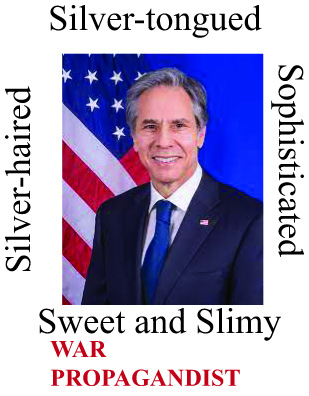
In response Secretary of State Antony Blinken made it publicly clear the US Government was most reluctant to intervene in the Justice Department’s prosecutorial process – an issue of obvious political sensitivity given the criminal charges brought against former president Donald Trump.
FOI inquiries also unearthed briefings for Attorney-General Mark Dreyfus that revealed a clear Australian Government policy to limit direct engagement on the Assange case until after he has been extradited to the United States, put to trial, convicted, sentenced and exhausted all appeal rights. Only then could Assange apply under the International Transfer of Prisoners scheme to serve a sentence of imprisonment in Australia. Only then would the Attorney-General formally consider that possibility,
Assange Extradition Case Moves Forward While The CIA Covers Its Tracks

CAITLIN JOHNSTONE, APR 17, 2024 https://www.caitlinjohnst.one/p/assange-extradition-case-moves-forward?utm_source=post-email-title&publication_id=82124&post_id=143660864&utm_campaign=email-post-title&isFreemail=true&r=1ise1&triedRedirect=true&utm_medium=email
So they’re really doing it. The Biden administration is really ignoring Australia’s request to end the case against Julian Assange, and they’re proceeding with their campaign to extradite a journalist for telling the truth about US war crimes.
In order to move the extradition case forward, per a British high court ruling US prosecutors needed to provide “assurances” that the US would not seek the death penalty and would not deprive Assange of his human right to free speech because of his nationality. The US provided the assurance against the death penalty (which they’d previously opposed doing), and for the free speech assurance they said only that Assange will be able to “raise and seek to rely upon” US First Amendment rights, adding, “A decision as to the applicability of the First Amendment is exclusively within the purview of the U.S. Courts.”
Which is basically just saying “I mean, you’re welcome to TRY to have free speech protections?”
At the same time, CIA Director William Burns has filed a State Secrets Privilege demand to withhold information in a lawsuit against the agency by four American journalists and attorneys who were spied on during their visits to Assange at the Ecuadorian embassy in London. State secrets privilege is a US evidentiary rule designed to prevent courts from revealing state secrets during civil litigation; the CIA began invoking it with the Assange lawsuit earlier this year.
Burns argues:
“I am asserting the state secrets and statutory privileges in this case as I have determined that either admitting or denying that CIA has information implicated by the remaining allegations in the Amended Complaint reasonably could be expected to cause serious — and in some cases, exceptionally grave — damage to the national security of the United States. After deliberation and personal consideration, I have determined that the complete factual bases for my privilege assertions cannot be set forth on the public record without confirming or denying whether CIA has information relating to this matter and therefore risking the very harm to U.S. national security that I seek to protect.”
Which is obviously a load of horse shit. As Assange himself tweeted in 2017, “The overwhelming majority of information is classified to protect political security, not national security.” Burns isn’t worried about damaging “the national security of the United States,” he’s worried about the potential political fallout from information about the CIA spying on American lawyers and journalists while visiting a journalist who was being actively targeted by the legal arm of the US government.
Political security is also why the US is working to punish Julian Assange for publishing inconvenient facts about US war crimes. The Pentagon already acknowledged years ago that the Chelsea Manning leaks for which Assange is being prosecuted didn’t get anyone killed and had no strategic impact on US war efforts, so plainly this isn’t about national security. It’s just politically damaging for the criminality of the US government to be made public for all to see.
They’re just squeezing and squeezing this man as hard as they can for as long as they can get away with to keep him silent and make an example of him to show what happens when journalists reveal unauthorized information about the empire. Just like Gaza, the persecution of Julian Assange makes a lie of everything the US and its western allies claim to stand for, and reveals the cruel face of tyranny beneath the mask of liberal democracy.
Iran Closes Nuclear Sites Fearing Israeli Attack: IAEA Chief
Tuesday, 04/16/2024 Iran International Newsroom, https://www.iranintl.com/en/202404162504
Iran shut down its nuclear facilities last Sunday over “security considerations,” UN nuclear chief Rafael Grossi has said, expressing concern over the “possibility” of an Israeli attack on Iran’s nuclear sites.
Speaking to reporters in New York on Monday, IAEA Director General confirmed that the facilities had reopened within 24 hours, but with no IAEA supervision, as the agency has decided to keep its inspectors away until the situation is “completely calm.”
Grossi was referring to rising tensions between Israel and Iran, which many fear may lead to an all-out war between the two countries and potentially engulf the whole Middle East.
Israel bombed Iran’s consulate in Damascus on 1 April, killing seven members of the Islamic Revolution’s Guards Corpse (IRGC), including a high-ranking commander and his deputy. Iran retaliated on 13 April, launching more than 300 missiles and drones towards Israel –all but a few of which were intercepted by Israel and its allies.
On Monday, Israeli officials vowed to respond to the attack. When asked about the possibility of Israel hitting Iran’s nuclear sites, Grossi said, “We are always concerned about this possibility.” He urged both sides to show “extreme restraint”.
Grossi also reiterated the IAEA’s concerns about Iran’s nuclear program.
“A bit more than a year ago, I went to Tehran and signed a joint declaration with the Iranian government indicating a number of actions that we will be taking together with Iran,” Grossi said. “We started that process and that process was interrupted. And I have been insisting that we need to go back to that understanding that we had in March 2023.”
In September 2023, Iran withdrew the designation of several inspectors assigned to conduct verification activities in Iran under the Non-Proliferation Treaty Safeguards Agreement. Iran’s nuclear chief Mohammad Eslami later claimed that those expelled had had a history of “extremist political behavior”.
“We are always urging, asking and requiring Iran to cooperate with us in full,” Grossi told Iran International’s Maryam Rahmati. “It’s not that we are not there, but we are not there at the level that we consider we should be.”
The IAEA reported in February that Iran is enriching and stockpiling near-weapons-grade uranium, warning that such elevated purity cannot be explained by civilian applications.
When asked about Iran’s enrichment levels by Iran International, Grossi siad, “the fact that there is an accumulation of uranium enriched at very, very high levels does not automatically mean you’re having a weapon…but it raises questions in the international community.”
Iran has always denied seeking nuclear weapons, but no other state has enriched to that level without producing them.
A report published last month by the Institute for Science and International Security claimed that Iran is moving ahead with building a nuclear site deep underground near Natanz.
“This Iranian nuclear weapons-making facility could be impervious to Israeli and perhaps even American bombs,” Foundation for Defense of Democracies CEO Mark Dubowitz said at the time. “Time is quickly running out, as Iran moves into a zone of nuclear immunity, to deny the regime permanent use of this deadly site.”
Iran President Warns of ‘Massive’ Response if Israel Launches ‘Tiniest Invasion’
Rex Patrick has dug into how Pistol Pete Dutton reached his nuclear conclusions.
In September 2020, the Morrison Government released a Low Emissions Technology Statement that placed Small Modular Reactors (SMR) on a list of watching brief technologies. SMR developments were to be monitored to see if they might play a part in Australia’s energy future.
Iranian President Ebrahim Raisi warned on Wednesday that the “tiniest invasion” by Israel would bring a “massive and harsh” response, as the region braces for potential Israeli retaliation after Iran’s attack over the weekend.
Raisi spoke at an annual army parade that was relocated to a barracks north of the capital, Tehran, from its usual venue on a highway in the city’s southern outskirts. Iranian authorities gave no explanation for its relocation, and state TV did not broadcast it live, as it has in previous years.
Iran launched hundreds of missiles and drones at Israel over the weekend in response to an Israeli strike on Iran’s embassy compound in Syria on April 1 that killed 12 people, including two Iranian generals.
Israel successfully intercepted nearly all the missiles and drones.
It has vowed to respond, without saying when or how, while its allies have urged all sides to avoid further escalation.
Raisi said Saturday’s attack was a limited one, and that if Iran had wanted to carry out a bigger attack, “nothing would remain from the Zionist regime.” His remarks were carried by the official IRNA news agency.
Fujitsup-ing UK ‘s Post Office IT system, – and now its Nuclear Lab?

The UK government’s National Nuclear Laboratory has given Fujitsu a £155k contract for ‘software support’ IT – for nuclear science and experimental programmes in nuclear power and weapons.
Fujitsu? The Japanese software company that supplied, and apparently is still supplying, the British Post office with software – its bodgy Horizon IT programme being at the root of one of the most widespread miscarriages of justice in UK history.. Yes, that one!
It doesn’t fill you with confidence about the safety of the UK’s nuclear lab activities, does it?
The Post Office’s contract with Fujitsu was, (is) extremely complex, with the Post Office lacking the expertise to understand how the IT system works. Does the nuclear lab have the same problem?
These types of contracts deliberately lock the buyer in, with the supplier having control of all upgrades, fixing of any technical problems. The Post Office contract also limited the amount of information they could get from the system.
This created a dependance by the Post Office on the company Fujitsu. Is the British military and nuclear system also locked into dependance on Fujitsu? A source told the i newspaper that the Japanese firm has been managing a secretive computer system facilitating the “strategic command and control of UK Armed Forces” for decades.
The contract for the National Nuclear Laboratory is the first government contract with Fujitsu in 2024, – to the anger and frustration of many, as the inquiry into the Post Office software scandal is still underway, with more litigation likely to come.
Modular Reactors. Peter Dutton hasn’t done his nuclear homework

by Rex Patrick | Apr 16, 2024 , https://michaelwest.com.au/nuclear-reactors-peter-dutton-has-not-done-his-homework/—
Has Peter Dutton’s proposed ‘rollout’ of modular nuclear reactors real policy or just politics? What research has he done to develop the policy? Not much, it seems. Rex Patrick reports.
In September 2020, the Morrison Government released a Low Emissions Technology Statement that placed Small Modular Reactors (SMR) on a list of watching brief technologies. SMR developments were to be monitored to see if they might play a part in Australia’s energy future.
Consistent with that listing, the Government directed the Australian Nuclear Science and Technology Organisation (ANSTO) to join an International Atomic Energy Agency (IAEA) Coordinated Research Project focused on the Economic Appraisal of SMRs to provide information to assist in evaluating the technology’s economic viability.ANSTO assembled a team to prepare, among other things, a case study on Australia’s potential to adopt SMR technologies in the future and analyse financing options for the technology. As part of that project, ANSTO even supported a University of Queensland PhD thesis on SMRs.
Flip flop politics
Peter Dutton, a minister in the Government that commissioned the ANSTO work, came out mid-way through 2023 with a proclamation of the Coalition’s plans for Australian to adopt SMRs as a preferred tool in our movement towards net zero carbon emissions.
In doing so Dutton opened himself up to a political battering because of the nascent state of SMR development around the world and huge questions around costs.
Undeterred, in early March Dutton doubled down on nuclear power, switching his thinking to large nuclear power plants scattered about the country. As public controversy raged about the new plans, Dutton has started reinjecting SMRs into the total mix.
There are now to be a mix of economic and taxation incentives for the local communities targeted by the Coalition to host a nuclear reactor.
Missing homework
In response to their hip flip to a larger nuclear power plant and his small flop back to SMRs, I thought MWM set out to see if Dutton has visited ANSTO or taken a brief from them in relation to his plans.
After all, there’s no shortage of precedent for parliamentary oppositions to seek factual briefings from government agencies, especially on complex and specialised subjects.In a recent nuclear estimates brief prepared for the CEO of ANSTO, the first two paragraphs stated:
“ANSTO has significant insight into what other countries and jurisdictions are doing around the world in terms of nuclear power.”
As mentioned above, ANSTO was specifically engaged by the former Coalition Government to take a look at SMRs.So, I was left gobsmacked when a Freedom of Information request I made to ANSTO to find out what Dutton’s interactions with ANSTO had been over the past five years returned nil information.
ANSTO FOI response (on original)
Dutton has not visited Australia’s only nuclear reactor and has not received a brief from our country’s expert agency on the policy area he was developing.
In some measure, it explains the flip-flopping and limited detail in many of his announcements.
For completeness, I also asked the Government’s nuclear safety regulator, ARPANSA, if Dutton had visited them or sought advice from them. FOI came up with the same answer from them. (on original) Nothing at all..
Politics, not policy
You can’t develop policy just by chin-wagging at party room meetings and with briefs from vested business interests. That’s not how it works. You have to get independent and expert advice, and in the case of nuclear matters, a vital place to get that advice in Australia is ANSTO and ARPANSA.
So, just what policy work has Dutton done? In large part, he appears completely dependent on the Google skills of his little-known Climate Change and Energy spokesperson, Ted O’Brien.
With a background in marketing, O’Brien has no ministerial experience, so the practicalities of major project implementation may be quite novel for him. He did once chair a parliamentary committee inquiry into nuclear energy, but as so often is the case, the research there was largely done by the committee secretariat, with O’Brien just adding a thin layer of pro-nuclear evangelism on the top.
It’s pretty safe to say that, in the absence of comprehensive briefs from and engagement with Australia’s leading experts, Dutton is not engaging in serious policy development. Rather it’s a manoeuvre to achieve political differentiation and keep the anti-renewals, climate-change-denying core of his Coalition happy. Dutton’s approach to policy development, in this instance, says just as much about him as it does about his nuclear plans.
“It’s all politics”
Bombs and viruses: The shadowy history of Israel’s attacks on Iranian soil
From cyberattacks and assassinations to drone strikes, Israel-linked plots have targeted Iran and its nuclear programme for years.
Israel’s leaders have signalled that they are weighing their options on how to respond to Iran’s attack early Sunday morning, when Tehran targeted its archenemy with more than 300 missiles and drones.
Iran’s attack, which followed an Israeli strike last week on the Iranian consulate in Damascus, Syria, that killed 13 people was historic: It was the first time Tehran had directly targeted Israeli soil, despite decades of hostility. Until Sunday, many of Iran’s allies in the so-called axis of resistance — especially the Palestinian group Hamas, the Lebanese group Hezbollah, Yemen’s Houthis and armed groups in Iraq and Syria — were the ones who launched missiles and drones at Israel.
But if Israel were to hit back militarily inside Iran, it wouldn’t be the first time. Far from it.
For years, Israel has focused on one target within Iran in particular: the country’s nuclear programme. Israel has long accused Iran of clandestinely building a nuclear bomb that could threaten its existence — and has publicly, and frequently, spoken of its diplomatic and intelligence-driven efforts to derail those alleged efforts. Iran denies that it has had a military nuclear programme, while arguing that it has the right to access civil nuclear energy.
As Israel prepares its response, here’s a look at the range of attacks in Iran — from drone strikes and cyberattacks to assassinations of scientists and the theft of secrets — that Israel has either accepted it was behind or is accused of having orchestrated.
Assassinations of Iranian scientists
- January 2010: A physics professor at Tehran University, Masoud Ali-Mohammadi, was killed through a remote-controlled bomb planted in his motorcycle. Iranian state media claimed that the US and Israel were behind the attack. The Iranian government described Ali-Mohammadi as a nuclear scientist.
- November 2010: A professor at the nuclear engineering faculty at Shahid Beheshti University in Tehran, Majid Shahriari, was killed in a car explosion on his way to work. His wife was also wounded. The president of Iran at the time, Mahmoud Ahmadinejad, blamed the United States and Israel for the attacks.
- January 2012: Mostafa Ahmadi Roshan, a chemical engineering graduate, was killed by a bomb placed on his car by a motorcyclist in Tehran. Iran blamed Israel and the US for the attack and said Ahmadi Roshan was a nuclear scientist who supervised a department at Iran’s primary uranium enrichment facility, in the city of Natanz.
- November 2020:Prominent nuclear scientist Mohsen Fakhrizadeh was killed in a roadside attack outside Tehran. Western and Israeli intelligence had long suspected that Fakhrizadeh was the father of an Iranian nuclear weapons programme. He was sanctioned by the United Nations in 2007 and the US in 2008.
- May 2022: Colonel Hassan Sayyad Khodaei of the Islamic Revolutionary Guard Corps (IRGC) was shot five times outside of his home in Tehran. Majid Mirahmadi, a member of Iran’s Supreme National Security Council, alleged the assassination was “definitely the work of Israel”.
Israel’s cyberattacks on Iran
- June 2010:The Stuxnet virus was found in computers at the nuclear plant in Iran’s Bushehr city, and it spread from there to other facilities. As many as 30,000 computers across at least 14 facilities were impacted by September 2010. At least 1,000 out of 9,000 centrifuges in Iran’s Natanz enrichment facility were destroyed, according to an estimate by the Institute for Science and International Security. Upon investigation, Iran blamed Israel and the US for the virus attack.
- April 2011: A virus called Stars was discovered by the Iranian cyberdefence agency which said the malware was designed to infiltrate and damage Iran’s nuclear facilities. The virus mimicked official government files and inflicted “minor damage” on computer systems, according to Gholamreza Jalali, the head of Iran’s Passive Defense Organization. Iran blamed Israel and the US.
November 2011: Iran said it discovered a new virus called Duqu, based on Stuxnet. Experts said Duqu was intended to gather data for future cyberattacks. The Iranian government announced it was checking computers at main nuclear sites. The Duqu spyware was widely believed by experts to have been linked to Israel.- April 2012: Iran blamed the US and Israel for malware called Wiper, which erased the hard drives of computers owned by the Ministry of Petroleum and the National Iranian Oil Company.
- May 2012: Iran announced that a virus called Flame had tried to steal government data from government computers. The Washington Post reported that Israel and the US had used it to collect intelligence. Then-Israeli Vice Prime Minister Moshe Yaalon did not confirm the nation’s involvement but acknowledged that Israel would use all means to “harm the Iranian nuclear system”.
- October 2018: The Iranian government said that it had blocked an invasion by a new generation of Stuxnet, blaming Israel for the attack.
- October 2021: A cyberattack hit the system that allows Iranians to use government-issued cards to purchase fuel at a subsidised rate, affecting all 4,300 petrol stations in Iran. Consumers had to either pay the regular price, more than double the subsidised one, or wait for stations to reconnect to the central
- distribution system. Iran blamed Israel and the US.
- May 2020: A cyberattack impacted computers that control maritime traffic at Shahid Rajaee port on Iran’s southern coast in the Gulf, creating a hold-up of ships that waited to dock. The Washington Post quoted US officials as saying that Israel was behind the attack, though Israel did not claim responsibility.
Israel’s drone strikes and raids on Iran
- January 2018: Mossad agents raided a secure Tehran facility, stealing classified nuclear archives. In April 2018, Israeli Prime Minister Benjamin Netanyahu announced that Israel discovered 100,000 “secret files that prove” Iran lied about never having a nuclear weapons programme.
- February 2022: Former Israeli Prime Minister Naftali Bennett admitted in an op-ed published in The Wall Street Journal in December 2023, that Israel carried out an attack on an unmanned aerial vehicle, and assassinated a senior IRGC commander in February of the previous year.
- May 2022: Explosives-laden quadcopter suicide drones hit the Parchin military complex southeast of Tehran, killing an engineer and damaging a building where drones had been developed by the Ministry of Defence and Armed Forces. IRGC Commander Hossein Salami pledged retaliation against unspecified “enemies”.
- February 2024: A natural gas pipeline in Iran was attacked. Iran’s Oil Minister Javad Owji alleged that the “explosion of the gas pipeline was an Israeli plot”.
- January 2023: Several suicide drones struck a military facility in central Isfahan, but they were thwarted and caused no damage. While Iran did not immediately place blame for the attacks, Iran’s UN envoy, Amir Saeid Iravani, wrote a letter to the UN chief saying that “primary investigation suggested Israel was responsible”.
1 This month
7 April – WEBINAR – Australia and the Doomsday Clock – Preventing nuclear war through NoFirstUse and other policies
Online | Tuesday April 7, 4:00-5:30pm, Australian Eastern Time / 8:00-9:30am Central Europe Time
– Access the registration link
15 April – Zoom –Nuclear Power is Not the Solution
Apr 15, 2026 01:00 AM in Canberra, Melbourne, Sydney

Join the International Physicians for the Prevention of Nuclear War (IPPNW) on Tuesday, April 14th for a timely webinar exploring the risks associated with nuclear power and challenging the myth that it offers a simple, safe, carbon-free solution to the climate crisis

21 April Webinar: No Nuclear Weapons in Australia
Start: 2026-04-21 18:00:00 UTC Canberra, Melbourne, Sydney (GMT+10:00)
End: 2026-04-21 19:30:00 UTC Canberra, Melbourne, Sydney (GMT+10:00)
Event Type: Virtual
A virtual link will be communicated before the event.
Host Contact Info: australia@icanw.org

of the week – Australians for War Powers Reform (AWPR)
To see nuclear-related stories in greater depth and intensity
 Antinuclear