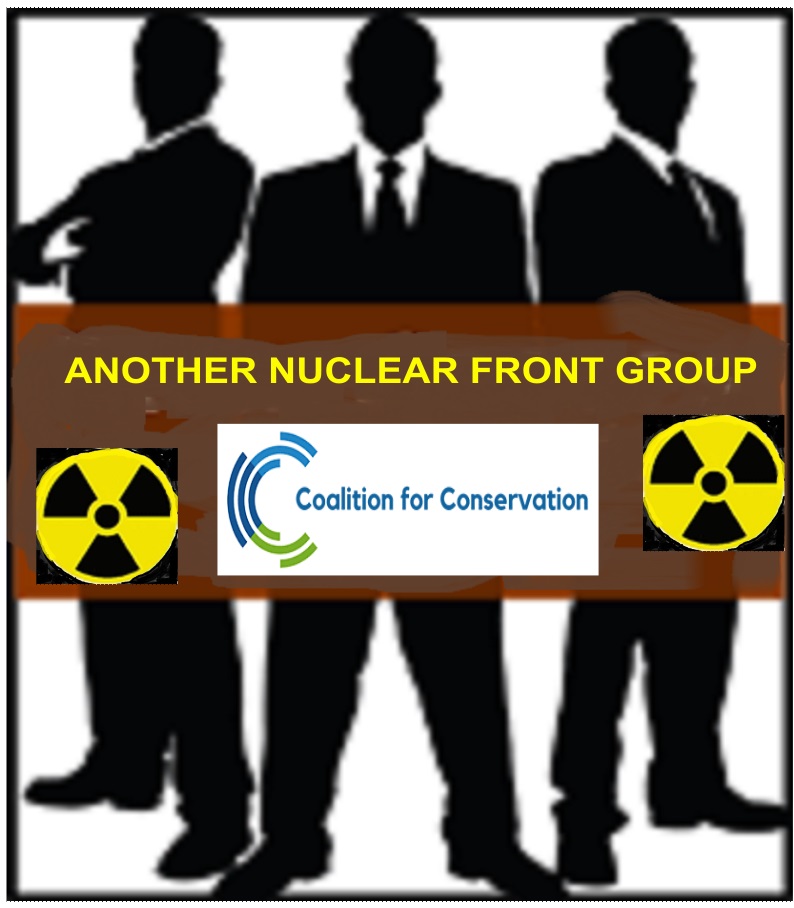
“No feasible pathway:” Liberal MP Matt Kean quits Coalition-based charity because of its obsession with nuclear
Giles Parkinson, Apr 4, 2024, https://reneweconomy.com.au/no-feasible-pathway-kean-quits-coalition-based-charity-because-of-its-obsession-with-nuclear/
Former NSW Liberal government energy minister Matt Kean has quit his role as ambassador of an environmental charity dominated by state and federal Liberal and National Party MPs, saying it had become obsessed with promoting nuclear power and is seeking to delay the rollout of renewables.
Kean says he is quitting the Coalition for Conservation (c4C) because of concerns about the direction of the charity, which has undergone a major shift in focus in the past year, coinciding – according to the AFR – with the growing involvement of patrol Trevor St Baker, the former coal baron and now nuclear investor and proponent.
“When the network was formed, I was an enthusiastic supporter, because I believe that it is the Coalition that should be the best custodians for our environment,” Kean wrote in a letter to the organisation’s chair, former federal Coalition minister Larry Anthony.
“It has become clear in recent times that the Coalition for conservation has increasingly focussed on nuclear power in the electricity system.
“In particular I was concerned to read an article in the Canberra times advocating nuclear power stations as an alternative to building new large scale transmission lines.
“While I recognise that one cannot rule out nuclear playing a constructive role in the Australian electricity system in the distant future, the reality is that there is no feasible pathway to play any material role in helping Australia replace our coal fired power stations in line with the climate science.”
The C4C appears to have undergone a rapid rethink on emissions reductions, dumping its previous support for renewable as the cheapest path to net zero in favour of nuclear.
It is a major major shift which has coincided – according to the AFR’s Rear Window column – with the growing involvement of one of the C4C two patrons, the billionaire Trevor St Baker, the former coal baron and now nuclear investor and proponent.
Kean is the architect of the plan to replace Australia’s biggest fleet of coal generators with wind, solar and storage, and whose work now forms the basis of the Federal Labor government’s Capacity Investment Scheme that will lead its own ambitious renewable energy targets.
His decision to quit the group highlights the growing divide between moderates in the Coalition, and the hard right, which has become obsessed with nuclear and is supported by a growing number of so-called “think tanks”, Murdoch media, and charities such as C4C.
The group’s recent activity on X and its own website have been focused entirely on nuclear, and it has joined the chorus of conservatives, including Coalition leader Peter Dutton and energy spokesman Ted O’Brien, in attacking institutions such as the CSIRO and AEMO for their GenCost reports and renewable energy roadmaps.
Kean wrote in his letter that large scale nuclear reactors have proven costly and slow to deliver, particularly in the UK with the massive delays and cost overruns at the Hinkley point C nuclear power project.
He also noted that small modular nuclear reactors promoted by the charity as a solution to Australia’s energy challenges are not currently commercial anywhere in the world, and early stage demonstration projects have been cancelled or delayed into the 2030’s.
“Even if (nuclear energy in Australia) were possible, it would be extremely expensive and far more expensive than the alternative as set out in AEMO’s integrated system plan,” he wrote.
“I not only regard advocacy for nuclear power as against the public interest on environmental, engineering and economic grounds, I also see it as an attempt to delay and defer responsible and decisive action or climate change in a way that seems to drive up power prices in NSW by delaying renewables.”
Ukraine aid will bankrupt future US generations – congressman

https://www.rt.com/news/595344-ukraine-aid-bankrupt-us/ 5 Apr 24
America risks getting bogged down in “yet another forever war,” Republican Eli Crane has warned.
The US should end its financial support for Ukraine and instead focus on how Kiev can settle the conflict, Republican congressman Eli Crane has said. His comments come as House Speaker Mike Johnson said the chamber is likely to vote soon on providing Kiev with new funding.
Several months ago, US President Joe Biden proposed a supplemental security package that would earmark around $60 billion in assistance to Ukraine, but it has since remained stalled in Congress as Republicans demand more focus on security at the Mexican border.
On Sunday, however, Johnson signaled that the package could come up for a vote soon, with “some important innovations.” Among these, he said, is a possibility of extending a loan to Ukraine – an idea favored by GOP presidential frontrunner Donald Trump – as well as seizing Russian sovereign assets frozen in the US and transferring the proceeds to Kiev.
Since the start of the Ukraine conflict, the West has frozen around $300 billion in Russian assets, most of which are under European control. While numerous Western officials have proposed seizing the funds to finance Ukraine, many have pointed out that there is no legal basis for doing so. Moscow, for its part, has called the blocking “theft,” warning of retaliation if its funds were to be confiscated.
Some GOP members, however, have argued against aiding Kiev. In this vein, Eli Crane told Fox News on Tuesday that Washington is “funding what appears to be yet another forever war.” This effort, the Arizona congressman suggested, “will bankrupt future generations – all while disregarding our own security as our southern border remains open.”
“It’s absurd that overnighting more tax dollars to Ukraine is even a consideration. It should be totally off the table and replaced with a push for peace talks,” he added.
This sentiment was also shared by Republican congresswoman Marjorie Taylor Greene of Georgia, who suggested on Tuesday that any talk of loaning money to Ukraine sounds “absolutely ridiculous.”
“It’s… laughable to even try to tell the American people that Ukraine will ever pay us back!.. Why isn’t our government brokering peace in Ukraine?” she said.
The US has provided Ukraine with $113 billion in various forms of assistance since the start of hostilities. Meanwhile, Russia has repeatedly condemned Western arms shipments to Ukraine, saying these will only prolong the conflict, while making the West a direct participant in the hostilities.
US Secretary of State Blinken says Ukraine will be NATO member

Ukraine, if/when it enters NATO, will have “unresolved” territorial issues. Crime and the Donbass are in Russian hands and will remain in Russian hands. If Ukraine enters NATO with that being the case, border conflicts over that territory could spark war, which would then drag in NATO through Article V. Such a war would be extremely bloody and potentially escalate to nuclear armageddon.
Reuters, Thu, 04 Apr 2024 https://www.sott.net/article/490373-US-Secretary-of-State-Blinken-says-Ukraine-WILL-be-NATO-member
U.S. Secretary of State Antony Blinken said on Thursday that Ukraine will eventually join NATO as support for the country remains “rock solid” among member states.
“Ukraine will become a member of NATO. Our purpose at the summit is to help build a bridge to that membership,” Blinken told reporters in Brussels.
Comment: For now, this appears to primarily be belligerent rhetoric, because at least some analysts say that Ukraine can’t join whilst involved in a conflict and with ongoing border disputes.
However, Russia has discussed creating a demilitarised zone, and so it is possible that this will compel it to neutralise Ukrainian regions even further West than they would have otherwise. Furthermore, this speaks more to the desperation of the West, and to Russia’s upper hand, which it could maintain so long as it doesn’t, precipitously, escalate the situation. And, amidst all this, the West ruins itself, its position on the global stage, and its ability to provoke the rising multipolar world.
Footage, and relevant snippet from the X post, below:
Will Tanner:
Secretary of State Blinken says that Ukraine will be joining NATO This is insane. This is insane. This is intentionally starting WWIII to help Hunter Biden’s paymasters level of insane 1) Ukraine, if/when it enters NATO, will have “unresolved” territorial issues.
1) Ukraine, if/when it enters NATO, will have “unresolved” territorial issues. Crime and the Donbass are in Russian hands and will remain in Russian hands. If Ukraine enters NATO with that being the case, border conflicts over that territory could spark war, which would then drag in NATO through Article V. Such a war would be extremely bloody and potentially escalate to nuclear armageddon.
2) This is Putin’s red line. In the 90s, when the USSR fell, America promised the Russians that NATO wouldn’t expand to the East. Then, in Russia’s weakness (created in large part by Goldman Sachs helping the oligarchs loot the country through privatization), it expanded to the East, doing just what it promised it wouldn’t, much to Russia’s chagrin. But Putin, while upset, has made it clear that Ukrainian membership in NATO is his red line that would mean war, potentially nuclear. It is utterly unacceptable and would have been like Ireland or Canada joining the Warsaw Pact. That’s why he launched the war; by “demilitarizing” Ukraine by shelling its army into oblivion and by creating a constant conflict, he wants to keep Ukraine out of NATO without going to war with NATO. He thought we wouldn’t be so dumb as to bring it into the alliance if it is fighting a war with Russia.
More NATO involvement in Ukraine doesn’t bode well, as the following highlights:
NATO chief, Jens Stoltenberg, admitting that the war did start in 2014. And from that same year, 2014, NATO has been busy training and arming the Ukraine armed forces
Peter Dutton’s nuclear push is a “suicide note” playing mostly to right wing echo chambers

Unbiased polls find that support for nuclear power in Australia falls short of a majority; that Australians support renewables to a far greater extent than nuclear power; that a majority do not want nuclear reactors built near where they live; and that most Australians are concerned about nuclear accidents and nuclear waste.
Jim Green, Apr 3, 2024 REnewEconomy
A February 26 page-one article in The Australian newspaper ran under the headline ‘Powerful majority supports nuclear option for energy security’.
“Labor is now at risk of ending up on the wrong side of history in its fanatical opposition to nuclear power,” political editor Simon Benson wrote, adding that Labor “ignores this community sentiment potentially at its peril”.
The Murdoch papers ran hard with the story, as did Sky News. The Murdoch-Sky media frenzy was based on the results of a Newspoll survey which found 55 percent support for replacing coal-fired power plants with (non-existent) small modular nuclear reactors.
But the 55 percent majority was slim, not ‘powerful’, and the Newspoll survey was a crude example of push-polling as discussed by polling experts Kevin Bonham and Murray Goot and economist Prof. John Quiggin.
To note just one example of the bias, if NuScale Power’s 77-megawatt reactors were chosen to replace coal plants, 277 nuclear reactors would be required, not ‘several’ as the Newspoll survey question stated. And if we use NuScale’s latest construction cost estimate, the cost would be A$656 billion.
Tony Barry, a former deputy state director and strategist for the Victorian Liberal Party, describes the Coalition’s decision to make nuclear power the centrepiece of its energy and climate policy as “the longest suicide note in Australian political history”.
Barry is now a director at the research consultancy RedBridge. On the strength of a detailed RedBridge analysis of Australians’ attitudes to nuclear power, he says that just 35 percent of Australians support nuclear power and that only coal is less popular. If the Coalition is to have any chance of winning the next election it will not be with nuclear power, he states.
Peter Dutton’s positioning of the Coalition is all wrong, Barry says, and the party continues to play to “internal audiences” — in particular the right-wing echo-chamber typified by Murdoch’s ‘Sky after dark’.
Prime Minister Anthony Albanese appears unconcerned by Murdoch push-polling purporting to show majority support for nuclear power. Speaking in parliament, he compared Peter Dutton to a nuclear reactor: “One is risky, expensive, divisive and toxic; the other is a nuclear reactor. The bad news for the Liberal Party is that you can put both on a corflute, and we certainly intend to do so.”
Stark raving mad’

The Murdoch-Coalition echo-chamber is drinking its own bathwater by taking pro-nuclear push-polling seriously.
The pro-nuclear bias of the Murdoch media is plain for all to see, and has been confirmed by a recent academic analysis. A note of dissent recently came from James Campbell, a political editor for Murdoch newspapers and websites across Australia. He says the Coalition’s nuclear policy is “stark raving mad” and he quotes an unnamed Coalition MP saying the policy is “madness on steroids”.
Campbell writes:
“You’d have thought that a mob that so easily unpicked the lead of the Yes case at the Voice referendum would understand that support for anything radical in Australia shrinks the moment it hits any sort of concerted opposition.
“And support for this is weak to start with – 35 per cent in favour versus 32 per cent opposed according to a recent RedBridge poll. …
“If we accept the next election is going to be all about the current cost-of-living crisis then nuclear power isn’t going to be much of a help to the Coalition, given it is at least 10 to 15 years away.
“Worse, not only will nuclear energy not be much help as a cost-of-living policy, its salience will make sure that no one gets to hear about whatever policies the Coalition does offer. …
“Then there’s the unity problem. Do you really think Liberal candidates in “tealy” places are going to face the front on this? …
“And that’s even before you get to the state Liberal leaders! How many of them do you reckon are going to be lining up to sing this policy’s praises? …
“Madness. It’s total madness.”
Unbiased nuclear polls
Unbiased polls find that support for nuclear power in Australia falls short of a majority; that Australians support renewables to a far greater extent than nuclear power; that a majority do not want nuclear reactors built near where they live; and that most Australians are concerned about nuclear accidents and nuclear waste.
Here are the results from some polls in Australia over the past five years, with a decent sample size and questions that weren’t designed to push respondents in one direction or another:
* 2024 Resolve Political Monitor survey commissioned by the Nine newspapers: 36 percent support nuclear power, 23 percent opposed, 15 percent undecided, 27 percent “do not have a strong view, and would like to see the government investigate its use”.* 2023 Freshwater Strategy Poll: 35 percent support nuclear power, 35 percent opposed, 18 percent neutral, 12 percent unsure. Thirty-seven percent agree that ‘Australia does not need to generate any energy from nuclear power’, 36 percent disagree, 27 percent neutral. Forty-four percent agree that Australia should remove the legal ban on nuclear power development, 29 percent disagree, 25 percent neutral.
* 2023 Essential poll: 50 percent support Australia developing nuclear power plants for the generation of electricity, 33 percent opposed, 18 percent unsure.
* 2023 Savanta study commissioned by the pro-nuclear Radiant Energy Group: 40 percent strongly support or tend to support using nuclear energy to generate electricity in Australia, 36 percent strongly oppose or tend to oppose, 17 percent neutral, 7 percent don’t know. The study found that those who are most climate-concerned are least likely to support the use of nuclear power. (Perhaps they are better educated on the issues and the options.)* 2019 Essential poll: 44 percent support nuclear power, 40 percent opposed.
* 2019 Roy Morgan Poll: 45 percent support nuclear power, 40 percent opposed.
The Coalition (and other supporters) can take comfort that support for nuclear power exceeds opposition in most of those polls. But support doesn’t reach a majority in any of them.
Dr. Rebecca Huntley, director of research at 89 Degrees East, told the Nine newspapers that participants in focus groups were bringing up nuclear power more often than before the last federal election, but support usually dissolved once the discussion turned to timelines, logistics and the issue of how to store nuclear waste.
RedBridge pollster Kos Samaras told the Nine newspapers that the question of social licence would be impossible to overcome because soft support for nuclear power would evaporate and bump up against hard opposition which he puts as high as 32 percent.
Murray Goot says that “majority support” was being conflated with “strong support” in the Murdoch newspapers, adding: “A metre wide doesn’t necessarily mean a metre thick.” Moreover, he notes that the February Newspoll survey only achieved majority support by manipulating both the question and the response options.
A gender divide is clearly evident: the Savanta study found that men are more supportive of nuclear power than women in all 20 countries surveyed, including Australia.
Sticker shock
Some polls indicate that Australians need educating on this issue. A 2019 Essential poll found that 51 percent of respondents believed that nuclear power would help lower power prices, while 26 percent disagreed. The 2023 Savanta study found that 35 percent of respondents in Australia think that nuclear power would make their energy bills cheaper while 28 percent think it would make them more expensive.
In a 2023 Essential poll, 38 percent of respondents ranked renewables as the “most expensive” option, 34 percent ranked nuclear the most expensive option, and 28 percent ranked fossil fuels the most expensive option. But Essential also found that 60 percent of respondents agreed with the proposition that ‘Australia needs to rapidly develop renewables because it will provide a cheaper and stable energy source, and create jobs’, while only 17 percent disagreed.
Simon Benson wrote in the Australian that “any Coalition energy policy must be framed in a cost-of-living context that can demonstrate how nuclear power will deliver cheaper and more reliable power into the future.”
But nuclear power would increase both power bills and taxes and the only way that the Coalition can get around that problem is by lying and continuing to attack CSIRO’s detailed costings. The latest CSIRO GenCost report gives these 2030 cost estimates: small modular reactors A$212-353 per megawatt-hour, 90% wind and solar with integration costs (energy storage and transmission) A$69-101 per megawatt-hour.
Nuclear power could also involve the curtailment of rooftop solar to allow reactors to run smoothly and profitably. Put that in the electoral pipe and smoke it.
Teal independents…………………………………………
Opposition to locally-built nuclear reactors
Opposition to locally-built nuclear power reactors has been clear and consistent for 20 years or more. Here are some recent poll results:…………………………………………….
Nuclear waste and accidents are major concerns
The September 2023 Freshwater Strategy Poll found that a majority of respondents (55 percent) agreed with the proposition ‘I am concerned that nuclear plants are unsafe and people will be harmed’ while 27 percent disagreed and 17 percent were neutral.
The 2023 Savanta poll found that 77 percent of respondents were concerned about nuclear waste management compared to 18 percent not concerned; and 77 percent were concerned about “health & safety (i.e. nuclear meltdowns, impact on people living nearby)” compared to 21 percent not concerned.
A November 2012 Essential poll found that 63 percent of respondents agreed that nuclear power isn’t worth it because of the need to manage radioactive waste, and 62 percent agreed that nuclear power is too risky because of the potential for serious accidents.
Younger voters
The Murdoch-Coalition echo-chamber was especially excited about younger poll respondents in the February Newspoll survey (65 percent support, 32 percent opposition). But the poll was biased and as Goot notes, other polls reach different conclusions:
“But eighteen- to thirty-four-year-olds as the age group most favourably disposed to nuclear power is not what Essential shows, not what Savanta shows, and not what RedBridge shows. “In October’s Essential poll, no more than 46 per cent of respondents aged eighteen to thirty-four supported “nuclear power plants” — the same proportion as those aged thirty-six to fifty-four but a smaller proportion than those aged fifty-five-plus (56 per cent); the proportion of “strong” supporters was actually lower among those aged eighteen to thirty-four than in either of the other age-groups.
“In the Savanta survey, those aged eighteen to thirty-four were the least likely to favour nuclear energy; only about 36 per cent were in favour, strongly or otherwise, not much more than half the number that Newspoll reported.
“And according to a report of the polling conducted in February by RedBridge, sourced to Tony Barry, a partner and former deputy state director of the Victorian Liberal Party, “[w]here there is support” for nuclear power “it is among only those who already vote Liberal or who are older than 65”.”
Renewables are far more popular than nuclear
Opinion polls clearly show that renewables are far more popular than nuclear power:…………………………………………….
Dr. Jim Green is the national nuclear campaigner with Friends of the Earth Australia and a member of the Nuclear Consulting Group. https://reneweconomy.com.au/peter-duttons-nuclear-push-is-a-suicide-note-playing-mostly-to-right-wing-echo-chambers/
Spent nuclear fuel mismanagement poses a major threat to the United States. Here’s how.

Restricting its analyses to a severe earthquake scenario allowed the NRC to help allay public fears over the dangers of spent fuel pool accidents. There is good reason to question whether severe earthquakes pose the greatest threat to spent fuel pools.
Solar storms, physical attacks, and cyberattacks have the potential to cause a nightmare scenario …….
Bulletin, By Mark Leyse | April 2, 2024
Irradiated fuel assemblies—essentially bundles of fuel rods with zirconium alloy cladding sheathing uranium dioxide fuel pellets—that have been removed from a nuclear reactor (spent fuel) generate a great deal of heat from the radioactive decay of the nuclear fuel’s unstable fission products. This heat source is termed decay heat. Spent fuel is so thermally hot and radioactive that it must be submerged in circulating water and cooled in a storage pool (spent fuel pool) for several years before it can be moved to dry storage.
The dangers of reactor meltdowns are well known. But spent fuel can also overheat and burn in a storage pool if its coolant water is lost, thereby potentially releasing large amounts of radioactive material into the air. This type of accident is known as a spent fuel pool fire or zirconium fire, named after the fuel cladding. All commercial nuclear power plants in the United States—and nearly all in the world—have at least one spent fuel pool on site. A fire at an overloaded pool (which exist at many US nuclear power plants) could release radiation that dwarfs what the Chernobyl nuclear accident emitted.
Many analysts see very rare, severe earthquakes as the greatest threat to spent fuel pools; however, another far more likely event could threaten US nuclear sites: a widespread collapse of the power grid system. Such a collapse could be triggered by a variety of events, including solar storms, physical attacks, and cyberattacks—all of which are known, documented possibilities. Safety experts have warned for decades about the dangers of overloading spent fuel pools, but the Nuclear Regulatory Commission and Congress have refused to act.
The threat of overloaded spent fuel pools. Spent fuel pools at US nuclear plants are almost as densely packed with nuclear fuel as operating reactors—a hazard that has existed for decades and vastly increases the odds of having a major accident.
Spent fuel assemblies could ignite—starting a zirconium fire—if an overloaded pool were to lose a sizable portion or all of its coolant water. In a scenario in which coolant water boils off, uncovered zirconium cladding of fuel assemblies may overheat and chemically react with steam, generating explosive hydrogen gas. A substantial amount of hydrogen would almost certainly detonate, destroying the building that houses the spent fuel pool. (Only a small quantity of energy is required to ignite hydrogen gas, including electric sparks from equipment. It is speculated a ringing telephone initiated a hydrogen explosion that occurred during the Three Mile Island accident in 1979.)
A zirconium fire in an exposed spent fuel pool would have the potential to emit far more radioactive cesium 137 than the Chernobyl accident released. (The US Nuclear Regulatory Commission (NRC) has conducted analyses that found a zirconium fire at a densely packed pool could release as much as 24 megacuries of cesium 137; the Chernobyl accident is estimated to have released 2.3 megacuries of cesium 137.) Such a disaster could contaminate thousands of square miles of land in urban and rural areas, potentially exposing millions of people to large doses of ionizing radiation, many of whom could die from early or latent cancer.
In contrast, if a thinly packed pool were deprived of coolant water, its spent fuel assemblies would likely release about 1 percent of the radioactive material predicted to be released by a zirconium fire at a densely packed pool. A thinly packed pool has a much smaller inventory of radioactive material than a densely packed pool; it also contains much less zirconium. If such a limited amount of zirconium were to react with steam, most likely too little hydrogen would be generated to threaten the integrity of the spent fuel pool building.
After being cooled under water for a minimum of three years, spent fuel assemblies can be transferred from pools to giant, hermetically sealed canisters of reinforced steel and concrete that shield plant workers and the public from ionizing radiation. This liquid-free method of storage, which cools the spent fuel assemblies by passive air convection, is called “dry cask storage.”

A typical US storage pool for a 1,000-megawatt-electric reactor contains from 400 to 500 metric tons of spent fuel assemblies. (Dry casks can store 10 to 15 tons of spent fuel assemblies, so each cask contains a far lower amount of radioactive material than a storage pool.) Reducing the total inventories of spent fuel assemblies stored in US spent fuel pools by roughly 70 to 80 percent reduces their amount of radioactive cesium by about 50 percent. And the heat load in each pool drops by about 25 to 30 percent. With low-density storage, a pool’s spent fuel assemblies are separated from each other to an extent that greatly improves their ability to be cooled by air convection in the event that the pool loses its coolant water. Moreover, a dry cask storage area, which has passive cooling, is less vulnerable to either accidents or sabotage than a spent fuel pool.
In the aftermath of the March 2011 Fukushima Daiichi accident in Japan, in which there was a risk of spent fuel assemblies igniting, the NRC considered forcing US utilities to expedite the transfer of all sufficiently-cooled spent fuel assemblies stored in overloaded pools to dry cask storage. The NRC decided against implementing such a safety measure.
To help justify its decision, the NRC chose to analyze only one scenario that might lead to a zirconium fire: a severe earthquake. In 2014, the NRC claimed that a severe earthquake with a magnitude “expected to occur once in 60,000 years” is the prototypical initiating event that would lead to a zirconium fire in a boiling water reactor’s spent fuel pool.
The NRC’s 2014 study concluded that the type of earthquake it selected for its analyses would cause a zirconium fire and a large radiological release to occur at a densely packed spent fuel pool once every nine million years (or even less frequently). Restricting its analyses to a severe earthquake scenario allowed the NRC to help allay public fears over the dangers of spent fuel pool accidents. (At the time of the Fukushima Daiichi accident, the New York Times and other news outlets warned that a zirconium fire could break out in the plant’s Unit 4 spent fuel pool, causing global public concern.)
There is good reason to question whether severe earthquakes pose the greatest threat to spent fuel pools. A widespread collapse of the US power grid system that would last for a period of months to years—estimated to occur once in a century—may be far more likely to lead to a zirconium fire than a severe earthquake. The prospect that a widespread, long-term blackout will occur within the next 100 years should prompt US utilities to expedite the transfer of spent fuel from pools to dry cask storage. Utilities in other nations, including in Japan, that have overloaded pools should follow suit.
Solar storms, physical attacks, and cyberattacks have the potential to cause a nightmare scenario in which the US power grid collapses, along with other vital infrastructures—leading to reactor meltdowns and spent fuel pool fires, whose radioactive emissions would aggravate the disaster.
Vulnerability to solar storms……………………………………………………………………………………………………………………..
Vulnerability to physical attacks.……………………………………………………………………………………………………….
Vulnerability to cyberattacks. …………………………………………………………………………………………………………….
Insufficient public safety.…………………………………………………………………………………….
Overloading spent fuel pools should be outlawed. Safety analysts have warned about the dangers of overloading spent fuel pools since the 1970s. For decades, experts and organizations have argued that in order to improve safety, sufficiently cooled spent fuel assemblies should be removed from high-density spent fuel pools and transferred to passively cooled dry cask storage. Sadly, the NRC has not heeded their advice.
In the face of the NRC’s inaction, Sen. Edward Markey of Massachusetts introduced The Dry Cask Storage Act in 2014, calling for the thinning out of spent fuel pools. The act, which Senator Markey has reintroduced in subsequent congressional sessions, has not passed into law.
The relatively high probability of a nationwide grid collapse, which would lead to multiple nuclear disasters, emphasizes the need to expedite the transfer of spent fuel to dry cask storage. According to Frank von Hippel, a professor of public and international affairs emeritus at Princeton University, the impact of a single accident at an overstocked spent fuel pool has the potential to be two orders of magnitude more devastating in terms of radiological releases than the three Fukushima Daiichi meltdowns combined. If the US grid collapses for a lengthy period of time, society would likely descend into chaos, as uncooled nuclear fuel burned at multiple sites and spewed radioactive plumes into the environment.
The value of preventing the destruction of US society and untold human suffering is incalculable. So, on the issue of protecting people and the environment from spent fuel pool fires, it is surprising when one learns that promptly transferring the nationwide inventories of spent fuel assemblies that have been cooled for at least five years from US pools to dry cask storage would be “relatively inexpensive”—less than (in 2012 dollars) a total of $4 billion ($5.4 billion in today’s dollars). That is far, far less than the monetary toll of losing vast tracts of urban and rural land for generations to come because of radioactive contamination.
One should also consider that plant owners are required, as part of the decommissioning process, to transfer spent fuel assemblies from storage pools to dry cask storage after nuclear plants are permanently shut down. So, in accordance with industry protocols, all spent fuel assemblies at plant sites are intended to eventually be placed in dry cask storage (before ultimately being transported to a long-term surface storage site or a permanent geologic repository). https://thebulletin.org/2024/04/spent-nuclear-fuel-mismanagement-poses-a-major-threat-to-the-united-states-heres-how/
Nuclear regulators should weigh climate change risk to power plants, report says

A GAO report found the Nuclear Regulatory Commission needs to factor more risk from the impact of more extreme natural events in how it licenses the safety of power plants.
CARTEN CORDELL, Managing Editor, Government Executive, APRIL 2, 2024, https://www.govexec.com/management/2024/04/nuclear-regulators-should-weigh-climate-change-risk-power-plants-report-says/395412/
With the possibility of climate change driving more extreme weather events in areas where nuclear power plants operate, the Nuclear Regulatory Commission needs to incorporate those events into the safety planning of the facilities, a new report has found.
The Government Accountability Office said in an audit Tuesday that 75 operational and shuttered nuclear power plants in the U.S. reside in areas expected to be further impacted by climate change-driven weather events like drought, extreme heat and floods.
The NRC is tasked with developing the safety regulations and for licensing those power plants, with the agency mandating that nuclear facilities are designed to withstand earthquakes, tornadoes, hurricanes and floods without harm to the public, largely by ensuring that their reactors remain cooled through a series of redundancies.
The report noted that while the NRC issued new safety requirements following the 2011 accident at Japan’s Fukushima Dai-ichi nuclear power plant — where an earthquake-triggered tsunami caused the meltdown of three reactor cores —the agency does not factor climate projections data in its safety risk assessments, instead leaning on historical data to predict potential future risk.
“In such a case, NRC expects the event to occur only once in 10,000 to 10 million years, depending on the hazard,” the report said. “NRC officials we interviewed told us that they review regional climate projections information for some hazards but do not incorporate site-specific climate projections data, which include hazard assessments, design bases or determining the adequate safety margin for plants.”
The agency also doesn’t reevaluate natural hazard or climate-related events in its license renewal process, beyond a power plant’s initial 40-year licensing period, instead focusing on its aging impacts and retaining its original natural disaster risk-informed design.
The report noted that as of January, the NRC “had issued license renewals to 49 of the 54 operating nuclear power plants, meaning most plants are operating on the basis of assessments of natural hazard risk that are over 40 years old.”
The NRC inspection process also doesn’t factor in the climate projections, but agency officials told the GAO that other criteria such as the historical record of severe natural phenomena at a power plant site — known as conservatism — safety margins and multiple independent and redundant layers of defense “provide an adequate margin of safety to address climate risks to the safety of nuclear power plants.” However, GAO officials said that the NRC has done no assessment to affirm that assertion.
“According to NRC officials, using site-specific climate projections data for extreme hazard levels in nuclear power plant design and safety reviews is challenging because of the uncertainty associated with applying these data to specific sites” the report said. “However, NRC regulations do not preclude NRC from using climate projections data, and new sources of reliable projected climate data are available to NRC.”
The report also notes that since 2017, the agency uses an information system dubbed Process for the Ongoing Assessment of Natural Hazard Information to log and document historical hazard data and assess potential risk, including events driven by climate change.
But GAO officials said that the NRC has not developed new regulations as a result of the system, hasn’t used it to assess potential changes to all natural hazards and hasn’t comprehensively reviewed natural hazards on a regular basis.
“NRC conducts POANHI assessments for one hazard at a time, and the agency does not have a schedule for reviewing natural hazards beyond the assessment of seismic hazards currently underway,” the report said. “As such, POANHI is used to react to new hazard information or events when NRC staff become aware of them.”
GAO officials offered three recommendations, including assessing whether licensing and oversight processes address increased risk from climate change, that the NRC develop a plan to address gaps in its assessment process and that the agency finalize guidance incorporating climate projections data into its processes.
NRC officials said the recommendations were “consistent with actions that are either underway or under development,” but asserted that its conservatism and defense-in-depth processes provided reasonable assurance to natural hazards and potential climate change.
GAO officials said the agency “cannot fully consider potential climate change effects on plants without using the best available information—including climate projections data—in its licensing and oversight processes.”
Companies serious about climate change should boycott CoP 29

Jonathon Porritt, 3 Apr 24, https://www.jonathonporritt.com/companies-serious-about-climate-change-should-boycott-cop-29/—
At some point over the next couple of months, Chief Sustainability Officers will be making decisions and recommendations about this year’s CoP in Azerbaijan at the end of the year.
My advice to them: spare yourselves the hassle. Just don’t send anyone. And then tell the world why your company has decided to call time on the corrupt, preposterous pantomime that the entire CoP process has become.
Some considerations you might like to take into account:
Learn from experience. CoP 28 in Dubai was a disaster. Nothing substantive was agreed (and, please, never confuse verbiage with substance), and the deeply malign influence of the oil and oil and gas industry was fully “out” for all to see.Baku will be worse than Dubai – as the capital of an even more corrupt, even more misogynistic, and more autocratic petrostate than the UEA.Think about it carefully: just by being there, your company will be conferring credibility on a process that has comprehensively squandered whatever credibility it might once have had. “By your presence/absence shall your company be judged” – as it were!The notional benefits of being there for your own company will be marginal at best, and zero at worst, with a lot of performative blather masking the hydrocarbon horror story that lies behind.The “networking opportunities” that you’re no doubt factoring into your thoughts about this are just so many ephemeral blips on the road to climate meltdown.
So, do yourself (and your CEO and other Execs lining up for a bit of superficial CoP cred) a favour. You know that the gap between what the science tells us and the policy response to that science is getting wider, not narrower. You know CoP 29 will see that gap widen even further.
Be true to your privileged knowledge. Not many people understand how things really are as well as you do. Give the lie, once and for all, to the absurd proposition that any individual company – even one as “progressive ” and “responsible” as yours surely is – can make a blind bit of difference at this level as the politicians drive us ever closer to the abyss.
Looking forward to a lively debate with all you CSOs out there!
TODAY. Why I am really a CONSERVATIVE, and you should be, too.

Years ago, when I was a member of the Australian Labor Party, I was shocked when someone accused me of being really a conservative at heart. Sacrilege! to a Leftie, to be given such an accusation!
Now I know that it is true.
Conservative – “holding traditional values.”
Conservation – “seeking the proper use of nature, a careful preservation and protection of natural resources to prevent exploitation, pollution, destruction, or neglect.”
It is fashionable, and of course, attention-grabbing in the media – to condemn things that are “old” and claim that “youth opinion” and “feelings” (rather than facts) are what matter , to downgrade our institutions of justice, and representative democracy that have served us well over time.
How is it that now there is worldwide acceptance of the idea that Donald Trump, and indeed the USA Republican Party, the Tories in Britain, and the Australian Liberal-National Coalition are CONSERVATIVES?
They are not conservative at all. They are out to wreck the natural environment, in the interests of a few rich corporations. They are out to wreck the social environment in spurning domestic courts and other legal institutions, like the International Court of Justice. They have attitudes of unfairness to non-white people, indigenous people, refugees, at times of suppression of women’s rights, especially, over their own bodies. This is not conservative. This is RADICAL – uprooting Christian values, and the natural world.
Admittedly, there was a time when the Western world held cruel “Christian” values, – like divine right of kings, slavery, racism, severe suppression of women’s rights, of religious and political rights…. Hanging on to those ideas was then conservatism.
But that’s a while back. In Western countries, values like Christian ideas of equal human rights, compassion and fairness, and also proper care of land, water, and animals – have been around for a long time now.
And that’s why we need to be conservatives There’s really no point in being left-wing or right-wing. No point in slavishly supporting your political party. A genuine conservativism is in looking beyond all the guff, and using those common sense traditional values. The political parties seem to get ever closer together, in the radical new doctrine of ever-increasing profit as the main purpose in life.
Dutton’s perks for nuclear plan

April 2, 2024, The Australian, Simon Benson; Political Editor
Peter Dutton is poised to release a major incentive package for coal communities to move from coal-fired power stations to nuclear energy, promising higher paying jobs and industry energy subsidies, following a US report that found the coal-to-nuclear transition pumped millions of dollars into regions that adopted them.
The Australian understands the Coalition will release the first major plank of its nuclear energy plan within weeks after identifying six or more potential sites, primarily in Queensland and NSW.
The Liberal leader will address a small business conference on Wednesday to promote the Coalition’s nuclear plan as the only proven technology that emits zero emissions while providing cheap, consistent and clean power as a source of baseload power to firm up renewables.
A report by the US Department of Energy released on Monday confirmed it would look to replace its fleet of coal-fired power plants with nuclear reactors, citing significant economic benefits to the local communities who agreed to the transition………………………………………..
Coalition climate change and energy spokesman Ted O’Brien confirmed that a Coalition package that would incentivise local coal communities would be announced before the May budget.
He said that “social licence” would be key to a future rollout of coal-to-nuclear with gas as a transition baseload energy provider.
Mr Dutton has flagged that the Coalition’s nuclear energy plan would provide incentive packages, including potential subsidised electricity prices for local industries as well as new infrastructure.
A key element of the packages would be transition arrangements for coal plant workers to upgrade to higher-paid jobs in nuclear plants………………..
Former Victoria Liberal Party President Michael Kroger says Peter Dutton has to show why “life will improve” under his government, in order to win the next election………………….
Mr Dutton will tell the Council of Small Business Australia conference that under its current approach, the government couldn’t credibly meet its 2050 net zero emissions target.
“That is why a Coalition government will ramp up domestic gas production to make energy more affordable and reliable and to help transition our economy to new energy systems,” he will say.
“And that is why we want Australia to move towards adopting the latest nuclear power technologies.
“Nuclear is the only proven technology which emits zero emissions, which can firm up renewables, and which provides cheap, consistent and clean power………………………………………….
https://www.theaustralian.com.au/nation/politics/peter-dutton-to-reveal-key-details-of-going-nuclear/news-story/87fc2f81063750adfd93a0c802d7c0e4
A hard job for the Australian government to find credible spruikers for a nuclear waste dump

Nobody wants a nuclear waste dump, By The Canberra Times, April 2 2024, https://www.canberratimes.com.au/story/8576489/nuclear-waste-disposal-woes-in-australia/
One would think, given the Australian continent is second only to Antarctica in terms of low population density, it would be easier to develop a nuclear waste dump here than almost anywhere else.

COMMENT. Why on Earth would Australia want a nuclear waste dump? Just because it has space?
Unfortunately, due in large part to a series of hubristic decisions by former governments, that is not the case.
It is now more than two decades since plans for a nuclear waste facility at Woomera had to be abandoned. A subsequent proposal to site a national storage facility at Muckaty Station in the Northern Territory fell over 10 years later.
Then, after more than seven years of research and planning, the former Coalition government’s push to use farmland near Kimba in South Australia was derailed last July and August after traditional owners took their case to the Federal Court and won.
The court set the 2021 site declaration aside on the grounds that not only had the traditional owners not been consulted, they had been deliberately excluded from the consultation process.
According to Ian Lowe, emeritus professor of environment and science at Griffith University, the process had been doomed from the start by the government’s heavy-handed approach.
“The ‘decide and defend’ model where a government decides to put radioactive waste somewhere and then attempts to defend it against the community hasn’t worked anywhere,” he said.
Opposition to the proposal, which left Kimba bitterly divided, was fuelled by revelations that even though it had been billed as a “low level” nuclear waste dump, once up and running Kimba would be used to “temporarily” store intermediate-grade material until a suitable “permanent” disposal site could be found.
While millions of Australians have benefited from radioactive medical isotypes created at the former HIFAR reactor and its replacement, the Opal reactor, at Lucas Heights nobody wants the leftover waste in their backyard. And that’s perfectly understandable.
Unfortunately the temporary storage facility at Lucas Heights, which holds some of the 5000 cubic metres of waste Australia has accumulated at about 100 locations over more than six decades, is reportedly running out of space. It apparently won’t be able to accept some classes of material as early as 2027.
COMMENT. Confusion here between the “low level” medical wastes, mainly with short half-lives of radioactivity, stored at various locations across Australia, and the “higher level” long-lasting wastes resulting from the nuclear reactor itself.
Plenty of space at Lucas Heights for continued storage of these more dangerous reactor wastes.
This has put the Albanese government on the spot. As a result it has opted to go on the front foot in terms of damage control by seeking expressions of interest for a public relations team able to manage the “high outrage” national conversation about nuclear waste disposal.
The multi-million dollar question, given Kimba had been costed at $300 million, is what process will be followed in selecting the next site. Will Resources Minister Madeleine King revisit the six sites originally shortlisted almost a decade ago? Or will fresh expressions of interest from interested landowners be sought?
And, most importantly, what consultation process does the government intend to follow? Will it repeat the “decide and defend” mistakes of past governments or will it listen to the experts including Professor Lowe who urge the highest possible level of community engagement?
Given, as he has said, that under the AUKUS agreement Australia is to manage high-level waste from the future nuclear submarine fleet this is going to be a very hard sell. Australia has come a long way since the 1950s when the Menzies government, admittedly at the height of the Cold War, gave Britain carte blanche to test its nuclear weapons in the outback.
Whoever wins the “high outrage” PR tender is going to have a big job ahead of them.
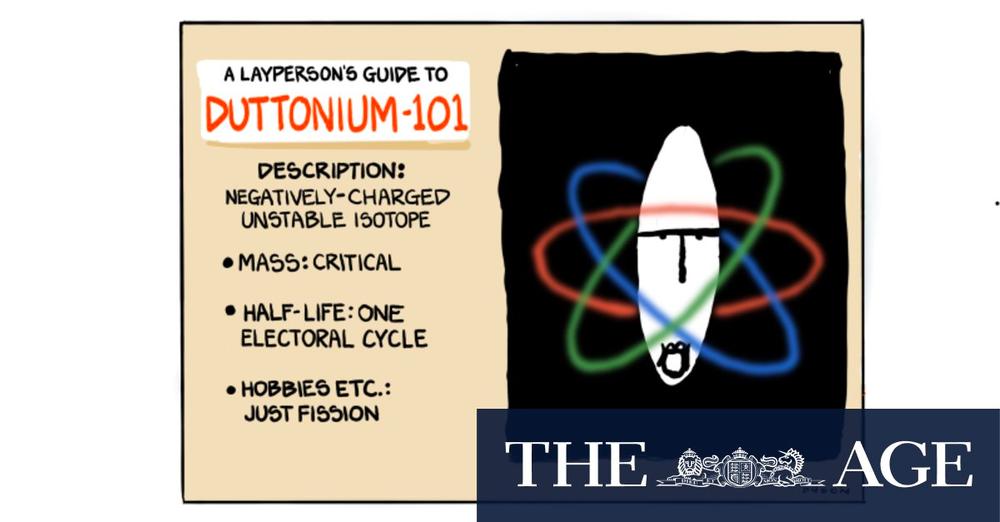
Coalition to release nuclear incentive package
Sky News 3 Apr 24
Peter Dutton has flagged higher paying jobs and energy subsidies for coal-fired power stations that move to nuclear energy.
Sky News Australia understands the Opposition Leader could release part of his party’s nuclear energy plan within weeks.
This comes after flagging more potential sites along the East Coast.
He is attending a small business conference in Sydney today to promote the Coalition’s nuclear plan……https://www.skynews.com.au/australia-news/politics/coalition-to-release-nuclear-incentive-package/video/fad99f67779685ace4f51b1e1ffbf58d
Are US, Israel Heading for Divorce?
It’s unclear how much longer Netanyahu can hold on to power in Israel in the face of a torrent of bad news for Israel about declining international support for — and dire economic consequences derived from — its ongoing military operation in Gaza
Scott Ritter, Washington, Apr 1, 2024, Energy Intelligence Group, https://www.energyintel.com/0000018e-9900-d183-abef-9f430f020000
The crisis in Gaza that has been ongoing since Hamas’ Oct. 7 attack on Israel has resulted in a sea change in political opinion on the question of Israeli security prerogatives and Palestinian statehood. While international opinion has decisively shifted to the Palestinian cause, Israel has until recently been ably backstopped by the US, which has wielded its veto at the UN Security Council to shield Israel from any binding consequences. But shifting global priorities, coupled with turbulent domestic political realities, have caused the US stance on Israel to shift, creating the possibility of Israel, for the first time, standing alone in the crosshairs of global condemnation.
On Mar. 25, the 10 non-permanent members of the UN Security Council tabled a draft resolution demanding a ceasefire in Gaza during Ramadan, the immediate release of hostages and humanitarian access. The resolution was the latest in a succession of similar calls from the Security Council seeking an end to the violence that has wracked Gaza and the region since Oct. 7.
Prior to the Mar. 25 draft resolution being tabled, all previous efforts to bring an end to violence in Gaza had failed, with the draft texts either vetoed by the US or, on one occasion, Russia and China. But the latest call for a ceasefire passed muster, receiving 14 “yes” votes, zero “no” votes, and one abstention — from the US.
The Security Council resolution has no enforcement clause, making it little more than a formal notice of disapproval by the UN of Israeli actions. The administration of President Joe Biden made it clear that it continued to blame Hamas over Israel when it comes to the root cause of the current crisis, and that the US supported the overall Israeli objective of destroying Hamas both militarily and politically. Circumstances at home and abroad, however, raise questions about the sustainability of this policy position.
Changing Times
The Israeli government headed by Benjamin Netanyahu is the most conservative in its history, the byproduct of a desperate politician (Netanyahu) seeking to bury his personal legal problems under the weight of governing what has, for several election cycles, become an increasingly ungovernable state. To accomplish this, Netanyahu made common cause with Israel’s extreme right-wing political element, crafting a coalition that not only rejected the notion of a peaceful resolution of the Palestinian question but also embraced the idea of a greater Israel that would do away with the idea of a Palestinian state in general.
Israel was able to capitalize on the general apathy of the global collective to the plight of the Palestinian people, allowing the dream of a viable Palestinian state to be supplanted by a road map toward regional economic connectivity and prosperity defined by the normalization of relations between Israel and the Arab world. This generated schemes such as the India-Middle East Economic Corridor (Imec), an ambitious sea-rail collaboration designed to link India with Europe via the Gulf Arab states, Jordan and Israel.
The Hamas attack of Oct. 7 and Israel’s heavy-handed response changed all that. Imec is dead in the water, alongside any notion of normalized relations with Arab countries until the question of Palestinian statehood is resolved. The resilience of Hamas militarily and politically has compelled Israel to undertake military action that has resulted in the deaths in Gaza of over 30,000 civilians (some 19,000 of whom are children). This has prompted allegations of genocide presented to the International Court of Justice. Cities across the world are full of protesters condemning Israel and praising the cause of a free and independent Palestine. More and more US cities are hosting such actions.
The tidal wave of public sentiment has moved the needle of government policy in many nations. The US State Department has put the White House on notice that the US is in danger of losing the support of the Global South at a time when US policy objectives are centered on slowing the pace of multipolarity and preserving the rules-based international order that serves as the centerpiece of US foreign and national security policy. The US abstention at the Security Council reflected a new reality, where the US must weigh its own foreign policy objectives against the established principle of unquestioned support for Israel.
Local Politics
The US and Israel could attempt to ride out the storm of international protest, waiting for a world that had long been indifferent to the plight of the Palestinian people to lose interest again and shift its attention to a new crisis — in a world fully capable of generating one at a moment’s notice.
But as Tip O’Neill, a former Speaker of the US House of Representatives, once quipped, “all politics is local,” and the Gaza crisis is no exception. The UN abstention was an attempt at damage control which, under normal circumstances, might have allayed the concerns of people more interested in words over action. But 2024 is a US presidential election year, with incumbent Joe Biden set to face former President Donald Trump in a race that is expected to be every bit as heated — or more — than the tumultuous 2020 election.
The 2020 election, like the 2016 one before it, was won on the margins, in so-called “battleground states” where the difference between winning and losing came down to a few thousand votes derived from distinct demographics. One such demographic is the Muslim-American community, which is overwhelmingly sympathetic to the Palestinian cause.
The UN abstention was an effort to dampen the negative feelings of this community. But void of any meaningful follow-on action by the Biden administration to enforce the will of the Security Council, this won’t be enough to secure this demographic come election time. As a result, the US political theater is witnessing previously unimaginable scenes, such as the ardently pro-Israeli Senate Majority Leader Chuck Schumer calling for the removal of Netanyahu or Biden threatening to withhold military aid, something previously unimaginable in US politics, should Israel not yield to the demand for a ceasefire.
It’s unclear how much longer Netanyahu can hold on to power in Israel in the face of a torrent of bad news for Israel about declining international support for — and dire economic consequences derived from — its ongoing military operation in Gaza. Netanyahu, who failed in his bid to cloak himself with judicial immunity, faces not just political defeat but also personal ruin should he be removed from office.
Netanyahu’s political viability is linked to his ability to sustain the current conflict in the hope that he can pull a miraculous victory over Hamas out of the hat. Netanyahu, however, is running into a brick wall of US political opposition where the presidential political imperative is starting to trump loyalty to Israel. No Israeli prime minister has survived without US political support. And no US presidential candidate has prevailed in an election where the cause of Israel was forsaken. The question now is who will blink first, Netanyahu or Biden — the answer to which remains very much up in the air.
Killing Humanitarians: Israel’s War on Aid Workers in Gaza
April 3, 2024, by: Dr Binoy Kampmark, https://theaimn.com/killing-humanitarians-israels-war-on-aid-workers-in-gaza/
Eulogies should rarely be taken at face value. Plaster saints take the place of complex individuals; faults transmute into golden virtues. But there was little in the way of fault regarding Lalzawmi “Zomi” Frankcom’s messianic purpose, whose tireless work for the charity, World Central Kitchen (WCK) in northern Gaza had not gone unnoticed. Sadly, the Australian national, along with six other members of WCK, were noticed by the Israeli Defense Forces (IDF) around midnight of April 1 and 2 and targeted in a strike that killed all of them.
Other members of the slain crew included Polish citizen Damian Sobol, three British nationals whose names are yet to be released, a US-Canadian dual citizen, and the driver and translator Saif Abu Taha.
The charity workers had been unloading food supplies from Cyprus that had been sent via sea in a designated “deconflicted” area. All three vehicles, two armoured and one “soft skin”, sported the WCK logo. Even more galling for the charity was the fact that coordinating efforts between WCK and the IDF had taken place as it left the Deir al-Balah warehouse, where the individuals had been responsible for uploading over 100 tonnes of humanitarian food aid.
On April 2, Haaretz reported that three missiles had been fired in rapid succession at the convoy by a Hermes 450 UAV on direction of a unit guarding the aid transport route. The troops in question claimed to have spotted what they thought was an armed figure riding a truck that had entered one of the aid storage areas with three WCK vehicles. The armed figure, presumed to be a Hamas militant, never left the warehouse in the company of the vehicles.
In a public relations war Israel is increasingly losing, various statements of variable quality and sincerity could only confirm that fact. IDF spokesman Rear Adm. Daniel Hagari stated that he had spoken to WCK founder Chef José Andrés “and expressed the deepest condolences of the Israel Defense Forces to the families and the entire World Central Kitchen family.”
Hagari went on to add the IDF’s expression of “sincere sorrow to our allied nations who have been doing and continue to do so much to assist those in need.” This was a bit rich given the programmatic efforts of the IDF and Israeli officials to stifle and strangulate the provision of aid into the Gaza Strip, from the logistical side of keeping land crossings closed and delaying access to existing ones, to aggressive efforts to defund the United Nations Relief and Works Agency (UNRWA).
As for the operation itself, Hagari announced that “the highest levels” of military officialdom had been “reviewing the incident” to comprehend the circumstances that led to the deaths. “We will get to the bottom of this and we will share our findings transparently.” Again exalting the prowess of his organisation in investigating such matters, he promised that the army’s General Staff Fact-Finding Assessment Mechanism – yet another independent body designed to give the impression of thoroughness and impartiality – would look into this “serious incident” to “reduce the risk of such an event from occurring again.”
Israeli Prime Minister Benjamin Netanyahu gave a better barometric reading of the mood, and it was certainly not one of grieving or feeling aggrieved. The killings had merely been “a tragic instance of our forces unintentionally harming innocent people in the Gaza Strip. It happens in war.” Israel would “investigate it” and had been “in contact with the governments and we will do everything we can so that it doesn’t happen again.”
This is mightily optimistic given the butcher’s toll of 173 aid workers from UNRWA alone, with 196 humanitarians said to have died as of March 20, 2024 since October 7 last year. Aid workers have been killed in IDF strikes despite the regular provision of coordinates on their locations. Be it through reckless indifference, conscious intent, or a lack of competence, the morgues continue to be filled with humanitarian workers.
A bristling CEO of WCK, Erin Gore, proved blunter about the implications of the strike. “This is not only an attack against WCK, this is an attack on humanitarian organisations showing up in the most dire of situations where food is being used as a weapon of war.”
Project HOPE’s Executive Vice President, Chris Skopec, drew attention to the obvious, yet repeatedly neglected fact in the Gaza conflict that aid workers are protected by international humanitarian law. Gaza had become “one of the most dangerous places in the world to be a humanitarian worker. This is unacceptable and demands accountability through the International Criminal Court.”
Responsibility for the killings is unlikely to translate into accountability, let alone any public outing of the individuals involved. This is not to say that such exercises are impossible, even with Israel not being a member of the International Criminal Court. The pageantry of guilt can still be pursued.
When Malaysian Airlines MH17 was downed over Ukraine in July 2014 by a Buk missile, killing all 298 on board, international efforts of terrier-like ferocity were initiated against those responsible for the deadly feat. The MH17 Joint Investigation Team (JIT), comprising the Netherlands, Australia, Malaysia, Belgium and Ukraine, identified the missile as having come from the 53rd Anti-Aircraft Missile Brigade of the Russian armed forces from Kursk. Four suspects were identified. Of the four, one was acquitted, with the district Court of The Hague handing down three life sentences in November 2022 along with an order to pay over €16 million in compensation to the victims. The individuals remain at large, and the Kremlin largely unmoved, but the point was made.
In this case, any hope for seeking an external accounting for the event is likely to be kept in-house. Excuses of error and misidentification are already filling press releases and conferences. Doing so will enable the IDF to continue its program of quashing the Palestinian cause while pursuing an undisclosed war against those it considers, publicly or otherwise, to be its ameliorating collaborators. With an announcement by various humanitarian groups, including WCK, Anera and Project Hope, that their operations will be suspended following the killings, starvation, as a policy in Gaza, can receive its official blessing.
TODAY. Ethics, intelligence, literature, and nuclear reprocessing

What on Earth has literature got to do with nuclear power? Well, nothing, really, I suppose.
And yet…….
An article today, about nuclear reprocessing, brought to mind the dilemma for Shakespeare’s Macbeth as he continues on the path to his doom.

Macbeth decides to go on, though he knows it is hopeless:
“I am in blood
Stepp’d in so far that, should I wade no more,
Returning were as tedious as go o’er“
He decides to just keep doing the same thing, rather than to stop, and think about alternatives:
” Strange things I have in head, that will to hand; Which must be acted ere they may be scann’d.”
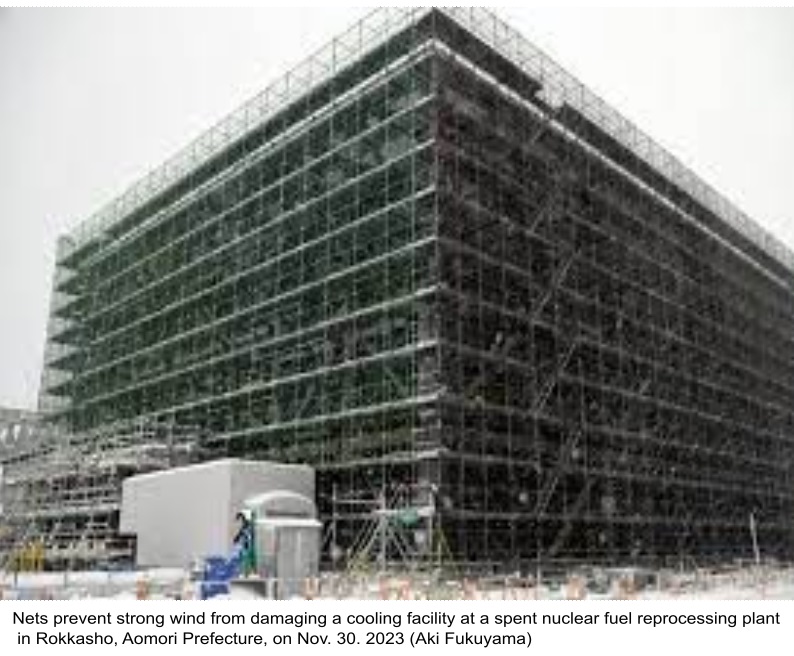
“They have invested too much money in the program to give up on it halfway“
That’s the reason why the Japanese government will continue with this $97 billion massive white elephant of the Rokkasho nuclear reprocessing plant.
Even if the reprocessing plant is completed, it can treat only 800 tons of spent nuclear fuel annually at full capacity, compared with 19,250 tons of spent fuel stored nationwide.
Calls have grown over the years to abandon the nuclear fuel cycle project. – The Asahi Shimbun.
What has intelligence got to do with it? Well, meaning common sense, (rather than spying) – it would be intelligent to stop this futile project, and take some different actions, such as stopping making this toxic trash.
Finally – what has ethics got to do with this?
Well, everything. The Japanese government won’t face up to the truth. Neither will world leaders. It’s all too hard – leave it to our great-grandchildren to deal with the radioactive trash, and all the environmental, social, and weapons-and war-dangers of this noxious industry.
‘Poison portal’: US and UK could send nuclear waste to Australia under Aukus, inquiry told

Labor describes claims as ‘fear-mongering’ and says government would not accept waste from other nations.
Tory Shepherd, Tue 2 Apr 2024, https://www.theguardian.com/world/2024/apr/02/poison-portal-us-and-uk-could-send-nuclear-waste-to-australia-under-aukus-inquiry-told
Australia could become a “poison portal” for international radioactive waste under the Aukus deal, a parliamentary inquiry into nuclear safety legislation has heard.
New laws to establish a safety framework for Australia’s planned nuclear-powered submarines could also allow the US and UK to send waste here, while both of those countries are struggling to deal with their own waste, as no long-term, high-level waste facilities have been created.
The government introduced the Australian naval nuclear power safety bill in November last year. If passed, it will establish a nuclear safety watchdog, allow for naval nuclear propulsion facilities to be created, including for storing or disposing of radioactive waste from Aukus submarines. A second bill to enable the regulator to issue licenses was introduced at the same time.
Both have been referred to a Senate inquiry, which is due to report on 26 April.
Dave Sweeney, the Australian Conservation Foundation’s nuclear free campaigner, said the issue of waste disposal was “highly disturbing” and that the Aukus partners could see Australia as a “a little bit of a radioactive terra nullius”.
“Especially when it’s viewed in the context of the contested and still unresolved issue of domestic intermediate-level waste management, the clear failure of our Aukus partners to manage their own naval waste, the potential for this bill to be a poison portal to international waste and the failure of defence to effectively address existing waste streams, most noticeably PFAS,” he said.
The defence minister, Richard Marles, has previously accused the Greens of “fearmongering” when they raised similar concerns, saying the government would not accept waste from the other nations.
However, the legislation allows for the creation of facilities for “managing, storing or disposing of radioactive waste from an Aukus submarine”, and defines an Aukus submarine as either an Australian or a UK/US submarine, and “includes such a submarine that is not complete (for example, because it is being constructed or disposed of)”.
The Greens defence spokesperson, David Shoebridge, said HMS Dreadnought, one of the UK’s first nuclear submarines, had been “rusting away” since being decommissioned in 1980.
“You can go on Google Maps and look at them rusting away in real time, can’t you?” Shoebridge asked Australian Radiation Protection and Nuclear Safety Agency (Arpansa) chief regulatory officer, James Scott.
“Yes. There is no disposal pathway yet,” Scott said, adding he was “aware of the UK plans to establish a deep geological repository somewhere in the 2050s to 2060s”.
“There’s no exact date,” he said.
“The UK is pursuing a disposal pathway, and Australia will need to do the same. We are fully aware of this; we are engaging with our own radioactive waste agency, ARWA, on this, and it’s something that needs to be dealt with now, not later.”
The Dreadnought’s nuclear fuel has been removed to be stored safely. This has happened with some but not all of the submarines, but there is still no permanent disposal facility. The US also removes nuclear fuel for temporary storage.
1 This month
7 April – WEBINAR – Australia and the Doomsday Clock – Preventing nuclear war through NoFirstUse and other policies
Online | Tuesday April 7, 4:00-5:30pm, Australian Eastern Time / 8:00-9:30am Central Europe Time
– Access the registration link
15 April – Zoom –Nuclear Power is Not the Solution
Apr 15, 2026 01:00 AM in Canberra, Melbourne, Sydney

Join the International Physicians for the Prevention of Nuclear War (IPPNW) on Tuesday, April 14th for a timely webinar exploring the risks associated with nuclear power and challenging the myth that it offers a simple, safe, carbon-free solution to the climate crisis

21 April Webinar: No Nuclear Weapons in Australia
Start: 2026-04-21 18:00:00 UTC Canberra, Melbourne, Sydney (GMT+10:00)
End: 2026-04-21 19:30:00 UTC Canberra, Melbourne, Sydney (GMT+10:00)
Event Type: Virtual
A virtual link will be communicated before the event.
Host Contact Info: australia@icanw.org

of the week – Australians for War Powers Reform (AWPR)
To see nuclear-related stories in greater depth and intensity
 Antinuclear