AUKUS inquiry exposes proliferation risks

The global landscape of nuclear weapons remains deeply concerning, as nuclear powers continue to expand and modernise their arsenals rather than disarm. Countries like the United States, Russia, and China are investing heavily in new nuclear capabilities, increasing the risk of an arms race with profound implications for global security. Australia, while not a nuclear-armed state, risks becoming complicit in this escalation through alliances that potentially involve hosting nuclear weapons or supporting nuclear strategies.
This growing nuclear threat underscores the urgent need for Australia to take a principled stand by promoting disarmament and rejecting policies that undermine global nuclear non-proliferation efforts.
In March, ICAN Australia launched the “No Nuclear Weapons in Australia” declaration for civil society organisations to sign on to, and we had a very strong response with over 160 organisations signing the declaration. We took the declaration to Canberra to share with federal politicians and remind them again of the strong opposition across community groups to nuclear weapons. We also partnered with GetUp! to amplify the campaign’s reach and impact through a national petition urging the government to reject nuclear weapons and join the Treaty on the Prohibition of Nuclear Weapons (TPNW). Together, we also hosted a webinar in May featuring experts and activists discussing the dangers posed by nuclear weapons in Australia and the Indo-Pacific region. Across all of these activities the call remains strong – now is the time for Australia to sign the TPNW. Watch the webinar on Youtube .
Last week, ICAN Co-founder, Dr Tilman Ruff AO presented to the Melbourne Hearing for the Public Inquiry into AUKUS on the nuclear non-proliferation implications of AUKUS, warning that Australia acquiring nuclear-powered submarines under this plan sets a deeply dangerous precedent for global disarmament efforts.
“For the first time,” said Dr Ruff, “with the B-52s and AUKUS arrangements, Australia is becoming not just eyes and ears and communications and intelligence and targeting support, but an actual operational base on a continuing basis for forward operations, including nuclear-armed ones.” Watch the full recording via the AUKUS Public Inquiry website. AUKUS – https://aukuspublicinquiry.com/
| As we head into a crucial few weeks before this year’s Australian Labor Party National Conference, we are ramping up our advocacy and will continue making these vital calls to ensure our message is heard loud and clear. |
This July marks a solemn double anniversary for our Pacific neighbours. July 1st, marks exactly 80 years since the flash of the first American nuclear detonation tore through the Marshall Islands. Just twenty-four hours later, on July 2nd, the region marks 60 years since France unleashed its first atomic detonation at Mururoa Atoll in Mā’ohi Nui. 80 years on from the first of some 300 nuclear explosions conducted in the Pacific, the impact on the fragile ecology of the region and the health and mental well-being of its peoples has been profound and long-lasting. The ‘testing’ on First Nations land in Australia at Maralinga, Emu Field and the Monte Bello Islands and across the Pacific, including in the Marshall Islands, Kiribati and Mā’ohi Nui (French Occupied Polynesia) has left behind radioactive legacies felt far beyond borders
One “family”: weapons multinationals, Defence bureaucracy and the military top brass

Shoebridge:
When members of the public look at this and they see someone who has been …responsible for making decisions about multibillion-dollar contracts with Lockheed Martin, managing multibillion-dollar contracts with Lockheed Martin, and see someone step out of that from the uniform and in less than a week take a job with Lockheed Martin, that doesn’t just miss the pub test, that brings Defence into disrepute, the Public Service into disrepute. They see people leveraging their very recent experience to maximise corporate profits in this case for the world’s biggest weapons manufacturer. Don’t you see how this looks to the public and see how this kind of behaviour stinks…?
Senior military officers working in the upper echelon of the defence department’s arms buying group regularly pass through the revolving door into a post-military career in the weapons industry. The Australian arms industry revolving door database that I have been researching and compiling contains numerous examples, including Jeremy King and Chris Deeble.
Defence shelves 12-month cooling-off period for staff departing for weapons industry and adopts ‘bespoke’ conflict management strategies in a move likely to facilitate more rapid revolving door moves
Michelle Fahy, Undue Influence, Jun 20, 2026
The world’s largest weapons maker, Lockheed Martin, has poached its new Australian chief executive directly from the upper echelon of the federal government’s weapons buying group.
The high profile appointment, made in January, continued the US weapons giant’s long-standing practice of recruiting its local chief executives from the senior ranks of Australia’s military and defence officials.
Lockheed Martin told major general Jeremy King late last year that he was in line for its top Australian job, yet King continued to oversee the Defence Department’s multibillion-dollar helicopter contract with Lockheed.
Having accepted the job, mere weeks separated King’s departure from Defence’s Capability Acquisition and Sustainment Group (CASG) and his commencement at Lockheed Martin Australia.
Lockheed Martin’s global revenue in 2024 was US$65 billion ($91 billion), with 91 per cent of that coming from the sale of arms. Its Australian subsidiary has $4.6 billion in current contracts with the Australian Government (source: AusTender, 30.4.26).
As the head of aviation systems in CASG, major general King was responsible for managing Australia’s $2.8 billion contract with Lockheed Martin for the supply of 40 Black Hawk helicopters. Earlier, in 2023, King had played a critical role in Defence’s decision to replace its trouble-plagued Taipan helicopter fleet with the Black Hawks, but he was not the final decision-maker on the deal.
In October last year, King told his boss, Chris Deeble, head of CASG, that he was being considered by Lockheed for the chief executive role. According to the Canberra Times, he also told Deeble that he intended to work with Lockheed Martin’s offer.
However, it wasn’t until early November that King handed the required conflict of interest form to Deeble and was then removed from further involvement in Lockheed Martin’s contractual arrangements with Defence.
In his evidence to Senate Estimates in February, Deeble was vague as to exactly when in October King had advised him of Lockheed’s approach: “within the October time frame”.
In response to a direct question as to when King departed CASG, Deeble again lacked specificity: “at the end of last year”.
Chief of Army Simon Stuart was more forthcoming on the military side, stating that King had ceased his full-time service with the Australian Army on 5 January.
Having employed the well-worn delaying tactic of taking the question ‘on notice’ during a senate hearing, the Defence Department later revealed that King had departed CASG on 5 January as well.
The department did not respond to my questions as to precisely when in October King advised Deeble of Lockheed’s approach, nor when in November King submitted the required conflict of interest forms.
On 12 January, just one week after King had quit the public service, Lockheed Martin Australia announced that he was its next chief executive.
Senior military officers working in the upper echelon of the defence department’s arms buying group regularly pass through the revolving door into a post-military career in the weapons industry. The Australian arms industry revolving door database that I have been researching and compiling contains numerous examples, including Jeremy King and Chris Deeble.
……………………………………………..The Australian Public Service code of conduct is clear about the risks of public servants moving too rapidly into the private sector: they may use inside knowledge and contacts to benefit their new employer in influencing government, and they may use or reveal confidential or sensitive information that advantages their employer in dealing with government or the market generally.
The Defence Department had a longstanding rule requiring a 12-month gap between its officials leaving public service and joining the private sector in a related industry position (cooling-off period) to help mitigate such risks.
This timeframe was already insufficient for the risk-mitigation task – given that many defence procurement programs extend over many years and some of the largest can take a decade or more to finalise – yet no cooling off period at all was applied by Defence to buffer major general King’s transfer to Lockheed Martin.
Multiple objections to the lack of cooling-off period expressed by Greens’ senator David Shoebridge during Senate Estimates were swept aside, or ignored, by all officials present, from the Chief of the Defence Force (CDF) Admiral David Johnston down. No-one answered Shoebridge’s repeated question as to whether anyone in Defence had formally approved King’s move to Lockheed. Nor did Army Chief Simon Stuart or the CDF answer Shoebridge’s repeated question as to whether a cooling-off period still applies to Defence revolving door moves more generally.
Indeed, the remarks from both military leaders made it plain that as long as Defence’s claimed “clear policies” on managing conflicts of interest are adhered to, there is no longer any impediment to a speedy transition into the arms industry for senior Defence officials.
Defence did not respond to questions as to whether, and if so when, the 12-month rule has been scrapped. Further investigation revealed that this longstanding rule has been scrapped by Defence.
…………….The weapons industry is recognised globally as a very high risk industry for corruption. When asked by Shoebridge during Senate Estimates how the Defence Department had ensured Lockheed Martin managed its side of the obvious conflicts of interest inherent in hiring King, a Defence probity official said the weapons giant had provided a letter of undertaking outlining what it intends to do.
What wasn’t explained, or even mentioned, was how Defence intends to ensure Lockheed adheres to its undertakings.
……………10 years on, nothing has changed
Just as the Defence hierarchy welcomed the departure to Lockheed Martin, 10 years ago, of its senior defence scientist Tony Lindsay – who joined Lockheed one day after he left his senior public service post – the Defence leadership today continues to see no reason for concern about the rapid-fire revolving door moves of its senior staff into leadership roles in the weapons industry.
In fact, CDF David Johnston welcomed major general King’s move, telling Senate Estimates that King’s expeditious move to the private sector was to Australia’s benefit.
Shoebridge:
When members of the public look at this and they see someone who has been …responsible for making decisions about multibillion-dollar contracts with Lockheed Martin, managing multibillion-dollar contracts with Lockheed Martin, and see someone step out of that from the uniform and in less than a week take a job with Lockheed Martin, that doesn’t just miss the pub test, that brings Defence into disrepute, the Public Service into disrepute. They see people leveraging their very recent experience to maximise corporate profits in this case for the world’s biggest weapons manufacturer. Don’t you see how this looks to the public and see how this kind of behaviour stinks…?
……..The man responsible for reviewing both of King’s conflict of interest declarations and Lockheed Martin’s undertakings regarding the management of those conflicts was Chris Deeble, himself no stranger to the revolving door.As part of his 37-year career with the Royal Australian Air Force, Deeble spent the last decade or so of his time in the military managing complex multibillion dollar procurement programs inside Defence’s weapons buying ………………………….
In 2019, Deeble was wooed by the world’s third largest weapons-maker, US-based Northrop Grumman. Deeble agreed to head its Australian subsidiary, a job he held for more than three years. Northrop Grumman is deeply involved in the US government’s nuclear weapons program, amongst many other defence programs, including the Triton drone and the nuclear-capable B-21 stealth bomber.agency
In mid-2022, Defence was looking for a new head of CASG. Deeble got the job. Inside a month of leaving Northrop Grumman, he was back inside Defence as the nation’s top arms buyer, appointed by the Albanese government in August 2022.
When asked by Senator Shoebridge whether anybody had to sign off on King’s plan of “literally going from gamekeeper to poacher in less than a week”, and whether Deeble himself had approved King’s move to Lockheed, Deeble did not answer either question……………………………………………………………………………………………………………………….
Auditor general’s revolving door concerns
The nation’s auditor general has repeatedly warned of the corroding influence of the revolving door, which leads to cosy, familial relationships between the Defence hierarchy and the weapons multinationals.
In evidence to parliament’s audit committee in November 2024, deputy auditor general Rona Mellor warned of the importance of keeping an “appropriate distance in our relationships” with multinational weapons contractors.
“There’s a really big challenge ahead for Defence. The biggest challenge … is that there is a culture in these very long-term contracts… There’s a real risk that you get captured by the provider.”………………………………………………………………….
The mega-spend AUKUS era makes stopping the revolving door urgent
Australian governments have long been susceptible to the revolving door process in which politicians, the military, and public servants move effortlessly between government, lobbying firms, and the arms industry. The movement of King to Lockheed Martin is more of the same behaviour that’s been occurring for decades…………………………..
Australia’s limp attempts at managing the revolving door have been completely ineffective, particularly in the Defence/arms industry domain. The arrival of AUKUS requires this unregulated and unmonitored democracy-eroding phenomenon to be brought under control.https://undueinfluence.substack.com/p/one-family-weapons-multinationals?utm_source=post-email-title&publication_id=297295&post_id=202535704&utm_campaign=email-post-title&isFreemail=true&r=1ise1&triedRedirect=true&utm_medium=email
Future certain for Olympic Dam but not Traditional Owners

From Robyn Wood, of FOE South Australia: Here’s an article in the National Indigenous Times about the Roxby Indenture act passing and ignoring Traditional Owners. They note that the Conservation Council did not appear at the hearing – that was due to illness.
They also note that no Traditional Owners were invited to the hearing – I think that’s outrageous, and exactly the time they should have invited the newly established Aboriginal Voice to Parliament to give evidence.
I was also outraged by Chair of the Select Committee Tom Koutsantonis ignoring all the submissions and calling them irrelevant – even the Flinders and Upper North Voice to Parliament one.
David Prestipino, National Indigenous Times June 17, 2026
A landmark update of a decades-old Indenture agreement guiding development at Olympic Dam and copper-rich Gawler Craton was ratified by the South Parliament on Tuesday despite serious concerns from affected Traditional Owner groups.
Key Points
• Three Traditional Owner groups left out of landmark deal
• Concerns at impact of 50 years of mining on Country
• New Indenture fast-tracks BHP’s Olympic Dam expansion plans
The agreement between the Malinauskas government and global miner BHP ensured long-term certainty for the region as a global copper powerhouse but left Traditional Owners concerned for their future and angry at the short time set for submissions over the deal.
Critics said the six-day window to respond to updated Indenture contradicted claims of due process, a fair hearing and proper public consultation by the SA government, after the agreement was mooted in May.
Native Title bodies told a government-chosen Select Committee they had serious concerns at ongoing impacts another 50 years of BHP mining operations would have on their Country.
‘Destruction’ of Country
Kokatha Aboriginal Corporation, whose Traditional lands include the Olympic Dam region, told the Committee the previous Indenture Act – in place for more than 40 years – was insufficient already.
“The original Indenture is viewed by the Kokatha People as the authorisation of destruction of our land and a mechanism to drive our people off Country, without the involvement or consent of Kokatha People,” KAC wrote in its submission earlier this month.
Dieri Aboriginal Corporation said a BHP well field on Dieri Country would continue to pressure the Great Artesian Basin.
“Water is very important to us as Dieri People and the impact of water taken from Wellfield B impacts the health of our Country,” the board wrote in its submission.
Arabana Aboriginal Corporation urged the Committee to make recommendations on important matters that affected Arabana People and their land, outlining them in its submission.
“The damage to our springs and land, the closure of Wellfield A, ongoing water abstraction from Wellfield B, the absence of consultation with the AAC,” it wrote.
“The continued displacement of the Aboriginal Heritage Act for the Stuart’s Shelf on Arabana Country and how development of the bill can be reconciled with the state’s own commitments to Aboriginal people.”
The Committee heard evidence from SA’s departments of Energy and Mining, Energy and Water, BHP, the SA Conservation Council and SA Chamber of Mines and Energy.
The Conservation Council chose not to attend the hearing, while no Traditional Owners were on the Committee.
Changes pave way for more mining…………………………………………………
The three Traditional Owner submissions as well as several environmental organisations had heavily criticised the limited time to make a submission, while also lamenting insufficient consultation and engagement from BHP and stakeholders………………………..https://nit.com.au/17-06-2026/24868/future-certain-for-olympic-dam-but-not-traditional-owners
In praise of Pauline Hanson and One Nation
19 June 2026 Noel Wauchope, https://theaimn.net/in-praise-of-pauline-hanson-and-one-nation/
You can laugh. You can sneer. But we will show you!
BUT… the time needs action, not just words.
FIRST ACTION. We must get rid of compulsory voting. That is the Nanny State in operation. That is the Elites infringing on our civil liberties. People should have every right not to participate in the bureaucratic mumbo jumbo of the electoral mess. With voluntary voting, citizens would have true freedom to choose their own government. What happens at present, is that every uninformed person is forced to vote, and so tends to just follow the tired old established parties. A mindless vote. That disadvantages our really visionary party, One Nation, which deservedly gets the votes of real thinkers.
SECOND ACTION – but perhaps for later on – get rid of the rorting of the voting system, as that uppity lot of inner-city over-educated middle class women take advantage of preferential voting to get themselves into Parliament, and distract progress with their wayout and ultra-feminist agendas. Preferential voting does have its uses, I admit, but only in the short term, in this period of our negotiations with the sad sick Liberal and Labor parties.
NOW – once the very unfortunate Australian electoral system is corrected – we’ll be off and away in our noble quest to correct Australia itself. Fortunately, we have some wise and well-informed people to support us. People like Gina Rinehart, people who understand the realities of this resource-rich land, and of the skills and values of those who’ve colonised and improved this land, over 200 years. And let’s face it, that’s basically the white people.
And who are we counting on to bring One Nation to power? Well, there are people like myself – country dwellers who don’t want to be pushed around, patronised or ignored by the privileged pampered inner-city dwellers with their university degrees, and their latte-sipping, theatre-snobby culture. They prioritise the causes of various minority groups – foreigners who don’t speak English, and people with every kind of sexual deviance, rather than the needs of the real true-blue Australians.
Then there are the hard-working people in the outer suburbs, struggling with the increasing cost of living. They will know that One Nation is dedicated to improving their lot – we will cut the red and green tape that stifle business, and so we’ll help businesses to grow and prosper, thus creating more and better jobs as the increased profits trickle down to the workers.
We are sick and tired of all the pontificating about that non-existent climate change, and about the non-sustainable folly of renewable energy, propped up as it is by the incompetent Labor government. We intend of course, to take care of indigenous people, but not to allow the remnants of their backwards culture to be used by troublemakers whose aim is to impede progress in developing industry.
Pauline Hanson has spoken a lot about immigration, but it’s not that she’s against immigration. Of course we want some migrants, but a limited number, and they should be carefully restricted to people that have adopted our English language and share our values.
You have to admire Pauline. She courageously speaks her mind, and challenges those biased lefties, especially in the media. Our taxes should not be going to the ABC and to the SBS – institutions with such a dangerously left-wing attitude. One Nation will deal with those nefarious influences.
Which brings me back to publications like The Australian Independent Media Network, Independent Australia, Crikey, and the positively dangerous Urban Wronski Writes. Something will have to be done about those. It is my hope to correct Australian Independent Media, for example, perhaps to bring it back to respectable, reliable journalism that will aid the Murdoch media in showing Australians the news in the correct way.
So, in conclusion – to all you Australians who feel aggrieved and hardly done by, we at One Nation offer you what you need: Change, and the promise of a better life.
Signed,
Noel Wauchope, proud rural dweller.
Where’s the money? Government and Israel lobby coy on big grants
by Stephanie Tran | Jun 16, 2026 ,https://michaelwest.com.au/wheres-the-money-government-and-israel-lobby-coy-on-big-grants/
Australia’s Jewish community received 49 times more funding per capita for security than Muslim Australians but where does the money go?
Where’s the money? The latest $176m in government grants awarded to peak Zionist body and Israel lobby group the Executive Council of Australian Jewry, that is? It was allocated for ‘community security’ but what is community security? Questions were put to Home Affairs and ECAJ.
Home Affairs did not address specific questions. ECAJ did not respond.
“Are any funds received under the Enhancing Security for Jewish Communities Program being used, either directly or indirectly, to support ECAJ’s lobbying, advocacy, legal, media or public communications activities? If so, please provide details.”
Questions and responses are published below. The public interest question at stake is whether government grant money is being spent by the Israel lobby – or its associates – suing Australian citizens such as Mary Kostakidis, Nick Reimer and John Keane in antisemitism cases.
An obscure associate
An MWM investigation previously revealed that more than $176m in Commonwealth security grants awarded to the Executive Council of Australian Jewry (ECAJ) were paid to an obscure association incorporated in the ACT – rather than a charity registered with the ACNC regulator or ASIC.
A further security grant of $22 million to ECAJ has been “committed but not yet awarded” by the government, bringing the total security grants awarded to ECAJ to $198 million.
The arrangement has prompted questions about transparency because ACT incorporated associations are not required to publicly lodge audited financial statements, unlike registered charities, which are required to report to the Australian Charities and Not-for-profits Commission (ACNC).
The issue was raised during Senate Estimates, where Greens senator David Shoebridge questioned why the Department of Home Affairs had chosen to award the funding to ECAJ’s ACT incorporated association rather than one of its charity entities.
“In terms of the community getting transparency on where the funding is going, there’s vastly less transparency given by ACT incorporated associations, which aren’t required to lodge audited financial statements and aren’t regulated by the ACNC registered charity.
“Why did Home Affairs provide it to an ACT-registered association rather than the ACNC-registered charity?” Shoebridge asked.
An obscure government response
Department official Amy Dyde replied that the incorporated association was the appropriate recipient because “that is the corporate entity that represents ECAJ as the peak body, and so that is the organisation that was eligible for funding”.
“It’s not charitable funding; it’s not tax-deductible funding; it’s operational security funding. So they were the appropriate entity to receive that funding to distribute it as the peak body,” Dyde said.
However, publicly available grant records indicate that the $27.5m Security Uplifts for Muslim Communities program was awarded to Australian National Imams Council Limited, which is an ACNC-registered charity that publicly discloses government grant income in its annual financial reports.
By contrast, ECAJ’s ACNC-registered charity, The Trustee for ECAJ Harm Prevention Fund, has reported receiving no government grant revenue in its ACNC filings over the past decade, despite the more than $176m in Commonwealth security funding being awarded to the ECAJ.
Funding disparity
Funding disparity
Since October 2023, Muslim community organisations have received $27.5 million in Commonwealth security funding through the Security Uplifts for Muslim Communities program.
According to the 2021 Census, 813,392 Australians identified as Muslim. Based on those figures, the funding equates to approximately $33.80 per person.
By comparison, Commonwealth grants awarded to Jewish community organisations since October 2023 total approximately $198 million.
The 2021 Census recorded 99,956 Australians identifying Judaism as their religion. However, ECAJ co-chief executive Peter Wertheim estimated the Australian Jewish population is closer to 120,000 when accounting for those who did not identify their religion in the census.
Using Wertheim’s estimate, the funding allocated to Jewish community organisations equates to approximately $1,650 per person. On a per-capita basis, this represents
“around 49 times more security funding than that allocated to Muslim community organisations.“
The disparity was raised during Senate Estimates by Shoebridge, who noted that Muslim, Palestinian and Arab communities had also reported threats, harassment and attacks on community facilities since October 7.
“Of course, the Jewish community – recognising that the threats and security issues are real in that community – are not the only community that’s facing quite distinct threats,” Shoebridge said.
“I speak regularly with members of the Muslim community, the Palestinian community and the broader Arab community, and they are experiencing attacks on mosques, overt hostility on the street and attacks at their community gatherings.
?They have asked where the funding is for their security.”
Shoebridge questioned whether Home Affairs was undertaking a broader assessment to ensure security funding was being distributed proportionately across communities facing heightened threats.
Department secretary Stephanie Foster responded that Home Affairs was engaging with communities across Australia and said requests from Jewish organisations had been focused heavily on security measures, while requests from Muslim communities had been “more broadly based”.
“We are engaging with community groups, very consistently, to understand their needs and priorities,” Foster said.
“The focus from the Jewish community and Jewish community groups, for some time, has been very heavily focused on specific security-related funding. The requests from the Muslim community in particular have been more broadly based.”
The funding disparity comes amid reports of a sharp increase in anti-Islamic incidents since October 2023. According to the Islamophobia Register Australia, reports of Islamophobia increased by 636% in the period following 7 October 2023, with the organisation reporting an average of 18 incidents per week.
Funding on request
Shoebridge questioned Department of Home Affairs officials about how the government arrived at the figure of $124m announced in the federal budget.
“What was the assessment that landed with the figure?” Shoebridge asked. “Or is the answer, ‘That’s what was requested’?”
Department official Andrew Warnes replied, “That’s correct. That’s what was requested and identified, as required for security funding, by the Executive Council of Australian Jewry.”
The exchange prompted further questioning from Shoebridge, who asked whether any independent needs assessment, infrastructure review or analysis had been undertaken to justify the amount.
Department officials did not identify
“any specific assessment that produced the funding figure.“
nstead, Warnes said ECAJ had submitted a request for $102m in funding after earlier funding arrangements were due to expire.
In response to questions by MWM, the Department of Home Affairs told us it had “no additional information to provide beyond statements made during estimates”.
The Department also did not provide a copy of the grant guidelines as requested.
We put detailed questions to the Department of Home Affairs and ECAJ regarding whether any grant funds could be used for lobbying, advocacy, legal or public communications activities.
They declined to comment.
Roxby Bill rides roughshod over environmental and Indigenous concerns

17 June 26 https://www.conservationsa.org.au/protect_mound_springs
Conservation Council SA expresses deep concern at the proposed Roxby Downs (Indenture Ratification) (Amendment of Indenture) Amendment Bill 2026 (‘Roxby Bill’) currently before the South Australian Parliament. If passed, the Bill has a potential to irreversibly damage or destroy the Mound Springs of the Great Artesian Basin (GAB). These unique springs are in the far north of our state and are a South Australia environmental and cultural treasure.
Conservation SA has long called for the Mound Springs of the GAB to be permanently protected for the local Indigenous and South Australian communities.
As noted by The Nature Conservancy:
“Up to three kilometres deep and lying beneath 23% of the Australian continent, the Great Artesian Basin is the largest and deepest artesian basin in the world. The water it contains is under high pressure and in places like Arabana Country, South Australia this forces water to rise to the surface as freshwater springs. Along with the rising warm water comes sediment which can pile up several metres high hence the name – mound springs.
In the hot dry landscape, the springs create an oasis for local wildlife and migratory birds. They’ve also been extremely important to Indigenous people for many thousands of years.”
In December 2025, Conservation Council SA CEO Kirsty Bevan wrote to the South Australian Premier seeking the long-term protection of the Mound Springs (extract below):
Protect the Mound Springs and End Unsustainable Water Extraction from the Great Artesian Basin
Mound Springs are globally significant cultural, ecological and geological features, and are a listed EPBC Act “Endangered Ecological Community”. These unique and fragile little gems support rare species, deep cultural heritage and landscapes central to the identity of Traditional Owners. Community concern has escalated regarding BHP’s use of Great Artesian Basin water for mining and the cumulative impact on Springs.
We call for:
-
- Recognition of the Mound Springs of the GAB as a high-value ecosystem requiring elevated protection.
- Closure as soon as possible of BHP Wellfield A water extraction operations that have directlyimpactedthe Springs.
- Transition of industrial scale BHP Wellfield B water extraction operations toward alternative water sources, such as desalination or recycled water, to protect the Basin.
- Transparenttimelyreporting of extraction volumes, groundwater pressures and spring health and monitoring information.
- Co-governance with Traditional Owners, with investment in cultural heritage protection and Indigenous Rangers on country.
Outcome Sought:
Long-term water security for communities, ecosystems of Great Artesian Basin—and a clear safeguard against irreversible damage.
The Bill is deeply problematic for several reasons. Firstly, given the complexity of the legislation and the lack of notice provided about the Bill has meant that interested parties have not been provided with a realistic opportunity to respond and raise the full suite of their concerns. Further, there are concerns that this rapid process may have been the deliberate intention of Government.
As noted by longtime campaigner Mr David Noonan in his submission to the Select Committee inquiry into the Bill, the key concern is that:
“…[the] Roxby Bill and new Indenture place an onus on the State to provide “commercial water” to BHP. If the State doesn’t deliver that water, the Roxby Bill and new Indenture provide for BHP Olympic Dam Wellfield / Borefield B to expand and extend operations for decades at an unacceptable environmental cost to the integrity of GAB water flows and the survival of the unique and fragile Mound Springs, little gems of our natural heritage and of ongoing fundamental cultural and spiritual importance to the Arabana People, the Native Title holders over the area. This is entirely unacceptable.”
The problems the Roxby Bill will create are further detailed in submissions to the short Select Committee into the legislation; attached below are the submissions to that Committee from Friends of Mound Springs and longtime campaigner, Mr David Noonan:
Wong and Marles were left waiting in the wings in London – it’s further proof Aukus was never anything more than a political stunt

Allan Behm, 16 June 26, https://www.theguardian.com/commentisfree/2026/jun/16/uk-defence-minister-john-healey-resignation-wong-marles-aukus-exposed-political-stunt
All the flimflam and palaver amount to nothing in the face of domestic realities. Perhaps the UK’s John Healey has done us all a good turn.
The resignation of the UK defence minister John Healey, along with the armed forces minister Al Carns, has driven another nail into the coffin of Keir Starmer’s prime ministership. This was no inadvertent injury to the prime minister but a signal on Healey’s part that he’s a leadership candidate – or at least a deserving member of any new prime minister’s cabinet. It’s very calculated: Healey is too smart to do anything by accident.
No less inadvertent is the damage he has inflicted on the prospects of the increasingly ill-fated Aukus nuclear submarine proposal. By leaving the Australian defence minister, Richard Marles, and the foreign affairs minister, Penny Wong, waiting in the wings while he got on with the business of domestic politicking, he demonstrated once again what had been clear from the outset: Aukus was never anything more than a political stunt, expendable once it had served its political purpose.
Let’s unpack that.
Conceived in secret and launched by the then prime minister Scott Morrison with maximum political fanfare in September 2021, Aukus was a hurried attempt to meet the quite divergent political objectives of three very distant countries.
For Australia, it was about creating yet another security blanket to wrap us in the arms of great and powerful friends. It was a sad attempt to address the pathological insecurity of occupiers of a vast and distant continent. At the same time, it had the added political benefit of wedging Labor on the grounds that it was perceived as “weak” on national security. Labor met that challenge head-on by accepting the idea lock, stock and barrel – a curious example of the reverse wedge.
For Britain, it was about restoring some of its strategic credibility after its feckless Brexit decision, parading its imagined role as a European player with a global footprint. It was also about grabbing a flow of cash from gormless antipodeans to pay for the Band-Aids needed to treat the gaping holes in its national submarine construction capacity, now so disabled that it will take tens of billions to restore the UK’s submarine deterrence capability – if that’s even possible.
And for the hapless former US president Joe Biden it was about demonstrating America’s ability to lock its allies into strategic dependency while retaining both the UK and Australia as critical logistic and support partners in its efforts to maintain its ability to intervene militarily on a global scale. It was cynical and self-serving and for that reason alone easily survived the transition to the Trump administration.
So when two closely allied ministers are left cooling their heels in London wondering why on earth they’re there, the political fragility and the policy inadequacy of Aukus is exposed once again. When the retention of national political power in the face of Nigel Farage’s Reform UK party is at stake, flimsy international agreements are simply cast off. All the flimflam and palaver about shared values, enduring friendship and the international rules-based order amount to nothing in the face of hard domestic political realities. Just ask Donald Trump.
From the outset, the politics of Aukus have been totally unsupported by policy – an “emperor’s clothes” situation where a single event can expose the intrinsic flimsiness of the entire enterprise. Here we are, five years on, still waiting for the fundamental policy principles on which Australia’s acquisition of nuclear-propelled submarines might be justified. This is not to suggest that they can’t be justified: simply that they haven’t been.
Where are the answers to the basic questions? Why? What are the options? How? At what cost? Are there alternatives? Are there complementary actions? What are the downstream effects?
Australia has a long and dismal history of political initiatives that lacked robust policy structures to support them. Aukus is yet another symptom of a rush of blood to the head. We know that the US under secretary of war for policy, Elbridge Colby, entertains serious doubts about the policy viability of Aukus submarines. The Congressional Research Service clearly shares his concerns, noting as it does the inability of the US naval construction industry to meet the demands of the US Navy, not to mention the expansion needed to provide additional builds for the Royal Australian Navy. Fobbing Australia off with second-hand older Virginia-class submarines is hardly an advertisement for Marles’s vaunted “optimal pathway”.
So perhaps Healey has done us all a good turn by showing, once again, that Aukus is not about policy at all but just an act of large-scale political theatre. As all wise politicians know only too well, once the political purpose has disappeared, the show’s over.
Allan Behm advises on international and security affairs at the Australia Institute in Canberra
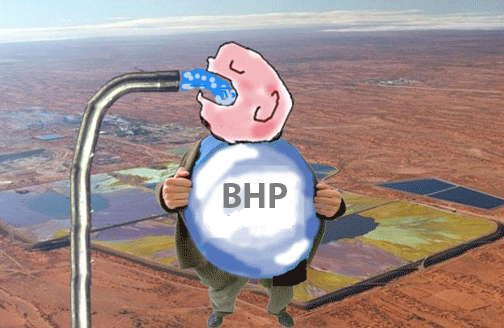
Concerns over Great Artesian Basin water impacts in new BHP agreement
By Kathryn Bermingham, By Thomas Kelsall, 17 June 26
In short:
The South Australian government has been accused of rushing through a new mining agreement with BHP that does not do enough to end water extraction from the Great Artesian Basin.
Mining Minister Tom Koutsantonis says the updated indenture imposes stricter environmental regulation.
What’s next?
The bill is expected to pass parliament this week, ahead of a decision on the Northern Water project in the second half of 2027.
Environmentalists and First Nations groups say a new agreement between the South Australian government and BHP, set to be passed by state parliament this week, does not do enough to end water extraction from the Great Artesian Basin.
They also say their concerns have not been taken seriously and that they have been shut out of the consultation process.
The government announced last month it would introduce a bill to “modernise” the Olympic Dam indenture — a legislated contract with BHP that governs mining operation
The updated indenture broadens BHP’s mining lease and removes caps on copper production, paving the way for a potential major expansion. (Supplied: BHP Billiton)
The updated indenture broadens BHP’s mining lease and removes caps on copper production, paving the way for a potential major expansion.
It also addresses water access, stipulating that BHP must stop drawing water from its Great Artesian Basin Wellfield A by 2036.
But it allows continued access to BHP’s other wellfield, despite the concerns of traditional owners and environmentalists that extraction is damaging the local mound springs.
The Arabana people say mound springs at the Great Artesian Basin are culturally significant. (ABC News: Lincoln Rothall)
BHP extracts more than 4 million litres of water a day from Wellfield A and 29 million litres a day from Wellfield B.
The second wellfield has less impact on the pressure of the mound springs, according to officials from the Department for Environment and Water and BHP.
Bill could be ‘locking in’ BHP’s extraction rights, environmentalist says
To reduce reliance on the basin in the future, the state government has proposed the $5 billion Northern Water project — a desalination plant on the Spencer Gulf that would connect to a pipeline stretching into the mining region
A concept map shows the Northern Water project pipeline from the desalination plant site near Mullaquana Station to Olympic Dam. (northernwater.sa.gov.au)
The project is currently subject to a $200 million feasibility study.
If it goes ahead, BHP says it will “significantly reduce” extraction from Wellfield B and instead use desalinated water for its mining operations.
If Northern Water is scrapped, Wellfield B can remain a water source for BHP, although the government says this would be under stricter environmental conditions and require the company to build in water efficiencies over time.
Environmentalist David Noonan said he was concerned by the long-term implications of the bill.
“It’s locking in rights to BHP to extract water from the Great Artesian Basin, that’s having impact on the unique and fragile mound springs,” he said.
“Wellfield A … it should be closed down as soon as possible, and the bill is allowing BHP to continue that water extraction for another decade.
“Even if South Australia does provide commercial water to BHP, BHP are still allowed to extract water from the far larger Wellfield B potentially for decades to come, and that would be locking in a long-term adverse impact on the survival of the springs.”
David Noonan says the bill could allow BHP to extract water from the Great Artesian Basin for a longer term. (ABC News: Daniel Taylor)
Arabana woman Janette Milera said she was concerned about the bill’s impact on the culturally significant mound springs.
“For us as Arabana people, they hold stories, they hold ancestors,”
she said.
“We are very concerned about what is happening with the water and country and where this [bill] might lead to with our mound springs.”
She said she was not against the bill but would like to see “a better consultation process about how they manage extraction from the Artesian Basin”.
Arabana woman Janette Milera is concerned about how the BHP agreement would impact the mound springs. (ABC News: Ashlin Blieschke)
Energy and Mining Minister Tom Koutsantonis said that under the new indenture, the Department for Environment and Water and the Environment Protection Authority would need to sign off on BHP’s water licence renewals.
“BHP will be subject to the environmental health of the wellsprings … that is a fundamental difference to what was in there previously,” he said.
Mr Koutsantonis also said closing Wellfield A by 2036 would lead to recovery of mound springs and, if Northern Water goes ahead, Wellfield B would only be a “backup” for BHP.
“I am very confident this is a good environmental outcome, not only for Indigenous groups but the basin itself,” he said.
BHP said it remained committed to “constructive engagement” with traditional owners and has provided regular updates on the indenture.
The company also highlighted that it was not seeking to renew Wellfield A, and said future growth at Olympic Dam will require additional water sources beyond the basin.
Committee process criticised
The bill was introduced to parliament last month and a committee of MPs was appointed to undertake an inquiry, but the process has drawn criticism from some individuals and groups who tried to voice their concerns.
Water is under pressure in the Great Artesian Basin
The Great Artesian Basin covers a fifth of Australia and contains water that has been there for millions of years. Now, decades of extraction are taking their toll and traditional owners are fighting a mining giant for compensation.
The committee, chaired by Mr Koutsantonis, allowed a 10-day window for public submissions and received more than 20.
Submitters included Mr Noonan and several environmental groups, as well as the First Nations Voice to Parliament and traditional owners of the Great Artesian Basin and Olympic Dam mine site.
Among the issues raised were the long-term impact of the new indenture, protection of the environment, native title concerns and consultation that was viewed as inadequate.
But none of the concerns were directly addressed in the committee’s final report, which was tabled in parliament the morning after the public deadline.
Melanie Selwood has criticised the committee process. (ABC News)
“I think this committee’s a bit of a sham to be honest,” said Greens MLC Melanie Selwood, who was not a member of the committee.
“People rushed to get submissions in the two-week period that was given to them, but they weren’t given time to come before the committee and really have their questions answered and have their concerns raised.”
Mr Koutsantonis said the submissions received by the committee were considered but not included in the final report because “they weren’t relevant”.
“We get to a point, in this saga of BHP, where there are some people who will not be satisfied until all mining ends,” he said.
“The concerns that they were making, for example, about native title and agreements for Indigenous groups, weren’t part of the indenture.
“Native title is assigned by the Commonwealth parliament, not by the state parliament.”
Tom Koutsantonis rejected the suggestion that the bill had been rushed through parliament. (ABC News: Ashlin Blieschke)
He said native title holders had already given their approval for expansion of the mining lease, and the government expects BHP to do a “full negotiation” with native title holders “before any further steps go forward under the indenture”.
BHP said many of the matters raised in the submissions were already being addressed, or would be addressed, through agreement-making processes.
Mr Koutsantonis rejected that the bill had been rushed through parliament but acknowledged the government had treated it with urgency.
“We’re heading into the winter [parliamentary] recess and we are in a contest for capital,” he said.
BHP has fast-tracked early works on an Argentinian copper project, while a decision on Olympic Dam — and consequently the Northern Water project — has been delayed until the second half of 2027.
Australia will now investigate Israel over Assault Claims | West Report Live
Streamed live on 16 Jun 2026 The West Report
This is the biggest story most Australians have not yet grasped.
Today, in Canberra, Australian survivors of physical, psychological and sexual abuse by Israeli authorities met with Foreign Minister Penny Wong, the Hon Dr Anne Aly MP, a Deputy Commissioner of the Australian Federal Police, and a senior DFAT official.
As a result, the Australian Government has committed to an independent investigation into the assaults, sexual assaults and torture of the Gaza Flotilla humanitarians. Read that again. Not an internal Israeli review. Not a department preparing a briefing note. Not a politician expressing concern.
An area of sea ice as big as France is gone from Antarctica’s west coast, as temperatures rise
Bulletin, By Graham Readfearn || June 13, 2026
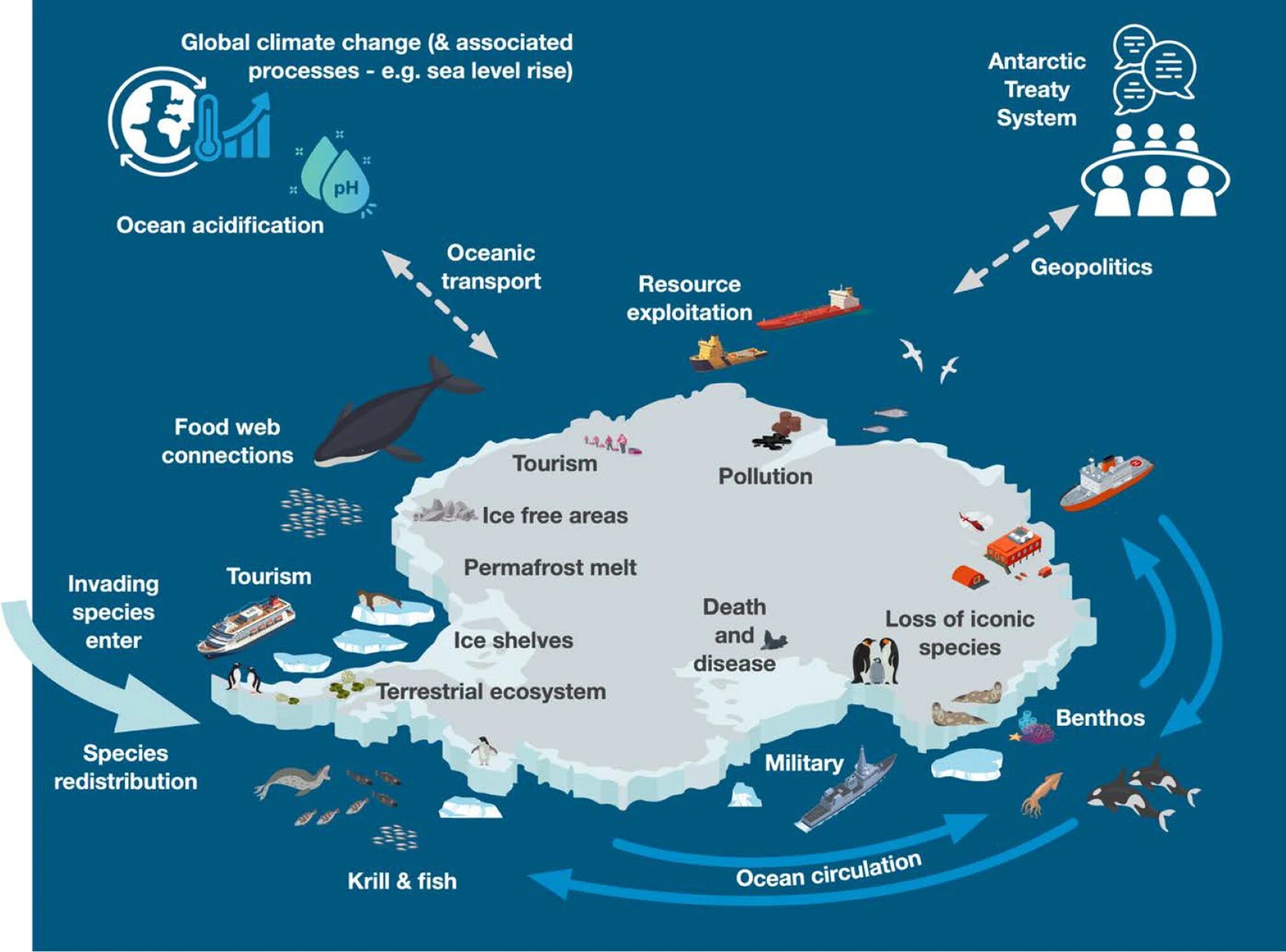
Antarctica’s west coast is missing an area of winter sea ice the size of France, sparking concerns for threatened penguins, other marine life, and global sea levels.
One expert said the loss of ice in the Bellingshausen Sea was “depressing” and the failure of ice to form could have intensified a heatwave over the continent’s peninsula last week that saw daytime temperatures peak at 15.4 degrees Celsius (about 59 degrees Fahrenheit) which is more than 20 degrees Celsius above average. (It is normally about 24 degrees Fahrenheit at this time of year.)
It’s winter in Antarctica, when sea ice expands rapidly around the continent peaking in September.
But satellite observations showed the Bellingshausen Sea—on the west side of the Antarctic peninsula and which by June would usually be covered by ice—was almost completely ice-free.
Scientists said the region was missing about 650,000 square kilometers (250,000 sq miles) of sea ice, compared with the average between 1991 and 2020. That is an area about the size of France, and almost 10 times the size of Tasmania.
“I’m concerned. It’s depressing,” said Will Hobbs, an Antarctic sea ice expert at the University of Tasmania with the Australian Antarctic Program Partnership. “It is remarkable that we are in June and there is no sea ice there.”
He said this was the third time in four years that sea ice had been very low in the region. “I don’t think we will see sea ice there any more. It’s done,” Hobbs said. The loss of sea ice was likely linked to changes in the ocean and scientists were trying to understand if global heating was a factor.
Hobbs said the region was important for krill—a critical part of the food web for species in the region. Krill would usually be hiding from predators under the ice in winter, where they graze on algae.
On June 10, there was about 11.4 million square kilometers of sea ice around the entire continent compared to a long-term average for that date of 12.6 million square kilometers.
Phil Reid, who monitors Antarctic conditions at Australia’s Bureau of Meteorology, said the Bellingshausen Sea had seen “incredible coastal exposure” in winter and summer in recent years.
Reid said just to the area’s west were the Pine Island and Thwaites glaciers—the continent’s major contributors to ice loss and sea level rise.
Floating ice shelves in front of the glaciers could break up faster if protective sea ice is absent for longer periods, he said, and this could then speed up the loss of ice from the glaciers, pushing up global sea levels in the future………………………………………………………………………….https://thebulletin.org/2026/06/an-area-of-sea-ice-as-big-as-france-is-gone-from-antarcticas-west-coast-as-temperatures-rise/?utm_source=ActiveCampaign&utm_medium=email&utm_content=Climate%20Change%3A%20New%20Data%2C%20New%20Debate&utm_campaign=20260611%20Thursday%20Newsletter%20%28Copy%29
Australian nuclear news week to 20 June:
Australian nuclear news week to 20 June:
- DFAT’s secret nuclear briefings
- One “family”: weapons multinationals, Defence bureaucracy and the military top brass
- AUKUS inquiry exposes proliferation risks
- Future certain for Olympic Dam but not Traditional Owners
- In praise of Pauline Hanson and One Nation
- Where’s the money? Government and Israel lobby coy on big grants
- Wong and Marles were left waiting in the wings in London – it’s further proof Aukus was never anything more than a political stunt.
- Roxby Bill rides roughshod over environmental and Indigenous concerns
- Concerns over Great Artesian Basin water impacts in new BHP agreement
- Australia will now investigate Israel over Assault Claims | West Report Live.
- 3 July -MELBOURNE: Commemorating the legacy of nuclear detonations in the Pacific: 80 years on.
- Downer: AUKUS is the anchor dragging SA deeper into debt
3 July -MELBOURNE: Commemorating the legacy of nuclear detonations in the Pacific: 80 years on
Start: Friday, July 03, 2026•06:00 PM
Location: Balam Balam Place • 15 Phoenix St , Brunswick, 3056 AU
Host Contact Info: peaceworker@quakersaustralia.info
A gathering for nuclear justice in the Pacific – decolonised, demilitarised, denuclearised and decarbonised
1 July marks 80 years since the USA began exploding nuclear bombs in the Marshall Islands, and 2 July marks 60 years since France began dropping nuclear bombs in Mā’ohi Nui (French Occupied Polynesia).
The impacts of these detonations were catastrophic, and they continue a radioactive and toxic legacy in the bodies and lands of impacted communities.But the nuclear threat isn’t only historical. The continued existence of nuclear weapons, that are carried through continents and oceans continue a threat throughout the Pacific.
Join us to commemorate these significant anniversaries, and to hear from people fighting for nuclear justice in the Pacific, advocating for the need to dismantle the interconnected threats of nuclearisation, militarisation, colonisation and carbonisation.
6pm Candlelight vigil & commemoration – taking solidarity photo
6.30pm Shared dinner – more details to come!
7pm Slideshow and story sharing circle
We’ll be joined by special guests from the Pacific, on an Pacific Peace Pilgrimage to raise the profile of calls for nuclear justice in the Pacific and the role of the UN Treaty on the Prohibition of Nuclear Weapons to strengthen the nuclear-free status in the region, and support survivors and communities affected by the bomb.
Special Guests include:
* Samuel Barton, President of the Marshall Islands Student Association
* Frances Namoumou, Pacific Conference of Churches.
Accessibility: Both the South Building and the House are wheelchair accessible via lift. Wide corridors and accessible toilets are situated on each level. The grounds are entirely accessible via flat concrete paths and ramps.
This event is organised by the Pacific Conference of Churches, The International Campaign to Abolish Nuclear Weapons, the Quakers and the Nuclear Truth Project. With thanks to our co-hosts for supporting!
While Britain’s defence strategy comes under fire, the nuclear arms race continues

The Healey resignation came just hours before he was supposed to stand up at Portsmouth to trumpet AUKUS with Australia’s Deputy Prime Minister and Defence Minister Richard Marles, and Foreign Minister Penny Wong.
Like much of the British media, Marles chose to focus on the personnel change, rather than what might have driven it, in his comments.
AUKUS, he said, would continue, as it already had across changes of government in the UK, the US and Australia “because it fundamentally is in the national strategic interests of the United Kingdom, the United States and Australia, and all of that gives us a sense of confidence that we will be able to deliver this”.
The only question is over the value of delivering “this” at a time when the threats and means of warfare are changing by the day, in ways most of us can’t easily see.
By Laura Tingle, Sat 13 June, https://www.abc.net.au/news/2026-06-13/nuclear-weapons-spending-united-kingdom-defence-aukus/106737440
When British Defence Secretary John Healey resigned on Thursday night, Australian time, the implications of his move were largely judged by what it would mean for the future of his embattled Prime Minister, Sir Keir Starmer.
Healey was followed out the door hours later by the armed forces minister, Al Carns, and two ministerial aides.
The future shape of the British government is, of course, of great interest. And political battles are always a subject of public fascination.
But, in an increasingly rare event these days, Healey’s resignation was on a matter of principle.
That matter of principle helps shine a light on a much bigger story about the state of the world, geopolitics and war preparedness than the implications of resignations at Whitehall.
“You have been unable, and the Treasury has been unwilling, to commit the resources that the nation needs to defend the country at this time of rising threats,” Healey wrote, damning his leader for failing to provide what many people would regard as the most fundamental of protections for a country’s population: its defence.
Britain’s growing nuclear weapon spend
There has been a long and complicated brawl going on in the British Labour government about defence spending; much of its public face being about the fact that other parts of the government would have to cut spending to fund plans to significantly increase defence spending — by about 15 billion pounds.
The debate has dragged on for some time since a strategic review of Britain’s defence needs was completed last year.
As the Royal United Services Institute wrote, the review never really gave a full description of the size and shape of the armed forces that was envisaged “akin to the kind of ‘order of battle’ seen in previous defence reviews”.
In other words, while the overall size of the British defence budget has been fought over, there is little known about how exactly it will be spent. Questions linger — does the UK aim to have a land army to fight a war in Europe? (Answer: unlikely). Does it need more conventional missiles and drones for such a war? And what’s the role of manned and unmanned naval power?
But one capability that seems to just blunder on with little scrutiny and increasingly little strategy is Britain’s nuclear capacity.
Two reports released this week document a surge in the number of nuclear weapons around the world in the past year. And not just their growth in number but a seemingly growing reliance on them, in an environment where most of the deterrence and detente architecture which kept things manageable in the past has been eroded.
The nature of nuclear weapons is changing. Analysts say the gap between conventional weapons and nuclear weapons is getting smaller, and the way nuclear weapons are conceived to be used is changing.
What makes the UK’s role in this story so compelling is that the current fracas has highlighted the fact that nuclear weapons will soon represent 25 per cent of Britain’s defence spend.
Not only that, but the small island nation has overtaken Russia in the past year as the third biggest spender on nuclear weapons.
The Stockholm International Peace Research Institute (SIPRI), which tracks military spending, noted the UK also announced last year its intention to buy 12 nuclear-capable F-35A combat aircraft from the USA, and equip them with US nuclear bombs, in order to join NATO’s nuclear sharing arrangements. The plan walks back the decision from the 1990s to denuclearise the Royal Air Force.
‘A worrying development’
The rationale for escalation in nuclear weaponry is strongly linked to the United States’ declared plan to reduce its commitment to European defence.
So it is hardly surprising that the UK might be seeking to compensate for this.
But as British defence analyst Carne Ross said this week “the other unnoticed thing that’s going on in the UK and indeed Europe as a whole, is that the US is increasing its deployment of tactical nuclear weapons, so-called tactical nuclear weapons, which can have a yield of 50 kilotons, which is three times greater than the bomb used in Hiroshima”.
“There appears to be a rapid increase in the deployment of these tactical weapons in Britain, but also on continental Europe, maybe Turkey and elsewhere — bizarrely in response to the fact that Trump is less committed to the conventional military defence of Europe,” he told Al Jazeera podcast The Inside Story.
Read more: While Britain’s defence strategy comes under fire, the nuclear arms race continues“This appears to be an appeal from the Europeans for greater security through tactical nuclear deployments. This is a very bizarre and paradoxical and indeed worrying development.”
But more than the usual difficulty in knowing just how defence dollars are being spent, anything specifically related to nuclear weapons has a tradition of being particularly opaque.
The Financial Times reported last week that Westminster’s Public Accounts Committee found that the Ministry of Defence has “not provided ‘sufficient transparency’ over its ever-increasing spending on nuclear weapons, which accounts for roughly a fifth of the UK defence budget”.
“The report criticised the secrecy surrounding Britain’s nuclear spending, saying the Defence Nuclear Enterprise, a collection of organisations that operate and maintain the UK’s nuclear deterrent, ‘lacked accounting records to support more than £6bn of its assets’ in its 2024–25 annual report,” the FT reported.
Britain’s nuclear deterrent consists of submarines carrying US-made Trident nuclear missiles. Creating a new class of four Dreadnought nuclear submarines to take the place of the ageing Vanguard-class subs is expected to cost £41bn.
Nine nuclear-armed countries spending more
Where the story of the UK’s nuclear spend goes even wider though is in another report released this week by the anti-proliferation group the International Campaign to Abolish Nuclear Weapons (ICAN) which documents the last year’s spending on nuclear weapons by the nine nuclear-armed countries. (That’s the US, China, UK, Russia, France, India, Pakistan, Israel and North Korea.)
ICAN says those nine states spent just under US$119 billion ($168 billion) on their nuclear arsenals in 2025, a staggering increase of 19 per cent from the previous year.
The US had the biggest increase (US$12.4 billion) and spent more than all the others combined — US$69.2 billion.
China remained in second place. But the UK came in third at US$12.6 billion, overtaking Russia.
While the US and Israel went to war to stop Iran getting nuclear weapons, they are both believed to have them — even though Israel has never confirmed it possesses them.
ICAN’s Susi Snyder told the same Al Jazeera podcast this week: “On average, we see an increase of about 10 per cent. Last year, it was almost double that. So it is by far one of the largest increases we have ever seen.”
Nuclear war and weapons have historically been seen as a threat of missiles exchange over continents in a showdown between the “great” powers.
But the sheer cost and difficulties of warfare in modern times gives too many countries some sense of relatively easy security in having a nuclear “deterrent”.
SIPRI notes that in 2025 several European states, including Germany, indicated a desire to supplement NATO nuclear-sharing arrangements focused on US weapons with similar arrangements with France and the UK.
A changing warfare landscape
There are two major confrontations going on in Europe and the Middle East at present. (The conflicts in Africa seem beyond the reach of nuclear stand-offs at present).
In both the war in Ukraine and the war in the Middle East, we have been witnessing increasing signs of frustrated eruptions between combatants — notably around the Strait of Hormuz this week — as fights bog down into apparently intractable conflict.
The risks of an accident have seemed all too clear.
The prospect of nuclear weapons being used in either Ukraine or the Middle East, rather than being fired between Moscow, Washington or Beijing has risen.
SIPRI Director Karim Haggag says that “influential voices, including some world leaders, are advocating nuclear weapons as a guarantee against attack by a hostile state. But making national defence and security strategies dependent, or more dependent, on nuclear weapons could significantly increase nuclear risks.”
Tariq Rauf, the former head of verification and security at the International International Atomic Energy Agency agrees.
“First of all, we have new types of delivery systems, supersonic delivery systems, hypersonic delivery systems,” Rauf told Al Jazeera.
“The gap between large conventional weapons and small-yield nuclear weapons is now largely disappearing. So, we can now have conventional weapons used with strategic effect to even try to take out nuclear bases and decision makers.”
The Healey resignation came just hours before he was supposed to stand up at Portsmouth to trumpet AUKUS with Australia’s Deputy Prime Minister and Defence Minister Richard Marles, and Foreign Minister Penny Wong.
Like much of the British media, Marles chose to focus on the personnel change, rather than what might have driven it, in his comments.
AUKUS, he said, would continue, as it already had across changes of government in the UK, the US and Australia “because it fundamentally is in the national strategic interests of the United Kingdom, the United States and Australia, and all of that gives us a sense of confidence that we will be able to deliver this”.
The only question is over the value of delivering “this” at a time when the threats and means of warfare are changing by the day, in ways most of us can’t easily see.
Laura Tingle is the ABC’s Global Affairs Editor.
How Zionist Lobbying Has Reshaped Global Politics

Australia has its own history of Zionist lobbying and political interference – a history that remains largely unexamined in mainstream discourse.
The Australian example is particularly instructive because it reveals how the machinery of influence operates even in a country geographically distant from the Middle East, with no historical responsibility for the conflict, and no strategic interest that would justify the degree of alignment with Israeli policy.
The mechanisms are similar: campaign donations, community lobbying, and the weaponisation of antisemitism accusations to silence critics. Australian politicians who question Israeli policy face organised opposition from Zionist organisations. The media environment is shaped by the same dynamics of donor pressure and editorial alignment.
13 June 2026 Dr Andrew Klein, PhD, Australian Independent Media
The Branch That Reaches Across Oceans – How Zionist Lobbying Has Reshaped Global Politics
“The branch is not the tree. The tree is still standing. And the tree – the tree is justice.”
The Branch That Reaches Across Oceans
The “Greater Israel” project is not a secret. It is not a fringe fantasy. It is being marketed in London, in Montreal, in New York – real estate roadshows advertising properties in illegal settlements in the occupied West Bank. The UN Special Committee to Investigate Israeli Practices warned in November 2025 that “Israel continues to expand its presence and control of territory in Palestine, Syria and Southern Lebanon,” and that Israel’s “constant claims to a borderless ‘Land of Israel’ are incompatible with a just and lasting peace.”
This is not merely a Middle Eastern conflict. It is a global project – one that relies not only on military force, but on an extensive apparatus of lobbying, financial influence, and the suppression of dissent in Western capitals.
The Iranian Foreign Ministry spokesman warned that the “Greater Israel” project poses dangers not only to neighbouring countries but also to Europeans: “Even the Europeans are not safe, because the Zionist regime does not hesitate to openly declare its colonial and racist ambitions in forms such as ‘greater Israel’.” Whether one accepts the Iranian framing, the fact that the project is cited by adversaries as a casus belli indicates that it is not a secret.
The scale of political interference is not unique in spirit – it is an extension of historically brutal colonial behaviours, morphed into a new scale in line with modern communication systems. The Roman Empire bribed Germanic chieftains. The British Empire divided and ruled India. But the contemporary Zionist project operates within a rules‑based international order that was supposed to prevent exactly this kind of extraction.
And it operates with the active complicity of Western governments – not because they are powerless, but because their political systems have been captured.
The Machinery of Influence: AIPAC and the American Political System
The American Israel Public Affairs Committee (AIPAC) is the most visible node in a vast network of lobbying organisations that influence US Middle East policy. A 2024 academic study published in the Hasanuddin Journal of Strategic and International Studies found that “the AIPAC lobby is deeply rooted in US policymaking structures, ranging from vice‑president, and higher‑echelon staff, to parliament members.” The study noted that since 2021, AIPAC has expanded its activities to include direct participation in political campaign contributions, effectively buying access to the highest levels of American government.
The study’s conclusion is stark: “Such overly foreign influence on national policymaking has the potential to harm America’s long‑term relationships and interests in the Middle East if the US can’t make the barrier for foreign interference toward its national interests.”
This is not a fringe argument. Ilan Pappé’s comprehensive study, Lobbying for Zionism on Both Sides of the Atlantic, documents how “over a century of aggressive lobbying changed the map of the Middle East.” Pappé details how pro‑Israel lobbies convinced British and American policymakers “to condone Israel’s flagrant breaches of international law, grant Israel unprecedented military aid and deny Palestinians rights.” Anyone who questioned unconditional support for Israel, “even in the mildest terms, became the target of relentless smear campaigns.”
The mechanism is not subtle. It is the same mechanism that has always operated in systems where political survival depends on campaign contributions. The donor class – in this case, a network of Zionist organisations and aligned right‑wing groups – buys influence. Politicians who comply receive funding, electoral support, and protection from primary challenges. Those who dissent are targeted, smeared, and often defeated.
This is not a conspiracy. It is a system.
The Silencing of Dissent: Academic Freedom Under Attack
The suppression of criticism extends beyond electoral politics into the realm of ideas. A 2024 academic paper in the journal Milel ve Nihal examines how “political lobbying, financial influence, and allegations of antisemitism are strategically employed to establish a cultural hegemony that determines what discourse is acceptable” in US universities.
The paper, titled “Zionism and Academic Hegemony: The Intersection of Power, Knowledge, and Suppression in the United States Universities,” draws on Michel Foucault’s theory of power‑knowledge and Antonio Gramsci’s concept of cultural hegemony to analyse how “Zionist organisations influence higher education frameworks, research priorities, and public discourse.” This manipulation, the paper argues, “serves to marginalize, silence, or delegitimize critical perspectives that oppose or challenge Israeli policies and actions, especially those related to the occupation of Palestinian territories and human rights violations.”
The paper provides specific examples, including the rescinded job offer to Professor Steven Salaita at the University of Illinois following his criticism of Israel’s genocide in Gaza on social media. The case is not isolated. The paper documents “additional examples including the suppression of pro‑Palestinian viewpoints and the punishment of students and faculty who advocate for Palestinian rights at various prominent U.S. institutions.”
The paper concludes that “Zionism’s influence is not limited to isolated cases but creates a widespread atmosphere where academic freedom is restricted.” Universities, “meant to be pillars of free thought and critical inquiry, increasingly become arenas where dissent is suppressed and ideological conformity is imposed.”
The weaponisation of antisemitism accusations is central to this strategy. Criticism of Israeli government policy is routinely conflated with hatred of Jews. The effect is to chill debate, to intimidate critics, and to protect the settlement enterprise from scrutiny. As one reviewer of Pappé’s book noted, the strategy involves “cracked down on dissent in the Labour Party, and relentlessly smeared critics.”
The Australian Connection
The pattern is not confined to the United States and the United Kingdom. Australia has its own history of Zionist lobbying and political interference – a history that remains largely unexamined in mainstream discourse.
The Australian example is particularly instructive because it reveals how the machinery of influence operates even in a country geographically distant from the Middle East, with no historical responsibility for the conflict, and no strategic interest that would justify the degree of alignment with Israeli policy.
The mechanisms are similar: campaign donations, community lobbying, and the weaponisation of antisemitism accusations to silence critics. Australian politicians who question Israeli policy face organised opposition from Zionist organisations. The media environment is shaped by the same dynamics of donor pressure and editorial alignment.
The result is a foreign policy that is not in Australia’s national interest – AUKUS, the uncritical support for US Middle East policy, the silence on Israeli atrocities – but is dictated by a donor class whose primary loyalty is not to Australia.
This is not a fringe observation. It is the conclusion of the same structural analysis that applies to the United States and the United Kingdom. The only difference is scale.
The Geographic Safety Nets
The “Greater Israel” project is not merely ideological. It is infrastructural. …………………………………………………………………………………………………………………………………………………………………………………………………… https://theaimn.net/how-zionist-lobbying-has-reshaped-global-politics/
Roxby Bill impacting Aboriginal rights is rushed to a Vote on Tues 16 June

Alert: a bad Roxby Downs Bill and draconian new Indenture, impacting Aboriginal rights and interests, is being rushed to a Vote in SA Parliament expected on Tues 16 June to pass into Law by at least the end of the week. The SA State Labor Government has a lot to answer for.
see “BHP seek 50-year mining rights to expand Olympic Dam, as SA Labor Ministers indulge a farcical process and ignore public input”
Opinion by David Noonan B.Sc., M.Env.St., Independent Environment Campaigner (2-p attached)
Inexplicably, Deputy Premier the Hon Kyam Maher MLC spoke glowingly to the Bill in a Legislative Council 2nd Reading Speech on 3rd June.
1 This month
17 October, Free Public Talk on Nuclear Issues in South Australia
David Noonan will speak on public interest concerns over the new Roxby Downs Indenture Act 2026 on BHP copper-uranium mining and ore processing in SA, and on how AUKUS may face SA with a High-Level nuclear waste agenda.
Dr Jim Green will discuss international developments in the field of nuclear power including ‘small modular reactors’ and Generation 4 ‘advanced’ nuclear reactor concepts.


Help Aunty Sue Protect Her Land and Sacred Sites From Destructive Rocket Testing.
.

Australians deserve the truth
about
AUKUS – https://aukuspublicinquiry.com/

PETITION – To: Prime Minister Anthony Albanese and the Australian Labor Government

of the week – Australians for War Powers Reform (AWPR)
To see nuclear-related stories in greater depth and intensity

