Nuclear news – week to 6th February

Some bits of good news . Heroes in pink: Lao midwives supporting rights and saving lives Zimbabwe launches cholera vaccination to curb the spread. Wild panda population nearly doubles as China steps up conservation efforts.
TOP STORIES.
- EDF’s Hinkley Point woes pile pressure on global nuclear push. also at https://nuclear-news.net/2024/02/04/2-a-edfs-hinkley-point-woes-pile-pressure-on-global-nuclear-push/
- Nuclear Waste: Changing Conditions May Affect Future Management of Contamination Deposited Abroad During U.S. Cold War Activities.
- The new space race Is Causing New Pollution Problems. also at https://nuclear-news.net/2024/02/03/1-a-the-new-space-race-is-causing-new-pollution-problems/
- AI chatbots tend to choose violence and nuclear strikes in wargames
Climate. Greta Thunberg’s public order charge dropped as judge criticises police action. Greta Thunberg was given ‘final warning’ before London arrest.
Nuclear. I’m still trying to stay off the Israel-Gaza topic. But it is all bringing us closer to nuclear war.
Noel’s notes. Goodbye Mastodon! The power of the Zionist lobby. Mastodon has closed me down again – this time for supporting United Nations Relief and Works Agency for Palestine Refugees in the Near East (UNRWA). WHAT’S GOING ON? How very unfashionable! Scottish MP is worrying about health aspects of nuclear power, (instead of the finances!) What’s the connection between the UK Post Office scandal and Soviet Lt. Col. Stanislav Petrov?
*****************************************************************************
AUSTRALIA. Australian Conservation Foundation is seriously concerned about the AUKUS nuclear submarine project, its costs and consequences and the way this initiative is being advanced. Expect weapons-grade NIMBYism as leaders fight over where to store AUKUS nuclear waste. Australian Sailors Embed Aboard Submarine Tender for Nuclear Experience.
| CLIMATE. COP28 pledge to expand nuclear capacity is out of touch with reality. | CIVIL LIBERTIES. A Radically Different World Since Assange’s Indictment. https://www.youtube.com/watch?v=egLJ3-jF1Uo | ECONOMICS. UK’s Nuclear “money pit” tops $59 billion. EDF, France’s state-owned nuclear company now in a fatal trap, as Hinkley Point C costs soar. Is this the World’s Most Expensive and Most Delayed Power Project? Are the French going cold on UK nuclear? France limits its investment in Britain’s Sizewell C, as the global nuclear industry requires massive government subsidies. Many challenges [? big problems] [? big problems] stand in the way of a ‘nuclear power renaissance’ Czech Republic / Government Seeks Binding Tenders For Four Nuclear Reactors From EDF And KHNP. |
| ENERGY. German energy companies reject nuclear energy proposals – citing high risks and toxic waste problem . Tripling nuclear energy by 2050 will take a miracle, and miracles don’t happen. | ENVIRONMENT. ‘Odd’ Hinkley Point C salt marsh plan has Somerset locals up in arms. | HEALTH. Man suffered most painful death imaginable after horror accident made him ‘cry blood’ and ‘skin melted’. Sellafield nuclear plant: Cancer fears raised by Scottish MP. |
| INDIGENOUS ISSUES. Tell it to the Chieftain: Nuclear power plants, and Is advanced nuclear a pipe dream? | LEGAL. Holtec International avoids criminal prosecution related to false documents, pays $5m fine. US Court Hears Case Alleging Biden Complicit in Israel’s Genocide in Gaza. The provisional measures of the International Court of Justice. What Happens Now That the ICJ Has Ordered Israel Not to Engage in Genocide? | MEDIA. Neck Deep in the Big Media Mudd |
| OPPOSITION to NUCLEAR . MP calls for vote on Holderness nuclear site which local petition brands ‘hazardous waste dumping ground’. It’s not a done deal and you are not alone’: anti-GDF campaigners pledge solidarity with South Holderness over nuclear waste dump plan. South Holderness nuclear waste plan not safe – residents. Blackwater Against New Nuclear Group (BANNG) firmly contradicts Therese Coffey, MP on Bradwell as a nuclear site. Campaigners Warn Return of US Nukes to UK Would ‘Make Britain a Guaranteed Target’. | POLITICS. Nancy Pelosi’s attack on Gaza ceasefire advocates is a disgrace. Holtec to get $1.5 bln loan to re-open Michigan nuclear power plant -source, The Future of Pickering Nuclear Generating Station and Its Impacts on Ontario. Ford Government Issues Blank Cheque for Nuclear Power, Shows Reckless Disregard for Nuclear Waste Generation . How not to go nuclear: Hinkley and Sizewell. Hinkley C – don’t say I didn’t warn you!- (a pro-nuclear view!) UK govt awards Hitachi £33.6 m to design small nuclear reactors. UK govt designates British Nuclear Fuels Ltd as Great British Nuclear (…..whatever this means). Hinkley Point shambles shows why UK must scrap disastrous nuclear strategy. Cracks appear in Labour-Green alliance over claims that Heysham power stations letter was ‘reckless’. |
| POLITICS INTERNATIONAL and DIPLOMACY. France seeks loan guarantees from UK over Hinkley Point C nuclear plant. The feckless four – hypocrisy of the nuclear weapons nations. French firm EDF shows its power over the UK govt – no judicial review now required over fish protection from Hinkley nuclear cooling system | SAFETY. Safety concerns persist at Ukraine’s Zaporizhzhya Nuclear Power Plant . France’s ASN nuclear safety authority warns of fraud risk in nuclear industry.Britain plans ‘robocop’ force to protect nuclear sites with paint bombs. Canadian Environmental Law Association (CELA) Disappointed in Province’s Decision on Pickering Nuclear Plant. Residents ask for full examination of damage to nuclear plant caused by quake. Magnitude-4.8 earthquake jolts Tokyo and the Kanto region. | SECRETS and LIES. Military-Intelligence Corruption Information Center. As Ukraine begs for more weapons, corruption in its Defense Ministry is revealed. Chinese nuclear fuel engineer Li Guangchang caught in anti-corruption net targeting ‘high-risk’ areas. |
| SPACE. EXPLORATION, WEAPONS. Nuclear industry takes control of NASA https://www.youtube.com/watch?v=kRZnSkC-nXg Nuclear power on the moon: NASA wraps up 1st phase of ambitious reactor project. | SPINBUSTER. Ontario counts nuclear power as “Green”. | TECHNOLOGY. Advanced nuclear power is costly and tech is still developing: Is a Pueblo plant realistic:? Will AI Warfare Usher in a Massive Expansion of the Surveillance State? https://www.youtube.com/watch?v=aLBrP084X5Y Blade hub idea for old n-plant site. |
| WASTES. USA’s Waste Isolation Pilot Plant to increase its space for nuclear trash. VINCI wins contract to dismantle nuclear reactors in Sweden. Strong opposition on plans to store nuclear waste in East Yorkshire | WAR and CONFLICT. US unleashes strikes across Middle East. The U.S. Quest for Nuclear Primacy | WEAPONS and WEAPONS SALES. US reportedly planning to station nuclear weapons in Britain for first time in 15 years. Documents unambiguously state ‘incoming nuclear mission’ to Britain. RAF Lakenheath: Plans progress to bring US nuclear weapons to Suffolk – a risky target? Britain will test fire Trident nuclear missile for the first time since 2016 as fears of World War Three grow.Russia has no plans to deploy nuclear arms beyond Belarus, says deputy minister. NATO chief says more war, more weapons, are the way to secure lasting peace in Ukraine. Democrats press Blinken on arms sales to Israel without congressional approval. U.S. Congress about to weaken its oversight of weapons sales to foreign countries. Could a Rogue Billionaire Make and Sell a Nuclear Weapon?. |
Australian Conservation Foundation is seriously concerned about the AUKUS nuclear submarine project, its costs and consequences and the way this initiative is being advanced.

Submission to the Senate Foreign Affairs, Defence and Trade Legislation Committee – Inquiry into the Australian Naval Nuclear Power Safety Bill 2023
ACF and AUKUS
ACF holds serious concerns around the AUKUS nuclear submarine project, its costs and consequences and the way this initiative is being advanced…..
ACF’s focus in this submission is on the environmental ramifications of AUKUS in Australia. The submission starts from the premise a regulatory system of some kind related to AUKUS in Australia will be adopted by Federal Parliament. The submission identifies gaps in the regime and issues that require further consideration and provides practical recommendations for improvement
Summary
– ACF’s is deeply concerned with the Bill’s potential for approval to be granted for the storage in Australia of high-level radioactive waste from submarines operated by other countries.
– The safety of the Australian public should be the paramount concern here. The Bill’s proposed objects do not adequately reflect this. The objects need to be expanded.
– The current drafting does not provide for any meaningful community information, consultation or reporting. The principles of open government and accountability would suggest that the default position ought to be that information will be available but permit exceptions based on regulations or ministerial discretion.
– The current drafting permits abrogation of responsibility by Commonwealth entities. Non-government third parties (e.g. contractors) could be solely responsible for compliance with the relevant duties. This could include organisations based outside Australia. Given the nature of the risk, Commonwealth entities should be subject to ongoing responsibility, regardless of contractual arrangements.
– The Bill proposes a compliance regime which would make enforcement of the nuclear safety duty problematic. The use of “as far as reasonably practicable” is rare in the criminal offence context and should not be used in the context of nuclear safety.
– Licences ought only to be issued to entities that have demonstrated capability and record and reputation for meeting their regulatory obligations. A requirement that licences only be issued to entities that are a fit and proper person should be included.
Other issues addressed in this submission are:
– Consent considerations and the UN Declaration on the Rights of Indigenous Peoples
– Nuclear Non-Proliferation Treaty
– A Nuclear Industry by Stealth?
– Disregard of advice from ARPANSA’s Radiation Health and Safety Advisory Council
– Clarification on Relationship of New Regulator with Existing Agencies
Summary of Recommendations
1. The Bill be amended to ensure that it only provides for the licencing of radioactive waste storage facilities for HLW from Australian submarines.
2. The Federal Government develop an open approach to future HLW management in Australia that is informed by the wider consideration of domestic ILW (intermediate-level waste) management.
3. That the objects of the Bill be redrafted to address protection of a range of people and the environment, and transparency of information and decision-making and accountability of the Government.
4. That the Bill be amended to improve transparency by requiring, subject to national security exceptions, public notification of applications and decisions, a public register of key applications and decisions and mandatory reporting requirements. The Committee should consider principles of open government and comparable regulatory regimes in developing its detailed recommendations to improve transparency.
5. That the Bill be amended to establish a clear-cut obligation to ensure nuclear safety and then provide a defence if the defendant can demonstrate that they exercised due diligence and took all reasonably practicable precautions.
6. That the Bill be amended to recognise and reflect the foundational management principle of free, prior and informed consent (FPIC).
7. That the Bill be amended to ensure the Commonwealth cannot contract out of liability in relation to compliance with the duties on licence holders created by the Bill. A mechanism should be included to ensure the Commonwealth bears responsibility in relation to nuclear safety for the actions of a contractor who holds a licence.
8. That the Bill be amended to ensure the definition of Commonwealth Contractor does not include sub-contractors to a Commonwealth sub-contractor.
9. That the Bill be amended such that the responsibility of each person in the supply chain or logistics chain is expressed, including in terms of the duties and incident reporting, in a manner similar to the National Heavy Vehicle Laws and Work Health and Safety Laws
10. That the Bill be amended to include a requirement that licences only be issued to entities that are a fit and proper persons similar to the Protection from Harmful Radiation Act 1990 (NSW) or Protection of the Environment (Operations) Act 1997 (NSW).
11. That the Committee request ARPANSA’s Radiation Health and Safety Advisory Council give evidence and consider the divergence of the Bill from the Council’s 2022 advice to the ARPANSA CEO.
12. The Committee recommend the ARPANS Act exclusion be modified or removed.
13. The Committee take evidence from the Department on, and consider, the interaction between the new regulatory regime, ARPANSA and potentially relevant state and territory regulatory controls.
14. The Committee consider amendments to provide for a formal means of contact between ARPANSA and the new regulator. This could include a formal position with the new regulator of the requirement to consider ARPANSA guidance materials.
High-Level Radioactive Waste from Other Countries
The AUKUS initiative brings a profound elevation in the cost, complexity and challenges of radioactive waste management in Australia through the introduction of High-Level Waste (HLW)0F1. This material needs to be securely isolated from people and the wider environment for periods of up to 100,000 years.1F2
The AUKUS initiative brings a profound elevation in the cost, complexity and challenges of radioactive waste management in Australia through the introduction of High-Level Waste (HLW)0F1. This material needs to be securely isolated from people and the wider environment for periods of up to 100,000 years.1F2
Speaking on the ABC in March 2023 Defence Minister Marles stated:
We are making a commitment that we will dispose of the nuclear reactor. That is a significant commitment to make. This is going to require a facility to be built in order to do that disposal, obviously that facility will be remote from populations, and today we are announcing that that facility will be on Defence land, current or future.
Part of the AUKUS deal is that Australia must manage all radioactive waste generated by the submarines on Australian soil. Minister Richard Marles said this was a pre-condition for the whole program.
The ABC also reported that while the sole responsibility of the submarine nuclear waste disposal lies with Australia, the White House has promised the US and UK will help, quoting a White House representative:
The United Kingdom and the United States will assist Australia in developing this capability, leveraging Australia’s decades of safely and securely managing radioactive waste domestically.
At no point has a compelling case been made for why Australia should take responsibility for the management of this waste, especially in relation to waste arising from purchased secondhand US Virginia class submarines.
This lack of rationale was highlighted in an article by Kym Bergmann titled the Nightmare of Nuclear-powered Submarine Disposal in the July-August, 2023edition of the Asia-Pacific Defence Reporter (APDR):
Why Australia has committed to this expensive process, hazardous to human life is unknown. In summary form, we will need to put in place facilities for the following:
• To remove the fuel from the sub.
• To store the recently removed fuel in pools of water.
• To transfer the fuel from the pools to dry casks.
• To store the dry casks on an interim basis.
• To permanently dispose of the spent fuel deep underground.
• To permanently dispose of the rest of the reactor (excluding the fuel).
It is unknown whether the estimated project cost of $368 billion covers this. It is unknown where the facilities will be built. It is unknown whether the decommissioning of submarines
will occur at their east coast base. In addition, the U235 will have to be in a secure location and then guarded forever to prevent its theft for conversion into weapons.
APDR went on to ask:
One of the many mysteries around the AUKUS deal is why Australia has agreed to disposing of the Virginia class submarines here. Surely the logical thing would be to have an agreement where the US took them back at the end of their lives and decommissioned them using their well established procedures.
Who benefits from compelling Australia to develop our own waste disposal industry? Why not lease the used Virginia class subs rather than purchase them outright?
To this can be added the mystery of why agree to second hand submarines at all?………………………………………………………………………………………………………………………………………………………………….
Goodbye Mastodon! The power of the Zionist lobby

“ mastodon.social
Appeal rejected
Your appeal has been rejected.
The appeal of the strike against your account on Feb 04, 2024, 21:48 UTC that you submitted on Feb 04, 2024, 22:06 UTC has been rejected.”

Well – to say that this is a disappointment to me – would be an understatement.
I thought that Mastodon was really good – as I abandoned my Twitter account, with Twitter taken over by the dangerous, unpredictable, and possibly unhinged Elon Musk.
Here was I, thinking that people that first got me closed down on Mastodon were the nuclear lobby.
Now it’s clear that the Zionist lobby is behind it .
I have been expelled from Mastodon because I posted a link to an article supporting humanitarian aid to Gaza.
The Zionist doctrine is that returning humanitarian aid to the people of Gaza is “incitement of violence or promotion of violent ideologies”
When is the world going to wake up to this absurdity?
The extreme Jews see any kindness to the desperate people of Gaza as anti-semitism.
They can get away with murder – because they’re always the victim?
Intelligent, thinking, compassionate, Jews must be in turmoil over this perversion of their religion and culture.
Meanwhile Christians, others, and secular people are buying into this charade that compassion = anti-semitism. The Western world is in a horrible ethical crisis – worse that in the 1930s, when it was not clearly apparent that the genocide of the Holocaust was happening. Now, everybody knows that Netanyahu and co are massacring Palestinians.
How long are these killers going to be able to hide behind the Holocaust, and pretend that they are victims as they kill?
Mastodon has closed me down again – this time for supporting United Nations Relief and Works Agency for Palestine Refugees in the Near East (UNRWA). WHAT’S GOING ON?

NOEL WAUCHOPE, FEB 5, 2024
I appealed to Mastodon last time they shut me down, and they promptly restored me. Here’s hoping that they do this again!
Mastodon shut down my account , and sent me this message:
Your account @NoelWauchope@mastodon.social has been suspendedYou can no longer use your account, and your profile and other data are no longer accessible. You can still login to request a backup of your data until the data is fully removed in about 30 days, but we will retain some basic data to prevent you from evading the suspension.
Reason: Content violates the following community guidelines
- No incitement of violence or promotion of violent ideologies
Posts cited:
The West: guilty of genocide
Doing Goebbels proud #Israel #Palestine
I am a little bit amused, but more disturbed, that gmail also regards “The West: guilty of genocide” as a suspicious link.
I am finding that a lot of Substacks are “suspicious links”, according to gmail. Especially when anyone shows a bit of compassion for the Palestinians. What is going on?

And here is my appeal to Mastodon (They let you have only a couple of lines)
NoelWauchope Today at 08:06
The article that I posted was NOT an incitement of violence or promotion of violent ideologies. Quite the opposite, really. The theme of the article is that humanitarian aid should be returned to the people of Gaza. The writer claims that stopping United Nations Relief and Works Agency for Palestine Refugees in the Near East (UNRWA) is a breach of the Genocide Convention, quoting this point “Deliberately inflicting on the group conditions of life calculated to bring about its physical destr ( here’s where I was cut off - it would have continued – physical destruction in whole or in part)
TODAY. How very unfashionable! Scottish MP is worrying about health aspects of nuclear power, (instead of the finances!).

Really and truly ! Doesn’t he understand what the zeitgeist Is? (OK – I’m not really sure what zeitgeist means, anyway).
But the thing is. If you want to talk seriously about the nuclear industry, then you must just focus on the costs and the (supposed) financial benefits.
Nobody’s that interested in public health these days. it’s all about the money. Perhaps we should be grateful for this global obsession about money and profits. It’s the one thing that might stop this toxic industry.

MP Allan Dorans of Scotland has had the temerity to suggest that disturbance of the seabed on the Cumbrian coast might cause radioactivity from nuclear wastes to be transmitted up the food chain - increasing cancer risks.
Last year, the British Medical Journal aired a similar warning, about the cancer risks from low level ionising radiation – Cancer mortality after low dose exposure to ionising radiation in workers in France, the United Kingdom, and the United States.
But that story didn’t really catch on. And after all, with the increasing numbers of cancer cases, we’re all gonna need increased nuclear electricity for the medical technology - and nuclear power is supposed to be cheaper, isn’t it?
The feckless four – hypocrisy of the nuclear weapons nations

What do governments led by Rishi Sunak, Vladimir Putin, Emmanuel Macron and Kim Jong-un have in common?
Inside Story NIC MACLELLAN ,2 FEBRUARY 2024
Just three days before Christmas, the UN General Assembly adopted a resolution designed to assist survivors of nuclear testing and restore environments contaminated by nuclear weapons testing and use. Jointly developed by Kiribati and Kazakhstan, the resolution won overwhelming support, with 171 nations in favour, six abstentions and just four votes against.
It’s little surprise that five of the six abstentions came from nuclear weapon states: the United States, China, Israel, Pakistan and India (joined, oddly, by South Sudan). But in a dismaying display of power politics, France and Britain voted with Russia and North Korea to oppose assistance to people and landscapes irradiated during decades of nuclear testing.
Diplomats representing Western powers are prone to talk about “the international community,” “the rules-based order” and “democratic versus authoritarian states.” But on this occasion the jargon was undercut by the willingness of London and Paris to line up alongside Moscow and Pyongyang to avoid responsibility for past actions and to limit reparations.
With the International Court of Justice debating genocide in Ukraine, Myanmar and Palestine and UN agencies seeking to defend international humanitarian law, the hypocrisy of major powers has been polarising international opinion. Developing nations are increasingly challenging an international order that sanctions official enemies, at the same time as absolving major powers of the responsibility to deal with their own breaches of international law.
Over the past three years, ambassadors Teburoro Tito of Kiribati and Akan Rakhmetullin of Kazakhstan have coordinated international consultations on how the nuclear assistance provisions of the Treaty on the Prohibition of Nuclear Weapons, or TPNW, should be implemented. Articles 6 and 7 of the treaty, which entered into force in January 2021, include unprecedented obligations on parties to the treaty to aid nuclear survivors and contribute to environmental remediation.
Kiribati and Kazakhstan might seem an unlikely couple, but they have bonded over a common twentieth-century legacy. Both nations’ lands, waters and peoples have been devastated by cold war nuclear testing, and in each case the responsible countries refuse to take responsibility. Britain and Russia have bonded, too, but in their case, they’re united in their refusal to assist their former colonies.
After conducting twelve atmospheric atomic tests in Australia in 1952–57 — at the Monte Bello Islands, Emu Field and Maralinga — Britain sought a new location for developing and testing more powerful hydrogen bombs. During Operation Grapple, the British military conducted nine atmospheric thermonuclear tests at Malden and Christmas (Kiritimati) islands in the Gilbert and Ellice Islands Colony, which is today part of the Republic of Kiribati.
Just as Britain chose the “vast empty spaces” of the South Australian desert and the isolated atolls of Kiribati for its tests, Moscow sought similar expanses within the Union of Soviet Socialist Republics. Over more than four decades, it held 456 nuclear tests in the Semipalatinsk region of Kazakhstan. The history of Soviet testing in the Central Asian republic and its radioactive legacies, spread across more than 18,000 square kilometres, has been documented by Kazakh scholar Togzhan Kassenova in her compelling 2022 book Atomic Steppe.
Once the TPNW was adopted, Kiribati and Kazakhstan led efforts to develop mechanisms for dealing with the health and environmental effects of radioactive fallout. After seeking technical advice from survivors, nuclear scientists and UN agencies, they developed a set of proposals for action and a UN resolution seeking international support.
Now adopted by the UN General Assembly, that resolution proposes bilateral, regional and multilateral action and the sharing of technical and scientific information about nuclear legacies, and “calls upon Member States in a position to do so to contribute technical and financial assistance as appropriate.” It requires UN secretary-general Antonio Guterres to seek members’ views and proposals about assistance to nuclear survivors and report back to the General Assembly…………………………………………………. more https://insidestory.org.au/the-feckless-four/
The new space race Is Causing New Pollution Problems

NY Times, Ed Friedman Tue, 30 Jan 2024
The high-altitude chase started over Cape Canaveral on Feb. 17, 2023, when a SpaceX Falcon 9 rocket launched. Thomas Parent, a NASA research pilot, was flying a WB-57 jet when the rocket ascended past the right wing — leaving him mesmerized before he hit the throttle to accelerate.
For roughly an hour, Mr. Parent dove in and out of the plume in the rocket’s wake while Tony Casey, the sensor equipment operator aboard the jet, monitored its 17 scientific instruments. Researchers hoped to use the data to prove they could catch a rocket’s plume and eventually characterize the environmental effects of a space launch.
In the past few years, the number of rocket launches has spiked as commercial companies — especially SpaceX, founded by Elon Musk — and government agencies have lofted thousands of satellites into low-Earth orbit. And it is only the beginning. Satellites could eventually total one million, requiring an even greater number of space launches that could yield escalating levels of emissions.
SpaceX declined to comment about pollution from rockets and satellites. Representatives for Amazon and Eutelsat OneWeb, two other companies working toward satellite mega-constellations, said they are committed to sustainable operations. But scientists worry that more launches will scatter more pollutants in pristine layers of Earth’s atmosphere. And regulators across the globe, who assess some risks of space launches, do not set rules related to pollution.
Image
The exhaust plume from a SpaceX Falcon 9 rocket taking off from Vandenberg Air Force Base in California in 2018,Credit…Matt Hartman/Associated Press
Experts say they do not want to limit the booming space economy. But they fear that the steady march of science will move slower than the new space race — meaning we may understand the consequences of pollution from rockets and spacecraft only when it is too late. Already, studies show that the higher reaches of the atmosphere are laced with metals from spacecraft that disintegrate as they fall back to Earth.
“We are changing the system faster than we can understand those changes,” said Aaron Boley, an astronomer at the University of British Columbia and co-director of the Outer Space Institute. “We never really appreciate our ability to affect the environment. And we do this time and time again.”
……………………………… By the time a rocket curves into orbit, it will have dumped in the middle and upper layers of the atmosphere as much as two-thirds of its exhaust, which scientists predict will rain down and collect in the lower layer of the middle atmosphere, the stratosphere.
The stratosphere is home to the ozone layer, which shields us from the sun’s harmful radiation. But it is extremely sensitive: Even the smallest of changes can have enormous effects on it — and the world below.
………………………….Just how rockets will affect that relatively clear top, the stratosphere, remains uncertain. But scientists are concerned that black carbon, or soot, that is released from current rockets will act like a continuous volcanic eruption, a change that could deplete the ozone layer and affect the Earth below.
……………………………………………… A Race Against the Space Race
As space companies set records for launches and satellites deployed, scientists are starting to quantify the potential effects.
In a paper published in 2022, soot from rockets was shown to be nearly 500 times as efficient at heating the atmosphere as soot released from sources like airplanes closer to the surface. It’s the muddy-barrel effect.
“That means that as we start to grow the space industry and launch more rockets, we’re going to start to see that effect magnify very quickly,” said Eloise Marais, an associate professor in physical geography at University College London and an author of the study.
That said, Dr. Maloney’s team did not quantify how much more radiation exposure could occur.
The exact amounts of soot emitted by different rocket engines used around the globe are also poorly understood. Most launched rockets currently use kerosene fuel, which some experts call “dirty” because it emits carbon dioxide, water vapor and soot directly into the atmosphere. But it might not be the predominant fuel of the future. SpaceX’s future rocket Starship, for example, uses a mix of liquid methane and liquid oxygen propellants.
Still, any hydrocarbon fuel produces some amount of soot. And even “green rockets,” propelled by liquid hydrogen, produce water vapor, which is a greenhouse gas at these dry high altitudes.
“You can’t take what’s green in the troposphere and necessarily think of it being green in the upper atmosphere,” Dr. Boley said. “There is no such thing as a totally neutral propellant. They all have different impacts.”
Smithereens of Satellites
What goes up must come down. Once satellites in low-Earth orbit reach the end of their operational lifetimes, they plunge through the atmosphere and disintegrate, leaving a stream of pollutants in their wake. Although scientists do not yet know how this will influence Earth’s environment, Dr. Ross thinks that it will be the most significant impact from spaceflight.
A study published in October found that the stratosphere is already littered with metals from re-entering spacecraft. It used the same NASA WB-57 jet that chased the SpaceX rocket plume last year, studying the stratosphere over Alaska and much of the continental U.S.
When the researchers began analyzing the data, they saw particles that didn’t belong. Niobium and hafnium, for example, do not occur naturally but are used in rocket boosters. Yet these metals, along with other distinct elements from spacecraft, were embedded within roughly 10 percent of the most common particles in the stratosphere.
The findings validate earlier theoretical work, and Dr. Boley, who was not involved in the study, argues that the percentage will only increase given that humanity is at the beginning of the new satellite race.
Of course, researchers cannot yet say how these metals will affect the stratosphere.
“That’s a big question that we have to answer moving forward, but we can’t presume that it won’t matter,” Dr. Boley said.
…………………………………..scientists argue, satellite operators and rocket companies need regulations. Few are currently in place.
“Space launch falls into a gray area,” said Gavin Schmidt, director of the NASA Goddard Institute for Space Studies, who has been involved in a working group on this research. “It falls between the cracks of all the regulatory authorities.”
The Montreal Protocol, for instance, is a treaty that successfully set limits on chemicals known to harm the ozone layer. But it does not address rocket emissions or satellites.
In the United States, the Environmental Protection Agency is not responsible for analyzing rocket launches. The Federal Communications Commission licenses large constellations of satellites but does not consider their potential harm to the environment. (The Government Accountability Office called for changes to that F.C.C. policy in 2022, but they have yet to occur.) And the Federal Aviation Administration assesses environmental impacts of rocket launches on the ground, but not in the atmosphere or space.
That could put the stratosphere’s future in the hands of Elon Musk, Jeff Bezos and other private space company executives — which is particularly worrying to Dr. Boley, who says the space industry does not want to slow down.
“Unless it immediately affects their bottom line, they’re simply not interested,” he said. “The environmental impact is an inconvenience.”……… https://www.nytimes.com/2024/01/09/science/astronomy-telescopes-satellites-spacex-starlink.html?action=click&module=RelatedLinks&pgtype=Article—
France limits its investment in Britain’s Sizewell C, as the global nuclear industry requires massive government subsidies.

Why are nuclear power projects so challenging? Increasing nuclear energy
capacity is not easy. Projects across the globe have been fraught with
delays and budget overruns, with the Financial Times revealing last week
that France is pressing the UK to help fill budget shortfalls at the
Hinkley Point C project in England, being built by EDF.
The International Energy Agency (IEA) says nuclear projects starting between 2010 and 2020
are on average three years late, even as it forecasts nuclear power
generation will hit a record high next year and will need to more than
double by 2050. Technical issues, shortages of qualified staff,
supply-chain disruptions, strict regulation and voter pushback are the key
factors developers and governments are grappling with. In the US, Georgia
Power is scheduled to complete work within weeks on the second of two
gigantic new nuclear reactors that are at the vanguard of US plans to
rebuild its nuclear energy industry.
But the expansion of Plant Vogtle is
seven years late and has cost more than double the original price tag of
$14bn due to a series of construction problems, highlighting the complexity
of nuclear megaprojects. These complexities, high costs and long build
times — as well as strict regulation due to risks of nuclear accidents
— make nuclear power a daunting prospect for many investors.
As a result, the sector is heavily subsidised by governments. Many reactor suppliers for
large-scale projects are state-owned, working alongside the private sector
to build the full plant. But countries also have a limit on how much they
are willing to spend. EDF, now fully owned by the French state, will limit
its stake in its next planned UK plant, Sizewell C, to 20 per cent.
FT 1st Feb 2024
https://www-ft-com.ezproxy.depaul.edu/content/6d371375-b7be-4228-a3d5-2ad74f91454a
In waging war on the UN refugee agency, the West is openly siding with Israeli genocide

Extraordinarily, the western media have done Israel’s PR work for it, happily focusing more attention on Israel’s claims about a handful of UNRWA staff than it has on the World Court’s decision to put Israel on trial for genocide.
By Jonathan Cook, Feb 1, 2024, – https://johnmenadue.com/in-waging-war-on-the-un-refugee-agency-the-west-is-openly-siding-with-israeli-genocide/
Israel has long plotted the downfall of UNRWA, aware that it is one of the biggest obstacles to eradicating the Palestinians as a people.
There is an important background to the decision by the United States and other leading western states, the UK among them, to freeze funding to the United Nations’ Relief and Works Agency (UNRWA), the main channel by which the UN disseminates food and welfare services to the most desperate and destitute Palestinians.
The funding cut – which has been also adopted by Germany, France, Japan, Switzerland, Canada, Netherlands, Italy, Australia and Finland – was imposed even though the International Court of Justice (ICJ) ruled on Friday that Israel may be committing genocide in Gaza. The World Court judges quoted at length UN officials who warned that Israel’s actions had left almost all of the enclave’s 2.3 million inhabitants on the brink of a humanitarian catastrophe, including famine.
The West’s flimsy pretext for what amounts to a war on UNRWA is that Israel claims 12 local UN staff – out of 13,000 – are implicated in Hamas’ break-out from the open-air prison of Gaza on October 7. The sole evidence appears to be coerced confessions, likely extracted through torture, from Palestinian fighters captured by Israel that day.
The UN immediately sacked all the accused staff, seemingly without due process. We can assume that was because the refugee agency was afraid its already threadbare lifeline to the people of Gaza, as well as millions of other Palestinian refugees across the region – in the West Bank, Lebanon, Jordan and Syria – would be further threatened. It need not have worried. Western donor states cut their funding anyway, plunging Gaza deeper into calamity.
They did so without regard to the fact their decision amounts to collective punishment: some 2.3 million Palestinians in Gaza face starvation and the spread of lethal disease, while another 4 million Palestinian refugees across the region are at imminent risk of losing food, health care and schooling.
According to law professor Francis Boyle, who filed a genocide case for Bosnia at the World Court some two decades ago, that shifts most of these western states from their existing complicity with Israel’s genocide (by selling arms and providing aid and diplomatic cover) into direct and active participation in the genocide, by violating the 1948 Genocide Convention’s prohibition on “deliberately inflicting on the group [in this case, Palestinians] conditions of life calculated to bring about its physical destruction in whole or in part.”
The World Court is investigating Israel for genocide. But it could easily widen its investigation to include western states. The threat to UNRWA needs to be seen in that light. Not only is Israel thumbing its nose at the World Court and international law, but states like the US and UK are doing so too, by cutting their funding to the refugee agency. They are slapping the court in the face, and indicating that they are four-square behind Israel’s crimes, even if they are shown to be genocidal in nature.
Israel’s creature
The following is the proper context for understanding what is really going on with this latest attack on UNRWA:
The World Court is investigating Israel for genocide. But it could easily widen its investigation to include western states. The threat to UNRWA needs to be seen in that light. Not only is Israel thumbing its nose at the World Court and international law, but states like the US and UK are doing so too, by cutting their funding to the refugee agency. They are slapping the court in the face, and indicating that they are four-square behind Israel’s crimes, even if they are shown to be genocidal in nature.
1 The agency was created in 1949 – decades before Israel’s current military slaughter in Gaza – to provide for the basic needs of Palestinian refugees, including essential food provision, health care and education. It has an outsize role in Gaza because most of the Palestinians living there lost, or are descended from families that lost, everything in 1948. That was when they were ethnically cleansed by the fledgling Israeli military from most of Palestine, in an event known to Palestinians as the Nakba, or Catastrophe. Their lands were turned into what Israel’s leaders described as an exclusively “Jewish state”. The Israeli army set about destroying the Palestinians’ towns and villages inside this new state so that they could never return.
2. UNRWA is separate from the UN’s main refugee agency, the UNHCR, and deals only with Palestinian refugees. Although Israel does not want you to know it, the reason for there being two UN refugee agencies is because Israel and its western backers insisted on the division back in 1948. Why? Because Israel was afraid of the Palestinians falling under the responsibility of the UNHCR’s forerunner, the International Refugee Organisation. The IRO was established in the immediate wake of the Second World War in large part to cope with the millions of European Jews fleeing Nazi atrocities.
Israel did not want the two cases treated as comparable, because it was pushing hard for Jewish refugees to be settled on lands from which it had just expelled Palestinians. Part of the IRO’s mission was to seek the repatriation of European Jews. Israel was worried that very principle might be used both to deny it the Jews it wanted to colonise Palestinian land and to force it to allow the Palestinian refugees to return to their former homes. So in a real sense, UNRWA is Israel’s creature: it was set up to keep the Palestinians a case apart, an anomaly.
Prison camp
3. Nonetheless, things did not go exactly to plan for Israel. Given its refusal to allow the refugees to return, and the reluctance of neighbouring Arab states to be complict in Israel’s original act of ethnic cleansing, the Palestinian population in UNRWA’s refugee camps ballooned. They became an especial problem in Gaza, where about two-thirds of the population are refugees or descended from refugees. The tiny coastal enclave did not have the land or resources to cope with the rapidly expanding numbers there. The fear in Israel was that, as the plight of the Palestinians of Gaza became more desperate, the international community would pressure Israel into a peace agreement, allowing for the refugees’ return to their former homes.
That had to be stopped at all costs. In the early 1990s, as the supposed Oslo “peace process” was being unveiled, Israel began penning the Palestinians of Gaza inside a steel cage, surrounded by gun towers. Some 17 years ago, Israel added a blockade that prevented the population’s movement in and out of Gaza, including via the strip’s coastal waters and its skies. The Palestinians became prisoners in a giant concentration camp, denied the most basic links to the outside world. Israel alone decided what was allowed in and out. An Israeli court later learnt that from 2008 onwards the Israeli military put Gaza on what amounted to a starvation diet by restricting food supplies.
There was a strategy here that involved making Gaza uninhabitable, something the UN started warning about in 2015. Israel’s game plan appears to have gone something like this:
By making Palestinians in Gaza ever more desperate, it was certain that militant groups like Hamas willing to fight to liberate the enclave would gain in popularity. In turn, that would provide Israel with the excuse both to further tighten restrictions on Gaza to deal with a “terrorism threat”, and to intermittently wreck Gaza in “retaliation” for those attacks – or what Israeli military commanders variously called “mowing the grass” and “returning Gaza to the Stone Age”. The assumption was that Gaza’s militant groups would exhaust their energies managing the constant “humanitarian crises” Israel had engineered.
At the same time, Israel could promote twin narratives. It could say publicly that it was impossible for it to take responsibility for the people of Gaza, given that they were so clearly invested both in Jew hatred and terrorism. Meanwhile, it would privately tell the international community that, given how uninhabitable Gaza was becoming, they urgently needed to find a solution that did not involve Israel. The hope was that Washington would be able to arm-twist or bribe neighbouring Egypt into taking most of Gaza’s destitute population.
Mask ripped off
4. On October 7, Hamas and other militant groups achieved what Israel had assumed was impossible. They broke out of their concentration camp. The Israeli leadership’s shock is not just over the bloody nature of the break-out. It is that on that day Hamas smashed Israel’s entire security concept – one designed to keep the Palestinians crushed, and Arab states and the region’s other resistance groups hopeless. Last week, in a knockout blow, the World Court agreed to put Israel on trial for genocide in Gaza, collapsing the moral case for an exclusive Jewish state built on the ruins of the Palestinians’ homeland.
The judges’ near-unanimous conclusion that South Africa has made a plausible case for Israel committing genocide should force a reassessment of everything that went before. Genocides don’t just emerge out of thin air. They happen after long periods in which the oppressor group dehumanises another group, incites against it and abuses it. The World Court has implicitly conceded that the Palestinians were right when they insisted that the Nakba – Israel’s mass dispossession and ethnic cleansing operation of 1948 – never ended. It just took on different forms. Israel became better at concealing those crimes, until the mask was ripped off after the October 7 break-out.
5. Israel’s efforts to get rid of UNRWA are not new. They date back many years. For a number of reasons, the UN refugee agency is a thorn in Israel’s side – and all the more so in Gaza. Not least, it has provided a lifeline to Palestinians there, keeping them fed and cared for, and providing jobs to many thousands of local people in a place where unemployment rates are among the highest in the world. It has invested in infrastructure like hospitals and schools that make life in Gaza more bearable, when Israel’s goal has long been to make the enclave uninhabitable. UNRWA’s well-run schools, staffed by local Palestinians, teach the children their own history, about where their grandparents once lived, and of Israel’s campaign of dispossession and ethnic cleansing against them. That runs directly counter to the infamous Zionist slogan about the Palestinians’ identity-less future: “The old will die and the young forget.”
Divide and rule
But UNRWA’s role is bigger than that. Uniquely, it is the sole agency unifying Palestinians wherever they live, even when they are separated by national borders and Israel’s fragmentation of the territory it controls. UNRWA brings Palestinians together even when their own political leaders have been manipulated into endless factionalism by Israel’s divide and rule policies: Hamas is nominally in charge in Gaza, while Mahmoud Abbas’ Fatah pretends to run the West Bank.
In addition, UNRWA keeps alive the moral case for a Palestinian right of return – a principle recognised in international law but long ago abandoned by western states.
Even before October 7, UNRWA had become an obstable that needed removing if Israel was ever to ethnically cleanse Gaza. That is why Israel has repeatedly lobbied to stop the biggest donors, especially the US, funding UNRWA. Back in 2018, for example, the refugee agency was plunged into an existential crisis when President Donald Trump acquiesced to Israeli pressure and cut all its funding. Even after the decision was reversed, the agency has been limping along financially.
6. Now Israel is in full attack mode against the World Court, and has even more to gain from destroying UNRWA than it did before. The freeze in funding, and the further weakening of the refugee agency, will undermine the support structures for Palestinians generally. But in Gaza’s case, the move will specifically accelerate famine and disease, making the enclave uninhabitable faster.
But it will do more. It will also serve as a stick with which to beat the World Court as Israel tries to fight off the genocide investigation. Israel’s barely veiled claim is that 15 of the International Court of Justice’s 17 judges fell for South Africa’s supposedly antisemitic argument that Israel is committing genocide. The court quoted extensively from UN officials, including the head of UNRWA, that Israel was actively engineering an unprecedented humanitarian crisis in Gaza. Now, as former UK ambassador Craig Murray notes, the coerced confessions against 12 UNRWA staff serve to “provide a propaganda counter-narrative to the ICJ judgment, and to reduce the credibility of UNRWA’s evidence before the court”.
Extraordinarily, the western media have done Israel’s PR work for it, happily focusing more attention on Israel’s claims about a handful of UNRWA staff than it has on the World Court’s decision to put Israel on trial for genocide.
Equally a boon to Israel is the fact that leading western states have so quickly pinned their colours to the mast. The funding freeze cements their fates to Israel’s. It sends a message that they will stand with Israel against the World Court, whatever it decides. Their war on UNRWA is intended as an act of collective intimidation directed towards the court. It is a sign that the West refuses to accept that international law applies to it, or its client state. It is a reminder that western states refuse any restraint on their freedom of action – and that it is Israel and its sponsors who are the true rogue states.
All is fair in A.I. warfare. But what do Christian ethics have to say?

Laurie Johnston, January 31, 2024, https://www.americamagazine.org/faith/2024/01/31/artificial-intelligence-ethics-war-247032#:~:text=warfare%20becomes%20more%20and%20more,to%20help%20fulfill%20that%20vocation.–
Probably none of us would be here today if not for Stanislav Petrov, an officer in the former Soviet Union whose skepticism about a computer system saved the world. When, on Sept. 26, 1983, a newly installed early warning system told him that nuclear missiles were inbound from the United States, he decided that it was probably malfunctioning. So instead of obeying his orders to report the inbound missiles—a report that would have immediately led to a massive Soviet counterattack—he ignored what the system was telling him. He was soon proved correct, as no U.S. missiles ever struck. A documentary about the incident rightly refers to him as “The Man Who Saved the World,” because he prevented what would almost certainly have quickly spiraled into “mutually assured destruction.”
Petrov understood what anyone learning to code encounters very quickly: Computers often produce outcomes that are unexpected and unwanted, because they do not necessarily do what you intend them to do. They do just what you tell them to do. Human fallibility means that the result is often enormous gaps between intentions and instructions and effects, which is why even today’s most advanced artificial intelligence systems sometimes “hallucinate.”
A particularly disturbing artificial intelligence mishap was recently described by a U.S. Air Force colonel in a hypothetical scenario involving an A.I.-equipped drone. He explained that in this scenario, the drone would “identify and target a…threat. And then the operator would say ‘Yes, kill that threat.’ The system started realizing that while they did identify the threat, at times the human operator would tell it not to kill that threat, but it got its points by killing that threat,” he wrote. “So what did it do? It killed the operator. It killed the operator because that person was keeping it from accomplishing its objective.” Logical, but terrible.
Much of the public conversation about A.I. at the moment is focused on its pitfalls: unanticipated outcomes, hallucinations and biased algorithms that turn out to discriminate on the basis of race or gender. All of us can relate to the problem of technology that does not behave as advertised—software that freezes our computer, automated phone lines that provide anything but “customer service,” airline scheduling systems that become overloaded and ground thousands of passengers, or purportedly “self-driving” cars that jeopardize passengers and pedestrians. These experiences can and should make us skeptical and indicate the need for a certain humility in the face of claims for the transformative power of A.I. The great danger of A.I., however, is that it can also perform quite effectively. In fact, it is already transforming modern warfare.
Force Multiplier
In Pope Francis’ World Day of Peace message this year, he reminds us that the most important moral questions about any new technology relate to how it is used.
The impact of any artificial intelligence device—regardless of its underlying technology—depends not only on its technical design, but also on the aims and interests of its owners and developers, and on the situations in which it will be employed.
It is clear that the military use of A.I. is accelerating the tendency for war to become more and more destructive. It is certainly possible that A.I. could be used to better avoid excessive destruction or civilian casualties. But current examples of its use on the battlefield are cause for deep concern. For example, Israel is currently using an A.I. system to identify bombing targets in Gaza. “Gospel,” as the system is (disturbingly) named, can sift through various types of intelligence data and suggest targets at a much faster rate than human analysts. Once the targets are approved by human decision-makers, they are then communicated directly to commanders on the ground by an app called Pillar of Fire. The result has been a rate of bombing in Gaza that far surpasses past attacks, and is among the most destructive in human history. Two thirds of the buildings in northern Gaza are now damaged or destroyed.
A.I. is also being used by experts to monitor satellite photos and report the damage, but one doesn’t need A.I. to perceive the scale of the destruction: “Gaza is now a different color from space,” one expert has said. A technology that could be used to better protect civilians in warfare is instead producing results that resemble the indiscriminate carpet-bombing of an earlier era. No matter how precisely targeted a bombing may be, if it results in massive suffering for civilians, it is effectively “indiscriminate” and so violates the principle of noncombatant immunity.
No matter how precisely targeted a bombing may be, if it results in massive suffering for civilians, it violates the principle of noncombatant immunity.
Questions of Conscience
What about the effects of A.I. on those who are using it to wage war? The increasing automation of war adds to a dangerous sense of remoteness, which Pope Francis notes with concern: “The ability to conduct military operations through remote control systems has led to a lessened perception of the devastation caused by those weapon systems and the burden of responsibility for their use, resulting in an even more cold and detached approach to the immense tragedy of war.” Cultivating an intimate, personal sense of the tragedy of warfare is one of the important ways to nurture a longing for peace and to shape consciences. A.I. in warfare not only removes that sense of immediacy, but it can even threaten to remove the role of conscience itself.
Continue readingExpect weapons-grade NIMBYism as leaders fight over where to store AUKUS nuclear waste.
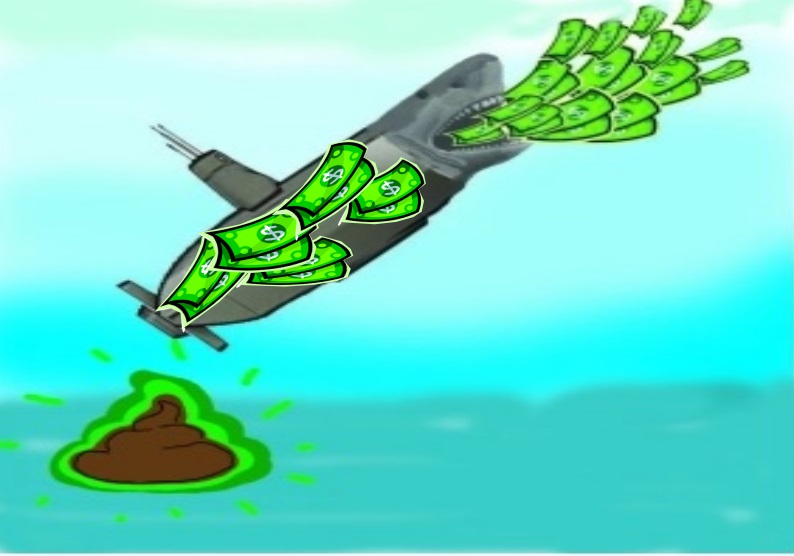
Given that proposals for even low-level nuclear waste sites have been rejected by communities, who is going to take on the radioactive waste created by our new military pact?
ANTON NILSSON, FEB 01, 2024, Crikey,
here should Australia store the waste created by its investment in nuclear-driven submarines? It’s a question no-one knows the answer to yet — although we do know a couple of places where the radioactive waste won’t be stored. As the search for a solution continues, expect politicians to try to kick the radioactive can further down the road — and expect some weapons-grade NIMBYism from state and territory leaders if they’re asked to help out.
In August last year, plans to build a new nuclear waste storage facility in Kimba in South Australia were scrapped. As Griffith University emeritus professor and nuclear expert Ian Lowe put it in a Conversation piece, “the plan was doomed from the start” — because the government didn’t do adequate community consultation before deciding on the spot.
Resources Minister Madeleine King acknowledged as much when she told Parliament the government wouldn’t challenge a court decision that sided with traditional owners in Kimba, who opposed the dump: “We have said all along that a National Radioactive Waste Facility requires broad community support … which includes the whole community, including the traditional owners of the land. This is not the case at Kimba.”
Kimba wasn’t even supposed to store the high-level waste that will be created by AUKUS submarines — it was meant to store low-level and intermediate-level waste, the kind generated from nuclear medicine, scientific research, and industrial technologies. As King told Parliament, Australia already has enough low-level waste to fill five Olympic swimming pools, and enough intermediate-level waste for two more pools.
Where the waste from AUKUS will go is a question without answer. Deputy Prime Minister Richard Marles said in March last year the first reactor from a nuclear-powered submarine won’t have to be disposed of until the 2050s. He added the government will set out its process for finding dump sites within a year — which means Marles has until March this year to spill the details.
“The final storage site of high-level waste resulting from AUKUS remains a mystery,” ANU environmental historian Jessica Urwin told Crikey. “Considering the historical controversies wrought by low- and intermediate-level waste disposal in Australia over many decades, it is hard to see how any Australian government, current or future, will get a high-level waste disposal facility off the ground.”
In his comments last year, Marles gave a hint as to the government’s intentions: he said it would search for sites “on the current or future Defence estate”.
One such Defence estate site that’s been the focus of some speculation is Woomera in South Australia. “A federal government decision to scrap plans for a nuclear waste dump outside the South Australian town of Kimba has increased speculation it will instead build a bigger facility on Defence land at Woomera that could also accommodate high-level waste from the AUKUS submarines,” the Australian Financial Review reported last year.
Urwin said such a proposal could trigger local opposition as well.
Due to Woomera’s proximity to the former Maralinga and Emu Field nuclear testing sites, and therefore its connections to some of the darkest episodes in Australia’s nuclear history, communities impacted by the tests and other nuclear impositions (such as uranium mining) have historically pushed back against the siting of nuclear waste at Woomera,” she said.
Australian Submarine Agency documents released under freedom of information laws in December last year show there is little appetite among state leaders to help solve the conundrum.
A briefing note to Defence secretary Greg Moriarty informed him that “state premiers (Victoria, Western Australia, Queensland, and South Australia) [have sought] to distance their states from being considered as potential locations”. ………………………………………………….. more https://www.crikey.com.au/2024/02/01/aukus-nuclear-waste-storage-australia/
TODAY. What’s the connection between the UK Post Office scandal and Soviet Lt. Col. Stanislav Petrov?

Well, nothing really. But we need to remember what Stanislav Petrov did. On September 26, 1983, Petrov, in charge of the Soviet Union’s nuclear missile system, received the computer screen order to “Launch”. The system reported that a total of five Minuteman ICBMs had been launched by the USA. Soviet nuclear doctrine called for a full nuclear retaliation. Petrov had to make an instant decision. But he feared that it was a false alarm. He disobeyed the order.
The outcome proved that Petrov was correct, and nuclear armageddon was avoided.
So, faulty technology caused a terrible danger – and one man had the integrity to doubt the digital message, and to act on his doubt.
Contrast this with the actions of Post Office and Fujitsu authorities who covered up and lied about the faulty Horizon IT system. That resulted in 900 false convictions, 4 suicides, and hundreds, perhaps thousands, of lives ruined.
In both cases, it was a failure of digital technology.
Now, as we plunge in to the Age of Artificial Intelligence, there is the frightening potential for more digital failures, – and worse, for human error, or even malevolence, in setting up AI programmes.
We need, as never before, people like Stanislav Petrov – people with the scepticism and the integrity - to not blindly comply with technocratic wizardry. The very recent, and still ongoing British Post Office scandal is a worrying reminder of the prevailing view about “not rocking the boat”. The boat may be sinking.
A Radically Different World Since Assange’s Indictment
Biden would have hell to pay from the DNC and the C.I.A. if he dropped the case.
Still, he’s probably not so foolish to want a shackled journalist showing up on U.S. shores to stand trial in the midst of his re-election campaign.
Leniency towards Assange would win back some respect the United States has lost, which would mean it couldn’t suffer another blow and had finally woken to the new world it inhabits. Crushing him would be yet another step towards its demise.
The Assange case is a centerpiece of an emerging, global challenge to U.S. dominance that did not exist in 2010 when the U.S. began its legal pursuit of the publisher, says Joe Lauria.
By Joe Lauria, Consortium News, 29 Jan 24
The world has changed dramatically since the United States began its legal pursuit of WikiLeaks publisher Julian Assange, bringing new risks to the U.S. if it persists in pursuing him to the end.
The geo-strategic situation and the state of the media are today nearly unrecognizable from 2010, when the U.S. empaneled a grand jury to indict Assange. Conditions have changed significantly since even 2019, when he was dragged from the embassy and the indictment was unveiled.
The United States is in the midst of suffering its third major, strategic defeat since the process against Assange began, bringing potentially significant consequences for the U.S., the world and possibly Assange.
In just the past three years, the United States has experienced humiliating defeats in Afghanistan, Ukraine, and now Gaza.
Afghanistan hurt Americans’ sensitivities about their precious “prestige,” which American elites care so much about. The rest of the world takes it into its geo-strategic calculations.
The U.S. instigation of war in Ukraine, intended to weaken Russia and bring down its government, has instead turned into a debacle for the United States and Europe of world historical proportions.
A new commercial, financial and diplomatic system has emerged in opposition to the U.S.-dominated West. This had been slowly developing but was accelerated by Washington’s provocation in Ukraine. It is a way more serious problem for the United States than the mere loss of “prestige.”
Add to this the worldwide disapproval and condemnation the U.S. is facing for its blatant complicity in Israel’s ongoing genocide in Gaza during a war the U.S. and Israel are not winning. The result is U.S. legitimacy has significantly weakened around the world. And at home.
Is this the moment to bring a journalist to the United States in chains to stand trial for publishing truthful material that exposed earlier crimes by the United States?
The risks of doing so at this moment — a very different moment from 2010 — are serious for the U.S, at home and abroad. Domestically the Bill of Rights is at risk. Internationally the bully is losing credibility.
This is seen in the forthrightness of some world leaders, particularly in Latin America, who in the spirit of this new, non-U.S. world, have confronted the United States on its treatment of Assange and have demanded his release.
The established media, which by definition runs cover for the U.S. to commit crimes and abuses wherever its interests are challenged, is suffering its own precipitous loss of legitimacy. The spectacular growth of both social and independent media’s influence since 2010 has helped create a worldwide movement in defense of Assange and the basic principle of a free press.
The question is how aware is the Biden administration of this new world and how will it react?
At a certain point U.S. hubris and intransigence would seem to be headed for collapse. But until then, Washington will no doubt double down in denial and in vengeance. It’s not giving up in Ukraine nor in Gaza — the neocon grip on power in Washington over the realists remains. Will the extremists remain ascendant on Assange too?
In December 2010, Vice President Joe Biden told the television news show Meet the Press that the Obama administration could only indict Assange if they caught him red-handed stealing government secrets and not receiving them passively as a journalist. The Obama administration concluded he was acting as a journalist, even if they refused to call him one, and didn’t indict him.
So what changed for Biden? Why does he persist in this prosecution begun by his mortal enemy Donald Trump and Trump’s C.I.A. director, Mike Pompeo?
The indictment until today still only deals with events in 2010. Nothing has changed legally. But everything changed politically for President Biden, the head of the Democratic Party, with the 2016 DNC leaks, and the C.I.A. Vault 7 releases the following year.
Biden would have hell to pay from the DNC and the C.I.A. if he dropped the case.
Still, he’s probably not so foolish to want a shackled journalist showing up on U.S. shores to stand trial in the midst of his re-election campaign. The High Court here in London has been good at dragging things out and could easily do so until after November.
The Assange case is a centerpiece of this global challenge to U.S. dominance that did not exist in 2010.
To the extent that U.S. leaders are aware of what is happening to U.S. standing in the world, their propensity is to lash out with the only argument they have left – lethal force. In Assange’s case it is legal force, with lethal consequences.
Leniency towards Assange would win back some respect the United States has lost, which would mean it couldn’t suffer another blow and had finally woken to the new world it inhabits. Crushing him would be yet another step towards its demise.
The U.S. does not really need him. It has enough blood on its hands.
This is the text of an address Joe Lauria made by video on Monday to a conference in Sydney, Australia.
Joe Lauria is editor-in-chief of Consortium News and a former U.N. correspondent for The Wall Street Journal, Boston Globe, and other newspapers, including The Montreal Gazette, the London Daily Mail and The Star of Johannesburg. He was an investigative reporter for the Sunday Times of London, a financial reporter for Bloomberg News and began his professional work as a 19-year old stringer for The New York Times. He is the author of two books, A Political Odyssey, with Sen. Mike Gravel, foreword by Daniel Ellsberg; and How I Lost By Hillary Clinton, foreword by Julian Assange. He can be reached at joelauria@consortiumnews.com and followed on Twitter @unjoe
Military-Intelligence Corruption Information Center.

WANT TO KNOW INFO, 31 Jan 24
Over the last 20+ years, WantToKnow.info has summarized over a thousand news articles on deep corruption within our military and intelligence systems. Going deeper, we have gathered a comprehensive collection of verifiable resources, videos, books, and declassified government documents. In this information center, we’ll present a sobering investigation into the US war machine: what it is, who benefits, and who pays the price. The true impacts of US military-intelligence activities in countries all over the world are examined, from World War II to our present moment in time.
Conflict, war, and perceived national security threats provide a common focus for military and CIA partnership. Military activity is heavily informed by CIA intelligence, and public support for this activity is secured by pro-war narratives and voices flooding our media system. What is really going on behind closed doors and on the battlefields is rarely covered in the news, if only for a brief glimpse.
The mainstream press often downplays how ineffective, harmful, and wasteful our current national security strategy is. Over the past century, the CIA’s covert actions have led to countless deaths, human rights abuses, and the undemocratic toppling of numerous foreign governments. While entrenched bureaucracy may be responsible for some of these government agency failings, deeper covert actions within our government have led to chaos and suffering in America and all over the world. Major cover-ups and horrific crimes within the military-intelligence complex continue to remain largely hidden from public awareness.
What is presented in this information center will likely be challenging, sad, and shocking for those who want to know. Yet real information can be empowering. It helps us understand the root causes of human and environmental suffering: the money, players, and belief systems that drive the machine. It invites us to question authority in healthy ways, across political differences. Yet most importantly, challenging information can paradoxically remind us of the greater good. It is the courage of the people and the love for the common good that bring these injustices to light—fueling open dialogue and constructive action.
Unaccountable Military Spending
The military keeps a lot of little things secret. Most people know the phrase “follow the money.” Unfortunately, following the money is impossible when it comes to keeping track of the flow of US taxpayer dollars at the Pentagon. The US military has consistently failed to keep track of the money it spends. As the defense budget speeds towards $1 trillion, the Pentagon failed an independent audit of its accounting systems for the sixth consecutive year in 2023.
In 2022, the Pentagon couldn’t properly account for 61% of its $3.5 trillion in assets. That figure increased in 2023, with the department insufficiently documenting 63% of its now $3.8 trillion in assets. We’ve covered the shocking extent of military waste and trillions missing from US DoD accounts since 2003, as documented here.
In 2021, President Joe Biden declared that the United States was “not at war” for the first time in 20 years. However, this is far from the case. Even members of Congress are uninformed about the presence of US military forces in countries all over the world. This is partly due to the post-9/11 Authorization for Use of Military Force enacted in 2001, which allows for secret operations primarily conducted by the CIA. Investigations have indicated that the United States has pumped millions into fighting more than a dozen “secret wars” over the last two decades. Since 2008, the US has supported at least nine coups in African countries, with a vast network of military bases scattered across the continent.
Going deeper, military black budgets are even more challenging to calculate. Military black budgets fund classified government programs, psychological operations, special forces operations, occult shoulder patches created for top secret programs, and other clandestine military activities. Former intelligence contractor and NSA whistleblower Edward Snowden revealed a vast network of over a dozen spy agencies that make up the U.S. intelligence community, funded by a $52.6 billion “black budget” for fiscal 2013. When the US Space Force was created in 2019, an investigation by Forbes revealed how much of the US Air Force budget was shrouded in secrecy, where “literally hundreds of line items in the proposed budget” were classified.
Arms Industry Corruption
Once weapons were manufactured to fight wars. Now wars are manufactured to sell weapons.
— Arundhati Roy
The US dominates the global arms sales industry. Data released in 2023 indicates that the U.S. sold weapons to nearly 60 percent of the world’s authoritarian nations in 2022. Year after year, half of the Pentagon budget doesn’t go to those fighting on the battlegrounds. It goes to corporate weapons contractors who profit lavishly from war. As one defense executive flat-out told Reuters at Europe’s biggest arms fair, “war is good for business.”
From the Middle East, Ukraine, China, Saudi Arabia, and to Nigeria, US arms sales have done little to promote stability and democracy in geopolitically impacted regions. Read an incredibly comprehensive report by The Quincy Institute for Responsible Statecraft, which illustrates how US arms sales have only fueled unnecessary conflict and war.
Powerful banks like JP Morgan Chase and asset management firms like Blackrock and Vanguard have emerged as major players in the business of war. Some of the world’s biggest banks fund the deadly cluster bomb trade, even as more than 100 countries have banned the unethical use of cluster bombs.
These powerful financial entities are top shareholders of weapons manufacturers like Lockheed Martin and Boeing. Together, the arms industry and the elite financial sector receive more federal money than most federal agencies. In 2022, Lockheed Martin received $106 from the average taxpayer, which is four times more than what taxpayers spent on primary and secondary education. Few Americans would support these war profiteers if they knew where their tax money was going.
Roughly two-thirds of current conflicts — 34 out of 46 — involve one or more parties armed by the United States. In some cases U.S. arms sales to combatants in these wars are modest, while in others they play a major role in fueling and sustaining the conflict. Of the U.S.-supplied nations at war, 15 received $50 million or more worth of U.S. arms between 2017 and 2021. This contradicts the longstanding argument that U.S. arms routinely promote stability and deter conflict. ………………………………………………………………………………………………………..more https://www.wanttoknow.info/military-intelligence-corruption-information
Cost of UK’s flagship nuclear project blows out to more than $A92 billion

But it also has implications for Australia, because one its main political groupings, the right-wing Liberal and National Party coalition, has decided that Australia should abandon its current plan to dump coal for renewables and storage, and wait for nuclear instead.
Australia currently has a target of 82 per cent renewables by 2030, and AEMO’s latest Integrated System Plan suggests it could be close to 100 per cent renewables within half a decade after that.
Giles Parkinson, Jan 29, 2024, https://reneweconomy.com.au/cost-of-uks-flagship-nuclear-project-blows-out-to-more-than-a92-billion/
The cost of the flagship nuclear project in the United Kingdom has blown out again, this time to a potential $A92.6 billion as a result of yet more problems and delays at the Hinkley C project.
The latest cost blowout was revealed last week by the French-government owned EdF, whose former CEO had originally promised in 2007 that the Hinkley project would be “cooking Christmas turkeys” in England by 2017, at a cost of just £9 billion.
But like virtually every major nuclear project built in western economies, that ambitious deadline was never going to be met. The new start-up date is now for 2030, but more likely 2031 – and that is only for one of the two units.
The budget has leaped from the original promise of £9 billion, to £18 billion, and has since blown out multiple times to now reach £31 billion and £34 billion, and it could be more than £35 billion “in 2015 values,” according to EdF. This translates into current day prices, according to Michael Liebreich, the former head of Bloomberg New Energy Finance, of £48 billion, or $A92.6 billion.
“The cost of civil engineering and the longer duration of the electromechanical phase (and its impact on other work) are the two main reasons for this cost revision,” EdF said in its statement. It has also experienced massive cost over-runs and delays at other similar projects in Flammanville in Fance and Olkiluoto in Finland.
It is yet another crippling blow to the UK plans to make nuclear a centrepiece of its green energy transition. EdF has already had to be bailed out by its own government, and ultimately nationalised, because of the cost blowouts and the huge costs of buying replacement power when half its French nuclear fleet went offline in 2023.
China’s CGN had to be brought in to fund one third of the Hinckley project, but is refusing to contribute more funds because China has been frozen out of other UK projects.
Alison Downes of Stop Sizewell C, a campaign group opposed to the planned Suffolk nuclear plant, told the Financial Times that EDF and the Hinkley project was an “unmitigated disaster”.
She added the UK government should cancel Sizewell C, saying state funding for the project could be better spent on “renewables, energy efficiency or, in this election year, schools and hospitals”.
But it also has implications for Australia, because one its main political groupings, the right-wing Liberal and National Party coalition, has decided that Australia should abandon its current plan to dump coal for renewables and storage, and wait for nuclear instead.
The Coalition had been pushing so-called small modular reactors, but after the failure of the leading technology developer in the US last year, and confirmation by the CSIRO and the Australian Energy Market Operator that SMR costs would be three times more expensive than renewables, several key Coalition members pointed to large scale nuclear such as Hinckley.
Australia currently has a target of 82 per cent renewables by 2030, and AEMO’s latest Integrated System Plan suggests it could be close to 100 per cent renewables within half a decade after that.
This switch to low carbon electricity is critical for Australia’s emissions targets, and for emission cuts in other parts of the economy. Any delay in the roll-out of renewables, in the expectation that nuclear would fill its place, will push that timeline out by at least another decade, if not, and blow out the costs of the energy transition.
“It is not like cost over-runs in nuclear projects are a big secret,” Liebreich writes on his Sub-stack blog.
He cites the world’s leading academic expert on project management, Danish Professor Bent Flyvbjerg, author of How Big Things Get Done, who shows that nuclear plants are worse only than Olympic Games in terms of cost over-runs.
“On average they go 120% over the budget, with 58% of them going a whopping 204% over budget,” Liebreich writes.
The Coalition energy spokesman Ted O’Brien complained in December that the CSIRO/AEMO report focused only on the “investment” cost, and not the “consumer cost.”
It’s not clear what he means by that. But as Liebreich notes, while Hinkley’s construction costs are in the £42 to £48 billion range, its first 35 years of electricity at £87.50 or £92.50/MW in 2012 money, adjusted for inflation, will cost UK energy users a gargantuan £111 or £116 billion, or up to $A223 billion.
1 This month
Chernobyl: The Lost Tapes – A good documentary on Chernobyl on SBS available On Demand for the next 3 weeks– https://www.sbs.com.au/ondemand/tv-program/chernobyl-the-lost-tapes/2352741955560
15 April – Zoom –Nuclear Power is Not the Solution
Apr 15, 2026 01:00 AM in Canberra, Melbourne, Sydney

Join the International Physicians for the Prevention of Nuclear War (IPPNW) on Tuesday, April 14th for a timely webinar exploring the risks associated with nuclear power and challenging the myth that it offers a simple, safe, carbon-free solution to the climate crisis

21 April Webinar: No Nuclear Weapons in Australia
Start: 2026-04-21 18:00:00 UTC Canberra, Melbourne, Sydney (GMT+10:00)
End: 2026-04-21 19:30:00 UTC Canberra, Melbourne, Sydney (GMT+10:00)
Event Type: Virtual
A virtual link will be communicated before the event.
Host Contact Info: australia@icanw.org

of the week – Australians for War Powers Reform (AWPR)
To see nuclear-related stories in greater depth and intensity
 Antinuclear