Nuclear news – week to 19 February

Some bits of good news – Sea Otters Returned to a Degraded Coastline Ate Enough Crabs to Restore Balance and Cut Erosion by 90%.England set a biodiversity benchmark. Wind power awards and wildlife photography: Positive environmental stories from 2024.
TOP STORIES. Chris Hedges: Julian Assange’s Final Appeal. https://www.youtube.com/watch?v=LvdTG56UbdcAustralian PM Albanese and 85 Other MPs Vote to End Assange Incarceration.
Biodiversity: the first ever State of the World’s Migratory Species report released.
Nuclear Illusions Hinder Climate Efforts as Costs Keep Rising. Nuclear Delays, Cost Overruns Imperil UK’s Net-Zero Goals .
Surviving an Era of Pervasive Nuclear Instability.
***************************************
From the archives. The war-mongering of Israel and USA.
Climate.Collapse of Ocean Currents Could Cause Major Climate Problems.
Nuclear. The U.S. industry is pretty quiet, still licking its wounds oveer the NuScale small nuclear reactor fiasco. Not so -Britain. The UK is in a turmoil (actually over lots of things) – but especially over MONEY – and the obscene costs of its Great British Nuclear Policy – not going too well at all!
Noel’s notes: Israel, USA, the “West” can’t hide their atrocious guilt any more. Again – the power of the Zionist lobby. 11 year old boys and nukes in space.
************************************************************
AUSTRALIA. Australian Parliament votes in favour of bringing Julian Assange home. Dutton goes nuclear on government’s renewable plans. Australia’s nuclear future and the legal ramifications of ratifying the Treaty on the Prohibition of Nuclear Weapons (TPNW). Wind and solar are delivering an energy transition at record speed.
NUCLEAR ISSUES
| ECONOMICS. UK: Spending watchdog launches investigation into Sellafield nuclear waste site. The UK’s biggest nuclear waste dump faces an inquiry by the National Audit Office (NAO) over its soaring costs and safety record. UK Nuclear financing comes unstuck. Energy company Centrica boss says it could fund Suffolk nuclear plant Sizewell C. France: EDF’s setbacks weigh down the relaunch of nuclear power in Europe. France’s first 6 EPR2 nuclear reactors will cost much more than the planned 52 billion euros. Energy company Centrica boss says it could fund Suffolk nuclear plant Sizewell C. | ENVIRONMENT. AI, climate change, pandemics and nuclear warfare put humanity in ‘grave danger’, open letter warns. The Saltwater Threat: A Death Sentence for Freshwater Life as EDF plans to flood area, in service to Hinkley Nuclear Project . | HEALTH. Radiation. Breakthrough research unveils effects of ionizing radiation on cellul |
| POLITICS. UK: Britain must pay more for Hinkley, says France. UK government keen to take control of Anglesey site for Westinghouse to build Wylfa nuclear power station. Planned UK nuclear reactors unlikely to help hit green target, say MPs. Environmental Audit Committee urges UK Government to clarify nuclear SMR strategy UK’s Nuclear Strategy Faces Criticism: Uncertainty Looms for Small Modular Reactors. Nuclear Free Local Authorities call on nuclear industry to spend more on social action. Radiation Free Lakeland urges East Riding Councillors to Withdraw from GDF process. PM Trudeau dismisses Algonquin concerns over Chalk River nuclear waste dump. “Unbelievable” U.S. government bailouts fund zombie nuclear projects. | POLITICS INTERNATIONAL and DIPLOMACY. Nuclear weapons and poison pills: Washington, Beijing warily circle AI talks. EU nuclear weapons ‘unrealistic,’ says German defense committee chair. Shameless Emmanuel Macron demands British taxpayers cough up more cash for nuclear power. | SAFETY. Congress takes aim at the Nuclear Regulatory Commission.Nuclear regulator raps EDF over safety flaws. Latest Fukushima leak exposes failures in nuclear crisis management. Safety panel urges Fukushima nuclear plant operator to better communicate with public. The Complexity of Nuclear Submarine Safeguards Impacts the Current Landscape. |
| SECRETS and LIES. South Korea’s nuclear mafia. | SPACE. EXPLORATION, WEAPONS. The ‘disturbing’ intel roiling the Hill is about Russian nukes in space. From Russia with nukes? Sifting facts from speculation about space weapon threat. https://www.youtube.com/watch?v=-xl0C6K2Nug – Long video – but worth it.SpaceX deorbiting 100 older Starlink satellites to ‘keep space safe and sustainable’. ‘Everyone needs to calm down’: experts assess Russian nuclear space threat. Is there really a nuclear weapon in space? | SPINBUSTER. The War on Gaza: Public Relations vs. Reality. Russian ‘nukes in space’ scare by Biden admin is nonsense. Exploding Alberta’s Myths about Small Nuclear Reactors. |
Chris Hedges: Julian Assange’s Final Appeal

Julian Assange will make his final appeal this week to the British courts to avoid extradition. If he is extradited it is the death of investigations into the inner workings of power by the press.
By Chris Hedges / ScheerPost, 18 Feb 24
LONDON — If Julian Assange is denied permission to appeal his extradition to the United States before a panel of two judges at the High Court in London this week, he will have no recourse left within the British legal system. His lawyers can ask the European Court of Human Rights (ECtHR) for a stay of execution under Rule 39, which is given in “exceptional circumstances” and “only where there is an imminent risk of irreparable harm.” But it is far from certain that the British court will agree. It may order Julian’s immediate extradition prior to a Rule 39 instruction or may decide to ignore a request from the ECtHR to allow Julian to have his case heard by the court.
The nearly 15-year-long persecution of Julian, which has taken a heavy toll on his physical and psychological health, is done in the name of extradition to the U.S. where he would stand trial for allegedly violating 17 counts of the 1917 Espionage Act, with a potential sentence of 170 years.
Julian’s “crime” is that he published classified documents, internal messages, reports and videos from the U.S. government and U.S. military in 2010, which were provided by U.S. army whistleblower Chelsea Manning. This vast trove of material revealed massacres of civilians, torture, assassinations, the list of detainees held at Guantanamo Bay and the conditions they were subjected to, as well as the Rules of Engagement in Iraq. Those who perpetrated these crimes — including the U.S. helicopter pilots who gunned down two Reuters journalists and 10 other civilians and severely injured two children, all captured in the Collateral Murder video — have never been prosecuted.
Julian exposed what the U.S. empire seeks to airbrush out of history.
Julian’s persecution is an ominous message to the rest of us. Defy the U.S. imperium, expose its crimes, and no matter who you are, no matter what country you come from, no matter where you live, you will be hunted down and brought to the U.S. to spend the rest of your life in one of the harshest prison systems on earth. If Julian is found guilty it will mean the death of investigative journalism into the inner workings of state power. To possess, much less publish, classified material — as I did when I was a reporter for The New York Times — will be criminalized. And that is the point, one understood by The New York Times, Der Spiegel, Le Monde, El País and The Guardian, who issued a joint letter calling on the U.S. to drop the charges against him.
Australian Prime Minister Anthony Albanese and other federal lawmakers voted on Thursday for the United States and Britain to end Julian’s incarceration, noting that it stemmed from him “doing his job as a journalist” to reveal “evidence of misconduct by the U.S.”
The legal case against Julian, which I have covered from the beginning and will cover again in London this week, has a bizarre Alice-in-Wonderland quality, where judges and lawyers speak in solemn tones about law and justice while making a mockery of the most basic tenants of civil liberties and jurisprudence.
How can hearings go forward when the Spanish security firm at the Ecuadorian Embassy, UC Global, where Julian sought refuge for seven years, provided videotaped surveillance of meetings between Julian and his lawyers to the CIA, eviscerating attorney-client privilege? This alone should have seen the case thrown out of court.
How can the Ecuadorian government led by Lenin Moreno violate international law by rescinding Julian’s asylum status and permit London Metropolitan Police into the Ecuadorian Embassy — sovereign territory of Ecuador — to carry Julian to a waiting police van?
Why did the courts accept the prosecution’s charge that Julian is not a legitimate journalist?
Why did the United States and Britain ignore Article 4 of their Extradition Treaty that prohibits extradition for political offenses?
How is the case against Julian allowed to go ahead after the key witness for the United States, Sigurdur Thordarson – a convicted fraudster and pedophile – admitted to fabricating the accusations he made against Julian?
How can Julian, an Australian citizen, be charged under the U.S. Espionage Act when he did not engage in espionage and wasn’t based in the U.S when he received the leaked documents?
Why are the British courts permitting Julian to be extradited to the U.S. when the CIA — in addition to putting Julian under 24-hour video and digital surveillance while in the Ecuadorian Embassy — considered kidnapping and assassinating him, plans that included a potential shoot-out on the streets of London with involvement by the Metropolitan Police?
How can Julian be condemned as a publisher when he did not, as Daniel Ellsberg did, obtain and leak the classified documents he published?
Why is the U.S. government not charging the publisher of The New York Times or The Guardian with espionage for publishing the same leaked material in partnership with WikiLeaks?
Why is Julian being held in isolation in a high-security prison without trial for nearly five years when his only technical violation of the law is breaching bail conditions when he sought asylum in the Ecuadorian Embassy? Normally this would entail a fine. ………………………………………………………………………………………………………………………….
Julian’s lawyers will attempt to convince two High Court judges to grant him permission to appeal a number of the arguments against extradition which Judge Baraitser dismissed in January 2021. His lawyers, if the appeal is granted, will argue that prosecuting Julian for his journalistic activity represents a “grave violation” of his right to free speech; that Julian is being prosecuted for his political opinions, something which the U.K.-U.S. extradition treaty does not allow; that Julian is charged with “pure political offenses” and the U.K.-U.S. extradition treaty prohibits extradition under such circumstances; that Julian should not be extradited to face prosecution where the Espionage Act “is being extended in an unprecedented and unforeseeable way”; that the charges could be amended resulting in Julian facing the death penalty; and that Julian will not receive a fair trial in the U.S. They are also asking for the right to introduce new evidence about CIA plans to kidnap and assassinate Julian.
If the High Court grants Julian permission to appeal, a further hearing will be scheduled during which time he will argue his appeal grounds. If the High Court refuses to grant Julian permission to appeal, the only option left is to appeal to the ECtHR. If he is unable to take his case to the ECtHR he will be extradiated to the U.S.
…………………………………………………………………………………………………………………………….. No other contemporary journalist has come close to matching his revelations.
Julian is the first. We are next. https://scheerpost.com/2024/02/18/chris-hedges-julian-assanges-final-appealchris-hedges/—
UK Nuclear financing comes unstuck

‘It would be madness to give Sizewell C the final go-ahead while the questions of whether Hinkley C can be finished, and who pays, are not resolved.
It all seems a bit desperate.
All in all, despite attempts to talk it up at COP28, nuclear seem to be facing a real problem with finance, if nothing else, a problem not shared by renewables- they are mostly getting cheaper.
SMR’s look likely to be an expensive diversion.
, https://renewextraweekly.blogspot.com/2024/02/uk-nuclear-financing-comes-unstuck.html
The Prime Minister Rishi Sunak says that nuclear power is the ‘perfect antidote to the energy challenges facing Britain’, but things seem to be going a bit amiss with nuclear finance. Basically, not many want to fund new nuclear projects any more, as costs and delays escalate along with political sensitivities.
For example, China’s CGN has halted funding for UK’s part-built Hinkley Point C European Pressurised-water Reactor. CGN may yet restart payments, but, if not, its developer, the French company EDF, will have to fund the completion of the plant alone.
Some portrayed CGNs withdrawal from Hinkley as due to China being ‘miffed’ by its exclusion from the Sizewell project. The UK government had earlier taken over CGN’s initial stake in EDF proposed next project, Sizewell C, after concerns about over-reliance on Chinese funding. That would not have gone down well in China. But it was also claimed that CGN was upset by the large Hinkley overrun costs and delays. Well maybe that’s true too, but CGN was within its rights to exit. It was contractually allowed to only meet any cost overruns on a voluntary basis. And it’s evidently decided not to. Though of course it will still own a share of any profits, if the project still goes ahead.
However, Hinkley prospects now looks even more uncertain, with EDF saying its start date could be delayed from 2027 to 2031 and it cost expand to £35bn or even more, with knock-on effects also likely for Sizewell C.
So some plans seem to be coming adrift, with France and the UK potentially falling out over what happens next. France has already called on the UK to pay more for Hinkley. It could even be that it will pull out of financing Sizewell. Certainly, even if that is avoided, nuclear funding all looks a bit uncertain, with China out of it and EDF strapped for cash.
Under the UK’s proposed RAB funding system, consumers are set to be tapped to in effect provide some of the up-front capital needed for Sizewell, thus talking on some the risk faced by this investment. But as Alison Downes of the Stop Sizewell C campaign group said: ‘It would be madness to give Sizewell C the final go-ahead while the questions of whether Hinkley C can be finished, and who pays, are not resolved. Sizewell C is bound to take longer and cost more, but this time it would be we consumers who would bear the risk and pay the price through the “nuclear tax” on our energy bills.’
However, new private investors are still being sought, and to keep the show on the road the UK government has provided an extra £1.3bn, bringing the proposed UK tax payers funding so far to £2.5 bn.
But will it still happen? As Utility week noted ‘The Sizewell C plant, which has yet to receive a final investment decision by the government, will not be fully commissioned until 2038’. And that could be rather optimistic. More like 2040! All of which could mean that future security of supply may also be uncertain. With Hinkley delayed, EDF now says it wants to keep its old AGR plants running (even) longer, despite their safety issues, to maintain output and its cash flow! It is also talking about running the (already existing) Sizewell B PWR an extra 20 years.
It all seems a bit desperate. Prof. Rob Gross, director of UK Energy Research Centre, said the delays to Hinkley made increasing gas burn in the meantime ‘almost inevitable’. He added Wind or solar are unlikely to plug the gap because the UK is already ‘struggling to connect all the renewables schemes already in the pipeline for 2027/28’. But surely we can do better than that – if we stop wasting money on nuclear dead ends and focus instead on linking up new renewables.
For example, there are new grid technologies which can help green power network integration, including advanced composite-core conductors which, according to a US study, ‘can cost-effectively double transmission capacity within existing right-of-way (ROW), with limited additional permitting’. It claimed that ‘this strategy unlocks a high availability of increasingly economically-viable RE resources in close proximity to the existing network’, and it could upgrade the system very cost effectively. However, it’s not just a matter of better grid technology, or even less money. It also about reducing bureaucracy and getting rid of policy blocks, for example, in the UK context, in relation to on shore wind, which, despite pronouncements otherwise, is still in effect, being blocked.
Cost over-runs and delays with nuclear projects are of course not just British issues. As Counterpunch noted, reactor construction delays and costs hikes are also common elsewhere. ‘The cost of EDF’s EPR reactor being built in France at Flamanville and still incomplete, has more than quadrupled to close to $15 billion. Another EPR, at Olkiluoto in Finland, went from $3.2 billion to more than $12 billion and launched 12 years late. On U.S. soil, two AP 1000 reactors at the Vogtle nuclear power plant site in Georgia, will likely come in at a total price tag of at least $35 billion, $20 billion more than originally estimated, with the second of the two reactors still not on line’.
All in all, despite attempts to talk it up at COP28, nuclear seem to be facing a real problem with finance, if nothing else, a problem not shared by renewables- they are mostly getting cheaper. The nuclear lobby’s last ditch hope is small modular reactors- still a very long shot, with none yet in existence. So far SMR’s look likely to be an expensive diversion. And too late to be much help meeting climate/energy targets. For example, the chair of the UK’s Environmental Audit Committee has said that ‘the first SMR is unlikely to be in operation by 2035, the date ministers have set for decarbonising the electricity supply. So, what role will SMRs have in an energy mix dominated by renewables and supplemented by existing and emerging large-scale nuclear?’
Arguably, ‘big nuclear’ is also unlikely to be favoured for new capacity in many places: potential financiers are more likely to stick with what already works well and is cheaper …At COP28, 22 countries, including the UK, talked about tripling nuclear by 2050. But over 117 committed to tripling renewables by 2030. Arguably a much more credible and useful target.
ICJ Hearings to Examine 57 Years of Israeli Occupation of Palestine

“Decades of injustice will finally face scrutiny,” said U.N. human rights official Francesca Albanese ahead of next week’s Hague hearings on the legal consequences of Israel’s illegal occupation.
Brett Wilkins, Common Dreams, 16 Feb 24 ,
https://www.commondreams.org/news/israeli-occupation
More than 50 countries are set to participate in next week’s hearings at the International Court of Justice focusing on Israel’s illegal 57-year occupation of Palestine, a forum that follows the Hague tribunal’s finding last month that Israel is “plausibly” committing genocide in occupied Gaza.
The ICJ—also known as the World Court—will hold a week of hearings on the legal consequences of Israel’s occupation of Palestine, which dates to the Israeli conquest of the West Bank, East Jerusalem, Gaza Strip, Syrian Golan Heights, and Egyptian Sinai Peninsula during the 1967 Six-Day War.
“The International Court of Justice is set for the first time to broadly consider the legal consequences of Israel’s nearly six-decades-long occupation and mistreatment of the Palestinian people,” Human Rights Watch senior legal adviser Clive Baldwin said in a statement. “Governments that are presenting their arguments to the court should seize these landmark hearings to highlight the grave abuses Israeli authorities are committing against Palestinians, including the crimes against humanity of apartheid and persecution.”
The West Bank, East Jerusalem, and Golan Heights remain under Israeli military occupation six decades after their conquest. The United Nations—to which the ICJ belongs—and many international NGOs contend that, despite removing its troops and settlers from Gaza two decades ago, Israel continues to occupy Gaza by controlling the besieged enclave’s airspace, territorial waters, and the entry and exit of people and goods.
Since the October 7 Hamas-led attacks on Israel, the Israeli Defense Forces (IDF) have killed or wounded more than 100,000 Palestinians in Gaza while forcibly displacing around 90% of the population. Numerous Israeli leaders have called for the renewed physical occupation, Jewish resettlement, and ethnic cleansing of the strip.
During the current assault on Gaza, occupation forces have also killed at least 388 Palestinians, including 99 children, in the West Bank, according to U.N. human rights officials.
Israeli settlers have for decades been steadily colonizing the occupied territories under the protection of the IDF, while ethnically cleansing Palestinians whose lands and homes they steal.
Next week’s hearings come on the heels of the ICJ’s provisional ruling last month in a case led by South Africa—which will be the first nation after Palestine to present at next week’s hearing—that Israel is “plausibly” committing genocide in Gaza. The tribunal ordered Israel to “take all measures within its power” to adhere to its obligations under Article II of the Genocide Convention.
Earlier this week, South Africa urgently appealed to the ICJ to act amid the looming threat of an Israeli ground invasion of Rafah. More than 1.5 million Palestinians, most of them refugees ordered to flee to the south of Gaza by invading Israeli forces, are crammed into what is now one of the world’s most densely populated places.
On Friday, the ICJ declined to take any additional action against Israel, while reiterating that the “perilous situation” in Rafah “demands immediate and effective implementation of the provisional measures indicated by the court” in last month’s ruling.
Exploding Alberta’s Myths about Small Nuclear Reactors

Small nuclear reactors are unproven and years away from being in use. But the Alberta government is presenting them as a way to keep fossil fuels flowing.
The untested technology is more about greenwashing than about cutting emissions.
Tim Rauf 15 Feb 2024, The Tyee
Alberta’s government is really excited about nuclear power.
More specifically, about novel and unproven small modular nuclear reactors. It hopes to use these to help lower the province’s carbon emissions while letting the energy industry continue operating as usual — an enticing prospect to the government given its intention to increase oil and gas production, while still having the energy sector get to net zero by 2050.
Small modular nuclear reactors produce less than one-third of the electricity of a traditional reactor.
The premise is that small reactors are easier to place and build, and cheaper.
Alberta hitched its horse to this wagon with Ontario, New Brunswick and Saskatchewan in 2022, taking part in a strategic plan for small modular reactor development and deployment. Alberta Innovates, the province’s research body, had a feasibility study conducted for it by Pacific Northwest National Laboratory. The study focused on using the reactors for greenhouse-gas-free steam emissions for oilsands projects, electricity generation in our deregulated market and providing an alternative to diesel when supplying power to remote communities.
More recently, Ontario Power Generation and Capital Power out of Edmonton entered into an agreement to assess SMRs for providing nuclear energy to Alberta’s grid. Nathan Neudorf, Alberta’s minister of affordability and utilities, was gleeful. “This partnership represents an exciting and important step forward in our efforts to decarbonize the grid while maintaining on-demand baseload power,” he said of the announcement.
All of this buzz makes it seem like SMRs are just over the horizon, an inevitability that will allow the province to evolve to have a cleaner, modern energy landscape.
But small modular reactors are nowhere near ready for deployment, and won’t be in Alberta for about a decade. That means for 10 years, they’ll provide no GHG-free steam to mitigate emissions.
“It’s still in the design phase,” Kennedy Halvorson said, speaking about the reactors. Halvorson is a conservation specialist with the Alberta Wilderness Association. The reactors are “so far off from being able to be used for us,” Halvorson added. “The earliest projections would be 2030. And we need to be reducing our emissions before 2030. So, we need to have solutions now, basically.”
With SMRs unable to stem the emissions tide for years, it’s confusing as to how they could make enough of a difference to get Alberta to net zero by 2050 (in line with United Nations emissions reduction targets to keep global warming to no more than 1.5 degrees).
Capital Power made similar projections………………………………………………………………………..
Construction itself is only one piece. Adding to that is the need to build a regulatory framework, which Alberta doesn’t have for nuclear…………………………………………………….
Ontario’s nuclear troubles
Listening to these public voices is prudent. We can look east to see what happens when the government and power utilities sidestep the process of getting explicit consent from communities that stand to be affected.
With its status as the nuclear activity hub in Canada, we can use Ontario as a litmus test of sorts and gauge Canada’s track record of care with nuclear. The report card isn’t great. There have been multiple cases of improper consultation with Indigenous Peoples on whose lands the waste, production or extraction sites are placed………………………………………………………………………..
Small reactors face a critical economic challenge
Adding to the timeline troubles are questions as to whether small reactors truly offer that much of an economic advantage, if any, compared with their larger counterparts.
In a previous article Ramana wrote, he pointed to the first reactors as an indication of the answer.
The first reactors started off small. Their size, though, coupled with the exorbitant price tag of nuclear development, meant they couldn’t compete with fossil fuels.
The only thing they could do to reduce the disadvantage was to build larger and larger reactors, Ramana said.

A large reactor that could produce five times as much electricity didn’t cost five times as much to build, he said, improving the return from the investment.
Economically the SMR can’t seem to compete with its larger sibling. Adding this to the delays abundant with nuclear, controversies around construction and communities, and the misalignment of timelines for meeting climate commitments, we need to ask why we’re seeing such a fervent enthusiasm for small modular reactors.
Greenwashing by any other name
The answer is likely a simple one: The Alberta government wants to keep the taps on. Their friends in the energy industry do too. Like carbon capture and sequestration before it, SMRs are the next way to stave off pesky talk of divestment and transition…………………………………………………………….
Deflecting and delaying isn’t the only greenwashing happening either, Halvorson argued. She noted there’s a special kind of tactic that comes with nuclear and other “clean” technology, where only carbon dioxide and greenhouse gas offsets are counted.
“When we reduce it all to just how much CO2 something emits, we’re not getting the full picture of environmental impacts,” Halvorson said. She pointed to water use in nuclear as an example.

“Most nuclear technologies require a massive input of water to work. And as we know, right now we’re in a drought in Alberta. Our water resources are so precious. We already have industries that are using way too much water as is, in a way that’s not allowing our environments and ecosystems to replenish their reserves, like their water resources,” she said.
Despite the cheerleading for nuclear Alberta, where small nuclear reactors will let us enjoy the fruits of fossil fuels (and even produce more) in a cleaner way, the bones don’t read that way. The argument that we can keep on drilling so long as we have that newest silver bullet hasn’t stood up to scrutiny before, and it doesn’t now. https://thetyee.ca/Analysis/2024/02/15/Exploding-Alberta-Myths-Small-Nuclear-Reactors/
Julian Assange’s Final Appeal at the Royal Courts of Justice 20-21 Feb. What to Expect.
Day X is here! Julian Assange’s Final Appeal at the Royal Courts of Justice.
STELLA ASSANGE, FEB 19, 2024, Stella Assange – The Fight to Save my Husband
The new public hearing dates are upon us. We will be gathering outside the Royal Courts of Justice on Tuesday and Wednesday, 20-21 February. It may be the final chance for the UK to stop Julian’s extradition.
Date: 20-21 February 2024
Location: Royal Courts of Justice
Time: 8:30 am GMT
On Wed 21 Feb, there will be a march to Downing St after the hearing.
Here’s what to expect on the two days.
Meet our presenters that will be live outside the Royal Courts of Justice…………………….
JADC (The Committee to Defend Julian Assange), one of the oldest grassroots groups here in the UK will be helping us to sell T-shirts, bags, badges and our new hoodies. So, make sure to come by and say hi to Emmy and Jeannie who will be manning our table.
There will be speakers throughout the two days! Including:
Apsana Begum
Tim Dawson
John Hendy
Richard Burgon
Peter Oborne
Jeremy Corbyn
John McDonnell
Zarah Sultana
Chris Hedges
Andrew Feinstein
Andrew Wilkie
Tariq Ali
Rebecca Vincent
Ben Westwood
PEN International
Clare Daley
Mick Wallace
Chip Gibbons
Here’s how you can help………………………………………..
Australian PM Albanese and 85 Other MPs Vote to End Assange Incarceration

“Enough is enough,” PM Albanese said.
By Diego Ramos , ScheerPost, 15 Feb24, https://scheerpost.com/2024/02/15/australian-pm-albanese-and-85-other-mps-vote-to-end-assange-incarceration/—
The Australian House of Representatives voted on Wednesday in favor of a motion supporting the end of Julian Assange’s incarceration and to bring him back to Australia. Among the supporters of the motion is Australian Prime Minister Anthony Albanese, who, regarding the long term prosecution and detention of Assange, declared, “enough is enough.”
In the motion introduced by MP Andrew Wilkie, the argument is made for the release of Assange from Belmarsh Prison in the UK and returned to Australia. This comes ahead of next week’s court ruling on Assange’s extradition appeal.
Wilkie said, “It will send a very powerful political signal to the British government and to the US government that the British government should not entertain the idea of Mr Assange being extradited to the US.”
86 members of the house of representatives, including Albanese, voted in favor of the motion; 42 members voted against it.
Wilkie, speaking to Parliament about Assange stated, “Surely this man has suffered enough. The matter must be brought to an end.”
Adam Bandt, member of Australian Parliament and leader of the Australian Greens, said, “…[T]his sets an incredibly chilling precedent for journalists in the future and for journalists’ ability to hold governments to account, to say uncomfortable things about governments … and to know that you can tell the truth without facing imprisonment and without facing a risk to your own life.”
If Assange’s appeal is rejected, he faces immediate extradition to the United States, where he would be set to face trial for various charges, including the release of confidential military records and diplomatic cables in 2010.
Wilkie said the vote demonstrated that Australia stood “as one,” on the Assange case and “[r]egardless of what you might think of Mr Assange, justice is not being served in this case now.”
Below is a transcript of the motion authored by MP Andrew Wilkie: [on original]
Nuclear Delays, Cost Overruns Imperil UK’s Net-Zero Goals

For the first time, the department’s nuclear road map was honest about why Britain and France are still so keen on nuclear, as opposed to much cheaper renewables. The roadmap mentions 14 times the link between civil and military nuclear power and the need to strengthen ties between the two to reduce costs. This military link was consistently denied in the 1990s, and in the earlier years of this century.
February 12, 2024, Paul Brown, https://www.theenergymix.com/nuclear-delays-cost-overruns-imperil-uks-net-zero-goals/
Électricité de France (EDF), the owner of the biggest construction project in the world—the giant nuclear power plant under construction at Hinkley Point in the southwest of Britain—recently announced further cost increases and delays to its completion, adding to doubts that the United Kingdom can fulfill its legal pledges to reach net-zero carbon emissions by 2050.
The French government, which owns EDF, wants the UK to chip in billions of pounds to help bail the project out, but London says it has no obligation to do so. This is leading to tensions between the two governments, with French taxpayers objecting to paying for British nuclear power stations when their own nuclear industry is struggling with under-investment and a massive debt burden. It leads to doubts that a second power station of the same size, this time on the Suffolk coast in the east of England, will ever be built.
The overoptimistic miscalculations made by EDF mean the cost estimates for the Hinkley Point project have now doubled from the 2015 estimate of £18 billion (US$22.8 billion) to between £31 and £34 billion. But that makes the problem sound better than it is: the figures are calculated in 2015 prices, and the true cost with inflation is now said to be £46 billion (US$58 billion) and still rising.
EDF is faced with making up this funding gap when it is already deep in debt and needs vast capital reserves to modernize its own fleet of more than 50 reactors and start a promised new build program. Just before the French government re-nationalized the company last year, its debts were already a staggering €54.5 billion (US$59 billion)/
When the Hinkley Point power station was first planned, the company famously predicted that UK consumers would be cooking their Christmas turkeys on power from the station by 2017. That date has been revised several times, and stood at 2027 until the third week in January. Now it has slipped back in the best case to 2029, but more likely to 2031. As one commentator put it: “The turkeys would have died of natural causes by then.”
The problem is that both governments are relying on their nuclear industries for a large part of their emission reductions. Both have to reach net-zero targets by 2050. Hinkley Point would in theory be producing 7% of British electricity by 2030 as an interim target date, displacing existing gas stations. But Hinkley Point was only part of the net-zero plan—EDF is in partnership with the British government to build a second identical power plant at Sizewell, on the Suffolk coast.
Both Hinkley Point C and Sizewell C are twin European Pressurised Reactors (EPRs), designed by EDF. Each station is supposed to produce enough power to supply six million British homes. But it is a design that has proved difficult to construct. EDF started one in Flamanville in Normandy in 2009 which was expected to be running in 2013, but is still not complete. Yet the UK is intent on continuing to allow EDF to build four reactors of the same design in Britain.
The British government has so far sunk £2.5 billion into the Sizewell C project but is not making a final investment decision while it looks for private investors. Up to now, it has found no takers.
So while the future of this power station remains in doubt, the timetables are slipping badly, and even if it does go ahead not many would bet on it producing power before 2050.
One of the odd aspects of this situation is that, in an election year in Britain, there is no political debate about what looks like a serious crisis for the nuclear industry and the UK’s climate targets. The Labour party supports the building of nuclear power stations, too, and will not be drawn into debate for fear of antagonizing the trade unions in the sector that are strongly in favour of giant power stations.
Suffolk campaigners, however, are not so reticent. “Hinkley Point C and Sizewell C epitomise the definition of insanity—doing the same thing over and over and expecting a different result,” said Alison Downes of Stop Sizewell C. “EDF and its EPR reactors are an unmitigated disaster, and it stretches credulity that Sizewell C is affordable. Indeed the government seems too embarrassed to publish the cost of Sizewell C. It should cancel the project immediately instead of handing over scarce billions that could be used instead for renewables, energy efficiency, or—in this election year—schools and hospitals.”
Stop Sizewell C and a number of other groups are challenging the Conservative government in the courts over its failure to fulfill its legal obligations under its own law that bound the UK to reach net-zero by 2050. Further delays to the nuclear power station construction program may add to the campaigner’s case.
Last month, the UK government produced a new nuclear roadmap projecting a massive new build program to bolster the industry, both for these large reactors and dozens of small modular reactors. The Department for Energy Security & Net Zero (DESNZ) remains optimistic about the nuclear industry despite the delays, but said it would not be bailing out EDF.
Hinkley Point C “is not a government project,” the department said in a statement, so “any additional costs or schedule overruns are the responsibility of EDF and its partners and will in no way fall on (UK) taxpayers”.
For the first time, the department’s nuclear road map was honest about why Britain and France are still so keen on nuclear, as opposed to much cheaper renewables. The roadmap mentions 14 times the link between civil and military nuclear power and the need to strengthen ties between the two to reduce costs. This military link was consistently denied in the 1990s, and in the earlier years of this century.
While Labour, which has a massive lead in the opinion polls going into election year, refuses to engage in a nuclear debate, it does differ from the Conservatives on the role of renewables. The current government encourages offshore wind and some solar power but has effectively blocked onshore wind farms for nearly a decade. Since this is the cheapest form of electricity production in these windy islands, and the public overwhelmingly support onshore turbines, Labour says it will at least overturn this blocking policy.
Nuclear Delays, Cost Overruns Imperil UK’s Net-Zero Goals
For the first time, the department’s nuclear road map was honest about why Britain and France are still so keen on nuclear, as opposed to much cheaper renewables. The roadmap mentions 14 times the link between civil and military nuclear power and the need to strengthen ties between the two to reduce costs. This military link was consistently denied in the 1990s, and in the earlier years of this century.
February 12, 2024, Paul Brown, https://www.theenergymix.com/nuclear-delays-cost-overruns-imperil-uks-net-zero-goals/
Électricité de France (EDF), the owner of the biggest construction project in the world—the giant nuclear power plant under construction at Hinkley Point in the southwest of Britain—recently announced further cost increases and delays to its completion, adding to doubts that the United Kingdom can fulfill its legal pledges to reach net-zero carbon emissions by 2050.
The French government, which owns EDF, wants the UK to chip in billions of pounds to help bail the project out, but London says it has no obligation to do so. This is leading to tensions between the two governments, with French taxpayers objecting to paying for British nuclear power stations when their own nuclear industry is struggling with under-investment and a massive debt burden. It leads to doubts that a second power station of the same size, this time on the Suffolk coast in the east of England, will ever be built.
The overoptimistic miscalculations made by EDF mean the cost estimates for the Hinkley Point project have now doubled from the 2015 estimate of £18 billion (US$22.8 billion) to between £31 and £34 billion. But that makes the problem sound better than it is: the figures are calculated in 2015 prices, and the true cost with inflation is now said to be £46 billion (US$58 billion) and still rising.
EDF is faced with making up this funding gap when it is already deep in debt and needs vast capital reserves to modernize its own fleet of more than 50 reactors and start a promised new build program. Just before the French government re-nationalized the company last year, its debts were already a staggering €54.5 billion (US$59 billion)/
When the Hinkley Point power station was first planned, the company famously predicted that UK consumers would be cooking their Christmas turkeys on power from the station by 2017. That date has been revised several times, and stood at 2027 until the third week in January. Now it has slipped back in the best case to 2029, but more likely to 2031. As one commentator put it: “The turkeys would have died of natural causes by then.”
The problem is that both governments are relying on their nuclear industries for a large part of their emission reductions. Both have to reach net-zero targets by 2050. Hinkley Point would in theory be producing 7% of British electricity by 2030 as an interim target date, displacing existing gas stations. But Hinkley Point was only part of the net-zero plan—EDF is in partnership with the British government to build a second identical power plant at Sizewell, on the Suffolk coast.
Both Hinkley Point C and Sizewell C are twin European Pressurised Reactors (EPRs), designed by EDF. Each station is supposed to produce enough power to supply six million British homes. But it is a design that has proved difficult to construct. EDF started one in Flamanville in Normandy in 2009 which was expected to be running in 2013, but is still not complete. Yet the UK is intent on continuing to allow EDF to build four reactors of the same design in Britain.
The British government has so far sunk £2.5 billion into the Sizewell C project but is not making a final investment decision while it looks for private investors. Up to now, it has found no takers.
So while the future of this power station remains in doubt, the timetables are slipping badly, and even if it does go ahead not many would bet on it producing power before 2050.
One of the odd aspects of this situation is that, in an election year in Britain, there is no political debate about what looks like a serious crisis for the nuclear industry and the UK’s climate targets. The Labour party supports the building of nuclear power stations, too, and will not be drawn into debate for fear of antagonizing the trade unions in the sector that are strongly in favour of giant power stations.
Suffolk campaigners, however, are not so reticent. “Hinkley Point C and Sizewell C epitomise the definition of insanity—doing the same thing over and over and expecting a different result,” said Alison Downes of Stop Sizewell C. “EDF and its EPR reactors are an unmitigated disaster, and it stretches credulity that Sizewell C is affordable. Indeed the government seems too embarrassed to publish the cost of Sizewell C. It should cancel the project immediately instead of handing over scarce billions that could be used instead for renewables, energy efficiency, or—in this election year—schools and hospitals.”
Stop Sizewell C and a number of other groups are challenging the Conservative government in the courts over its failure to fulfill its legal obligations under its own law that bound the UK to reach net-zero by 2050. Further delays to the nuclear power station construction program may add to the campaigner’s case.
Last month, the UK government produced a new nuclear roadmap projecting a massive new build program to bolster the industry, both for these large reactors and dozens of small modular reactors. The Department for Energy Security & Net Zero (DESNZ) remains optimistic about the nuclear industry despite the delays, but said it would not be bailing out EDF.
Hinkley Point C “is not a government project,” the department said in a statement, so “any additional costs or schedule overruns are the responsibility of EDF and its partners and will in no way fall on (UK) taxpayers”.
For the first time, the department’s nuclear road map was honest about why Britain and France are still so keen on nuclear, as opposed to much cheaper renewables. The roadmap mentions 14 times the link between civil and military nuclear power and the need to strengthen ties between the two to reduce costs. This military link was consistently denied in the 1990s, and in the earlier years of this century.
While Labour, which has a massive lead in the opinion polls going into election year, refuses to engage in a nuclear debate, it does differ from the Conservatives on the role of renewables. The current government encourages offshore wind and some solar power but has effectively blocked onshore wind farms for nearly a decade. Since this is the cheapest form of electricity production in these windy islands, and the public overwhelmingly support onshore turbines, Labour says it will at least overturn this blocking policy.
UK’s Nuclear Strategy Faces Criticism: Uncertainty Looms for Small Modular Reactors

The UK’s nuclear strategy faces increasing criticism from MPs due to lack of clarity on small modular reactors (SMRs). Concerns about timelines, waste management, and costs cast doubt on their role in the future energy mix.
Rafia Tasleem, 14 Feb 2024, https://bnnbreaking.com/politics/uks-nuclear-strategy-faces-criticism-uncertainty-looms-for-small-modular-reactors
The UK government’s nuclear strategy, specifically its approach to small modular reactors (SMRs), faces mounting criticism from Members of Parliament (MPs) for its lack of clarity and the ensuing uncertainty in the nuclear sector.
A Murky Vision for Nuclear Power
MPs have expressed serious concerns about the timeline for SMR projects, potential waste management issues, and the overall vision for the sector. Despite promises of support and investment, the government’s plans for SMRs remain obscure, casting doubts on their role in the future energy mix.
The Environmental Audit Committee has voiced strong criticisms, citing the unclear strategy as a significant obstacle for the nuclear industry. This ambiguity not only undermines industry confidence but also raises questions about potential cost implications for taxpayers.
Hinkley Point C: A Cautionary Tale
The ongoing saga of Hinkley Point C serves as a stark reminder of the challenges and uncertainties surrounding UK energy policy and developments, especially in the face of the climate crisis.
Initially greenlit in June 2016, the project’s funding was divided between the government, EDF, and China General Nuclear (CGN). However, in a surprising turn of events, CGN withdrew its funding in December 2022, leaving the government to shoulder the shortfall in investment.
Furthermore, the opening of Hinkley Point C has been delayed until at least 2029, with the projected cost ballooning from £25 billion to at least £35 billion—a staggering increase that has raised eyebrows and ignited debates on the feasibility of nuclear power as a sustainable and cost-effective solution.
The Future of UK Nuclear Power
With the UK government aiming to have 24 gigawatts of nuclear capacity by 2050, the choice lies between additional large-scale reactors like Hinkley Point C or a combination of large and SMRs. However, the escalating costs and delays associated with Hinkley Point C have cast a long shadow over the nuclear sector.
The current state of affairs raises pressing questions about the future of nuclear power in the UK, especially in light of the climate crisis and the need for sustainable and reliable energy sources. As MPs and industry experts grapple with these concerns, the search for clarity and a coherent strategy becomes ever more urgent.
As of February 15, 2024, the UK government faces a critical juncture: to address the concerns surrounding its nuclear strategy and provide a clear path forward, or risk further uncertainty and potential setbacks in the nation’s quest for a sustainable energy future.
TODAY. 11 year old boys and nukes in space

Yeah – I’ve been reading about the awful threat of Russia sending its evil nuclear weapons up into space to destroy our benign satellites. Shock horror – we could lose TikTok coverage and our media focus on Taylor Swift!
Not to mention that it’s not a great idea to cause nuclear explosions in space, and spread toxic radioactive debris all over the place.
But – is it true?
Are the Russians that stupid?
or the North Koreans, or the Chinese ? Or anyone else that we’re scared of?
Well, they might be. Because. Here’s the rub. The biological development of the male does mean that they have a tendency towards aggression, and to develop inhibition rather late – say towards the age of 30. So the young teenage boys, on average, are a bit keener on risk-taking than they will be at later ages.
This aggression, competitive drive, and low fear of danger was probably useful way back when sabre-toothed tigers were the big threat. But not so useful now when other teenage boys can be a big threat.
The problem is – that risk-taking, competitive, aggressive teenager seems to still live and thrive within the men that are actually running things in our world.
They probably are not planning nuclear weapons to hit satellites, because even they see what a stupid idea that is. However, they’re surely organising all sorts of other ways to damage the satellites of “the other side”. Do you think for one moment that it’s only the Russians etc who are doing this? Of course the 11 year-old boys inside the psyche of the Western leaders are up to the same tricks, and probably leading the pack.
Dutton goes nuclear on government’s renewable plans

The Age, By Mike Foley, February 16, 2024
Opposition Leader Peter Dutton is ramping up his campaign against the Albanese government’s renewable energy goals, making the claim that next-generation nuclear technology is a cheaper, more reliable alternative to wind and solar energy.
Dutton claimed on Friday the government’s renewable goals would drive household power bills “through the roof” and argued nuclear was a climate-friendly option, setting up an energy policy clash with Labor at the federal election due by May next year.
Prime Minister Anthony Albanese won the 2022 election pledging to more than double the share of clean energy to 82 per cent of the grid by 2030. This is a cornerstone of Labor’s commitment to cut greenhouse emissions by 43 per cent on 2005 levels by the end of the decade.
Albanese said on Friday the government had capped the price of coal and gas to lower electricity prices. The government says its renewables policy will lower power bills by $275 a year by 2025.
But Dutton said Australia needed to have a “mature” conversation about nuclear.
“There are 20 countries similar to ours … who have a nuclear industry or they’re committed to do so,” he told media in Adelaide…..
However, experts say nuclear technology is more costly than renewables and would take decades to deploy if Australia lifted its long-standing ban on nuclear power.
The small modular reactors Dutton favours are not in commercial production. Some companies are conducting research and are expected to take several more years to build a working unit.
US company NuScale Power was developing the world’s most advanced commercial SMR project in Utah, but the project was abandoned in November due to a 70 per cent blowout in project costs.
Former chief scientist Alan Finkel, who was also a special adviser to the federal government on low-emissions technology, said it would take at least 20 years from the ban being lifted until a reactor could start generating electricity for the grid.
The government would need to dramatically beef up its nuclear regulation, which was currently equipped only to oversee radioisotopes used in medicine, select sites for construction of a reactor and for waste disposal, and set up a fund for decommissioning.
Finkel said it would also need to wait for a jurisdiction with regulations similar to Australia, such as the United States, United Kingdom, Canada or Europe, to deploy a small modular reactor.
“We are a laggard in the nuclear power industry, we’re not going to suddenly become a trailblazer,” he said.
“It’s very hard to imagine that [deploying nuclear energy] being done in less than 20 years from today.”
……..”if you want to get a fast transition to a low-emissions electricity system, the only option we’ve got today is solar and wind,” he said.
The CSIRO’s GenCost report in December calculated the 2023 costs of electricity generation for renewables, coal and small modular reactors and projected what they would be in 2030.
It found that a mix of wind and solar power in 2023 would generate electricity for $90 to $134 per megawatt hour, falling to $70 to $100 by 2030. These costs include investment of $30 billion to upgrade transmission lines to link wind and solar farms to the grid, and to build back-up power such as hydro dams.
…….If small modular reactors were available today, CSIRO estimated they would generate electricity at a cost of $380 to $640 a megawatt hour, dropping to $210 to $350 in 2030. https://www.theage.com.au/politics/federal/dutton-goes-nuclear-on-government-s-renewable-plans-20240216-p5f5g3.html
Wind and solar are delivering an energy transition at record speed
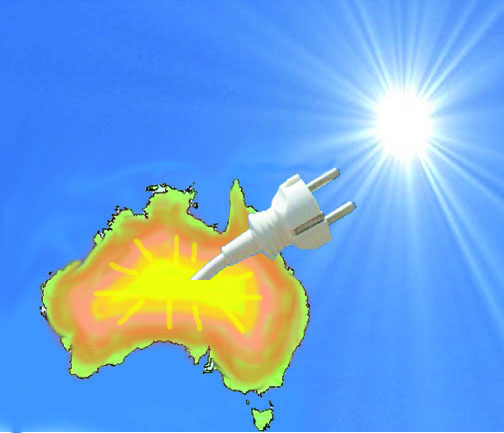
As Australia’s federal Coalition and the Murdoch media intensify their
calls for nuclear to replace the country’s ageing coal fired generators,
thereby ensuring that the switch to renewables is halted and climate action
delayed, it is worth reminding ourselves exactly how quickly wind and solar
can do the job.
As RenewEconomy has noted, South Australia has shone the
light for the rest of the country on the path to renewables, achieving an
average 82 per cent share for wind and solar over the entire December
quarter. That’s a world record share for a grid of this size, and an
achievement that proves the technology doubters wrong. If it can be done at
gigawatt scale, it can be done elsewhere.
Renew Economy 16th Feb 2024
From Russia with nukes? Sifting facts from speculation about space weapon threat
“Nuclear weapons in space are a really, really dumb idea,” said Jessica West of Canadian non-profit Ploughshares, but experts note that with Russia, nothing can ever be fully ruled out.
By THERESA HITCHENSon February 15, 2024
https://breakingdefense.com/2024/02/russia-nuclear-weapon-space-mike-turner-threat-white-house/
WASHINGTON — In the 24 hours since a cryptic, but scary, warning from Ohio Rep. Mike Turner, the chair of the House Intelligence Committee, of a “serious national security threat,” mainstream and social media sites alike have been chock-a-block with breathless, and sometimes contradictory, speculation about what might be going on.
Even as other members of Congress and the White House sought to play down Turner’s statement, leaks began to fill the press that the situation involves some sort of Russian nuclear capability in orbit.
The New York Times today quoted officials “briefed on the matter” as saying that the Biden administration has “informed Congress and its allies in Europe about Russian advances on a new, space-based nuclear weapon designed to threaten America’s extensive satellite network.”
PBS News Hour, on the other hand, on Wednesday said that sources characterized the new weapon as a nuclear-powered satellite carrying an electronic warfare payload — which is a very different beast than a nuclear weapons-carry satellite — but today reported that it is unclear which of those two things is correct.
The most detail shared by the administration came in a press conference today, where White House spokesperson John Kirby confirmed that the threat in question is “related to an anti-satellite weapon that Russia is developing.” He also noted that it is not an “active capability that has been deployed,” and that “there is no immediate threat to anyone’s safety.” However, Kirby refrained from providing more specific details.
Moscow, predictably, has issued a blanket denial.
Whatever the exact nature of the new threat is, the White House and President Joe Biden are “taking it seriously,” Kirby said, with briefings planned to Congress, as well as allies and partners. Further, he said, the administration is undertaking “direct diplomatic engagement with Russia” on US concerns.
To be clear, any type of Russian on-orbit anti-satellite (ASAT) would be a bad thing. But all things considered, a nuclear weapon in space would be worse than a nuclear-powered satellite carrying a disruptive EW payload — although for a number of reasons much less likely to be what Moscow is up to.
Nuclear Weapons in Space: Been There, Done That
Yes, nuclear weapons have been detonated in space before, by both the Soviet Union and the US during the early days of the Cold War. The largest was done by the US in 1962. After a series of failed tests, the United States conducted the Starfish Prime experiment, setting off a 1.45 megaton nuke at an altitude of about 450 kilometers (about 280 miles) above sea level.
The blast created an electro-magnetic pulse and lingering radiation belts that ultimately killed eight of the 24 satellites that were then on orbit, including one owned by the United Kingdom, according to a 2022 report by the American Physical Society.
There are around 7,000 active satellites on orbit today, as well as 10 humans aboard the International Space Station and China’s Tiangong station. Thus, a nuclear explosion on orbit likely would create even more havoc than Starfish Prime — including, almost certainly, for Russia’s own assets.
“Nuclear weapons in space are a really, really dumb idea, first because they are banned, but also because they have immediate and long lasting indiscriminate effects on the space environment which means that everyone — including the deployer and its allies — is affected,” explained Jessica West of Canadian non-profit Ploughshares in an email.
The 1967 Outer Space Treaty, to which both Russia and the US are parties, was created by the United Nations precisely to ban nuclear weapons in space.
“Some people might say that Russia doesn’t care about this because its space capabilities are waning so it has a smaller stake in the game. But I don’t think that any state can aim for functionality let alone ‘great power’ without being able to exploit outer space. There are also easier (and currently legal) ways of having large scale effects on the space environment such as the use of destructive weapons and dirty bombs,” West added.
Todd Harrison of the American Enterprise Institute agreed.
“There is no need to place nukes in orbit. Keeping nukes on Earth atop ICBMs is less expensive, more flexible to operate, easier to upgrade and maintain, etc. But what if your intent is to use the nuke in space (e.g., an EMP blast)? It is still better to base it on the ground,” he told Breaking Defense in an email.
“Detonating nuclear weapons has also been banned by treaty since 1963, not that it would stop Russia from doing it,” he added. “But why did the US and USSR agree to this ban so long ago and stick to it for all these years? It’s because popping off a nuke in space creates a real mess that affects satellites indiscriminately.”
That said, it would be very hard to detect if any country decided to deploy a nuke on a satellites, said Henry Sokolski, executive director of the Nonproliferation Policy Education Center. He told Breaking Defense in an email today that this verification problem was one of the key findings of an unclassified wargame the center conducted last spring on the use of a nuclear weapon in low Earth orbit.
“My hunch is that nobody wants to admit that this is the case. It’s a pretty important point,” he added.
Nuke-Powered Satellite: Old Tech, New Use?
Several experts said that Russian development of an anti-satellite (ASAT) weapon being carried on a nuclear-powered satellite, one using a small nuclear reactor to generate on-board electricity, is a more likely scenario. This is because both NASA and Russia’s Space Agency Roscosmos, have used nuclear power for space systems in the past. Indeed, NASA’s famous Voyager spacecraft carry nuclear power generators.
“The advantage is that a nuclear power source gives you power all the time, instead of being dependent on solar arrays pointing at the sun and charging batteries,” Harrison said.
Russia in the 1970s launched a series of naval reconnaissance satellites, called RORSATs for Radar Ocean Reconnaissance Satellites, equipped with a small reactor. Infamously, one of them crashed into Canada’s Northwest Territories in 1978, scattering radioactive debris for miles. Thus, the UN has “adopted principles regarding the use of nuclear power sources in outer space,” West said, which focus on safety and peaceful uses.
Still, she noted that “obviously the use of nuclear anything in space is fraught with safety concerns, and when this is combined with a military capability, it adds on security concerns and fears that it could also be used as a nuclear weapon.”
Harrison explained that a nuclear power source could be used to operate a number of payloads capable of disabling satellites.
“A nuclear power source could be used for a lot of things, like powering a radio frequency jamming payload to block signals or a high-powered microwave payload that could potentially fry the circuits on a satellite. Both of these applications would make a lot of sense from space,” he said.
Secure World Foundation’s Brian Weeden, in a thread on X (formerly Twitter), said a nuke-powered EW satellite is likely what the Russians are working on — especially considering that there is evidence that they have been developing such a technology, as documented in a 2019 article in The Space Review. The satellite system in question, called Ekipazh, is being developed by KB Arsenal (or Arsenal Design Bureau) of St. Petersburg under a contract with the Ministry of Defense, the article asserts.
All that said, Harrison said that it is also possible that some other non-nuclear capability is at play.
“Of course, all of the speculation could be completely wrong and it could be some other type of counterspace weapon. Russia has tested crazy things in the past, like firing a machine gun in space,” he said.
“But until we know more, and knowing Russia’s history of ASAT weapon development and testing, it is certainly something to be concerned about. Our economy and military are heavily dependent on space, and Russia knows that,” he added.
France’s first 6 EPR2 nuclear reactors will cost much more than the planned 52 billion euros
Why the first six EPR2s will cost much more than the 52 billion euros
initially planned by EDF. During a hearing in the Senate, the executive
director of EDF’s new nuclear projects, Xavier Ursat, indicated that the
first six EPR2s will cost more than the 52 billion euros announced in 2021.
A first slippage in costs including the new estimate is promised for the
end of 2024.
Why the first six EPR2s will cost much more than the 52
billion euros initially planned by EDF. EDF does not brag about it. But in
the Senate commission of inquiry into the price of electricity, Xavier
Ursat, its executive director in charge of the engineering department and
new nuclear projects, was obliged to talk about it.
As predicted by an expert report in 2021, the construction of the first six EPR2s will indeed
cost more than the 51.7 billion euros, rounded to 52 billion by the State,
calculated by EDF at the time Emmanuel Macron had to decide on the relaunch
of a new nuclear program in France. A relaunch confirmed in his speech on
Belfort’s energy strategy on February 10, 2022. “We are carrying out a
new economic assessment. It led to a figure higher than 52 billion,”
Xavier Ursat declared to the senators. Which, for him, “is not very
surprising”.
L’Usine Nouvelle 12th Feb 2024
1 This month.

Australians deserve the truth
about
AUKUS – https://aukuspublicinquiry.com/

30 July – WEBINAR (Free) – Is Nuclear Power the Solution to Climate Change? https://my.acaw.org.au/event/acaw-is-nuclear-power-the-solution-to-climate-change
18:30 – 19:45 ACST
19:00 – 20:15 AEST


PETITION – To: Prime Minister Anthony Albanese and the Australian Labor Government

of the week – Australians for War Powers Reform (AWPR)
To see nuclear-related stories in greater depth and intensity
 Antinuclear