Nuclear Delays, Cost Overruns Imperil UK’s Net-Zero Goals

For the first time, the department’s nuclear road map was honest about why Britain and France are still so keen on nuclear, as opposed to much cheaper renewables. The roadmap mentions 14 times the link between civil and military nuclear power and the need to strengthen ties between the two to reduce costs. This military link was consistently denied in the 1990s, and in the earlier years of this century.
February 12, 2024, Paul Brown, https://www.theenergymix.com/nuclear-delays-cost-overruns-imperil-uks-net-zero-goals/
Électricité de France (EDF), the owner of the biggest construction project in the world—the giant nuclear power plant under construction at Hinkley Point in the southwest of Britain—recently announced further cost increases and delays to its completion, adding to doubts that the United Kingdom can fulfill its legal pledges to reach net-zero carbon emissions by 2050.
The French government, which owns EDF, wants the UK to chip in billions of pounds to help bail the project out, but London says it has no obligation to do so. This is leading to tensions between the two governments, with French taxpayers objecting to paying for British nuclear power stations when their own nuclear industry is struggling with under-investment and a massive debt burden. It leads to doubts that a second power station of the same size, this time on the Suffolk coast in the east of England, will ever be built.
The overoptimistic miscalculations made by EDF mean the cost estimates for the Hinkley Point project have now doubled from the 2015 estimate of £18 billion (US$22.8 billion) to between £31 and £34 billion. But that makes the problem sound better than it is: the figures are calculated in 2015 prices, and the true cost with inflation is now said to be £46 billion (US$58 billion) and still rising.
EDF is faced with making up this funding gap when it is already deep in debt and needs vast capital reserves to modernize its own fleet of more than 50 reactors and start a promised new build program. Just before the French government re-nationalized the company last year, its debts were already a staggering €54.5 billion (US$59 billion)/
When the Hinkley Point power station was first planned, the company famously predicted that UK consumers would be cooking their Christmas turkeys on power from the station by 2017. That date has been revised several times, and stood at 2027 until the third week in January. Now it has slipped back in the best case to 2029, but more likely to 2031. As one commentator put it: “The turkeys would have died of natural causes by then.”
The problem is that both governments are relying on their nuclear industries for a large part of their emission reductions. Both have to reach net-zero targets by 2050. Hinkley Point would in theory be producing 7% of British electricity by 2030 as an interim target date, displacing existing gas stations. But Hinkley Point was only part of the net-zero plan—EDF is in partnership with the British government to build a second identical power plant at Sizewell, on the Suffolk coast.
Both Hinkley Point C and Sizewell C are twin European Pressurised Reactors (EPRs), designed by EDF. Each station is supposed to produce enough power to supply six million British homes. But it is a design that has proved difficult to construct. EDF started one in Flamanville in Normandy in 2009 which was expected to be running in 2013, but is still not complete. Yet the UK is intent on continuing to allow EDF to build four reactors of the same design in Britain.
The British government has so far sunk £2.5 billion into the Sizewell C project but is not making a final investment decision while it looks for private investors. Up to now, it has found no takers.
So while the future of this power station remains in doubt, the timetables are slipping badly, and even if it does go ahead not many would bet on it producing power before 2050.
One of the odd aspects of this situation is that, in an election year in Britain, there is no political debate about what looks like a serious crisis for the nuclear industry and the UK’s climate targets. The Labour party supports the building of nuclear power stations, too, and will not be drawn into debate for fear of antagonizing the trade unions in the sector that are strongly in favour of giant power stations.
Suffolk campaigners, however, are not so reticent. “Hinkley Point C and Sizewell C epitomise the definition of insanity—doing the same thing over and over and expecting a different result,” said Alison Downes of Stop Sizewell C. “EDF and its EPR reactors are an unmitigated disaster, and it stretches credulity that Sizewell C is affordable. Indeed the government seems too embarrassed to publish the cost of Sizewell C. It should cancel the project immediately instead of handing over scarce billions that could be used instead for renewables, energy efficiency, or—in this election year—schools and hospitals.”
Stop Sizewell C and a number of other groups are challenging the Conservative government in the courts over its failure to fulfill its legal obligations under its own law that bound the UK to reach net-zero by 2050. Further delays to the nuclear power station construction program may add to the campaigner’s case.
Last month, the UK government produced a new nuclear roadmap projecting a massive new build program to bolster the industry, both for these large reactors and dozens of small modular reactors. The Department for Energy Security & Net Zero (DESNZ) remains optimistic about the nuclear industry despite the delays, but said it would not be bailing out EDF.
Hinkley Point C “is not a government project,” the department said in a statement, so “any additional costs or schedule overruns are the responsibility of EDF and its partners and will in no way fall on (UK) taxpayers”.
For the first time, the department’s nuclear road map was honest about why Britain and France are still so keen on nuclear, as opposed to much cheaper renewables. The roadmap mentions 14 times the link between civil and military nuclear power and the need to strengthen ties between the two to reduce costs. This military link was consistently denied in the 1990s, and in the earlier years of this century.
While Labour, which has a massive lead in the opinion polls going into election year, refuses to engage in a nuclear debate, it does differ from the Conservatives on the role of renewables. The current government encourages offshore wind and some solar power but has effectively blocked onshore wind farms for nearly a decade. Since this is the cheapest form of electricity production in these windy islands, and the public overwhelmingly support onshore turbines, Labour says it will at least overturn this blocking policy.
UK’s Nuclear Strategy Faces Criticism: Uncertainty Looms for Small Modular Reactors

The UK’s nuclear strategy faces increasing criticism from MPs due to lack of clarity on small modular reactors (SMRs). Concerns about timelines, waste management, and costs cast doubt on their role in the future energy mix.
Rafia Tasleem, 14 Feb 2024, https://bnnbreaking.com/politics/uks-nuclear-strategy-faces-criticism-uncertainty-looms-for-small-modular-reactors
The UK government’s nuclear strategy, specifically its approach to small modular reactors (SMRs), faces mounting criticism from Members of Parliament (MPs) for its lack of clarity and the ensuing uncertainty in the nuclear sector.
A Murky Vision for Nuclear Power
MPs have expressed serious concerns about the timeline for SMR projects, potential waste management issues, and the overall vision for the sector. Despite promises of support and investment, the government’s plans for SMRs remain obscure, casting doubts on their role in the future energy mix.
The Environmental Audit Committee has voiced strong criticisms, citing the unclear strategy as a significant obstacle for the nuclear industry. This ambiguity not only undermines industry confidence but also raises questions about potential cost implications for taxpayers.
Hinkley Point C: A Cautionary Tale
The ongoing saga of Hinkley Point C serves as a stark reminder of the challenges and uncertainties surrounding UK energy policy and developments, especially in the face of the climate crisis.
Initially greenlit in June 2016, the project’s funding was divided between the government, EDF, and China General Nuclear (CGN). However, in a surprising turn of events, CGN withdrew its funding in December 2022, leaving the government to shoulder the shortfall in investment.
Furthermore, the opening of Hinkley Point C has been delayed until at least 2029, with the projected cost ballooning from £25 billion to at least £35 billion—a staggering increase that has raised eyebrows and ignited debates on the feasibility of nuclear power as a sustainable and cost-effective solution.
The Future of UK Nuclear Power
With the UK government aiming to have 24 gigawatts of nuclear capacity by 2050, the choice lies between additional large-scale reactors like Hinkley Point C or a combination of large and SMRs. However, the escalating costs and delays associated with Hinkley Point C have cast a long shadow over the nuclear sector.
The current state of affairs raises pressing questions about the future of nuclear power in the UK, especially in light of the climate crisis and the need for sustainable and reliable energy sources. As MPs and industry experts grapple with these concerns, the search for clarity and a coherent strategy becomes ever more urgent.
As of February 15, 2024, the UK government faces a critical juncture: to address the concerns surrounding its nuclear strategy and provide a clear path forward, or risk further uncertainty and potential setbacks in the nation’s quest for a sustainable energy future.
TODAY. 11 year old boys and nukes in space

Yeah – I’ve been reading about the awful threat of Russia sending its evil nuclear weapons up into space to destroy our benign satellites. Shock horror – we could lose TikTok coverage and our media focus on Taylor Swift!
Not to mention that it’s not a great idea to cause nuclear explosions in space, and spread toxic radioactive debris all over the place.
But – is it true?
Are the Russians that stupid?
or the North Koreans, or the Chinese ? Or anyone else that we’re scared of?
Well, they might be. Because. Here’s the rub. The biological development of the male does mean that they have a tendency towards aggression, and to develop inhibition rather late – say towards the age of 30. So the young teenage boys, on average, are a bit keener on risk-taking than they will be at later ages.
This aggression, competitive drive, and low fear of danger was probably useful way back when sabre-toothed tigers were the big threat. But not so useful now when other teenage boys can be a big threat.
The problem is – that risk-taking, competitive, aggressive teenager seems to still live and thrive within the men that are actually running things in our world.
They probably are not planning nuclear weapons to hit satellites, because even they see what a stupid idea that is. However, they’re surely organising all sorts of other ways to damage the satellites of “the other side”. Do you think for one moment that it’s only the Russians etc who are doing this? Of course the 11 year-old boys inside the psyche of the Western leaders are up to the same tricks, and probably leading the pack.
Dutton goes nuclear on government’s renewable plans

The Age, By Mike Foley, February 16, 2024
Opposition Leader Peter Dutton is ramping up his campaign against the Albanese government’s renewable energy goals, making the claim that next-generation nuclear technology is a cheaper, more reliable alternative to wind and solar energy.
Dutton claimed on Friday the government’s renewable goals would drive household power bills “through the roof” and argued nuclear was a climate-friendly option, setting up an energy policy clash with Labor at the federal election due by May next year.
Prime Minister Anthony Albanese won the 2022 election pledging to more than double the share of clean energy to 82 per cent of the grid by 2030. This is a cornerstone of Labor’s commitment to cut greenhouse emissions by 43 per cent on 2005 levels by the end of the decade.
Albanese said on Friday the government had capped the price of coal and gas to lower electricity prices. The government says its renewables policy will lower power bills by $275 a year by 2025.
But Dutton said Australia needed to have a “mature” conversation about nuclear.
“There are 20 countries similar to ours … who have a nuclear industry or they’re committed to do so,” he told media in Adelaide…..
However, experts say nuclear technology is more costly than renewables and would take decades to deploy if Australia lifted its long-standing ban on nuclear power.
The small modular reactors Dutton favours are not in commercial production. Some companies are conducting research and are expected to take several more years to build a working unit.
US company NuScale Power was developing the world’s most advanced commercial SMR project in Utah, but the project was abandoned in November due to a 70 per cent blowout in project costs.
Former chief scientist Alan Finkel, who was also a special adviser to the federal government on low-emissions technology, said it would take at least 20 years from the ban being lifted until a reactor could start generating electricity for the grid.
The government would need to dramatically beef up its nuclear regulation, which was currently equipped only to oversee radioisotopes used in medicine, select sites for construction of a reactor and for waste disposal, and set up a fund for decommissioning.
Finkel said it would also need to wait for a jurisdiction with regulations similar to Australia, such as the United States, United Kingdom, Canada or Europe, to deploy a small modular reactor.
“We are a laggard in the nuclear power industry, we’re not going to suddenly become a trailblazer,” he said.
“It’s very hard to imagine that [deploying nuclear energy] being done in less than 20 years from today.”
……..”if you want to get a fast transition to a low-emissions electricity system, the only option we’ve got today is solar and wind,” he said.
The CSIRO’s GenCost report in December calculated the 2023 costs of electricity generation for renewables, coal and small modular reactors and projected what they would be in 2030.
It found that a mix of wind and solar power in 2023 would generate electricity for $90 to $134 per megawatt hour, falling to $70 to $100 by 2030. These costs include investment of $30 billion to upgrade transmission lines to link wind and solar farms to the grid, and to build back-up power such as hydro dams.
…….If small modular reactors were available today, CSIRO estimated they would generate electricity at a cost of $380 to $640 a megawatt hour, dropping to $210 to $350 in 2030. https://www.theage.com.au/politics/federal/dutton-goes-nuclear-on-government-s-renewable-plans-20240216-p5f5g3.html
Wind and solar are delivering an energy transition at record speed

As Australia’s federal Coalition and the Murdoch media intensify their
calls for nuclear to replace the country’s ageing coal fired generators,
thereby ensuring that the switch to renewables is halted and climate action
delayed, it is worth reminding ourselves exactly how quickly wind and solar
can do the job.
As RenewEconomy has noted, South Australia has shone the
light for the rest of the country on the path to renewables, achieving an
average 82 per cent share for wind and solar over the entire December
quarter. That’s a world record share for a grid of this size, and an
achievement that proves the technology doubters wrong. If it can be done at
gigawatt scale, it can be done elsewhere.
Renew Economy 16th Feb 2024
From Russia with nukes? Sifting facts from speculation about space weapon threat
“Nuclear weapons in space are a really, really dumb idea,” said Jessica West of Canadian non-profit Ploughshares, but experts note that with Russia, nothing can ever be fully ruled out.
By THERESA HITCHENSon February 15, 2024
https://breakingdefense.com/2024/02/russia-nuclear-weapon-space-mike-turner-threat-white-house/
WASHINGTON — In the 24 hours since a cryptic, but scary, warning from Ohio Rep. Mike Turner, the chair of the House Intelligence Committee, of a “serious national security threat,” mainstream and social media sites alike have been chock-a-block with breathless, and sometimes contradictory, speculation about what might be going on.
Even as other members of Congress and the White House sought to play down Turner’s statement, leaks began to fill the press that the situation involves some sort of Russian nuclear capability in orbit.
The New York Times today quoted officials “briefed on the matter” as saying that the Biden administration has “informed Congress and its allies in Europe about Russian advances on a new, space-based nuclear weapon designed to threaten America’s extensive satellite network.”
PBS News Hour, on the other hand, on Wednesday said that sources characterized the new weapon as a nuclear-powered satellite carrying an electronic warfare payload — which is a very different beast than a nuclear weapons-carry satellite — but today reported that it is unclear which of those two things is correct.
The most detail shared by the administration came in a press conference today, where White House spokesperson John Kirby confirmed that the threat in question is “related to an anti-satellite weapon that Russia is developing.” He also noted that it is not an “active capability that has been deployed,” and that “there is no immediate threat to anyone’s safety.” However, Kirby refrained from providing more specific details.
Moscow, predictably, has issued a blanket denial.
Whatever the exact nature of the new threat is, the White House and President Joe Biden are “taking it seriously,” Kirby said, with briefings planned to Congress, as well as allies and partners. Further, he said, the administration is undertaking “direct diplomatic engagement with Russia” on US concerns.
To be clear, any type of Russian on-orbit anti-satellite (ASAT) would be a bad thing. But all things considered, a nuclear weapon in space would be worse than a nuclear-powered satellite carrying a disruptive EW payload — although for a number of reasons much less likely to be what Moscow is up to.
Nuclear Weapons in Space: Been There, Done That
Yes, nuclear weapons have been detonated in space before, by both the Soviet Union and the US during the early days of the Cold War. The largest was done by the US in 1962. After a series of failed tests, the United States conducted the Starfish Prime experiment, setting off a 1.45 megaton nuke at an altitude of about 450 kilometers (about 280 miles) above sea level.
The blast created an electro-magnetic pulse and lingering radiation belts that ultimately killed eight of the 24 satellites that were then on orbit, including one owned by the United Kingdom, according to a 2022 report by the American Physical Society.
There are around 7,000 active satellites on orbit today, as well as 10 humans aboard the International Space Station and China’s Tiangong station. Thus, a nuclear explosion on orbit likely would create even more havoc than Starfish Prime — including, almost certainly, for Russia’s own assets.
“Nuclear weapons in space are a really, really dumb idea, first because they are banned, but also because they have immediate and long lasting indiscriminate effects on the space environment which means that everyone — including the deployer and its allies — is affected,” explained Jessica West of Canadian non-profit Ploughshares in an email.
The 1967 Outer Space Treaty, to which both Russia and the US are parties, was created by the United Nations precisely to ban nuclear weapons in space.
“Some people might say that Russia doesn’t care about this because its space capabilities are waning so it has a smaller stake in the game. But I don’t think that any state can aim for functionality let alone ‘great power’ without being able to exploit outer space. There are also easier (and currently legal) ways of having large scale effects on the space environment such as the use of destructive weapons and dirty bombs,” West added.
Todd Harrison of the American Enterprise Institute agreed.
“There is no need to place nukes in orbit. Keeping nukes on Earth atop ICBMs is less expensive, more flexible to operate, easier to upgrade and maintain, etc. But what if your intent is to use the nuke in space (e.g., an EMP blast)? It is still better to base it on the ground,” he told Breaking Defense in an email.
“Detonating nuclear weapons has also been banned by treaty since 1963, not that it would stop Russia from doing it,” he added. “But why did the US and USSR agree to this ban so long ago and stick to it for all these years? It’s because popping off a nuke in space creates a real mess that affects satellites indiscriminately.”
That said, it would be very hard to detect if any country decided to deploy a nuke on a satellites, said Henry Sokolski, executive director of the Nonproliferation Policy Education Center. He told Breaking Defense in an email today that this verification problem was one of the key findings of an unclassified wargame the center conducted last spring on the use of a nuclear weapon in low Earth orbit.
“My hunch is that nobody wants to admit that this is the case. It’s a pretty important point,” he added.
Nuke-Powered Satellite: Old Tech, New Use?
Several experts said that Russian development of an anti-satellite (ASAT) weapon being carried on a nuclear-powered satellite, one using a small nuclear reactor to generate on-board electricity, is a more likely scenario. This is because both NASA and Russia’s Space Agency Roscosmos, have used nuclear power for space systems in the past. Indeed, NASA’s famous Voyager spacecraft carry nuclear power generators.
“The advantage is that a nuclear power source gives you power all the time, instead of being dependent on solar arrays pointing at the sun and charging batteries,” Harrison said.
Russia in the 1970s launched a series of naval reconnaissance satellites, called RORSATs for Radar Ocean Reconnaissance Satellites, equipped with a small reactor. Infamously, one of them crashed into Canada’s Northwest Territories in 1978, scattering radioactive debris for miles. Thus, the UN has “adopted principles regarding the use of nuclear power sources in outer space,” West said, which focus on safety and peaceful uses.
Still, she noted that “obviously the use of nuclear anything in space is fraught with safety concerns, and when this is combined with a military capability, it adds on security concerns and fears that it could also be used as a nuclear weapon.”
Harrison explained that a nuclear power source could be used to operate a number of payloads capable of disabling satellites.
“A nuclear power source could be used for a lot of things, like powering a radio frequency jamming payload to block signals or a high-powered microwave payload that could potentially fry the circuits on a satellite. Both of these applications would make a lot of sense from space,” he said.
Secure World Foundation’s Brian Weeden, in a thread on X (formerly Twitter), said a nuke-powered EW satellite is likely what the Russians are working on — especially considering that there is evidence that they have been developing such a technology, as documented in a 2019 article in The Space Review. The satellite system in question, called Ekipazh, is being developed by KB Arsenal (or Arsenal Design Bureau) of St. Petersburg under a contract with the Ministry of Defense, the article asserts.
All that said, Harrison said that it is also possible that some other non-nuclear capability is at play.
“Of course, all of the speculation could be completely wrong and it could be some other type of counterspace weapon. Russia has tested crazy things in the past, like firing a machine gun in space,” he said.
“But until we know more, and knowing Russia’s history of ASAT weapon development and testing, it is certainly something to be concerned about. Our economy and military are heavily dependent on space, and Russia knows that,” he added.
France’s first 6 EPR2 nuclear reactors will cost much more than the planned 52 billion euros
Why the first six EPR2s will cost much more than the 52 billion euros
initially planned by EDF. During a hearing in the Senate, the executive
director of EDF’s new nuclear projects, Xavier Ursat, indicated that the
first six EPR2s will cost more than the 52 billion euros announced in 2021.
A first slippage in costs including the new estimate is promised for the
end of 2024.
Why the first six EPR2s will cost much more than the 52
billion euros initially planned by EDF. EDF does not brag about it. But in
the Senate commission of inquiry into the price of electricity, Xavier
Ursat, its executive director in charge of the engineering department and
new nuclear projects, was obliged to talk about it.
As predicted by an expert report in 2021, the construction of the first six EPR2s will indeed
cost more than the 51.7 billion euros, rounded to 52 billion by the State,
calculated by EDF at the time Emmanuel Macron had to decide on the relaunch
of a new nuclear program in France. A relaunch confirmed in his speech on
Belfort’s energy strategy on February 10, 2022. “We are carrying out a
new economic assessment. It led to a figure higher than 52 billion,”
Xavier Ursat declared to the senators. Which, for him, “is not very
surprising”.
L’Usine Nouvelle 12th Feb 2024
Biden disparages Netanyahu in private but hasn’t significantly changed U.S. policy toward Israel and Gaza

As the reported Palestinian death toll in the Gaza Strip reaches 28,000, the president continues to believe that unequivocally supporting Israel is the right policy.
Yet, even as Biden has escalated his rhetoric, he is not yet prepared to make significant policy changes, officials said. He and his aides continue to believe his approach of unequivocally supporting Israel is the right one.
As the reported Palestinian death toll in the Gaza Strip reaches 28,000, the president continues to believe that unequivocally supporting Israel is the right policy.
NBC News, Feb. 12, 2024, By Carol E. Lee, Jonathan Allen, Peter Nicholas and Courtney Kube
WASHINGTON — President Joe Biden has been venting his frustration in recent private conversations, some of them with campaign donors, over his inability to persuade Israel to change its military tactics in the Gaza Strip, and he has named Prime Minister Benjamin Netanyahu as the primary obstacle, according to five people directly familiar with his comments.
Biden has said he is trying to get Israel to agree to a cease-fire, but Netanyahu is “giving him hell” and is impossible to deal with, said the people familiar with Biden’s comments, who all asked not to be named.
“He just feels like this is enough,” one of the people said of the views expressed by Biden. “It has to stop.”
Biden has in recent weeks spoken privately about Netanyahu, a leader he has known for decades, with a candor that has surprised some of those on the receiving end of his comments, people familiar with them said. His descriptions of his dealings with Netanyahu are peppered with contemptuous references to Netanyahu as “this guy,” these people said. And in at least three recent instances, Biden has called Netanyahu an “asshole,” according to three of the people directly familiar with his comments……………………………………………………………………………………………………………………….
Yet, people familiar with Biden’s private comments said he has told them he believes it would be counterproductive for him to be too harsh on Netanyahu publicly.
Biden’s frustrations with Netanyahu have also not led to a major policy shift, but his administration has begun to consider such options. Two weeks ago, officials told NBC News that the administration was discussing delaying or slowing U.S. weapons sales to Israel as leverage to get Netanyahu to dial down Israeli military operations in Gaza and do more to protect civilians………………….
Yet, even as Biden has escalated his rhetoric, he is not yet prepared to make significant policy changes, officials said. He and his aides continue to believe his approach of unequivocally supporting Israel is the right one…………………………
“I’m a Zionist,” Biden said, reiterating his views that Hamas must be destroyed and that Israel must be protected, according to the supporter……………………………………………….. https://www.nbcnews.com/news/investigations/biden-disparages-netanyahu-private-hasnt-changed-us-policy-israel-rcna138282
Parliament votes in favour of bringing Assange home
By John Jiggens | 15 February 2024 https://independentaustralia.net/politics/politics-display/parliament-votes-in-favour-of-bringing-assange-home,18333—
In a historic vote, parliamentarians have shown unprecedented support for the return home of imprisoned journalist Julian Assange. Dr John Jiggens reports.
WEDNESDAY 14 FEBRUARY turned out to be an unanticipated Happy Valentine’s Day for Julian Assange supporters. The Australian House of Representatives passed a motion introduced by Tasmanian Independent Andrew Wilkie, on behalf of the Parliamentary Friends of Julian Assange, urging the U.S. and the UK to bring their prosecution of the WikiLeaks founder to a close and allow him to return to his family and home in Australia.
The vote was 86 for Yes (ALP, Greens and Independents) and 42 for No (mostly Liberal and National).
In an unprecedented show of parliamentary support for Assange, two-thirds of the lower house voted for the motion. It was not unanimous because Coalition members overwhelmingly chose to support the U.S. and UK in what the former UN Rapporteur on Torture, Nils Melzer, described as the torture of an Australian journalist.
Greens leader Adam Bandt appealed to the Coalition to support the motion. Assange has become symbolic of journalists around the world who face attacks on press freedom, he argued, ranging from political prosecutions through to murder.
Assange’s prosecution set a chilling precedent for journalists about their ability to hold governments to account and to tell the truth without facing imprisonment and without facing a risk to their own lives.
Bandt said:
“If governments think that participation in the AUKUS agreement and alliance is so critical, surely part of that should be the insistence on human rights and the proper treatment of our citizens — of Australian citizens. If we are sitting around a table with these governments, we should be able to insist that Julian Assange is brought home.”
His appeal fell on deaf ears — it remained AUKUS regardless of any cost.
For Assange, the situation is still perilous. He remains incarcerated in HM Prison Belmarsh in the UK, where he has spent the last five years, locked down for 23 hours each day in a three-metre by two-metre cell, unconvicted of any charges, an innocent man in a living hell, like Dylan’s ‘Hurricane’. Like Nelson Mandela, he walks his long walk to freedom around that tiny cell every day.
In one week, the UK High Court will decide whether he has exhausted all his legal appeals to prevent being extradited to the USA where he would face charges that could see him imprisoned for 175 years under their notorious 1917 Espionage Act for publishing material, which revealed shocking evidence of misconduct by U.S. forces.
As Senator David Shoebridge tweeted on the day of the vote:
‘There are real concerns that if Julian loses next week he will be immediately extradited.’
In this epic David versus Goliath mismatch, one lone Australian journalist pitted against the world’s greatest empire, it was rare good news. Members and supporters of the Parliamentary Friends of Julian Assange tweeted happily.
Andrew Wilkie, Convenor of the Parliamentary Friends of Assange:
‘I successfully moved a motion to recognise the importance of bringing Julian Assange’s extradition to an end. The Govt voted for it in an unprecedented show of political support for Julian. The US must heed these calls & drop the extradition. #FreeAssangeNOW #auspol #politas.’
Adam Bandt, Leader of the Greens:
‘Today – for the first time – the House voted to call on the UK & the USA to bring Julian Assange home. His family, the people and this Parliament want him home.
PM — it’s time we make this a reality.’
Dr Monique Ryan, Independent member, Kooyong:
‘A powerful moment. Today the Government and crossbench called on the United States and the United Kingdom to stop prosecuting Julian Assange so he can come home. This is the ultimate test of our nations’ friendship and I sincerely hope it is heard.’
David Shoebridge, Greens Senator:
‘Today the House of Representatives has voted in favour of a motion from my Parliamentary Friends of Assange colleague @WilkieMP on the need to bring Julian home. This is a genuinely historic moment and a testament to the work of so many for so many years. 86-42 vote.’
Australia’s nuclear future and the legal ramifications of ratifying the Treaty on the Prohibition of Nuclear Weapons (TPNW)
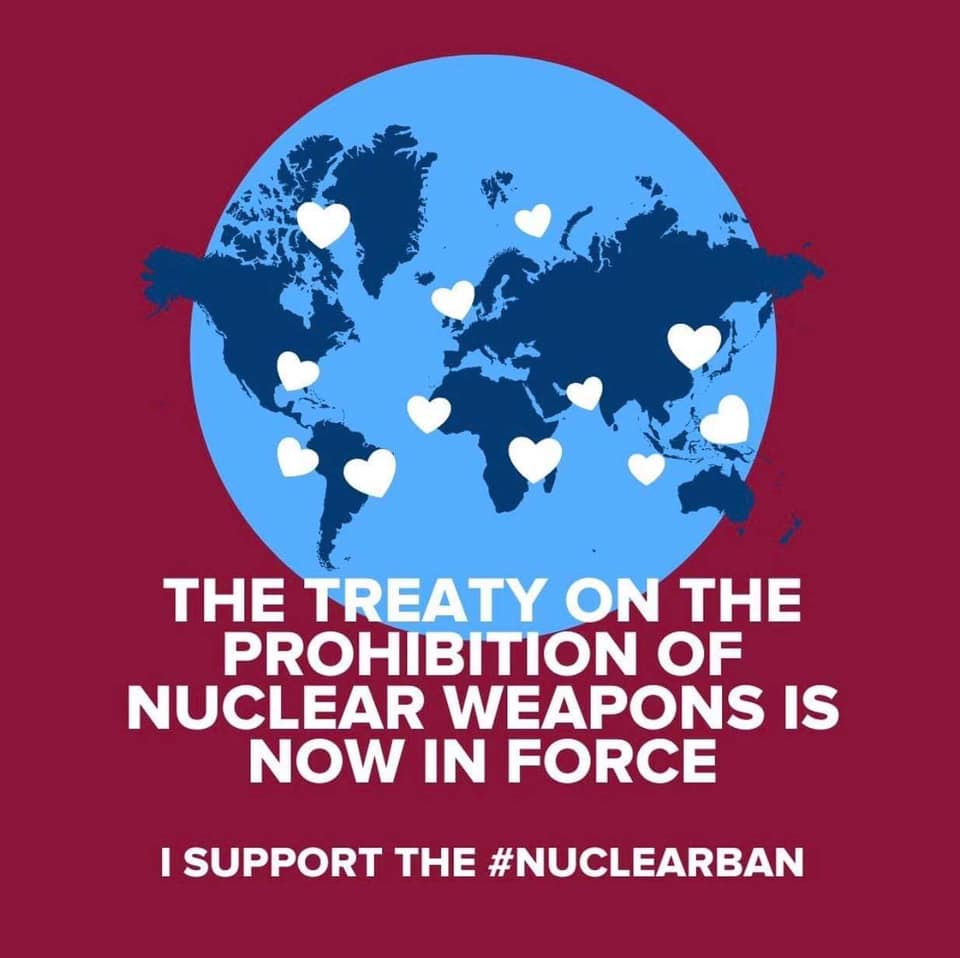
BY CAT WOODS – FEB 15, 2024
5 March marks the International Day for Disarmament and Non-Proliferation Awareness, LSJ speaks to Melissa Parke, Executive Director of the International Campaign to Abolish Nuclear Weapons (ICAN) about the reasons Australia has not signed the Treaty on the Prohibition of Nuclear Weapons (TPNW), and what the consequences may be.
In February 1970, Australia signed the Treaty on the Non-Proliferation of Nuclear Weapons (NPT), committing not to acquire nuclear weapons, and to adhere to strong non-proliferation obligations. It is one of 70 nations that are signatories to the treaty.
Over 40 years later, and despite assurances from the Albanese government that it would do so, Australia has not ratified the Treaty on the Prohibition of Nuclear Weapons (TPNW).
Australia’s history and ratification of treaties
Australia has signed up to both the 1968 Nuclear Non-Proliferation Treaty and the 1986 Rarotonga Treaty.
Further, Australia and Japan jointly established the Non-Proliferation and Disarmament Initiative (NPDI) in July 2010 with the key objective of promoting the implementation of this action plan. The NPDI is a cross-regional group of 12 countries: Australia, Canada, Chile, Germany, Japan, Mexico, Nigeria, the Netherlands, the Philippines, Poland, Türkiye and the United Arab Emirates.
The Treaty on the Non-Proliferation of Nuclear Weapons (NPT) prohibits the manufacture, production or acquisition of nuclear explosive devices; research and development relating to their manufacture or production; the possession or control over such devices; the stationing of nuclear explosive devices in their territories; and testing of nuclear devices.
The NPT requires nuclear weapon states who are signatories of the treaty (US,
The NPT requires nuclear weapon states who are signatories of the treaty (US, Britain, China, Russia and France) not to pass nuclear weapons or technology to non-nuclear weapons states. However, as per Article 4 of the treaty, this requirement specifies a prohibition on the use of nuclear materials associated with nuclear weapons. It makes allowances for the provision of nuclear materials for “peaceful purposes” which is how Australia is defending its AUKUS plan to purchase, build and maintain a fleet of nuclear submarines.
Progress and promises falter
At the United Nations in October 2022, Australia ended a 5-year period of voting in opposition to the 2017 Treaty on the Prohibition of Nuclear Weapons (TPNW) in favour of abstaining to vote, so it was far from endorsing the treaty which ensures a framework of verification and enforcement of the NPT.
Australia’s fence-sitting position had mixed responses. While Indonesia and New Zealand governments praised the end to Australia’s opposition to the treaty, the US claimed that Australia was risking the existing and prospective defence agreements, deemed necessary “for international peace and security”.
The choice to abstain aligned with the Labor Party’s commitment to sign and ratify the TPNW during its national conference in 2018, a resolution made by Anthony Albanese that he reasserted in 2021. When Labor parliamentarian Susan Templeman attended the first meeting of states parties to the TPNW in June 2022, she was galvanised by a joint letter from former Australian ambassadors and high commissioners to the prime minister in support of signing and ratifying the TPNW.
Nevertheless, Australia has not ratified the treaty based on its excuse that the government is continuing to consult with partners and stakeholders while it examines and gathers information. It is a position that jars with the many organisations and political parties advocating for ratification of the TPNW. These include the Australian Red Cross, the Australian Medical Association, the Australian Council of Trade Unions, and more than 40 councils from cities including Brisbane, Canberra, Hobart, Melbourne, and Sydney.
China claimed that the AUKUS deal will eventuate in “the illegal transfer of nuclear weapon materials, making it essentially an act of nuclear proliferation”
The AUKUS plan for nuclear submarines
In February 2023, consequent to the AUKUS plan, Australia announced the deal to purchase three Virginia-class nuclear-powered, conventionally-armed submarines before the 2030s, and plans for Australia to build nuclear-powered submarines aided by US nuclear technology by the 2050s. Australia is the first party to the NPT to own and maintain nuclear submarines beyond the weapons states (US, Russia, China, Britain and France).
The AUKUS plan had already raised alarm both domestically and within the Pacific region.
China claimed that the AUKUS deal will eventuate in “the illegal transfer of nuclear weapon materials, making it essentially an act of nuclear proliferation” in a position paper sent to International Atomic Energy Agency (IAEA) member states during the September 2022 quarterly meeting of the IAEA’s 35-nation Board of Governors.
Australia responded that the fuel in its nuclear submarines could not be used to make nuclear weapons, since this would require chemical processing facilities that Australia was unable and unwilling to accommodate. Australia has defended its position on owning nuclear submarines as a party to the NPT based on an allowance for marine nuclear propulsion where necessary arrangements are made with the IAEA.
The 1986 Rarotonga Treaty which Australia is party to requires that no “nuclear explosive devices” can enter the nuclear-free zone within the South Pacific. It specifies limitations on the distribution and acquisition of nuclear fissile material. While New Zealand does not allow vessels carrying nuclear weapons to visit its ports, Australia does allow this, which the treaty has provisions for.
ICAN perspective
Established in 2007, the International Campaign to Abolish Nuclear Weapons (ICAN) represents a coalition of non-governmental organisations that advocate for adherence to the United Nations nuclear weapon ban treaty.
In September 2023, Melissa Parke commenced her role as Executive Director. Parke is a former United Nations legal expert and Australian government minister with over two decades of experience in international development, human rights, law, and politics. In her capacity as an ICAN Australia ambassador, she campaigned for Australia to ratify the TPNW. She was the former Minister for International Development and former Member of Parliament for the Labor Party for Fremantle between 2007 and 2016. Prior to entering parliament, Parke served as an international lawyer with the United Nations in Kosovo, Gaza, New York and Lebanon between 1999 and 2007…………………………………………………………………………………………………………………………………………
Australia’s nuclear future
Parke says, “I think Australia can play a really important role, as it has in the past, in nuclear disarmament. It’s in a key position to do so. Australia already has a legal obligation in the 1968 NPT to never acquire nuclear weapons and it’s also accepted the Treaty of Rarotonga requirement never to allow another state to carry nuclear weapons into this territory. The 2017 TPNW contains broader prohibitions. Most notably, upon becoming a party Australia would need to refrain from allowing any other state to use, threaten to use, or possess nuclear weapons.”
She continues, “In order to comply with this prohibition, changes would be needed to Australia’s military cooperation arrangements with the United States, because the US possesses more than 5000 nuclear weapons. For example, the joint US-Australian military and intelligence facility at Pine Gap near Alice Springs could not be used for nuclear targeting and Australia could not allow visits to its territory by US aircraft or submarines carrying nuclear weapons. In addition, Australia could not continue to claim protection from the so-called US ‘nuclear umbrella’ because maintaining a military doctrine that envisages the possible use of nuclear weapons by the US on its behalf would be incompatible with the TPNW. Extended nuclear deterrence, which is the doctrine that Australia relies upon, is simply the threat to have the United States murder millions of innocent people indiscriminately. So, that’s not acceptable legally, or morally. In addition to the fact that it’s very unlikely that the United States would sacrifice Los Angeles for Sydney.”
Further, Australia would be required to provide financial assistance to victims of past nuclear testing if it signed the TPNW.
“There are no obstacles to Australia signing the TPNW,” states Parkes. “It was negotiated in 2017, adopted with the support of 122 countries. The US vocally discouraged allies from joining the treaty under the Trump administration, and while Biden has maintained opposition, the US is no longer telling countries not to sign it, according to US state department.”
She adds, “Nothing in ANZUS would prevent Australia becoming party to the treaty, nor would AUKUS. We’ve raised proliferation concerns relating to AUKUS but it doesn’t conflict with TPNW as long as nuclear powered submarines never carry weapons or contribute to the making of such weapons.”
As far as threatening the US alliance with Australia, Parke says that history would suggest that our two nations can have contrasting attitudes to treaties on weapons without damage.
“We have already ratified the 1996 Comprehensive Nuclear-Test-Ban Treaty (CTBT), the Convention on Cluster Munitions, and the 1997 Ottawa Treaty which prohibits anti-personnel mines. We don’t have to mirror the US.”………………………………………………………. more https://lsj.com.au/articles/australias-nuclear-future-and-the-legal-ramifications-of-ratifying-tpnw/
US Gives Israel the Green Light to Kill Civilians in Rafah

US officials told POLITICO that there would be no consequences for Israel if it invades Rafah, by Dave DeCamp February 13, 2024, https://news.antiwar.com/2024/02/13/us-gives-israel-the-green-light-to-kill-civilians-in-rafah/
The US has given Israel the green light to kill civilians in Rafah despite public comments from US officials calling for Israel to come up with a plan to protect civilians in the city, which is packed with an estimated 1.5 million Palestinians.
US officials told POLITICO that the Biden administration was not planning any consequences for Israel if it went ahead with a major assault on Rafah, which would inevitably kill a huge number of civilians. “No reprimand plans are in the works, meaning Israeli forces could enter the city and harm civilians without facing American consequences,” the report reads.
White House National Security Council spokesman John Kirby made clear at a press conference on Monday that the US wasn’t thinking about cutting off Israel from military aid if it went ahead with the assault. When asked if the US has threatened to withhold aid, Kirby said, “We’re going to continue to support Israel … And we’re going to continue to make sure they have the tools and the capabilities to do that.”
President Biden is also not reconsidering his full-throated support for the Israeli slaughter in Gaza despite reports of him disparaging Israeli Prime Minister Benjamin Netanyahu in private conversations.
Congress is also on board with continuing to support the mass killing of Palestinians as the Senate voted to pass a $95 billion foreign military aid bill that includes $14 billion for Israel. Only 20 Republicans voted for the bill, but the opposition is due to the lack of a border deal, as virtually all Republicans are in favor of unconditional support for Israel, even more so than Democrats in Congress.
Rafah’s pre-war population was 275,000, meaning Palestinians displaced from other areas of the Strip increased the population fivefold. The majority of the Palestinians in the city are sheltering in tents in the streets, leaving them especially vulnerable to an Israeli attack. Israeli airstrikes on Rafah on Sunday night into Monday morning killed 27 children and 22 women.
The War on Gaza: Public Relations vs. Reality

Wednesday, February 14th, 2024, By Robert C. Koehler, m http://commonwonders.com/the-war-on-gaza-public-relations-vs-reality/
For its victims, war is . . . yes, hell. For the rest of us — the onlooking and supportive patriots — war is an abstraction embedded in ignorance, a.k.a., public relations, served up for public consumption.
At least that’s the way it’s supposed to be. The reality of war should never directly confront the official PR of those waging it. If it does, God help the war industry!
But that’s what’s happening now, as public support for U.S. complicity in Israel’s devastation of Gaza diminishes, indeed, starts turning to outrage. Official spokesmen for the Biden administration, such as John Kirby, strategic communications coordinator for the National Security Council, are forced to start mixing apologetic language in with their unwavering support for the bombing and murder of civilians . . . excuse me, Israel’s right to defend itself.
“Civilian deaths are happening, and happening at a rate that obviously we’re not comfortable with,” Kirby said in a New Yorker interview. “But,” he quickly added, “it doesn’t mean that they are intentionally trying to wipe the people of Gaza off the map the same way that Hamas wants to wipe the Israeli people off the map.”
Wow, Israel’s actions and official declarations of intent to obliterate Palestine are making the U.S. government uncomfortable. (But Hamas is still the bad guy.) Oh, if only fragments of actual truth about the war could penetrate such an interview. For instance:
And it was mostly — I mean, the majority of the patients that I treated were children, anywhere from the age of 2 to 17. I mean, I saw horrific eye and facial injuries that I’ve never seen before, eyes shattered in two 6-year-old children with shrapnel that I had to take out, eyes with shrapnel stuck inside, facial injuries. I saw orthopedic injuries where — you know, limbs just cut off and dangling. I saw abdominal injuries that were just horrific. And it was just mass chaos. There were children on the floor, unattended to, with head trauma, people suturing patients without anesthesia on the ground. It was just mass chaos and really horrific, horrific scenes.”
The speaker is Dr. Yasser Khan, a Canadian ophthalmologist recently back from a humanitarian mission at the European Hospital in Khan Younis, in southern Gaza, near Rafah. He was interviewed by Democracy Now! I wish John Kirby could have been there.
The hospital, he said, was “about 300, 400 percent over capacity. There was patients and bodies lying all over the hospital floor, inside and outside. They had orthopedic devices coming from their legs or their arms. They were getting infected, they were in pain, because they were on the floor, so the conditions weren’t very sterile. And if they survived amputation the first time, the infection would get them . . .”
His words go on and on. OK, you (I mean Kirby) might say, this is war. People get hurt. But Israel has to “defend itself.”
This is self-defense?
“They have killed over 300 or 400 healthcare workers, doctors, nurses, paramedics. Ambulances have been bombed. This has all been a systematic sort of — you know, by destroying the healthcare system, you’re contributing to the genocide.”
Khan also notes: “They’ve attacked the sewage system, the water system, so the sewage mixes with the drinking water. And you get diarrheal diseases, bacterial diseases. You know, cholera, typhoid is not far away. Hepatitis A is epidemic there now. They’re living in cramped spaces.”
And it gets even more insane: “What’s going on is now there’s 10,000 to 15,000 bodies that are decomposing. So, it’s raining season right now in Gaza. So all the rainwater mixes with the decomposing bodies, and that bacteria mixes with the drinking water supply, and you get further disease.”
Israel has the right to defend itself. But come on, guys, be a little bit more careful. Kill fewer children. Try not to poison the water. You might say this is public relations with a limp. Meanwhile, the International Court of Justice has ordered Israel to “refrain” from taking action that could be considered genocidal and, good God, “take measures to improve the humanitarian situation for Palestinian civilians in the enclave,” as Reuters reports.
But it’s war itself — regardless of “intent” — that is causing this hell. The act of war, the weapons of war, the political-economic structure of the globe that is based on endless war and domination, seems never to face serious condemnation, at least not in any official sense. But if we feed war, we feed hell.
Perhaps there’s one bit of recent news about a challenge to the global war industry, and its public relations perpetrators, that isn’t simply a scream from the political margins or cries from the victims. It’s the Transatlantic Civil Servants’ Statement on Gaza, a statement, released on Feb. 2, signed by more than 800 civil servants from the United States, the European Union and about a dozen European countries, declaring: “It Is Our Duty To Speak Out When Our Governments’ Policies Are Wrong.”
The statement declares the Gaza pummeling “one of the worst human catastrophes of this century.” And it calls on its countries to halt all military support to Israel and use their leverage “to secure a lasting ceasefire and full humanitarian access in Gaza and a safe release of all hostages” and “develop a strategy for lasting peace.”
A strategy for lasting peace? That’s another way of calling for an end to war. It’s about time.
AI, climate change, pandemics and nuclear warfare puts humanity in ‘grave danger’, open letter warns
More than 100 politicians, academics and celebrities urge world leaders to act now against the existential threats facing mankind
Samuel Lovett, DEPUTY EDITOR OF GLOBAL HEALTH SECURITY, 15 February 2024 https://www.telegraph.co.uk/global-health/terror-and-security/ai-climate-change-pandemic-nuclear-warfare-humanity-danger/
Climate change, pandemics, nuclear warfare and artificial intelligence all pose an existential threat to humanity and need to be addressed with “wisdom and urgency”, more than 100 politicians, academics, and celebrities have warned in an open letter.
The signatories, including Annie Lennox, Richard Branson, Gordon Brown and Charles Oppenheimer, whose grandfather developed the atom bomb, said today’s world leaders prioritise “short-term fixes over long-term solutions” and “lack the political will to take decisive action” against the many dangers facing mankind.
“Our world is in grave danger. We face a set of threats that put all humanity at risk. Our leaders are not responding with the wisdom and urgency required,” the letter reads. “We are at a precipice.”
The signatories list four key demands for future-proofing humanity: a global financing plan to ease the transition to clean energy; arms control talks to reduce the risk of nuclear war; an equitable pandemic treaty to prepare for future outbreaks; and international governance for regulating AI to make it “a force for good”.
“The biggest risks facing us cannot be tackled by any country acting alone. Yet when nations work together, these challenges can all be addressed, for the good of us all,” the letter states.
The call for action is led by the Elders, an independent group of global leaders campaigning for peace and human rights founded by Nelson Mandela, and the Future of Life Institute, a non-profit working to develop transformative technologies for the benefit of humanity.
Other signatories of the letter include Ban Ki-moon, the former UN Secretary-General, Sir Malcolm Rifkind, the former UK foreign secretary, Helen Clark, the former prime minister of New Zealand, Mary Robinson, the former president of Ireland, and Amber Valletta, the American model and actress.
The letter also encourages the world’s decision-makers to be “bold” in abandoning their short termism in favour of “long-view leadership”.
“In a year when half the world’s adult population face elections, we urge all those seeking office to take a bold new approach,” it reads.
“We need long-view leadership from decision-makers who understand the urgency of the existential threats we face, and believe in our ability to overcome them.
“Long-view leadership means showing the determination to resolve intractable problems not just manage them, the wisdom to make decisions based on scientific evidence and reason, and the humility to listen to all those affected.”
The letter comes ahead of the Munich Security Conference, where government officials, military leaders and diplomats will meet on Thursday to discuss international security.
Each year, the conference brings together roughly 350 senior figures from more than 70 countries to engage in an intensive debate on current and future security challenges facing humanity.
Commenting on the open letter, Ban Ki-moon said the range of signatories “makes clear our shared concern: we need world leaders who understand the existential threats we face and the urgent need to address them”.
Israel, USA, the “West” can’t hide their atrocious guilt any more.

Look – it was sort of OK in the 1930s – for Western political leaders, and their people, to sort of “didn’t know” what was going on in Germany. Hell, they had the lovely 1936 Olympics, and workers were getting a good deal, and Hitler was lovely to dogs.
If there were atrocities going on, – like millions of Jews, homosexuals, dissidents, mentally ill…. getting tortured and murdered – well, we “found out” about it only years later, didn’t we?
BUT. It’s different now. There is ample evidence – first hand real photography, real videos and film, real firsthand aural and written accounts of the mass cruelties being inflicted by Israel on the people of Gaza.
“War against Hamas” – what nonsense ! It’s massacre of Palestinians, and everybody knows it.
President Joe Biden and co. can bleat all they like about “urging Israel to be humanitarian to the Gazan people”, AT THE SAME TIME AS BIDEN AND CO ARE SUPPLYING WEAPONS TO ISRAEL TO DO THE KILLING!
US officials told POLITICO that the Biden administration was not planning any consequences for Israel if it went ahead with a major assault on Rafah, which would inevitably kill a huge number of civilians. “No reprimand plans are in the works, meaning Israeli forces could enter the city and harm civilians without facing American consequences,” the report reads.
“We’re going to continue to support Israel … And we’re going to continue to make sure they have the tools and the capabilities to do that.”
Of course the only thing that Biden really cares about is himself getting elected again in November. That might make him, and USA’s sycophantic allies, care a little bit about the miseries in Gaza.
But the world is appalled. We are not taken in by pious bleatings about “humanitarian aid” – while the Genocide finding of the International Court of Justice is ignored by the powerful, and while the one agency of support to the Gazans is closed down by the powerful.
Perhaps they’ll try to pretend that all the mass of evidence of genocide is “fake news”, and produced by artificial intelligence, and critics are just “tools of Russia” – or some other rubbish that the CIA and nuclear-military-industrial complex think up.
Their hypocrisy is boundless. Now they’re all alarmed because Iran might make a nuclear bomb. Israel has about 90 nuclear bombs, according to some experts. Israel has had nuclear bombs for decades, and the “Western powers” just pretend that they don’t know this. Israel is OK, safe to manage its nuclear weapons. Really?
Pacific wants open discussion on AUKUS to ensure region is nuclear free
Eleisha Foon, RNZ Pacific Journalist, @eleishafoon, more https://www.rnz.co.nz/international/pacific-news/508948/pacific-wants-open-discussion-on-aukus-to-ensure-region-is-nuclear-free 12 Feb 24
Keeping the Pacific nuclear-free, in line with the Rarotonga treaty, was a recurring theme from the leaders of Tonga, Cook Islands and Samoa to New Zealand last week.
The New Zealand government’s Pacific mission wrapped up on Saturday with the final leg in Samoa.
Over the course of the trip, defence and security in the region was discussed with the leaders of the three Polynesian nations.
In Apia, Samoan Prime Minister Fiamē Naomi Mataʻafa addressed regional concerns about AUKUS.
New Zealand is considering joining pillar two of the agreement, a non-nuclear option, but critics have said this could be seen as Aoteroa rubber stamping Australia acquiring nucelar-powered submarines.
“We would hope that both administrations will ensure that the provisions under the maritime treaty are taken into consideration with these new arrangements,” Fiamē said.
New Zealand’s previous labour government was more cautious in its approach to joining AUKUS because it said pillar two had not been clearly defined, but the coalition government is looking to take action.
Prime Minister Fiamē said she did not want the Pacific to become a region affected by more nuclear weapons.
She said the impact of nuclear weapons in the Pacific was still ongoing, especially in the North Pacific with the Marshall Islands, and a semblance of it is still in the south with Tahiti.
She said it was crucial to “present that voice in these international arrangements”.
“We don’t want the Pacific to be seen as an area that people will take licence of nuclear arrangements.”
The Treaty of Rarotonga prohibits signatories – which include Australia and New Zealand – from placing nuclear weapons within the South Pacific.
Cook Island’s Prime Minister Mark Brown said Pacific leaders were in agreement over the security matter.
“I think our stance mirrors that of all the Pacific Island countries. We want to keep the Pacific region nuclear weapons free, nuclear free and that hasn’t changed.”
Reflecting on dicussions during the Pacific Islands Forum in 2023, he said: “A review and revisit of the Rarotonga Treaty should take place with our partners such as New Zealand, Australia and others on these matters.”
“It’s timely that we have them now moving forward,” he said.
Last year, Fiji’s Prime Minister Sitiveni Rabuka proposed a Pacific peace zone which was discussed during the forum leaders’ meeting Rarotonga.
This year, Tonga will be hosting the forum and matters of security and defence involving AUKUS are expected to be a key part of the agenda.
Tonga’s Acting Prime Minister Samiu Vaipulu acknowledged New Zealand’s sovereignty and said dialogue was the way forward.
“We do not interfere with what other countries do as it is their sovereignty. A talanoa process is best,” Vaipulu said.
Foreign Minister Winston Peters and Health and Pacific People’s Minister Shane Reti reiterated that they care and have listened to the needs outlined by the Pacific leaders.
They said New Zealand would deliver on funding promises to support improvements in the areas of health, education and security of the region.
1 This month


Help Aunty Sue Protect Her Land and Sacred Sites From Destructive Rocket Testing.
.

Australians deserve the truth
about
AUKUS – https://aukuspublicinquiry.com/

PETITION – To: Prime Minister Anthony Albanese and the Australian Labor Government

of the week – Australians for War Powers Reform (AWPR)
To see nuclear-related stories in greater depth and intensity

