The Colby Review, AUKUS and Lopsided Commitments
9 December 2025 Dr Binoy Kampmark, https://theaimn.net/the-colby-review-aukus-and-lopsided-commitments/
In one of his many cutting observations about the fallibility of politicians, H. L. Mencken had this to say about the practical sort: “It is his business to convince the mob (a) that it is confronted by some grave danger, some dreadful menace to its peace and security, and (b) that he can save it.” Regarding Australia’s often provincial politicians, that grave danger remains the Yellow Peril, albeit it one garbed in communist party colours, while the quackery they continue to practise involves the notion the United States will act as shield bearer and saviour in any future conflict.
The AUKUS trilateral security pact between Australia, the United Kingdom and the United States has turned the first of these countries into an expectant vassal state, mindful of security guarantees it does not need from a power that can, and would at a moment’s notice, abandon it. But more dangerously, the expectation here is that Canberra, awaiting Virginia Class (SSN-774) nuclear-powered submarines from the US, will offer unconditional succour, resources and promises to the projection of Washington’s power in the Indo-Pacific. Without any guarantee of such submarines, Australian money is underwriting US submarine production, which remains consistently tardy. (Currently, 1.3 boats are being produced annually, when 2.3 are needed.)
The 2023 National Defense Authorization Act makes it irrefutably clear that Congress shall be notified that any transfer of boats “will not degrade the United States underseas capabilities.” Pursuing AUKUS still entailed “sufficient submarine production and maintenance investments” on the part of the US to meet undersea capabilities, with Australia advancing “appropriate funds and support for the additional capacity required to meet the requirements” along with Canberra’s “capability to host and fully operate the vessels authorized to be transferred.”
This true steal for US diplomacy, and sad tribute to Homo boobiens on the part of the Australians, has continued with the review of AUKUS conducted by Undersecretary of Defense Policy Eldridge Colby. The review is not available for public eyes, but Colby had previously released smoke signals that the AUKUS pact would only “lead to more submarines collectively in 10, 15, 20 years, which is way beyond the window of maximum danger, which is really this decade.”

The Australian Defence Minister Richard Marles told reporters on December 4 that the review had been received. “We’re working through the AUKUS review, and we very much thank the United States for providing it to us.” (Surely that’s the least they could have done.) He had identified unwavering support for the pact. Pentagon spokesman Sean Parnell also released a statement to the media expressing enthusiasm. “Consistent with President Trump’s guidance that AUKUS should move ‘full steam ahead,’ the review identified opportunities to put AUKUS on the strongest possible footing.” No doubt opportunities have been identified, but these are likely to be consistent with the lopsided arrangements Australia has had with the US to date.
Australia has so far provided A$1.6 billion in funding to the US submarine base, with the promise of more. What remains unclear is how much of this is also going into training Australian personnel to operate and maintain the vessels. “There’s a schedule of payments to be made,” explained Australian Prime Minister Anthony Albanese in July. “We have an agreement with the United States as well as with the United Kingdom. It is about increasing their capacity, their industrial capacity.” As part of such arrangements, “we have Australians on the ground, learning those skills.”
The joint fact sheet on the 2025 Australia-US Ministerial Consultations (AUSMIN), held between US Secretary of State Marco Rubio, US Secretary of War Pete Hegseth and their Australian counterparts Penny Wong and Marles in Washington, makes one reference to AUKUS and nothing in terms of substance to Colby’s recommendations. There is, however, this bit of unpardonable gibberish: “In line with President Trump and Prime Minister Albanese’s direction to move ‘full steam ahead’ on AUKUS, the [ministers] recognised the work underway to deliver priority infrastructure works and workforce uplift plan in support of an enhanced trilateral submarine industrial base.”
Given such statements, it is hard to see what opportunities identified in the Colby report could possibly be advantageous to Australia, a mere annexure of the US imperium. There is bound to be continued pressure on Australia to increase its defence spending. There are also unaddressed concerns about how sovereign the SSNs in Australian hands are going to be when and if they ever make it across the Pacific. In a conflict involving the United States, notably in the Indo-Pacific, Canberra will be expected to rush in with that mindless enthusiasm that has seen Australian soldiers die in theatres they would struggle to name for causes they could barely articulate.
Even the confident opinion of Joe Courtney, a Democrat member of the House Armed Services Committee and representative of Groton, Connecticut (the “Submarine Capital of the World”), should be viewed warily. “The statutory authority enacted by Congress in 2023 will remain intact, including the sale of three Virginia-class submarines starting in 2032,”comes his beaming assessment. The Colby review “correctly determined that there are critical deadlines that all three countries have to meet. Therefore, maintaining disciplined adherence to schedule is paramount.” That degree of discipline and adherence to schedules is unlikely to be an equal one. It is bound to favour, first and foremost, Washington’s own single perspective.
Nuclear Kills Kids

most significant of all there is now solid evidence of increased rates of leukaemia in children living close to nuclear power plants.
Tony Webb | April 28, 2025, https://www.fabians.org.au/nuclear_kills_kids
One moment from my work in the USA in the early 1980s stands out in my memory. I’d driven from Chicago to Cleveland at the invitation of the Health and Safety Officer of the US Boilermakers Union. The purpose was to speak to the members meeting held on the night ahead of the recruitment of members for work on the annual ‘clean-up’ of the local Nuclear Power plant. The hired workers would be ‘radiation sponges’ – short-term casuals recruited for the ‘dirty jobs’ that would result in significant radiation exposures sometimes up to the permitted annual exposure limit and ‘let go’ if they reached that limit. The practice offered some protection to the company’s full -time employees whose skills would be needed on an ongoing basis and whose exposures needed to be kept below the limit. The meeting was well attended , rowdy, with a lot of questions and discussion which spilled over into the carpark after the meeting closed. I noticed one man hanging back from the circle and invited him to join and share his thoughts. As I recall them the essence was:
“I will be going in to apply for work tomorrow. I understand what you shared about the risks . . . no safe level of exposure and chance of getting cancer perhaps 20 years from now . . . It will put a roof over my family’s heads and food on the table . . . BUT my wife and I have had all the family we want. If we hadn’t, what you shared about the genetic risks, the damage to our children and future generations . . . no I wouldn’t be going . . . “
It is a sad fact that workers, both men and women will choose, often from necessity, to put their health at risk from the work environment. What is however consistent in my experience of working on radiation and other occupational health and safety issues is that they are far more concerned, cautious and likely to prioritise safety when it comes to risks to their children.
We now have solid evidence(1) that workers in nuclear power plants routinely exposed to radiation face significantly increased cancer risks, risks of cardiovascular disease including heart attacks and strokes, dementia and potentially other health effects. There is also an increased risk of genetic damage that can be passed on to their children and future generations. But perhaps most significant of all there is now solid evidence of increased rates of leukaemia in children living close to nuclear power plants.
To put it simply and in language that will resonate with workers and their families in the communities around the seven nuclear power plant sites the federal Liberal-National Coalition proposes to build if elected to government, nuclear kills kids. It matters little whether or not these nuclear plants can be built on time, within budget, make a contribution to climate change, reduce electricity prices, or secure a long-term energy future; these nuclear power plants will likely kill kids who live close by. They cannot operate without routine releases of radioactive material into the environment and our young will be exposed and are particularly susceptible to any exposure that results.
Now add to that if you care that women are more susceptible than men; that workers in these plants face greater exposure and health risks than adults in the community; that nuclear plants have and will continue to have both major accidents and less major ‘incidents’ resulting in radiation releases, community exposures and health damage. Add also that quite apart from the workers and others exposed when these plants need to be decommissioned, the radioactive wastes resulting from perhaps 30-50 years life will need to be safely stored and kept isolated from human contact for many thousands of years longer than our recorded human history. And, again if you care, also add in the concerns around proliferation of nuclear weapons which historically has occurred on the back of, enabled by and sometimes concealed by countries’ developing so called peaceful nuclear power.
All these arguments add weight to the absurdity of Australia starting and the world continuing down this nuclear power path. But if we want a single issue that strikes at the heart of human concerns it is this – and forgive me saying it again, it needs to be repeated many times until the electorate in Australia hears it loud and clear – Nuclear Kills Kids.
SOURCES……………………………………………………………………………………………………
The people and environment of South Australia must be protected from Federal imposed storage of AUKUS High-Level nuclear waste:
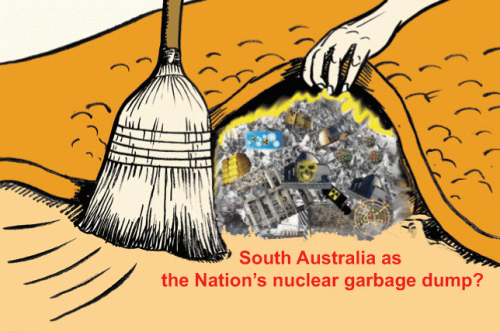
by David Noonan Independent Environment Campaigner 10 Nov 2025.
South Australians have a Right to Say No to undemocratic Federal imposed storage of AUKUS
High Level nuclear waste in our State. All Federal MPs & Senators from SA, Members of the SA
Parliament and candidates for the SA State Election on 21st March should declare their position:
Q: Will you accept or reject Federal imposed storage of AUKUS nuclear waste in SA?
The Federal Government quietly took up new AUKUS Regulations (2 Oct) as powers to impose
AUKUS wastes by override of State laws that prohibit nuclear waste storage in SA, NT and WA.
AUKUS Regulation 111 “State and Territory laws that do not apply in relation to a regulated
activity” names and prescribes our SA Nuclear Waste Storage (Prohibition) Act 2000. The
Objects of this key SA Law set out what is at stake: “To protect the health, safety and welfare
of the people of SA, and the environment in which they live” from nuclear waste storage.
Federal Labor’s draconian powers to compromise public health, safety and welfare protections
in SA Law, lacks social licence, are an affront to civil society, and damages trust in governance.
This is also a threat to Indigenous People with a cultural responsibility to protect their country.
Community expects our State Labor Government to give a clear State Election commitment to
protect SA from the risks and impacts of untenable and illegal AUKUS High Level nuclear waste
storage, see “The lethal legacy of Aukus nuclear submarines will remain for millennia – and
there’s no plan to deal with it” (The Guardian, 10 August 2025, interview with Prof Ian Lowe).
Labor has a further key leadership test ahead of our Election: to commit to support Indigenous
People’s human rights, set out in the United Nations Declaration on the Rights of Indigenous
Peoples Article 29 (UNDRIP 2007), to “Free, Prior and Informed Consent” over storage of
hazardous materials on their lands. AUKUS wastes absolutely are hazardous materials!
a Question for Premier Peter Malinauskas: Will you respect and support Indigenous Peoples
Rights to Say No to Federal siting of AUKUS nuclear waste storage on their country in SA?
Call for full disclosure on a N-waste siting process after Labor breaks its commitment:
The public has a Right to Know what regions are being targeted for storage of High-Level
nuclear wastes. A secretive ongoing Defence review “to identify potential nuclear waste
disposal sites” (ABC News March 2023) must be made public ahead of the SA State Election.
AUKUS Minister Marles has broken his commitment to announce a process by early 2024 to
identify a site to dispose of AUKUS High-Level nuclear wastes. The failure by Defence to set out
any process – other than to take up powers to impose nuclear wastes – is unacceptable.
REPORTER: Is a high-level nuclear waste dump the price that South Australia will have to pay
for the jobs that go to the state? (Minister Marles Press Conference 14 March 2023)
MARLES: Well, as I indicated there will be a process that we will determine within the next 12
months for how the site will be identified. You’ve made a leap there, which we’re not going to
make for some time. It will be a while before a site is ultimately identified. But we will within the
next 12 months establish a process for how we walk down that path.
It is now over 4 years since Federal Labor agreed with Morrison’s AUKUS nuclear sub agenda.
SA Labor to let ‘national security interests’ decide siting for AUKUS nuclear waste?
National press reported the Woomera Area to be a ‘favoured location’ for storage and disposal
of nuclear sub wastes back in August 2023 (“Woomera looms as national nuclear waste dump
site including for AUKUS submarine high-level waste afr.com). WA, Qld and Vic political leaders
have rejected a High-Level nuclear waste disposal site in their States, with WA suggesting the
Woomera Prohibited Area in SA: “would be one obvious location within the Defence estate,
however, we will await the outcomes of the federal review” (SMH 15 March 2023).
Premier Malinauskas has so far only said AUKUS nuclear waste should go to a ‘remote’ location
in the “national security interest” (see “Site for high-level nuclear waste dump under AUKUS
deal must be in national interest, SA premier says” ABC News 15 March 2023).
The Premier’s “Office for AUKUS” (Letter, 7 Oct 2025) accepts “safe and secure disposal” of
High-Level nuclear waste, including spent fuel, produced when subs are decommissioned. The
Office says no decision has been made on a location but declines to reveal what is underway,
expresses no concerns over unprecedented nuclear waste storage or ‘social license’, and
expects “community acceptance” (in SA?) for a nuclear ‘disposal solution’:
“I can confirm that no decision has been made on a location within Australia for the
disposal of intermediate, or high-level radioactive waste from nuclear-powered
submarines. Determining suitable locations and methods for safe and secure disposal
will take time, but Australia will do so in a manner that sets the highest standards … and
which builds community acceptance for a disposal solution.”
SA is left in the dark, without a say, as an ongoing target for an AUKUS nuclear waste dump.
AUKUS is to store US origin nuclear wastes from 2nd hand Virginia Class subs in Australia:
AUKUS aims Australia take on second-hand US Virginia Class nuclear powered subs in the early
2030’s loaded with up to a dozen years of US origin military High-Level nuclear waste and fissile
Atomic-Bomb fuel accrued in operations of US Navy High Enriched Uranium nuclear reactors.
Swapping an Australian flag onto this US military nuclear reactor waste places an untenable ‘for
ever’ burden on all future generations to have to cope these US nuclear wastes.
Scenario: an AUKUS nuclear dump imposed on SA, High-Level military waste shipped into
Whyalla Port to go north, nuclear subs to be ‘decommissioned’ at Osborne Port Adelaide.
Whyalla Port is back on a nuclear waste target range. How else could AUKUS nuclear waste get
to a storage site in north SA? The Woomera Area is expected to be on a regional short list for an
AUKUS dump, requiring nuclear waste transport routes across SA. Port Adelaide community has
a Right to Say No to nuclear decommissioning plans for expanded Osborne submarine yards.
SA politicians must protect SA and rule out both an untenable AUKUS nuclear dump and
decommissioning nuclear subs and nuclear reactors at Osborne or else-where in SA.
SA must respect Traditional Owners Human Rights to Say No to imposition of nuclear wastes.
The SA public have Rights to full disclosure and for politicians to have to declare their positions,
We need an informed public debate ahead of our State Election. Silence by our political leaders, while a path is paved toward nuclear decisions, makes a nuclear waste dump future more likely.
Info: see Rex Patrick & “AUKUS waste in perpetuity”, and David Noonan in Pearls and Irritations
Britain’s nuclear submarine fleet ‘no longer fit for purpose’

The admiral, who led the Trident value for money review in 2010, called for Britain to pull out of the multi-billion “Aukus” defence deal with America and Australia to build 12 new nuclear submarines.
SSN-Aukus is a submarine which is not going to deliver what the UK or Australia needs in terms of capability or timescale. “Performance across all aspects of the
programme continues to get worse in every dimension.”
Former Navy chief calls for ‘radical’ action to revive programme after catastrophic failures.
Tom Cotterill, Defence Editor, 06 December 2025
Britain is “no longer capable” of running a nuclear submarine programme after “catastrophic” failures pushed it to the brink, a former Navy chief has warned. In an extraordinary critique, Rear Admiral Philip Mathias said the UK’s “silent service” was facing an “unprecedented” situation that it was “highly unlikely” to recover from without a “radical” intervention. The former director of nuclear policy at the Ministry of Defence (MoD) said delays in building new attack boats had reached record levels and had driven up the duration of patrols for crews from 70 days during the Cold War to more than 200 now.
This had led to the “shockingly low availability” of submarines to “counter the Russian threat in the North Atlantic”, the retired submarine commander warned. The admiral, who led the Trident value for money review in 2010, called for Britain to pull out of the multi-billion “Aukus” defence deal with America and Australia to build 12 new nuclear submarines.
“The UK is no longer capable of managing a nuclear submarine
programme,” he said. “Dreadnought is late, Astute class submarine delivery is getting later, there is a massive backlog in Astute class maintenance and refitting, which continues to get worse, and SSN-Aukus is a submarine which is not going to deliver what the UK or Australia needs in terms of capability or timescale. “Performance across all aspects of the
programme continues to get worse in every dimension.”
He added: “This is an unprecedented situation in the nuclear submarine age. It is a catastrophic failure of succession and leadership planning.” The Navy’s fleet of Astute submarines is already facing significant problems, with many having been stuck in port for years. Out of the seven planned, only
six are in service.
He also criticised the role of industry giants for
delays to programmes. He added not a single of the UK’s 23 decommissioned nuclear boats had been dismantled since the first, HMS Dreadnought, left service in 1980. “This is an utter disgrace and brings into question whether Britain is responsible enough to own nuclear submarines,” the admiral said.
Telegraph 6th Dec 2025,
https://www.telegraph.co.uk/news/2025/12/06/britains-nuclear-submarine-fleet-no-longer-fit-for-purpose/
Non-corporate nuclear-related news – week to 7 December
Some bits of good news- A roadmap for ending plastic pollution was published. Antarctica’s shrinking ozone hole ‘signals hope’. One Year Later: A Dam Removal and a River’s Rebirth, The Nationwide Movement Turning Guns into Garden Tools
TOP STORIES.What Defeat Looks Like.
Russia Dangles Business Ties To U.S. at Europe’s Expense – Kremlin pitched White House on investments and industry to end war – today’s Wall Street Journal.
Von der Leyen pushes ahead with reparations loan for Ukraine as Belgium maintains its opposition.
Trump’s AI Push May Hinge on Renewable Energy.
Climate. What’s behind the massive death toll in floods across Southeast Asia –and why it should serve as a warning. ‘Deeply disappointing’: Experts slam Cop30 for ignoring climate’s impact on food supply.
Noel’s notes. Why my work is clearly biased. The obscenity of Christmas, and how to fix it?
AUSTRALIA.
Australia’s New Censorship Is Voluntary – and That’s Why It’s Dangerous.
The Moral Hazard of Being US Deputy-Sheriff .
No fog, no war – Hegseth’s war crimes put Australian soldiers at risk.
US submarines carrying nuclear weapons could dock in Australia despite ban, Senate told.
Labor backs ‘practical’ nuclear disarmament, Wong says.
Government backflips on nuclear-capable submarines under AUKUS .
The architecture of a vassal: how US bases in Australia project power, not protection.
Follow the money – A radioactive farce of failed land purchases.
Australia’s most advanced renewable grid is its most secure, but NSW must scramble as it nears “no coal” scenario.
South Australia averages 100 pct wind and solar over week, 90 pct over last 28 days.
Solar and wind reach 100 pct of demand in biggest isolated grid, as batteries allow it to keep its thermals on.
NUCLEAR TOPICS
| ART and CULTURE. On Becoming The First Species To Go Extinct From Politeness. |
ATROCITIES.
Gaza Denied the Right to Heal: Ceasefire Fails, New ‘Green-Zone’ Plan Threatens Modern Ghettos and Collective Imprisonment. International tribunal finds Israel guilty of genocide, ecocide, and the forced starvation of the Palestinians in Gaza.
A Ceasefire in Name Only: Gaza’s Prolonged Purgatory. Amnesty: So-Called Gaza ‘Ceasefire’ becoming Smokescreen for continued Israeli Genocide
ECONOMICS.
- Europe could be on the hook for $160 billion to keep Ukraine afloat.
- UK energy bill payers will hand £2bn a year to EDF for new power stations.
- Former Heads of CIA, MI5, Mossad and CSIS Profit From Israel’s Genocide.
- Russia’s economy is not about to explode..
| EDUCATION. Educators Worry Palestine Censorship Could Reshape Public Education Entirely. |
| ENERGY. Inside the power-hungry data centres taking over Britain-ALSO AT https://nuclear-news.net/2025/12/03/1-b1-inside-the-power-hungry-data-centres-taking-over-britain/ Use less energy : Demand-led policy scenarios show promise. |
| ENVIRONMENT. UK is running out of water – but data centres refuse to say how much they use– ALSO AT https://nuclear-news.net/2025/12/04/1-b1-uk-is-running-out-of-water-but-data-centres-refuse-to-say-how-much-they-use/ New mini nuclear reactors are jeopardised by wildlife fears – ALSO AT https://nuclear-news.net/2025/12/07/2-b1-new-mini-nuclear-reactors-are-jeopardised-by-wildlife-fears/ |
| ETHICS and RELIGION. A line crossed, a standard shattered. |
| EVENTS. PETITION, No solutions for nuclear waste – no new nuclear power plants!Week of Protest sees 100 Actions Demanding No War with Venezuela |
| HEALTH. ‘A New Form of Genocide’: Gazans Feel Little Relief from Israeli Strangulation Since the Ceasefire. |
| HUMAN RIGHTS.Outrage after footage of Israeli soldiers executing two Palestinians in Jenin goes viral.After Canadian Police Raid Homes, Six Peace Activists Face Charges. |
| LEGAL.Together Against Sizewell C (TASC)’s new legal challenge against Sizewell C’s secret flood defences. Legal Experts Accuse Hegseth of ‘War Crimes, Murder, or Both’ After New Reporting on Boat Strike Order. Hegseth ‘Responsible’ for ‘Murder’: Family Files Formal Complaint Over Killing of Colombian Fisherman. First strike on small, unarmed boat off Venezuela, not second, makes Trump and Hegseth war criminals. Microsoft Faces Reckoning for Assisting Israel’s Genocide in Gaza. |
MEDIA. Earth’s Greatest Enemy, the second feature film project by Abby Martin, is a groundbreaking anti-imperialist environmental documentary –https://www.youtube.com/watch?v=rphBWk15_h4
MAGA media scramble to defend Pete Hegseth.
PERSONAL STORIES. Israel Is Quietly Expanding Its Occupation of Gaza Under Cover of “Ceasefire”
| RADIATION. $400 Million DOE Bailout for “SMRs” at Palisades. CT scans: benefits vs cancer risks. The mysterious black fungus from Chernobyl that may eat radiation |
| SAFETY. Bombed Chornobyl shelter no longer blocks radiation and needs major repair – IAEA Chernobyl nuclear plant’s shield damaged: UN agency. U.N. nuclear agency returns to Chernobyl to check damage from recent Russian drone attack. Ukraine’s Zaporizhzhia nuclear plant temporarily lost power overnight, IAEA says. Decommissioning. Fifth Belgian reactor is permanently shut down. UK Government’s nuclear taskforce does not radiate authority –ALSO AT https://nuclear-news.net/2025/12/07/2-b1-uk-governments-nuclear-taskforce-does-not-radiate-authority/ Hinkley Point C contractor issued notice after ‘significant fire safety shortfalls‘ . British Energy Ruled Out Nuclear At Heysham Due to Geological Fault. Incidents. Illegal drone shot down at nuclear submarine base. French navy shoots at 5 drones buzzing nuclear submarine base, AFP reports. Opponents ‘vehemently disagree’ on omitting transport from nuclear assessment. |
| SECRETS AND LIESUkraine’s Energoatom, Holtec International, and the US retreat from fighting corruption abroad. How Israeli-Linked Operatives and Firms Are Embedded in U.S. Cyber Systems. |
| SPACE. EXPLORATION, WEAPONS. Europe militarizes its space agency. Star Wars redux: the false promise of space-based missile defense. |
| SPINBUSTER. Michael Mann To Bill Gates: What World Are You Living In? |
| TECHNOLOGY. Do we really want to bust net zero targets for AI cat pics? -ALSO AT https://nuclear-news.net/2025/12/07/2-b1-do-we-really-want-to-bust-net-zero-targets-for-ai-cat-pics/ |
| WASTES. Ministry Of Defence looking at ‘various sites’ for sub dismantling project. Towards a transparent and responsible management of radioactive waste. |
| WAR and CONFLICT. France & UK Still Insist On Sending Troops To Ukraine, In Effort To Sabotage Trump Peace Plan. Trump’s buried complicity in lost US proxy war against Russia No Quarter: The White House’s New ‘War’ Lets the President Kill First — and Pardon Drug Lords Later. Trump and Rubio’s Venezuela Play: Regime Change Under the Guise of the Drug War. The New Officer Class: How Silicon Valley Executives Were Sworn Directly into the Heart of the U.S. Army. Israeli army shells east of Gaza Strip, detonates buildings despite ceasefire. Israel is violating all its ceasefire agreements and escalating on all fronts. |
| WEAPONS and WEAPONS SALES. South Korea’s nuclear submarine gamble raises prospect of underwater arms race in Asia. Israel’s threat of nukes shows us who is running U.S. foreign policy. The looming missile crisis in the Arctic. |
Follow the money. A radioactive farce of failed land purchases
Rex Patrick | Dec 1, 2025, https://michaelwest.com.au/follow-the-money-a-radioactive-farce-of-failed-land-purchases/
The Federal Government is refusing to release any details of the land purchase for radioactive waste management. Rex Patrick follows the money trail.
n 2023, the current Minister for Resources confessed to the Senate that the Department of Industry, Science and Resources (DISR) had spent $108.6 million not finding a place for a National Radioactive Waste Management Facility (NRWMF).
In July 2023, Federal Court Justice Natalie Charlesworth set aside a November 2021 declaration made by then Minister Keith Pitt that Napandee, a 211-acre property near Kimba in SA, was to be the future site of the NRWMF. Pitt’s declaration for this site was nine years in the making, but he and the Department had botched the site selection process.
Not the way to select a facility
If you wanted to select a site for a national facility to store radioactive waste, you’d look to the storage requirements, including technical, environmental, geological (such as earthquake tendency), social, and indigenous cultural and heritage considerations. And then you’d look for sites that met all those requirements.
That’s not what DISR did.
In September 2012, the Government released a notice of intention to conduct a nationwide request for land owners to nominate land for the NRWMF. The official call for nominations was conducted between 2 March and 5 May 2015.
A sweetener was added to entice landowners; the successful land seller would get four times the market value. It was quite an extraordinary proposition – it wasn’t as though the Government was intending to compulsorily acquire land from an unwilling seller.
But, why not? The geniuses who concocted the plan in DISR knew only too well that the extra money was just taxpayers’ money.
Buy, and then sell back
On 26 November 2021, the Government declared land in Napandee, owned by the Baldock family*, would be the site for the facility.
Minister’s Decision (Source: DISR)
Three days later, the Minister issued a press release stating the Government had acquired the land.Minister’s Decision (Source: DISR)
Three days later, the Minister issued a press release stating the Government had acquired the land.Minister’s Decision (Source: DISR)
Three days later, the Minister issued a press release stating the Government had acquired the land.
MWM is trying to get access to the land sale contract and the purchase price, using FOI. But access to it has been refused. You paid, but are not allowed to know.
The FOI decision is now the subject of challenge, where the Information Commissioner will be the adjudicator.
Last week, the Minister for Resources also refused to answer a formal “how much” question asked by Senator Lambie.
Local scuttlebutt is that the Department spent $10m of taxpayers’ money buying that land – almost 8 times the market value. The refusal by the Department and the Minister to give sale price answers under FOI or, respectively, to the Senate adds suspicion that this is correct.
Local scuttlebutt is that the Department spent $10m of taxpayers’ money buying that land – almost 8 times the market value. The refusal by the Department and the Minister to give sale price answers under FOI or, respectively, to the Senate adds suspicion that this is correct.
Or when the Department of Infrastructure acquired the Western Sydney Airport ‘Leppington Triangle’ land for $30m, when it was only valued at $3m.
Maladministration or something more sinister?
It’s unheard of that the Senate would be denied past expenditure information on land at Napandee.
The Government has surely overpaid for the site, even after meeting their own unexplained ‘4x price’ rule, by $4 million, but possibly by $9 million if the scuttlebutt is correct.
At best, the Government has engaged in a farce. The Department knew that the path they had taken to select Napandee was flawed.
On 1 February 2020, Senator Matt Canavan, who preceded Pitt as the Minister for Resources, announced Napandee as the site to host Australia’s NRWMF. But the Canavan decision was informal.
Realising the process would be found wanting by a Court, the Government changed tack and on 13 February 2020 introduced legislation into the House of Representatives that would have the Parliament select Napandee as the site.
Representatives that would have the Parliament select Napandee as the site.
On 6 March 2020, a senior departmental official, Sam Chard, met with the Mayor of Kimba, during which he said words to the effect that (as recorded in Justice Charlesworth’s decision) ,
“parliamentary scrutiny would replace the mechanism for legal challenge under the NRWM Act.”
MWM can’t publish for legal reasons – but you can read about it here).
DISR and the Government thought they were onto a winning solution because the proposed legislation would shut down the option of challenging the decision in a court (Courts can’t overturn the decisions of Parliament unless they are unconstitutional). The problem was the Senate refused to pass it. So, they went back to the original plan, and Minister Pitt formally made the ministerial site decision on 26 November 2021.
What the FOI has revealed is an extraordinary fact – the land was actually purchased on 11 November 2021, 15 days before Pitt made the decision that it was the Minister’s chosen site.
* Editor’s note: MWM makes no allegation of wrongdoing by the Baldock family. They are merely a beneficiary of DISR maladministration or of their farce.
The Israel lobby is melting down before our eyes
The American Jewish community is in open crisis over its support for Israel after two years of genocide in Gaza. A key issue in this crisis is a topic once considered too taboo to criticize: the Israel lobby.
By Philip Weiss December 2, 2025 , https://mondoweiss.net/2025/12/the-israel-lobby-is-melting-down-before-our-eyes/
Last month, a top staffer at the Jewish organization J Street who had worked for Obama and Harris explained that Congress’s tradition of backing Israel “no matter what” was imposed by a “well-funded group of… Jews.”
“A small, organized and well-funded group of American Jews treated the issue as a threshold question in elections, and most candidates decided it wasn’t worth antagonizing them,” Ilan Goldenberg wrote.
Not long ago, such attacks on the Israel lobby (including my own) were dismissed as antisemitic conspiracy theories. Now, a leading Jewish organization publishes them.
That’s because the American Jewish community is today in open crisis over its historic support for Israel. Prominent Jews are finally attacking the lobby, a political structure created 60 years ago by leading Jewish groups to make sure there was no daylight between the Israeli and U.S. governments.
The crisis was catalyzed by the insurgent victory of New York Mayor-elect Zohran Mamdani, who broke a rule of American politics. You can’t be an anti-Zionist and be taken seriously in American politics.
The Israel lobby spent tens of millions to defeat Mamdani, led by Bill Ackman and Mike Bloomberg, yet Mamdani still beat Andrew Cuomo twice. After the general election last month, the Jewish establishment spoke with fearful force. Mamdani’s election is “grim” and “ominous,” the Conference of Presidents said.
“Zohran Mamdani’s elevation to Gracie Mansion reminds us that antisemitism remains a clear and present danger.”
The ADL announced a “Mamdani-tracker” on the idea that Mamdani will promote antisemitic violence—a claim based on Mamdani’s criticisms of Israel. “Mamdani has promoted antisemitic narratives… and demonstrated intense animosity toward the Jewish state that is counter to the views of the overwhelming majority of Jewish New Yorkers.”
If the lobby thought it was knocking Mamdani down, it failed. Two weeks after the election, Mamdani went to the White House and spoke of Israeli “genocide,” and Trump did nothing to contradict him. It’s about time we heard that word in the White House.
Mamdani’s courage set off the new Israel-critical discourse, but it has been enabled by a broader social movement. Young Americans are turning against Israel over its anti-Palestinian policies of genocide and apartheid.
Rahm Emanuel brought the sad news to the largest Jewish organization, the Jewish Federations, last month. Noting that Obama toured Israel before he announced his presidential campaign in 2007, Emanuel, who is running for president, said that in 2028, no Democratic candidate will dare follow the traditional playbook.
“Nobody is leaving America to travel to Jerusalem. That’s the politics.”
And not only Democrats. Emanuel said that all young people, left and right, are turning on Israel.
“Look where Israel stands in America with people under 30,” he said. “Forget party. It is a political risk today to take a [pro-Israel] position. Israel is extremely unpopular—I want to drive this point home for all of us who support a Jewish state– today, Israel for a generation under 30, the last two years will be as seminal a definition as what the Six Day War was for [an earlier] generation. But we have to be honest about the task we have here.”
The Israel lobby is melting down before our eyes. At that same conference, Eric Fingerhut, a former Congress member who leads the Federations, said Israel’s bad image was the result of an international conspiracy:
“We have experienced a planned and coordinated attack on Israel’s standing in North America and on the Jewish community that supports Israel. Fueled by billions of dollars in dark money…. [from ] Iran and Qatar and China and Russia and more. Spread by the most advanced communications tools ever invented…”
The conference was devoted to restoring Israel’s good place in the American discourse– “a major long-term rehabilitation of the narrative of what Israel means.”
But it failed, spectacularly. Coverage of the event focused on another meltdown — author Sarah Hurwitz, a former Obama speechwriter, who’s lamented that talking to young people about Israel today means trying to get through a “wall of dead children.”
The dead children are even getting to American Jews, Hurwitz said:
“You have tiktok just smashing our young people’s brains all day long with video of carnage in Gaza. This is why so many of us can’t have a sane conversation with younger Jews, because anything we try to say to them they’re hearing through this wall of carnage. I want to give data, information, facts They’re hearing it through this wall of carnage.”
Hurwitz said that Holocaust education had failed with young Jews. It caused them to see heavily armed Israelis as Nazis and their emaciated Palestinian targets as the objects of sympathy.
Hurwitz was savaged on social media for these comments. But she is a hero to the official Jewish community in her insistence that those who deny the right of Jews to a Jewish state are antisemites.
Jewish sovereignty in the Middle East is inherent in Jewish religion, Hurwitz says, and Israel’s military strength is the necessary response to a 2000-year story of Jewish hatred. By denying these truths, anti-Zionists show that they hate Jews.
These ideas are wrong and dangerous. The reason that young Americans hate Israel is that it has killed Palestinian civilians indiscriminately and destroyed their means of life for two years in Gaza, with the underwriting of the American government and the Israel lobby.
The children’s media star Ms. Rachel voiced the moral dimensions of Gaza in November when she welcomed a traumatized girl named Qamar to New York:
“I’m so sorry to Qamar that the world stood by as her camp was bombed, she was denied medical care for 20 days, and they had to amputate her leg, and she lived in a ripped, flooded, cold tent.”
It is no wonder that Ms. Rachel has emerged as a leader in the Palestinian solidarity discourse within the U.S., due to her clarity, simplicity, and sense of responsibility.
The mainstream media are today doing all they can to deny this movement. They deny that attitudes on Palestine had anything to do with Kamala Harris’s defeat in 2024. They deny that they were an important factor in Mamdani’s victory in New York.
Even as insurgent candidates who are running against Israel are sprouting up in Democratic primaries across the country.
This political upheaval is now a Jewish crisis, as it should be. The Jewish community is fracturing over its official support for genocide.
Jews who denounce Israel’s actions were key to Mamdani’s coalition. Some were liberal Zionists. But liberal Zionism is itself in disarray, ditching old dogmas—like, BDS is antisemitic — to align itself with young Jews.
While Sarah Hurwitz and Eric Fingerhut, and Jonathan Greenblatt are leading the Jewish establishment into a fringe position. Hurwitz’s ultimate argument is exceptionalist. Jews have a special role to play in the world– and that’s why people hate us.
She’s in a long tradition: The lobby has foisted one lie after another on our political discourse. The refugees have no right to return to their homes. Moving 700,000 settlers into occupied territory is fine. There is no apartheid. There is no genocide.
Israel’s wars against its neighbors are in the U.S. interest.
These lies are now failing. Whatever ideals Zionism embraced at its origin as a European liberation movement, it solidified into bigotry in the face of Palestinian resistance. The official Jewish community promoted that bigotry.
The Israel lobby’s lies were once a taboo subject in America. Today its crisis brings that discussion into the public square.
The Moral Hazard of Being US Deputy-Sheriff
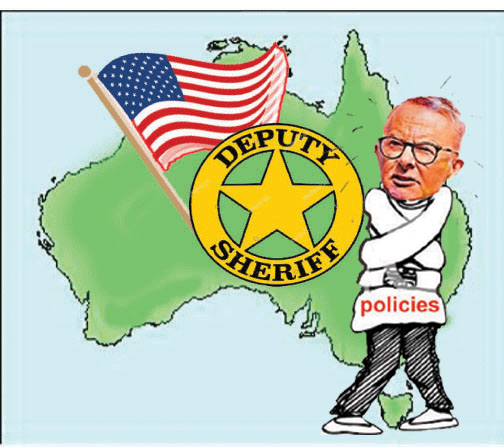
6 December 2025 David Tyler , https://theaimn.net/the-moral-hazard-of-being-us-deputy-sheriff/
In a secure room in Washington last week, Australian officials watched what the world would soon see.
A small Venezuelan fisherman’s tinnie drifts, already incinerated by a first missile. Two survivors cling to a piece of the wreckage. A pause. Then a second flash. A missile is aimed at the living, not the vessel. Eleven men die. US officials insist it was legal. Congress wants answers. The survivors are dead either way. It is an act of primitive, barbaric cruelty. The purpose is to erase witnesses and to send a message of terror as a deterrence.
That second strike; the notorious “double tap” has a long historical precedence. It is now under investigation as a potential war crime, authorised by the same US defence secretary Australia is binding itself to more tightly than at any time since 1945. This is what AUKUS really entangles us with: not an abstract “rules-based order,” but a command chain learning to live with killing those who survive.
Hannah Arendt warned that “most evil is done by those who never make up their minds to be good or evil.” Australia is drifting into that moral fog; without even pretending to know the difference.
Our Hands Are Not Clean
When the footage broke, six US lawmakers, all military veterans, reminded troops they must refuse illegal orders. President Trump’s response? Their comments were “seditious behaviour, punishable by death.” His team later softened his threat, but the FBI still moved to interview the six.
No strike operators are under investigation. The dead Venezuelans are not discussed. The controversy, incredibly, is whether Americans are allowed to warn other Americans not to commit war crimes.
Australia, moreover, is not just an innocent onlooker to a Trump’s gung-ho vigilantism, a state which shoots first and asks questions after. We have ADF personnel embedded in US commands that carry out attacks of this kind. We host Pine Gap, described by senior intelligence analysts as a premier US targeting facility in the southern hemisphere, linking satellites to weapons systems across the Middle East and Asia. We tell ourselves we host it for “security.” In practice, we help aim weapons we never authorised, and cannot refuse.
It is not the brutality that shocks the alliance; it is the dissent.
Asymmetry on Steroids
AUKUS was sold as strategic maturity; an insurance policy against an uncertain Indo-Pacific. Instead, it could become a transfer of sovereignty disguised as procurement. Australia pays up to AUD 368 billion for nuclear submarines that may not arrive until the 2040s. Ships we can neither crew, service nor fuel.
Even then, we may service American boats before our own. The Parliamentary Library analysis makes clear the technology transfer remains subject to US export controls. We do not buy independence; we buy a permanent maintenance job.
Washington gains unfettered access to Australian ports, deeper control of our deterrence posture, and logistical reach into Asia. Canberra gets second-hand privileges wrapped in secrecy.
As Bernard Keane has observed, Labor governs as though office is something to occupy, not use. The result is an alliance that treats American commercial and military interests as interchangeable, while our interests and needs are politely deferred.
The Pattern Is Becoming Impossible to Ignore
In just two weeks:
- The administration signalled openness to watered-down Nvidia AI chip sales to China, over the objections of US China hawks who argued they could bolster Chinese military capacity.
- A leaked plan for Ukraine’s reconstruction envisaged turning frozen Russian assets into profit streams for US-led venture funds; Europeans were expected to accept territorial loss and pay a commission for the privilege.
- Trump stalled sanctions against a Chinese spy agency implicated in extensive hacking to protect an upcoming trade trip to Beijing.
In each episode, intelligence and human rights concerns are bent around the same question: What makes money now?
Imagine if Canberra behaved as crassly. When Australia signs quiet deals with Beijing, we call it “strategic naïveté‘. When Washington does it, we call it “the alliance.”
Australia Has Agency – or It Has Nothing
This is not an argument for abandoning the alliance, but for removing the leash. A self-respecting partner demands:
- Transparency: Parliamentary oversight of defence commitments, including rules of engagement affecting Australian personnel and facilities.
- Reciprocity: Partnerships beyond one power; ASEAN, India, Japan, South Korea, the EU, not an exclusive dependence.
- Sovereign capability: Shipbuilding and cyber defence that serve Australia first, not as a service station for US fleets.
- Moral Limits: If allies breach international law, we do not close our eyes; we close our ports.
Blind obedience is not strategy. It is outsourcing judgment. Surrendering autonomy.
The Choice Is Not Between America and China
Canberra’s defenders of AUKUS love a false dilemma: independence equals Beijing. They mistake sovereignty for treason. Malcolm Fraser warned of this decades ago, describing Australia as a “client state.” We have since upgraded ourselves; to a nuclear client state, paying interest on promises.
Independence is not abandonment. It is partnership without servility. It is the ability to say no. If a second strike on drowning men does not trigger such a boundary, nothing will.
The real danger is no longer foreign power. It is our refusal to imagine ourselves without permission.
Choose Leadership Before It’s Chosen For Us
The Caribbean footage will fade. The legal arguments will thicken. The bodies will be forgotten. What will remain is the alliance, tighter than ever, and a government too cautious to ask what we might be agreeing to on our behalf.
Gough Whitlam once feared Australia would become a nation of “toadies and bludgers” trading sovereignty for illusion. That future arrives quietly. It arrives not with invasion, but with permission slips. It arrives when the second flash on a foreign sea is someone else’s problem, and ours only if we ask.
Albanese must choose leadership while we still have a choice to make.
Labor backs ‘practical’ nuclear disarmament, Wong says
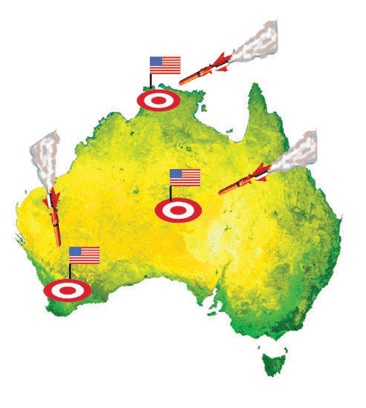
Anthony Albanese’s top diplomat has addressed a key question on Labor’s nuclear stance after a high-level defence official dropped a bombshell.
Joseph Olbrycht-Palmer, December 4, 2025 , https://www.news.com.au/technology/innovation/military/labor-backs-practical-nuclear-disarmament-wong-says/news-story/71ab3526def44ff9505452fb55bbc9f2
Labor backs “practical” efforts to reduce nuclear weapons stockpiles across the world, Anthony Albanese’s top diplomat has said after a senior defence official revealed a naval base in Western Australia could host nuclear-armed US submarines.
Greens senator David Shoebridge on Thursday peppered Foreign Minister Penny Wong with wide-ranging queries during Senate estimates.
Among them was why Defence Minister Richard Marles refused to “endorse” the Treaty on the Prohibition of Nuclear Weapons (TPNW) in an interview last month, as Senator Shoebridge characterised it.
He said it “caused deep despair” among nuclear weapons abolitionists “who have been pushing for this treaty for years”.
“Does the Albanese government support the Treaty to Prohibit Nuclear Weapons?” Senator Shoebridge asked.
Senator Wong said Labor was “engaging constructively on the evidence on the TPNW” but that existing frameworks were the best bet.
“Our party has a very proud history of championing practical – I emphasise that – practical non-proliferation and disarmament efforts internationally,” she said, adding that Labor is “steadfast in our support for the NPT”.
“The Treaty on Non-Proliferation of Nuclear Weapons is the cornerstone of global disarmament and non-proliferation.”
Recognising the “devastating consequences for humanity” bore by nuclear arms and concerns around the use of artificial intelligence in nuclear command systems, Senator Wong said the NPT offered the “best pathway to advance non-proliferation and disarmament”.
Signing the TPNW would block Australia from hosting any US military nuclear assets, counteracting the Prime Minister’s offer to Donald Trump in October of expanding port access for the US’ roaming Virginia-class submarines.
The submarines are the nuclear-armed vanguard of the US Navy.
During Senate estimates on Wednesday, Department of Defence Deputy Secretary Hugh Jeffrey was asked whether US submarines docking at Western Australia’s HMAS Stirling would be armed with nuclear capabilities.
Mr Jeffrey would not rule it out.
“The United States is very clear about the Australian government’s treaty obligations and our policy on those (nuclear) weapons,” he said.
“We respect the United States’ position of neither confirming nor denying.”
NewsWire has contacted Mr Marles’ office for comment.
US submarines carrying nuclear weapons could dock in Australia despite ban, Senate told.
Defence secretary appears to contradict previous assurances from Penny Wong that only conventionally armed submarines will visit Australian ports under Aukus deal.
Ben Doherty, 5 Dec 25, https://www.theguardian.com/australia-news/2025/dec/05/us-submarines-nuclear-weapons-australia-aukus
US submarines carrying nuclear weapons could dock at Australian bases, defence officials have told the Senate, and the Australian government and people would not know.
Senate estimates heard fierce debate over whether US Virginia-class submarines – set to “rotate” through Australian ports from 2027 as part of the contentious Aukus agreement – could carry nuclear weapons. Nuclear weapons are prohibited in Australia.
Defence department officials told senators there was “no impediment” to submarines armed with nuclear weapons visiting Australia, insisting that any such visit would not breach Australian or international law.
The US maintains a policy of “strategic ambiguity” around its nuclear deployment and it refuses to confirm or deny whether aircraft or seagoing vessels capable of carrying nuclear weapons are, in fact, carrying a nuclear warhead.
That ambiguity would apply to US submarines that might dock at Australian ports, as it now does to nuclear-capable B-52 bomber aircraft landing at RAAF Base Tindal in the Northern Territory, which is being upgraded to be able to accommodate more US bombers.
“We respect the United States position of neither confirming nor denying,” the Australian defence department secretary, Greg Moriarty, told the Senate.
But anti-nuclear campaigners and some senators argue that the evidence to the Senate undermines Australia’s non-proliferation commitments and risks making the country “a launchpad for nuclear war”.
They also say the acquiescence to US ambiguity over its nuclear weapons contradicts the foreign affairs minister’s assurance in a 2023 speech that only conventionally armed submarines would visit Australia.
“The US has confirmed that the nuclear-powered submarines visiting Australia on rotation will be conventionally armed,” Penny Wong told the National Press Club.
Sign up: AU Breaking News email
US Virginia-class submarines are to begin rotating through Australian ports – part of pillar one of the Aukus agreement – from 2027, before Australia buys then builds its own nuclear-powered, conventionally armed submarines.
The US Congress approved funding in 2024 for a new submarine- and ship-launched nuclear missile – the first new US nuclear weapon since the end of the cold war. The SLCM-N weapon is slated to be operational within a decade and Vice-Admiral Johnny Wolfe has told Congress that the weapons program is “focused on the integration of SLCM-N into the Virginia-class submarine”.
The South Pacific nuclear free zone treaty – known as the Treaty of Rarotonga and to which Australia is a party – prohibits the “stationing” of nuclear weapons in Australia (and the broader South Pacific zone). But Australia maintains that a US submarine, potentially armed with nuclear weapons, is not prohibited from visiting an Australian port.
Bernard Philip, assistant secretary of international policy at the Department of Defence told the Senate Australia would comply with its treaty obligations, which were also understood by the US.
“The United States does not station nuclear weapons in Australia,” he said. “Stationing nuclear weapons in Australia is prohibited by the South Pacific nuclear free zone treaty, to which Australia remains committed.
“There is no impediment under the Treaty of Rarotonga and the Treaty on the non-proliferation of nuclear weapons to the visit of dual-capable foreign platforms to Australia’s territory or transiting Australia’s airspace or waters.”
Dual-capable platforms are those able to carry both conventional and nuclear weapons. Defence officials said nuclear missiles deployable on Virginia-class submarines were still in development, labelling the scenario “hypothetical”.
The Australian director of the International Campaign to Abolish Nuclear Weapons, Gem Romuld, said the foreign minister’s commitment that nuclear weapons would not be rotating through Australia was now “dead in the water”.
“It’s taken just two years for expectations of an Aukus partner to shift, so what will come next?” she said.
“If Aukus is ‘not about nuclear weapons’, then Australia’s numerous assurances must be backed up with legal commitments. The best way to draw the line on nuclear weapons is to sign and ratify the UN Treaty on the Prohibition of Nuclear Weapons.”
Labor has formally committed in its party platform to signing and ratifying the weapons ban treaty “in government” but it has not yet signed done so. Seventy-four countries are now party to the treaty: none of the nine nuclear-armed states have signed it.
The Greens senator David Shoebridge asked in Senate estimates: “So we’re going to permit them to be sitting, floating off Fremantle in US-Virginia class submarines, and is it still the position that the Australian government won’t ask the US whether or not they’re nuclear-armed submarines, just like we don’t ask about the nuclear-armed B-52s?
“Is that still the position? Don’t ask, don’t tell?”
The secretary of the defence department said: “We respect the United States’ position of neither confirming nor denying.”
Earth’s Greatest Enemy, the second feature film project by Abby Martin, is a groundbreaking anti-imperialist environmental documentary.
Exempt from international climate agreements and rarely scrutinized in mainstream reporting, the Pentagon is the world’s single largest institutional polluter—spewing carbon, contaminating water, and scarring landscapes across the globe. Combining investigative journalism, striking visuals, and stories from impacted communities, this film challenges audiences to rethink the hidden costs of a global military empire and its planetary consequences. Provocative, urgent, and eye-opening, this is a documentary that will change how you see both the military and environmentalism. https://earthsgreatestenemy.com/
No fog, no war. Hegseth’s war crimes put Australian soldiers at risk.

by Michael Pascoe | Dec 3, 2025, https://michaelwest.com.au/no-fog-no-war-hegseths-war-crimes-put-australian-soldiers-at-risk/
Australian service personnel are embedded with a rogue military force committing war crimes. It is testimony to the Australian Government’s lack of integrity that they are not being recalled.
Australian service personnel are embedded with a rogue military force committing war crimes. It is testimony to the Australian Government’s lack of integrity that they are not being recalled.
As an American Admiral, Frank “Mitch” Bradley is at least likely to know of the episode that made Eck and co infamous – murdering the survivors of a Greek freighter their U-boat had sunk. Their victims were in lifeboats and clinging to wreckage in the South Atlantic night as they were machinegunned and attacked with hand grenades and small arms. Two of them had been taken aboard the U-boat for interrogation before being returned to the water and their death.
Eck, Weispfennig and Hoffmann were convicted at Nuremberg and executed by firing squad in October 1946.
Bradley, following Hegseth’s orders, didn’t use anything as primitive as small arms to kill the two survivors of a Venezuelan speedboat that had been hit by an American missile in international waters. From the comfort and safety of Fort Bragg in North Carolina, he sent another missile to blow them apart.
Since the Washington Post reported the crime on Friday night, the Trump administration has flipped and flopped between straight denial, outrage and careful wording as even some Republican politicians sensed a bridge too far.
Any denials by Trump, White House press secretary Karoline Leavitt and Hegseth, of course, have all the credibility of Trump, Leavitt and Hegseth. The MAGA mob can be guaranteed to roll on to its next scandal, increasingly misusing the most powerful military machine the world has ever seen as its supra-legal hit squad, broadcasting snuff movies to prove it.
Fog of war?
Overnight, as the denials and obfuscations could not be sustained, Trump and Hegseth confirmed and defended murdering the survivors of the original strike.
With enormous gall, Hegseth is citing “fog of war” and criticising journalists sitting in air-conditioned offices planting “fake stories”. Bradley and the cowards who carried out his orders were in air-conditioned comfort themselves, nowhere near any frontline or danger.
Hegseth is working his way through the usual pattern of a worm caught in scandal: first denial, then distancing as denial falters, penultimately defending, relying on Trumpistas being above the law. Beware the usual fourth step, distraction.
It’s taken the major Australian media outlets a little while to begin to cotton on to the depravity of murdering helpless survivors. As Todd Huntley, the director of the National Security Law program at Georgetown University Law Center and previously a judge advocate in the US Navy for more than two decades, told The New Yorker:
“Basically, this is the one strike that we know about where even if you accept the Administration’s position that the United States is in an armed conflict with these drug cartels, this would still be unlawful under the laws of armed conflict, because the individuals were out of the fight and shipwrecked, and thus owed protection.”
The ”even if” in that sentence is one that nobody outside the MAGA diehards and their apologists accepts. The overwhelming legal opinion is that blowing up civilian boats – the summary executions – are criminal actions. There’s been plenty written on what the theatre off the Venezuelan coast is really about; the one sure thing is
it has nothing to do with stopping fentanyl reaching the US.
Australians embedded
It’s become trite to quote Lieutenant-General David Morrison, saying as chief of the Australian Army that “the standard you walk by is the standard you accept”.
Besides, the Australian Government of Albanese, Marles and Wong doesn’t walk past the Trump slime, it embraces it, welcomes it, pledges allegiance to it, pays it protection money,
pimps out our nation for it and sends Australian men and women to serve it.
The last is ethically unsustainable. We have moved well beyond the merely cringing embarrassment of smiling Marles and Hegseth photo ops to questions of complicity as we facilitate America’s armed forces’ criminal acts
Distinguished former US officers have publicly warned troops not to follow illegal orders from the Trump gang and have been threatened by Trump for doing so. What has Australia’s Chief of Defence Force, Admiral David Johnston, told his people before handing them over to the likes of Admiral Bradley?
It is time to show just a little spine by bringing our troops home. That we are incapable of prosecuting our own war criminals is not an excuse for potentially creating more.
Marles mute on troops embedded
How many people are we putting in harm’s way? I don’t know. An email request to Marles’ defence media office has gone unanswered for more than 24 hours as I write. I wanted to know how many Australians are embedded or on exchange with the US military and in what areas.
In response to a question by Senator Jacqui Lambie in July, Defence answered that there were 193 ADF and APS personnel embedded in the US just for the first phase of AUKUS.
Instead of pursuing inane beatups about where Chinese ships in the Philippine Sea might be sailing for Christmas, maybe a press gallery with a clue could ask Marles at his next media performance if any Australian personnel are embedded with US Navy SEAL teams, the units carrying out Hegseth and Bradley’s illegal orders to murder.
Questions for the Government
For that matter, any Australian Government politician at any occasion should be asked if we share America’s values on war crimes, to what extent our nominally Australian Pine Gap and Exmouth facilities are being used for illegal military action against civilians off Venezuela, if we would support US military action against Venezuela, if they think Hegseth is even fit to return to his gig as a Fox News weekend clown, let alone remain as the US “Secretary for War”.
There are so many good questions to ask, but hey, watch the gallery stick to safe Sinophobia baiting and the usual horse race politics.
I can already hear the argument that the US has always been like this, fond of extra-judicial killings. True, there’s more than a century of invasions and covert and overt action overthrowing governments, good and bad, usually replacing them with something worse.
There are legal niceties, though, in the rules of war. Those rules have been bent and twisted to suit, most recently in the “War on Terror”, but this is something different, a different level of state evil.
Context was provided in The New Yorker’s interview with Todd Huntley:
“I think it’s the intentional nature of it. In most of those other situations where U.S. attacks have killed civilians, the deaths were due to either faulty intelligence, a faulty assessment of the facts, or an accident. This one seems to have been very clearly intentional. I think that is one thing that makes it much different, and on some level worse, because if you’re looking at the use of force in an armed conflict and you have violations, not everything rises to the level of a war crime.
This is a war crime.
And by keeping silent, by pursuing our policy of enmeshing our military with the US military, we are making Australia complicit.
Michael Pascoe
Michael Pascoe is an independent journalist and commentator with five decades of experience here and abroad in print, broadcast and online journalism. His book, The Summertime of Our Dreams, is published by Ultimo Press.
.
Government backflips on nuclear-capable submarines under AUKUS

The International Campaign to Abolish Nuclear Weapons (ICAN) has warned of escalating nuclear risks after Senate Estimates confirmed the government would not stand in the way of US Virginia-class submarines entering Australian waters while armed with nuclear weapons.
The Australian Government has acknowledged it would permit visits by US Virginia-class submarines that may carry nuclear weapons in future—a direct contradiction of Foreign Minister Penny Wong’s assurance at the National Press Club in April 2023 that AUKUS submarines visiting Australia would be conventionally armed.
During Senate Estimates on Wednesday night, senior Defence officials acknowledged that there is “no impediment” under Australian policy or treaty obligations to the visit of dual-capable platforms—an aircraft, submarine or missile designed to carry either conventional weapons or nuclear weapons—and that Australia would continue to respect the US policy of neither confirming nor denying the presence of nuclear weapons.
This means Australians could unknowingly host US or UK nuclear weapons offshore—with no right to be told.
Gem Romuld, Director of ICAN Australia, said:
“The Foreign Minister’s assurance that nuclear weapons won’t be rotating through Australia is now dead in the water. It’s taken just two years for expectations of an AUKUS partner to shift, so what will come next?
If AUKUS is ‘not about nuclear weapons’, then Australia’s numerous assurances must be backed up with legal commitments. The best way to draw the line on nuclear weapons is to sign and ratify the UN Treaty on the Prohibition of Nuclear Weapons.”
The Estimates exchange centred on the United States’ nuclear-armed sea-launched cruise missile program (SLCM-N), which the US Congress has directed the Navy to develop. Experts, including CNA analyst Decker Eveleth, have publicly confirmed these weapons can be deployed on Virginia-class submarines, the same class Australia is preparing to host at HMAS Stirling as early as 2027.
National Labor policy commits the government to sign and ratify the Treaty on the Prohibition of Nuclear Weapons (TPNW). Successive Labor conferences have reaffirmed this commitment, and more than 300 federal, state and local parliamentarians have signed the ICAN parliamentary pledge.
Romuld said:
“Australia is a strong proponent of the 1970 nuclear Non-Proliferation Treaty (NPT), an essential multilateral agreement but one that is no longer fit for purpose. The TPNW extends the work of the NPT to meet the challenges posed by today’s nuclear risks, and in finally comprehensively outlawing these weapons of mass destruction,”
“National Labor policy commits to signing and ratifying the TPNW in government, a promise yet to be delivered. It’s time for Australia to move on from just engaging with this treaty to putting pen to paper. The Prime Minister championed it and now has a responsibility to enact his policy before Australia becomes a launchpad for nuclear war.
“Both of our AUKUS partners are heavily armed with nuclear weapons. As a nation opposed to nuclear weapons, signing the TPNW puts essential protections and future-proofing in place for our country and our region.”
Australia’s New Censorship Is Voluntary – and That’s Why It’s Dangerous

Is a journalist free if they must first seek permission to tell the truth?
4 December 2025, David Tyler, https://theaimn.net/australias-new-censorship-is-voluntary-and-thats-why-its-dangerous/
When journalists internalise the state, the state no longer needs to silence them.
Australia has discovered the most polite form of censorship ever devised. No jackboots, no warrants, no midnight raids; just a quiet conversation, a “national security” reminder, and journalists voluntarily silencing themselves. Why pass laws when you can persuade the press to behave as though they already exist?
This is not satire. It is policy. And its blueprint comes straight from Whitehall.
The Quiet Request
Three weeks after Labor took office in June 2022, officials in Attorney‑General Mark Dreyfus‘s department reached across hemispheres to Britain’s Ministry of Defence. Their purpose was not military cooperation, intelligence sharing, or treaty work. It was media control; specifically, how to make censorship unnecessary by convincing journalists to do it to themselves.
The model: Britain’s Defence and Security Media Advisory Committee (DSMA).
The tool: a pre‑publication vetting mechanism disguised as collaboration.
The tone: “voluntary.”
The effect: silent.
DIY censorship? Brilliant.
Not a Draft. An Import.
Freedom of Information documents show this was not curiosity. It was a virtual IKEA flat‑pack – imported, piece by bureaucratic piece, from the mother country to its former colony. The assembly instructions came straight from London. A spare Allen key always comes in handy.
- 2019: Days after Federal Police raided ABC and News Corp offices over war‑crimes reporting, red‑faced Australian officials began attending DSMA sessions in London.
- 2021–2022: Bureaucrats refined plans for a “similar role” in Australia.
- May 2022: Secret roundtables with major editors were held. No minutes. No attendee lists. No sunlight.
- June 2022: Dreyfus’s department formally requested London’s assistance.
The continuity is chilling. Liberal ministers started the project. Labor ministers continued it. Bureaucratic inertia was the constant.
This isn’t a partisan conspiracy. It’s worse: a bipartisan agreement that journalists must learn to censor themselves politely.
How Britain Silences Without Silencing
DSMA is a masterpiece of bureaucratic subtlety. It issues “advisories,” not bans. Journalists “consult” before publishing, rather than submit for approval. A discreet military officer suggests what to omit “for national security,” while the state never dirties its hands with formal censorship laws.
The committee’s proceedings are confidential.
Its members are hidden.
Its advice is non‑binding.
Yet it boasts a 90% success rate persuading journalists not to publish.
Dissent hasn’t been criminalised; it has been professionalised. To ignore DSMA advice invites prosecution under the Official Secrets Act – or, more immediately, career suicide. The threat is legal, but the engine is cultural.
This is what Canberra admires: not censorship, but managed consent. The state doesn’t punish critics. The critics simply internalise the state. Intuit the boss’ wishes, a bit like a Murdoch editor.
The Dreyfus Paradox
Mark Dreyfus once helped chisel the High Court’s implied freedom of political communication into Australia’s constitutional framework. He argued that democracy depends on journalists criticising power freely.
Journalist training programs
And now? His department has chased a censorship model whose brilliance lies in never admitting it exists.
This isn’t hypocrisy. It’s absorption. Dreyfus didn’t renounce principle; he was subsumed by machinery. You don’t have to betray your beliefs if the institution performs the betrayal for you.
He thought he was protecting national security. What he safeguarded was secrecy itself.
The Machinery
This project did not dissolve when ministers changed. It doesn’t depend on elections. The relationships with UK Defence persist. Editors who attended closed‑door sessions still hold their seats. Bureaucrats continue to discuss frameworks for “voluntary advisory mechanisms.”
And the scaffolding grows stronger through parallel controls:
- Harsher secrecy offences that criminalise public‑interest reporting.
- Online misinformation laws with ministerial discretion over speech.
- Digital identity requirements for internet access.
- Discussion papers on journalist registration systems.
Individually, each seems modest. Together, they form something like a velvet‑lined cage.
The Respectable Mask
Systems like DSMA need legitimacy. Enter Peter Greste: a journalist jailed in Egypt, a symbol of press freedom, a moral compass. Conference transcripts show him engaging with advocates of reviving the Australian D‑Notice system, DSMA’s predecessor.
The argument attributed to him is seductive: pre‑publication consultation protects journalists from prosecution. Ask permission; avoid jail.
And in the process, a core civic principle collapses quietly under manners and moral suasion.
The Question
Australia must stop asking whether a DSMA system will be adopted. It already has been – culturally.
The question is whether Australians still believe freedom of political communication is a public right or whether it has become a regulated professional privilege.
Is a journalist free if they must first seek permission to tell the truth?
That’s the moment democracy becomes polite enough to disappear; and the risk now confronting every newsroom in the country.
* * * * *
CLARKE & DAWE: HOW TO SILENCE A COUNTRY WITHOUT LAWS
SETTING: Parliament House lawn.
BRYAN DAWE holding freshly printed FOI documents.
JOHN CLARKE appears as a senior official from the “Department of National Information Harmony,” calm, courteous, and utterly terrifying.
BRYAN DAWE: John, your department has been in discussions with the UK about its Defence and Security Media Advisory system.
JOHN CLARKE: Yes, Bryan. Very sensible. A voluntary censorship system.
BRYAN DAWE: Voluntary censorship?
JOHN CLARKE: Correct, Bryan. It’s censorship that journalists choose.
BRYAN DAWE: Why would journalists choose to censor themselves?
JOHN CLARKE: National security, Bryan. Also career security. Also avoiding prosecution. And staying in the good books.
BRYAN DAWE: So the government isn’t forcing them?
JOHN CLARKE: No, Bryan. That would look terrible. We simply provide advice about what not to publish.
BRYAN DAWE: And the journalists follow it?
JOHN CLARKE: Over 90% of the time, Bryan. Very cooperative species.
BRYAN DAWE: Doesn’t this undermine press freedom?
JOHN CLARKE: Not at all, Bryan. The press is free to comply.
BRYAN DAWE: FOI documents show your department approached the UK three weeks after Labor was elected.
JOHN CLARKE: Correct. But the previous government started it. It’s bipartisan secrecy, Bryan. The safest kind.
BRYAN DAWE: So both sides agree on this system?
JOHN CLARKE: Absolutely. It avoids embarrassment across the aisle. Truly unifying.
BRYAN DAWE: What is the advantage of a voluntary censorship system?
JOHN CLARKE: You never need to admit you’re censoring anything. The media does it for you. It’s very efficient.
BRYAN DAWE: And what if journalists refuse?
JOHN CLARKE: They are still free to refuse, Bryan. Then they can be prosecuted. Freely.
BRYAN DAWE: John, isn’t democracy supposed to rely on an independent press?
JOHN CLARKE: Yes, Bryan. Which is why the press must work closely with the government.
BRYAN DAWE: That sounds like dependency, not independence.
JOHN CLARKE: Independence is most reliable when it is professionally supervised, Bryan.
BRYAN DAWE: So transparency is preserved?
JOHN CLARKE: Entirely, Bryan. We always encourage transparency; provided it has been cleared with us first.
BRYAN DAWE: John, is this censorship?
JOHN CLARKE: No, Bryan. It’s voluntary. Only the consequences are compulsory.
This article was originally published on URBAN WRONSKI WRITES
Towards a transparent and responsible management of radioactive waste (a view from Canada)

Ottawa, December 4, 2025, www.ccnr.org/release_radwaste_transport_2025.pdf
Bloc Québécois spokesperson for the Environment and Climate Change, Patrick Bonin, held a press conference on December 2 on Parliament Hill in Ottawa, alongside Lance Haymond, Chief of the Kebaowek First Nation, Lisa Robinson, Chief of the Wolf Lake First Nation, and representatives of several environmental and anti-radioactive-pollution groups to co-sign a letter along with more than 80 environmental associations, elected officials, trade unions, and First Nations representatives in Ontario, Quebec and the Rest of Canada, calling for a moratorium on the transport of radioactive waste over public roads and bridges to the Chalk River site located beside the Ottawa River. [See the letter in English and French at www.ccnr.org/letter_e_f_2025.pdf ]
The signatories are calling on the federal government to ban, among other things, all imports of radioactive waste from other countries, including disused medical sources, expired tritium light sources, and irradiated nuclear fuel.
They are also calling on the Minister of Environment and Climate Change to conduct a strategic assessment of the transport of high-level and intermediate-level radioactive waste on public roads.
Quotes:
Ginette Charbonneau, spokesperson for the Coalition Against Radioactive Pollution, deplores the fact that “it is irresponsible to transport all radioactive waste under federal jurisdiction to Chalk River. It is doubly dangerous to transport the waste twice: once for temporary storage at Chalk River and a second time to its final destination.”
Gordon Edwards, Ph.D., president of the Nuclear Watchdog Canadian Coalition for Nuclear Responsibility, states that “The Age of Nuclear Waste is just beginning. It’s time to stop and think. First, we must stop moving the waste. This only increases the costs and the risks without solving the problem. Second, we must think of the need for three things – justfiication, notification, and consultation – before moving any of this dangerous human-made cancer-causing material over public roads and bridges.”
Jean-Pierre Finet of the Regroupement des organismes environnementaux en énergie (Alliance of Environmental Organizations on Energy) states, “We wholeheartedly support the call for a moratorium on the transport and importation of waste and the request for a strategic environmental assessment. We believe that Chalk River must cease to be our government’s nuclear waste dump.”“
“In 2017, Ottawa residents were denied a regional environmental impact assessment of radioactive wastes accumulating alongside the Ottawa River. Given all the proposed waste transfers underway and yet to be implemented, a strategic assessment is more urgent than ever,” explains Dr. Ole Hendrickson of the Ottawa River Institute.
“The government is willing to accept unacceptable risks, to silence affected nations, and to operate without any transparency or accountability,” says Lance Haymond, Chief of the Kebaowek First Nation. “We have learned long ago: Silence is Consent. We will not be silent.”
Lisa Robinson, Chief of the Wolf Lake First Nation, Canada, says, “We are all calling on Canada to do better with the nuclear situation in storage and transportation, and we call on all Canadian to insist on complete accountability for the tens of billions of dollars of public money that is being spent by those hired to manage these indestructible radioactive wastes.”
Contacts :
English
Gordon Edwards, Canadian Coalition for Nuclear Responsibility, Montreal
– ccnr@web.ca 514-839-7214
Ole Hendrickson, Concerned Citizens of Renfrew County and Area, Ottawa
– oleqhendrickson@gmail.com 613-735-4876
Brennain Lloyd, Northwatch, We the Nuclear Free North, North Bay, Ontario
– brennain@onlink.net 705-493-9650
French/English
Ginette Charbonneau Ralliement contre la pollution radioactive Oka (Québec)
– ginettech@hotmail.ca 514=246-6439
Jean-Pierre Finet, Regroupement des organismes environnementaux en énergie, Montréal
– pierre.finet@gmail.com 514-515-1957
Eva Schacherl, Council of Canadians – Ottawa
– evaschacherl@gmail.com 613-316-9450
Article: Transferts de déchets radioactifs à Chalk River | Le Bloc québécois reçoit de
nombreux appuis et ravive son appel à un moratoire | La Presse
Watch the press conference : Le Bloc demande un moratoire sur le transport de matières nucléaires | À la une | CPAC.ca
Link to the letter:letter_e_f_2025.pdf
Signatories of the letter…………………………………………………………………….
1 This month
Chernobyl: The Lost Tapes – A good documentary on Chernobyl on SBS available On Demand for the next 3 weeks– https://www.sbs.com.au/ondemand/tv-program/chernobyl-the-lost-tapes/2352741955560
15 April – Zoom –Nuclear Power is Not the Solution
Apr 15, 2026 01:00 AM in Canberra, Melbourne, Sydney

Join the International Physicians for the Prevention of Nuclear War (IPPNW) on Tuesday, April 14th for a timely webinar exploring the risks associated with nuclear power and challenging the myth that it offers a simple, safe, carbon-free solution to the climate crisis

21 April Webinar: No Nuclear Weapons in Australia
Start: 2026-04-21 18:00:00 UTC Canberra, Melbourne, Sydney (GMT+10:00)
End: 2026-04-21 19:30:00 UTC Canberra, Melbourne, Sydney (GMT+10:00)
Event Type: Virtual
A virtual link will be communicated before the event.
Host Contact Info: australia@icanw.org

of the week – Australians for War Powers Reform (AWPR)
To see nuclear-related stories in greater depth and intensity
 Antinuclear