‘This Is Not a War, but a Mass Murder Tragedy,’ Says Former US Assistant Secretary of Defense, Charles Freeman
November 18, 2023
Chas Freeman chairs Projects International, Inc.
For more than four decades, Projects International has helped its partner enterprises and clients to create business ventures across borders. It facilitates their establishment of new businesses through the design, negotiation, capitalization, and implementation of greenfield investments, mergers and acquisitions, joint ventures, franchises, one-off transactions, sales and agencies in other countries. The firm operates on five continents.
Ambassador Freeman is a career diplomat (retired) who was Assistant Secretary of Defense for International Security Affairs from 1993-94, earning the highest public service awards of the Department of Defense for his roles in designing a NATO-centered post-Cold War European security system and in reestablishing defense and military relations with China. He served as U. S. Ambassador to Saudi Arabia (during operations Desert Shield and Desert Storm). He was Principal Deputy Assistant Secretary of State for African Affairs during the historic U.S. mediation of Namibian independence from South Africa and Cuban troop withdrawal from Angola. Ambassador Freeman worked as Deputy Chief of Mission and Chargé d’Affaires in the American embassies at both Bangkok (1984-1986) and Beijing (1981-1984). He was Director for Chinese Affairs at the U.S. Department of State from 1979-1981. He was the principal American interpreter during the late President Nixon’s path-breaking visit to China in 1972. In addition to his Middle Eastern, African, East Asian and European diplomatic experience, he had a tour of duty in India.
Is the world warming faster than expected?

Is the world warming faster than expected? There have been historically
high sea temperatures, worrying lows in Antarctic sea-ice, and extreme
weather events hitting every continent – the latest being an “unbearable”
heatwave in Brazil. It’s now “virtually certain” that 2023 will be the
hottest year on record. That’s something that no major climate science body
expected at the start of the year.
Scientists have long known that
temperatures will continue to rise as humans keep releasing record amounts
of planet-heating greenhouse gases like carbon dioxide, mainly through
burning fossil fuels. This is the main cause of global warming. While they
are struggling to fully explain 2023’s “gobsmacking” surge in temperatures,
here are four additional reasons that could be behind the increases. A
‘weird’ El Niño; Cutting aerosols; A large volcanic eruption; An Antarctic
‘radiator’?
BBC 18th Nov 2023
Nuclear news- week to 20th November

Some bits of good news. Dominica Creates World’s First Sperm Whale Reserve–for the 200 That Call the Island Home . Wave-Powered Desalination System Produces 13,000 Gallons of Drinking Water a Day From Each Buoy. China’s CO2 emissions are forecast to start shrinking next year, with fossil fuel use predicted to head into an era of structural decline, along with surging investment in solar in the country.
************************************************************
TOP STORIES. *‘Operation Al-Aqsa Flood’ Day 37: Al-Shifa Hospital No Longer Functioning as Israeli Ground Troops Surround the Hospital.
*Zelensky Headed For DISASTER, Ukraine’s FAILED Counteroffensive COVERED UP: David Sacks. https://www.youtube.com/watch?v=VaJCUDOE6UA.
*Who Would Take the Brunt of an Attack on U.S. Nuclear Missile Silos?
*US, UK to Push Pledge to Triple Nuclear Power by 2050 at COP28.
*The End of DOE’s Flagship Small Modular Nuclear Reactor (SMR) — A Cautionary Tale.
***********************
Climate. 1.5C Limit ‘Only Option’ For Saving Earth’s Ice And Snow. Is the world warming faster than expected?.
Christina notes. The onslaught formally begins. The ruthless, morally bankrupt nuclear lobby moves to take over the COP 28 climate summit. Nuclear lobby targets young women, in the leadup to their propaganda blitz at COP 28.
AUSTRALIA. Whistleblower David McBride – his Trial Tests Australian Justice. A Duty to Obey: David McBride, Whistleblowing and Following Orders. The Militarised University: Where Secrecy Goes to Thrive.
AUKUS Submarine Revelations Compel a Rethink. $31m fines, 25 years jail for nuclear submarine safety breaches.
Barngarla traditional owners win national conservation award for successful radioactive waste campaign news on radioactive waste.
*********************************************
ART and CULTURE. Art Exhibition inspired by concerns over Sizewell C nuclear plan.
CLIMATE. Frozen fallout: radioactive dust from accidents and weapons testing accumulates on glaciers.
CIVIL LIBERTIES. UK gov’t departments compiling ‘secret files’ on its critics to prevent them speaking at official events.
ECONOMICS.
- Small nuclear reactors in Canada: at what cost? America’s first Small Modular Nuclear Reactor (SMR) fizzles out as uranium continues to ride high. THE COLLAPSE OF THE UAMPS small nuclear reactor DEAL RAISES THE PROSPECT OF BANKRUPTCY FOR NUSCALE. U.S. Bets on Small Nuclear Reactors – But major obstacles loom. Consortium green lights European NuScale style (!) small nuclear reactors.
- EDF won’t make ‘massive fortune’ from Hinkley, says director.
- The U.S. Is Paying Billions to Russia’s Nuclear Agency.
- French government, EDF agree on €70 MWh for nuclear power.
- World Nuclear Industry Status Report due on 6 December.
EDUCATION. Over 1,200 ‘Educators for Palestine’ Sign Open Letter Demanding Ceasefire. UK nuclear lobby brainwashing young students, especially women.
EMPLOYMENT. Are staff shortages at Sellafield nuclear power plant affecting safety at the site?
ENERGY. Chernobyl, site of world’s worst nuclear disaster, could soon be home to an exciting new project: ‘Tolerable exposure levels for limited periods of time’.
ENVIRONMENT. Frozen fallout: radioactive dust from accidents and weapons testing accumulates on glaciers. Fukushima Nuclear Power Plant starts 3rd round of wastewater release, potentially impacting seafood quality in U.S.
ETHICS and RELIGION. Wars end in defeat for everyone: A reflection on Gaza. What a Catholic peace studies expert thinks is the way out of war in Gaza. Birthplace of Jesus dismantling all Christmas decorations ‘in solidarity with our people in Gaza’. ‘Burn Gaza now’ – top Israeli MP.
HEALTH. Exposure to CT Radiation and Risk of Blood Cancers in Young Patients.
HISTORY. The U.S. Army tried to build a secret military nuclear city under Greenland’s ice.
LEGAL. CND mounts legal challenge against US nuclear weapons storage at RAF Lakenheath.
MEDIA. Israelis Keep Hurting Their Own Public Relations Interests By Talking. How a hasbara group’s sham investigation put Gaza journalists in the firing line. Smearing Photojournalists as Hamas Collaborators – Gets Them Added to a Hit List.
NUCLEAR TECHNOLOGY. UK small #nuclear competition: Rolls Royce in, Bill Gates snubbed. U.S. military quietly revokes planned contract for small nuclear plant at Alaska Air Force base. Canadian Nuclear Safety Commission queried on proposal for untested small nuclear reactors in Ontario. Why the Godfather of A.I. Fears What He’s Built. Finland’s OL3 nuclear reactor suffers unexpected outage.
OPPOSITION to NUCLEAR . Council urged to review plans that could lead to UK hosting US nuclear bombs.
POLITICS.
- Zelensky may be ousted – ex-presidential aide. Ukraine war a ‘good investment’ for US – Trump rival .
- White House, Senate, House all out of sync with electorate on Gaza. Internal State Dept. memo blasts Biden, U.S. policy on Israel-Hamas war. Over 400 of Biden’s Own Administration Officials Demand Ceasefire in Gaza. Jill Stein’s Ominous Warning on Growing Threat of Nuclear War.
- USA’s Energy Department’s nuclear commercialization ‘small nuclear‘ adventures are burning holes in the taxpayers’ pockets. A small modular reactor’s demise calls for big change in Energy Department policy.
- Something fishy: Welsh Councils excluded from latest Hinkley Point C Consultation. UK MPs say that Wylfa big nuclear power project should go ahead, locals not so sure The Sir John Armitt interview: ‘I’m not sure the government is really serious about nuclear’.
- A four-decade-old Pacific treaty was meant to preserve the ‘peaceful region’. Now experts say it’s being exploited.
POLITICS INTERNATIONAL and DIPLOMACY.
- Biden and Xi will sign a deal to keep AI out of control systems for nuclear weapons: report. The US and China re-engage on arms control. What may come next.
- How the United States and its NATO allies sabotaged a peace between Russia and Ukraine. Washington raises stakes on ‘losing hand’ in Ukraine. EU media names member states against Ukrainian membership.
- Time’s Up for Netanyahu and Biden. Patrick Lawrence: ‘The Hinge of History’- Palestine and the New World Order. Herzog: Israel will maintain ‘very strong force’ in Gaza, Translation: We’re not leaving. Ever. First Ladies make joint call on the world about Palestine.
PUBLIC OPINION. Poll: Majority of Americans Support a Ceasefire in Gaza.
SAFETY.
- The Uzbek nuclear endeavour: Boon or bane for Central Asia?
- Russia Shuts Down Nuclear Plant Reactor Unit After Malfunction.
- Greenpeace installs radiation sensors in Ukraine and calls for EU sanctions against Rosatom.
- Simon Daigle lists the public concerns that must be addressed in planned development of BWRX-300 small nuclear reactors – Submission to Canadian Nuclear Safety Commission.
- Incident: Major malfunction on Royal navy nuclear submarine plunges warship into ‘danger zone’
SECRETS and LIES. Deadly alliance: Why has the CIA decided to allow US media to confirm its involvement in Ukraine’s brutal assassination campaign? Don’t be fooled. Biden is fully signed up to genocide in Gaza. Biden and Israel Refuse to Provide Proof of Hamas Base at Gaza Hospital. Biden Admin Justifies Israel’s Assault on Gaza Hospitals With Recycled Israeli ‘Intelligence’. Lies Surrounding Al-Shifa Hospital Recall Those Preceding the Iraq Invasion.
WASTES. Decommissioning. Uncharted waters: Navy navigating first-ever dismantling of nuclear-powered carrier. UK Has £10 Billion Per Nuclear Reactor Decommissioning Bottomless Pit.
WAR and CONFLICT. Israel demolishes Gaza parliament (VIDEO). Netanyahu Says Israel ‘Not Successful’ in Minimizing Civilian Casualties in Gaza. Amnesty International Calls Israel’s War on Gaza a ‘Graveyard of Children’. ‘This Is Not a War, but a Mass Murder Tragedy,’ Says Charles Freeman, Former US Assistant Secretary of Defense: https://www.youtube.com/watch?v=JRb4QhZi2MA&t=860s Mainstream
Narrative On Ukraine-Russia War CRUMBLING, Conflict Is Unwinnable https://www.youtube.com/watch?v=9S8Kaq0POOs . Zelensky comments on ‘frozen conflict’ prospects.
WEAPONS and WEAPONS SALES. The U.S.’s Plans to Modernize Nuclear Weapons Are Dangerous and Unnecessary. The Latest Nuclear Boondoggle? The Missiles on Our Land: New Research Reveals Growing Risks of America’s Land-Based Nuclear Missiles. Behind the Scenes at a U.S. Factory Building New Nuclear Bombs.
Nuclear weapons sharing, 2023. Armed With B61-12 Nuclear Bombs, Dutch F-35A Fighters Get Close To Nuke Strike Mission. Israel’s Nuclear Weapons in the Spotlight. US Is Quietly Sending Israel More Ammunition, Missiles. EU’s Ukraine weapons goal ‘unattainable’ – Germany .
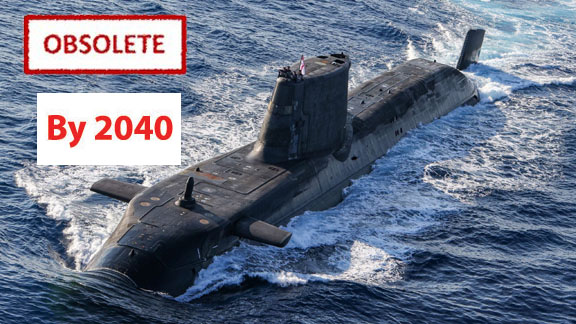
AUKUS Submarine Revelations Compel a Rethink
16 NOV 2023, By Dr Alan J. Kuperman, https://www.internationalaffairs.org.au/australianoutlook/aukus-submarine-revelations-compel-a-rethink/?fbclid=IwAR0aqbbEXcIh3HpPpmlRKMD9gIJfXmHWKZL6hbNYuq7jT1HhiEBwLsHZ95Q
US Congressional report argues that Australia’s acquisition of nuclear submarines would actually undercut deterrence of China by depleting the US submarine fleet. With the promise of nuclear submarines becoming ever distant, it may be time to reconsider other options.
Recent surprising disclosures have revealed that nuclear-powered submarines, which Australia plans to acquire under the trilateral AUKUS partnership, cannot achieve three of the government’s main stated objectives for the program. The Australian purchase would degrade, not enhance, deterrence against China. It could provide only a miniscule and inconsistent presence at sea even after two decades. And it would undermine rather than sustain the global non-proliferation regime. Thankfully, only a tiny fraction of the program’s total estimated cost of up to AUD $368bn has been spent to date, so it is not too late for Australians to consider better ways to ensure national security.
On the first objective, Australia’s former prime minister, Scott Morrison, who negotiated the AUKUS submarine deal, claimed it was necessary to achieve a “credible deterrent” against China, and his successor Anthony Albanese soon agreed. Last month, however, the US Congressional Budget Office (CBO) belied that assertion. It reported that, because the United States would sell Australia three to five existing nuclear attack submarines (SSNs) from the US fleet before the US industrial base could expand to replace them, “the sale of SSNs to Australia would reduce the number of attack submarines available to the [US] Navy.”
The CBO then posed a crucial question: “Would China be less deterred if the United States reduced the number of its attack submarines to help Australia develop its submarine force?” The answer appeared obvious because “Australia would control its own submarines, and their participation in any particular conflict would not be guaranteed. In fact, in March 2020, the Australian defence minister stated that his country did not promise to support the United States in the event of a conflict involving Taiwan and the People’s Republic of China.” Thus, the report indicated that Australia’s acquisition of nuclear submarines would undercut deterrence of China – exactly opposite to the claims of Australia’s leaders.
Second, Morrison declared in 2021 that AUKUS’s “first major initiative” would be to provide Australia a nuclear-powered submarine fleet. This year, however, Albanese conceded that the still-under-design SSN-AUKUS would not begin delivery to Australia until the 2040s at least. In the meantime, according to RAN Vice Admiral Jonathan Mead’s Senate Estimates testimony in May, Australia expects to receive from the United States by the late 2030s two partially used nuclear submarines and one new one. That may sound like three submarines, but it is illusory. Recent reports reveal that only 63 percent of the US Navy’s submarines are operable in any year, and those that can operate spend only 39 percent of the year at sea. Thus, on average, each US attack submarine is on duty for just 25 percent of the year, or three months. This means that even if Australia received its promised three US vessels by the late 2030s, on average the RAN would be able to deploy less than one nuclear submarine at a time. Is that really the “fleet” that Aussies expect for their billions of tax dollars?
Third, Albanese promised at the 2023 AUKUS summit that “Australia’s proud record of leadership in the international nuclear non-proliferation regime will of course continue.” However, the SSN-AUKUS would violate a fundamental tenet of that regime by needlessly using weapons-grade, highly enriched uranium (HEU) fuel – sufficient for hundreds of nuclear bombs.
Since the 1970s, the non-proliferation regime has banned HEU fuel in the new reactors of countries like Australia that have pledged under the Nuclear Non-Proliferation Treaty to eschew nuclear weapons. The regime went so far as to convert 71 old reactors from HEU fuel to low-enriched uranium (LEU) fuel, to eliminate the proliferation risk. Indeed, HEU minimisation is deemed so vital for non-proliferation that it has been applied even to tiny reactors containing only one kilogram of weapons-grade uranium. Now Australia intends to eviscerate that non-proliferation norm by fuelling each SSN-AUKUS with hundreds of kilos of such bomb-grade uranium.
Fortunately, nuclear submarines do not require HEU fuel and can function perfectly well with LEU fuel, as the navies of France and China use. Despite this, Australia and its partners insist on HEU fuel for SSN-AUKUS, to enable smaller reactors without refuelling, thereby sending a message globally that HEU is required for the best submarines. As a result, we can expect other countries to declare – as Iran did immediately following the AUKUS announcement – that their navies too will use HEU, which they will enrich themselves, opening a huge back door to nuclear weapons. By contrast, LEU fuel is infinitely more proliferation resistant than HEU fuel, notwithstanding musings by uninformed AUKUS cheerleaders.
Australia’s defence minister, Richard Marles, has dismissed proliferation concerns by saying the HEU fuel would be imported in “sealed” reactors and thus inaccessible. In reality, however, Australia announced this year that it would extract the HEU fuel from all retired submarines and retain it in perpetuity, thereby savaging the non-proliferation regime even further. The supposedly “spent” fuel from each retired submarine would in fact contain an estimated 200 kilograms of still very highly enriched uranium, sufficient for a dozen or more nuclear weapons.
So, what can Australia do now? At the least, it should ask its partners to switch to LEU fuel for Australia’s SSN-AUKUS, to comport with non-proliferation norms. Fortunately, the US Congress has funded development of LEU naval fuel for the last eight years, providing a head-start to incorporate such proliferation-resistant fuel in the ongoing design of the SSN-AUKUS. If Albanese means what he says about “leadership in the international nuclear non-proliferation regime,” this step is a no-brainer.
The bigger question is whether Australia should abandon pursuit of nuclear submarines entirely. The Congressional report suggests that doing so would actually strengthen deterrence over the next few decades by not depleting the US fleet. Australia instead could reprogram the hundreds of billions earmarked for its nuclear submarines to buy defence systems that would complement rather than undermine US deterrence. That certainly sounds like a win-win.
Alan J. Kuperman is associate professor and coordinator of the Nuclear Proliferation Prevention Project at the LBJ School of Public Affairs, University of Texas at Austin.
Barngarla traditional owners win national conservation award for successful radioactive waste campaign news on radioactive waste
16 NOVEMBER 2023, https://www.acf.org.au/barngarla-rawlinson-award-win—
The Barngarla Determination Aboriginal Corporation has been awarded the 2023 Peter Rawlinson Award for a successful seven-year campaign to protect their country in South Australia from the long-term threats posed by radioactive waste.
The award, which celebrates outstanding voluntary contributions to protect the environment, was announced at the Australian Conservation Foundation’s AGM in Melbourne tonight.
“In August 2023, a David and Goliath struggle came to an end when federal Resources Minister Madeleine King announced the federal government would not advance a plan inherited from the former Coalition government to locate a national radioactive waste facility near Kimba on SA’s Eyre Peninsula,” said ACF’s nuclear free campaigner Dave Sweeney.
“The federal waste plan was deeply flawed and inconsistent with international best practice.
“The Barngarla always opposed radioactive waste on their country and repeated calls for Morrison government ministers Matt Canavan and Keith Pitt to scrap the plan were ignored.
“For seven years, against sustained pressure and propaganda, they stood firm.
“In July 2023, the Federal Court found Minister Pitt’s decision to declare the Kimba site was not valid because it was biased, rather than based on an independent and thorough process.
“Federal Labor’s subsequent decision to accept the court’s judgment was a prudent and a proper call and offers an important chance to change the government’s approach to this complex issue.
ACF thanks the Barngarla and acknowledges the sustained and successful efforts of a proud community to honour their past and protect their future. All of us are richer as a result.”
Established in 1992, the Rawlinson Award is given annually in memory of ACF Councillor Peter Rawlinson – a zoologist, lecturer in biological science and environmental campaigner.
THE COLLAPSE OF THE UAMPS small nuclear reactor DEAL RAISES THE PROSPECT OF BANKRUPTCY FOR NUSCALE

Crypto miners typically require the lowest-cost energy sources such as hydropower. Why then would Standard Power be interested in a Small Modular Reactor solution? It is way more expensive as the UAMPS fallout has demonstrated. This incongruity is already a red flag.

November 16, 2023 · by Iceberg Research
On 19 October 2023, we showed that NuScale’s key business contract with Utah Associated Municipal Power Systems (“UAMPS”) was at significant risk of termination. NuScale dismissed our report, labelling it as ‘riddled with speculative statements with no basis in fact’. Just a few days later, the company announced the termination of the UAMPS contract. Bloomberg characterised the cancellation as ‘abrupt’ but our report had already pointed out multiple signs that suggested its impending demise.
In its rebuttal, NuScale wrote that “…the CFPP being developed by Utah Associated Municipal Power Systems has its own project challenges not attributable to NuScale’s SMR technology”. The fact is UAMPS members abandoned ship because of escalating costs, which occurred even before any construction had begun. This structural problem is likely to repeat itself in future commercial relationships.
In its rebuttal, NuScale wrote that “…the CFPP being developed by Utah Associated Municipal Power Systems has its own project challenges not attributable to NuScale’s SMR technology”. The fact is UAMPS members abandoned ship because of escalating costs, which occurred even before any construction had begun. This structural problem is likely to repeat itself in future commercial relationships.
Once you are on a dead horse, you dismount quickly and move on to others,” said NuScale CEO John Hopkins when referring to the UAMPS contract on the 3Q23 earnings call. That poor horse was the cornerstone of NuScale’s business case and we are now left with the other major contract: Standard Power.
We reiterate that this contract is a pipe dream that was designed to divert attention from the loss of UAMPS. People familiar with project finance along with performance and credit risk (we are) would shake their heads. To recap, Standard Power is a small crypto dataserver company — with minimum internet footprint — to whom NuScale expects to deliver 24 units of 77 MWe modules, totalling 1,848 MWe in capacity. We estimated this contract was worth ~$37bn. NuScale questioned this number saying the company did not provide “any forecast for the expected value of the agreement with Standard Power…”. To get our number, we simply used the UAMPS price adjusted for the number of reactors. So it’s undoubtedly a massive contract.
Crypto miners typically require the lowest-cost energy sources such as hydropower. Why then would Standard Power be interested in a Small Modular Reactor solution? It is way more expensive as the UAMPS fallout has demonstrated. This incongruity is already a red flag. We also wonder: why did Standard Power not participate in the UAMPS project, since NuScale was actively seeking more subscriptions to reach the 80% target?
Still, Standard Power is touted by NuScale as a credible partner because its investors comprise “Ultra high net worth family offices and financial institutions” that have “access to capital in excess of $10bn”. Even if this is true (which we doubt because of Standard Power’s size and the lack of identification around its investors), who cares?
- Have these financiers directly committed to the project? No.
- Will these family offices invest all of their $10bn capital in a $37bn contract? This makes no sense.
- Is it realistic to expect banks to finance crypto-related projects when the banking industry has cracked down on crypto financial flows? Good luck. It’s unlikely to even pass the compliance department.
During the 3Q23 conference call, TD Cowen analyst Marc Bianchi questioned Standard Power’s credibility as a counterparty. All he got from CFO Robert Ramsey Hamady was a smoke screen (see below on original)……………………………………………..
Management confidently states that NuScale has a “solid balance sheet” with $197m of cash at the end of September, and no debt. This perspective overlooks NuScale’s rapid cash burn of $153.9m over the last 12 months and ignores the impact of the UAMPS contract termination, which adds ~$63.3m in liabilities. On this basis, we estimate that NuScale has an 11-19 month cash runway depending on whether they draw on the ATM, which will dilute existing stockholders…………………………………….
As detailed in our first report, the DOE committed substantial funding towards the project, contingent on matching private money. However, the termination of the UAMPS contract implies any further support will be re-evaluated.
The company’s trajectory bears striking similarities to the B&W mPower project, a joint venture formed in 2010 between Babcock & Wilcox and Bechtel. Like NuScale, mPower was developing a small modular reactor and enjoyed DOE backing. Babcock & Wilcox, mPower’s 90%-shareholder, attempted but failed to sell a majority stake in the project. In a similar vein, NuScale’s largest shareholder Fluor is actively trying to sell around 30% of its equity interest in NuScale. There was eventually a significant reduction in funding for mPower. In March 2017, Bechtel withdrew from the joint venture, pointing to the challenges of securing a site and an investor for the first reactor. This led to the termination of the mPower project and Babcock & Wilcox paid Bechtel $30m as settlement.
NuScale is now staring at the likelihood of bankruptcy. It will not see any significant cash inflows with the UAMPS commercial setback. The company’s only way to stay alive, albeit for a short time, is to massively dilute its shareholders.
Wars end in defeat for everyone: A reflection on Gaza
The selection of images is at the heart of the implacable demand from both sides for uncritical solidarity, for support for the right to self-defense and legitimation of the means used against the other. In this battle for public opinion, many stand with Israel and many others with the Palestinians.
The portrayal of the other side as demonic justifies the means used to fight it. The enemy is dehumanized, commonly likened to savage animals that have lost any shadow of humanity, morality or logic, killing machines that can only be stopped by brutal and merciless war.
Violence and victory
Fed by what seems like an unquenchable thirst for revenge, both sides to the conflict propose that violence will bring victory. The belief that victory is attainable by defeating the enemy in pitiless warfare is at the heart of the rhetoric of war. This is perhaps the most venomous myth in any conflict.
America, the Jesuit Review David Neuhaus, November 16, 2023
In the early morning of Saturday, Oct. 7, 2023, for Jews not only Sabbath but also Simchat Torah, a holy day celebrating the reading of the Torah, hundreds of armed Palestinian militants from Hamas broke through the barriers between the Gaza Strip and Israel or floated above them, pouring into Israel. They were accompanied by a barrage of missiles fired into Israel. They sowed terror and wreaked havoc, killing about 1,200, wounding thousands more and kidnapping over 240 Israeli soldiers and civilians.
The planning, implementation and ferocity of the attack took Israel by surprise—not only because Israeli intelligence had not uncovered the plot beforehand but also because the army took such a long time to neutralize the threat. Israelis were left shocked and horrified, while many Palestinians watched with a certain sense of vindication and some even rejoiced. Israel immediately responded with an intensive bombardment of Gaza, calling up its military reserves and massing its troops on the border with Gaza. The pounding intensity of the Israeli response was not only a reaction to the horrors that had been committed but also an attempt to restore some sense of security in military superiority after the shameful negligence that had allowed the attacks to take place.
The next day, Sunday, Oct. 8, Pope Francis addressed the world in his Angelus address:
I am following apprehensively and sorrowfully what is happening in Israel where violence has exploded yet more ferociously, causing hundreds of deaths and injured. I express my closeness to the families of the victims. I am praying for them and for all who are living hours of terror and anguish. May the attacks and weapons stop. Please! And may it be understood that terrorism and war do not lead to any resolutions, but only to the death and suffering of many innocent people. War is a defeat! Every war is a defeat. Let us pray that there be peace in Israel and in Palestine.
The Israeli Embassy to the Holy See reacted to this statement and those that followed with unease, claiming that the Holy Father and Cardinal Pietro Parolin, the Holy See’s secretary of state, were using a discourse that manifested “linguistic ambiguities and terms that allude to a false symmetry.” In insisting that Israel had a legitimate right to self-defense but should not indiscriminately bomb Gaza, the Holy See, the Israeli Embassy argued, was “suggesting parallelisms where they do not exist.”
The issue raised is a serious one. What language should one use to talk about the Israeli-Palestinian conflict? This is especially urgent at this time when the conflict takes on dimensions of violence that are unprecedented and emotions run high. How does one try to formulate a discourse that can encourage moderation, support dialogue and promote reconciliation even in the midst of battle? The issues involved are complex, but one must first recognize the morally problematic discourse that is being used by both sides in the conflict in order to dominate the narrative and garner uncritical support.
Whose side are you on?
The two sides to the decades-long conflict, Israelis and Palestinians, not only oppose each other with military arsenals but also attempt to mobilize public opinion at home and abroad in order to justify their actions. The military battle is parallel to the battle to control the images, sounds and words that are broadcast from the battlefield.
On the one hand, terrifying images of armed and masked Hamas militants pouring into Israel and wreaking destruction, killing, raping and maiming in a drunken orgy of vengeance began to appear in the media. These images capture the massacres of the Israeli men, women and children who were mowed down in the area bordering the Gaza Strip, among them hundreds of young people killed while at a music festival and dozens slaughtered, including babies in their cribs, in the taking of the small village of Kfar Aza. The scenes show bodies strewn in public places and in homes, with countless body bags displayed for all to see the enormity of the carnage. Photographs and short videos document the elderly women and young children taken hostage by Hamas, dragged back into the Gaza Strip together with dozens of others, provoking profound terror and searing rage.
On the other hand, Israel’s pummeling of the Gaza Strip with its sophisticated armory of precision weapons has provided a parallel and very different canon of images. Neighborhoods have been erased and high-rise buildings reduced to rubble in seconds, with thousands of Gazan men, women and children buried in the ruins. Hundreds of thousands of Gazans fleeing their homes provide more images of panic and desperation. On Oct. 13, the Israeli army ordered Gazans to evacuate the entire northern part of the Gaza Strip. Images of the flow of people carrying a few precious belongings added to the collection of heart-rending scenes.
The military battle is parallel to the battle to control the images, sounds and words that are broadcast from the battlefield.
This roll of images shows daily the extraction of an unending stream of bodies of men, women and children from their bombed homes, the writhing agony of the wounded carried off to overcrowded, underdeveloped and grossly overloaded hospitals, the non-stop shrieks of parents or children of the dead, their relatives and friends, gathered around the corpses of their loved ones.
The selection of images is at the heart of the implacable demand from both sides for uncritical solidarity, for support for the right to self-defense and legitimation of the means used against the other. In this battle for public opinion, many stand with Israel and many others with the Palestinians.
In the aftermath of the initial Hamas attack, President Biden declared that his country’s support for Israel was “rock solid and unwavering.” Leaders from major Western European countries followed suit. Israeli suffering was showcased to explain these unilateral manifestations of support. Israeli victims have names, faces, families and voices that cry out their pain in the media. Massive demonstrations have supported Israel, screaming out their condemnation of Hamas, some using expressions redolent of racism, anti-Arab sentiment and Islamophobia.
Palestinian suffering, although seemingly passed over by those who support Israel, is showcased in Arab, Muslim and many other countries, again galvanizing the sense that the world is unjust, that the powerful side with the powerful and the poor continue to be mercilessly exploited. Massive demonstrations of supporters of the Palestinians screamed out their condemnation of Israel, some using expressions redolent of antisemitism, and manifested a fury at what was termed the hypocrisy of mourning Jewish victims and ignoring Palestinian ones.
Who started it?
Israelis and Palestinians produce very different narratives concerning who is to blame for what is happening. In times of war, it is comforting to know who are the good and who are the bad; that way, the aggressor and the aggressed can be clearly separated from one another, one cheered on and the other excoriated.
On Oct. 7, Benjamin Netanyahu, prime minister of Israel, proclaimed: “We will take mighty vengeance,” as Israel launched its military campaign, named “Operation Swords of Iron.” For those supporting Israel, it is clear that the narrative begins on that black Saturday morning. Israeli President Isaac Herzog stated the following in his meeting with the press on October 12 : “There was no reason at all for this flaring up which ended in the worst tragedy that was ever inflicted in the history of Israel, and the highest number of Jews killed since the Holocaust, including Holocaust survivors
………………………………………………………… . The proportions of what happened on Oct. 7, however, not only raised a very acute question about the invincibility of Israel’s military and intelligence network but also raised the terrifying question about whether the state of Israel is after all a safe haven for Jews fleeing violence in a world in which they were a marginal and often persecuted minority.
Muhammad Dayf, the supreme commander of Hamas’s military wing, named this stage of the ongoing conflict “Al-Aqsa Storm” and declared: “Enough is enough!” Hamas declared that this incursion into Israel was itself a response to an ongoing occupation and repression that have been going on for decades. More precisely, Palestinians pointed to increasing Israeli attacks and repressive policies directed against Palestinians throughout the territories Israel had occupied since the Netanyahu rightwing coalition came to power, as well as the intensifying activity of Jewish extremists in the area of Jerusalem’s Haram al-Sharif (what Jews often call the Temple Mount). For those supporting the Palestinians, the success of Hamas’s attack surprised them as much as it did Israel. Well planned, well executed and devastatingly successful in its initial aims, the attack is not seen as a beginning but as a response to a long series of Israeli acts of violence.
Cardinal Pierbattista Pizzaballa, the Latin Patriarch of Jerusalem, said a few days before the present events that the Gaza Strip was “an open-air prison.”
The attack is justified by Hamas supporters as a reaction to the regime that has kept them enclosed in an overpopulated strip of land, mostly filled with sprawling refugee camps; Israel, they argue, has kept the Gaza Strip under a stranglehold siege. Refugees in Gaza constitute about 70 percent of the population, people driven out of the territories of the new state of Israel in 1948 and their descendants. The dire living conditions since then, worsened by periodic periods of confrontation with Israel since Hamas came to power in 2006, have left it battered and bruised, its population bleeding and its infrastructure regularly devastated. Furthermore, since 2006, the strip has been under a siege that deprives its residents of minimal conditions for life, prosperity and development. The newly-instituted Cardinal Pierbattista Pizzaballa, the Latin Patriarch of Jerusalem, whose diocese includes Gaza, said a few days before the present events that the Gaza Strip was “an open-air prison.”
……………………………………………………………………………… The two sides are eager to show the other as demonic.
The Israeli point of view
In the media battle, supporters of Israel portray Hamas as Nazis, as ISIS, as servants of the evil empire of Islamic Iran. The use of images of some Palestinians rejoicing in the horrors visited upon Israelis solidifies the sense of horror and the contempt. Supporters of Israel point out that the people of Gaza elected Hamas and so argue that they are responsible for their own misfortune. Pointing to the long history of antisemitism and contempt for Jews in so many parts of the world, supporters of Israel present Israelis as the victims of unprovoked violence at the hands of bloodthirsty Palestinian terrorists, continuity in the suffering of the Jews throughout history.
……………………………………………………………………………………………. In the light of the fight against evil, the divisions that marked Israeli society in the past months have evaporated. Furthermore, the marked reservations that the Biden administration expressed with regard to Mr. Netanyahu and his right-wing coalition have also vanished, as Mr. Biden not only regularly calls in to express his support for Israel but also sends a steady stream of officials to manifest that support concretely, bringing assurances of diplomatic, military and economic assistance.
The Palestinian point of view
However, in the Arab and Muslim worlds and in many countries that have known colonialism, racism and exclusion, the Palestinians have succeeded in linking their struggle to a worldwide liberation struggle against colonialism, imperialism and white supremacy. Israelis are presented as colonial supremacists engaged in decades of ethnic cleansing of Palestinians from their homeland. Hamas justifies the cruelty of its militants by portraying Israelis as colonial settlers whose only interest is the oppression and eventual extinction of Palestinians. Hamas has explained that it does not target civilians, chillingly adding that the elderly, babies, children and youth are all part of the colonial Zionist project to deprive Palestinians of their rights and banish them from the stage of history.
The portrayal of the other side as demonic justifies the means used to fight it. The enemy is dehumanized, commonly likened to savage animals that have lost any shadow of humanity, morality or logic, killing machines that can only be stopped by brutal and merciless war.
Violence and victory
Fed by what seems like an unquenchable thirst for revenge, both sides to the conflict propose that violence will bring victory. The belief that victory is attainable by defeating the enemy in pitiless warfare is at the heart of the rhetoric of war. This is perhaps the most venomous myth in any conflict.
……………………………………………… . Might the intensity of the present conflict and the terrible losses on both sides take us beyond the horizon of endless war with a growing recognition that victory is illusive and continued violence is ultimately suicidal?
The word of the church
The international community seems to have given up on trying to play a moderating role in the conflict, and those peace plans that were proposed by various international parties have gone nowhere…………………………………………………………..
In this context, the presence of the Catholic Church is particularly needed. Free of the constraints of political interests and avoiding as much as possible the games of international diplomacy, the church can be prophetic in reminding all that every human being—yes, even a Hamas militant or a Zionist settler—is created in the image and likeness of God.
………………………………………….. In a dramatic response to a question from a journalist, Cardinal Pizzaballa offered himself in exchange for the Israeli children held hostage by Hamas. In solidarity with the suffering, he would no doubt also offer himself in exchange for the Palestinian children buried under the bombs dropped in Gaza. In a letter he addressed to the faithful on Oct. 24, 2023, Cardinal Pizzaballa expressed his anguish:……………………………………………………………………………………………. more https://www.americamagazine.org/faith/2023/11/16/gaza-israel-palestine-war-narratives-246530?utm_source=piano&utm_medium=email&utm_campaign=2928&pnespid=vag3FzocbKcfiuORqCylQp_J5RnxT4Jqd.rsx7th9gNmlvjlt_Lr8Z_7o_sm2symfUDQ03iQFg
What a Catholic peace studies expert thinks is the way out of war in Gaza
America, the Jesuit Review Kevin Clarke, November 17, 2023
“So how do you draw people off, to stop thinking that their only possibilities are to become martyrs, [that] it doesn’t matter if they die or they take everyone in Gaza with them? Some of their supporters have to get through to them.”
The patrons of the combatants—the United States and Germany for Israel, and Iran and Qatar for Hamas, must pressure their clients to accept a cease-fire, she said. The agony at Al-Shifa Hospital in northern Gaza, where 36 infants cling to life after the hospital lost power to run their incubators, could prove a pivotal moment when maximum leverage can be brought to bear, according to Dr. O’Connell.
Kevin Clarke, November 17, 2023
As tensions mount across the Middle East because of the continuing bloodshed in Gaza, the remnant forces of the United States in Syria and Iraq have come under fire from militant groups in sympathy with Hamas. More than 50 U.S. service members have suffered what have been described as minor injuries in the rocket attacks. On Nov. 11, U.S. aircraft conducted the third in a recent series of raids on Iran-backed militants in retaliation—this latest U.S. strike on a training facility and a safe house was perhaps the most devastating, and likely produced casualties.
Mary Ellen O’Connell, a professor of law at the University of Notre Dame and of international peace studies at the university’s Kroc Institute, believes this tit-for-tat strategy is precisely the wrong response if regional de-escalation is indeed the desire of the Biden administration. “The airstrikes in Syria and Iraq by the United States need to stop immediately,” she said, describing them as “blatant violations of international law.”
If regional containment of the conflict remains a primary objective, she said, U.S. forces should refrain from military strikes outside acknowledged armed conflict zones. And, she said, the United States needs to be clear with Israel that U.S. assistance “is premised on Israel complying with international law across the board.”
An air strike on targets in Syria is precisely the wrong response if regional de-escalation is indeed the desire of the Biden administration.
But how to restore peace in Israel and Gaza after this historic outbreak of violence and mutual suffering? Dr. O’Connell said that it will take outside pressure on both parties. Israeli leadership seems determined—at least for now—to ignore a worldwide outcry over the human suffering it is creating in response to the Hamas attack on Oct. 7. And for its part, Hamas appears to be “in suicide mode.”
“So how do you draw people off, to stop thinking that their only possibilities are to become martyrs, [that] it doesn’t matter if they die or they take everyone in Gaza with them? Some of their supporters have to get through to them.”
The patrons of the combatants—the United States and Germany for Israel, and Iran and Qatar for Hamas, must pressure their clients to accept a cease-fire, she said. The agony at Al-Shifa Hospital in northern Gaza, where 36 infants cling to life after the hospital lost power to run their incubators, could prove a pivotal moment when maximum leverage can be brought to bear, according to Dr. O’Connell.
Patients and staff have endured for days without electricity and basic medical necessities as fighting raged around the hospital compound. The spectacle provoked a surge of negotiations in Riyadh, Doha and Cairo aimed at conflict pauses and hostage exchanges. On Nov. 15, I.D.F. soldiers seized control of Al-Shifa, searching for evidence of a Hamas presence inside and beneath the facility.
What in the end puts a stop to conflict is “always a negotiation,” Dr. O’Connell said. “It’s always trusted partners who come in.”
Over the long term, however, in Gaza and other hotspots in the Middle East like northern Iraq and Syria, peace will be the outcome of processes that require time and patience. Dr. O’Connell called “good governance” the real solution to the problem of terrorism because it “builds an economy where young people have a job, [where they] have a chance for a future.”
She lays partial blame for the violations of international norms evident in the Hamas assault on southern Israel and Israeli tolerance for high numbers of noncombatant casualties in its Gaza campaign on the example set by the United States. During its prosecution of the so-called war on terror and in follow-up campaigns in Iraq and Afghanistan that effort set in motion, violations of international law in “targeted killing of all kinds” by U.S. forces became routine, she charged.
The United States has created a template for such military strikes, she said, deploying dubious appeals to international law to rationalize use of force. The strategy, she said, has been demonstrably counterproductive. “If we need to carry out this kind of warfare for 22 years, it’s obviously not effective,” Dr. O’Connell said.
Not only has the approach “not suppressed terrorism,” she said, it has “helped create a metastasizing new set of virulent organized armed groups across the north of Africa, into Somalia and other places,” including “the great catastrophe in Afghanistan.”
It has also significantly weakened esteem for the international rule of law related to human rights and war-making, according to Dr. O’Connell, connecting that decline to the utter disregard for norms demonstrated by the Russian Federation in Ukraine. “People don’t even understand anymore what the provisions of the U.N. Charter are, and they don’t take them seriously anymore because of these constant attempts at justifying [use of force] using looser and looser arguments under international law.”
The best sociological research on reversing the diminishing adherence to norms like the Geneva Conventions and international humanitarian law, according to Dr. O’Connell, calls for “a leading sovereign state modeling norm compliance.” She hopes the United States may accept that role.
Specialists on peacemaking like Dr. O’Connell could be forgiven if they grow frustrated that their expertise is only sought when conflicts turn hot or when the persisting geopolitical insistence on a “realist” use of force fails yet again. But Dr. O’Connell said she remains undeterred……………………………………………………………………………….. more https://www.americamagazine.org/politics-society/2023/11/17/hamas-israel-gaza-al-shifa-hospital-246524?utm_source=piano&utm_medium=email&utm_campaign=2928&pnespid=qrpnUCZIJrkL2.TZtDWsGJPRohi2WJ0tLvqmwrN0.kBmd2Cx.K9U3PLA_pRIgzMAF7MdqdfHEQ
TODAY. Nuclear lobby targets young women, in the leadup to their propaganda blitz at COP 28

Women are more concerned about global heating than men are. They also often face higher risks and greater burdens from the impacts of climate change in situations of poverty and due to existing roles, responsibilities and cultural norms.

Happily for the completely amoral nuclear lobby, this suits them very well. Already this year, they were targeting young women anyway – as part of their campaign “for the cool young people, not the fuddy duddy old nuclear sceptics“
Apart from their rather wacky publicists like Zion Lights, the nuke lobby has a few female champions to tote their toxic wares. There’s Kamala Harris, pushing nuclear to the Philippines, and the individual women being promoted to high office in nuclear industries.
The Nuclear Energy Agency’s report this year focussed on women, with its top recommendation:
“Attract women into the sector through public communications campaigns, enhancing the educational pipeline“
Of course, the nuke lobby is a huge fan of STEM education (Science Technology, Engineering and Maths) And, don’t get me wrong – girls definitely do need STEM education.
But they also need the humanities education – now downgraded in the current educational unbalanced glorification of the “hard science”

As for the “softer” sciences – biology, ecology …. the worrying thing is that for women, ionising radiation is more harmful than it is for men. A woman’s risk of cancer, especially breast cancer is a real hazard. And the risk to a pregnant woman is great, too, for damage to the foetus.
$31m fines, 25 years jail for nuclear submarine safety breaches
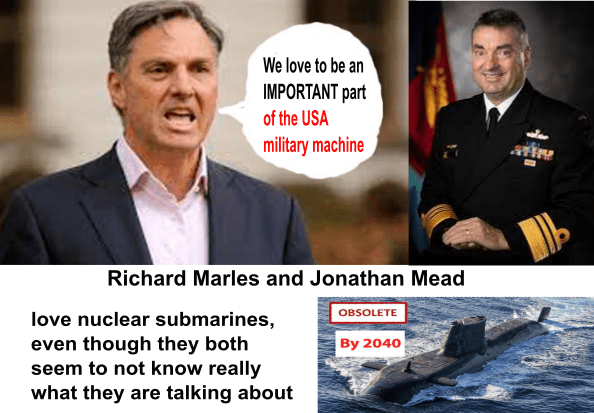
“This robust and comprehensive approach to regulating Australia’s nuclear-powered submarine program recognises the Albanese government’s commitment to nuclear stewardship and upholding the highest standards for nuclear safety and security,” Mr Marles said.
Andrew Tillett https://www.afr.com/politics/federal/31m-fines-25-years-jail-for-nuclear-submarine-safety-breaches-20231115-p5ek9x
Organisations that breach nuclear safety regulations will be hit with fines of up to $31 million while individuals face up to 25 years jail under AUKUS-related laws to be introduced into parliament on Thursday.
The legislation establishes the regulatory framework overseeing the operations of Australia’s nuclear-powered submarines that will initially be acquired from the US then built in Adelaide.
The Australian Naval Nuclear Power Safety Regulator will also be responsible for facilities in Australia for submarines, including rotational visits of US and UK boats, and designated zones, including Adelaide’s shipyard and Perth’s HMAS Stirling navy base.
The regulator will sit within the Defence portfolio but will be an independent statutory agency, headed by a director-general independent of the Defence Force and not subject to the ADF chain of command or directions from Defence and the Australian Submarine Agency.
The new regulator will have monitoring and investigative powers, including the power to determine legal compliance; whether information is accurate; and the powers necessary to investigate offences.
A licensing regime will be created for nuclear activities and new offences introduced for breaches of nuclear safety duties. The most serious breaches will attract a fine for a body corporate of up to $31 million and 25 years in jail.
A limited power will also be created allowing the defence minister of the day to direct the regulator. The power will be narrow in scope and only be used when the minister was satisfied it was necessary in the interests of national security and to deal with an emergency.
The government argues the existing nuclear safety regime and regulators – the Australian Nuclear Science and Technology Organisation, the Australian Radiation Protection and Nuclear Safety Agency and Environment Department – are insufficient for the demands of overseeing nuclear-powered submarines.
“This robust and comprehensive approach to regulating Australia’s nuclear-powered submarine program recognises the Albanese government’s commitment to nuclear stewardship and upholding the highest standards for nuclear safety and security,” Mr Marles said.
“The new regulator will have access to relevant expertise and experience, allowing it to cooperate effectively with other Australian regulators and those of our international partners.
“Today is another important step towards ensuring we employ the highest standards of nuclear safety and protection across the lifecycle of this historic capability.”
US, UK to Push Pledge to Triple Nuclear Power by 2050 at COP28.

Nov 14, 2023, John Ainger, Rachel Morison and Akshat Rathi, Bloomberg News
(Bloomberg) — The US will lead a push at the COP28 climate summit to triple the amount of installed nuclear power capacity globally by 2050, marking a major turnaround for the controversial technology at the climate negotiations.
The declaration will call on the World Bank and other international financial institutions to include nuclear energy in their lending policies, according to a document seen by Bloomberg News. The US will likely be joined by the UK, France, Sweden, Finland and South Korea in the pledge to be signed Dec. 1 in Dubai, according to people familiar with the matter.
That will be followed a few days later by a nuclear industry commitment to triple generation resources from 2020 levels, said one of the people, who asked not to be named because the information isn’t public.
“Nuclear is 100% part of the solution,” John Kerry, the US special presidential envoy for climate, said at the Bloomberg New Economy Forum last week. “It’s clean energy.”
The countries recognize “the key role of nuclear energy in achieving global net-zero greenhouse gas emissions/carbon neutrality by or around mid-century,” a draft of the declaration says. ……….
The declaration is the latest sign of shifting sentiment toward nuclear power, which doesn’t produce carbon dioxide emissions, but has often been criticized over the waste it generates, the cost of building plants and potential security issues. ……… The countries will also commit to new technologies, such as small modular reactors.
…… The US is discussing nuclear cooperation agreements with Kenya and Ghana, and renewing a pact with South Africa, according to Joshua Volz, the US Department of Energy’s deputy assistant secretary for Europe, Eurasia, Africa and the Middle East.
……………… The United Nations’ 28th Conference of the Parties, known as COP28, will take place in the United Arab Emirates, which is the only country in the Arabian Peninsula with a nuclear power program. It’s not clear if the hosts will sign……. https://www.bnnbloomberg.ca/us-uk-to-push-pledge-to-triple-nuclear-power-by-2050-at-cop28-1.1998524
How the United States and its NATO allies sabotaged a peace between Russia and Ukraine.

A Son of the New American Revolution, 14 November 2023 by Larry Johnson
We now know that the United States played the primary role in sabotaging the March 29, 2022 tentative peace agreement between Russia and Ukraine thanks to the recently published article by Hajo Funke and Harald Kujat, HOW THE CHANCE WAS LOST FOR A PEACE SETTLEMENT OF THE UKRAINE WAR — AND THE WEST WANTED TO CONTINUE THE WAR INSTEAD. The United States persuaded its NATO allies that pursuing the war against Russia, using Ukraine as a proxy, offered a legitimate opportunity to destroy Russia. You want a definition of evil? This is it. Instead of helping end the war between Russia and Ukraine, the United States and its NATO puppets condemned hundreds of thousands of Ukrainian soldiers to death in a war with Russia they could not win.
In the course of strong arming Ukraine’s Zelensky into rejecting the peace agreement, the West prepared and launched a propaganda campaign that claimed that Ukrainian military forces defeated the Russian forces and compelled them to retreat. It was a lie. As you will read in the timeline below, Putin ordered the withdrawal of Russian forces starting on April 1, 2022 as a good faith gesture about Russia’s seriousness in complying with the 29 March Istanbul Agreement.
Chalk this up as one more massive war crime by the United States and NATO. They are accessories to murder. I have summarized the timeline presented in the Funke/Kujat article if you do not have time to read it in its entirety. I also am republishing their piece for your convenience. All of the death and destruction experienced in Ukraine and Russia could have been avoided. But the West was intent on dethroning Putin and carving up Russia. Once you understand this point I think you will appreciate that Putin and his Generals are no longer of a mind to give the West the benefit of the doubt. Destroying NATO’s designs on Ukraine is now their chief aim in my view.
March 4, 2022 — Putin and Naftali Bennet speak via phone.
March 5, 2022 — At Putin’s invitation, former Israeli Prime Minister Bennett flew to Moscow. Putin, Bennett said, had made some substantial concessions, in particular, he had renounced his original wartime goal of demilitarizing Ukraine. … .In return, the Ukrainian president agreed to renounce joining NATO. The Ukrainians did not agree to peace because they were not allowed to. They first had to ask the Americans about everything they discussed.”
March 6, 2022 — Bennett and Scholz met in Berlin; on March 7, the United States, the United Kingdom, France, and Germany discussed the issue in a videoconference; on
March 8, 2022 — Macron and Scholz spoke on the phone; on
March 10, 2022 — Ukrainian Foreign Minister Kuleba and Russian Foreign Minister Lavrov met in Ankara; on
March 12, 2022 — Scholz and Zelensky and Scholz and Macron spoke on the phone; and on
March 14, 2022 — Scholz and Erdogan met in Ankara.
March 15-19, 2022 — Only a month after the outbreak of the war, Ukraine and Russia agreed on the broad outlines of a peace settlement. Ukraine promised not to join NATO and not to allow military bases of foreign powers on its territory, while Russia promised in return to recognize Ukraine’s territorial integrity and to withdraw all Russian occupation troops. Special arrangements were made for the Donbas and Crimea.”
March 24, 2022 — NATO decided at a special summit on March 24, 2022, not to support these peace negotiations.
March 27, 2022 — Zelensky defended the results of the Ukrainian-Russian peace negotiations in public before Russian journalists
March 28, 2022 — Putin, as a sign of goodwill and in support of the peace negotiations, declared readiness to withdraw troops from the Kharkov area and the Kiev area
29 March, 2002 — Turkiye’s President Erdogan hosted a Ukrainian-Russian peace conference in Istanbul and an armistice agreement was approved in principle.
April 1, 2022 — Putin orders Russian troops to initiate withdrawal from Kiev and Kharkiv in show of good faith in accordance with the armistice agreed to in Istanbul.
April 5, 2022 — NATO was firm in its position that continuing the war is preferred to a cease-fire and negotiated settlement: “For some in NATO, it’s better for Ukrainians to keep fighting and dying than to achieve a peace that comes too soon or at too high a price for Kiev and the rest of Europe.”
April 6, 2022 — Russia completes withdrawal from Kiev suburbs and Kharkiv.
April 9, 2022 — Boris Johnson arrived unannounced in Kiev and told the Ukrainian president that the West was not ready to end the war.
April 25, 2022 — U.S. Defense Secretary Lloyd Austin said the U.S. wants to use the opportunity to permanently weaken Russia militarily and economically in the wake of the Ukraine war.
April 26, 2022 — Meeting with defense ministers from NATO members and other countries convened by Austin in Ramstein, Rhineland-Palatinate/ Germany, the Pentagon chief declared the military victory of Ukraine as a strategic goal.
April 28, 2022 — According to Britain’s Guardian, PM Johnson “instructed” Ukrainian President Zelensky “not to make any concessions to Putin.”
HOW THE UNITED STATES AND ITS NATO ALLIES SABOTAGED PEACE BETWEEN RUSSIA AND UKRAINE
14 November 2023 by Larry Johnson 127 Comments
FacebookTwitterTelegramEmailShare

We now know that the United States played the primary role in sabotaging the March 29, 2022 tentative peace agreement between Russia and Ukraine thanks to the recently published article by Hajo Funke and Harald Kujat, HOW THE CHANCE WAS LOST FOR A PEACE SETTLEMENT OF THE UKRAINE WAR — AND THE WEST WANTED TO CONTINUE THE WAR INSTEAD. The United States persuaded its NATO allies that pursuing the war against Russia, using Ukraine as a proxy, offered a legitimate opportunity to destroy Russia. You want a definition of evil? This is it. Instead of helping end the war between Russia and Ukraine, the United States and its NATO puppets condemned hundreds of thousands of Ukrainian soldiers to death in a war with Russia they could not win.
In the course of strong arming Ukraine’s Zelensky into rejecting the peace agreement, the West prepared and launched a propaganda campaign that claimed that Ukrainian military forces defeated the Russian forces and compelled them to retreat. It was a lie. As you will read in the timeline below, Putin ordered the withdrawal of Russian forces starting on April 1, 2022 as a good faith gesture about Russia’s seriousness in complying with the 29 March Istanbul Agreement.
Chalk this up as one more massive war crime by the United States and NATO. They are accessories to murder. I have summarized the timeline presented in the Funke/Kujat article if you do not have time to read it in its entirety. I also am republishing their piece for your convenience. All of the death and destruction experienced in Ukraine and Russia could have been avoided. But the West was intent on dethroning Putin and carving up Russia. Once you understand this point I think you will appreciate that Putin and his Generals are no longer of a mind to give the West the benefit of the doubt. Destroying NATO’s designs on Ukraine is now their chief aim in my view.

March 4, 2022 — Putin and Naftali Bennet speak via phone.
March 5, 2022 — At Putin’s invitation, former Israeli Prime Minister Bennett flew to Moscow. Putin, Bennett said, had made some substantial concessions, in particular, he had renounced his original wartime goal of demilitarizing Ukraine. … .In return, the Ukrainian president agreed to renounce joining NATO. The Ukrainians did not agree to peace because they were not allowed to. They first had to ask the Americans about everything they discussed.”
March 6, 2022 — Bennett and Scholz met in Berlin; on March 7, the United States, the United Kingdom, France, and Germany discussed the issue in a videoconference; on
March 8, 2022 — Macron and Scholz spoke on the phone; on
March 10, 2022 — Ukrainian Foreign Minister Kuleba and Russian Foreign Minister Lavrov met in Ankara; on
March 12, 2022 — Scholz and Zelensky and Scholz and Macron spoke on the phone; and on
March 14, 2022 — Scholz and Erdogan met in Ankara.
March 15-19, 2022 — Only a month after the outbreak of the war, Ukraine and Russia agreed on the broad outlines of a peace settlement. Ukraine promised not to join NATO and not to allow military bases of foreign powers on its territory, while Russia promised in return to recognize Ukraine’s territorial integrity and to withdraw all Russian occupation troops. Special arrangements were made for the Donbas and Crimea.”
March 24, 2022 — NATO decided at a special summit on March 24, 2022, not to support these peace negotiations.
March 27, 2022 — Zelensky defended the results of the Ukrainian-Russian peace negotiations in public before Russian journalists
March 28, 2022 — Putin, as a sign of goodwill and in support of the peace negotiations, declared readiness to withdraw troops from the Kharkov area and the Kiev area
29 March, 2002 — Turkiye’s President Erdogan hosted a Ukrainian-Russian peace conference in Istanbul and an armistice agreement was approved in principle.
April 1, 2022 — Putin orders Russian troops to initiate withdrawal from Kiev and Kharkiv in show of good faith in accordance with the armistice agreed to in Istanbul.
April 5, 2022 — NATO was firm in its position that continuing the war is preferred to a cease-fire and negotiated settlement: “For some in NATO, it’s better for Ukrainians to keep fighting and dying than to achieve a peace that comes too soon or at too high a price for Kiev and the rest of Europe.”
April 6, 2022 — Russia completes withdrawal from Kiev suburbs and Kharkiv.
April 9, 2022 — Boris Johnson arrived unannounced in Kiev and told the Ukrainian president that the West was not ready to end the war.
April 25, 2022 — U.S. Defense Secretary Lloyd Austin said the U.S. wants to use the opportunity to permanently weaken Russia militarily and economically in the wake of the Ukraine war.
April 26, 2022 — Meeting with defense ministers from NATO members and other countries convened by Austin in Ramstein, Rhineland-Palatinate/ Germany, the Pentagon chief declared the military victory of Ukraine as a strategic goal.
April 28, 2022 — According to Britain’s Guardian, PM Johnson “instructed” Ukrainian President Zelensky “not to make any concessions to Putin.”
BEGIN FUNKE AND KUJAT ARTICLE
Berlin, October 2023
In March 2022, direct peace negotiations between Ukrainian and Russian delegations and mediation efforts by the then Israeli Prime Minster, Naftali Bennet created a genuine chance for ending the war peacefully only four to five weeks after Russia had invaded Ukraine. However, instead of ending the war through negotiations as Ukrainian President Zelensky and his government appeared to have wanted, he ultimately bowed to pressures from some Western powers to abandon a negotiated solution. Western powers wanted this war to continue in the hope to break Russia. Ukraine’s decision to abandon negotiations may been taken before the discovery of a massacre of civilians in the town of Bucha near Kiev.
In the following is an attempt of a step-by-step reconstruction of the events that led to the peace negotiations in March and their collapse in early April 2022…………………………………………………………………………………………………………………………………………………………………………………………………………………………..
CONCLUSION: MISSED OPPORTUNITY
Based on the publicly available reports and documents, it is not only plain that there was a serious willingness to negotiate on the part of both Ukraine and Russia in March 2022. Apparently, the negotiating parties even agreed on a draft treaty ad referendum. Zelensky and Putin were ready for a bilateral meeting to finalize the outcome of the negotiations. Fact is that the main results of the negotiations were based on a proposal by Ukraine, and Zelenskyy courageously supported them in an interview with Russian journalists on March 27, 2022, even after NATO decided against these peace negotiations. Zelensky had already expressed similar support beforehand in a sign that proves that the intended outcome of the Istanbul negotiations certainly corresponded to Ukrainian interests. This makes the Western intervention, which prevented an early end to the war, even more disastrous for Ukraine. Russia’s responsibility for the attack, which was contrary to international law, is not relativized by the fact that responsibility for the grave consequences that Ukraine’s Western supporters that ensued must also be attributed to the states that demanded the continuation of the war. The war has now reached a stage where further dangerous escalation and an expansion of hostilities can only be prevented by a cease-fire. It may now be the last time that a peaceful resolution through negotiations could be achieved. There are peace proposals from China, the African Union, Brazil, Mexico, Indonesia, and a proposal developed at the invitation of the Vatican as early as June 2022. On 3 October this year, we presented the German Government our own peace proposal that tried to incorporate all other peace proposals made earlier. See Ending the war by a negotiated peace – Legitimate self-defense and the quest for a just and lasting peace are not contradictory HERE.
Since the failed Istanbul negotiations The course of the war and the current extremely critical timing should be reason enough for a responsible world community and UN member states to rethink and press for a ceasefire and peace negotiations. https://sonar21.com/how-the-chance-was-lost-for-a-peace-settlement-of-the-ukraine-war/
Don’t be fooled. Biden is fully signed up to genocide in Gaza

what the Biden administration really needs is a cover story to justify the fact that it is continuing to supply the weapons and funding needed by Israel to carry out its crimes in broad daylight
The White House needs a cover story to obscure its complicity. In desperation, it is once again resurrecting the long-dead two-state solution
JONATHAN COOK, NOV 15, 2023, [First published by Middle East Eye]
The White House faces a dilemma. It has the power to stop the death and destruction in Gaza in its tracks, at any time of its choosing. But it chooses not to.
The US is determined to back its client state to the hilt, giving Israel licence to wreck the tiny coastal enclave, seemingly whatever the cost in Palestinian lives.
But the optics – and that is all that concerns Washington – are disastrous.
TV images have shown hundreds of thousands of Palestinians fleeing their destroyed homes, on a scale unseen since Israel’s earlier mass ethnic cleansing operations of 1948 and 1967.
Even the western media is struggling to obscure the veritable mountain of crushed and bleeding bodies in Gaza. The known death toll has now surpassed 11,000, with thousands more buried under rubble. Those who survive face a genocidal policy, starving them of food, water and power.
By the weekend, Israel’s declared war on Hamas had shifted into an open war on Gaza’s hospitals. Medicins San Frontieres reported that al-Shifa hospital in Gaza City had been bombed repeatedly and its power cut off, with horrific scenes of premature babies dying after their incubators had stopped functioning. Staff who tried to evacuate, as Israel had ordered them to, were shot at. Similar scenes unfolded at al-Rantisi hospital.
Western publics are growing increasingly incensed. Protest marches have attracted numbers not seen since the mass demonstrations against the Iraq war 20 years ago.
Western allies are finding it harder to obscure and justify their complicity in what are indisputable Israeli crimes against humanity. French President Emmanuel Macron broke ranks at the weekend. His message was summed up bluntly by the BBC: “Macron calls on Israel to stop killing Gaza’s women and babies.”
In private, US allies in the Middle East are pleading with the US to use its leverage to restrain Israel.
Meanwhile, Washington is only too aware of how quickly Israel’s regional opponents could get dragged in, dangerously expanding and escalating the conflict.
Its immediate response has been desperate, and preposterous, stop-gaps to ease the criticism, including from 500 administration staff who submitted a letter to Biden on Tuesday protesting the White House’s blanket support for Israel.
Those measures have included the president calling for “less intrusive action” from Israel towards the hospitals, shortly before Israeli forces were reported storming al-Shifa, and rumours that Tony Blair, the former British prime minister who joined the US attack on Iraq in 2003 in violation of international law, might serve as the West’s “humanitarian coordinator” in Gaza.
Never-ending occupation
But what the Biden administration really needs is a cover story to justify the fact that it is continuing to supply the weapons and funding needed by Israel to carry out its crimes in broad daylight.
US Secretary of State Antony Blinken set out his stall last week at the G7 summit. The goal is to shift the focus away from Israel’s genocidal policies in Gaza, and Washington’s backing for them, to a purely theoretical discussion about what might happen after the fighting ends…………………………………………………………………………………………………………………….
The no-state solution
The truth is that Washington formally abandoned the so-called two-state solution years ago, aware that Israel would never allow even the most circumscribed of Palestinian states.
Over the past three decades, Israel has gone from the pretence – maintained during the Oslo process – that it might one day concede a sham, demilitarised Palestinian state, cut off from the rest of the Middle East, to outright rejection of Palestinian statehood on any terms at all. ………………………………………………………………………………………………………………..
The goal is transparent: to expel Gaza’s population into the neighbouring Egyptian territory of Sinai. And given Israel’s previous form, the only reasonable conclusion to draw is that Gaza’s refugee families – some of them about to be exiled by Israel for a second or third time – will never be allowed to return to the ruins.
The Biden administration can pretend to be resurrecting a non-existent two-state solution. But the reality is that Israel has had just such an expulsion plan – called the Greater Gaza Plan – on the drawing board for decades.
According to reports, Washington has been signed up to the creation of a Palestinian enclave in Sinai since at least 2007…………………………………………………………………………………………………..
No eradicating Hamas
But perhaps the most fraudulent of the White House deceptions is the assumption that Hamas – and by extension, all Palestinian resistance – can be eradicated from Gaza……………………………………………………………………….
Israel’s genocidal policies – unless it intends to wipe out every Palestinian in Gaza – will not moderate that impulse for resistance. Israel will simply inflame more anger and resentment, and a stronger motive for vengeance. ……………………………………………..
Israel and the US know all this, too. History is crammed full of such lessons taught to greedy, arrogant colonisers and occupiers.
But their goal, whatever they claim, is not a solution or a resolution. It is permanent war. It is perpetuating the “cycle of violence”. It is greasing the tank treads of the West’s profitable war machine by spawning the very enemies that western publics are told they need protecting from.
Whether Palestinians are returned to the Stone Age in Gaza, as Israeli military commanders have long desired, or expelled to live in refugee camps in Sinai, they will not accept a fate in which they are treated as “human animals”.
Their fight will go on. And Israel and Washington will have to keep inventing new, ever more fanciful stories to try to persuade us that the West’s hands are clean. https://jonathancook.substack.com/p/dont-be-fooled-biden-is-fully-signed?utm_source=post-email-title&publication_id=476450&post_id=138886737&utm_campaign=email-post-title&isFreemail=true&r=ln98x&utm_medium=email
Patrick Lawrence: ‘The Hinge of History’- Palestine and the New World Order

What we are seeing at the moment in Palestine is the end of settler colonialism. Settler colonialism is a phenomenon of the last two centuries or so, and it is always accompanied by genocide.
November 14, 2023, By Patrick Lawrence , https://scheerpost.com/2023/11/14/patrick-lawrence-the-hinge-of-history/—
Bombing hospitals was, just a few days ago, an undeclared red line the Israel Defense Forces dared not cross without provoking international disgust and condemnation. At writing, the IDF is bombing hospitals and, I read, its soldiers are shooting patients, invalids among them, as they attempt to evacuate buildings soon to be demolished.
There is disgust and condemnation now, and they find expression not only on the streets of many cities but also in governing circles. Axios reported Monday that an internal State Department memo, signed by 100 officials at State and its aid agency, USAID, accuses President Biden of lying about Israel’s military campaign in Gaza and of complicity in war crimes. On Tuesday, The New York Times put the signatories of another letter to Biden at 400 representing 40 government departments and agencies, including the National Security Council — this in addition to an open letter to Secretary of State Blinken signed by more than 1,000 Agency for International Development employees. So far as I know, this measure of dissent in policy and governing circles is more or less unprecedented.
Beyond our purple mountains and fruited plains, the Irish Dáil will vote this week on expelling the Israeli ambassador, throwing Israel out of a European Union trade accord for breaching its human-rights clauses, and—a Sinn Féin motion—referring Israel to the International Criminal Court. Emmanuel Macron came out last weekend calling for a ceasefire, the first Western leader to do so. Given Biden’s defiant refusal even to consider asking Israel to accept a ceasefire, the French president has implicitly issued a rejection of Israeli violence and the U.S. policy supporting it.
We cannot make too much of events such as these, but we must not make too little of them, either. These are signs on the surface of much deeper movements a few meters down in our civilization’s soil. Things are gradually coming apart in consequence of Israel’s savagery and America’s abetment of it, at home in the U.S., in the Atlantic world altogether and certainly between the West and the world beyond it. Now it is time to look forward to see what we can see of the world to come.
Christopher Lydon, who produces Radio Open Source for WBUR in Boston, suggested over the weekend we have reached “a hinge in history—outcomes wildly uncertain.” He made this remark at the start of a long interview with Chas Freeman, the retired ambassador for whom I share with Lydon great admiration. Freeman agreed with the hinge-of-history thought. So do I. All is changing, changing utterly, if you will let me borrow and bend Yeats’s famous line.
Here is Chas on our moment:
This is clearly what Chancellor Scholz of Germany calls a Zeitenwende—that is, an epic-changing moment, a time of major change in a new direction in history. We’ve talked before about the fact that 500 years of global dominance by the Euro–American culture, the Atlantic culture, has come to an end.
The only exception I can think of is New Zealand, where Māori power countered the British sufficiently to preserve their culture as a separate one….What we are seeing at the moment in Palestine is the end of settler colonialism. Settler colonialism is a phenomenon of the last two centuries or so, and it is always accompanied by genocide.
It may seem unlikely that the Palestinians will do as well resisting the hegemonic West as the Māori in the 19th century, although outcomes, as Chris Lydon says, are wildly uncertain. In any case, one does not want to see a separate, even segregated Palestinian entity emerge from the Israel–Palestine catastrophe so much as a single, secular nation in which cultures of all sorts are integrated and, more than tolerant, wholly accepting of one another. So I argued recently in this space.
1 This month.

Australians deserve the truth
about
AUKUS – https://aukuspublicinquiry.com/

30 July – WEBINAR (Free) – Is Nuclear Power the Solution to Climate Change? https://my.acaw.org.au/event/acaw-is-nuclear-power-the-solution-to-climate-change
18:30 – 19:45 ACST
19:00 – 20:15 AEST


PETITION – To: Prime Minister Anthony Albanese and the Australian Labor Government

of the week – Australians for War Powers Reform (AWPR)
To see nuclear-related stories in greater depth and intensity
 Antinuclear