Nuclear news for week ending 18 December

A bit of good news. Staying in Gaza as an act of love: Stories from the Catholics who risk their lives to serve. Blossom Dearie Christmas wish https://www.youtube.com/watch?v=LTub-8WIXfg
TOP STORIES.
Nuclear push- will it unravel? Wins, losses and participation trophies for US nuclear power in 2023.
Sad Clown with the Circus Closed Down*: Zelenskiy’s Demise.
Israel Is Wiping Out Gaza’s Journalists: A Tribute.
COP28 — The End Of The 1.5°C Fantasy. Failure of Cop28 on fossil fuel phase-out is ‘devastating’, say scientists.
Australia’s Defence Minister Marles is wrong – Australia IS taking US and UK nuclear waste!
From the archives. As the world starts to panic over climate change, nuclear evangelists offer spurious solutions.
************************
Climate. COP28 fossil fuel pledges will not limit global warming to 1.5C, says IEA. COP 28 ‘s fundamentally weak agreement to “call on parties to contribute” to action on climate change. At COP 28, fossil fuels targeted for the first time, but with a weak pledge. Cop28 president says his firm will keep investing in oil.
Nuclear. I’m trying hard to keep the Israel and Ukraine news out of this newsletter. That is hard, because the trajectory of each is bringing us closer to the nuclear brink. It’s like pre World War 1.
Christina notes. The demise of Vladimir Zelensky – when will the USA throw him under a bus? Netanyahu’s Israel breathes new life into the modern Nazi movement. What I want for Christmas – for people, especially the media, to tell the truth a bit more often.
**********************************
AUSTRALIA.
- US and UK nuclear waste coming to Australia. Over 700 American AUKUS personnel to be based in Western Australia, with radioactive storage facility also planned.
- Nuclear energy is not viable for Australia, for a number of reasons. Going nuclear would be a costly mistake. Flirting With Nuclear Energy Down Under. Inside the Coalition’s nuclear crusade at COP28. Australia’s nuclear brawl spills over into Dubai climate summit. Dutton takes the nuclear option. Liberal Coalition’s strategy – support fossil fuels by delaying renewables and pushing for nuclear energy .
- Boris Johnson calls for ‘more AUKUS’ and nuclear power in Australia.
- Labor’s new AUKUS bill declares Osborne in SA, Stirling in WA as nuclear zones. Nuclear waste: Fifty years of searching, still nowhere to dump it. Oxfam welcomes Prime Minister Albanese’s call for a “sustainable ceasefire” and Australian vote for immediate ceasefire at UNGA.
CLIMATE. Does nuclear power generate GHG CO2 emissions? COP 28 and the nuclear energy numbers racket. Nuclear power – a ‘dangerous distraction’ from real climate action. The danger of rising tides to the Dungeness nuclear site, and to planned small nuclear reactors for Sussex.
ECONOMICS. EDF told not to expect UK to step in to fund Hinkley Point C flagship nuclear project. China’s CGN Halts Funding for UK’s Hinkley Nuclear Plant. The Uncertain Costs of New Nuclear Reactors: What Study Estimates Reveal about the Potential for Nuclear in a Decarbonizing World. Grand plan to triple nuclear energy with small nuclear reactors, but where’s the funding? France scores diplomatic wins on banks and nuclear in new EU rules.
EDUCATION. Subsidy for nuclear energy, but what about nuclear waste? Inside the Youth-Led Fight for a Demilitarized Future.
ENERGY. German nuclear plant to be replaced by Europe’s biggest battery.
ENVIRONMENT. Fukushima: Japan’s Triple Threat in Spades.
HEALTH. Fukushima nuclear plant worker exposed to radiation.
INDIGENOUS ISSUES. Bribery to indigenous people – by Canada’s nuclear lobby.
MEDIA. Criticize Israel? You’re fired. Causing Gaza Blackouts, Israel Benefits from Media Double Standards. Sellafield nuclear site exposés are long overdue. Matthew Modine on His Role in ‘Oppenheimer’ and Producing Nuclear Testing Doc ‘Downwind’: ‘This Insanity Hasn’t Stopped’. Kristen Stewart Warns the World Is “Dangerously Close” to Nuclear Catastrophe.
POLITICS.
- U.S. Congress passes bill barring imports of Russian uranium for nuclear power, (but this ban can be waived as needed.)
- Nebraska team launches study of Congress and nuclear weapons policy.
- Chris Hedges: The Death of Israel. Bernie Sanders Votes No on Giving Israel Aid to Continue ‘Inhumane War’ on Gaza INTERNS ACCUSE CONGRESS OF SUPPRESSING CALLS FOR CEASE-FIRE.
- Member for Dublin urges swift action on Sellafield nuclear threat.
POLITICS INTERNATIONAL and DIPLOMACY.
- UN Members Support Gaza Cease-Fire in Overwhelming 153-10 Vote. Biden Intends To Keep Participating In The Incineration Of Gaza. Is Biden taking the Iran nuclear deal off life support?
- Iran Dismisses Fears Over Its Nuclear Program.
- China drops out of British nuclear power program.
- The UN Nuclear Ban Treaty is Leading Resistance to Nuclear Autocracy. As nuclear powers restart the arms race, unarmed nations call for reason.
- Dreams of a nuclear revival overtaken by reality.
SAFETY. Sellafield staff ‘used home computers to beat security failings’. Nuclear plants and the war in Ukraine.
SPINBUSTER. HOW BIDEN’S STATE DEPARTMENT CONCEALS ITS “HUMAN RIGHTS BLACK HOLE” IN THE MIDDLE EAST.
WASTES. Cumbrian councils urged to poll public over controversial nuclear dump plan. Theddlethorpe nuclear waste site: Informed decision needed, says council..
WAR and CONFLICT. UN General Assembly votes to demand immediate ceasefire in Gaza. Ukraine’s 200 Fighter Jet Demand Could Lead To Nuclear Catastrophe.
WEAPONS and WEAPONS SALES. The Chris Hedges Report: The Weapons Israel Tests on Palestinians Will Be Used Against All of Us. https://www.youtube.com/watch?v=9PEWDLunejA Nearly Half of All Israeli Munitions Dropped on Gaza are Imprecise ‘Dumb’ Bombs.
Ukraine asking US for military aid that doesn’t exist – New York Times. Ukraine was never going to win – US senator. Why Zelensky’s ‘Fantasy’ of Building Military-Industrial Hub in Ukraine is Doomed.
Why the Pentagon is a multitrillion-dollar fraud. French nuclear submarine visits Scotland. South Korea military says North fires ballistic missile.
Over 700 American AUKUS personnel to be based in Western Australia, with radioactive storage facility also planned
by defence correspondent Andrew Greene, https://www.abc.net.au/news/2023-12-18/aukus-americans-western-australia-radioactive-storage-facility/103239924
Defence expects more than 700 American personnel could live in Western Australia to support up to four US nuclear submarines being stationed at HMAS Stirling, where a “low-level radioactive waste management” facility is also being planned.
Key points:
- Western Australia will host the first submarines from 2027
- British personnel are also expected to join rotations but without families
- Radioactive waste will be stored at Defence sites including a new management facility in Perth
The projections are contained in comprehensive briefing notes prepared by the newly created Australian Submarine Agency (ASA) which also detail how a one-off Australian government payment of $US3 billion ($4.45 billion) will be spent by the United States.
Under the optimal pathway announced by AUKUS leaders earlier this year, the Submarine Rotational Force – West (SRF-West) would first begin hosting Royal Navy Astute-class and US Navy Virginia-class submarines at HMAS Stirling from 2027.
A Virginia-class submarine carries a crew of 132 according to the US Navy, while an Astute-class boat deploys with almost 100 Royal Navy submariners on board.
“This workforce will then move to support our enduring nuclear-powered submarine program and will be a key enabler for SRF-West,” the ASA states in documents obtained under Freedom of Information by former Senator and submariner Rex Patrick.
“In addition to these 500-700 Australians at its height, we estimate that over 700 United States Personnel could be living and working in Western Australia to support SRF-West, with some also bringing families,” the ASA predicts.
According to the ASA, SRF-West will be established as early as 2027 and expand in subsequent years to support up to four US and one UK nuclear-powered submarine, with the Australian government investing $8 billion to expand HMAS Stirling outside Perth.
The ASA notes there will also be “a small United Kingdom contingent living in Perth” but most British personnel supporting SRF-West “will be in Australia for shorter rotations, meaning they will not be bringing families with them”.
Planning begins for low-level radioactive waste management
Decisions on where Australia will eventually dispose of its nuclear submarine reactors are not expected for many years, but planning has begun for “low-level radioactive waste management” at HMAS Stirling to support SRF-West.
“Expertise to manage low-level operational waste arising from nuclear-powered submarine operations and sustainment will be an important part of Australia building the necessary stewardship capability to operate and maintain its own submarines.”
More details emerge on Australia’s multi-billion dollar payment
Inside the almost 200 pages of ASA briefing notes are further details of how a $US3 billion ($4.45 billion) Australian contribution to the US submarine industrial base will be spent, including on enhancing facilities and pre-purchasing components and materials.
“Australia’s commitment to invest in the US submarine industrial base recognises the lift the United States is making to supporting Australia’s acquisition of nuclear-powered submarines.”
“Pre-purchasing submarine components and materials, so they are on hand at the start of the maintenance period – saving time” and “outsourcing less complex sustainment and expanding planning efforts for private sector overhauls, to reduce backlog”.
Inside the Youth-Led Fight for a Demilitarized Future

Over the past two months, Raytheon/RTX — which develops and sells weapons systems used by the Israeli Defense Forces — has seen stock prices skyrocket and company executives discuss the rise in violence as a financial opportunity.
According to UMass Dissenters organizers, the company is deeply entrenched at the college through recruitment practices and the Isenberg School of Management, which has a close educational and financial partnership with the weapons manufacturer.
A UMass Dissenters organizer discusses the growing youth-led antiwar movement and how they are organizing against weapons manufacturers and the war in Gaza.
SCHEERPOST, By Alessandra Bergamin / Waging Nonviolence, 17 Dec 23
In January 2020, Dissenters — a grassroots, youth-led antiwar movement — began with the mission to connect violence against Black and brown communities in the U.S. to the systems of oppression that fund, arm and enable global militarism. While born from the legacy of the U.S. antiwar movement, Dissenters takes an intersectional approach that connects global wars with corporate elites, local police, border walls, surveillance and prisons. Operating across the country through campus chapters, training fellowships and a strong social media presence, Dissenters has been organizing for college divestment from weapons manufacturers, ending campus recruitment from military-affiliated companies and disbanding campus police departments.
Since Oct. 7, in the aftermath of the Hamas attack and the subsequent siege of Gaza, Dissenters chapters have doubled down on antiwar organizing, holding local and national rallies, sit-ins, student walkouts and training events both on and offline. One campus chapter — at the University of Massachusetts, Amherst — has organized protests, disruptions to sports games, and a sit-in at the chancellor’s office to pressure its university to cut ties with the weapons manufacturer Raytheon, now known as RTX.
Over the past two months, Raytheon/RTX — which develops and sells weapons systems used by the Israeli Defense Forces — has seen stock prices skyrocket and company executives discuss the rise in violence as a financial opportunity. According to UMass Dissenters organizers, the company is deeply entrenched at the college through recruitment practices and the Isenberg School of Management, which has a close educational and financial partnership with the weapons manufacturer.
I spoke with Bre Joseph, a UMass Amherst senior and organizer with the campus chapter of Dissenters. We discussed organizing college students against weapons manufacturers, the radicalizing impact of activist arrests, and the lessons learned from successes and setbacks.
In relation to the siege on Gaza, what are the main goals or demands of the UMass Dissenters chapter?
Number one is that the school must divest and cut ties with weapons manufacturers like Raytheon, but also Boeing, Lockheed Martin, General Dynamics, Northrop Grumman and so on. Our second demand is that the administration must call for an immediate end to Israel’s siege on Gaza and end U.S. funding. A third demand is that the administration must replace weapons manufacturers with jobs working toward a demilitarized future.
I think that third one acknowledges that — while moving away from Raytheon as a campus partner would technically decrease opportunities afforded to UMass students — the onus is on the campus to replace jobs that increase death and violence with jobs that are sustainable and help the earth. We’ve heard students express this on an app called Yik Yak where you can post anonymously. It’s usually unserious, but every now and then I’ll open it and see people say, “I’m an engineering major, and I’m tired of having Raytheon pushed down my throat as an employment option. I don’t want to build bombs. I don’t want to make money for this company that’s killing people. I want better options.” That’s really been our goal from the beginning — get those jobs out and center a demilitarized future instead of militarizing it further.
How does intersectionality both inform and impact Dissenters’ organizing? ………………………………………………………………..
How has UMass Dissenters organized to inform and mobilize students on the connections between the campus and weapons manufacturers?
In terms of education, we have a document that we’ve made public via our Instagram and emails we’ve sent out to interested students really detailing UMass’s connection to Raytheon — and detailing Raytheon’s connection to the IDF and the war on Palestinians. At our weekly meetings, we’ve also had things like teach-ins for interested students. We’ve also crashed Raytheon information sessions to do this thing we call “being the common sense,” where we ask recruiters: “What exactly would students be building? What exactly is making the company money?” We ask the questions they don’t really want to answer but that they need to to be held accountable…………………………………………………………………………………………………………………………………………………………………………………………………….. more https://scheerpost.com/2023/12/17/inside-the-youth-led-fight-for-a-demilitarized-future/
COP28 — The End Of The 1.5°C Fantasy

what the world got from COP28 was more like an endorsement of the status quo that reflects the ongoing state of play rather than accelerating it.
We must not allow broiling temperatures, more powerful storms, more frequent wildfires, and the disappearance of rain forests to become the new normal.
https://cleantechnica.com/2023/12/16/cop-28-the-end-of-the-1-5-degree-c-fantasy/
In Paris at the end of 2015, the world rejoiced when the national representatives from around the planet agreed to try really, really hard to keep average global temperatures from increasing more than 1.5°C above pre-industrial levels. Of course, in the 1800s when the Industrial Revolution began, the amount of carbon dioxide in the atmosphere was around 300 parts per million. In 2015, carbon dioxide levels were on the verge of breaking the 400 ppm barrier. Today, with COP28 now in the rear view mirror, the world is experiencing carbon dioxide levels of 420 ppm.
In order for all the happy talk in 2015 to mean anything, CO2 levels should have been declining since then. The fact that they have risen instead means the promise of the Paris climate accords was a mirage. Pessimists at the time suggested the good news was an illusion and history, unfortunately, has proven those “the glass is half empty” types correct.
There was much celebrating in Dubai when the final communique from COP28 contained an historic phrase that proclaimed for the first time ever that the nations of the world should focus on “transitioning away from fossil fuels in energy systems, in a just, orderly and equitable manner.” That is the first time in 28 tries that the words “fossil fuels” have been included in such a statement, which is pretty astonishing when you realize these annual events are about global warming. It has taken 28 years and millions of written and spoken words to acknowledge that fossil fuels are the problem. A young activist from India may have helped as well.
Sultan Al Jaber is being celebrated for getting those words into the final document after they were omitted from a prior draft and for standing up to his oil-soaked colleagues who felt betrayed by that language. But David Wallace-Wells, a science and climate writer for the New York Times, is not one of those who is cheering. In fact, he says what the world got from COP28 was more like an endorsement of the status quo that reflects the ongoing state of play rather than accelerating it.
Global sales of internal combustion engine vehicles peaked in 2017, he writes, and investment in renewable energy has exceeded investment in fossil fuel infrastructure for several years running. In 2022, 83 percent of new global energy capacity was green.
“The question isn’t about whether there will be a transition, but how fast, global and thorough it will be. The answer is: not fast or global or thorough enough yet, at least on the current trajectories, which COP28 effectively affirmed. To limit warming to 1.5 degrees Celsius now requires entirely eliminating emissions not long after 2040, according to the Global Carbon Project, whose ‘carbon budget’ for 1.5 degrees Celsius will be exhausted in about five years of current levels of emissions. For 1.7 degrees Celsius, it’s just after 2050, and for 2 degrees Celsius, 2080. And despite Al Jaber’s claim that COP28 has kept the 1.5 degree goal alive, hardly anyone believes it’s still plausible.”
In fact, Wallace-Wells writes, most analysts predict a global peak in fossil fuel emissions at some point over the next decade, followed not by a decline but a long plateau — meaning that in every year for the foreseeable future, we would be doing roughly as much damage to the future of the planet’s climate as was done in recent years. The expected result will be that by the end of this century, average global temperatures will have risen by 2 to 3 degrees Celsius above pre-industrial levels.
“Not so long ago, this was a future that terrified us, but now we are not just coming to accept that future and, in some corners, applauding it as progress. Over the last several years, as decarbonization has made worst case scenarios seem much less likely, a wave of climate alarmism has given way somewhat to a new mix of accommodation and optimism.”
Imagining 3°C At COP28
At COP28, Bill Gates described anything below 3 degrees as a “fortunate” outcome. A few months earlier, former President Barack Obama struck a similar note in describing how he’d tried to talk his daughter Malia off the edge of climate despair by emphasizing what could still be saved rather than what had been lost already through global inaction. “We may not be able to cap temperature rise to 2 degrees Celsius, but here’s the thing, if we work really hard, we may be able to cap it at two and a half.” Scottish data scientist Hannah Ritchie gives a shot of optimism to those caught in a panic about warming and environmental degradation in a new book called “Not the End of the World.”
Wallace-Wells tries to remain guardedly optimistic but believes COP28 will be remembered as the moment the world finally gave up on the goal of limiting warming to degrees and encourages his readers to think what passing that threshold will mean.
“Global warming doesn’t proceed in large jumps, for the most part, and surpassing 1.5 degrees does not bring us immediately or inevitably to 2 degrees. But we know quite a lot about the difference between those two worlds — the one we had once hoped to achieve and the one that now looks much more likely. Indeed, in the recent past, a clear understanding of those differences was responsible for a period of intense and global climate alarm.”
The Intergovernmental Panel on Climate Change “Special Report on Global Warming of 1.5 Degrees Celsius,” published in 2018, collated all the scientific literature about the two warming levels. Between 1.5 and 2 degrees C, it estimated more than 150 million people will die prematurely from the air pollution produced by the burning of fossil fuels. Flooding events that used to arrive once a century will become annual events.
Most scientists believe that amount of warming would be a death sentence for the world’s coral reefs. And many believe that, in that range, the planet will lock in the permanent loss of many of its ice sheets, which could bring, over centuries, enough sea level rise to redraw the world’s coastlines.
If warming grows beyond those levels, so will its impacts. At 3 degrees, for instance, New York City could be hit by three 100 year flooding events each year and more than 50 times as many people in African cities would experience conditions of dangerous heat. Wildfires would burn twice as much land globally and the Amazon would cease to be a rain forest but become a grassland. Potentially lethal heat stress, almost unheard of at 1.5 degrees, would become routine for billions at 2 degrees, according to one recent study, and above 3 degrees would impact places like the American Midwest.
“In some ways, these projections may sound like old news, but as we find ourselves now adjusting to the possibility of a future shaped by temperature rise of that kind, it may be clarifying to recall that, almost certainly, when you first heard those projections, you were horrified. The era of climate reckoning has also been, to some degree, a period of normalization, and while there are surely reasons to move past apocalyptic politics toward something more pragmatic, one cost is a loss of perspective at negotiated, technocratic events like [COP28]”
Was 1.5°C Just An Attractive Fantasy?
Perhaps it was always somewhat fanciful to believe that it was possible to limit warming to 1.5 degrees Celsius. Wallace-Wells suggests. As Bill McKibben said recently, simply stating the goal did a lot to shape action in the years that followed the Paris climate accords by demanding we all look squarely at what the science told us about what it would mean to fail.
The Dubai consensus that renewable energy should triple by 2030 is one sign that, in some areas, impressive change is possible. “But for all of our temperature goals, the timelines are growing shorter and shorter, bringing the world closer and closer to futures that looked so fearsome to so many not very long ago,” Wallace -Wells cautions.
The Takeaway
We must not allow broiling temperatures, more powerful storms, more frequent wildfires, and the disappearance of rain forests to become the new normal. We need to keep the vision that emerged in Paris in 2015 alive and intact, even if it was largely a fantasy. We need to keep the pressure on governments and fossil fuel companies to sharply reduce their carbon emissions by honoring the spirit as well as the letter of closing statement from COP28.
The struggle is far from over. Every tenth of a degree of increase in average global temperatures prevented will avoid untold suffering for millions of humans.
There is another consideration here. Much of the turn toward extreme right wing governments around the world from the United States to the Netherlands, Italy, New Zealand, and the UK is directly connected to a desire to keep black and brown people from becoming unwelcome immigrants. It is in the selfish best interest of wealthy nations to control climate related migration by controlling global temperature increases. If we think climate migration is rampant now, we ain’t seen nothing yet.
Nuclear power – a ‘dangerous distraction’ from real climate action

A ‘dangerous distraction’ COP plot to triple nuclear power by 2050 decried
https://beyondnuclearinternational.org/2023/12/17/a-dangerous-distraction/–By Jon Queally, Common Dreams
Climate campaigners scoffed Saturday at a 22-nation pledge to triple nuclear power capacity by mid-century as a way to ward off the increasing damage of warming temperatures, with opponents calling it a costly and “dangerous” distraction from the urgent need for a fossil fuel phaseout alongside a rapid increase in more affordable and scaleable renewable sources such as wind and solar.
The Declaration to Triple Nuclear Energy—backed by the United States, Canada, France, the Czech Republic, and others—was announced as part of the Climate Action Summit taking place in Dubai as a part of the two-week U.N. climate talks known as COP28.
While the document claims a “key role” for nuclear energy to keep “a 1.5°C limit on temperature rise within reach” by 2050 and to help attain the so-called “net-zero emissions” goal that governments and the fossil fuel industry deploy to justify the continued burning of coal, oil, and gas, critics say the false solution of atomic power actually harms the effort to reduce emissions by wasting precious time and money that could be spent better and faster elsewhere.
“There is no space for dangerous nuclear power to accelerate the decarbonization needed to achieve the Paris climate goal,” said Masayoshi Iyoda, a 350.org campaigner in Japan who cited the 2011 Fukushima disaster as evidence of the inherent dangers of nuclear power.
Nuclear energy, said Iyoda, “is nothing more than a dangerous distraction. The attempt of a ‘nuclear renaissance’ led by nuclear industries’ lobbyists since the 2000s has never been successful—it is simply too costly, too risky, too undemocratic, and too time-consuming. We already have cheaper, safer, democratic, and faster solutions to the climate crisis, and they are renewable energy and energy efficiency.”
When word of the multi-nation pledge emerged last month, Mark Jacobson, professor of civil and environmental engineering at Stanford University and co-founder of The Solutions Project which offers a roadmap for 100% renewable energy that excludes nuclear energy, called the proposal the “stupidest policy proposal I’ve ever seen.”
Jacobson said the plan to boost nuclear capacity in a manner to avert the worst impacts of the climate crisis “will never happen no matter how many goals are set” and added that President Joe Biden was getting “bad advice in the White House” for supporting it.

In comments from Dubai, U.S. climate envoy John Kerry said that while nuclear is not “going to be the sweeping alternative to every other energy source,” he claimed that “science and the reality of facts” shows the world “you can’t get to net-zero 2050 without some nuclear.”
Numerous studies and blueprints towards a renewable energy future, however, have shown this is not established fact, but rather the position taken by both the nuclear power industry itself and those who would otherwise like to slow the transition to a truly renewable energy system.
Pauline Boyer, energy transition campaign manager with Greenpeace France, said the scientific evidence is clear and it is not in favor of a surge in nuclear power.
“If we wish to maintain a chance of a trajectory of 1.5°C, we must massively reduce greenhouse gas emissions over the coming years, but nuclear power is too slow to deploy in the face of the climate emergency,” she said.
“The announcement of a tripling of capacities is disconnected from reality,” Boyer continued. Citing delays and soaring costs, she said the nuclear industry “is losing ground in the global energy mix every day” in favor of renewable energy options that are cheaper, quicker to deploy, and more accessible to developing countries.
In 2016, researchers at the University of Sussex and the Vienna School of International Studies showed that “entrenched commitments to nuclear power” were likely “counterproductive” towards achieving renewable energy targets, especially as “better ways to meet climate goals”—namely solar, wind, geothermal, and hydropower–were suppressed.
In response to Saturday’s announcement, Soraya Fettih, a 350.org campaigner from France, which relies heavily on nuclear power, said it’s simply a move in the wrong direction. “Investing now in nuclear energy is an inefficient route to take to reduce emissions at the scale and pace needed to tackle climate change,” said Fettih. “Nuclear energy takes much longer than renewable energy to be operational.”
Writing on the subject in 2019, Harvard University professor Naomi Oreskes and renowned author and psychohistorian Robert Jay Lifton observed how advocates of nuclear power declare the technology “clean, efficient, economical, and safe” while in reality “it is none of these. It is expensive and poses grave dangers to our physical and psychological well-being.”
“There are now more than 450 nuclear reactors throughout the world,” they wrote at the time. “If nuclear power is embraced as a rescue technology, there would be many times that number, creating a worldwide chain of nuclear danger zones—a planetary system of potential self-annihilation.”
TODAY. Netanyahu’s Israel breathes new life into the modern Nazi movement.

Isn’t it beaut! There’s a particular type of young man who feel the need to hate and be violent. Waiting for such men is the ever-simmering philosophy of Nazism, with its no.1 principle of anti-semitism.
Now at last, after such a long drought of support for Nazism, along come Hamas and the Netanyatu regime in Israel, providing a convenient reason for Nazis to spread hatred of Jews.
The picture above shows a a very recent march of neo-Nazis in Bendigo, a country town in Australia. Nazi symbolism, including the Nazi salute, are banned there by law. But they can still get their message across with their black outfits, nearly-Nazi symbolism, and hate speech.
Not all that surprising to find a little sprouting of Nazism in Australia, seeing that many Nazi war criminals and collaborators fled to Australia at the end of World War 2. Those philosophies of anti-semitism have deep roots in European history, and still influence the thinking of some groups in Australia, and in other lands that received the Nazi fugitives.
We don’t get to hear much about the Jewish Voice For Peace, and the many intelligent and compassionate Jews who reject what the Israeli government is doing to the Palestinians, (as well as rejecting the atrocities done by Hamas) .
No – it’s so much easier to blame all Jews for the genocide in Gaza - Gaza as the modern-day horror - the new Auschwitz being perpretated by Jews.
This whole continuing catastrophe is a bonus to extreme right-wing and anti-semitic groups. Not being Jewish myself, I can hardly imagine what it must feel like, to see these hatreds rising up again, and know those fears of persecution still have some basis in reality.
Thankfully, there are many Jews and non-Jews who see the whole picture, and reject the cruelty being inflicted on the Palestinians.
My hope is that sanity will prevail, and world leaders will listen. All that the USA has to do is to stop Biden’s hypocrisy, stop providing the weaponry to Israel, reject Netanyahu, and start working with peace-makers. There must be a way for fairness and decency for the people of Palestine and the people of Israel.
Meanwhile, the Western world must stop its pretending that the genocide of Gaza is OK, and start noticing the fodder that this is providing to reinvigorate Nazism.
Nuclear waste. Fifty years of searching, still nowhere to dump it.

by Rex Patrick | Dec 15, 2023, https://michaelwest.com.au/nuclear-waste-fifty-years-of-searching-still-nowhere-to-dump-it/—
The Department of Defence has engaged a former Defence Deputy Secretary as a highly paid consultant to find a place on Defence land to store submarine nuclear waste. Rex Patrick takes a look at a search for the impossible.
In his role as a Defence Department Deputy Secretary, he was tasked with finding a place on the same lands to store low-level nuclear waste, and he couldn’t find any, so why would he have more luck as a consultant? Was he not paid enough?
Assuming the US Congress shortly approves the transfer of Virginia Class submarines from the US Navy to the Royal Australian Navy, Australia won’t get its first nuclear submarine until sometime around 2033. According to evidence provided to the Australian Senate by our Defence Department, the first nuclear-powered submarine will be second-hand and have a remaining reactor life of 20 years.
That means the first Australian reactor will be decommissioned around 2053; 30 years from today.
One might think that three decades is plenty of time to sort this problem out. But if past experience is anything to go by, the search for a suitable high-level nuclear waste site is already running late.
Australia has been searching for a site for a National Radioactive Waste Management Facility (NRWMF) site since the 1970s;
and after 50 years, it still hasn’t found a spot on which to safely establish such a repository.
In 2012, the Parliament tried to kick the whole low-level waste site selection process along by passing the National Radioactive Waste Management Act 2012. Since July 2014, the Commonwealth has spent approximately $109 million (ex GST) trying to find a site, only to have the Federal Court, in July this year, set aside the Minister’s decision to locate the NRWMF at Kimba in South Australia.
Low-level radioactive material remains scattered at more than 100 sites across the country, with many of the sites not constructed for long-term waste management.
It’s a half-century-long saga of public policy and administrative failure with no resolution in sight.
The search for a high-level waste site
In March this year, Deputy Prime Minister Marles (please don’t call him Defence Minister – he likes the DPM title better) announced that the Albanese Government were looking at a Defence site for the storage of AUKUS waste.
What wasn’t detailed then, and is only public now through Freedom of Information, is that in February this year, the Government set up an integrated site review team, led by former Deputy Defence Secretary Steve Grzeskowiak.
The Review team includes Defence representatives from the Australian Submarine Agency, Security and Estate Group and Joint Logistics Command. It will be supported by the Australian Nuclear Science and Technology Organisation, the Australian Radioactive Waste Agency and Geoscience Australia.
For his work in leading the Review, Grzeskowiak’s company SG Advice Pty Ltd has been awarded a $396,000 contract that commenced on 27 February 2023 and runs through to 31 December 2023.
It is not clear why Defence does not have this capability within its own organisations (as you will see shortly, it has done these activities internally in the past).
So, the outcomes of the review are expected around now.
No room at Woomera
The Defence Department manages a vast and complex Defence Estate of over 2.8 million hectares. It’s claimed to be the largest landholding in the Commonwealth with 70 major bases, 100 plus training ranges, and more than 1000 leased or owned properties.
Yet when the Morrison Government were looking for a site for low-level waste, Defence was adamant that the Defence Estate was not the right place. According to Defence, not a single hectare was suitable or available for such a facility.
Back in February 2020, with the Government knowing it had botched the NRWMF site selection process, further legislation, the National Radioactive Waste Management Amendment (Site Specification, Community Fund and Other Measures) Bill 2020, was introduced into Parliament.
The dominant purpose of the Bill was to have the Parliament select Kimba as the NRWMF site because if the Parliament selected the site, the Courts couldn’t intervene. The Senate wasn’t buying into it – it didn’t want to be the fix-it place for the then Government’s screw-ups. It wasn’t going to take away the rights of indigenous to appeal the site decision to the Federal Court.
During the Senate Inquiry into the Bill, when Defence was asked if there was a suitable place on Defence land for a site, for example, the vast Woomera missile test range, they gave evidence that they had no land whatsoever on which to locate a low-level waste site:
“In May 2017, the then Department of Industry, Innovation and Science sought Defence’s advice to determine if a suitable location for the National Radioactive Waste Management Facility could be found within the Defence estate.
“The request identified four Defence owned sites, which comprise a collection of separate parcels of land as potential locations for the National Radioactive Waste Management Facility. Two of those sites lie within the Woomera Prohibited Area. One site lies outside of but in proximity to the Woomera Prohibited Area. Based on the Department of Industry, Innovation and Science’s site selection criteria, the Defence assessment determined that the siting of the National Radioactive Waste Management Facility at any of the four sites identified in the request could not be achieved.”
In short, Defence couldn’t find anywhere in the 122,188 square kilometres of the Woomera Prohibited Area, an area twice the size of Tasmania, to put a low-level waste facility.
If at first you don’t succeed …
The origin of Defence’s position was a study carried out in 2017. The results of the study, which looked at four sites in detail, were communicated by letter stating:
“My department has also undertaken a review of 223 additional Defence-owned sites (not identified in the report, in consultation with key stakeholders at Defence, to ascertain whether any other sites could be considered for the NRWMF. The outcome of the review and broad consultation is that there are no Defence-owned land sites, (greater than 100 hectares) that would be suitable for this purpose.”
The letter was signed off by the then Deputy Secretary of Estates and Infrastructure, Steve Grzeskowiak.
That’s the same bloke who Defence has now to find a location on Defence sites for high level nuclear waste.
In 2017 Grzeskowiak was adamant there were no suitable Defence sites for hosting nuclear waste, but is now being paid a $396K to come up with a different view.
If at first you don’t succeed, try and try again, or so the saying goes.
Maybe it’s all okay though. Defence might have suddenly become warm to the idea that they can host a facility, and a well-paid independent contractor might just be the person to come up with the answer they want.
Former secretaries never retire, they just go on contract
But how did Defence find their retired Deputy Secretary to give a sole source contract to?
It was easier than you could imagine.
It turns out Grzeskowiak was already working for Defence. He retired from the Department in August 2021, but a year later, he picked up not one but two lucrative sole-sourced contracts; one for professional services at $230K and another for ‘External Member’ services at $341K. Those contracts will keep him on Defence’s books until the middle of 2024.
With the addition of the nuclear waste site review contract, SG Advice, with Grzeskowiak the sole owner, has picked up a total of $967K worth of consultancy work from the Department he so recently ‘retired’ from.
No one in the Senior Executive Service ever really retires (Kathryn Campbell and Mike Pezzullo might be the rare exceptions), they just go on contract. Ka-Ching!
Flirting With Nuclear Energy Down Under

December 15, 2023, by: Dr Binoy Kampmark, https://theaimn.com/flirting-with-nuclear-energy-down-under/
It was a policy that was bound to send a shiver through the policymaking community. The issue of nuclear energy in Australia has always been a contentious one. Currently, the country hosts a modest nuclear industry, centred on the Australian Nuclear Science and Technology Organisation (ANSTO), nuclear medicine and laboratory products. But even this has created headaches in terms of long-term storage of waste, plagued by successful legal challenges from communities and First Nation groups. The advent of AUKUS, with its inane yet provocative promise of nuclear-powered submarines for the Royal Australian Navy, adds yet another, complicating dimension to this fact. Without a clear idea of a site, a vital part of the nuclear dilemma remains unresolved.
Broadly speaking, the nuclear issue, in manifold manifestations, has never entirely disappeared from the periphery of Australian policy. The fact that Australia became a primary testing ground for Britain’s nuclear weapons program was hardly something that would have left Canberra uninterested in acquiring some nuclear option. Options were considered, be they in the realm of a future weapons capability, or energy generation.
In a June 29, 1961 letter from Australian Prime Minister Robert Menzies to his counterpart in the UK, Harold Macmillan, concerns over the impediments imposed by a potential treaty that would impose limitations on countries the subject of nuclear testing were candidly expressed. Were that treaty to go ahead, it “could prove a serious limitation on the range of decisions open to a future Australian Government in that it could effectively preclude or at least impose a very substantial handicap on Australia’s acquisition of nuclear weapons.”
Menzies put forth a suggestion that was ultimately never pursued – at least officially. An arrangement deemed “more practical,” suggested the Australian PM, might involve “the supply of ready-made weapons” at the conclusion of such a treaty.
A sore point here were efforts by the Soviets to insist that countries such as Australia be banned from pursuing their own nuclear program. Menzies therefore wished Macmillan “to accord full recognition of the potentially serious security situation in which Australia could find herself placed as a result of having accommodated United Kingdom testing.”
Australia eventually abandoned its nuclear weapons ambitions with the ratification of the Treaty on Non-Proliferation of Nuclear Weapons (NPT) in February 1970, preferring, instead, the nuclear umbrella of extended deterrence offered by the United States. (The nature of that deterrence has always seemed spectacularly hollow.) Domestically, nuclear technology would be sparingly embraced. Nuclear power stations, however, were banned in every state and territory, a policy left unchallenged by a number of parliamentary inquiries.
The quest of meeting emissions reduction targets during the transition to the goal of net zero was bound to refocus interest on the nuclear power issue. The Liberal-National opposition is keen to put the issue of nuclear power back on the books. It is a dream that may never see the light of day, given, according to the chief government scientific body, the CSIRO, its uncompetitive nature and the absence of “the relevant frameworks in place for its consideration and operation within the timeframe required.”
Australian politicians have often faced, even when flirting with the proposition of adopting nuclear power, firm rebuke. South Australian Premier Malinauskas gave us one example in initially expressing the view late last year that “the ideological opposition that exists in some quarters to nuclear power is ill-founded.” It did not take him long to tell the ABC’s 7.30 program that he did not wish “to suggest that nuclear should be part of the mix in our nation.” Australia had to “acknowledge that nuclear power would make energy more expensive in our nation & [we should] put it to one side, rather than having a culture war about nuclear power.”
Opposition Leader Peter Dutton has been by far the boldest, pitching for a gentler exit from the fossil-fuel powered nirvana Australia has occupied for decades. Australia, he is adamant, should join “the international nuclear energy renaissance.” Of particular interest to him is the use of Small Modular Reactors (SMRs), which might be purposefully built on coal generator cites as part of the general energy package alongside renewables. SMRs, as Joanne Liou of the International Atomic Energy Agency explains, “are advanced nuclear reactors that have a power capacity of up to 300 Mw(e) per unit, which is about one-third of the generating capacity of traditional nuclear power reactors.”
The heralded advantages of such devices, at least as advertised by its misguided proponents, lie in their size – being small and modular, ease of manufacture, shipping and installation. They also offer, according to the International Atomic Energy Agency, “savings in cost and construction time, and they can be deployed incrementally to match increasing energy demand.”
For all these benefits, the cold reality of SMR designs is how far they have yet to go before becoming viable. Four SMRs are currently in operation, though these, according to Friends of the Earth Australia’s lead national nuclear campaigner, Jim Green, hardly meet the “modular definition” in terms of serial factory production of components relevant to such devices.
Russia and China, despite hosting such microreactors, have faced considerable problems with cost blowouts and delays, the very things that SMRs are meant to avoid. Oregon-based NuScale has tried to convince and gull potential patrons that its small reactor projects will take off, though the audience for its chief executive John Hopkins is primarily limited to the Coalition and NewsCorp stable. The company’s own cost estimates for energy generation, despite heavy government subsidies, have not made SMR adoption in the United States, let alone Australia, viable.
In his second budget reply speech in May, Dutton showed little sign of being briefed on these problems, stating that “any sensible government [in the 21st century] must consider small modular nuclear as part of the energy mix.” Labor’s policies on climate change had resulted in placing Australia “on the wrong energy path.”
Such views have not impressed the Albanese Government. Energy Minister Chris Bowen insists that counterfeit claims are being peddled on the issue of the role played by nuclear energy in Canada along with false distinctions between the costs of nuclear power and renewable energy.
“If they are serious about proposing a nuclear solution for Australia, the simplistic bumper stickers and populist echo chamber has to come to an end. Show the Australian people your verified nuclear costings and your detailed plans about where the nuclear power plants will go.”
Such verification will be a tall order indeed. As the CSIRO concedes, “Without more real-world data for SMRs demonstrating that nuclear can be economically viable, the debate will likely continue to be dominated by opinion and conflicting social values rather than a discussion on the underlying assumptions.”
COP 28 and the nuclear energy numbers racket

By Sharon Squassoni | December 13, 2023, https://thebulletin.org/2023/12/the-nuclear-energy-numbers-racket/
Nuclear energy made a big splash at the COP28 climate meeting in Dubai with a declaration by 22 countries calling for a tripling of nuclear energy by 2050. It seems like an impressive and urgent call to arms. On closer inspection, however, the numbers don’t work out. Even at best, a shift to invest more heavily in nuclear energy over the next two decades could actually worsen the climate crisis, as cheaper, quicker alternatives are ignored for more expensive, slow-to-deploy nuclear options.
Here’s what the numbers say:
22: That 22 countries signed the declaration may seem like a lot of support, but 31 countries (plus Taiwan) currently produce nuclear energy. Notably missing from the declaration are Russia and the People’s Republic of China. Russia is the world’s leading exporter of nuclear power plants and has the fourth largest nuclear energy capacity globally; China has built the most nuclear power plants of any country in the last two decades and ranks third globally in capacity. Thirteen other countries that have key nuclear programs are also missing from the declaration: five in Europe (Armenia, Belarus, Belgium, Switzerland and Spain), two in South Asia (India and Pakistan) three in the Americas (Argentina, Brazil and Mexico), South Africa (the only nuclear energy producer in Africa), and Iran.
5: Five of the countries signing the declaration do not have nuclear power—Mongolia, Morocco, Ghana, Moldova, and Poland. Only Poland’s electricity grid can support three or four large nuclear reactors—the rest would have to invest billions of dollars first to expand their grids or rely on smaller reactors that would not overwhelm grid capacity. Poland wants to replace its smaller coal plants with almost 80 small modular reactors (SMRs), but these “paper reactors” are largely just plans and not yet proven technology. One American vendor, NuScale, recently scrapped a six-unit project when cost estimates rose exponentially. In any event, none of these five countries is likely to make a significant contribution toward tripling nuclear energy in the next 20 years.
17: The 17 remaining signatories to the nuclear energy declaration represent a little more than half of all countries with nuclear energy, raising the issue of how much support there really is for tripling nuclear energy by 2050.
3x: The idea of tripling nuclear energy to meet climate change requirements is not new. In fact, it was one of eight climate stabilization “wedges” laid out in Science magazine in 2004 in a now-famous article by Robert Socolow and Stephen Pacala of Princeton University. A stabilization wedge would avoid one billion tons of carbon emissions per year by 2055. In the case of nuclear energy, this would require building 700 large nuclear reactors over the course of 50 years. (In 2022, there were 416 reactors operating around the world, with 374 gigawatts-electric of capacity). In 2005, to reach the one-billion-ton goal of emissions reduction would have meant building 14 reactors per year, assuming all existing reactors continued operating. (In fact, the build rate needed to be 23 per year to replace aging reactors that would need to be retired.) Given the stagnation of the nuclear power industry since then, the build rate now to reach wedge level would need to be 40 per year.
10: Average annual number of connections of nuclear power plants to the electricity grid, per year, over the entire history of nuclear energy. Between 2011 and 2021, however, the average annual number of nuclear power reactors connected to the grid was 5.
42 GWe: New nuclear energy capacity added from 2000 to 2020.
605 GWe: New wind capacity added from 2000 to 2020.
578 GWe: New solar capacity added from 2000 to 2020. Growth in renewables has vastly outpaced that of nuclear energy in recent years.
10: Average annual number of connections of nuclear power plants to the electricity grid, per year, over the entire history of nuclear energy. Between 2011 and 2021, however, the average annual number of nuclear power reactors connected to the grid was 5.
42 GWe: New nuclear energy capacity added from 2000 to 2020.
605 GWe: New wind capacity added from 2000 to 2020.
578 GWe: New solar capacity added from 2000 to 2020. Growth in renewables has vastly outpaced that of nuclear energy in recent years.
15 trillion: In US dollars, the cost to build enough NuScale reactors (9,738 77 megawatt-electric reactors) to triple nuclear energy capacity, assuming existing reactors continue to operate. There are less expensive SMRs, perhaps, but none further along in the US licensing process.
13: An unlucky number in some cultures, but this was the time from design to projected operation of the NuScale VOYGR plant. Nuclear power plants have to be “done right,” and cutting corners to speed deployment is in no one’s interests. The design-and-build phase for a country’s first nuclear reactor, according to the International Atomic Energy Agency, is 15 years. If the great expansion of nuclear energy is supposed to occur in more than the 22 countries that signed the declaration, this lead-time cannot be ignored.
The climate crisis is real, but nuclear energy will continue to be the most expensive and slowest option to reach net zero emissions, no matter how you cook the numbers.
400,000 Ukrainians Killed In Action Explains A Whole Lot

U.S. intelligence contacts have expressed shock as to just how far from reality the narrative being pushed by the Biden administration is from what’s happening in Ukraine and its real war losses.
BY TYLER DURDEN, FRIDAY, DEC 15, 2023
Authored by Mike Fredenburg via The Epoch Times,
How many casualties has Ukraine suffered?
How many causalities has Russia suffered?
Answering these questions is critical to determining the best and most moral path forward for Ukraine and the United States.
Estimates of Ukrainians killed in action (KIA) range from a low of just over 30,000 to a high of over 400,000.
Obviously, these two estimates can’t be reconciled. And it really, really matters to the people of Ukraine which one is closer to the truth. While 30,000 deaths is tragic, anything approaching 400,000 KIA and the accompanying hundreds of thousands of causalities is a humanitarian catastrophe that makes talks of continuing offensive operations next year, or even believing in a stalemate, wishful thinking that will result in even more fruitless Ukrainian deaths.
Unsurprisingly, since the war began, the United States and its allies have unswervingly pushed the narrative that Russia is incurring far more casualties than Ukraine. This casualty narrative was critical to maintaining any plausibility that Ukraine could defeat a country that has four to five times more men of military age and that was recently rated as having the world’s most powerful military. Hence, given the need to maintain the plausibility of a Ukrainian victory, it isn’t surprising that NATO intelligence asserted that the battle of Bakhmut saw Russia losing at least five soldiers KIA for every one of Ukraine’s.
However, since the fall of Bakhmut to Russia, the failure of the much-hyped Ukrainian counteroffensive, and signs that Ukraine’s military is nearing collapse, we’re no longer hearing about five-to-one casualty rates. Still, the most recent estimates from United States and British officials claim that Russia has suffered 120,000 KIA while Ukraine has suffered “only” 70,000 KIA (more than the United States suffered in over 10 years of the Vietnam War).
But not everyone agrees with U.S./British casualty estimates for an army that started the war by mobilizing early 1 million men in arms and, over the course of the war, mobilized another estimated 1 million. Among the growing number of those who don’t agree is the former director of the Joint Operations Center at Supreme Headquarters Europe and one of the key leaders in achieving the legendary victory in the mass tank battle of 73 Easting, retired U.S. Army Col. Douglas Macgregor.
In a recent interview with myself, Col. Macgregor agreed that while estimates putting Russian KIA at as high as 50,000 to 60,000 are defensible, most estimates for Ukrainian KIAs are not.
In what many will undoubtedly find shocking given the countless stories disparaging Russia’s military skills and capabilities while uncritically fawning over Ukraine’s military prowess, Col. Macgregor puts Ukrainian KIA at over 400,000 out of the 2 million Ukraine has mobilized.
Col. Macgregor arrived at this shocking number using a wide variety of sources, including contacts within U.S. intelligence and contacts on the ground in Ukraine and Poland who have intimate knowledge of what’s really happening in Ukraine.
In particular, he noted that his U.S. intelligence contacts have expressed shock as to just how far from reality the narrative being pushed by the Biden administration is from what’s happening in Ukraine and its real war losses.
Likewise, Col. Macgregor’s Ukraine contacts relayed to him accounts of thousands of wounded Ukrainians being left to die on the battlefield, growing numbers of Ukrainian commanders and troops refusing orders to conduct suicide attacks against heavily fortified Russian positions, Ukrainian soldiers surrendering en masse to Russia, hospitals overflowing with Ukrainian wounded, and many other accounts that testify to horrendous casualty rates that contradict the narrative pushed by Western media.
Additionally, Col. Macgregor’s contacts have analyzed satellite imagery showing a massive expansion of Ukrainian cemeteries and countless tens of thousands of fresh graves. Other open-source intelligence analysis has also documented in detail Ukraine’s massive expansion of cemeteries that will soon allow Ukraine to reportedly bury 1.5 million more people. And a Russian analyst using death notices and other open-source intelligence has come up with Ukrainian KIA estimates of over 300,000.
But for Col. Macgregor, it’s the totality of the reports he has seen, his understanding of historical casualty rates, his personal military experience, and information from his sources that has brought him to the conclusion that Ukraine’s KIA is a magnitude greater than what’s commonly being reported.
These numbers, coupled with the fact the war could have been avoided had President Volodymyr Zelenskyy been knowledgeable and wise enough to understand that U.S./NATO promises of victory were completely unrealistic and couldn’t be relied upon, have led Col. Macgregor, who has fond memories of growing up in a Ukrainian immigrant neighborhood, to believe that the war is an absolute disaster for Ukraine that could have and should have been avoided.
“In humanitarian terms, this tragedy has resulted in the Ukrainian nation being destroyed in a war that never needed to be fought,” Col. Macgregor said…………………………………………………………………………………………………
Given the strong evidence that Ukraine is suffering country-destroying casualties, talk of a stalemate, much less of successful offensive territory-gaining operations, is more about face-saving than any realistic chance of Ukraine avoiding losing.
Hence, the only moral path forward for the United States is to tell President Zelenskyy it’s well past the time to sue for peace and that he must accept neutrality and the loss of the regions that seceded from Ukraine in 2014.
This is a bitter pill to swallow for Ukrainian nationalists and those in the United States who hoped Ukraine would do far more damage to Russia, but the alternative is accelerating Ukraine’s diminishing chances of remaining a viable nation-state, a whole lot more fruitless Ukrainian deaths, and peace terms substantially worse than those that can be negotiated today. https://www.zerohedge.com/geopolitical/400000-ukrainians-killed-action-explains-whole-lot
Staying in Gaza as an act of love: Stories from the Catholics who risk their lives to serve
“These are our people and we will not abandon them.” Selfless acts like these have earned the small Christian communities in Gaza the respect of all those living in Gaza.
Jeffery Abood December 15, 2023, https://www.americamagazine.org/politics-society/2023/12/15/gaza-israel-catholic-churches-246728?pnespid=t7VpGntebvMdwqbN9jG9FpKNvhOyTJJuMvXjkPUztB1mpgpXs8W0TdlrA_YDiged3nSYb4fJyw
Tens of thousands of Gazans are pressed against the border with Egypt at Rafah. Told that this was a safe place for them to flee, they are still under attack. Almost the entire population has been displaced by the fighting—1.9 million people, according to latest United Nations figures. Gazan health authorities say that more than 18,000 people have been killed since the fighting began; about 70 percent of the casualties are women and children. More than 49,000 people have been wounded.
How can we recover a sense of their individual sacredness that might lead to a stronger demand for an end to this violence and suffering? Perhaps if more people had the opportunity, as I have, to visit Gaza and meet with the Gazan people, they would have a different perspective about the violence raining down on the innocent people living in Gaza.
Media headlines often invoke only negative images whenever Gaza is mentioned. Yet just beneath these headlines, like a seed waiting to sprout, are inspiring examples of love and faith in humanity. It is vital we recognize and build on these, as love stands as the only force capable of ultimately ending the violence.
Gazans are incredibly warm and loving. My visits to Gaza reminded me of growing up in a Lebanese household and the warm hospitality for which Middle Easterners are famous. Family has always been at the center of their lives.
In fact, these robust and loving family connections are one of the main reasons Gazans have been able to endure 17 years of a brutal military blockade. Another reason is their deep faith. The sacred beliefs of both Muslims and Christians living together in Gaza provide a stable bedrock upon which they all depend.
Some recent instances of people embodying both this love and faith can be seen amid the ongoing bombing campaign in Gaza.
A common assumption is that people only remain in Gaza, and especially in the north, because they have no other choice. Yet, despite the very real dangers to themselves because they are remaining in an active war zone, some make the conscious decision to stay as an act of love.
Holy Family Parish in Gaza City is situated on a campus that houses the church, a school, three convents and a home for severely disabled children. Every few years, amid periodic bombing, the various religious orders living and working in Gaza receive evacuation orders.
Yet, despite many having the passports that would allow them to leave, the women religious in Gaza, many of whom come from abroad, choose not to. Instead, according to Father Mario Da Silva, a priest once assigned to the parish, they say, “These are our people and we will not abandon them.” Selfless acts like these have earned the small Christian communities in Gaza the respect of all those living in Gaza.
During the bombing in 2014, the Sisters at Holy Family faced a harrowing situation where they had to carry all the disabled children under their care (about 60) into the church’s courtyard. Their hope was that Israeli warplanes would notice them and refrain from dropping their bombs. The tactic proved successful then. However, a few weeks ago, the warplanes not only inflicted damage on Holy Family but also bombed nearby St. Porphyrius Church, killing or maiming nearly 100 people sheltering there.
In an interview with the Catholic news site Crux, Father Francis Xavier Rayappangari, commissary of the Holy Land in India, said he had recently spoken with the sisters at Holy Family.
“In the convent, there are three sisters and 60 residents, including handicapped and mentally challenged children and bedridden older people, who have no food, water, medicine, electricity or gas. Communication from outside is cut off, and the entire area is surrounded by the [Israeli] army.”
Regarding the current situation of the nuns, he further relayed, “Sometimes some generous and courageous people [in the neighborhood] bring something for them to eat. Whatever they receive from outside, the sisters first serve the residents. If there is anything left, they eat. Most of the time it is just one meal a day.… One day they had just one loaf of bread shared among the three…. The other day it was just an orange, and the three sisters shared it among them.”
In the Kuwaiti Hospital—similar to all Gaza hospitals, including Al-Ahli, the Anglican hospital—there were also Israeli military orders to evacuate. Many hospital directors, doctors and staff, most of whom are Muslim, have publicly stated that they refuse to abandon their patients, who due to their fragile medical status cannot be evacuated. They have chosen rather to put their own lives at a very real risk and stay.
In a separate interview, one doctor at the hospital stated, “Where should we evacuate these children? They are attached to ventilators. They are completely dependent on them and it is impossible to move them. If you want to kill us, kill us while we continue working here. We will not leave.”
The hospitals as well as the churches report receiving small amounts of aid from local residents, both Muslim and Christian, who contribute whatever food and basic supplies they can spare for patients or others seeking refuge. These acts are amazing examples of generosity from people who are in just as precarious a position. More than that, they are examples of bravery, as the simple act of crossing the street to deliver this aid can result, as it has with many others, in being killed by Israeli snipers.
In a recent email, a parishioner from Holy Family expressing his unshakable faith said, “I wish this would end very soon, because we are drained [from] seeing the suffering of all these innocent people, who are living with us in an open-air prison. We see cruel fire falling from the sky and can have no hope. We only know God will listen to all our prayers.”
Currently, the sisters of the various communities, as well as a priest from the Institute of the Incarnate Word, are caring for 700 displaced people, including 100 children and another 70 disabled children and adults with various neurologic and birth disorders at Holy Family.
Sister Nabila Saleh, the principal of the Rosary Sisters School in Gaza, told Aid to the Church in Need that it would be logistically impossible to move the elderly, children, sick and those with disabilities. She explained: “We will not go and leave our people. We are here to accompany them; we cannot possibly abandon them.”
So, despite the order for all civilians in Gaza City to evacuate to the south of the Strip, she stressed her decision to remain with the community in the parish “until the end,” knowing full well what that could mean.
In focusing only on the negative images depicted by the media about Gaza, we miss these beautiful and inspiring acts of love. We see people’s decisions to stay for others even when they are faced with their own likely deaths. This kind of dedication is only possible when the seeds of faith sprout out of a resilient love for both God and for others.
In failing to see that, we also fail to see the presence of the only force more powerful than any bomb, the only force that can and will ultimately win over hate and violence: love. In honor of that truly sacrificial love, it is crucial for us, as advocates of justice and peace, to actively pursue a genuine pro-life stance, and work for an immediate ceasefire before these beacons of faith, love and light are snuffed out.
Jeffery Abood is a member of the leadership council of Churches for Middle East Peace. He can be reached at jabood@att.net.
Sad Clown with the Circus Closed Down*: Zelenskiy’s Demise

When it comes to love for the limelight and delusions of grandeur, Zelenskiy outstrips most politicians and not least of all Putin. Almost all politicians are egoistic, but Zelenskiy is narcissistic.
Zelenskiy’s inexperience and ego likely played pivotal roles in his disastrous decision-making.
Zelenskiy himself remained mired in personal corruption as the Pandora Papers demonstrated
Zelenskiy’s failures also have made him eminently expendable
by GORDONHAHN , December 11, 2023, https://gordonhahn.com/2023/12/11/sad-clown-with-the-circus-closed-down-zelenskiys-demise/—
Introduction
Ukrainian President Volodomyr Zeleneksiy appears to be at the end of the line politically and perhaps biologically. Portraying himself as a fighter for peace, anti-corruption, and full democratization when he ran for and won the presidency in 2019, he proceeded to lead the country into war, further corruption, and de-republicanization (authoritarianization).
On both a personal and global level this is high tragedy. A superb comedian and actor stars in a television fictional series as the president of Ukraine, rises in popularity, wins the country’s presidency on a peace platform, and leads the country into a catastrophic, easily avoidable war that threatens the survival of his country and himself.
The unreality of Ukraine refracts in our century of simulacra and disinformation through this icon moved from the television screen to real life politics, and the tragedy of it all is sold as a heroic triumph on the road to universal democracy, peace, and brotherhood.
In the real world, however, there is a rub. The country is historically divided along every conceivable line (ethnic, linguistic, cultural, political, ideological, economic, and social), an almost accidental state cobbled together by communists but claimed by hapless republicans and determined ultra-nationalists. Thus, Zelenskiy becomes president of a fundamentally divided country further riven by schism as a result of two ‘revolutions’ – really revolts – and a civil war compounded by foreign (Russian) intervention.
****************************
Zelenskiy’s emergence and victory are as surreal as the Maidan regime of which he assumed leadership.
Continue readingNuclear energy is not viable for Australia, for a number of reasons
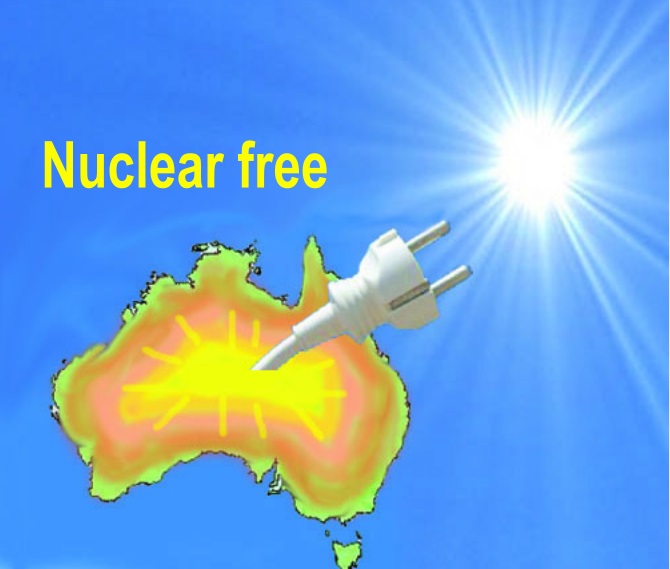
By John Grimes, Saul Griffith, Tim Buckley, Blair Palese, Janaline Oh, John Hewson, Mara Bun, https://www.canberratimes.com.au/story/8456455/debating-viability-of-nuclear-power-in-australia/ December 13 2023
The prospect of nuclear power generation in Australia is now a live debate. There are a number of barriers that make nuclear unviable as a solution for Australia’s energy transition in a timeframe necessary to respond to the climate, energy and cost-of-living crisis. We outline these below.
We need energy, decarbonisation and cost of living solutions this decade. The Intergovernmental Panel on Climate Change recommends a 50 per cent emissions reduction by 2030. As former Chief Scientist Dr Alan Finkel has noted, It is hard to imagine first operation of small modular reactor (SMR) technology before 2040.
SMR technology, advocated by proponents of nuclear energy in Australia, is not commercial. There are no SMRs in operation outside of Russia and China, and none under construction in Europe or North America, meaning there is no evidence of their safe and consistent operation, or viability. In November, the only SMR development in the US was terminated.
Nuclear power is prohibited in Australia under federal legislation, with similar legislation in the states and territories.
To overturn these bans and establish the new regulatory and compliance regime would take years and would only be the start of the process of developing a nuclear industry. Sites for reactors would need to be identified, and social licence secured. Rigorous approvals processes would need to run their course. A skilled specialist local workforce would need to be trained and deployed. Robust arrangements would need to be made to manage waste and to mitigate risk. Legal challenges and civic protest would arise.
All of the above means nuclear would not be ready to deploy in a climate-necessary timeframe in Australia.
Therefore, we must continue to deploy the commercially viable and proven zero-emissions technologies of firmed solar and wind power as rapidly as possible.
Further, the cost of nuclear power generation is much higher than its low-cost alternatives.
The 2022 World Nuclear Industry Status Report (WNISR) notes that between 2009 and 2021, unsubsidised costs for solar PV declined from US$359 to US$36 per megawatt hour (MWh), a fall of 90 per cent, and for wind from US$135 to US$38 per MWh, a 72 per cent fall, while nuclear power costs rose from US$123 to US$167 per MWh, up 36 per cent. This gap is widening.
The CSIRO/Australian Energy Market Operator May 2023 GenCost report found that: “A review of the available evidence makes it clear that nuclear power does not currently provide an economically competitive solution in Australia – or that we have the relevant frameworks in place for its consideration and operation within the timeframe required.”
The Investor Group on Climate Change, which represents investors with $30 trillion in assets under management, says there is no interest among investors in nuclear, when nuclear has “project time blowouts of anything from seven to 15-plus years and cost blowouts in the tens of billions, and lowest-cost technologies, renewables, batteries and so on, are available to deploy now”.
The 2023 WNISR notes that in 2022, “total investment in renewable electricity capacity reached a new record all-time high of US$495 billion (up 35 per cent), 14 times the reported global investment decisions for the construction of nuclear power plants”.
The climate and energy price crises require Australia to accelerate the decarbonisation of its electricity system and economy toward zero-emissions this decade.
Australia enjoys the global advantage of superabundant solar and wind resources.
Unlike some economies where nuclear energy is established, Australia also has available landmass for renewables infrastructure and the opportunity to share the benefits with communities.
We urge the federal government to maintain its policy and investment focus on the proven technology of low-cost, deflationary firmed renewables and “electrification of everything”, and to accelerate deployments, as it has done with its recent landmark boost to the Capacity Investment Scheme (CIS) bolstered by its pledge at COP28 to triple renewables by 2030.
When announced last year, the federal government said the first iteration of its CIS would drive around $10 billion of investment in clean dispatchable power.
Climate Energy Finance estimates the recently announced turbocharging of the CIS will see a four-fold lift in firmed clean energy investment across Australia.
The fastest-to-deploy and most popular renewable energy option for Australia is rooftop solar, the world’s cheapest energy source, because it eliminates transmission and distribution costs.
Mass solar electrification of households should be central to our clean energy transition plans.
Electrification of communities and commercial operations in Renewable Energy Zones will improve equity and build social licence for large-scale energy infrastructure, as it enables decarbonisation of industry.
These complementary actions will permanently reduce greenhouse emissions and energy prices, enable Australia to deliver on its climate commitments, and catalyse our generational opportunity to position Australia as a zero-emissions trade and investment leader.
Australia has no time to lose. The rise of renewables offers us a chance to reinvent Australia’s economy.
We can ill afford the opportunity cost of delay to our renewables transformation.
John Grimes is CEO of the Smart Energy Council. Dr Saul Griffith is co-founder and chief scientist of Rewiring Australia. Tim Buckley is a director of Climate Energy Finance. Blair Palese is founder of the Climate Capital Forum. Janaline Oh is executive director of Diplomats for Climate and a former senior diplomat. Dr John Hewson AM is a professor at the ANU Crawford School of Public Policy. Mara Bun is a company director and former president of the Australian Conservation Foundation.
Coalition delivers the same old tired nuclear talking points at COP28
With a heavy sigh, Crikey once again delves into the most pointless ritual in Australian public policy — the nuclear energy ‘debate’.
CHARLIE LEWIS, DEC 11, 2023, https://www.crikey.com.au/2023/12/11/coalition-nuclear-energy-australia/
“Today I am happy to announce that a reelected Coalition government will, at its first COP after being returned to office, sign the nuclear pledge and return Australia to where it belongs, standing alongside its friends and allies,” opposition climate change and energy spokesman Ted O’Brien told world climate summit/increasingly dark joke at humanity’s expense COP28 on Saturday.
He pledged that a reelected Coalition government would triple nuclear energy output and overturn Australia’s nuclear energy moratorium, insisting “no nuclear, no net zero”.
And so, with a heavy sigh, Crikey once again delves into what our politics editor Bernard Keane has described as “the single most boring and ossified ritual in Australian public policy”.
A ‘sensible’ debate
It always starts with a demand for a “sensible” debate around the topic. Going back to John Howard’s years as prime minister (he called for this not once but twice) and to pick a handful of examples since: Then-foreign minister Julie Bishop in 2014, the then-assistant science minister Karen Andrews in 2015 and then-candidate Warren Mundine in 2019. Just last week, troublemaking former Labor minister Joel Fitzgibbon called on the Albanese government to end the ban on nuclear energy. This is not to mention a swathe of conservative media figures adding their voices to the choir over the years.
With dreary inevitability, Opposition Leader Peter Dutton reached for the old hymn book in his budget reply this year, arguing (all together now): “Any sensible government must consider small modular nuclear as part of the energy mix.”
Time is money and also money is money
As we’ve long reported — long, long reported — there are several barriers to nuclear power in Australia, primarily that the whole thing is incredibly expensive because Australia doesn’t have any nuclear infrastructure. As clean energy investor and man with a zeal for the teal Simon Holmes à Court, who was at O’Brien’s address, puts it, “it is a pretty easy pledge to sign because three times zero is zero”.
Nuclear power plants take a very long time to build — as Australia’s former chief scientist Alan Finkel told the Nine papers in August, it’s highly unlikely Australia could open a nuclear power plant before the early 2040s, a delay the country can ill afford if it is to dramatically reduce emissions as quickly as it needs to.
On top of this is the eye-watering price. According to research from the Department of Climate Change and Energy released in September this year, the cost of replacing coalmine sites with small nuclear reactors would be $387 billion.
Even former chair of the Australian Nuclear Science and Technology Organisation Dr Ziggy Switkowski, who undertook a review on the viability of nuclear power for the Howard government in 2007 and is a very big fan of nuclear energy, conceded in 2018 “the window for gigawatt-scale nuclear has closed”:
With requirements for baseload capacity reducing, adding nuclear capacity one gigawatt at a time is hard to justify, especially as costs are now very high (in the range of $5 billion to $10 billion), development timelines are 15+ years, and solar with battery storage are winning the race.
The tax that is not to be named
There is and always has been only one way, in the eyes of Australia’s most credible nuclear spruikers, for nuclear energy to compete with existing energy sources: impose a carbon price.
Switkowski’s 2007 review probably didn’t greatly please Howard, given it found that nuclear became viable compared with coal and gas only if there was a carbon price. Economist and Crikey contributor John Quiggin has also previously argued in favour of nuclear energy in Australia only if it is backed by a carbon price.
Oxfam welcomes Prime Minister Albanese’s call for a “sustainable ceasefire” and Australian vote for immediate ceasefire at UNGA
December 13, 2023, The AIM Network https://theaimn.com/oxfam-welcomes-prime-minister-albaneses-call-for-a-sustainable-ceasefire-and-australian-vote-for-immediate-ceasefire-at-unga/
Oxfam Australia has welcomed a joint statement signed by Prime Minister Albanese and the Prime Ministers of New Zealand and Canada calling for “urgent international efforts towards a sustainable ceasefire”, as well as Australia’s vote in support of an immediate ceasefire at the UN General Assembly.
The PMs’ statement calls for Israel to respect international law and describes Israeli settlements and settler violence in the West Bank as “serious obstacles to a negotiated two-state solution”.
Oxfam Australia Chief Executive Lyn Morgain said the statement and the successful vote were important steps.
“It is clear that this carnage has gone on for far too long and, as the statement says, 18,000 lives is far too high a price to pay. Civilians, including children, should never be punished for crimes committed by their leaders.
“For months now, Australians in their many thousands have been taking to the streets, signing petitions and actively campaigning for our leaders and government to do what it can to put an end to this senseless humanitarian catastrophe.
“The Prime Minister must continue to do all in his power to ensure this ceasefire happens, and that these issues aren’t forgotten once the fighting ends, so Palestinians have a real chance to live in a sustainable peace in their own state.”
1 This month


Help Aunty Sue Protect Her Land and Sacred Sites From Destructive Rocket Testing.
.

Australians deserve the truth
about
AUKUS – https://aukuspublicinquiry.com/

PETITION – To: Prime Minister Anthony Albanese and the Australian Labor Government

of the week – Australians for War Powers Reform (AWPR)
To see nuclear-related stories in greater depth and intensity

