Supporting genocide. Australian funds risk breaking international law.
by Stephanie Tran | Nov 14, 2025, https://michaelwest.com.au/supporting-genocide-australian-funds-risk-breaking-international-law/
Australian fund managers who continue to invest in companies that supply weapons to Israel may be in breach of international law and risk prosecution. Stephanie Tran with the story.
Leading international law experts say Australia’s sovereign wealth fund could be complicit in genocide in Gaza if they continue investing in companies supplying weapons and technology to Israel.
Former Australian Human Rights Commissioner Chris Sidoti, who was a member of the UN Commission of Inquiry on Palestine and Israel, told MWM that both the government and private sector have clear obligations to avoid complicity in genocide.
“States like Australia, and the private sector too, are now on notice,” Sidoti said. “A UN Commission of Inquiry has found war crimes, crimes against humanity and the crime of genocide, and they have responsibilities arising from that.”
Tim McCormack, Professor of International Law at the University of Tasmania and former Special Adviser on War Crimes to the International Criminal Court, said the government must confront the legal implications of its inaction.
“We need a government that’s prepared to say we believe in the international legal order, and that means certain implications for us about having to draw lines in the sand when we see international law being violated egregiously,” he said.
Future Fund complicity
The Future Fund, Australia’s sovereign wealth fund, continues to hold shares in Elbit Systems despite extensive evidence that the Israeli weapons manufacturer is a key enabler of the IDF in the commission of genocide in Gaza as Israel’s largest weapons manufacturer.
During a Senate Estimates hearing last month, Future Fund CEO Raphael Arndt and Chief Corporate Affairs Officer Will Heatherton were grilled about why the fund still invests in Elbit, whose drones are believed to have been used in the Israeli strike that killed Australian aid worker Zomi Frankcom.
Elbit Systems was added to the Fund’s exclusion list in 2018 for producing cluster munitions but was reinstated in April 2023 after what Heatherton described as a process of “due diligence, review and testing.”
“Through our process of regular due diligence, review and testing – as I mentioned, every six months – in 2023 it was identified that Elbit Systems was no longer involved in the activities that led it to be taken out of the portfolio, so it became investable once again,” said Heatherton.
When pressed about the concerns raised by several UN reports regarding the complicity of Elbit Systems in genocide, Heatherton stated that under the board’s policy “there is no reason to exclude the company, on the basis of conventions and treaties the Australian government has ratified”.
“In this particular case, Elbit is not subject to Australian or US sanctions and is not excluded under the exclusions framework adopted by the board,” he said.
Documents obtained via Freedom of Information provide insight into the Future Fund’s decision to maintain its investment in Elbit Systems following a MWM investigation on the matter.
Sidoti said the Fund’s position exposed deep flaws in how it applies ethical and legal standards to its investments.
“If the statements made by the senior people in the Future Fund are correct, then, firstly, there needs to be a complete change in the membership of the board, and secondly, there needs to be a change in the legislation to make sure that the Future Fund acts lawfully under international law and ethically.”
Sidoti pointed to the Norwegian Sovereign Wealth Fund as an example of a fund that has aligned its investment strategy with its obligations under international law. The Norwegian Sovereign Wealth Fund banned investments in Elbit Systems in 2009 due to its supply of surveillance technology to Israeli forces in the West Bank. In August, the fund also terminated all contracts with asset managers handling its Israeli investments.
“If the largest fund in the world can act ethically and be concerned about acting ethically, why can’t a relatively small one like ours? If the board can’t ensure that that occurs, then the legislation needs to be changed. It is an institution that is part of the state, and so it bears the responsibilities under international law that the state bears far more than any private corporation,” Sidoti said.
Australia … “a very real risk”
Sidoti warned that the Australian government may be in breach of its obligations under international law due to its inaction after the International Court of Justice (ICJ) ruled that it was “plausible” that Israel’s acts in Gaza could amount to genocide.
“There is a very real risk that Australia is breaching its international legal obligations. I’m not saying at this stage that we are definitely in breach, but from what the Australian government has said and done in response to the situation in Gaza and in response to decisions already made by the International Court of Justice, I have to say that we are at real risk of being in violation of international law the court.”
He said the government had failed to implement even basic steps to ensure it is not aiding or assisting Israel’s unlawful activities.
“I would have expected Australia to undertake a major review of all aspects of its relationships with Israel… but I am not aware of any such comprehensive review having been undertaken.”
“The [ICJ] have said that all states have an obligation not to aid or assist the continuation of Israel’s unlawful activities in the occupied Palestinian territory. The first step of not aiding and assisting is to know exactly what we’re doing, the aspects of the relationship and what we should be stopping. But that doesn’t seem to have been done.”
Jerusalem defence and trade office
Sidoti also called for the immediate closure of Australia’s defence and trade office in Jerusalem, which promotes cooperation with Israel’s arms industry.
“To have that office still operating and promoting defence cooperation is nothing short of scandalous. It is absolutely scandalous that under these circumstances, we are promoting defence cooperation between Australia and Israel,” he said.
Between March 2019 to June 2025, Austrade paid WeWork Israel $218,115 to lease the premises for the West Jerusalem Trade and Defence office. In July 2025, the lease was extended until December 2025 for a further $26,185.
While the government maintains a ban on arms exports to Israel, Sidoti said the government’s continued defence contracts with Israeli weapons manufacturers such as Elbit Systems fund the development of weapons and surveillance technology used against Palestinians.
“The Australian government is hiding behind the fact that for five years it has had a prohibition on the export of arms and munitions to Israel.”
“But when we buy drones or surveillance technology from Elbit, we are, in fact, funding research and development of the Israeli armaments industry, and in particular the development of surveillance technology that is used against Palestinians. There is no excuse whatsoever for any form of arms trade between Australia and Israel.”
McCormack added that Australia’s participation in the supply of components for the F-35 stealth strike fighter programme continues to implicate us in the atrocities committed in Gaza.
“We know those aircraft … are being used to drop incredible amounts of ordnance on Gaza,” he said.
Obligation to prevent genocide
Sidoti said Australia’s legal duty to prevent genocide was triggered in January 2024 after the ICJ ruled that genocide in Gaza was ‘plausible’. Under the Genocide Convention, states have an obligation not only to punish genocide after it occurs, but to actively prevent it. The ICJ’s ruling activated this obligation, requiring states to use all means reasonably available to them to prevent genocide from happening.
“The critical legal issue is the obligation to prevent genocide; that obligation is not dependent on genocide having actually occurred, it is triggered by a reasonable risk that genocide may occur,” he said. “The obligation to prevent is a real and present obligation that has existed at the latest, since January 2024, yet we seem to have done very little, and certainly almost nothing meaningful in response to that obligation.”
In September, the UN Commission of Inquiry on Palestine and Israel found that Israel has committed and is continuing to commit genocide in the Gaza Strip.
“Our UN Commission of Inquiry has been looking closely at the situation in Palestine and Israel for four years now, and we’ve focused particularly on the situation in Gaza for the last two years. … In a series of reports, eight in all, we found war crimes, crimes against humanity and most recently, based upon all of our earlier findings, the crime of genocide,” Sidoti said.
Chris Sidoti will be speaking in a series of public events organised by the Association for the Promotion of International Law in conjunction with Amnesty International, ANU Law School and the International Commission of Jurists. He will be in Victoria on 19 November, Hobart on 20 November and Sydney on 27 November.
Australia Flags Indians Over $368 Billion Nuclear Submarine Espionage Fears: Did “Qatar Fiasco” Play A Part?

Eurasian Times, By Nitin J Ticku -November 18, 2025
AUKUS was hailed as Australia’s biggest defense agreement, one that could redefine the security architecture in the crucial Indo-Pacific region and challenge China’s rising belligerence.
The pact involved providing Australia with eight nuclear-powered submarines.
The Pillar-I involved Canberra buying 3–5 used Virginia-class SSNs from the U.S., and the Pillar-II involved developing and constructing a new SSN-AUKUS submarine class jointly by Australia and the United Kingdom, incorporating US technology, with deliveries to the Royal Australian Navy beginning in the early 2040s.
However, even four years after signing the over USD 368 billion pact, there is little progress on the crucial project.
Earlier in June, the Trump administration launched a formal review of the contract.
After months of uncertainty, US President Donald Trump finally endorsed the deal last month, assuring Canberra that “they’re getting them (SSNs).”
However, now a new worry is troubling Australia. The fear of spying by “adversary countries” on sensitive nuclear-propulsion technology can further delay the already-delayed project.
China-India Spying On AUKUS?
Australian media outlet The Australian has reported that Australia’s Defense Force has rejected one in ten applicants for AUKUS submarine work due to dubious foreign ties or security risks.
The highly classified nuclear submarine project employs strict vetting processes, turning away individuals with dual citizenship and suspicious links to China and India.
This affects the recruitment drive for the US$368 billion project, which aims to build a highly-skilled workforce of over 20,000 personnel, including engineers and technicians for nuclear submarine construction and maintenance.
Individuals with family, professional, or financial ties to these nations, particularly those who’re in some way connected to the armed forces or state intelligence agencies, are routinely flagged.
The article further notes that U.S.-imposed ITAR regulations further restrict access for non-citizens or those with overseas parentage from high-risk countries, such as China, exacerbating hiring challenges.
These reports followed Australian Security Intelligence Organisation (ASIO) Director-General Mike Burgess’s warning that foreign spy agencies are intensifying efforts to infiltrate AUKUS through job applications and online networks.
The tactics involve posting fake recruitment ads on social platforms like LinkedIn, and then trying to lure the applicants with a defense background to provide insider information on project timelines and technology specifications.
These fake recruitment ads target people associated with the AUKUS project and sometimes prompt them to unwittingly share sensitive details about the project’s timelines during the interview process.
The tactics involve posting fake recruitment ads on social platforms like LinkedIn, and then trying to lure the applicants with a defense background to provide insider information on project timelines and technology specifications.
These fake recruitment ads target people associated with the AUKUS project and sometimes prompt them to unwittingly share sensitive details about the project’s timelines during the interview process…………………………………………………………………………………… https://www.eurasiantimes.com/australia-flags-indians-over-368-billion-nuclear-submarine/
ABC News advances its alliance with Murdoch’s Sky News
By Alan Austin | 17 November 2025, https://independentaustralia.net/politics/politics-display/abc-news-advances-its-alliance-with-murdochs-sky-news,20385
Recent programs have confirmed ABC News is increasingly under the control of pro-Coalition activists, as Alan Austin reports.
IN A SHAMEFUL display of partisan politicking for Australia’s discredited Coalition parties, ABC News devoted almost the entire Insiders program on 9 November to the Liberals and the Nationals.
This had no relevance whatsoever for viewers. Over the next ten years, the Federal Coalition will have less impact on citizens’ lives than the Australian Jugger League, the Yowie Research group and Ferret Owners Australia Inc.
Irrelevance of the Federal Liberal Party
After the May Election, the Coalition held 43 seats in the 150-member Lower House. Should the next election see a 3.9% swing back to the Coalition – same as the recent swing against them – they would gain only 14 seats and end up with 57 MPs, still a dismal minority.
So Labor will get a third term in 2028, or earlier, with a majority strong enough to propel it into a fourth in 2031 and probably a fifth in 2034
This is not fanciful. With polls showing Labor leading the Coalition 56% to 44% in its fourth year in office, it is virtually certain Prime Minister Anthony Albanese will serve as Prime Minister longer than Bob Hawke’s nine years, and likely exceed John Howard’s 11 years and nine months.
While it is improbable Albo will beat Bob Menzies’ 16 years in the top job, it is conceivable Labor could break the Coalition’s record 23-year reign. Records are made to be broken.
Insiders copies the Sky News obsession with the Coalition
A bizarre Insiders program on Sunday 9 November devoted all but nine of its 59 minutes to the Coalition parties and their brawling over climate, abortion and leadership.
Contributing Coalition MPs included Opposition Leader Sussan Ley (eight times), Senator Sarah Henderson (five times), Shadow Defence Minister Angus Taylor (three times), MP Tony Pasin (twice), MP Andrew Hastie (twice) and nine others.
Coalition figures discussed included Robert Menzies, Tony Abbott, Peter Dutton, Nick Minchin, Pru Goward, Matt Canavan, Michael Sukkar, Roshena Campbell and James Paterson. The last-named of these will be as helpful over the next three terms as the first.
The featured interview was with Liberal Shadow Housing Minister, Senator Andrew Bragg, who was gifted 15 minutes of mostly softball questions.
Several comments openly spruiked the Liberal Party.
In the segment critiquing Andrew Hastie’s foolish comments on abortion, Patricia Karvelas noted:
“Andrew Hastie sees himself as a future leader. He has many good attributes, to be honest. He has lots of strengths.”
Karvelas also boosted Roshena Campbell:
“…who was on my show on Friday and contributed really interestingly, I think, to this debate and still has an appetite to go into politics at the federal level.”
The program allotted three minutes to Labor’s housing policy, with a 13-second clip from Housing Minister Clare O’Neil and three minutes on the economy. Mentions were made of a transferring ABC colleague and Graeme Richardson’s death.
Contributions from Labor MPs were seven seconds from Albo in Parliament, four seconds from Energy Minister Chris Bowen, ten seconds from Treasurer Jim Chalmers and two short comments from Clare O’Neil.
No time was allocated to anyone who, besides Labor, will actually influence parliamentary decisions in the foreseeable future — the Greens, who hold 11 Senate seats, One Nation with four senators and the six individual minor party or Independent senators.
This Insiders episode is not an isolated aberration. Other programs obsessing over the loser Liberals include 7.30, Radio National Breakfast, ABC AM and others.
Embracing the malice of Murdoch’s malevolent network
Kim Williams’ appointment as ABC Chair in March 2024 – after many years serving Rupert Murdoch – has disappointed those who hoped he would arrest the shift towards the Murdoch model of falsifying information and boosting right-wing political causes.
Other senior ABC News staff recently recruited from News Corp include Olivia Caisley, Clare Armstrong, Fiona Willan and Ben Butler.
Insiders programs this year have prominently featured former News Corp employees Patricia Karvelas, David Speers, Clare Armstrong and Niki Savva, as well as current staff Samantha Maiden and Greg Sheridan.
The 9 November Insiders actually played a clip direct from Sky News – with a free plug – of Shadow Energy Minister Dan Tehan extolling the gas extraction industry, one of the Liberal Party’s big donors.
There is no excuse for this. There is abundant evidence from court cases, Press Council adjudications, parliamentary inquiries, academic research, admissions from former employees and defamation settlements that distorting the news and fabricating “stories” is News Corp’s core business model.
Other ABC departments complicit
An email sent to the ABC’s mailing list last Tuesday from a unit called ‘ABC Yours’ asked for donations based on false claims.
It read:
‘Across Australia, the demand for food relief is surging, with 77% of charities reporting more people are seeking support than ever before.’
Yes, some citizens still need free food, particularly those with chronic drug dependency, severe mental health issues or who have decided to disassociate from government services. The numbers, however, are now at the lowest as a percentage of the population than ever, as shown by the Productivity Commission, the Bureau of Statistics and other agencies.
Do the food banks report strong demand? Of course. Everyone loves free meals, regardless of wealth or income.
IA asked the ABC’s media department which charities were surveyed and on what analysis the poverty claims were made, but received no substantial response.
Unfortunately, falsifying hardship in Australia to discredit Labor is a persistent ABC failing, as exposed here, here and here.
Let’s hope the national broadcaster shifts its focus henceforward to more relevant issues than the Coalition — like ferrets, yowies and the nation’s magnificent pompfen champions.
‘Inadequate’: Audit call on $368bn AUKUS cost estimate.

COMMENT. Even the Australian is being critical of AUKUS.
They don’t mention that the $368 billion doesn’t cover a high level nuclear waste dump and associated transport, or upgrades needed for the LeFevre peninsula to host a sub building facility at Osborne.
Some of Australia’s top naval experts have cast doubt on the government’s $368bn AUKUS price tag, warning that the cost will be ‘significantly more’.
Ben Packham The Australian 17.11.25
Some of Australia’s top naval experts have cast doubt on the government’s $368bn AUKUS price tag, saying the program to acquire two classes of nuclear-powered submarines will cost “significantly more” than originally thought, with higher upfront outlays.
UNSW Canberra’s naval studies group has called for an urgent and comprehensive audit of AUKUS costs “to provide a realistic financial baseline” for the program, which is already cannibalising the wider defence budget.
Labor argues it can fund the program without a major increase in defence funding beyond its currently planned outlays, which are set to rise from about 2 per cent of GDP to 2.33 per cent by 2033-34.
UNSW Canberra’s new Maritime Strategy for Australia warns the proposed expenditure “will likely be inadequate” to deliver on the government’s naval ambitions. “This is already evidenced by cuts to lower priority projects and sustainment,” the strategy says.
It argues the AUKUS ‘Pillar I’ submarine program “was not comprehensively costed at the outset and its full demand on the Defence budget is still to be fully quantified”.
The paper says a substantial increase to defence funding will be needed, urging the government to “conduct a comprehensive, independently verified costing of AUKUS Pillar I as a matter of urgency to allow for re-baselining of Defence financial requirements and recalculation of required overall Defence funding”.
The strategy also sounds the alarm over the navy’s “long-neglected” mine countermeasures and undersea mapping capabilities, saying they pose “a critical gap that must be regenerated to guarantee maritime access to ports and littoral (coastal) waters”.
It comes amid a Defence-wide cost-cutting drive, revealed by The Australian, that has forced service chiefs to slash sustainment budgets, reduce “rates of effort”, and look at axing some capabilities.
Former RSL president Greg Melick took aim at the funding issue last week, using his Remembrance Day speech to warn hat the nation’s military preparedness was being undermined. The speech earned him a rebuke from Paul Keating, who branded him a “dope” and accused him of seeking a war with China.
But retired Vice-Admiral Peter Jones endorsed Major General Melick’s warning, saying the stretched defence budget was “the elephant in the room at the moment”.
Admiral Jones, the lead author of the maritime strategy and head of the Australian Naval Institute, told The Australian: “It appears the cost (of AUKUS) is significantly more than what was originally thought, including greater upfront costs before submarine construction.”
The paper comes as the government finalises its updated defence strategy and capability investment program, both of which will be released ahead of next year’s federal budget.
Labor announced a $12bn upgrade to Western Australia’s shipbuilding precinct in recent weeks as a downpayment on AUKUS infrastructure in the state, which is likely to cost more than twice that figure.
Workforce costs are also soaring as hundreds of Australian sailors take up training places on US and British submarines, and Australian tradespeople are deployed to shipyards in both countries to gain experience building nuclear boats.
Defence Minister Richard Marles revealed the government’s $368bn AUKUS cost estimate two years ago when he announced the program’s “optimal pathway” to obtain three to five Virginia-class submarines from the US and a new class of AUKUS submarines to be built in Adelaide. He said this was equivalent to about “0.15 per cent of GDP for the life of the program”.
The Australian asked the minister’s office how the figure was arrived at, whether it had any statistical measure of its likely accuracy, and whether it would seek an independent assessment of the program’s cost. It declined to respond to all three questions.
A spokeswoman for Mr Marles instead issued a boilerplate statement repeating the government’s case for acquiring nuclear submarines.
“The acquisition of conventionally armed, nuclear-powered submarines for the Australian Defence Force is a multi-decade opportunity, representing the single biggest capability acquisition in our nation’s history and creating around 20,000 direct jobs over the next 30 years,” she said.
“Working with our AUKUS partners, Australia is not just acquiring world-leading submarine technology but building a new sovereign production line, supply chain and sustainment capability here in Australia. This includes growing the capabilities, capacity and resilience of business – particularly small and medium-sized enterprises.
What Australia can learn from China to become the world’s ‘cleaner’ rare earth refiner.
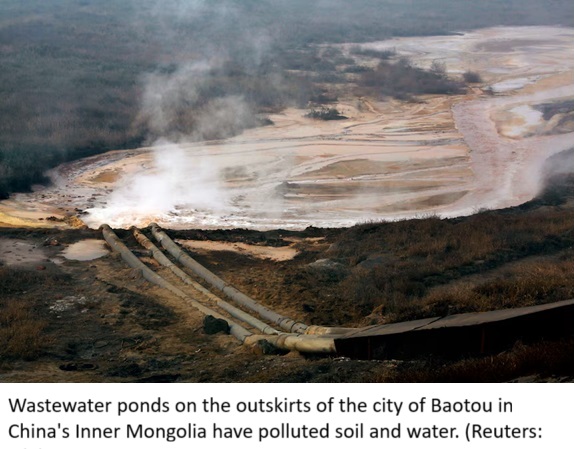
“People don’t quite grasp how much waste we’re talking about.”……………………… cases of cancers, arsenic poisoning and birth and joint deformities linked to years of unregulated dumping.
By Libby Hogan and Xiaoning Mo, Sat 15 Nov, https://www.abc.net.au/news/2025-11-15/australia-refining-rare-earths-environmental-challenges/105969994?utm_source=abc_news_app&utm_medium=content_shared&utm_campaign=abc_news_app&utm_content=other
Australia holds a plethora of rare earths — minerals essential for all sorts of cutting-edge technologies from wind turbines to hypersonic missiles.
Until now, most of them have been sent to be refined in China.
That is largely because the process is dirty, expensive, and politically unpopular.
But after last month signing a $13 billion critical minerals deal with the United States to boost production and refining, Australia must deal with some significant environmental challenges — mostly around water.
Marjorie Valix, a professor of chemical engineering at the University of Sydney, who researches sustainable mineral processing, said Australia has plenty of opportunity — and responsibility — in this space.
“Rare earths aren’t rare in Australia — especially light rare earths,” said Professor Valix.
“But water is one of the vulnerabilities.”
The bottleneck
When researcher Jane Klinger first visited China’s Bayan Obo mine at Baotou in Inner Mongolia — the world’s largest rare-earth operation — more than a decade ago, she expected to see the future of green technology.
What she found instead was a cautionary tale: acidic wastewater and radioactive residue in unlined ponds along with contaminated rivers and farmland.
“The stuff we want is typically a very small percentage of what’s dug up,” Professor Klinger, author of Rare Earth Frontiers, told the ABC.
“And then there’s the waste that’s generated to separate the valuable bits from the rest of the rock.
“People don’t quite grasp how much waste we’re talking about.”
For every tonne of rare-earth oxide produced, roughly 2,000 tonnes of acidic wastewater are left behind.
It was a local taxi driver, pointing to a new hospital built to treat bone disorders, who tipped her off to what was unfolding around Baotou.
She discovered cases of cancers, arsenic poisoning and birth and joint deformities linked to years of unregulated dumping.
Australian National University professor of economic geology John Mavrogenes said the Chinese companies were mining by drilling and pouring chemicals into the holes.
“They found it was so bad environmentally that even China decided maybe they should quit,” he said.
The health and environmental impacts were so severe Beijing has since tightened regulations and cleaned up some sites.
It has also shifted much of its most-polluting refining methods to neighbouring Myanmar.
In Jiangxi province, China’s other main rare earth mining hub in the south, more than 100 mine sites have been shut down in the past decade and converted into parks, according to local media.
Learning from China’s mistakes
Experts insist Australia can do better.
The Donald Rare Earth and Mineral Sands mine in western Victoria — which was given major projects status last month — will use a method that uses fewer chemicals than hard-rock mining to extract rare earths.
Once operational, the site is expected to become the fourth-largest rare earth mine in the world outside China.
The company behind the project, Astron, plans to rehabilitate the land and send its rare-earth concentrate to Utah for further processing, where uranium will also be recovered.
Victoria bans uranium mining outright, but the US intends to use the by-product as fuel for nuclear power plants.
Professor Klinger said one of the most impactful lessons from what she found in China was simple.
“Don’t dump this stuff in tailings ponds without liners,” she said.
“Don’t contaminate groundwater, but also pay attention to ‘who’ is doing the modelling and monitoring.”
When the Donald mine starts production next year, processing is to take place in enclosed sheds, with waste sealed into containers and shipped off-site.
But Australia has not always had a spotless record: past projects such as fracking in the Northern Territory and old coal mines show how environmental oversight can fail.
The water dilemma
China dominates the separation and refining of rare earths, controlling over 90 per cent of global production.
In Western Australia, Iluka Resources is building Australia’s first rare earths refinery.
The process — crushing rock, separating minerals, and neutralising the waste — requires vast amounts of water.
Iluka’s refinery will consume just under 1 gigalitre of groundwater per year.
Iluka head of rare earths Dan McGrath told the ABC the refinery would operate as a zero liquid discharge facility.
“Our design avoids generating liquid waste altogether, and the reagents we use create a saleable fertiliser by-product instead of requiring disposal.
“All remaining solids will be disposed of in existing mine voids, removing the need for new waste containment facilities or above-ground disposal facilities.”
Professor Mavrogenes said water scarcity was already shaping where new mining projects could go ahead.
“Water is an issue because most ores are located in areas that don’t have enough water,” he said.
The Iluka refinery will produce both light and heavy rare earth oxides used in advanced manufacturing of items, including medical devices and defence weaponry.
A wastewater treatment plant will form part of the facilities, but the plan has drawn criticism amid ongoing water shortages.
In Victoria, Astron has secured water entitlement from Grampians Wimmera Mallee Water.
Geologists including Professor Mavrogenes have warned that a secure water supply and planning needed to account for climate change.
“Flooding can shut down processing, especially with heap leaching,” he pointed out.
Heap leaching is where a chemical solution is trickled through a heap of crushed ore, often in a pond, to dissolve the metals.
Other environmental concerns once shadowed Lynas Rare Earths, Australia’s largest producer of rare earths, which ships semi-processed concentrate to Malaysia for refining.
The company initially faced local protests over low-level radioactive waste.
Kuan Seng How, assistant professor in Universiti Tunku Abdul Rahman’s Department of Mechanical and Materials Engineering, said Lynas had since built a permanent, sealed facility to prevent groundwater seepage — an expensive but necessary fix.
Together, Iluka’s new refinery and Lynas’ remediation effort illustrate the same lesson: refining is not just an engineering problem but a resource-management one.
A cleaner frontier
China now lines its wastewater ponds with bentonite clay to reduce leakage and collects some run-off for reuse.
Yet even those measures have not stopped some seepage leaking outward, according to a recent article published in the Chinese journal Modern Mining.
Industry and researchers are now exploring waterless extraction technologies such as solvolysis — a process that uses chemical solvents instead of water to extract rare earths.
“It can leach and separate the metals in one step,” Professor Valix said.
“But it hasn’t been scaled up yet — and right now it’s more expensive.”
She sees water management as the defining test of Australia’s ambitions.
Her colleague Susan Park from the University of Sydney added that as countries raced to upgrade rare earth processing, Australia must invest more in knowledge.
“One of the issues is the absence of long-term research and development into these technological processes and training people,” she said.
China may already be a step ahead, testing new techniques on a large scale.
In January, the Chinese Academy of Sciences claimed a breakthrough: an electrokinetic extraction technique that slashes the use of leaching agents by 80 per cent, mining time by 70 per cent and energy consumption by 60 per cent.
According to the scientists who revealed the development in the journal Nature Sustainability, the method could soon be viable for large-scale production.
For Australia, Professor Valix said the barrier was not capability but commitment.
“It’s not that we don’t have the technology,” she said.
“What we don’t have is the investment and the uptake market here like battery makers or manufacturers.”
Coalition of the unlikely: How Australia and China could save the planet.

Cooperation between Australia and China could send a useful message to the Trump regime and other countries around the world about both the possibility of developing alternatives to failing American leadership and the institutional order it did so much to create.
By Mark Beeson | 17 November 2025, https://independentaustralia.net/politics/politics-display/coalition-of-the-unlikely-how-australia-and-china-could-save-the-planet,20387
If we are to survive, unprecedented levels of cooperation are needed, no matter how unlikely. Mark Beeson writes.
GLOBAL GOVERNANCE is failing. Nothing highlights this reality more dramatically than our collective inability to address the degradation of the natural environment adequately. Addressing an unprecedented problem of this magnitude and complexity would be difficult at the best of times. Plainly, these are not the best of times.
Even if climate change could be dealt with in isolation, it would still present a formidable challenge. But when it is part of a polycrisis of intersecting issues with the capacity to reinforce other more immediate, politically sensitive economic, social and strategic problems, then the prospects for effective cooperative action become more remote.
Indeed, the polycrisis makes it increasingly difficult to know quite which of the many threats to international order and individual well-being we ought to focus on. The “we” in this case is usually taken to be the “international community”, which has always been difficult to define, generally more of an aspiration than a reality, frequently more noteworthy for its absence than its effectiveness.
Nation-states, by contrast, can still act, even if we don’t always like what they do. The quintessential case in point now, of course, is the administration of U.S. President Donald Trump. Because it is by any measure still the most powerful country in the world, what America does necessarily affects everyone. This is why its actions on climate change – withdrawing from the Paris Agreement, gutting the Environmental Protection Authority, encouraging fossil fuel companies – matter so much.
But nation-states can also be forces for good and not just for those people who live within the borders of countries in the affluent global North. On the contrary, states that oversee a reduction in CO2 emissions are not only helping themselves, but they are also helping their neighbours and setting a useful example of “good international citizenship”.
When global governance is failing and being actively undermined by the Trump regime, it is even more important that other countries try to fill the void, even if this means cooperating with the unlikeliest of partners. Australia and China really could offer a different approach to climate change mitigation while simultaneously defusing tensions in the Indo-Pacific and demonstrating that resistance to the Trump agenda really is possible.
Friends with benefits
In the long term, if there still is one, environmental breakdown remains the most unambiguous threat to our collective future, especially in Australia, the world’s driest continent. And yet Australia’s strategic and political elites remain consumed by the military threat China supposedly poses, rather than the immediate, life-threatening impact of simultaneous droughts, fires and floods.
One of the only positives of the climate crisis is that it presents a common threat that really ought to generate a common cause. Some countries are no doubt more responsible for the problem and more capable of responding effectively, so they really ought to overcome the logic of first-mover disadvantage. No doubt, some other country will take over Australian coal markets, but someone has to demonstrate that change is possible.
China is possibly at even greater risk from the impact of climate catastrophes because of water shortages and, paradoxically enough, rising sea levels that will eventually threaten massive urban centres like Guangzhou and Shanghai. While there is much to admire about the decrease in poverty in the People’s Republic, it has come at an appalling cost to the natural environment. China also has powerful reasons to change its ways.
Unfortunately, Chinese policymakers, like Australia’s and their counterparts everywhere else, are consumed with more traditional threats to national strategic and economic security. This may be understandable enough in a world turned upside down by an unpredictable administration bent on creating a new international order that puts America first and trashes the environment in the process.
But in the absence of accustomed forms of leadership from the U.S. and the international community, for that matter, states must look to do what they can where they can, even if this means thinking the unthinkable and working with notional foes. China and Australia really do have a common cause when it comes to the environment and they could and should act on it.
Yes, this does all sound a bit unlikely. But if we are to survive in anything like a civilised state, unprecedented levels of cooperation would seem to be an inescapable part of limiting the damage our current policies have inflicted on the environment. In this context, Australia and China really could lead the way by simply agreeing to implement coordinated domestic actions designed to set a good example and address a critical global problem.
Leading by example
As two of the biggest consumers and producers of coal, Australia and China could make an outsize contribution to a global problem that would almost certainly win near universal praise, not to say disbelief. In short, China could agree not to build any more coal-fired power stations and Australia could commit to not opening any more new mines and rapidly moving to close down existing ones.
This would be a challenge for both countries, no doubt, but if we are ever going to address the climate challenge seriously, this is the sort of action that will be needed. There are no easy or painless solutions. But voluntarily abandoning the use of one of the most polluting fossil fuels is a potentially feasible and effective gesture that would make a difference. After all, China is a world leader in the development and use of green energy already, so the transition would be difficult but doable.
Australia has a shameful record of exporting carbon emissions and could live without the coal industry, which produces most of them, altogether. Coal extraction doesn’t employ many people and Australia is a rich enough country to compensate those affected by the loss of what are awful jobs in a dirty industry. If Australia can find $368 billion for submarines that will likely never arrive, to counter an entirely notional threat from China, it ought to be able to find a couple of billion to deal with a real one.
No doubt there would be significant pushback from coal industry lobbyists and politicians who think their future depends on being “realistic”, even if it means wrecking the planet. And yet it is possible, even likely, that such actions on the part of Australia and China would be very well received by regional neighbours, who would directly benefit from their actions and who might also be encouraged to consider meaningful cooperative actions themselves.
Given the failure of regional organisations like ASEAN to tackle these issues, normative pressure could be useful.
China might even get a significant boost to its soft power and regional reputation. President Xi Jinping frequently talks about the need to develop an “ecological civilisation”. Moving away from coal and collaborating with an unlikely partner for the collective good would be an opportunity to demonstrate China’s commitment to this idea, and to offer some badly needed environmental leadership.
If that’s not an example of what Xi calls win-win diplomacy, it’s hard to know what is.
A sustainable world order?
In the absence of what U.S. Senator Bernie Sanders calls a “revolution” in American foreign policy, multilateralism may well be in terminal decline. Indeed, it is an open question whether interstate cooperation will survive another four years of Trumpism, especially when the United Nations faces a funding crisis and politics in the European Union is moving in a similarly populist and authoritarian direction.
Cooperation between Australia and China could send a useful message to the Trump regime and other countries around the world about both the possibility of developing alternatives to failing American leadership and the institutional order it did so much to create. American hegemony was frequently self-serving, violent and seemingly indifferent to its impact on the global South, but we may miss it when it’s gone.
If multilateralism is likely to be less effective for the foreseeable future, perhaps minilateralism or even bilateralism can provide an alternative pathway to cooperation. Narrowly conceived notional strategic threats could be usefully “decoupled” from the economic and environmental varieties. In such circumstances, geography may be a better guide to prospective partners than sacrosanct notions about supposed friends and enemies.
Someone somewhere has to show leadership on climate change and restore hope that at least one problem, arguably the biggest one we collectively face, is being taken seriously. There really isn’t any choice other than to contemplate unprecedented actions for an unprecedented problem. Australia and China may not save the world, but they could make things a bit less awful and inject some much-needed creativity and hope into international politics.
Mark Beeson is an adjunct professor at the University of Technology Sydney and Griffith University. He was previously Professor of International Politics at the University of Western Australia.
This week’s non-corporate nuclear news

Some bits of good news – COP30 won’t save us, but China might. Egypt defeated an ancient disease. New forest fund shows promise at Cop30
TOP STORIES.
One month in, the ‘ceasefire’ in Gaza exists only in name.
Non Government Organisations Warn that Recent Executive Orders Would Harm Public Health, Disproportionately Impacting Women and Children.
Finally Some Accountability for Georgia’s Costly Nuclear Power Mistake.
Trump’s Ploy at the UN Is American Imperialism Masquerading as a Peace Process.
Michael Mann to Bill Gates: You can’t reboot the planet if you crash it.
US conducts its Intercontinental Ballistic Missile (ICBM) test.
The remnants of Chernobyl are still present in the Black Sea.
Climate. US Oil Executives Flock to COP30. Fossil fuel lobbyists outnumber all Cop30 delegations except Brazil, report says.
Noel’s notes. Why my work is clearly biased.
AUSTRALIA. The people and environment of South Australia must be protected from Federal imposed storage of AUKUS High-Level nuclear waste. Call for inquiry Into AUKUS nuclear subs.
Gareth Evans says Australia should lead nuclear arms control talks.
NUCLEAR ITEMS
| CLIMATE. 6 main issues for COP 30 – and nuclear is no climate solution. Rich countries have lost enthusiasm for tackling climate crisis, says Cop30 chief. |
| ECONOMICS.Legalising the theft of Russian assets. Bechtel Chief Says U.S. Must Subsidize Trump’s Nuclear Revival. Sizewell C. – Taxpayers likely to see ‘no return’ on £6.4bn public funds put in as equity Marketing. EDF boss vows to speed up nuclear projects and narrow gap to Asian peers -ALSO AT https://nuclear-news.net/2025/11/13/1-b1-edf-boss-vows-to-speed-up-nuclear-projects-and-narrow-gap-to-asian-peers/ EDUCATION. Manchester launch for Labrats nuclear test education programme, |
ENERGY.
- Could SMRs add supply-side grid flexibility? – ALSO AT https://nuclear-news.net/2025/11/17/3-b1-could-smrs-add-supply-side-grid-flexibility/
- Why should Scotland pay billions for nuclear when renewables exist? – ALSO AT https://nuclear-news.net/2025/11/16/3-b1-why-should-scotland-pay-billions-for-nuclear-when-renewables-exist/
- Proposed solar farm could help make Island ‘centre of excellence’ – minister.
- Zelensky blames ex-energy chief for failure to protect power grid– ALSO AT https://nuclear-news.net/2025/11/13/2-b1-zelensky-blames-ex-energy-chief-for-failure-to-protect-power-grid/
| ENVIRONMENT. Toxic plume from Los Alamos National Laboratory spreads to nearby pueblo.Lab Chromium Contamination Confirmed on San Ildefonso Pueblo Land.. |
| HEALTH. NFLAs welcome Remembrance Day award of medal to nuke test ‘Sniffers’, but fight not over as groundcrews exposed to radiation remain forgotten. |
| HISTORY. Rare US Peace President: Warren G. Harding |
| LEGAL.Beyond Nuclear brings interim storage case back to Supreme Court. Residents outraged as US nuclear plant gets greenlight to dump radioactive waste into major river: ‘Potential long-term consequences’. Three firms to appear in court over Hinkley Point C death and serious injury incidents- (not radialogical) |
| MEDIA. Spoiler alert: deterrence doesn’t work.Golden Rule: The Journey for Peace – https://www.youtube.com/watch?v=DhrSXF74SYo BBC News Has a Long Record of Disinformation– But This Time It Chose the Wrong Target. |
| OPPOSITION to NUCLEAR . Rosyth councillor doesn’t want Trident submarines at yard. |
| SAFETY. Russia deliberately ‘endangering nuclear safety in Europe’ says Kyiv. Belgium flounders as 5 drones buzz nuclear power plant. 3 drones reportedly spotted flying over Belgian nuclear power plant. Los Alamos National Laboratory Reneges on Active Confinement Ventilation Systems at Plutonium Facility, PF-4. |
| SECRETS and LIES. AI Warlord”+: Eric Schmidt – Money, Media and Maim. The Empire Only De-Escalates In One Area So It Can Escalate In Another, And Other Notes. |
| SPINBUSTER. AI Companies Are Encouraging Users To Believe Chatbots Are People, And It’s Insanely Creepy. On The Rapidly Spreading Delusion That AI Chatbots Are Conscious. |
| TECHNOLOGY. Google on Christmas Island: Data Centres and Imminent Militarisation. |
| URANIUM. Declassified cable reinforces proliferation concerns about high-assay low-enriched uranium fuel (HALEU). |
| WASTES. New U.S. nuclear power boom begins with old, still-unsolved problem: What to do with radioactive waste. Decommissioning. Brian Goodall says no to next stage of submarine dismantling. |
Gareth Evans says Australia should lead nuclear arms control talks
Thu 13 Nov 2025 David Marr, https://www.abc.net.au/listen/programs/latenightlive/gareth-evans-nuclear-arms-control/106005940
As Russia and the US both threaten to resume nuclear testing and China has tripled its stock of nuclear arms, former foreign minister Gareth Evans has written an essay for Australian Foreign Affairs Magazine arguing that Australia should lead a new arms control push. He says “nuclear arms control has never been more necessary, and never more difficult to achieve. The important arms control agreements of the past are dead, dying or on life support. And the recent behaviour of the actors that matter most – the United States, Russia and China – has fed concerns that things can only get worse.”
- Guest: Gareth Evans, Distinguished Honorary Professor, Australian National University, former Australian Foreign Affairs Minister, author of “Doomsday diplomacy: Australia can lead a new arms control push”, for Australian Foreign Affairs
Google on Christmas Island: Data Centres and Imminent Militarisation

12 November 2025 Dr Binoy Kampmark, https://theaimn.net/google-on-christmas-island-data-centres-and-imminent-militarisation/
Google has become something of a fixture in digital infrastructure in the Pacific. In late 2023, Canberra announced a joint project with the US, Google and Vocus, an Australian digital infrastructure firm, to deliver the A$80 million South Pacific Connect initiative. The object: to link Fiji and French Polynesia to Australia and North America, with the hopeful placement of landing stations in other South Pacific countries.
Interest in Google’s relationship with the Australian government was also piqued this month by promised activity on Christmas Island, located 350 kilometres (220 miles) south of Indonesia. The Indian Ocean outpost of exquisite environmental beauty has often been sinister in its secrecy. Unwanted refugees and asylum seekers have periodically found themselves as detainees on the island, victims of Australia’s sadistic approach to undocumented naval arrivals. In August 2016, the Asylum Seeker Resource Centre claimed that the Christmas Island Detention Centre had all the brutal features of “a high security military camp where control is based on fear and punishment and the extensive internal use of extrajudicial punishment by force and isolation is evident.”
The goal of the Silicon Valley behemoth lies elsewhere. Occasioned by the signing of a cloud deal with Australia’s Department of Defence earlier in July, the company promises to build what Reuters describes as “a large artificial intelligence data centre” on the island. Advanced talks are being held on leasing land near the island’s airport that will be used for the site. This will include an arrangement with a local mining company to deal with any necessary energy needs for the 7-megawatt facility, which will be powered on diesel and renewable energy.
The scale of the project, let alone its broader significance, is not something the company or government wonks wish others to know about. “We are not constructing ‘a large artificial intelligence data centre’ on Christmas Island,” came the sharp response from a Google spokesperson to Data Center Dynamics. “This is a continuation of our Australia Connect work to deliver subsea cable infrastructure, and we look forward to sharing more soon.” Planning documents further show the company’s vision for an “additional future cable system” that will connect Christmas Island to Asia.
The Australian Department of Infrastructure has confirmed the Google project, which includes plans to link the island to Darwin using the services of US-based contractor SubCom. The bureaucrats were also quick to gloss over what disruptions might arise to the 1,600 residents heavily reliant on diesel to patch up inadequate renewable sources. “The department is in discussions with Google to ensure energy requirements for the proposed project are met without impacting supply to local residents and businesses.” A spokesperson also stated that, “All environmental and other planning requirements will need to be met for the project to succeed.”
The same cautionary note has not been struck by enthusiasts who see the military potential of the island outpost. Former US Navy strategist Bryan Clark, fresh from being involved in a tabletop war game involving personnel from the US, Japanese and Australian militaries, was keen to inflate the importance of the data centre. That importance, he stresses, lies in the field of conflict. “The data centre is partly to allow you to do the kinds of AI-enabled command and control that you need to do in the future, especially if you rely on uncrewed systems for surveillance missions and targeting missions and even engagements.”
He considers the use of subsea cables more reliable in frustrating any mischief that might arise from China (who else?), notably in attempts to jam Starlink or any satellite communications. Such cables also provided more bandwidth for communication. “If you’ve got a data centre on Christmas, you can do a lot of that through cloud infrastructure.” Again, American power uses Australian territory as a conduit to maintain the imperium.
Google’s ties with the military tendrils of several nations continues the ongoing penetration of Big Tech companies into the industrial complex. The circle between military Research and Development pioneered by government agencies and their partnering with private contractors is complete. Indeed, digital-military-industrial complexes are now battling in steady rivalry (the two most prominent being China and the United States). “This is contributing to the blurring of state-corporation boundaries even more than what was observed during the second half of the twentieth century with the rise of transnational corporations,” write Andrea Coveri, Claudia Cozza and Dario Guarsacio in Intereconomics.
This blurring has served to diminish company accountability and government independence, however well-dressed the issue of planning approvals is. Christmas Island residents will be left to the mercies of unimaginative officials easily seduced by the promise of investment and returns. “There is support for it,” says a convinced Steve Pereira, Christmas Island Shire President, “providing this data centre actually does put back into the community with infrastructure, employment and adding economic value to the island.” As for the military dimension? “We are a strategic asset for defence.” What a comfort for the local citizenry.
Unlocking Asia: CPA Australia urges bold action to boost national capability.

12 November 2025 AIMN Editorial, https://theaimn.net/unlocking-asia-cpa-australia-urges-bold-action-to-boost-national-capability/
Australian businesses are missing significant investment and innovation opportunities in Asia.- Education, business and professional exchange programs must be expanded.
- Speaking from experience – CPA Australia has nearly 50,000 members in the region.
One of the world’s leading accounting bodies, CPA Australia, is urging the Federal government to take bold steps to strengthen Australia’s Asia capability, warning that Australian businesses are missing out on significant opportunities in the region.
In a submission to the government’s inquiry into building Australia’s Asia capability, CPA Australia provides four key recommendations aimed at deepening Australia’s engagement with Asia through education, business and cultural exchange.
Rebecca Keppel-Jones, Chief Member Operations Officer at CPA Australia, says many Australian businesses, particularly SMEs, remain domestically focused and are not capitalising on opportunities in Asia.
“Asia is central to Australia’s future prosperity. To remain competitive, we must build Asia capability from the classroom to the boardroom,” Ms Keppel Jones said.
“With Asia home to some of the world’s fastest-growing economies, Australia risks falling behind unless it invests in Asia capability now. We need more investment into existing programs, such as the New Colombo Plan, to improve Australians’ understanding of Asia.”
CPA Australia is proud to have maintained a strong presence in Asia for more than 70 years. It now represents nearly 50,000 members in mainland China, Hong Kong, Malaysia, Singapore, Indonesia, Vietnam and the UAE.
“Australia must better leverage its people-to-people connections and professional networks to unlock economic potential,” Ms Keppel-Jones said.
CPA Australia’s four key recommendations:
- Expanding Asia-focused training for SMEs to improve business readiness and regional engagement.
- Showcasing Australian success stories in Asia through a government-supported case study library to inspire and educate.
- Increasing scholarships and professional placements for young Australians to study and work in Asia.
- Revitalising Asian language and cultural education in schools and universities to reverse declining enrolments and build long-term regional literacy.
“As global dynamics shift, our ability to engage with Asia is more critical than ever. We need to ensure Australia’s workforce is globally competitive,” Ms Keppel-Jones said. “We are ready to work with government, educators and industry to turn these recommendations into action.”
The submission highlights CPA Australia’s active contributions to regional policy development, education and professional exchange, including a reciprocal work placement exchange program with Malaysia.
Eligible CPA Australia members can enjoy temporary work placements in Malaysia as part of a broader Young Professionals Exchange Program organised by the Department of Foreign Affairs and Trade. The exchange program is designed to enhance business engagement between Australia and its Southeast Asia partners and is available in Malaysia first, before being rolled out to other Southeast Asian markets.
CPA Australia’s thought leadership initiatives across Asian nations include its annual Asia-Pacific Small Business Survey and Business Technology Report.
US Plans for China Blockade Continue Taking Shape

Brian Berletic. https://sovereignista.com/ November 11, 2025
What was once a theoretical discussion in U.S. military journals about blockading China’s oil supply is now steadily turning into a tangible, multi-layered strategy aimed at containing Beijing and preserving American global dominance.
In 2018, the US Naval War College Review published a paper titled, “A Maritime Oil Blockade Against China—Tactically Tempting But Strategically Flawed.” It was only one of many over the preceding years discussing the details of implementing a maritime blockade as part of a larger encirclement and containment strategy of China.
At first glance the paper looks like US policy thinking considered, then moved past the idea of blockading China. Instead, the paper merely listed a number of obstacles impeding such a strategy in 2018—obstacles that would need to be removed if such a strategy were to be viable in the near or intermediate future—and obstacles US policymakers have been removing ever since.
More contemporary papers published, including those among the pages of the US Naval Institute (here and here), have updated and refined not just an emerging strategy to theoretically confront and contain China, but a plan of action taking tangible shape.
Cold War Continuity of Agenda
Throughout the Cold War and ever since its conclusion, the US’ singular foreign policy objective has been to maintain American hegemony over the globe established at the end of the World Wars. A 1992 New York Times article titled “U.S. Strategy Plan Calls for Insuring no Rivals Develop” made it clear the US would actively prevent the emergence of any nation or groups of nations from contesting American primacy worldwide.
In recent years this has included preventing the reemergence of Russia as well as the rise of China. It also involves surrounding both nations with arcs of chaos and/or confrontation—either through the destruction of neighboring countries through political subversion, or the capture of these nations by the US and their transformation into battering rams to be used against both nations.
Ukraine is an extreme example of this policy in action. The US is also transforming both the Philippines and the Chinese island province of Taiwan into similar proxies vis-à-vis China.
Beyond this, the US seeks to prevent the majority of nations currently outside US dominion from joining with and contributing to the multipolar world order proposed by nations like Russia and China.
This strategy of coercion, destabilization, political capture, proxy war, and outright war has been used to target both Russia and China directly, their neighbors, and a growing list of nations far beyond their near abroad.
The US is demonstrating a clear, unwavering commitment to a multi-layered strategy of containment, coercion, and confrontation designed not just to prepare for conflict, but to make that conflict both inevitable and successful for the singular goal of maintaining global American hegemony
Strengths and Weaknesses of American Primacy
Enabling this strategy is America’s global-spanning military presence facilitated by its “alliance network.” This network of obedient client regimes both hosts US military forces and serves as an extension of US military, economic, and increasingly military-industrial power. US “allies” often pursue US geopolitical objectives at their own expense.
Again, an explicit example of this is Ukraine, which is locked in a proxy war with Russia, threatening its own self-preservation as a means of—as US policymakers described in a 2019 RAND Corporation paper—“extending Russia.”
While conflicts like that unfolding in Ukraine or the US-backed military build-up in the Philippines or on Taiwan has exposed a critical weakness of the United States—its lagging military industrial capacity vis-à-vis either Russia or China, let alone both nations—the US has demonstrated the ability to compensate through geopolitical agility the multipolar world is struggling to address.
This includes the ability of the US to mire a targeted nation in conflict in one location while moving resources across its global-spanning military-logistical networks toward pressure points in other locations, overextending the targeted nation and achieving success in at least one of the multiple pressure points targeted. The US successfully did this through its proxy war against Russia in Ukraine, which tied Russia up sufficiently for the US to finally succeed in the overthrow of the Syrian government, where Russian forces had previously thwarted US-sponsored proxy war and regime change.
It also includes the ability of the US to target partner or potential partner nations of Russia and China through economic, political, or even military means in ways Russia and China are unable to defend against—including through political subversion facilitated through America’s near monopoly over global information space.
These advantages the US still possesses also make potential maritime blockades very difficult for Russia and China to defend against.
Russian Energy Shipments as a Beta Test for Blockading China
France recently announced seizing a ship accused of being part of Russia’s “ghost” or “shadow” fleet—ships refusing to heed unilateral sanctions placed by the US and its client states on Russian energy shipments.
This was just one of several first steps toward what may materialize into a wider and more aggressive interdiction or blockade of Russian energy shipments. This may also be a beta test for implementing a long-desired maritime blockade on China…………………
Setting the Stage for a Blockade of China Has Already Begun
The 2018 US Naval War College Review paper lays out the realities of a potential blockade against China in 2018, noting the various opportunities and risks associated with such a strategy…………………………………………………………………………………………..
Since the paper was published, the US has pursued both continued preparations for a maritime blockade of China itself, as well as build up a number of regional proxies to wage war against China, as the US wages proxy war against Russia in Ukraine and, increasingly, through the rest of Europe……………………………………………………………………..
To understand Washington’s strategy toward China, one should not look to the political rhetoric of “retreat” or “homeland defense” in the Western Hemisphere, but rather to the tangible actions taking place across the Asia-Pacific and beyond—the meticulous encirclement of China’s periphery, the sustained attacks on its critical overland energy and trade links (BRI/CPEC), the calculated incapacitation of Russia as a potential energy supplier, and the establishment of local proxy forces (the Philippines, Japan, separatists on Taiwan) prepared to wage war.
Far from an abstract or “flawed” concept relegated to think-tank papers, the maritime oil blockade—or wider general blockade against China—is being incrementally prepared in real-time. By systematically removing the very obstacles noted in the 2018 Naval War College Review paper, the US is demonstrating a clear, unwavering commitment to a multi-layered strategy of containment, coercion, and confrontation designed not just to prepare for conflict, but to make that conflict both inevitable and successful for the singular goal of maintaining global American hegemony. https://sovereignista.com/2025/11/11/us-plans-for-china-blockade-continue-taking-shape/
Call for inquiry Into AUKUS nuclear subs
, Kenneth HIGGS, Port Stephens News of the Area, https://portstephens.newsofthearea.com.au/letter-to-the-editor-call-for-inquiry-into-aukus-nuclear-subs
DEAR News Of The Area,
IN May’s Federal Election, Australians voted against dangerous nuclear reactors, so why is the Australian Government persisting with the AUKUS nuclear submarines deal?
More than 30,000 people have signed a petition calling for an independent parliamentary inquiry into the AUKUS pact.
Is it in our national security and best interests?
Now is the time for a parliamentary, given our UK and US partners are also reviewing AUKUS “anomalies”.
Why should Australia splurge $368 billion on submarines that might never be delivered?
Are they the most effective defence strategy or are there better, less expensive options? Submarine reactors use weapons-grade, highly enriched uranium (HEU), so what are the potential environmental and health impacts if they leak radioactive material?
his has been a recurring problem with nuclear reactors in UK submarines.
Submarine patrol routes, exercise and training areas are necessarily secretive, so what are the risks to civilian vessels navigating the same waters?
Between 1982 and 2015, UK civilian sources documented 170 “interactions” between civilian vessels and nuclear submarines including net “snaggings”, collisions, near misses and at least 30 suspicious unexplained sinkings in UK waters.
These incidents have led to loss of life, total loss of vessels and loss of fishing gear.
We need answers and I urge people to sign the AUKUS inquiry petition on the Australia Institute website.
The people and environment of South Australia must be protected from Federal imposed storage of AUKUS High-Level nuclear waste
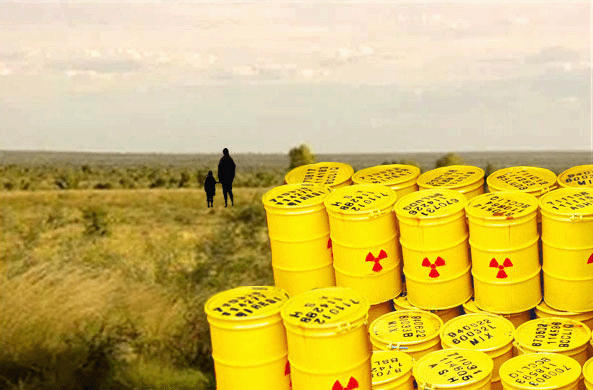
Brief by David Noonan Independent Environment Campaigner 10 Nov 2025. https://nuclear.foe.org.au/wp-content/uploads/Noonan-AUKUS-nuclear-wastes-target-SA-Briefer-9-Nov-2025.pdf
South Australians have a Right to Say No to undemocratic Federal imposed storage of AUKUS
High Level nuclear waste in our State. All Federal MPs & Senators from SA, Members of the SA
Parliament and candidates for the SA State Election on 21st March should declare their position:
Q: Will you accept or reject Federal imposed storage of AUKUS nuclear waste in SA?
The Federal Government quietly took up new AUKUS Regulations (2 Oct) as powers to impose
AUKUS wastes by override of State laws that prohibit nuclear waste storage in SA, NT and WA.
AUKUS Regulation 111 “State and Territory laws that do not apply in relation to a regulated
activity” names and prescribes our SA Nuclear Waste Storage (Prohibition) Act 2000. The
Objects of this key SA Law set out what is at stake: “To protect the health, safety and welfare
of the people of SA, and the environment in which they live” from nuclear waste storage.
Federal Labor’s draconian powers to compromise public health, safety and welfare protections. n SA Law, lacks social licence, are an affront to civil society, and damages trust in governance.
This is also a threat to Indigenous People with a cultural responsibility to protect their country.
Community expects our State Labor Government to give a clear State Election commitment to
protect SA from the risks and impacts of untenable and illegal AUKUS High Level nuclear waste
storage, see “The lethal legacy of Aukus nuclear submarines will remain for millennia – and
there’s no plan to deal with it” (The Guardian, 10 August 2025, interview with Prof Ian Lowe).
Labor has a further key leadership test ahead of our Election: to commit to support Indigenous
People’s human rights, set out in the United Nations Declaration on the Rights of Indigenous
Peoples Article 29 (UNDRIP 2007), to “Free, Prior and Informed Consent” over storage of
hazardous materials on their lands. AUKUS wastes absolutely are hazardous materials!
a Question for Premier Peter Malinauskas: Will you respect and support Indigenous Peoples
Rights to Say No to Federal siting of AUKUS nuclear waste storage on their country in SA?
Call for full disclosure on a N-waste siting process after Labor breaks its commitment:
The public has a Right to Know what regions are being targeted for storage of High-Level
nuclear wastes. A secretive ongoing Defence review “to identify potential nuclear waste
disposal sites” (ABC News March 2023) must be made public ahead of the SA State Election.
AUKUS Minister Marles has broken his commitment to announce a process by early 2024 to
identify a site to dispose of AUKUS High-Level nuclear wastes. The failure by Defence to set out
any process – other than to take up powers to impose nuclear wastes – is unacceptable.
REPORTER: Is a high-level nuclear waste dump the price that South Australia will have to pay
for the jobs that go to the state? (Minister Marles Press Conference 14 March 2023)

MARLES: Well, as I indicated there will be a process that we will determine within the next 12
months for how the site will be identified. You’ve made a leap there, which we’re not going to
make for some time. It will be a while before a site is ultimately identified. But we will within the
next 12 months establish a process for how we walk down that path.
It is now over 4 years since Federal Labor agreed with Morrison’s AUKUS nuclear sub agenda.
SA Labor to let ‘national security interests’ decide siting for AUKUS nuclear waste?
National press reported the Woomera Area to be a ‘favoured location’ for storage and disposal
of nuclear sub wastes back in August 2023 (“Woomera looms as national nuclear waste dump
site including for AUKUS submarine high-level waste afr.com). WA, Qld and Vic political leaders
have rejected a High-Level nuclear waste disposal site in their States, with WA suggesting the
Woomera Prohibited Area in SA: “would be one obvious location within the Defence estate,
however, we will await the outcomes of the federal review” (SMH 15 March 2023).
Premier Malinauskas has so far only said AUKUS nuclear waste should go to a ‘remote’ location
in the “national security interest” (see “Site for high-level nuclear waste dump under AUKUS
deal must be in national interest, SA premier says” ABC News 15 March 2023).
The Premier’s “Office for AUKUS” (Letter, 7 Oct 2025) accepts “safe and secure disposal” of
High-Level nuclear waste, including spent fuel, produced when subs are decommissioned. The
Office says no decision has been made on a location but declines to reveal what is underway,
expresses no concerns over unprecedented nuclear waste storage or‘social license’, and
expects “community acceptance” (in SA?) for a nuclear ‘disposal solution’:
“I can confirm that no decision has been made on a location within Australia for the
disposal of intermediate, or high-level radioactive waste from nuclear-powered
submarines. Determining suitable locations and methods for safe and secure disposal
will take time, but Australia will do so in a manner that sets the highest standards … and
which builds community acceptance for a disposal solution.”
SA is left in the dark, without a say, as an ongoing target for an AUKUS nuclear waste dump.
AUKUS is to store US origin nuclear wastes from 2nd hand Virginia Class subs in Australia:
AUKUS aims Australia take on second-hand US Virginia Class nuclear powered subs in the early
2030’s loaded with up to a dozen years of US origin military High-Level nuclear waste and fissile
Atomic-Bomb fuel accrued in operations of US Navy High Enriched Uranium nuclear reactors.
Swapping an Australian flag onto this US military nuclear reactor waste places an untenable ‘for
ever’ burden on all future generations to have to cope these US nuclear wastes.
Scenario: an AUKUS nuclear dump imposed on SA, High-Level military waste shipped into
Whyalla Port to go north, nuclear subs to be ‘decommissioned’ at Osborne Port Adelaide.
Whyalla Port is back on a nuclear waste target range. How else could AUKUS nuclear waste get
to a storage site in north SA? The Woomera Area is expected to be on a regional short list for an
AUKUS dump, requiring nuclear waste transport routes across SA. Port Adelaide community has
a Right to Say No to nuclear decommissioning plans for expanded Osborne submarine yards.
SA politicians must protect SA and rule out both an untenable AUKUS nuclear dump and
decommissioning nuclear subs and nuclear reactors at Osborne or else-where in SA.
SA must respect Traditional Owners Human Rights to Say No to imposition of nuclear wastes.
The SA public have Rights to full disclosure and for politicians to have to declare their positions,
We need an informed public debate ahead of our State Election. Silence by our political leaders,
while a path is paved toward nuclear decisions, makes a nuclear waste dump future more likely.
Info: see Rex Patrick & “AUKUS waste in perpetuity”, and David Noonan in Pearls and Irritations.
This week’s Nuclear news – not from the military-industrial-political-media complex

Some bits of good news –
Christiana Figueres: The global south is now leading the clean-energy revolution.
Mozambique has reached a milestone in women’s health, vaccinating nearly 3 million girls aged 12–18 against HPV.
Migratory Birds and Rice Farmers Are Helping Each Other Soar
TOP STORIES. The Gaza Laboratory: How War is Being Marketed and How the World is Fig
hting Back.
The rise of the US ‘digital-military-industrial complex’
Trump’s 20 point plan to end the war in Gaza is the usual Israeli ultimatum: surrender or be murdered.
Trump and the Deep State: The Tomahawk deadlock and the illusion of presidential autonomy.
Resuming U.S. Nuclear Tests Is Reckless and Dangerous, One Expert Says.
The Risky Movement to Make America Nuclear Again– (very long -but useful extracts at https://nuclear-news.net/2025/11/04/1-a-the-risky-movement-to-make-america-nuclear-again/
Who is paying for Britain’s nuclear revival?
The SMR boom will soon go bust.
Cheaper, greener power is on the way – ALSO AT https://antinuclear.net/2025/11/03/cheaper-greener-power-is-on-the-way/ Australia is getting free electricity – will other countries follow?
Climate. THE CORRUPTION OF COP30: DODGY CLIMATE DOSSIERS How thousands of fossil fuel lobbyists got access to UN climate talks – and then kept drilling.
Six pieces of data that give hope for the future of the climate.
Noel’s note for today – When will the public in each country wake up? Governments don’t care – they’re happy to waste taxpayers money on things nuclear, and especially weaponry.
AUSTRALIA.
- Subs base enigma– NSW Government doesn’t know what to hide or why.
- Navi Pillay: Don’t be complicit in genocide Australia, warns former UN High Commissioner for Human Rights.
- Arms industry infiltrates National Press Club.
- Australian uranium company loses Danish arbitration case.Nationals choose coal, nuclear and climate denial, as politics of delay threatens to kill another industry.
- Coalition to look at coal subsidies, stick with nuclear. Free solar, nuclear cost blowouts, and “deadly negligence” on climate: A heady mix for the Coalition.
- World’s biggest isolated grid hits new peak of 89 per cent renewables, led by rooftop solar.
NUCLEAR iTEMS
| ATROCITIES. Israel Is Still Starving Gaza, And Other Notes. |
| CLIMATE. Can France’s nuclear legacy weather climate change?-ALSO AT https://nuclear-news.net/2025/11/09/1-a-can-frances-nuclear-legacy-weather-climate-change/ Siting new nuclear at Oldbury deemed ‘problematic’ due to high level of flood risk -ALSO AT https://nuclear-news.net/2025/11/08/1-b1-siting-new-nuclear-at-oldbury-deemed-problematic-due-to-high-level-of-flood-risk/ |
ECONOMICS.
- Trump’s Westinghouse Nuclear Fiasco: Wasting Money on a Corrupt Game of Hot Potato.
- The $17bn nuclear start-up without any revenue -and TRANSCRIPT– ALSO AT https://nuclear-news.net/2025/11/08/1-b-the-17bn-nuclear-start-up-without-any-revenue/
- Japan’s seismic history and the Westinghouse deal – ALSO AT https://nuclear-news.net/2025/11/04/1-b1-japans-seismic-history-and-the-westinghouse-deal/
- Starmer, Macron, Merz…3 unwise leaders degrading their economies while destroying Ukraine.
- The Biggest Single Contributor to the UN Budget is also the Biggest Single Defaulter.
- “It is unacceptable that the EDF tariff reform is being adopted quietly, to the detriment of the users”- ALSO AT https://nuclear-news.net/2025/11/05/1-b1-it-is-unacceptable-that-the-edf-tariff-reform-is-being-adopted-quietly-to-the-detriment-of-the-users/
- EDF Braces for More Delays at UK Hinkley Point Nuclear Project. Bpifrance helps UK nuclear reactor to financial close – ASO AT https://nuclear-news.net/2025/11/08/1-b1-bpifrance-helps-uk-nuclear-reactor-to-financial-close/
- Canadian government happily splashing tax-payers’ money on wasteful things nuclear.
| EMPLOYMENT. Fears raised that specialist Vulcan MoD work could shift to Sellafield |
| ENVIRONMENT. Nuclear Tests and Their Legacy of Harms in Asia-Pacific.The Silicon Thirst: When Data Drinks the World Dry. |
| EVENTS. 19th and 20th November – Online Event- Holding the Memories: Communities Leading the Fight for Nuclear Archival Justice |
| HEALTH. The men who stared at mushroom clouds . |
| MEDIA. Atomic testing must not resume.YouTube deletes hundreds of videos documenting Israeli war crimes. |
| OPPOSITION to NUCLEAR . No to Nuclear, Yes to Renewables for Wales. Going Nuclear Free: The Early History of the Nuclear Free Local Authorities. |
| PERSONAL STORIES. Israel Still Controls Over Half of Gaza — Including the Rubble of My Home. |
| PLUTONIUM. Los Alamos National Laboratory Prioritizes Plutonium “Pit” Bomb Core Production Over Safety.Some 890 tons of Tepco nuclear fuel kept at Aomori reprocessing plant. |
POLITICS
- The US Empire Keeps Getting Creepier.
- The Nastiest Warmongers Are Trump’s Biggest Fans Now.
- How could the US restart nuclear weapons testing?- ALSO AT https://nuclear-news.net/2025/11/05/1-b-how-could-the-us-restart-nuclear-weapons-testing/ Donald Trump’s alarming muddle about nuclear-weapons testing.
- Hegseth to Congress: “I have no idea…”
- Pentagon Tells Congress It Doesn’t Know Who It’s Killing in Latin American Boat Strikes.
- Governments’ Financial Support for New Nuclear Developments in Canada.
- British Nuclear Jets Programme Costs ‘Unrealistic’ – CND.
- UK Government rapped as billions unaccounted for in nuclear spending– ALSO AT https://nuclear-news.net/2025/11/07/1-b1-uk-government-rapped-as-billions-unaccounted-for-in-nuclear-spending/ Scottish
- National Party reject UK Government’s ‘nonsense’ national security threat smear- ALSO AT https://nuclear-news.net/2025/11/08/1-b1-scottish-national-party-reject-uk-governments-nonsense-national-security-threat-smear/
POLITICS INTERNATIONAL and DIPLOMACY.
- The Deal That Never Was: Washington Proposed, Moscow Agreed – and Trump Blocked It.
- Putin considers nuclear tests after Trump threat. Russia urges Trump administration to clarify ‘contradictory’ signals on nuclear testing . Trump doubles down on nuclear tests as Russia issues warning. Trump, Putin, and Nuclear Arms Diplomacy. Trump’s Threat to Resume Nuclear Testing.
- China denies nuclear testing, calls on US to maintain moratorium.
- Francesca Albanese names over 60 states complicit in Gaza genocide.
- Trump’s bet on US nuclear buildout ropes in Japan– ALSO AT https://nuclear-news.net/2025/11/05/1-b1-trumps-bet-on-us-nuclear-buildout-ropes-in-japan/
- Brussels attempts to sink Europe in debt to help Zelensky.
SAFETY. IAEA chief condemns Trump’s nuclear test plan. Trump’s Big Nuclear Reactor Push Raises Safety Concerns.
Remediation work through £4.6bn Sellafield framework. Officials launch investigation after hazardous incident at shut-down nuclear plant: ‘Deeply concerning’.
| SECRETS and LIES. The AI Drones Used In Gaza Now Surveilling American Cities. |
| TECHNOLOGY. Artificial Intelligence Is Making Everything Dumber |
| URANIUM. Don’t fuel Riyadh’s nuclear weapons cravings |
| WASTES Nuclear waste removal under way at silo. Decommissioning.EDF’s plan to decommission Hinkley Point B approved despite regulator’s concerns. Hinkley Point B to begin 95-year decommissioning plan. UK’s nuclear waste problem lacks a coherent plan. Radioactive waste from Canada would be buried in Utah under EnergySolutions proposal. The iodine-129 paradox in nuclear waste management strategies. |
WAR and CONFLICT.
Hegseth Declines To Say Whether the US Is Planning To Bomb Venezuela. US amassing 16,000 troops off Venezuelan coast – Washington Post.
The moment of truth: The West confronts Russian military advances.
WEAPONS and WEAPONS SALES.
- ‘Nothing revolutionary’ about Russia’s nuclear-powered missile: Experts .
- Experts: Full nuclear weapons tests would backfire on US . Rusting nuclear facilities hamper Trump’s plans for new tests. Trump’s testing plans for US nuclear weapons won’t include explosions, energy secretary says. Donald Trump’s Nuclear Announcement Sparks Alarm: ‘He Is Misinformed’ Teasing the Armageddon Fanciers: Trump’s Announcement on Nuclear Testing.
- US Army wants to deploy small nuclear power plants. What will the UK do in a new nuclear arms race?
- The UK’s £1 billion Thank You to Uncle Sam. Ministry of Defence still unclear on cost of RAF nuclear jet plan, MPs say. UK Nuclear Armed Fighter Jets.
- IAEA chief says Iran still capable of building nuclear weapons.
Australia is getting free electricity – will other countries follow?
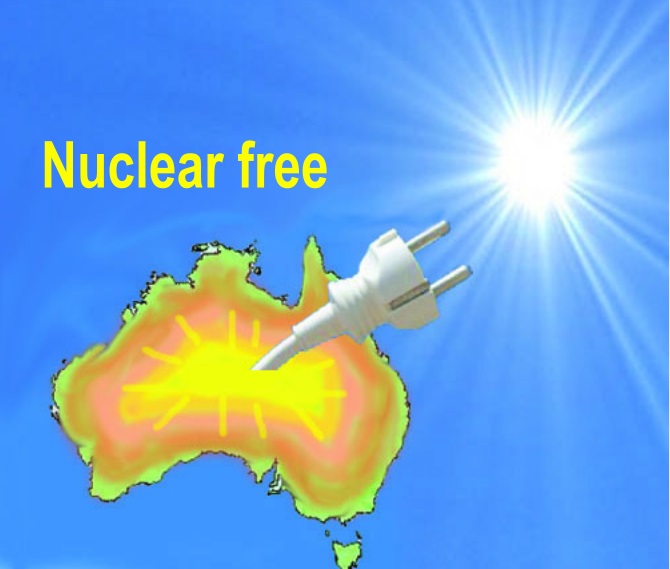
As one of the most advanced solar nations in the world, Australia is well placed to experiment with giving people free power – and if it succeeds, other countries may look to copy its approach
By James Woodford, New Scientist 7th Nov 2025
Australians received a welcome surprise this week with the news that every household will soon receive 3 hours of free electricity every day, as part of a world-first initiative to share the benefits of solar power. If successful, it could be a model for other to follow in a future that will increasingly be powered by sunshine.
The Australian electricity grid is zinging with excess capacity during the day thanks to solar power, but it is strained at night when people return from work and use most of their appliances. To address this, the Australian government says its “Solar Sharer” scheme will be rolled out from July 2026 in three states – New South Wales, South Australia and the south-east corner of Queensland – with the rest of the country joining in 2027…………………..(Subscribers only)..…………………. https://www.newscientist.com/article/2503532-australia-is-getting-free-electricity-will-other-countries-follow/
1 This month
Chernobyl: The Lost Tapes – A good documentary on Chernobyl on SBS available On Demand for the next 3 weeks– https://www.sbs.com.au/ondemand/tv-program/chernobyl-the-lost-tapes/2352741955560
15 April – Zoom –Nuclear Power is Not the Solution
Apr 15, 2026 01:00 AM in Canberra, Melbourne, Sydney

Join the International Physicians for the Prevention of Nuclear War (IPPNW) on Tuesday, April 14th for a timely webinar exploring the risks associated with nuclear power and challenging the myth that it offers a simple, safe, carbon-free solution to the climate crisis

21 April Webinar: No Nuclear Weapons in Australia
Start: 2026-04-21 18:00:00 UTC Canberra, Melbourne, Sydney (GMT+10:00)
End: 2026-04-21 19:30:00 UTC Canberra, Melbourne, Sydney (GMT+10:00)
Event Type: Virtual
A virtual link will be communicated before the event.
Host Contact Info: australia@icanw.org

of the week – Australians for War Powers Reform (AWPR)
To see nuclear-related stories in greater depth and intensity
 Antinuclear