Canada’s Honoring of Nazi Vet Exposes Ottawa’s Longstanding Ukraine Policy
Following the war, Canada’s Liberal government classified thousands of Jewish refugees as “enemy aliens” and held them alongside former Nazis in a network of internment camps enclosed with barbed wire, fearing that they would infect their new country with communism. At the same time, Ottawa placed thousands of Ukrainian veterans of Hitler’s army on the fast-track to citizenship.
By celebrating a Waffen-SS volunteer as a “hero,” Canada’s Liberal Party highlighted a longstanding policy that has seen Ottawa train fascist militants in Ukraine while welcoming in thousands of post-war Nazi SS veterans. Canada’s second most powerful official, Chrystia Freeland, is the granddaughter of one of Nazi Germany’s top Ukrainian propagandists.
SCHEERPOST, By Max Blumenthal / The Grayzone 1 Oct 23
In the Spring of 1943, Yaroslav Hunka was a fresh-faced soldier in the 14th Grenadier Division of the Waffen-SS Galicia when his division received a visit from the architect of Nazi Germany’s genocidal policies, Heinrich Himmler. Having presided over the battalion’s formation, Himmler was visibly proud of the Ukrainians who had volunteered to support the Third Reich’s efforts.
80 years later, the Speaker of Canada’s parliament, Anthony Rota, also beamed with pride after inviting Hunka to a reception for Volodymyr Zelensky, where the Ukrainian president lobbied for more arms and financial assistance for his country’s war against Russia.
“We have in the chamber today Ukrainian war veteran from the Second World War who fought for Ukrainian independence against the Russians and continues to support the troops today even at his age of 98,” Rota declared during the September 22 parliamentary event in Ottawa.
“His name is Yaroslav Hunka but I am very proud to say he is from North Bay and from my riding of Nipissing-Timiskaming. He is a Ukrainian hero, a Canadian hero, and we thank him for all his service,” Rota continued.
Gales of applause erupted through the crowd, as Prime Minister Justin Trudeau, Zelensky, Deputy Prime Minister Chrystia Freeland, Canadian Chief of Defense Staff Gen. Wayne Eyre and leaders of all Canadian parties rose from their seats to applaud Hunka’s wartime service.
Since the exposure of Hunka’s record as a Nazi collaborator – which should have been obvious as soon as the Speaker announced him – Canadian leaders (with the notable exception of Eyre) have rushed to issue superficial, face-saving apologies as withering condemnations poured in from Canadian Jewish organizations.
The incident is now a major national scandal, occupying space on the cover of Canadian papers like the Toronto Sun, which quipped, “Did Nazi that coming.” Meanwhile, Poland’s Education Minister has announced plans to seek Hunka’s criminal extradition.
The Liberal Party has attempted to downplay the affair as an accidental blunder, with one Liberal MP urging her colleagues to “avoid politicizing this incident.” Melanie Joly, Canada’s Foreign Minister, has forced Rota’s resignation, seeking to turn the the Speaker into a scapegoat for her party’s collective actions.
Trudeau, meanwhile, pointed to the “deeply embarrassing” event as a reason to “push back against Russian propaganda,” as though the Kremlin somehow smuggled an nonagenarian Nazi collaborator into parliament, then hypnotized the Prime Minister and his colleagues, Manchurian Candidate-style, into celebrating him as a hero.
To be sure, the incident was no gaffe. Before Canada’s government and military brass celebrated Hunka in parliament, they had provided diplomatic support to fascist hooligans fighting to install a nationalist government in Kiev, and oversaw the training of contemporary Ukrainian military formations openly committed to the furtherance of Nazi ideology.
Ottawa’s celebration of Hunka has also lifted the cover on the country’s post-World War Two policy of naturalizing known Ukrainian Nazi collaborators and weaponizing them as domestic anti-communist shock troops. The post-war immigration wave included the grandfather of Deputy Prime Minister Chrystia Freeland, who functioned as one of Hitler’s top Ukrainain propagandists inside Nazi-occupied Poland.
Though Canadian officialdom has worked to suppress this sordid record, it has resurfaced in dramatic fashion through Hunka’s appearance in parliament and the unsettling contents of his online diaries.
“WE WELCOMED GERMAN SOLDIERS WITH JOY”
The March 2011 edition of the journal of the Association of Ukrainian Ex-Combatants in the US contains an unsettling diary entry which had gone unnoticed until recently.
Authored by Yaroslav Hunka, the journal consisted of proud reflections on volunteering for the 14th Grenadier Division of the Waffen-SS Galicia. Hunka decribed the Nazi Wehrmacht as “mystical German knights” when they first arrived in his hometown of Berezhany, and recalled his own service in the Waffen-SS as the happiest time in his life.
“In my sixth grade,” he wrote, “out of forty students, there were six Ukrainians, two Poles, and the rest were Jewish children of refugees from Poland. We wondered why they were running away from such a civilized Western nation as the Germans.”
The Jewish Virtual Library details the extermination of Berezhany’s Jewish population at the hands of the “civilized” Germans: “In 1941 at the end of Soviet occupation 12,000 Jews were living in Berezhany, most of them refugees fleeing the horrors of the Nazi war machine in Europe. During the Holocaust, on Oct. 1, 1941, 500–700 Jews were executed by the Germans in the nearby quarries. On Dec. 18, another 1,200, listed as poor by the Judenrat, were shot in the forest. On Yom Kippur 1942 (Sept. 21), 1,000–1,500 were deported to Belzec and hundreds murdered in the streets and in their homes. On Hanukkah (Dec. 4–5) hundreds more were sent to Belzec and on June 12, 1943, the last 1,700 Jews of the ghetto and labor camp were liquidated, with only a few individuals escaping. Less than 100 Berezhany Jews survived the war.”
When Soviet forces held control of Berezhany, Hunka said he and his neighbors longed for the arrival of Nazi Germany. “Every day,” he recalled, “we looked impatiently in the direction of the Pomoryany (Lvov) with the hope that those mystical German knights, who give bullets to the hated Lyakhs are about to appear.” (Lyakh is a derogatory Ukrainian term for Poles).
In July 1941, when the Nazi German army entered Berezhany, Hunka breathed a sigh of relief. “We welcomed the German soldiers with joy,” he wrote. “People felt a thaw, knowing that there would no longer be that dreaded knocking on the door in the middle of the night, and at least it would be possible to sleep peacefully now.”
Two years later, Hunka joined the First Division of the Galician SS 14th Grenadier Brigade – a unit formed under the personal orders of Heinrich Himmler. When Himmler inspected the Ukrainian volunteers in May 1943 (below), he was accompanied by Otto Von Wachter, the Nazi-appointed governor of Galicia who established the Jewish ghetto in Krakow.
“Your homeland has become so much more beautiful since you have lost – on our initiative, I must say – those residents who were so often a dirty blemish on Galicia’s good name, namely the Jews…” Himmler reportedly told the Ukrainian troops. “I know that if I ordered you to liquidate the Poles … I would be giving you permission to do what you are eager to do anyway.”
“HITLER’S ELITE TORTURERS AND MURDERERS HAVE BEEN PASSED ON RMCP ORDERS”
Following the war, Canada’s Liberal government classified thousands of Jewish refugees as “enemy aliens” and held them alongside former Nazis in a network of internment camps enclosed with barbed wire, fearing that they would infect their new country with communism. At the same time, Ottawa placed thousands of Ukrainian veterans of Hitler’s army on the fast-track to citizenship.
The Ukrainian Canadian newsletter lamented on April 1, 1948, “some [of the new citizens] are outright Nazis who served in the German army and police. It is reported that individuals tattoooed with the dread[ed] SS, Hitler’s elite torturers and murderers have been passed on RCMP orders and after being turned down by screening agencies in Europe.”
The journal described the unreformed Nazis as anticommunist shock troops whose “‘ideological leaders’ are already busy fomenting WWIII, propagating a new world holocaust in which Canada will perish.”
In 1997, the Canadian branch of the Simon Wiesenthal Center charged the Canadian government with having admitted over 2000 veterans of the 14th Volunteer Waffen-SS Grenadier Division.
That same year, 60 Minutes released a special, “Canada’s Dark Secret,” revealing that some 1000 Nazi SS veterans from Baltic states had been granted citizenship by Canada after the war. Irving Abella, a Canadian historian, told 60 Minutes that the easiest way to get into the country “was by showing the SS tattoo. This proved that you were an anti-Communist.”
Abella also alleged that Prime Minister Pierre Trudeau (Justin’s father) explained to him that his government kept silent about the Nazi immigrants “because they were afraid of exacerbating relationships between Jews and Eastern European ethnic communities.”
Yaroslav Hunka was among the post-war wave of Ukrainian Nazi veterans welcomed by Canada. According to the city council website of Berezhany, he arrived in Ontario in 1954 and promptly “became a member of the fraternity of soldiers of the 1st Division of the UNA, affiliated to the World Congress of Free Ukrainians.”
Also among the new generation of Ukrainian Canadians was Michael Chomiak, the grandfather of Canada’s second-most-powerful official, Chrystia Freeland. Throughout her career as a journalist and Canadian diplomat, Freeland has advanced her grandfather’s legacy of anti-Russian agitation, while repeatedly exalting wartime Nazi collaborators during public events.
CANADA WELCOMES HITLER’S TOP UKRAINIAN PROPAGANDISTS……………………………………………………………………………………………………………. more https://scheerpost.com/2023/10/01/canadas-honoring-of-nazi-vet-exposes-ottawas-longstanding-ukraine-policy/
Australia does not need a new “nuclear medicine” factory – clean, safe, cyclotrons can do the job.
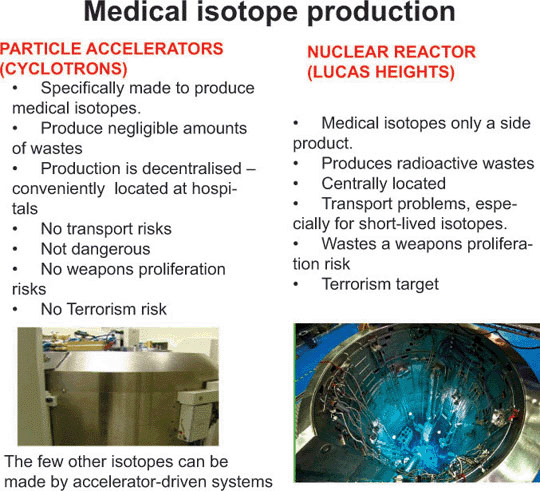

I read with interest Liam Mannix’s report in yesterday’s edition of The Sydney Morning Herald regarding the new nuclear medicine factory but was surprised that with his scientific knowledge he did not question the need for this facility so aptly described as a factory
27 Sept 23
Mannix would be well aware that the medical profession worldwide is turning away from reactor generated medicine due to its inherently dangerous and risky nature and its extremely high manufacturing costs
The isotopes generated by reactors for medical purposes such as at Lucas Heights are being replaced mainly by cyclotron produced isotopes but also other alternatives which are completely free of any risk to the patients and can be produced by relatively easier and safer means at a greatly reduced cost than at Lucas Heights
The only reason that isotopes produced by nuclear reactors are used for medical purposes is that their manufacture is invariably highly and unrealistically subsidised by government grants as is the case with ANSTO in Australia which is globally a prime example of that largesse .
The rapid growth in the international use of cyclotron isotopes for medical therapies is making the production of isotopes by nuclear reactors (like at Lucas Heights) obsolete
As a result there is now need for a new facility for the continued production of isotopes for medical purposes by ANSTO and in fact the current production at Lucas Heights could be stopped immediately with huge savings in government expenditure and no effect on the provision of medical therapies due to the use of much safer alternatives
ANSTO is claiming that the major part of its existence representing 80% of its undertaking is the current production of nuclear medicine isotopes by using its OPAL reactor at Lucas Heights for that purpose but this appears to be no more than a self perpetuating exercise to justify its survival
It is therefore a completely nonsensical if not deliberately disingenuous statement by Science Minister Ed Husic to claim that the “nuclear medicine precinct (of ANSTO) in Sydney will revolutionise the domestic production of nuclear medicines and improve the lives of thousands of Australians”
New nuclear medicine factory to replace ageing site at Lucas Heights reactor
SMH By Liam Mannix, September 26, 2023 —
Hundreds of millions of dollars will be spent building a new radioactive medicine factory at the Lucas Heights nuclear reactor in Sydney, replacing an ageing and accident-prone facility.
The new manufacturing centre will produce the radioactive drugs doctors use to image the heart, lungs, kidney and brain for diagnosing and tracing diseases such as cancer. The current facility has been plagued by safety breaches, including in 2017 when a worker suffered radiation burns.
The federal government has been tight-lipped on costs ahead of a competitive tender process, but equivalent facilities in other countries have often come with price tags exceeding $400 million. The factory is expected to open in the mid-2030s…………
The facility will replace Lucas Heights’ trouble-plagued Building 23, built in 1959 as a research laboratory and later repurposed to make nuclear medicine.
Building 23 recorded seven “events with safety implications” in 2017 and 2018.
The worst of these occurred in 2017, when a worker dropped a vial of radioactive Molybdenum-99, covering their hands in the liquid.
Despite wearing two pairs of gloves, the worker suffered radiation burns and blistering.
ANSTO, which operates Lucas Heights, initially estimated the worker had been exposed to a mild dose of radiation. But an investigation by the radiation safety regulator determined the dose could have been 40 times higher than the legal annual radiation exposure limit.
The Australian Radiation Protection and Nuclear Safety Agency was so concerned, it issued a direction notice to ANSTO demanding an independent review of radiation safety in 2018, noting seven separate safety incidents within two years…………..
Like the current facility, the new one will assemble and test nuclear medical products, particularly Molybdenum-99, or Mo-99.
ANSTO is a major supplier of Mo-99, a radioactive substance that naturally decays to form Technetium-99m (Tc-99m), the workhorse of nuclear medicine. The organisation supplies about 12,000 doses a week, shipping them to facilities across Australia and the region.
Tc-99m can be used as a radioactive dye. Doctors inject it, allow it to accumulate in target organs or tissues, and then image the radiation it releases using special cameras. Tc-99m is particularly useful because it exposes patients to only a low dose of radiation.
To make Mo-99, plates of uranium are inserted into the Lucas Heights nuclear reactor, known as OPAL, which stands for open-pool Australian lightwater reactor……………………………………………………..more https://www.smh.com.au/national/new-nuclear-medicine-factory-to-replace-ageing-site-at-lucas-heights-reactor-20230925-p5e7g8.html
Uranium clean-up way over budget, running late… sounds like true nuclear power
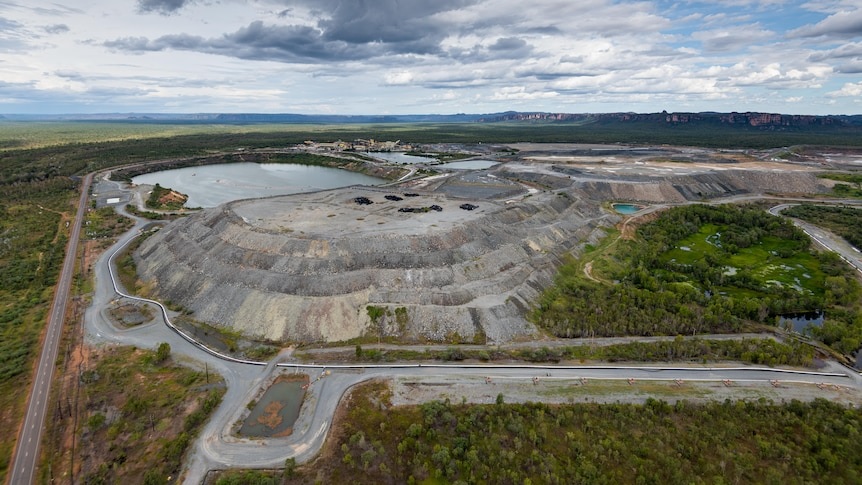
The company cleaning up the Ranger uranium mine in Kakadu says the project is running badly over budget and already late.
Crikey GLENN DYER AND BERNARD KEANE, SEP 28, 2023
Peter Dutton and the radioactive gang of nuclear spruikers in the media seem to think that if only they call for a “mature debate” long enough, small nuclear reactors (SMRs) will just pop into being.
But like any energy source, nuclear power comes with a host of practical challenges that don’t seem to feature in the op-eds and speeches about how SMRs are just around the corner.
Take, for example, the plight of Energy Resources of Australia (ERA) — the almost wholly owned subsidiary of Rio Tinto that operated the Ranger uranium mine in Kakadu in the Northern Territory from 1980 until 2021, when it was closed and rehabilitation work started………………………..(Subscribers only) more https://www.crikey.com.au/2023/09/28/uranium-mine-clean-up-over-budget-running/
It’s Time to Admit the Truth About the War in Ukraine—and Course Correct

If it wasn’t clear to Washington before the offensive started that the fundamentals of combat operations and principles of war indicated Ukraine would likely fail, it should now be crystal clear.
DANIEL L. DAVIS , SENIOR FELLOW, DEFENSE PRIORITIES ON 9/18/23 https://www.newsweek.com/we-can-no-longer-hide-truth-about-russia-ukraine-war-opinion-1826532?amp=1
As leading American politicians, generals, and pundits continue advocating for open-ended support to Kyiv in their war against Russia, a sober, accurate analysis of Ukraine’s nearly completed summer offensive reveals that the heroic sacrifice Ukraine continues to make is producing little to no meaningful progress toward the objective of evicting Russia from Ukraine’s territory.
Washington should instead employ a necessary course correction and form a new policy, based on the harsh, ground-truth combat realities in Ukraine. Revising the objectives would give Washington and Kyiv a chance to preserve Ukrainian lives and American interests.
Washington’s current policies do neither.
Despite great hopes for a rapid success, Ukraine’s months-in-the-making offensive has sputtered from the outset. That shouldn’t have surprised anyone in the White House. On April 5, two months before the start of the offensive, I wrote that “Zelensky’s troops—with little to no air power and a dearth in artillery ammunition—could suffer egregious casualties while gaining little.”
Five days later, The Washington Post revealed the contents of a leaked Top Secret U.S. intelligence assessment which likewise predicted the Ukrainian offensive would probably fall “well short” of expectations, and that “enduring Ukrainian deficiencies in training and munitions supplies probably will strain progress and exacerbate casualties during the offensive.” Total Ukrainian deaths in the war at that point were estimated to be as low as 17,500.
About a month before the start of the offensive, I again warned that the odds were stacked heavily against Kyiv. To succeed, I explained, Ukraine would “have to conduct the most difficult task in modern land warfare: a combined arms operation into the teeth of a dug-in enemy force that is prepared for an attack,” complicated by the shortage of artillery ammunition along with “limited airpower and minimal air defense.” Nevertheless, on the eve of battle, some Western analysts remained optimistic.
Once the offensive began on June 5, however, that optimism quickly evaporated. In the first two weeks of the fighting, Ukraine’s spearhead brigades suffered massive losses in armor and personnel while capturing virtually no territory. By the end of the third week, they had lost an estimated fifth of their strike force, requiring Ukraine to dramatically change tactics. Instead of leading with tanks and other armored vehicles (which were predictably getting chewed up in minefields and by Russian anti-tank missiles and artillery shells), Ukraine moved to an infantry-centric attack system.
While this change did result in producing incremental gains, the cost was exorbitant. On Aug. 29, the BBC reported that new leaked reports suggested Ukrainian battle deaths exploded since the offensive started. Whereas Ukraine was reported to have lost 17,500 troops in the first year of the war, it is presently assessed to have lost a breathtakingly high 50,000 additional deaths, for a total of 70,000 dead and 120,000 wounded.
If it wasn’t clear to Washington before the offensive started that the fundamentals of combat operations and principles of war indicated Ukraine would likely fail, it should now be crystal clear. Although Ukraine appears to have finally penetrated the first line of Russia’s main defense, the most difficult part of Russia’s defensive system has yet to be overcome: the hundreds of kilometers of dragon’s teeth, tank ditches, and yet more vast minefields.
It is unclear at this point whether Ukraine has enough striking power remaining in its offensive forces to reach, much less penetrate, Russia’s second main line—beyond which is a third main line followed by a fortress-defense at Tokmak, which is still 75 road kilometers from the Azov coast. Given these realities, the best Ukraine can likely do for the rest of the year is to hold what they have and prevent the possibility of losing more territory to a potential Russian counteroffensive this fall.
The United States, however, would be wise to adjust its policies to reflect the reality of Ukraine’s slim chances against Russia’s fortified lines. Washington has spent nearly $113 billion over the course of this war, provided Ukraine with an astounding volume of modern arms and ammunition, and delivered an impressive array of training and intelligence support. After almost a year of preparation, it hardly dented the Russian lines.
There is no realistic basis, therefore, to believe that Ukraine has the capacity to attain its stated strategic objective to reclaim all its territory, including Crimea. What is realistic is to continue providing Kyiv with the military wherewithal to defend itself from further Russian incursions. This goal should be combined with shifting an increasing percentage of the burden for additional arms and ammunition to our rich European friends. The U.S. should continue to ensure the war does not expand beyond the borders of Ukraine, and increase diplomatic efforts with all relevant parties to end the war on the best terms possible for Kyiv—all of which are beneficial to American interests.
Rather than repeating over the next year and a half what has already not worked—potentially costing Ukraine yet additional hundreds of thousands of losses—it’s time to try something that has a chance to succeed. In other words, it’s time to acknowledge objective reality and employ policies that can work.
Daniel L. Davis is a senior fellow for Defense Priorities and a former lieutenant colonel in the U.S. Army who deployed into combat zones four times. He is the author of The Eleventh Hour in 2020 America. Follow him @DanielLDavis1
Microsoft May Go Nuclear to Support Its Energy-Hungry AI.

powering that AI is extraordinarily costly, even more so than its other cloud-based products. Microsoft’s latest sustainability report noted that the company’s water consumption has increased 30% year over year in order to keep its AI supercomputers cool.
Kyle Barr, September 28, 2023 https://gizmodo.com.au/2023/09/microsoft-may-go-nuclear-to-support-its-energy-hungry-ai/
Artificial intelligence has proved a costly endeavour—well, yes, in terms of money, but AI requires massive amounts of energy, and water consumption to operate at scale. That hasn’t stopped big tech companies such as Google and Microsoft from putting that energy-hungry AI into practically every single one of their user and enterprise end-products. Big daddy Microsoft has been trying to keep its (OpenAI-assisted) lead in the AI rat race, and it may need to grab the fuel rod by both hands if it wants to continue its big AI ambitions.
And when we say fuel rod, we mean it literally. Microsoft put out calls for a program manager on “Nuclear Technology” on Monday. As first reported by CNBC, The job specifically mentions that this new initiative would use “microreactors” and “Small Modular Reactors” to power the data centres used by Microsoft Cloud and AI. Whatever it is, the scope for Microsoft’s nuclear AI could be “global” as Microsoft has Azure data centres in all parts of the globe.
Microsoft declined to comment on any plans for future nuclear endeavours. The company instead linked to past blog posts on company sustainability initiatives. It’s unclear what plans Microsoft may have for nuclear-powered AI. The position references that the nuclear program manager would build a “roadmap for the technology’s integration,” which would also mean selecting partners for developing and implementing how the hell the tech giant would facilitate nuclear.
Small Modular Reactors, or SMRs, are a proposed class of reactors that would be a purportedly smaller version of a full-on nuclear plant with a smaller power capacity. The idea is they can be built in one location and then moved to a separate site. There are only a few prototype SMRs implemented in Places like Russia and China, though the U.S. Office of Nuclear Energy only approved its first SMR design in January this year.
Back in May, Microsoft signed a power purchase agreement with nuclear fusion startup Helion set to start in 2028. That’s different than an SMR, which still uses fission to generate power, and while there have been some recent successes with fusion this past year, we still could be a long way off from any kind of energy pivot.
Microsoft has spent the last year implementing generative AI into practically every one of its software products. Most recently, the Redmond, Washington company announced its AI copilot for Windows 11 to act as a kind of virtual assistant on a desktop. Court documents have shown that Microsoft has been looking for ways to implement more AI capabilities on its Azure cloud platform.
But powering that AI is extraordinarily costly, even more so than its other cloud-based products. Microsoft’s latest sustainability report noted that the company’s water consumption has increased 30% year over year in order to keep its AI supercomputers cool. Microsoft has put billions of dollars into a partnership with ChatGPT-maker OpenAI, and the Redmond company now being forced to power and cool its partner’s growing energy needs to train OpenAI’s latest models. Training GPT-3 consumed enough water to fill a full nuclear reactor’s cooling tower, according to one recent study.
Studies have shown AI is responsible for massive amounts of carbon emissions, and OpenAI’s GPT-3 model was responsible for CO2 emissions than most other large language models. The company’s GPT-4 model is purportedly 1,000 times more powerful than GPT-3.5 and was trained on nearly four times as much data. Running a larger AI model would require several times as much power as smaller models, and AI companies aren’t slowing down.
Microsoft Is Using a Hell of a Lot of Water to Flood the World With AI
Angely Mercado, September 12, 2023 https://gizmodo.com.au/2023/09/microsoft-is-using-a-hell-of-a-lot-of-water-to-flood-the-world-with-ai/
—
As artificial intelligence is increasingly developing and data centres are erected to further this tech, it’s becoming clear that AI has a water usage problem.
Microsoft’s latest sustainability report revealed that the software giant’s water usage saw a tremendous spike between 2021 and 2022. In 2021, the company used up 4,772,890 cubic meters of water. In 2022 that went up to 6,399,415—which is around a 30 percent increase from one year to the next. That’s almost 1.7 billion gallons of water in just one year, which is enough to fill more than 2,000 Olympic-sized swimming pools.
Why did Microsoft draw so much freaking water? Data centres that run AI supercomputers are hot. Equipment heats up, and if a centre overheats, those computers can shut down. The increase in water use is directly tied to the company’s investment and development of AI. Microsoft has backed OpenAI, which has a data centre in Des Moines, Iowa. During the summer months, the centre has to use a ton of water to keep equipment cool, especially as Iowa experiences rising temperatures due to climate change.
The water is drawn from nearby watersheds including the Des Moines and Raccoon rivers to cool the supercomputer that develops AI systems, the Associated Press reported. However, local waterways also provide drinking water for nearby communities. The volume used by the data centres has become a concern for the local utility company, West Des Moines Water Works.
A document from the utility dated April 2022 outlined that officials and the utility will only “consider future data centre projects beyond Microsoft Data Center Project Ginger East and West” unless the new projects can significantly lower their water usage. “This approach to resource conservation will help preserve the water supply for current and future commercial and residential needs of West Des Moines,” the document read.
Google, another tech giant that has heavily invested in AI products, has also seen a spike in water usage. An environmental report released this July outlined that the company’s water usage increased about 20% from 2021 to 2022. “We’re working to address the impact of our water consumption through our climate-conscious data centre cooling approach and water stewardship strategy,” a spokesperson told Gizmodo in an email this July.
As the planet becomes warmer, it may become harder for large tech companies to cool facilities. Many data centres are in cooler locations like the Pacific Northwest and states like Iowa in the upper Midwest, but neither location has been spared from heat waves.
Other tech companies have experienced challenges with keeping their centres online during especially hot weather. Last September, equipment at then Twitter’s data centre in Sacramento shut down during a heat wave. Increased instances of heat waves due to the climate crisis have also plagued data centres overseas. Last July, Google and Oracle’s London-based data centres went offline as England baked through sky-high temperatures of over 40 degrees Celsius.
Kiev’s counteroffensive unlikely to achieve its goals – US officials to New York Times
Ukrainian forces will need to pause in a few weeks to restock and recover after summer fighting, the paper reports, citing sources
Officials in Washington have suggested that Ukraine’s military forces won’t be able to cut Russia’s land bridge to Crimea as part of their counteroffensive or achieve other key goals, the New York Times has reported.
“Some American officials have said that the Ukrainian counteroffensive appears likely to fall short of its strategic goals,” the paper reported in an article on Friday.
Kiev’s forces are struggling to achieve the aim of reaching the Sea of Azov in Russia’s Zaporozhye Region, because the minefields set up by Moscow’s forces, they say, have proven to be “a potent defense,” the Times added.
According to US officials, conducting offensive operations would also soon become even more difficult for Ukraine “as the ground becomes soft and muddy” in the region.
The NYT also said that some in Washington have warned that “within a few weeks, the Ukrainian army will need time to rebuild their stockpile of equipment and to rest forces exhausted by the summer fighting.”………………………………more https://www.rt.com/news/583443-ukraine-counteroffensive-us-zelensky/—
Nuclear power on Surf Coast “incomprehensible”, says Greens MP
Surf Coast Times, September 28, 2023 BY James Taylor
GREENS MP and former City of Greater Geelong councillor Sarah Mansfield has pushed back against Opposition Leader Peter Dutton’s support for nuclear power at old mine sites, saying it would be “incomprehensible” to build a reactor at the former Anglesea mine.
During a visit to Ocean Grove last week, Mr Dutton said he wanted a “mature discussion” about nuclear energy in Australia, and touted the benefits of small modular reactor (SMR) technology as a viable solution to decarbonising the economy.
Alcoa’s Anglesea coal mine and power station supplied power to the former Point Henry smelter and closed in August 2015.
Asked if a nuclear reactor would be a hard sell for people in Geelong, the Bellarine and the Surf Coast, Mr Dutton replied: “Well, is there a coal mine that’s operating here at the moment that’s coming to end of life?”…………………………………………………………………………………….
Ms Mansfield, who became a Member for Western Victoria at the 2022 state election, said in a letter to this newspaper that she was “deeply concerned” by Mr Dutton’s comments.
“His arguments promote dangerous misinformation about nuclear technology.
“Moreover, the suggestion that these reactors could be placed at old mine sites (such as the Anglesea Alcoa site) is incomprehensible.”
She said nuclear power was not safe, clean, or renewable.
“The health risks associated with uranium mining and nuclear reactors are well established. Imagine the devastation to our beautiful coast and communities if there was a nuclear accident? Then the waste – where will it go? Australia already struggles to deal with medical industry nuclear waste.
“And to claim it is zero emissions is simply wrong. No energy source is completely emissions-free when you consider whole of life emissions (e.g. transport, materials, construction) – and nuclear produces greater emissions than renewables like solar and wind.
“It’s hard to believe the Coalition is serious about this proposal. They know that coal and gas are on the way out, but they’re blocking renewables and have come up with a nuclear fantasy that no reasonable economist or energy expert is willing to back.”
Labor has rubbished the Coalition’s proposal, with Energy and Climate Change Minister Chris Bowen saying modelling from his department found replacing Australia’s coal-fired power stations with SMRs would cost $387 billion. https://timesnewsgroup.com.au/surfcoasttimes/news/nuclear-power-on-surf-coast-incomprehensible-says-greens-mp/
Nuclear power is a non-starter .
AFR, 27 Sept 23
Arguments about nuclear power won’t help the urgent problems of the energy transition, with a growing gap between reality and Australia’s renewable energy plans.
Political brawling over the viability of small nuclear reactors as a partial replacement for Australia’s coal-fired power generation is another distraction for a struggling energy industry for this decade at least.
Energy Minister Chris Bowen has been as keen to denounce the high cost and technical uncertainties of building small nuclear reactors as the Coalition’s Ted O’Brien is to promote their potential to solve the dilemma of energy shortages meeting climate change ambitions.
But the far more urgent problem is the growing gap between reality and Australia’s intention to have renewables provide 82 per cent of Australia’s power needs by 2030.
The go-nuclear option, even if operational in countries such as the US and Canada by the end of the decade, can’t deliver within that time frame in a country with no nuclear industry……………………………………..
Is World War III About to Start? Part II: Are the Military-Industrial Complex and Deep State Driving Us to War?

given the vast exiting of civilian U.S. factories and jobs over the last half-century to cheap-labor countries abroad, the Military Industrial Complex is probably the principal economic engine of the U.S. as a whole.
By Richard C. Cook / Original to ScheerPost
Why is the U.S. refusing to call a halt to the Ukraine madness? Why can’t an era of “Peaceful Coexistence” in Europe and the world be declared or at least sought? How about détente with Russia? With Russia and China? What is wrong with that?
We’ll start peeling the onion by looking at the U.S. military-industrial complex. Of course, President Eisenhower warned us against the MIC over 60 years ago in his “Farewell Address” of January 20, 1961. Among other remarks he said:
“In the councils of government, we must guard against the acquisition of unwarranted influence, whether sought or unsought, by the military-industrial complex. The potential for the disastrous rise of misplaced power exists and will persist.”
Today about 2.1 million people are employed by the defense industry. According to Acara Solutions, a major MIC recruiting firm, their average annual salary is $106,700, 40 percent higher than the national average. The companies they work for produced revenues in 2022 of $741 billion. How much of their production is high-priced junk, no one knows. The performance of U.S.-produced armaments in the Ukraine conflict does not seem impressive. No modern U.S. weapons have ever been tested in an industrial-type war against an equal adversary.

The MIC also includes active-duty uniformed personnel of 1.37 million and reserves of 849,000. There are 750 U.S. military bases in more than 80 countries outside of the U.S. More than 100,000 U.S. military personnel are stationed in Europe. Annual salary and benefits of the military are currently $146 billion per year, escalating with COLAs compounded at two to three percent annually, sometimes more. Some former U.S. military personnel are assumed to be fighting in Ukraine as mercenaries or helping direct the fighting from safe locations like Kiev or Lvov.
Then there are the civilian employees. According to the DoD, it employs more than 700,000 civilians “in an array of critical positions worldwide,” with compensation totaling about $70 billion. According to the Government Accountability Office, we may also add 560,000 contractor employees, whose compensation is typically higher than the career workforce.
We can also add hundreds of thousands of executives, managers, employees and contractors of the three-letter Deep State agencies, such as the CIA, NSA, DEA, FBI, and now DHS, etc., who interface with the MIC day in and day out and are part of the same fabric of state-sanctioned force and enemy identification and interdiction.
Added to the above are members of Congress who vote on military budgets and make the laws that protect the MIC from accountability, lobbyists who pressure those members to cast votes favorable to their MIC clients, private sector financial service employees who handle the retirement accounts of the MIC multitude, foreigners who are employed at overseas bases, and various scoundrels and hangers-on. I would include in the latter category the multitude of MIC cheerleaders from Hollywood who produce trashy spectacles like Top Gun.
On top of everything else, there are millions of retirees drawing annuities in excess of what most working-class Americans earn, many of these retirees double- or triple-dipping with lucrative jobs in business or government.
Each of the above individuals supports multiple family members, workers, and vendors within the civilian economy who, with the ripple effect and velocity of money, keep entire towns, cities, states, regions, and industries afloat. An example is building the F-35 that has workers assembling it in 350 congressional districts. It is probably no exaggeration to say that given the vast exiting of civilian U.S. factories and jobs over the last half-century to cheap-labor countries abroad, the MIC is probably the principal economic engine of the U.S. as a whole.
So are we going to tell what adds up to tens of millions of people, sorry, your services are no longer needed? Good luck with that. And isn’t it obvious that all these people, especially the higher echelons, are going to do everything within their power to persuade us that their jobs are so essential that without them we will shortly be overwhelmed and eaten alive by every “enemy” on the planet?
If you doubt what I am saying, ask any retired colonel or general who has hired himself out as a talking head to CNN or MSNBC. It’s also why DoD has formally declared Russia and China our two “adversaries,” because, after all, you have to point the finger at someone and blame them for your own dysfunctional society.
But as I witnessed personally in my NASA days, many MIC personnel never do a lick of honest work, or are mainly occupied with paper shuffling or other busywork, especially with work-at-home now the vogue, with many spending their days surfing the internet, or worse, while drawing a level of pay that puts most civilian workers in the shade.
Not to mention stay-at-home mothers, teachers and caregivers, first responders, law enforcement personnel, food service employees, or the unemployed, underemployed, or homeless. Yet many of these people, while working hard for low pay, if any, have a sense of fulfillment and self-worth that surpasses the swarms of MIC bureaucrats who can’t help but feel degraded in their superfluous and often pointless vocational stagnation.
Is all this enough to create an imperative for World War III? You tell me. It certainly has to be a contributing factor. Plus it saps the nation’s natural strength. We could even say that the U.S. war machine is a cancerous tumor that has metastasized throughout the entirety of American society, polluting and corrupting every aspect of life, including the body politic, the environment, the entertainment industry, the mass media, education, scientific research, etc. ……………………………………………… https://scheerpost.com/2023/09/26/is-world-war-iii-about-to-start-part-ii-are-the-military-industrial-complex-and-deep-state-driving-us-to-war/
Global Days of Action to End the War in Ukraine

SCHEERPOST, September 27, 2023 By Medea Benjamin & Macy Winograd / Popular Resistance
Last month CNN published a poll revealing 55% of people surveyed in the United States do not support spending more money on the Ukraine war. A tone-deaf White House responded by requesting another $24 billion, mostly for weapons and military training that would bring the Ukraine war tab for US taxpayers to nearly $140 billion.
CODEPINK, a member of the Peace in Ukraine Coalition that represents over 100 anti-war organizations, is committed to raising up the majority opinion that the U.S. needs to stop fueling this war. We condemn the illegal Russian invasion but we believe that this conflict has no military solution, only stalled counter-offensives, random drone attacks and profound heartache for the families losing their loved ones, their homes and their livelihoods.
That’s why we are participating in the Global Days of Action for Peace in Ukraine, Sept. 30-October 8th, joining with others in the United States and Europe to march, protest, petition, vigil, banner and push our elected officials to publicly advocate for a mutual ceasefire, peace negotiations and weapons freeze.
The call for Global Days of Action emerged from last June’s International Summit for Peace in Ukraine, held in Vienna, Austria and attended by representatives from 32 countries, including Italy where tens of thousands marched in Rome last year to end funding for the war. The Summit produced a declaration urging “leaders in all countries to act in support of an immediate ceasefire and negotiations to end the war in Ukraine” and calling on civil society globally to mobilize.
In this country, events to end the Russia-Ukraine-NATO war are slated for Washington DC, New York City, Albany, Brooklyn, Boston, Milwaukee, Madison, Philadelphia, Portland, Hilo, San Francisco, Seattle, Burlington, Rockville and other locations.
To host an event, sign up here. To join an event, click here.
The Peace in Ukraine Coalition, which includes CODEPINK, Veterans for Peace, DSA-International, World Beyond War, RootsAction, Women’s International League for Peace and Freedom-US, Massachusetts Peace Action, Brooklyn for Peace and others, invites all peace-loving people to join us in DC and become a member of our coalition.
On Tuesday, October 3, we will host a DC rally with professor Dr. Cornel West, People’s Forum Co-Executive Director Claudia De la Cruz, CODEPINK Co-founder Medea Benjamin, journalist Eugene Puryear, and comedian/podcaster Lee Camp. You can join us in person in Washington or join us online here as we broadcast a livestream!
The following day, Wednesday, October 4, we will organize in the halls of Congress to hand deliver this “No more weapons!” petition and dialogue with members of the Senate Foreign Relations Committee, as well as other senators who represent constituents traveling to DC.
If you’re in or around DC, join us for Advocacy Day.
The answer to the war in Ukraine is not more cluster bombs, depleted uranium munitions or nuclear-capable F-16 fighter jets but a willingness to embrace a diplomatic solution, such as the 15-point peace plan that was drafted by both sides in April 2022 but squashed by Western powers.
While the majority of congresspeople in both parties have ignored public opinion and refuse to call for negotiations, some members of the Republican party have voted against more funds for the war, have called for an audit to follow the billions spent on this war, and have pressed the Biden administration to report on its efforts to seek a diplomatic path. Unfortunately, not one Democrat or Independent in Congress has been willing to join any of these efforts…………………………………………
As we face a war marked by intense suffering and environmental devastation in Ukraine, increasing hunger in Africa, and growing fears of a nuclear catastrophe, it is urgent we promote a ceasefire and negotiations. Join us. https://scheerpost.com/2023/09/27/global-days-of-action-to-end-the-war-in-ukraine/
—
Vatican at U.N. : Risk of nuclear war is ‘at its highest in generations’
September 27, 2023, By Justin McLellan, Catholic News Service, https://catholicreview.org/vatican-at-u-n-risk-of-nuclear-war-is-at-its-highest-in-generations/
VATICAN CITY (CNS) — The international community must cooperate to advance disarmament rather than embrace the “false security” offered by nuclear weapons, the Vatican’s foreign minister said.
Speaking Sept. 26 during a high-level meeting on the elimination of nuclear weapons at the U.N. General Assembly in New York, Archbishop Paul R. Gallagher, the Vatican foreign minister, called eliminating nuclear weapons a “moral imperative.”
“Regrettably, the risk of nuclear war is at its highest in generations, featuring unconscionable threats of nuclear use, while an arms race runs unabated,” he said.
The archbishop lamented how countries “squander resources needed for pressing development concerns on nuclear weapons,” and said countries have “abandoned much of the arms control and disarmament structure that underpins international security.”
“In this context, it is clear that nuclear-weapons states are increasing reliance on nuclear deterrence” rather than disarmament, he said.
Archbishop Gallagher called for states to adopt disarmament measures including no-first-use policies, treaties managing materials that can undergo fission and assurances that nuclear-weapon states will not use or threaten to use nuclear weapons against states that do not possess them.
The same day, he also spoke during general debate at the opening of the U.N. General Assembly session, criticizing the “crumbling trust among nations” in recent years and how at the United Nations and other international bodies, “richer, more powerful countries attempt to impose their own worldview on poorer countries, promoting alien, cultural values they do not share.”
“The international community must maintain the universality of global multilateral forums and not turn them into clubs reserved for a few elites who think alike, and where some are simply tolerated as long as they do not bother anyone,” he said.
Archbishop Gallagher also called for legal instruments to regulate artificial intelligence, particularly AI-powered lethal autonomous weapons systems, and for religious freedom to be upheld worldwide.
“The true litmus test to see if human rights are being protected is the degree to which people have freedom of religion or belief in a country,” he said. “Religious freedom is one of the absolute minimum requirements necessary to live in dignity.”
Nuclear test veteran from Ipswich among first to receive medal
By Laura Devlin, BBC News, Suffolk, 24 Sept 23
A 92-year-old veteran who watched nuclear weapons being tested in the 1950s has become one of the first to receive a new military medal.
Bob Last, of Ipswich, Suffolk, was a newlywed in his 20s when he was sent to south-west Australia with the Royal Electrical and Mechanical Engineers.
Their contribution was recognised by the government after a long campaign…………………..
Cover faces with hands
Ms Catlin and her sister Debbie Last said their father, who has dementia, had started to speak about his experiences in the Australian outback in recent years.
“I think they were told not to talk about it; and that generation, if they told not to talk about something, they didn’t,” said Ms Last.
“He said they would see explosions go off, and they would cover their faces with their hands and they could see the bones in their hands.”
Seven atomic bombs were dropped in Maralinga, where Mr Last was based, in October 1957………
‘Nobody knew anything’
For years, veterans and their families have campaigned for recognition, saying the radiation they were exposed to caused ill health and premature deaths, as well as health problems in their families…………………………………………………………………………..
The British Nuclear Test Veterans Association believes more than 22,000 British servicemen participated in the British and US nuclear tests and clean-ups between 1952 and 1965, along with scientists from the Atomic Weapons Research Establishment and civilians.
Ms Last said: “We need to find the medical records of the veterans. It doesn’t stop here.” https://www.bbc.com/news/uk-england-suffolk-66906172
Alarmed by Risk of Nuclear Escalation among Major Powers, Speakers in General Assembly Warn Growing Distrust, Divisions Are Driving Multilateral System towards Dysfunction

MEETINGS COVERAGE, GENERAL ASSEMBLY, PLENARY SEVENTY-EIGHTH SESSION, 12TH & 13TH MEETINGS (AM & PM) GA/12538, 23 SEPTEMBER 2023
Powerful countries are pushing the world closer to the brink of nuclear conflict as mounting distrust and divisions corrode the bedrock of international cooperation, driving the multilateral system towards gridlock and dysfunction, world leaders warned today, as the General Assembly high-level debate concluded its fifth day of discussions.
Several Heads of State and Government, as well as ministers, voiced their concerns about the world’s current trajectory as it emerges from the most significant health emergency in a century amidst deepening conflicts and increasing instability. A fractured global political economy, skyrocketing food and fuel prices, looming climate crisis and heightened arms races have collectively led to widespread feelings of disillusionment, indifference, and cynicism among millions of people.
Nanaia Mahuta, Minister for Foreign Affairs of New Zealand, said that for the first time in several generations, the world faces the very real possibility of conflict between major Powers. “The stakes for all of us are simply too high,” she warned. The international rule of law and the United Nations Charter must mean something to a growing generation that is becoming more sceptical. The Russian Federation’s illegal invasion of Ukraine last year was a direct attack on the sovereignty and territorial integrity of a UN Member State. The war has also highlighted geostrategic tensions and heightened nuclear risks. “Playing politics with innocent lives is cruel and immoral,” she stressed.
Enrique A. Manalo, Secretary for Foreign Affairs of the Philippines, said that humanity remains in danger from too many destructive and disruptive weapons in existence. Thousands of nuclear warheads, which are still present, and now new ways of warfare have transformed the strategic landscape in the twenty-first century. “The rule of law must reign all the more,” he stressed, echoing the calls of many for a stronger UN to help bring back sense to the global community.
Sergey V. Lavrov, Minister for Foreign Affairs of the Russian Federation, said that in 2021, Moscow’s proposals to conclude treaties on mutual security guarantees in Europe without changing the non-bloc status of Ukraine were “rudely rejected”. The United States and its subordinate “Western collective” continue to generate conflicts that artificially divide humanity into hostile blocs. Describing a series of recent joint exercises between the United States and European North Atlantic Treaty Organization (NATO) allies, he also reported that they included testing scenarios for the use of nuclear weapons in the Russian Federation.
From a related angle, Osman Saleh Mohammed, Minister for Foreign Affairs of Eritrea, stressed that the futile attempts to impose a unipolar world order over the last 30 years are increasingly pushing the international community towards a much more perilous catastrophe. The African continent remains marginalized, compelled to shoulder the brunt of these destructive policies — and in this context, the resistance movements unfolding there are the continuation of the struggle against colonialism. They are defiant reactions to “modern slavery”, unremitting plunder and domination.
Mahamoud Ali Youssouf, Minister for Foreign Affairs and International Cooperation of Djibouti, observed that instead of fostering an integrated multilateralism there is a tendency to “group together into clubs”. This “minilateralism” results in implacable resistance to change in international institutions, compounded by fossilizing inequality and worsening geopolitical competition. While this is not irreversible, it requires massive investment to create a multilateral system that would account for current geopolitical realities.
Leaders repeatedly echoed calls for solidarity in the international community, emphasizing that the pandemic spotlighted glaring inequalities that must that be dealt with before another global crisis hits. Many small island developing States reiterated their calls on industrialized countries to abide by their obligations and commitments to developing nations for financing adaptation and mitigation measures.
Fiamē Naomi Mata’afa, Prime Minister of Samoa, said the first half of 2023 was characterized by worldwide record temperatures, intense water temperatures in various ocean basins, droughts in parts of Africa, Europe and Asia, severe flooding and cyclones, and devastating wildfires in Greece, north-eastern Canada and Hawaii. “We will continually face these ever-worsening disasters if we continue to deny addressing their root causes,” she stressed. Scientists have warned of imminent, more frequent and extreme weather events. Reducing global emissions, moving towards green resilient economies, tackling deforestation, reducing the reliance on fossil fuels and protecting nature must be a priority.
Terrance Micheal Drew, Prime Minister of Saint Kitts and Nevis, said that developing countries are groaning under the weight of burgeoning challenges not of their own making, some of which have been inherited as a result of colonization and the transatlantic slave trade. “It is past time for reparatory justice,” he said, echoing the sentiment of several speakers. Industrial countries and companies push small island developing States to the front lines of climate change, he added, pointing out that they accept little responsibility.
Delegates also accented the importance of respect for human rights, both as a cornerstone of decency and in building stability and prosperity — with some lamenting that this central principle of the United Nations is being eroded in countries around the world.
Anne Beathe Tvinnereim, Minister for International Development of Norway, affirmed that her Government engages the de facto authorities in Afghanistan as if this can help to address the dire human rights situation, “especially for women and girls, who are being deprived of education and a future — it is worth the attempt”. Human rights are at the core of the UN, and “societies prosper when women and girls participate on an equal footing”. The international community should “be concerned that standards are slipping in many places”, she affirmed: “This has to stop.”
Eamon Courtenay, Minister for Foreign Affairs, Foreign Trade and Immigration of Belize, noted that despite calls by the Global North for the respect of human rights, it remains outside the Convention on the Rights of Migrant Workers, resulting in “deaths and inhumane treatment of migrants at the southern borders of the Western world” continuing with impunity. With only 12 per cent of the SDGs on track for attainment, the global human development index has, for the first time, experienced a two-year consecutive downward trend, with poverty and insecurity on the rise.
Statements………………………………………………………………….
1 This month.

Australians deserve the truth
about
AUKUS – https://aukuspublicinquiry.com/

30 July – WEBINAR (Free) – Is Nuclear Power the Solution to Climate Change? https://my.acaw.org.au/event/acaw-is-nuclear-power-the-solution-to-climate-change
18:30 – 19:45 ACST
19:00 – 20:15 AEST


PETITION – To: Prime Minister Anthony Albanese and the Australian Labor Government

of the week – Australians for War Powers Reform (AWPR)
To see nuclear-related stories in greater depth and intensity
 Antinuclear