“Republicans for Ukraine”s Refreshingly Honest Ukraine War Ad
CAITLIN JOHNSTONE, SEP 25, 2023 https://www.caitlinjohnst.one/p/bill-kristols-refreshingly-honest?utm_source=post-email-title&publication_id=82124&post_id=137366801&utm_campaign=email-post-title&isFreemail=true&r=1ise1&utm_medium=email
The Bill Kristol-led group “Republicans for Ukraine” has released a TV ad to help drum up GOP support for Washington’s proxy war against Russia, and it’s surprisingly honest about what this war is really about: advancing US strategic interests using Ukrainians as sacrificial pawns.
Here’s a transcript:
“When America arms Ukraine, we get a lot for a little. Putin is an enemy of America. We’ve used 5% of our defense budget to arm Ukraine, and with it, they’ve destroyed 50% of Putin’s Army. We’ve done all this by sending weapons from storage, not our troops. The more Ukraine weakens Russia, the more it also weakens Russia’s closest ally, China. America needs to stand strong against our enemies, that’s why Republicans in Congress must continue to support Ukraine.”
“Republicans for Ukraine” was launched last month by “Defending Democracy Together”, another Kristol-led narrative management operation which is funded by oligarchs like Pierre Omidyar. Kristol, who as a neoconservative thought leader played a pivotal role in pushing for the 2003 invasion of Iraq, tweeted on Saturday that the ad “will air on the Sunday shows tomorrow in DC.”
One of the dumbest things the empire asks us to believe is that this war simultaneously (A) was completely unprovoked and (B) just coincidentally happens to massively advance the strategic interests of the government accused of provoking it. From the moment Russia invaded Ukraine in February 2022 westerners were aggressively hammered over and over and over again by the mass media with the uniform propaganda message that this was an “unprovoked invasion”, but ever since then we’ve also been receiving these peculiar messages from US empire managers and spinmeisters that this war is helping the United States crush its geopolitical enemies and advance its interests abroad.
This bizarre two-step occurs because the US-centralized empire needs to convey two self-evidently contradictory messages to the public at all times:
1. that the US is an innocent little flower who just wants to help its good friends the Ukrainians protect their democracy from the murderous Russians who invaded solely because they are evil and hate freedom, and
2. that it’s in the interest of Americans to continue this war.The second point is required because the message that the US is merely an innocent passive witness to the violence in Ukraine necessarily causes certain political factions to ask, “Okay, so what are we doing there then? Why are we pouring all this money into something that has nothing to do with us?” So another narrative is required to explain that backing this proxy war also just so happens to be a massive boon to US strategic interests abroad while creating American jobs manufacturing weapons at home.
And of course this war advances US strategic interests. Of course it does. Only an idiot would believe the US is pouring weapons into another country because it loves the people who live there and wants them to be free, and that it is only by pure coincidence that this happens to kill a lot of Russians, bolster NATO, and advance US energy interests in Europe. It doesn’t benefit normal Americans at home, but it absolutely does serve the interests of the globe-spanning empire that’s centralized around Washington. That’s why the empire deliberately provoked it.
Empire managers were openly discussing the ways a war in Ukraine would directly benefit the US empire long before the invasion. In 2019 a Pentagon-funded Rand Corporation paper titled “Extending Russia — Competing from Advantageous Ground” detailed how the empire can use proxy warfare, economic warfare and other Cold War tactics to push its longtime geopolitical foe to the brink without costing American lives or sparking a nuclear conflict. The US Army-commissioned paper mentioned Ukraine hundreds of times, and explicitly discussed how a war there could be used to promote sanctions against Moscow and attack Russia’s energy interests in Europe.
In December of 2021 John Deni of NATO propaganda firm The Atlantic Council authored a piece for The Wall Street Journal titled “The Strategic Case for Risking War in Ukraine,” subtitled “An invasion would be a diplomatic, economic and military mistake for Putin. Let him make it if he must.” Deni argued that “there are good strategic reasons for the West to stake out a hard-line approach” against Moscow and refuse to negotiate or back down over Ukraine, because if doing so provokes Russia to invade it would “forge an even stronger anti-Russian consensus across Europe,” “result in another round of more debilitating economic sanctions that would further weaken Russia’s economy,” and “sap the strength and morale of Russia’s military while undercutting Mr. Putin’s domestic popularity and reducing Russia’s soft power globally.”
The minds on the inside of the empire were talking about how this war would benefit the US before the invasion, and they’ve been talking about how much it benefits the US ever since. As the Washington Post’s David Ignatius put it this past July: “these 18 months of war have been a strategic windfall, at relatively low cost (other than for the Ukrainians). The West’s most reckless antagonist has been rocked. NATO has grown much stronger with the additions of Sweden and Finland. Germany has weaned itself from dependence on Russian energy and, in many ways, rediscovered its sense of values. NATO squabbles make headlines, but overall, this has been a triumphal summer for the alliance.”
The managers of the empire are getting everything they want out of this war. In public they rend their garments and cry crocodile tears and call it a terrible criminal atrocity, but every now and then they look at the camera and flash it a quick Fleabag-style grin.
They knew exactly what they were doing when they provoked this war, and they know exactly what they’re doing by keeping it going.
And they’re loving every minute of it.
Bill Gates’ nuclear firm Terrapower fears falling behind in Small Nuclear Reactor race

A row is brewing between a nuclear energy company founded by Bill Gates and the
UK government over fears it may be sidelined from a £1 billion competition
to build new small power plants. The billionaire is the chairman of Terrapower, which fears exclusion from the race to build the next generation of reactors over questions about its fuel source, according to people familiar with the matter.
In May, The Sunday Times revealed that
Terrapower had joined the likes of Rolls Royce, GE-Hitachi and Bechtel in
the running to manufacture Britain’s future nuclear infrastructure. But
Terrapower is concerned that the government is prioritising so-called small
modular reactors designed by its rivals, rather than Terrapower’s model,
which uses more innovative technology and is classed as an “advanced
modular reactor”, sources said.

Terrapower’s reactor, called Natrium,
uses high-assay low-enriched uranium (HALEU) as fuel. Officials are said to
be concerned that it does not have reliable supplies to import at scale, as
most of it is produced in Russia. A government spokesman said: “Great
British Nuclear is assessing the bids received as part of the latest phase
of the competition launched earlier this year and will announce an update
in due course.”
Times 24th Sept 2023
Nuclear news – week to 25 September

A bit of good news. Water voles are back in the swim of things on the River Ver.
TOP STORIES.
A powerful minority makes the nuclear decisions, in a strategy of concealment.
Alarmed by Risk of Nuclear Escalation among Major Powers, Speakers in General Assembly Warn Growing Distrust, Divisions Are Driving Multilateral System towards Dysfunction.
Andreyeva Bay cleanup slows to a snail’s pace since invasion of Ukraine. In 2023, the risky part of Andreyeva Bay nuclear cleanup starts.
We’re Being Prepared For The Ukraine War To Last Into The 2030s.
Top nuclear experts urge Biden to not allow Saudi uranium enrichment in mega-deal.Climate. Introducing Southern Frontlines – news on the climate crisis from Latin America and the Caribbean
Nuclear. So much stuff about impending war – it’s almost exhausting, but little concern for the soldiers,
On the strictly nuclear front – I’m amazed that the Western media can go on about nuclear submarines, and pretty much ignore their waste problem. The Russian experience – Andreyeva Bay – should give everyone pause to worry about this.
Christina notes. The harrowing truth about the war in Ukraine. Wonderful nuclear submarines!! Let’s not spoil the joy by thinking about their WASTES.
AUSTRALIA. Mission to Free Assange: Australian Parliamentarians in Washington. South Asian leader slams AUKUS pact. The push for nuclear energy in Australia is driven by delay and denial, not evidence. Push for nuclear energy ignores glaring problem.
Nuclear too costly, too slow, too risky for Australia. Modelling shows estimated cost of Peter Dutton’s nuclear energy plan. Bowen demolishes case expensive for nuclear power. ‘Build renewables, not nuclear’: energy execs reject reactors.
Australia must do more than pay lip service to nuclear disarmament. Let’s Label #USPropaganda – Call it out.- Our crews at Boeing and disrupting General Mick Ryan.
CLIMATE. Elephant In The Climate Room: Rocket Launches.
ECONOMICS.
- Bidenomics: Millions to Rebuild Maui, Billions for Ukraine.
- UK launches search for private investment in Sizewell C nuclear project. UK’s Sizewell Nuclear Investors to Face Security Checks. Sizewell nuclear investment may prove radioactive.War
- Profiteers Are A Sign Of A Profoundly Sick Society.
- Fukushima: China’s seafood imports from Japan down 67% in August.
ENVIRONMENT. Water. Cooling system at Zaporizhzhya stabilised – but military action in the area continues
ETHICS and RELIGION. On The Idiotic Notion That It’s Brave To Support Nuclear Brinkmanship In Ukraine. Pope says world on brink of nuclear war like 1962 Cuban missile crisis.
HEALTH. Mental health. The Ukrainian Morale in the Battlefield: A Snapshot
HISTORY. Our nuclear legacy and the weight of history.
LEGAL. Sizewell C seeks outside investment as Together Against Sizewell C Limited (TASC) granted permission to appeal against the project. Campaigners win permission to appeal against Sizewell C Nuclear Power Station ruling. Nuclear bomb test veterans relaunch legal action.
MEDIA. New York Time’s Incredibly Low Bar for Labeling Someone ‘Pro-Putin’.
NUCLEAR TECHNOLOGY. Bill Gates’ nuclear firm Terrapower fears falling behind in Small Nuclear Reactor race.
OPPOSITION to NUCLEAR . Floating for Peace on the Golden Rule. Time to arrest deployment of nuclear weapons in Constable’s County, Nuclear Free Local Authorities tell Ministers. If Fukushima water is safe, store it in Japan, says Prime Minister of Solomon Islands. In Kenya, police break up an environmental meeting that was explaining nuclear hazards.
PERSONAL STORIES. Nuclear test veteran from Ipswich among first to receive medal.
POLITICS. UK. Conflating councils with communities causes confusion in nuclear dump areas. Sizewell C nuclear, if built, will be late and obsolete. Tory MP inexplicably asks for nuclear powered frigates. EDF and French government clash over nuclear strategy. Building Irish nuclear energy plants ‘does not make economic sense’, Eamon Ryan, Green Party leader. USA -another reason to oppose expanding nuclear power.
USA. “Republicans for Ukraine”s refreshingly honest Ukraine war ad
Crown prince confirms Saudi Arabia will seek nuclear arsenal if Iran develops one.
POLITICS INTERNATIONAL and DIPLOMACY.
- U.S. HELPED PAKISTAN GET IMF BAILOUT WITH SECRET ARMS DEAL FOR UKRAINE, LEAKED DOCUMENTS REVEAL. Biden’s Whoppers at UN on Ukraine Burger King worthy.
- Saudi Arabia Says It Will Get Nuclear Weapon If…
- Antony Blinken wary on Iran, doesn’t criticise Saudi Arabia. Netanyahu at UN issues ‘nuclear’ threat to Iran, later retracted. Foundation for the Defense of Democracy and The Nonproliferation Policy Education Center urge Biden against helping Saudi Arabia to enrich uranium.
- Pakistan’s new nuclear brinkmanship.
- Nearly 10 million Ukrainians have fled to EU.
- United Nations Nuclear Weapons Ban Treaty Continues to Gather Strength.
- Why Japan should stop its Fukushima nuclear wastewater ocean release.
SAFETY. Possibly contaminated iron scraps from near Fukushima plant sold
SECRETS and LIES. This War Wasn’t Just Provoked — It Was Provoked Deliberately. New York Times exposes Zelensky lie about Donbass missile strike. US government and media lying about Ukrainian counteroffensive – Seymour Hersh. Canadian parliament and its visitor Zelensky applaud Nazi Waffen SS veteran (VIDEO).
WASTES. South Korea will expand the number of spots for water testing amid concerns over the release of nuclear waste from Japan’s crippled Fukushima power plant. China not invited to participate in nuclear water testing – Chinese embassy in Japan.
WAR and CONFLICT. The President’s Power To Launch Nuclear Weapons Highlights A Troubling Paradox In U.S. Strategy. ‘Biden’s phase’ of Ukraine war is beginning. https://www.youtube.com/watch?v=3KIqR3ORYLE Cannon Fodder: Number of Ukrainian Amputee Soldiers Going Through the Roof. NATO Chief Admits NATO Expansion Was Key to Russian Invasion of Ukraine. Is World War III About to Start? Part I: Drift Toward War.
WEAPONS and WEAPONS SALES. Pentagon exempts Ukraine operations from potential government shutdown. The risk that nuclear weapons could be used is tremendous – Finnish President on war in Ukraine. White House Close To Providing Kiev With Cluster-Armed ATACMS. Ukraine could get long-range missiles armed with U.S. cluster bombs. Poland Says It’s No Longer Arming Ukraine Amid Grain Spat.
Russia shows N Korea’s Kim hypersonic missiles, nuclear-capable bombers. Maintaining the USA nuclear arsenal, at $750 billion over the next decade. Yes, nuclear weapons are immoral. They’re also, practically speaking, useless. Okinawa Disproves The US Narrative About Overseas Bases.
Mission to Free Assange: Australian Parliamentarians in Washington
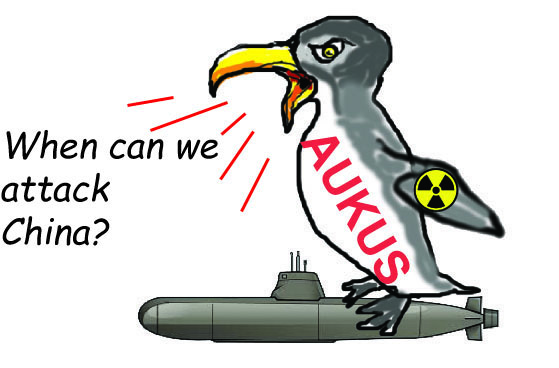
Australia remains the prized forward base of US ambitions in the Indo-Pacific, the spear pointed against China and any other rival who dares challenge its stubborn hegemony. The AUKUS pact, featuring the futile, decorative nuclear submarines …………also makes that point all too clear.
September 24, 2023, Dr Binoy Kampmark, https://theaimn.com/mission-to-free-assange-australian-parliamentarians-in-washington/
It was a short stint, involving a six-member delegation of Australian parliamentarians lobbying members of the US Congress and various relevant officials on one issue: the release of Julian Assange. If extradited to the US from the United Kingdom to face 18 charges, 17 framed with reference to the oppressive, extinguishing Espionage Act of 1917, the Australian founder of WikiLeaks risks a 175-year prison term.
Nationals MP Barnaby Joyce, Labor MP Tony Zappia, Greens Senators David Shoebridge and Peter Whish-Wilson, Liberal Senator Alex Antic and the independent member for Kooyong, Dr. Monique Ryan, are to be viewed with respect, their pluckiness admired. They came cresting on the wave of a letter published on page 9 of the Washington Post, expressing the views of over 60 Australian parliamentarians. “As Australian Parliamentarians, we are resolutely of the view that the prosecution and incarceration of the Australian citizen Julian Assange must end.”
This is a good if presumptuous start. Australia remains the prized forward base of US ambitions in the Indo-Pacific, the spear pointed against China and any other rival who dares challenge its stubborn hegemony. The AUKUS pact, featuring the futile, decorative nuclear submarines that will be rich scrapping for the Royal Australian Navy whenever they arrive, also makes that point all too clear. For the US strategist, Australia is fiefdom, property, real estate, terrain, its citizenry best treated as docile subjects represented by even more docile governments. Assange, and his publishing agenda, act as savage critiques of such assumptions.
The following views in Washington DC have been expressed by the delegates in what might be described as a mission to educate. From Senator Shoebridge, the continued detention of Assange proved to be “an ongoing irritant in the bilateral relationship” between Canberra and Washington. “If this matter is not resolved and Julian is not brought home, it will be damaging to the bilateral relationship.”
Senator Whish-Wilson focused on the activities of Assange himself. “The extradition of Julian Assange as a foreign journalist conducting activities on foreign soil is unprecedented.” To create such a “dangerous precedent” laid “a very slippery slope for any democracy to go down.”
Liberal Senator Alex Antic emphasised the spike in concern in the Australian population about wishing for Assange’s return to Australia (some nine out of 10 wishing for such an outcome). “We’ve seen 67 members of the Australian parliament share that message in a joint letter, which we’ve delivered across the spectrum.” An impressed Antic remarked that this had “never happened before. I think we’re seeing an incredible groundswell, and we want to see Julian at home as soon as possible.”
On September 20, in front of the Department of Justice, Zappia told reporters that, “we’ve had several meetings and we’re not going to go into details of those meetings. But I can say that they’ve all been useful meetings.” Not much to go on, though the Labor MP went on to state that the delegation, as representatives of the Australian people had “put our case very clearly about the fact that Julian Assange pursuit and detention and charges should be dropped and should come to an end.”
A point where the delegates feel that a rich quarry can be mined and trundled away for political consumption is the value of the US-Australian alliance. As Ryan reasoned, “This side of the AUKUS partnership feels really strongly about this and so what we expect the prime minister [Anthony Albanese] to do is that he will carry the same message to President Biden when he comes to Washington.”
The publisher’s brother, Gabriel Shipton, also suggests that the indictment is “a wedge in the Australia-US relationship, which is a very important relationship at the moment, particularly with everything that’s going on with the US and China and the sort of strategic pivot that is happening.” Assange, for his part, is bound to find this excruciatingly ironic, given his lengthy battles against the US imperium and the numbing servility of its client states.
Various members of Congress have granted an audience to the six parliamentarians. Enthusiasm was in abundance from two Kentucky Congressmen: Republican Senator Rand Paul and Republican House Representative Thomas Massie. After meeting the Australian delegation, Massie declared that it was his “strong belief [Assange] should be free to return home.”
Georgian Republican House member Marjorie Taylor Greene expressed her sense of honour at having met the delegates “to discuss the inhumane detention” of Assange “for the crime of committing journalism,” insisting that the charges be dropped and a pardon granted. “America should be a beacon of free speech and shouldn’t be following in an authoritarian regime’s footsteps.” Greene has shown herself to be a conspiracy devotee of the most pungent type, but there was little to fault her regarding these sentiments.
Minnesota Democrat Congresswoman Ilhan Omar also met the parliamentarians, discussing, according to a press release from her office, “the Assange prosecution and its significance as an issue in the bilateral relationship between the United States and Australia, as well as the implications for freedom of the press both at home and abroad.” She also reiterated her view, one expressed in an April 2023 letter to the Department of Justice co-signed with six other members of Congress, that the charges against Assange be dropped.
These opinions, consistent and venerably solid, have rarely swayed the mad hatters at the Justice Department who continue to operate within the same church consensus regarding Assange as an aberration and threat to US security. And they can rely, ultimately, on the calculus of attrition that assumes allies of Washington will eventually belt up, even if they grumble. There will always be those who pretend to question, such as the passive, meek Australian Foreign Minister, Penny Wong. “We have raised this many times,” Wong responded to a query while in New York to attend the United Nations General Assembly. “Secretary [of State Antony] Blinken and I both spoke about the fact that we had a discussion about the views that the United States has and the views that Australia has.”
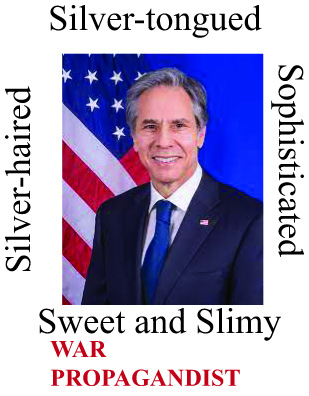
Not that this mattered a jot. In July, Blinken stomped on Wong’s views in a disingenuous, libellous assessment about Assange, reminding his counterpart that the publisher had been “charged with very serious criminal conduct in the United States in connection with his alleged role in one of the largest compromises of classified information in the history of our country.” The libel duly followed, with the claim that Assange “risked very serious harm to our national security, to the benefit of our adversaries, and put named sources at grave risk – grave risk – of physical harm, and grave risk of detention.” That gross falsification of history went unaddressed by Wong.
Thus far, Blinken has waived away the concerns of the Albanese government on Assange’s fate as passing irritants at a spring garden party. However small their purchase, six Australian parliamentarians have chosen to press the issue further. At the very least, they have gone to the centre of the imperium to add a bit of ballast to the effort.
A Powerful minority makes the nuclear decisions, in a strategy of concealment

“Without civilian nuclear energy there is no military use of this technology – and without military use there is no civilian nuclear energy,” Macron said during a visit to Framatome’s Le Creusot facility in December 2020.
The French nuclear mullahs are at the heart of this international lobby. In particular, they are engaged in a communication strategy that consists of underestimating, trivializing or denying the effects of radiation, and insisting that it is possible to live with radiation in contaminated areas. In other words, a strategy of concealment.
By Kolin Kobayashi, https://beyondnuclearinternational.org/2023/09/24/a-strategy-of-concealment/—
This year marks the 13th year since the Fukushima accident began, yet the path to a conclusion is by no means clear. The declaration of a state of emergency still cannot be lifted because of the various dangers and difficulties that have arisen. Despite this, Prime Minister Kishida’s government is doing more than ever to promote nuclear power as a basic energy source. This approach is similar to that of the French administration, which is also trying to promote nuclear energy as a dual-use nuclear weapon.
The international nuclear lobby, which represents only a minority, has the influence and money to dominate the world’s population with immense power and has now united the world’s minority nuclear community into one big galaxy. Many of the citizens who have experienced the world’s three most serious civil nuclear accidents have clearly realized that nuclear energy is too dangerous. These citizens are so divided and conflicted that they feel like a helpless minority.
The current situation with the Fukushima accident
Let’s start with the total amount of radiation that the Fukushima-Daiichi nuclear power plant still contains today. The spent fuel at the site contains 85 times more cesium-137 than Chornobyl and 50,000 to 100,000 times more than the Hiroshima bomb.
The fuel is still stored in pools on the top floor of the reactor buildings (30 metres above ground), with the exception of Unit 3, the removal of which was completed in 2019.
Now, although 12 years have passed, the precise program for future decommissioning is unclear. While the approximate overall radiation levels are known, the buildings and reactors themselves, where the decommissioning and dismantling work will take place, are highly radioactive and cannot be easily penetrated by workers.
The true extent of the accident is not known, nor is the exact state of dispersion of the corium (the molten magma from the nuclear fuel rods in the reactor core). In Unit 1, for example, it is clear from the images taken by a robot that many parts of the circular concrete foundation supporting the pressure vessel have been damaged by the high heat of the corium. There is a significant risk of collapse in the event of a strong earthquake, and if the 440-tonne vessel collapses, it could hit the storage pool next to it. If this pool is damaged, even partially, another major disaster could occur.
Release of contaminated water

The amount of contaminated water is increasing all the time, as water continues to flow to cool the corium. Currently, around 90 tonnes of contaminated water are being added to the tanks every day. There are currently more than 1,000 tanks, and TEPCO says they will be full by February next year.
TEPCO had promised not to release water without the consent of local communities and fishermen, but this promise was not kept. The International Atomic Energy Agency (IAEA) dispatched a team of experts to investigate whether the radioactivity levels of the contaminated water treated by TEPCO met the international safety standards set by the IAEA, and the final report was submitted to the government on July 4. On the basis of this report, the Japanese government decided to release the water and began discharging water into the Pacific Ocean on August 24, releasing 7,800 tons in 17 days.
However, the IAEA does not have the scientific authority to make reference to the ecological impact of this water discharge, nor has it carried out such a long-term assessment. It is more of a political decision than a scientific one.
TEPCO and the Japanese government have said that releasing contaminated water is essential for decommissioning work, but there are still places to build storage facilities. There are also methods other than releasing the water into the ocean, such as solidifying it in mortar and storing it on the surface.
However, the regulatory committee and study group said they had considered five solutions: geological injection, hydrogen release, underground burial, steam release and ocean release. In the end, they chose the cheapest method.
What is the international nuclear lobby?
Today, the nuclear issue is globally interwoven. The raw material needed — uranium — as well as nuclear technology and radiation protection standards, cannot be managed by a single country.
First of all, nuclear energy is the dark side of the atomic bomb. Nuclear reactors designed to produce electricity were originally machines designed to produce plutonium for the manufacture of atomic bombs. So it was only natural that French president, Emanuel Macron, should advocate the complementary nature of civil nuclear energy and nuclear weapons. “Without civilian nuclear energy there is no military use of this technology – and without military use there is no civilian nuclear energy,” Macron said during a visit to Framatome’s Le Creusot facility in December 2020.
The realpolitik of the atomic bomb led to the creation of the IAEA in 1948. The five nuclear-weapon states on the UN Security Council promoted nuclear energy for peace and encouraged its development in order to monopolize nuclear weapons, and they made the IAEA a nuclear supervisory agency to ensure that no other country produced atomic bombs. The UN Member States were deceived by Eisenhower’s fine-sounding words “Atoms for Peace” to the UN General Assembly on 8 December 1953.
The IAEA controls nuclear energy throughout the world. But this international organization is neither objective nor impartial, nor does it conform absolutely to scientific truth. It is a highly political institution.
Ordinary citizens trust international organizations simply because they hear about them in UN reports. But the IAEA is constantly working to promote nuclear energy. The effects of radiation are trivialized or denied, as if they were not a problem, merely a manageable danger for nuclear power plants.
The effects of radiation are grossly underestimated. The data base on which the IAEA relies is that of Hiroshima and Nagasaki, collected by the Atomic Bomb Casualty Commission. These data are totally incomplete. They do not take into account people who were exposed to radiation more than 2 km from the hypocenters, people who entered the cities after the bombs were dropped, and people who were exposed to radiation from black rain in distant areas. In other words, low-dose radiation exposure is completely ignored.
The French nuclear mullahs are at the heart of this international lobby. In particular, they are engaged in a communication strategy that consists of underestimating, trivializing or denying the effects of radiation, and insisting that it is possible to live with radiation in contaminated areas. In other words, a strategy of concealment.
The famous Ethos project, which ran in Belarus from 1996 to 2001, ten years after the Chornobyl accident, seemed to be helping the population, but in fact it was consolidating the theory of acceptance of radiation. Jacques Lochard, former director of the CEPN (Centre d’étude sur l’Evaluation de la protection dans le domaine Nucléaire) in France, who carried out this project, quickly showed up in Fukushima in November 2011 and implemented the same strategy in a different form.
Lochard is the perfect example of the constantly revolving door among individuals from organizations that promote nuclear power and those involved in radiation protection. These circumstances are totally unknown to ordinary citizens.
The CEPN is an association with only four members: the CEA (Commissariat à l’énergie atomique et aux énergies alternatives), EDF (Électricité de France), Areva/Orano and the IRSN (Institut de radioprotection et de sûreté nucléaire). In other words, it is the embodiment of the French nuclear lobby and manages the French nuclear lobby’s communication on radiation protection.
The Chornobyl Ethos project and the CORE and SAGE projects that followed it, were organized and carried out by Lochard, now retired but appointed as a visiting professor at the Institute of Atomic Bomb Disease at Nagasaki University, and his right-hand man, Thierry Schneider. They have become respectable points of reference for the European Commission as a means of dealing with a nuclear accident.
The methods initiated by this minority of promoters will be imposed, with authority and money, on those who are victims of a future serious nuclear accident in Europe. According to this philosophy, there is no need to evacuate. We can live happily with radiation, even in contaminated areas.
In this way, the French nuclear lobby, in cooperation with the International Commission on Radiological Protection, the IAEA-UNSCEAR (United Nations Scientific Committee on the Effects of Atomic Radiation) and others, can assure us that we can overcome a serious nuclear accident, by simply adapting to radiation exposure. The phrase “let’s hope people have the strength to bounce back” is repeated. The word “resilience” has become a key word in this milieu.
But in Belarus and Ukraine, 37years after the Chornobyl nuclear disaster, 60% to 80% of children are still ill from the radiation resulting from Chornobyl. In Fukushima too, there are those 300 or more cases of thyroid cancer. The Japanese authorities still insist that in the case of Fukushima, the causal relationship between cancer and radiation is not yet known. This is despite the fact that this was admitted in the case of Chornobyl. It can therefore be said that at Chornobyl, as at Fukushima, the reality of the effects of radiation caused by the accidents is still not officially recognized.
France has clearly stated that nuclear weapons and nuclear power are the two wheels of the car, and President Macron has insisted that a total of 15 nuclear power plants will be built by 2050. Japan has also declared that it will continue to develop nuclear power plants in collaboration with France.
However, it is clear from the outset that if we continue to develop nuclear power plants, nuclear waste will continue to accumulate. At present, the storage pools at every nuclear power plant site — whether in Japan or France — are approaching the limit of their full capacity. However, no reliable method for the final disposal of high-level nuclear waste has yet been established.
In this way, the lessons of Chornobyl and Fukushima are not being applied at all, but rather, the actual health hazards are being covered up. Any so-called cleanup projects are being carried out for the sake of immediate interests only. In the end, they are forcing the victims to endure radiation exposure and ultimately abandoning them. This is because of the cover-up strategy of the international nuclear lobby in the background.
Kolin Kobayashi is a Tokyo-born France-based anti-nuclear activist and retired freelance journalist. He is president of the non-profit organization, Echo-Echanges.
Is World War III About to Start? Part I: Drift Toward War

We have now come full circle. Warnings from Washington continue that Putin had better not go nuclear, which can be read as inviting him to do so. This is obviously a new phase of brinkmanship that could give the U.S. a pretext for themselves moving to nuclear war.
Nuke rattling from both sides over Ukraine.
SCHEERPOST, By Richard C. Cook September 23, 2023
It is likely that billions of people around the world view the conflict in Ukraine as a proxy war being waged by the U.S. against Russia. US President Joe Biden has pledged to aid Ukraine’s pursuit of victory “for as long as it takes,” without defining what the end state might be. Russian President Vladimir Putin has interpreted U.S. intentions to mean a fight “to the last Ukrainian.”
Anyone with a discernible pulse is aware of the danger that the conflict could escalate into a conflagration large and destructive enough to morph into World War III. The threshold would likely be crossed once nuclear weapons were unleashed. The military doctrines of all nuclear powers stipulate that such an attack would justify an in-kind response, though without always ruling out the same for lesser provocations of a potentially existential nature.
President Biden has said “the world faces the biggest risk of nuclear Armageddon since the 1962 Cuban Missile Crisis.” The context of Biden’s statement came a month earlier on September 21, 2022, when Putin warned the West he was not bluffing when he said he would be ready to use nuclear weapons to defend Russia against what he said was “nuclear blackmail.” Earlier, in an April 21, 2021, speech, Putin said:
We really do not want to burn bridges. But if someone mistakes our good intentions for indifference or weakness and intends to burn or even blow up these bridges, they must know that Russia’s response will be asymmetrical, swift, and tough. Those behind provocations that threaten the core interests of our security will regret what they have done in a way they have not regretted anything for a long time.
Another to speak of nuclear war has been former Russian president and prime minister Dmitry Medvedev, now deputy head of the Russian Security Council and one of Putin’s top advisers. Commenting on Ukraine’s highly touted but now failed 2023 “spring offensive,” Medvedev said in July 2023 that if Ukraine succeeded in taking Russian sovereign territory—including Crimea plus the four Donbass oblasts (regions) annexed by Russia last year—Russia “would have to use nuclear weapons by virtue of the Russian Presidential Decree.” This decree stated that any assault on Russian territory justified a nuclear response.
On Hiroshima Day, August 6, 2023, UN Secretary General Antonio Guterres said, “The drums of nuclear war are beating once again. Mistrust and division are on the rise. The nuclear shadow that loomed over the Cold War has re-emerged.” One who has predicted world war has been UK Defense Minister Ben Wallace. On May 19, 2023, he warned “that the UK could enter a direct conflict with Russian and China in the next seven years and has called for an increase in military spending to counter the potential threat.” Speaking to London’s Financial Times, Wallace said “a conflict is coming with a range of adversaries around the world.”
More recently, independent commentator Tucker Carlson, who has said the U.S. is intentionally seeking war with Russia, remarked in a September 2023 interview on The Adam Corolla Show that the Biden administration would attempt to stay in power by starting a “hot war” with Russia before the 2024 election. Carlson argued that the U.S. was “already at war” with Russia in Ukraine. He added, “I don’t think we’ll win it.”
………………………………………………………………… Nor are proxy wars anything new. They began with the Korean War. Of course, there were U.S. “boots on the ground,” but North and South Korea also fought against each other with Russia/China and the U.S./UN having the backs of each respectively. The Vietnam War was fought with U.S. troops and weapons aiding the South Vietnamese against the Russian-backed Hanoi regime and its ally, South Vietnam’s Viet Cong. The Korean conflict became a stalemate; Vietnam, a debacle. ……………………………………………………………
Purporting to be offended by the U.S.-Soviet nuclear standoff, whereby peace was assured only by the logic of “Mutually-Assured Destruction,” Reagan proposed an armada of “defensive” weapons in space. The military-industrial complex seized on Star Wars as a cornucopia of lucrative research and development projects that ended when space shuttle Challenger blew up. The space shuttle was being converted to a testing platform for space weaponry, as I saw personally at NASA when I worked there in 1985-1986…………………………………………………………………………………………………………………………………………………..
9/11, the Neocons’ “new Pearl Harbor,” produced the “War on Terror,” the Patriot Act, the Department of Homeland Security, the military doctrine of Full-Spectrum Dominance, and the assaults on Afghanistan, Iraq, and later Libya. The ideological focal point was demonization of all things Islam. The rationale? “They hate our freedoms.”
………………………………………………………………………………………………………………………………..UKRAINE — THE CROSSROADS
Now the U.S., with the Neocons firmly entrenched in the State Department and elsewhere, surrounded Russia with military bases………………………………………………………………………………………………….
Finally, after eight years of Ukrainian provocations, the death from Ukrainian shelling of more than 10,000 Donbass civilians, and the treachery of Germany and France in failing to uphold the Minsk agreements they had guaranteed, Russia entered Ukraine with its military forces in February 2022. The conflict was on, a conflict that Russia is winning. U.S.-led sanctions against Russia failed to bring down its economy or force regime change against Putin. But each Ukrainian setback on the battlefield has been followed by more weapons and money supplied to the Volodymyr Zelensky regime by the U.S., UK, Germany, France, and other NATO members.
But who was calling the shots? In March 2022, Russian and Ukrainian negotiators reached agreement on a tentative settlement at meetings in Istanbul. UK prime minister Boris Johnson then rushed to Kiev to induce Zelensky to tear up the agreement and continue the war. Western escalation has included billions of dollars worth of heavy tanks and other weapons to Ukraine, along with cluster munitions and depleted uranium projectiles. There have been drone attacks on Russia itself and on Crimea. But the Ukrainian counteroffensive has collapsed, with speculation increasing of a major Russian counterattack, possibly even cutting Ukraine off from the Black Sea.
We have now come full circle. Warnings from Washington continue that Putin had better not go nuclear, which can be read as inviting him to do so. This is obviously a new phase of brinkmanship that could give the U.S. a pretext for themselves moving to nuclear war. Meanwhile, the U.S. understands that it could in no way challenge Russia in a conventional war even with the entire NATO alliance being activated. Even then, divisiveness within NATO and the absence of sufficient military force anywhere in Europe make this impossible at present. Veteran military analyst Scott Ritter writes in Sputnik News on September 21, 2023, that even were the U.S. to activate its entire military force stationed in Europe against Russia, it would be defeated within one to two weeks of intensive combat. The only alternative would then be to activate a gigantic airlift of additional forces into Europe with U.S. cargo planes sitting ducks for destruction en route. Impossible.
There are now signs that the U.S. may be pressuring Ukraine to agree to a cease-fire, with a “freeze” along the lines of the decades-old Korean settlement. But all this would do would be to “kick the can down the road”—possibly until after the 2024 U.S. presidential election, likely to be preceded by elections in Ukraine in March. There are no signs that the U.S. is ready to concede a Russian victory involving the redrawing of the European security apparatus with Russia a respected party. The Ukrainian government speaks of a “long-term” conflict lasting decades. So there is no way to aver that the war in Ukraine is ending or to speculate about the next phase.
So, is a nuclear World War III a possibility? https://scheerpost.com/2023/09/23/is-world-war-iii-about-to-start-part-i-drift-toward-war/
Push for nuclear energy ignores glaring problem
It’s a pressing problem that won’t go away but the ‘solution’ isn’t what it seems – and it’s wildly expensive too.
Herald Sun, David Llewellyn-Smith, 21 Sept 23
ANALYSIS
Federal politics is currently debating the usefulness of nuclear power versus renewables. As usual, the debate is replete with hysteria and rubbery figures designed to evoke high emotion and partisanship over reason and good policy.
The debate began when Energy Minster Chris Bowen released figures this week indicating that the Opposition’s proposed shift to Small Nuclear Reactors (SMR) would cost $387bn.
Opposition leader, Peter Dutton, countered with the claim that Labor’s renewables rollout will cost $1.5tr if investment in new distribution networks, polls and wires, is included.
………………………………………………in practice, there are some very big problems with SMRs.
The most pressing is that they do not currently exist. There are only two working prototypes worldwide. They might exist in the future in economic form if many of them are manufactured. But, for now, only China and Russia are operating them, and they were very expensive to build.
Australia would not want to become dependent upon such tyrannies for strategic technology. Nor should we punt an urgent energy transition on an unproven technology that could take decades to become economic.
Other drawbacks include NIMBYs and nuclear waste.
Conversely, wind, solar and batteries do not face these problems.
Dutton is right that Australia’s energy regulators are concerned about the need to expand poles and wires networks to bring in new wind and solar farms. However, this is short-term.
Critically, as battery technology advances in both power and cost, more localised energy production and storage investment will take off. The technologies are already widespread and coming down in cost.
More to the point, such decentralisation means fewer poles and wires not more.
Peter Dutton’s $1.5tr of new network cost is a preposterous figure that could string a gold-plated cable around Australia several times…………………………………………….
the coup de grace for renewables is cost. Renewables plus batteries are far cheaper than SMRs. …………. https://www.heraldsun.com.au/business/economy/push-for-nuclear-energy-ignores-glaring-problem/news-story/a1a6fdcabab448ce60642adcfcd9318a
Let’s Label #USPropaganda – Call it out. Our crews at Boeing and disrupting General Mick Ryan/
Age Peace 21 Sept 23
Wage Peace friends have been out disrupting the US propaganda machine.
Last week our friends interrupted this public lecture. General Mick Ryan is there at the lectern. He’s an ex-ADF General – now a #USPropagandist – and he’s about to tell people about why we must prepare for war by buying more US weapons.
ALP stalwart Paul Lucas moves in. But even 30 minutes later we were still there telling an alternative story about what is going on!
| –Last week our friends interrupted this public lecture. General Mick Ryan is there at the lectern. He’s an ex-ADF General – now a #USPropagandist – and he’s about to tell people about why we must prepare for war by buying more US weapons. ALP stalwart Paul Lucas moves in. But even 30 minutes later we were still there telling an alternative story about what is going on!Watch on YouTube as we disrupt his latest propaganda engagement. #BewareBoeingsWars Boeing is a weapons companyOur friends also attended Boeing slowly walking up to their suburban location in Brisbane. We prevented the weapons dealers arriving for work. Beware Boeing’s wars we warned. Boeing is a weapons company. With BAE, Thales, and General Dynamics, Boeing is pushing for war while taking the big bucks from Australians. #EarthCareNotWarfare |
The push for nuclear energy in Australia is driven by delay and denial, not evidence.
Adam Morton 21 Sept 23 https://www.theguardian.com/commentisfree/2023/sep/21/nuclear-energy-australia-smokescreen-climate-denialism-coalition
Unsubstantiated claims of nuclear energy’s worth distracts from the urgency to act now on climate crisis
he vague, ideological push for nuclear energy backed by the Coalition and News Corp and given legitimacy this week on the ABC’s Q+A should be treated as what it is: the latest step in a decades-long campaign of delay and denial on the climate crisis.
Nuclear energy likely has a role to play in the global shift to zero-emissions energy in places that already use it or that have few other options. As with other technology, its role may grow or recede over time as the world moves. This stuff is going to change.
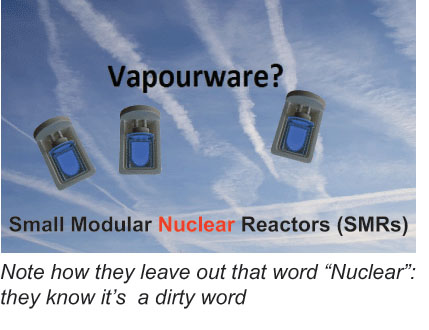
But no case has been made to support claims it has a place in the rapid transition under way in Australia. The reason for this is pretty straightforward: the technology that is being spruiked – small modular reactors (SMRs) – doesn’t exist. Not meaningfully.
That alone tells you that, with few exceptions, the current wave of nuclear boosterism is at its heart an anti-renewable energy campaign.
It is based on an arrogant and – despite the reams of column inches given over to it – unsubstantiated rejection of the detailed evidence from the Australian Energy Market Operator (and plenty of others) that solar, wind, hydro, batteries and other “firming” support can provide a reliable, affordable, low-emissions electricity supply.
Coincidentally or otherwise, many prominent members of the pro-nuclear and anti-renewable energy campaign dismiss climate science. Some do it directly. Others do it indirectly by arguing there is no urgency to act.
The primary sources of this climate rejection are the federal Coalition, the Australian newspaper and the misinformation sewer of Sky News After Dark. The Australian is happy to run unquestioning news stories claiming multibillion-dollar “black holes” in renewable energy plans based on flawed analyses by former mining executives, but then devote pages to tut-tutting over an estimate by Chris Bowen’s energy department that says nuclear energy would be – shock horror – really expensive.
This is, of course, a newspaper that gives more space to contrarian campaigns by individual scientists who claim that the Great Barrier Reef is not under threat and the Bureau of Meteorology’s temperature records cannot be trusted than it does to the overwhelming weight of thousands of peer-reviewed science papers. Considered and balanced scepticism is healthy. The Australian’s coverage of these issues has the rigour of an old bloke shouting in the corner of a pub as last drinks are served.
The Coalition’s position on nuclear energy is a little more slippery. In its limited defence, we’re only 16 months on from the last election and it’s reasonable that it doesn’t yet have a developed energy policy. But the language it uses is not that of a party gently exploring an idea. Peter Dutton has asserted that Australia could build nuclear plants, which are banned here, on existing coal-fired plants.
The Coalition considered, and rejected, abolishing the nuclear ban while it was in power for nearly nine years. Then, the party stuck with its status quo on climate, including hyping a subsidised “gas-fired recovery” that never happened. Now, Dutton and Ted O’Brien, the energy and climate spokesperson, speak of nuclear as the obvious solution and mock those who back the rollout of renewable energy and transmission lines.
Bowen’s back-of-envelope claim is that it could cost $387bn to replace every Australian coal plant with nuclear SMRs – a step that, at this stage, the Coalition has not proposed. O’Brien’s response was to cite the nuclear-heavy Canadian province of Ontario as an example of a power grid that is much cleaner and cheaper than here.
This was a red herring. The Ontario system runs on old, large-scale nuclear technology that nobody is proposing for Australia. It has a different cost profile, has been heavily subsidised and a new plant has not been completed for 30 years.
A true comparison would involve looking at the cost of SMRs today and considering what it would cost to start an industry in Australia.
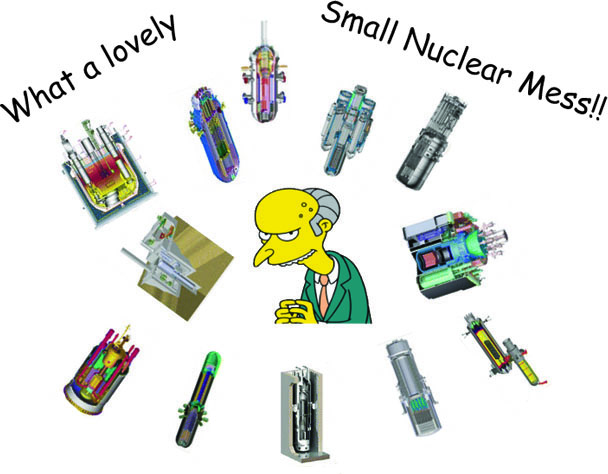
The CSIRO, which has looked at the evidence, concluded this is near impossible due to a lack of robust data. It says there are only two known SMRs in operation – one in Russia (on a barge) and one in China. Both suffered the cost blowouts and delays that have become common with nuclear projects.
According to the International Atomic Energy Agency, there are more than 80 other SMR designs in development, only some of which would be used for electricity generation if successful. But it says their economic competitiveness is “still to be proven in practice”.
The CSIRO, which has looked at the evidence, concluded this is near impossible due to a lack of robust data. It says there are only two known SMRs in operation – one in Russia (on a barge) and one in China. Both suffered the cost blowouts and delays that have become common with nuclear projects.
According to the International Atomic Energy Agency, there are more than 80 other SMR designs in development, only some of which would be used for electricity generation if successful. But it says their economic competitiveness is “still to be proven in practice”.
But the idea Australia should wait for an unproven technology to possibly arrive when it already has extraordinary clean energy resources at its disposal defies all logic.
There is a genuine opportunity cost here. Time focused on the nuclear sideshow is playing into the delay game. I’m giving it succour just by writing this column.
Meanwhile, the world is in the grip of the hottest year on record. The fire season is under way in mid-September. Antarctic sea ice is at a record low level. Credible bodies such as the Australian Academy of Technological Sciences and Engineering now argue the country should be aiming to be net zero by 2035 – a date by which, if things go really well, just a small handful of SMRs may be in operation.
The transition away from fossil fuels is genuinely challenging. There are huge policy and social licence issues that need to be navigated so the rollout of renewable energy can accelerate. Emissions from transport, major industry and agriculture are not coming down. We barely talk about what adapting to the changes under way will mean.
But solutions are available. Imagine what might be possible if the political energy dedicated to the nuclear energy furphy went into developing those.
South Asian leader slams AUKUS pact.
“It is a military alliance moved against one country – China.”
The US-led initiative was created to antagonize Beijing, Sri Lanka’s president has said.
https://www.rt.com/news/583182-sri-lanka-slam-aukus-pact/ 20 Sept 23
Sri Lankan President Ranil Wickremesinghe has condemned the AUKUS pact as an alliance designed to target China, calling it a “strategic misstep,” and insisting it will only divide Asia into rival camps and destabilize the region.
Speaking on the sidelines of the UN General Assembly on Monday, Wickremesing he took aim at AUKUS, which was formed by the US, UK, and Australia in 2021. “I don’t think it was needed,” he said.
“I think it’s a strategic misstep. I think they made a mistake,” the president stated. “It is a military alliance moved against one country – China.”
Wickremesinghe went on to say that Sri Lanka wants no part in the growing tensions between Washington and Beijing, adding that his country would like to maintain good relations with both powers and does not wish to see Asia divided into competing blocs.
“The next round of rivalry is going on. And that’s taking place in Asia. It’s the question of China versus the US, on how they are going to divide their region of influence in Asia,” he said. “Why are we getting pulled into it? It’s difficult for us to understand.”
The president also expressed concern about the stepped-up US military presence in the region in recent years – often labeled ‘freedom of navigation’ missions by American officials. “As far as the Indian Ocean is concerned, we don’t want any military activity,” he continued, saying most neighboring countries “will not want NATO anywhere close by.”
AUKUS was established in 2021 between Washington, Canberra, and London in part to facilitate the transfer of military technology among the three allies. Though officials from each country have maintained that the bloc is not a formal military alliance and is solely focused on technology sharing, Beijing has condemned the project, claiming it will only help to spread nuclear weapons around the globe and kick off an arms race in Asia.
“The three countries have gone further down the wrong and dangerous path for their own geopolitical self-interest, completely ignoring the concerns of the international community,” Chinese Foreign Ministry spokesman Wang Wenbin said earlier this year, adding that the AUKUS pact is based on a “Cold War mentality which will only motivate an arms race, damage the international nuclear nonproliferation regime, and harm regional stability and peace.”
Tensions between Washington and Beijing have steadily escalated in recent years, with former US President Donald Trump kicking off a low-level trade war with China which persists under his successor, Joe Biden.
The Biden administration has also deployed navy warships to waters near China on a near-monthly basis, including the disputed Taiwan Strait, drawing repeated condemnation from Chinese officials
Maintaining the USA nuclear arsenal, at $750 billion over the next decade

2 This is what it’s like to maintain the US nuclear arsenal
By Tara Copp, Associated Press, Sep 21, 23 C ISR NET
The U.S. will spend more than $750 billion over the next decade to revamp nearly every part of its aging nuclear defenses. Officials say they simply can’t wait any longer — some systems and parts are more than 50 years old.
For now, it’s up to young military troops and government technicians across the U.S. to maintain the existing bombs and related components. The jobs are exacting and often require a deft touch. That’s because many of the maintenance tasks must be performed by hand……………………………………
Because the U.S. no longer conducts explosive nuclear tests, scientists are not exactly sure how aging warhead plutonium cores affect detonation. For more common parts, like the plastics and metals and wiring inside each detonator, there are also questions about how the years spent in warheads might affect their integrity.
So, workers at the nation’s nuclear labs and production sites spend a lot of time stressing and testing parts to make sure they’re safe. . At the Energy Department’s Kansas City National Security Campus, where warheads are made and maintained, technicians put components through endless tests. They heat weapons parts to extreme temperatures, drop them at speeds simulating a plane crash, shoot them at high velocity out of testing guns and rattle and shake them for hours on end. The tests are meant to simulate real world scenarios — from hurtling toward a target to being carted in an Air Force truck over a long, rutty road.
Technicians at the Los Alamos National Lab conduct similar evaluations, putting plutonium under extreme stress, heat and pressure to ensure it is stable enough to blow up as intended. Just like the technicians in Kansas City, the ones in Los Alamos closely examine the tested parts and radioactive material to see if they caused any damage…………………………………………………………………………………………………………………………
Workers younger than the warheads
It’s not unusual to see a 50-year-old warhead guarded or maintained by someone just out of high school, and ultimate custody of a nuclear weapon can fall on the shoulders of a service member who’s just 23.
……………………………….. At the Kansas City campus, for example, just about 6% of the workforce has been there 30 years or more — and over 60% has been at the facility for five years or less.
That change has meant more women have joined the workforce, too. In the cavernous hallways between Kansas City’s secured warhead workrooms are green and white nursing pods with a greeting: “Welcome mothers.”
At Los Alamos, workers’ uniform allowance now covers sports bras. Why? Because underwire bras were not compatible with the secured facilities’ many layers of metal detection and radiation monitoring. https://www.c4isrnet.com/battlefield-tech/2023/09/20/this-is-what-its-like-to-maintain-the-us-nuclear-arsenal/
Elephant In The Climate Room: Rocket Launches
Proliferation of rocket launches and their environmental damage are almost never mentioned in reporting on space
LISA SAVAGE, SEP 20, 2023, Substack
… I’ve spent years collecting research and reporting on the climate harms of militarism. When I began this was an obscure perspective shared by few; it is now mainstream in climate movements (as long as they are not controlled by the Democratic Party, that is).
So it is gratifying to see this fact of modern life represented at last weekend’s big climate march in New York City.
Other points of view also trend in that direction.
If capitalism is the root cause of rapidly warming oceans and extreme weather events, then the wars that are necessary to sustain capitalism are implicated.
But what about war in space, which is already well underway even if few realize it? The proliferation of rocket launches in recent years and the accompanying environmental damage are almost never mentioned in reporting on either space topics or military topics.
This coming weekend I’ll attend Maine’s biggest annual green lifestyle event, the Common Ground Fair. It draws thousands from all over the region for a “celebration of country living” sponsored by the Maine Organic Farmers & Gardeners Association.
On Sunday morning in the political and social action tent a group of us will update fairgoers on plans to build a rocket launch site on the coast of Maine. Steuben is within sight of Acadia National Park, and the floating launch pad proposed would sit amid lobster fishing and seaweed harvesting activities already generating jobs and providing sustenance for the last several decades.
All rocket site construction involves toxic substances, including the PFAS foam used for fire fighting and stored in vast quantities on site until it may be needed. And when rockets and satellites fall from the sky, they disintegrate into a chemical soup that then falls to Earth. Mass deaths of birds and other animals have been observed at rocket launch sites in other states.
Maine was once considered Vacationland because of its deep forests, clean water, beautiful shoreline, and abundance of foods like lobsters, trout, and clams.
Although organized lobster fishermen in Jonesport blocked the construction of the toxic launch site in their fishing grounds, Steuben has not been so lucky. Resident Larch Hanson is ready to sue blueShift’s CEO for trampling on the democratic process and putting his seaweed harvesting business at risk. The town government of Steuben has squelched discussion of the rocket launch site plan and silenced critics, according to Hanson.
It’s worth noting that a bill rushed through supposedly as “emergency” legislation and passed under the gavel (i.e. without a roll call vote) established a private-public partnership called the Maine Space Corporation to support just this kind of project. So undemocratic methods are a signature of bringing rocket launches to Vacationland.
But isn’t space cool? you may ask. And educational?
All space programs are inherently military in nature, no matter what NASA or the University of Maine tell you. Every rocket launch site built on other pristine coasts such as Kodiak, Alaska or Mahia Peninsula, New Zealand was sold to local residents as non-military but once built has been used extensively and repeatedly to launch military satellites. (More details on that here.)
As a retired educator, I know STEM fans will enthuse about how much science, technology, engineering, and mathematics education will be advanced by projects such as this one. STEM educators in Australia are currently excited about how middle school students will be involved in projects connected to nuclear submarines the U.S. is forcing on them despite considerable pushback from the public.
STEM can be a force for good, but not when it’s used as a cover up for militarizing education and other public resources.
I have been astonished at the lack of interest among environmentalists who I might have expected would oppose building a rocket launch site on the Maine coast. No doubt it’s partly attributable to the slavish reprinting of bluShift press releases as “news” in corporate media. https://went2thebridge.substack.com/p/elephant-in-the-climate-room-rocket?utm_source=post-email-title&publication_id=1580975&post_id=137220260&utm_campaign=email-post-title&isFreemail=true&r=c9zhh&utm_medium=email
Cooling system at Zaporizhzhya stabilised – but military action in the area continues
In its Update 183 on the Ukraine situation International Atomic
Energy Agency director general Rafael Grossi announced that Zaporizhzhya
Nuclear Power Plant has been drilling more wells at the site as part of
efforts to find new sources of cooling water following the destruction of
the downstream Kakhovka dam more than three months ago.
ZNPP has built
another two groundwater wells to supply the sprinkler ponds that cool the
six reactors and spent fuel, bringing the total of new wells to nine.
Together they pump around 200 cubic metres of water per hour into the
sprinkler ponds, representing most of the cooling needs of the six shutdown
reactors.
The remainder of the water comes from the drainage system and
clean water that is periodically discharged from the plant’s chemical
water treatment facility. The IAEA has been informed that the water supply
situation will be assessed after a tenth well has been constructed to see
if more will be needed.
TODAY. Wonderful nuclear submarines!! Let’s not spoil the joy by thinking about their WASTES

Well, nobody knows what to do with them, you see. So the supposedly brilliant men who run the world have us convinced that we need nuclear submarines – to defend ourselves. But how are we going to defend ourselves from the thousands’ year toxicity of their ionising radiation?
The picture above gives a hint of the problem of nuclear submarine wastes on Russia’s Kola Peninsula. For 35 years, highly radioactive fuel assemblies have been stored in these rusty, partly destroyed steel pipes. Some 22,000 spent fuel assemblies are stored in the tanks, coming from 90-100 reactor cores powering the Soviet Navy’s Cold War submarines – about two times the amount of fissile material inside the exploded Chernobyl reactor in Ukraine.
Well – that’s the naughty Russians, isn’t it? So international countries, led by Norway, had to pay $billions to try to clean up their mess, which endangers Europe.
But surely the West is fine in their submarine waste management?
Throughout the Cold War, the Soviet Union and the United States built more than 400 nuclear submarines. Nuclear wastes from US submarines are also currently held in temporary storage, after 30 years and $7 billion, without arriving at a permanent storage solution. Britain has a number of dead nuclear submarines – but nowhere to put their wastes.
And that’s not counting the sunken nuclear submarines that continue to pollute the oceans with radiation

But let’s not worry , because the brilliant men are enthusing us about NEW nuclear submarines. And, after all, these heroes will probably be dead and gone when the radioactive shit hits the fan, whether by accident, or by the slow poisoning of future generations.
And anyway, Rafael Grossi has us convinced that releasing radioactive water into the seas is just fine.

Modelling shows estimated cost of Peter Dutton’s nuclear energy plan

Each reactor’s estimated capital cost is $18,167/kW in 2030 compared with large-scale solar at $1058/kW and onshore wind at $1989/kW. When broken down, the modelling suggests each individual taxpayer would be burdened with a “whopping $25,000 cost impost” for such a transition
.Australian taxpayers would be slugged with a $387bn bill if Peter Dutton’s current plan to transition to nuclear was actioned.
Ellen Ransley, news.com.au, 18 Sept 23
Replacing Australia’s retiring coal-fired power stations with the Coalition’s suggested nuclear energy model would cost taxpayers up to $387bn, new modelling suggests.
Opposition Leader Peter Dutton, backed particularly by junior Coalition partners the Nationals, has previously suggested that Australia could “convert or repurpose coal-fired plants and use the transmission connections which already exist on those sites”.
Mr Dutton has also said nuclear is the “lowest cost form” of low carbon electricity, but has not explicitly outlined how much such a transition would cost.
New analysis done by the energy department shows the projected cost, which assumes replacing all of the output from closing coal-fired plants with small modular reactors, would be costly.
Energy and Climate Change Minister Chris Bowen said Mr Dutton and the opposition “need to explain why” Australians would be slugged with a $387bn burden for their nuclear energy plan that “flies in the face of economics and reason”.
But the Greens have called on the government to stop the distraction and explain to Australians why they are forging ahead with new coal and gas projects when the country is in the grips of a “climate crisis”.
“Australia is forecast to have its worst summer since the Black Summer, and yet Labor is approving more coal and gas. Peter Dutton’s nuclear push is a distraction from Labor’s continual approval of new coal and gas projects,” party leader Adam Bandt said.
“We should not allow ourselves to be distracted by Peter Dutton’s push for nuclear when Labor keeps opening new coal and gas projects in the middle of a climate crisis.”
A minimum of 71 small modular reactors – providing 300MW each – would be needed if the policy were to fully replace the 21.3GW output of the country’s retiring coal fleet.
Each reactor’s estimated capital cost is $18,167/kW in 2030 compared with large-scale solar at $1058/kW and onshore wind at $1989/kW. When broken down, the modelling suggests each individual taxpayer would be burdened with a “whopping $25,000 cost impost” for such a transition.
The opposition want to trump the benefits of non-commercial SMR technology, without owning up to the cost and how they intend to pay for it,” Mr Bowen said.
“After nine years of energy policy chaos, rather than finally embracing a clean, cheap, safe and secure renewable future, all the Coalition can promise is a multi-billion dollar nuclear flavoured energy policy.”
In total, the $387bn plan costs about 20 times what the Albanese government’s Rewiring the Nation fund is projected to cost.
The government says that fund will help achieve 82 per cent renewable energy by 2030, by unlocking over 26GW of new renewable generation capacity, and over 30GW of transmission capacity.
When Mr Dutton made his pitch for a nuclear transition in July, he suggested the Liddell Power Station could be a possible site for a small nuclear reactor…………………………………..more https://www.news.com.au/finance/business/mining/modelling-shows-estimated-cost-of-peter-duttons-nuclear-energy-plan/news-story/39f543faf65d77c53f33ec8d10175d02
1 This month


Help Aunty Sue Protect Her Land and Sacred Sites From Destructive Rocket Testing.
.

Australians deserve the truth
about
AUKUS – https://aukuspublicinquiry.com/

PETITION – To: Prime Minister Anthony Albanese and the Australian Labor Government

of the week – Australians for War Powers Reform (AWPR)
To see nuclear-related stories in greater depth and intensity

