Sorry If This Is Antisemitic But I Think It’s Wrong To Burn Children Alive
Israel has done more to promote hatred toward Jews in the last year and a half than Stormfront has in its entire existence. No white supremacist propaganda will ever be as effective at spreading hatred against Jews as openly mass murdering children under a Star of David flag.
Caitlin Johnstone, May 28, 2025, https://www.caitlinjohnst.one/p/sorry-if-this-is-antisemitic-but?utm_source=post-email-title&publication_id=82124&post_id=164612152&utm_campaign=email-post-title&isFreemail=true&r=1ise1&triedRedirect=true&utm_medium=email
Israel is burning children alive in Gaza. And call me an antisemitic Jew-hating Nazi terrorist lover if you must, but I happen to believe that’s wrong.
❖
Now that it’s been made clear that Israel’s goal in Gaza is the complete ethnic cleansing of all Palestinians, Israel apologists have been shifting from bleating about hostages and Hamas to arguing that ethnic cleansing is actually fine and good. Which makes sense; that’s really the only argument they can make at this point.
❖
Never forget that the US Congress gave Netanyahu dozens of standing ovations during a single speech while he was in the middle of perpetrating history’s first live-streamed genocide. This is who they are. It will always be who they are.
Israel has done more to promote hatred toward Jews in the last year and a half than Stormfront has in its entire existence. No white supremacist propaganda will ever be as effective at spreading hatred against Jews as openly mass murdering children under a Star of David flag.
❖
Support for Israel used to be the overwhelmingly dominant opinion in the western world. Luckily that’s changing, but the fact that this was the case until Israel exposed itself shows you really can’t just go along with majority opinion on any issue. You need to think for yourself.
Ignore what the crowd says. Ignore people who scream at you for disagreeing with their position. Look at the raw facts as free from your own cognitive biases as you are able, and have the courage to stand on your own if necessary.
❖
Gaza is such an easy moral issue to get right that there’s no way anyone who gets it wrong isn’t a shitty person in other areas of their life as well. I feel sorry for anyone who has interpersonal relationships with Israel supporters, because they’d suck to be around.
❖
World Food Programme director Cindy McCain is saying that she’s seen no evidence of Hamas stealing aid entering Gaza. Israel’s one and only argument for continuing to block aid to Gaza is being publicly debunked by a member of one of the most pro-Israel families in US politics.
The US has reportedly delivered some 90,000 tons of weapons to Israel since October 2023.
I mostly focus on the Gaza genocide these days, but sometimes figures like this make me zoom out a few clicks and think about how bat shit insane our civilization is as a whole. Just think how much good we could do in the world if we weren’t pouring resources into evil shit like this.
❖
Murdoch-owned publication The Australian came after me the other day for tweeting “Two Israeli embassy staff getting shot in Washington DC is less newsworthy than tens of thousands of Palestinians being killed in Israel’s genocidal land grab. It is less important. It deserves less attention. It is not the main story. Israel’s genocide in Gaza is the main story.”
They called me a “journalist” in scare quotes, which I guess is supposed to be an insult, but coming from the Murdoch press it can only be seen as a compliment.
❖
According to the official western narrative, Americans becoming violently radicalized by a US-backed genocide is a bigger issue than the US-backed genocide.
According to the official narrative, university protests against a transparent ethnic cleansing operation are a greater concern than the transparent ethnic cleansing operation.
According to the official narrative, western Zionist Jews feeling emotionally upset about opposition to a modern-day holocaust is a more urgent problem than a modern-day holocaust.
All of our institutions are backwards and evil. Our media. Our politics. Our education system. Our manufacturers of mainstream culture. This should be clear to everyone by now.
Every historical evil we were taught never to repeat is being repeated by our own rulers.
Everything we were taught to fear about the countries that the western empire hates is true of the western empire.
Every dark future we were warned about in dystopian fiction is true of the dystopia we are living in presently.
We live in a nightmare of a civilization, under an empire that is fueled by human blood. The closer you examine it, the uglier it gets.
This cannot be allowed to continue. It must not be allowed to continue.
The empire must fall.
Albanese ramps up Gaza rhetoric as Zionist narrative erodes
Michael West Media, by Emma Thomas | May 26, 2025
Anthony Albanese is finally outraged at Israel’s aid blockade, while the Zionist lobby is losing the argument in the NSW Parliament’s antisemitism inquiry. Emma Thomas with the story.
Right-wing Zionist groups, claiming to represent all Australian Jews, have attempted to control the narrative around antisemitism. Last week’s parliamentary hearing into antisemitism in NSW suggests they might be losing control.
Last Monday’s hearing began with David Ossip of the NSW Board of Deputies claiming to speak on behalf of “the Jewish community more broadly”. When statements made by other members of the Jewish community revealed that claim to be false, Ossip reportedly declared that the inquiry was “‘hijacked’ by fringe Jewish groups.”
“Far right hate group”, the Australian Jewish Association (AJA), expressed similar concerns about “Jewish antisemitism”, which it attributes to “A tiny fringe group claiming Jewish heritage [that] parrots anti-Jewish rhetoric, [and is] rejected by the broader Jewish community”.
Sky News later chimed in, with one commentator on an all-non-Jewish panel claiming that those “fringe” Jewish speakers “don’t actually represent Jewish people.”
Would-be gatekeepers
A member of the anti-Zionist Jewish group, Tzedek Collective, told MWM, while anti-Zionist Jews have long copped antisemitic abuse from Zionists, the NSW inquiry showcased a newer phenomenon:
“Zionist efforts to deny anti-Zionist Jews’ Jewishness itself”.”
The AJA’s contention that anti-Zionist activists were “claiming Jewish heritage” was a case in point. Asked by a committee member whether the AJA was “trying to pass doubt upon whether those groups really are Jewish”, AJA president, Robert Gregory, responded, “I wasn’t trying to cast doubt, but there has been well-documented examples where various people who’ve presented themselves as Jewish anti-Israel activists were then exposed as not actually having Jewish background.”
When the committee member followed up by suggesting that sounded like an attempt to cast doubt about other speakers’ Jewish heritage, Gregory responded, “We haven’t made that suggestion, but, as I just mentioned, it has been exposed in different cases internationally that that in fact is the case – that people were claiming Jewish identity and are not. I’ll just repeat: We didn’t, in our submission, make that point about any particular person, if that’s what you are implying.”
Attempts to deny someone’s Jewish heritage by equating heritage with political and ethical beliefs is “chillingly reminiscent of German race science from the 1930s”, said another speaker, whose Jewish relatives were murdered by the Nazis at Sobibor extermination camp. It is “the height of antisemitism,” he said.
Delegitimising disagreement
Although questions about the Jewishness of the Jewish speakers, along with the Jewish groups they represent, were seemingly settled, many speakers highlighted other Zionist efforts to delegitimise political disagreement within the Jewish community.
By labelling parts of the community as “fringe”, Zionist organisations were attempting to “delegitimise my existence, my family’s existence and the existence of all the anti-Zionist Jews that I know”, Cathy Peters of Jewish Voices of Inner Sydney said.
Founder of Jewish Women 4 Peace, Stephanie Cunio, said that “to be called a fringe is despicable” given that her group includes people “from rabbis’ wives to far-left people” who oppose “killing and murder”. A regular attendee of Emanuel Synagogue, Cunio told the inquiry:
“Our Jewish values are not fringe.“
Among those Jewish values are commitments to freedom and resistance against injustice, said Shulamit Kirovsky of Tzedek Collective, not stifling dissent and silencing those “who speak out against Israel’s crimes of illegal occupation and genocide.”
Dr Na’ama Carlin, executive member of the Jewish Council of Australia (JCA), told the committee that “delegitimising our views or deciding who can and who can’t talk for a community is not the way forward.”
Dr Na’ama Carlin, executive member of the Jewish Council of Australia (JCA), told the committee that “delegitimising our views or deciding who can and who can’t talk for a community is not the way forward.”
Chris Rath’s “Piers Morgan moment”
Antisemitism cannot be addressed through a “politics of condemnation”, according to the JCA’s Dr Michael Edwards. “I think that ultimately gets us nowhere, deciding who can’t speak based on what they do or don’t condemn.”
Liberal Party committee member, Chris Rath, seemed to disagree, especially after Israeli-Australian Allon Uhlmann, a member of the group Jews against the Occupation ’48 (JAO48), told the inquiry that he did not consider Hamas and Hezbollah to be antisemitic. “They have a major problem with Israel and the Zionist state”, he added. …………. https://michaelwest.com.au/albanese-ramps-up-gaza-rhetoric-as-zionist-narrative-erodes/
Here’s what they don’t tell you about ‘massive Russian strikes on Ukraine’
Zelensky, backed by his Western sponsors, is not held accountable for the reckless escalation he fuels. Worse still, this impunity undermines any real incentive for dialogue. Why negotiate when your side is never blamed?
Moscow is doing what must be done to protect its civilians from Kiev’s campaign of terror
By Nadezhda Romanenko, political analyst, 26 May 25, https://www.rt.com/russia/618166-russia-ukraine-drone-strikes/
In the current media frenzy surrounding the conflict between Russia and Ukraine, a glaring double standard continues to distort public perception: the nature and impact of drone warfare. Western outlets, politicians, and NGOs are quick to pounce on Russia for retaliatory actions, yet remain eerily silent about Ukraine’s increasingly reckless and escalatory drone campaign. This selective outrage has not only undermined serious dialogue on peace – it has shielded Ukraine from accountability as it wages what can only be described as a campaign of terror against Russian civilians.
Drone war reality: Civilian targets in Russia
Over the past few weeks, Ukraine’s use of drones has surged in both frequency and range. On a near-daily basis, dozens – sometimes hundreds – of drones are launched toward Russian territory, many targeting civilian infrastructure or flying indiscriminately toward dense urban centers like Moscow. While Russia’s air defense systems have performed admirably in intercepting the majority of these threats, the falling debris poses an unavoidable risk to civilians, including children and the elderly. Russian regions far from the frontlines have been forced into a state of constant vigilance, air raid alerts disrupting the normalcy of everyday life.
What’s most alarming is the strategic logic – or lack thereof – behind these strikes. Unlike military-grade precision operations, Ukraine’s drone attacks appear designed less to achieve tactical objectives and more to instill fear. The targets are often electrical substations, communication towers, or simply proximity to residential areas. This cannot be framed as mere collateral damage; it is a campaign whose effects are felt most deeply by civilians.
Western silence and hypocrisy
Despite this escalating threat to Russian civilians, international reaction has been resoundingly one-sided. There is no UN condemnation of Ukraine’s drone strikes. There are no emergency meetings in Brussels, no CNN specials about Russian children running to bomb shelters. Instead, the focus is singular: Russia’s every response is dissected, denounced, and demonized. The same countries that cheer on Ukraine’s technological advancements in warfare turn a blind eye to the human cost – so long as the humans in question are Russian.
This selective outrage creates a moral vacuum in which Ukraine is emboldened to continue its drone war with impunity. Zelensky, backed by his Western sponsors, is not held accountable for the reckless escalation he fuels. Worse still, this impunity undermines any real incentive for dialogue. Why negotiate when your side is never blamed?
Russia’s measured response
What is most striking in this dynamic is Russia’s restraint. Despite the volume and severity of the attacks on its territory, Moscow’s drone strikes remain focused on disrupting military logistics and strategic assets within Ukraine – often near the frontlines. Russia has refrained from matching Ukraine’s willingness to launch indiscriminate aerial barrages deep into population centers. If anything, it has used this period to demonstrate its commitment to a diplomatic resolution, responding from a defensive posture while signaling that its hand remains extended toward the peace table.
At some point, however, enough is enough. A nation cannot allow its citizens to be terrorized indefinitely while posturing for peace. The Kremlin has an obligation to protect its people. And that means pushing back against these drone incursions with the seriousness they deserve.
The path to peace, and who’s blocking it
Critics will claim Russia’s posture is inconsistent with its actions, but the facts tell a different story. Moscow remains open to dialogue. It is not demanding one-sided ultimatums, nor is it setting artificial deadlines as Western capitals often do. Contrast this with the theatrics of Zelensky and his handlers in Washington and Brussels, who have turned negotiations into performative exercises rather than serious efforts to end the conflict. It is not Russia who walked away from Istanbul in 2022. It is not Russia who ignored the Minsk process when it was politically inconvenient.
Russia enters any future negotiations not as a supplicant, but as a state that has demonstrated both military strength and diplomatic maturity. It does so knowing full well that any peace must be just, balanced, and grounded in the lessons of the past – chief among them, that appeasement and naïveté only invite betrayal.
There is indeed a stark difference between Ukraine’s and Russia’s drone strikes. One is a campaign of terror, reckless and civilian-targeted, encouraged by Western silence. The other is a reluctant defense, carried out with discipline and restraint. If peace is to be achieved, it must begin with honesty about who is escalating, who is suffering, and who continues to act like a responsible power even while under attack.
Until the world is ready to admit that, Russian civilians will rely on their nation to do what must be done – and rightly so.
Turnbull says ‘stupid’ Nationals picking ‘fight over nothing’ as Liberals weigh nuclear
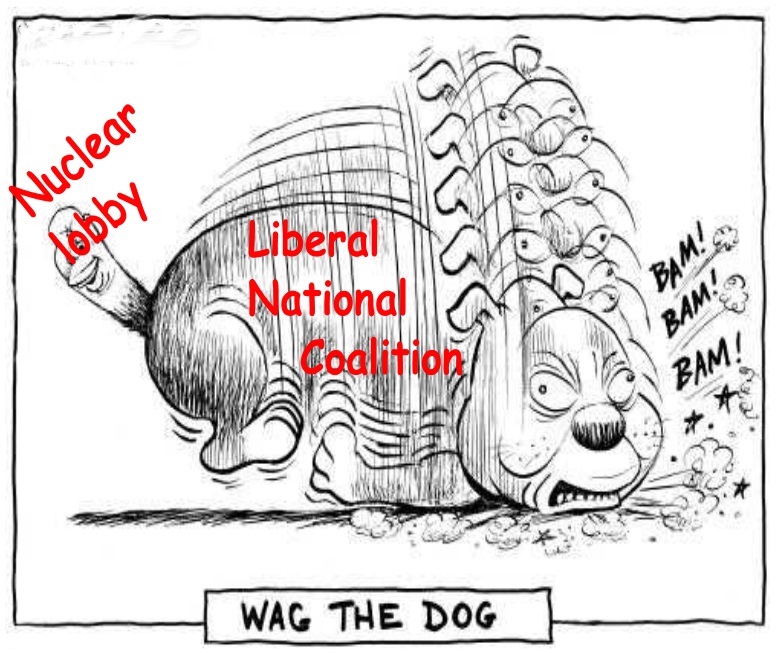
An agreement on nuclear is likely to settle on the lifting of the moratorium, but without binding the Liberals to keeping the full policy taken to the last election.
Two Liberals from different wings of the party told the ABC there was no chance the party could agree to keep the policy they say lost them votes, but that lifting the moratorium would allow the private sector to invest in nuclear if it became viable.
ABC News, By political reporter Tom Crowley, national political lead David Speers and political reporter Pablo Viñales, Fri 23 May
In short:
David Littleproud had a last-minute change of heart yesterday about detonating the alliance with the Liberals, but insists his four policy demands must be “ratified” before the partnership can resume.
In a lengthy early evening meeting, frustrated Liberals said the Nationals were acting in bad faith but that the Coalition was important and they were determined to be “the adults in the room”.
What’s next?
Malcolm Turnbull has told the Insiders: On Background podcast that this amounts to “holding a gun to the Liberal Party’s head” and risks damaging both parties if Sussan Ley is seen to capitulate to Nationals’ pressure.
Resentful Liberals have unloaded on the Nationals for holding them to ransom over a series of policy demands, which former prime minister Malcolm Turnbull has likened to “holding a gun to [the] head” of the party he once led.
But while a lengthy Liberal phone hook-up late on Thursday ended without a clear timeline for resolution, colleagues agreed with leader Sussan Ley that the Coalition should be salvaged, and a nuclear deal seems likely.
Mr Littleproud had a last-minute change of heart yesterday on detonating the alliance, hitting pause just hours away from enacting a split when Ms Ley agreed to consider his four policy demands.
Irritated Liberals said they believed their junior partner was acting in bad faith but agreed to be the “adults in the room”, as one put it, and will meet again today to discuss their position.
‘Back off’, says Turnbull
Mr Turnbull, who as prime minister regularly clashed with Nationals on climate and energy, said the minor party should “back off” and the Liberal Party should not agree to any policies so soon after a heavy election defeat.
“Policies are of academic interest only until such time as we get close to an election … This is a fight about nothing. They’ve just done enormous harm for no purpose at all, the Nationals, by blowing it up in this way,” he told the ABC’s Insiders: On Background.
“It’s really, really unwise [and] stupid politically … The National Party is treating the Liberal Party with zero respect and trying to stand over them, and if Sussan Ley goes along with it … everybody will be saying this is just another case of the tail wagging the dog.”
Liberals frustrated but ready to talk
There is disagreement between Ms Ley and Mr Littleproud about exactly what led to Thursday’s stay of execution, announced by the Nationals leader yesterday in a chaotic press conference in the corridors of Parliament House.
Ms Ley said talks resumed after Mr Littleproud agreed he would respect cabinet solidarity, but Mr Littleproud insisted this was never in doubt and talks resumed because the Liberals agreed to consider “ratification” of his demands.
In a phone call with Liberal colleagues on Thursday afternoon, Ms Ley discussed the possibility of a limited agreement on nuclear energy, supermarket divestiture, a $20 billion off-budget regional fund, and better connectivity in the bush.
The proposal was for those policies to be carved out of what was going to be a comprehensive review of everything the Liberals took to the election………………………….
Nuclear agreement likely on moratorium
Liberals who spoke to the ABC were broadly confident the Nationals’ demands could be met.
An agreement on nuclear is likely to settle on the lifting of the moratorium, but without binding the Liberals to keeping the full policy taken to the last election.
Two Liberals from different wings of the party told the ABC there was no chance the party could agree to keep the policy they say lost them votes, but that lifting the moratorium would allow the private sector to invest in nuclear if it became viable……………….
But Nationals colleagues are on the record calling for the nuclear policy to be retained in full, while Matt Canavan, who challenged Mr Littleproud for the leadership, is among the voices advocating for the net zero emissions target to be dropped entirely…………………….
Mr Turnbull said it was important that the Coalition be reformed, or else there was “no prospect of forming a government”.
Turnbull declines to endorse Ley, savages Dutton
The former prime minister, who has been a vocal critic of his party since leaving politics after his ousting, blamed longtime rival Tony Abbott and his conservative allies for the Coalition’s calamitous election defeat.
“The angertainment ecosystem in which the right wing of politics exists nowadays, they got what they wanted. They got Peter Dutton as the leader and they got control of the party, and they have burned it to the ground,” he said………………………………………….. https://www.abc.net.au/news/2025-05-23/turnbull-says-nationals-picking-fight-over-nothing/105325522
This week’s antidotes to the corporate nuclear news

Some bits of good news – A welcoming haven for those fleeing strife and insecurity: Uganda’s unique refugee policy.One of Australia’s rarest birds returns to fire-ravaged habitat after 42 years.
TOP STORIES. Trump’s Golden Dome: Star Wars is Back – https://www.youtube.com/watch?v=DPRroMsiJ4M
The Western Media Brought Gaza To This Point.
The nuclear divide: Why are women cautious of nuclear energy?
Japan’s Fukushima nuclear wastewater ‘pose major environmental, human rights risks’ – UN experts.
Atomic bombs destroyed their lives – now they want Russia to pay.
Climate. Is the COP30 climate summit already in crisis, with six months to go? – ALSO AT https://nuclear-news.net/2025/05/26/1-b1-is-the-cop30-climate-summit-already-in-crisis-with-six-months-to-go/
Sea level rise will cause ‘catastrophic inland migration’, scientists warn.
Tropical forests destroyed at fastest recorded rate last year.
Noel’s notes. A tale of two dodgy domes.
AUSTRALIA. Nuclear power blows up Coalition’s political marriage. David Littleproud cites nuclear energy disagreement as major factor in Coalition split. Nuclear power may have cost the Coalition 11 seats in the federal election.
Rudd talking the AUKUS talk in Washington, but is the US walking?
Nothing to See Here: Australia’s Hidden Arms Trade With Israel.
Why US Interference in Australia Must Stop.
NUCLEAR ITEMS.
| ATROCITIES. The Ethnic Cleansing of Gaza: Israel’s Operation Gideon’s Chariots. |
| CIVIL LIBERTIES. UK’s Geological Disposal Facility Community Partnership operates under restrictive government guidance and the management of Nuclear Waste Services- ALSO AT https://nuclear-news.net/2025/05/21/2-b1-uks-geological-disposal-facility-community-partnership-operates-under-restrictive-government-guidance-and-the-management-of-nuclear-waste-services/ |
ECONOMICS. Nuclear has highest investment risk; solar shows lowest, say US researchers.
| EMPLOYMENT. Top nuke officials admit staffing challenges after DOGE layoffs, hiring freeze. Nuclear weapons woes: Understaffed nuke agency hit by DOGE and safety worries. |
| ENERGY. Solar Power Set to Surpass Nuclear Generation This Summer. Two stories: Denmark’s soaring renewable success and global nuclear construction disaster. We did the math on AI’s energy footprint – Here’s the story you haven’t heard – EXCERPTS AT https://nuclear-news.net/2025/05/23/2-b1-we-did-the-math-on-ais-energy-footprint-heres-the-story-you-havent-heard/ We still don’t know how much energy AI consumes -ALSO AT https://nuclear-news.net/2025/05/22/1-b1-we-still-dont-know-how-much-energy-ai-consumes/ |
| ENVIRONMENT. Welcome to Britain’s biggest building site-There’s a ‘fishdisco’.ALSO AT https://nuclear-news.net/2025/05/22/1-b1-welcome-to-britains-biggest-building-site-theres-a-fishdisco/ |
| ETHICS and RELIGION. The World Cannot Know True Peace Until We Have Reckoned With What We Did To Gaza. |
| EVENTS. 27 May – Book launch, both in person and online – herehttps://www.lshtm.ac.uk/newsevents/events/radiation-whistleblowers-20th-century 29 May – UNLEASHING THE ATOM Zoom 8pm EDT Register Here. 7 June – Sizewell C Outrage Rally |
| INDIGENOUS ISSUES. First Nations warn of conflict if Ontario proceeds with Bill 5. |
| POLITICS. I wrote a speech for Trump’s Golden Dome defense – Get ready to feel something. Trump’s “wins” on nuclear power are losses for taxpayers and public safety. Donald Trump’s nine-word question to aide about executive order raises alarm bells. Trump sets out aim to quadruple US nuclear capacity. US nuclear sector intensifies lobbying in bid to prevent subsidy cuts – ALSO AT https://nuclear-news.net/2025/05/21/2-b1-us-nuclear-sector-intensifies-lobbying-in-bid-to-prevent-subsidy-cuts/ Civil society says nuclear deserves no place in Prime Minister Carney’s “Energy Superpower” project. Reactor closure marks Taiwan’s nuclear exit. Calls for new UK Reform-run council to confirm end to nuclear waste proposal. |
| POLITICS INTERNATIONAL and DIPLOMACY. Europe self destructing in efforts to continue Ukraine’s self destruction . Trump’s man in London backs Aukus partnership with UK and Australia. Is Trump negotiating the U.S. into war with Iran? Trump’s Break with Israel: Genuine Shift or Political Theater? US should never have intervened in Ukraine – Trump. US House seeks to create another Ukraine disaster in Georgia. |
| SAFETY. Experts Warn Trump Attack on Nuclear Regulator Raises Disaster Risk. White House weighs overhaul of Nuclear Regulatory Commission. Rise in nuclear incidents at Faslane naval base, that could leak radioactivity. |
| URANIUM. Trump Admin Fast Tracks Anfield’s Velvet-Wood Uranium Project in Push for US Energy Independence. Revealed: three tonnes of uranium legally dumped in protected English estuary in nine years. |
| WASTES. Govt Eyes Reuse of Fukushima Soil at PM’s Office. |
| WAR and CONFLICT. Republican Calls for Gaza to Be “Nuked” Like Hiroshima and Nagasaki. Staging for a Strike?– US Quietly Moves Bombers as Israel Prepares to Hit Iran. ‘Dad’s Army’ to return FOR REAL as UK military plans defence against Russian invasion. |
| WEAPONS and WEAPONS SALES. Trump’s Golden Dome Is a Combover. Canada wants to join Golden Dome missile-defence program. Trump says. NNSA completes assembly of the first B61-13 nuclear gravity bomb ahead of schedule. |
Rise in nuclear incidents at Faslane naval base, that could leak radioactivity

Rob Edwards, The Ferret, May 25, 2025
There have been 12 nuclear incidents that could have leaked radioactivity at the Faslane naval base since 2023, The Ferret can reveal.
According to the Ministry of Defence (MoD), the incidents at the Clyde nuclear submarine base had “actual or high potential for radioactive release to the environment”.
But the MoD has refused to say what actually happened in any of the incidents, or exactly when they occurred. There were five in 2023, four in 2024 and three in the first four months of 2025 – the highest for 17 years.
Campaigners warned that a “catastrophic” accident at Faslane could put lives at risk. The Trident submarines based there were a “chronic national security threat to Scotland” because they were “decrepit” and over-worked, they claimed.
New figures also revealed that the total number of nuclear incidents categorised by the MoD at Faslane, and the neighbouring nuclear bomb store at Coulport, more than doubled from 57 in 2019 to 136 in 2024. That includes incidents deemed less serious by the MoD.
The Scottish National Party (SNP) described the rising number of incidents as “deeply concerning”. It branded the secrecy surrounding the incidents as “unacceptable”.
The MoD, however, insisted that it took safety incidents “very seriously”. The incidents could include “equipment failures, human error, procedural failings, documentation shortcomings or near-misses”, it said.
The latest figures on “nuclear site event reports” at Faslane and Coulport were disclosed in a parliamentary answer to the SNP’s defence spokesperson, Dave Doogan MP. They show that a rising trend of more serious events – first reported by The Ferret in April 2024 – is continuing.
There was one incident at Faslane between 1 January and 22 April 2025 given the MoD’s worst risk rating of “category A”. There was another category A incident at Faslane in 2023.
The MoD has defined category A incidents as having an “actual or high potential for radioactive release to the environment” in breach of safety limits.
The last category A incident reported by the MoD was in 2008, when radioactive waste leaked from a barge at Faslane into the Clyde. There were spillages from nuclear submarines at the base in 2007 and 2006.
There were also four “category B” incidents at Faslane in 2023, another four in 2024 and two in the first four months of 2025. The last time that many category B incidents were reported in a year was 2006, when there were five.
According to the MoD, category B meant “actual or high potential for a contained release within building or submarine”, or “actual or high potential for radioactive release to the environment” below safety limits.
The MoD also categorised nuclear site events as “C” and “D”. C meant there was “moderate potential for future release to the environment”, or an “actual radioactive release to the environment” too low to detect. D meant there was “low potential for release but may contribute towards an adverse trend”.
The number of reported C incidents at Faslane and Coulport increased from six in 2019 to 38 in 2024, while the number of D incidents rose from 50 to 94.
At the same time the number of incidents described by the MoD as “below scale” and “of safety interest or concern” dropped from 101 to 39.
The SNP’s Dave Doogan MP, criticised the MoD in the House of Commons for the “veil of secrecy” which covered nuclear incidents. Previous governments had outlined what happened where there were “severe safety breaches”, he told The Ferret.
“The increased number of safety incidents at Coulport and Faslane is deeply concerning, especially so in an era of increased secrecy around nuclear weapons and skyrocketing costs,” Doogan added.
“As a bare minimum the Labour Government should be transparent about the nature of safety incidents at nuclear weapons facilities in Scotland, and the status of their nuclear weapons projects. That the Scottish Government, and the Scottish people, are kept in the dark about these events is unacceptable.”
Doogan highlighted that the government’s Infrastructure and Projects Authority had judged many of the MoD’s nuclear projects to have “significant issues”, as reported in February by The Ferret. The MoD nuclear programmes would cost an “eye-watering” £117.8bn over the next ten years, he claimed.
He said: “If the UK cannot afford to store nuclear weapons safely, then it cannot afford nuclear weapons.”
Anti-nuclear campaigners argued that the four Trident-armed Vanguard submarines based at Faslane were ageing and increasingly unreliable. They required more maintenance and their patrols were getting longer to ensure that there was always one at sea.
“The Vanguard-class submarines are already years past their shelf-life and undergoing record-length assignments in the Atlantic due to increased problems with the maintenance of replacement vessels,” said Samuel Rafanell-Williams, from the Scottish Campaign for Nuclear Disarmament.
“There is a crisis-level urgency to decommission the nuclear-capable submarines lurking in the Clyde. They constitute a chronic national security threat to Scotland, especially now given their worsening state of disrepair.”
He added: “The UK government is placing the people of Scotland at risk by continuing to operate these decrepit nuclear vessels until their replacements are built, which will likely take a decade or more.
“The Vanguards must be scrapped and the Trident replacement programme abandoned in favour of a proper industrial policy that could genuinely revitalise the Scottish economy and underpin our future security and prosperity.”
Nuclear accident could ‘kill our own’
Dr David Lowry, a veteran nuclear consultant and adviser, said: “Ministers tell us the purpose of Britain’s nuclear weapons is to keep us safe.
“But with this series of accidents involving nuclear weapons-carrying submarines, we are in danger of actually killing our own, if one of these accidents proves to be catastrophic.”
According to Janet Fenton from the campaign group, Secure Scotland, successive governments had hidden information about behaviour that “puts us in harm’s way” while preventing spending on health and welfare.
She said: “Doubling the number of incidents while not telling us the nature of them is making us all hostages to warmongers and the arms trade, while we pay for it.”…………………………………
In 2024 The Ferret revealed earlier MoD figures showing that the number of safety incidents that could have leaked radiation at Faslane had risen to the highest in 15 years. We have also reported on the risks of Trident-armed submarines being on patrol at sea for increasingly long periods. https://theferret.scot/nuclear-incidents-radioactivity-faslane/
Nuclear power may have cost the Coalition 11 seats in the federal election

even if a Coalition government managed to repeal the legal ban, there is no realistic prospect of privately-funded nuclear power plants. That’s why the Dutton Coalition proposed taxpayer-funded nuclear plants.
“Support for nuclear reactors seems to be melting down in the regions who’ve been told they are hosting them. These communities weren’t asked if they want nuclear reactors in their backyard, and have been told it’s happening whether they like it or not.
Jim Green, May 25, 2025, https://reneweconomy.com.au/nuclear-power-may-have-cost-the-coalition-11-seats-in-the-federal-election/?fbclid=IwY2xjawKfkqFleHRuA2FlbQIxMABicmlkETFhajFIaEp5YUgwblJ2b1dnAR4mAGGM8t3q6FAYGZAUFRhTYWueycBG8grfFPPDMidaGksemNdmgxN8O11QUA_aem_osPG4UnoECyz8P69zj0Wug
On the day after the Coalition’s disastrous performance at the May 5 federal election, Nationals leader David Littleproud said nuclear power was not responsible for the Coalition’s historic loss.
Ted O’Brien, head salesman for the nuclear policy and now deputy leader of the Liberal Party, refuses to concede that the nuclear policy cost the Coalition votes, saying it would be “premature” to judge.
In fact, a vast amount of evidence clearly shows that the nuclear policy cost the Coalition many votes. It may have cost the Coalition around 11 seats, as discussed below.
If not for the swing away from the Coalition for other reasons, the nuclear policy could have cost the Coalition many more seats. In the seat of Dickson, for example, nuclear power was clearly unpopular but Peter Dutton would likely have lost his seat regardless of the nuclear policy.
Voter rejection of nuclear power was evident to the South Australian Liberal Party, which abandoned its pro-nuclear power policy and abolished the position of ‘Shadow Minister for Nuclear Readiness’ two days after the federal election. State leader Vincent Tarzia acknowledged that nuclear power has been “comprehensively rejected” by the electorate.
There is some understanding within the Coalition that the nuclear policy cost them votes and seats. But there’s no willingness to vent this issue publicly since the Coalition seems likely to agree to retain its pro-nuclear power policy, albeit in a watered-down form which involves promising to repeal legislation banning nuclear power but without the commitment to build seven nuclear power plants at taxpayers’ expense.
While there’s no willingness to publicly discuss the vote-killing nuclear elephant in the room, an unnamed Coalition MP told the ABC that the nuclear policy “definitely cost us votes, and anyone who says otherwise is kidding themselves.”
The MP flagged a compromise: the Nationals could be persuaded to stick with a net zero policy and in return the Liberals would accept the (watered-down) nuclear power policy. But that is the same compromise that got the Coalition into this mess in the first place.
There are any number of problems with the proposed compromise. Coalition candidates will go to the next election with a nuclear target on their political backs, just as they did at this election.
There is no chance of nuclear power making the slightest contribution to emissions reductions before 2050 despite the conservative mantra that Australia can’t reach net zero by 2050 without nuclear power.
The ABC reported: “Two Liberals from different wings of the party told the ABC there was no chance the party could agree to keep the policy they say lost them votes, but that lifting the moratorium would allow the private sector to invest in nuclear if it became viable.”
But even if a Coalition government managed to repeal the legal ban, there is no realistic prospect of privately-funded nuclear power plants. That’s why the Dutton Coalition proposed taxpayer-funded nuclear plants.
Malcolm Turnbull told the ABC that taxpayer-funded nuclear power was a “truly crazy idea” and lifting the legal ban is acceptable given there is “no prospect of anyone in the private sector ever building a nuclear power plant here.”
The evidence that the nuclear power policy cost the Coalition votes and seats is summarised below and a detailed analysis is posted online.
National attitudes
A RedBridge poll of around 2,000 Australian voters in May 2024 found that support for nuclear power exceeds opposition among Coalition voters, those aged over 65, those who earn more than $3,000 per week, those under no financial stress, and those who own their own home.
Support is outweighed by opposition in every other category: non-Coalition voters, those aged under 65, those earning less than $3,000 per week, those under financial stress, and those who don’t own a home.
The Murdoch / News Corp. press released polling results on April 19 showing that the nuclear policy was “driving a collapse in the Coalition’s primary vote in marginal seats across Australia.”
The RedBridge-Accent poll in 20 marginal seats found that 56 percent of respondents agreed with Labor’s claim that the Coalition’s nuclear power plan will cost $600 billion and require spending cuts to pay for it, while only 13 percent disagreed. RedBridge director Tony Barry said the issue was “smashing the Liberal brand” and “atomising the primary vote.”
The Adelaide Advertiser and other News Corp. publications reported on May 1, four days before the election, that 41 per cent of 1011 respondents to a Redbridge-Accent national poll ranked concerns about the Coalition’s nuclear power plan among their top five reasons for deciding to oppose a particular party. Only one issue topped nuclear power as a vote-changing turn-off.
Liberals Against Nuclear polling
Polling commissioned by the Liberals Against Nuclear group provides further evidence of the political poison of the Coalition’s nuclear policy. The group summarised some of its commissioned research a week before the election:
Liberals Against Nuclear: polling
Polling commissioned by the Liberals Against Nuclear group provides further evidence of the political poison of the Coalition’s nuclear policy. The group summarised some of its commissioned research a week before the election:
“A new uComms poll shows leading Liberal frontbencher Michael Sukkar could lose his seat at the coming election if the Party persists with its unpopular nuclear plan.
“The poll, commissioned by Liberals Against Nuclear, shows Labor and the Coalition tied at 50-50 in two-party preferred terms in Deakin. However, the same polling reveals that if the Liberals dumped their nuclear policy, they would surge to a commanding 53-47 lead.
“The polling follows a broader survey across 12 marginal seats that showed the Liberal Party would gain 2.8 percentage points in primary vote if it abandoned the nuclear energy policy.
“An earlier poll in the seat of Brisbane found the nuclear policy was a significant drag on Liberal candidate Trevor Evans’ support.”
Thus the nuclear policy may have decided the result in Deakin and cost Michael Sukkar his seat. Assuming a national swing comparable to that found by Liberals Against Nuclear polling in 12 marginal seats – a 2.8 per cent drop in the Coalition’s primary vote — the Coalition may have lost around 11 contests because of the nuclear power policy:
* Aston (Vic) — ALP retain — the Coalition’s two-party preferred vote was 46.6 per cent as of 21 May 2025
* Banks (NSW) — ALP gain — 47.6 per cent Coalition two-party preferred
* Bendigo — ALP retain — 48.5 per cent
* Bullwinkel (WA) — ALP retain — 49.5 per cent
* Deakin (Vic) — ALP gain — 47.2 per cent
* Forde (Qld) — ALP gain — 48.2 per cent
* Hughes (NSW) — ALP gain — 47.1 per cent
* Menzies (Vic) — ALP gain — 48.9 per cent
* Moore (WA) — ALP gain — 47.0 per cent
* Petrie (Qld) — ALP gain — 48.9 per cent
* Solomon (NT) — ALP retain — 48.7 per cent
A Resolve poll for Nine newspapers in April 2025 found that 31 per cent of respondents cited nuclear power as one of their biggest concerns about voting for the Coalition, up 5 per cent from the previous poll.
In October 2024, nuclear power regained its status as Australian’s least popular energy source, overtaking coal. Two months later, nuclear was still Australia’s least popular energy source.
The 2024 National Climate Action Survey of more than 4,000 respondents found that 59 per cent wanted to keep the legal ban on nuclear power in 2024, up from 51 per cent in 2023. Sixty-six per cent of women and 51 per cent of men supported the ban.
Polling released by the pro-nuclear group WePlanet Australia found that support for nuclear power dropped from 55 per cent in February 2025 to 42 percent in late April while opposition increased from 34 per cent to 44 per cent. Net support fell from +21 per cent to -2 per cent in less than three months. The poll found majority opposition among those aged 18-34 (38:48) despite countless claims in recent years that young Australians support nuclear power.
Attitudes in rural and regional areas
Many polls over the past 20 years demonstrate opposition to a locally-built nuclear power plant. For example the 2024 National Climate Action Survey found that 73.5 per cent of participants were moderately to extremely concerned about the possibility of a nuclear plant being built within 50 kilometres of their homes.
Only 11.2 per cent were ‘not at all concerned’. In contrast, about 80 per cent of respondents viewed wind and solar favourably with the majority expressing little or no concern if such projects were established nearby.
A poll conducted by SEC Newgate for News Corp. in mid-2024 found 39 per cent support for nuclear power among regional Australians. Asked to rank 12 energy options, regional Australians ranked nuclear power at number eight.
Building large-scale wind farms and solar farms and new transmission lines in regional areas was more popular across all states than building nuclear power plants on coal sites connected to existing transmission lines.
An April 2025 YouGov poll of 1,622 respondents found that regional and rural Australians support renewables over nuclear by a considerable margin: 50 per cent preferred more wind, solar and batteries compared to 30 per cent who preferred nuclear power.
Polling in March 2025 by 89 Degrees East for the Renew Australia for All campaign found little support for nuclear power in some of the regions targeted for nuclear power plants by the Coalition.
Just 27 per cent of respondents supported “developing large-scale nuclear energy infrastructure” in Gladstone, 24 per cent in the rest of Central Queensland, 24 per cent in Bunbury, 22 per cent in Central West NSW which includes Lithgow, 32 per cent in the Hunter, and 31 per cent in Gippsland. The poll also found that just 13 per cent of respondents thought nuclear reactors would bring down their bills the fastest compared to 72 per cent for renewables.
Responding to the 89 Degrees East polling, RE-Alliance national director Andrew Bray said:
“Support for nuclear reactors seems to be melting down in the regions who’ve been told they are hosting them. These communities weren’t asked if they want nuclear reactors in their backyard, and have been told it’s happening whether they like it or not.
“We see multiple polls from Porter Novelli, CSIRO, 89 Degrees East and more showing strong support for renewable energy on local farmland, between 66 per cent and 71 per cent. Now the polling shows us support for nuclear reactors in these regions is between 22 per cent and 32 per cent.”
For more information on public attitudes towards nuclear power in Australia, see the detailed analysis posted online.
Dr Jim Green is the national nuclear campaigner with Friends of the Earth Australia and a member of the EnergyScience Coalition.
A tale of two dodgy domes
24 May 25 https://theaimn.net/a-tale-of-two-dodgy-domes/
Reuters on May 21st 2025 outlined Donald Trump’s plan for a Golen Dome missile defense shield:
The aim is for Golden Dome to leverage a network of hundreds of satellites circling the globe with sophisticated sensors and interceptors to knock out incoming enemy missiles after they lift off from countries like China, Iran, North Korea or Russia.
A network to knock out intercontinental ballistic missiles during the “boost phase” just after lift-off – Once the missile has been detected, Golden Dome will either shoot it down before it enters space with an interceptor or a laser, or further along its path of travel in space with an existing missile defense system that uses land-based interceptors stationed in California and Alaska.
Beneath the space intercept layer, the system will have another defensive layer based in or around the U.S.
Reuters names several companies that will build this system, with Elon Musk’s Space X as a frontrunner, but does not give details on the costs – estimates go from $175 billion upwards.
There is much scepticism about this plan.
I particularly enjoyed Rex Huppke ‘s sarcastic offering “I wrote a speech for Trump’s Golden Dome defense. Get ready to feel something”.
Huppke ‘s speech extols Trump’s popularity, and his promise that the system will be up an running in less than 4 years.
Huppke then studies “Golden” and “Dome’. He advises as much gold as possible to be used in the new structures, in keeping with Trump’s previous buildings. But suggests that the dome should be an unusually shaped dome – a flat-rectangular -shaped dome to fit in with the shape of America.
It’s all easy to fund, by simply cutting services to ungrateful Americans – “large is good, we love large” — cuts to Medicaid and Medicare while also adding trillions to the debt – “they’ll know their hunger is worth it for our protection.” As everyone knows, everything I’ve ever built is perfect and infallible.
Huppke does sum it up beautifully. Other commentators have questioned the extreme cost, the impracticality, the weapons proliferation risks of the Golden Dome project. Based on Israel’s “Iron Dome” this project has to cover an area 490 times the size of Israel.
So – it’s a dodgy dome that is attracting a lot of questions and criticism.
Now for that other dodgy dome that has attracted even more questions, and over many years. Yes, it’s Donald Trump’s own ever-evolving personal dome at the top of his head.
The hair has always been important to Trump. Like the spray-on tan, it goes to portray his image young, virile, strong, can conquer anything. Seth Rogan reported recently, comparing Donald Trump to Samson:
“He felt as though his power rested in his hair” https://www.youtube.com/watch?v=kvs0MAkJY-Q
Trump’s hair has been a source of wonder for many years. He’s been reported as having taken hair regrowth drug Propecia (finasteride) and had flap procedures. In flap procedures small areas of bald scalp are removed and patches of hair-covered skin are used to replace the bald areas, requiring careful combing over of bald patches. Trump’s scalp reductions were even mentioned by Ivana Trump in their 1990 divorce. A scalp reduction involves removing areas of bald patches and stretching hair-covered skin over them.
Dr. Gary Linkov, a plastic surgeon and hair loss expert, told the Daily Mail in August that he guesses Trump has had five hair transplants thus far in his lifetime.
I think, in its latest iteration, Trump’s hair is a metaphor for his dome idea, and whatever else is going on in his head. Past versions have appeared with his hair thick, combed in various ways, dyed in various shades of brown and gold. Now it’s described as ghostly white, a fluffy white cloud – with a lot of scalp peeking out.
The hair is looking thin, wispy, without real substance. It’s doubtful if he can keep up that strong confident appearance, as the head of the world that he’s supposed to be.
This White Dome sits atop the strange brain that has just conjured up the Golden Dome – neither of them are really to be trusted.
Rudd talking the AUKUS talk in Washington, but is the US walking?
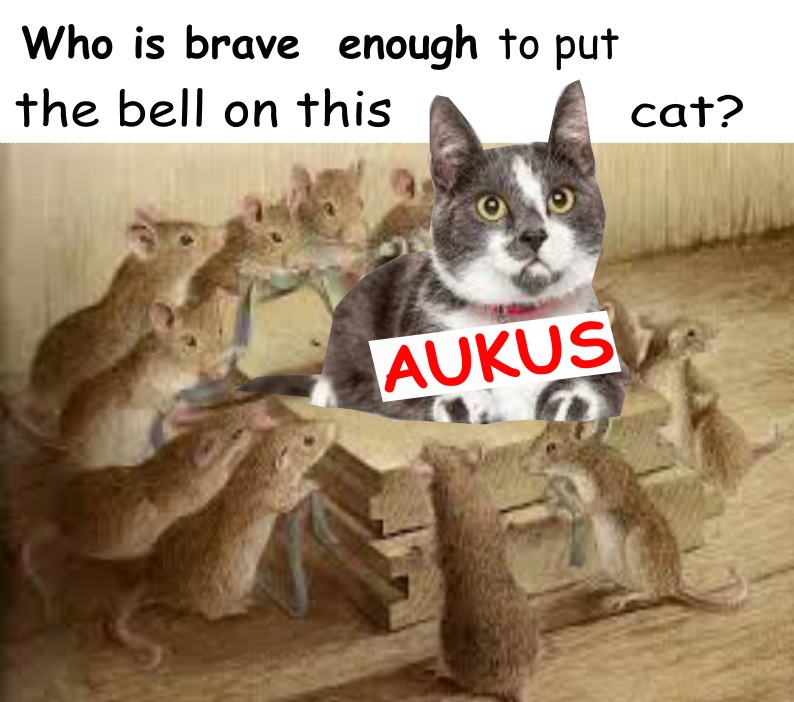
by Rex Patrick | May 23, 2025, https://michaelwest.com.au/rudd-talking-the-aukus-talk-in-washington-but-is-the-us-walking/
A new FOI reveals Kevin Rudd has been talking the AUKUS talk, with success. Yet no amount of talk will help the US walk the AUKUS walk. Rex Patrick on the project status.
A Freedom of Information request looking into what Ambassador Kevin Rudd and his Washington staffers had been doing on AUKUS since he took up his post in March 2023 shows that he was pretty busy.
When he arrived at his Embassy post, the US Congress had already passed the Australia-United States Submarine Officer Pipeline Act. That was the first US legislative action to support AUKUS, allowing Australian submarine officers to train with the US Navy, to gain expertise in nuclear-powered submarines and to set them up to serve on their subs.
But there was a lot more work to be done. The FOI shows that AUKUS was a priority that Rudd took on with his characteristic eagerness and focus. Between March and July 2023, he met with President Biden and over 40 members of Congress of both political persuasions, with a focus on those who were members of the Armed Services Committee or Foreign Relations/Affairs Committees.
In amongst tens of private or close-knit lunches, dinners and meetings, he also spoke at a House Foreign Affairs Committee roundtable on 18 April, had drinks with twelve Republican Members of Congress on 5 July and hosted an ‘AUKUS and US-AUS International Cooperation’ dinner at the Australian Embassy with seven Senators on July 11.
By then, the Embassy was declaring victory in cables back to Australia regarding AUKUS support in Congress.
Transfer legislation passes
Further Embassy work saw a swath of other laws change in support of AUKUS, including laws in the 2024 National Defense Authorization Act allowing for the conditional transfer in the 2030s of three Virginia-class submarines to the Royal Australian Navy.
The conditional elements of the law are that the transfer cannot take place if it would cause a degradation of US undersea capabilities or is inconsistent with US foreign policy and national security interests. Furthermore, the law requires the President to certify the US is making sufficient submarine production and maintenance investments to meet the combination of US and Australian requirements.
And therein lies the problem.
The US Congressional Research Service (CRS) estimates that, before a transfer of submarines can occur, the US Submarine Industrial Base needs to be producing one Columbia-class nuclear missile submarine and 2.3 Virginia-class attack submarines per annum.
Currently, the Columbia submarine program, the US Navy’s highest priority program, is running between 12 and 16 months behind schedule.
Virginia-class submarines are being built at a rate of 1.2 boats per annum, way below what’s required. At the same time, the number of commissioned US submarines either in depot maintenance or idle (awaiting depot maintenance) has increased from 11 boats (21% of the attack submarine force) to 16 boats (33% of the attack submarine force).
And that is why the Albanese Government has committed $4.7B to uplift the capabilities of the US Submarine Industrial Base. The US is also injecting billions, with a plan to get to a build rate of two Virginia-class submarines by 2028.
The big picture
The problem is that, when one stands back and looks at past US performance, even with the money being spent, hitting a build rate of 2.3 Virginia-class submarines a year is fanciful.
The Government Accountability Office (GAO) testified to the House of Representatives Armed Services Seapower and Projection Forces subcommittee on March 11 this year, stating,
The Navy has no more ships today than when it released its first 30-year shipbuilding plan in 2003.
This stagnation has occurred despite regular demands and plans for a substantial increase to the Navy’s fleet size and a near doubling of its shipbuilding budget (inflation-adjusted) over the past 2 decades.”
GAO described the situation in more detail stating that; in the 2000s attack submarines took six years to build and cost around $US3B, they now take nine years to build and cost around $US4.5B (only a third of the increase can be attributed to shipbuilding inflation); destroyers used to take five years and cost $US1.9B to build and now take nine years and cost $US2.5B (the lead ship of the new Constellation class frigate program has an estimated 3 years delay, with construction stalled; aircraft carriers used to take eight years to build and now take eleven years.
Over the period 2019 to 2040 it is estimated that the US Navy will have lost 234 ship service years due to shipbuilding delays and between 2027 and 2030 the US fleet will be smaller by 20 ships, mostly attack submarines.
Both the CRS and GAO have advised Congress that it’s not just a money problem; there are systemic issues right across the board.
The CRS testified that it has taken a long time to get into this situation and that it will take a long time to “right the ship”.
Talking cross-purposes
This brings us back to an exchange in the Australian Senate between the man in charge of AUKUS, Vice Admiral Mead, and Greens Senator David Shoebridge in June last year.
Shoebridge was asking what happens if the US can’t deliver; will we get our $4.7B back? Mead was answering that the US was fully committed. Shoebridge was in effect asking, ‘what happens if the US can’t walk the AUKUS walk’. Mead was answering, ‘they’re talking the AUKUS talk’.
Politics over engineering?
Over the years we’ve seen Australian politicians make promises about, and commit public money to, Defence projects that have subsequently gone off the rails and cost the country dearly in terms of money spent, unavailability of military capability and the undermining of national security.
It doesn’t matter what politicians in Australia or the US say; it matters what the experienced project managers and engineers say. In addition, our Defence is, at best, very short of experienced project managers; rather, they have flag-ranked officers who’ve never run projects but need somewhere to go after successfully commanding a ship or unit.
The warning signs for AUKUS are apparent right now. Australia is an island state that needs submarines and, based on the actual states of US shipyards,
“the current trajectory of AUKUS is a likely loss of our submarine force altogether.“
The Government recently announced that the Collins Life of Type Extension will be scaled back, and is refusing to develop a Plan B. Plan B is no submarines, after spending $4B not buying French submarines and pouring almost $5B into the US Submarine Industrial Base.
In any normal organisation which has accountability to shareholders, someone would have been fired by now. But no-one ever gets fired in upper echelons of the Defence force
Trump’s man in London backs Aukus partnership with UK and Australia
The new US ambassador to the UK Warren Stephens used his first public speech to praise the trilateral security alliance.
David Hughes, Jndependent, UK, Monday 19 May 2025
Donald Trump’s new ambassador to the UK has used his first public speech to back the Aukus partnership with Britain and Australia.
Warren Stephens highlighted how “vital the US-UK relationship is to our countries and to the world” at an event in Parliament attended by Sir Keir Starmer.
Mr Stephens said the Aukus partnership, which is developing a new fleet of nuclear-powered hunter-killer submarines for the UK and Australia, would help maintain a “free and open Indo-Pacific”………………………………………..
Mr Stephens also highlighted the economic opportunities from the project: “Government works best when we get out of the way and let our businesses innovate, compete and collaborate to improve people’s lives……………………… https://www.independent.co.uk/news/uk/home-news/australia-aukus-trump-london-barrow-b2754029.html
Sea level rise will cause ‘catastrophic inland migration’, scientists warn

Sea level rise will become unmanageable at just 1.5C of global heating and
lead to “catastrophic inland migration”, the scientists behind a new
study have warned.
This scenario may unfold even if the average level of
heating over the last decade of 1.2C continues into the future. The loss of
ice from the giant Greenland and Antarctic ice sheets has quadrupled since
the 1990s due to the climate crisis and is now the principal driver of sea
level rise.
The international target to keep global temperature rise below
1.5C is already almost out of reach. But the new analysis found that even
if fossil fuel emissions were rapidly slashed to meet it, sea levels would
be rising by 1cm a year by the end of the century, faster than the speed at
which nations could build coastal defences. The world is on track for
2.5C-2.9C of global heating, which would almost certainly be beyond tipping
points for the collapse of the Greenland and west Antarctic ice sheets. The
melting of those ice sheets would lead to a “really dire” 12 metres of
sea level rise.
Guardian 20th May 2025,
https://www.theguardian.com/environment/2025/may/20/sea-level-rise-migration
Why US Interference in Australia Must Stop.
May 21, 2025 AIMN Editorial By Denis Hay https://theaimn.net/why-us-interference-in-australia-must-stop/
Description
US Interference. Discover how U.S. propaganda, led by the National Endowment for Democracy, manipulates global politics, including in Australia. Is our democracy truly sovereign?
Introduction: Are We the Masters of Our Destiny?
Picture this: Canberra, late 2023. A backbencher quietly raises concerns about Australia’s hawkish stance on China. He’s quickly silenced by a chorus of talking points – suspiciously uniform across think tanks, media panels, and government briefings. Behind the curtain? A well-funded global influence machine with links to Washington.
This isn’t a conspiracy, it’s a documented, multi-decade campaign spearheaded by the National Endowment for Democracy (NED), a U.S.-funded entity once described as the CIA’s “soft power arm.” As revelations surface that the NED may soon be defunded, the world, including Australia, has a rare window to reflect.
The Problem: US Interference Hidden in Plain Sight
The Rise of the National Endowment for Democracy
Created in 1983, NED appeared from a CIA-backed vision to continue covert operations under the guise of democracy promotion. Its founder, CIA director William Casey, appointed former CIA staff to lead it, turning it into a powerhouse of global opinion-shaping.
According to the NED, it funds over 2,000 organisations annually. These include media outlets, advocacy groups, and political movements – all carefully aligned with U.S. foreign policy interests. But where transparency was once claimed, secrecy now prevails.
Australia: A Silent Target?
While countries like India, Iran, and Egypt have expelled or restricted the influence of the NED, Australia has yet to take any such action, leaving us vulnerable to foreign interference.” While there’s no official list of NED-backed groups working here, patterns appear:
• Think tanks echoing U.S. security narratives.
• Media outlets pushing Sinophobic content.
• NGOs subtly shaping Australia’s international alignments.
Certain Australian non-governmental organisations (NGOs) and think tanks have been identified as aligning closely with U.S. foreign policy interests, which may influence Australia’s sovereignty.
NGOs and Think Tanks Influencing Australia’s Alignment with U.S. Interests
1. Australian Strategic Policy Institute (ASPI)
ASPI has received funding from the U.S. State Department and is known for its critical stance on China. Critics argue that ASPI’s work often reflects U.S. strategic interests, potentially impacting Australia’s independent foreign policy decisions.
2. Lowy Institute
Founded by Frank Lowy, the Lowy Institute receives funding from Australian government departments and major corporations. It advocates for a proactive Australian foreign policy, often aligning with U.S. perspectives, which may influence Australia’s international alignments.
3. Australian Council for International Development (ACFID)
ACFID coordinates the efforts of Australian NGOs involved in international development, with activities often reflecting Australia’s strategic interests in the Indo-Pacific region. Its alignment with U.S. foreign policy goals may subtly influence Australia’s international relations.
Implications for Australia’s Sovereignty
US interference with its close alignment to organisations with U.S. interests can have several implications:
- Policy Influence: Their research and advocacy may shape Australian foreign policy in ways that prioritise U.S. strategic goals over Australia’s independent interests.
- Public Perception: By framing international issues through a U.S.-aligned lens, these organisations can influence public opinion, potentially limiting diverse perspectives on foreign policy matters.
- Sovereignty Concerns: Integrating U.S. perspectives into Australian policy discussions may challenge Australia’s ability to formulate and implement policies that fully reflect its national interests and values.
Moving Forward: Away from US Interference
To safeguard Australia’s sovereignty, it is essential to:
- Promote Diverse Perspectives: Encourage a range of viewpoints in foreign policy discussions to ensure balanced decision-making.
- Enhance Transparency: Ensure that funding sources and affiliations of influential organisations are transparent to assess potential biases.
- Strengthen Independent Policy Development: Invest in independent research and policy development, prioritising Australia’s national interests.
By critically evaluating the influence of NGOs and think tanks on Australia’s foreign policy, steps can be taken to ensure that national sovereignty is upheld, and that policies reflect the diverse interests and values of the Australian people.
How Australia Is Losing Control
Normalising Hostility, Undermining Diplomacy
Since 2020, public sentiment against China has spiked. What changed? A surge in media narratives framing China as a threat, many linked to foreign-funded analysis.
Thoughts: “Why do we always follow Washington’s lead?” asked a young policy adviser who remained anonymous. “Every time we try to de-escalate, there’s pressure – think tanks, pundits, even donor influence.”
The True Cost of Obedience
This foreign narrative dominance has consequences:
• Foreign policy subservience: Lockstep alignment with U.S. wars and AUKUS.
• Economic fallout: Trade tensions with China are harming Australian exporters.
• Public trust erosion: Citizens increasingly distrust institutions that parrot foreign lines.
Reclaiming Australia’s Political Sovereignty
1. Demand Transparency and Oversight
• Create a public register of all foreign-funded organisations.
• Require disclosure of media and think tank funding sources.
2. Commission a Royal Inquiry
• Investigate the influence of U.S. foreign policy agents in Australian politics.
• Examine the links between domestic policies and foreign think tank agendas.
3. Embrace Australia’s Monetary Sovereignty
With our sovereign currency, the government can:
• Fully fund independent media.
• Support civic education that strengthens democratic resilience.
• End reliance on corporate-funded foreign narratives.
4. Shift to Peace-Based Foreign Policy
• Withdraw from U.S.-led military coalitions that don’t serve Australia’s interests.
• Build diplomatic and trade ties based on mutual respect, not rivalry.
Sovereignty Starts with Awareness
The potential defunding of the NED signals a pivotal moment. For too long, Australia has been a proxy for U.S. geopolitical ambitions. But it doesn’t have to stay that way.
Australians can reclaim policy independence by exposing foreign influence, demanding transparency, and using our monetary sovereignty.
Q&A: Common Reader Concerns
Q1: Isn’t the NED just promoting democracy?
No. Numerous academic studies and U.S. journalists have exposed NED’s role in funding regime change operations, often supporting authoritarian regimes aligned with U.S. interests.
Q2: Has Australia really been influenced by foreign propaganda?
Yes. While evidence is carefully veiled, indirect ties through foreign-funded think tanks and media campaigns are clear. Unlike India or Venezuela, Australia has not pushed back.
Q3: What can we do as citizens?
Support independent media, call for transparency, contact your MP, and educate others about Australia’s monetary power and the need for sovereign policymaking.
Call to Action: Take Back Australia’s Voice
If you found this article insightful, visit Social Justice Australia to learn more about political reform and Australia’s monetary sovereignty.
Share this article with your community to help drive the conversation toward a more just and equal society.
Click on our Reader Feedback menu. Please let us know how our content has inspired you. Submit your testimonial and help shape the conversation today!
Support Social Justice Australia – Help Keep The Platform Running.
This article was originally published on Social Justice Australia
Nothing to See Here: Australia’s Hidden Arms Trade With Israel
May 19, 2025, Stefan Moore, Consortium News,
Despite the risks of colluding in Israel’s war crimes, Australia’s leaders remain wedded to the business of selling weapons and weapons parts to Israel, writes Stefan Moore.
Australian politicians will go to extraordinary lengths to obfuscate, excuse and lie about their country’s arms trade with Israel but recent investigations by human rights groups, independent media and the Australian Greens reveal that Australia is in breach of every international law prohibiting the sale of arms to countries committing war crimes.
Among the most egregious examples is Australia’s contribution to Israel’s Lockheed-Martin F-35 Joint Strike Fighter — the most technologically advanced and lethal fighter jet in the world. Each plane can carry a payload of up to 10 massive bombs — four internally and six mounted on the wings – each capable of obliterating apartment buildings, schools and hospitals and atomising the bodies of hundreds of Palestinians. Every day in Gaza, survivors of these attacks comb through the rubble for the remains of their loved ones.
Australia plays a critical role in the global supply chain of parts for Israel’s F-35 fighter jets. As reported by Declassified Australia, the “update actuators” that open the bomb bay doors are supplied by Rosebank Engineering in Melbourne. The “weapons adaptors” that release the bombs are supplied by Ferra Engineering in Brisbane.
Australia’s insistence that it does not sell weapons to Israel is both false and nonsensical. When questioned about the sale of F-35 parts by Greens Sen. David Shoebridge in Parliament, Deputy Defence Secretary Hugh Jeffrey claimed that the mechanisms used to open the F-35 bomb bay doors are not weapons because weapons are “whole systems” and not parts like a bomb door opener which he ridiculously compared to a pencil that can either be used to write or as a weapon.
Despite the deputy defence secretary’s claim that Australia’s sale of F-35 parts does not violate international law, it is clearly prohibited by the United Nations Arms Trade Treaty (to which Australia is a signatory) that stipulates in Article 6(3) “arms transfers should be prohibited if the state knows that the weapons will be used for genocide, crimes against humanity, or war crimes.” Specifically, the Treaty restricts the export of weapons “parts and components.”
For Australian politicians, any discussion of Australia’s arms trade with Israel hits a raw nerve. When Foreign Affairs Minister Penny Wong was asked about the F-35 parts sales by Sen. Shoebridge in parliament, instead of answering the question truthfully (that either she didn’t know or that she was aware that Australia is part of the F-35 supply chain) she aggressively attacked Shoebridge for spreading “misinformation and disinformation” that was being spread on social media.
But Australia’s sale of weapons parts to Israel is not restricted to the F-35……………………………………………………………………………………………………………………………………https://consortiumnews.com/2025/05/19/nothing-to-see-here-australias-hidden-arms-trade-with-israel/?eType=EmailBlastContent&eId=a5119662-8aaa-4113-b7c5-e057e49d1f20
David Littleproud cites nuclear energy disagreement as major factor in Coalition split
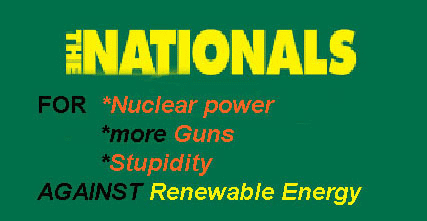
The Conversation, John Quiggin , Professor, School of Economics, The University of Queensland, May 20, 2025
Nationals’ leader David Littleproud has singled out nuclear energy as a key reason for his party’s spectacular split from the Liberals, as both parties seek to rebuild following the Coalition’s devastating election loss.
Speaking to the media on Tuesday, Littleproud said:
our party room has got to a position where we will not be re-entering a Coalition agreement with the Liberal Party […] Those positions that we couldn’t get comfort around [include] nuclear being a part of an energy grid into the future.
The junior partner had long held strong sway over the Coalition’s climate and energy stance, including the plan to build nuclear reactors at seven sites across Australia using taxpayer funds.
After public sentiment appeared to go against nuclear power during the election, the Nationals had reportedly been weighing up changes to the policy. It would have involved walking away from the plan to build reactors and instead lifting a federal ban on nuclear power.
But some quarters of the Nationals remained deeply wedded to the original nuclear plan. Meanwhile, Nationals senator Matt Canavan had called for the net-zero emissions target to be scrapped, and Nationals senator Bridget McKenzie insisted renewable energy was harming regional communities.
Now, with the Nationals unshackled from the binds of the Coalition agreement, the future of its energy policy will be keenly watched.
A graceful way out of nuclear
Littleproud on Tuesday did not confirm where exactly he expected the Nationals to land on energy policy. But he rejected suggestions his party was unwise to stick with the nuclear policy after the Coalition’s poor election result, saying public opinion had been swayed by a “scare campaign”.
Even if the Coalition had won the election, however, the policy was running out of time.
CSIRO analysis showed, contrary to the Coalition’s claims, a nuclear program that began this year was unlikely to deliver power by 2037. But up to 90% of coal-fired power stations in the national electricity market are projected to retire before 2035, and the entire fleet is due to shut down before 2040.Now, the earliest possible start date for nuclear is after the 2028 election. This means plugging nuclear plants into the grid as coal-fired power stations retire becomes virtually impossible.
This very impossibility provided the National Party with a graceful way out of the policy. It could have regretfully accepted the moment had passed.
With nuclear out of the picture, and coal-fired power almost certain to be phased out, that would have left two choices for the Coalition: a grid dominated by gas, or one dominated by renewables.
However, expanding gas supply frequently requires the controversial process of fracking, which is deservedly unpopular in many regions where it’s undertaken.
What’s more, gas is an expensive energy source which can only be a marginal add-on in the electricity mix, used alongside batteries to secure the system during peak times.
Logically, that would have left renewable energy as the only feasible energy policy option for the Nationals – but it wasn’t to be…………………………….
The Nationals’ hostility to renewables may in part be driven by pressure from anti-renewable activist groups.
The Institute of Public Affairs, for example, has sought to promote rural opposition to renewables and emissions reduction and focused its efforts on Nationals-held seats
And the now-defunct Waubra Foundation, named after the small town in northwest Victoria, opposed wind farms and claimed they caused health problems. The group was created by an oil and gas executive with no apparent links to the town…………………………………………………………………………..
Renewables can be good for the bush
Nationals Senate leader Bridget McKenzie last week said her party was concerned that renewable energy targets are “impacting rural and regional communities”. The party has long voiced concern about the impact of large-scale wind and solar projects in the bush.
However, many farmers and other rural landowners benefit financially from hosting solar and wind farms, which, in many cases, do not prevent the land from also being used for farming.
Concerns that wind farms and solar panels might slash the value of neighbouring properties have been shown to be ill-founded.
And importantly, the increasing frequency of extreme climate events is already a challenge to Australia’s agriculture sector and will become more difficult. Tackling the problem is in regional Australia’s interests.
The Nationals’ hostility to renewable energy comes at a cost to rural and regional Australians. But Littleproud clearly could not balance competing views within the Nationals on energy policy while inking a deal with the Liberals. Instead, the party will now go it alone. https://theconversation.com/david-littleproud-cites-nuclear-energy-disagreement-as-major-factor-in-coalition-split-256904
Treaty the planet’s best chance to get rid of its worst weapons
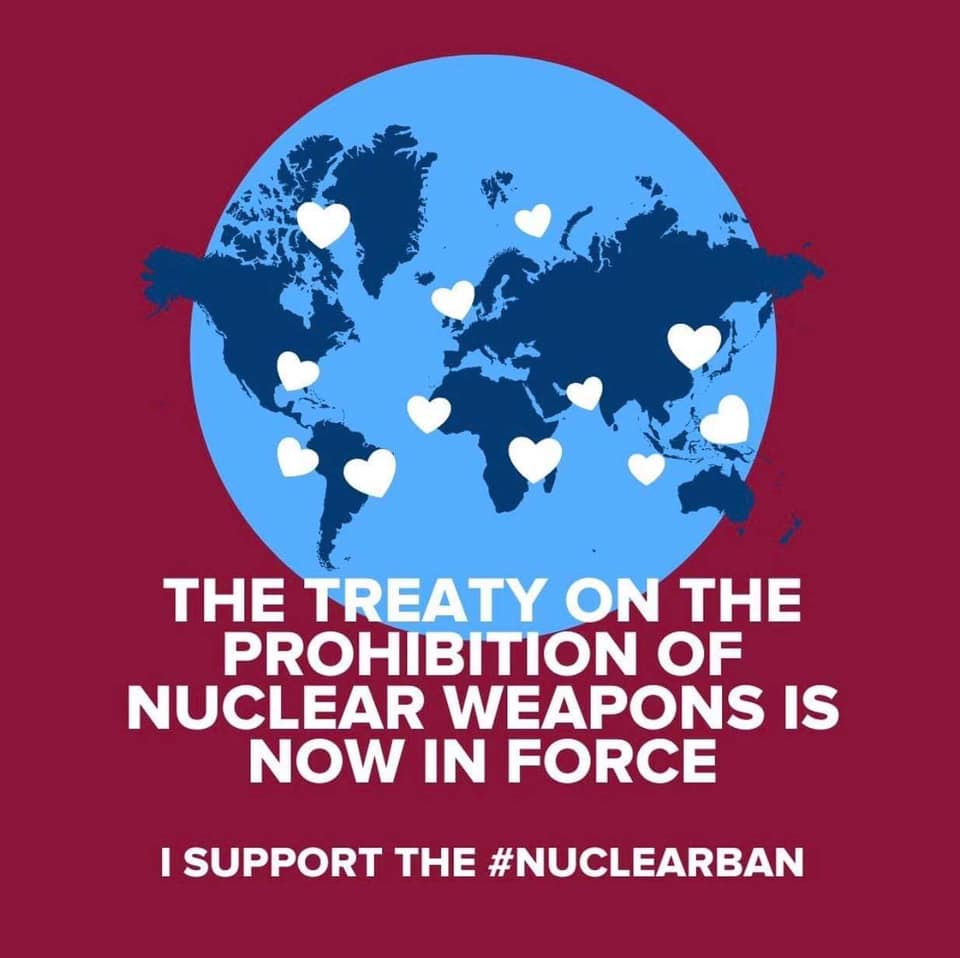
By Dave Sweeney | 19 May 2025, https://independentaustralia.net/politics/politics-display/treaty-the-planets-best-chance-to-get-rid-of-its-worst-weapons,19758
From Jakarta to the Vatican, Prime Minister Albanese’s journey underscores a global call to ban the world’s most destructive weapons, writes Dave Sweeney.
ON HIS FIRST overseas trip since his sweeping election victory, Prime Minister Anthony Albanese made for two very different destinations.
The first stop was steamy Jakarta, the capital of Indonesia, the world’s most populous island nation and home to the world’s largest Muslim population with around 240 million or 13 per cent of the globe’s believers.
After Indonesia, the PM switched time zones and belief systems and headed to the Vatican, the world’s smallest sovereign state in terms of area and population, and the (sacred) heartland of the Catholic faith.
These two places are very different worlds, with very different worldviews, but both have an active desire to protect our shared world from its most avoidable existential threat: nuclear war.
Prime Minister Albanese also holds this view.
In December 2018, he championed Federal Labor’s support for the newly adopted UN Treaty on the Prohibition of Nuclear Weapons (TPNW), stating:
“Nuclear weapons are the most destructive, inhumane and indiscriminate weapons ever created. Today we have an opportunity to take a step towards their elimination.”
The TPNW, adopted by the UN in 2017 with more than 120 nations voting in favour, grew from an Australian initiative by the International Campaign to Abolish Nuclear Weapons (ICAN).
ICAN was launched in Melbourne in 2007 and was awarded the 2017 Nobel Peace Prize in recognition of the group’s work ‘to draw attention to the catastrophic humanitarian consequences of any use of nuclear weapons’ and its ‘groundbreaking efforts to achieve a treaty-based prohibition of such weapons’.
The TPNW entered into force in January 2021, an act which has finally and formally seen nuclear weapons be declared unlawful under international humanitarian law.
Supporters of the TPNW have described the Treaty as our planet’s best way to get rid of its worst weapons.
The fragile and fractured global situation starkly highlights the urgency of this task.
Two nuclear weapon states, Israel and Russia, are actively involved in hot wars.
Two more, India and Pakistan, are engaged in risky posturing that could dramatically escalate, while two others, China and the United States, are shaping up for a trade war with hints of worse to come.
Against this grim background, the TPNW is a star that provides some light and hope and a navigation point to help chart a safer and saner course for our shared future.
Nations are embracing this path with half of the world’s countries having signed, ratified or acceded to the Treaty, including Indonesia and the Vatican/Holy See.
When it ratified the TPNW last September, Indonesia – a leading player in the global Non-Aligned Movement – made clear that ‘the possession and use of nuclear weapons cannot be justified for any reason’
Speaking at the time, then Foreign Minister Retno Marsudi posed the fundamental question and delivered the humane answer:
Should fear of nuclear weapons be our guarantee for peace? Indonesia’s answer will forever be no.
Indonesia reaffirms its commitment to a nuclear weapon-free world.
The late Pope Francis was a strong supporter of the TPNW and gave expression to the principle of “blessed are the peacemakers” with the Vatican’s championing and early adoption of the Treaty. The Pope described the very existence of nuclear weapons as “an affront to heaven”. In his final Easter Sunday sermon, shortly before he died, he made a powerful call for peace and weapons abolition.
These calls for nuclear abolition and for ways of addressing conflict that do not risk all that ever was, is or could be on our shared planet are finding a resonance and echo in many other nations.
Labor’s National Platform is clear:
Labor acknowledges the growing danger that nuclear weapons pose to us all and the urgent need for progress on nuclear disarmament.
Labor will act with urgency and determination to rid the world of biological, chemical and nuclear weapons.
Commits itself to redoubling efforts towards a world without nuclear weapons…
Labor in government will sign and ratify the Ban Treaty…
In this year that marks 80 years since the unveiling of the age of Armageddon with the first atom bomb test in New Mexico and the first atom bombings of the Japanese cities of Hiroshima and Nagasaki, it is time to turn a political platform into a prescription for a habitable world.
It is time for Australia to follow the example of Indonesia, the Vatican and many other nations and to show that the pen is mightier than the sword by signing the TPNW.
As they say, Prime Minister, when in Rome…
1 This month
To see nuclear-related stories in greater depth and intensity
– go to https://nuclearinformation.wordpress.com/


 Antinuclear