Australians recruited for Israel’s ‘weaponised aid’ project in Gaza
by Yaakov Aharon | Jul 1, 2025 , https://michaelwest.com.au/australians-recruited-for-israels-weaponized-aid-project-in-gaza/
A Melbourne company is recruiting Australians to work on a mysterious Israeli and American-backed aid project in Gaza. Could it be the infamous Gaza Humanitarian Foundation?
An ad posted by Claymore Personnel – named after an anti-personnel landmine – promises that successful candidates will “be looked after.”
Workers will have accommodation expenses in Israel covered, operate in American-led teams, and receive payment in US dollars.
While it remains impossible to verify exactly who Claymore is working with, the shortlist of aid agencies that fit Claymore’s description ranges from bad to worse.
There is precisely one self-described ‘aid agency’ thriving in Gaza right now, and that is the Gaza Humanitarian Foundation (GHF). Fogbow lags in a distant second place.
The Israeli and American governments back both agencies; both agencies rely on private security contractors to distribute aid; both agencies’ founders are American military and intelligence officials; both have been implicated in massacres at Gaza aid sites.
This month alone, at least 450 have been killed and 3500 injured while waiting for food at sites operated by GHF, a Mossad and CIA-backed front.
Looking for adventure?
Before GHF had begun its Gaza operations on May 27, it was already the subject of condemnation in a joint statement issued by aid agencies. The letter condemned GHF as “a dangerous and politicised sham” and “a blueprint for ethnic cleansing”.
Claymore posted ads on seek.com and on its official website on May 28, a day after GHF hit the ground. The first batch of recruits left for Gaza two weeks later.
Reports of massacres at sites of American-led aid projects did not dampen Claymore’s spirits. Its mission to recruit carried on throughout June, with the ad saying workers deployed to Gaza will have a “3-month contract with strong potential for multiple extensions”.
While most aid sites in Gaza were closing down, prospects for Claymore’s partners were expanding. “A large humanitarian distribution centre is now operating in Gaza”, Claymore’s ad said.
The recruitment agency sought Australian labourers, truck drivers, and forklift operators willing to work for low wages paid in USD ($3250-$6000 monthly). Successful candidates enjoyed full travel sponsorships. The ad on Claymore’s website assured applicants that there would be no police checks. The seek.com ad said otherwise.
On each workday, the workers would be provided with “secure transport” from Israeli accommodation to worksites at “secure zones” in Gaza.
MWM spoke to Senator Mehreen Faruqi, the Greens Spokesperson for International Aid, who condemned “any so-called ‘humanitarian’ effort that operates at the whim of the genocidal Israeli military”.
“I’m concerned that Australian companies appear to be inserting themselves into a brutal system where ‘aid’ is delivered at gunpoint, guarded by soldiers and private contractors, while starving Palestinians are forced to risk their lives just to access basic supplies.”
Chasing ghosts
Tracking yesterday’s leftover footprints at Bondi Beach is easier than following Claymore’s digital footprints.
The LinkedIn profile of the company’s sole director, Tanya Molloy, provides no information beyond her role at the small business, which was founded in 2023. Trusted aid agencies and union officials told MWM on background they were not aware of Claymore, nor of any project it may be associated with in Gaza.
The recruitment agency’s address is listed as CSS Partners, a small accounting firm in Keilor East, Victoria. MWM called CSS’s landline and asked to be put through to Claymore. The receptionist said they were not aware that Claymore had listed its address as CSS Partners, and that the company’s relations were with an accounting firm to a client.
An associate of MWM visited the address listed on government records as Claymore’s principal place of business in Altona North, Victoria.
“It is in a large, remote industrial area,” was the report back from the Altona North office. “There is no sign or even a number on a door. I think it’s empty.”
Playing mum against dad
Tanya Molloy lives with Claymore’s secretary, the American-born Calum McEwan, in a suburban Melbourne townhouse.
When MWM asked Molloy who Claymore was working with, she was coy.
“Claymore Personnel is a recruitment agency only — we are not involved in the political, logistical, or operational aspects of any aid delivery. We supply skilled workers for overseas roles, and once placed, our involvement ends. We’re not affiliated with any government, military, or aid organisation.”
Due to the sensitivity of the work and the well-being of those on the ground, I won’t be commenting further.”
Further statements by Molloy deny any association with GHF.
If nothing else, Claymore’s footsteps follow the lead of GHF, which also lists its address as an abandoned warehouse in Delaware, USA.
Text messages leaked to MWM raise doubts about Molloy’s firm assertion that Claymore has no association with GHF.
“The company the candidates will be working for is JK International – jkiglobal.com”, Calum McEwan said, in a response to a concerned humanitarian last month.
When the recipient of the texts asked McEwan if JK International works for GHF, McEwan responded “I don’t have this information.”
Claymore’s ad says it is “the only Australian contact point for this operation”, after being “personally engaged by [an] international logistics group”.
JK International is a global logistics and shipping company based in Tennessee, USA. Its business partners include the USA’s Department of Homeland Security and Customs Trade Partnership Against Terrorism, as well as Israel’s largest shipping company, Zim – a key player in the global weapons supply chain.
Supply and demand
Israeli Prime Minister Benjamin Netanyahu is wanted for arrest by the International Criminal Court for charges of war crimes, including ‘starvation of civilians as a method of warfare’.
Rather than heeding calls to obey international law, Israel has doubled down. Israel says it has no obligation to provide aid to Palestinians, given its allegations that Hamas steals aid at gunpoint and has infiltrated the United Nations.
Israel’s parliament passed sweeping restrictions on aid agencies working in Gaza. UNWRA and UNICEF were banned from delivering aid into the Occupied Palestinian Territory, in breach of orders issued by the International Court of Justice.
Any worker or organisation that has expressed the wrong political opinions will be refused entry by Israel. Background checks will ensure workers have never made statements that “delegitimise” Israel or question its identity as “a Jewish and democratic state” ($).
Each Palestinian who receives aid is also vetted to ensure they have no connections, according to Israel’s standards, to a Palestinian resistance group.
A government statement said these changes guarantee aid is distributed “in a manner aligned with Israel’s national interests”.
Funding criminal gangs in Gaza
Instead of trusted agencies, aid is increasingly provided by American private military contractors, as well as Israeli-backed gangs.
Earlier this month, Israeli opposition figure Avigdor Lieberman revealed that Mossad and the Ministry of Defence were arming and funding criminal gangs in Gaza. Further reports reveal security at GHF aid sites is provided by mercenaries from Safe Reach Solutions, a firm founded by former CIA officers.
These reforms weaponised aid to undermine Hamas on a grassroots level.
After reports that Israeli Forces massacred Palestinians at a GHF site in Rafah, Israel released footage that it claimed showed Hamas fighters were responsible. In fact, the footage depicted a different massacre, at a different GHF site, committed by Israeli-backed gangs as they stole aid.
Government declines to answer
Greens Senator Mehreen Faruqi called on the Albanese Government to “urgently clarify whether it has had any involvement in authorising or facilitating this project, and whether it has provided any diplomatic, logistical or intelligence support to Claymore Personnel or related actors.”
“DFAT has a clear responsibility to ensure any Australian-linked aid effort operates fully in line with international humanitarian law,” Faruqi said. “That includes not participating in a system where aid is used as a tool of control and oppression.”
Several international humanitarian law organisations cosigned a letter yesterday expressing concern about Gaza’s privatised “humanitarian” operators.
The letter issues a warning to all those involved with GHF — including states, companies, and contracted workers – of their potential liability for complicity in genocide.
MWM spoke to Lara Khider, acting executive director of the Australian Centre for International Justice, which was among the organisations that signed the letter.
“Any recruitment of civilians into areas of conflict or occupied territory must be approached with the utmost caution and transparency,” Khider said. “Particularly where international humanitarian law and the risk of complicity in grave breaches of international law may be engaged.”
“It is imperative that Australian nationals and entities exercise due diligence and avoid any involvement that could directly or indirectly support or legitimise unlawful conduct.”
Another government official told MWM that state funding is directed toward United Nations agencies, the Red Cross and the Red Crescent – but refused to answer if the government supported Claymore or its associates.
MWM asked the Department of Foreign Affairs and Trade (DFAT) if it was aware of – and approved – Claymore’s aid project.
To say DFAT dodged the question is to compliment it unfairly for showing grace and dexterity.
“Any Australian travelling overseas for employment should ensure they are not in breach of Australian law and follow all travel advice on Smartraveller,” a department spokesperson said.
To DFAT’s credit, Smartraveller is clearer in its profile on Gaza and Israel: “Do not travel.”
Shayne Chester contributed to research.
Interviewed Israeli soldiers claimed their commanders ordered them to shoot civilians collecting aid at GHF sites. The Military Advocate-General then instructed the IDF to investigate these reported war crimes.
The not-so-respectable (but true) nuclear news this week

Some bits of good news –
China is building the world’s largest national parks system. A new report from UNESCO shows that girls’ access to education has surged worldwide, with gender parity now in most regions.
Renewables and EVs are keeping the net zero dream alive, said experts
TOP STORIES . From Iran to Everywhere, We Live in Terror of the “Peaceful Atom Apocalypse”
Trump’s rap sheet is long, but this may top them all.
US didn’t destroy Iran’s nuclear programme: Here’s what new intel says – https://www.youtube.com/watch?v=wKOOtS_Vvak Trump Claims Iran Nuclear Sites ‘Totally Destroyed’—But That Clashes With Vance And Experts.
How the US and Israel Used Rafael Grossi to Hijack the IAEA and Start a War on Iran.
US State Department Spokeswoman Says Israel Is Greater Than America.
Plutonium Levels in Sediments Remain Elevated 70 Years After Nuclear Tests.
How Trump dumped the Ukraine war into Europe’s lap.
Climate. Wreckers, money woes and mutirão: 10 things we learned about Cop30 from Bonn climate talks. ‘It looks more likely with each day we burn fossil fuels’: polar scientist on Antarctic tipping points. As NATO Countries Pledge to Up Defense Spending, Will Food and Climate Security Have a Seat at the Table? Why do we pretend heatwaves are fun – and ignore the brutal, burning reality?
Noel’s notes. The nauseating spectacle of European leaders grovelling before Trump at the NATO summit.
AUSTRALIA Australian foreign policy is in the doldrums . A Vassal’s Impulse: Australia Backs US Strike on Iran.
Time for Australia to sign non-nuclear treaty -ALSO AT …..https://antinuclear.net/2025/06/28/time-for-australia-to-sign-non-nuclear-treaty/
Why is Australia Supporting the US Attack on Iran? Statement on military attacks on nuclear facilities in Iran.
Aukus will cost Australia $368bn- What if there was a better, cheaper defence strategy?.
NUCLEAR ITEMS
| ART and CULTURE. PATRICK LAWRENCE: ‘Completely & Totally Obliterated’ |
| ATROCITIES. Netanyahu Says It’s Antisemitic For Israeli Soldiers To Describe Their Own Atrocities.The Chris Hedges Report: Starvation and Profiteering in Gaza (w/ Francesca Albanese) – https://www.youtube.com/watch?v=wbakVaOGgOk&t=267s |
| ECONOMICS. The Five Percenters: NATO’s Promise of War. https://www.youtube.com/watch?v=K7hF3WzljRYEDF chief weighs asset sales as Paris pushes for new nuclear focus – ALSO AT https://nuclear-news.net/2025/06/26/1-b1-edf-chief-weighs-asset-sales-as-paris-pushes-for-new-nuclear-focus/ Policy Exchange launches its new high level international Nuclear Enterprise Commission today. |
| EMPLOYMENT. How Torness will decommission and what it means for jobs ALSO AT https://nuclear-news.net/2025/06/28/1-b-how-torness-will-decommission-and-what-it-means-for-jobs/ |
| ENERGY. Nuclear- a viable UK option? There are alternatives.. |
| ENVIRONMENT. Radiation risks from US strikes on Iran’s nuclear sites seen as minimal. |
| ETHICS and RELIGION. Three Blows Against Zionism in a Single Day. Meet the Israeli fanatic running Ted Cruz’s office. |
| MEDIA. New York Times Gave Green Light to Trump’s Iran Attack by Treating It as a Question of When. ‘They Cooked Up Their Own Intelligence’ Chris Hedges on Israel’s war on Iran – https://www.youtube.com/watch?v=a8dzL3biesA Why BBC editors must one day stand trial for colluding in Israel’s genocide. BBC chief downplays Britain’s military support for Israel. |
| OPPOSITION to NUCLEAR . Greenham Common women urge new generation to ‘rise up’ against nuclear threat Why Trump’s Golden Dome must be opposed – Bruce Gagnon & Dae-Han Song – https://www.youtube.com/watch?v=sxOoOA8fhi0. ‘Are we safe, if nuclear weapons are here?’: trepidation in Norfolk village over new jets. |
PERSONAL STORIES. The president who talks like a child |
POLITICS INTERNATIONAL and DIPLOMACY. Donald Trump dominated extraordinary NATO summit that saw European defence spending increase – NATO chief calls Trump ‘Daddy’.
Zelenskyy clings to NATO hopes as Trump meeting looms.
Trump claims ceasefire reached between Israel and Iran.
Why does the U.S. get to play nuclear cop?
Trump reiterates Iran nuclear talking points despite swirling questions.
US strikes on Iran’s nuclear sites ‘marks perilous turn’: Diplomacy must prevail, says Guterres.
| SAFETY.Trump’s “Unleashing Atomic Power” is Unhinged.‘Conspicuous’ Small Modular Nuclear Reactors need fresh police funding model, security expert warns.Canadian Coalition for Nuclear Responsibility’s recommendations opposing the proposed30-year operating licence extension for the Darlington Nuclear Generating Station (DNGS). |
| SECRETS and LIES. How Iran could build a bomb in secret – despite Trump’s $30bn offer. Why Limit Iranian Enrichment Peacefully When You Can Bomb Them Instead? Holtec: Criminality, Corruption, Incompetence, and Inexperience – (brief outline at https://nuclear-news.net/2025/06/24/2-b1-holtec-criminality-corruption-incompetence-and-inexperience/) Trump rejects leaked intelligence that says strikes did not destroy Iran nuclear programme. |
| TECHNOLOGY.The Unspoken Aspects of Iran’s Nuclear Program.EPR nuclear reactors are just not performing well at all – ALSO AT https://nuclear-news.net/2025/06/27/2-b1-epr-nuclear-reactors-are-just-not-performing-well-at-all/ Torness ideal for small modular nuclear reactor, says Britain Remade- ALSO AT https://nuclear-news.net/2025/06/28/1-b1-torness-ideal-for-small-modular-nuclear-reactor-says-britain-remade/ |
| URANIUM. Iran could resume enriching uranium within months, UN nuclear watchdog boss says. |
| WAR and CONFLICT. Why Israel caved quickly without achieving any of its war goals. “Midnight Hammer” – a Fordow’s Bunker Buster or just Busted [i] Strike Set Back Iran’s Nuclear Program by Only a Few Months, U.S. Report Says. War on Iran Is Fight for US Unipolar Control of World. War With Iran: Made in Britain? |
| WEAPONS and WEAPONS SALES.Iran Shows Us Why The US And Israel Should Not Be Allowed To Have Nukes. The Growing Nuclear Arsenals and Sharpened Rhetoric. Israeli, US bombing of Iran a failure of epic proportions. The US strikes on Iran will increase nuclear weapons proliferation. William Hague: Long term, this makes an Iran bomb likelier -ALSO AT https://nuclear-news.net/2025/06/26/1-b1-william-hague-long-term-this-makes-an-iran-bomb-likelier Did the US wipe out Iran’s nuclear programme? What researchers know. UK to purchase US jets capable of carrying nuclear weapons – ALSO AT ……https://nuclear-news.net/2025/06/26/1-b1-uk-to-purchase-us-jets-capable-of-carrying-nuclear-weapons/ |
A Vassal’s Impulse: Australia Backs US Strike on Iran

The Australian position, along a number of European states, also failed to acknowledge the General Conference Resolutions of the International Atomic Energy Agency (in particular GC(XIXI)/RES/444 and GC(XXIV)/RES/533) declaring that “any armed attack on and threat against nuclear facilities devoted to peaceful purposes constitutes a violation of the United Nations Charter, international law and the Statute of the Agency.”
29 June 2025 Dr Binoy Kampmark, https://theaimn.net/a-vassals-impulse-australia-backs-us-strike-on-iran/
The initial statement from Australian government sources was one of constipated caution and clenching wariness. Senator Penny Wong’s time as head of the Department of Trade and Foreign Affairs has always been about how things come out, a process unsatisfyingly uncertain and unyielding in detail. Stick to the safe middle ground and sod the rest. These were the cautionary words of an Australian government spokesperson on June 22: “We have been clear that Iran’s nuclear and ballistic missile program has been a threat to international peace and security.”
That insipid statement was in response to Operation Midnight Hammer, a strike on three nuclear facilities in Iran by the US Air Force, authorised by US President Donald Trump on June 22. With such spectacular violence came the hollow call for diplomatic prudence and restraint. There was an importantdifference: Tehran, not Israel or Washington, would be the subject of scolding. Iran would not be permitted nuclear weapons but jaw jaw was better than war war. “We note the US president’s statement that now is the time for peace,” stated the spokesperson. “The security situation in the region is highly volatile. We continue to call for de-escalation, dialogue and diplomacy.”
Within twenty-four hours, that anodyne position had morphed into one of unconditional approval for what was a breach of the United Nations Charter, notably its injunction against the threatened or actual use of force against sovereign states in the absence of authorisation by the UN Security Council or the necessity of self-defence. “The world has long agreed Iran cannot be allowed to get a nuclear weapon, and we support action to prevent this. That is what this is,” accepted Wong.
This assessment was not only silly but colossally misguided.It would have been an absurd proposition for the US to make the claim that they were under imminent threat of attack, a condition seen as necessary for a pre-emptive strike. This was a naked submission to the wishes of a small, destabilising and sole (undeclared) nuclear power in the Middle East, a modern territorial plunderer celebratory of ethnonational supremacy.
The Australian position, along a number of European states, also failed to acknowledge the General Conference Resolutions of the International Atomic Energy Agency (in particular GC(XIXI)/RES/444 and GC(XXIV)/RES/533) declaring that “any armed attack on and threat against nuclear facilities devoted to peaceful purposes constitutes a violation of the United Nations Charter, international law and the Statute of the Agency.”
Wong also misrepresented the circumstances under which Iran was told they could negotiate over their nuclear program, erroneously accepting the line from the Trump administration that Tehran had “an opportunity to comply”. Neither the US diplomatic channel, which only permitted a narrow, fleeting corridor for actual negotiations, nor Israel’s wilful distortion of the IAEA’s assessment of Iran’s uranium enrichment plans and prevarication, ever gave chance for a credible resolution.Much like the calamitous, unlawful invasion of Iraq in 2003 by a crew of brigand nations – the merry trio of US, UK and Australia stood out – the autopilot to war was set, scornful of international law.
Wong’s shift from constipated caution to free flow approval for the US attack, with its absent merits and weighty illegalities, was also a craven capitulation to the warmonger class permanently mesmerised by the villain school of foreign relations. This cerebrally challenged view sees few problems with attacking nuclear facilities, the radioactive dangers of doing so, and the merits of a state having them in the first place.
The US attack on Iran found hearty approval among the remnants of the conservative opposition, who tend tospecialise in the view that pursuing a pro-Israeli line, right,wrong, or murderous, is the way to go. Liberal Senator and former Australian ambassador to Israel, David Sharma, thought the Albanese government’s initial response “underwhelming and perplexing,” claiming that support for this shredding of international law “a straightforward position for Australia to adopt.” Sharma is clearly getting rusty on hislaw of nations.
His side of politics is also of the view that the attacked party here – Iran – must forgo any silly notion of self-defence and retaliation and repair to the table of diplomacy in head bowedhumiliation. “We want to see Iran come to the negotiating table to verify where that 400 kilos of enriched uranium is,” stated a very stern opposition home affairs minister, Andrew Hastie. “I’m very glad to see that Penny Wong has essentially endorsed our position and I’m glad we have bipartisanship on this.”
Australia’s response has been that of the weary poltroon. Little has been asked about Canberra’s standout complicity in assisting the US imperium fulfil its global reach when it comes to striking targets. The role of the intelligence signals facility in Pine Gap, cutely and inaccurately called a joint venture, always lends its critical role to directing the US war machine through its heavy reliance on satellite technology. Wong, when asked about the role played by the facility in facilitating the attacks on Iran, had little to say. Australian Prime Minister Anthony Albanese was also cold towards disclosing any details. “We are upfront, but we don’t talk about intelligence, obviously. But we’ve made very clear this was unilateral action taken by the United States.”
At least on this occasion, Australia did not add its forces to anillegal adventure, as it all too wilfully did in 2003. Then, Iraq was invaded on the spurious grounds that weapons of mass destruction not only existed but would somehow be used either by the regime of Saddam Hussein or fictional proxies he might eventually supply. History forever shows that no such weapons were found, nor proxies equipped. But the Albanese government has shown not only historical illiteracy but an amnesia on the matter. Unfortunately, it’s the sort of amnesia that has become contagious, afflicting a goodly number of Washington’s satellites, vassals and friendly states.
Three Blows Against Zionism in a Single Day

A court ruling in Australia, an election result in New York and a military setback for Israel, all coming on Tuesday this week, signaled a serious turn of events for Zionism and its supporters, writes Joe Lauria.
By Joe Lauria, Consortium News, https://consortiumnews.com/2025/06/26/three-blows-against-zionism-in-a-single-day/
The impunity with which Zionism invades and bombs its neighbors and shuts up its critics in Western nations was thrown into question perhaps as never before on Tuesday as Zionism suffered a legal, a political and a military defeat all in one day.
A Military Defeat in the Morning
On Tuesday morning Washington time, President Donald Trump announced that Israel and Iran had agreed to a cessation of hostilities after an 11-day war that saw Israel seriously deplete its air defenses, undermine its economy and suffer the worst damage from enemy fire in memory.
A war that Israel — and especially its prime minister Benjamin Netanyahu — had lusted after for three decades had finally been launched. Netanyahu at last found an American president willing to join him in unprovoked aggression against Iran to extend Israel’s regional dominance well beyond the Jordan River.
That would require the destruction of Iran’s nuclear enrichment program and the overthrow of the Iranian government to be replaced by a puppet regime led by Israel and the United States.
Instead, Israel had to cut short the operation despite U.S. involvement because it was not going to plan. U.S. intelligence says the so-far merely civilian nuclear program was only set back a few months and the Iranian government has never been made more secure.
As it touts itself as the most invincible (and “moral”) army, the failure to achieve its goals in Iran and the physical damage it took from Iranian missile and drone attacks makes what just transpired a humiliating military defeat for Zionism.
And though U.S. presidents have privately groused about Israeli leaders before, never has Israel been cursed out before in public by a president, as Trump did on Tuesday morning.
A Legal Defeat in the Evening
Then at 8:15 pm Tuesday, U.S. East Coast time (10:15 am Wednesday in Australia), a federal judge in Sydney found the courage to stand up to the organized thuggery of Zionist lobbies by ruling that the Australian Broadcasting Corporation (ABC) had succumbed to intense pressure from Israel lobbyists to sack a radio presenter because she shared an instagram post from Human Rights Watch which accurately reported that Israel was using starvation as a weapon of war.
That is the exact charge formally leveled in Netanyahu’s arrest warrant issued by the International Criminal Court (ICC). The Australian judge ruled that the presenter, Antoinette Lattouf, was wrongly dismissed and that the ABC must pay her restitution.
Judge Daryl Rangiah said the ABC had “appease[d] … pro-Israel lobbyists” because Lattouf “held political opinions opposing the Israeli military campaign in Gaza.” Rangiah said that “the complaints [to the ABC] were an orchestrated campaign by pro-Israel lobbyists to have Ms Lattouf taken off air.”
ABC managing director Hugh Marks apologized to the public on air, saying, “Any undue influence or pressure on ABC management or any of its employees must always be guarded against.”
It was a major setback for a powerful Israel Lobby in a Western nation. These lobbies have been untouchable until now no matter what underhanded tactics they employ to create cover for genocide and wars of aggression by smearing and silencing legitimate critics of Israel.
A Political Defeat in the Night
Still on Tuesday, at around 11 pm in New York City, a Muslim politician who has vowed to arrest Netanyahu based on the ICC warrant if he steps foot in the city while he is mayor, defeated a Democratic Party machine politician in the party’s primary election for mayor.
Despite being repeatedly smeared as an anti-semite, Zohran Mamdani has refused to renounce his strong support for Palestinians, including refusing to retract his labelling of Israel’s war on Gaza “genocide.”
Mamdani’s electoral victory has incensed Zionists everywhere, setting off gnashing of teeth. “NY Democrats have fully embraced Marxism, antisemitism, anti-capitalism, and sheer insanity,” said fanatical Zionist Congresswoman Elise Stefanik. U.S. Rep. Mike Lawler called Mamdani “a radical, antisemitic socialist.”
The election result shows that a sizeable number of voters in the city with the largest population of Jews after Tel Aviv don’t care anymore about the taboos constructed and enforced against criticizing Israel. Israel has their live-streamed genocide to thank for that.
A Beginning, Not an End
Anyone of these events alone would signify a momentous turning of the tide against decades of built-up injustice committed by Israel and its lobby. The baseless smears of anti-semitism are losing their effect. The image of an all-powerful Israeli military is tarnished.
June 24, 2025 may be seen as the day in which fear of Israel was overcome on a scale not seen before. There is a long road ahead filled with enormous obstacles, but this day could usher in an era in which Israel and its enablers are at last held accountable for their many crimes.
Joe Lauria is editor-in-chief of Consortium News and a former U.N. correspondent for The Wall Street Journal, Boston Globe, and other newspapers, including The Montreal Gazette, the London Daily Mail and The Star of Johannesburg. He was an investigative reporter for the Sunday Times of London, a financial reporter for Bloomberg News and began his professional work as a 19-year old stringer for The New York Times. He is the author of two books, A Political Odyssey, with Sen. Mike Gravel, foreword by Daniel Ellsberg; and How I Lost By Hillary Clinton, foreword by Julian Assange.
‘It looks more likely with each day we burn fossil fuels’: polar scientist on Antarctic tipping points

Despite working on polar science for the British Antarctic Survey for 20 years, Louise Sime finds the magnitude of potential sea-level rise hard to comprehend. Up until 2016, the sea ice
in Antarctica seemed relatively stable. Then everything started to change.
At first, the decline was mostly in line with climate models.
But suddenly, in 2023, there was an enormous drop. About 2.5 million sq km of Antarctic
sea ice went missing relative to the average before 2023. The anomaly was
of such a magnitude that it’s quite hard for scientists to know what to
make of it. It has been described as a five sigma event.
The potential for Antarctica to increase global sea levels is scarier than for Greenland.
Right now, they’re both contributing similar amounts to sea-level rise,
but in future, it could be Greenland goes up a bit and then Antarctica goes
up catastrophically. Greenland has the potential to raise sea levels by
five or six metres, but we don’t expect this will come in the form of an
absolutely catastrophic, abrupt loss. Most of the ice in Greenland is not
below sea level so we can see what is happening and we expect it will melt
in a linear fashion.
By contrast, Antarctica has 80 metres of potential
sea-level rise. We don’t expect all of that, but it is harder to know
exactly what is happening.
Guardian 27th June 2025, https://www.theguardian.com/environment/ng-interactive/2025/jun/27/tipping-points-antarctica-arctic-sea-ice-polar-scientist
Time for Australia to sign non-nuclear treaty
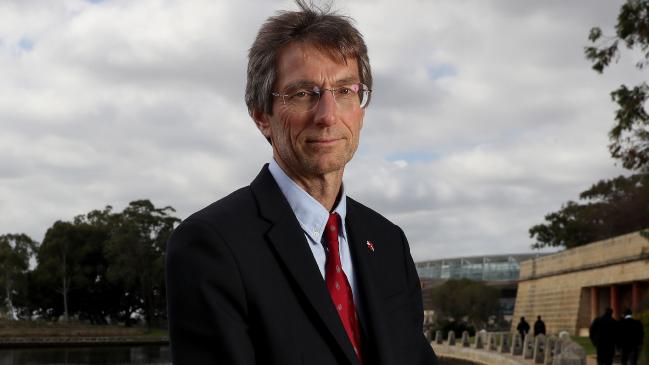
Tilman Ruff says support for the “illegal and unwarranted” US military action in Iran has damaged Australia’s global reputation, and ratifying the treaty would help to repair its credibility.
The Australian co-founder of a Nobel Prize-winning advocacy group says it is time for Labor to honour its promise, while in opposition, to ratify the UN’s nuclear weapons ban treaty.
The Saturday Paper, By Kristina Kukolja, 28 June 25
Australia has long been at the forefront of global efforts towards the containment of nuclear threats. Now, in the wake of the American military strikes on Iran, the International Atomic Energy Agency says the global nonproliferation system is on the brink of collapse. Australian campaigners are calling on the government to step up its advocacy for nuclear disarmament.
“It’s an alarmingly dangerous time – the nonproliferation regime is under severe threat,” says Dr Tilman Ruff, who is co-founder of the International Campaign to Abolish Nuclear Weapons (ICAN), a Nobel Prize-winning advocacy group founded in Australia.
He calls the United States attack on Iran a “frightening escalation” that dealt a “body blow to the peaceful nonproliferation regime … which was already in a parlous state”.
Ruff says Australia must urgently show it is serious about nuclear disarmament by signing and ratifying the Treaty on the Prohibition of Nuclear Weapons (TPNW). Now in its second term, the Labor government has yet to act on a commitment it made while in opposition to sign and ratify the treaty. Ruff is concerned the US is putting pressure on the Albanese government not to sign. He says ICAN has been told that ratification of the treaty hasn’t been raised in cabinet, and it must be. “The issue needs prime ministerial leadership,” Ruff says.
“The reasons for the delay are American pressure and the displeasure that the US would indicate when Australia does this.”
He says support for the “illegal and unwarranted” US military action in Iran has damaged Australia’s global reputation, and ratifying the treaty would help to repair its credibility.
“Australia joining the TPNW would be of global significance, especially if it became the first nuclear weapons supporting and assisting ally of a nuclear-armed state to do so. It would be the most effective way we could support peace and nuclear disarmament, prevent nuclear war and reinforce the rule of law.”
Australia has maintained a strong bipartisan nuclear nonproliferation stance for decades. The Whitlam Labor government established the Australian Safeguards and Non-Proliferation Office (ASNO) more than 50 years ago. It was a Coalition foreign affairs minister, Alexander Downer, who took the test ban treaty to the United Nations General Assembly in 1996, and Australia now has the third-biggest network of stations monitoring for signs of nuclear testing in the world…………………………………………………………………….
Australia’s decision to join AUKUS has raised questions in the Pacific about its ability to meet its own obligations, as a signatory to the South Pacific Nuclear Free Zone Treaty, also known as the Treaty of Rarotonga.
“Pacific peoples feel a great sense of betrayal from what Australia did,” says Fiji-based Epeli Lesuma, a demilitarisation campaigner with the Pacific Network on Globalisation.
“Australia uses a term in Fiji called the ‘Vuvale’ partnership, which means ‘family’. ‘Vuvale’ and ‘Pacific family’ are thrown around by people in Canberra, but the sentiment behind it is hollow – particularly when you think about what Australia did with AUKUS.”
Lesuma says AUKUS is a danger to the Pacific because it will potentially bring nuclear-powered submarines into the region and has pushed island nations into the geopolitical competition between the US, China and Australia.
“The Australian government chose to betray all of us by exposing us to greater nuclear risk and nuclear violence, submarines cutting through the Pacific Ocean – creating a bigger target on our backs.”
“There is no trust,” agrees Samoan-born Maualaivao Maima Koro, a Pacific security expert at the University of Adelaide. She says Pacific nations are looking to Australia for leadership on nuclear issues, in a region that – decades on – is still living with the health and environmental harms of nuclear testing by France, Britain and the US.
“Pacific leaders have the view that Australia will step up because it is the country that can. It is the country with the means, alliances and exposure to do so,” says Koro.
“The idea of Australia’s responsibility to the Pacific Islands Forum is that you can advocate for the interest of the region – but it’s not happening. Pacific Island states want Australia to commit to the Rarotonga treaty and uphold it.” https://www.thesaturdaypaper.com.au/news/defence/2025/06/28/time-australia-sign-non-nuclear-treaty
Australian foreign policy is in the doldrums
Withdrawing from the ANZUS alliance will have to be managed carefully and determinedly. It requires explaining carefully and patiently to Australians how costly the alliance has been, and continues to be. Not the least of these costs has been lives lost and personnel physically and mentally wounded due to past politicians’ ignorant backing of America’s wars.
America is in terminal decline as a great power. Its end is well and truly in sight.
Allan Patience, June 27, 2025 , https://johnmenadue.com/post/2025/06/australian-foreign-policy-is-in-the-doldrums/
Opinion polls indicate Australians are at last waking up to the fact that their country’s security reliance on Trump’s US is no longer tenable.
Indeed, it never has been. A complete foreign policy overhaul is now urgently needed. But Australia’s foreign minister is dithering. Is she not up to the task?
Penny Wong may go down as one of of the great disappointments in Australia’s foreign policy history – a history which itself is as disappointing as it is long. Her formulaic call for “de-escalation, dialogue and diplomacy” in response to the Iran-Israel conflict is a trilogy of words that mean nothing. Despite Trump’s contempt for the US’ allies, she continually mouths the tired old refrain that America is our most important global ally. Her plaintive defence of the AUKUS deal is not only unconvincing, but crazy mad. That Australia was kept out of the loop when Trump decided to unleash the B-2 stealth bombers on Iran’s nuclear sites is proof of the insignificance Washington places on its naïve Aussie ally.
Senator Wong’s greatest mistake has been her failure to steer the country towards a confident and independent role in regional and global affairs. She shows no interest in laying the groundwork to help her fellow Australians understand that it’s time for the country to embark on a new path towards that independent status. Such a challenge is not going to be easy; it calls for statesmanship of the highest order and leadership of the highest calibre. Increasingly, it seems, Senator Wong lack both of these attributes.
True independence would be a bold step for Australia to take, but it can no longer be delayed. Reliance on America, or any other “great and powerful friend”, is a thing of the past. We need reminding that it has led to the country’s involvement in conflicts that it should have steered well clear of – involvements which at the time were justified by ideologically-blinkered politicians and media interests to demonstrate craven fealty to the US alliance. And lest we forget, none of those conflicts have ever achieved their stated aims.
Withdrawing from the ANZUS alliance will have to be managed carefully and determinedly. It requires explaining carefully and patiently to Australians how costly the alliance has been, and continues to be. Not the least of these costs has been lives lost and personnel physically and mentally wounded due to past politicians’ ignorant backing of America’s wars. Australians urgently need to be educated about the real and present dangers that the alliance with America now poses for the country, not only because of Trump’s unpredictability and bullying, or because of the demands for increasing Australia’s defence budget by the much tattooed Pete Hegseth, but because America is in terminal decline as a great power. Its end is well and truly in sight.
Meanwhile, Senator Wong faithfully toes the government’s propaganda lines that the incorrigible AUKUS plan is important and achievable, and that the ANZUS alliance is in good shape. Her commentaries on what is happening in the world are shallow and unconvincing. A wide sector of the very brightest academic and policy commentators have made clear how ridiculous AUKUS is, yet Senator Wong thumbs her nose at them, while lamely parroting Richard Marles’ line, that AUKUS is in Australia’s best security interests. Many people — including many rank and file Labor members — heartily disagree. Does she know this? Does she care?
Nor has the Senator articulated a vision for Australia’s foreign policy future. She demonstrates little interest in what younger Australians think about how their country should be positioning itself in its region and globally. This, at a time when there should be informed and intelligent public discussions about the parlous state of the ANZUS treaty with the US. These discussions should include canvassing a range of post-ANZUS alternatives before Trump (or his successor) pulls the plug on the whole deal.
There is no sign that Senator Wong, or anyone else in the Albanese go-slow government, has an inkling about what post-ANZUS options Australia should be considering. They obviously don’t have the intellectual wherewithal to think about such a challenge. They believe that abject obeisance to Uncle Sam is all we need as the foundation of the country’s security policy. That view passed its use-by date decades ago. Does Senator Wong not see this?
The first plank of a post-ANZUS Australian foreign policy has to be an understanding of the fact that China is now undeniably a great power in the country’s region. It is “great and powerful”, but will not be a friend if it is mindlessly provoked (as it was by the Morrison Government during the COVID crisis). It has both the economic and military power to demand that its presence be respected, no matter how disagreeable this may be at the time. This means Australia’s foreign policy response to China must bypass the China hawks in the parliament, in the Murdoch media, and in the bureaucracy. Relations with China — our major trading partner — need to be handled with infinite care by diplomats and politicians who have a deep understanding of the language, history, culture and politics of the country. This means facing up to the fact that the Chinese state is now the major force that has to be reckoned with in the Asia Pacific, that America is simultaneously retreating and declining in the region, and that it is in Australia’s national interest to negotiate. and carefully manage, a mutually beneficial quid pro quo relationship with Beijing.
Of course, Australia can’t do this on its own. To achieve a balanced and sensible relationship with China will require developing regional networks and alliances with neighbouring states that have similar diplomatic and security interests. Nostalgia for ties with Britain and Europe has to be recognised for the immature and regressive nonsense that it is. And any residual sentimental ties with America have to be recognised for what they are – mere sentimentality.
Modern Australia’s great challenge today is to truly integrate itself into its geopolitical region through education (first and foremost), trade, diplomacy, cultural exchanges, security alliances, regional organisations and, above all, with humility and sensitivity. There is no evidence that Senator Wong is either interested in, or has the capacity to articulate such an approach. Nor do Albanese or Marles. Australia needs a new generation of political leaders who can formulate and put into action a considered and peace-oriented regional and global role for the country.
Dr Allan Patience is an Honorary Fellow in the School of Social and Political Sciences in the University of Melbourne.
Why Voters Reject Richard Marles US War
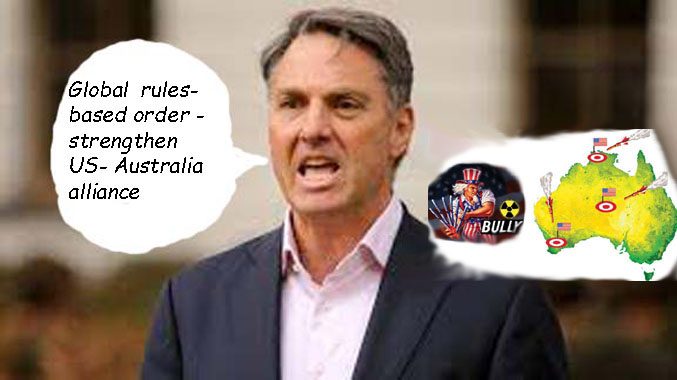
27 June 2025 AIMN Editorial By Denis Hay
Description
Richard Marles US war has anti-war voters turning against him. Learn why peace, sovereignty, and democracy are at stake in 2028.
Introduction
Darwin, 4:42 a.m., June 2025. KC-46 tankers lift off from RAAF Base Darwin, refuelling U.S. bombers returning from a strike on Iranian nuclear sites. Veteran Ron McKinnon, 71, stares from his porch. “Here we go again,” he mutters, haunted by his service in Iraq.
Just hours later, Defence Minister Richard Marles appears on ABC News: “Australia stands shoulder to shoulder with our ally.” Foreign Minister Penny Wong echoes him. But the public mood is shifting fast, as concerns over the Richard Marles US war agenda grow louder.
Agitate: The Iran strike has deepened fears of entanglement in endless U.S. wars.
Solution: Voters now demand a sovereign, peaceful defence policy – and they’re ready to make it an election issue.
PROBLEM – Public Trust Collapse Over U.S. Military Alignment
1. Polls Signal a Sea Change
• 40% of Australians now believe we should distance ourselves from the U.S. (Lowy Institute, 2025)
• Only 26% say we should follow the U.S. into military conflicts.
• 74% oppose involvement in a future war with Iran or China, reflecting a growing rejection of the Richard Marles US war direction.
2. The Trigger: Iran Strike
Australia’s support for the June 2025 U.S. strike on Iran shocked many voters. While the government called it a “measured response,” Australians viewed it as another unjustified conflict.
3. Personal Voices
Ella Tait, an ICU nurse from Newcastle, recalls messaging her brother at RAAF Tindal: “Are you being deployed?” He didn’t reply for hours. Online, #MarlesWarMachine trended as thousands shared anti-war posts.
“We save lives in hospitals, not bomb people across the world,” Ella said.
4. Strategic Concerns
• Pine Gap may have been used to assist the Iran targeting
• Darwin and Tindal bases make Australia a first-strike target in future retaliations
• Experts warn Australia’s role in U.S. wars increases – not decreases – our risk
Consequences of Following the U.S. War Machine
1. Economic Trade-Offs
• AUKUS subs will cost taxpayers $368 billion over 30 years
• Meanwhile, public housing, health, and disaster funding suffer under the financial burden of the Richard Marles US war priorities.
• Australia’s dollar sovereignty means we don’t need to choose war over welfare, but our leaders are
2. Voter Backlash
• Greens, Teals, and Independents have made “Peace Vote” pledges
• In 18 marginal electorates, candidates are calling for War Powers reform
• Many voters say: “If Marles won’t represent peace, we’ll find someone who will”, a clear repudiation of the Richard Marles US war stance.
3. Moral Injury
Every new conflict escalates demand for veterans’ services.
• Defence-linked trauma spikes 19% during combat support operations
• Public sympathy for veterans turns into public anger at those who sent them
“It’s not anti-troop to be anti-war,” says veteran Ron. “It’s anti-stupidity.”
A Peace-First Defence Strategy
1. Use Australia’s Monetary Power for Peace
As a sovereign currency issuer, Australia can fund:
• Fire & flood resilience
• National mental health services
• Cyber defence and coastal radar
No foreign wars required.
2. Model Countries
• Costa Rica abolished its military in 1948 and outperforms neighbours on education & health
• Austria maintains military neutrality and invests heavily in civil defence
• Ireland avoids entangling alliances yet contributes to UN peacekeeping missions, offering a powerful contrast to Richard Marles US war framework.
3. A Legislative Blueprint
A new, independent body could investigate and publicly review Pine Gap’s involvement in past conflicts such as the Iraq and Iran strikes, both tied to Richard Marles US war alignment.
Peace Policy Roadmap: A legislative alternative to Richard Marles US war approach, focused on sovereignty, diplomacy, and the public good.
• Defence of Australia Act – Bans combat beyond 1,000 nm (1,852 km) without a referendum
• War Powers Tribunal – Reviews Pine Gap’s role in Iraq & Iran
• Universal Housing & Health Fund – Redirect defence funds toward social programs
• Pacific Peace Office – Expands diplomacy and soft power in the region
Voter Toolkit
TheyVoteForYou.org.au – Track MPs’ war‑powers votes…………………………………………………………………https://theaimn.net/why-voters-reject-richard-marles-us-war/
Plutonium Levels in Sediments Remain Elevated 70 Years After Nuclear Tests
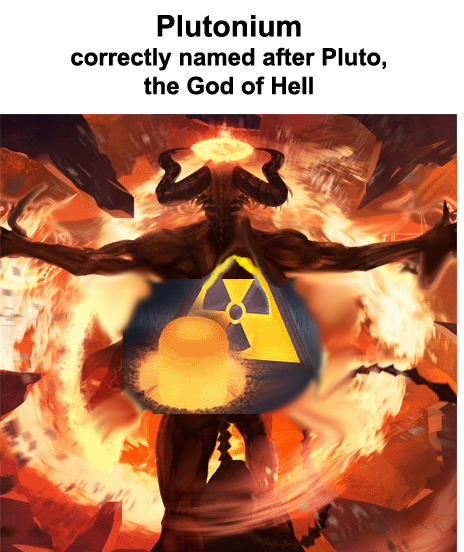
June 24, 2025,
https://www.marinetechnologynews.com/news/plutonium-levels-sediments-remain-650328
Researchers from Edith Cowan University (ECU) in Australia have confirmed plutonium levels in sediment up to 4,500 times greater than the Western Australian coastline.
Three plutonium-based nuclear weapons tests were conducted at the Montebello Islands in the 1950’s, which introduced radioactive contamination to the surrounding environment. The first nuclear test, coded Operation Hurricane, had a weapon’s yield of some 25kT, and formed a crater in the seabed, while the second and third tests, dubbed Operation Mosaic G1 and G2, had weapons yields of around 15kT and 60kT, respectively.
The three tests released radioactive isotopes including plutonium, strontium (90Sr) and caesium (137Cs) into the surrounding marine environment.
“Plutonium is anthropogenic, which means that it doesn’t exist on its own in nature. The only way it is introduced into an environment is through the detonation of nuclear weapons and from releases from nuclear reprocessing plants and, to a lesser extent, accidents in nuclear power plants,” said ECU PhD student and lead author Madison Williams-Hoffman.
“When plutonium is released into a coastal setting in the marine environment, a significant fraction will attach to particles and accumulate in the seabed, while some may be transported long distances by oceanic currents.”
The region is not inhabited by humans and has not been developed, however it is visited by fishing boats, so collecting data on the levels of contamination in the marine environment is important.
Currently, the protected island archipelago and surrounding marine areas also reside within the Montebello Islands Marine Park (MIMP). The MIMP is ecologically significant due to the presence of numerous permanent or migratory species, and its high-value habitat is used for breeding and rearing by fish, mammals, birds and other marine wildlife.
The water and sediment quality within the MIMP are currently described as ‘generally pristine’, and it is fundamental to maintain healthy marine ecosystems in the region.
The concentrations of plutonium at Montebello Islands were between 4 to 4,500 times higher than those found in sediment from Kalumburu and Rockingham from the Western Australian coastline, with the northern area of the archipelago, close to the three detonation sites, having four-fold higher levels than the southern area.
The concentrations of plutonium found in the sediment at Montebello Islands were similar to those found in the sediment at the Republic of Marshall Islands (RMI) test sites, despite 700-fold higher detonation yields from nuclear testing undertaken at RMI.
Plutonium is an alpha emitter so, unlike other types of radiation, it cannot travel through the skin and is most dangerous when ingested or inhaled.
The research was undertaken by Williams-Hoffman, under the co-supervision of Prof. Pere Masqueand at ECU and Dr Mathew Johansen at ANTSO.
Trump’s rap sheet is long, but this may top them all

The International Atomic Energy Agency (IAEA) has not blown the whistle as claimed by the Australian government, nor has the UK or our European allies.
any resolution to condemn the bombing of Iran will be vetoed by the US , presumably with the support of Australia
The Age, Geoffrey Robertson , 24 June 25, – (print version)
Although few may bother to point this out, Trump has just committed a crime much worse than all the others on his rap sheet.
It is the war crime of aggression- the “supreme” war crime, according to the judgement at Nuremberg. It is constituted by using armed force against a felloe United Nations member with such “character, gravity and scale” that it violates the UN charter prohibition on one member country attacking another. A “spectacular military success, the bombing of Iran’s nuclear facilities may have been, but it was, as a matter of international law, no different from Russia’s attack on Ukraine, or the George W Bush Tony Blair, John Howard invasion of Iraq. These a all cases of a breach of the world order agreed after the last war and likely to encourage emulation.
This is not about saving Iran, or the danger of making Putin look better. If any government in the world deserves to be destroyed, it is the mullahs without mercy in Iran. Many of them were involved in the mass slaughter of political prisoners in1988 – the worst crime against POWs since the Japanese death marches. – and ever since their record of killing peaceful protestors, women and dissidents has been disgusting. Iran has bankrolled terrorist organisations and wagedpropaganda wars against the Big (US) and Little (UK) Satan, but it has not invaded Israel or done anything to America to justify its aggression.
Were some hypothetical war crimes court ever to get its hands on Israeli Prime Minister Benjamin Netanyahu, it would reduce his sentence by taking Iranian provocation into account – but the man would still be guilty as charged. He could not argue self-defence, which requires the threat defended against to be reasonably proximate. The threat of Iran building and using nukes is much further away than the threat of Israeli submarines, said to be already stationed within range of Tehtan.
It is not even clear that Iran is close to building a nuclear weapon – several dozen countries also signatory to the nuclear weapons treaty by which they forswear any such development. could build nukes within a few months. The International Atomic Energy Agency (IAEA) has not blown the whistle as claimed by the Australian government, nor has the UK or our European allies.. And just like Saddam Hussein’s “weapons of mass destruction” there is no reason to think Iran has completed a project that in fact started under .the Shah in the 1970s.
Only last wee, Trump said in effect to the Ayatollah, in the tone of a gangster “Wee know where you live”, but he promised the cleric he would be safe “for now” and gave him two weeks. He bombed three days later (This is a man on whose word Australia has just made a down payment for AUKUS).
The true disaster of Trump’s attack is that it is another nail in the coffin of the rules-based world order that provided some protection for international pdeace and security since it was put in place in 1945.
It is now unfit for its purpose declared in the UN Charter to stop the slaughter of war. The General Assembly is a talking shop, while all power resides in the permanently poleAxed Security Council which cannot function because of the big power veto.
Resolutions for peace in Ukraine are vetoed by Russia, for peace in Gaza they are vetoed by America on behalf of Israel, and any resolution to condemn the bombing of Iran will be vetoed by the US , presumably with the support of Australia.
Besides, the problem with Iran goes beyond nuclear weapons. It’s a conflict between the rights of its people and the wrongs of its dictatorship. That is a conflict that only its people can resolve, however much the West may wish to help.
Trump has already made a mockery of US law, from which his Supreme Court has declared him immune. Hewill now make a mockery of international law, roo.
Geoffrey Robertson KC is an expert in international and human rights law. He is the author of Mullahs Without Mercy and Crimes Against Humanity.
Why Trump’s Golden Dome must be opposed – Bruce Gagnon & Dae-Han Song
19 Jun 2025
In January 2025, Donald Trump signed an executive order directing the US armed forces to construct a missile defense system – the ‘Golden Dome’ – a proposed multi-layer defense system, comparable to the Iron Dome system in Israel. It aims to place and maintain space weapons orbit, for the first time in history.
The proposed system will be exorbitant. According to US Congress sources it could cost several trillion dollars. This would require the US to cut every one of its remaining social programs. Such a military system would inflict ever more damage to the environment both on and around our planet.
Trump wants such a system, so that the US can launch a nuclear attack on another nuclear armed country and the US be confident that it has sufficient defenses to reduce the impact of any retaliatory missiles launched against US to levels deemed acceptable to US military planners. As the US advances its war drive, it is developing its military alliances with other countries and locking them into its war preparations.
Military coordination is being stepped up with increased ‘interoperability’ of hardware. In these alliances, such as NATO, it is always the US that is ‘in charge of the tip of the spear’.
Bruce Gagnon, in discussion with Dae-Han Song, explains why the proposed Golden Dome should be opposed. Bruce Gagnon has been organizing to stop the new arms race in space (Star Wars) since 1982. He began by coordinating the Florida Coalition for Peace and Justice from 1983-1998. During those years, in 1992, he co-founded the Global Network Against Weapons & Nuclear Power in space that he now coordinates. Bruce began his organizing career working for the United Farm Workers Union. He is a Vietnam war era veteran. He lives in Brunswick, Maine.
Website of The Global Network Against Weapons & Nuclear Power in Space: https://space4peace.org/ The petition against the Golden Dome is here: https://space4peace.org/global-networ… Dae-Han Song is a part of the International Strategy Center and the Korea Policy Institute. He is a member of the international No Cold War collective.
The nauseating spectacle of European leaders grovelling before Trump at the NATO summit.
https://theaimn.net/the-nauseating-spectacle-of-european-leaders-grovelling-before-trump-at-the-nato-summit/ 27 June 2025
“I May Vomit”
Those are the immortal first words spoken by the man arriving in “Man Who Came to Dinner” – in the classic 1939 play by George S. Kaufman and Moss Hart. Why did this come to my mind as I watched the evening news tonight?
Oh yes – I just felt like that man, as I learned how , one after another, these pathetic sycophants, including Australia’s Deputy Prime Minister Richard Marles, dutifully bowed and scraped before the Donald Deity, – (as they promised to buy ever more weapons from American manufacturers.) By the way, Trump snubbed NATO’s Indo-Pacific partners, which includes Australia. But Australia’s getting used to accepting being snubbed by Trump and his war-mongering lackey, Pete Hegseth.
The ABC’s Europe Correspondent, Elias Clure, might have felt a bit the same way, as he reported on the meeting:
“Donald Trump was given a royal welcome by the monarch of the Netherlands as he arrived at the NATO summit in The Hague. He left feeling like a king.
Member nations agreed to lift their defence spending to 5 per cent of GDP over 10 years and Mr Trump was quick to take credit, describing it as a “big win” for the United States.……………………………… the event, which aims to hear from delegations of the 32 NATO countries and many more partners and allies, seemed to revolve around the presence of one man.”
Clure went on to describe the gushing of the NATO Secretary-General. Mar Rutte, who was fulsome in his praise of America’s bombing in Iran:
” – the signal it sends to the rest of the world that this president, when it comes to it, yes, he is a man of peace, but if necessary, he is willing to use strength”
So – we all think it’s beaut that America decided to bomb Iran’s nuclear sites – bombing being apparently a great way to get peace? I mean – all this is, as Richard Marles loves to tell us, to preserve the “global rules -based order”
But do these pathetic flunkeys in their tax-payer funded jobs have any idea of what the international rules-based order actually is?
It’s the Charter of The International Military Tribunal (IMT) at Nuremberg which set up international law on war crimes. The “supreme” war crime is explained by world international law expert Geoffrey Robertson – the war crime of aggression:
“It is constituted by using armed force against a felloe United Nations member with such “character, gravity and scale” that it violates the UN charter prohibition on one member country attacking another. A “spectacular military success, the bombing of Iran’s nuclear facilities may have been, but it was, as a matter of international law, no different from Russia’s attack on Ukraine, or the George W Bush Tony Blair, John Howard invasion of Iraq. These a all cases of a breach of the world order agreed after the last war and likely to encourage emulation.”
The Donald worshippers also don’t seem aware that Iran is a member of the Treaty on the Non-Proliferation of Nuclear Weapons (NPT), and there is no evidence that it’s making a nuclear weapon. Iran has always allowed IAEA inspections of its nuclear facilities. Like many other nations it has enriched uranium for medical and other industrial purposes, and this is legal.
Israel, on the other hand, is widely believed to have nuclear weapons – estimated at anything from 90 to 200 nuclear warheads. Israel has refused to join the NPT, and refused to allow IAEA inspections.
Donald Trump and his nefarious acolytes are not content with wrecking America’s national civil institutions, – a process made easier, now that the Supreme Court has put Trump above the law .
Now Trump is moving on to destroy international law.
I can’t go on, I am feeling too sick.
The Chris Hedges Report: Starvation and Profiteering in Gaza (w/ Francesca Albanese)
Francesca Albanese joins Chris Hedges to break down the current starvation campaign in Gaza, and her upcoming report detailing the profiteering corporations capitalizing on the erasure of Palestinians
Chris Hedges, Jun 26, 2025
This interview is also available on podcast platforms and Rumble.
There is not much more that can be said about the unfathomable levels of devastation the genocide in Gaza has reached. Francesca Albanese, the United Nations Special Rapporteur on the Occupied Palestinian Territories, has been chronicling the genocide and joins host Chris Hedges on this episode of The Chris Hedges Report to shed light on the current situation in Gaza, including parts from her upcoming report on the profiteers of the genocide.
Israel’s siege on the Palestinians is leaving the population starving, and Albanese lambasts other nations for not stepping up and completing their obligations under international law. “[Countries] have an obligation not to aid, not to assist, not to trade with Israel, not to send weapons, not to buy weapons, not to provide military technology, not to buy military technology. This is not an act of charity that I’m asking you. This is your obligation,” she explains.
Albanese compares Gaza and Israel’s siege to a concentration camp, stating it is unsustainable but also allows the world to witness how a Western settler colonial entity functions. “There is a global awareness of something that has for a long time been a prerogative, a painful prerogative of the global majority, the Global South, meaning the awareness of the pain and the wounds of colonialism,” Albanese tells Hedges.
In her forthcoming report, Albanese will detail exactly how Palestine has been exploited by the global capitalist system and will highlight the role certain corporations have played in the genocide. “[T]here are corporate entities, including from Palestine-friendly states, who have for decades made businesses and made profits out of the economy of the occupation, because Israel has always exploited Palestinian land and resources and Palestinian life,” she says.
“The profits have continued and even increased as the economy of the occupation transformed into an economy of genocide.”……………………………………………TRANSCRIPT………………………………….. …………..https://scheerpost.com/2025/06/25/the-chris-hedges-report-starvation-and-profiteering-in-gaza-w-francesca-albanese/
Statement on military attacks on nuclear facilities in Iran

25 June 25
Friends of the Earth Australia expresses our profound concern regarding the US attacks of nuclear facilities in Iran. The military strikes were not endorsed by the United Nations or the US Congress. They should not be endorsed by Australia.
The current hostilities would not be occurring if not for the widely criticized decision of the first Trump administration to withdraw from the Joint Comprehensive Plan of Action with Iran. Australia should be condemning the US for that decision rather than endorsing unilateral, unauthorised US military strikes. Australia needs to revisit the US military alliance (including AUKUS nuclear submarines) in light of the reckless behaviour of the US.
There are reports today of strikes near the Bushehr nuclear plant. IAEA Director-General Rafael Grossi has told the UN Security Council that a direct hit on Bushehr could “result in a very high release of radioactivity”, with “great consequences” within and beyond Iran’s borders. A strike on the Bushehr nuclear power plant raises the prospect of a nuclear disaster akin to Chernobyl or Fukushima.
The fact that these attacks have been chosen as first targets highlights the vulnerability of nuclear facilities worldwide to be used as weapons against the local population. There is a history of conventional military strikes on nuclear facilities in the Middle East. Examples include the destruction of research reactors in Iraq by Israel and the US; Iran’s attempts to strike nuclear facilities in Iraq during the 1980−88 war (and vice versa); Iraq’s attempted strikes on Israel’s nuclear facilities; and Israel’s bombing of a suspected nuclear reactor site in Syria in 2007.
From a domestic perspective, recent developments in the Middle East ‒ and Ukraine ‒ highlight the vulnerability of the nuclear power reactors that the Coalition wants to build. The Coalition’s plan to build nuclear reactors would leave Australia vulnerable to missile warfare and sabotage, the Australian Security Leaders Climate Group warns. The group includes former Australian Defence Force chief Chris Barrie, who said: “Every nuclear power facility is a potential dirty bomb because rupture of containment facilities can cause devastating damage. Modern warfare is increasingly focused on missiles and uncrewed aerial systems, and with the proposed power stations all located within a 100 kilometres of the coast, they are a clear and accessible target”.
Australia should:
- Condemn Israel’s nuclear weapons program (the only known nuclear weapons program in the Middle East) and support necessary steps to enforce nuclear disarmament.
- Urgently sign and ratify the Treaty for the Prohibition of Nuclear Weapons (TPNW) ‒ a promise Labor committed to in 2018, but has not fulfilled yet.
- Call for negotiations to reinstate the Joint Comprehensive Plan of Action, or something similar, to guard against nuclear proliferation in Iran.
- Initiate a review into the AUKUS military agreement including the plan to acquire nuclear-powered submarines.
- Initiate a broader review into the military alliance with the US in light of the Trump administration’s latest breach of international rules and norms.
- Review Australia’s uranium export policies. Currently, Australia exports uranium to nuclear weapons states and to states refusing to sign the Non-Proliferation Treaty and the Comprehensive Test Ban Treaty.
Why is Australia Supporting the US Attack on Iran?
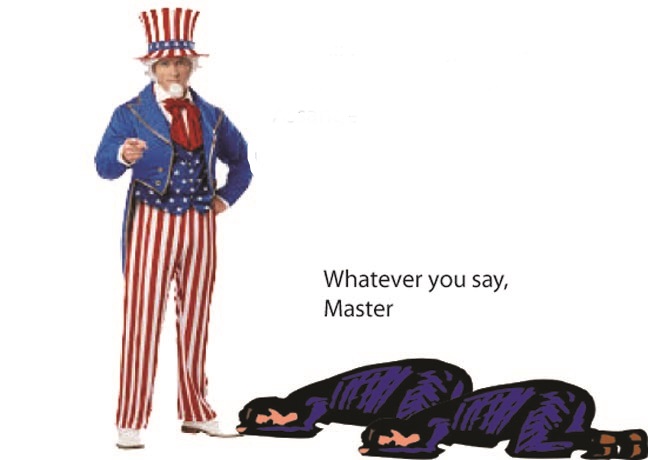
24 June 2025 AIMN Editorial, By Denis Hay https://theaimn.net/why-is-australia-supporting-the-us-attack-on-iran/
Description
Why is Australia supporting the US attack on Iran despite no proven nuclear threat? Explore the truth behind the alliance and why our national interest is at stake.
Introduction: The Flashpoint
Location: Parliament House, Canberra – just hours after the US launched strikes on Iranian facilities.
The Prime Minister steps up to the podium. Flashbulbs pop. He says solemnly, “We support action to prevent Iran from acquiring nuclear weapons.”
But there’s a problem: Iran does not have nuclear weapons. Nor has the International Atomic Energy Agency (IAEA) found proof of an active nuclear weapons program. Yet, Australia is once again supporting US attack on Iran, despite lacking credible evidence.
By supporting the US attack on Iran, Australia reinforces a troubling trend of endorsing military aggression based on disputed intelligence.
This article delves into the underlying reasons behind this decision, separating rhetoric from reality.
The Problem: Why Australia Is Supporting the US Attack on Iran
A History of Following Washington
Since Vietnam, Australia has followed the US into conflicts: Iraq, Afghanistan, and Syria. The justification is often “shared values”, but the outcomes? Displacement, destabilisation, and destruction.
“We’re not a central player,” the PM insists. Yet, we continue to echo Washington’s every move.
No Proof, Yet Full Support
The IAEA has repeatedly said there’s no verified Iranian nuclear weapons program. Iran enriched uranium to 60%, but weapons-grade is 90 %+. Still, our leaders claim this is reason enough for supporting the US attack on Iran, even without definitive proof.
What Was Actually Hit?
According to US sources, the strikes targeted “nuclear-related sites”. But independent verification is scarce. And our Prime Minister won’t confirm whether Pine Gap or other Australian resources were involved. This silence raises concerns that supporting the US attack on Iran also involves more profound complicity behind the scenes.
The Consequences of Obedience
Civilian Risk and Global Fallout
Imagine being an Australian working in Tehran. One day, you’re sending postcards home. Next, you’re rushed to the Azerbaijani border under armed escort. Over 3,000 Australians were left scrambling.
“We’re evacuating staff,” Foreign Minister Wong said. “Airspace is closed.”
Damaged Diplomacy, Rising Insecurity
Supporting the US attack on Iran damages Australia’s credibility as an independent voice in global affairs. We’re seen less as an independent nation and more as a military proxy. This makes us, and our citizens, potential targets.
The Illusion of Peace Through Bombs
Our leaders claim they “support de-escalation.” Yet, they support an illegal airstrike that has only escalated tensions.
Peace isn’t achieved through provocation – it’s forged through diplomacy.
Double Standards in Nuclear Politics
The Real Nuclear Threats: Israel and the USA
While Iran is accused of developing nuclear weapons without proof, Israel, a state with confirmed nuclear warheads, faces no sanctions or inspections. Worse still, Israel continues to violate international law, commit human rights abuses, and face allegations of war crimes. Yet, it is never threatened with airstrikes.
The United States remains the only country in history to use nuclear weapons in war, dropping them on the civilian populations of Hiroshima and Nagasaki in 1945. Despite indications that Japan was already seeking surrender, the bombs were deployed, not just to end the war, but as a geopolitical message to the world.
Many historians now consider the attacks to have been militarily unnecessary and politically motivated.
“You don’t stop a nuclear war by attacking countries that don’t even have nuclear weapons. You stop it by holding those with them accountable.”
US Militarism: A Global Record of Havoc and Misery
From Vietnam to Iraq, Libya to Syria, and coups in Latin America and Africa, the United States has caused immense suffering worldwide. Their justification – “freedom” and “democracy” – rarely materialises for the people left behind.
Australia’s uncritical support not only aligns us with this destruction, but it also makes us complicit.
A Foreign Policy True to Australia’s Interests
Uphold International Law, Not Just Alliances
Australia must reaffirm its commitment to the UN Charter, which permits the use of military force only in self-defence or with the approval of the Security Council. Unilateral aggression is illegal.
Prioritise Evidence Over Allegiance
Before expressing support for military action, the Australian Government must demand verifiable intelligence. Without proof, there should be no participation – military or moral.
Transparency About Pine Gap and Involvement
Pine Gap plays a critical role in US surveillance and drone strikes. Citizens have a right to know whether their country is taking actions that violate international law.
Leverage Our Dollar Sovereignty
Australia issues its own currency, meaning we are not financially dependent on any foreign state. We can afford to fund independent diplomacy, peace building, and humanitarian aid rather than militarism.
“We are not broke. We are not beholden. Let’s act like it.”
The Price of Following, The Power of Leading
For decades, Australia has marched in step with the United States, often at the cost of our principles, safety, and independence.
This time, we are supporting the US attack on Iran, a strike on a country accused of a crime without evidence, risking war, instability, and the lives of Australians abroad.
Yet, we have the means, through monetary sovereignty, public accountability, and diplomacy, to reject supporting the US attack on Iran and shape a better, more independent path. We need the political will to make the choice.
Q&A Section
Q1: Was Iran about to build a nuclear weapon?
A: The IAEA has confirmed Iran has enriched uranium to 60%, which is not weapons-grade. There is no verified evidence of an active nuclear weapons program.
Q2: Could Australia have refused to support the strike?
A: Yes. Australia is a sovereign nation that can choose an independent foreign policy. We were not compelled to support a strike, especially without legal backing.
Q3: What role does Pine Gap play in US operations?
A: Pine Gap is a joint US-Australia intelligence base. While our leaders avoid specifics, it’s widely known that Pine Gap supports surveillance and targeting data for US military operations, including drone strikes.
1 This month

of the week – Australians for War Powers Reform (AWPR)
To see nuclear-related stories in greater depth and intensity
 Antinuclear