Tim Wilson, secretive money and “think” tanks. Australia’s democracy is at stake.


April 18, 2025 Lucy Hamilton, https://theaimn.net/tim-wilson-secretive-money-and-think-tanks-australias-democracy-is-at-stake/
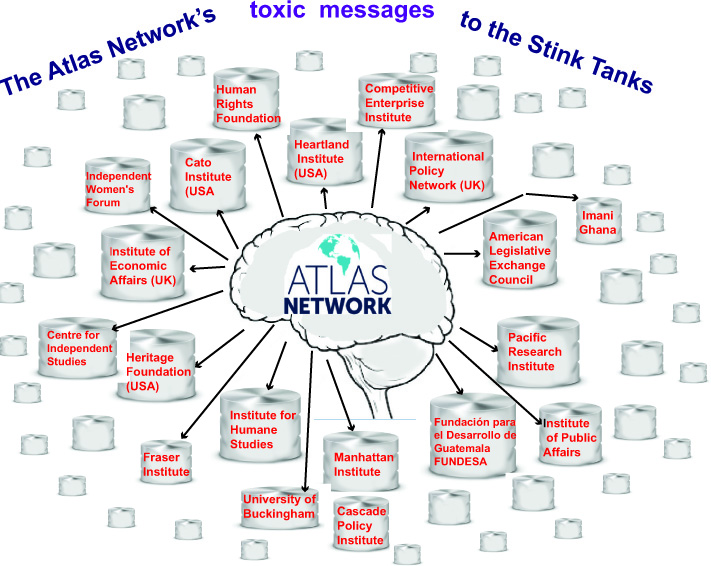
Advance’s links to Australia’s Atlas Network partners were laid out by Dr Jeremy Walker in the Voice campaign. Its origin and links to the Liberal Party as well as the global thinktank operation was explored in detail in the Sydney Morning Herald. That report also illustrates the body’s links to Zionist operations, fostered through its co-founder David Adler. It has three new front groups to discredit the Greens: Greens Truth, Her Truth and Election News.
There are as many as 18 such shadowy organisations acting against renewables and in favour of nuclear energy at the moment. Most can be found on social media targeting key seats. Others can afford billboards.
April 18, 2025 Lucy Hamilton, https://theaimn.net/tim-wilson-secretive-money-and-think-tanks-australias-democracy-is-at-stake/
Australians should remember, as the election approaches, that Tim Wilson was shortlisted in 2015 for the US-based Atlas Network’s most prestigious prize. He and his team at the Atlas Network-partner the Institute of Public Affairs (IPA) had been nominated for the award for their work in bringing down Australia’s carbon price.
Crikey captured the misleading wording of the nomination for posterity before the Atlas Network became more cautious and took it – as well as its list of partners – down: “As the only major organization in Australia to publicly and consistently oppose the tax, the IPA’s work against the carbon tax was instrumental in fostering sentiment against the tax, which, in addition to its economic drawbacks, wouldn’t have achieved any environmental goals.”
The Atlas Network is the organising force that connects “almost 600 think tanks in over 100 countries” to promote big business’s goals. While the head office is not currently funded by fossil fuel, many of the partner organisations continue to be, and fighting climate change science and solutions remain core business for many of them.
In fact, a carbon price was working and has been found to be an effective method of pushing transition. Peta Credlin has admitted that the attacks on it as a “tax” were just “brutal retail politics.” The “fostering sentiment” that the Atlas Network described is the job of these so-called thinktanks. They create the permission structure for the policy that big business wants. They also enable the election of big business’s preferred political party.
Atlas’s wording highlighted that the IPA was the “only major organization in Australia” helping engineer Tony Abbott’s victory in 2013 and the resulting instant dismantling of the carbon price.
Voters need to be reminded that it is largely foreign mining interests that benefit from fostered sentiment created by thinktanks. Prizes worth $100,000 from abroad don’t often come for purely domestic campaigns. That said, one of the Atlas Network’s US partners awarded Gina Rinehart its “Lifetime Achievement Award” for her contribution to the Network’s shared goals in 2024.
Rinehart is the only known big donor to Wilson’s former employer, the IPA now. Her largesse was made public by accident: donations of over $2 million a year for two years were recorded in tax filings submitted to court. We cannot know how much more she has given. Rupert Murdoch continues to support this organisation his father co-founded in 1943. We cannot know if he gives money now, but News Corp is an “in kind” donor, providing constant platforms for the Australian Atlas partners and interlinked groups.
The IPA is 80 years old, so it seems more respectable than the temporary dark money front groups that are popping up to push messaging as suspect as the IPA’s war on the carbon “tax.” The difference is more in scale and ambition than in nature.
These bodies copy the Atlas Network model: that involves spawning new PR operations to ensure that the electorate does not come between the corporations and their profits. Because the Atlas Network no longer declares which organisations it lists as partners (and many interlinked bodies were never listed at all), we cannot declare them to be part of the Network. They serve, however, the same purpose for similar clients.
Australians for Prosperity is clearly interlinked with both the coal sector (by the only declared donation), and the Liberal Party (by its personnel). It was forced to delete two months-worth of social media posts by the Australian Electoral Commission for being unauthorised election material. Their prime targets are the independent MPs that are now representing formerly Liberal Party safe seats, and they are spreading disinformation to discredit these parliamentarians.
It may be a coincidence that the body has copied the name of one of the Atlas partners most responsible for the current debased condition of American politics, Americans for Prosperity.
Advance’s links to Australia’s Atlas Network partners were laid out by Dr Jeremy Walker in the Voice campaign. Its origin and links to the Liberal Party as well as the global thinktank operation was explored in detail in the Sydney Morning Herald. That report also illustrates the body’s links to Zionist operations, fostered through its co-founder David Adler. It has three new front groups to discredit the Greens: Greens Truth, Her Truth and Election News.
There are as many as 18 such shadowy organisations acting against renewables and in favour of nuclear energy at the moment. Most can be found on social media targeting key seats. Others can afford billboards.
Pollsters have always been a key tool in business propaganda: the Coalition’s internal pollster in this election campaign is connected to Australians for Natural Gas. That body’s director, Nathanial Smith” is also the Liberal Party’s candidate for Whitlam.
One of the old guard Atlas partners is the Australian Taxpayers’ Alliance. Its founder, Tim Andrews, is now working for Grover Norquist at Atlas’s Americans for Tax Reform in DC. The current executive director is Brian Marlow.
Marlow is also functioning as the “Campaigner” for Citizen Go, under whose umbrella he appeared before federal Parliament arguing against the Misinformation and Disinformation Bill. Citizen Go is a global project constructed out of a Spanish extremist Catholic “hate group.” Citizen Go’s Australian “campaigns director” is George Christensen who has registered himself as the head of a “foreign political organisation.” The Facebook page campaigns using an “end abortion” hashtag, using misleading information. As a state MP, Nathaniel Smith argued for abortion to “remain in the Crimes Act.” The Coalition candidates’ commitment to a Christian Nationalist position is not separate from their Atlas Network links but directly connected to that movements’ transnational trend.
It is not surprising, in either of Marlow’s roles, to find such figures fighting efforts to control mis- and disinformation. With climate science as certain as it is, and the need to transition to clean sources of energy so urgent, the campaign to disrupt the transition is hard pressed to find useful truths: both misleading information and distraction can serve.
Australia needs a minority government with the crossbench granting it courage to tackle the threats to Australian politics of dark money and shadowy disinformation campaigns.
Political merchandise
We don’t need a government containing Tim Wilson whose speech at the 2015 Atlas Network regional gathering, the Friedman Conference, celebrated his turning Human Rights Commissioner role into a defence of property rights. Think hard about why this network values protecting property but not protecting you as a community member, worker, consumer or citizen.
The pro-nuclear drive and Zionism are inter-twined

https://theaimn.net/the-pro-nuclear-drive-and-zionism-are-inter-twined/ 10 May 25
For many years, I’ve been running websites devoted to the nuclear-free movement. People have asked me why, over the past two years, I’ve been including news about Israel and Gaza.
What on earth do Israel and Gaza have to do with the pro-nuclear cause?
Well, unfortunately, quite a lot.
“While everyone believes that the Israelis possess a sizable nuclear arsenal, no one really knows how big that arsenal is. In 2008, President Jimmy Carter estimated that Israel probably had a minimum of 150 weapons in stock ready to use if the most dire circumstances warrant. Six years later, the former President revised that estimate and put the figure in the 300 range, which—based on Carter’s calculations—would mean that Israel doubled its arsenal from the 2008-2014 time-period. “
Of course the Israeli government “does not confirm or deny” that they’ve got nuclear weapons, and the cowardly governments that support Israel similarly do not officially confirm it. And of course Israel has not signed the Treaty on the Non-Proliferation of Nuclear Weapons (NPT), or participated in any kind of weapons control negotiations.
In Sep 22, 2023 Israeli Prime Minister Benjamin Netanyahu warned Iran at the United Nations of a “nuclear threat” in what his office quickly walked back as a slip of the tongue. In July 2024 Prime Minister Benjamin Netanyahu pledged in a scathing speech to Congress on Wednesday to achieve “total victory” against Hamas.
The Zionist philosophy means that the Jews are God’s chosen people. And the Islamics certainly are not. The attitude of Israel towards the Palestinians is that they are not the same kind of human being as the Jews are. Indeed, it’s OK to starve Gazan children to death – after all, they are some kind of untermenchen.
Well, the genocide of Gazans is being achieved without any need for nuclear weapons. But what about the other Islamics? There’s Yemen, and there’s Iran. Netanyahu believes that Iran poses an existential threat to the Zionist state, and could make a nuclear weapon in a short period of time, making Israel and even the US unable to defeat or contain it.
To what lengths might Netanyahu go, to prevent that? Bomb Iran’s nuclear sites?
And would Donald Trump, an enthusiastic fan of Israel, support that option.
Here’s Trump, seven months ago, urging Israel to make such a strike,
While I’ve been thinking about this for some time, I was prompted to write about it now, after reading an article by Lucy Hamilton in Australian Independent Media, about the close involvement of Australian pro-nuclear front groups with the Zionist movement.
It’s not only Israel that we must worry about, in Australia, and presumably world-wide. If we aim to be nuclear-free, we are up against a lobby determined to have nuclear-weapons superiority, and the Zionist movement is right up there in that determination.
Is nuclear dead? Signs Coalition’s policy isn’t buried despite election loss

The Liberals and Nationals will review their policy platforms as they assess their sweeping election defeat, which resulted in Labor claiming a majority government.
By Cameron Carr, 9 May 25, https://www.sbs.com.au/news/article/signs-coalition-nuclear-policy-not-buried-despite-election-loss/ideom2e8z
But the Coalition didn’t have much of a choice when it came to election promises around energy, Simpson told SBS News.
“The Coalition had to come to the election saying something about energy policy if they were going to oppose Labor’s policy, and there’s not really that many options,” he said.
“They could have come out and said, ‘We’re going to use gas and or coal for eternity’, but then they would have to abandon their commitment to net zero.”
Fewer moderates in the party
Simpson said there are a couple of reasons the Coalition could come back with a version of the policy for the next election.
“In 2022, they lost all those teal seats. They lost a lot of moderate voices from the Liberal Party. And then that’s just been exacerbated in this recent election,” Simpson said.
“There are very few voices going to be coming from metropolitan urban areas in the Coalition party room. So that’s why I wouldn’t be surprised if, after they do the post-election wash-up and assessment of what went wrong, they come out again with another pro-nuclear policy.”
Simpson said “cultural opposition” is likely another factor, with the Coalition ideologically resistant to a transition to renewable energy.
“They don’t particularly believe in climate change, and it’s certainly not a priority for them,” he said.
While nuclear energy could be a policy the Coalition runs again in 2028, Simpson predicted it would cause “further devastation” within its remaining metropolitan seats and push the Coalition into the “electoral wilderness” for a generation.
Sacking Dreyfus and Husic to appease Marles proves Labor 2.0 will be just more of the same

In that sense, it’s appropriate that his (Dreyfus’) demise has come at the hands of Marles, who is everything wrong and sordid about the current Labor Party. He is a policy vacuum, with his only apparent belief being the primacy of the US alliance. He is not merely incapable of properly managing an incompetent and potentially corrupt Department of Defence, but he also appears entirely insouciant about its poor performance.
As Paul Keating pointed out in blasting Albanese’s failure to prevent this, the Victorian Right faction, led by Marles, is “demonstrably devoid of creativity and capacity”.
The sacking of Mark Dreyfus and Ed Husic sends a signal that performance and party loyalty are far less important than what the factions want.
Bernard Keane, May 9, 2025, https://www.crikey.com.au/2025/05/09/mark-drefus-ed-husic-cabinet-frontbench-richard-marles-anthony-albanese-labor/
Anthony Albanese, having ascended into the Labor pantheon with a remarkable victory that smashed opponents left and right, has demonstrated his new authority by… sacking two well-regarded ministers at the behest of his single worst minister, Richard Marles, and replacing them with duds.
The defence minister’s ousting of Attorney-General Mark Dreyfus and Industry Minister Ed Husic has cast a particularly gloomy shadow over what should have been an unalloyed Labor triumph. It also reflects badly on Albanese’s willingness to use his authority to deliver better government, rather than keep his party’s factional hacks happy — Marles’ Labor Right faction stiffed Dreyfus; in the case of Husic, he was turfed in response to Marles’ demands for NSW to give up a frontbench spot.
The replacements for Dreyfus and Husic, Victorian backbenchers Sam Rae and Daniel Mulino, are remarkable in their banality. Mulino, a former Andrews government outer ministry member, has been in Parliament for six years without anyone being aware of his existence. Rae is a Labor Party functionary, a former Victorian state secretary who joined PwC before entering Parliament in 2022. Yes, that PwC, the firm that represents everything toxically wrong with the way government was run under the Coalition. Rae’s supporters apparently think that’s something to boast about.
As Paul Keating pointed out in blasting Albanese’s failure to prevent this, the Victorian Right faction, led by Marles, is “demonstrably devoid of creativity and capacity”.
………………………Dreyfus, like John Faulkner in the Rudd government, was the only consistent advocate within cabinet for more integrity and transparency in government. His departure cripples any internal push to make the Albanese government a better, more accountable one.
In that sense, it’s appropriate that his demise has come at the hands of Marles, who is everything wrong and sordid about the current Labor Party. He is a policy vacuum, with his only apparent belief being the primacy of the US alliance. He is not merely incapable of properly managing an incompetent and potentially corrupt Department of Defence, but he also appears entirely insouciant about its poor performance.
As Paul Keating pointed out in blasting Albanese’s failure to prevent this, the Victorian Right faction, led by Marles, is “demonstrably devoid of creativity and capacity”.
Again, as Keating points out, Albanese could have intervened, as he has intervened in other factional disputes. Instead, he has sent a strong signal to his frontbench: actual performance and willingness to serve the party loyally are far less important than what the factions want. He’s allowed a factional brawl to significantly diminish the capacity of the ministry, thus permitting the deadening touch of Marles to break out of Defence like a fungating tumour.
In its first term, the Albanese government frequently demonstrated it was a timid, unambitious and craven government. Winning 90+ seats doesn’t seem to have changed that. Maybe winning all 150 wouldn’t either.
The dark cloud of Murdoch has no silver lining

News Corp, Sky after dark, Fox News … they spew lies and propaganda around the globe, and the evil empire’s tentacles keep wrapping around the fearful and the ignorant.
by Nicole Chvastek, 7 May 2025, https://thepolitics.com.au/the-dark-cloud-of-murdoch-has-no-silver-lining/
As Saturday’s bloodbath washes through the Liberal corridors of no power, the electoral train wreck has turned attention to other overly cocky players: the Murdoch media.
From the moment the poll was called, Rupert Murdoch’s news culture warriors turned up the heat on Labor, exhorting the brilliance of Peter Dutton’s failed nuclear fantasy and his war on migrants, “woke” schools, people who work from home and Welcomes to Country — while tearing down anyone who dared suggest he and his party were not fit for office.
But on election night none of that mattered. None of the confected outrage, the miles of newsprint, the spin and the bullying had made a jot of difference and was more likely to have worked against the Liberals’ interests. Australians it seems have a finely tuned bullshit radar.
Sky pirates
Greens Senator Sarah Hanson-Young nailed it when she told Radio National on Monday:
“I think what has happened to the Coalition is they spent a bit too much time hangin’ out with Sky News and they forgot to really hear what people were saying. The other big loser is the Murdoch press. They created an echo chamber for themselves.”
Dr Denis Muller of the Centre for Advancing Journalism at the University of Melbourne said the Murdoch media were “agents of disaster” for the Coalition:
“I see the sun beginning to set on Rupert’s influence in Australian politics. News Corp created a bubble in which their journalists and Coalition politicians cocooned themselves, talking to each other on Sky after dark, persuading each other that everything was going to be fine.”
A setting sun? It’s a big call. Australian politicians of all persuasions famously make the trek to Murdoch headquarters after an election for a ritual known as “kissing the ring”, and Anthony Albanese, Richard Marles and Penny Wong were quick to do their duty in 2022.
Strings attached
Eric Beecher, a former News Corp employee, recalls being sued (unsuccessfully) by Lachlan Murdoch who issued a writ for defamation over an opinion piece linking the Murdoch news empire with 2021’s January 6 Capitol riots:
“The day after the defamation writ was issued, a large Commonwealth government car pulled up outside the Holt Street Surry Hills headquarters in Sydney of News Corp. Three people got out of that car to go upstairs and visit Lachlan in his office: the prime minister, the deputy prime minister and the foreign [affairs] minister of Australia. It’s been going on for 100 years and it should stop.”
The reach of puppetmaster Rupert Murdoch into governments and policy making knows no bounds and there have been countless exposés on unethical business practices. But the machine roars on, a powerhouse of global disinformation and propaganda while pretending to be a news-gathering organisation.
In January, Murdoch was photographed reclining in the Oval Office as Donald Trump signed an executive order creating a sovereign wealth fund. Fox News cable spits out Trump propaganda daily and is credited with helping to return the convicted felon and sex predator to office. Murdoch has called Trump “increasingly mad” and yet publicly admitted he knew Fox commentators were lying when they broadcast falsehoods about a “stolen rigged election” in 2020. But hey, it was good for business.
Nuke the enemy
The habitual process of retribution and vendetta from News Corp is bitter and legendary. The Australian Financial Review reports that Malcolm Turnbull and Kevin Rudd blame Murdoch for their political demise. In 1974, Murdoch famously directed his editors to “kill Whitlam” 10 months before Gough Whitlam’s electoral ousting.
Every day, Murdoch’s media rival, the ABC, is a target of sneering “hit jobs”, and any politician or voice that suggests climate change is real or nuclear reactors are a fantasy or billionaires don’t deserve tax breaks are hounded, possibly for life. The Herald Sun still runs revelations about former Labor premier Dan Andrews and sporadic pieces of condemnation over a car accident his wife had 20 years ago. According to Beecher in his book The Men Who Killed The News, Andrews was the only premier who refused to schlep up to News Corp headquarters for the compulsory kissing of the ring.
In Australia, the power base is the print media, overwhelmingly controlled by News Corp with a huge digital presence and backed by Sky News. In 2020, Rudd and Turnbull joined forces to call for a royal commission into Murdoch’s concentrated media holdings. Rudd claimed his media power is “routinely used to attack opponents in business and politics by blending editorial opinion with news reporting”.
Break the News
How is it that such deep, lasting damage to democracy, businesses and people’s lives can be inflicted with precisely zero repercussions? One part of the answer is the acceptance that democracies cannot flourish without a free press. Section 65A of the Trade Practices Act provides a general exemption to most of the media as publishers of news and current affairs from liability for publishing misleading or deceptive material. Former chairman of the ACCC Allan Fels said concerns around Murdoch’s practices are more likely to be addressed by a royal commission, an idea the government and opposition have not supported.
“I don’t have a view on whether he should be reined in. All media mislead to some extent. It’s not the sort of thing consumer protection law addresses.”
Dr Victoria Fielding, senior lecturer in strategic communication at the University of Adelaide, was bolder. She said legislative change was needed to rein in Murdoch excesses. She agrees a healthy democracy needs an independent free press populated by balanced journalists who hold the powerful to account and publish verifiable information — but that’s not what the Murdoch media are:
“If there was some legislation that said if you want to be a commentary organisation you can only have a particular share of the market — like any competition commissioner can do — you break it up. You say: ‘You can no longer be that large.’ It’s distorting our democracy.”
Running scared
The other part of the answer is fear, fear of taking on a monolithic disinformation machine which countless readers think is a news outlet and being publicly torn down and repeatedly shredded by a media gorilla with few scruples and deep pockets.
Remarkably, after cheerleading the Liberals to disaster on May 3, The Australian leapt back up onto its feet to brush off its flesh wound and lecture the Coalition on “missing the warnings”:
“Of all the mistakes that led to this result, one was fatal: the untested assumption that Labor was out of touch and unaligned with the mainstream values of Australians. There can be no other interpretation that that this is fundamentally wrong.”
This from the paper that tells us pretty much every day that Labor is out of touch and unaligned with the mainstream values of Australians.
Culture vultures
Reports of the death of the Murdoch brand in Australia may well be exaggerated. Like any good parasite it is known to stew and grow before attacking the host again. Fielding reminds us that backed by the Murdoch press, Dutton was on track to win the federal election as recently as January — until the catastrophic reality of the Trump presidency became obvious to Australians.
Murdoch has withstood worse setbacks than crashing an election and, like Monty Python’s Black Knight, his culture warriors rebound after each atrocity and, still bleeding, berate their victims for taking the advice.
I’d like to think the tide is turning on news outlets that amplify bullshit while bragging they are society’s moral pulse and insisting their bullshit is good for you. But if the tide is not for turning, you can always join the Liberals, and learn the hard way.
Scrap nuclear: Key Liberal senator wants radioactive energy plan buried

David Crowe and Paul Sakkal, May 6, 2025
The Liberal Party is set for a pivotal clash over nuclear power after a key senator broke ranks to urge her colleagues to dump their plans for atomic energy, shaping the choice over the party’s leadership and direction.
The warning from Liberal senator Maria Kovacic marks the first public rejection of the nuclear plan from a member of the federal party room ahead of a broader debate about how to recover from the catastrophic defeat at the election.
The move comes as deputy Liberal leader Sussan Ley and shadow treasurer Angus Taylor contest a tight race to decide the leadership, with each side approaching immigration spokesman Dan Tehan to serve as deputy.
A damaging leak of internal polling, revealed by this masthead on Tuesday, has also fuelled discontent within the party, as MPs criticise the party’s pollster, Freshwater Strategy, for providing data that that gave Liberal leader Peter Dutton a false sense of confidence.
Kovacic said the election campaign showed that younger voters did not support the nuclear policy, based on her experience with Liberal candidates at polling stations, and that the party needed to listen to the verdict from voters last Saturday.
“We know how tough it is out there, and we didn’t offer Australian voters a legitimate alternative – and they sent that message very, very clearly on Saturday,” she said.
“And we can’t deny the fact that our nuclear plan was a part of that because it was one of the keystone policies.
“So it’s my view that the Liberal Party must immediately scrap the nuclear energy plan and back the private market’s investment in renewable energy.”
Liberal leader Peter Dutton embraced nuclear power in August 2022 after calls from Nationals leader David Littleproud to adopt the policy, but the plan set off a political firestorm over the $331 billion forecast to build and own the power stations.
While the Liberals expect to launch an election review to consider their defeat, Kovacic said the nuclear policy needed to be dumped immediately…………………………………….https://www.theage.com.au/politics/federal/tehan-firms-as-kingmaker-in-liberal-leadership-battle-as-polling-leak-sparks-recriminations-20250506-p5lwvy.html
Will the Coalition ditch its nuclear power policy?
The Liberals Against Nuclear group said in a media release that the “Liberal Party’s resounding defeat in Saturday’s federal election has confirmed what Liberals Against Nuclear has warned for months: the party’s nuclear energy policy was poison that contradicted core party principles.”
“As the party chooses its next leader, denouncing the nuclear energy policy and recommitting to traditional Liberal values must be the litmus test for any potential candidate.”
Jim Green, May 7, 2025, https://reneweconomy.com.au/will-the-coalition-ditch-its-nuclear-power-policy/?fbclid=IwY2xjawKIr5RleHRuA2FlbQIxMQBicmlkETEwN2xCZ0tDcWVCOTJLWjlyAR4dM_A5TV1mtAJXuKwDuXNCPTqBkEx6aqXLiVG_4RSf4CuBw0LCKjXx5M_THQ_aem_9Jf-rhE2w-fA5kbvxu0a4A
There is abundant evidence that the Coalition’s nuclear power policy was a significant drag on its vote on Saturday. On election night, energy minister Chris Bowen said:
“I mean this was a policy that was never going to survive contact with reality. It was a policy that was radical and risky … The Australian people have cast a very strong judgement on this. I mean we had polling a while ago showing 47 percent of voters in Dickson were less likely to vote for Peter Dutton because of the nuclear policy. Peter Dutton said it was a referendum on energy, which we were happy with, and the way the results are flowing, the result of that referendum on energy, nuclear vs renewables, is crystal clear.”
Even Clive Palmer was bagging nuclear power on election night, pointing to the troubled Flamanville reactor project in France that was 14 years overdue and five times over-budget.
Seven News political editor Mark Riley said: “The party that chose nuclear energy as its policy has exploded in a nuclear bomb set on them by voters tonight.”
An editorial in the Sydney Morning Herald summarised the Coalition’s nuclear problem:
“But outside the corridors of political power, his nuclear power policy played a role in the Coalition defeat on Saturday. Dutton was unable to justify or explain the cost adequately. His power stations were too expensive and bent future budgets into contortion. The CSIRO was unimpressed, and the private sector wanted nothing to do with them.
“Worse, they were a gift to Labor. It dawned on both sides early in the campaign that the nuclear policy had turned toxic. Labor jumped on it and Dutton’s battle bus steered well clear of the proposed nuclear sites.
“The fantasy of the timeline to bring the nuclear power stations online and the dubious costings only added to the voters’ perceptions that Dutton was talking hot air and that his promised policy would never happen.
“Now it’s back to square one for the Liberals on energy policy. It will not be easy. The shattered party must rebuild to recapture the heartland after it was crudely shoved towards conservative populism by Dutton and friends. Policy development will be a major cornerstone of that recovery. And energy is central to credible reform.”
Liberals Against Nuclear
The Liberals Against Nuclear group said in a media release that the “Liberal Party’s resounding defeat in Saturday’s federal election has confirmed what Liberals Against Nuclear has warned for months: the party’s nuclear energy policy was poison that contradicted core party principles.”
Spokesman Andrew Gregson said that Liberals Against Nuclear would continue its campaign against the nuclear policy:
“This result sees the Liberals facing a generational wipeout. Only significant and immediate change can chart of pathway back. Dropping the disastrous nuclear policy right now would demonstrate they are prepared to listen, learn and act.
“Since launching our campaign, we’ve been overwhelmed by messages from Liberals across Australia who share our dismay that such a consequential policy emerged without the robust debate that has always defined our party’s decision-making. Fellow Liberals have expressed frustration that a policy of this magnitude was imposed without the transparent consultation that true Liberal values demand.
“Saturday’s election results are simply the latest and most compelling evidence that the party faithful never signed up for nuclear and would not follow Mr Dutton down this path.
“As the party chooses its next leader, denouncing the nuclear energy policy and recommitting to traditional Liberal values must be the litmus test for any potential candidate.”
Divisions
There are deep divisions within the Coalition over energy policy, so much so that a split is under consideration. Canvassing a split, Queensland Senator Matt Canavan said he wants more coal power plants built and an end to the Coalition’s net zero emissions policy. He appears to be ambivalent about nuclear power: “I’m not against nuclear but … it would take some time. We need solutions now for the Australian people.”
Other Nationals MPs are promoting retention of the nuclear power policy, including leader David Littleproud, senate leader Bridget McKenzie, Colin Boyce and Michelle Landry.
The Nationals are congratulating themselves for outperforming the Liberal Party in the election. But the nuclear policy was initiated and strongly pushed by the Nationals and it was a drag on the Coalition vote across the country.
The ABC’s Jacob Greber said: “Littleproud has driven them onto the rocks, as a political movement, with the nuclear plan.” He further noted: “David Littleproud, the Nationals leader, vowed his nuclear power plan would not come at the expense of Liberals in the cities. He has a tough road ahead after this mess.”
Liberal MPs are beginning to publicly call for the Coalition to ditch its nuclear power policy. Senator Maria Kovacic said: “the Liberal Party must immediately scrap the nuclear energy plan and back the private market’s investment in renewable energy.”
Kovacic added:
“I think the result on Saturday is a pretty clear election review of what Australians think. We will not be electable for Gen Z and millennial voters who thought, you know, we were having them on with this policy. The idea that the party of free markets and small government would nationalise a major portion of the energy system is completely at odds with what we stand for.”
Liberal Senator James Paterson said he is not likely to fight to retain the nuclear policy, that nuclear power would be “logistically challenging” and “self-evidently more difficult” to implement in three years given the looming retirement of coal-fired power stations.
The SA Liberal Party announced two days after the federal election that it has dropped its policy of promoting nuclear power. The state party had promised a nuclear royal commission and created a position of ‘Shadow Minister for Nuclear Readiness’. But leader Vincent Tarzia said on Monday that nuclear power has been “comprehensively rejected and we know the thing is with the energy transition, in three years’ time we will be in another position again.”
If the Coalition persists with its nuclear power policy, it will have no support whatsoever from Liberal / LNP parties in the five states targeted for reactors.
Academic Adam Simpson wrote in The Conversation:
“After Saturday’s Coalition rout, the prospect of nuclear power in Australia should be dead and buried. But that’s not guaranteed. The National Party strongly backs nuclear power. With metropolitan Liberals sceptical of nuclear reduced to a rump, the Nationals and regional Liberals will gain influence within the Coalition. If conservative Nationals prevail, we may well see the nuclear policy survive the election post-mortem and be resurrected for the next election.”
Given the drag of the nuclear policy on the Coalition’s vote, it’s hard to see them going to the next election still promising to build seven taxpayer-funded nuclear power plants across five states. A compromise might be reached whereby a Coalition government would repeal federal laws banning nuclear power, and perhaps establish yet another inquiry, but without the commitment to go ahead with the seven proposed nuclear plants. Colin Boyce hinted at a compromise: “At the bare minimum, we need to remove the moratorium, at least.”
Dr. Jim Green is the national nuclear campaigner with Friends of the Earth Australia and a member of the EnergyScience Coalition.
The Nationals & Liberals are idealogically invested in nuclear weapons for Australia.
Claudio Pompili, 7 May 25
Yep…. until next time…
The Nationals & Lib They are still smarting from the fact of the UK having declined this option after the Maralinga atomic bomb tests. They deduced that having a civil nuclear power generation program was vital in acquiring a necessary social licence for a comprehensive nuclear program. They have zealously pursued this goal ever since, as evidenced by the innumerable and relentless inquiries & royal commissions. Slowly but surely they are manufacturing consent with the Australian public, as evidenced by the recent pre-election polls.
The pro-nukes in the Nats/Libs and their formidable enablers will never stop, and are encouraged by the bipartisan support for AUKUS. They believe that China/North Korea/Russia/Iran scare tactics coupled with immigration will eventually prevail and Australia will have its own nukes. The fight is not over. Until the next time…
Who defeated the Nazis in World War 2 ? Thank God for Hollywood!

On the 8th May 1945, Germany surrendered unconditionally to the Allies. On the 9th May 2025, Russia is holding a grand commemoration – a “Victory Day” for the 80th anniversary of this event.
How dare they? I know, from my extensive cinema history, that the Americans won World War 2.
Many exciting and entertaining movies have been made, over the decades, glorifying the courage and success of the good soldiers on the good side – several allied nations, notably the British. But my favourites were always from Hollywood. There were so many, and of course, I haven’t seen them all.
From early on, there were movies like The Story of G.I. Joe, Dive Bomber, So Proudly We Hail! and Sahara . And During World War II, Disney made films for every branch of the United States Armed Forces and government.
Hollywood downplayed the efforts and contributions of the other Allies . But some films grudgingly acknowledged the United Kingdom, who kept the hopeless fight alive until the USA joined in and saved the day. Non-European Allies are mostly never even mentioned, especially China, with its pivotal role in the war against Japan. The Soviet-German war on the Eastern Front if mentioned at all, is sometimes portrayed as a sideshow .
Some movies based on real events, such as the film U571 are about real persons who were not American, depicted them as Americans. U571 (2000) is about American submariners. ‘Red Tails’ (2012)is a great exaggeration about American airmen. In some movies, we learn that WWII only began only on December 7, 1941, when the United States entered the war. Some movies are such fun, even if fictional, for example the Americans killing Hitler in Inglourious Basterds.
Many movies are about the overall war effort , but focus on America’s involvement. Some of these films include Saving Private Ryan (1998) Flags of Our Fathers (2006): Band of Brothers (2001). Films on the D Day landings give the impression that the American landing on Omaha Beach was the decisive turning point that led to Allied victory in Europe.
Now, I know that I’m pretty right, in claiming that the Americans won World war 2. In our democratic culture we accept the opinions of the many. The more common view is now that the Americans were the primary reason for the Nazi defeat, with 40-52% in America and Europe saying so. (But Britons think it was the UK).
In 1945, 57% of French citizens believed Moscow “contributed most to the defeat of Germany in 1945” – just 20% named the US, and 12% Britain. By 2015, less than a quarter of respondents recognised the Soviet role, with 54% believing the US to be Nazism’s ultimate vanquisher. Today only 17-28% of Europeans and Americans suggest that the USSR did the bulk of the work in bringing down Hitler.
If you go to Encyclopedia Britannica, or Wikipedia, or many history sites, you are told some extraordinary facts and figures about the role of the Soviet Union in World War 2, and they attribute the defeat of Nazi Germany as being mainly achieved by the Russians, with substantial input from Britain and the USA.
For example – “The Eastern Front was decisive in determining the outcome in the European theatre of operations in World War II, eventually serving as the main reason for the defeat of Nazi Germany The decisive battles were Stalingrad, Kursk, and the Battle of Berlin.”
You find this sort of information – ” The Soviet Union lost at least 26 million in World War II, Considerably more than any other country. Russian casualties were 60 times the number of American casualties…. .. More Russian died at Stalingrad than Americans and Britons died in the whole war.”
D Day 6 June 1944, was a big day in bringing the war towards the end. Approximately 156,000 Allied troops landed in Normandy, France, of which nearly half were from the USA. Additionally, smaller contingents of troops from other allied countries were also involved. So at least the various historical records agree that the USA was strongly involved in the eventual victory, even though they joined in the war effort only in December 1941.
But now, it’s time to correct the records on who defeated the Nazis. Britain and Europe are doing their best, holding VE Day celebrations, in which Russia is excluded. And now, Donald Trump has issued a proclamation designating Thursday as a day for the United States to celebrate its victory in World War II -” we did more than any other Country, by far, in producing a victorious result on World War II”
President Donald Trump is busily correcting historical records, taking over the National Archives, or as he puts it RESTORING TRUTH AND SANITY TO AMERICAN HISTORY
So, between the entertainment culture, the political views of the Western Powers, and finally, no less a history expert than Donald Trump himself, we can hope that all that nonsense about Russia winning WW2 can be put to bed.
South Australia Liberals who first pushed 100 pct renewables – then went nuclear – now reverse course after poll wipeout
ReNewEconomy, May 5, 2025, Joshua S Hill
The South Australian Liberal party, which set the state’s first 100 per cent renewables target when in government six years ago, before embracing nuclear while in opposition, has reversed course again after the federal poll wipeout and the loss of a long time Liberal seat in Adelaide.
South Australia leads the world in the uptake of variable renewables, with a 72 per cent share of local demand over the last 12 months.
The then Liberal state government in 2019 set a target of reaching 100 per cent “net” renewables by 2030, before the current Labor government accelerated that target to 2027, and enshrined it into law, based on the planning for new wind and solar projects, battery storage and transmission.
New state Liberal leader Vincent Tarzia reversed course on renewables last year, supporting the federal Coalition’s plan to build nuclear power at seven sites across Australia, including at Port Augusta in South Australia, the site of the coal fired power stations that closed nearly a decade ago.
However, speaking to ABC Radio Adelaide, Tarzia has now backed away from his party’s election commitment to hold a Royal Commission into nuclear energy, saying it was clear that the technology has been “comprehensively rejected” by the electorate.
A potential nuclear future had been a top priority for the South Australian Liberal Party, promising in June last year to hold yet another Royal Commission into the technology. This was followed in August by the appointment of Stephen Patterson, the state MP for Morphett, as spokesman for Nuclear Readiness.
Tarzia’s comments came after the Liberals lost the last of their Adelaide based federal seats, including the once safe seat of Sturt, in last weekend’s federal election campaign…………………………………. https://reneweconomy.com.au/s-a-liberals-who-first-pushed-100-pct-renewables-then-went-nuclear-reverse-course-after-poll-wipeout/
5 huge climate opportunities await the next Australian parliament – and it has the numbers to deliver.

Australians have returned an expanded Labor Party to government alongside
a suite of climate-progressive independents. Meanwhile, the Coalition –
which promoted nuclear energy and a slower renewables transition –
suffered a historic defeat. Labor also looks set to have increased numbers
in the Senate, where the Greens are likely to hold the balance of power.
These numbers mean support for progressive climate and energy policy in
Australia’s 48th parliament is shaping as stronger than the last. So,
what does this mean as Australia seeks to position itself as a leader in
the global net zero economy?
The Conversation 5th May 2025 https://theconversation.com/5-huge-climate-opportunities-await-the-next-parliament-and-it-has-the-numbers-to-deliver-255772
Australian nuclear news 5 -12 May.

Headlines as they come in:
- I would’ve led a very ‘aggressive campaign’ says Tim Wilson as he backs nuclear.
- If the Coalition sticks with nuclear, the fallout will be toxic.
- Business as usual: Labor stalls on Defence reform as AUKUS woes grow.
- Coalition bombs itself with nuclear energy policy.
- US military expected to export ‘high-risk’ explosives to Australian ports amid arms expansion
- The pro-nuclear drive and Zionism are inter-twined
- Australians choose batteries over nuclear after election fought on energy.
- Is nuclear dead? Signs Coalition’s policy isn’t buried despite election loss.
- Scrap nuclear: Key Liberal senator wants radioactive energy plan buried.
- South Australia Liberals who first pushed 100 pct renewables – then went nuclear – now reverse course after poll wipeout.
- Will the Coalition ditch its nuclear power policy?
- 5 huge climate opportunities await the next Australian parliament – and it has the numbers to deliver.
- Australians choose batteries over nuclear after election fought on energy.
- Greens fear AUKUS overreach as State Development Coordination and Facilitation Bill 2025 passes SA parliament -ALSO AT ….
- State Liberals nuke nuclear promise.
- Re Australia lays out red carpet for rapid green energy transition– Can Labor seize the moment?
- Election Lesson: Coalition Must Dump Nuclear Policy
Nuclear news this week – not industry handouts

A bit of good news –
The global nuclear-free movement just had a thumping victory over the nuclear lobby. Australians voted in an unprecedented landslide to reject the Opposition’s pro nuclear policy, and to kick their leader right out of Parliament.
Australia is the only country in the world that is a nation-continent, a great island -continent with one federal government, and one predominant language. Already with a third of all households having solar power, and a pro-renewable energy government now thoroughly endorsed – Australia is set to be world leader in truly clean energy, and climate action.
TOP STORIES
NATO leaders as delusional as Zelensky on lost Ukraine war.
As US military prepares for war on China, Silicon Valley tech oligarchs are profiting.
Scotland does not need nuclear power and people aren’t being told the truth.
From the archives. TONY BLAIR: STILL A NUCLEAR NUTTER!.
Climate. Arctic plant study reveals an ‘early warning sign’ of climate change upheaval.
Noel’s notes. A resounding win for the world’s nuclear-free clean energy movement.AUSTRALIA
Pie in the sky? After the Coalition’s stinging loss, nuclear should be dead. Here’s why it might live on. Coalition to put nuclear plan
on the chopping block-ALSO AT https://antinuclear.net/2025/05/04/coalition-to-put-nuclear-plan-on-the-chopping-block/
Nuclear fallout: Coalition’s nuclear energy policy proved toxic to voters.
- Honest Government Ad | Our Nuclear Plan. – https://www.youtube.com/watch?v=JBqVVBUdW84
- What Australians really think of nuclear power.
- Firefighters and nurses call on Coalition to drop nuclear energy plans.
- Australians’ support for nuclear power ban rises despite Dutton’s best efforts to sell atomic future, survey finds.
- As Dutton champions nuclear power, Indigenous artists recall the profound loss of land and life that came from it.
- Government ignores AUKUS ‘very high risk’ warning from the Admiral in charge. Malcolm Turnbull hasn’t drunk the Kool-Aid on AUKUS | ABC NEWS – https://www.youtube.com/watch?v=ccQCTLhF1Do Why Military Neutrality is a Must for Australia.
- Confirmed: Australian weapons sold to Israel.
- More Australian nuclear news at https://antinuclear.net/2025/05/01/australian-nuclear-news-items-28-april-5-may/
NUCLEAR ITEMS
| ATROCITIES. As Israelis Blockade Food to Gaza, 9,000 Children have been Admitted for Acute Malnutrition. Israel Bombs Humanitarian Aid Flotilla on Way to Gaza. |
| ECONOMICS. EDF seeks joint financing for UK projects. |
| EDUCATION. Nuclear infiltrates: Students from three West Cumbrian schools are taking part in a challenge to build robots for the nuclear industry. |
| ENERGY. Dispatch from France | May ’25. |
| ENVIRONMENT. Tracing radiation through the Marshall Islands: Reflections from a Greenpeace nuclear specialist. Ohio EPA slams DOE’s sloppy radiation sampling plan for Piketon plant demolition. |
| ETHICS and RELIGION. Will the World Speak up Against Israel’s Likely Attack on Humanitarian Activists? Pope Francis Refused to Be Silent on Gaza – Will His Successor Follow Suit? |
| EVENTS. Sign the Petition to Deny LANL’s Request to Release Radioactive Tritium! |
| HISTORY. The World’s First Nuclear Meltdown: Chalk River | Fascinating Horror – https://www.youtube.com/watch?v=1WcBIzRzswg Niagara County New York Radiation Disaster -discovered in 2024 |
| LEGAL. The ICJ, Israel and the Gaza Blockade. EDF sues Czech competition authority over Dukovany nuclear tender. |
| MEDIA. Nuclear power is shaping up as an election loser, and the Murdoch media is not happy. |
| OPPOSITION to NUCLEAR . Updates on Palisades: Zombie reactor & “SMR” new builds. NUKE WASTE DUMP: Ojibwe Country once again targeted. |
| POLITICS. The Great British nuclear expansion is a project bound to fail. Senator Strangelove. |
| POLITICS INTERNATIONAL and DIPLOMACY. No Victory in Ukraine: The Costs of Western Delusion. Fantasy and Exploitation: The US-Ukraine Minerals Deal. UK in talks to buy back nuclear sites from French firm EDF. |
| PUBLIC OPINION. Six in 10 Americans Support US Participation in a Nuclear Agreement with Iran. |
| SAFETY. NUCLEAR STATION = WAR TARGET. Situation unstable: IAEA says shots were heard at Zaporizhzhia power plant. |
| SECRETS and LIES.Australia Islamic Caliphate? Dark money and the 11th hour Election propaganda blitzkrieg.Chernobyl’s Hidden Impact: Disinformation and Nuclear Politics.Covering up Ukrainian Nazis is nothing new – the Canadians have been doing it for almost eighty years.US-Ukraine minerals deal ‘hides secret agreements’ – Ukrainian MP. |
| SPINBUSTER. Campaigner hits out at ‘PR trick’ nuclear energy poll of SNP members. |
| WASTES. May Day – How Hot is Too Hot for a Ferociously Hot Nuclear Dump Under the Irish Sea-Bed?Sellafield plan for new building to store radioactive waste. |
| WAR and CONFLICT.Need to use nuclear weapons has not arisen in Ukraine, says Putin.For second time in 3 years Zelensky sabotages Ukraine war peace deal.Why is No. 1 US bombing No. 137 Yemen?India and Pakistan: Nations on brink of ‘nuclear war’. India and Pakistan: The nuclear standoff that we really should all be worried about. How bloody conflict 4,000 miles away could spark nuclear Armageddon killing billions. Danger of an India-Pakistan war and Canada’s Reactors . |
| WEAPONS and WEAPONS SALES. Republicans Unveil Bill To Bring 2025 Military Budget to Over $1 Trillion. Europe is drilling for World War III.Shut down Elbit Systems everywhere! |
Greens fear AUKUS overreach as State Development Coordination and Facilitation Bill 2025 passes SA parliament

A new $4m planning office will be granted unprecedented powers, sparking calls to temper the power of the four bureaucrats set to wield them.
Sweeping new powers will be invested in a $4m office to fast track “significant” SA projects including housing and AUKUS – raising fears they could avoid tougher planning checks.
The State Government is planning to appoint four staff to the office, including an AUKUS expert, with unprecedented powers to “case manage” projects.
Premier Peter Malinauskas has flagged this would allow faster approvals in designated “go zones” for projects like the AUKUS nuclear-powered submarines, housing and renewable energy projects.
The move flared concerns about existing heritage, environment, coastal protection and pastoral land act processes being downgraded after the State Development Coordination and Facilitation Bill 2025 passed this week.
Mr Malinauskas previously said the law meant the State Government could designate “state development areas” as “go-zones”.
Regulatory work in these zones would be completed before developers moved in “allowing for quicker approvals within them once an application is made”.
This was meant to save time in passing “urgent and significant projects”.
A government spokesperson assured provisions meant the new office must perform any assessment independently and it could not be directed “by any Minister to either approve or reject any application.”
The office could not deal with nuclear waste projects.
And the Adelaide Parklands was protected by the Adelaide Parklands Act and the new bill states it “may never be designated as a state development area”.
But SA Greens party co-leader Robert Simms was still concerned.
He feared the inclusion of an AUKUS expert meant approvals for the project would bypass usual safety guards.
“SA parliament has just given the Malinauskas Government the biggest blank cheque in South Australian history,” he said.
“This bill gives an unelected office the power to override South Australian laws to enable controversial projects, including AUKUS, yet it passed the Upper House in the blink of an eye.”
“This bill isn’t about facilitating housing developments, it’s about giving the state government the power to ride roughshod over the community. It’s a power grab of epic proportions that should have been given much more scrutiny.”
It was confirmed in the senate the office would cost $4m a year to operate.
Australia lays out red carpet for rapid green energy transition. Can Labor seize the moment?
Giles Parkinson, May 4, 2025, https://reneweconomy.com.au/australia-lays-out-red-carpet-for-rapid-green-energy-transition-can-labor-seize-the-moment/
What an opportunity Australia has before it.
The thumping victory to Labor, unimaginable just months ago, or even while chomping on the democracy sausage on Saturday afternoon, means that the Australian federal government now has a clear mandate to do something great – accelerate the transition to renewables and get really serious about climate targets.
Australia has rejected the Gina Rinehart vision of a nuclear-powered, iron-domed Australia living in climate denial and perpetual fear.
The foot soldiers Australia’s richest person sent into electoral battle, armed with real and imaginary MAGA caps, have been dispatched by voters. Opposition leader Peter Dutton has lost his seat, and energy spokesman Ted O’Brien very nearly did.
There will now be nearly as many independents in the lower house as there are Liberals, or members of the LNP or Nationals. How envious must the Americans feel! Trumpism has been repudiated. Common sense, respect for the science, and empathy has prevailed. And Australia can even be sure there will be another election in three years time. The US, not so much.
It is remarkable that, after two decades of political argy-bargy, the loudest and sanest voices across the floor from Labor will not be from seeking favours from the fossil fuel industry, but from those urging the government to go harder, to aim higher.
Green industry can hardly believe it, and leaders such as Andrew Forrest have already found their voice.
“This result sends a clear and unequivocal message: Australians will back and support policies that recognise the economic opportunities which come from acting on the existential threat of climate change,” Forrest said in a statement on Sunday.
“It shows that any party which seeks to govern this country must have a serious and credible plan to confront the climate crisis.
“In a turbulent world, Australia remains a strong, principled and pragmatic voice. We must now use that voice to back science, seize the green energy opportunity, and strengthen our role in the world with compassion, ambition and purpose.”
Forrest has been outspoken in his criticism of net zero targets, describing them as a “con”, because they essentially let fossil fuels off the hook for real action. He has set a target of “real zero” at his Pilbara iron ore mines by the end of the decade, which means burning no diesel and no gas for electricity or transport by 2030.
It is a stunningly ambitious goal, but in keeping with the need to act decisively on climate change. Australia’s climate targets are still lacklustre, but its government cannot now argue that it does not have the mandate to be bold.
In a few months Australia, which wants to host the 2026 UN climate conference, will need to submit its 2035 emissions reduction target. It has to respect the science. Is Labor satisfied with power for the sake of being in power, or does it wish to leave a lasting legacy, or will we regret it not being in minority government. It likely has another six years to actually Do Something.
But challenges remain, and while the election may be won, that could turn out to be the easy part. Energy and climate minister Chris Bowen and the Labor team have some thinking to do about the best and most equitable way to deliver the second and most challenging part of the green energy transition.
It’s 20 years since John Howard, under intense pressure from a fossil fuel lobby horrified by a proposed extension to the mandatory renewable energy target that would have doubled the share of wind and solar from 1 pct to 2 per cent of generation, threw that policy out the door.
Australia is now at 40 per cent renewables, aiming to double that to 82 per cent renewables by 2030. South Australia, already at more than 70 per cent wind and solar, aims to reach 100 per cent “net renewables” by the end of 2027.
Bowen’s big challenge to deliver that federal target is to ensure that enough wind and solar gets built in time, and at scale. Challenges remain in equipment supplies, inflation in civil construction costs, and securing a skilled labour force – and the likes of Barnaby Joyce in the principality of New England will not easily give up their fight.
Bowen’s focus will be making sure that the Capacity Investment Scheme delivers wind, solar and storage in the right timeframe, but even that won’t be enough to reach the party’s target.
Policies and planning blueprints will need to adapt. The Tim Nelson review of market rules and incentives will be critical, as will the next edition of the Integrated System Plan. More needs to be done to encourage electrification, consumer energy resources, and alternatives to big transmission and renewable energy zones.
And there is going to be fascinating debate among the grid experts about how to manage the final stages of this transition from a centralised grid dominated by fossil fuels, to a distributed, inverter-based system built around consumer assets, large-scale wind and solar, and storage.
Australia is at the forefront of this transition, and the Australian public, and particularly its media, needs to get its head around the issues, because consumers are going to be at the heart of this – and they needed to be informed, not misled.
“Now is the time for conviction and courage to double down and move at the speed the climate science dictates,” says Tim Buckley, from Climate and Energy Finance. “There are plenty of challenges, but the risks and costs of too-slow action are clear. This is an intergenerational game changer moment!”
1 This month
To see nuclear-related stories in greater depth and intensity
– go to https://nuclearinformation.wordpress.com/


 Antinuclear