Bring voices from the coast into the Fukushima treated water debate

October 28, 2022
More than a decade has passed since the accident at the Fukushima Dai’ichi nuclear power plant in Japan—but the most contentious aspect of bringing the site under control is only just beginning. The Japanese Government has approved plant operator TEPCO’s plan to release treated water into the Pacific Ocean. That water is currently being stored onsite and retains some radioactive substances after treatment. The decision to release this water has provoked political contention and societal concern. South Korea, China, and Taiwan, as well as international environmental nongovernmental organizations, have expressed strong concern; and fisheries cooperatives in Japan remain opposed to the releases for fear of possible reputational impacts on Fukushima seafood. TEPCO are confirming specific details of the release process, and an International Atomic Energy Agency (IAEA) task force has made multiple visits to the Fukushima Dai’ichi site at the behest of the Japanese Government and TEPCO. The releases are scheduled to start in 2023 and run for many years.
A technical committee within Japan, formed by the Ministry of Economy, Trade, and Industry, made the recommendation to release the treated water; it’s unlikely that the Japanese Government or TEPCO will revisit their decision. And so, a key role for technical and policy communities, both within Japan and internationally, is to ensure that the concerns of affected stakeholders are identified and addressed as the releases proceed. However, despite significant global science–policy interest in the treated water situation at Fukushima Dai’ichi (1, 2), the concerns of local fishers and coastal communities in Fukushima, key stakeholders living in the shadow of the nuclear site who will live with the consequences of the releases on a daily basis, have had only limited visibility in the science–policy discourse surrounding the aftermath of the Fukushima disaster.
Even if TEPCO and the government minimize environmental impacts through careful management of the process, as some international experts believe possible (3), the indirect socioeconomic impacts of the treated water releases on Fukushima’s coastal fishing communities are likely to be experienced over the long term. Proposals made by the community of researchers and institutions working at the science–policy interface for Fukushima treated water must be informed by a deep understanding of the local community context—and they must be responsive to the concerns of local stakeholders. We believe local community concerns can be more fully incorporated into decision making for treated water at Fukushima Dai’ichi.
Local Influence
Within Japan, the government expert committees advising the management of treated water are dominated largely—albeit not exclusively—by engineering and physical science expertise (4). Despite fisheries cooperatives’ long-standing and vocal opposition to the releases, plant operator TEPCO explained in August 2021 that they had not at that point had direct consultations with fisheries representatives regarding the discharges (5). Formal dialogue between the operator and the fisheries sector in Fukushima on the topic of releases did not start until TEPCO and the Japanese Government had determined most of the technical details. This left little room for the plans to be adjusted in response to any concerns from Fukushima’s fishers or coastal residents.
Decisions over treated water at Fukushima Dai’ichi rest with the Japanese authorities and plant operator. However, the global community of researchers and organizations working at the interface of science and policy can influence local community engagement at Fukushima in at least three ways. The first is participation as experts in intergovernmental forums, such as the IAEA and United Nations Scientific Committee on the Effects of Atomic Radiation (UNSCEAR), which provide actors such as the Japanese Government with evidence-based guidelines and oversight on the management of environmental radioactivity. The second is peer-reviewed research into the marine environment in Fukushima and potential impacts of treated water releases (e.g., 6, 7), which often contains policy recommendations and forms part of the scientific record that’s drawn on to justify decisions taken about management of treated water. The third is reports and opinion pieces, grounded in scholarly evidence, on an individual or organizational basis with the intention of influencing government actions within Japan or initiating broader civil society action towards specific outcomes for the management of treated water (e.g., 8).
Both within Japan and internationally, Fukushima’s fishers and coastal residents, although not completely absent, have received limited consideration as stakeholders. Fishers and residents tend to be caricatured as being concerned over rumors and reputational damage to Fukushima seafood owing to the treated water releases (9, 10)—or as harboring “irrational” safety fears over the relatively small amounts of radioactivity from pollutants such as tritium that are contained in the tanks currently storing treated water onsite (e.g., 3). Many suggest that fishers and coastal residents can eventually be appeased with the right compensation strategies along with judicious use of language. This, they argue, would promote a precise understanding of the science behind the releases and avoid potentially stigmatizing or misleading language around radioactivity.
Missing Local Context
The Japanese Government is unlikely to reverse their decision to release treated water. Even so, it’s important to recognize that fishing is both an economic activity and the subject of deep emotional investment on the Fukushima coast. When issues of value are at stake, the social sciences have long argued (11) that providing “more and better” technical information or economic compensation alone is unlikely to be an effective risk governance approach. The resilience of Fukushima’s fishing communities during the treated water releases depends on careful engagement with and deep understanding of fishers’ and residents’ concerns.
One aspect is the significant effort that has gone into revitalizing fisheries to date and concerns over these revitalization efforts being jeopardized by the treated water releases. Trial fishing operations commenced off the Fukushima coast in 2012, with the aim of restarting fisheries on a smaller-scale basis (about 10% of pre-disaster levels) once government fisheries scientists failed to detect radioactive cesium in different species.
In spring 2021, the trial phase ended and coastal fisheries moved to a new “expansion” phase, with an aspiration to return to pre-disaster capacity. Fishers have responded positively to the gradual recovery and expansion of fisheries in Fukushima, citing factors such as renewed opportunity for interaction with and mutual support from their peers, a chance to reduce down time spent in the family home with associated tensions, and the return of a sense of pride and purpose in being out fishing and doing “their” work (12).
The revitalization of fisheries has hence brought significant benefit to the Fukushima coast, both for sales of seafood and also fishers’ wellbeing, which cannot be offset through economic compensation alone. Moreover, the amount of effort that has gone into this revitalization, through re-engaging fishers and building trust with consumers and brokers, should not be underestimated, nor should the time taken to reach a stage where local seafood is once again part of daily life (13). When viewed through this lens, any actions that may jeopardize this recovery—such as releases of water perceived as “tainted” into the marine environment—are likely to be met with concern or opposition.
A second aspect receiving little explicit attention in the debates over Fukushima treated water centers around the social and cultural significance of fisheries to the Fukushima coast. The distinctive environmental characteristics of Fukushima waters—where the warm Kuroshio and cold Oyashio currents meet—have led to particular pride in the uniqueness and quality of Fukushima’s fish (14). Consumers and Fukushima residents have responded positively to the return of Fukushima seafood to menus and supermarket shelves, with events celebrating locally landed and seasonally caught fish. If Fukushima’s waters are again perceived as being degraded, fishers’ and residents’ attitudes towards the releases may stem at least in part from concerns over the implications for their livelihoods and sense of belonging and identity—it’s not simply about their incomes.
There are actions that can be taken to more fully understand coastal communities’ concerns and hence mitigate societal impacts in Fukushima. These action have implications both within Japan and internationally.
We recommend the establishment of a body to independently evaluate the effects of treated water releases on the marine environment and fish stocks. Right now, there are good indications that the Japanese public questions the competence of government and regulatory agencies to manage radioactive waste (15). To ensure that claims of Fukushima seafood remain credible, we must create institutions viewed as trustworthy and independent assessors of marine environmental quality.
A good model may be the Environmental Evaluation Group established to monitor the Waste Isolation Pilot Plant in New Mexico from 1978 to 2004. The group was federally funded, but the state did not control the issues the group researched, the staff it hired, or the reports it published (16). There are already independent groups in Fukushima that invite citizens to collaborate with researchers to assess marine and land-based environmental quality. It’s important that such groups receive long-term core funding to undertake environmental monitoring perceived as independent and trustworthy, while, at the same time, retaining a regulatory firewall to prevent government influence. This will help maintain societal trust in the quality of Fukushima waters and seafood during the releases.
We also recommend that there be a greater diversity of experiences and stakeholders participating in committees responsible for designing and implementing the treated water releases. As outlined earlier, local and experiential knowledge, and to a lesser extent social science and humanities expertise, are under-represented on the technical committees advising the Japanese Government on treated water.
A possible template is the partnership approach adopted as part of low- and intermediate waste management in Belgium in the late 1990s. Sundqvist (17) explains partnerships involving site operators, local governments, and potentially affected stakeholders were established in candidate host communities. The Belgian national waste agency handed the partnerships power to decide on all aspects of the project (with the operator retaining a veto on proposals that were technically unfeasible) and granted budget to commission additional studies or ask for second opinions on proposals. Social science researchers were embedded and tasked with developing ground rules for fair and equitable formation and operation of the partnerships.
Stakeholder engagement exercises can sometimes be more contentious than harmonious, and there is no guarantee that collaborative models of decision making will lead to more satisfactory outcomes. Fukushima represents an extreme case, but also one where there is opportunity for innovation and setting precedents. Fishers, citizens, and local governments could work with marine scientists and plant engineers to decide on timing, locations, and monitoring strategies for releases, by drawing on fishers’ and coastal dwellers’ own knowledge of how fish move around the coastal environment. Partnerships could collate anecdotal and narrative accounts from restaurants, fishmongers, and brokers of how consumers’ perceptions of Fukushima seafood change after the releases, and they can use these accounts in combination with market data to determine compensation levels and additional support requirements for fishing communities. Funding from the national government is needed to sustain these partnerships long-term. Periodic reviews every six months, led by partnership representatives, would give an opportunity for technical details of the releases or communication and compensation strategies to be altered in response to emerging concerns.
However, we need to ensure that committees and partnerships can initiate tangible change rather than “rubber stamping” predetermined recommendations. It is also important that the technical experts who advise on releases have a diversity of opinion among themselves and are able to participate in healthy and constructive disagreement on how the releases ought to proceed. To reduce the risk of “groupthink,” technical committees should also include overseas experts as advisors or observers, individuals who may have relevant experience effectively engaging stakeholders on radioactivity. This could involve government officials who have set up and run stakeholder partnerships for radioactive waste management, scientists who have engaged publics and stakeholders in the aftermath of nuclear accidents such as Chernobyl, or even citizens from other places globally who can share first-hand experience of living with environmental radioactivity.
Last, we believe that international institutions and the science-policy community have an important role to play in informing best practice within Japan. We challenge this community to expand their remits to more explicitly incorporate the societal dimensions of treated water and to engage more fully with local researchers within Japan. At present, social science perspectives have only a marginal role within the IAEA’s work on Fukushima and the sea (18, 19) and indeed lie largely outside the remit of UNSCEAR (20).
From a natural and physical science standpoint, research into the marine environment in the wake of the Fukushima disaster stands as a good example of international collaboration on a complex scientific issue, a collaboration whose activities are meant to inform decision making. This ethos of cooperation in Fukushima’s seas could be further enhanced by more international collaboration with the social sciences, especially with researchers based in Japan who have rich contextual knowledge, spanning research and practice, into how fishers and communities on the Fukushima coast have engaged with the treated water problem (see, e.g., 21, 22).
The treated water issue at Fukushima is a cautionary tale. Investigations into environmental controversies that have international implications and require global scientific cooperation can overlook impacts on local communities. The management of the treated water releases could prove to be an important case study for how local stakeholders, such as fishers, can be embedded into the decision-making for complex marine environmental issues with long-term implications. Yet, for this learning to be realized, local community “on the ground” experiences in Fukushima, related to treated water, need to be better connected to a national and global audience.
References
1 K.O. Buesseler, Opening the floodgates at Fukushima. Science369(6504), 621–622 (2020).
2 D. Normile, Japan plans to release Fukushima’s wastewater into the ocean. Sciencehttps://doi.org/10.1126/SCIENCE.ABI9880 (2021).
3 B. Nogrady, Scientists OK plan to release one million tonnes of waste water from Fukushima. Naturehttps://doi.org/10.1038/D41586-021-01225-2 (2021)
4 METI, Measures against decommissioning, contaminated water, and treated water: Portal site (2021). https://www.meti.go.jp/earthquake/nuclear/hairo_osensui/index.html.
5 Reuters, Tepco to consult fishing communities over water release plan-official (2021, August 26). https://www.reuters.com/business/environment/tepco-consult-fishing-communities-over-water-release-plan-official-2021-08-26/. Accessed 21 October 2022.
6 R. Bezhenar, H. Takata, G. de With, V. Maderich, Planned release of contaminated water from the Fukushima storage tanks into the ocean: Simulation scenarios of radiological impact for aquatic biota and human from seafood consumption. Mar. Pollut. Bull.173 (Pt B), 112969 (2021).
7 Z. Xixi, Q. Tongkun, W. Yecheng, Optimal strategies for stakeholders of Fukushima nuclear waste water discharge in Japan. Mar. Policy135, 104881 (2022).
8 National Bureau of Asian Research, Japan’s role in the Indo-Pacific following the Fukushima nuclear disaster: Through the Pacific Islands’ lens (2022, February 8). https://www.nbr.org/publication/japans-role-in-the-indo-pacific-following-the-fukushima-nuclear-disaster-through-the-pacific-islands-lens/. Accessed 21 October 2022.
9 OECD-NEA, Fukushima Daiichi Nuclear Power Plant Accident, Ten Years On Progress, Lessons and Challenges (OECD-NEA, 2021).
10 R. Rao, Will Fukushima’s Water Dump Set a Risky Precedent? – IEEE Spectrum. IEEE Spectrum. (2021, September 24). https://spectrum.ieee.org/fukushima-wastewater-cleanup-questions#toggle-gdpr.
11 R. Kasperson, Four questions for risk communication. J. Risk Res.17, 1233–1239 (2014).
12 L. Mabon et al., Inherent resilience, major marine environmental change and revitalisation of coastal communities in Soma, Fukushima Prefecture, Japan. Int. J. Disaster Risk Reduct.51, 101852 (2020).
13 T. Morita, D. Ambe, S. Miki, H. Kaeriyama, Y. Shigenobu, “Impacts of the Fukushima Nuclear Accident on Fishery Products and Fishing Industry” in Low-Dose Radiation Effects on Animals and Ecosystems: Long-Term Study on the Fukushima Nuclear Accident, M. Fukumoto, Ed. (Springer Singapore, 2020), pp. 31–41.
14 L. Mabon, M. Kawabe, “Fighting against harmful rumours, or for fisheries? : Evaluating framings and narrations of risk governance in marine radiation after the Fukushima nuclear accident” in Split Waters: The Idea of Water Conflicts, L. Cortesi, K. Joy, Eds. (Routledge India, 2021), pp. 51–68.
15 M. Aoyagi, The impact of the Fukushima accident on nuclear power policy in Japan. Nat. Energy6, 326–328 (2021).
16 Southwest Research and Information Center, Environmental Evaluation Group Archives (2022). http://www.sric.org/nuclear/eeg.php. Accessed 21 October 2022.
17 G. Sundqvist, ‘Heating up’ or ‘cooling down’? Analysing and performing broadened participation in technoscientific conflicts. Environ. Plann. A46, 2065–2079 (2014).
18 IAEA. Review Report: IAEA Follow-up Review of Progress Made on Management of ALPS Treated Water and the Report of the Subcommittee on Handling of ALPS treated water at TEPCO’s Fukushima Daiichi Nuclear Power Station. (IAEA, 2020).
19 IAEA, International Conference on a Decade of Progress after Fukushima-Daiichi: Building on the Lessons Learned to Further Strengthen Nuclear Safety (IAEA, 2021).
20 UNSCEAR. UNSCEAR 2020 Report SCIENTIFIC ANNEX B: Levels and effects of radiation exposure due to the accident at the Fukushima Daiichi Nuclear Power Station: implications of information published since the UNSCEAR 2013 Report (UNSCEAR, 2020).
21 Y. Igarashi, H. Kainuma, Jobancentrism (Kawade, 2015) (in Japanese).
22 Y. Igarashi, Nuclear Accidents and Food: Market, Communication, Discrimination (Chuokoron-Shinsha, 2018) (in Japanese).
October 30 Energy News — geoharvey

Opinion: ¶ “The Demented Gift American Politicians Handed To China” • Once America was great. We had a political system that was the hope of the world. But we also had the best science, with the greatest researchers, finding the best ways to do things. But we walked away from our greatness, and now the […]
October 30 Energy News — geoharvey
TODAY. Limits to Albanese’s autonomy – we need a new Gough!
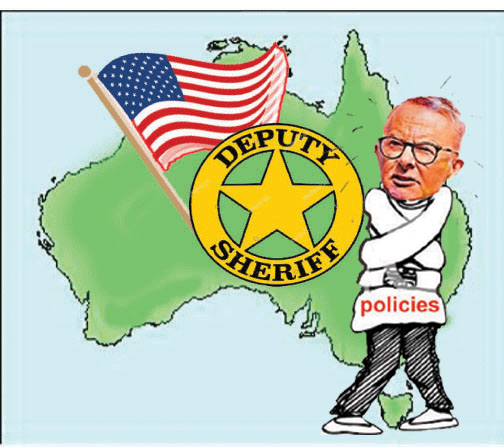
Well, Australia has decided to walk away from previous policy – and now will abstain from voting on the U.N. Treaty for the Prohibition of Nuclear Weapons.
That’s not that much, but it’s something.
Except for Gough Whitlam, I can’t recall any Australian Prime Minister diverging from our standard subservience to the USA. And look what happened to Gough!
I think that you can safely bet, that before this new decision about abstaining from voting, Anthony Albanese had a little chat with Joe Biden – along the lines of – “Are you sure that this OK, Joe?” Presumably Joe said “OK, but don’t make a big fuss about it”
You see, ever since World War 2, Australia has feared attack from someone – Russia? China? (It used to be Japan – but now we’re doing military exercises with them) And the USA would save us. Heck they’re saving us so thoroughly thaqt now we’ve got targets all over the place – Pine Gap, Western Australia, Darwin, – and before long – nuclear submarine bases.
Gough Whitlam saw what was happening, and wanted to ask uncomfortable questions about Pine Gap.
Ever since then, it’s been toe the U.S. line on everything military – Iraq, Afghanistan, Ukraine …. China.
The most significant obsequiousness is Australia’s cringing silence on the fate of our courageous citizen – Julian Assange.
We are expected to believe that Albanese is working quietly behind the scenes to free Julian Assange.
Well, I don’t believe that. I think that Albanese will do some deal with Biden that Assange will get home to Australia only if he has been humiliated, made to plead guilty, and eventually returned, a completely broken man, to his homeland.
Well, that would be a pretty gutless effort on Albanese’s part. But – a tad better than the Liberal’s fulsome adoration of America.
Alas, like the Australian Labor Party as a whole, Albanese is pretty limited. We need a new Gough.
Australia changes policy tack – moves in the direction of supporting the UN Treaty on the Prohibition of Nuclear Weapons.

Australia drops opposition to treaty banning nuclear weapons at UN vote
After former Coalition government repeatedly sided with US against it, Labor has shifted position to abstain
https://www.theguardian.com/world/2022/oct/29/australia-drops-opposition-to-treaty-banning-nuclear-weapons-at-un-vote— Daniel Hurst, 29 Oct 22,
Australia has dropped its opposition to a landmark treaty banning nuclear weapons in a vote at the United Nations in New York on Saturday.
While Australia was yet to actually join the Treaty on the Prohibition of Nuclear Weapons, the shift in its voting position to “abstain” after five years of “no” is seen by campaigners as a sign of progress given the former Coalition government repeatedly sided with the United States against it.
The foreign affairs minister, Penny Wong, said through a spokesperson that Australia had “a long and proud commitment to the global non-proliferation and disarmament regime” and that the government supported the new treaty’s “ambition of a world without nuclear weapons”.
The previous Coalition government was firmly against the Treaty on the Prohibition of Nuclear Weapons, a relatively new international agreement that imposes a blanket ban on developing, testing, stockpiling, using or threatening to use nuclear weapons – or helping other countries to carry out such activities.
Australia voted against opening negotiations on the proposed new treaty in late 2016 and did not participate in those talks in 2017. Since 2018 it has voted against annual resolutions at the UN general assembly and first committee that called on all countries to join the agreement “at the earliest possible date”.
That changed early on Saturday morning when Australia shifted its voting position to abstain. Indonesia, New Zealand, Malaysia and Ireland were among countries to co-sponsor this year’s supportive UN resolution.
Australia traditionally argued the treaty would not work because none of the nuclear weapons states had joined and because it “ignores the realities of the global security environment”.
It also argued joining would breach the US alliance obligations, with Australia relying on American nuclear forces to deter any nuclear attack on Australia.
But the treaty has gained momentum because of increasing dissatisfaction among activists and non-nuclear states about the outlook for disarmament, given that nuclear weapons states such as the US, Russia and China are in the process of modernising their arsenals.
The treaty currently has 91 signatories, 68 of which have formally ratified it, and it entered into force last year.
The Nobel peace prize-winning International Campaign Against Nuclear Weapons (Ican) had been urging Australia to vote in favour of the UN resolution on Saturday – or at least abstain in order to “end five years of opposition to the TPNW under the previous government”.
Three in four members of the Labor caucus – including Anthony Albanese – have signed an Ican pledge that commits parliamentarians “to work for the signature and ratification of this landmark treaty by our respective countries”.
Labor’s 2021 national platform committed the party to signing and ratifying the treaty “after taking account” of several factors, including the need for an effective verification and enforcement architecture and work to achieve universal support.

These conditions suggest the barriers to actually signing may still be high. But Gem Romuld, the Australia director of Ican, said the government was “heading in the right direction” and engaging positively with the treaty.
Romuld said it “would be completely self-defeating to wait for all nuclear-armed states to get on board” before Australia joined.
“Indeed, no disarmament treaty has achieved universal support and Australia has joined all the other disarmament treaties, even where our ally – the US – has not yet signed on, such as the landmine ban treaty,” Romuld said.
In 2017 the US, the UK and France declared that they “do not intend to sign, ratify or ever become party” to the new treaty, and the Trump administration actively lobbied countries to withdraw.
Wong told the UN general assembly last month that Australia would “redouble our efforts” towards disarmament because Russian president Vladimir Putin’s “weak and desperate nuclear threats underline the danger that nuclear weapons pose to us all”. https://www.theguardian.com/world/2022/oct/29/australia-drops-opposition-to-treaty-banning-nuclear-weapons-at-un-vote—
Reporters Without Borders leads 16 organisations urging UK Home Secretary to intervene in extradition of Julian Assange.

UK: RSF leads a coalition of 16 organisations in urging Home Secretary Suella Braverman to urgently intervene in Assange extradition
Reporters Without Borders (RSF) has led a coalition of 16 organisations in urging the new UK Home Secretary, Suella Braverman, to intervene in the US government’s request to extradite Wikileaks publisher Julian Assange. These groups, representing press freedom, free expression, and journalists’ organisations, have also requested a meeting with Braverman to discuss concerns in the case, after a request for a meeting with former Home Secretary, Priti Patel, went unanswered. The full text of the letter is below.
The Rt. Hon Suella Braverman
Secretary of State for the Home Department
2 Marsham Street
London
SW1P 4DF
7 October 2022
Dear Home Secretary,
We, the undersigned press freedom, free expression and journalists’ organisations, are writing to raise the case of WikiLeaks publisher Julian Assange and request you to urgently intervene to ensure he is not extradited to the United States.
In June your predecessor, Priti Patel, signed the order to extradite Mr Assange, despite widespread international concern that his extradition would have alarming implications for journalism and press freedom. In fact, many of the signatories in this letter wrote to Ms Patel warning that Assange’s prosecution “would set a dangerous precedent that could be applied to any media outlet that published stories based on leaked information, or indeed any journalist, publisher or source anywhere in the world.”
Our request for a meeting was unfortunately left unanswered. We are therefore now asking you, Home Secretary, to meet with the signatories of this letter to discuss the case in detail.
We urge you, Home Secretary, to intervene in this extradition request as a matter of priority. In the US, Mr Assange would face trial on 17 counts under the Espionage Act and one count under the Computer Fraud and Abuse Act, which combined could see him imprisoned for up to 175 years. He is highly likely to be detained there in conditions of isolation or solitary confinement despite the US government’s assurances, which would severely exacerbate his risk of suicide.
Further, Mr Assange would be unable to adequately defend himself in the US courts, as the Espionage Act lacks a public interest defence. This would not align with the values of fairness, justice and a public commitment to media freedom that the UK continues to promote.
You now have an opportunity to ensure that this extradition does not proceed. An opportunity to demonstrate through action that the UK means what it says in its commitment to media freedom. And most importantly, the opportunity to reunite Mr Assange with his young family after many years of separation – an act that may ultimately save his life. We ask you to seize this opportunity as a matter of urgency and ensure that the UK government acts in the interest of journalism and press freedom and does not enable the US government to continue to pursue this more than decade-old, politically motivated case.
We look forward to hearing from you and discussing the case further. We would be grateful for a prompt response. Please reply via Azzurra Moores at Reporters Without Borders (RSF) at amoores@rsf.org.
Sincerely,
Rebecca Vincent, Director of Operations and Campaigns, Reporters Without Borders (RSF)
Laurens Hueting, Senior Advocacy Officer, European Centre for Press and Media Freedom (ECPMF)
Séamus Dooley, Assistant General Secretary, National Union of Journalists
Ricardo Gutiérrez, General Secretary, European Federation of Journalists (EFJ)
Ruth Smeeth, Chief Executive, Index on Censorship
Mark Johnson, Legal & Policy Officer, Big Brother Watch
Peter Tatchell, Director, Peter Tatchell Foundation
Dr Suelette Dreyfus, Executive Director, Blueprint for Free Speech
Romana Cacchioli, Executive Director, PEN International
Daniel Gorman, Director, English PEN
Ricky Monahan Brown, President, Scottish PEN
Alix Parodi, President, PEN Suisse Romand
Tanja Tuma, President, Slovene PEN
Alix Parodi, President, PEN Suisse Romand
Zoë Rodriguez, joint President, PEN Sydney, and Chair of the PEN International Women Writers
Jesper Bengtsson, President, Swedish PEN


‘Small but important step’: Australia’s shift on treaty banning nuclear weapons applauded

Australia abstained from voting on the UN treaty banning nuclear weapons for the first time in five years. Previously, the country had opposed the treaty.
SBS News 29 Oct 22,
Anti-nuclear campaigners welcomed the shift in the Australian government’s position on a UN treaty banning the proliferation of nuclear weapons.
Australia was among 14 nations to abstain from voting. There were 43 nations who voted against the UN resolution co-sponsored by New Zealand, Indonesia, Malaysia and Ireland. A total of 124 nations voted in favour of the motion.

The Australian branch of the International Campaign to Abolish Nuclear Weapons (ICAN) described the move as “a small but important step forward”.
“ICAN looks forward to a formal decision by the Albanese government to sign and ratify the TPNW (the treaty) – in line with its pre-election pledge,” the group said.
The overwhelming majority of Australians support joining this treaty, and progress towards disarmament is more urgent than ever.”
ICAN said it was encouraging to see that the majority of nations stood united on the risks of nuclear war, particularly “in light of the war in Ukraine”.
It ends years of Canberra siding with the United States by actions on the treaty to ban the deadly weapons and comes as Australia looks to nuclear submarines to boost its navy…………………………………
Australia also recently faced criticism from nuclear powers for joining a Pacific push to help deal with the consequences of nuclear testing.
New Zealand, a signatory to the nuclear weapons ban, has previously pushed for Australia to join.
A total of 93 countries have signed the treaty, including 68 nations that have formally ratified it. https://www.sbs.com.au/news/article/small-but-important-step-australias-shift-on-treaty-banning-nuclear-weapons-applauded/j3cz2yr7l
War, propaganda, and blindness

We are easy to convince because we know nothing about Ukrainian history and culture.
Nato propaganda tells us about the real sufferings of the Ukrainians, but it does not mention the eight years of torture, murder and massacres that preceded it.
We do not see that we are supporting the very ideas we believe we are fighting against
VoltaireNet by Thierry Meyssan, Translation Roger Lagassé 28 Oct 22
Propaganda makes you stupid. We know that the Ukrainian integral nationalists have committed abominable massacres, especially during the Second World War. But we don’t know what they have been doing on our doorstep for the last thirty years, including the civil war they have been waging for the last eight years. Our own stupidity allows us to endure the war cries of our political leaders on the side of these criminals.
When war comes, governments always believe that they must boost the morale of their people by showering them with propaganda. The stakes are so high, life and death, that debates get tougher and extremist positions become popular. This is exactly what we are witnessing, or rather how we are being transformed. In this game, the ideas defended by some and others have nothing to do with their ideological presuppositions, but with their proximity to power
In the etymological sense, propaganda is just the art of convincing, of propagating ideas. But in modern times, it is an art that aims at reconstructing reality in order to denigrate the adversary and magnify one’s own troops.
Contrary to a widespread idea in the West, it was not the Nazis or the Soviets who invented it, but the British and the Americans during the First World War [1].
Today, Nato coordinates efforts in this area from its Strategic Communication Centre in Riga, Latvia [2]. It identifies the points on which it wants to act and organizes international programs to carry them out.
For example, NATO has identified Israel as a weak point: while former Prime Minister Benjamin Netanyahu was a personal friend of Ukrainian President Volodymyr Zelensky, his successor, Naftali Bennett, recognized the validity of Russian policy. He even advised the return of Crimea and Donbass and, above all, the denazification of Ukraine. The current Prime Minister, Yair Lapid, is more hesitant. He does not want to support the fundamentalist nationalists who massacred a million Jews shortly before and during the Second World War. But he also wants to stay on good terms with the West.
To bring Israel back into line, Nato is trying to persuade Tel Aviv that in case of a Russian victory, Israel would lose its position in the Middle East [3]. To this end, it is spreading the lie that Iran is Russia’s military ally as widely as possible. The international press is constantly claiming that Russian drones are Iranian on the battlefield, and soon the medium-range missiles will be too. Yet Moscow knows how to manufacture these weapons and has never asked Tehran for them. …………………….
The British, on the other hand, traditionally excel in activating networked media and enlisting artists. MI6 relies on a group of 150 news agencies working within the PR Network [4]. They convince all these companies to take up their imputations and slogans.
They are the ones who successively convinced you that President Vladimir Putin was dying, then that he had gone mad, or that he was facing strong opposition at home and that he would be overthrown by a coup. Their work continues today with cross interviews with soldiers in Ukraine. You hear Ukrainian soldiers say they are nationalists and Russian soldiers say they are afraid but must defend Russia. You hear that Ukrainians are not Nazis and that Russians, living under a dictatorship, are forced to fight.
………………………………………………… We are easy to convince because we know nothing about Ukrainian history and culture.
………….. We in Ukraine are unaware of the atrocities of the interwar period and the Second World War, and have a vague idea of the violence of the USSR. We ignore that the theoretician Dontsov and his disciple Stepan Bandera did not hesitate to massacre all those who did not correspond to their “integral nationalism”, first the Jews in this Khazar country, then the Russians and the Communists, the anarchists of Nestor Makhno, and many others. The “integral nationalists”, who had become admirers of the Führer and deeply racist, returned to the forefront with the dissolution of the USSR [6]. …………………………………
Modern Ukraine has patiently built its Nazi regime. After proclaiming the “genetic heritage of the Ukrainian people”, it enacted various laws. The first one grants the benefit of human rights by the state only to Ukrainians, not to foreigners. The second defines who the majority of Ukrainians are, and the third (enacted by President Zelensky) who the minorities are. The trick is that no law speaks about Russian speakers. Therefore, by default, the courts do not recognize them the benefit of human rights.
Since 2014, a civil war has pitted the integral nationalists against the Russian-speaking populations, mainly those of Crimea and Donbass. 20,000 deaths later, the Russian Federation, applying its “responsibility to protect,” launched a special military operation to implement Security Council Resolution 2202 (Minsk Agreements) and end the martyrdom of Russian speakers.
…………………………. Nato propaganda tells us about the real sufferings of the Ukrainians, but it does not mention the eight years of torture, murder and massacres that preceded it. It talks about “our common values with Ukrainian democracy”, but what values do we share with the integral nationalists and where is the democracy in Ukraine?
We do not have to choose between one or the other, but only to defend peace and therefore the Minsk Agreements and resolution 2202.
War drives us crazy. There is a reversal of values. The most extremist triumph. Some of our ministers speak of “stifling Russia” (sic). We do not see that we are supporting the very ideas we believe we are fighting against https://www.voltairenet.org/article218325.html#social
Global heating levels threaten to destroy economies

Levels of warming threaten to ‘destroy economies’, says UN. The world
is already seeing increasing floods, storms, heatwaves and wildfires as a
result of climate change. The planet is heading for “climate
catastrophe”, with countries significantly behind in cutting global
warming pollution, the UN has warned. UN Secretary General Antonio Guterres
said countries are bracing for “economy-destroying levels of global
heating”.
Express 27th Oct 2022
https://www.express.co.uk/news/nature/1688646/climate-change-warming-environment-un-UNEP-CAP26
“The voices in this world which have the most power belong to those who are destroying it”, writes Greta Thunberg
“The voices in this world which have the most power belong to those who
are destroying it”, writes Greta Thunberg in the outro of her spectacular
new book. It is a sentence which encapsulates the skill with which she can
speak the blatant truths our society can scarcely acknowledge, but it is
also a damning conclusion and part of a revolutionary call to arms.

Her zero-tolerance level for bulls*** is the beacon which has not only won her
acclaim, but also lights the way through this collection of essays, evidence and potential solutions written by an astonishing list of experts,
scientists, activists and authors.
Independent 27th Oct 2022
Australia’s biggest states have set stunning renewable plans. Now we need a national strategy — RenewEconomy

Australia makes surfboards, so why not turbine blades? We definitely need a national strategy to deliver on our ambitious state renewable plans. The post Australia’s biggest states have set stunning renewable plans. Now we need a national strategy appeared first on RenewEconomy.
Australia’s biggest states have set stunning renewable plans. Now we need a national strategy — RenewEconomy
October 28 Energy News — geoharvey

Opinion: ¶ “How Electric Vehicles May Be Able To Provide Backup Power For Homes” • GM announced a new business arm called GM Energy this month. It is set to offer bidirectional EV charging units that can send power back to homes and the electrical grid, Business Insider reports. GM, meanwhile, is set to partner […]
October 28 Energy News — geoharvey
Nuclear zealot Jonathon Mead – in charge of the nuclear submarine deliberations? Wants to “cultivate a nuclear mindset”
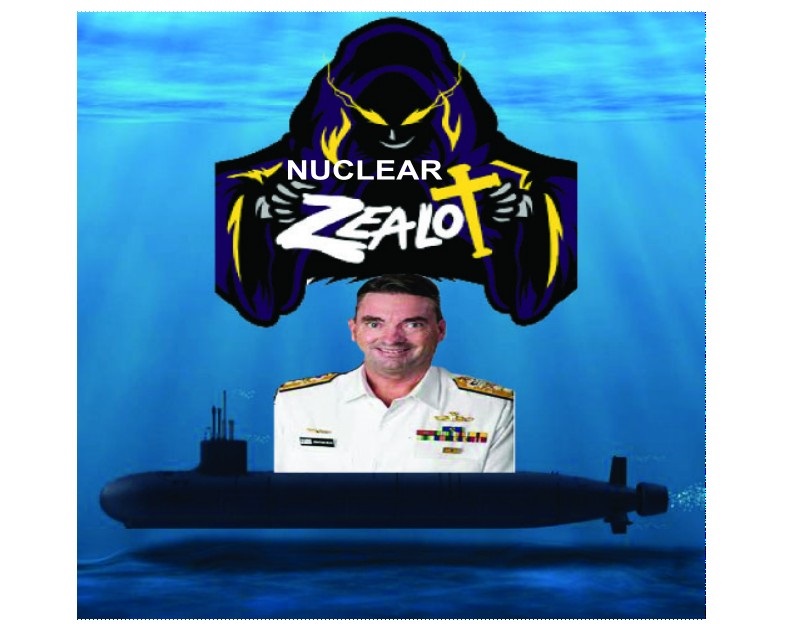
Mead’s Nuclear Powered Submarine Taskforce will deliver recommendations on options to the government….. it can only be done with the unfettered support of all three nations.…… the support of the Australian people will be essential for the plan to work.
DEFENCE SPECIAL REPORT
Cultivating a nuclear mindset, https://www.theaustralian.com.au/special-reports/cultivating-a-nuclear-mindset/news-story/15e1b23576f3301cdf2e9b7566811bd0 By Brendan Nicholson, October 27, 2022
After a year of intense research, the head of a 350-strong Defence taskforce is confident the Royal Australian Navy will be equipped with nuclear-powered submarines.
Vice Admiral Jonathan Mead tells The Australian’s Defence Special Report he believes “absolutely” that the massive and highly complex industrial-scale endeavour is viable.
Set up after the AUKUS technology sharing agreement was signed by Australia, the US and UK a year ago, Mead’s Nuclear Powered Submarine Taskforce will deliver recommendations on options to the government by March next year and he says the work is on track.
The government will choose the design. Mead says a range of options has emerged. He won’t be drawn on specifics but says it can only be done with the unfettered support of all three nations. “We are providing options to our government on what we think is the optimum pathway, and we are working on that with our partners. I am very confident that we will be in a position for government to make an announcement next year on an optimal pathway, in conjunction with the other nations’ leaders.”
Mead cautions that a whole-of-government approach with very strong backing from industry and the support of the Australian people will be essential for the plan to work. “Defence cannot do this by itself. This social licence is a very important aspect for us. We need Australians to have confidence in our ability to build and operate these submarines.”
Submarines operate at the highest end of war fighting capability, says Mead, and they deliver significant deterrence. “When you put a nuclear-powered submarine (SSN) in the mix, you’ve got almost an exponential increase in speed, manoeuvrability, survivability, endurance, lethality in their ability to launch long range missiles, to operate around the region and to protect Australia.”
The government had made it clear that submarines were a fundamental part of Australia’s defence capability. Defence Minister Richard Marles has said the need for haste is dictated by deteriorating strategic circumstances, sharpening competition and rapid military modernisation.
The task force recommendations will go to the government at the same time as the Defence Strategic Review by former defence and foreign minister Stephen Smith and former Defence force chief Sir Angus Houston.
“We are briefing them so that they can take on board our body of work as well,” Mead says.
Members of Mead’s team often work through the night in talks with the US and UK partners. They include personnel from all three services, the Lucas Heights reactor, from the nuclear regulator and a range of departments.
He won’t comment on the argument that an interim conventionally powered submarine will be needed to avoid a capability gap, but he says the government has given him very clear direction to develop options that will deliver the nuclear-powered capability “in an expeditious manner”.
“I’m only looking at nuclear,” he says. “We are working with the US and UK on a range of options that we think can deliver the capability in an expeditious timeframe.”
Any decision to opt for an interim conventional submarine would be up to the government and Defence.
No one doubts that the submarine force will be eye-wateringly expensive.
The taskforce proposal will be presented to the government at the same time as the results of the Smith/Houston strategic review – and at a time of economic pressures and invidious trade-offs when the world is emerging from the Covid pandemic while facing a dangerous strategic environment. Marles has undertaken to strengthen the lethality and deterrent effect, but that assurance comes as demands for support for services such as the NDIS and veteran’s welfare increase.
With a strong social agenda, the government faces painful choices as it deals with a complex set of interlocking problems, and clear choices on ADF capabilities will be vital.
The review will focus on strengthening the ADF’s deterrent effect by getting sophisticated weapons and platforms into the hands of its men and women faster. Areas for rapid development include hypersonics and cyber. Some programs will be accelerated. The reviewers will be looking at options, possibly other than submarines, for long range strike capability. Missiles and long-range bombers such as the B-21 will be in that mix.
Australia needs to be able to defend itself against sophisticated threats – and to give an adversary pause to consider whether an attack is a good idea. While much is discussed about potential flashpoints such as Taiwan, Australia must be able to defend itself against unexpected threats.
Threats may come in the traditional “domains” of sea, land and air – or in the shape of cyber-attacks, or threats to democracy. Greater interdependencies mean threats coming from different domains at once, more lethal and with greater range. Great power adversaries can operate in all these domains making defending against them much more complex and expensive.
While there’s a need for hard power to deter, that can’t be the only focus. Defending the nation means putting more resources into diplomacy to develop deeper relationships with neighbours, and improving intelligence gathering to ensure threats are identified and understood as they develop. While Australia must be strong enough to deal with actors who see conflict as a means of getting their way, it needs to reassure friends that it has a defensive mindset…………………………
As these debates evolve, Mead has identified the optimal pathway to SSNs, with nine components underpinning the daily work of the task force. “If we can’t put a green tick to each of those nine components, then the boat becomes almost a meaningless concept,” he says.
First is Australia’s strategic situation and the policies set by the government to deal with it.
………. Mead won’t say where the design choice will land – on the US Virginia or the SSNX to follow it, Britain’s Astute which is about to go out of production, or the SSNR which will follow it. Or something else.
“Clearly these are decisions for government, and not just our government, but also the partners. They need to put it through their political systems.”
He says nuclear submarines will be built in Australia. “That’s very important to ensure Australia has a sovereign capability. They are likely to be built on land earmarked for the previous Attack-class submarine project on land adjacent to South Australia’s Osborne Naval Shipyard.”
Number five is the need to set up an industrial base that can support nuclear-powered submarines and a supply chain to build and maintain them – and to provide components for partner submarines, optimising the industrial bases of all three countries.
“If we are building a component for an Australian build and that’s what our partners need, then it would be wise for us to identify things we can assist them with. All countries have constrictions and bottlenecks.”
Teams from the US and UK have visited Australia to see what might be available here………….
An option is for Australia to do a deeper level of maintenance on US and UK submarines during their visits to bases such as HMAS Stirling, in WA. That could gradually increase to major maintenance.
“We need to start sending people from our industrial base to the US and UK to be embedded in their construction and maintenance yards so that when submarines visit Australia our people will have the necessary experience. ……….
For six months, Australian submariners have been working in US submarines “at the back end where the reactor is”. The UK has also committed to embarking Australians on its boats.
…………….There are signs all over the task force precinct stressing the importance of building a “nuclear mindset”, and each member’s ID card comes with that message.
Mead notes a report by the US director of Naval Reactors that in 65 years of operation, US Navy nuclear-powered warships and their support facilities have had no discernible effect on public health or the environment.
“It’s safe for the people, and it’s safe for the environment. We intend to learn from the US and UK so that we can demonstrate identical standards,” he says. “This nuclear mindset is a way of thinking within our people, within navy, and within other areas of the department…………..
………………………..Mead says the ninth crucial element is the need to clearly explain to Australians, and to the US and UK, what the program is all about and how the safety and reliability of the submarines can be assured.
-Brendan Nicholson is editor of ASPI’s commentary and analysis site, The Strategist.
Flaps up and blinkers on: politicians happy with the unknown unknowns of fighting war
the system had “failed utterly” when former prime minister John Howard “alone decided and authorised ADF lethal force elements to be joined with the US-led coalition invasion of Iraq … preceding the public announcement on March 18, 2003, only to be followed by the bombing of Iraq in the early hours of the following morning.
“Howard’s decision has since been revealed to have been based on false and misleading intelligence. History has also revealed serious defects in the decision to commit Australian forces to war in Vietnam, to Afghanistan, to Syria not to mention other secret clandestine intelligence collection operations in the post-WW2 period,”
Michael West Media by Zacharias Szumer | Oct 27, 2022,
When it comes to the powers vested in politicians to send Australians into foreign conflicts, the major parties stand by the cliche: if it ain’t broke don’t fix it. But the system is broken, as war reform advocates have told Zacharias Szumer.
For advocates of war powers reform, Labor’s recently announced Inquiry into International Armed Conflict Decision Making hasn’t got off to a promising start. The defence minister and defence subcommittee deputy chair have already come out against parliamentary approval for overseas military deployments, the desired reform that advocates are seeking.
The Minister of Defence, Richard Marles, has said he is “firmly of the view” that the current system is “appropriate and should not be disturbed”. In a letter referring the Inquiry into International Armed Conflict Decision Making to the Joint Standing Committee on Foreign Affairs, Defence and Trade, Marles said the current arrangements “enable the duly elected government of the day to act expeditiously on matters of utmost national importance in the interests of the safety and security of our nation and its people.”
Greens senator Jordon Steele-John, the party’s spokesperson for foreign affairs, peace and nuclear disarmament, told MWM that “Marles’ comments reflect a Labor Party that is self-conflicted. We see Richard Marles endorsing the current system, meanwhile many members of the Labor caucus are pushing for an inquiry.”
Labor MPs Julian Hill and Josh Wilson put forward the resolution at the last ALP conference that got the inquiry added to the party’s policy platform. The defence subcommittee, which is handling the inquiry, is chaired by Hill and also includes Wilson. However, the subcommittee doesn’t feature anyone from the Greens, who have long championed requiring parliamentary approval before overseas deployment of troops.
Liberal MP Andrew Wallace, the deputy chair of the defence subcommittee, recently told the Guardian that he was “surprised that the Labor Party is even contemplating” a change to a system that had “stood us in good stead for many many years.”
“The executive has got to be given the power to govern the country and particularly in relation to national security issues. I don’t care whether it’s Labor or Liberal – they can’t be hamstrung by the parliament,” he added.
Steele-John said that it was “sad to see Andrew Wallace and the Liberals so adamantly opposed to an inquiry on this matter, but transparency, investigating and making decisions based on that investigation are not the attributes of the party that thought invading Iraq was a good idea.”
Greens senator David Shoebridge, the party’s spokesperson for defence and veterans’ affairs, echoed Steele-John’s sentiments. “This is a disturbingly accurate insight into the attitude of the Coalition and many in Labor – they don’t want parliamentary democracy to get in the way of their ‘parties of government’ club. Imagine letting government be ‘hamstrung by parliament’,” the senator tweeted earlier in October.
“Seeing a democratically elected politician so readily reject oversight by parliament on “national security” issues should worry us all. Democracy is not optional in times of crisis or when the drumbeats of war start,” Shoebridge added.
Steele-John also questioned Marles and Wallace coming out against reform so soon after the inquiry was announced. “I hope to see all political parties and MPs approach this committee in good faith,” he said. “The ability for all MPs and parties to scrutinise the decision of ADF deployment will add a level of transparency and accountability designed to avoid repeating the catastrophic mistakes the executive government has made in the last 20 years,” he said.
Beyond the halls of parliament
Peter Hayes, a former RAAF group captain and Vietnam War veteran, told MWM that he was “disappointed” by Marles’ statement, which he said “seemed to pressure the Inquiry rather than to await with an open mind its conclusions and recommendations.”
“The inquiry could have accepted submissions from the Defence Department and others without any need for Minister Marles to make his personal views public,” said Hayes, who has also previously served as Director of Information Warfare at Australia’s Air Command Headquarters.
Hayes also took issue with Wallace’s argument that the current system had “stood us in good stead for many many years”, saying that the system had “failed utterly” when former prime minister John Howard “alone decided and authorised ADF lethal force elements to be joined with the US-led coalition invasion of Iraq … preceding the public announcement on March 18, 2003, only to be followed by the bombing of Iraq in the early hours of the following morning.”
“Howard’s decision has since been revealed to have been based on false and misleading intelligence. History has also revealed serious defects in the decision to commit Australian forces to war in Vietnam, to Afghanistan, to Syria not to mention other secret clandestine intelligence collection operations in the post-WW2 period,” Hayes added………………………………….
if the aim is to minimise threats against Australia or its citizens, Fernandes does not believe the system has kept us in “good stead”:
In Afghanistan, the real objective was to show Australia’s relevance to the United States. We stayed because of US domestic politics rather than the military situation on the ground. After the Taliban’s comeback in 2008, the Obama administration did not want to be attacked in domestic elections for being unable to defeat the Taliban. And we can see the results – in 2001, Islamic terrorists were based in Kabul, Kandahar, Jalalabad and a few pockets of rural Afghanistan. Twenty years later, the Taliban is back in power, and US wars – enabled by the intelligence facility at Pine Gap – have resulted in a massive expansion of terrorist activity across the globe.
Fernandes’ book Island Off the Coast of Asia contains a proposal for a new system under which the Australian parliament would have greater control over military deployments. He will reportedly be making a submission to the inquiry based on this proposal.
Public submissions to the inquiry are open until November 18. https://michaelwest.com.au/flaps-up-and-blinkers-on-politicians-happy-with-the-unknown-unknowns-of-fighting-war/
Wong, Marles schedule US trip as nuclear submarine deadline nears
Financial Review, Andrew TillettPolitical correspondent, 26 Oct 22,
Annual top-level foreign affairs and defence talks will be held in Washington in December, allowing senior officials to lock down final details over Australia’s planned purchase of nuclear-powered submarines before the Albanese government publicly outlines its plans for the multibillion-dollar project.
With this year’s federal budget eschewing major funding decisions in the defence portfolio, The Australian Financial Review understands the US will for the third year running host the annual AUSMIN talks between the Australian and US governments………..
One defence source suggested that holding talks in the US would result in the ministers being accompanied by a bigger-than-usual cohort of Australian officials to speak to US counterparts from the Defence and Energy departments about the submarine project.
The nuclear submarine taskforce, which is examining the best options for Australia to acquire nuclear submarine technology from the US and UK under the AUKUS partnership, is due to report to the Albanese government in March after an 18-month study on what submarine to acquire, where it will be built, delivery timetable, cost and any interim measures required to avoid a capability gap.
Separately, former defence minister Stephen Smith and former Defence Force chief Angus Houston are conducting a Defence Strategic Review looking at the military’s weapons needs in light of deteriorating regional security. That review is also due in March.
Both reviews will outline billions of dollars in new spending for Defence that will need to begin to be accommodated when the next budget is handed down in May.
This year’s budget papers fail to reflect the significant increase in funding required for existing projects as construction gets under way in earnest…………………………….. more https://www.afr.com/politics/federal/wong-marles-schedule-us-trip-as-nuclear-submarine-deadline-nears-20221026-p5bsyp
‘Australia’s greatest threat is from within’: Why we’re unprepared for the health effects of climate change
‘Australia’s greatest threat is from within’: Why we’re unprepared for the health effects of climate changeAustralia’s lack of a national climate change and health adaptation plan is putting lives at risk and our transition to renewables is “unacceptably slow”, according to a report.
1 This month
17 October, Free Public Talk on Nuclear Issues in South Australia
David Noonan will speak on public interest concerns over the new Roxby Downs Indenture Act 2026 on BHP copper-uranium mining and ore processing in SA, and on how AUKUS may face SA with a High-Level nuclear waste agenda.
Dr Jim Green will discuss international developments in the field of nuclear power including ‘small modular reactors’ and Generation 4 ‘advanced’ nuclear reactor concepts.


Help Aunty Sue Protect Her Land and Sacred Sites From Destructive Rocket Testing.
.

Australians deserve the truth
about
AUKUS – https://aukuspublicinquiry.com/

PETITION – To: Prime Minister Anthony Albanese and the Australian Labor Government

of the week – Australians for War Powers Reform (AWPR)
To see nuclear-related stories in greater depth and intensity

