October 21 Energy News — geoharvey

Opinion: ¶ “Methane is a global climate concern, but new technologies offer hope” • Scientists estimate we could slow the worldwide rate of warming as much as 30% by cutting methane pollution from human-caused sources as quickly as possible. New technologies enable us to locate and measure methane emissions faster and with greater precision than […]
October 21 Energy News — geoharvey
Scandalous conflicts of interest in Australia’s advice from USA on nuclear submarines.


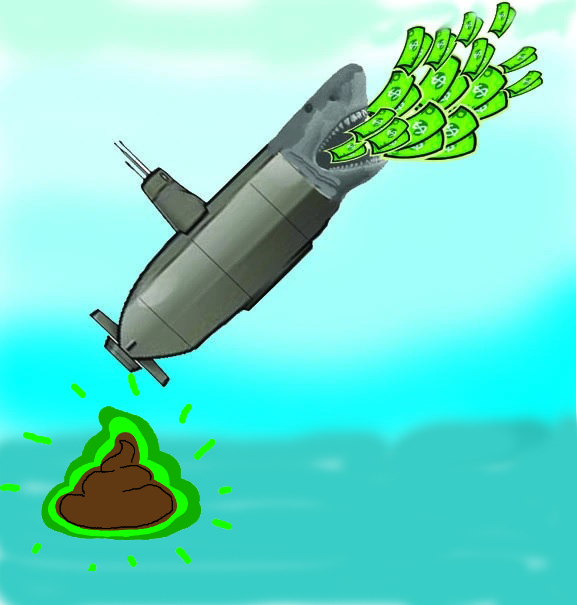
To an extraordinary degree in recent years, Australia has relied on high-priced American consultants to decide which ships and submarines to buy and how to manage strategic acquisition projects. In addition to the six retired U.S. admirals, the government of Australia has hired three former civilian U.S. Navy leaders and three U.S. shipbuilding executives.
RETIRED U.S. ADMIRALS ADVISE AUSTRALIA ON DEAL FOR NUCLEAR SUBMARINES,
Washington Post, By Craig Whitlock and Nate Jones 19 Oct 22, Since 2015, Australia has hired the admirals and other former Navy officials as high-dollar consultants on shipbuilding,
Two retired U.S. admirals and three former U.S. Navy civilian leaders are playing critical but secretive roles as paid advisers to the government of Australia during its negotiations to acquire top-secret nuclear submarine technology from the United States and Britain.
The Americans are among a group of former U.S. Navy officials whom the Australian government has hired as high-dollar consultants to help transform its fleet of ships and submarines, receiving contracts worth as much as $800,000 a person, documents show.
All told, six retired U.S. admirals have worked for the Australian government since 2015, including one who served for two years as Australia’s deputy secretary of defense. In addition, a former U.S. secretary of the Navy has been a paid adviser to three successive Australian prime ministers.
A Washington Post investigation found that the former U.S. Navy officials have benefited financially from a tangle of overlapping interests in their work for a longtime ally of the United States. Some of the retired admirals have worked for the Australian government while simultaneously consulting for U.S. shipbuilders and the U.S. Navy, including on classified programs.
One of the six retired U.S. admirals had to resign this year as a part-time submarine consultant to the Australian government because of a potential conflict of interest over his full-time job as board chairman of a U.S. company that builds nuclear-powered subs.
Australia has leaned heavily on former U.S. Navy leaders for advice during its years-long push to upgrade its submarine fleet, a seesaw effort that has rattled long-standing alliances and remains beset by uncertainty. After abruptly canceling a pact with France last year, Australia is now trying to finalize a deal with the United States and Britain to build a fleet of nuclear-powered submarines that could cost an estimated $72 billion to $106 billion, when adjusted for inflation over the length of the program.1
The outcome will have global ramifications and could alter the military balance of power among the United States, its allies and China. Helping the Australians build nuclear-powered submarines would enhance U.S. national security in Asia overall but could strain U.S. shipyards and delay the Pentagon’s own plans to add more subs to its fleet, according to U.S. military officials and defense analysts.
The Australian government has kept details of the Americans’ advice confidential. The Post was forced to sue the U.S. Navy and State Department under the Freedom of Information Act (FOIA) to obtain documents that shed light on the admirals’ involvement.
Under federal law, retired U.S. military personnel as well as reservists must obtain approval from the Pentagon and the State Department before they can accept money or jobs from foreign powers. The law applies to retirees — generally those who served at least 20 years in uniform — because they can be recalled to active duty. Records show that each of the six retired admirals followed the rules and received U.S. authorization to work for the government of Australia.
Between 2015 and 2021, the Navy received 95 applications from retirees to work for foreign governments — and approved every one, according to the documents that The Post obtained under FOIA. Government lawyers fought the release of the records, arguing that they were of little public interest and that disclosing basic details would violate the retirees’ privacy
For three of the retired admirals on Australia’s payroll, the U.S. Navy spent less than a week reviewing their paperwork before granting permission, the documents show. Two of the admirals applied to work for the Australians within one month of their retirement from the military.
Officials at the White House and the U.S. Navy declined to comment for this article.
Compared with the U.S. Navy, which has about 290 deployable ships and submarines, Australia’s fleet is small, with only 43 vessels. But Australia’s strategic importance looms large because of its proximity to the Indian and Pacific oceans, as well as the world’s busiest shipping lanes, near the contested waters of the South China Sea.
If Australia acquires nuclear subs, it will become the seventh country to do so. With only 26 million people, Australia would be by far the least populous member of the club.
To an extraordinary degree in recent years, Australia has relied on high-priced American consultants to decide which ships and submarines to buy and how to manage strategic acquisition projects. In addition to the six retired U.S. admirals, the government of Australia has hired three former civilian U.S. Navy leaders and three U.S. shipbuilding executives.
Since 2015, those Americans have received consulting deals worth about $10 million combined, according to Australian contracting records posted online.
The six retired U.S. admirals who have worked for the Australian government declined to be interviewed or did not respond to requests for comment.
Some Australian lawmakers and defense analysts have expressed doubts about whether the U.S. consultants have been worth the expense. The Americans’ recommendations have influenced a series of ill-fated decisions by Australian officials that could delay the arrival of any new submarines until 2040, almost a decade later than planned.
“We were paying a lot of money [for advice] and it wasn’t obvious to me that we were getting value for money,” said Rex Patrick, a former member of the Australian Senate who has criticized the government’s submarine acquisition plans.
$6.8 million for advice on an aging fleet
In September 2021, after years of futile attempts to replace its aging fleet of six submarines, the government of Australia announced two decisions that surprised the world.
First, it abruptly canceled a long-standing $66 billion agreement to buy a dozen French diesel-powered subs. Then it revealed it had reached a historic accord instead to acquire nuclear propulsion technology for submarines from the United States and Britain……………………………………………….
As Australia negotiates with the United States, it is paying for expert advice from two people who once served in American uniforms: retired U.S. admirals William Hilarides and Thomas Eccles……………………………………….
The influx of American shipbuilding consultants in Australia began eight years ago…………………………………………………………………………………..
The Australian government created additional naval advisory committees — and stocked them with Americans.
In October 2016, Australian officials announced a new Naval Shipbuilding Advisory Board with Winter, the former Navy secretary, serving as the chairman. He was joined by three retired admirals: Eccles, Hilarides and Sullivan.13………………………………………
Marcus Hellyer, a senior defense analyst with the Australian Strategic Policy Institute, a nonpartisan think tank based in Canberra, said the advisory panels could have used more European perspectives to balance out those of the Americans. Unlike the U.S. Navy, he noted, the Australian navy does not design its own ships from scratch and is accustomed to relying on foreign models.
“It’s a very different kettle of fish to the U.S. system,” he said.
A carousel of consultants
By 2019, Australia’s landmark submarine deal with France appeared to be in jeopardy. Delays plagued the design phase. Projected costs rose. Doubts spread about whether the Shortfin Barracudas, which the Australians dubbed their Attack class of subs, would be capable of deterring China’s more imposing undersea fleet.
The American carousel of hired help continued to spin. Sullivan, the retired vice admiral, left the shipbuilding advisory board in 2019. That same year, Johnson resigned as Australia’s deputy defense secretary. But the Australian government added three more U.S. civilian consultants to its advisory panels.
Australian lawmakers grew impatient with the submarine program’s delays and irritated by the Australian government’s unwillingness to let its highly paid U.S. advisers answer questions.
The American carousel of hired help continued to spin. Sullivan, the retired vice admiral, left the shipbuilding advisory board in 2019. That same year, Johnson resigned as Australia’s deputy defense secretary. But the Australian government added three more U.S. civilian consultants to its advisory panels.
Australian lawmakers grew impatient with the submarine program’s delays and irritated by the Australian government’s unwillingness to let its highly paid U.S. advisers answer questions.
‘It’s confidential’
In June 2021, worried about the fate of the submarine agreement with France, the Australian Senate insisted on hearing directly from Hilarides and senior Australian defense officials.
Lawmakers wanted answers: Had the American consultants urged the Australian government to consider modifying, or even killing, the Attack-class submarine deal?
Testifying remotely from the United States, Hilarides was as tight-lipped as Winter had been.
“Because that advice is used to support government decision-making, it’s confidential,” Hilarides said.
Three months later, the Australian government canceled the submarine contract with the French. It also announced a new three-way defense alliance with the United States and Britain, including an agreement to admit Australia to the exclusive club of nations with nuclear-powered submarines.
Only four other countries — China, Russia, France and India — operate nuclear subs. Brazil is trying to develop nuclear reactors for submarines, but its progress has been slow.
Left undecided was whether Australia would buy U.S. or British nuclear subs, and where they would be built. But defense analysts predicted the United States would probably win out.
Australian lawmakers soon began to raise questions about the American consultants and their connections to the U.S. submarine industry.
Donald, the retired four-star admiral on Australia’s Submarine Advisory Committee, has also served as chairman of the board of Huntington Ingalls Industries since 2020. The defense contractor, based in Newport News, Va., is the maker of Virginia-class submarines, the same model that the government of Australia was now thinking about buying.
At a parliamentary hearing in October 2021, a senior Australian defense official acknowledged that Donald’s role with Huntington presented a potential conflict of interest. But the official said the Australian government and Donald hadn’t yet decided if it was necessary for him to resign as a consultant.
Donald remained on the committee for six more months. In his written response to questions, Donald said he resigned in April to avoid any conflicts after “it became evident” his committee “would need to become involved in providing independent critical assessment” on acquiring nuclear-powered subs.
But Australia is still paying other Americans for advice on how to negotiate with the U.S. government.
Winter, the former U.S. Navy secretary, registered with the U.S. Justice Department in September 2021 as a foreign lobbyist working for the Australian prime minister’s office. In his disclosure form, Winter said he would be paid $6,000 a day, plus expenses, to support Australia during its nuclear submarine talks with Washington.15………………………………………………………
Australia will almost certainly have to buy its first nuclear subs off American or British production lines.
U.S. Navy and British Royal Navy officials, however, say their shipyards are booked solid making their own submarines. The only way to squeeze in orders from Australia would be to spend billions expanding U.S. or British shipyards.
Hellyer, the Australian defense analyst, said it is hard to envision a scenario under which Australia would receive its first nuclear submarine before 2040. With the Collins-class vessels scheduled for retirement a decade from now, that could leave Australia without submarines for eight years.
“I can’t really see what the way forward is at the moment,” he said. “The whole thing has been completely disastrous.”
About this story
Photos used in the card illustrations from Department of Defense.
Editing by David Fallis and Sarah Childress. Research by Alice Crites. Copy editing by Martha Murdock and Christopher Rickett. Photo editing by Robert Miller and Wendy Galietta. Video editing by Jason Aldag. Design and development by Frank Hulley-Jones, Stephanie Hays and Talia Trackim. Design editing by Christian Font and Matt Callahan. Project management by Wendy Galietta. https://www.washingtonpost.com/investigations/interactive/2022/australia-nuclear-submarines-us-admirals/?itid=ap_craigwhitlock
Victoria fast-tracks coal exit with target for 95 pct renewables by 2035.

Victoria Labor jacks up its renewable energy and net-zero emissions ambition, with promise of new government-owned energy company to deliver targets. The post Victoria fast-tracks coal exit with target for 95 pct renewables by 2035 appeared first on RenewEconomy.
Victoria fast-tracks coal exit with target for 95 pct renewables by 2035 — RenewEconomy
Why the US must press for a ceasefire in Ukraine

The war might have been prevented — probably would have been prevented — if Ukraine had been willing to abide by the Minsk agreement, recognize the Donbas as an autonomous entity within Ukraine, avoid NATO military advisors, and pledge not to enter NATO. Nevertheless, what was possible even as late as January 2022 may not be possible now. The Russian annexation of additional territory raises the stakes. But the longer the war continues the harder it is going to be to avoid the utter destruction of Ukraine.
As a key player in Kyiv’s defense and the leader of sanctions against Russia, Washington is obligated to help find a way out.
Responsible Statecraft, OCTOBER 17, 2022, Jack F. Matlock Jr.
Four recent events have put the war in Ukraine on a distinctly more dangerous course.
— The Russian annexation of four additional Ukrainian provinces blocks compromise solutions that were feasible earlier.
— The disabling attacks on both North Stream pipelines make it impossible in the near term to restore Russia as the principal energy supplier to Germany, even if the war in Ukraine should be miraculously ended.
— The Ukrainian attack on the bridge to Crimea gave Russia a pretext to escalate attacks on Ukrainian civilian targets.
— The Russian retaliatory attacks on civilian targets are certain to do more damage to Ukraine than Ukraine can do to Russia.
The leaders of both Russia and Ukraine have set impossible goals. In fact, not a single participant in the war in Ukraine has espoused a goal that can restore peace in the area. Russia’s recent incorporation of four Ukrainian provinces into the Russian Federation will not be accepted by Russia’s neighbors or by most European powers.
Given the passions aroused by the war and its atrocities, Ukraine, even with NATO support, cannot create a stable, functioning state within all the borders it inherited in 1991. If Ukraine tries to regain these territories by force and is encouraged and empowered by the U.S. and NATO to do so, Russia (and not just President Putin) will very likely demolish Ukraine in retaliation. Reality trumps illusion whenever the two conflict.
And if war should stop with the destruction of Ukraine — Kyiv and Lviv leveled as Grozny once was — that would assume that escalation does not involve the use of nuclear weapons. If the Russian leader feels convinced that the U.S. and “Western” goal is to take him out, what is to prevent him taking out others as he goes?
What Went Wrong
It did not have to happen. When the Cold War ended (by negotiation, not by victory) and the USSR fragmented into 15 separate countries (because of pressures from the inside, not from without), Europe was suddenly whole and free, the goal of U.S. and NATO policy during the Cold War. If the future stability and prosperity of Europe were to be ensured, the principal task was to build a security system covering all the countries of Europe.
But a succession of American presidents, from Clinton to Trump, chose instead to enlarge NATO, to trash arms control treaties that ended the Cold War, and to enlist former Soviet republics in a military alliance that excluded Russia. Benjamin Abelow summarized the portentous events in his insightful How the West Brought War to Ukraine.
The war might have been prevented — probably would have been prevented — if Ukraine had been willing to abide by the Minsk agreement, recognize the Donbas as an autonomous entity within Ukraine, avoid NATO military advisors, and pledge not to enter NATO. Nevertheless, what was possible even as late as January 2022 may not be possible now. The Russian annexation of additional territory raises the stakes. But the longer the war continues the harder it is going to be to avoid the utter destruction of Ukraine.
America’s Security
We Americans can only admire the valiant resistance Ukrainians have mounted to the Russian invasion and should be proud that we have been able to support their defense. Everything possible should be done to make sure that Ukraine survives as an independent state. But that does not mean that Ukraine has to recover all the territory it inherited in 1991. In fact, given all the passions aroused by the war and what preceded it (the violent change of government in 2014 that many Russians considered a coup d’etat organized by the United States), the population in some areas is likely to resist a return to Kyiv’s control.

Some will argue that the United States has a moral obligation to support whatever the Ukrainian leaders demand since “they know best.”
No, they do not know best what is in the security interests of the American people, and that should be the primary concern of any American government. They also, under the stress of war, may not be the best judges of their own ultimate security interests.
…………………………………………………………………………….The issue with Ukraine and Russia of course is not recognition of independence but whether the U.S. should support the Ukrainian goal to restore its control over all the territory it received when the Soviet Union broke up. If pursuit of that goal precipitates the progressive destruction of Ukraine, it is obviously not in Ukraine’s interest.
Effect on the World
The fighting in Ukraine continues and intensifies while the world is still struggling with the covid-19 pandemic and remains vulnerable to mutations and new pathogens, while global warming is producing ever more destructive effects. Meanwhile, migrations caused by famine, flood, war, and misgovernment are overwhelming the capacity of even the richest countries to absorb the afflicted. And to all of that one must add the threat of Armageddon, a nuclear holocaust — something no rational leader would risk. But rationality cannot be assumed in either domestic or international politics today.
………………………………………………………………. What all the parties to the conflict in Ukraine seem to have forgotten is that the future of mankind will not be determined by where international borders are drawn — these have never been static in history and doubtless will continue to change from time to time. The future of mankind will be determined by whether nations learn to settle their differences peacefully.
Is There a Way to Stop the War?
There may not be, given the passions aroused by the conflict. Both Ukraine and Russia have lost enough blood that their populations are likely to oppose any effort to give the other side any portion of what it wants. Their presidents hate each other and see any concession as a personal defeat. But the more the war continues, the more Ukrainian lives will be lost, property destroyed, and the probability of a wider conflict increased.
The only practical way to stop the actual fighting would be to agree on a ceasefire. This is difficult for the Ukrainians since they are liberating some of the occupied territories, but the reality is that if the war continues Russia is capable of damaging Ukraine more than Ukraine can damage Russia without risking a wider war.
As principal arms supplier to Ukraine, the U.S. should encourage the Ukrainians to agree to a ceasefire. As the sponsor of the most punitive sanctions on Russia, the U.S. should use its leverage to induce Russia to agree to genuine negotiations during a ceasefire.
Negotiations must be conducted in private to be successful, which would require a revival of U.S.-Russia diplomacy. Over the past few years, tit-for-tat expulsions have reduced both countries to skeleton diplomatic staffs. Nevertheless, if there is a will to talk and negotiate, ways can be found. So far, it is the will that seems to be lacking.
At present, none of the relevant parties to the conflict in Ukraine seem to be willing to stop fighting and enter into genuine negotiations to bring peace in Ukraine. Until this changes, the fighting stops, and serious negotiations get underway, the world is headed for an outcome where we all are losers. https://responsiblestatecraft.org/2022/10/17/on-ukraine-the-us-is-on-the-hook-to-find-a-way-out/
—
Terror on Crimea Bridge and Russia unleashing shock’n awe.

Pearls and Irritations, By P&I Guest Writers, Oct 18, 2022
The terror attack on Krymskiy Most – the Crimea Bridge – was the proverbial straw that broke the Eurasian camel’s back.
Russian President Vladimir Putin neatly summarised it: “This is a terrorist attack aimed at destroying the critical civilian infrastructure of the Russian Federation.”
The head of the Russian Investigative Committee, Alexander Bastrykin, confirmed face-to-face with Putin that Terror on the Bridge was carried out by the SBU – Ukrainian special services.
Bastrykin told Putin, “we have already established the route of the truck, where the explosion took place. Bulgaria, Georgia, Armenia, North Ossetia, Krasnodar… The carriers have been identified. With the help of operatives of the FSB, we managed to identify suspects.”
Russian intel leaked crucial info to military correspondent Alexander Kots. The cargo was ordered by a Ukrainian citizen: explosives packed in 22 pallets, in rolls of film under plastic wrap, were shipped from Bulgaria to the Georgian port of Poti. Afterwards, the cargo was loaded onto a truck with foreign license plates and proceeded overland to Armenia………………………………………………………………
The driver of the first truck is already testifying. Yusubov, the driver of the second truck – which exploded on the bridge – was “blind:” he had no idea what he was carrying, and is dead.
At this stage, two conclusions are paramount.
First: This was not a standard ISIS-style truck suicide bombing – the preferred interpretation in the aftermath of the terror attack.
Second: The packaging most certainly took place in Bulgaria. That, as Russian intel has cryptically implied, indicates the involvement of “foreign special services.”
‘A mirage of cause and effect’
What has been revealed in public by Russian intelligence tells only part of the story. An incandescent assessment received by The Cradle from another Russian intel source is way more intriguing.
At least 450 kg of explosives were employed in the blast. Not on the truck, but mounted inside the Crimea Bridge span itself. The white truck was just a decoy by the terrorists “to create a mirage of cause and effect.” When the truck reached the point on the bridge where the explosives were mounted, the explosion took place.
According to the source, railroad employees told investigators that there was a form of electronic hijacking; the terror operators took control of the railway so the train carrying fuel received a command to stop because of a false signal that the road ahead was busy.
Bombs mounted on the bridge spans were a working hypothesis largely debated in Russian military channels over the weekend, as well as the use of underwater drones.
In the end, the quite sophisticated plan could not follow the necessarily rigid timing. There was no alignment by the millimeter between the mounted explosive charges, the passing truck and the fuel train stopped in its tracks. Damage was limited, and easily contained. The charges/truck combo exploded on the outer right lane of the road. Damage was only on two sections of the outer lane, and not much on the railway bridge.
In the end, Terror on the Bridge yielded a short, Pyrrhic PR victory – duly celebrated across the collective West – with negligible practical success: transfer of Russian military cargo by railway resumed in roughly 14 hours.
And that brings us to the key information in the Russian intel source assessment: the whodunnit.
It was a plan by the British MI6, says this source, without offering further details. Which, he elaborates, Russian intel, for a number of reasons, is shadow-playing as “foreign special services.”
It’s quite telling that the Americans rushed to establish plausible deniability. The proverbial “Ukrainian government official” told CIA mouthpiece The Washington Post that the SBU did it. That was a straight confirmation of an Ukrainska Pravda report based on an “unidentified law enforcement official.”
The perfect red line trifecta
Already, over the weekend, it was clear the ultimate red line had been crossed. Russian public opinion and media were furious. For all its status as an engineering marvel, Krymsky Most represents not only critical infrastructure; it is the visual symbol of the return of Crimea to Russia.
Moreover, this was a personal terror attack on Putin and the whole Russian security apparatus.
So we had, in sequence, Ukrainian terrorists blowing up Darya Dugina’s car in a Moscow suburb (they admitted it); US/UK special forces (partially) blowing Nord Stream and Nord Stream 2 (they admitted and then retracted); and the terror attack on Krymsky Most (once again: admitted then retracted).
Not to mention the shelling of Russian villages in Belgorod, NATO supplying long-range weapons to Kiev, and the routine execution of Russian soldiers.
Darya Dugina, Nord Streams and Crimea Bridge make it an Act of War trifecta. So this time the response was inevitable – not even waiting for the first meeting since February of the Russian Security Council scheduled for the afternoon of 10 October.
Moscow launched the first wave of a Russian Shock’n Awe without even changing the status of the Special Military Operation (SMO) to Counter-Terrorist Operation (CTO), with all its serious military/legal implications.
After all, even before the UN Security Council meeting, Russian public opinion was massively behind taking the gloves off. Putin had not even scheduled bilateral meetings with any of the members. Diplomatic sources hint that the decision to let the hammer come down had already been taken over the weekend.
Shock’n Awe did not wait for the announcement of an ultimatum to Ukraine (that may come in a few days); an official declaration of war (not necessary); or even announcing which ‘”decision-making centers” in Ukraine would be hit.
The lightning strike de facto metastasising of SMO into CTO means that the regime in Kiev and those supporting it are now considered as legitimate targets, just like ISIS and Jabhat al-Nusra during the Anti-Terror Operation (ATO) in Syria.
And the change of status – now this is a real war on terror – means that terminating all strands of terrorism, physical, cultural, ideological, are the absolute priority, and not the safety of Ukrainian civilians. During the SMO, safety of civilians was paramount. Even the UN has been forced to admit that in over seven months of SMO the number of civilian casualties in Ukraine has been relatively low.
Enter ‘Commander Armageddon’
The face of Russian Shock’n Awe is Russian Commander of the Aerospace Forces, Army General Sergey Surovikin: the new commander-in-chief of the now totally centralised SMO/CTO………………………………..
Surovikin is Dr. Shock’n Awe with full carte blanche. That even rendered idle speculations that Defense Minister Sergei Shoigu and Chief of the General Staff Valery Gerasimov were removed or forced to resign, as speculated by the Wagner group Telegram channel Grey Zone.
It is still possible that Shoigu – widely criticised for recent Russian military setbacks – could be eventually replaced by Tula Governor Alexei Dyumin, and Gerasimov by the Deputy Commander-in-Chief of the Ground Forces, Lieutenant General Alexander Matovnikov.
That’s almost irrevelant: all eyes are on Surovikin.
MI6 does have some well-placed moles in Moscow, relatively speaking. The Brits had warned Ukrainian President Volodymyr Zelensky and the General Staff that the Russians would be launching a “warning strike” this Monday.
What happened was no “warning strike,” but a massive offensive of over 100 cruise missiles launched “from the air, sea and land,” as Putin noted, against Ukrainian “energy, military command and communications facilities.”
MI6 also noted “the next step” will be the complete destruction of Ukraine’s energy infrastructure. That’s not a “next step:” it’s already happening. Power supply is completely gone in five regions, including Lviv and Kharkov, and there are serious interruptions in other five, including Kiev.
Over 60 percent of Ukrainian power grids are already knocked out. Over 75 percent of internet traffic is gone. Elon Musk’s Starlink netcentric warfare has been “disconnected” by the Ministry of Defence.
Shock’n Awe will likely progress in three stages.
First: Overload of the Ukrainian air defence system (already on).
Second: Plunging Ukraine into the Dark Ages (already in progress).
Third: Destruction of all major military installations (the next wave).
Ukraine is about to embrace nearly total darkness in the next few days. Politically, that opens a completely new ball game. Considering Moscow’s trademark “strategic ambiguity,” this could be a sort of Desert Storm remixed (massive air strikes preparing a ground offensive); or, more likely, an ‘incentive’ to force NATO to negotiate; or just a relentless, systematic missile offensive mixed with Electronic Warfare (EW) to shatter for good Kiev’s capacity to wage war.
Or it could be all of the above.
How a humiliated western Empire can possibly raise the stakes now, short of going nuclear, remains a key question. Moscow has shown admirable restraint for too long. No one should ever forget that in the real Great Game – how to coordinate the emergence of the multipolar world – Ukraine is just a mere sideshow. But now the sideshow runners better run for cover, because General Armageddon is on the loose.
Pepe Escobar is a columnist at The Cradle, editor-at-large at Asia Times and an independent geopolitical analyst focused on Eurasia. Since the mid-1980s he has lived and worked as a foreign correspondent in London, Paris, Milan, Los Angeles, Singapore and Bangkok. He is the author of countless books; his latest one is Raging Twenties.
Moscow says it now runs Europe’s largest nuclear plant, causing chaos and confusion

https://bellona.org/news/nuclear-issues/2022-10-moscow-says-it-now-runs-europes-largest-nuclear-plant-causing-chaos-and-confusion October 19, 2022 by Charles Digges,
In the days since Moscow held a forced vote annexing four regions in Ukraine, Russian President Vladimir Putin has declared that Europe’s largest nuclear power plant in the Zaporizhzhia oblast is now Russian property.
The residents of Enerhodar, the city built to house the Ukrainian workers at the Zaporizhzhia nuclear plant, would beg to differ. According to a September poll taken of the company town’s residents, only 6 percent favored becoming part of Russia.
Recent gains by Ukrainian troops in the Donestk, Luhansk and Kherson regions also belie Moscow’s claims to greater control. But battlelines in the Zaporizhzhia region have stagnated around the plant, with fears of hitting its six reactors and pools of spent nuclear fuel standing in the way of a Ukrainian counteroffensive.
Putin’s orders to bring the plant under Russian control are intensifying the quandaries faced by the Ukrainian employees who have worked throughout the war to prevent a nuclear catastrophe at the complex.
Directly following Moscow’s force referendums last month, Russian troops detained Igor Muratov, the Zaporizhzhia plant’s director, then released a video of him saying he was collaborating with Ukrainian intelligence. Then they and expelled him from Russian-held territory.
In the following days, the plant’s deputy director as well as its director of human resources were also detained by Russian forces. Both remain missing.
Following Putin’s order, Russia’s state nuclear corporation Rosatom created a subsidiary, with $2 billion of startup capital, called The Joint Stock Company Operating Organization of the Zaporozhye Nuclear Power Plant, using the Russian spelling for the location. At the same time, Petro Kotin, head of Energoatom, Ukraine’s nuclear power operator, has said he himself is now the plant’s director.
Kotin has also implored technicians at the plant not to sign any contracts with Russian occupiers in response to reports that plant employees are under pressure to start working for Rosatom — and threatened with conscription into Moscow’s army if they don’t.
However, should the technicians caught in this dilemma sign on with Rosatom, they face prosecution by Kyiv for collaborating with Russia’s invading forces, said Dmitry Gorchakov, a nuclear power analyst with Bellona.
“They’re in an almost hopeless situation,” Gorchakov said. “And this is the main problem, in addition to the nuclear safety issues, that should be discussed and not forgotten.”
The uncertainty over who is in charge further imperils the security of the plant as hostilities continue, Rafael Grossi, head of the UN’s International Atomic Energy Agency said in a statement last week.
“Staff at the plant are being forced to make a hugely difficult decision for themselves and their loved ones,” Grossi said. “The enormous pressure they are facing must stop.”
In a highly unusual move, Grossi also took a side in the conflict for the first time since Russian forces seized Zaporizhzhia in March. Grossi told reporters in Kyiv that “the position of the IAEA is that this facility is a Ukrainian facility.”
On Monday, it was reported that Rosatom had given the about 3,000 remaining staff members — down from 11,000 before the war — until Thursday, October 19, to make a choice: work for Rosatom or else.
“If they don’t sign the statement [to work for Rosatom], they won’t have a livelihood, to feed their family, children,” a worker who left the plant this summer and made his way to Ukrainian-held territory told the Wall Street Journal. “If they sign, they will be a traitor and a collaborator…it all stinks.”
Meanwhile, despite cycling down all six of the plant’s rectors into cold shutdown mode for safety reasons early September, both Energoatom and Rosatom are mulling restarting at least a few of them to gird against the coming cold months. It might be the one thing on which the two sides agree.
For reactors to restart, said Gorchakov, the safety of outside power lines bearing electricity for the plant’s critical cooling and safety systems must be assured.
That’s unlikely, given recent developments. For the past several days, energy infrastructure supplying the plant has been the focus of shelling, forcing technicians to power cooling and safety systems with diesel backup generators — a move widely seen by nuclear experts as the last defense against possible meltdown.
On Monday, Russian shells destroyed the only substation supplying the plant with electricity from the Ukrainian grid was damaged before dawn, again forcing the plant to rely on generators, presumably until the substation is repaired.
“I think that the fight against infrastructure is now the fight for the station in the miltary sense,” said Gorchakov. “It is terrible that at the same time the station is constantly shutting down, increasing the risk of an accident.”
Combined, Zaporizhzhia’s 20 diesel generators should keep cooling systems running for as long as 10 days — provided they have access to fuel, certainly not a given in the midst of a war zone.
Rehearsal for ‘Armageddon’ Underway as NATO and Russia Hold Nuclear Exercises

While drills like Steadfast Noon and Grom don’t involve live nuclear warheads, they do have the potential for catastrophic escalation.
“All nuclear exercises imply willingness to mass murder civilians, wipe out entire cities, and risk all-out nuclear war,” said ICAN. “They also risk accidents and escalation, and will legitimize Russia’s dangerous nuclear rhetoric.”
Common Dreams, BRETT WILKINS, October 17, 2022, As NATO on Monday began its annual rehearsal for nuclear war in Europe and Russia prepared to conduct its own nuclear drill amid Cold War-like tensions inflamed by the invasion of Ukraine, peace advocates underscored the imperative for de-escalation in order to avert catastrophe.
“All nuclear exercises imply willingness to mass murder civilians, wipe out entire cities, and risk all-out nuclear war,” the International Campaign to Abolish Nuclear Weapons (ICAN) warned ahead of the NATO drill. “They also risk accidents and escalation, and will legitimize Russia’s dangerous nuclear rhetoric.”
NATO said the exercise—operation name Steadfast Noon—involves up to 60 warplanes from 14 members of the alliance, and is being carried out from Kleine Brogel air base in northeastern Belgium.
The U.S. military stockpiles dozens of B61-12 tactical nuclear warheads at Kleine Brogel, each up to 30 times as powerful as the atomic bomb that the United States dropped on Hiroshima, Japan in 1945, killing over 100,000 people.
According to Belgium’s VRT News, Belgian F-16 pilots will train how to drop the bombs, while ground crews will practice transporting the weapons from underground bunkers and loading them on warplanes.
U.S. B-52 bombers based at Minot Air Force Base in North Dakota will also fly to Europe to participate in the drill, which will take place over Belgium, the North Sea, and the United Kingdom, according to NATO.
Russia has been informed of the exercise, which is scheduled to last until October 30.
While NATO spokesperson Oana Lungescu explained that Steadfast Noon “helps ensure that the alliance’s nuclear deterrent remains safe, secure and effective,” Ludo Debrabander of the Belgian peace group Vrede vzw told VRT News that “in a nuclear escalation military bases equipped with nuclear weapons like Kleine Brogel form the first potential targets. They don’t make us safer.”…………………………………..
Russian forces are expected to carry out their own annual large-scale nuclear exercise—called Grom, or “Thunder”—along Russia’s northwestern coast in the coming days or weeks, its second of the year.
While drills like Steadfast Noon and Grom don’t involve live nuclear warheads, they do have the potential for catastrophic escalation.
In November 1983, an extremely tense period of the Cold War, Soviet military officials initially mistook NATO’s Able Archer 83 war game for a possible preemptive strike and prepared their own nuclear missiles for launch.
“It was a vicious circle,” wrote Francine Uenuma for Smithsonian Magazine. “The Soviets refused to believe the Americans were bluffing; the Americans, meanwhile, suspected the Soviets were bluffing about not thinking the Americans were bluffing.”…………………………………………….. more https://www.commondreams.org/news/2022/10/17/rehearsal-armageddon-underway-nato-and-russia-hold-nuclear-exercises
US billionaire proposes peace plan for Ukraine and Russia

https://www.rt.com/news/564960-bill-ackman-ukraine-peace/ 17 Oct 22,
Hedge fund manager Bill Ackman says Kiev should make concessions to Moscow.
Ukraine should recognize Crimea as part of Russia and renounce its bid to join NATO for the sake of peace, US billionaire hedge fund manager Bill Ackman has said. As with SpaceX and Tesla CEO Elon Musk before him, Ackman was immediately criticized online for suggesting that Kiev should be ready to make concessions in order to end the hostilities.
“Crimea was part of Russia until 1954 and is largely comprised of ethnic Russians, which was apparently why the world did little when Russia annexed it back in 2014,” Ackman, the CEO of Pershing Square Capital Management, tweeted on Monday.
He added that the borders should return to where they were prior to February 24, when Russia launched its military operation in the neighboring country and before four former Ukrainian regions voted to join Russia. He added that the West should then help Kiev with its recovery, while the country should stay outside NATO.
“Thousands of lives will be saved and resources can be invested to rebuild [Ukraine] rather than in a war that will only lead to more destruction and death,” the billionaire wrote. “If there is a viable path to peace, we should pursue it. Each day the conflict continues, the risk to the world rises.”
After receiving criticism online, Ackman clarified his stance on Tuesday. “Yesterday, I suggested that a reasonable peace settlement might be a return to the borders as of [February 24], a Marshall Plan to rebuild [Ukraine], and [Ukraine’s] decision to not join NATO. Then the knives came out. I was accused of being an appeaser and worse,” he wrote.
I ask: is [Ukraine] better off in a continued prolonged war that leads to 1,000s more [Ukrainian] deaths and the leveling of the country or does some kind of negotiated settlement make sense? … I am by no means an expert. It just saddens me to see death and destruction with no apparent end date or opportunity for resolution.
I”n a negotiated settlement, both parties must concede something or there is no opportunity for resolution. What is the least that both parties can concede that is acceptable for both? What am I missing in my analysis? What better ideas do you have?” Ackman argued.
Ackman’s comments came as more public figures in the West have been making suggestions for a possible peace deal between Russia and Ukraine. Venture capitalist and tech entrepreneur David Sacks tweeted on Sunday that the US should propose a ceasefire based on the February 23 lines and guarantee that Ukraine will not join NATO.
Musk offered his own vision of a peace settlement this month, which includes Ukraine recognizing Crimea as Russian territory. Kiev and Western officials quickly blasted Musk for what they considered to be a plan that heavily favors Moscow.
How European countries are cutting power consumption.

What are European countries doing to cut power consumption? Paris is
switching off the Eiffel Tower lights an hour early, Milan has turned off
public fountains, and Hanover is offering gym users cold rather than hot
showers in an effort to combat potential energy shortages this winter.
At the same time, the public are being encouraged to do their bit by avoiding
using household appliances between 4pm and 7pm, stock up on blankets and
slow down their driving. One global retail chain is encouraging staff to
change their behaviours: to use stairs instead of lifts, to use
energy-saving apps at home, and unplug devices rather than leaving them on
standby.
The UK, by contrast, has blocked a £15m campaign encouraging the
public to conserve energy, with the government arguing that the country is
“not a nanny state”. But across Europe, governments and municipal
authorities have responded to calls to reduce power consumption and reach
an EU target of shaving 15% off energy consumption by next March. All
member states are reducing heating in public buildings by one degree to
19C, but some have gone further.
Guardian 18th Oct 2022
We’ll say it again: solar is cheap, clean and popular — Inside track

Last month, Brendan Clarke-Smith MP for Bassetlaw posted a video on Twitter with the opening “absolutely the best news we’ve been waiting for”. Had a plan for a new hospital been approved in Worksop in his constituency? Had a new factory been announced on the […]
We’ll say it again: solar is cheap, clean and popular — Inside track
Hong Kong real estate fund backs $2 billion of battery and solar projects in Australia — RenewEconomy

Hong Kong real estate specialist enters Australia renewables market with deal to help fund Maoneng’s $2 billion portfolio of battery and solar projects. The post Hong Kong real estate fund backs $2 billion of battery and solar projects in Australia appeared first on RenewEconomy.
Hong Kong real estate fund backs $2 billion of battery and solar projects in Australia — RenewEconomy
October 19 Energy News — geoharvey

Opinion: ¶ “In Arizona, The Future Of Renewable Energy Is On The Ballot” • When political pundits call Arizona a key swing state in the midterm elections, they’re talking about the races for control of the US Senate and House. However, this election could decide whether Arizona will become a leader in decarbonizing its power […]
October 19 Energy News — geoharvey
Concerns in outback SA grow as federal government plans to store defence waste at planned Kimba nuclear dump
ABC By Sara Tomevska, 18 Oct 22,
The federal government is facing questions over how it will dispose of highly-radioactive waste produced by Australia’s future nuclear-powered submarine fleet, as concerns about a controversial nuclear dump in outback South Australia grow.
Key points:
- The federal government chose a site near Kimba for its nuclear waste site in 2021
- Locals are now concerned high-level nuclear defence waste could be stored at the site
- There are two legal challenges underway to block the site from going ahead
After 40 years of searching, the federal government last year announced it had chosen Napandee, a 211-hectare property near the town of Kimba, to consolidate Australia’s low-and-intermediate nuclear waste……….
last June, the federal parliament passed a range of amendments to the National Radioactive Waste Management Act.
One of the changes allows defence waste to be stored at the site too.
Fourth generation wheat farmer Terry Schmucker has long opposed the dump, fearing the site could lead to contamination.
“As a farmer have become connected to the land and I’ve come to realise how precious topsoil and agricultural land are,” he said.
He said the changes to legislation had added to his anxiety. “I always expected that the dump was the thin end of the wedge … but it’s disappointing that the government hasn’t come straight out and said ‘this is how it is’,” he said.
A Department of Defence spokesperson said Australia’s defence programs already generated a “range of low-level radioactive waste” which was currently stored in two temporary facilities.
In September 2021, three months after the amendment bill passed through parliament, former Prime Minister Scott Morrison announced Australia would acquire nuclear-powered submarines as part of the AUKUS defence pact.
Mr Schmucker said the deal raised “serious questions” about how and where the federal government would dispose of high-level radioactive waste generated by the submarines.
“I think it’s going to come here, that’s just the way it is,” he said.
“If the waste site is set up at Kimba, there’s nothing to stop [the government] from bringing even worse stuff than what’s going to come out of the submarines and putting it here in agricultural land.”
Could submarine waste really end up in Kimba?
The legislation explicitly prevents high-level radioactive waste or spent nuclear fuel — which is what the submarines would produce — from being dumped at the Napandee site.
Barngarla Determination Aboriginal Corporation (BDAC) chairman Jason Bilney said he was concerned that could be changed with the stroke of a pen.
“We all know what the government is like, the government can change that at any given time and try and slip it through,” he said.
Former senator and submariner Rex Patrick was part of the parliament that passed the legislation, and said he believed it was unlikely that protection would ever be removed.
“The parliament that passed the facility were of the clear understanding that high-level material would not be stored at the site,” he said.
“Now, of course, [legislation] can be changed by a future parliament. And so, there is a risk there. https://www.abc.net.au/news/2022-10-18/kimba-dump-controversy-continues/101537270?utm_campaign=abc_news_web&utm_content=facebook&utm_medium=content_shared&utm_source=abc_news_web&fbclid=IwAR2plCSj2ctHNmhZEHJTvacBN5nsIb-LVQD-pyhMIcnEDkQh0OMdFOCp-Ec
The previous Liberal government lied about its Kimba nuclear waste dump plan, but be wary of the new Labor government, too.

I strongly suggest that particularly the Barngarla but the general Kimba community should be extremely cautious of the so- called support by Malinauskas and Maher for the opposition to the waste facility at Kimba as their demands for the nuclear powered submarine fleet to be built or just based in South Australia will generate significant volumes of nuclear waste which will need Kimba its storage and disposal.
Peter Remta, 17 October, While Minister Madeleine King began with great promise as a knowledgable and realistic minister for resources unlike her ministerial predecessor I have been singularly disappointed by her comments in various media outlets including in particular the Saturday’s edition of The Guardian
To say that she is allowing the Barngarla litigation to run its course is ludicrous and none of what she says can in any way justify the continued planning for the facility at Kimba
In view of this I have arranged for the ARTEMIS peer review service of IAEA to undertake a comparative study of the Kimba proposal to other suggested facilities.
What is more they will undoubtedly embarrass the government by showing up its ignorance and incompetence in the realm of nuclear waste which has previously been disguised by a barrage of
disingenuous comments and information.
I am aware that one person of interest in this review is to be Pitt as the former minister since he has shown to have little if any real knowledge of nuclear issues but was happy to disseminate incorrect and even untrue information for presumably his self importance.
However in the meantime it is necessary to ensure that the federal government will grant unfettered entry to Australia for both the ARTEMIS team and the UNHRC special rapporteurs since they have already been stopped on two occasions
Finally I strongly suggest that particularly the Barngarla but the general Kimba community should be extremely cautious of the so- called support by Malinauskas and Maher for the opposition to the waste facility at Kimba as their demands for the nuclear powered submarine fleet to be built or just based in South Australia will generate significant volumes of nuclear waste which will need Kimba its storage and disposal.
Perhaps someone should question him and Maher about their reluctance for an intervention by the State in such a significant national and international issue.
The Ukraine war: the Europeans have been nicely played by the Americans

The Crimean Bridge attack of October 8 is much more serious. Zelenskyy has crossed a red line that Moscow had repeatedly warned him against
The Americans are cocooned in a surreal world of their self-serving narrative that Russia ‘lost’ the war.
Washington has not yet thrown in the towel and the Biden administration remains obsessed with exhausting the Russian military — even at the cost of Ukraine’s destruction.
A war Russia set to win – The Europeans have been nicely played by the Americans.
https://www.tribuneindia.com/news/comment/a-war-russia-set-to-win-441926 MK Bhadrakumar, 17 Oct 22,
Former Ambassador
Two massive terrorist strikes misfired spectacularly and a terrible beauty is born in the Ukraine war. These two carefully planned attacks in quick succession — on Nord Stream gas pipelines and Crimean Bridge — were intended as a knockout blow to Russia. According to President Vladimir Putin, people ‘who want to finally sever ties between Russia and the EU, weaken Europe’ are behind the Nord Stream blasts. He named the US, Ukraine and Poland as ‘beneficiaries’.
Last Wednesday, Russia’s domestic intelligence service FSB identified Ukraine’s military intelligence chief, Kyrylo Budanov, as the mastermind behind the Crimean attack. The New York Times and Washington Post also pointed fingers at Kiev, quoting ‘sources’. While Nord Stream-1 has been crippled, one of the strings of Nord Stream-2 remains intact. Putin said last week that the pipeline could be restored and Russia could deliver about 27 billion cubic metres of gas. ‘The ball is on the side of the European Union, if they want — let’s turn on the tap,’ he said.
But mum’s the word from Brussels. It is a profoundly embarrassing moment for the EU. The triumphalism has vanished as Europe is threatened by years of recession caused by the blowback from sanctions against Russia, where the US insisted on the cut off of energy ties with Moscow.
The EU has now become a captive market for Big Oil and is left to buy LNG from the US at the asking price, which is six to seven times higher than the domestic price in the US. (Contracted price for long-term Russian supply for Germany used to be about $280 per 1,000 cubic metres as against the current market price hovering around $2,000.)
Plainly put, the Europeans have been nicely played by the Americans. India should take note of the US’ sense of entitlement. Basically, the Biden administration created a contrived energy crisis whose real aim is war profiteering.
The Crimean Bridge attack of October 8 is much more serious. Zelenskyy has crossed a red line that Moscow had repeatedly warned him against. Putin has disclosed that there have also been three terrorist attacks against the Kursk NPP. Russians will settle for nothing less than the ouster of the Zelenskyy regime.
Russia’s retaliation against Ukraine’s ‘critical infrastructure’, something Moscow refrained from so far, has serious implications. Since October 9, Russia has begun systematically targeting Ukraine’s power system and railways. Noted Russian military expert Vladislav Shurygin told Izvestia that if this tempo was kept up for a week or so, it ‘will disrupt the entire logistics of the Ukrainian military — system for transporting personnel, military equipment, ammunition, related cargo, as well as the functioning of military and repair plants.’
The Americans are cocooned in a surreal world of their self-serving narrative that Russia ‘lost’ the war. In the real world, though, Ivan Tertel, KGB chief in Belarus, who has an insider view of Moscow, said last Tuesday that with Russia boosting its troop strength in the war zone — 3 lakh troops who have been mobilised plus 70,000 volunteers — and the deployment of advanced weaponry, ‘the military operation will enter a key phase. According to our estimates, a turning point will come in the period from November of this year to February of next year.’
Policy-makers and strategists in Delhi should make a careful note of the timeline. The bottom line is, Russia is looking for an all-out victory and will not settle for anything less than a friendly government in Kiev. Western politicians, including Biden, understand that there is nothing stopping the Russians now. The US’ weapon kitty is running dry as Kiev keeps asking for more.
When asked whether he’d meet Biden at the G20 in Bali, Putin derisively remarked on Friday, ‘He (Biden) should be asked whether he is ready to hold such negotiations with me or not. To be honest, I don’t see any need, by and large. There is no platform for any negotiations for the time being.’
However, Washington has not yet thrown in the towel and the Biden administration remains obsessed with exhausting the Russian military — even at the cost of Ukraine’s destruction. And, for the Russians too, there is still much to be worked out on the battlefield: the oppressed Russian populations in Odessa (which suffered unspeakable atrocities from the neo-Nazis), Mykolaiv, Zaporizhya, Dnipropetrovsk, Kharkov are expecting ‘liberation’. It’s a highly emotive issue for Russia. Again, the overarching agenda of ‘demilitarisation’ and ‘denazification’ of Ukraine must be taken to its logical conclusion.
When all that is over, Putin knows Biden will not even want to meet him. Hungarian PM Viktor Orban said last week, ‘Anyone who seriously believes that the war can be ended through Russian-Ukrainian negotiations lives in another world. Reality looks different. In reality, such issues can only be discussed between Washington and Moscow. Today, Ukraine is able to fight only because it receives military assistance from the United States…
‘At the same time, I do not see President Biden as the person who would really be suitable for such serious negotiations. President Biden has gone too far. Suffice it to recall his statements to Russian President Putin.’
India should expect the defeat of the US and NATO, which completes the transition to a multipolar world order. Sadly, Indian elites are yet to purge their ‘unipolar predicament’. Europe, including Britain, is devastated and there is palpable discontent over the US’s ‘transatlantic leadership’. Indo-Pacific strategy is hopelessly adrift. New power centres are emerging in India’s extended neighbourhood, as the OPEC’s rebuff to Washington shows. A profound adjustment is needed in the Indian strategic calculus.
1 This month


Help Aunty Sue Protect Her Land and Sacred Sites From Destructive Rocket Testing.
.

Australians deserve the truth
about
AUKUS – https://aukuspublicinquiry.com/

PETITION – To: Prime Minister Anthony Albanese and the Australian Labor Government

of the week – Australians for War Powers Reform (AWPR)
To see nuclear-related stories in greater depth and intensity

