Australia lays out red carpet for rapid green energy transition. Can Labor seize the moment?

Giles Parkinson, May 4, 2025, https://reneweconomy.com.au/australia-lays-out-red-carpet-for-rapid-green-energy-transition-can-labor-seize-the-moment/
What an opportunity Australia has before it.
The thumping victory to Labor, unimaginable just months ago, or even while chomping on the democracy sausage on Saturday afternoon, means that the Australian federal government now has a clear mandate to do something great – accelerate the transition to renewables and get really serious about climate targets.
Australia has rejected the Gina Rinehart vision of a nuclear-powered, iron-domed Australia living in climate denial and perpetual fear.
The foot soldiers Australia’s richest person sent into electoral battle, armed with real and imaginary MAGA caps, have been dispatched by voters. Opposition leader Peter Dutton has lost his seat, and energy spokesman Ted O’Brien very nearly did.
There will now be nearly as many independents in the lower house as there are Liberals, or members of the LNP or Nationals. How envious must the Americans feel! Trumpism has been repudiated. Common sense, respect for the science, and empathy has prevailed. And Australia can even be sure there will be another election in three years time. The US, not so much.
It is remarkable that, after two decades of political argy-bargy, the loudest and sanest voices across the floor from Labor will not be from seeking favours from the fossil fuel industry, but from those urging the government to go harder, to aim higher.
Green industry can hardly believe it, and leaders such as Andrew Forrest have already found their voice.
“This result sends a clear and unequivocal message: Australians will back and support policies that recognise the economic opportunities which come from acting on the existential threat of climate change,” Forrest said in a statement on Sunday.
“It shows that any party which seeks to govern this country must have a serious and credible plan to confront the climate crisis.
“In a turbulent world, Australia remains a strong, principled and pragmatic voice. We must now use that voice to back science, seize the green energy opportunity, and strengthen our role in the world with compassion, ambition and purpose.”
Forrest has been outspoken in his criticism of net zero targets, describing them as a “con”, because they essentially let fossil fuels off the hook for real action. He has set a target of “real zero” at his Pilbara iron ore mines by the end of the decade, which means burning no diesel and no gas for electricity or transport by 2030.
It is a stunningly ambitious goal, but in keeping with the need to act decisively on climate change. Australia’s climate targets are still lacklustre, but its government cannot now argue that it does not have the mandate to be bold.
In a few months Australia, which wants to host the 2026 UN climate conference, will need to submit its 2035 emissions reduction target. It has to respect the science. Is Labor satisfied with power for the sake of being in power, or does it wish to leave a lasting legacy, or will we regret it not being in minority government. It likely has another six years to actually Do Something.
But challenges remain, and while the election may be won, that could turn out to be the easy part. Energy and climate minister Chris Bowen and the Labor team have some thinking to do about the best and most equitable way to deliver the second and most challenging part of the green energy transition.
It’s 20 years since John Howard, under intense pressure from a fossil fuel lobby horrified by a proposed extension to the mandatory renewable energy target that would have doubled the share of wind and solar from 1 pct to 2 per cent of generation, threw that policy out the door.
Australia is now at 40 per cent renewables, aiming to double that to 82 per cent renewables by 2030. South Australia, already at more than 70 per cent wind and solar, aims to reach 100 per cent “net renewables” by the end of 2027.
Bowen’s big challenge to deliver that federal target is to ensure that enough wind and solar gets built in time, and at scale. Challenges remain in equipment supplies, inflation in civil construction costs, and securing a skilled labour force – and the likes of Barnaby Joyce in the principality of New England will not easily give up their fight.
Bowen’s focus will be making sure that the Capacity Investment Scheme delivers wind, solar and storage in the right timeframe, but even that won’t be enough to reach the party’s target.
Policies and planning blueprints will need to adapt. The Tim Nelson review of market rules and incentives will be critical, as will the next edition of the Integrated System Plan. More needs to be done to encourage electrification, consumer energy resources, and alternatives to big transmission and renewable energy zones.
And there is going to be fascinating debate among the grid experts about how to manage the final stages of this transition from a centralised grid dominated by fossil fuels, to a distributed, inverter-based system built around consumer assets, large-scale wind and solar, and storage.
Australia is at the forefront of this transition, and the Australian public, and particularly its media, needs to get its head around the issues, because consumers are going to be at the heart of this – and they needed to be informed, not misled.
“Now is the time for conviction and courage to double down and move at the speed the climate science dictates,” says Tim Buckley, from Climate and Energy Finance. “There are plenty of challenges, but the risks and costs of too-slow action are clear. This is an intergenerational game changer moment!”
Australians choose batteries over nuclear after election fought on energy

While the Greens have an anxious wait ahead to see how many lower seats they’ll win, they recorded their highest-ever primary vote and will hold the balance of power in the Senate with 11 senators.
While the Greens have an anxious wait ahead to see how many lower seats they’ll win, they recorded their highest-ever primary vote and will hold the balance of power in the Senate with 11 senators.
ABC News, By climate reporters Jess Davis and Jo Lauder, 6 May 25
When Peter Dutton unveiled his party’s nuclear energy plan last year, it opened up a seismic difference between the two major parties.
It offered a real choice for Australian voters over the future of the country’s energy policy.
“I’m very happy for the election to be a referendum on energy, on nuclear, on power prices, on lights going out, on who has a sustainable pathway for our country going forward,” he said.
Taken on those terms, Saturday’s election outcome was an endorsement of renewable energy over nuclear.
“It’s clearly a referendum on energy policy, given the prominence of energy throughout the entire election campaign,” Clean Energy Council CEO Kane Thornton said.
“I think it’s an emphatic victory for Australia’s transition to clean energy.”
At a household level, Labor offered a significant discount on home batteries to accompany the booming solar on rooftops all across the country, aiming to get 1 million batteries installed under the scheme by 2030.
The last election saw a new generation of independents join the parliament, riding a wave of climate concern. Any expectation that the “teals” were a single-election trend has been dispelled, with most of them set to be returned, and new ones joining their ranks.
While the Greens have an anxious wait ahead to see how many lower seats they’ll win, they recorded their highest-ever primary vote and will hold the balance of power in the Senate with 11 senators.
After losing the Liberal heartland to the teals in the last election, the Coalition decided to pitch instead to the outer suburbs.
But the decision to campaign against renewables, and scrap climate policies such as the EV tax breaks, seems to mismatch the views of middle Australia.
Outer suburbs embrace solar power
Dutton set out to make up gains in the outer suburbs by offering a discount on the fuel excise. But the data for solar uptake and electric cars paints a very different picture to the caricature of solar and batteries as a plaything for the inner city.
While energy may not have been a top concern for voters, it’s the outer suburbs where our love for rooftop solar is at its highest, especially in Queensland and Western Australia.
In Dutton’s former electorate of Dickson, some 60 per cent of households have a solar system, double the national average, according to data from the Clean Energy Regulator………………………………………………………………………………………………………………….. https://www.abc.net.au/news/2025-05-06/federal-election-shows-voters-support-renewables-over-nuclear/105252888
State Liberals nuke nuclear promise

The SA Liberals have broken a key election promise with just 10 months to go until the state poll, with Liberal leader Vincent Tarzia dumping his party’s only energy policy.
5 May 25,https://www.premier.sa.gov.au/media-releases/news-items/state-liberals-nuke-nuclear-promise
In a stunning backdown, Mr Tarzia admitted on ABC Radio Adelaide that the Liberals’ election commitment to hold a Royal Commission into nuclear energy would be dumped in the wake of the federal election:
Rory McClaren: That’s what I was going to ask you… should nuclear from a Liberal Party policy perspective now be parked?
Vincent Tarzia: Yes, at the moment it’s been comprehensively rejected and we know the thing is with the energy transition, in three years’ time we will be in another position again.
The State Liberals made the pursuit of nuclear power their top priority, announcing their pursuit of a Royal Commission as their key commitment in their Budget Reply speech in June.
In August, Liberal Leader Vincent Tarzia appointed Stephen Patterson as Shadow Minister for Nuclear Readiness.
Now, just eight months later, the promise has been abandoned.
The 2016 Nuclear Fuel Cycle Royal Commission found nuclear power was not commercially viable in South Australia.
Quotes
Attributable to Tom Koutsantonis
What do the South Australian Liberals stand for?
They’re breaking election promises even before they’ve got to an election.
Only a few months ago, they were making the pursuit of nuclear energy their sole energy policy focus. Now, they’ve dumped it.
Vincent Tarzia must now dump his Shadow Minister for Nuclear Readiness, who has absolutely no policy offering other than the pursuit of an energy source that evidence shows will drive up bills for South Australians.
At a time when the Opposition should be outlining its policy platform ahead of the 2026 State Election, the State Liberals are instead ditching their only energy policy.
Election Lesson: Coalition Must Dump Nuclear Policy

Friends of the Earth Adelaide Federal Election Campaign, Philip White May 5, 2025
Friends of the Earth Adelaide ran a targeted campaign in two marginal seats leading up to the federal election. We created an election leaflet advising voters about the dangers of nuclear power and asking them to “vote nuclear free”.
We are pleased that the Australian people rejected the nuclear option. We hope the Coalition gets the message and dumps its nuclear energy policy and becomes a constructive supporter of real climate action. Let this election mark an end to the climate wars.
Boothby
We delivered 50,000 of our leaflets to the letterboxes of voters in Boothby, a marginal seat in southern Adelaide held by Labor on a 3.3% margin prior to the election. Our aim was to prevent Boothby falling to a pro-nuclear candidate. We are very grateful to a grant from FOE Australia which paid for much of the printing and distribution of 45,000 of the leaflets by Australia Post. The remaining 5,000 leaflets were delivered by hand by our volunteers, who we are also very grateful to. We considered that a good reach of the 80,000 letterboxes in Boothby.
We are very pleased that Boothby was retained by an anti-nuclear candidate (Louise Miller-Frost for Labor, with Joanna Wells of the Greens also doing well). That’s one more seat to keep Australia free from nuclear power. We hope that the large loss the Coalition received means they will drop nuclear power as a policy.
Sturt
In late April a bus load of Traditional Owners from Port Augusta came to the city for a meeting in the marginal eastern Adelaide suburb of Sturt, held by the Liberals on a 0.5% margin prior to the election. Their aim was to appeal to Sturt voters for their support in keeping Port Augusta nuclear free. Friends of the Earth Adelaide co-hosted the meeting along with Don’t Nuke Port Augusta, with financial help from CANA. Traditional Owners spoke strongly of their lives and love for Port Augusta’s land and waterways, and of the tragic intergenerational consequences for their families of the nuclear testing in SA in the 1950s. The meeting was videoed and can be seen at https://www.youtube.com/live/lJ1tpcfkZIU and many great photos are on the Don’t Nuke Port Augusta Facebook page.
The Port Augusta contingent were prominent at the May Day Worker’s Right’s rally the following day. They got a great shoutout from the MC, the SA Unions Secretary, and huge applause and appreciation from the crowd of unionists. Also, that evening, they staged a demonstration at the Arkaba Hotel where Peter Dutton was promoting the Liberal candidate for Sturt. They said, “If Dutton won’t visit us, we’ll come to him.”
Nationals MPs ‘100 per cent’ back nuclear being kept as Coalition dissects loss

ABC News, By political reporter Jake Evans. 5 May 25
In short:
The Coalition will dissect its election loss, with one frontbencher saying the party’s nuclear policy must be part of that assessment.
Two Nationals MPs have urged that it be kept, suggesting it was not to blame for the loss.
What’s next?
The Liberal and National parties will review their election loss once seats are finalised.
Two Nationals MPs have publicly backed the Coalition sticking with its nuclear plan, with leader David Littleproud claiming the party had a “flawless campaign” even though its senior partner was routed.
Queenslanders Colin Boyce and Michelle Landry have called for the Coalition’s signature energy policy to be re-endorsed when the parties review an election that saw the Liberal Party lose 14 seats at current count and be all but exiled from Australia’s cities.
However, Nationals leader David Littleproud, who celebrated on election night that his party had run a “flawless campaign”, gave an early signal yesterday that the Nationals would not pin the blame on a promise to build seven nuclear power stations.
“We’re going to work through all of those, I don’t think nuclear was the reason we lost this,” he told Sky News.
Mr Littleproud suffered a personal swing against him in Maranoa, one of the seven proposed nuclear sites.
There was also a swing against the National and Liberal candidates in Hunter, another proposed site, but elsewhere the results were mixed, such as in O’Connor, where the Nationals had a large swing towards them away from Liberal incumbent Rick Wilson.
Flynn MP Colin Boyce, one of the fiercest advocates for nuclear power in the Coalition, said nuclear was a good policy that was not successfully argued.
“One hundred per cent, I would like to see it hung onto,” Mr Boyce said.
“I think during the cycle, there was not enough detail, certainly not enough detail around the reality of costings, timeframes, you take water, for example — the Labor party put out some rhetoric that there was not enough water, well I would argue there are other options to cool a nuclear facility.
“It’s nonsense, some of these arguments, but none of them were articulated well enough.”
Mr Boyce said the policy was not discussed a great deal during the campaign, but said it was “arguable” whether an anti-nuclear campaign run by Labor was what undid Liberal leader Peter Dutton………………….
Capricornia MP Michelle Landry also urged that the nuclear policy be kept.
“I had fairly positive feedback on it, I don’t think we sold it well enough … and we also should have knocked on the head the lies of the unions and the Labor Party,” Ms Landry told ABC Capricornia.
…………………………… Climate policy contentions within Coalition
The Nationals have led the charge for years on nuclear, eventually convincing its senior Liberal partner to adopt a nuclear strategy in the last term.
Debate over energy and cutting carbon emissions in the electricity sector has caused ructions within the Coalition for generations, and been instrumental in the toppling of former leaders.
The parties were finally united under former prime minister Scott Morrison, who won an agreement with then-Nationals leader Barnaby Joyce to formally sign up to the Paris climate agreement to reach net zero emissions by 2050.
But determining the pathway to achieve that has continued to pose a challenge within the Coalition — Nationals senator Matt Canavan suggested late last year that the nuclear policy was introduced as a political fix to those arguments, and that the Coalition was “not serious” about it as a solution.
The Liberal Party is still picking through the wreckage of Saturday night and will not begin to review the loss until after seats are finalised.
But Tasmanian frontbencher Jonno Duniam said when that time comes, nuclear must be part of a complete review.
“It’s probably going to be one of those things that’s on the table for discussion,” Senator Duniam said.
A year ago, when defeated Liberal leader Peter Dutton announced the Coalition’s plan for seven nuclear power plants, the opposition leader said he would be happy to contest a federal election on the policy.
“I’m very happy for the election to be a referendum on energy, on nuclear, on power prices, on lights going out,” Mr Dutton said in June. https://www.abc.net.au/news/2025-05-05/nationals-keep-nuclear-coalition-review-election-2025-loss/105253116
Australia lays out red carpet for rapid green energy transition. Can Labor seize the moment?
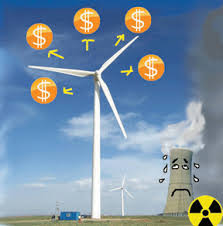
Giles Parkinson, May 4, 2025. https://reneweconomy.com.au/australia-lays-out-red-carpet-for-rapid-green-energy-transition-can-labor-seize-the-moment/
What an opportunity Australia has before it.
The thumping victory to Labor, unimaginable just months ago, or even while chomping on the democracy sausage on Saturday afternoon, means that the Australian federal government now has a clear mandate to do something great – accelerate the transition to renewables and get really serious about climate targets.
Australia has rejected the Gina Rinehart vision of a nuclear-powered, iron-domed Australia living in climate denial and perpetual fear.
The foot soldiers Australia’s richest person sent into electoral battle, armed with real and imaginary MAGA caps, have been dispatched by voters. Opposition leader Peter Dutton has lost his seat, and energy spokesman Ted O’Brien very nearly did.
There will now be nearly as many independents in the lower house as there are Liberals, or members of the LNP or Nationals. How envious must the Americans feel! Trumpism has been repudiated. Common sense, respect for the science, and empathy has prevailed. And Australia can even be sure there will be another election in three years time. The US, not so much.
It is remarkable that, after two decades of political argy-bargy, the loudest and sanest voices across the floor from Labor will not be from seeking favours from the fossil fuel industry, but from those urging the government to go harder, to aim higher.
Green industry can hardly believe it, and leaders such as Andrew Forrest have already found their voice.
“This result sends a clear and unequivocal message: Australians will back and support policies that recognise the economic opportunities which come from acting on the existential threat of climate change,” Forrest said in a statement on Sunday.
“In a turbulent world, Australia remains a strong, principled and pragmatic voice. We must now use that voice to back science, seize the green energy opportunity, and strengthen our role in the world with compassion, ambition and purpose.”
Forrest has been outspoken in his criticism of net zero targets, describing them as a “con”, because they essentially let fossil fuels off the hook for real action. He has set a target of “real zero” at his Pilbara iron ore mines by the end of the decade, which means burning no diesel and no gas for electricity or transport by 2030.
It is a stunningly ambitious goal, but in keeping with the need to act decisively on climate change. Australia’s climate targets are still lacklustre, but its government cannot now argue that it does not have the mandate to be bold.
In a few months Australia, which wants to host the 2026 UN climate conference, will need to submit its 2035 emissions reduction target. It has to respect the science. Is Labor satisfied with power for the sake of being in power, or does it wish to leave a lasting legacy, or will we regret it not being in minority government. It likely has another six years to actually Do Something.
But challenges remain, and while the election may be won, that could turn out to be the easy part. Energy and climate minister Chris Bowen and the Labor team have some thinking to do about the best and most equitable way to deliver the second and most challenging part of the green energy transition.
It’s 20 years since John Howard, under intense pressure from a fossil fuel lobby horrified by a proposed extension to the mandatory renewable energy target that would have doubled the share of wind and solar from 1 pct to 2 per cent of generation, threw that policy out the door.
Australia is now at 40 per cent renewables, aiming to double that to 82 per cent renewables by 2030. South Australia, already at more than 70 per cent wind and solar, aims to reach 100 per cent “net renewables” by the end of 2027.
Bowen’s big challenge to deliver that federal target is to ensure that enough wind and solar gets built in time, and at scale. Challenges remain in equipment supplies, inflation in civil construction costs, and securing a skilled labour force – and the likes of Barnaby Joyce in the principality of New England will not easily give up their fight.
Bowen’s focus will be making sure that the Capacity Investment Scheme delivers wind, solar and storage in the right timeframe, but even that won’t be enough to reach the party’s target.
Policies and planning blueprints will need to adapt. The Tim Nelson review of market rules and incentives will be critical, as will the next edition of the Integrated System Plan. More needs to be done to encourage electrification, consumer energy resources, and alternatives to big transmission and renewable energy zones.
And there is going to be fascinating debate among the grid experts about how to manage the final stages of this transition from a centralised grid dominated by fossil fuels, to a distributed, inverter-based system built around consumer assets, large-scale wind and solar, and storage.
Australia is at the forefront of this transition, and the Australian public, and particularly its media, needs to get its head around the issues, because consumers are going to be at the heart of this – and they needed to be informed, not misled.
“Now is the time for conviction and courage to double down and move at the speed the climate science dictates,” says Tim Buckley, from Climate and Energy Finance. “There are plenty of challenges, but the risks and costs of too-slow action are clear. This is an intergenerational game changer moment!”
Shut down Elbit Systems everywhere!
Bruce K. Gagnon, Organizing Notes, May 03, 2025
Elbit Systems is an Israeli military corporation making weapons for its current multiple wars as the zionists attempt to build ‘Greater Israel’ and take over the region from indigenous populations.
They are the world’s leading terrorists.
Elbit builds weapon production plants in nations around the globe in order to ‘buy support’ for its colonizing agenda.
Check around and you will likely find one near your community.
Congrats to the movement in Boston for forcing MIT, thru organizing pressure, to cut links with Elbit. Activists in the UK have shut down a couple Elbit facilities and forced some of their other corporate links to be severed such as with insurance companies and the like.
The Elbit facility in nearby Merrimack, New Hampshire has also drawn important protests in recent years. I was involved in one where I got arrested for serving as the police liaison. ……………………………………… https://space4peace.blogspot.com/2025/05/shut-down-elbit-systems-everywhere.html?utm_source=substack&utm_medium=email
Nuclear fallout: Coalition’s nuclear energy policy proved toxic to voters

SMH, By Mike Foley, May 5, 2025
The Coalition’s nuclear energy policy was toxic to voters, delivering big swings against Peter Dutton’s candidates in electorates chosen to host reactors, while support for Labor grew in many places it chose for massive offshore wind farms.
Dutton’s energy policy was built on opposing Labor’s “reckless race to renewables”, which the Coalition claimed was trashing farmland in the path of transmission lines and solar panels, in favour of a nuclear and gas-led strategy.
“I’m very happy for the election to be a referendum on energy, on nuclear,” Dutton said on June 19, when he announced his planned nuclear plant locations.
Dutton had not visited any of his proposed nuclear sites by the time the election was over, while the party quietened its advertising for the policy.
In the NSW electorate of Hunter, which borders where the Coalition planned to build a reactor on the site of the old Liddell coal plant, Labor MP Dan Repacholi significantly increased his support.
Repacholi’s first-preference votes jumped from 39 per cent in 2022 to 44 per cent in 2025, while the Nationals fell from 27 per cent to 18 per cent.
The central west NSW seat of Calare was also slated for a reactor near Lithgow, and the election turned into a three-cornered contest between the pro-nuclear Nationals, their former member-turned-nuclear sceptic independent Andrew Gee, and nuclear opponent Kate Hook……………………………
south of the border in the electorate of Gippsland, where the Coalition planned to build a reactor at the Loy Yang A coal plant, Nationals MP Darren Chester defied the trend with his primary vote falling from 55.2 per cent in 2022 to 53.5 per cent in 2025.
The figures could change as the Australian Electoral Commission continues to tally ballots.
The nuclear vote also appears to have inflicted pain on Coalition seats where no nuclear plants were planned.
Chief architect and advocate for the policy, energy spokesman Ted O’Brien, the Liberal National Party MP for Fairfax in Queensland, dropped to 38 per cent on the primary vote from 44 per cent in 2022, while Labor ticked up 2 per cent and anti-nuclear independent candidate Francine Wiig captured 12 per cent.
Nationals leader David Littleproud’s primary vote dropped from 54 per cent in 2022 to 52 per cent.
On the day after the election, Littleproud said nuclear was not responsible for the Coalition’s historic loss.
“I think this was a schmick campaign by Labor destroying Peter Dutton’s character,” he told Sky News.
Dutton vigorously campaigned against wind farms, visiting electorates planned for development and claiming the industry would harm whales, commercial fishing and seascape views.
The Coalition pledged to ban four of Labor’s six offshore wind zones, and Dutton campaigned on this commitment in Paterson, north of Sydney, as well as Whitlam and Cunningham south of Sydney, and Forrest south of Perth.
In Forrest, the Liberal vote fell from 43 per cent in 2022 to 31.5 per cent. First-time independent candidate Sue Chapman, who backed assessment of offshore wind in the area “based on the evidence and [would] aim to bring the community along”, picked up 18.5 per cent of primary votes.
In Cunningham, Wollongong Labor MP Alison Byrnes increased her primary vote from 40.5 per cent in 2022 to 45 per cent.
Down the road in Shellharbour, part of the electorate of Whitlam, Labor’s Carol Berry maintained the 38 per cent primary vote from the past election (although, in terms of ……..the two-candidate preferred vote, Whitlam recorded a 2 per cent swing against Labor)……….https://www.smh.com.au/politics/federal/nuclear-fallout-coalition-s-energy-policy-proved-toxic-to-voters-20250504-p5lwcp.html
Pie in the sky? After the Coalition’s stinging loss, nuclear should be dead. Here’s why it might live on.
Adam Simpson, Senior Lecturer, International Studies, University of South Australia, 5 May 25, https://theconversation.com/pie-in-the-sky-after-the-coalitions-stinging-loss-nuclear-should-be-dead-heres-why-it-might-live-on-255866
When the Coalition launched its nuclear plan last year, Labor was on the nose and early polls showed some support for the policy. But then the wheels fell off.
Nuclear didn’t stack up on cost or timeframe. Early support fell away. By the time of the election, support for maintaining Australia’s ban on nuclear power had increased from 51% to 59%.
When Opposition leader Peter Dutton gave his budget reply speech in late March, he barely mentioned the nuclear policy – instead promoting gas and attacking renewables.
After Saturday’s Coalition rout, the prospect of nuclear power in Australia should be dead and buried. But that’s not guaranteed. The National Party strongly backs nuclear power.
With metropolitan Liberals sceptical of nuclear reduced to a rump, the Nationals and regional Liberals will gain influence within the Coalition. If conservative Nationals prevail, we may well see the nuclear policy survive the election post-mortem and be resurrected for the next election.
Why did the Coalition back nuclear?
In the 1990s, the Coalition introduced laws banning nuclear power in Australia. But interest in the technology has never gone away. Australia has abundant uranium, and nuclear power appeals to some demographics.
Politically, Dutton’s choice to back nuclear power was pragmatic. There were real tensions inside the Coalition on climate action. Nuclear power seemed to offer a way past these tensions, as a zero emissions energy source providing baseload power. It would also have meant slowing the renewable rollout and building more gas power plants to cover the gap left by retiring coal.
It appears the nuclear policy wasn’t a Dutton priority. Nationals leader David Littleproud says he and the Nationals pushed the Coalition to adopt nuclear in exchange for continued support for the 2050 net zero target. After Saturday’s wipeout in Liberal-held metropolitan seats, the Nationals will have a stronger hand.
On Sky News yesterday, Littleproud claimed nuclear was not the reason for the Coalition’s loss. National MPs are still backing nuclear.
If the Nationals stick to their guns, we may see the Coalition bring nuclear to the next election.
Three-year federal terms make it difficult for new governments to embark on long term plans. Nuclear energy would take at least 15 years to come online. The Coalition’s last realistic opportunity to go nuclear would have been back in 2007, when there was renewed interest in the technology.
At that time, renewables were quite expensive. But solar, wind and batteries now cost much less, while nuclear was already expensive and has remained so.
Government tenders for renewable and storage projects tend to be massively oversubscribed, with far more interest than opportunities. By contrast, nuclear doesn’t have business backing. The Australian Industry Group has argued the Coalition’s nuclear policy was 20 years too late. This business reticence explains the Coalition’s proposal to build the nuclear reactors with public money.
This year, clean energy levels in Australia’s main grid will reach 44–46%, according to the Clean Energy Regulator. With a strong pipeline of new projects, that could reach 60% by the next election. It’s hard to see what role nuclear could have in any future grid.
Nuclear isn’t quite dead
In contrast to intermittent renewables, nuclear offers reliable zero emissions baseload power. If you talk to nuclear backers, you’ll likely hear a variant of this sentence.
But there’s “no going back” to the old baseload model where large, inflexible coal plants churned out power, as the head of the Australian Energy Market Operator Daniel Westerman pointed out last week. That’s because renewables are the cheapest energy source. Powering Australia on 100% renewables is possible with enough battery storage or pumped hydro to compensate for the solar duck curve, in which solar power drops off in the evening.
So why does nuclear have a hold on the Coalition’s imagination, even as it faces its largest crisis since Menzies founded the Liberal Party?
One likely reason is cultural opposition to renewables. This is especially evident among prominent Nationals such as Littleproud, Matt Canavan and Barnaby Joyce. As the thinking presumably goes, if “latte-sipping greens” in inner city areas back renewables, genuine country Australians should naturally oppose them.
It is, of course, not that simple. Renewables are often just as popular in the bush as in the cities. A Lowy Institute poll found almost two-thirds of regional respondents supported the government’s 82% renewable target for 2030. Farmers hosting solar panels or wind turbines energy generation on their properties see them as guaranteed income even if livestock or grains are having a bad year.
The problem for the Nationals and for the Coalition more broadly is that nuclear just isn’t that popular. Early support for the policy was soft. It melted away as authoritative sources such as the CSIRO pointed to the exorbitant cost and long timeframe to build reactors from scratch.
Labor, with a resounding majority, is likely to accelerate the shift to clean energy. While the urban-rural political divide will still play out in Coalition opposition to clean energy, Labor’s large electoral mandate and dominance in the populous cities will encourage it to press ahead.
As the surviving members of the Coalition lick their wounds and begin to figure out how they did so badly, we can expect to see nuclear up for discussion. But given the new power of the Nationals and regional Liberals in the party room, we may not have seen the last of nuclear fantasies in Australia.
Coalition’s nuclear power policy must be nuked
5 May 25
The Don’t Nuke the Climate initiative has today welcomed the clear rejection of nuclear power by Australian voters. Seven News political editor Mark Riley summed up the Coalition’s problem: “The party that chose nuclear energy as its policy has exploded in a nuclear bomb set on them by voters tonight.”
The idea of domestic nuclear power is over. The Coalition now must ditch any lingering nuclear ambitions and all political parties need to move swiftly to advance a renewable energy future for our nation.
Dave Sweeney, nuclear free campaigner with the Australian Conservation Foundation, said:
“Australians have rejected nuclear power and that door is now not just closed, it is welded shut. Nuclear power is too slow, too risky and too costly – in every way.
“The economic, environmental and community advantages of renewables have been embraced by Australians. Today we are nearly half way there with around 45% of Australia’s electricity coming from renewables. Our job – and the governments mandate ‒ is to speedily, sensibly and sustainably advance the renewable energy future.
“It’s time to stop playing politics with nuclear distractions and delays. It’s time to get on with the clean energy transition, effective climate action and building an energy future that is renewable, not radioactive.”
Dr. Jim Green, national nuclear campaigner with Friends of the Earth, said:
“There, is overwhelming evidence that the Coalition lost votes and seats because of its nuclear power policy.
“Polling by the Liberals Against Nuclear group demonstrated the nuclear policy’s drag on the Coalition’s vote in marginal seats and across the nation.
“Forty-six percent of voters in Peter Dutton’s electorate of Dickson said they were less likely to vote for Mr. Dutton because of the nuclear power policy.
“In 2007, the Coalition took a pro-nuclear power policy to the election but suffered a large swing against it and lost the election with leader John Howard losing his seat. Yesterday, the Coalition suffered a large swing against it and lost the election with leader Peter Dutton losing his seat.
“The lesson should be clear. The Coalition’s nuclear power policy must be buried once and for all.”
Coalition power plan ‘nuked’ at poll: climate groups

Labor’s landslide election victory shows Australians have overwhelmingly rejected the coalition’s nuclear energy plan, climate action groups say.
Labor on Saturday night stormed to victory, winning a swathe of seats across multiple states and unseating Opposition Leader Peter Dutton in his own electorate.
The coalition’s nuclear plan proposed to build seven reactors across Australia with the first of these not operational until 2035 at a cost of hundreds of billions of dollars……………………………. (Subscribers only) https://aapnews.aap.com.au/news/coalition-power-plan-nuked-at-poll-climate-groups
Coalition to put nuclear plan on the chopping block
Ryan Cropp Energy and climate reporter, May 4, 2025, https://www.afr.com/politics/federal/coalition-to-put-nuclear-plan-on-the-chopping-block-20250504-p5lwcw
The Coalition’s nuclear energy policy looks set to be one of the first casualties of the party’s monumental election defeat on Saturday after opposition MPs declined to publicly back the controversial strategy.
Dutton had used the policy as a means of aligning the party behind a commitment to achieve net zero carbon emissions by 2050, but several senior Liberals on Sunday indicated the party would need to consider dumping the plan if it were to find a path back to government.
Dutton announced the proposal to build seven government-owned nuclear reactors in July last year, but on Saturday the plan proved to be a major electoral liability, particularly in key metropolitan seats.
When asked whether the Coalition should dump its nuclear plans, Liberal frontbencher Keith Wolahan said Australians had sent a message and the party needed to listen.
“It wouldn’t be fair on me to dissect that particular policy, but everything should be on the table and that should be analysed,” Wolahan told the ABC.
“We have to listen to Australians. They have sent us a message. And our first task is to hear it. And that often takes time.”
Wolahan is one of several Liberal moderates who have lost their seats. Others include Michael Sukkar in Deakin and David Coleman in Banks.
Policy toxic in inner urban seats
The lack of public support for the plan was exploited mercilessly by Labor throughout the campaign. The government repeatedly claimed the plants would cost up to $600 billion to build and would need to be paid for by cuts to key social services.
Dutton failed to visit a single one of his proposed nuclear sites during the campaign.
The policy proved particularly toxic in inner-urban and suburban seats in Sydney and Melbourne, where Liberal challengers failed to make any inroads against climate-friendly teal independents.
Six candidates backed by Simon Holmes a Court’s Climate 200 crowdfunding organisation in 2022 were re-elected, while teal challenger Nicolette Boele looks set to take the blue-ribbon Liberal seat of Bradfield.
Dutton’s loss in his own seat of Dickson was based, in part, on preference flows from Climate 200-backed independent Ellie Smith, which went to Labor’s Ali France. Elsewhere, lower-profile Climate 200 candidates in seats such as Sturt in South Australia, Casey in Victoria and Forrest in WA peeled votes off Liberals and put Labor MPs in winning or winnable positions.
Nationals leader David Littleproud denied that nuclear was to blame for the Coalition’s election defeat, but did not rule out dumping the policy.
“I don’t think nuclear was the reason we lost. I think this was a schmick campaign by Labor destroying Peter Dutton,” Littleproud told Sky News. “We’ll sit down, obviously, after this and work through the policy positions and make sure they’re fit for purpose and fit for the future.”
The Coalition’s attempt to exploit local opposition to offshore wind farms also appears to have backfired, with two-party preferred swings to Labor in key coastal seats including Paterson, Gilmore and Whitlam in NSW and Forrest in WA. In Wannon in Victoria, however, Liberal frontbencher and potential leadership contender Dan Tehan saw off Climate 200 contender Alex Dyson, in part off the back of strong opposition to a proposed offshore wind farm in the region.
Asked on Saturday if the Coalition should stick with nuclear power, Tehan also left the door open to axe the policy.
“What we need is a proper review – a proper review of all the policies, a proper review of how we campaigned. And we have to do that over a period of time,” he said. “Everything should be part of the review.”
In the western NSW electorate of Calare, where the Coalition’s proposed Mount Piper nuclear plant was to be built, former Nationals MP Andrew Gee won his seat running as an independent. Gee has expressed scepticism about nuclear, which one poll suggested had as little as 22 per cent support in the region.
Ryan Cropp is an energy and climate reporter at The Australian Financial Review based in the Canberra bureau.
A resounding win for the world’s nuclear-free clean energy movement.
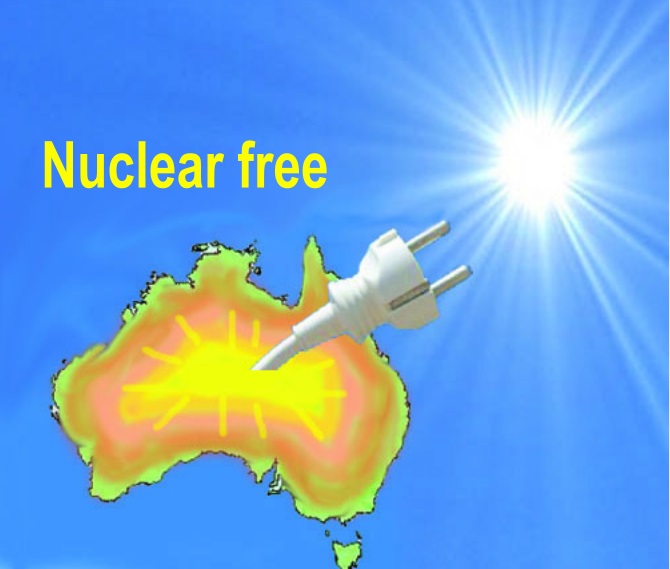
https://theaimn.net/a-resounding-win-for-the-worlds-nuclear-free-clean-energy-movement/ 5 May 25
In early analyses of the historic Labor election victory, commentators have tut-tutted over the Liberal Coalition’s policies that didn’t impress voters – like reduced tax on petrol, like poor housing plans, and certain Trump-like aspects. These were the things, and the “cost-of living” issues that brought down the vote for the Coalition. And a number of interviews with voters did show that these issues were important.
BUT, in the media build-up to the election, those issues were hammered, and it seemed to me, that Peter Dutton’s party was happy with that, and especially, to stay OFF the topic of nuclear power.
But nuclear power was the core policy in the Opposition’s campaign. Its quiet partner policy was the drastic slowing down of solar power, and renewable energy in general. Along with this went a downgrading of climate change – Dutton coming close to climate-change denial – “I’m not a scientist” was his answer to questions about the impacts of global heating. The inevitable delay in nuclear power becoming operational would be a gift for the fossil fuel industries,
And it was a pretty amazing policy- to bring in nuclear power across a very special country! Australia is the only country in the world that is a nation-continent, a great island -continent with one federal government, and one predominant language. There is no doubt that, had the Coalition won this election, it would have been a grand coup for the global nuclear lobby.
The Labor government is also beholden to the nuclear lobby. Anthony Albanese, as Opposition leader in 2021, agreed to the then Liberal government’s AUKUS nuclear submarine deal. In 2024, his Labor government cemented its agreement by signing an updated version of the AUKUS Exchange of Naval Nuclear Propulsion Information Agreement (ENNPIA).
So no wonder that both of Australia’s major parties are playing down the significance of the nuclear issue, now that across the nation, voters have rejected nuclear power. And the obedient mainstream media is playing it down, too.
Australia’s unique advantage is that it is the only nuclear-power -free nation-continent , and is also a world leader in renewable energy.
Even in 2023, 33% of Australian households had rooftop solar panels. generating their own electricity. Australia is a world leader in rooftop solar adoption, with solar panels installed on more homes per capita than any other country. This trend continues to increase, with Australians making huge savings on energy costs.
To be fair to the Albanese Labor government, it has done well on promoting renewable energy. It has not done so well on climate change action – The Australian government is continuing its long-standing support for fossil fuels both at home and abroad.
Despite its two major political parties being wedded to the fossil fuel industries, and both of them sycophantic to American militarism and the nuclear lobby, Australia really does have the opportunity to lead the world in the direction of clean safe nuclear-free energy.
The AUKUS agreement, the nuclear submarine deal , is looking a bit wobbly at this moment -with the Trumpian uncertainty clouding Australia’s relationship with the USA.
All in all, it is a positive outlook for Australia, and its leading role in clean energy. But don’t expect the corporate media, or the timid ABC, to genuinely emphasise the importance of this election victory over the nuclear lobby.
Australia Islamic Caliphate? Dark money and the 11th hour Election propaganda blitzkrieg
by Wendy Bacon and Yaakov Aharon | May 2, 2025, https://michaelwest.com.au/australia-islamic-caliphate-dark-money-and-the-11th-hour-election-propaganda-blitzkrieg/
An 11th-hour Election 2025 blitzkrieg claims the Greens are enabling extremists who “will do anything in their power to establish a worldwide Islamic Caliphate.” Wendy Bacon and Yaakov Aharon investigate the Dark Money election.
Minority Impact Coalition is a shadowy organisation that appeared on Australia’s political landscape in February of this year.
According to its constitution, its object is to promote “mutual respect and tolerance between groups of people in Australia by actively countering racism and bringing widespread understanding and tolerance amongst all sectors of the community.”
However, it is spreading ignorance, fear and Islamophobia to millions of mostly male Australians living in the outer suburbs and the regions.
Advance is “transparent … easy to deal with”
Australian Jewish Association webinar, Roslyn Mendelle, who is of Israeli-American origin and a director of Minority Impact Coalition (MIC), said Advance introduced her to the concept of a third party.
“Advance has been nothing but absolutely honest, transparent, direct, and easy to deal with”, Mendelle said.
The electoral laws, which many say are “broken by design”, mean that it will be several months before MIC’s major donors are revealed. Donors making repeated donations below $15,900 are unlisted ‘dark money’. (This threshold will change to $5000 in 2026).
Coming in second place are the returns from the Australian Taxation Office.
Further down is a $50,000 donation from Henroth Pty Ltd, co-owned by brothers Stanley and John Roth. Stanley is also a director of the $51 million charity United Israel Appeal, while John Roth is married to Australia’s Special Envoy for Combating Antisemitism, Jillian Segal.
$14.5 million of Advance’s funds is unlisted dark money.
In NSW, it is targeting Greens candidates everywhere and is also focused on the Labor-held seat of Gilmore, challenged by Liberal Party candidate Andrew Constance.
Roslyn (nee Wolberger) and her wife Hava Mendelle founded MIC last year. The couple met in 2017 while Roslyn was living in the Israeli settlement of Talpiot in Occupied East Jerusalem in breach of international law.
Independent journalist Alex McKinnon reported that MIC spokesperson and midwife, Sharon Stoliar, wrote in an open letter:
“When you chant ‘from the river to the sea Palestine will be free’… while wearing NSW Health uniforms, you are representing NSW Health in a call for genocide of Jews.YOU. ARE. SUPPORTING. TERRORISM… I. WILL. REPORT. YOU.”
Its campaign material is authorised by Joshu Turier, a retired boxer and right-wing extremist.
According to Facebook library, MIC’s ads are targeted at men, particularly between ages 35 and 54 in Queensland, Victoria and New South Wales.
In mid-April, the group paid for an ad so extreme that Instagram pulled it, leading to Turier reposting on his own Facebook page again this week. He complained that “It’s beyond troubling when our media platforms remove simple, factual material.”
They are “coming for us” {Editor … oh no!}
By Wednesday, the video was back on MIC’s Facebook account. The video says that the Greens are deliberately enabling pro-Palestine student protesters, who
“Don’t actually believe in the concept of a nation. They don’t believe in borders. They don’t believe there is a national identity. They believe in the Islamic brotherhood.”
“…It is just the beginning. When antisemitism starts, it’s not going to stop. They are going to come for Christians, for Atheists, for Agnostics.”
MIC is spending big on billboards, campaign trucks, and professional videos targeting at least five electorates. But despite their big spending, they cannot be found on the Australian Electoral Commission transparency register.
According to the transparency advocacy group WhoTargets.Me, MIC has spent more than $50,000 on Google and Meta ads in the last month alone. This doesn’t account for billboards, trucks, labour, or the 200,000 addresses letterboxed in late March.
More investigation shows their donations will all flow through the QJ Collective Ltd (QJC), which also ‘powers’ the Minority Impact Coalition website. QJC is registered as a significant third party with the Australian Electoral Commission.
Clones with ghost offices
MIC and Queensland Jewish Collective are virtually identical. They have always had the same directors, with Azin Naghibi replacing Roslyn’s partner, Hava Mendelle, as both QJC and MIC director in March 2025.
When QJC first came to MWM’s notice last year, it was running a relatively well-funded campaign, although limited to several seats, to ‘Put the Greens Last’ in the Queensland state election.
In September 2024, the group’s website stated that it was “non-partisan and not left or right-wing”, and that its “goal was to support Queenslanders in making informed decisions when voting for our leaders”. MIC is the vehicle for this campaign.
Today, neither the QJC nor MIC makes any such claim. The Collective’s website lists its leading ‘campaign’ as “exposing the two-faced nature of the Labor party”.
The alarming detail
While the two ‘grassroots’ groups share several of their total five different associated addresses, mostly consisting of shared offices, it is not a perfect match.
For both groups, directors Mendelle and Turier list their address as 470 St Pauls Terrace, Fortitude Valley, Queensland. There was no name or company, just an address; however, shared offices run by Jubilee Place are available at that location.
QJC and MIC director Naghibi lists her address on both extracts as 740 St Pauls Terrace, a non-commercial building.
Either Mendelle and Turier are living out of a shared office, or Naghibi is unable to remember the address of the shared office she has little real connection to.
Last year, MWM contacted the owners of QJC’s listed office address at Insolvency Company Accountants in Tewantin, Queensland. At first, the firm said that no one had heard of them. Following that, the firm said that the Collective is a client of the firm, however denied any further connection.
A fresh search this year showed an additional contact address listed by the grassroots Collective – this time 1700 kilometres away – at 1250 Malvern Road, Malvern, Victoria. Again, there was no name or company, just an address.
Located at that address is boutique accounting firm Greenberg & Co, which specialises in serving clients who are “high net worth individuals”. MWM contacted senior partner Jay Greenberg, who said his role was only one of ‘financial compliance’. He said that he did have personal views on the election, but these were not relevant. He declined to discuss further details.
Previously, Greenberg served as Treasurer (2018-2019), under Jillian Segal as President, of the peak roof body, the Executive Council of Australian Jewry.
Attack of the clones
Better Australia is a third-party campaigner that, like QJ Collective in 2024, claims to be bipartisan.
Its communications are authorised by Sophie Calland, an active member of NSW Labor’s Alexandria Branch. Her husband, Ofir Birenbaum – from the nearby Rosebery Branch – is also a member of the third party Better Australia.
Co-convenor of Labor Friends of Israel, Eric Roozendaal, and former Prime Minister Scott Morrison’s secretary, Yaron Finkelstein, provided further campaign advice at a members’ meeting.
Patron of Labor Friends of Israel and former Senator Nova Peris teamed up with Better Australia for a campaign video last week.
“When Greens leader Adam Bandt refuses to stand in front of the Australian flag,” Peris said, “I ask, how can you possibly stand for our country?”
Better Australia’s stated goal is to campaign for a major government, regardless of which major party is in office.
The group urges voters to “put the Greens and Teals last”, warning that a Labor minority government would be chaos. The ‘non-partisan’ third party has made no statements on the Liberal-National Coalition, nor on a minority government with One Nation.
Some Better Australia workers – who wear bright yellow jackets labelled ‘community advisor’ – are paid, and others volunteer.
‘Isabella’ told MWM that her enlistment as a volunteer for the third-party campaigner is “not political” – rather, it is all “about Israel”.
Previously, Isabella had protested in support of the Israeli hostages and prisoners of war held in Gaza.
Better Australia’s ‘community advisor’ Isabella at a Bondi Junction polling booth. Source: Wendy Bacon, supplied
Another campaigner told us he was paid by Better Australia. He spoke little English and declined to say more.
Two schoolgirls campaigning at Rose Bay told MWM they were paid by their father, who had chaired a Better Australia meeting the previous evening. They declined to disclose his name.
On Wednesday, the group posted a video of Calland campaigning at Wentworth’s Kings Cross booth, which included an image of her talking with a young Better Australia worker.
MWM later interviewed this woman, who is an Israeli on a working holiday visa. She was supporting the campaign because it fits her political “vision”: the Greens and independent MPs like Allegra Spender must be removed from office because they are “against Israel” and for a “Free Palestine” which would mean the end of “my country”.
Allegra Spender denies these assertions.
Greens leader Adam Bandt remained determinedly optimistic, telling MWM that organisations such as Better Australia and MIC,
“are able to run their disinformation campaigns because Australia has no truth in political advertising laws, which enables them to lie about the priorities of the Greens and crossbench without consequence, as well as huge corporate money flowing into politics.”
“In this term of Parliament, Labor failed to progress truth in political advertising laws, and instead did a dirty deal with the Liberals on electoral reforms to try and shut out third parties and independents.”
Labor’s candidate for Wentworth, Savannah Peake, told MWM on Tuesday that she has known Calland for 18 months.
Peake said that while she knew Calland had previously founded Better Council, she had only discovered Calland was authorising Better Australia when she arrived at the booth that morning.
Peake told MWM that she had contacted the NSW Labor Head Office to voice her objections and was confident the issue would be “dealt with swiftly”.
The third-party campaign runs contrary to Peake’s preferences, which tells supporters in Wentworth to vote #1 Labor and #2 Allegra Spender. MWM repeatedly tried to follow up with Peake throughout the week to find out what action NSW Labor had taken, but received no reply.
Liberal candidate for Wentworth, Ro Knox, complies with Better Australia’s call to put Greens last on her voting preferences.
Many people in NSW Labor know about their fellow members’ involvement in Better Australia. The Minister for Environment and MP for Sydney, Tanya Plibersek, state member Ron Hoenig and NSW Labor have all previously refused to answer questions.
A Labor volunteer at a Wentworth pre-poll booth told MWM that he disapproved if a fellow party member was involved with the third party. Two older Labor volunteers were in disbelief, having incorrectly assumed that the anti-Teal posters were authorised by the Trumpet of Patriots party. Another said he was aware of Calland’s activities but had decided ‘not to investigate’ further.
Better Australia focuses on Richmond
By the end of the week, Better Australia had left a trail of “Put the Greens last’ placards across Sydney’s Inner West, one of them outside the Cairo Takeaway cafe where the third party’s organiser, Ofir Birenbaum, was first exposed.
The third party have extended their polling campaign to the seat of Richmond, on the North coast of NSW where campaign sources are expecting more volunteers on election day.
As parties dash to the finishing line, they are calling for more donations to counter the astroturfers. According to website TheyTargetYou, the major parties alone have spent $11.5 million on Meta and Google ads over the last month.
Better Australia splurged $200,000 on ads targeting digital TV, social media, and the Australian Financial Review. Digital ads will continue in the final three days of the election, exploiting loopholes in the mandated political advertising blackout.
The Australian public has made little progress towards transparency in the current term of government.
Until reforms are made, Silicon Valley tech giants will continue to profit from dodgy ads and astroturfing groups sowing division with each Australian election cycle.
Australians once feared the health impacts of nuclear. Now nobody’s talking about it

SMH Angus Delaney, May 1, 2025
In 1982, Helen Caldicott, one of Australia’s most prominent anti-nuclear campaigners, spent an hour with Ronald Reagan at the White House, warning the then-president about the dangers of nuclear.
“I came out of that saying I thought, because I’m a physician, that he had impending Alzheimer’s,” Caldicott, now 86, says. “Which he did.”
Caldicott fears Australia’s memory is also faltering.
From her home in regional NSW, Caldicott says people have forgotten that period where anti-nuclear activism was a key cause of the left and nuclear safety fears ran high.
As Australians prepare to cast a vote in an election which could have huge implications for the country’s energy future, nuclear proponents dismiss Caldicott’s fears as outdated.
But they are still lurking in the debate as an unspoken question over the Coalition’s policy to build seven nuclear plants nationally to offset the decline of coal power and help Australia reach net zero emissions by 2050.
When asked if nuclear energy production was a safety risk to Australians in April, Prime Minister Anthony Albanese dodged the question and said the main reason for the concern was “about the economy”.
His government, in lockstep with the Coalition, is investing billions in a fleet of nuclear-powered submarines under the AUKUS pact.
At the final leaders’ debate on April 27, Opposition Leader Peter Dutton said the government’s endorsement of AUKUS proved nuclear power was not dangerous.
“Who in his or her right mind would sign up to a nuclear submarine and put our sailors onto the submarine thinking that there was a concern about safety?” he said on Channel Seven.
But in recent weeks, Dutton has avoided drawing attention to his nuclear policy, and Labor has attacked him over not visiting the sites of the Coalition’s proposed reactors.
The issue was dragged onto centre stage this week as anti-nuclear protesters disrupted a Dutton campaign event and press conference – and their theatrics largely played on the fears people have around nuclear safety.
If Dutton were to form government, safety could come to the fore again because it would need to overturn the federal ban on nuclear energy, implemented in 1999 by John Howard in a deal with the Greens.
Despite the dangers being dismissed by Labor and the Coalition, Caldicott remains concerned about nuclear waste being improperly stored in Australia and contaminating water supplies – or even a Chernobyl-like reactor meltdown.
“It’s not being discussed at all, which is amazing to me”, Caldicott says. “People are very ignorant.”
…………………………………………………………………………………………………………………….. UNSW associate professor Mark Disendorf says the fears are valid. He says earthquakes are common in the Hunter Valley – the site of one proposed reactor – and is concerned by a German government study that has shown proximity to a nuclear power plant increased the likelihood of leukemia for children under five.
He says that the argument that Australia’s stringent safety regulations and access to modern technology would make it immune to the dangers was “invalid because Australia has so little experience”.
In a statement, the Australian government’s primary authority for radiation protection and nuclear safety says nuclear power plants are designed to be safe and have significantly improved their operations in recent decades, “but cannot be considered entirely risk-free”.
……………….. “Australia does not have a large nuclear sector and there is low familiarity with nuclear science in the wider community,” it says.
A generational divide and ideological opposition to renewables are two explanations as to why anti-nuclear sentiment has faded, says social trends researcher and director of research at 89 Degrees East, Rebecca Huntley………………………………………………………………………………………. https://www.smh.com.au/environment/climate-change/australians-once-feared-the-health-impacts-of-nuclear-now-nobody-s-talking-about-it-20250324-p5lm2k.html?btis=&fbclid=IwY2xjawKA7V5leHRuA2FlbQIxMQBicmlkETFISGV5ZEdSZW16a2ZnQzh3AR54eVK6JF8ohdYybFhLGtY2D9k94_z5LqoVHO8xa7LOALj64JcGRZvN5lMgWA_aem_rgh9nTz4UR4AV7RXbwaoig
1 This month
To see nuclear-related stories in greater depth and intensity
– go to https://nuclearinformation.wordpress.com/


 Antinuclear
