Firefighters and nurses call on Coalition to drop nuclear energy plans

Region Canberra, 1 May 2025 | Chris Johnson
Firefighters and healthcare workers have written an open letter to Peter Dutton just a few days out from polling day, asking the Opposition Leader to drop his nuclear energy plan.
Organisations representing more than 350,000 emergency services workers this week called on Mr Dutton to dump the policy in the interests of good health.
The open letter was signed by the Australian Nursing and Midwifery Federation, Emergency Leaders for Climate Action, Climate Action Nurses, Climate and Health Alliance, Doctors for the Environment Australia, and the United Firefighters Union of Australia.
After stressing that doctors, paramedics, nurses, midwives and firefighters are among the hundreds of thousands of people the groups represent, the letter expresses “grave concerns” regarding the potential introduction of nuclear power into Australia.
“As the frontline responders to disasters and emergencies, we are uniquely positioned to assess the risks posed by nuclear energy infrastructure to public safety, worker health, and environmental security,” the letter states.
“Australia’s emergency services do not have the support or resources to respond to nuclear disasters.
“Unlike other nations with established nuclear industries, Australia lacks the necessary infrastructure, resources, and expertise to manage incidents involving nuclear reactors or radioactive waste transportation and storage.
“Furthermore, international examples have shown that populations residing in close proximity to nuclear reactors are at an increased risk of developing severe health complications.
“Existing emergency response and health frameworks would need extensive – and costly – overhauls to address these challenges effectively.
“Nuclear accidents expose emergency responders to ionizing radiation levels far exceeding safe occupational limits.
“International precedents such as Chernobyl and Fukushima demonstrate the devastating health impacts on first responders, including acute radiation sickness and long-term cancer risks.”
The letter then goes on to ask the Coalition to abandon plans for nuclear energy in Australia and prioritise safer energy solutions that “do not endanger” workers or communities, such as solar and wind backed up by storage………………………..
The backlash has been strong enough that Mr Dutton has barely mentioned nuclear energy during the election campaign.
If asked about it, however, he repeats his strong support for the energy plan.
Federal secretary of the Australian Nursing and Midwifery Federation, Annie Butler, said she was concerned about the impact that the proposed nuclear plants would have on the health of all people, but particularly nurses, midwives and carers.
“What we are still yet to see are detailed health risk assessments including how the health of nurses, midwives, carers and the community will be protected,” she said…………………..
Former NSW Fire and Rescue Commissioner Greg Mullins, who went on to found the group Emergency Leaders for Climate Action, said the Coalition’s nuclear scheme “gives rise to far more questions than answers” and in the “unlikely event it is ever actually delivered” it would result in massive amounts of dangerous, additional climate pollution.
“Firefighters and other first responders will be expected to deal with situations for which they have no training, equipment or experience, and like in Chernobyl, possibly lose their lives,” he said.
“Costs for protection from nuclear accidents were not factored into the Coalition’s vague modelling, and nobody should be fooled – this is nothing more than a ruse to continue generating profits for the fossil fuel industry who are funding the Coalition’s election campaign.”
Greg McConville, national secretary of the United Firefighters Union of Australia, said: “Much has been said about the cost of living in this election, but we should not forget the cost of lives………..
The open letter points out that current federal guidelines allow firefighters, emergency services, essential services and health workers to be exposed to radiation doses up to 500 times higher than civilian safety limits during catastrophic events.
“This is an unacceptable risk,” the letter states. https://region.com.au/firefighters-and-nurses-call-on-coalition-to-drop-nuclear-energy-plans/865191/
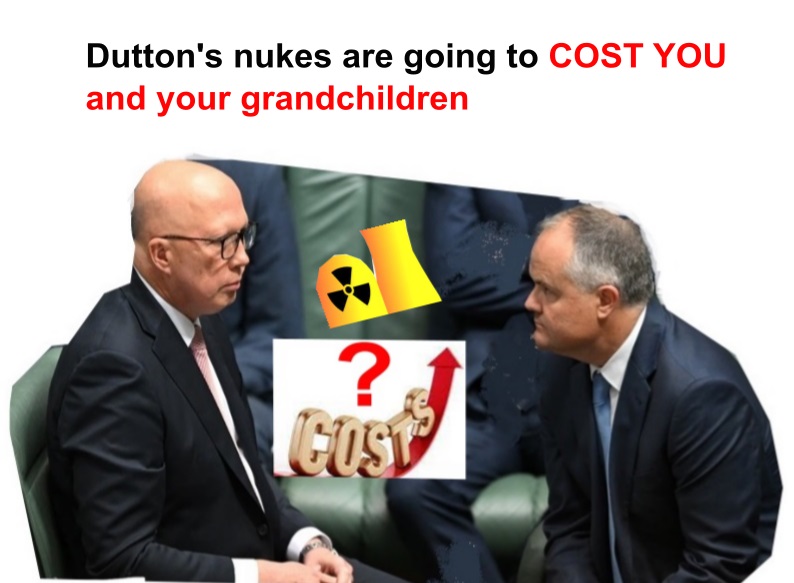
Dutton promises $40b debt cut as nuclear questions grow
The Age, By Shane Wright and Mike Foley, April 30, 2025
The Coalition will pledge to slash at least $10 billion out of budget deficits over the next four years while bringing down government debt by $40 billion amid suggestions the cost of its signature nuclear power policy will be far more expensive than it has promised.
Shadow treasurer Angus Taylor and finance spokeswoman Jane Hume will on Thursday reveal the Coalition’s full costings, which will confirm cuts to several high-profile Labor programs, including its pledge to wipe $16 billion in student debts.
But even with its promises, both the Coalition and government will go to voters on Saturday with the budget facing deficits over the rest of the decade and gross debt soaring through the $1 trillion mark.
This week, ratings’ agency S&P Global warned Australia’s AAA credit rating could be put at risk if either of the major parties’ election promises resulted in larger structural deficits and more debt than expected.
On Monday, Treasurer Jim Chalmers and Finance Minister Katy Gallagher released the government’s own costings, which showed total budget deficits would be $1.1 billion lower than forecast in the March 25 budget.
Despite the modest improvement, the budget would show cumulative deficits of $150 billion over the next four years.
Taylor and Hume will outline cuts that will bring down the cumulative deficits by a double-digit level, with one of the biggest savings expected to come from axing up to 41,000 public servants based in Canberra. They will be reduced through natural attrition over the next five years.
It will scrap the government’s $14 billion Made in Australia production tax credits for the mining and green hydrogen sector.
The write-off of student debt, affecting both tertiary and vocational education students that the government estimates saves affected people about $5000, is due to start from June 1. But the Coalition would not go ahead with the proposal………………………………………….
Taylor and Hume will promise to bring gross debt down by $40 billion. That will be partly achieved by axing the government’s Rewiring the Nation Fund and stopping the $10 billion Housing Australia Future Fund.
The Coalition’s costings will have to include the impact of its 25¢-a-litre cut in fuel excise for the next 12 months, worth $6 billion, and its one-off $1200 tax offset to low- and middle-income earners that is estimated to cost $10 billion.
Chalmers accused the Coalition of being sneaky by holding back its costings, including key details about its nuclear policy, until the second-last day of the campaign. Chalmers did not release Labor’s 2022 election costings until the Thursday before polling day.
He said there were already black holes around the Coalition’s mortgage interest deductibility, petrol excise and small-business fringe benefits tax reduction policies while it would attempt to use heroic assumptions around productivity growth to make its numbers add up.
“They want to skate through all the way to the election, or as close as possible, without coming clean. I think that speaks volumes about the approach that they’re taking,” Chalmers said.
A key issue remains the Coalition’s nuclear policy. Peter Dutton has slammed as a lie the government’s claim that it will cost $600 billion, arguing CSIRO research shows it would cost $116 billion to deliver its planned five large-scale and two small modular reactors at seven sites across the country.
The $116 billion figure is based on construction costs for a specific type of reactor – Westinghouse’s AP1000, which is one of the most common and cheapest designs in use around the world.
Coalition energy spokesman Ted O’Brien and Nationals Leader David Littleproud have promised not to use the AP1000 if it would reduce irrigation water to local farmers.
The AP1000 requires significant amounts of water to cool its reactor.
Former Land and Water Australia chief executive Andrew Campbell found there is not enough water at least five of the seven sites nominated by the Coalition for nuclear reactors, in his recent report commissioned by the Liberals Against Nuclear lobby group.
Littleproud and O’Brien have separately raised the prospect of building what are known as dry cool reactors.
However, according to the World Nuclear Association, they cost up to four times more than a typical water-cooled reactor such as the AP1000.
Dry cooled reactors, which use air rather than water to dissipate heat from the plant’s core, are not in commercial use at large-scale nuclear plants.
Dutton confirmed on Wednesday that the Coalition had not finalised which reactors would be used.
“We will take advice from the experts on what is the best fit for those seven sites,” he said.
Littleproud told the National Press Club on April 24 that he had promised to farmers “there is nothing extra coming out of the consumptive pool” of water available to irrigators, and models would be selected based on their water consumption.
“There are other technologies in terms of dry cooling,” he said.
O’Brien in February said, “the nuclear technology for Australia is yet to be selected”………. https://www.theage.com.au/politics/federal/dutton-promises-40b-debt-cut-as-nuclear-questions-grow-20250430-p5lvei.html?ref=rss&utm_medium=rss&utm_source=rss_feed
Australian nuclear news items 28 April – 5 May
Headlines as they come in:
- Nuclear fallout: Coalition’s nuclear energy policy proved toxic to voters.
- Pie in the sky? After the Coalition’s stinging loss, nuclear should be dead. Here’s why it might live on.
- Nationals MPs ‘100 per cent’ back nuclear being kept as Coalition dissects loss
- A resounding win for the world’s nuclear-free clean energy movement.
- Coalition’s nuclear power policy must be nuked.
- Nuclear free voices have an important role to play in the days following the federal election.
- Coalition power plan ‘nuked’ at poll: climate groups.
- Coalition to put nuclear plan on the chopping block.
- Australia lays out red carpet for rapid green energy transition. Can Labor seize the moment?
- Australia Islamic Caliphate? Dark money and the 11th hour Election propaganda blitzkrieg.
- Nuclear power is shaping up as an election loser, and the Murdoch media is not happy.
- As Dutton champions nuclear power, Indigenous artists recall the profound loss of land and life that came from it.
- Australians once feared the health impacts of nuclear. Now nobody’s talking about it
- Dutton’s ‘independent’ nuclear modelling was created by a pro-nuclear think tank .
- Australians’ support for nuclear power ban rises despite Dutton’s best efforts to sell atomic future, survey finds.
- Australia’s arms escalation is in the interest of no one but death
- Malcolm Turnbull hasn’t drunk the Kool-Aid on AUKUS | ABC NEWS – https://www.youtube.com/watch?v=ccQCTLhF1Do
- Firefighters and nurses call on Coalition to drop nuclear energy plans.
- Nuclear power ‘not passing the pub test’, survey authors say
- Traditional owner says “over my dead body” to the Coalition’s nuclear policy.
- Dutton promises $40b debt cut as nuclear questions grow.
- Nuclear support falls since becoming Coalition policy
- What Australians really think of nuclear power
- Government ignores AUKUS ‘very high risk’ warning from the Admiral in charge.
- Aboriginal group from Port Augusta joins experts in explaining the impact of the nuclear industry.
- Why Military Neutrality is a Must for Australia. Renewables, coal or nuclear?
- This election, your generation’s energy preference may play a surprising role
- Coalition says its energy plan is climate approved. Here’s what the IPCC really says about nuclear.
What Australians really think of nuclear power.

May 1, 2025 AIMN Editorial, Monash University, https://theaimn.net/what-australians-really-think-of-nuclear-power/
Support for nuclear power among Australians has fallen, with the numbers of people wanting to maintain Australia’s ban growing since Opposition leader Peter Dutton announced his nuclear power policy in 2024, the latest National Climate Action Survey shows.
The survey, in its fourth year and conducted by Griffith University’s Climate Action Beacon in partnership with the Monash Climate Change Communication Research Hub (MCCCRH), asked more than 4,000 respondents a wide range of questions on their attitudes to climate change, extreme weather and different energy options.
Griffith University Associate Professor Kerrie Foxwell-Norton and Monash University Professor Libby Lester were lead collaborators on the survey.
“The survey reveals that the logic of investment and risk in nuclear power is not passing most Australians’ pub tests. And according to the most recent CSIRO calculations, nor should it,” Associate Professor Foxwell-Norton said.
According to Professor Lester, the Director of MCCCRH, “The survey is a peerless, independent source of information about Australians’ climate actions, attitudes and beliefs as the nation – and the world – embarks upon societal transformations to a sustainable low carbon future.”
Among the key initial findings:
- More Australians want the existing ban on nuclear power to remain
In 2023, 51 per cent wanted to keep Australia’s ban on nuclear energy. In 2024, that had risen to 59 per cent. The numbers who were against bans on nuclear power fell from 34 per cent in 2023 to 30 percent in 2024.
- Women are more likely to want to keep the current ban on nuclear
When asked about keeping the existing Australian ban on using nuclear power, only 18 per cent of women were in favour of lifting the ban. In contrast, twice as many men (35.9 per cent) wanted the ban lifted. Two-thirds (66 per cent) of women wanted the ban to stay, as opposed to just 51 per cent of men.
- More people say risks of nuclear power far outweigh the benefits
Those who said the benefits of nuclear power far outweighed the risks fell from 24.5per cent support in 2023 to 22 per cent in 2024. Those who said the risks of nuclear power far outweighed the benefits rose from 21.9 per cent in 2023 to 26 per cent in 2024.
- Most respondents would not want a nuclear power station in their area
More than half (54.8 per cent) of respondents would be very or extremely concerned if a nuclear power plant was placed near them. Only 11 per cent said they’d be comfortable with a nuclear power plant nearby. Even fewer wanted a coal mine near them (10.8 percent). Conversely, people felt more comfortable with solar or wind in their area, with 54 per cent having no concerns with wind farms. This rose to 65 per cent for solar farms.
Most Australians back financial assistance for coal mining communities to transition and for rural landowners to host clean energy infrastructure
Eighty-one per cent of respondents said they would support assistance to communities relying on coal mining, and 84 per cent supported the distribution of financial incentives to rural landowners for hosting clean energy structures.
- Support to phase out gas for all new homes and public buildings is increasing
Sixty per cent of respondents said they would support a requirement that all new homes, residential divisions and public buildings be powered by electricity, thereby phasing out gas appliances and heating, up from 59 per cent in 2023.
“Australians’ support for renewable energy sources like solar and wind show a nation ready to tackle carbon emissions and move away from fossil fuels,’’ said Associate Professor Foxwell-Norton.
She said the support for communities to transition away from coal mining was significant.
“The oft cited divide between urban centre and regional and rural areas where these coal mines are located is politically expedient, wedge politics. It is a politics that overlooks Australians and their relationship between places,” she said.
“With a reliance on land and seasons for productivity and livelihoods, changes in weather patterns and disaster events are felt acutely in regional and rural areas. Regional voters are more supportive of climate action because it is literally, their everyday experience.’’
The National Climate Action Survey samples 4,000 Australians each year and is the only climate survey in Australia that collects longitudinal data. The full results of the 2024 survey will be released in September. Previous reports are available here.
Australian Government ignores AUKUS ‘very high risk’ warning from the Admiral in charge
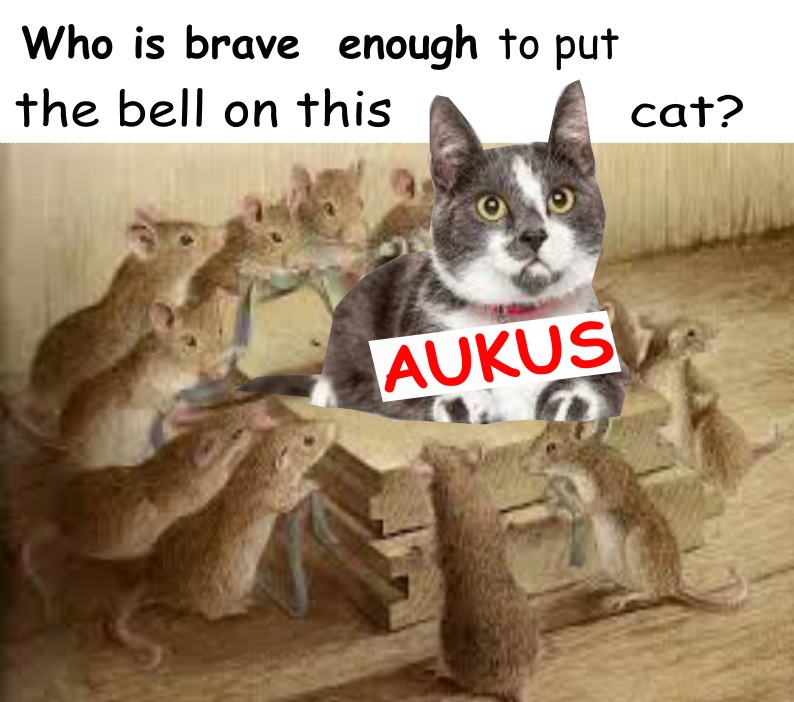
Admiral Mead sought to bell the cat while Defence Minister Marles has not been straight with the Australian people about the very high risks of AUKUS, even though he has been briefed on and appears to have informed Cabinet of those risks.
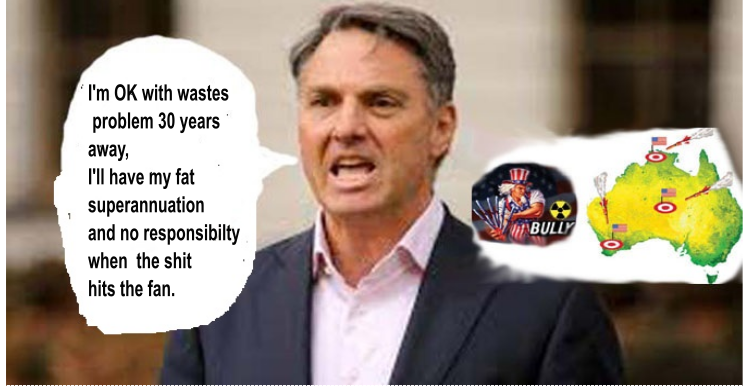
Marles should front up about this concealment without delay.
Labor not blameless
by Rex Patrick | Apr 29, 2025, https://michaelwest.com.au/government-ignores-aukus-high-risk-warning-from-the-admiral-in-charge/
The AUKUS submarine project faces huge risks, and Cabinet knows. But as the Government ships $2B of taxpayers’ money to the US this year, with much more to follow, the taxpayer is not being told. Rex Patrick reports.
On 26 February this year, Vice Admiral Jonathan Mead, the man in charge of AUKUS, advised the Senate that the AUKUS submarine program was “very high risk”. He said, “We’ve made that clear to government, and the government has made that clear to the public.”
However, it has not.
I follow AUKUS closely and had not heard that publicly before. Whilst it is absolutely the case, and something MWM has reported on extensively, this was the first public admission of the very high risk nature of the project from the Australian Submarine Agency.
Concerns about US submarine production rates and the weakness of the UK’s submarine industrial base have generated grave doubts about whether the $368B AUKUS scheme will deliver nuclear-powered submarines for Australia.
Moreover, former Prime Minister Malcolm Turnbull has revealed, after conversations with insiders, that there is no Plan B.
“Plan B is that we will not get any submarines.”
FOI ahoy
I was somewhat surprised by Admiral Mead’s unusual candour, so on 27 February, I moved to test the veracity of his remarks with an FOI application directed at the Australian Submarine Agency (ASA) seeking access to “any ministerial submission or briefing provided by ASA to the Minister for Defence … that refers to the AUKUS nuclear submarine program as involving ‘high risk’ or ‘very high risk’.”
I also sought access to ‘any statement made by the Minister for Defence or the Minister for Defence Industry and Capability Delivery that refers to the AUKUS nuclear submarine program as involving ‘high risk’ or ‘very high risk’.”
A decision on those was made this week. FOI applications can reveal the truth by what is disclosed, by what is withheld, and by confirming what doesn’t exist.
ASA confirmed the existence of a ministerial briefing characterising the AUKUS submarine program as involving ‘high risk’ or ‘very high risk’, but refused access to that briefing on national security and Cabinet secrecy grounds. Significantly, ASA’s refusal decision confirmed this document was produced for the dominant purpose of briefing a Minister on an attached Cabinet submission.
In effect, the Submarine Agency confirmed Admiral Mead’s statement that ASA has briefed the government on the ‘high risk’ or ‘very high risk’ nature of the AUKUS project, and that briefing was submitted to the Defence Minister for Cabinet consideration.
“That high-risk assessment has gone to the very top of the Government.”
Alarm bells should be ringing.
Misleading the public
But the FOI decision also reveals that Defence Minister Richard Marles has not been forthcoming with the Australian public about the full hazards of AUKUS.
In relation to statements the minister has made to the public on the risk status of the project, the Australian Submarine Agency advised that ‘no in scope documents were identified’ that show the Defence Minister has made any public statement that acknowledges the ‘high’ or ‘very high’ risk of the AUKUS scheme.
The agency was able to find only a handful of statements referring to risk management in general and assertions that the United Kingdom will carry the primary risks of the AUKUS-SSN construction.
Admiral Mead was not correct in his statement to the Senate, but more importantly, the Government has been caught red-handed fudging the risks associated with the AUKUS scheme. The public has been misled.
Admiral Mead sought to bell the cat while Defence Minister Marles has not been straight with the Australian people about the very high risks of AUKUS, even though he has been briefed on and appears to have informed Cabinet of those risks.
Marles should front up about this concealment without delay.
Labor not blameless
Last week, at a pre-polling booth, I was standing next to a Labor volunteer who was handing out how-to-vote cards for the seat of Adelaide. An elderly gentleman stuck out his hand and asked the volunteer for a how-to-vote card.
“We have to stop the Liberals getting in”, he said. “We don’t need nuclear power”.
I couldn’t resist. “But you’re taking a Labor how-to-vote”, I said. He gave me a strange look. “What about the eight naval reactors?” I queried. “A naval reactor is a reactor, and naval nuclear waste is nuclear waste”.
Many in the Labor camp think AUKUS is Morrison’s (and Peter Dutton’s) baby. But for Labor, that’s just a convenient mistruth. In September 2021, Morrison announced AUKUS. But he only announced a study. It was Prime Minister Anthony Albanese at the March 2023 San Diego “kabuki show” (as described by Paul Keating) that turned it into a formal Defence project behemoth with a projected cost of $368 billion.
Pre-polling booths are a good place to hang out for political gossip. I also held a discussion with a long-standing grassroots Labor Party member who proceeded to tell me how he had been sidelined for his opposition to AUKUS.
There’s no doubt the Labor rank-and-file have been cut out of the party’s decision-making with the Labor leadership ramming an AUKUS endorsement through the party’s 2023 national conference. Since then, the dissenting views of many, perhaps even a majority of Labor members, have been marginalised and suppressed.
AUKUS to be torpedoed
Politics aside, any project manager worth their salt would put an end to AUKUS. It’s a looming procurement shipwreck.
The US will not be able to supply the Virginia Class submarines to the Royal Australian Navy. The US Congressional Research Service has calculated a US build rate of 2.3 boats per annum is necessary to enable the US to provide boats to Australia without harming US undersea warfare capability. The current build rate is somewhere between 1.1 and 1.3 boats per annum.
The British submarine industry is one big cluster fiasco. Fruit that will flow from that program will be late, possibly rotten, and far more expensive than planned.
Meeting delivery obligations by the US and UK under the program will be really hard. And the fact that the Australian Government can’t even be up front and honest about the program
“suggests there is no chance of success.”
But Albanese need not worry, nor Marles. By the time all of this sinks in, they’ll be out of the system. It will be our children who suffer from the tens of billions wasted and the massive hole in our national security capability.
Rex Patrick
Rex Patrick is a former Senator for South Australia and earlier a submariner in the armed forces. Best known as an anti-corruption and transparency crusader, Rex is running for the Senate on the Lambie Network ticket next year – www.transparencywarrior.com.au.
Renewables, coal or nuclear? This election, your generation’s energy preference may play a surprising role
The Conversation, Magnus Söderberg, Professor & Director, Centre for Applied Energy Economics and Policy Research, Griffith University April 30, 2025
In an otherwise unremarkable election campaign, the major parties are promising sharply different energy blueprints for Australia. Labor is pitching a high-renewables future powered largely by wind, solar, hydroelectricity and batteries. The Coalition wants more gas and coal now, and would build nuclear power later.
So how might these two competing visions play out as Australia goes to the polls this Saturday?
Research shows clear generational preferences when it comes to producing electricity. Younger Australians prefer renewables while older people favour coal and gas. The one exception is nuclear power, which is split much more on gender lines than age – 51% of Australian men support it, but just 26% of women.
Coal, renewables or nuclear?
About half of young Australians (18–34) want the country powered by renewables by 2030, according to a 2023 survey of energy consumers. Only 13% of the youngest (18–24) group think there’s no need to change or that it’s impossible. But resistance increases directly with age. From retirement age and up, 29% favour a renewable grid by 2030 while 44% think there’s no need or that it’s impossible.
On nuclear, the divide is less clear. The Coalition has promised to build Australia’s first nuclear reactors if elected, and Coalition leader Peter Dutton has claimed young people back nuclear. That’s based on a Newspoll survey showing almost two-thirds (65%) of Australians aged 18–34 supported nuclear power.
But other polls give a quite different story: 46% support for nuclear by younger Australians in an Essential poll compared to 56% support by older Australians. A Savanta poll put young support at just 36%.
There’s a gender component too. The demographic most opposed to nuclear are women over 55………………………………………………………………….. https://theconversation.com/renewables-coal-or-nuclear-this-election-your-generations-energy-preference-may-play-a-surprising-role-253832
Confirmed: Australian weapons sold to Israel
With the federal government covering for them, a Canberra-based company has supplied lethal weapons to a country accused of war crimes and genocide
Michelle Fahy, Undue Influence. Apr 30, 2025
This article was first published with Declassified Australia on 26.4.25
The Australian counter-drone weapons system seen at a weapons demonstration in Israel recently is actually just one of a few that were sold by Canberra-based company Electro Optic Systems (EOS) and sent through its wholly-owned US subsidiary to Israel, Declassified Australia can reveal.
It was the ABC who broke the news of the EOS weapons system being provided for the demonstration trial. In response, Prime Minister Anthony Albanese continued to insist, as he has since the war in Gaza began, that Australia does not sell weapons to Israel.
However the weapon displayed wasn’t just provided on loan for the demonstration – the weapon has been sold to the Israelis. Declassified Australia can reveal that EOS, by its own admission, sold more than one of its R400 weapons systems to the Israelis prior to the demonstration.
An EOS company presentation, titled ‘2024 Full Year Results’, describes a “potential new customer” for the R400 weapon in the “Middle East”. The presentation, prepared for EOS shareholders and lodged with the Australian Stock Exchange, is dated 25 February 2025.
EOS describes this potential new customer for its R400 being a “preliminary” stage opportunity, meaning a bid is being prepared or has been submitted (page 16).
The overall opportunity is valued at <$100 million with the company stating (page 36) that more than one weapons system has been sold:
“Sample products sold, demo held, discussions underway.” (Emphasis added.)……………………………………………………………………………………………………………………………………………………………….
Words are not enough
The Australian government and the Defence Department have continued their obfuscation of Australia’s weapons trade with Israel, as Declassified Australia has been reporting repeatedly.
ABC television has reported how the government continues to insist no weapons or ammunition had been supplied “directly to Israel” since its latest genocidal war on Gaza began. The addition of the word “directly” is a notable change to the government’s wording since this EOS news emerged.
In response to the ABC report, Prime Minister Albanese said: “We do not sell arms to Israel… We looked into this matter and the company has confirmed with the Department of Defence that the particular system was not exported from Australia. Australia does not export arms to Israel.”
Declassified Australia has previously reported on the Albanese Government’s repeated and misleading use of the phrase ‘to Israel’.
Arms companies are known for exporting their weaponry, or parts and components thereof, via third party countries in an attempt to cover their tracks.
A defence industry source told the ABC the Australian-made components of the EOS R400 remote weapons system were assembled at the company’s wholly-owned US subsidiary in Alabama USA, before being shipped to Israel without an Australian export approval.
Military exports, including ammunition, munitions, parts and components, do not need to travel ‘directly’ to Israel to be prohibited under the Arms Trade Treaty.
Governments are required to find out where their weapons will, or may, end up and then make responsible decisions that comply with the treaty. A government must consider and assess the potential ‘end users’ of its military exports.
A UN expert panel has issued repeated demands that States and companies cease all arms transfers to Israel or risk complicity in international crimes, possibly including genocide. It stated:
An end to transfers must include indirect transfers through intermediary countries that could ultimately be used by Israeli forces, particularly in the ongoing attacks on Gaza… [Emphasis added]
Greens’ defence spokesperson, Senator David Shoebridge, has said, “What we might be seeing here is the impact of what’s called AUKUS Pillar 2, the removal of any controls for the passage of weapons between Australia and the United States, and then Australia permitting the United States to send Australian weapons anywhere”.
Not the first time
EOS has a history of supplying its remote weapons systems to military regimes accused of extensive war crimes.
During the catastrophic Yemen war which started in 2014, despite significant evidence of war crimes, EOS sold its weapons systems to both Saudi Arabia and the United Arab Emirates. EOS enjoyed the full support of the Turnbull coalition government and its defence industry minister Christopher Pyne.
In early 2019, ABC TV reported, Saudi Arabia awarded EOS a contract to supply the Kingdom with 500 of its R400 Remote Weapons Systems.
EOS has also benefited from the government-to-industry revolving door. Former chief of army, Peter Leahy, was on the EOS board from 2009 until late 2022, encompassing the period of the Yemen war. He served as the company’s chair from mid-2021 until his departure.
The two longest-serving current members of the EOS board are former chief of air force, Geoff Brown (joined 2016) and former Labor senator for the ACT, Kate Lundy (joined 2018).
The release of a Human Rights Watch (HRW) report in 2023 raised serious concerns about EOS and its Saudi Arabian arms deals.
HRW’s report revealed that hundreds, possibly thousands, of unarmed migrants and asylum-seekers had been killed at the Yemen-Saudi border in the 15 months between March 2022 and June 2023, allegedly by Saudi officers.
Human Rights Watch says it identified on Google Earth what looks like “a Mine-Resistant Ambush Protected (MRAP) vehicle” near a Saudi border guard posts north of the Yemeni refugee trail in January 2023.
The vehicle has what appears to be “a heavy machine gun mounted in a turret on its roof”. This description matches the military equipment that Australia sold to Saudi Arabia a few years earlier.
Declassified Australia put a number of questions to EOS, the Department of Defence, and the offices of the Prime Minister, the Defence Minister, and the Foreign Minister. None responded to our questions on this matter. https://undueinfluence.substack.com/p/confirmed-australian-weapons-sold?utm_source=post-email-title&publication_id=297295&post_id=162393240&utm_campaign=email-post-title&isFreemail=true&r=1ise1&triedRedirect=true&utm_medium=email
Not the industry handouts – nuclear news this week

SOME BITS OF GOOD NEWS – From Drought to Hope: Advancing Water, Sanitation and Hygiene in Turkana County. Ancient Himalayan Water Temples Are Meeting Modern Needs.
Women Plumbers in Jordan Are Breaking Taboos.
TOP STORIES . The Ever-Expanding War Machine.
Security fears over mini nuclear plant network with ‘1,000s more police needed’ – ALSO AT
https://nuclear-news.net/2025/04/23/3-a-security-fears-over-mini-nuclear-plant-network-with-1000s-more-police-needed/Scottish nuclear plant emptied of fuel as UK winds down ageing gas-cooled reactors – ALSO AT
https://nuclear-news.net/2025/04/26/1-a-scottish-nuclear-plant-emptied-of-fuel-as-uk-winds-down-ageing-gas-cooled-reactors/
On Neo-Nazi Influence in Ukraine.
Plutonium’s Hidden Legacy at Piketon.
On Chernobyl Disaster Anniversary, Repairing Damaged Shield Poses ‘Enormous Challenge’
Climate. Activate climate’s ‘silent majority’ to supercharge action, experts say.
‘Spiral of silence’: climate action is very popular, so why don’t people realise it?. The world’s biggest companies have caused $28 trillion in climate damage, a new study estimates.
Noel’s notes. The Australian Labor Party is No Friend of the Nuclear-Free Cause
AUSTRALIA. Australian civil society groups unite against nuclear as pre-polling begins.
New report: Coalition’s nuclear folly would cost Australian economy at least $4.3 trillion by 2050
Dark Money: Labor and Liberal join forces in attacks on Teals and Greens.
Labor, Liberal and National Parties all caught up in American militarism, and enriching American weapons companies.
Fireys pour water on Peter Dutton’s “potentially catastrophic” nuclear power plan.
Toxic threat: New Greenpeace report outlines unacceptable risk of nuclear waste in Australia.
More Australian nuclear news at https://antinuclear.net/2025/04/23/australian-nuclear-news-21-28-april/
NUCLEAR ITEMS
| ATROCITIES. Call it what it clearly is: Genocide. UN: Gaza Is Facing Worst Humanitarian Situation Yet Due to Israeli Blockade. Aid workers describe Gaza as “stuff of nightmares” as Israel’s mass forced displacements cause carnage and despair. |
| ECONOMICS.EDF’s new UK plants should be negotiated as one, French energy minister says – ALSO AT https://nuclear-news.net/2025/04/27/2-b1-edfs-new-uk-plants-should-be-negotiated-as-one-french-energy-minister-says/Framatome awarded backup power and remote sensing Sizewell C contract. Nuclear Free Local Authorities sign letter asking leading banks to back our planet not the bomb! DOE Releases More Funding to Reopen Palisades Nuclear Plant. Sam Altman steps down as chair of nuclear power supplier Oklo to avoid conflict of interest – ALSO AT https://nuclear-news.net/2025/04/24/1-b-1-sam-altman-steps-down-as-chair-of-nuclear-power-supplier-oklo-to-avoid-conflict-of-interest/ British nuclear fusion pioneer plunges after ditching reactor plans. |
| ENERGY. Nuclear Free Local Authorities call for more NGO cash and solar panels on Sellafield nuke plant. |
| ENVIRONMENT. Water. Tankers travel from Alton Water to Sizewell C every day |
| ETHICS and RELIGION. The Pope Has Died, And The Palestinian People Have Lost An Important Advocate. |
| EVENTS. You are invited to join the 7 June ‘Outrage’ Rally against Sizewell C.CND shines spotlight on nuclear cover-up of US bombs in Britain with blockade of RAF Lakenheath, 26 April |
| HEALTH. They didn’t know their backyard creek carried nuclear waste – Now, they’re dying of cancer.. |
| LEGAL. What’s Legally Allowed in War – Gaza a dress rehearsal for U.S. war on China. 7 arrested during blockade of RAF Lakenheath, 26 April 2025 https://www.youtube.com/watch?v=xdy-fAGyT7wVictory for Greenpeace Luxembourg against EDF in court transparency ruling. |
| MEDIA. Pope Francis’ Obituaries Omit Focus on Palestine. As Israel Openly Declares Starvation as a Weapon, Media Still Hesitate to Blame It for Famine. Have some fun with Steve Coogan’s theatrical new Dr Strangelove – https://www.youtube.com/watch?v=ALXh9rOvzfs |
SAFETY.
- Russia’s Rosatom says will proceed with Myanmar nuclear plant despite quake.
- The core of the Flamanville EPR reactor EPR reactor will be completely rebuilt – ALSO AT https://nuclear-news.net/2025/04/22/3-b-1-the-core-of-the-flamanville-epr-reactor-will-be-completely-rebuilt/
- ‘I guarded Britain’s nuclear sites – our security can’t cope with new mini reactors’. INSIDER THREAT SECURITY CONSIDERATIONSFOR ADVANCED AND SMALL MODULAR REACTORS-SUMMARY AT https://nuclear-news.net/2025/04/23/3-b1-insider-threat-security-considerationsfor-advanced-and-small-modular-reactors/ Terrifying report warns UK’s nuclear facilities face rising military threat . Locals call for transparency after nuclear drill.
- World’s first AI-powered nuclear power plant Diablo Canyon worries experts after Trump plan.
- Tripling nuclear brings challenges for nuclear transport.
| SECRETS and LIES. Bribery at Hinkley Point. |
| SPACE. EXPLORATION, WEAPONS. As more countries enter space, the boundary between civilian and military enterprise is blurring. Dangerously.China, Russia may build nuclear plant on moon to power lunar station, official says. |
| SPINBUSTER. Awash in AI propaganda. |
| TECHNOLOGY. US nuclear giant Westinghouse pulls out of race to build Britain’s first mini-nukes. |
| WASTES. Miliband explores cut-price clean-up of Britain’s deadliest nuclear waste -ALSO AT https://nuclear-news.net/2025/04/25/2-b1-miliband-explores-cut-price-clean-up-of-britains-deadliest-nuclear-wast Weatherwatch: sage advice 50-odd years ago on UK nuclear power still relevant. Before the Elephant’s Foot: True Story of Chernobyl’s Reactor Explorers | Chornobyl Uncharted Ep 22 – https://www.youtube.com/watch?v=a8WGdMzR7v4 |
| WAR AND CONFLICT. UK to scrap plans for Ukraine troop deployment – The Times.Kursk Region fully liberated from Ukrainians – Putin. |
| WEAPONS and WEAPONS SALES. 80 years after atomic bombs devastated Japan, Donald Trump’s actions risk nuclear proliferation.Spain terminates multimillion deal with Israeli weapons maker.US prepares $100bn arms deal with Saudi Arabia ahead of Trump visit. |
Dutton’s Nuclear Meltdown: A Debate Debacle That Proves He’s Unfit for the Lodge

April 28, 2025 Lachlan McKenzie, Australian Independent Media
The fourth and final leaders’ debate of Australia’s 2025 election was less a clash of titans and more a masterclass in how not to audition for prime minister. Peter Dutton, the Opposition Leader whose campaign has resembled a slow-motion car crash, managed to solidify his reputation as a man allergic to facts, coherence, and basic arithmetic. Meanwhile, Anthony Albanese, while hardly flawless, emerged as the adult in the room – albeit one occasionally caught texting imaginary world leaders. Let’s dissect the carnage.
Nuclear Fantasyland: Dutton’s Reactor Roadshow Goes Nowhere
Dutton’s grand plan to build seven nuclear reactors – a policy so unserious it belongs in a SimCity game – was eviscerated yet again. When pressed on why he hadn’t visited a single proposed reactor site during the campaign, Dutton squirmed like a kid caught fibbing about homework. His excuse? “I’ve visited them before!” Sure, Pete, and I’ve “visited” the gym in my mind while eating Tim Tams. Experts have already torched his nuclear pipe dream as economically unviable and decades too late to address climate change. Albanese, ever the cheeky pragmatist, quipped: “The only gas policy the Coalition has is gaslighting the Australian public.” Mic drop.
Culture Wars: Dutton’s “Welcome to Nowhere” Moment…………………………………
………………………………………………………………………………………………………. Why Dutton Should Never Be PM: A Snarky Summary
Nuclear Delusions: His energy policy is a fairy tale. Even Simpsons writers would reject it for lacking realism…………………………..If Dutton wants a legacy, he’s welcome to build a nuclear reactor in his backyard. For now, Australia deserves better than a leader whose best idea is reheated Howard-era slogans and a calculator that’s stuck in 1995. https://theaimn.net/duttons-nuclear-meltdown-a-debate-debacle-that-proves-hes-unfit-for-the-lodge/
Fireys pour water on Peter Dutton’s “potentially catastrophic” nuclear power plan
Jim Green, Apr 28, 2025, https://reneweconomy.com.au/fireys-pour-water-on-peter-duttons-potentially-catastrophic-nuclear-power-plan/
The United Firefighters Union of Australia (UFUA) has today launched a last-minute campaign warning Australians of the risks associated with the Dutton Coalition’s plan to build seven nuclear power plants in five states.
The UFUA has revealed that the Coalition’s nuclear costings exclude more than half a billion dollars in essential emergency services infrastructure and personnel. The costs include $446.68 million to establish specialised fire stations both in and near the proposed nuclear sites, and $79.7 million annually in additional firefighter salaries.
The costings assume two specialised fire stations at each of the proposed seven nuclear sites — a mandatory standard of the International Atomic Energy Agency.
UFUA National Secretary Greg McConville said the nuclear plan is both financially reckless and a threat to firefighter and public safety:
“The Coalition’s nuclear plan ignores the reality that nuclear power demands a specialised, fully equipped emergency response capability. This is a half-billion-dollar black hole in their costings puts firefighters and communities at risk, and places the overall cost further out of reach.
“Firefighters already face extreme risks responding to bushfires, floods, and industrial incidents. Nuclear power introduces a new, more dangerous threat we are not prepared for, radioactive contamination that can linger for decades.
“A nuclear accident would stretch our already under-resourced emergency services to breaking point. The consequences for firefighters, first responders, and surrounding communities would be catastrophic.
“Firefighters put their lives on the line every day to protect homes, schools, and hospitals. Asking us to safeguard nuclear reactors, something the Australian public has never asked for, is both reckless and irresponsible.
“This is a high-risk, high-cost gamble with no clear benefit. Our communities deserve clean, safe, and affordable energy solutions, not a nuclear burden that compromises emergency response and public safety.”
The UFUA discusses the cancer risks:
“Responding to nuclear emergencies exposes firefighters to an even greater risk of contracting occupational cancer. The risk of a catastrophic nuclear incident requiring firefighter response would likely result in much shorter periods in which cancer would develop from a single exposure, and the risk of immediate fatalities. This increased risk is documented by The Australian Radiation Protection and Nuclear Safety Agency (ARPANSA).
“ARPANSA describes the public limit of ionizing radiation at 1mSv per year. Section 4.2 of the Radiation Protection Series G-3 Part 2 identifies that in the event of a nuclear accident, emergency workers (naming firefighters specifically) can be exposed to up to 500mSv of ionizing radiation “for life saving actions, to prevent the development of catastrophic conditions and to prevent severe tissue reactions.”
“In Table 1 under the heading “What are the possible health effects?” the ARPANSA website explains that 500mSv can result in “increased risk of cancer [and] acute effects at [the] higher end of [the] range”.
“If a nuclear disaster of the proportions of the Fukushima power plant were to occur at any of the seven sites proposed for nuclear power stations, a radiation plume would endanger local communities.”
Emergency Leaders for Climate Action
Emergency Leaders for Climate Action (ELCA), a coalition of 38 former emergency leaders with more than 1,000 years of experience between them, noted in a submission to the recent federal nuclear inquiry that there are no safety or environmental frameworks in place to manage the risks of nuclear power stations in Australia. Nor are emergency services trained to respond to nuclear disasters.
ELCA notes that the Coalition has released no plans as to how states and territories will be supported to plan for potential emergencies and disasters resulting from the operation of nuclear reactors, as well as the transportation and storage of radioactive waste.
ELCA spokesperson Greg Mullins said:
“Our firefighters are on the frontlines of escalating climate fuelled disasters, like bushfires and floods, fuelled by climate pollution. They’re not trained or equipped to deal with nuclear emergencies that could arise from nuclear reactors or the transportation and storage of radioactive waste.
“I oversaw the deployment of Australian firefighters to assist in the wake of the earthquake and tsunami that led to the Fukushima disaster, where the chaos and devastation caused by nuclear failures was stark. First responders, many of them civilian firefighters, were thrown into situations they weren’t trained for. That’s not a risk we should take in Australia, no matter how remote.”
“There are no safety or environmental frameworks in place to manage the risks of nuclear reactors or to safely transport and store radioactive waste in Australia.
“Placing nuclear reactors in disaster-prone areas like Latrobe, Lithgow, Singleton, and South Burnett would add to the burden emergency services already face responding to worsening bushfires, floods, and storms. …
“Our communities and emergency services are bearing the brunt of worsening disasters driven by burning coal, oil and gas. We don’t have the luxury of waiting decades for new power stations, we must slash climate pollution now to protect Australians. Australia can’t afford to risk our energy security, economy and safety on a nuclear fantasy when renewables can cut pollution today and help ensure a safer future for our kids.”
Nuclear plume
The Nuclear Plume project initiated by Friends of the Earth and others has considered the impacts of a Fukushima-scale nuclear disaster at the Coalition’s proposed nuclear sites. The research finds that 200,000 people live within a 30 km evacuation zone around the seven sites, along with hundreds of schools, hospitals, day care centres and early learning centres.
The federal Labor government notes that 12,000 farms are located within 80 km of the seven sites targeted by the Coalition for nuclear reactors. A July 2024 Joint Ministerial Statement released by Agriculture Ministers of the Governments of Australia, Queensland, NSW, the ACT, Victoria, SA, WA and the NT notes that in similar countries, including the United States, states have produced detailed plans to manage radioactive emergencies from nuclear reactors within a similar radius of farmland (known as the “ingestion zone”). These states have set out detailed guidelines to be followed by farmers, processors and distributors within nuclear ingestion zones to attempt to protect their food supply.
Security risks
The Australian Security Leaders Climate Group warns that in addition to the risk of catastrophic accidents, the Coalition’s plan to build nuclear reactors would leave Australia vulnerable to missile warfare and sabotage.
Retired Admiral Chris Barrie, former Chief of the Australian Defence Force, said:
“Every nuclear power facility is a potential dirty bomb because rupture of containment facilities can cause devastating damage. Modern warfare is increasingly focused on missiles and uncrewed aerial systems, and with the proposed power stations all located within a 100 kilometres of the coast, they are a clear and accessible target. … Do we prioritise the protection of cities and population centres and military bases, or do we divert vital resources to defending seven nuclear power stations scattered across Australia?”
Cheryl Durrant, former Department of Defence Director of Preparedness and Mobilisation, said:
“In the Ukraine-Russia war, both sides have given strategic priority to targeting their opponents’ energy systems, and Australia would be no different. So these nuclear facilities would necessitate expensive and complex missile defence systems as well as allocated cyber and counter-intelligence resources, making our security challenge more complex and expensive.”
Dr. Jim Green is the national nuclear campaigner with Friends of the Earth Australia and a member of the EnergyScience Coalition.
Labor, Liberal and National Parties all caught up in American militarism, and enriching American weapons companies

Terry McBride 14 April 2025.
A Memorandum of Understanding has been signed between the WA Government and General Dynamics Mission Systems Inc
The partnership is designed to fast-track local businesses into the Virginia-class supply chain
Part of the Made in WA plan to build more things locally, create more local jobs and diversify the economy
2025 Decnet reports Australia is launching an ambitious plan to establish a domestic Australian Weapons Manufacturing Complex (AWMC) capable of producing up to 4,000 Guided Multiple Launch Rocket System (GMLRS) missiles annually by 2029. This initiative – a partnership with Lockheed Martin as part of the Future Made in Australia. The australian gov gives a 23.5B handout to the worlds most profitable business.
What the US MIC does is spread a number of military manufacturing factories across a country to make each state dependant on them. It becomes to politically hot for politicians after they are built. The MIC knows this as they have done it in the US for decades. It also makes war inevitable because this equipment is for use. its not made to sit on a shelf. The MIC is the biggest and most profitable business in the world and leaving equipment sitting does not make money.
This is so the Americans have enough missiles for war with china and others at australian taxpayer expense.
23 april 2025 Dutton announces defence policy to spend another 21B on top of the 58B this year, on top of 32M a day for AUKUS(or 11.5B per year) plus the 1B for a missil factory in sydney, plus the above, plus other US military bases we are paying for. About 75B a year for war so far. Is this why you pay tax. Where are they getting the money? Loans from the US with interest.
If the people woke up to the fact that our 3 mains parties are completely fascist groups and actively working towards war.
Stop voting Labor, Liberal and National number 1 on the ballot. If you want a better future of your children and not war, DO something different. Simple.
Dont underestimate Labor, Liberal and Nationals commitment to put your children on the front line for american business interest
Peter Dutton’s claim about SA premier’s nuclear support misleads

Matthew Elmas, April 18, 2025, https://www.aap.com.au/factcheck/peter-duttons-claim-about-sa-premiers-nuclear-support-misleads/?fbclid=IwY2xjawJyJ2NleHRuA2FlbQIxMQABHumaAudgFry-WUdbHh6CG_Yc1zFFAjZ_IBuzZE5XtEC3LYX3IqI3WdN7jBwq_aem_0I9My22omArVRsJyCKUhyg
WHAT WAS CLAIMED
South Australian Premier Peter Malinauskas supports nuclear power.
OUR VERDICT
Misleading. While Mr Malinauskas supports nuclear power globally, he’s repeatedly opposed nuclear power in Australia due to the costs.
AAP FactCheck – Peter Dutton is misleadingly claiming South Australian Premier Peter Malinauskas has been “very clear” in his support for nuclear power.
While Mr Malinauskas has spoken of the need for nuclear as part of the global energy mix, he has repeatedly opposed nuclear power in Australia due to high costs.
Mr Dutton made the misleading claim during the leaders’ debate hosted by the ABC on April 16, in response to questions about getting states and territories on board with his nuclear plan.
The coalition will need to overturn state and territory bans on nuclear for its policy, but faces opposition from governments, including from the Liberal Nationals in Queensland.
“We can work with state governments,” Mr Dutton said (timestamp 28 minutes 33 seconds).
“The South Australian Premier has been very clear of his support for nuclear.”
Mr Dutton has made the claim before, including during a press conference on April 8, 2025, where he suggested Mr Malinauskas has been upfront about his support for “the nuclear policy”.
AAP FactCheck asked Mr Dutton for evidence to support his claims but did not receive a response.
After the coalition unveiled plans in 2024 to construct a nuclear power plant in South Australia, Mr Malinauskas held a press conference to outline his position on the policy.
He said his position on nuclear power has been consistent for more than a decade.
“Nuclear power has an important role to play in the global energy mix as we pursue a decarbonised future – that’s just an obvious truth,” Mr Malinauskas said (0:45).
“As a premier I am fine with nuclear power, as long as it doesn’t make electricity bills more expensive,” Mr Malinauskas went on to say.
“What we know from report after report is that in the Australian context, it will make power more expensive, so why on earth would we pursue it?
“I would support nuclear power if it didn’t make electricity more expensive. But it will make it more expensive… all the evidence says it will make electricity a lot more expensive.”
Mr Malinauskas reiterated his position more recently on April 1, 2025, The Guardian reported.
“Why would any premier of any jurisdiction around the country support a plan to make electricity more expensive in households, in business?” he said.
“Peter Dutton has a plan to make it more expensive. I can’t be clearer about it.
“His plan would make electricity and energy prices for South Australia more expensive and there is not a month of Sundays we would support a plan to do that.”
AAP FactCheck is an accredited member of the International Fact-Checking Network. To keep up with our latest fact checks, follow us on Facebook, Instagram, Threads, X, BlueSky, TikTok and YouTube.
Chernobyl’s shadow highlights Australia’s potential nuclear risks
April 26, 2025, Don’t Nuke the Climate
On 26 April 1986, the Chernobyl nuclear power plant in Ukraine exploded, spewing uncontrolled radiation across Europe and beyond.
Chernobyl caused massive human, environmental and economic impacts. The ongoing clean-up is set to continue for another four decades, with parts of the exclusion zone likely to remain uninhabitable for many hundreds of years.
Against the shadow of Chernobyl, Peter Dutton’s proposal to build nuclear power plants at seven sites around the country could put up to 200,000 Australians in direct danger.
Advocacy group Don’t Nuke the Climate has produced an online resource based on real world data from the Fukushima nuclear disaster in Japan. This detail has been transposed to Australia to help people understand the extent of nuclear contamination from a potential reactor accident.
The maps at www.nuclearplume.au show how far radioactive fallout from a Fukushima-sized accident would spread under different wind conditions from the seven sites identified for nuclear reactor by the federal Coalition. They highlight how a nuclear accident at one of the proposed reactor sites would affect nearby communities, including schools and hospitals.
Don’t Nuke the Climate is sharing this research to assist with evidence-based decision making that reduces nuclear risks and prioritises environmental responsibility and a safe future ahead of the coming federal election.
Dave Sweeney – Nuclear analyst, Australian Conservation Foundation says:
‘Australia should heed the lessons of Chernobyl and Fukushima and keep the door shut on domestic nuclear power. Nuclear isn’t just dangerous, it’s an irresponsible distraction from real climate action that makes no economic or environmental sense in Australia.’
‘Instead of the threat of radiation blowing in the wind we should be using the wind to generate clean electricity. Australia’s energy future is renewable, not radioactive.’
Dr Jim Green – Nuclear campaigner, Friends of the Earth Australia says:
‘Emergency Leaders for Climate Action recently warned that nuclear reactors would introduce significant and unnecessary risk to Australian communities and emergency responders, including firefighters already stretched by escalating climate fuelled disasters.’
‘The Coalitions nuclear push is risky and reckless. It is a high cost, high risk thought bubble, not a credible national energy policy.’
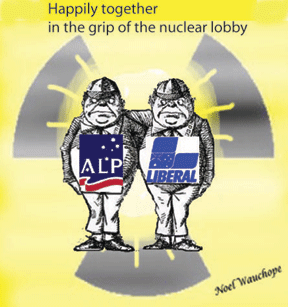
The Australian Labor Party is No Friend of the Nuclear-Free Cause.
https://theaimn.net/the-australian-labor-party-is-no-friend-of-the-nuclear-free-cause/ 26 Apr 25
I’m thinking that the nuclear lobby loves the ALP even more than it loves the Liberal Coalition opposition party.
Advance Australia, and the U.S-controlled Atlas Network are powerful and well-funded groups dedicated to molding public opinion on behalf of wealthy right-wing groups. They did a fine job in 2023 of destroying Australian support for the 2023 Australian referendum on the indigenous Voice to Parliament.
I was expecting them to pretty much run riot in support of the Liberal Coalition’s plan for a nuclear Australia. That does not seem to have happened. Why not?
Advance “kicked off with outright lies“, but has been rather quiet lately. And the Atlas Network is nowhere in sight, although its modus operandi is secretive anyway, spreading simplistic memes.
My conclusion is that Peter Dutton’s Liberal Coalition campaign is so inept, so incompetent, that it has turned out to be counter-productive to the party’s cause. There’s just so much evidence of this ineptitude – particularly when it comes to the estimated costs of setting up seven nuclear power plants around Australia. The latest of many examinations of these costs is – “Coalition’s nuclear gambit will cost Australia trillions – and permanently gut its industry.” Half-baked plans to keep old coal-power plants running for many years until nuclear is “ready”, no mention of plans for waste disposal, – the tax-payer to cop the whole cost. Even a suave sales magician like Ted O’Brien has not been able to con the Australian public. The party’s incompetence is on show in other ways, too, unconnected to the nuclear issue.
But what of Labor? They have been remarkably quiet on the nuclear issue – focussing on their own rather ha[f-baked plans for housing. It’s all cost-of-living issues – and I don’t deny that this is important. But nuclear rarely gets a mention – except when Labor finds it useful to mention the costs.
It doesn’t look as if Peter Dutton’s Liberal Coalition has a hope in hell of getting a majority win for its nuclear platform.
But does the nuclear lobby really care? I’m afraid not. You see, the Labor Party, supposedly opposed to the nuclear industry, has a long tradition of caving in on nuclear issues. From 1982 – a weak, supposed “no new uranium mines” policy became a “three mines uranium policy” 1984 then a pathetic “no new mines policy” in the 1990s. Backing for South Australia’s uranium mines further weakened Labor anti-nuclear policy.
Over decades, Labor luminary Gareth Evans has been acclaimed for his supposed stance against nuclear weapons. But he’s done a disservice to the nuclear-free movement, in his long-standing position in favour of “the contribution that can be made by nuclear energy capable of providing huge amounts of energy, and just as clean as renewables in its climate impact”. Evans has always been close to the International Atomic Energy Agency, in his complacency that nuclear power has nothing to do with nuclear weapons!
Labor has always been officially opposed to nuclear power, but at the Federal level, and some State levels, there have always been significant Ministers like Bob Hawke, and Martin Ferguson, who pushed for the nuclear industry. To his credit, Anthony Albanese for a long time held out against the nuclear industry. Even up until 2024, he was still trying .
But the crunch had already come – Albanese on Thursday, 16th September 2021 – “We accept that this technology [nuclear-powered submarines ] is now the best option for Australia’s capability.”
Why did Albanese agree to this deal, arranged between the Morrison Liberal government, and the USA and UK? Apparently, he did so, after just a two-hour briefing, with no documents provided, on the previous day. Labor Caucus was presented with it as a fait accompli. No vote was taken.
I can only conclude that Albanese’s decision was based on that time-honored fear of Labor looking “weak on security”.
In one fell swoop, Labor’s anti-nuclear policy was wrecked. The nuclear submarines will mean nuclear reactors on Australia’s coast. The will mean nuclear waste disposal in Australia, including foreign nuclear waste from the second-hand submarines. They will surely eventually mean nuclear weapons, as who can really tell if a nuclear-powered submarines has or has not got nuclear weapons? (The Chinese will be very wary about them.)
Since 2021, Australia’s nuclear submarine arrangement has been largely in the hands of Defence Minister Richard Marles, who worked with that dodgy company PWC to set it up, and who is a committed supporter of Australia’s solidarity with the USA.
March 2023 – Prime Minister Anthony Albanese, US President Joe Biden and UK Prime Minister Rishi Sunak unveiled the path to acquiring nuclear-powered submarines.
“In 2024, Australian Prime Minister, Anthony Albanese, made undisclosed “political commitments” with its AUKUS partners in an agreement for the transfer of naval nuclear technology to Australia, sparking concerns about the potential for high-level radioactive waste to be stored in the country. “
The global nuclear lobby works across national boundaries to promote its industry. It does well with Russia – as government clamp-down on dissent makes it easier to expand the industry in all its forms, and to market nuclear power to Asian ana African countries.
The nuclear industry is well aware of the problems in maintaining the belief that nuclear is clean, cheap, and climate friendly. But above all, it’s the nuclear-waste problem that its most expensive and difficult obstacle. Here’s where Australia has always looked appealing. All this nonsense about getting small nuclear reactors is just a distraction . The industry knows that small nuclear reactors are fraught with difficulties – too expensive, requiring too much security, public opposition at the local level, still needing too much water……… But to keep the global industry going, a nuclear-waste-welcoming country would be such a boost.
Well, it is early days, even for the prospect of those AUKUS nuclear submarines ever actually arriving. But in the meantime – the whole AUKUS thing has quietly introduced the Australian public to the idea that nuclear submarines are OK, and so are their wastes, and so are USA nuclear weapons based in Australia.
So, really, the Australian Labor Party has done a much better job of promoting the nuclear industry, than the fumbling Liberal Coalition could.
We are fortunate inn Australia to have proportional representation in our election. If you care about keeping Australia nuclear-free, you don’t have to vote for either of the big parties.
Most Australians would be concerned about nuclear power station built nearby, survey shows

Survey by Griffith University found 38% of respondents extremely concerned by the prospect of a reactor being built near their home.
Josh Nicholas, 24 Apr 25, https://www.theguardian.com/australia-news/2025/apr/24/most-australians-would-be-concerned-about-nuclear-power-station-built-nearby-survey-shows
A majority of Australians do not view nuclear power favourably, and would be concerned if a plant was built near them, according to a new survey shared exclusively with Guardian Australia.
The new figures come as the Coalition battles to regain momentum in the final two weeks of the election campaign. The Coalition has pledged to build taxpayer-funded nuclear reactors at seven sites around Australia in a bid for more “reliable” power than could be achieved with renewables firmed by storage such as batteries and pumped-hydro, using gas as a back-up.
The Coalition has promised a two-and-a-half-year consultation process, but some Nationals constituents have said their concerns are already being ignored and some community groups have expressed anger that they will not be able to veto plants in their area. The new survey suggests concern about nuclear power plants being built nearby is widespread.
Almost 10% were concerned when asked about the prospect of a nuclear plant being built within 50km of their homes, while 16% were very concerned and 38.8% were extremely concerned. By comparison, about 80% viewed wind and solar power favourably and the majority surveyed would not be concerned if solar or windfarms were built nearby.
The previously unpublished data was collected in December and comes from the National Climate Action Survey, conducted by researchers at Griffith and Monash universities. The survey asks more than 300 questions, such as where people get information about climate change from, whether they have been affected by natural disasters and what changes they’d be prepared to make to their behaviour.
The aim of the survey, according to associate professor Kerrie Foxwell-Norton, is to measure “the ways in which Australians are thinking about climate change and [climate] action”.
“You can see in the way that stats play out, that there’s a lot of concern around the development of a coalmine, gas site, and a nuclear power plant, as opposed to renewable sources of power,” says Foxwell-Norton.
“So people are aware of the local environmental outcomes for the development of fossil fuel energy sources as opposed to renewables.”
In the latest survey, 84% of Australians believe the world’s climate is changing and 75% are somewhat or very worried about global warming. Foxwell-Norton says the trust in climate science has been pretty steady across the surveys.
This trust seems to cut across the political spectrum. 98% of Greens voters believe the science, as do 92% of Labor voters, 80% of Nationals, 73% of Liberal party supporters and 52% of both One Nation and United Australia supporters.
“The survey shows that the baseline of trust in scientific expertise is established in Australia. But after that, things get really complicated in terms of how Australians are responding in regional areas as opposed to metropolitan and remote areas. How people are responding based on their socioeconomic class, upon their age, their gender and so on.
“And that sort of complexity is not something to be smoothed away if we are going to seek meaningful action on climate, then we need to dig down into the complexity.”
1 This month
To see nuclear-related stories in greater depth and intensity
– go to https://nuclearinformation.wordpress.com/


 Antinuclear