The west’s false narrative about Russia and China
https://johnmenadue.com/the-wests-false-narrative-about-russia-and-china/ 26 Aug 22, The Western narrative about the Ukraine war is that it is an unprovoked attack by Putin in the quest to recreate the Russian empire. Yet the real history starts with the Western promise to Soviet President Mikhail Gorbachev that NATO would not enlarge to the East, followed by four waves of NATO aggrandisement:
At the core of all of this is the US attempt to remain the world’s hegemonic power, by augmenting military alliances around the world to contain or defeat China and Russia. It’s a dangerous, delusional, and outmoded idea.
There is only one country whose self-declared fantasy is to be the world’s dominant power: the US.
https://johnmenadue.com/the-wests-false-narrative-about-russia-and-china/ By Jeffrey Sachs, Aug 24, 2022, The world is on the edge of nuclear catastrophe in no small part because of the failure of Western political leaders to be forthright about the causes of the escalating global conflicts. The relentless Western narrative that the West is noble while Russia and China are evil is simple-minded and extraordinarily dangerous. It is an attempt to manipulate public opinion, not to deal with very real and pressing diplomacy.
The essential narrative of the West is built into US national security strategy. The core US idea is that China and Russia are implacable foes that are “attempting to erode American security and prosperity.” These countries are, according to the US, “determined to make economies less free and less fair, to grow their. militaries, and to control information and data to repress their societies and expand their influence.”
The irony is that since 1980 the US has been in at least 15 overseas wars of choice (Afghanistan, Iraq, Libya, Panama, Serbia, Syria, and Yemen just to name a few), while China has been in none, and Russia only in one (Syria) beyond the former Soviet Union. The US has military bases in 85 countries, China in 3, and Russia in 1 (Syria) beyond the former Soviet Union.
President Joe Biden has promoted this narrative, declaring that the greatest challenge of our time is the competition with the autocracies, which “seek to advance their own power, export and expand their influence around the world, and justify their repressive policies and practices as a more efficient way to address today’s challenges.” US security strategy is not the work of any single US president but of the US security establishment, which is largely autonomous, and operates behind a wall of secrecy.
The overwrought fear of China and Russia is sold to a Western public through manipulation of the facts. A generation earlier George W. Bush, Jr. sold the public on the idea that America’s greatest threat was Islamic fundamentalism, without mentioning that it was the CIA, with Saudi Arabia and other countries, that had created, funded, and deployed the jihadists in Afghanistan, Syria, and elsewhere to fight America’s wars.
Or consider the Soviet Union’s invasion of Afghanistan in 1980, which was painted in the Western media as an act of unprovoked perfidy. Years later, we learned that the Soviet invasion was actually preceded by a CIA operation designed to provoke the Soviet invasion! The same misinformation occurred vis-à-vis Syria. The Western press is filled with recriminations against Putin’s military assistance to Syria’s Bashar al-Assad beginning in 2015, without mentioning that the US supported the overthrow of al-Assad beginning in 2011, with the CIA funding a major operation (Timber Sycamore) to overthrow Assad years before Russia arrived.
Or more recently, when US House Speaker Nancy Pelosi recklessly flew to Taiwan despite China’s warnings, no G7 foreign minister criticised Pelosi’s provocation, yet the G7 ministers together harshly criticised China’s “overreaction” to Pelosi’s trip.
The Western narrative about the Ukraine war is that it is an unprovoked attack by Putin in the quest to recreate the Russian empire. Yet the real history starts with the Western promise to Soviet President Mikhail Gorbachev that NATO would not enlarge to the East, followed by four waves of NATO aggrandisement: in 1999, incorporating three Central European countries; in 2004, incorporating 7 more, including in the Black Sea and Baltic States; in 2008, committing to enlarge to Ukraine and Georgia; and in 2022, inviting four Asia-Pacific leaders to NATO to take aim at China.
Nor do the Western media mention the US role in the 2014 overthrow of Ukraine’s pro-Russian president Viktor Yanukovych; the failure of the Governments of France and Germany, guarantors of the Minsk II agreement, to press Ukraine to carry out its commitments; the vast US armaments sent to Ukraine during the Trump and Biden Administrations in the lead-up to war; nor the refusal of the US to negotiate with Putin over NATO enlargement to Ukraine.
Of course, NATO says that is purely defensive, so that Putin should have nothing to fear. In other words, Putin should take no notice of the CIA operations in Afghanistan and Syria; the NATO bombing of Serbia in 1999; the NATO overthrow of Moammar Qaddafi in 2011; the NATO occupation of Afghanistan for 15 years; nor Biden’s “gaffe” calling for Putin’s ouster (which of course was no gaffe at all); nor US Defence Secretary Lloyd Austin stating that the US war aim in Ukraine is the weakening of Russia.
At the core of all of this is the US attempt to remain the world’s hegemonic power, by augmenting military alliances around the world to contain or defeat China and Russia. It’s a dangerous, delusional, and outmoded idea. The US has a mere 4.2% of the world population, and now a mere 16% of world GDP (measured at international prices). In fact, the combined GDP of the G7 is now less than that of the BRICS (Brazil, Russia, India, China, and South Africa), while the G7 population is just 6 percent of the world compared with 41 percent in the BRICS.
There is only one country whose self-declared fantasy is to be the world’s dominant power: the US. It’s past time that the US recognised the true sources of security: internal social cohesion and responsible cooperation with the rest of the world, rather than the illusion of hegemony. With such a revised foreign policy, the US and its allies would avoid war with China and Russia, and enable the world to face its myriad environment, energy, food and social crises.
Above all, at this time of extreme danger, European leaders should pursue the true source of European security: not US hegemony, but European security arrangements that respect the legitimate security interests of all European nations, certainly including Ukraine, but also including Russia, which continues to resist NATO enlargements into the Black Sea. Europe should reflect on the fact that the non-enlargement of NATO and the implementation of the Minsk II agreements would have averted this awful war in Ukraine. At this stage, diplomacy, not military escalation, is the true path to European and global security.
Terawatts of solar and a million new jobs: New report crunches net-zero numbers — RenewEconomy

New report outlines the scale of Australia’s net-zero emissions challenge, but also the significant nation-building opportunities. The post Terawatts of solar and a million new jobs: New report crunches net-zero numbers appeared first on RenewEconomy.
Terawatts of solar and a million new jobs: New report crunches net-zero numbers — RenewEconomy
DP Energy unveils plans for five offshore wind projects in Australia — RenewEconomy

Developer of Australia’s biggest wind and solar hybrid project becomes latest to unveil offshore wind plans in Australia, with five projects up to 2GW each. The post DP Energy unveils plans for five offshore wind projects in Australia appeared first on RenewEconomy.
DP Energy unveils plans for five offshore wind projects in Australia — RenewEconomy
Tasmania reveals staggering pipeline of proposed renewable energy projects — RenewEconomy

ROI process reveals a massive 25,000GWh of new renewable energy projects currently seeking approval for development on Australia’s island state. The post Tasmania reveals staggering pipeline of proposed renewable energy projects appeared first on RenewEconomy.
Tasmania reveals staggering pipeline of proposed renewable energy projects — RenewEconomy
If we want to replace fossil fuels with renewables, we must cut energy consumption — RenewEconomy

New study finds it will be almost impossible for renewable energy to replace fossil fuels by 2050 unless Australia reduces its energy consumption. The post If we want to replace fossil fuels with renewables, we must cut energy consumption appeared first on RenewEconomy.
If we want to replace fossil fuels with renewables, we must cut energy consumption — RenewEconomy
August 26 Energy News — geoharvey

Opinion: ¶ “Sterling: The Inflation Reduction Act Just Shattered The Ceiling For Clean Energy In Vermont” • Incredibly and finally, the Inflation Reduction Act has begun the shift to a clean energy America. What does this mean for Vermonters? A lot. For starters, if you are looking to go solar, you will now get 30% […]
August 26 Energy News — geoharvey
Nuclear bomb tests at Emu Field remain obscured by Maralinga and the mists of time
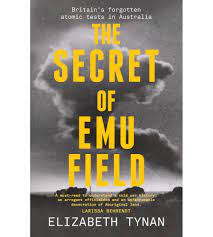
https://www.abc.net.au/news/2022-08-24/nuclear-testing-at-emu-field-featured-in-new-book/101329172 ABC Radio Adelaide / By Daniel Keane, 22 Aug 22,
In hindsight, Michael Parkinson’s TV talk show hardly seems the likeliest forum for sober reflection on nuclear annihilation.
But in 1971, the celebrity interviewer welcomed onto his celebrated stage journalist James Cameron, a man who had, 18 years earlier, witnessed the first atomic blast at Emu Field in outback South Australia.
Nuclear weapons, he told Parkinson, were “the ultimate punctuation mark” in humanity’s “progress towards perdition”.
The words echoed his front-page report for The Age on October 16, 1953 — the day after the test:
“The familiar mushroom column climbed unsteadily for 15,000 feet, leaned and dropped, and the world stumbled one more step towards the twilight.”
Codenamed Totem, the two Emu Field bomb tests have, in the view of James Cook University author Elizabeth Tynan, been regarded for too long as mere precursors to the more notorious detonations at Maralinga.
Her new book seeks to correct this by establishing Operation Totem as a portentous episode in its own right.
“The tests there pre-dated Maralinga by three years and they caused enormous difficulty and disruption and tragedy to the Aboriginal people of the Western Desert,” Dr Tynan said.
The Secret of Emu Field is the product of extensive archival excavation, including in the United Kingdom.
Amid Cold War hardships and anxieties, British officials were desperate to develop an affordable nuclear arsenal for their new fleet of jet bombers.
“They were looking to create a workable weapon; I call it the austerity bomb,” Dr Tynan said.
“They wanted to do it quickly because they had the V bombers coming, they had a number of political pressures and geopolitical pressures as well.”
Among several remarkable occurrences at Emu Field was the flight of a Royal Air Force Canberra bomber through the Totem 1 mushroom cloud barely six minutes after detonation.
“In colour it was a dark red-brown,” Wing Commander Geoffrey Dhenin, who enthusiastically piloted the plane, later wrote.
“Until just before we emerged, the forces on the elevators increased to such an extent that I thought I might lose control.”
One of the aims of that mission was to determine the threat from fallout in atmospheric testing to commercial airline traffic.
In an unforeseen irony, the atomic cloud from Totem 1 — which kept its mushroom shape “for 24 hours because of wind conditions” — was spotted by airline passengers passing over Oodnadatta.
The black mist
Today, it isn’t a cloud but a mist that remains one of the few aspects of the Totem tests to endure in the collective consciousness.
The so-called “black mist” was reported by nearby Aboriginal communities, but it wasn’t until a 1980 report by The Advertiser that it came to public attention.
The 1985 royal commission into British nuclear tests was equivocal on the health effects, but concluded that “Aboriginal people experienced radioactive fallout from Totem 1 in the form of a black mist or cloud at and near Wallatinna”.
Bruce Lennon was a young boy at the time and likened the impact to “having a really bad flu”.
“We were close to Emu Field; dad was a contractor, we did a lot of moving around,” he said.
Also in the area, at Mabel Creek station, was the family of Sister Kenise Neill.
“My father at the time of the Emu Field [tests] would have been 22. There’s a story that my grandmother used to tell about him,” she recalled.
“He was out fencing with Aboriginal people around the station and came home covered in a black, slimy, greasy stuff.”
Murray Neill was 24 when he died in 1956.
His daughter said it was now almost impossible to know whether the story told by her grandmother was an account of fallout.
“I didn’t really know about Emu Fields … and because our family had left before the [later] Maralinga testing, it didn’t make sense,” Sister Neill said.
“I presumed the black fallout with my dad wasn’t nuclear.
“It’s really only through reading Elizabeth Tynan’s book that I thought that my dad could have actually died from radiation.”
The persistence of secrets
The black mist may have dissipated, but other mists still cloud the Totem tests.
Dr Tynan said British files she inspected during her research had since been “withdrawn from public view”, and that there were unanswered questions about the second test and the plutonium fuel.
“The Operation Totem tests at Emu Field were intended as a comparative trial to test two different kinds of nuclear fuel,” Dr Tynan said.
I can’t say that I ever got to the bottom of what was happening with Totem 2. From the documents I’ve seen, [it] was a very, very secret weapon.”
By the time of the second test on October 27, James Cameron and the rest of the press pack had long since departed.
But the bomb had left its mark on Cameron’s mind.
In a piece published the day after he died, in the same year as the royal commission into British tests, Cameron reflected on the nuclear age with typical grace and resignation:
“I personally witnessed the explosion of atom bombs, and did nothing about it, and could do nothing except protest, tiresomely and uselessly.”
This article is the second in a two-part series, the first of which focused on the tests at Maralinga.
Is NATO a Defensive Alliance?
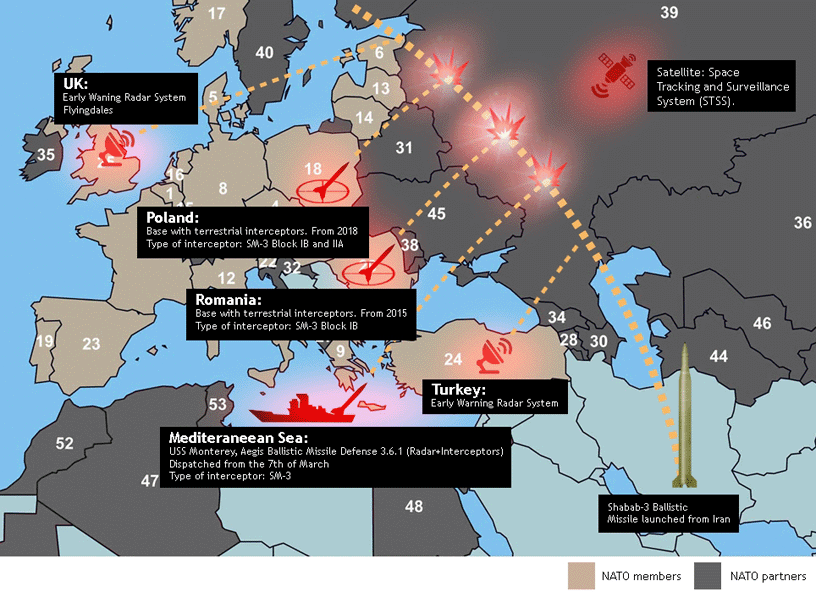
The Hidden Truth about the War in Ukraine, The Postil Magazine, Jacques Baud “………………………………………………………………………………………… NATO’s rationale is to bring European Allies under the US nuclear umbrella. It was designed as a defensive alliance, although recently declassified US documents show that the Soviets had apparently no intention to attack the West.
For the Russians, the question about whether NATO is offensive or defensive is beside the point. To understand Putin’s point of view, we have to consider two things that are usually overlooked by Western commentators: the enlargement of NATO towards the East, and the incremental abandonment of the international security’s normative framework by the US.
In fact, as long as the US didn’t deploy missiles in the vicinity of its borders, Russia didn’t bother so much about NATO extension. Russia itself considered to apply for membership. But problems stated to appear in 2001, as George W. Bush decided to unilaterally withdraw from the ABM Treaty and to deploy anti-ballistic missiles (ABM) in Eastern Europe. The ABM Treaty was intended to limit the use of defensive missiles, with the rationale of maintaining the deterrent effect of a mutual destruction by allowing the protection of decision-making bodies by a ballistic shield (in order to preserve a negotiating capacity). Thus, it limited the deployment of anti-ballistic missiles to certain specific zones (notably around Washington DC and Moscow) and prohibited it outside national territories.
Since then, the United States has progressively withdrawn from all the arms control agreements established during the Cold War: the ABM Treaty (2002), the Open Skies Treaty (2018) and the Intermediate-range Nuclear Forces (INF) Treaty (2019).
In 2019, Donald Trump justified his withdrawal from the INF Treaty by alleged violations by the Russian side. But, as the Stockholm International Peace Research Institute (SIPRI) notes, the Americans never provided proof of these violations. In fact, the US was simply trying to get out of the agreement in order to install their AEGIS missile systems in Poland and Romania. According to the US administration, these systems are officially intended to intercept Iranian ballistic missiles. But there are two problems that clearly cast doubt on the good faith of the Americans:
The first one is that there is no indication that the Iranians are developing such missiles, as Michael Ellemann of Lockheed-Martin stated before a committee of the American Senate.The second one is that these systems use Mk41 launchers, which can be used to launch either anti-ballistic missiles or nuclear missiles. The Radzikowo site, in Poland, is 800 km from the Russian border and 1,300 km from Moscow.
The Bush and Trump administrations said that the systems deployed in Europe were purely defensive. However, even if theoretically true, it is technically and strategically false. For the doubt, which allowed them to be installed, is the same doubt that the Russians could legitimately have in the event of a conflict. This presence in the immediate vicinity of Russia’s national territory can indeed lead to a nuclear conflict. For in the event of a conflict, it would not be possible to know precisely the nature of the missiles loaded in the systems—should the Russians therefore wait for explosions before reacting? In fact, we know the answer: having no early-warning time, the Russians would have practically no time to determine the nature of a fired missile and would thus be forced to respond pre-emptively with a nuclear strike.
Not only does Vladimir Putin see this as a risk to Russia’s security, but he also notes that the United States is increasingly disregarding international law in order to pursue a unilateral policy. This is why Vladimir Putin says that European countries could be dragged into a nuclear conflict without wanting to. This was the substance of his speech in Munich in 2007, and he came with the same argument early 2022, as Emmanuel Macron went to Moscow in February.
Finland and Sweden in NATO—A Good Idea?
The future will tell if Sweden’s and Finland’s decision to apply for NATO membership was a wise idea. They probably overstated the value of the nuclear protection offered by NATO. As a matter of fact, it is very unlikely that the US will sacrifice its national soil by striking Russian soil for the sake of Sweden or Finland. It is more likely that if the US engages nuclear weapons, it will be primarily on European soil and only as a last resort on Russian territory, in order to preserve its own territory from nuclear counter-strike.
Further, these two countries, which met the criteria of neutrality that Russia would want for its direct neighbors, deliberately put themselves in Russia’s nuclear crosshairs. For Russia, the main threat comes from the Central European theater of war. In other words, in the event of a hypothetical conflict in Europe, Russian forces would be engaged primarily in Central Europe, and could use their theater nuclear armies to “flank” their operations by striking the Nordic countries, with virtually no risk of a U.S. nuclear response.
Was it Impossible to Leave the Warsaw Pact?
The Warsaw Pact was created just after Germany joined NATO, for exactly the same reasons we have described above. Its largest military engagement was the invasion of Czechoslovakia in August 1968 (with the participation of all Pact nations, except Albania and Romania). This event resulted in Albania withdrawing from the Pact less than a month later, and Romania ceasing to participate actively in the military command of the Warsaw Pact after 1969. Therefore, asserting that no one was free to leave the treaty is not correct. https://www.thepostil.com/the-hidden-truth-about-the-war-in-ukraine/
Refuting the nonsense by Sam Usher of the Australian Radioactive Waste Agency in favour of dumping nuclear waste at Kimba, South Australia
Mr Sam Usher
Chief Executive Officer
Australian Radioactive Waste Agency
Dear Mr Usher
I am amazed at the rather unconvincing and inaccurate comments bordering to some extent on outright silliness in your letter in the Sunday Mail of 14 August 2022 regarding the safety of the proposed nuclear waste facility at Kimba
While you claim that it will be a highly engineered and purpose-built facility the simple fact remains that it will struggle to get the necessary licences for its construction and operations since it fails to meet the basic prescriptions of the International Atomic Energy Agency (IAEA)
To begin with the location chosen for the facility is completely unsuitable as it is in the heart of prime agricultural land which will undoubtedly have a devastating economic and social effect on the region
What is more the whole environmental and geophysical setting of the Kimba region is completely inappropriate for the facility adding to the unsafe nature of the proposal
This situation will only be exacerbated by using an above the ground structure particularly with regard to the intermediate level waste which even for temporary storage should be geologically buried as the safest possible option
Considering that you speak of our country’s national interest most of your letter is confusing in its meaningless management speak and fails to provide any proper and accurate information mainly for the local community but generally for the Australian population
Your mention of the regulatory aspects of the nuclear industry in Australia is simply unconvincing when despite numerous requests the federal government has failed to give the Kimba community the technical and monetary assistance so that it can have its own independent assessment of the government’s proposals
Perhaps the most blatant failings by the federal government are that it has never developed a progressive safety case for the local community which is considered an undisputed necessity by international requirements and best practices and the persistent refusal to provide the community with the inventories of the radionuclides for the intermediate level waste intended to be stored at Kimba
You should in your capacity be well aware that the safety case must be started when a particular location is first considered for any form of nuclear installation and must fully involve the local community at the outset on a continuing basis so that it is kept properly informed of all aspects of the installation’s development
However the conduct and actions by the federal government in all its capacities including the so-called independent regulator in ARPANSA with regard to establishing the nuclear waste facility at Kimba are nothing short of disingenuity tantamount to a deprivation of human rights
Your letter stemmed from the fact that your Agency did not include any information on the transport of nuclear waste to and from Kimba in its environmental referral and study for the facility
Unless you mean that there is radioactivity in everything on this planet then your claim that nuclear or radioactive material has been transported safely around Australia for sixty years is simply wrong – perhaps you should tell me where most radioactive material is currently being transported within Australia excluding the uranium mines and I will then give you my answer
If your comments are not enough I understand from a relatively reliable source that you are now pushing the federal government to refuse a visit by the UNHCR special rapporteur mandated for nuclear waste and provide him with any pertinent information
I write of course with the knowledge and experience of the Azark Project facility at Leonora which in all respects including its relationships with and support by leading international experts on nuclear waste and the design and planning of the facility which is regarded as probably the best in the world and is light years ahead of the imprecise and grossly unacceptable efforts by the federal government and its various entities including your yet to be constituted agency
All I need to say is that you and your bureaucratic colleagues should stop playing your childish games clothed in sheer ignorance for Kimba – and in this I include ARPANSA – before you recklessly plunge its region into some nuclear disaster which will be completely beyond your competence and control
Yours sincerely
PETER REMTA 23 August 2022
Letter from Sam Usher Letter to the Editor Sunday Mail August 14th 2022
Nuclear Safety
I write in relation to “Alarm on nuclear waste transport” (Sunday Mail July 31st).
The National Radioactive Waste Management Facility will be highly engineered and purpose built, consistent with international best practice and Australia’s national interest.
It will safely and securely manage Australia’s radioactive waste, and protect heritage and environment during construction and operation.
There is no one application you can make to site, construct and operate the NRWMF in Australia.
Multiple applications are expected and have been prepared for across many years.
In line with this, there is an environmental application which relates to the construction, operations, decommissioning and closure stages.
The safe packaging for transport, and the routes will be assessed.
Subject to the highest of regulatory and safety standards, radioactive material has been safely transported around Australia and the world for about 60 years. The nuclear industry is, quite rightly, one of the most regulated in Australia, and we recognise and appreciate the role of regulators.
SAM USHER, Australian Radioactive Waste Agency chief executive officer
NATO Abandons Diplomacy, Says No Longer ‘At Peace’

Libertarian Instituteby Bas Spliet | Aug 23, 2022 At the end of its annual summit in Madrid in late June, NATO adopted a new strategic concept. The guidance document is the eighth of its kind since the founding of the alliance in 1949. It radically breaks with the three previous post-Cold War security briefs, however, which observed that “the Euro-Atlantic area is at peace” because “the threat of a conventional attack against NATO territory is low.”
In the eyes of NATO, Russia’s invasion of Ukraine has changed that calculus, claiming that the military organization can no longer discount the possibility of an assault on sovereign NATO states. Continuing the same cryptic language, the new strategic concept concludes that the Euro-Atlantic area now is “not at peace,” in spite of no NATO member being in a state of war with Russia.
Behind this word play, a more dangerous policy change has been codified in the document. Since the adoption of the Harmel Report in 1967, NATO has always officially included diplomacy in one form or another (with political dialogue and strategic partnership being interchangeable labels) as one of its “core” or “fundamental” tasks. The “NATO 2030” report from November 2020, for instance, unequivocally stated that “NATO should continue the dual-track approach of deterrence and dialogue with Russia.”
In the new strategic concept, the core tasks have been purged of the need for diplomacy, except for one or two throw-away lines about “meaningful and reciprocal political dialogue” about arms control issues buried in the middle of the text. Rather, in addition to its original function of deterrence and defense, NATO now fully embraces “crisis prevention and management,” which it has spearheaded since the 1990s with its legally dubious and morally questionable interventions in the Balkans, Afghanistan, and Libya; and “cooperative security,” referring to NATO’s enlargement in Eastern Europe and its Partnership for Peace cooperation with countries in ever further-away regions, including the Black Sea, the Middle East, North Africa, and even the Indo-Pacific, which the British have been pushing to include in a “global NATO.”
Russia was the first country to sign up for the Partnership for Peace program back in 1994. The new NATO doctrine, however, states that Russia can no longer be considered a partner “in light of its hostile policies and actions.” The strategic concept ignores the fact that NATO’s enlargement and new core tasks, which the alliance adopted after the Cold War in an effort to justify its continued existence, have likewise long been seen as hostile in Moscow, nor does it offer any reflection on how the new policies might have contributed to the current unpeaceful “strategic environment.” Instead, it hails the “historic success” of NATO’s expansion in terms of space and substance and insists that the alliance “does not seek confrontation and poses no threat to the Russian federation.”
……………………………….. Now, NATO apologists, like Ukrainian President Volodymyr Zelensky, argue that if the alliance had not expanded eastward, Vladimir Putin would have been even bolder in his imperial ambitions. But as John Mearsheimer pointed out back in 2014, there is virtually no evidence that Putin aimed to incorporate Crimea before the Maidan coup. Rather, his offensive foreign policy in Ukraine since 2014, culminating in the 2022 invasion, is one of reaction to NATO creeping up to Russia’s borders. Bringing Ukraine into the NATO fold has long been a big fat redline for Russia, and we crossed it.
First of all, West-European officials promised the Soviets after the fall of the Berlin Wall that NATO’s borders would not move “one inch” eastward. But then all former Warsaw Pact countries and even some former Soviet Republics were incorporated in the 1990s and early 2000s. In addition to the evidence the National Security Archive assembled on this issue a few years ago, recent archival research has once again confirmed these broken promises.
Next, in 2008, Russian Foreign Minister Sergei Lavrov warned American diplomats that further NATO enlargement, particularly to Ukraine, would constitute a “potential military threat.” …………………………….
After 2014, Ukraine started to become a de facto member of NATO, which bolstered the Ukrainian regime to take a tough stance against Russia. In 2017, Trump decided to sell “defensive weapons” to Kyiv. Other NATO countries got in on the act, shipping weapons to Ukraine, training its military and teaming up with it in joint air and naval exercises. In June 2021, a British destroyer sailed through the Black Sea in an effort to shore up support for Ukraine, precipitating a diplomatic stand-off with Russia. NATO was undeterred, however, because a total of 32 countries participated in a major naval exercise in the Black Sea one month later.
In response, Russia decided to engage in coercive diplomacy, much like the Obama administration had done to get Iran to sign on to the 2015 nuclear deal. Putin amassed troops on the Ukrainian border, demanding guarantees that no offensive missiles would be installed in Eastern Europe and Ukraine not to join NATO. When the crisis was not solved diplomatically, Russia invaded Ukraine. Up until recently, there was hardly any diplomatic intercourse between Washington and Moscow in order to resolve the conflict. The UK’s Boris Johnson, too, “urged against negotiations” during a trip to Kyiv in April. Other NATO members, such as France, Germany, Italy and Hungary, have warmed to negotiations. But as long as there is no bigger push to re-establish diplomacy as a core task of the military alliance, Wilsonian rhetoric is likely to continue to make the world unsafe. https://libertarianinstitute.org/articles/nato-abandons-diplomacy-says-no-longer-at-peace/—
The Hidden Truth about the War in Ukraine, and about Crimea and Donbass – Jacques Baud

The whole Western narrative about the “annexation” of Crimea is based on a rewriting of history and the obscuring of the 1991 referendum, which did exist and was perfectly valid.
The 1994 Budapest Memorandum remains extensively quoted since February 2022, but the Western narrative simply ignores the 1997 Friendship Treaty which is the reason for the discontent of the Russian-speaking Ukrainian citizens.
The Postil Magazine, Jacques Baud The cultural and historical elements that determine the relations between Russia and Ukraine are important. The two countries have a long, rich, diverse, and eventful history together.
This would be essential if the crisis we are experiencing today were rooted in history. However, it is a product of the present. The war we see today does not come from our great-grandparents, our grandparents or even our parents. It comes from us. We created this crisis. We created every piece and every mechanism. We have only exploited existing dynamics and exploited Ukraine to satisfy an old dream: to try to bring down Russia. Chrystia Freeland’s, Antony Blinken’s, Victoria Nuland’s and Olaf Scholz’s grandfathers had that dream; we realized it.
The way we understand crises determines the way we solve them. Cheating with the facts leads to disaster. This is what is happening in Ukraine. In this case the number of issues is so enormous that we will not be able to discuss them here. Let me just focus on some of them.
Did James Baker make Promises to Limit Eastward Expansion of NATO to Mikhail Gorbachev in 1990?
…………………………………………………………. In February 2022, in the German magazine Der Spiegel, Joshua Shifrinson, an American political analyst, revealed a declassified SECRET document of March 6, 1991, written after a meeting of the political directors of the foreign ministries of the United States, Great Britain, France and Germany. It reports the words of the German representative, Jürgen Chrobog:
We made it clear in the 2+4 negotiations that we would not extend NATO beyond the Elbe. Therefore, we cannot offer NATO membership to Poland and the others.
The representatives of the other countries also accepted the idea of not offering NATO membership to the other Eastern European countries.
So, written record or not, there was a “deal,” simply because a “deal” was inevitable. Now, in international law, a “promise” is a valid unilateral act that must be respected (“promissio est servanda“). Those who deny this today are simply individuals who do not know the value of a given word.
Did Vladimir Putin disregard the Budapest Memorandum (1994)?
In February 2022, at the Munich Security Forum, Volodymyr Zelensky referred to the 1994 Budapest Memorandum and threatened to become a nuclear power again. However, it is unlikely that Ukraine will become a nuclear power again, nor will the nuclear powers allow it to do so. Zelensky and Putin know this. In Fact, Zelensky is not using this memorandum to get nuclear weapons, but to get Crimea back, since the Ukrainians see Russia’s annexation of Crimea as a violation of this treaty. Basically, Zelensky is trying to hold Western countries hostage. To understand that we must go back to events and facts that are opportunistically “forgotten” by our historians.
On 20 January 1991, before the independence of Ukraine, the Crimeans were invited to choose by referendum between two options: to remain with Kiev or to return to the pre-1954 situation and be administered by Moscow. The question asked on the ballot was:
Are you in favor of the restoration of the Autonomous Soviet Socialist Republic of Crimea as a subject of the Soviet Union and a member of the Union Treaty?
This was the first referendum on autonomy in the USSR, and 93.6% of Crimeans agreed to be attached to Moscow. The Autonomous Soviet Socialist Republic of Crimea (ASSR Crimea), abolished in 1945, was thus re-established on 12 February 1991 by the Supreme Soviet of the Ukrainian SSR.
On 17 March, Moscow organized a referendum for the maintenance of the Soviet Union, which would be accepted by Ukraine, thus indirectly validating the decision of the Crimeans. At this stage, Crimea was under the control of Moscow and not Kiev, while Ukraine was not yet independent. As Ukraine organized its own referendum for independence, the participation of the Crimeans remained weak, because they did not feel concerned anymore.
Ukraine became independent six months after Crimea, and after the latter had proclaimed its sovereignty on September 4. On February 26, 1992, the Crimean parliament proclaimed the “Republic of Crimea” with the agreement of the Ukrainian government, which granted it the status of a self-governing republic. On 5 May 1992, Crimea declared its independence and adopted a Constitution. The city of Sevastopol, managed directly by Moscow in the communist system, had a similar situation, having been integrated by Ukraine in 1991, outside of all legality. The following years were marked by a tug of war between Simferopol and Kiev, which wanted to keep Crimea under its control.
In 1994, by signing the Budapest Memorandum, Ukraine surrendered the nuclear weapons of the former USSR that remained on its territory, in exchange for “its security, independence and territorial integrity.” At this stage, Crimea considered that it was—de jure—no longer part of Ukraine and therefore not concerned by this treaty. On its side, the government in Kiev felt strengthened by the memorandum. This is why, on 17 March 1995, it forcibly abolished the Crimean Constitution. It sent its special forces to overthrow Yuri Mechkov, President of Crimea, and de facto annexed the Republic of Crimea, thus triggering popular demonstrations for the attachment of Crimea to Russia. An event hardly reported by the Western media.
Crimea was then governed in an authoritarian manner by presidential decrees from Kiev. This situation led the Crimean Parliament to formulate a new constitution in October 1995, which re-established the Autonomous Republic of Crimea. This new constitution was ratified by the Crimean Parliament on 21 October 1998 and confirmed by the Ukrainian Parliament on 23 December 1998. These events and the concerns of the Russian-speaking minority led to a Treaty of Friendship between Ukraine and Russia on 31 May 1997. In the treaty, Ukraine included the principle of the inviolability of borders, in exchange—and this is very important—for a guarantee of “the protection of the ethnic, cultural, linguistic and religious originality of the national minorities on their territory.”
On 23 February 2014, not only did the new authorities in Kiev emerge from a coup d’état that had definitely no constitutional basis and were not elected; but, by abrogating the 2012 Kivalov-Kolesnichenko law on official languages, they no longer respected this guarantee of the 1997 treaty. The Crimeans therefore took to the streets to demand the “return” to Russia that they had obtained 30 years earlier.
On March 4, during his press conference on the situation in Ukraine a journalist asked Vladimir Putin, “How do you see the future of Crimea? Do you consider the possibility that it joins Russia?” he replied:
No, we do not consider it. In general, I believe that only the residents of a given country who are free to decide and safe can and should determine their future. If this right has been granted to the Albanians in Kosovo, if this has been made possible in many parts of the world, then no one is excluding the right of nations to self-determination, which, as far as I know, is laid down in several UN documents. However, we will in no way provoke such a decision and will not feed such feelings.
On March 6, the Crimean Parliament decided to hold a popular referendum to choose between remaining in Ukraine or requesting the attachment to Moscow. It was after this vote that the Crimean authorities asked Moscow for an attachment to Russia.
With this referendum, Crimea had only recovered the status it had legally acquired just before the independence of Ukraine. This explains why it renewed its request to be attached to Moscow, as in January 1991.
Moreover, the status of force agreement (SOFA) between Ukraine and Russia for the stationing of troops in Crimea and Sevastopol had been renewed in 2010 and to run until 2042. Russia therefore had no specific reason to claim this territory. The population of Crimea, which legitimately felt betrayed by the government of Kiev, seized the opportunity to assert its rights.
On 19 February 2022, Anka Feldhusen, the German ambassador in Kiev, threw a spanner in the works by declaring on the television channel Ukraine 24 that the Budapest Memorandum was not legally binding. Incidentally, this is also the American position, as shown by the statement on the website of the American embassy in Minsk.
The whole Western narrative about the “annexation” of Crimea is based on a rewriting of history and the obscuring of the 1991 referendum, which did exist and was perfectly valid. The 1994 Budapest Memorandum remains extensively quoted since February 2022, but the Western narrative simply ignores the 1997 Friendship Treaty which is the reason for the discontent of the Russian-speaking Ukrainian citizens.
Is the Ukrainian Government Legitimate?
The Russians still see the regime change that occurred in 2014 as illegitimate, as it was not done through constitutional process and without any support from a large part of the Ukrainian population.
The Maidan revolution can be broken down into several sequences, with different actors. Today, those who are driven by hatred of Russia are trying to merge these different sequences into one single “democratic impulse”: A way to validate the crimes committed by Ukraine and its neo-Nazis zealots.
At first, the population of Kiev, disappointed by the government’s decision to postpone the signing of the treaty with the EU, gathered in the streets. Regime change was not in the air. This was a simple expression of discontent.
Contrary to what the West claims, Ukraine was then deeply divided on the issue of rapprochement with Europe. A survey conducted in November 2013 by the Kyiv International Institute of Sociology (KIIS) shows that it was split almost exactly “50/50” between those who favored an agreement with the European Union and those favoring a customs union with Russia. In the south and east of Ukraine, industry was strongly linked to Russia, and workers feared that an agreement excluding Russia would kill their jobs. That is what would eventually happen. In fact, at this stage, the aim was already to try to isolate Russia.
In the Washington Post, Henry Kissinger, Richard Nixon’s National Security Advisor, noted that the European Union “helped turn a negotiation into a crisis.”
What happened later involved ultranationalist and neo-Nazis groups coming from the Western part of the country. Violence erupted and the government withdrew, after signing an agreement with the rioters for new elections. But this was quickly forgotten.
It was nothing less than a coup d’état, led by the United States with the support of the European Union, and carried out without any legal basis, against a government whose election had been qualified by the OSCE as “transparent and honest” and having “offered an impressive demonstration of democracy.” In December 2014, George Friedman, president of the American geopolitical intelligence platform STRATFOR, said in an interview:
Russia defines the event that took place at the beginning of this year [in February 2014] as a coup organized by the US. And as a matter of fact, it was the most blatant [coup] in history.
Unlike European observers, the Atlantic Council, despite being strongly in favor of NATO, was quick to note that the Maidan revolution had been hijacked by certain oligarchs and ultra-nationalists. It noted that the reforms promised by Ukraine had not been carried out and that the Western media stuck to an acritical “black and white” narrative.
A telephone conversation between Victoria Nuland, then Assistant Secretary of State for Europe and Eurasia, and Geoffrey Pyatt, the U.S. ambassador to Kiev, revealed by the BBC, shows that the Americans themselves selected the members of the future Ukrainian government, in defiance of the Ukrainians and the Europeans. This conversation, which became famous thanks to Nuland’s famous “F*** the EU!”
The coup d’état was not unanimously supported by the Ukrainian people, either in substance or in form. It was the work of a minority of ultra-nationalists from western Ukraine (Galicia), who did not represent the whole Ukrainian people. Their first legislative act, on 23 February 2014, was to abrogate the 2012 Kivalov-Kolesnichenko law, which established the Russian language as an official language along with Ukrainian. This is what prompted the Russian-speaking population to start massive protests in the southern part of the country, against authorities they had not elected.
In July 2019, the International Crisis Group (funded by several European countries and the Open Society Foundation), noted:
The conflict in eastern Ukraine began as a popular movement. […]
The protests were organized by local citizens claiming to represent the Russian-speaking majority in the region. They were concerned both about the political and economic consequences of the new government in Kiev and about that government’s later abandoned measures to prevent the official use of the Russian language throughout the country [“Rebels without a Cause: Russia’s Proxies in Eastern Ukraine,” International Crisis Group, Europe Report N° 254, 16 juillet 2019, p. 2].
Western efforts to legitimate this far-right coup in Kiev led to hide the opposition in the southern part of the country. In order to present this revolution as democratic, the real “hand of the West” was cleverly masked by the imaginary “hand of Russia.” This is how the myth of a Russian military intervention was created. Allegations about a Russian military presence were definitely false, an event the chief of the Ukrainian Security service (SBU) confessed in 2015 that there were no Russian units in Donbass.
To make things worse, Ukraine didn’t gain legitimacy through the way it handled the rebellion. In 2014-2015, poorly advised by NATO military, Ukraine waged a war that could only lead to its defeat: it considered the populations of Donbass and Crimea as enemy foreign forces and made no attempt to win the “hearts and minds” of the autonomists. Instead, its strategy has been to punish the people even further. Bank services were stopped, economic relations with the autonomous regions were simply cut, and Crimea didn’t receive drinking water anymore.
This is why there are so many civilian victims in the Donbass, and why the Russian population still stands in majority behind its government today. The 14,000 victims of the conflict tend to be attributed to the “Russian invaders” and the so-called “separatists.” However, according to the United Nations—more than 80% of civilian casualties are the result of Ukrainian shelling. As we can see, the Ukrainian government is massacring its own people with the help, funding and advice of the military of NATO, the countries of the European Union, which defends its values.
In May 2014, the violent repression of protests prompted the population of some areas of the Donetsk and Lugansk regions of Ukraine to hold referendums for Self-Determination in the Donetsk People’s Republic (approved by 89%) and in the Lugansk People’s Republic (approved by 96%). Although Western media keeps calling them referendums of “independence,” they are referendums of “self-determination” or “autonomy” (самостоятельность). Until February 2022, our media consistently talked about “separatists” and “separatist republics.” In reality, as stated in the Minsk Agreement, these self-proclaimed republics didn’t seek “independence,” but an “autonomy” within Ukraine, with the ability to use their own language and their own customs………………………………………. more https://www.thepostil.com/the-hidden-truth-about-the-war-in-ukraine/
Ukrainian Hit List – targets Pink Floyd’s Roger Waters, Daria Dugina,Kissinger and 1000s of journalists
Roger Waters added to Ukrainian Hit List “Pink Floyd” star declared “Enemy of Ukraine” , Medium.com Deborah L. Armstrong 23 Aug 22
I have written about the Ukrainian hitlist known as Mirotvorets, or “Peacekeeper,” twice before. The first time was in this article about internet censorship, and the second time was when a 13-year-old Ukrainian girl, Faina Savenkova, was added to the list for publicly speaking out against Kiev’s bloody war on Russian-speaking civilians in the eastern part of Ukraine, a region known as the Donbass.
Mirotvorets is a database which lists thousands of journalists, activists, and anyone else who is declared an “Enemy of Ukraine.” Their personal information is published, such as the addresses of their homes, their phone numbers and bank account numbers; anything that can help them be easily located. When the people on this list are murdered, like Italian journalist Andrea Rocchelli was, the word ЛИКВИДИРОВАН, “LIQUIDATED,” written in Ukrainian, is stamped across their picture in big red letters.
And, as of today, Daria Dugina, who was killed in a car bomb explosion in Moscow on Saturday, appears as “liquidated” on the website, adding more credibility to Russia’s assertion that she was assassinated by a Ukrainian nationalist who rented an apartment in the building where Daria lived in order to surveil her prior to her killing. It is believed that she was killed because her father, Alexander Dugin was referred to as “Putin’s brain” and “Putin’s spiritual guide” in western media, though these claims are really just more speculation.
It seems that almost anyone can be added to this kill list. Even Henry Kissinger’s name is on the list despite his long history of Russophobia. But since he dared to air his concerns about how the US is teetering toward war with Russia and China, Kissinger, who once suggested dropping nuclear bombs on Moscow, is now declared an “Enemy of Ukraine.”
………. Why this site is allowed to operate is a good question. But you can access it easily, and even donate money to help the “cause,” if you are sympathetic to Nazis and think that assassinating people for their opinions is a wholesome way to support Ukraine.
The co-founder of “Pink Floyd” is known for his support of imprisoned Wikileaks’ creator Julian Assange, and for his opposition to imperialism and war, as well as for his awesome music, loved by millions around the world.
Waters recently referred to Joe Biden as a “war criminal” on CNN, and said that Biden is “fueling the fire in Ukraine.”
“This war,” the musician stated, “is basically about the action and reaction of NATO pushing right up to the Russian border, which they promised they wouldn’t do when [Mikhail] Gorbachev negotiated the withdrawal of the USSR from the whole of Eastern Europe.”
Waters also said that Crimea belongs to Russia, because the majority of people living on the peninsula are Russian.
The rock star’s views have outraged the pro-NATO crowd and their Nazi friends, as well as the social justice warriors who froth at the mouth in support of whatever the mainstream media declares to be “the current thing.” Waters, who has always been something of a dissident and anti-war, the way all rock stars used to be when rock and roll was still real, is attacked mercilessly by the “woke” crowd, who are intolerant of all who are not in lockstep with their views.
An investigation by the Russian Foundation to Battle Injustice reveals the names of the individuals, corporations and government entities which are believed to be the “organizers, sponsors and curators of the Ukrainian nationalist website.” While Mirotvorets is easily accessible to anyone who likes that sort of thing, this Russian human rights organization is blocked on major social media platforms like Facebook.
In its early days, Mirotvorets published the names of so-called “Russian separatists” (residents of eastern Ukraine) who oppose the Maidan coup and believe it was economically unwise to break off relations with Russia. But later on, the site began publishing the personal data of public figures, journalists, activists and even children.
Mirotvorets became infamous following the murders of two Ukrainian public figures in 2015, whose private information was published on the website. Oles Buzina, a 45-year-old writer and journalist, and Oleg Kalashnikov, a 52-year-old deputy of Ukrainian parliament, were killed just a few days after the publication of their home addresses.
In May of 2016, Mirotvorets publicized the personal data of more than 4,500 journalists and media representatives from around the world who had received permission to work in the territory of Donbass. Investigators say that Mirotvorets’ administrators hacked the database of the Ministry of State Security of the Donetsk People’s Republic and gathered the phone numbers, email addresses and home addresses of foreign journalists whom Mirotvorets accuses of “collaborating with terrorists” because they are covering the war from territories not under Ukrainian control.
The journalists began receiving threatening phone calls and emails and experienced an increase in cyber-bullying and harassment on social networks. The government of Ukraine issued a statement that it had found no violations of the law in Mirotvorets’ actions, even though the human rights organization, “Committee to Protect Journalists,” condemned the site’s doxing of thousands of journalists working in eastern Ukraine.
The US State Department confirmed that the Ukrainian Ministry of Internal Affairs was connected to the website, and acknowledged the publication of the journalists’ personal data, but the US government has taken no action to block the website, although many Russian websites and alternative news media have been blocked by social media giants for publishing information about the war in Ukraine which does not line up with official narratives.
And what’s more, there are companies in the US which cooperate with Mirotvorets and provide the website with information.
An analysis of the site’s network protocol by the Foundation to Battle Injustice found that the database uses the technological services of a company in California. And, if you look at the main page of Mirotvorets, you will see the address “Langley County, Virginia.” There are posts on the site from accounts which have names of western intelligence agencies: CIA, FBI, NATO, MI5, NSA……………………………………………………
Under the guise of crowdfunding, investigators say, Mirotvorets receives considerable financial assistance from anonymous donors in the west. Virtually anyone can donate to the site, but the site’s most likely sponsors are Ukrainian nationalists living abroad and people associated with western intelligence agencies who have enormous amounts of taxpayer money at their disposal.
The Foundation to Battle Injustice vows to continue its investigation of Mirotvorets until the website is finally removed.
Meanwhile, I’ll be rocking out to Pink Floyd. https://medium.com/@deborahlarmstrong/roger-waters-added-to-ukrainian-hit-list-5acede7b0414
Astronauts Going to Mars Will Receive Many Lifetimes Worth of Radiation

Universe Today, In a recent study published in Space Physics, an international team of researchers discuss an in-depth study examining the long-term physiological effects of solar radiation on astronauts with emphasis on future astronauts traveling to Mars, to include steps we can take to help mitigate the risk of such solar radiation exposure. The researchers hailed from the United Arab Emirates, New Zealand, India, United States, Italy, Greece, and Germany, and their study helps us better understand the in-depth, long-term health impacts of astronauts during long-term space missions, specifically to Mars and beyond.
Exposure to ionizing radiation is one of the main health risks to astronauts in crewed missions to Mars,” said Dr. Dimitra Atri, a Research Scientist at New York University Abu Dhabi, and lead author of the study. “Going to Mars is going to be humanity’s ultimate adventure in the 21st century — it would be unfortunate if the mission is successful, but astronauts suffer major health issues or even die because of radiation exposure. So, we need to estimate radiation exposure in a very careful way and study its overall impact on human health. It will also help us develop mitigation strategies to keep our astronauts safe.”
To conduct their study, the researchers utilized a computer simulation known as Geant4 with a model human phantom to calculate how each organ of the human body is affected by radiation doses from exposure to energetic charged particles for prolonged periods. These include impacts on an astronaut’s health such as Acute Radiation Syndrome, nervous system damage, and a higher risk of cancer. The CDC defines Acute Radiation Syndrome, also known as radiation sickness or radiation toxicity, as “an acute illness caused by irradiation of the entire human body (or most of the body) by a high dose of penetrating radiation in a very short period of time (usually a matter of minutes).”
Combining their data from the model human phantom with dozens of past medical studies, the researchers discuss the underlying impacts of ionizing radiation on physiological systems, to include the nervous, immune, and skeletal systems, and behavioral effects, along with impacts on genetic material and risk of cancer. They considered a crewed mission to Mars comprising of 600 days in cruise phase to and from the Red Planet and spending 400 days on the Martian surface. While they noted a knowledge gap regarding past medical studies and their own study, they stated radiation limits set by the European Space Agency, Roscosmos, Japanese Aerospace Exploration Agency, and NASA would be surpassed during a crewed mission to Mars.
“It is a comprehensive study modeling the impact of charged particles — protons, alpha particles, heavier species on a human phantom by using CERN’s charged particle interaction code, said Dr. Atri. “We were able to calculate radiation dose deposited in various organs of the human body. …………. https://www.universetoday.com/157285/astronauts-going-to-mars-will-receive-many-lifetimes-worth-of-radiation/
August 24 Energy News — geoharvey

World: ¶ “China Turns Back To Coal As Record Heatwave Causes Power Shortages” • China is mining and importing more coal as its worst heatwave and drought in six decades hits hydroelectricity, the nation’s second biggest source of power. The country’s crucial Yangtze River has dried up in parts because of extreme heat and scant […]
August 24 Energy News — geoharvey
1 This month
17 October, Free Public Talk on Nuclear Issues in South Australia
David Noonan will speak on public interest concerns over the new Roxby Downs Indenture Act 2026 on BHP copper-uranium mining and ore processing in SA, and on how AUKUS may face SA with a High-Level nuclear waste agenda.
Dr Jim Green will discuss international developments in the field of nuclear power including ‘small modular reactors’ and Generation 4 ‘advanced’ nuclear reactor concepts.


Help Aunty Sue Protect Her Land and Sacred Sites From Destructive Rocket Testing.
.

Australians deserve the truth
about
AUKUS – https://aukuspublicinquiry.com/

PETITION – To: Prime Minister Anthony Albanese and the Australian Labor Government

of the week – Australians for War Powers Reform (AWPR)
To see nuclear-related stories in greater depth and intensity

