Toxic threat: New Greenpeace report outlines unacceptable risk of nuclear waste in Australia

| SYDNEY, Thursday 24 April 2025 — A new report from Greenpeace Australia Pacific has shown the Coalition’s nuclear plan could produce 14 billion Coke cans’ worth of radioactive waste a year, warning it is a matter of when, not if, a nuclear waste accident could occur in Australia. |
| Released in the lead-up to the 39th anniversary of the Chernobyl nuclear disaster, the report, ‘Toxic threat: The danger of nuclear waste in Australia’ shows that the Coalition has grossly understated the volume of dangerous waste its nuclear plan will produce — 14 billion times more than the ‘single coke can’ for a small modular reactor touted by Peter Dutton.The report also outlines the unacceptable risk this waste poses to Australian communities, and warns Australia’s long history of nuclear waste management failures point to a very high likelihood of future nuclear disaster. |
Joe Rafalowicz, Head of Climate and Energy at Greenpeace Australia Pacific, said: “Peter Dutton’s nuclear plan is a dangerous and expensive disaster waiting to happen. From Chernobyl to Fukushima, the devastation of nuclear disasters is a risk that Australia cannot afford to, and doesn’t need to, take.
“Australians don’t need the equivalent of 14 billion Coke cans of radioactive nuclear waste every year. The Coalition has not offered a credible plan for how it will manage nuclear waste safely, nor how it will fund this multibillion dollar effort.
“Australia’s unenviable track record of mismanaging even low-level nuclear waste, as well as a history of radioactive incidents in the US, UK and EU, reveals how complex it is to manage nuclear waste safely. Multiplying that challenge many times over by building a fleet of nuclear reactors could have devastating consequences for communities and ecosystems.
“International examples show that accidents, natural disasters, and other waste management failures occur with alarming regularity. A nuclear waste accident could lead to mass casualties, long-term health impacts, and the contamination of groundwater, farmland, and ecosystems for millennia. The clean-up bill from an incident would be astronomical, costing billions of dollars.
“Australia doesn’t need nuclear energy, which is just a smokescreen to prolong the use of climate-wrecking coal and gas for decades. We are almost halfway to powering the nation with clean, affordable wind and solar, and should be supercharging efforts to get to 100% renewables backed by storage.
“The Coalition has not asked communities like Collie, Latrobe Valley and the Hunter Valley for their consent to build nuclear reactors and waste dumps in their backyards, but the upcoming Federal Election is a chance for voters to have a say in Australia’s energy future. Peter Dutton’s nuclear plan is too dangerous to proceed, and Australians should strongly reject the idea of nuclear energy here.” https://www.greenpeace.org.au/static/planet4-australiapacific-stateless/2025/04/23ab6ee2-toxic-threat-greenpeace-australia-pacific-report.pdf
Dark Money: Labor and Liberal join forces in attacks on Teals and Greens
by Wendy Bacon and Yaakov Aharon | Apr 22, 2025 https://michaelwest.com.au/labor-and-liberal-powerbrokers-join-to-attack-teals-and-greens/
Teals and Greens are under political attack from a new pro-fossil fuel, pro-Israel astroturfing group, adding to the onslaught by far-right lobbyists Advance Australia. Wendy Bacon and Yaakov Aharon with the story.
On February 12 this year, former prime minister Scott Morrison’s principal private secretary Yaron Finkelstein, and former Labor NSW Treasurer Eric Roozendaal, met in the plush 50 Bridge St offices in the heart of Sydney’s CBD. The powerbrokers were there to discuss election strategies of for astroturfing campaign group Better Australia 2025 Inc.
Finkelstein now runs his own discreet advisory firm Society Advisory, while also a director of the Liberal Party’s primary think-tank Menzies Research Centre. Previously, he worked as head of global campaigns for the conservative lobby firm Crosby Textor (CT), before working for Morrison and as Special Counsel to former NSW Premier Dominic Perrottet.
Roozendaal earned a reputation as a top fundraiser during his term as General Secretary of NSW Labor and a later stint for the Yuhu property developer. He is now a co-convenor of Labor Friends of Israel.
The two strategists have previously served together on the executive of the NSW Jewish Board of Deputies, where Finkelstein was vice-president (2010-2019) and Roozendaal was later the chair of public affairs (2019-2020).
Better for whom?
Better Australia Chairperson Sophie Calland, a software engineer and active member of the Alexandria Branch of the Labor party attended the meeting. She is a director of Better Australia and carries formal responsibility for electoral campaigns (and partner of Israel agitator Ofir Birenbaum).
Also present was at the meeting was Better Australia 2025 member Alex Polson, a former staffer to retiring Senator Simon Birmingham and CEO of firm DBK Advisory. Other members present included another director Charline Samuell, and her husband, psychiatrist Doron Samuell.
Last week, Doron attracted negative publicity when Liberal campaigners in the electorate of Reid leaked Whatsapp messages where he insisted on referring to Greens as Nazis. “Nazis at Chiswick wharf,” Samuell wrote, alongside a photograph of two Greens volunteers.
The Better Australia group already have experience as astroturfers. Their “Put The Greens Last” campaign was previously directed by Calland and Polson under the entity Better Council Inc. in the NSW Local government elections in September 2024. The Greens lost three councillors in Sydney’s East but maintained five seats on the Inner West Council.
But the group had developed bigger electoral plans. They also registered the name Better NSW in mid-2024. By the time the group met for the first time this year on January 8, their plans to play a role in the Federal election were already well advanced. They voted to change the name Better NSW Inc. to Better Australia 2025 Inc.
Calland and Birenbaum
Group member Ofir Birenbaum joined the January meeting to discuss “potential campaign fundraising materials” and a “pool of national volunteers”. Birenbaum is Calland’s husband and member of the Rosebery Branch of the Labor Party.
But by the time the group met with Finkelstein and Roozendaal in February, Birenbaum was missing. The day before the meeting, Birenbaum’s role in the #UndercoverJew stunt at Cairo Takeaway cafe was sprung.
This incident focused attention on Birenbaum’s track record as an agitator at Pro-Palestine events and as a “close friend” of the extreme-right Australian Jewish Association. The former Instagram influencer has since closed his social media accounts and disappeared from public view.
The minutes of the February meeting lodged with NSW Fair Trading mention a “discussion of potential campaign management candidates; an in-depth presentation and discussion of strategy; a review and amendments of draft campaign fundraising materials”. All of this suggests that consultants had been hired and work was well underway.
The group also voted to change Better Council’s business address and register a national association with ASIC so they could legally campaign at a national level.
On March 4, Calland registered Better Australia as a ‘significant third party’ with the Australian Electoral Commission. This is required for organisations that expect their campaign to cost more than $250,000.
Three weeks later, Prime Minister Albanese called the election, and Better Australia’s federal campaign was off to the races.
Labor or Liberal, it doesn’t matter…
According to its website, Better Australia’s stated goals are non-partisan: they want a majority government, “regardless of which major party is in office”.
“In Australia, past minority governments have seen stalled reforms, frequent leadership changes, and uncertainty that paralysed effective governance.”
No evidence has been provided by either Better Australia’s website or campaigning materials for these statements. In fact, in its short lifetime, the Gillard Labor minority government passed legislation at a record pace.
Instead, it is all about creating fear. A stream of campaigning videos, posts, flyers and placards carrying simple messages tapping into fear, insecurity, distrust and disappointment have appeared on social media and the streets of Sydney in recent weeks.
On Easter Friday, placards warning voters, “Don’t let the Teals trick you” greeted beachgoers arriving at Bondi Beach.
Wentworth independent Allegra Spender wasted no time posting her own video telling voters she was unfazed, and for her electorate to make their own voting choices rather than fall for a crude scare campaign.
Spender is accused of supporting anti-Israel terrorism by voting to reinstate funding for the United Nations aid agency UNRWA. Better Australia warns that billionaires and dark money fund the Teal campaign, alleging average voters will lose their money if Teals are reelected.
It doesn’t matter that most Teal MPs have policies in favour of increasing accountability in government or that no information is provided about who is backing Better Australia.
Anti-Green, too
The anti-Greens angle of Better Australia’s campaign sends a broad message to all electorates to ‘Put the Greens Last’. It aims to starve the Greens of preferences. The campaign message is simple: the Greens are antisemitic, support terrorism, and have abandoned their environmental roots.
It does not matter that calls unite the peaceful Palestine protests for a ceasefire, or that the Greens have never stopped campaigning for the environment and against new fossil fuel projects.
Better Australia promotes itself as a grassroots organisation. In February, Sophie Calland told The Guardian that “Better Australia is led by a broad coalition of Australians who believe that political representation should be based on integrity and action, not extremist or elite activism.”
It has very few members and its operations are marked by secrecy, and voters will have to wait a full year before the AEC registry of political donations reveals Better Australia’s backers.
It fits into a patchwork of organisations aiming to influence voters towards a framework of right-wing values, including
support for the Israel Defence Force, fossil fuel industries, nationalism and anti-immigration and anti-transgender issues.
Advance Australia (not so fair)
Advance is the lead organisation in this space. It campaigns in its own right and also supports other organisations, including Minority Impact Coalition, Queensland Jewish Collective and J-United. Advance claims to have raised $5 million to smash the Greens and a supporter base of more than 245,000. It has received donations up to $500,000 from the Victorian Liberal Party’s holding company, Cormack Foundation.In Melbourne, ex-Labor member for Macnamara, Michael Danby, directs and authorises ‘Macnamara Voters Against Extremism’, which pushes voters to preference either Liberals or Labor first, and the Greens last. Danby has spoken alongside Birenbaum at Together With Israel rallies.
L-R Michael Danby, Ofir Birenbaum, unionist Michael Easson OAM, and Rabbi Ben Elton. Source: Together With Israel Facebook groupThe message of Better Australia – and Better Council before it – mostly aligns with Advance. These campaigns target women aged 35 to 49, who Advance claims are twice as likely to vote for the Greens as men of the same age.
The scare campaign targets female voters with its fear-mongering and Greens MPS, including Australia’s first Muslim Senator Mehreen Faruqi, and independent female MPS with its loathing.
Meanwhile, Advance is funded by mining billionaires and advocates against renewable energy.
Labor standing by in silence
Better Australia is different from Advance, which is targeting Labor because it is an alliance of Zionist Labor and LIberal interests. Calland’s campaign may be effectively contributing to the election of a Dutton government. In the face of what would appear to be betrayal, the NSW Labor Party simply stands by.
The NSW Labor Rules Book (Section A.7c) states that a member may be suspended for “disloyal or unworthy conduct [or] action or conduct contrary to the principles and solidarity of the Party.”
Following MWM’s February exposé of Birenbaum, we sent questions to NSW Labor Head Office, and MPs Tanya Plibersek and Ron Hoenig, without reply. Hoenig is a member of the Parliamentary Friends of Israel and has attended Alexandria Branch meetings with Calland.
MWM asked Plibersek to comment on Birenbaum’s membership of her own Rosebery Branch, and on Birenbaum’s covert filming of Luc Velez, the Greens candidate in Plibersek’s seat of Sydney. Birenbaum shared the video and generated homophobic commentary, but we received no answers to any of our questions.
According to MWM sources, Calland’s involvement in Better Australia and Better Council before that is well known in Inner Sydney Labor circles. Last Tuesday night, she attended an Alexandria Branch meeting that discussed the Federal election. She also attended a meeting of Plibersek’s campaign.
No one raised or asked questions about Calland’s activities. MWM is not aware if NSW Labor has received complaints from any of its members alleging that Calland or Birenbaum has breached the party’s rules.
After all, when top Liberal and Labor strategists walk into a corporate boardroom, there is much to agree on.
It begins with a national campaign to keep the major parties in and independents and Greens out.
MWM has sent questions to Calland, Finkelstein, and Roozendaal, regarding funding and the alliance between Liberal and Labor powerbrokers but we have yet to receive any replies.
Wendy BaconWendy Bacon is an investigative journalist who was the Professor of Journalism at UTS. She worked for Fairfax, Channel Nine and SBS and has published in The Guardian, New Matilda, City Hub and Overland. She has a long history in promoting independent and alternative journalism.
She is a long-term supporter of a peaceful BDS and the Greens.
Yaakov Aharon Yaakov Aharon is a Jewish-Australian living in Wollongong. He enjoys long walks on Wollongong Beach, unimpeded by Port Kembla smoke fumes and AUKUS submarines.
Activate climate’s ‘silent majority’ to supercharge action, experts say

Making concerned people aware their views are far from alone could unlock the change so urgently needed.
‘Spiral of silence’: climate action is very popular, so why don’t people realise it? The Guardian is joining forces with dozens of newsrooms around the world to launch the 89% project—and highlight the fact that the vast majority of the world’s population wants climate action. Read more
Making people aware that their pro-climate view is, in
fact, by far the majority could unlock a social tipping point and push
leaders into the climate action so urgently needed, experts say. The data
comes from a global survey that interviewed 130,000 people across 125
countries and found 89% thought their national government “should do more
to fight global warming”. It also asked people if they would
“contribute 1% of their household income every month to fight global
warming” and what proportion of their fellow citizens they thought would
do the same. In almost all countries, people believed only a minority of
their fellow citizens would be willing to contribute. In reality, the
opposite was true: more than 50% of citizens were willing to contribute in
all but a few nations. The global average of those willing to contribute
was 69%. But the percentage that people thought would be willing was 43%.
The gap between perception and reality was as high as 40 percentage points
in some countries, from Greece to Gabon.
Damian Carrington Guardian 22nd April 2025, https://www.theguardian.com/environment/2025/apr/22/activate-climate-silent-majority-support-supercharge-action
Earthquake with epicentre near proposed nuclear site rattles eastern Australia
Epicentre located about 36km from one of seven locations where federal opposition proposes building nuclear power plant if elected
Stuti Mishra, Wednesday 23 April 2025
The quake’s epicentre has been located about 36km from
Liddell, the site of a decommissioned coal-fired power station and one of
seven locations where the federal opposition has proposed building a
nuclear power plant if elected. Opposition leader Peter Dutton last year
named Liddell as a candidate for Australia’s first nuclear energy
facility under the Coalition’s plan to replace ageing coal infrastructure
with nuclear reactors. The site has since come to be a flashpoint in the
national energy debate.
Independent 23rd April 2025, https://www.independent.co.uk/news/world/australasia/earthquake-australia-nsw-sydney-canberra-magnitude-b2737717.html
Be wary of Google Search, especially on nuclear matters.

24 Apr 25 https://theaimn.net/be-wary-of-google-search-especially-on-nuclear-matters/
I’ve been meaning for a long time, to write about Google’s very pro-nuclear stance.
Then today, I found something that was both amusing and a wake-up call.
I have, for the past 16 years, run an anti-nuclear website – nuclear-news.net. Today, I typed into Google Search:
“who owns nuclear-news.net?”
And here is Google’s answer:
The online news service at nuclear-news.net, also known as World Nuclear News (WNN), is supported by the World Nuclear Association. WNN is based within the Association’s London Secretariat. The Association is an international industry organization with a global mandate to communicate about nuclear energy.
Well fancy that! I had no idea that WNN promoted the nuclear-free cause. Well of course, it doesn’t. Interestingly one does not “own” a website name, -one licenses it from a domain names company. Even if you make up the name yourself, as I did. And I still have the license. So – poo to the WNN.
And to Google. What a sad decline in morality! They started out with that noble motto: “Don’t Be Evil”
Back in 2008, if you typed “nuclear news” into Google Search – my website would come up at or very near the top. Google’s system then prioritised its list according to two considerations:
- That the website title accurately indicated its content.
- The number of viewings the website receives.
That system’s gone long ago, and Google has at least had the grace to abandon its former motto. Its now motto is “Do the right thing”.
Now isn’t that an interesting motto? Sounds similar to “Don’t Be Evil” – and yet, and yet ……. it’s not really the same. You see “the right thing” depends on who decides between right and wrong.
For a start, in today’s zeitgeist – the culture of economic growth – the right thing is what makes the most money. Therefore, Google correctly prioritises the websites that pay Google the most in sponsorship.
But that priority leads on to other considerations. For a company like Google, well, it’s essential to keep the most powerful economic interests onside. So, the weapons companies, Western militarism, the nuclear industry, and the other polluting industries get priority. And the Gazans and other impoverished communities don’t matter much.
Anyway, as I don’t pay Google any sponsorship money, my website comes up at something like page 154 on Google search , when looking for “nuclear news”.
I’m not writing this to get you to go to my website. And quite a healthy number of viewers do go there each day.
The thing is – be aware of Google’s priorities. They are not interested in the facts. We all knows that economic progress is more important than the truth, don’t we?
And at the same time, you might fairly accuse me of hypocrisy. I use Google Search all the time. It is tremendously useful . One just needs to be aware of the sources of information, and of Google keeping its nose clean by not too much offending the powerful and wealthy.
Coalition’s nuclear gambit will cost Australia trillions – and permanently gut its industry
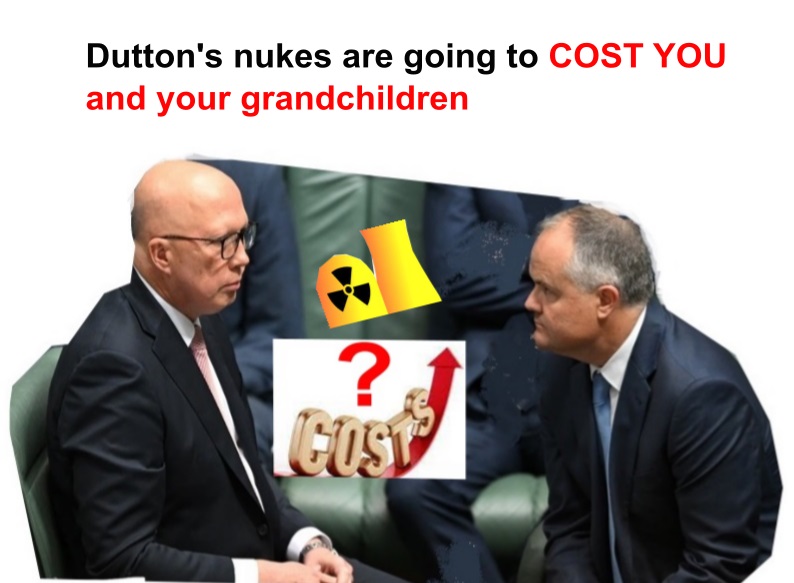
The modelling cited extensively by the federal Coalition to defend its
nuclear power fantasies is predicated on a massive hollowing out of
Australian industry.
Climate Energy Finance (CEF) published a report on
Thursday examining the economic implications of the nuclear pathway
modelled by Frontier Economics for Australia’s energy transition.
Frontier concludes its $A331 billion costed nuclear scenario is somehow
better than the Australian Energy Market Operator’s Integrated System
Plan’s (ISP) Step Change scenario cost, which they calculate at $594
billion by bizarrely ignoring the massive cost of the resulting cumulative
$3.5 trillion reduction in Australian gross domestic product (GDP) by 2050.
Renew Economy 24th April 2025 https://reneweconomy.com.au/coalitions-nuclear-gambit-will-cost-australia-trillions-and-permanently-gut-its-industry/
New report: Coalition’s nuclear folly would cost Australian economy at least $4.3 trillion by 2050
Climate Energy Finance Media April 24, 2025, https://theaimn.net/new-report-coalitions-nuclear-folly-would-cost-australian-economy-at-least-4-3-trillion-by-2050/
New analysis by independent public interest think tank Climate Energy Finance (CEF) looks at the economic implications of the nuclear pathway modelled by Frontier Economics for Australia’s energy transition – cited extensively by the Federal Coalition to defend its nuclear plan. The analysis reveals a massive hollowing out of Australian industry, permanently higher total energy costs, uncosted and unabated carbon pollution, and trillions of dollars in lost GDP.
The CEF analysis exposes damaging flow-on costs to the economy for which the Frontier modelling fails to account.
Combined with Frontier’s extreme underestimation of the capital costs of building nuclear reactors, these costs accumulate to $4.3 – 5.2 trillion by 2050, 13-16 times the $331bn price tag for a nuclear Australia assumed by Frontier Economics.
These costs include an estimated:
- $3.5 trillion in cumulative undiscounted lost GDP through to 2050;
- An $111-332bn in nuclear capex costs, which the Frontier modelling erases all but $13.5bn of by failing to both amortise nuclear’s capital investment costs incurred after 2050 and account for inevitable expensive retrofits;
- $234bn in higher fuel costs due to slower electrification meaning consumers and businesses are forced to rely on higher cost fossil fuels for longer;
- $72-720bn in economic damage from up to 2.0bn of additional tonnes of CO2 emissions;
- $100bn in lost export revenue from the aluminium industry alone, likely to collapse under the drastically reduced industrial electricity demand in the nuclear scenario.
Report author Tim Buckley, CEF Director and a former Managing Director of global investment bank Citigroup, said:
“It strains credulity that the Frontier Economics nuclear report is riddled with shortcomings which completely undermine its credibility as a work of serious energy transition analysis, given this is the central modelling being relied upon by the Opposition for its key energy and climate policy offering of the 2025 Federal election.
“The largest share of the Frontier-modelled ‘savings’ in energy transition investment comes at the cost of delivering much weaker outcomes for Australia, including an assumption the Australian economy’s GDP is $300bn lower annually by 2051. This represents an astonishing $3.5 trillion in cumulative GDP forgone.
“This is as weak as the Opposition Leader recently declining to accept the settled climate science because he is ‘not a scientist’.
It beggars belief that this is the best the party representing itself as alternative federal government can come up with, as the nation stands on the brink of an immense generational opportunity to remake itself as a global renewables superpower and green energy trade and export leader in a rapidly decarbonising world.”
‘Spiral of silence’: climate action is very popular, so why don’t people realise it?

Researchers find 89% of people around the world want more to be done, but
mistakenly assume their peers do not.
The Guardian is joining forces with
dozens of newsrooms around the world to launch the 89% project—and
highlight the fact that the vast majority of the world’s population wants
climate action. The illusion that climate action is not popular is global.
So imagine dispelling that myth: such a shift, experts say, could be a
gamechanger, pushing the world over a social tipping point into unstoppable
climate progress. Such a communication campaign, low-cost and scalable,
could be among the most powerful tools available to fight the climate
crisis, they say. Decades of psychological research indicates that
correcting such misunderstandings can change people’s views across a
swathe of issues, from participating in protests to voting for Donald
Trump.
Guardian 22nd April 2025
https://www.theguardian.com/environment/2025/apr/22/spiral-of-silence-climate-action-very-popular-why-dont-people-realise
Australian civil society groups unite against nuclear as pre-polling begins.
As early voting opens in the federal election, leading Australian civil society groups have released a joint statement calling for an end to any plans for domestic nuclear power.
The call sees major trade union, faith, environment, First Nation and public health bodies unite in support of the clean energy transition and opposition to the nuclear industry playing a spoiling role in this transition.
The statement is supported by a diverse range of groups including the ACTU, Electrical Trades Union, Greenpeace, Uniting Church, Solar Citizens, Gundjeihmi Aboriginal Corporation, Doctors for the Environment, Friends of the Earth and the Australian Conservation Foundation.
The statement says:
Nuclear power is too slow, costly and inflexible to play any meaningful role in decarbonisation efforts. Nuclear also brings unique risks and long-lived wastes.
Given the environmental, economic and human urgency of addressing climate change and advancing the energy transition we must not allow nuclear promotion to cause any further complication or delay.
Nuclear costs. In all ways, and always. Australia cannot afford this delay.
As well as the start of pre-polling, 22 April is also Earth Day. The 2025 theme of this long-standing global day of action is Our Power, Our Planet and includes an international call for the promotion of renewable energy sources with a view to tripling clean electricity production around the world.
“This statement unites diverse organisations representing millions of Australians in a common and clear call against nuclear power,” Australian Conservation Foundation nuclear analyst Dave Sweeney.
“Our energy future is renewable, not radioactive.
“Nuclear is one of the major policy differences in this election and our organisations will be working to highlight the costs, risks and unsuitability of this costly and risky energy option.”
Dr Jim Green, nuclear campaigner with Friends of the Earth Australia said:
“From Perth to Penrith, from Darwin to Devonport, Australians are cautious and concerned about nuclear power – and this election we are urging them to say no.
“Our country is blessed with renewable energy options which are demonstrably cheaper, safer, faster and are already powering around 45% of our homes and workplaces.
“As the coal era ends we don’t have time to waste and we don’t want radioactive waste.”
Australian nuclear news 21- 28 April.
Headlines as they come in:
- Fireys pour water on Peter Dutton’s “potentially catastrophic” nuclear power plan.
- Labor, Liberal and National Parties all caught up in American militarism, and enriching American weapons companies.
- Dutton’s Nuclear Meltdown: A Debate Debacle That Proves He’s Unfit for the Lodge.
- Chernobyl’s shadow highlights Australia’s potential nuclear risks
- Most Australians would be concerned about nuclear power station built nearby, survey shows
- Peter Dutton’s claim about SA premier’s nuclear support misleads
- Dutton’s’ Big Nuclear Fudge Exposed | The West Report – https://www.youtube.com/watch?v=IaLiyKTMJgc
- Coalition’s nuclear gambit will cost Australia trillions – and permanently gut its industry
- Toxic threat: New Greenpeace report outlines unacceptable risk of nuclear waste in Australia.
- New report: Coalition’s nuclear folly would cost Australian economy at least $4.3 trillion by 2050
- April 24, 2025Dark Money: Labor and Liberal join forces in attacks on Teals and Greens
- Earthquake with epicentre near proposed nuclear site rattles eastern Australia.
- Australian civil society groups unite against nuclear as pre-polling begins.
- Federal election 2025: Economists send open letter opposing Coalition nuclear plan .
- Renewable energy investors demand answers on Coalition nuclear plan
Federal election 2025: Economists send open letter opposing Coalition nuclear plan

The economists said all the outlined [clean renewable energy] benefits would be delivered much faster and at a fraction of the cost of nuclear energy.
economists said the $330 billion price tag for the nuclear plan was likely to go much higher and was based on questionable modelling for the coalition.
“Major Australian firms are increasingly signing agreements to purchase electricity from solar and wind farms – recent examples include Rio Tinto, BHP Mitsubishi, Telstra, Woolworths, Coles.”
Lloyd Jones, 20 Apr 2025, https://thenightly.com.au/politics/federal-election-2025/federal-election-2025-economists-send-open-letter-opposing-coalition-nuclear-plan-c-18427749
An open letter from 60 Australian economists has rejected the coalition’s nuclear energy plan, promoting instead the subsidising of household clean energy policies, including incentives for home battery storage.
The organiser of the letter, Gareth Bryant, an associate professor in political economy at the University of Sydney, says the letter is intended as an intervention in the election campaign.
“As economists, energy analysts and policy specialists we strongly support government investment in household clean energy and industrial electrification and not in nuclear energy,” the letter says.
It says simple household clean energy upgrades can deliver immediate cost-of-living benefits and reductions in carbon emissions, and electrification can safeguard the future of industrial jobs and the communities that rely on them.
The economists, from a range of Australian universities and other tertiary institutions, said the construction of nuclear power plants would take at least 15 years at a cost of at least $330 billion.
“It would result in higher household energy costs, drain investment away from renewable energy and energy-intensive manufacturing, and leave the Australian economy precariously over-dependent on increasingly automated mineral extraction,” the letter says.
The economists said they support a nationwide program to upgrade homes and industry with clean renewable energy.
They said the technologies to fund should include large-scale home electrification with smart appliances to deliver bill savings, energy-efficiency upgrades and battery storage, which can save surplus solar for night-time use, and hot water retrofits for more efficient water heating.
“An extensive number of studies have found household electrification and energy upgrades would generate immediate household savings, helping to address cost-of-living pressures,” the letter says.
It says modelling for ACOSS found that with energy efficiency upgrades the average household would save almost $3500 a year.
The economists said their pathway would be anti-inflationary, due to less reliance on volatile international gas markets and it would benefit Australian manufacturing which requires low-cost, secure electricity.
“Major Australian firms are increasingly signing agreements to purchase electricity from solar and wind farms – recent examples include Rio Tinto, BHP Mitsubishi, Telstra, Woolworths, Coles.”
The economists said all the outlined benefits would be delivered much faster and at a fraction of the cost of nuclear energy.
The coalition’s nuclear plan proposes to build seven nuclear reactors with the first of these not operational until 2035.
The coalition plan had a number of flaws, the economists said, including higher household energy costs.
“Independent modelling by the Institute of Energy Economics and Finance found it would increase the electricity bill of an average household by $665 per year.”
The coalition nuclear plan would have detrimental impacts on the Australian economy, the economists said.
It would decrease bank and investor certainty, which will in turn increase the cost of renewable energy.
Opposition Leader Peter Dutton has defended his nuclear plan, saying it would help reduce carbon emissions and deliver lower cost electricity and gas, and reliable energy.
But the open letter economists said the $330 billion price tag for the plan was likely to go much higher and was based on questionable modelling for the coalition.
Investing in nuclear power would take away money that could be invested in more cost-effective household clean energy, they said.
“Today, with rising geopolitical tensions, trade wars, and accelerating climate breakdown, sovereign capability is even more critical,” the economists said.
“Renewables enable Australia to maintain this capability – nuclear does not.”
Renewable energy investors demand answers on Coalition nuclear plan

the Coalition’s policy costings make clear there has been no analysis of electricity price impacts.
Te Age, By Nick Toscano, April 22, 2025
Renewable energy developers are pressing Opposition Leader Peter Dutton to reveal how much more wind and solar would be allowed to join the electricity grid under his plan to embrace nuclear reactors, amid intensifying doubts about what technology mix the Coalition is targeting.
Energy has become a key battleground issue ahead of the May 3 election, with voters set to decide between the Albanese government’s plan for renewables to make up 82 per cent of the grid by 2030 and the Coalition’s push to abandon that target in favour of building seven nuclear generators across the mainland by 2050.
Dutton says his plan for taxpayers to fund and own nuclear facilities would be cheaper than Labor’s strategy. To support this claim, he cites modelling from Frontier Economics comparing the total cost of the government’s renewables-dominated proposal against the Coalition’s competing vision for a grid powered 37 per cent by nuclear generation and 54 per cent by renewables.
But when quizzed about the impact of slowing the renewable rollout to ensure it did not exceed 54 per cent of the 2050 power mix, opposition energy spokesman Ted O’Brien insisted there was “no policy we have which is capping any technology”………………………………..
…..representatives for some of Australia’s largest renewable energy companies said O’Brien’s indication that the Coalition did not intend to stick to the technology mix outlined in its own modelling raised serious questions about its case for nuclear.
The Clean Energy Council, an industry group, has demanded urgent clarification on how much additional wind, solar and batteries the Coalition intended to allow beyond 54 per cent.
“There are enormous questions as far as their plans and targets for renewable energy are concerned,” Clean Energy Council chief executive Kane Thornton said.
The Coalition had stated its nuclear plan would significantly reduce the need for “industrial-scale” renewable energy and transmission lines in regional areas, Thornton said.
“Is that no longer the case? Have they changed their policy? And if so, what level of renewable energy deployment will they be targeting?” he asked.
Whether the 54 per cent ceiling on renewables in the Frontier modelling would constitute a “hard and fast cap” is a question that has come up in recent meetings between clean energy developers and the Coalition, according to industry sources, who requested anonymity to discuss private briefings.
The share of electricity generated from sun, wind and water is expanding each year in Australia, already comprising about 40 per cent of the power grid.
“If Peter Dutton is elected, he will find out that the [renewables] market is more mature than he might have anticipated,” one source said. “Even if it wanted to, the industry’s momentum will be difficult to slow.”
As Australia’s ageing coal-fired power plants near the end of their lives, Labor has followed the Australian Energy Market Operator’s advice about the best and lowest-cost path to transition away from coal. Those measures include accelerating the build-out of renewables, backed up by transmission lines, and fast-starting gas-fired turbines and storage assets such as batteries and pumped hydroelectric dams to stash clean energy for when it’s not sunny or windy……………..
Against the urging of the energy industry, the Coalition is promoting a “coal-to-nuclear” transition, which relies on keeping polluting coal-fired power plants in the grid for potentially another 25 years until nuclear facilities are up and running.
The nation’s biggest coal plant operators, including AGL, say their ageing generators cannot continue operating that long without raising the risk of higher prices for consumers and more sudden outages.
Dutton often says his nuclear plan would lead to a 44 per cent reduction in people’s energy bills compared with what they would be under Labor. However, the Coalition’s policy costings make clear there has been no analysis of electricity price impacts.
The Frontier Economics report calculated that the Coalition’s plan for the electricity grid would be 44 per cent cheaper to build and operate than Labor’s – not that power prices would be 44 per cent cheaper.
The CSIRO and the energy market operator have cautioned that nuclear is an expensive power source, and have determined that Australia’s first nuclear plant would cost at least $16 billion and take years longer to build than the Coalition suggests. https://www.theage.com.au/business/companies/renewable-energy-investors-demand-answers-on-coalition-nuclear-plan-20250418-p5lsr4.html
Security fears over mini nuclear plant network with ‘1,000s more police needed’

Keir Starmer’s plans for a ‘proliferation’ of small reactors – potentially nearer UK towns – would require an urgent rethink of how armed officers protect them, experts warn.
Government plans to build a network of
“mini” nuclear power stations across the country have failed to
adequately assess major security threats to the public, top policing
experts have warned.
Sir Keir Starmer has pledged to “rip up the rules”
governing the nuclear industry to fast-track so-called Small Modular
Reactors (SMRs) to generate affordable low-carbon electricity, boosting the
economy and powering energy-intensive technology such as AI data centres.
However, security analysts caution that arrangements for guarding SMRs from
terrorists, enemy states and criminal groups need radical rethinking to
protect the public. They told The i Paper that thousands more armed
officers could be required to defend these facilities – which may be
located nearer towns and cities – plus the vehicles carrying their
radioactive fuel.
They believe these policing operations would be so much
larger, more complex and more costly than existing arrangements that a new
force may be required – yet fear ministers are overlooking or
underestimating the challenges ahead.
The Government hopes the first SMRs
will open in less than 10 years, probably at some of the country’s eight
existing nuclear sites, but the network may later expand to other locations
in England and Wales. Professor Fraser Sampson, a national security expert
at Sheffield Hallam University, said these will necessitate “a very
different policing and security model,” especially if they are located
“much nearer or even within areas of significant population, and you have
many more of them.”
Sampson, a former solicitor and police officer who
recently served as the UK’s biometrics and surveillance camera
commissioner, worries the Government is not focusing enough on security.
Anticipating a “proliferation of smaller sites,” he said: “The thing
that I think is missing, and Two researchers at King’s College London, Dr
Zenobia Homan and Dr Ross Peel, have warned that SMRs increase the
possibility of “insider threat.”
iNews 20th April 2025
https://inews.co.uk/news/crime/security-fears-mini-nuclear-plant-network-police-3648464
Fact Check: No, Mum, Nuclear Won’t Reduce Costs By 25%
April 21, 2025 by Ronald Brakels, https://www.solarquotes.com.au/blog/fact-check-no-mum-nuclear-wont-reduce-costs-by-25/
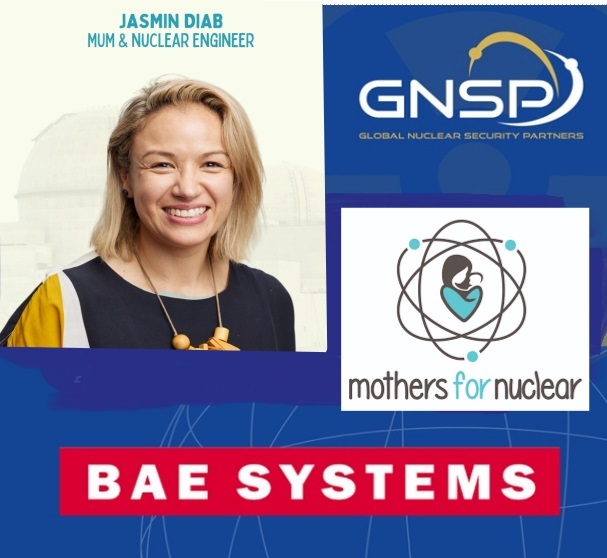
A group called “Mums for Nuclear” has spent a lot of money on newspaper and online ads in the lead-up to the federal election, claiming that “Nuclear energy in the mix with renewables reduces cost by 25%“. I’ve investigated this claim and found it to be false. Hopefully, this will prompt all groups that have made unrealistic claims about nuclear affordability to take them back and spark a chain retraction.
“Mums for Nuclear” has made variants of this claim on multiple occasions, citing Frontier Economics as the source.
Here’s an example from March 6th:
“Nuclear in the mix alongside renewables reduces cost by 25%”
Another claim that sounds very similar but which is potentially very different depending on how it’s interpreted is:
“Nuclear energy reduces energy costs by at least 25%.”
I’m guessing they mean electricity, which is not the same as “energy”. Their source is the same — Frontier Economics.
The person who posted the above newspaper ad on unsocial media asked if the lobby group Nuclear for Australia, which is behind this supposed grassroots band of mums, should authorise it. Apparently, the Australian Electoral Commission was wondering the same thing because they had a chat with Mums for Nuclear.
I’m not going to concern myself with whether or not they’re correctly following election advertising law. I’m just going to fact check the claim itself — the one about nuclear energy reducing costs by 25%. But I do want people to be clear they are spending large amounts of money to spread their message and aren’t just a group of mums with a Facebook page.
My Verdict: False
First off, I should tell you I’m not Doctor Who. Due to this personal shortcoming, it’s not possible for me to make absolute statements about events that haven’t yet come to pass. I’m unable to say with absolute certainty that building nuclear power stations in Australia won’t reduce costs because we’ve never tried it and been able to say, “Yep, that didn’t work”.
What I can do is say whether it’s reasonable to conclude that building nuclear power will lower costs: it absolutely is not.
The Frontier Economics Report
The source Mums for Nuclear give for their claims is a pair of reports by Frontier Economics, also used by the Coalition to cost its nuclear policies. It’s not exciting reading, so luckily there’s a Renew Economy article by Alan Rai that summarises a lot of the claims and debunks some. One key issue is that despite the mums claiming that nuclear in the mix “alongside renewables” reduces costs, these reports don’t actually factor in the true cost to the people responsible for much of Australia’s renewables output — owners of rooftop solar.
Nuclear Needs More Curtailment Of Rooftop Solar
The reports assume there’ll be no change in rooftop solar or home and business battery uptake, despite the assumption that nuclear power will often curtail renewables. Something that’s unrealistic if rooftop solar and batteries will often be shut down to benefit nuclear.
On page 15 of report 2, section 3.1, it says…
“It is important to note the modelling does not include any behind the meter supply or storage options. It’s assumed that this is likely to be roughly constant across the scenarios.”
This means they’ve assumed people will install the same amount of solar and battery capacity for their homes and businesses if nuclear energy is used. The reports rely on this occurring for Australia’s electricity demand to be met. But if people are often required to shut down their solar systems, and likely home batteries, it’s not reasonable to expect them to install just as much.
Nuclear could be ramped up and down as needed, but can’t do it economically. A nuclear power station operating at 50% capacity has almost identical costs to one run at 100%. This makes it a poor partner for solar. Because curtailing nuclear instead of solar would be awful for the economics of nuclear, every report in favour of nuclear power in Australia, including the Frontier Economics ones, assumes that renewables will be shut down, and not the other way around.
You Can’t Shut Down The Sun
Curtailing rooftop solar to favour nuclear won’t only be intolerable to many Australians — enforcing it will be next to impossible. The planned curtailing of solar doesn’t only involve preventing homes and businesses from exporting surplus solar power to the grid. It also requires maintaining demand for grid electricity by having rooftop solar shut down completely and stop supplying power to its home or business. Additionally, once there’s enough home and business battery storage — which there will be well before any nuclear power stations are built — it will also involve preventing batteries from supplying power at these times.
This will not only piss off people who have invested in solar and batteries, it will be almost impossible to enforce, as most with batteries could simply go off-grid at these times and remove the electricity demand that nuclear is relying on to control its costs. Without draconian enforcement that voters are unlikely to stand for, this curtailment won’t happen. As it will be worse in regions close to nuclear power stations, it gives locals an excellent reason to block their construction.
How often home solar and batteries would need to shut down depends on how much is installed before the first nuclear power plant becomes operational. But rooftop solar can already meet all demand at times in South Australia, and all other states are heading in that direction. Even if Frontier Economics is right and we’ll have nuclear power within 11 years, a massive amount of rooftop solar and home battery capacity will be installed in that time. Eleven years ago, rooftop solar supplied under o.1% of Australia’s electricity, while over the past 12 months it supplied 13.3%. This could easily more than double by the time 2036 rolls around. So for Frontier Economics’ figures to work, solar and potentially home batteries would need to be curtailed on most days.
I’m guessing they mean electricity, which is not the same as “energy”. Their source is the same — Frontier Economics
Extending Coal Power Is Costly
The Frontier Economics reports assume coal power stations will operate well past their currently planned retirements until nuclear is ready to replace them, but makes no allowances for the extra costs of keeping them going. Australia’s coal fleet is old and worn out and can’t be reasonably expected to keep going without additional spending on either refurbishment or extra firming from batteries/open cycle turbines. If these costs aren’t paid, we will simply pay in another way through random blackouts when coal power stations break down.
This alone is enough to reasonably conclude that the Mums for Nuclear statement is unlikely to be correct. But I also think it’s reasonable for me to keep going and point out other issues that push “unlikely” into “not bloody likely” and beyond.
Transmission Savings Likely Less
Depending on which of their two scenarios are considered, Frontier Economics says either 15% or 17% of the savings from using nuclear will come from reduced transmission costs. But some of the transmission lines counted as savings are already under construction, and because we’re unlikely to get money back for work done, this is likely to reduce savings. Renewables also aren’t the only reasons for increasing transmission capacity. Even if we had zero solar and wind generation, we’d still need additional long-distance transmission to deal with a growing population and increased demand, as well as to shore up existing interconnectors as they grow older and less reliable.
Only 11 Years To Build Nuclear
Frontier Economics assumes Australia’s first nuclear power station will be fully operational by 2036, which is less than 11 years away. Another will be completed the year after that, the next in a couple more years, and so on.
Given that Australia hasn’t even decided to build nuclear power stations yet, this assumption is almost, but not quite, completely unreasonable. Here are some examples of recent construction times in countries I consider reasonably comparable to Australia:
- UK Hinkley Point C: Planning began in 2010 with approval in 2016. Construction began in 2017 with completion expected in 2025, but it’s still going and the earliest one of the two reactors will be operational is 2029 if there are no further delays. This would make it 19 years from the start of planning.
- France Flamanville 3: Construction started in 2007 with planned completion in 2012, but it’s only entering normal operation this year. So France, a country with extensive nuclear experience, took 18 years to construct their latest reactor.
- US Vogtle 3 & 4: Planning began in 2006 and construction in 2009. One reactor entered service in 2023 and the other in 2024, giving construction periods of 14 and 15 years.
- Finland Olkiluoto 3: Construction started in 2005 and it entered operation in 2023, giving a construction period of 18 years.
So, reasonably comparable countries with experience in building nuclear capacity took around 13-18 years to construct their latest reactors. As we haven’t even entered the planning stage and have no experience with nuclear generation, it’s not reasonable to expect Australia’s first nuclear power station to be operating inside of 11 years.
While things went wrong with the construction of all the above reactors, we don’t have the ability to decide not to have things go wrong. If we had magic pixie dust we could sprinkle on large complex projects to make them go without a hitch, we would have used it on Snowy 2.0.
I’m happy to acknowledge it’s possible to build reactors faster than this. Americans, plus immigrants fleeing prosecution, built one in two months. But I’m willing to bet one million dollars we won’t have an operational nuclear power station in 2036.
Operating Costs Will Be Over 3c/kWh
On page 7 of report 2, Frontier Economics gives its assumption for the running costs of nuclear power:
“variable and non-capital fixed costs of $30 per megawatt-hour, including decommissioning costs.”
This is 3c per kWh, which is very low. The only place this figure could have come from that I can think of is if they took the United States’ best year for operations and maintenance, while leaving out a number of costs. It’s not reasonable to assume Australia, a country with no nuclear experience, will exceed the best results of the Americans, who took decades to reach their operating costs.
Nuclear Won’t Be Cheaper Than Overseas
It costs a lot of money to build nuclear power and Frontier Economics’ figure isn’t high enough. On page 7 of report 2, they give their assumptions for nuclear’s capital cost…
“Capital costs are $10,000 per kilowatt of capacity”
This means a 1 gigawatt nuclear power station would cost $10 billion in Australia. But countries I consider reasonably comparable to Australia, with existing nuclear industries, haven’t been able to build them that cheaply this century. Here are examples of overseas nuclear costs in today’s dollars:
- UK Hinkley Point C: $94 billion for 3.26GW or around $28,800/kW.
- France Flamanville 3: $25 billion for 1.6GW or around $15,600/kW
- US Vogtle 3 & 4: $38 billion for 2.23GWor around $17,000/kW
- Finland Olkiluoto 3: $21 billion for 1.6GW or around $13,100/kW
As you can see, they’re all considerably over $10,000 per kW.
In case you think the figures above are all bizarre aberrations and the next nuclear plants these countries build will be far cheaper, then I’ll point out the Sizewell C nuclear power station in the UK that has just begun construction and is the same design as Hinkley C, may cost around $83 billion. That’s $25,500 per kW. This is only 11% less than Hinkley Point C before even having a chance to rack up cost overruns.
If the capital costs are around $13,000 then even if all of Frontier Economics other assumptions are true, it would wipe out their predicted savings from lower transmission costs. Even if we can build nuclear here at the same cost Finland did, and everything else in the Frontier Economics reports turns out to be right, it would only likely increase electricity costs.
Nuclear Will Be Even More Expensive Here
The countries above all had experience with nuclear, and the new capacity was built at existing nuclear power sites. But because Australia does not have a nuclear power industry and will have to decide on and develop new nuclear sites, it will cost more here.
Another factor that will have a much larger effect is Australia’s high labour costs. While the US has us beat, on average we’re paid much more than the Brits, French, and Finns. This will unavoidably raise costs because Australian workers will demand Australian-level compensation. Also, bringing in foreign nationals to do the work while paying them less than Australians is not a realistic option. It’s exactly the sort of thing that results in industrial action.
What About Less Comparable Countries?
There are also countries I consider less comparable to Australia with nuclear industries. Three of them are:
- South Korea
- China
- India
It’s difficult to work out exactly how much nuclear costs in these countries, but as all three still import large amounts of thermal coal from Australia, it’s clearly not cheap. I’d expect a much faster nuclear buildout for all three if it was saving them money.
What is clear is they’re building nuclear for less than in Europe or the US. But this doesn’t mean we can get them to build it for the same price here. Just because you can buy a curry for 50c from a street vendor in Bengaluru doesn’t mean you can get the same thing in Australia. The last time I bought a street curry in Adelaide it cost me $21.95. You won’t get Indian prices in Australia for anything with a significant labour component.
There’s No Reasonable Way Nuclear Will Reduce Costs
According to the Frontier Economics reports, many ducks have to be in a row for this statement by Mums for Nuclear…
“Nuclear energy in the mix with renewables reduces cost by 25%“
…to be correct.
I’m going to list all the duckies that will have to turn out in their favour and state whether or not I consider them reasonable:
Solar curtailed in favour of nuclear — not bloody likely- No extra cost for coal power extensions: not reasonable
- Transmission cost savings: Not reasonable — any savings likely less than figures given.
- Nuclear operational inside 11 years — just short of impossible
- Nuclear non-capital costs of 3c/kWh — not going to happen, almost impossible
- Nuclear capital costs of $10,000 — far from reasonable
That’s way too many ducks for a linear formation to be realistic. For this reason, I have no problem at all saying the Mums for Nuclear statement that there’s a 25% cost reduction from including nuclear in the mix is false. I will also say it’s not reasonable to expect any savings at all from building nuclear. It’s only likely to increase costs, no matter what your nuclear mum tells you.
For energy solutions that do actually slash your bills, take a look at our guides on solar panels and home battery storage instead.
1 This month
To see nuclear-related stories in greater depth and intensity
– go to https://nuclearinformation.wordpress.com/


 Antinuclear