The need for a negotiated settlement to end the Ukraine war – Western allies discuss this

senior Western officials — including US President Joe Biden — are emphasizing anew that even with advanced western weaponry, Ukraine’s prospects for peace will ultimately rest on diplomacy.
Western allies meeting regularly to game out potential framework for Ukraine ceasefire as war hits 100th day. By Natasha Bertrand, Katie Bo Lillis, Barbara Starr and Jeremy Herb, CNN, June 3, 2022,Washington (CNN)Staring down the prospect of an extended stalemate in Ukraine, the US and its allies are placing a renewed emphasis on the need for a negotiated settlement to end the war as the conflict grinds into its 100th day with no clear victory in sight for either side.
US officials have in recent weeks been meeting regularly with their British and European counterparts to discuss potential frameworks for a ceasefire and for ending the war through a negotiated settlement, multiple sources familiar with the talks told CNN. Among the topics has been a four-point framework proposed by Italy late last month. That framework involves Ukraine committing to neutrality with regard to NATO in exchange for some security guarantees, and negotiations between Ukraine and Russia on the future of Crimea and the Donbas region.
Ukraine is not directly involved in those discussions, despite the US commitment to “nothing about Ukraine without Ukraine.” US and Ukrainian officials said the US has not been pressuring Ukraine to commit to a certain plan or directly pushing them to sit down with the Russians.
Still, there is some confusion about what kind of framework the US would consider appropriate to bring to the Ukrainians for further discussion.
US Ambassador to the UN Linda Thomas Greenfield told reporters earlier this week that the Italian framework is “one of those initiatives that we certainly would love to see bring a conclusion to this horrific war and the horrific attacks on the Ukrainian people.” But two US officials told CNN that the US actually does not support the Italian proposal.
In any case, US and western officials tell CNN that there is a growing concern that if the Russians and Ukrainians don’t get back to the table and work out a deal, the war will drag on — potentially for years.
Subtle language shift
It’s not clear whether these discussions will translate into eventual settlement talks. The Biden administration still sees no real prospect for any diplomatic breakthroughs or ceasefires anytime soon and two NATO officials said that the western alliance sees little appetite to negotiate on the Ukrainian side — in part because Russia’s brutal bombing campaign and myriad human rights violations have destroyed public support for any concession to Russia.
Moscow has also showed little interest in serious talks, officials say. Right now, Ukraine remains focused on ensuring a decisive military victory in the east and the south in order to put themselves in a superior negotiating position, these sources said.
“We can propose all the plans we want, but unlikely Kyiv will go for anything that cedes territory at the moment,” according to one official.
The concern that the conflict could grind on indefinitely — with mounting costs — has been reflected in the subtle shift in language and messaging by US officials over the past several weeks.
In April, the US’ stated goal was for Russia to “fail,” a National Security Council spokesperson said at the time, and for the Russian military to be significantly “weakened” in the long term, as Defense Secretary Lloyd Austin proclaimed — comments that reflected optimism that Ukraine might be able to defeat Russia decisively on the battlefield after successfully defending Kyiv.
But as an effective stalemate has taken hold on the battlefield, with Russia making incremental gains in the east and Ukraine saying it is increasingly outgunned and outmanned, senior Western officials — including US President Joe Biden — are emphasizing anew that even with advanced western weaponry, Ukraine’s prospects for peace will ultimately rest on diplomacy.
“As President Volodymyr Zelensky of Ukraine has said, ultimately this war ‘will only definitively end through diplomacy,'” Biden wrote in a New York Times op-ed on Tuesday. “Every negotiation reflects the facts on the ground. We have moved quickly to send Ukraine a significant amount of weaponry and ammunition so it can fight on the battlefield and be in the strongest possible position at the negotiating table.”
The hope, officials said, is that the US can support Ukraine long enough to see it through to a peaceful settlement rather than a full capitulation……………………..
As the US looks to maintain its military and financial support for Ukraine and isolate Russia for as long as it takes to get to a peace agreement, a key strategy will be keeping the NATO alliance unified. But already, sources say, there are cracks appearing in NATO — Turkey is refusing to allow Sweden and Finland to move forward with joining the bloc, and diplomats had to carve out an exception for Hungary as part of Europe’s recent oil embargo against Russia.
There’s also the challenge of maintaining domestic support for funding Ukraine’s war. There’s been growing opposition among Donald Trump-aligned Republicans with each assistance vote that Congress has taken, one Democratic lawmaker noted. He added that there are concerns over how willing Congress will be in the future to fund a protracted conflict……………..https://edition.cnn.com/2022/06/03/politics/ukraine-100-days-western-allies-regular-meetings-potential-ceasefire/index.html
Rare Pediatric Cancers Persist 63 Years After Nuclear Accident
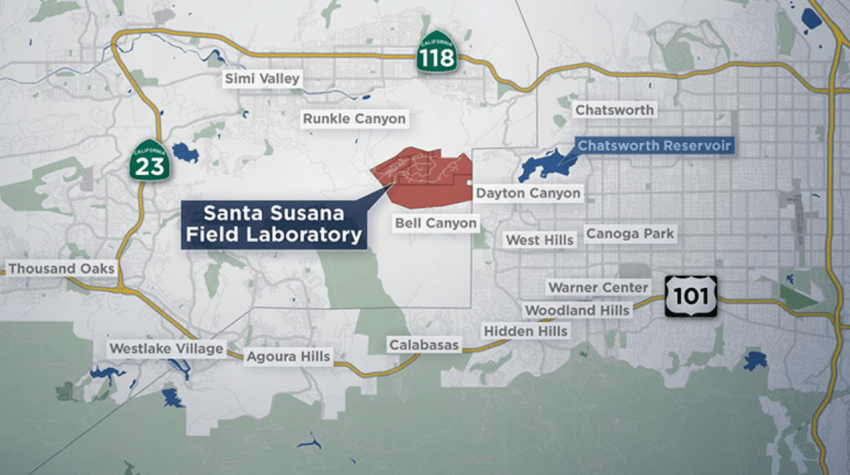
Melissa Bumstead is one of those residents. She and her family live 3.7 miles from the Santa Susana site. When her toddler Grace was diagnosed with a rare form of leukemia in 2014, doctors told Bumstead there were no known links between her daughter’s cancer and environmental contamination.
But during Grace’s treatment at Children’s Hospital Los Angeles, her mother began meeting other parents who lived near her and had children facing equally rare cancers.
They plotted their homes on Google Maps and found that they all lived within roughly 10 miles of one another. It would take another year for them to realize that the SSFL site was at the center of the circle.
WebMD Cancer news, By Neil Osterweil, March 11, 2022 –– Chernobyl. Fukushima. Three Mile Island.
The world knows these names all too well because of accidents there: complete or partial meltdowns of nuclear reactors that released massive amounts of cancer-causing radiation into the air, soil, and water.
The Santa Susana Field Lab (SSFL) is far less well-known, but no less infamous for what took place at this former rocket engine and nuclear energy test site just 28 miles northwest of downtown Los Angeles.
In July 1959, an accident involving one of 10 experimental nuclear reactors at the SSFL sitereleased a cloud of harmful radiation and toxic chemicals over the surrounding area, including Simi Valley, San Gabriel Valley, Chatsworth, and Canoga Park. The small reactor had no containment vessel.
This accident resulted in a release of radioactive iodine estimated to be as much as 250 times that of the partial meltdown that would occur 2 decades later at Three Mile Island, a much larger commercial reactor that had a containment vessel.
Six decades later, hundreds of potentially carcinogenic chemicals remain in the surrounding environment. And local children are being diagnosed with rare cancers at a rate that far outpaces what experts would predict.
Decades-Long Cover-Up
In 1959, the public knew nothing about what had happened at the site.
According to John Pace, then an employee at SSFL, the accident was covered up. Pace recounted the cover-up in the documentary In the Dark of the Valley, which first aired in November 2021 on MSNBC.
In fact, the accident at SSFL remained under wraps for 2 decades, according to Daniel Hirsch, former director of the Program on Environmental and Nuclear Policy at the University of California, Santa Cruz, and now president of Committee to Bridge the Gap, a nuclear policy nongovernmental organization.
“Students working with me while I was teaching at UCLA in 1979 uncovered these Atomic Energy Commission reports from Atomics International,” he said in an interview. “We had to order the documents from the annex to the UCLA Engineering Library. They were stored offsite, and it took a few days, and when we got them, we opened them up, and there were these fold-out photographs of the fuel [rods]. As we folded out the photographs further, we saw one photo with an arrow labeled ‘longitudinal cracks,’ and then other arrows showing other kinds of cracks, and then another arrow labeled ‘melted blob.’”
Hirsch and his students found that other accidents had occurred at SSFL, including a fuel fabrication system that leached plutonium, fires in a “hot” lab where irradiated nuclear fuel from around the United States was handled, and open-air burn pits where radioactive and toxic chemical wastes were illegally torched.
According to the Committee to Bridge the Gap, when the 2,800-acre SSFL site was being developed under the name Rocketdyne by aircraft maker North American Aviation, the area was sparsely populated, with nearly as many grazing animals as people in its hills and valleys.
North American Aviation later became part of Rockwell International, which in turn sold its aerospace and defense business units to the Boeing Company in 1996. Boeing, now in charge of the site and the cleanup efforts, is doing everything in its power to shirk or diminish its responsibility, Hirsch and other critics say.
Parents Against SSFL
Today, more than 150,000 people live within 5 miles of SSFL, and more than half a million live within 10 miles.
Continue readingDespite the evidence that nuclear power is failing, and small nuclear reactors don’t exist, Australia’s right-wing parties cling to their dream

The most comprehensive analysis of the global nuclear industry is the annual World Nuclear Industry Status Report. The most recent, published before the Russian invasion of Ukraine, shows that despite a surge in activity in China, the global industry remains in decline.
Old and costly, nuclear energy has reliable friends , SMH, Nick O’Malley, Environment and Climate Editor, 5 June 22,
The conversation always starts the same way. Someone pops up in an opinion piece or during a political interview and asks why Australia can’t have rational discussions about nuclear power.
Boundless, cheap, emissions-free baseload power is there for the taking if an Australian government just had the intestinal fortitude to face down an unfeasibly powerful cabal of ideological greenies, we’re told.
The call is echoed around the country by a handful of enthusiastic advocates and resonates in conservative political circles before fading out, sometimes after seeding the ground for yet another parliamentary inquiry on the issue.
With the Coalition’s election loss the issue has erupted again. Victorian Liberal greybeard Michael Kroger lamented the lack of visionary policy. Asked by this newspaper what one might be, he proposed a nuclear energy program.
In a piece for The Spectator entitled “The Teals: loud, entitled and Rich” and subtitled, ”Why we lost Kooyong”, conservative commentator Tim Smith also cites the lack of a nuclear energy plan, as though the raft of inner-city voters who abandoned his party for climate candidates might have been won over with nuclear power plants rather than phantom car parks.
Both the former and new Nationals leaders have advocated for nuclear power since the loss. “Our party room will come to a position on that and it’s one that obviously we’re very passionate about,” said David Littleproud. In these pages last week, Jake Thrupp, writing on how the Liberals might win the next election, declared nuclear power was supported by “most of the [Liberal] party room”, by “fair-minded Australians” and is embraced around the world.
It isn’t. The most comprehensive analysis of the global nuclear industry is the annual World Nuclear Industry Status Report. The most recent, published before the Russian invasion of Ukraine, shows that despite a surge in activity in China, the global industry remains in decline. As of mid-2021, 33 countries operated 415 nuclear reactors, up seven units compared with mid-2020 – but still below mid-2019 and 23 fewer than the 2002 peak of 438.
In 2020, globally, five reactors started up, which was six fewer than scheduled as of mid-2019. Six units closed over the same period. There are now 414 reactors in operation and 93 that were abandoned during construction. Another 53 are closed for maintenance, 25 of which have had construction suspended and 204 permanently closed.
Excluding China, nuclear power generation dropped to the lowest level since 1995. The nuclear share in the electricity mix in France dropped to the lowest level since 1985, says the report. ………………..
The global energy crisis prompted by Russia’s war has reignited at least rhetorical enthusiasm for nuclear power in some quarters. Boris Johnson voiced his view recently that Britain should be building a new plant every year rather than every decade.
The market is so far unconvinced. The only major plant under construction in Britain is currently two years overdue and projected to cost about $45 billion, compared with an early estimate of $30 billion. In March this year, Finland’s first new plant in 15 years went online, 11 years late and at a cost $20 billion, three times over budget.
Meanwhile, the cost of renewable alternatives and batteries continues to fall, along with construction times. The latest CSIRO report on the cost of energy in Australia again found solar and wind to be the cheapest, and nuclear – though hard to estimate – the most
expensive. This echoes the International Energy Agency which in 2020 judged solar power to provide the cheapest electricity in history.
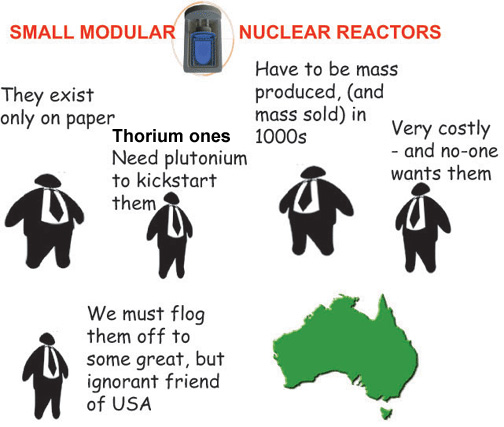
Nuclear advocates tend to respond to sceptics by citing the benefits of small modular reactors – the safe ones that can be constructed in factories for quick and cheap deployment. And it’s true, SMRs sound great.
Their only shortcoming is that they don’t yet exist
Dutton names pro nuclear Queensland MP to climate and energy, promotes Taylor to Treasury — RenewEconomy

Angus Taylor gets the Treasury role in new Opposition front bench, as Dutton and his climate and energy leaders get ready to promote nuclear. The post Dutton names pro nuclear Queensland MP to climate and energy, promotes Taylor to Treasury appeared first on RenewEconomy.
Dutton names pro nuclear Queensland MP to climate and energy, promotes Taylor to Treasury — RenewEconomy
ACT reaps dividend from 100 pct renewables as energy bills fall despite market chaos — RenewEconomy

Canberra households will see their electricity costs fall from 1 July, as renewables contracts shield consumers from surging wholesale electricity prices. The post ACT reaps dividend from 100 pct renewables as energy bills fall despite market chaos appeared first on RenewEconomy.
ACT reaps dividend from 100 pct renewables as energy bills fall despite market chaos — RenewEconomy
Three ways Albanese government can ease pressure on power bills — RenewEconomy

Labor needs to launch an inquiry into coal outages, turbocharge renewables, and introduce a capacity mechanism for new dispatchable capacity. The post Three ways Albanese government can ease pressure on power bills appeared first on RenewEconomy.
Three ways Albanese government can ease pressure on power bills — RenewEconomy
Sunshine state hosts best performing solar farms in May, but can’t stop record prices — RenewEconomy

The top six solar farms in the month of May were all located in the Sunshine State, but could do little to stop the fossil-fuel inspired hikes in prices. The post Sunshine state hosts best performing solar farms in May, but can’t stop record prices appeared first on RenewEconomy.
Sunshine state hosts best performing solar farms in May, but can’t stop record prices — RenewEconomy
Ultra-polluting gas project could blow Labor’s climate target – and it just got the green light — RenewEconomy

It’s difficult to see how Labor can both embrace the gas industry and reduce emissions to its target of 43% by 2030. The post Ultra-polluting gas project could blow Labor’s climate target – and it just got the green light appeared first on RenewEconomy.
Ultra-polluting gas project could blow Labor’s climate target – and it just got the green light — RenewEconomy
Mandated home gas connection is mandating ill health for thousands — RenewEconomy

States and territories must legislate against the mandated use of gas in new houses and developments and encourage existing homes to switch to electricity. The post Mandated home gas connection is mandating ill health for thousands appeared first on RenewEconomy.
Mandated home gas connection is mandating ill health for thousands — RenewEconomy
June 5 Energy News — geoharvey

Opinion: ¶ “Russia’s War Is The End Of Climate Policy As We Know It” • The headlong rush across Western Europe to replace Russian oil, gas, and coal with alternative sources of these fuels has made a mockery of the net-zero emissions pledges made by the major European economies just three months before the invasion […]
June 5 Energy News — geoharvey
U.S. weapons corporations are the big winners in the Ukraine war.
Sales of US arms manufacturers soars after 100 days of conflict in Ukraine, https://www.presstv.ir/Detail/2022/06/04/683322/Ukraine-conflict-arms-sales
Saturday, 04 June 202
The conflict between Ukraine and Russia has boosted sales of US arms manufacturers, making them the biggest winners in the otherwise catastrophic situation.
Kiev’s Western allies pledged to equip Ukraine with some of the advanced weapons Kiev has longed for, including a variety of light and heavy guns, armored military vehicles and advanced rocket systems.
The US alone has already provided $4.6 billion in military aid to the Kiev government since Russia launched its “special military operation” in February 2022.
The weapons committed by the US include 108 155mm howitzers, 90 vehicles to tow them, 220,000 rounds of 155mm artillery, and 121 “Phoenix Ghost” tactical drones recently developed by the US Air Force specifically to address Ukraine’s needs.
The US has also pledged 20 Mi-17 helicopters, 200 armored personnel carriers, 1,400 Stinger anti-aircraft systems, over 6,500 Javelin anti-tank missiles, several thousand rifles with ammunition and a range of other equipment.
The UK, the EU and NATO states including Turkey have also provided weapons for the Kiev forces fighting Russian troops operating in Ukraine’s eastern region.
In the meantime, the increased demand for weapons has resulted in an increase in orders to arms companies.
The world’s biggest arms manufacturer, US-based Lockheed Martin Corporation, reported in April that Russian forces’ operation in Ukraine has “boosted demand” for its missile defense systems.
“We’ve got demand signals for THAAD and PAC-3 from around the world,” Lockheed’s chief executive Jim Taiclet reported last month.
‘Canaries in the coal mine’: Frogs face an uncertain future, and that’s bad news for us as well
‘Canaries in the coal mine’: Frogs face an uncertain future, and that’s bad news for us as well
As Australia comes to grips with mosquito-borne diseases like Japanese encephalitis, frogs help keep the mozzies under control — but they’re among the first species to show signs of stress when the environment deteriorates
Arms sent to Ukraine will end up in criminal hands, says Interpol chief
Jürgen Stock urges members to cooperate on arms tracing as weapons will flood hidden economy when war ends,
Guardian, Kim Willsher, Thu 2 Jun 2022
Weapons sent to Ukraine after Russia’s invasion in February will end up in the global hidden economy and in the hands of criminals, the head of Interpol has said.
Jürgen Stock says once the conflict ends, a wave of guns and heavy arms will flood the international market and he urged Interpol’s member states, especially those supplying weapons, to cooperate on arms tracing.
“Once the guns fall silent [in Ukraine], the illegal weapons will come. We know this from many other theatres of conflict. The criminals are even now, as we speak, focusing on them,” Stock said.
“Criminal groups try to exploit these chaotic situations and the availability of weapons, even those used by the military and including heavy weapons. These will be available on the criminal market and will create a challenge. No country or region can deal with it in isolation because these groups operate at a global level.”
He added: “We can expect an influx of weapons in Europe and beyond. We should be alarmed and we have to expect these weapons to be trafficked not only to neighbouring countries but to other continents.”
He said Interpol urged members to use its database to help “track and trace” the weapons. “We are in contact with member countries to encourage them to use these tools. Criminals are interested in all kinds of weapons … basically any weapons that can be carried might be used for criminal purposes.”
Ukraine’s western allies have sent shipments of high-end military weapons to Ukraine since the Russian invasion more than three months ago. On Tuesday, the American president, Joe Biden, announced the US would supply Kyiv with advanced missile systems and munitions. After the US pulled out of Afghanistan in 2021, following 20 years of war, huge amounts of often highly sophisticated military equipment was left behind and fell into the hands of the Taliban.
Stock, the secretary general of the international policing organisation who was speaking to the Anglo-American Press Association in Paris, said the conflict in Ukraine had also led to a rise in large-scale fertiliser theft and an increase in counterfeit agrochemicals. There was also a huge rise in fuel theft. “These products have become more valuable,” he said……………………………………. https://www.theguardian.com/world/2022/jun/02/ukraine-weapons-end-up-criminal-hands-says-interpol-chief-jurgen-stock
The National Radioactive Waste Management Act is racist and the Act must be amended or repealed and replaced.
Submission to Legal & Constitutional Affairs References Committee
Inquiry into the application of the United Nations Declaration on the Rights of Indigenous Peoples in Australia Friends of the Earth Australia nuclear.foe.org.au/racism nuclear.foe.org.au/waste
June 2022
Article 29 of the UN Declaration on the Rights of Indigenous Peoples:
- Indigenous peoples have the right to the conservation and protection of the environment and the productive capacity of their lands or territories and resources. States shall establish and implement assistance programmes for indigenous peoples for such conservation and protection, without discrimination.
- States shall take effective measures to ensure that no storage or disposal of hazardous materials shall take place in the lands or territories of indigenous peoples without their free, prior and informed consent.
- States shall also take effective measures to ensure, as needed, that programmes for monitoring, maintaining and restoring the health of indigenous peoples, as developed and implemented by the peoples affected by such materials, are duly implemented.
https://www.un.org/development/desa/indigenouspeoples/wp-
- SUMMARY SUMMARY & RECOMMENDATIONS
- Friends of the Earth Australia welcomes the opportunity to provide a submission to this inquiry and would be happy to appear at a public hearing.
- This submission argues that successive Australian federal governments have repeatedly breached the UN Declaration on the Rights of Indigenous Peoples (UNDRIP) in relation to nuclear waste management plans, and that the National Radioactive Waste Management Act contains multiple indefensible clauses designed to disempower Aboriginal Traditional Owners
The recommendations are as follows:
- The Committee should recommend revocation of the Morrison Coalition Government’s declaration of a site near Kimba in SA for a national nuclear waste dump. The opposition of Barngarla Traditional Owners is unanimous. It would be unconscionable for the Labor Government to do anything other than to revoke the declaration and abandon the former government’s plan for a nuclear dump on Barngarla Country.
- The Committee should recommend that the federal Albanese Labor Government adopt South Australian Labor policy whereby traditional owners have a right of veto over any nuclear waste sites.
- The National Radioactive Waste Management Act is racist through and through, it breaches the UNDRIP on multiple counts, and the Act must be amended or repealed and replaced.
- THE PROPOSED NATIONAL NUCLEAR WASTE DUMP ON BARNGARLA COUNTRY IN SA
The Morrison Coalition Government’s plan to establish a national nuclear waste dump on Barngarla Country on SA’s Eyre Peninsula ‒ despite the unanimous opposition of Barngarla Traditional Owners ‒ clearly violates Article 29 of the UNDRIP:
“States shall take effective measures to ensure that no storage or disposal of hazardous materials shall take place in the lands or territories of indigenous peoples without their free, prior and informed consent”.
In a 2018 submission to the UN OHCHR United Nations Expert Mechanism on the Rights of Indigenous Peoples, the Morrison Coalition Government claimed that “the [radioactive waste] facility will not be forced on an unwilling community, in line with Article 29(2) of the Declaration [on the Rights of Indigenous Peoples].”
Article 29(2) of the UN Declaration stresses free, prior and informed consent:
“States shall take effective measures to ensure that no storage or disposal of hazardous materials shall take place in the lands or territories of indigenous peoples without their free, prior and informed consent.”
The proposed Kimba dump does not have the “free, prior and informed consent” of Barngarla Traditional Owners. They are unanimous in their opposition. There is no consent.
The Morrison Government excluded Barngarla Traditional Owners from a sham ‘community ballot’. So the Barngarla Determination Aboriginal Corporation (BDAC) engaged the Australian Election Company to conduct an independent ballot which revealed unanimous opposition among Traditional Owners. The ballot was ignored by the federal government.
Jason Bilney, Chair of BDAC, noted:
“It is a simple truth that had we, as the first people for the area, been included in the Kimba community ballot rather than unfairly denied the right to vote, then the community ballot would never have returned a yes vote.”
In April 2020, federal parliament’s Joint Committee on Human Rights Committee concluded that the Morrison government was violating the human rights of Barngarla people. The Committee noted the unanimous opposition of the Barngarla Traditional Owners to the proposed nuclear dump and it concluded that the National Radioactive Waste Management Amendment Bill did not sufficiently protect the rights and interests of Traditional Owners and that “there is a significant risk that the specification of this site will not fully protect the right to culture and self-determination.”
Importantly, the Human Rights Committee’s report was unanimous and was endorsed by Liberal and National Party members as well as Labor members. However the Morrison Coalition Government ignored the Human Rights Committee’s report and continued in its efforts to dispossess and disempower Barngarla Traditional Owners.
The National Radioactive Waste Management Amendment Bill was the Morrison Government’s attempt to amend federal legislation to prevent Barngarla Traditional Owners from launching a legal challenge against the nomination of the dump site. Thankfully, the attempt to prevent a legal challenge failed due to opposition from Labor and cross-bench Senators.
Barngarla Traditional Owners have launched a legal challenge in the Federal Court against the Morrison Government’s declaration of the Napandee site, near Kimba, for a national nuclear waste dump. It would be unconscionable for the incoming Labor Government to engage in a legal fight in order to allow the government to ignore and override the unanimous opposition of Barngarla Traditional Owners to the proposed nuclear dump.
The Barngarla Determination Aboriginal Corporation states:
“It remains shocking and saddening that in the 21st Century, First Nations people would have to fight for the right to vote in Australia and that the Federal Government would deliberately remove judicial oversight of its actions in circumstances where the Human Rights Committee, a bipartisan committee no less, has considered the process to locate the NRWMF flawed.”
A 22 June 2021 joint statement by Barngarla Determination Aboriginal Corporation and No Radioactive Waste on Agricultural Land in Kimba or SA group states:2
“The Government has completely and utterly miscarried the site selection process. There are many examples of this. No proper heritage assessment of the site was ever undertaken, and they have marginalised the voices of the farming community throughout the entire process. However, the most obvious and appalling example of this failed process was when the Government allowed the gerrymandering of the Kimba “community ballot”, in order to manipulate the vote. The simple fact remains that even though the Barngarla hold native title land closer to the proposed facility than the town of Kimba, the First Peoples for the area were not allowed to vote. They prevented Barngarla persons from voting, because native title land is not rateable. Further, they did not allow many farmers to vote, even
though they were within 50km of the proposed facility, because they were not in the Council area. They targeted us, because they knew that if they had a fair vote which included us, then the vote would return a “no” from the community.”
BDAC has written to Prime Minister Albanese calling on the Labor government to scrap Morrison’s plans for a nuclear waste dump in SA.3 The letter states:
“Although we appreciate all that Labor have done in opposition, the Barngarla people unequivocally make it clear that we request that the new Labor minister revoke the declaration or consent to the orders quashing the declaration. We call for this to occur at the earliest opportunity possible.”
The BDAC letter further states:
“Sadly, the former Government at every turn tried to silence us in this process, as the Government did not allow us access to the land to undertake a proper heritage survey, tried to remove our right to judicial review, sought to legislate the location directly, abandoned their commitment to ensure that the facility had broad community support, altered the proposal to include military waste inconsistently with the treaty and tried, through various affiliated organisations, to interfere with our ability to bring judicial review including having parties costs orders against us as a means to blocking the Barngarla people from going to Court.
“Despite this, we stood tall, and we have brought these legal proceedings. They were brought against Minister Pitt, but because you have won the election, the matter now becomes your Governments to deal with.
“Although we appreciate the right to bring these proceedings and all that Labor have done in Opposition, the Barngarla people unequivocally make it clear that we request that the new Labor Minister revoke the declaration or consent to the orders quashing the declaration. We call for this to occur at the earliest opportunity possible in the new Labor Government, because we do not want to fight against your Government in Court which would not only take a number of years, but result in spending our vulnerable community’s resources protecting our people against the contemptuous behaviour of the last Government; nor do we want your Government to be tarnished by these horrible failures of the former Government. …
“The Uluru Statement from the Heart makes clear that our “sovereignty is a spiritual notion: the ancestral tie between the land, or ‘mother nature’, and the Aboriginal and Torres Strait Islander peoples who were born therefrom, remain attached thereto, and must one day return thither to be united with our ancestors. This link is the basis of the ownership of the soil, or better, of sovereignty. It has never been ceded or extinguished, and co-exists with the sovereignty of the Crown”. Again, as we said to the new Minister, our spiritual sovereignty has been violated by the former Government, and we hope and believe in your Government that you will not violate it further.”
Right of Veto
The Albanese Labor Government should adopt South Australian Labor’s policy whereby traditional owners have a right of veto over any nuclear waste sites. This is of course consistent with UNDRIP principles regarding free, prior and informed consent.
Susan Close, now Deputy Premier of South Australia, noted in a September 2020 media statement:
“This was a dreadful process from start to finish, resulting in fractures within the local community over the dump. The SA ALP has committed to traditional owners having a right of veto over any nuclear waste sites, yet the federal government has shown no respect to the local Aboriginal people.”
Likewise, in October 2021 SA Labor supported a parliamentary motion stating that in light of the opposition of the Barngarla Traditional Owners, the (since defeated) Marshall Government should oppose the federal government’s attempt to impose a national nuclear waste dump in SA and stands condemned for its failure to do so.4
Labor’s Kyam Maher spoke in favour of the parliamentary motion:5
“We have had since before the last election, and maintained the view since the election, that for a nuclear radioactive storage facility it is fundamental that traditional owners’ views are taken into account. Since Jay Weatherill was Premier we have taken the view ‒ and that has continued in this term while we are in opposition ‒ that for a nuclear radioactive dump or storage facility the traditional owners should have a right of veto, a right of refusal of such a thing on their land. That has not changed and that is why we support this motion, from that one very simple principle which we have had and which remains unchanged.”
The Albanese Labor Government should respect SA legislation banning the import, transport, storage and disposal of nuclear wastes ‒ the SA Nuclear Waste Storage (Prohibition) Act 2000. The Act states:
“The Objects of this Act are to protect the health, safety and welfare of the people of South Australia and to protect the environment in which they live by prohibiting the establishment of certain nuclear waste storage facilities in this State.”
The Nuclear Waste Storage (Prohibition) Act is supported by South Australians; the proposed nuclear waste dump is not. A 2018 poll found that 55% agreed that SA should stop the federal government from building a national nuclear dump in SA while 35% disagreed. A 2016 Sunday Mail-commissioned poll found that support in SA for a national dump (39.8%) was well short of a 50% majority and even further short of the Morrison Coalition Government’s own benchmark of 65% to demonstrate ‘broad community support’. A 2015 Advertiser-commissioned poll found just 15.7% support for a nuclear waste dump in SA.
SA Unions, the peak body representing trade unionists in South Australia, unanimously passed a resolution in March 2022 supporting Barngarla Traditional Owners in their struggle
against the Morrison government’s proposed nuclear dump.6 SA Unions Secretary Dale Beasley said the that South Australian labour movement stood shoulder to shoulder with the Barngarla Traditional Owners:
“South Australian unions are completely united in their support of the Barngarla Traditional Owners and their opposition to the proposed nuclear waste site at Kimba. … We have in South Australia a shameful legacy of imposing the impact of nuclear technology on aboriginal communities. Decades after the end of British nuclear tests around Maralinga, radioactive particles containing plutonium and uranium still contaminate the landscape. Given that history, we would have expected Steven Marshall to stand up for the Barngarla Traditional Owners. … South Australian unions join with the Traditional Owners and the South Australian Community in complete opposition to the dangerous proposal.”
Recommendations:
- The Committee should recommend revocation of the Morrison Coalition Government’s declaration of a site near Kimba in SA for a national nuclear waste dump. The opposition of Barngarla Traditional Owners is unanimous. It would be unconscionable for the Labor Government to do anything other than to revoke the declaration and abandon the former government’s plan for a nuclear dump on Barngarla Country.
- The Committee should recommend that the federal Albanese Labor Government adopt South Australian Labor policy whereby traditional owners have a right of veto over any nuclear waste sites.
- THE NATIONAL RADIOACTIVE WASTE MANAGEMENT ACT
The National Radioactive Waste Management Act (NRWMA) is wildly inconsistent with UNDRIP principles.
The NRWMA gives the federal government the power to extinguish rights and interests in land targeted for a radioactive waste facility.7 In so doing the relevant Minister must “take into account any relevant comments by persons with a right or interest in the land” but there is no requirement to secure consent ‒ or to back off if consent is not forthcoming.
Aboriginal Traditional Owners, local communities, pastoralists, business owners, local councils and State/Territory Governments are all disadvantaged and disempowered by the NRWMA.
The NRWMA goes to particular lengths to disempower Traditional Owners. The nomination of a site for a radioactive waste facility is valid even if Aboriginal owners were not consulted and did not give consent. The NRWMA states that consultation should be conducted with
Traditional Owners and consent should be secured ‒ but that the nomination of a site for a radioactive waste facility is valid even in the absence of consultation or consent.
Needless to say, that is in no way, shape or form compliant with UNDRIP clauses regarding free, prior and informed consent.
The NRWMA has sections which nullify State or Territory laws that protect the archaeological or heritage values of land or objects, including those which relate to Indigenous traditions.
The Act curtails the application of Commonwealth laws including the Aboriginal and Torres Strait Islander Heritage Protection Act 1984 and the Native Title Act 1993 in the important site-selection stage. The Native Title Act 1993 is expressly overridden in relation to land acquisition for a radioactive waste facility.
The NRWMA has been criticised in both Senate Inquiries and a Federal Court challenge to an earlier federal government attempt to impose a national radioactive waste facility at Muckaty in the Northern Territory.
The NRWMA needs to be radically amended or replaced with legislation that gives local communities and Traditional Owners the right to say ‘no’ to nuclear waste dumps.
Sadly, the only recent attempt to amend the NRWMA was the Morrison Coalition Government’s attempt to strip ever more rights from Traditional Owners, by removing the right for judicial review. Thankfully, that attempt to further weaken the legislation failed.
Recommendation:
- The National Radioactive Waste Management Act is racist through and through, it breaches the UNDRIP on multiple counts, and the Act must be amended or repealed and replaced.
Ex-CIA director called to testify on plot to kill Assange — ABC
https://www.rt.com/news/556551-pompeo-court-kill-assange/ 3 June 22, A Spanish court has summoned Mike Pompeo, according to the outlet. A Spanish court has summoned former CIA Director Mike Pompeo as a witness to testify about whether the US government planned to abduct or even assassinate WikiLeaks founder Julian Assange, ABC has reported on Friday citing its sources.
“The judge of the National Court Santiago Pedraz has agreed to summon as a witness Mike Pompeo, former US Secretary of State and former CIA director, to explain whether the intelligence agency and the US government with Donald Trump at its helm drew up a plan in 2017 to kidnap and
assassinate the founder of WikiLeaks,” the report read.
According to the outlet’s sources, Pompeo has been summoned to appear as a witness this June, although he may give testimony via video link. Pedraz made the decision after prosecutor Carlos Bautista supported the request made by Assange’s lawyer Aitor Martinez.
In September 2021, Yahoo News broke a story alleging that the CIA plotted to kidnap the WikiLeaks founder, a plan that sparked fierce debates within the Trump administration over the legality and practicality of such an operation. Moreover, senior US officials reportedly went so far as to request “
“sketches” or “options” on how to assassinate Assange.
Following the report, Pompeo called for the criminal prosecution of the sources who shared the story with Yahoo News, saying that they all “should all be prosecuted for speaking about classified activity inside the Central Intelligence Agency”.
Julian Assange rose to fame owing to WikiLeaks’ pro-transparency activism and the publication of huge troves of leaked classified documents that exposed dark secrets of many governments, including alleged war crimes committed by US forces in Afghanistan and Iraq. The WikiLeaks founder has been confined in the Belmarsh maximum-security prison in London since April 2019 pending possible extradition to the US.
1 This month.


PETITION – To: Prime Minister Anthony Albanese and the Australian Labor Government
Chernobyl: The Lost Tapes – A good documentary on Chernobyl on SBS available On Demand for the next 3 weeks– https://www.sbs.com.au/ondemand/tv-program/chernobyl-the-lost-tapes/235274195556

19 May – Webinar- Webinar: No Nuclear Weapons in Australia
Start: 2026-05-19 18:00:00 UTC Canberra, Melbourne, Sydney (GMT+10:00)
End: 2026-05-19 19:30:00 UTC Canberra, Melbourne, Sydney (GMT+10:00)
20 May – Webinar – The dangerous world of AUKUS, US, military occupation and suppression of dissent

National Webinar, 20th May, 2026, 6.30pm AEST. Confronting laws restricting/suppressing protest speech and action
Speakers: Former Sen. Rex Patrick, Lawyer Nick Hanna ,Arthur Rorris ,Jorgen Doyle, Sen David Shoebbridge,
Facilitator Kelley Tranter.

of the week – Australians for War Powers Reform (AWPR)
To see nuclear-related stories in greater depth and intensity
 Antinuclear