Australian and other nuclear news this week
I had a hard time finding good news this week – I’m sure that it’s happening, and very many good people are doing good things – just not seen as newsworthy. Here is one little bit of good news – India outlawed scores of plastic products.
I had a hard time finding good news this week – I’m sure that it’s happening, and very many good people are doing good things – just not seen as newsworthy. Here is one little bit of good news – India outlawed scores of plastic products.
Coronavirus numbers, and deaths, continue to increase worldwide – and the scary thing is that many cases are nor reported and recorded.
Climate – also a whole nother story – of extreme weather events in many countries – check out Radio Ecoshock and also latest news on heat, wildfires, floods……..
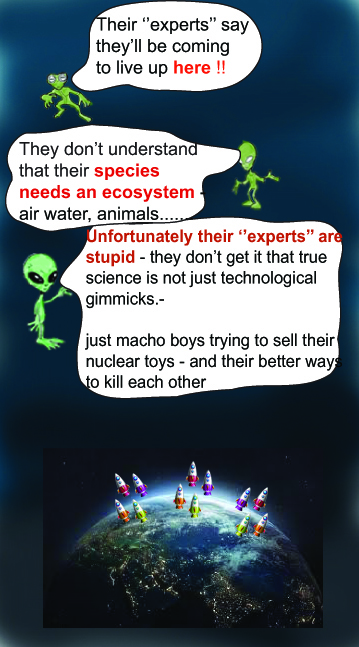
There’s so much going on – I didn’t know where to start on things nuclear this week. I got a bit fed up with all the space colonisation fervour going on, so – I wrote my own little bit about it.
AUSTRALIA
Why Australia’s Labor government refuses to defend Julian Assange.
Labor must reverse Morrison’s nuclear submarine bungle to protect the nation. AUKUS submarines: Beasts of nuclear proliferation.
Albanese’s extreme language against China is out of place now, and against Labor tradition.
Slow, expensive and no good for 1.5° target: CSIRO crushes Coalition nuclear fantasy. Forget nuclear and simplify electrification:” The message from energy experts. A Liberal National Party, led by Dutton and Littleproud vote on support for Queensland nuclear plants.
Scientist sheds doubt on the viability of Australia’s planned Kimba nuclear waste dump. Kimba nuclear waste dump – phase 3 in progress, but the Australian Radioactive Waste Agency (ARWA) has not completed phase 2 !
Time to speak up: water apartheid is Australia’s dirty secret.
Climate emergency actions are needed not just promises.
Australia has key role to play as clean energy reshapes Indo-Pacific relations
‘A human rights crisis in the making’: Climate activists rally in Fiji ahead of Pacific Islands Forum. ‘Far from adequate’: former Pacific leaders group urges Australia to increase 43% emissions cut.
Climate change modelling abandoned by Abbott nine years ago restarted by government.
INTERNATIONAL
Nuclear war would turn oceans upside down, crash food web.
Russia and other nuclear-armed parties must be held to account for violations of non-proliferation treaty.
NO TO NATO IN MADRID.
Following Turkish blackmail, 30 NATO states sign accession protocols for Finland, Sweden .
Nuclear myopia — Promoting nuclear power as a solution to climate change is short-sighted
Enthusiastic space travel publicity avoids mentioning radiation danger. The Corporatisation of Space.
UKRAINE. Ukrainians have sold two French-donated 155mm Caesar howitzers to Russia. Not only Russian: Ukrainian forces also are killing children. U.N. report on crimes, human rights violations in Ukraine-Russia war includes abuses done by the Ukrainian side. Ukraine Reform Conference – name changed to Ukraine Recovery Conference – to hide the reality of Ukraine’s endemic corruption.
JAPAN. Nuclear plant cooling system stops working for 8 hours. Nuclear power in Japan may be a mistake we are doomed to repeat. Fukushima nuclear plant compensation burden was secretly reduced. Where to in 2045? Contaminated Soil from the Nuclear Power Plant Accident: The Present Location of Interim Storage Facilities, Fukushima. Decadal trends in 137Cs concentrations in the bark and wood of trees contaminated by the Fukushima nuclear accident.
Criminal assassination of Shinzo Abe. But let us not forget Shinzo Abe’s full record as PM. Prime Minister Shinzo Abe pretending that all is well at Fukushima, using this lie to promote Olympics. Japan could change pacifist constitution after Shinzo Abe victory. Japan’s Constitution Allows Nuclear Weapons, Says Shinzo Abe.
s……………….
Labor must reverse Morrison’s submarine bungle to protect nation
https://independentaustralia.net/politics/politics-display/labor-must-reverse-morrisons-submarine-bungle-to-serve-nation,16546 By Alan Austin | 11 July 2022,

There is a niche in the global submarine industry that Australia is well-placed to occupy, reports Alan Austin.
IT WOULD BE a bold move which only a visionary and courageous government could accomplish. Australia has the chance now to reimagine its status as a global naval manufacturer and exporter. The challenge is to build a smaller, faster, stealthier, stronger submarine than its rivals, which requires fewer crew and is cheaper to build and operate.
This can be achieved with a scaled-down version of one of the best submarines ever designed: the Collins class. Where was this built? In South Australia in the 1990s.
This “daughter-of-Collins”, as former Prime Minister Paul Keating dubbed it, offers multiple gains. It will replace the current ageing Collins class more quickly than other options, it will give Australia’s navy boats fit for purpose, it will generate export income and build a springboard for expansion into other high-tech manufacturing. It’s a win-win.
Australia lost its car manufacturing industry during the disastrous Tony Abbott period. Australia’s military procurement suffered badly throughout the later Coalition years due to ineptitude, lack of enterprise and corruption. New submarine construction will restore Australia’s heavy industry capability and recover – eventually – the treasure lost with all those Coalition failures.
The boat for middle-power countries
None of the submarines considered by the previous incompetent Coalition Government is right for Australia.
These were:
- Japan’s Soryu class diesel-electric, 84 meters long, speed of 20 knots submerged, 65 crew. The Abbott Government announced in 2014 that it was buying these but did not proceed;
- France’s Barracuda class nuclear attack submarine, 99.5 meters, speed of 25 knots, 60 crew. The Turnbull Government contracted to buy twelve in 2015. The Morrison Government welched on that deal in 2021, costing Australia its international reputation as an honourable trading partner, compromising Australia’s medium-term security, and losing taxpayers around five billion borrowed dollars with nothing to show for it;
- American Virginia class nuclear-powered fast-attack submarine, 115 metres, speed of 25 knots, 135 crew. Designed in the 1990s, first delivered in 2008;
- Britain’s Astute class, nuclear-powered attack submarine, 97 metres, speed of 30 knots, 98 crew. Designed in the 1990s, first launched in 2007.
Other options include Sweden’s Blekinge class diesel-electric, 66 metres; Germany’s U-36, diesel-electric, 57 meters; and India’s Kalvari class diesel-electric, 67.5 metres.
These compare with the current Australian Collins class, which is 77 metres, speed of 20 knots, crew 42, including six officers.
Assessing Australia’s needs
The new Australian sub should be around 60 metres, diesel-electric, speed 30 knots and operable with a crew of four officers and 25 sailors. This is based on the following needs:
- Given regional stability is steadily improving, Australia can ensure its defence with smarter decisions, more advanced technology, better regional collaboration and much lower expenditure;
- Australia’s immediate neighbours are Papua New Guinea, Timor-Leste, New Zealand, Indonesia and Malaysia. Nuclear submarines are not needed to patrol these waters and cannot access New Zealand ports under laws unlikely to change. Malaysia and Indonesia also have serious misgivings;
- The concept that Australia, population 26 million, could deploy nuclear attack class vessels in the South China Sea or beyond to engage militarily with China, population 1,439 million, is ludicrous. This seems to be the underpinning of the previous Government’s failed endeavours.
- The risk of China attacking Taiwan is limited. Even if it does, Australia has no treaties with Taiwan, and will not be involved;
- The risk of buying American nuclear submarines is that they will be operated and controlled by Americans and effectively just add to the U.S. fleet.
Historical precedent
Building the six Collins class submarines in Australia was an extraordinarily ambitious project. The challenge was to build faster, stealthier and more lethal boats than its successful predecessor, the Oberon class.
Prime Minister Bob Hawke delegated this task to Treasurer Paul Keating and Defence Minister Kim Beasley.
Keating recalled recently that “Kim always had the admiral’s hat on. I had the money and the guns”.
Construction began in 1990 and encountered multiple engineering problems, all of which were eventually overcome. The first boat was delivered in 1996, the sixth in 2003. These will now serve until the mid-2030s.
Military analysts Asianometry recently assessed them as:
‘… very capable, up to par with anything the United States has to offer … The Collins was a triumph.’
Australia can do this
ASC, the government-owned shipbuilders based in Osborne, South Australia, built the Collins vessels and has continual experience maintaining them. It has also successfully delivered three Hobart class destroyers and other vessels.
Home-built submarines superior to Collins are now possible because of advances since the 1990s in metallurgy, engine design, sonar technology and batteries. Weapons systems are also more compact.
Importantly, Australia is one of two major lithium mining countries. Lithium-ion batteries have double the storage capacity of lead-acid batteries. Australia becoming the world’s leading lithium battery producer will be a highly-profitable spin-off.
Can new Defence Minister Richard Marles pull this off? As Deputy PM, he had the choice of portfolios and chose defence. He has put his hand up. Let’s see what he delivers when he dons his admiral’s hat.
South Australia’s enthusiasm
The project has passionate support from the State Government.
Welcoming new Defence Minister Richard Marles to South Australia last week, Premier Peter Malinauskas said:
What the Deputy Prime Minister has been able to see firsthand today is the extraordinary capability that South Australia offers when it comes to shipbuilding. This has been something that is now in our blood here in South Australia. We are the home of the Collins-class submarine. We built the AWDs. We now see firsthand the work in terms of the delivery of the Hunter class.
What should we call this new class of submarines built in Australia? One option is to honour the last of the Coalition defence ministers, whose incompetence has inadvertently gifted the new Government with this shot at greatness.
So why not the Boofhead class? Or in honour of Keating, who remains an inspirational visionary in this area, maybe the Scumbag class?
Perhaps, to recognise the recent historic change of government, the Toto class? Or if the incoming Government succeeds with this ambitious project, as it should, then why not simply the Albo class?
Slow, expensive and no good for 1.5° target: CSIRO crushes Coalition nuclear fantasy.

CSIRO says nuclear is too slow, too expensive, and its best prospects for a significant share of global generation are in weak climate targets. The post Slow, expensive and no good for 1.5° target: CSIRO crushes Coalition nuclear fantasy appeared first on RenewEconomy.
Slow, expensive and no good for 1.5° target: CSIRO crushes Coalition nuclear fantasy — RenewEconomy
Australia’s leading scientific research organisation, the CSIRO, has delivered a damming blow against the renewed push by the federal Coalition for nuclear power, saying it is expensive, and too slow to make a significant contribution to any serious climate targets.
The latest version of the CSIRO’s important GenCost report still ranks nuclear as the most expensive of existing technologies, and at least double or up to five times the cost of “firmed” wind and solar, including storage and transmission costs.
It has long been accepted that existing large scale nuclear is way too expensive and too inflexible to play any role in Australia’s future grid, but the pro-nuclear lobby has been pushing the idea of Small Modular Reactors, and has been putting intense pressure on the CSIRO to embrace it.
This argument has been taken up with vigour by the federal Coalition, which has responded to its electoral defeat by appointing a pro-nuclear advocate as energy spokesman, and intensifying its campaign against wind and solar that its members have described as “dole bludgers.”
The latest CSIRO GenCost report – which says that wind, solar and storage is clearly the cheapest option in Australia – points out that the intense pressure it received to lower its cost estimates for nuclear comes almost exclusively from ambitious vendors, and their proxies, who have nothing to show for their claims.
There are no SMRs in operation, and none are expected until 2029 at the earliest. CSIRO economist Paul Graham, the lead author of the report, says until the first SMRs are deployed it is not possible to find good evidence about the claims of the industry.
It is interesting to note that in the latest GenCost report, CSIRO notes that only one formal submission was received on nuclear, which argued that the cost estimates of nuclear SMR should be lower.
“Vendors seeking to encourage the uptake of a new technology have proposed theoretical cost estimates, but these cannot be verified until proven through a deployed project,” it says.
But perhaps the most damming part of the CSIRO report are what it says about the role of various technologies in differing climate scenarios.
It shows that the weaker the climate target, the greater the share of nuclear power. If countries are serious about achieving 1.5°C target, or even below 2°C, then nuclear is simply too slow to play a significant role, and its share of global generation falls significantly.
Graham puts it this way. If nuclear is to prosper, it will need huge licks of government support, and a significant carbon price. But if the world is aiming for the Paris climate targets and is willing to spend money to get there, then other technologies – mostly wind, solar and storage – will fill that gap.
“(Nuclear) needs some climate policy ambition,” Graham told RenewEconomy. “But if there’s too much climate policy ambition the other technologies run away with the cost reductions and nuclear can’t catch up.
“If it looks like we have to reduce emissions much faster, then it’s just too slow to contribute to that.”
This graph [on original] illustrates the point. Nuclear (in purple) has a share of around 10-12 per cent of global generation in the “current policies” scenario out to 2030. But this share diminishes out to 2050 in all three scenarios, and particularly those that seek to minimise average global warming.
The current policies scenario represents average global warming of around 2.6°C, while the Global NZE (net zero emissions) by 2050 aims for 1.5°C and the Global NZE post 2050 assumes around 1.7°C.
“Forget nuclear and simplify electrification:” The message from energy experts.

“ in Australia, because we’re blessed with the world’s best wind and solar resources, I just don’t see that nuclear will ever compete,”
in Australia, wind and solar can still outcompete new-build coal, gas and nuclear.
”our future will be powered by renewables supported by energy storage,”
”We need options for consumers to reduce demand and be rewarded for doing so. We need incentives to shift demand to periods of lower demand, smart meters and internet controls.”
‘Forget nuclear and simplify electrification’ is the message form Australian energy experts for next steps in decarbonisation push. “
“Forget nuclear and simplify electrification:” The message from energy experts — RenewEconomy 11 July 22,
Australia has an opportunity to seize the competitive advantage in a future, decarbonised global energy system, but experts warn that governments must do more to simplify the process for households and businesses to go electric.
A research brief prepared by Australian energy experts and published by the Australian Academy of Technological Sciences & Engineering (ATSE) has called for an acceleration of the deployment of renewable energy, arguing the technologies needed to decarbonise Australia’s energy system are already available.
Australia has the technologies to avoid a future crisis, but we must act now to lay the foundation of a truly modern energy system,” the former head of engineering and system design at the Australian Energy Market Operator, Alex Wonhas, said at the launch of the report.
While the research report suggests that Australia will need a diversity of new energy technologies to play a role in a future decarbonised energy system, experts say there should be a greater focus on the electrification of energy use to reduce Australia’s dependence on fossil fuels.
Professor Renate Egan, the CEO of UNSW Energy Institute, says there are minimal technical barriers to the electrification of energy use. However, Australian consumers need greater policy support and more information to confidently choose electric replacements.
“I don’t think we have barriers so much as we lack information and incentives,” Egan said.
If we can have a coordinated effort around it, it should be possible to have all new homes electrified rather than having gas delivered. It would be better not to be making investments in gas infrastructure now in homes.
“There are a million pieces of small infrastructure that need to be replaced over the next ten years, and we should start right now … every decision you make from now needs to be to electrify.”
Electrification of energy use, which involves the replacement of appliances like gas stoves, hot water systems and petrol-fuelled cars replaced with electric alternatives – has been touted as a means of cutting both emissions and energy costs because they can be powered with renewable electricity.
Former Chair of Natural Hazards Research Australia, Katherine Woodthorpe, echoed the view that the natural need to replace appliances provides an opportunity to phase energy consumption away from fossil fuels through electrification.
“Every time you buy a new appliance, buy the electric version. Ditto cars and other parts of your infrastructure at home and at work,”
“Every time you make that decision, you buy electric… it’s about making those decisions on a daily basis.”
Head of the Battery Storage and Grid Integration Program at the Australian National University, professor Lachlan Blackhall, told the briefing policymakers should support households and businesses to make the switch to electric appliances by working to simplify the process.
“It’s important to acknowledge that householders and communities are being asked to do a very significant amount of heavy lifting to support the energy transition,” Blackhall said.
“But it can be quite complicated for them.”
“The reason we’re seeing solar being deployed at such scale is it’s now a relatively simple proposition. You walk into your friendly local solar installer, and you can buy a solar system, and we understand how to install it at scale.
“So we really need that same experience when it comes to new technologies in people’s homes,” Blackhall added.
Former managing director of Ausgrid, George Maltabarow, told the briefing that the electrification of Australia’s energy use would require system planners to manage the changing dynamics in the electricity system – but that the technology needed to do so already exists.
“The transition away from fossil fuels will require electrifying everything. The good news is we have all the technologies available. We now need the frameworks to manage the investment,” Maltabarow said.
“We need options for consumers to reduce demand and be rewarded for doing so. We need incentives to shift demand to periods of lower demand, smart meters and internet controls.”
“Now, does that mean consumers have to stand by monitors to figure out ‘what am I going to do to reduce and manage my demand?’ – The answer is no because set-and-forget software is available now. It can be tailored to the circumstances of individual households, and consumers can relax about having that available.”
Maltabarow added that while nuclear could play a role in decarbonising energy systems in a global context, it was unlikely that current technologies would be able to compete on cost.
“Certainly overseas, [nuclear] is going to be much more of a part of the solution. My own view is that in Australia, because we’re blessed with the world’s best wind and solar resources, I just don’t see that nuclear will ever compete,” Maltabarow said.
“I’m not saying that nuclear is not an appropriate decarbonisation technology. I simply can’t see it being competitive in the Australian context.”
The CSIRO released the latest iteration of its GenCost assessment, comparing the effective cost of new electricity projects in Australia, which again confirmed that firmed wind and solar can still outcompete new-build coal, gas and nuclear.
“If you look at that report, it consistently highlights that in the Australian context, nuclear will be significantly more expensive than the kind of roadmap laid out in the ISP, which largely is that our future will be powered by renewables supported by energy storage,” Blackhall added.
Final turbine installed at one of Australia’s largest and lowest cost wind farms — RenewEconomy

The final turbine has been installed at what will be one of the country’s biggest and lowest cost wind farms. The post Final turbine installed at one of Australia’s largest and lowest cost wind farms appeared first on RenewEconomy.
Final turbine installed at one of Australia’s largest and lowest cost wind farms — RenewEconomy
Australia has key role to play as clean energy reshapes Indo-Pacific relations
Australia has key role to play as clean energy reshapes Indo-Pacific relations
A new report by the Perth USAsia Centre, in collaboration with the Climate Council, recommends five practical actions for Australia to secure its economic and strategic clean energy advantages in the Indo-Pacific
‘A human rights crisis in the making’: Climate activists rally in Fiji ahead of Pacific Islands Forum
Pacific Islanders and environmentalists are urging Australia and other nations to back a push for better enforcement of the Paris Agreement to limit global warming.
Climate emergency actions are needed not just promises
Climate emergency actions are needed not just promises
Nigel Howard
Labor didn’t so much win the election gaining only 32% of the primary vote – they just didn’t lose it quite as badly as the Coalition, scraping into government because they were not as reprehensible on climate and integrity.
Why Australia does not need so much storage in a wind and solar grid — RenewEconomy

CSIRO says a grid dominated by wind and solar will only require one fifth or one third of the storage needs commonly suggested. The post Why Australia does not need so much storage in a wind and solar grid appeared first on RenewEconomy.
Why Australia does not need so much storage in a wind and solar grid — RenewEconomy
Integrated wind and solar still cheapest, and green hydrogen costs falling fast: CSIRO — RenewEconomy

Wind and solar are still clearly cheapest form of new energy, even with storage and transmission, latest CSIRO report says. Cutting emissions goes hand in hand with lower costs. The post Integrated wind and solar still cheapest, and green hydrogen costs falling fast: CSIRO appeared first on RenewEconomy.
Integrated wind and solar still cheapest, and green hydrogen costs falling fast: CSIRO — RenewEconomy
Edify lands ARENA and NSW funds for advanced battery inverter project in NSW — RenewEconomy

Edify lands ARENA and NSW government funds for part of the big 150MW/300MWh Darlington Point advanced battery project in south west NSW. The post Edify lands ARENA and NSW funds for advanced battery inverter project in NSW appeared first on RenewEconomy.
Edify lands ARENA and NSW funds for advanced battery inverter project in NSW — RenewEconomy
Russia and other nuclear-armed parties must be held to account for violations of non-proliferation treaty
As a model, NPT states can look to the Vienna Declaration – adopted by state parties to another nuclear weapons treaty, the Treaty on the Prohibition of Nuclear Weapons – on June 23 where states condemned “unequivocally any and all nuclear threats, whether they be explicit or implicit and irrespective of the circumstances”.
Let’s not forget that there is a cycle of complicity when it comes to nuclear weapons.
A handful of companies have secured multi-decade, multibillion-dollar contracts to keep nuclear weapons around forever. These companies employ a virtual army of lobbyists and fund think tanks to undermine the long-term solutions that could reduce nuclear arsenals and nuclear risks.
The increase in the obscene amount of money spent on nuclear weapons flies in the face of a commitment to non-proliferationWhen parties meet in August, they must call out nuclear-armed states for violating the historic treaty and international law more broadly
https://www.scmp.com/comment/opinion/article/3184443/russia-and-other-nuclear-armed-parties-must-be-held-account Alicia Sanders-Zakre and Susi Snyder 9 Jul, 2022
Every minute of 2021, the nine nuclear-armed countries spent US$156,000, almost twice the median US family income, on nuclear weapons designed to destroy cities in a flash of light.
This month, five of these countries – China, France, Russia, the United Kingdom and the United States – will join over 100 others at the United Nations in New York to discuss progress, or lack thereof, on a more-than-50-year-old treaty that commits countries party to the treaty with nuclear weapons to work towards disarmament and all others not to acquire nuclear weapons.
The 1970 Treaty on the Non-Proliferation of Nuclear Weapons (NPT) has 191 state parties, including five of the nine nuclear-armed states. Countries that have joined the treaty meet nearly every year to review its implementation, including month-long conferences every five years where they try to agree on a common plan of action to take it forward.
The 10th NPT Review Conference will be held in August. The last agreed plan of action was adopted over a decade ago, at the 2010 review, and remains largely unimplemented.
The countries getting together in New York should talk about how nuclear-weapon states have violated their commitments to the NPT and under international law more broadly.
The most egregious breach of international law, the threats to use nuclear weapons by Russia – a depositary of the NPT – and its invasion of a non-nuclear-armed state, should be universally and unequivocally condemned by all states parties and in a final outcome document.
As a model, NPT states can look to the Vienna Declaration – adopted by state parties to another nuclear weapons treaty, the Treaty on the Prohibition of Nuclear Weapons – on June 23 where states condemned “unequivocally any and all nuclear threats, whether they be explicit or implicit and irrespective of the circumstances”.
Instead of meeting their obligations under the treaty, nuclear-armed states are doubling down on nuclear spending and engaging in a new nuclear arms race, increasing their spending on nuclear weapons by US$6.5 billion in 2021 over the previous year – and that’s after adjusting for inflation.
Why would these countries blatantly disrespect international law and their obligation to pursue nuclear disarmament? Let’s not forget that there is a cycle of complicity when it comes to nuclear weapons.
A handful of companies have secured multi-decade, multibillion-dollar contracts to keep nuclear weapons around forever. These companies employ a virtual army of lobbyists and fund think tanks to undermine the long-term solutions that could reduce nuclear arsenals and nuclear risks.
New contracts for nuclear-weapons-related manufacturing and development actually increased in 2021 from 2020. Companies in France, the UK and the US were awarded US$30 billion in new contracts – some spanning decades into the future – twice as much as they received in 2020.
At least 12 major think tanks that research and write about nuclear weapons in India, France, the UK and the US collectively received between US$5.5 million and US$10 million from companies that produce nuclear weapons. The CEOs and board members of companies that produce nuclear weapons sit on some of their advisory boards, serve as trustees and are listed as “partners” on their websites.
Nuclear-armed states spent an obscene amount of money on illegal weapons of mass destruction in 2021, while most of the world’s countries support a global nuclear weapons ban. This spending failed to deter a war in Europe and squandered valuable resources that could be better used to address current security challenges, or cope with the outcome of a still raging global pandemic.
This corrupt cycle of wasteful spending must be put to an end, and the first step is calling out the problem. In August, nuclear-armed states must be held to account for their flagrant violation of this historic nuclear weapons treaty and for broader violations of international law.
Nuclear myopia — Promoting nuclear power as a solution to climate change is short-sighted

Contrary to public perception, nuclear power is a significant source of greenhouse gas emissions when considering the amount of fossil fuels required for mining, uranium enrichment, building and decommissioning of power plants, and processing and storing radioactive waste. In fact, nuclear power emits twice as much carbon as solar photovoltaics and six times as much as onshore wind power, according to the nonprofit organization Beyond Nuclear.
If the potentially catastrophic risks to nuclear power plants posed by political instability and military conflict were not apparent prior to Russia’s recent invasion of Ukraine, they are abundantly clear now.
Bright future for clean energy must be holistic and long-term
Nuclear myopia — Beyond Nuclear International Promoting nuclear power as a solution to climate change is short-sighted
By Kim Friedman
We must think holistically about what constitutes “clean energy” when we consider climate change investments and our energy future. President Biden’s recent announcement of his $6 billion effort to save “distressed” nuclear (fission) power plants is misguided and short-sighted.
Although reducing carbon emissions is critical to slowing the pace of climate change, it must not be our only litmus test for moving toward a “clean” energy future, similarly to how our overall health cannot be measured solely by our blood pressure or weight.
In the case of nuclear power, we must consider its high cost compared to renewable energy sources, such as wind and solar. According to Climate Nexus, the minimum cost per megawatt hour to build a new nuclear plant is almost 3 times higher than utility-scale solar ($112 vs. $46, respectively) and almost 4 times higher than wind power ($122 vs. $30, respectively). That’s like paying $70,000 for a car when you could purchase an equivalent car, in terms of its overall value, for one-third or one-quarter of the cost.
There are also numerous environmental and community-based reasons to wean ourselves off of nuclear power. Intercontinental Cry, a non-profit newsroom that produces public-interest journalism centered on Indigenous Peoples, states that 75 percent of uranium mining worldwide occurs on Indigenous land, including in the United States. Furthermore, unlike solar and wind power, uranium reserves are not a renewable resource; eventually, we will run out of uranium.
We have spent over half a century trying to find a suitable storage option for spent fuel rods and have failed miserably. Consequently, these rods, which remain radioactive for as long as 10,000 years, are generally stored on site at active or shuttered plants all over this country. They are sitting ducks for domestic or international terrorists, and they pose a serious potential threat to surrounding communities’ drinking water supplies if radioactive water leaks and makes its way into the ground.
Contrary to public perception, nuclear power is a significant source of greenhouse gas emissions when considering the amount of fossil fuels required for mining, uranium enrichment, building and decommissioning of power plants, and processing and storing radioactive waste. In fact, nuclear power emits twice as much carbon as solar photovoltaics and six times as much as onshore wind power, according to the nonprofit organization Beyond Nuclear. …………………… more https://beyondnuclearinternational.org/2022/07/10/nuclear-myopia/
Not responsible — Beyond Nuclear International

Court says Japan government could not have prevented Fukushima tsunami damage
Not responsible — Beyond Nuclear International
Where to in 2045? Contaminated Soil from the Nuclear Power Plant Accident: The Present Location of Interim Storage Facilities, Fukushima.
July 3, 2022
Contaminated removed soil and other materials generated by decontamination following the accident at TEPCO’s Fukushima Daiichi Nuclear Power Plant are temporarily stored at an interim storage facility adjacent to the plant. Decontamination outside of the difficult-to-return zones has been largely completed, and decontamination is also progressing in the specified restoration and rehabilitation base areas (restoration bases) within the difficult-to-return zones where evacuation orders are expected to be lifted this spring or later. However, there is no concrete plan for the decontamination of areas outside of the restoration centers that are difficult to return to, and there has been no progress in discussions regarding the removal of contaminated soil outside of Fukushima Prefecture. Eleven years after the accident, the problem of radioactive waste remains unresolved. (The problem of radioactive waste remains unresolved even 11 years after the accident.)
◆Total amount of contaminated waste is not foreseeable
According to the Ministry of the Environment, the amount of contaminated soil generated by decontamination in areas other than the difficult-to-return zones is estimated to be 14 million cubic meters, an enormous amount equivalent to 11 times the size of the Tokyo Dome. The soil is scheduled to be delivered to an interim storage facility by March 2010. In the remaining difficult-to-return zones in the seven municipalities of Fukushima Prefecture, six municipalities (excluding Minamisoma City) have been designated as “specific restoration base areas (restoration bases)” where decontamination work will be carried out ahead of other areas. It is estimated that 1.6 to 2 million cubic meters of contaminated soil will be generated in the decontamination of the reconstruction bases.
In addition, the government decided in August 2009 to lift the evacuation order for difficult-to-return zones outside of the restoration centers by decontaminating homes and other structures on request of those who wish to return. The Ministry of the Environment said, “We will proceed with the acquisition of land and the construction of storage facilities while keeping a close eye on the amount of soil that can be brought in. We do not know the maximum amount that can be brought in.

◆Unclear whether the waste will be transported out of Fukushima Prefecture
As the name implies, storage at interim storage facilities is considered “temporary” for final disposal. The government has promised to remove the contaminated soil to a final disposal site outside of Fukushima Prefecture in 2045, 30 years after the storage began in 2015. However, it is not known whether there are municipalities that will accept the waste contaminated by the nuclear accident, and the candidate site has not yet been decided.
In addition, three-quarters of the total amount of contaminated soil in storage currently contains less than 8,000 becquerels of radioactive cesium per kilogram of soil, which is the same level as that of the soil that is normally incinerated or landfilled. The government plans to reuse contaminated soil with less than 8,000 becquerels per kilogram in public works projects such as road construction. However, the use of contaminated soil is strongly opposed by local residents, and efforts to put this into practical use have run into difficulties. The Ministry of the Environment states that it will “continue its efforts to develop technologies and gain the understanding of related parties.

Interim storage facilities are located around the Fukushima Daiichi Nuclear Power Plant and cover an area of 1,600 hectares. Of the privately owned land, which accounts for about 80% of the total area, 93% has been acquired by the government. The delivery of contaminated soil generated outside of the difficult-to-return zone is expected to be completed by the end of FY2022.

1 This month
17 October, Free Public Talk on Nuclear Issues in South Australia
David Noonan will speak on public interest concerns over the new Roxby Downs Indenture Act 2026 on BHP copper-uranium mining and ore processing in SA, and on how AUKUS may face SA with a High-Level nuclear waste agenda.
Dr Jim Green will discuss international developments in the field of nuclear power including ‘small modular reactors’ and Generation 4 ‘advanced’ nuclear reactor concepts.


Help Aunty Sue Protect Her Land and Sacred Sites From Destructive Rocket Testing.
.

Australians deserve the truth
about
AUKUS – https://aukuspublicinquiry.com/

PETITION – To: Prime Minister Anthony Albanese and the Australian Labor Government

of the week – Australians for War Powers Reform (AWPR)
To see nuclear-related stories in greater depth and intensity

