Green investors tip renewable revival
Green investors tip renewable revival
Labor’s win will help turbocharge spending on wind and solar farms, according to major clean energy investors.
Albanese, Wong to take South-East Asia and climate policies to Quad meeting
Albanese, Wong to take South-East Asia and climate policies to Quad meeting
Labor is hoping to have a greater focus than the Morrison government on South-East Asia, given its proximity to China and the growing economic growth and power of the region.
National Party set to dictate coalition policies on climate

Nats set to dictate Coalition policies
Senior Liberal and Nationals frontbenchers have acknowledged growing differences between urban and regional communities, as well as ongoing conflicts over climate change.
Climate change: The global climate crisis is also a health crisis
Climate change: The global climate crisis is also a health crisis
Without effective climate action, more than 100 million people could be forced back into poverty by 2030, according to estimates from the World Bank.
May 22 Energy News — geoharvey

Opinion: ¶ “From Alternative Fuels To Rationing Trips: A Guide To More Sustainable Flying” • Aviation accounts for just 3.5% of our total planet-warming emissions. Matteo Mirolo, aviation policy officer at Transport & Environment, a European campaign group for cleaner transportation, said there are lots of solutions, but they are not ready yet. Others agree. […]
May 22 Energy News — geoharvey
Tritium isn’t harmless — Beyond Nuclear International

Dumping Fukushima’s radioactive water is one of many wrong options
Tritium isn’t harmless — Beyond Nuclear International Japan plan to dump tritiated water into the ocean comes with big risks https://wordpress.com/read/feeds/72759838/posts/4028994254
On May 18, Japan’s Nuclear Regulation Authority gave its initial approval for Tokyo Electric Power to release radioactive water from the destroyed Fukushima nuclear power plant into the Pacific Ocean, claiming that there are no safety concerns. But science disagrees with this conclusion. In a September 2019 blog entry, now updated by the author, Dr. Ian Fairlie looks at the implications of dumping largely tritiated water into the sea and whether there are any viable alternatives.
By Ian Fairlie
At the present time, over a million tonnes of tritium-contaminated water are being held in about a thousand tanks at the site of the Fukushima Daichi nuclear power station in Japan. This is being added to at the rate of ~300 tonnes a day from the water being pumped to keep cool the melted nuclear fuels from the three destroyed reactors at Fukushima. Therefore new tanks are having to be built each week to cope with the influx.
These problems constitute a sharp reminder to the world’s media that the nuclear disaster at Fukushima did not end in 2011 and is continuing with no end in sight.
Recently TEPCO / Japanese Government have been proposing to dilute, then dump, some or all of these tritium-contaminated waters from Fukushima into the sea off the coast of Japan. This has been opposed by Japanese fishermen and environment groups.
There has been quite a media debate, especially in Japan, about the merits and demerits of dumping tritium into the sea.
Many opinions have been voiced in the debate: most are either incorrect or uninformed or both. This post aims to rectify matters and put the discussion on a more sound technical basis.
- TEPCO / Japanese Government have argued that, as tritium is naturally-occurring, it is OK to discharge more of it. This argument is partly correct but misleading. It is true that tritium is created in the stratosphere by cosmic ray bombardment, but the argument that, because it exists naturally, it’s OK to dump more is false. For example, dioxins, furans and ozone are all highly toxic and occur naturally, but dumping more of them into the environment would be regarded as anti-social and to be avoided.
- TEPCO / Japanese Government have argued that it is safe to dump tritium because it already exists in the sea. Yes, tritium is there but at low concentrations of a few becquerels per litre (Bq/l). But the tritium concentrations in the holding tanks at Fukushima are typically about a megabecquerel per litre (MBq/l). In layman’s terms, that’s about a million times more concentrated.
- TEPCO / Japanese Government have argued coastal nuclear plants routinely dump water that contains tritium into the ocean. Yes, this does (regrettably) occur as their cooling waters become tritiated during their transits of reactor cooling circuits. But two wrongs do not make a right. Moreover, the annual amounts are small compared with what is being proposed at Fukushima. A one GW(e) BWR reactor typically releases about a terabecquerel (trillion Bq) of tritium to sea annually. But Fukushima’s tanks hold about one petabecquerel (PBq or a thousand trillion Bq) of tritium – that is, a thousand times more. A much bigger problem.
- Readers may well ask where is all this tritium coming from? Most (or maybe all) the tritium will come from the concrete structures of the ruined Fukushima reactor buildings. After ~40 years’ operation they are extremely contaminated with tritium. (Recall that tritium is both an activation product and a tertiary fission product of nuclear fission.) And, yes, this is the case for all decommissioned (and by corollary, existing) reactors: their concrete structures are all highly contaminated with tritium. The older the station, the more contaminated it is. In my view, this problem constitutes an argument for not building more nuclear power stations: at the end of their lives, all reactor hulks will remain radioactive for over 100 years.
- What about other radioactive contaminants? Reports are emerging that the tank waters also remain contaminated with other nuclides such as caesium-137 and especially strontium-90. This is due to the poor performance of Hitachi’s Advanced Liquid Processing System (ALPS). Their concentrations are much lower than the tritium concentrations but they are still unacceptably high.
For example, on 16 October 2018, the UK Daily Telegraph stated:
“Tokyo Electric Power Co (Tepco) which runs the plant, has until recently claimed that the only significant
contaminant in the water is safe levels of tritium, which can be found in small amounts in drinking water, but is dangerous in large amounts. The [Japanese] government has promised that all other radioactive material [apart from tritium] is being reduced to “non-detect” levels by the sophisticated (ALPS).
“However documents provided to The Telegraph by a source in the Japanese government suggest that the ALPS has consistently failed to eliminate a cocktail of other radioactive elements, including iodine, ruthenium, rhodium, antimony, tellurium, cobalt and strontium.
“That adds to reports of a study by the regional Kahoko Shinpo newspaper which it said confirmed that levels of iodine-129 and ruthenium-106 exceeded acceptable levels in 45 samples out of 84 in 2017. Iodine 129 has a half-life of 15.7 million years and can cause cancer of the thyroid; ruthenium 106 is produced by nuclear fission and high doses can be toxic and carcinogenic when ingested.
In late September 2017, TEPCO was forced to admit that around 80 per cent of the water stored at the Fukushima site still contains radioactive substances above legal levels after the Ministry of Economy, Trade and Industry held public hearings in Tokyo and Fukushima at which local residents and fishermen protested against the plans. It admitted that levels of strontium 90, for example, are more than 100 times above legally permitted levels in 65,000 tons of water that has been through the ALPS cleansing system and are 20,000 times above levels set by the government in several storage tanks at the site.”
So what is to be done?
First of all, the ALPS system has to be drastically improved. After that, some observers have argued that, ideally, the tritium should be separated out of the tank waters. Some isotopic tritium removal technologies have been proposed, for example by the International Atomic Energy Agency, but the picture is complicated. The only operating facility I’m aware of, is located at Darlington near Toronto in Canada, though secret military separation facilities may exist in the US or France.
However the Darlington facility was extremely difficult and expensive to construct (~12 years to build and to get working properly), and its operation consumes large amounts of electricity obtained from the Darlington nuclear power station nearby. Its raison d’ȇtre is to recover very expensive deuterium for Canadian heavy water reactors.
Other proposed remedies will probably be more expensive. One problem is basic physics. The tritium is in the form of tritiated water, which is effectively the same as water itself, so that chemical separation or filtration methods simply do not work.
Another problem is inefficiency: with isotope separation, one would have to put the source hydrogen through thousands of times to get even small amounts of separated non-radioactive hydrogen. A third problem is that hydrogen, as the smallest element, is notoriously difficult to contain, so that gaseous tritium emissions would be very large each year.
None of these technologies is recommended as a solution for Japan: any such facility would release large amounts of tritium gas and tritiated water vapor to air each year, as occurs at Darlington. Tritium gas is quickly converted to tritiated water vapor in the environment. The inhalation of tritiated water vapor from any mooted Japanese facility would likely result in higher collective doses than the ingestion of tritiated sea food, were the tritium to be dumped in the sea.
I recommend neither of these proposed solutions.
There are no easy answers here. Barring a miraculous technical discovery which is unlikely, I think TEPCO/Japanese Government will have to buy more land and keep on building more holding tanks to allow for tritium decay to take place. Ten half-lives for tritium is 123 years: that’s how long these tanks will have to last – at least.
This will allow time not only for tritium to decay, but also for politicians to reflect on the wisdom of their support for nuclear power.
Peace action for Mother’s Day — Beyond Nuclear International

Trident nuclear subs are biggest destroyers of life known to humankind
Peace action for Mother’s Day — Beyond Nuclear International
Fukushima Daiichi Nuclear Power Plant contaminated water, after all… “Protect our oceans! — RADIATION FREE LAKELAND

Originally posted on Fukushima 311 Watchdogs: May 21, 2022 Environmental Groups Perform Against Ocean Discharge of “Contaminated Water from Fukushima Daiichi Nuclear Power Plant Japan’s Nuclear Regulatory Commission Virtually Approves Ocean Discharge of Contaminated Water Members of an environmental citizens’ group perform in front of the Japanese Embassy in Jongno-gu, Seoul, on the morning of March 20…
Fukushima Daiichi Nuclear Power Plant contaminated water, after all… “Protect our oceans! — RADIATION FREE LAKELAND
Aversion to food from Fukushima remains high in South Korea — RADIATION FREE LAKELAND

Originally posted on Fukushima 311 Watchdogs: TEPCO’s preparing the public for the release of the accumulated stored radioactive water lying through their teeth as always, with the help of Japanese mainstram media: ‘The water will be diluted with seawater to bring its radiation level to well within safety standards’ Storage tanks for treated radioactive water line…
Aversion to food from Fukushima remains high in South Korea — RADIATION FREE LAKELAND
Australia gets rid of the crooked, incompetent bible-bashing #ScottyFromMarketing government

It’s not just the angels who are rejoicing. All Australians who care about the environment, the climate, the children’s future, are now breathing that much-needed sigh of relief. Not to mention our shame at the way the government has treated refugees, and the appalling neglect of Julian Assange.
I hope that Albanese and co. realise that they got into government not because people wanted a Labor government, but because people couldn’t stand smirking dissembling, corrupt Morrison any longer.
The job now, for The Greens, the Independent Teals, and others who care – is to teach Labor to care about the environment, and our children’s future, and to do something about that.
TODAY. This morning at the polling booth – Australian election

No – these ”Teal” supporters of Zoe Daniels on the left were not all present at the Goldstien polling booth this morning. But some of them were, and the mood was one of intelligent optimism. I was handing out ”how-to-vote-Green”. But there was a happy camaradie between the many Greens and Teals.
The atmosphere on the Labor side was more muted, and the few Liberals seemed on the defensive. The United Australia Party had just one lacklustre poster, and no-one there to hand out.
A general feeling among the many Teal and Green supporters that tonight, there’s a chance that Australia might get rid of its current anti-environment and corrupt government.
Bushfires, reef bleaching, animal extinctions — Australia’s environment is under threat. But are our politicians paying attention?
Australia’s environment — the places and animals that make the continent unique — has been a conversation point over the past few years. But it’s been paid relatively little attention during the election campaign.
Australia’s environment — the places and animals that make the continent unique — has been a conversation point over the past few years. But it’s been paid relatively little attention during the election campaign.
Clive Palmer and his United Australia Party guarantee a nuclear reactor for South Australia if they hold the balance of power.

Clive Palmer’s UAP backs SA nuclear energy, The United Australia Party is backing nuclear energy for South Australia, pledging to build a reactor if the party gains the balance of power……………..
Clive Palmer’s UAP backs SA nuclear energy, The United Australia Party is backing nuclear energy for South Australia, pledging to build a reactor if the party gains the balance of power……………..
Mr Palmer believed his party would hold the balance of power in the Senate and guaranteed the project would be carried out if so…………
But Mr Palmer said the federal government should fund the power plant. https://www.sbs.com.au/news/article/clive-palmers-uap-backs-sa-nuclear-energy/l9fo4wt7n?fbclid=IwAR257bldPcPrYu8jc3uMqAPliJbvGFzuytaK9WOvkYaORWScMIW_FvAmriA—
May 20 Energy News — geoharvey

World: ¶ “Mitsubishi Tops EV Sales In Germany In April” • Multiple crises are raging (chips, batteries, covid, Ukraine war…), and the German car market has been hit hard. Overall, it dropped 22% last month, and even full battery EVs were down 7%, YOY. Still, the plugin maket share is growing, and a 30% result […]
May 20 Energy News — geoharvey
Ukraine War Has No End in Sight
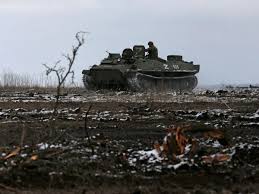
Ukraine’s current status as a wartime non-Nato ally has strengthened a long-held goal of the US and Nato of neutralizing Russia as a long-term military threat to Europe — in short, by transforming Ukraine’s military into a de facto Nato proxy.
As things stand, the best Russia can hope for is a permanent state of conflict with Ukraine — which would accomplish the US goal of “weakening” Russia.
Neither Russia nor Nato knows where and how escalation would end.
https://www.energyintel.com/00000180-d669-d410-aba9-f66dbd120000, Author Scott Ritter, Washington, May 18, 2022
Russia’s invasion of Ukraine is grinding its way toward its inevitable conclusion, namely Russian control over the Donbas region. But this will not end the conflict between Russia and Ukraine, which has expanded in scope and scale beyond the capabilities of the Russian military resources originally allocated. With no diplomatic off-ramp on the horizon, the war risks becoming a permanent state of conflict between Russia and Ukraine — with unknown consequences.
As the Ukraine conflict enters its third month, the Kremlin looks likely to achieve its major military objective of securing physical control over the eastern Donbas region. Peripheral territorial acquisition of the strategic southern city of Kherson, as well as a swath of territory connecting Crimea to the Donbas and the border of the Russian Federation, also looks likely.
While it seems clear that Ukraine will not be formally joining Nato any time soon, if ever, the reality is that the war has reforged the relationship between Ukraine and the trans-Atlantic alliance in a way that transforms the way the two entities work together. Ukraine’s current status as a wartime non-Nato ally has strengthened a long-held goal of the US and Nato of neutralizing Russia as a long-term military threat to Europe — in short, by transforming Ukraine’s military into a de facto Nato proxy.
Game Changer
Nato’s decision to arm Ukraine, combined with the willingness of several Nato nations to allow their territory to be used for training, has provided the Ukrainian military with the kind of strategic depth that was unimaginable when the war began on Feb. 24. The transition from supplying light anti-armor and anti-aircraft missiles to heavy weaponry such as artillery and armor has also enabled Ukraine to begin the process of reconstituting the heavy brigades that Russia is destroying in eastern Ukraine.
The creation of an impregnable Ukrainian strategic rear is a game changer. First and foremost, it provides Ukraine with the means to rearm, refit and re-equip its forces to Nato standards without fear of Russian intervention. This not only counters Russia’s stated military objective of “demilitarization” of Ukraine’s forces, but also steels the resolve of the Ukrainian government to reject any settlement that obliges them to embrace neutrality in perpetuity.
Russia’s efforts to disrupt the injection of Nato-provided supplies and material have proven haphazard at best. While warehouses containing military equipment have been identified and destroyed, Ukrainian units equipped with the latest US and Nato weapons are still appearing on the front lines. Likewise, while Russia has targeted Ukraine’s petroleum refining and storage capacity, the continued provision by Nato countries of refined petroleum products allows the Ukrainian military to remain mechanized. In short, while Russia will likely accomplish the objective of securing the Donbas and associated regions, unless it is willing to expand the scope and scale of its current interdiction efforts, it will not be able to bring to a successful conclusion its state of war with Ukraine.
Escalating Tensions
There currently is no identifiable diplomatic off-ramp for either Ukraine or Russia to end the conflict. Rather, all existing trends point to continued escalation. While Ukraine and Nato have constructed the strategic depth to allow Ukraine’s continued resistance, Russia’s current military configuration remains inadequate to the task of matching this mobilization. As things stand, the best Russia can hope for is a permanent state of conflict with Ukraine — which would accomplish the US goal of “weakening” Russia.
Add in expected pressures on Russia from Nato expansion in northern Europe (Finland and Sweden), and rising tensions involving Transnistria (a pro-Russian breakaway state between Ukraine and Moldova), and the current situation appears untenable for Russia without a broader mobilization of its military resources. While the outcome of any such action is impossible to predict, one thing is sure: Neither Russia nor Nato knows where and how such escalation would end.
Scott Ritter is a former US Marine Corps intelligence officer whose service over a 20-plus-year career included tours of duty in the former Soviet Union implementing arms control agreements, serving on the staff of US Gen. Norman Schwarzkopf during the Gulf War and later as a chief weapons inspector with the UN in Iraq from 1991-98.
1 This month.


PETITION – To: Prime Minister Anthony Albanese and the Australian Labor Government
Chernobyl: The Lost Tapes – A good documentary on Chernobyl on SBS available On Demand for the next 3 weeks– https://www.sbs.com.au/ondemand/tv-program/chernobyl-the-lost-tapes/235274195556

19 May – Webinar- Webinar: No Nuclear Weapons in Australia
Start: 2026-05-19 18:00:00 UTC Canberra, Melbourne, Sydney (GMT+10:00)
End: 2026-05-19 19:30:00 UTC Canberra, Melbourne, Sydney (GMT+10:00)
20 May – Webinar – The dangerous world of AUKUS, US, military occupation and suppression of dissent

National Webinar, 20th May, 2026, 6.30pm AEST. Confronting laws restricting/suppressing protest speech and action
Speakers: Former Sen. Rex Patrick, Lawyer Nick Hanna ,Arthur Rorris ,Jorgen Doyle, Sen David Shoebbridge,
Facilitator Kelley Tranter.

of the week – Australians for War Powers Reform (AWPR)
To see nuclear-related stories in greater depth and intensity
 Antinuclear