Multi $billion plutonium cores project – unsafe, unnecessary, and ill-conceived

“The project is entirely unnecessary for the stated purposes,” ”And it will harm nearby Pueblos and communities, he added, “especially those who are nearest and most fragile.”
Pit production at LANL is an accident waiting to happen
The core debate, Searchlight New Mexico, by Annabella Farmer, 24 Mar 22,
A multi-billion-dollar project to make plutonium cores at Los Alamos National Laboratory may be unsafe, unnecessary and ill-conceived. But proponents say the mission is a must. LOS ALAMOS — Los Alamos began as an “instant city,” springing from the Pajarito Plateau in 1943 at the dawn of the Atomic Age. More than 8,000 people flocked here to work for Los Alamos National Laboratory and related industries during the last years of World War II. Now the city may be on the brink of another boom as the federal government moves forward with what could be the most expensive warhead modernization program in U.S. history. Under the proposed plan, LANL will become home to an industrial-scale plant for manufacturing the radioactive cores of nuclear weapons — hollow spheres of plutonium that act as triggers for nuclear explosions. The ripple effects are already being felt…………
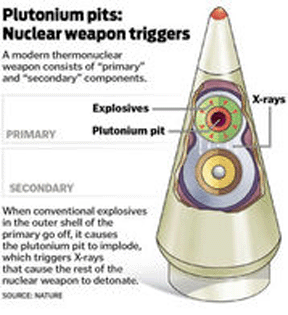
The cores — known as pits — haven’t been mass-produced since the end of the Cold War. But in 2018, under pressure from the Trump administration, the federal government called for at least 80 new pits to be manufactured each year, conservatively expected to cost $9 billion — the lion’s share of a $14.8 billion weapons program upgrade. After much infighting over the massive contract, plans call for Los Alamos to manufacture 30 pits annually and for the Savannah River Site in South Carolina to make the remaining 50.
The idea of implementing an immense nuclear program at Los Alamos has sparked outrage among citizens, nuclear watchdogs, scientists and arms control experts, who say the pit-production mission is neither safe nor necessary. Producing them at Los Alamos would force the lab into a role it isn’t equipped for — its plutonium facilities are too small, too old and lack important safety features, critics say.
The lab has a long history of nuclear accidents that have killed, injured and endangered dozens if not scores of people. As recently as January, the National Nuclear Security Administration, the federal agency in charge of the U.S. nuclear weapons stockpile, launched an investigation into a Jan. 7 leak at the lab that released radioactive material and contaminated six workers.
Studies accumulated over the past five years show that numerous federal agencies are well aware of the risks associated with the latest plan.
“We have a goal that’s not based in any real necessity, and that goal is leading to a rushed and therefore more expensive plan that’s more likely to fail,” said Stephen Young, an arms control and international security expert with the Union of Concerned Scientists.
Criticism of the project has been so widespread, some believed — until as recently as last month — that it might even be tabled.
But now, the war in Ukraine has put the project in the spotlight, prompting politicians and military leaders to say that the United States must build up its nuclear weapons cache in the event of a showdown with Russia.
“I would have said pre-Ukraine there was a chance it would have been shut down,” Young said. But with the war in Ukraine, the floodgates have opened for military spending………….
Tripling an atomic goalLos Alamos National Laboratory produced the first plutonium pits as part of the Manhattan Project in 1945. Just one of these pits triggered the atomic bomb detonated at the Trinity Site in southern New Mexico, and one triggered the bomb called Fat Man that destroyed Nagasaki.
Since the end of World War II, pit production at Los Alamos has been largely limited to research and design purposes. Fabricating a pit is a challenge: The greatest number the lab has ever produced in a single year is 11. Now the goal is to nearly triple that number.
The project’s opponents say that industrial-scale pit production at Los Alamos would mean a drastic shift in the lab’s purpose, requiring it to become something it was never intended to be. “There’s a whole host of engineering reasons why making pits at Los Alamos is a bad idea,” said Greg Mello, one of the project’s most vociferous and influential critics.Together with his wife, Trish Williams-Mello, he has been meticulously monitoring the lab for more than 30 years and has been opposing the pit project since its inception. Los Alamos National Lab, he says, “was never designed for this purpose. It’s not yet been made safe and may never be safe.”
Within LANL’s cramped, outdated facilities, pit production will require a huge influx of staff — some 2,500 technicians, security forces, facility operators, craft workers, engineers, scientists, professional staff and others — to perform what Mello describes as “a ballet of complexity,” working day and night to meet production goals.
Indeed, last month, inspectors for the Defense Nuclear Facilities Safety Board reported that renovations and other preparations for plutonium operations were underway seven days a week, 24 hours a day — an intensity that will “significantly ramp-up” in the long term, the board said.
Shift work is typical in the nuclear industry. But studies show that working at night can increase the likelihood of accidents. The fatigue it causes can lead to “severe consequences to security, safety, production, and cost,” the Oak Ridge National Laboratory reported in 2020. The report pointed to shift work as a contributing factor in the 1979 reactor meltdown at Three Mile Island, the worst nuclear power plant accident in U.S. history…………
Federal reports, independent assessments, studies by the National Nuclear Security Administration and LANL itself offer a snapshot of the lab’s other shortcomings. Among them:
– In 2020, a withering report by the Government Accountability Office leveled a litany of criticisms at the plans to manufacture plutonium pits, noting that the National Nuclear Security Administration — the agency that oversees LANL — has already spent billions of dollars and more than 20 years trying and failing to reestablish pit production. During that time, LANL twice had to suspend operations after the discovery of pervasive safety issues, including a nearly four-year shutdown that ended in 2016.
– Even LANL has doubted its ability to succeed. The lab is only “marginally capable” of ramping up production to 30 pits per year by 2026 and sustaining that rate, it reported in 2018.
– Between 2005 and 2016, the lab’s “persistent and serious shortcomings in criticality safety” — involving potentially lethal nuclear reactions — was criticized in more than 40 reports by government agencies, safety experts and lab staff, an investigation by the Center for Public Integrity found.Officials at LANL declined to respond to Searchlight New Mexico’s multiple requests for an interview about these issues. Talhelm, the LANL spokesperson, instead provided a written statement………
A resident skeptic
Greg Mello doesn’t agree with the lab’s assertions about its safety and capabilities. In his view, the pit-production mission is folly.
“The project is entirely unnecessary for the stated purposes,” he said. And it will harm nearby Pueblos and communities, he added, “especially those who are nearest and most fragile.”……..
Mello’s background is in engineering, and he studied regional economics and environmental planning at Harvard. In 1989, he founded the nonpartisan Los Alamos Study Group, which has given briefings to the Department of Energy, the NNSA and others on Capitol Hill.
Pit production at LANL is an accident waiting to happen, he believes. “We have no idea, really, what will be the straw that breaks the camel’s back,” he said. “But there are many possibilities.”
History illustrates a number of them. In 2011, for example, carelessness nearly led to catastrophe when technicians placed eight rods of plutonium side by side to snap a photo of them. This violated a fundamental rule of handling plutonium: When too much is put in one place it can begin to react uncontrollably, generating a burst of lethal radiation. After this near-miss, LANL engineers in charge of worker safety resigned en masse, alleging that the lab prioritized profits over safety. The result was the nearly four-year shutdown that ended in 2016.
Now, Mello fears a repeat of the negligence. He also worries about the project’s impacts on local communities, housing and transportation. There’s no workable strategy to get 2,500 more workers — including approximately 1,500 commuters — to the lab every day, he said……..
A question of need
There is yet another reason that opposition to the pit project is so fierce: Many experts believe it isn’t necessary.
The project was launched in part because of debates about how age affects plutonium cores in existing nuclear warheads. Nuclear scientists and national laboratories say the pits in the U.S. arsenal will be stable and effective for more than a century……..
Policy experts, for their part, worry that ramping up pit production will play into an arms race, ratcheting up international tensions.
“There is absolutely no reason to expand pit production capacity in light of Russia’s war in Ukraine,” said Daryl Kimball, executive director of the Arms Control Association. “That would suggest the United States should have a larger nuclear arsenal than we currently have, and that is a dangerous knee-jerk response.”
Splitting headaches
Even some of the most ardent supporters of pit production wish the country had better options, and express doubts about splitting the mission between two facilities. Admiral Richard is among them: It will be impossible for LANL and the South Carolina site to make 80 pits each year on schedule, he told the Senate on March 8.
The federal government’s decision to split the work between two sites signaled a lack of confidence in either of them, others have suggested……..
New Mexico lawmakers continue to voice support. Last month, Heinrich told Searchlight that the state’s national labs “strengthen New Mexico’s economy by providing high-paying, high-skilled technology jobs.”
The money at stake is staggering: at least $9 billion for a decade of work at the two sites, according to the most recent federal cost estimate. Up to $3.9 billion of that will go to LANL, the NNSA says. But the real price tag might run significantly higher: The cost could run as high as $18 billion over a decade, Arms Control Today reported.
…… the effect of that money isn’t as straightforward as politicians say it is. For one, LANL’s funding tends to stay in Los Alamos County — the wealthiest in the state — resulting in a large wealth gap with surrounding areas. In fact, in the past LANL has had a negative economic impact on nearby Santa Fe, Taos and Rio Arriba counties, a 2019 BBER draft report found. Los Alamos County reaps the taxes for workers’ labor and benefits from their spending, doing little to benefit its neighbors.
Risk and resistance
The vast funds at stake may also increase the risks associated with the project. The federal government awards contract funds to LANL depending on whether it achieves its production goals. This means the lab has an incentive to meet those goals, even if it is not doing so safely.
Stopping the pit project is an urgent matter for all of these reasons, Mello argues. “This is the decade when we have to change direction in this country,” he said.
But changing direction isn’t easy. Any week now, the Biden administration is slated to release a document called a “Nuclear Posture Review,” which will determine whether the nation leans into nuclear amplification or reins it in. Choosing the latter might be difficult in light of Russia’s nuclear saber-rattling.
And if pit production proceeds at Los Alamos? It will cement New Mexico’s status as a “nuclear colony and sacrifice zone,” activists say.
In recent months, they’ve regularly left fresh flowers at a new plaque at the Santuario de Guadalupe in Santa Fe, commemorating Pope Francis’ condemnation of nuclear weapons. Activists from organizations like Nuclear Watch New Mexico have continually lodged protests. Veterans for Peace, Tewa Women United, Concerned Citizens for Nuclear Safety and other groups have gathered at the state Capitol to condemn the expansion of nuclear-waste storage in New Mexico — which pit manufacturing will require.
As 2023 approaches and pit production starts in earnest, the chorus of resistance is likely to grow louder. Whether Washington hears it is anyone’s guess. https://searchlightnm.org/the-ukraine-war-has-put-lanls-nuclear-weapons-mission-in-the-spotlight/
Australian media – paid to distract you from the really important news – Michael West reports.
The West Report Whilst theres thousand left homeless after the floods, your tax dollars are subsidising media outlets to distract you from important news with so called “exclusives” about Lisa having a drink, so called ‘mean girls’ and Lily Allen going braless. The news media bargaining code is just a glorified shakedown of google and facebook to prop up government aligned media outlets.
Australia’s carbon market is in crisis — RenewEconomy

The Morrison government faces a multi-level crisis impacting Australia’s carbon markets. Will it take responsibility for the mess? The post Australia’s carbon market is in crisis appeared first on RenewEconomy.
Australia’s carbon market is in crisis — RenewEconomy
The huge technology leaps that will lead to global renewables based grid, and Australia’s key role — RenewEconomy

Global shift to electrification and renewables will require a series of technology milestones, and Australia will play a key role, new report says. The post The huge technology leaps that will lead to global renewables based grid, and Australia’s key role appeared first on RenewEconomy.
The huge technology leaps that will lead to global renewables based grid, and Australia’s key role — RenewEconomy
NSW begin tender process for Waratah battery that will help replace biggest coal plant — RenewEconomy

NSW kicks off tender process for Waratah Super Battery that will help replace Eraring coal plant and will be largest of its type in southern hemisphere. The post NSW begin tender process for Waratah battery that will help replace biggest coal plant appeared first on RenewEconomy.
NSW begin tender process for Waratah battery that will help replace biggest coal plant — RenewEconomy
Greens refer carbon scheme to AG after whistleblower labels offsets “fraud to the environment” — RenewEconomy

Most of Australia’s carbon offset units lack environmental integrity, whistleblower claims, labelling them an “environmental and taxpayer fraud”. The post Greens refer carbon scheme to AG after whistleblower labels offsets “fraud to the environment” appeared first on RenewEconomy.
Greens refer carbon scheme to AG after whistleblower labels offsets “fraud to the environment” — RenewEconomy
As UK government touted ”media freedom”, Julian Assange in high security Belmarsh Prison was an embarassment
JULIAN ASSANGE POSED PR PROBLEM FOR UK GOVERNMENT’S MEDIA CAMPAIGN https://declassifieduk.org/julian-assange-posed-pr-problem-for-uk-governments-media-campaign/
UK officials were worried about public reaction to their hosting a media freedom event a few miles from Belmarsh prison, where Assange is incarcerated. The Foreign Office monitored activity online, developed ‘lines to take’ and warned ‘we should be ready’, emails show.
JOHN MCEVOY23 MARCH 2022 The UK’s treatment of Julian Assange posed a public relations problem for the Foreign Office’s media freedom campaign, files seen by Declassified UK show.
In July 2019, the UK co-hosted a Global Conference for Media Freedom, a first-of-its-kind event where 50 countries gathered to form a Media Freedom Coalition.
Costing £2.4 million, the event was hailed as “a major milestone” in the UK government’s “campaign to protect journalists doing their job”.
The conference was held just months after WikiLeaks editor Julian Assange was dragged out of the Ecuadorian embassy in London.
He was transferred to Belmarsh prison, “the closest comparison in the United Kingdom to Guantánamo”, as a UK parliamentary report has described it.
Addressing the media conference, then foreign secretary Jeremy Hunt declared: “If we act together, we can shine a spotlight on abuses and impose a diplomatic price on those who would harm journalists or lock them up for doing their jobs”.
‘We should be ready’
The hosting of a media freedom event within miles of Belmarsh prison in southeast London was seen as a public relations problem. Internal Foreign Office emails show UK officials monitored online behaviour accordingly.
After Hunt announced plans for the conference in February 2019, one official complained about “a few individual crazy responses to the FS’ [Foreign Secretary’s] tweet”.
By June, officials were requesting “Lines to Take on how best to respond to questions we expect to be raised on this occasion about the UK handling of the case of Julian Assange”.
In particular, “Icelandic criticism of UK handling of [the] Assange case” was seen to be “affecting messaging on media freedom”.
This email was likely related to former Icelandic Interior Minister Ögmundur Jónasson, who had asserted in June that the Assange case put “the British justice system…on trial”
On 8 July, two days before the conference began, an unnamed official wrote about “a ramp up in activity by Assange campaigners”.
One cause for concern was Assange’s mother Christine, who had “joined calls for a tweetstorm during the conference”, as well as “accounts [which] are small scale or are run by active trolls and provocateurs”.
The official outlined rules for engagement, noting “our current approach is right and we shouldn’t engage…However, we should be ready. I’m keen that we agree ahead of time how and when our approach would evolve”.
In an email with the subject line “Media Freedom Conference – online register of interest form”, one official even questioned: “what if someone like Assange applied to attend?”
The Foreign Office emails discussing Assange remain heavily redacted for reasons of “national security”.
‘No communications strategy can make this go away’
According to a recent academic study, Julian Assange “was by far the most frequently discussed individual on Twitter” with regards to the Media Freedom Coalition.
“Numerous tweets highlighted the apparent irony that the UK was establishing and leading an international initiative on media freedom, while simultaneously undermining free media…in their handling of Assange”, the researchers found.
Since 2019, the UK has nonetheless continued to use the Global Conference for Media Freedom as a vehicle through which to claim it supports press freedom.
Rebecca Vincent, the Director of International Campaigns for Reporters Without Borders (RSF), commented:
“It is disappointing that rather than looking to address the very serious substantive concerns about the case of Julian Assange, the UK Foreign Office seems to have treated the matter as only a public relations inconvenience as it prepared to host the Global Media Freedom Conference and launch the Media Freedom Coalition.
“But the truth is that no communications strategy can make this go away. As long as Assange remains detained in the UK and as long as the US continues to seek his extradition and prosecution for publishing information in the public interest, this case will serve as a thorn in the sides of both governments and the Media Freedom Coalition itself.”
She added: “They should instead lead by example by dropping the charges, releasing Assange, and putting an end to his persecution once and for all”.
Bitcoin miners want to recast themselves as eco-friendly
Bitcoin miners want to recast themselves as eco-friendly
Facing intense criticism, the crypto mining industry is trying to change the view that its energy-guzzling computers are harmful to the climate.
Wilful ignorance
Rachel Withers
The Coalition dismisses climate warnings as “politicisation” and “chattering” – even when they’re coming from the polls
Record-smashing heatwaves are hitting Antarctica and the Arctic simultaneously. Here’s what’s driving them, and how they’ll impact wildlife
Dana M Bergstrom et al
Record-breaking heatwaves hit both Antarctica and the Arctic simultaneously this week, with temperatures reaching 47℃ and 30℃ higher than normal.
Temperatures hit ‘unthinkable’ highs at both of Earth’s poles on the weekend. Climate scientists are trying to find out why
Temperature records have been sent tumbling simultaneously in parts of Antarctica and the Arctic. Here’s what’s happening.
Wildfires caused by global warming ‘are accelerating global warming’
Wildfires caused by global warming ‘are accelerating global warming’
Wildfires blazed around the world last summer, burning land from California to Siberia – and the carbon released is accelerating global warming.
“Everyone disagrees with him”: Turnbull takes aim at Angus Taylor — RenewEconomy

Turnbull labels latest gas industry subsidies “surreal”, and says energy sector has been united by Angus Taylor: “Everyone disagrees with him”. The post “Everyone disagrees with him”: Turnbull takes aim at Angus Taylor appeared first on RenewEconomy.
“Everyone disagrees with him”: Turnbull takes aim at Angus Taylor — RenewEconomy
AGL says energy hubs and offshore wind could bring early closure of coal plants — RenewEconomy

AGL says Bayswater coal plant could close by 2030 and Loy Yang A by 2040 if new energy hubs built and market conditions met. The post AGL says energy hubs and offshore wind could bring early closure of coal plants appeared first on RenewEconomy.
AGL says energy hubs and offshore wind could bring early closure of coal plants — RenewEconomy
The Farm Biodiversity Stewardship Market Bill 2022 – Watch out for weasel words — Sustainability Bites

The Morrison government’s new Agriculture Biodiversity Stewardship Market Bill 2022, was introduced last month with very little fanfare. It fails the weasel-words test. It should not be passed by the Senate.
The Farm Biodiversity Stewardship Market Bill 2022 – Watch out for weasel words — Sustainability Bites
1 This month.
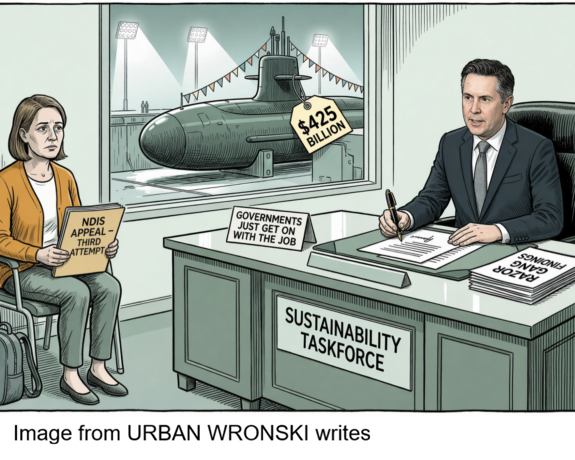

PETITION – To: Prime Minister Anthony Albanese and the Australian Labor Government
Chernobyl: The Lost Tapes – A good documentary on Chernobyl on SBS available On Demand for the next 3 weeks– https://www.sbs.com.au/ondemand/tv-program/chernobyl-the-lost-tapes/235274195556
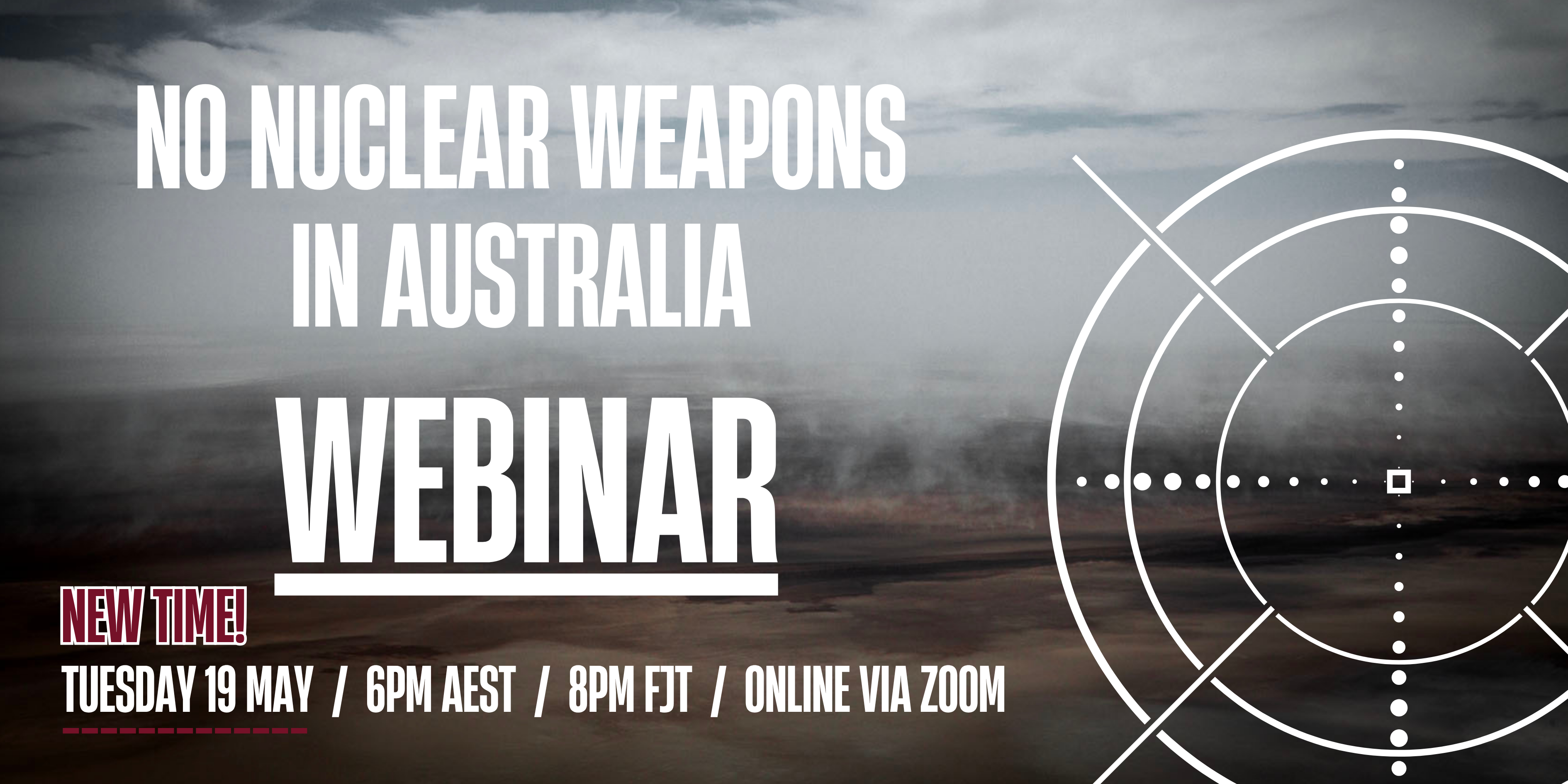
19 May – Webinar- Webinar: No Nuclear Weapons in Australia
Start: 2026-05-19 18:00:00 UTC Canberra, Melbourne, Sydney (GMT+10:00)
End: 2026-05-19 19:30:00 UTC Canberra, Melbourne, Sydney (GMT+10:00)
20 May – Webinar – The dangerous world of AUKUS, US, military occupation and suppression of dissent

National Webinar, 20th May, 2026, 6.30pm AEST. Confronting laws restricting/suppressing protest speech and action
Speakers: Former Sen. Rex Patrick, Lawyer Nick Hanna ,Arthur Rorris ,Jorgen Doyle, Sen David Shoebbridge,
Facilitator Kelley Tranter.

of the week – Australians for War Powers Reform (AWPR)
To see nuclear-related stories in greater depth and intensity
 Antinuclear