The Most Immediate Nuclear Danger in Ukraine Isn’t Chernobyl
The Most Immediate Nuclear Danger in Ukraine Isn’t Chernobyl, Even though an accident is unlikely, Russia must take exceptional measures to avoid a nuclear catastrophe. Carnegie Endowment for International Peace, James M. Acton 24 Feb 22,
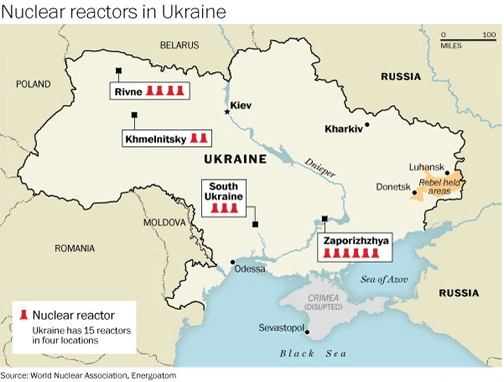
……………The most immediate nuclear danger, however, comes from Ukraine’s nuclear power plants. ………… the bigger risk comes from the potential for fighting around Ukraine’s four active nuclear power plants, which contain fifteen separate reactors and generated over half of the country’s electricity in 2020..
Chernobyl is inside a large exclusion zone, and the uninhabited space would mitigate the consequences of a second nuclear accident there. Ukraine’s other reactors are not similarly isolated. Moreover, much of the fuel in these other reactors is substantially more radioactive than the fuel at Chernobyl. To put it simply, nuclear power plants are not designed for war zones. It seems exceedingly unlikely that Moscow would authorize deliberate attacks on these facilities, but they could nonetheless become targets in a war that will, in any case, disrupt their operations.
For Ukrainian nuclear power plant staff, merely traveling to work may be a dangerous act—making it potentially challenging to ensure the reactor can be operated safely. In the event of an accident, backup personnel, such as firefighters, may not be able to reach the plant—not least because they could be involved in civilian relief efforts
Moreover, nuclear power plants might be targeted inadvertently. These facilities use power from the state’s electricity grid to help cool the reactor in the event it is forced to shut down. While backup power systems, such as diesel generators, are available, the power grid is one important line of defense. There is a very real risk of such power being lost in Ukraine if Russian forces attack the country’s electricity infrastructure—as NATO forces did against Serbia during the 1999 Kosovo War and Russia itself did against Ukraine in 2015 using cyber tools.
Even if Moscow doesn’t authorize direct attacks against nuclear power plants, such attacks might occur anyway. A weapon aimed at a nearby target could hit a nuclear power plant if its navigation system failed. If Russian forces believed that Ukrainian defense forces were inside a nuclear power plant, they could call in an airstrike, perhaps in contravention of an order not to attack nuclear power plants. This concern isn’t hypothetical: In 2017, U.S. special operation forces in Syria called in an attack against a dam that was on a “no strike” list. The resulting damage almost caused the dam to fail, which would likely have led to the drowning of tens of thousands of civilians.
The CEO of the company that operates Ukraine’s nuclear power plants has stressed that they are designed to withstand an aircraft crash. However, munitions are often designed to penetrate thick layers of protective concrete. One particularly serious risk is that a direct attack might drain the pools in which spent fuel is stored, often in large amounts. Without cooling, this fuel could melt, releasing very large quantities of radioactivity. This kind of accident was the “worst-case” outcome envisioned by officials as the Fukushima Nuclear Power Plant accident in Japan unfolded in 2011.I set out these scenarios with some hesitation. The likelihood of a serious nuclear accident is probably quite small……………..
Nonetheless, even if a nuclear accident is still quite unlikely, its effects could be severe and would add significantly to the long-term consequences of this invasion for Ukraine’s population. Moscow will be directly responsible for any nuclear accident that is caused, directly or indirectly, by its aggression. If it doesn’t want such an accident to be added to its growing list of crimes, it must take exceptional measures to avoid one. https://carnegieendowment.org/2022/02/24/most-immediate-nuclear-danger-in-ukraine-isn-t-chernobyl-pub-86521
A rogue journalist ponders on Ukraine situation

Caitlin Johnstone: 12 Thoughts on Ukraine, https://consortiumnews.com/2022/02/24/caitlin-johnstone-12-thoughts-on-ukraine/ February 24, 2022 The U.S. power alliance has a choice between escalating aggressions against Russia to world-threatening levels or doing what anti-imperialists have been begging them to do for years and pursue detente. By Caitlin Johnstone
CaitlinJohnstone.com Russian President Vladimir Putin has launched a full-scale invasion of Ukraine, the goal of which he claims is not to occupy the country but to “demilitarize” and “de-Nazify” it. We’ve no reason to put blind faith in any of those claims. Only time will tell.
As of this writing dozens have reportedly been killed. All war is horrific. We can only hope that this one winds up being the least horrific a war can be.
Some thoughts:
- This whole thing could very easily have been avoided with a little bit of diplomacy. The only reason that didn’t happen was it would have meant the U.S. empire taking a teensy, weensy step back from its agenda of total planetary domination. I’ve seen people call it “sad” or “unfortunate” that Western powers didn’t make basic low-cost, high-yield concessions like guaranteeing no NATO membership for Ukraine and having Kiev honor the Minsk agreements, but it’s not sad, and it’s not unfortunate. It’s enraging. That they did this deserves nothing but pure, unadulterated, white hot rage.
- Narrative managers have been working furiously to quash all discussion of No. 1….the most influential Russia “experts” in the Western world decrying propaganda while demanding media outlets enact propaganda. Saying what your government wants said instead of objective reporting the truth is the thing that propaganda is.Please don’t report facts on your media platforms. Don’t let anyone talk about the known actions by NATO powers and Kiev, which experts have long warned would lead to this situation. You’re not allowed to talk about the known U.S./NATO/Ukraine actions which demonstrably led us to where we’re at. You’re only allowed to say Putin attacked Ukraine completely unprovoked, in a vacuum, solely because he is evil and hates freedom. Your loyalty is to the U.S. empire, not to truth. Whoever controls the narrative controls the world.
- It’s funny how everyone keeps referring to this as a “World War 2-style invasion” instead of a “U.S.-style invasion.” It’s not like examples of military invasions ended in the 1940s
- ………….These people actually believe it’s legitimate to call this “the largest invasion on our planet since WW2.” Just snip out all the pages from the history books between 1950 and 2003 to make Western imperialists feel good about themselves. Unbelievable.
- The primary risk of nuclear war is not that anyone will choose to start one, it’s that one could be triggered by miscommunication, malfunction or misunderstanding amid the chaos and confusion of escalating Cold War tensions. This nearly happened, repeatedly, in the last Cold War. Cold War brinkmanship has far too many small, unpredictable moving parts for anyone to feel confident that they can ramp up aggressions without triggering a nuclear exchange. Nobody who feels safe with these games of nuclear chicken understands what they really are. We survived the last Cold War by sheer, dumb luck. We were never once in control. We just got lucky. There’s no reason to trust that we’ll get lucky again. We need to abandon this madness and pursue detente immediately.
- After the bombs drop and I’m dying of radiation poisoning, with my final breath I’m going to thank U.S President Joe Biden for denying Putin the moral victory of an assurance that Ukraine won’t join NATO.
- Probably goes without saying but just in case: anyone who supports any kind of Western military confrontation with Russia is an enemy of our entire species.
- It would now seem the U.S. power alliance has a choice between either (A) escalating aggressions against Russia to world-threatening levels or (B) doing what anti-imperialists have been begging them to do for years and pursuing detente. This is exactly where anti-imperialists have been warning we could wind up if the U.S. didn’t work toward detente with Russia, while being called Kremlin agents and Putin lovers the entire time for years on end. All the people who’ve called us crazy over the years for warning that Cold War brinkmanship against Russia could lead to hot war are the same people calling to ramp up the brinkmanship now that our warnings proved true. Perhaps some serious re-evaluation is in order. The solution to a crisis that was created by Cold War brinkmanship is not more Cold War brinkmanship. The solution to a crisis that was created by cold war brinkmanship is detente.
- Assertions made by secretive government agencies based on classified intelligence should always be subjected to aggressively intense scrutiny, 100percent of the time, without exception and without apology, regardless of the fact that those assertions occasionally happen to prove true.
- It sure is a lucky coincidence that Westerners have spent the last few years being persuaded to hate Russia by their governments and media. Otherwise they might not be giving consent to the West’s dramatic response to this act of aggression.
- Remain intensely skeptical of all news coming out of Ukraine. Since 2016 the Western empire has been running an extremely aggressive narrative management campaign about Russia the likes of which we’ve never seen before. The news media have been fully complicit in this mass-scale psyop. Watch and wait for hard evidence of every claim made. Recall how snipers were usedduring the 2014 coup in Kiev to kill protesters and pin the blame on the ousted Yanukovych government.
February 25 Energy News — geoharvey

Opinion: ¶ “Red-State Voters Want Clean Energy Too. Just Ask Nebraska” • Nebraska turned more than a few heads recently when its public officials adopted net-zero carbon goals for electricity. Renewable energy enjoys support among voters regardless of their politics. While Democrats may be motivated by the climate, Republicans see economic benefits. [CleanTechnica] Nebraska (Taylor […]
February 25 Energy News — geoharvey
Nuclear and politics – intertwined- theme for March 2022

”Manna from Heaven” – #ScottyFromMarketing rejoices- as the happy news broke of war in Ukraine. Just as Scotty had promised up to $171 Billion of tax-payers’ money – for nuclear submarines of no conceivable use for Australian monitoring or defence, comes this wonderful new preoccupation. Russia into Ukraine – next thing China into Taiwan – what could be better?
Such immediate threats to Australia! We all know that Russia and China are itching to militarily attack Australia,- don’t we? Or do we? Wot the heck!
FEAR and DEFENCE – what beautiful new themes for the coming Australian election!
Meet Australian Public Affairs, the lobbying firm that pushed the Kimba nuclear waste dump for the Federal Government.

The representation by Australian Public Affairs of companies working within or directly linked to the energy, mining and uranium mining industries—many of which obviously have an interest in a nuclear waste dump—does not appear to have been disclosed to the public at any stage of their lobbying work for the federal government on the campaign for a national nuclear waste management facility.
Meet the lobbying firm that pushed the Kimba nuclear waste dump for the Federal Government while claiming “commitment to Indigenous Australians”. Matilda Duncan, 24 Feb 22,
Australian Public Affairs company officers: Tracey Cain, Phillip McCall, Kathryn Higgs, Nick Trainor, Paula Gelo, Matthew Doman, Dominique Wolfe,
Having pocketed six years worth of consulting fees campaigning on behalf of the federal government for their proposed nuclear waste dump in SA, Australian Public Affairs claims “success” as the Barngarla people of the Eyre Peninsula continue to fight the dump through the courts.
It’s a grim project brief few public relations firms would want: convince Australia it’s acceptable to establish not just a national nuclear waste dump, but an international dump site that would potentially accept nuclear waste from the United Kingdom and France.
The requirements of the job: advocate for a radioactive waste facility being built in the middle of one of Australia’s largest wheat and agricultural belts. Urge locals to support a nuclear waste dump near Kimba, despite the site neighbouring both a conservation park and a national park. Avoid publicly questioning why the company the federal government hired to assess the shortlisted dump sites has a U.S. parent company that manufactures nuclear weapons.
Think up methods of pushing the dump in a state that has already been subjected to the stress of a government nuclear waste dump site selection process an inexplicable 4 times in 23 years—and rejected it, to the point the Olsen Government passed legislation to prevent radioactive waste being brought into the state: the Nuclear Waste Storage Facility (Prohibition) Act 2000, which was subsequently strengthened by the Rann Government.
Sell the nuclear dump to the public in a state in which traditional owners have already been subjected to decade upon decade of trauma thanks to the nuclear industry and materials for nuclear weapons being sourced from their lands. Avoid mention of the damaging mining conducted at Radium Hill, the uranium mining that continues to this day at Olympic Dam, the grotesque takeover of land to establish a weapons testing range double the size of England, or the hideous government decision to allow Britain to test 7 atomic bombs at Maralinga and Emu Field without adequately warning the Indigenous people living there—bombs that, in a full circle of destruction, were made using uranium sourced from Radium Hill.
In the face of this depraved and dark history of governmental abuse, the job: tell the locals it will be worth it because the nuclear waste dump will bring “45 jobs”.
Tracey Cain and Alastair Furnival willingly took on the work.
For the past seven years, their lobbying firm Australian Public Affairs has been working behind the scenes for the Federal Government, providing media and campaign strategy advice to help the government promote the nuclear waste dump—presented as the “National Radioactive Waste Management Facility”—and steer them through what continues to be a long, flawed and troubled dump site selection process.
A married couple, Cain and Furnival share a property worth $5 million in Cremorne and equal ownership of Australian Public Affairs Pty Ltd. Furnival is also a staffer at another consulting firm, Elevate Consulting.
Their company made national headlines in 2014, during Furnival’s time as a federal government staffer. That year, Cain and Furnival’s company was lobbying for the junk food sector, representing Cadbury, the Australian Beverages Council and Mondelez Australia (formerly Kraft), while Furnival was working as chief of staff for the federal assistant health minister, Fiona Nash.
According to media reports, Senator Nash and Furnival intervened to pull down a food health star rating website less than 24 hours after it was launched, despite it having been in development for two years and approved by state and territory food ministers.
Furnival owned half of Australian Public Affairs while intervening in public policy decisions as Nash’s chief of staff. Furnival resigned in the wake of the scandal.
FEDERAL GOVERNMENT STAFFERS VS. LOBBYISTS WRITING SPIN
The Morrison Government appear to have given Australian Public Affairs plenty of latitude to complete their work promoting the nuclear waste dump, extending permission to act directly as Government spokespeople.
Numerous times over the past 2 years, media enquiries about the national nuclear waste management facility sent to the federal Department of Industry, Innovation and Science (DIIS) and it’s superseding [new] department have been responded to directly by an Australian Public Affairs staffer rather than federal government staff.
Media enquiries from this journalist were responded to directly by Australian Public Affairs Director Nick Trainor, who in an introductory email two years ago claimed to “work with” the federal government.
Trainor provided a response on behalf of DIIS and the “National Radiactive Waste Management Facility Taskforce” in that email, without disclosing that he was in fact working for a lobbying firm representing the federal government on the nuclear waste dump project…………………………………
A DISAPPEARING ETHICS POLICY
Sometime after 2015, Cain and Furnival removed an ethics policy for Australian Public Affairs from their company website.
The policy claimed Australian Public Affairs was ‘committed to an ethical and quality approach to servicing our clients’. The company would ‘refuse causes, ideas or programs which pose harm to the community’, the policy claimed, ‘never promote deception or unsupportable claims’ and ‘at all times act as a leader in the pursuit of ethical practice.’……………………………………
Australian Public Affairs’ Deputy CEO, Phillip McCall, previously worked for the Australian Nuclear Science and Technology Organisation (ANSTO) with oversight of the Lucas Heights nuclear reactor . APA’s client list has also included mining, gas and energy giants such as Santos—Australia’s second largest independent oil company and owner of the Moomba oil and gas fields in South Australia’s north-east.
APA staff were registered as lobbyists with the South Australian Government on Santos’ behalf from 2017 to late 2018. Uranium mining exploration projects in Santos’ Moomba gas fields were announced the following year, in 2019
APA also represented Santos on their Narrabri coal seam gas project.
Earlier this year—as their work for the Morrison Government on the nuclear waste dump continued—Australian Public Affairs began representing MaxMine (Resolution Systems), a mining technology company with offices in South Australia and South Africa. The company claims its “mission is to become the world’s biggest miner without owning a mine.”
MaxMine has been linked to Andrew Forrest’s Fortescue Metals Group, after—according to MaxMine’s own promotional material—conducting work on their technology with Fortescue in 2010.
WASTE DUMP POLITICAL CONNECTIONS
Andrew Forrest has invested in uranium mining for years. In 2014, he bought EMA, the company that owned uranium deposits at Mulga Rock in Western Australia. Just two months ago, a new uranium mining operation commenced there. Forrest’s private company, Squadron Resources, has an interest in the uranium mining company working at Mulga Rock, Vimy Resources.
The former Premier of South Australia, Jay Weatherill, was appointed to a CEO Position with Andrew Forrest’s Minderoo Foundation after he left public office.
Weatherill was behind the “unusual step” of setting up a Royal Commission in 2015 to consider South Australia’s potential role in the nuclear industry—despite the aforementioned decades of proposals for nuclear waste dumps being rejected by the community and legislation being enacted to ban nuclear waste being brought into the state. Weatherill spen much of his time as Premier pushing a proposal for a high-level nuclear waste storage facility in South Australia.
Weatherill has further personal connections to the current nuclear waste dump proposal. During his tenure as SA Premier, his wife Melissa Bailey was appointed to a position at AECOM Australia Pty Ltd—the company commissioned by the federal government to write site assessment reports for each of the shortlisted nuclear waste dump sites, covering topics like environmental impacts, climate change and wildlife impacts…………………………..
Questioned about the employment of Jay Weatherill’s wife at AECOM Australia Pty Ltd and why the federal government hired the company to assess the nuclear waste dump sites despite its association with nuclear weapons development, Australian Public Affairs responded on behalf of the federal government to both queries with the same phrase: “AECOM Australia Pty Ltd was selected to provide the required services through an open tender process and evaluation conducted in accordance with an approved procurement plan.”
The representation by Australian Public Affairs of companies working within or directly linked to the energy, mining and uranium mining industries—many of which obviously have an interest in a nuclear waste dump—does not appear to have been disclosed to the public at any stage of their lobbying work for the federal government on the campaign for a national nuclear waste management facility.
THE KIMBA COUNCIL
Remarkably, Cain has already claimed her company’s work on the government’s nuclear waste management facility project to be a “success”—even as the Traditional Owners, the Barngarla people, are again challenging the project through the courts.
For years the Barngarla people have repeatedly stated they have not been consulted about the storage of radioactive waste on their land. Representatives of the Barngarla people were excluded from a community vote to gauge local support for the nuclear waste facility—after the District Council of Kimba decided to exclude native title holders from the vote.
Despite major mainstream news outlets including the ABC, Guardian, Channel Ten’s The Project and NY Times visiting Kimba and publishing coverage of Jeff Baldock—the man who volunteered to sell his land at Napandee to the government for the nuclear waste management site—no attention was given by these outlets to his relative and business partner Graeme Baldock, a member of the Kimba Council that determined the Barngarla people would be excluded from the community vote on the nuclear waste dump………..
Graeme and Jeff Baldock had previously purchased thousands of hectares of land in the region near Kimba—in the region where the dump site is set to be established—according to information published in 2015 by the Baldock family farming company, Karinya Agriculture.
A member of the District Council of Kimba since 2010, Graeme Baldock was communicating directly with the federal government agency responsible for the nuclear waste management facility site selection process, the Department of Industry, Innovation and Science (DIIS), between 2017 and 2019.
In response to a freedom of information application made in early 2020 seeking access to Graeme Baldock’s emails with DIIS over two years, DIIS stated that the “documents contain personal information of certain individuals” and due to privacy provisions in freedom of information legislation, “8 third parties” would need to be consulted before the government might consider releasing the documents.
The Department of Industry then sought to impose administration charges of $500 to process the request for Graeme Baldock’s emails.
“COMMITTED TO CLOSING THE GAP”
As the Barngarla traditional owners pursue some semblance of justice through the courts, Tracey Cain continues to advertise her company’s services in the “Indigenous Affairs sector” today, writing: “Australian Public Affairs has extensive communications expertise with Aboriginal and Torres Strait Islander Peoples, on behalf of traditional landowners and Indigenous organisations, and for governments, corporates and NFPs wishing to engage with these communities.”
It’s not just the Barngarla people APA’s work on the nuclear waste dump process has affected—the traditional owners of other sites shortlisted for the dump, like South Australia’s Adnyamathanha people, have already publicly described the stress it caused. “The emotional stress we’re feeling is off the charts,” Regina McKenzie, an Adnyamathanha traditional owner, told the ABC in 2016. “We’re still the custodians here; we’ve always looked at it that way.”
Australian Public Affairs’ company spiel continues: “Within this work, APA is particularly committed to social and economic initiatives which support the Closing the Gap agenda, to provide Indigenous Australians with the same level of opportunity as the rest of the nation: including in health, mental health, education and social policy.”
In another section of APA’s website, the company characterises an “increase in environmental concern – not least amongst farmers and indigenous communities” as leading to “a rise in red tape and cost of compliance”.
In addition to APA working on projects that have contributed to the disenfranchisement of Indigenous communities, Furnival—Cain’s husband and co-owner of Australian Public Affairs—worked for the Abbott Government, an administration that cut $535 million from Indigenous programs.
Cain was contacted for comment about her husband’s role with the Abbott Government and asked if APA staff were directly involved with negotiations with the Barngarla people and other local communities involved in the nuclear waste dump site processes.
Cain was asked if Australian Public Affairs staff made it clear to these communities that they were a lobbying firm, not federal government staffers, when responding to their enquiries and concerns about the nuclear waste dump. She did not directly address these questions.
HISTORY REPEATING
Australian Public Affairs is not the only public relations firm to have chosen to assist the Government to continue perpetuating the toxic legacy of uranium in South Australia. Michels Warren have taken on the task too—an Adelaide PR firm that first represented the Howard Government during their attempt to establish a dump in South Australia from the late nineties until at least 2004. Freedom of information applications revealed the company’s dirty campaign to “soften up the community” and sell something its own staff knew had no benefit to South Australians: “The National Repository could never be sold as “good news” to South Australians. There are few, if any, tangible benefits such as jobs, investment or improved infrastructure. Its merits to South Australians, at the most, are intangible and the range and complexity of issues make them difficult to communicate.”
Despite having their ugly tactics exposed, Michels Warren chose not to leave their involvement with the nuclear industry and nuclear waste in the past. They went on to represent the Weatherill Government’s aforementioned unusual Royal Commission into nuclear power in 2016—a decision that might be explained, in part, by their previous campaigning on behalf of the corporate owners of the Beverley and Honeymoon uranium mines in South Australia.
IRATI WANTI
Almost two decades ago, the Kupa Piti Kungka Tjuta, a council of senior Indigenous women based near Coober Pedy in South Australia, were into their eighth year of fighting the Howard Government proposal to dump nuclear waste from the Lucas Heights nuclear reactor on their traditional lands.
In April 2003, the council’s founders, Eileen Kampakuta Brown and Eileen Wani Wingfield, received the Goldman Prize for environmental activism—an award akin to the Nobel Prize—and $US125,000 to continue their campaign against the nuclear waste dump. The women were fighting the Howard Government into their seventies, with a campaign slogan of “Irati wanti” which roughly translated as “The poison – leave it”.
The founder of the prize, Richard Goldman, said the women had been chosen for a campaign that “exemplifies how much can be accomplished when ordinary people take extraordinary action to protect the health of our planet”.
Mrs Brown said at the time that she was talking on behalf of her ancestors so that her children and grandchildren might also be able to live on the land, telling the Sydney Morning Herald in 2003 through her granddaughter: “There’s a lot of life out there.” https://matildaduncan.net/stories/22/feb/23/australian-public-affairs-tracey-cain-nuclear-waste-dump
Why nuclear risk from war in Ukraine isn’t missiles but accidental hits on reactors
“In case of the total destruction of the power plant, I think the consequences would be so much worse than at Fukushima and Chernobyl together,” Mr Gumenyuk said. “If speaking about consequences of this war situation, Europe will be totally contaminated.”
Why nuclear risk from war in Ukraine isn’t missiles but accidental hits on reactors, Kyiv safety expert warns, By Isabella Bengoechea i , 23 Feb 22
Kyiv nuclear safety expert Dmytro Gumenyuk told i while a direct attack is unlikely, military invasion raises the risk of possible accidental hits from missiles or artillery
Ukraine’s nuclear power plants would pose a risk of radioactive pollution in Europe if caught in the crossfire of a Russian invasion, a Kyiv safety expert has told i.
The chance of a direct military attack on such facilities would be highly unlikely but a lack of high-precision weapons in the occupied Donbas suggests there could be an increased chance of sensitive facilities being hit accidentally.
If this happens, radiation could contaminate air, soil and waterways, affecting not only Ukraine but also Russia and much of Europe, according to Dmytro Gumenyuk, head of safety analysis at the State Scientific and Technical Centre for Nuclear and Radiation Safety, a body within the state nuclear inspectorate.
Ukraine has 15 nuclear reactors in four power plants, which provide 52 per cent of the country’s electricity: Khelnitsky and Rivne in the northwest, and Zaporizhzhia and the South Ukrainian plants in the west and south respectively.
Some facilities including a nuclear waste storage site in the exclusion zone at Chernobyl – where in 1986 catastrophic failure at the power plant resulted in the worst nuclear disaster in history – lie close to the country’s borders, where Russia has amassed nearly 200,000 troops.
The plant at Zaporizhzhia is only about 150 miles from the front line in Donetsk, while the South Ukrainian plant is about another 160 miles further west.
While a direct attack is unlikely, military invasion raises the risk of possible accidental hits from missiles or artillery. On Tuesday the thermal power station at Shchastya, near the conflict line in Luhansk, caught fire amid shelling, leaving 40,000 residents without electricity.
Mr Gumenyuk said: “Our NPP [nuclear power plant] wasn’t designed for military protection. Of course it wasn’t designed against tanks, bombs, missiles and so on.
“In case of a military attack it is not a long time for getting from Dontesk to Zaporizhzhia NPP, and of course taking into account the small distances from the Russian Federation, we could suppose that our power plants are not fully protected from military attack from our neighbour.”
A direct attack by Russia is unlikely. Lada Roslycky, founder of the Ukraine-based Black Trident defence and security group, said: “From a military perspective and a defence perspective it would be an idiotic action.”
However, she pointed out the separatists’ lack of high-precision weapons in conflict in the occupied Donbas does raise the chance of sensitive facilities being hit accidentally.
She also suggested that this could be part of a Russian strategy of fomenting uncertainty through psychological warfare, by holding out the threat of attacking such facilities. “I really don’t think they would do it [attack nuclear facilities] but it’s possible … it’s such a wonderful, brilliant instrument,” she said.
The Conflict and Environment Observatory (CEOBS) said it is “right to be concerned about Ukraine’s 15 ageing Soviet-design nuclear reactors”.
“The three reactors at the South Ukraine Nuclear Power Plant and the six reactors at the Zaporizhzhia Nuclear Power Plant are the two sites most likely to be affected by a Russian invasion,” the observatory added.
The VVER 1000 pressurised water reactors at Zaporizhzhia each contain 163 assemblies – or structured groups of fuel rods. Each assembly contains about 500kg of uranium dioxide, making the total fuel inside one reactor about 80 tonnes.
After the 2011 nuclear disaster at Fukushima in Japan, Ukrainian nuclear authorities implemented extra safety measures to make their reactors safer, and protect against accidents such as fires and flooding.
However, Mr Gumenyuk warned that were the plant to be attacked, in the worst-case scenario, the consequences would be devastating.
“In case of the total destruction of the power plant, I think the consequences would be so much worse than at Fukushima and Chernobyl together,” Mr Gumenyuk said. “If speaking about consequences of this war situation, Europe will be totally contaminated.”
Soon after the disaster, radioactive rain began falling across northern Britain. In Cumbria detectors showed background radiation 200 times higher than normal. In Scotland two months later it was 4,000 times. Sheep in North Wales, Cumbria, and Scotland were found to have increased levels of caesium-137, prompting temporary restrictions on meat sales for 7,000 farms.
A nuclear disaster at Zaporizhzhia would contaminate the water, entering the Dneiper River and travelling down into the Sea of Azov, the Black Sea and then out into the Mediterranean.
In the event of a meltdown, radiation could contaminate the air where, depending on weather conditions, it could spread across Europe, as happened after the Chernobyl accident, when radiation spread as far as Sweden and the UK.
“But this is if all the units are totally destroyed,” said Mr Gumenyuk. “We do our best to prevent this situation. I hope in most cases our power units would survive even in single hits. Our nuclear reactors have containment to protect against the different impacts, including an air crash for example.”
Chernobyl’s nuclear waste
Ukraine’s nuclear waste storage facilities, including in the exclusion zone at Chernobyl, 70 miles south of the Belarussian border, also pose a radiation risk.
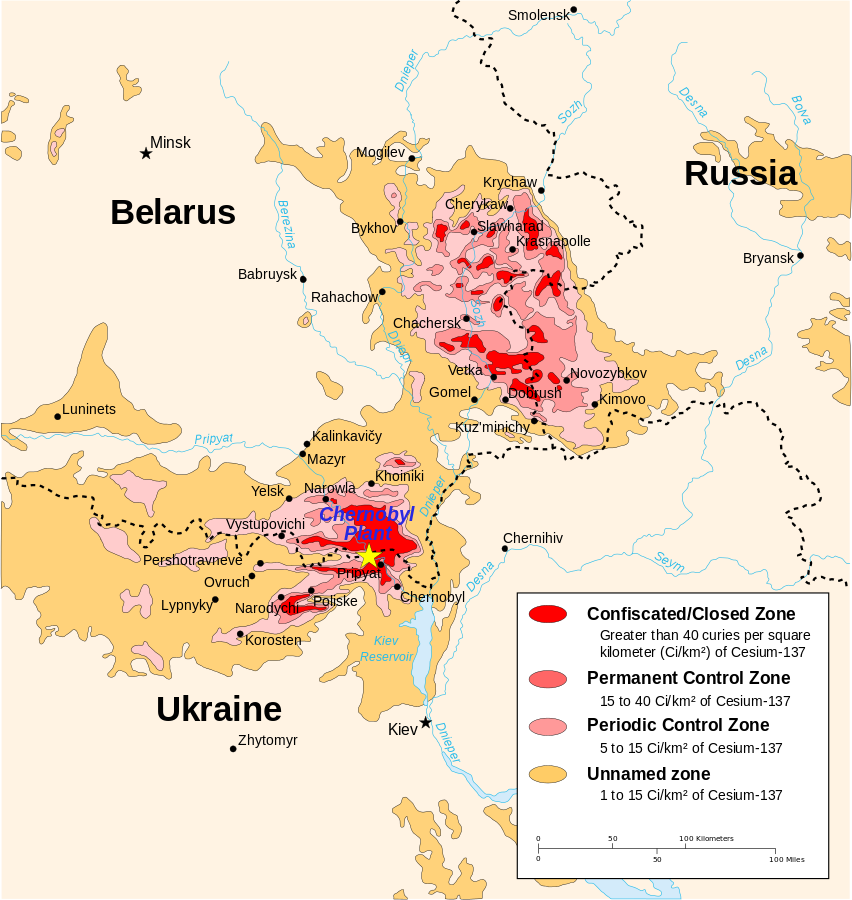
Last year Energoatom, the state nuclear operator, announced that Ukraine’s new Central Spent Fuel Storage Facility, in the exclusion zone at Chernobyl, was almost ready to begin operating. Spent fuel will be transferred to the new facility from where it is currently stored at power plants.
At present Russia has about 30,000 troops stationed in Belarus, apparently for joint military exercises, which are armed with short-range missiles, rocket launchers and Su-35 fighters. Leaders including Boris Johnson have suggested that Russia is planning at attack from Belarus, “coming down from the north, coming down from Belarus, and encircling Kyiv itself”. The route could take Russian troops through the exclusion zone.
According to CEOBS: “Decommissioning of the [Chernobyl] site and the packaging of waste is ongoing and will continue for decades. The site is under constant management and monitoring and the disruption caused by a conflict would impact the ongoing work to reduce the risks it poses. It seems likely that foreign companies would withdraw staff in the event of an invasion, impacting activities at the site.”
There are 22,000 assemblies of spent nuclear fuel at the storage site, kept in special casks to protect them.
However, Mr Gumenyuk pointed out that these were not protected against military firepower: “In case of the destruction of these casks, radioactive materials could be released and transferred to Ukraine and other European territories. This is a very dangerous situation.”
While some experts say any disruption to the site would be localised, Mr Gumenyuk said: “I disagree, the number of the fuel assemblies is very big and if all the casks were destroyed it would not only be the problem of Ukraine, maybe not all Europe, but many countries.”
Cyberattacks are another possibility. Last week Ukrainian government websites and banks were shut down by a wave of distributed denial of service attacks, thought to have been carried out by Russian hackers.
In 2015 the country’s energy sector was attacked by the BlackEnergy computer virus that caused a blackout of 800,000 households across 103 towns.
The next year, on the 30th anniversary of the Chernobyl disaster, Ukraine’s then-President Poroshenko said: “If the BlackEnergy virus was used for attacks on our power distributors, there is no guarantee that such technology will not threaten our nuclear plants”.
“Chernobyl is already volatile,” said Ms Roslycky. “Cyberattacks against Chernobyl call for attention… whether attacking kinetically or through cyber, when that happens this is something that would threaten global security.”
Accident, terrorism or sabotage
Direct attacks on the plants at Zaporizhzhia and South Ukraine are also unlikely, not least because Russia is not far from the power plants, and any radioactive contamination would affect Russia as well as Ukraine.
However, the possibility of an accident, terrorism or sabotage is somewhat higher. According to the Nuclear Security Index for 2020, Ukraine scores highly on global norms for nuclear materials security and implementing international commitments, with 94 and 78 out of 100 respectively.
However, under ‘risk environment’, which considers factors including political stability, effective governance, pervasiveness of corruption, and illicit activities by non-state actors, Ukraine scores 14.
A 2016 report by the EU Non-Proliferation Consortium drew attention to the illicit trafficking of radioactive materials in the DPR, LPR and unrecognised Transnistria in Moldova. “The armed conflict in eastern Ukraine and its related threats are dramatically influencing the nuclear security conditions in the country,” it said.
“Political and social instability amplifies the motivation of criminal or terrorist groups or organisations for illegal business related to the distribution of radioactive materials that are out of regulatory control.”
The danger of these armed insurgencies was highlighted most dramatically in 2014 when Malaysia Airlines Flight 17 was shot down over Donetsk in eastern Ukraine by pro-Russian separatists, killing all 298 on board. The Dutch-led investigation into the incident concluded that the plane was shot down with a Buk missile supplied by the 53rd Anti-Aircraft Missile Brigade of the Russian Federation. Those responsible may have believed they were shooting down a Ukrainian military aircraft…………………………………………. https://inews.co.uk/news/ukraine-war-nuclear-risk-russia-missiles-accidental-hits-reactors-1478269
”Taskforce” of 400 people joins exclusive discussion on how Australia can get nuclear submarines
Defining’ month for Australia’s nuclear subs program, Innovation, Joseph Brookes 23 Feb 22, The taskforce scoping Australia’s options for acquiring nuclear powered submarines has had its “defining month” in February, passing 200 members and gaining access to a nuclear information sharing agreement with the US and UK.
Defence officials said the “treaty-like” agreement effectively added Australia to the exclusive discussion the US and UK have been having on nuclear technology for more than 50 years and will propel the current nuclear-powered submarine program through its scoping phase…………..
However, while the intention continues to be to build the vessels in South Australia, officials confirmed no explicit minimum local industry involvement has been made yet, with few details – including submarine type – locked in………..
The Canberra-based group grew to 137 members by December and passed 200 this month.
It includes officials from several government departments and agencies as well as at least 10 unidentified private contractors, split into several working groups around the key areas. It also liaises with counterparts in the US and UK, including hosting a formal visit this month.
The taskforce has been given 18 months to identify the optimal pathway to deliver at least eight nuclear powered submarines………………
The agreement, which was signed in November by Defence Minister Peter Dutton but only came into effect this month, allows a deeper level of engagement on sensitive areas like nuclear technology, and its first use has coincided with visits from US and UK defence officials. https://www.innovationaus.com/defining-month-for-australias-nuclear-subs-program/
25 Sydney councils ink massive renewables supply deal with three NSW solar farms — RenewEconomy

Three solar farms in NSW will supply energy to 25 Sydney local governments in landmark deal that will see 19 of the participating councils reach 100% renewables. The post 25 Sydney councils ink massive renewables supply deal with three NSW solar farms appeared first on RenewEconomy.
25 Sydney councils ink massive renewables supply deal with three NSW solar farms — RenewEconomy
Pitt re-issues government millions to Beetaloo gas projects after court slap down — RenewEconomy

The Morrison government makes a second attempt to give $20 million to gas company for drilling in Beetaloo, after federal court voided first attempt. The post Pitt re-issues government millions to Beetaloo gas projects after court slap down appeared first on RenewEconomy.
Pitt re-issues government millions to Beetaloo gas projects after court slap down — RenewEconomy
Australia’s Tindo enters big solar market with “world-beating” utility-scale panel — RenewEconomy

Australia’s first – and for some time, only – manufacturer of solar panels has launched its first utility-scale panel, with high marks on efficiency. The post Australia’s Tindo enters big solar market with “world-beating” utility-scale panel appeared first on RenewEconomy.
Australia’s Tindo enters big solar market with “world-beating” utility-scale panel — RenewEconomy
Eraring unit trips and sends prices soaring, just as Coalition launches new price scare campaign — RenewEconomy

Eraring unit trips and sends prices soaring in NSW and Queensland, just as the federal Coalition launches new price scare campaign. The post Eraring unit trips and sends prices soaring, just as Coalition launches new price scare campaign appeared first on RenewEconomy.
Eraring unit trips and sends prices soaring, just as Coalition launches new price scare campaign — RenewEconomy
Fukushima’s forestry industry still haunted by nuclear meltdown — Fukushima 311 Watchdogs

Yoshihisa Kanagawa, a senior member of the Higashishirakawa forestry cooperative in Fukushima Prefecture, visits a forest in the area. Feb 21, 2022 Almost 11 years since the Fukushima No. 1 nuclear power plant meltdown, the forestry industry in Fukushima Prefecture is still suffering serious difficulties, with mountains and forests once contaminated by radioactive fallout left […]
Fukushima’s forestry industry still haunted by nuclear meltdown — Fukushima 311 Watchdogs
“Emissions blowout:” Australian coal and gas projects underplay emissions in planning process — RenewEconomy

Some of Australia’s largest fossil fuel projects significantly underestimated how much greenhouse gas emissions they would produce. The post “Emissions blowout:” Australian coal and gas projects underplay emissions in planning process appeared first on RenewEconomy.
“Emissions blowout:” Australian coal and gas projects underplay emissions in planning process — RenewEconomy
No nuclear war

So what of NATO’s role in this? NATO is neither a force for peace and democracy, nor an innocent bystander.
NATO has gone on to become a global military force, abandoning its ‘defensive’ remit and engaging in war far beyond the North Atlantic.
Home / Kate Hudson’s Blog / No nuclear war,https://cnduk.org/no-nuclear-war/ Dr Kate Hudson, CND General Secretary, FEBRUARY 22, 2022
No nuclear war, As the crisis in Ukraine escalates, the risk of nuclear war comes ever closer. President Biden pointed out last week that war between the US and Russia would be World War III, yet no serious progress has yet been made to deal with the underlying issues through negotiation. British political leaders remain determined to denigrate diplomatic initiatives, even as the possibility of war significantly increases.
The rational response to the latest dangerous developments would be to recognise that posturing has failed and now it’s time to step back and get to the negotiating table, to make the Minsk agreements work. The regional autonomy promised to those parts of eastern Ukraine with significant ethnic Russian populations must be implemented. That is how to resolve the issue of eastern Ukraine, to get the Russian troops out, and achieve a lasting settlement in the interests of all of its peoples. But that has not yet happened. Rather than further escalating the rhetoric and militarisation of the region, the US must treat this as a wake-up call to achieve a peaceful solution.
Russia and the United States together have almost 12,000 nuclear weapons—some of which are 3,000 times the power of the Hiroshima bomb. Add to that the arsenals of NATO members France and the United Kingdom, not to mention around 150 nuclear bombs that the US sites in western Europe under the auspices of NATO. Far from their significance receding since the Cold War, all nuclear arsenals are being modernised and upgraded—and in the case of the UK’s, being increased, as announced by the Johnson government last year.
During the Cold War, the notion of ‘mutually assured destruction’ meant that—in theory at least—leaders understood that a nuclear war was unwinnable and must never be fought. Indeed the leaders of nuclear weapons states recently reiterated that point, first made by Reagan and Gorbachev in 1985. But their actions belie those words and things have changed for the worse. During his term of office, Donald Trump produced and deployed ‘usable’ nuclear weapons; in the UK’s Integrated Review last year, new scenarios were outlined in which Britain would use nuclear weapons.
Do our political leaders actually understand what the use of just a single nuclear weapon would mean? The catastrophic human and environmental destruction, the incineration of cities and populations, and the appalling deaths from radiation poisoning? A nuclear exchange would be catastrophic, and nuclear war between the US and Russia would present an existential threat. Johnson and Starmer need to reflect on this when they are ramping up their bellicose rhetoric.
While they posture, the people of Ukraine are suffering; the country is paying a heavy economic and human price as a result of these hostilities.
So what of NATO’s role in this? NATO is neither a force for peace and democracy, nor an innocent bystander.
Despite dramatic changes across Europe after 1989, with the demise of the Soviet Union and the dissolution of the Warsaw Pact, NATO—under US leadership—began the process of expansion into eastern Europe. This has continued to include former Soviet republics, and NATO has gone on to become a global military force, abandoning its ‘defensive’ remit and engaging in war far beyond the North Atlantic.
NATO expansion has caused significant regional tension and its continued expansionary plans are threatening to drag Europe into a devastating war—because it refuses to take Russian security concerns into account. Russia already has a direct land border with NATO states Estonia and Latvia. If Ukraine joins NATO, then Russia will have over a thousand miles of additional land border with an openly hostile, nuclear-armed military alliance with a nuclear ‘first use’ policy. It is hard to imagine that a British government would happily accept such a situation in reverse.
There is no possibility whatsoever that war will resolve these complex problems, and it might just end with the destruction of humanity. Only dialogue and a willingness to be open to the concerns of others will make a difference. Many in Europe speak of a new security framework for Europe, with a commitment to common security rather than endlessly increasing militarisation, more nuclear weapons, and ultimately more deaths. This is the path that our own government must now pursue, rather than stoking up endless conflict.
Radiation hazards of mine in occupied Donetsk, site of an underground nuclear test.
Why nuclear risk from war in Ukraine isn’t missiles but accidental hits on reactors, Kyiv safety expert warns, By Isabella Bengoechea i , 23 Feb 22 ”……………………………………….A radioactive time bomb’
There is also growing concern over a “radioactive time bomb ticking away as a result of the war in Ukraine”, Ms Roslycky said.
Radiation from the Yuny Komynar (Yunkom) mine near Yenakiieve in occupied Donetsk has been slowly contaminating the environment. In 1979 the Soviet Union conducted a nuclear test here deep underground. The explosion melted the walls into glass, creating the ‘Klivazh’ facility, a vitrified capsule of radioactivity.
When a mine stops operating, water must be continually pumped out to prevent flooding because water that enters the shafts and chambers can become polluted with heavy metals which can then enter the soil and waterways.
Before the Russian occupation the Ukrainian government spent millions pumping water out of mines in the region to prevent flooding. However in 2018, the so-called Donetsk People’s Republic (DPR) ceased pumping operations, with infrastructure sold off for scrap metal.
A 2019 report by Ukraine’s National Institute for Strategic Studies found that contamination from flooded mines was an ‘urgent threat’ to over 300,000 people in separatist areas, with one in four already lacking a source of drinking water.
In the Yunkom mine: “There is a risk of the glass capsule being destroyed, and the leaking of highly hazardous radioactive elements into surface waters,” according to a 2021 report by Truth Hounds, a Ukraine-based human rights NGO. “Just two months after water pumping ceased, the level of mine water in the shaft of the mine increased by 157 meters.”
Since 2020, the capsule is believed to have flooded. According to the International Human Rights Community, the concentration of radionuclides in the aquifers about 5km away from the site, was 20-34*103 becquerels/kg.
“This means that low-level radioactive waters are already entering the drinking water level,” the organisation said.
“Like a dirty bomb, this radioactive-chemical cocktail poses a large-scale environmental threat affecting the ecology, human health and lives in areas far beyond Ukrainian borders should it seep through to the Sea of Azov and the Black Sea making its way into the Mediterranean,” according to Ms Roslycky.
“The threat is the pollution of the environment, the land, the water, the animals, the people. This is a pending international environmental disaster that needs to be taken under control.”
Denial from Russian-backed separatists
However, the DPR denies any change in radiation levels or risks associated with the mine. There is little data available because all requests to access the site to investigate by Ukraine and observers including the International Atomic Energy Agency have been rejected.
Similarly, requests to inspect other nuclear sites in, for example, occupied Crimea, have been rebuffed.
Last April President Zelensky warned: “The lack of such information is a problem that has no borders, and its consequences will have no boundaries.”
An investigation opened by the Donetsk Region Prosecutor’s Office found that the DPR “understand that these actions could cause an ecological disaster, consisting of the radioactive and chemical contamination of groundwater and surface water and, in turn, the pollution of the Sea of Azov”.
As Ms Roslycky points out, by refusing to engage with international authorities, Russia “instrumentalises this position to legitimise the Russian occupation authorities” in Donetsk and Luhansk. By claiming that Ukraine must engage with the DNR directly, they want to force Ukraine and the international community to formally recognise them.
Sergiy Kyslytsya, Ukraine’s Ambassador to the United Nations, has called upon the UN to carry out an environmental impact assessment in Donetsk and Luhansk.
Without proper maintenance of such sites, they may soon be adding to the nuclear and environmental threat – on top of the military threat – looming over Ukraine. https://inews.co.uk/news/ukraine-war-nuclear-risk-russia-missiles-accidental-hits-reactors-1478269
1 This month.


PETITION – To: Prime Minister Anthony Albanese and the Australian Labor Government
Chernobyl: The Lost Tapes – A good documentary on Chernobyl on SBS available On Demand for the next 3 weeks– https://www.sbs.com.au/ondemand/tv-program/chernobyl-the-lost-tapes/235274195556
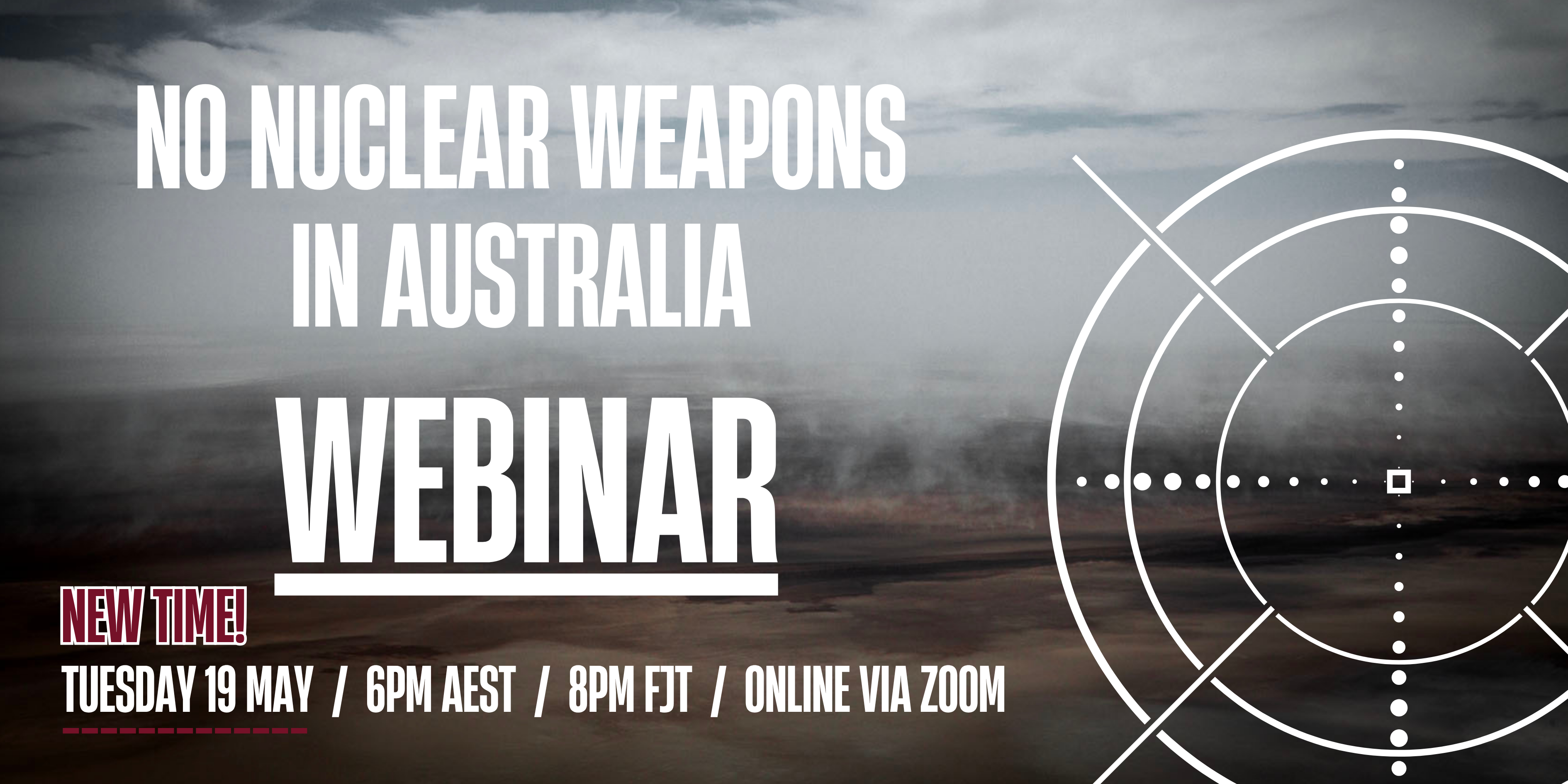
19 May – Webinar- Webinar: No Nuclear Weapons in Australia
Start: 2026-05-19 18:00:00 UTC Canberra, Melbourne, Sydney (GMT+10:00)
End: 2026-05-19 19:30:00 UTC Canberra, Melbourne, Sydney (GMT+10:00)
20 May – Webinar – The dangerous world of AUKUS, US, military occupation and suppression of dissent

National Webinar, 20th May, 2026, 6.30pm AEST. Confronting laws restricting/suppressing protest speech and action
Speakers: Former Sen. Rex Patrick, Lawyer Nick Hanna ,Arthur Rorris ,Jorgen Doyle, Sen David Shoebbridge,
Facilitator Kelley Tranter.

of the week – Australians for War Powers Reform (AWPR)
To see nuclear-related stories in greater depth and intensity
 Antinuclear