Cannon-Brookes: We have $20 billion to push net zero by 2035 — RenewEconomy

Updated: Cannon-Brookes says grid can reach net zero by 2035, and Australia should have cheapest power prices in world thanks to wind and solar. The post Cannon-Brookes: We have $20 billion to push net zero by 2035 appeared first on RenewEconomy.
Cannon-Brookes: We have $20 billion to push net zero by 2035 — RenewEconomy
AGL rejects Cannon-Brookes early closure bid, insists it can reinvent itself — RenewEconomy

Australia’s biggest coal generator AGL rejects tech billionaire’s bid as too low, insists it can “continue to reinvent itself.” Cannon-Brookes responds. The post AGL rejects Cannon-Brookes early closure bid, insists it can reinvent itself appeared first on RenewEconomy.
AGL rejects Cannon-Brookes early closure bid, insists it can reinvent itself — RenewEconomy
Captured by climate propaganda — Beyond Nuclear International

Sunrise Movement should sunset any support for nuclear power
Captured by climate propaganda — Beyond Nuclear International
Time is running out — Beyond Nuclear International

New radioactive mud dump threat looms
Time is running out — Beyond Nuclear International
February 21 Energy News — geoharvey

Opinion: ¶ “Fab Labs Or Gigafactories? Or Both?” • Does everything need to be produced in a gigafactory? What is the place for a fab lab or microfactory? In a recent book, Dr Paul Wildman makes the argument for cosmolocalisation – global design produced locally in fab labs, where peer works with peer for the […]
February 21 Energy News — geoharvey
The Ukraine Crisis Could Trigger a Nuclear Catastrophe – Tilman Ruff
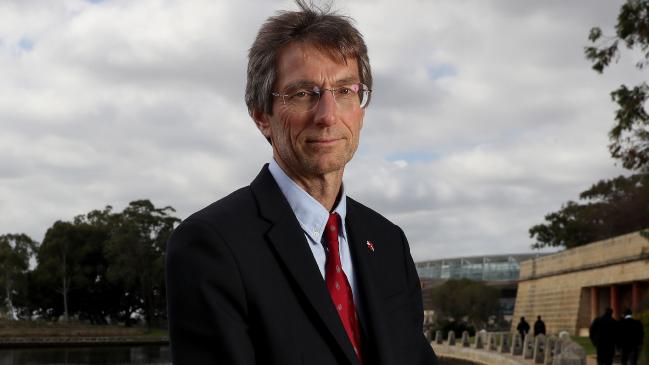
The Ukraine Crisis Could Trigger a Nuclear Catastrophe, https://johnmenadue.com/the-ukraine-crisis-could-trigger-a-nuclear-catastrophe-nobody-wants/ By Tilman Ruff 21 Feb 22,
There are two potential nuclear dimensions to a war in Ukraine, which could create a massive humanitarian disaster and have profound global implications.
In the first week of February, US officials estimated that if war using conventional weapons broke out, 25,000 to 50,000 civilians could die in Ukraine, along with 5,000 to 25,000 Ukrainian and 3,000 to 10,000 Russian soldiers, and that between 1 and 5 million people would flee their homes and become refugees.
The toll could be much greater, especially if the conflict spread to neighbouring countries and NATO forces became embroiled. As Max Fisher wrote in the New York Times on 15 Feb: “threats and bluffs work best when they are backed up by action, increasing the risk of a war that neither side may truly want”, and “the more both sides try to make their threats credible, for example by relocating troops, the more they heighten the risk of a miscalculation that could careen out of control. He quotes Columbia University international relations scholar Dr. Keren Yarhi-Milo: “Every day that we’re not resolving it, we are increasing the percentage chance that something will go wrong”.
Conventional wars can be horrific enough. There must scarcely be a family in Russia or Ukraine without a relative among the close to 14 million Russians or 7 million Ukrainians who died during World War II, and Ukraine has been scarred by repeated invasions from both east and west. Modern weapons have greater destructiveness, range, accuracy while military spending has continued to increase to record levels even through the COVID-19 pandemic, to a staggering USD1981 billion in 2020. NATO members account for 56%, the US alone for 39%, and Russia for 3.1% of the global total.
Eruption of armed conflict in Ukraine risks involving not only Ukraine and Russia (and Crimea and parts of eastern Ukraine it has occupied), but neighbouring countries where Russian forces are stationed – Belarus and Modova, and many of NATO’s 30 members in Europe and across the Atlantic, notably the US, with forces stationed in many other NATO countries.
However a war in Ukraine could have two potentially devastating nuclear dimensions.
Nuclear power plants as potential ‘dirty’ bombs
Nuclear power plants are huge potential pre-positioned radiological weapons.
Ukraine, site of the world’s worst ever civilian nuclear disaster in Chernobyl, has 15 operating nuclear power reactors, in 4 nuclear plants in different parts of the country. The largest is Zaporozhye, in Enerhodar in the southeast of the country. It lies on the east (towards Russia) side of the Dniepr River, 330km west of the city of Donetsk and 200 km from the border of the Donetsk region, part of which has been taken over by Russian/Russian-backed forces. The site has 6 nuclear reactors of 950 Mw each, producing about a quarter of Ukraine’s electricity. It is the second largest nuclear power plant in Europe and one of the 10 largest in the world.
Like most nuclear power plants, highly radioactive and hot used reactor fuel is onsite in cooling ponds, as the fuel needs to be actively cooled for several years, before being put in dry assemblies, which are also on site. As reactor fuel becomes more radioactive the longer it is inside a reactor, cooling ponds often contain more radioactivity in the spent fuel than the reactors themselves do, but are housed in simple buildings without the multiple engineered layers of containment reactors typically have. As we saw in the Fukushima nuclear disaster, reactor meltdowns and explosions releasing vast amounts of radioactivity do not require a high level military assault breaching reactor cores. They can happen simply from disruption to the constant power and circulating water system required to keep reactors and spent fuels pools cool. At the Fukushima Daiichi site at the time of the disaster, 70% of all the radioactivity on site was in the spent fuel pools.
Nobel laureate physicist Prof Joseph Rotblat described in his landmark 1981 study “Nuclear radiation in warfare” that precision-guided bombardment or a commando raid with conventional weapons could rupture a reactor’s containment and pressure vessel, but that very serious radiological consequences could ensue even without rupture of the pressure vessel if the reactor cooling system were put out of action. He stated that: “In a pressurized water reactor [all Ukraine’s operating power reactors are of this type] the melt-down of the core could occur within less than one minute after the loss of coolant”.
War in Ukraine could turn nuclear if any of its nuclear power reactors and/or spent reactor fuel cooling ponds were damaged sufficiently to cause loss of coolant meltdown and/or explosion. The Russian-made Buk missile which brought down Malaysian Airlines flight MH17 in eastern Ukraine in 2014, killing all 298 people on board, appears to have been launched by Russian-backed separatists. A nuclear power plant may be an attractive high-impact target, including for proxy groups who may not be under direct military control but have access to high level weaponry.
Russia is one of the growing number of states actively engaged in cyberwarfare. Nuclear power plants and other nuclear facilities have repeatedly been targets of cyberattack, including infamously the Stuxnet computer virus targetted by Israel and the US to disrupt Iran’s uranium enrichment centrifuges in 2009.
Rotblat also described how the radioactive fallout from a damaged reactor, and even more so from an explosion in a spent fuel pool, could release more and longer-lived radioactivity than detonation of a nuclear bomb.
Thus nuclear power plants are effectively huge pre-positioned potential radiological weapons.
War turning nuclear
If fighting erupted in Ukraine, it would almost certainly begin with conventional weapons. Many of these have sufficient accuracy, range and destructiveness to put targets that are of high military value to Ukraine, Russia and NATO members at risk, even far from any frontline – like military and air bases; intelligence, command and logistical centres. Both Russian and NATO/US military doctrines allow first use of nuclear weapons in situations where the prospect of military defeat looms
Russia has 1600 deployed strategic nuclear weapons, and 1912 tactical nuclear weapons. Most of the delivery systems for the latter can carry either conventional or nuclear warheads, increasing the risk of worst-case thinking and precipitous and over reaction on the other side, and the danger of the threshold to nuclear escalation being crossed.
The US has 1650 deployed strategic nuclear weapons, and 100 B-61 nuclear bombs deployed to bases in Belgium, Germany, Italy, Netherlands and Turkey for delivery by aircraft of those nations.
in addition, France has 280 deployed nuclear weapons, and the UK 120 deployed nuclear weapons.
If the threshold of use of nuclear weapons is crossed, those who have managed nuclear weapons and nuclear war plans tell us the risks or rapid and large-scale escalation are very high. The current Ukraine crisis involves not only complicated history, politics and personalities, but hundreds of senior officials; many thousands of civilian and military officials and advisors; multiple enormous complex and dispersed command, control and communications systems; a web of often unconnected communications across many time zones and languages; and through Russia and NATO involves the 4 nations that possess all the world’s 3750 currently deployed nuclear weapons, including all the 2000 nuclear weapons on high alert, ready to be launched on short notice (counted in minutes).
There is a lot that can go wrong.
Diplomacy to remove the danger of nuclear escalation is desperately urgent and needs to progress to negotiations among all nuclear armed states to eliminate their nuclear arsenals under strict verification and timelines. Otherwise it will be a matter of time before our luck finally runs out.
Tilman Ruff Tilman Ruff AO is Co-President of International Physicians for the Prevention of Nuclear War (Nobel Peace Prize 1985); and co-founder and founding international and Australian Chair of the International Campaign to Abolish Nuclear Weapons (ICAN), awarded the 2017 Nobel Peace Prize, the first to an entity born in Australia.
Public Opposition to Nuclear Power
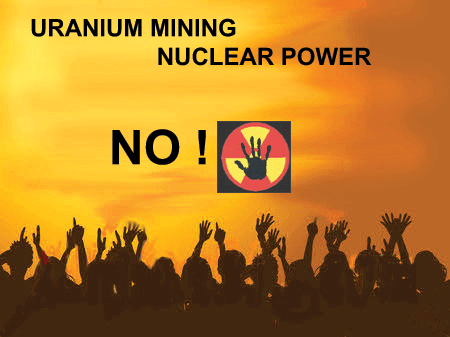
Public Opposition to Nuclear Power. https://renewextraweekly.blogspot.com/2022/02/public-opposition-to-nuclear-power.html February 19, 2022
Nuclear power is not popular with the public in most countries. After the Fukushima disaster in Japan in 2011, a global Ipsos survey put global public opposition at 62% averaged out, with it being much higher in some countries e.g. 79% in Germany. 94% voted against it in a referendum in Italy in the wake of Fukushima.
While opposition remain strong in most places around the world, with concerns about climate change rising, there have been some shifts in view in some countries, for example, in the USA , at least according to a survey by Bisconti. But even in countries that are relatively pro-nuclear, public support for it is not that strong. For example, it was reportedly at 38% in 2021 in the UK, compared to 79% support level for renewables, with just 2% opposed to them.
Though its strength may have varied over time, opposition to civil nuclear power has been a world-wide phenomenon attracting people in many countries. To some extent, it grew out of opposition to nuclear weapons, a grass roots response which expanded significantly in the 1960s in Europe in particular, and continued at varying levels right up to the end of the cold war in the late 1990s, and indeed exists still, as does the threat of nuclear war.
Opposition specifically to civil nuclear power emerged in the early 1970s, but, although it drew on some of the same roots as opposition to atomic weapons, it took on its own character and dynamic. In particular, it reflected increasing generational conflicts and the rise of an ‘alternativist’ anti-establishment counter culture amongst young people in the West. It also reflected growing environmental concerns, and support for alternative energy, as indicted by the ubiquitous ‘smiling sun’ graphic part of ‘Nuclear Power? No thanks!’ campaign button that had originated in Denmark in 1975.
Although at times quite militant, there was a preference, shared with the anti-bomb movement, for non-violent direct action/passive resistance. For example, in the USA, in the 1970’s there were mass peaceful demonstrations at nuclear sites, with, in May 1977 a 2,500 strong citizens ‘sit down’ occupation of the site of the proposed reactor at Seabrook in New Hampshire, leading to 1,400 people being arrested and detained. The late 1970s also saw some of the largest demonstrations against nuclear power in the UK, at the proposed site of the Torness nuclear power station in Scotland, with 5,000 demonstrating in 1978 and up to 10,000 the following year.
Although at times quite militant, there was a preference, shared with the anti-bomb movement, for non-violent direct action/passive resistance. For example, in the USA, in the 1970’s there were mass peaceful demonstrations at nuclear sites, with, in May 1977 a 2,500 strong citizens ‘sit down’ occupation of the site of the proposed reactor at Seabrook in New Hampshire, leading to 1,400 people being arrested and detained. The late 1970s also saw some of the largest demonstrations against nuclear power in the UK, at the proposed site of the Torness nuclear power station in Scotland, with 5,000 demonstrating in 1978 and up to 10,000 the following year.
However, that was avoided. Indeed, nuclear opposition, locally and globally, was subsequently renewed, reinforced and widened, with many new participants becoming involved, by nuclear accidents like that at Three Mile Island in the USA in 1979, Chernobyl in the Ukraine in 1986 and Fukushima in Japan in 2011. The industry certainly faced set back after each of these events, with public opposition increasing. For example, following the Three Mile Island accident, an anti-nuclear protest was held in New York City, involving 200,000 people; Chernobyl led to protests around the world, including up to 200,000 opposing Italy’s nuclear plans; and directly after Fukushima, 60,000 people marched in opposition to nuclear in central Tokyo and again, in 2012, 75,000 people joined a march, this in a country where public displays of dissention on any issue were rare.
Following Fukushima, opposition to nuclear spread across Asia. For example, 130,000 people took to the streets in Taiwan in March 2014 calling for a nuclear phase out. Strong local opposition also emerged in South Korea and Thailand and continued in India. From often being easily dismissed as a fringe, marginal movement, opposition to nuclear power was now wide spread, attracting large majorities (80% and above in polls) in many countries.
Looking back over the whole period, it has to be said that few proposed plants have been halted by direct action/protest campaigns, although they have arguably contributed to a change in political climate, for example in Germany & Spain, but then so did the accidents, e.g. in Asia, following the Fukushima plants spectacular demise. There has been a lot of scholarly research on what mobilises people to act on nuclear issues, much of it done after Fukushima, which clearly had a big impact.
However, so has economics. The progressively poor economics of nuclear has probably been the main reason why nuclear has been in decline in many places. Though there can be two-way interactions between political opposition, with for example linked public demands for improved safety, and the economics of nuclear power. Looking ahead, it may be that the increasingly poor economics and the slow delivery potential of nuclear power compared to renewables, which are clearly progressing, will now move even more people to an anti-nuclear/pro renewables position, including those who see climate change as needing an urgent response. And that may constrain nuclear further.
The Bottom line
Nuclear is not doing well. In the US, given the increasingly competitive alternatives, old nuclear plant closures continue, although some plants may be kept open for a while with subsidies (see my last post), and one new one is being built. Some small new plants may also be tested. But otherwise, nuclear is, in effect, phasing itself out there. In Asia, although Japan has restarted a few reactors, no new ones are planned. China is expanding renewables very dramatically, and although it, and India, are also continuing with nuclear expansion programmes, they are relatively small compared with their renewable programmes. Meanwhile, South Korea has continued with its nuclear phase out by 2030 policy.
In Europe, the UK, France and Finland, as well as some Eastern European countries, still back nuclear, but in addition to the well-known case of Germany, with its last plant scheduled to close by the end of the year, nuclear phase out commitments have also been made in Belgium, Spain, and Switzerland. As noted earlier, after Fukushima, Italy also voted overwhelmingly in a referendum not to go nuclear, a position already adopted by Denmark, Austria, Ireland, Greece and Portugal.
All of which makes the recent statement from the pro-nuclear group Human Progress inaccurate as well as appalling: ‘Whereas a few months ago European Union bureaucrats drawing up the “taxonomy” that defines which energy sources would be considered carbon-free (i.e. valid substitutes for fossil fuels) excluded nuclear power, now nearly all except the fanatical Germanic states have reversed themselves. Indeed, the map of pro- and anti-nuclear Euro¬pean countries now closely resembles a map of World War II circa March 1945, shortly before the taking of the Ludendorff Bridge broke the last line of organised resistance in the Reich’.
Well, it is usually the left that is chastised for playing the ideology card! See my next post…
Nuclear fusion is an expensive delusion
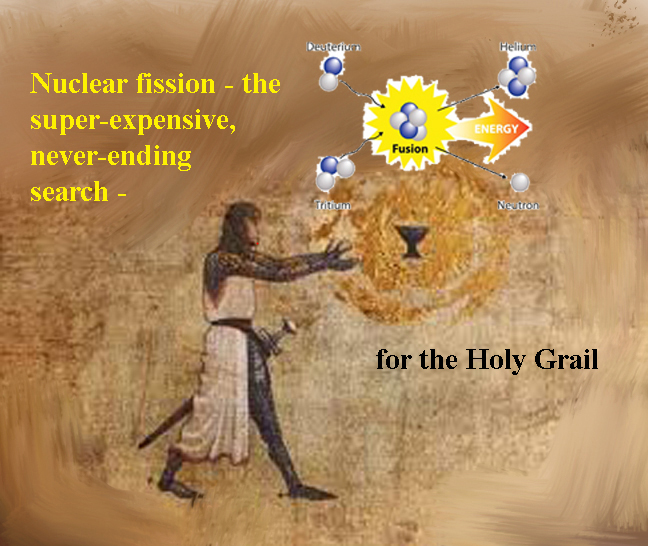
Nuclear fusion is an expensive delusion – so of course this government
is right behind it. It’s time to redirect the billions being squandered
in fusion energy and invest in solutions to the climate crisis that
actually work.
Last week, there were headlines (again) about a “major
breakthrough” in the search for unlimited, cheap, carbon-free electricity
from nuclear fusion reactors. Breathless announcements suggested that the
UK’s 38-year-old JET Fusion programme had finally produced 11 megawatts
of heat energy for five seconds.
To the average person on the street that
sounded impressive. But it equates to the energy needed to boil a measly 60
kettles. Even more unimpressive, but a crucially important question that
the headlines missed, was: how much energy had to be put into the Jet
machine to get these 11 megawatts (MW) out?
So we decided to ask the UK Atomic Energy Agency (UK AEA), whose sole mission is to research and
produce a working fusion electricity plant and who carried out last
week’s experiment. The sad truth is that they admitted that they actually
had to put 40 MW of heat into the plasma to produce 11 MW of sustained
fusion heat for five seconds.
They added: “It is no secret JET uses a lot
of energy. It was designed in the 1970s with copper magnets and will soon
pass the baton to more energy-efficient experiments. After literally a
hundred years of research, since Arthur Eddington first postulated that
nuclear fusion could be the stellar energy source, and untold billions of
pounds invested by various governments ever since to try and replicate the
creation of a mini star on earth, we still cannot produce a single net kWh
of energy.
The fusion “industry” is always promising us unlimited clean
energy in two to three decades time, but the cruel truth is that despite
yet another annual flurry of “breakthrough” headlines, the fusion Holy
Grail remains as illusory as the Grail itself. Despite all these wasted
billions, Boris Johnson’s government, as part of its supposed “10 Point
Plan for a Green Industrial Revolution”, stated: “Our ambition is to be
the first country to commercialise fusion energy, enabling low carbon and
continuous power generation.” It pledged another £222m for the spherical
tokamak programme which “aims” to build the world’s first
commercially viable fusion power plant by 2040, and another £184m to help
found a global hub for fusion innovation in the UK. But in response to an
excited BBC interviewer asking a fusion spokesperson when she might be able
to boil her kettle with fusion energy, they said possibly in the 2050s.
Independent 19th Feb 2022
Reality check: The green inflation myth
Reality check: The green inflation myth
Kingsmill Bond et al
The latest myth of the energy transition is that green technologies are driving inflation because they are expensive and rising in price. The reality is in fact the opposite. The faster the world deploys renewables, the more money we will save in energy costs.
Fresh pressure on Japan to reverse Fukushima discharge plan — Fukushima 311 Watchdogs

Gustavo Caruso (front), director and coordinator of the IAEA’s nuclear safety and security department, meets with officials from Tokyo Electric Power Company in Tokyo on Monday. February 17, 2022 Japan’s proposal to release contaminated water from the crippled Fukushima Daiichi nuclear power plant into the ocean was condemned again as a team from the International […]
Fresh pressure on Japan to reverse Fukushima discharge plan — Fukushima 311 Watchdogs
February 20 Energy News — geoharvey

Science and Technology: ¶ “Floating Charging Points Will Let Ships Draw Electricity From Offshore Wind Farms – And Could Recharge Battery-Powered Vessels Of The Future” • Danish shipping firm Maersk Supply Service is to launch an electricity charging system to give ships access to renewable energy while they’re at sea. The electricity will come from […]
February 20 Energy News — geoharvey
UKRAINE Special – the madness continues

It is almost unbelievable that the entire Western media and just about all governments are mindlessly jumping on the war bandwagon again. All that Russia wants is for the West to keep to the 2014 Minsk agreement , and not to be surrounded by hostile NATO and its weaponry.
But no – Biden’s USA is intransigent, and all the lackey nations just fall into line, (including my own, Australia). ”National Security” – my foot! Russia is not threatening any of them.
Haven’t they learned?
There was Vietnam, Iraq, Afghanistan, Libya – all unmitigated disasters, all unnecessary – and now the sheep are going in for fleecing again!
And fleecing it is. Ukraine and everybody else are buying not only the story, but more importantly the weaponry from multinational weapons corporations led of course by the USA. (Probably Russia and China’s equivalent macho men love weaponry, too)
When do we all wake up? The USA government is in the grip of the military-industrial-complex. Remember – the Pentagon brass, the weapons executives and big shareholders are NRB (Not Real Bright), and don’t quite grasp that even they themselves are not immune from the effects of war.
Western Democracies Have Mutated Into Propagandists for War and Conflict
The no-evidence rule also applies in London. The British Foreign Secretary, Liz Truss, who spent £500,000 of public money flying to Australia in a private plane to warn the Canberra government that both Russia and China were about to pounce, offered no evidence. Antipodean heads nodded; the “narrative” is unchallenged there. One rare exception, former prime minister Paul Keating, called Truss’s warmongering “demented.”
Russian-speaking Ukrainians, under economic blockade by Kyiv for seven years, are fighting for their survival. The “massing” army we seldom hear about is the 13 Ukrainian army brigades laying siege to Donbas: an estimated 150,000 troops. If they attack, the provocation to Russia will almost certainly mean war.
Western Democracies Have Mutated Into Propagandists for War and Conflict https://www.pressenza.com/2022/02/western-democracies-have-mutated-into-propagandists-for-war-and-conflict/ 18.02.22 – Independent Media Institute By John Pilger / Globetrotter
Marshall McLuhan’s prophecy that “the successor to politics will be propaganda” has happened. Raw propaganda is now the rule in Western democracies, especially the U.S. and Britain.
On matters of war and peace, ministerial deceit is reported as news. Inconvenient facts are censored, demons are nurtured. The model is corporate spin, the currency of the age. In 1964, McLuhan famously declared, “The medium is the message.” The lie is the message now.
But is this new? It is more than a century since Edward Bernays, the father of spin, invented “public relations” as a cover for war propaganda. What is new is the virtual elimination of dissent in the mainstream.
The great editor David Bowman, author of The Captive Press, called this “a defenestration of all who refuse to follow a line and to swallow the unpalatable and are brave.” He was referring to independent journalists and whistleblowers, the honest mavericks to whom media organizations once gave space, often with pride. The space has been abolished.
The war hysteria that has rolled in like a tidal wave in recent weeks and months is the most striking example. Known by its jargon, “shaping the narrative,” much if not most of it is pure propaganda.
The Russians are coming. Russia is worse than bad. Putin is evil, “a Nazi like Hitler,” salivated the Labour MP Chris Bryant. Ukraine is about to be invaded by Russia—tonight, this week, next week. The sources include an ex-CIA propagandist who now speaks for the U.S. State Department and offers no evidence of his claims about Russian actions because “it comes from the U.S. Government.”
The no-evidence rule also applies in London. The British Foreign Secretary, Liz Truss, who spent £500,000 of public money flying to Australia in a private plane to warn the Canberra government that both Russia and China were about to pounce, offered no evidence. Antipodean heads nodded; the “narrative” is unchallenged there. One rare exception, former prime minister Paul Keating, called Truss’s warmongering “demented.”
Truss has blithely confused the countries of the Baltic and Black Sea. In Moscow, she told the Russian foreign minister that Britain would never accept Russian sovereignty over Rostov and Voronezh—until it was pointed out to her that these places were not part of Ukraine but in Russia. Read the Russian press about the buffoonery of this pretender to 10 Downing Street and cringe.
This entire farce, recently starring Boris Johnson in Moscow playing a clownish version of his hero, Churchill, might be enjoyed as satire were it not for its willful abuse of facts and historical understanding and the real danger of war.
Vladimir Putin refers to the “genocide” in the eastern Donbas region of Ukraine. Following the coup in Ukraine in 2014—orchestrated by Barack Obama’s “point person” in Kyiv, Victoria Nuland—the coup regime, infested with neo-Nazis, launched a campaign of terror against Russian-speaking Donbas, which accounts for a third of Ukraine’s population.
Overseen by CIA director John Brennan in Kyiv, “special security units” coordinated savage attacks on the people of Donbas, who opposed the coup. Video and eyewitness reports show bussed fascist thugs burning the trade union headquarters in the city of Odessa, killing 41 people trapped inside. The police are standing by. Obama congratulated the “duly elected” coup regime for its “remarkable restraint.”
In the U.S. media the Odessa atrocity was played down as “murky” and a “tragedy” in which “nationalists” (neo-Nazis) attacked “separatists” (people collecting signatures for a referendum on a federal Ukraine). Rupert Murdoch’s Wall Street Journal damned the victims—“Deadly Ukraine Fire Likely Sparked by Rebels, Government Says.”
Professor Stephen Cohen, acclaimed as America’s leading authority on Russia, wrote:
“The pogrom-like burning to death of ethnic Russians and others in Odessa… reawakened memories of Nazi extermination squads in Ukraine during World War II. … [Today] stormtroop-like assaults on gays, Jews, elderly ethnic Russians, and other ‘impure’ citizens are widespread throughout Kyiv-ruled Ukraine, along with torchlight marches reminiscent of those that eventually inflamed Germany in the late 1920s and 1930s…
“The police and official legal authorities do virtually nothing to prevent these neo-fascist acts or to prosecute them. On the contrary, Kyiv has officially encouraged them by systematically rehabilitating and even memorializing Ukrainian collaborators with Nazi German extermination pogroms…, renaming streets in their honor, building monuments to them, rewriting history to glorify them, and more.”
Today, neo-Nazi Ukraine is seldom mentioned. That the British are training the Ukrainian National Guard, which includes neo-Nazis, is not news. (See Matt Kennard’s Declassified report in Consortium News on February 15.) The return of violent, endorsed fascism to 21st-century Europe, to quote Harold Pinter, “never happened… even while it was happening.”
On December 16, the United Nations tabled a resolution that called for “combating glorification of Nazism, neo-Nazism and other practices that contribute to fuelling contemporary forms of racism.” The only nations to vote against it were the United States and Ukraine.
Almost every Russian knows that it was across the plains of Ukraine’s “borderland” that Hitler’s divisions swept from the west in 1941, bolstered by Ukraine’s Nazi cultists and collaborators. The result was more than 20 million Russian dead.
Setting aside the maneuvers and cynicism of geopolitics, whomever the players, this historical memory is the driving force behind Russia’s respect-seeking, self-protective security proposals, which were published in Moscow in the week the UN voted 130-2 to outlaw Nazism. They are:
- NATO guarantees that it will not deploy missiles in nations bordering Russia. (They are already in place from Slovenia to Romania, with Poland to follow.)
- NATO to stop military and naval exercises in nations and seas bordering Russia.
- Ukraine will not become a member of NATO.
- the West and Russia to sign a binding East-West security pact.
- the landmark treaty between the U.S. and Russia covering intermediate-range nuclear weapons to be restored. (The U.S. abandoned it in 2019.)
These amount to a comprehensive draft of a peace plan for all of post-war Europe and ought to be welcomed in the West. But who understands their significance in Britain? What they are told is that Putin is a pariah and a threat to Christendom.
Russian-speaking Ukrainians, under economic blockade by Kyiv for seven years, are fighting for their survival. The “massing” army we seldom hear about is the 13 Ukrainian army brigades laying siege to Donbas: an estimated 150,000 troops. If they attack, the provocation to Russia will almost certainly mean war.
In 2015, brokered by the Germans and French, the presidents of Russia, Ukraine, Germany and France met in Minsk and signed an interim peace deal. Ukraine agreed to offer autonomy to Donbas, now the self-declared republics of Donetsk and Luhansk.
The Minsk agreement has never been given a chance. In Britain, the line, amplified by Boris Johnson, is that Ukraine is being “dictated to” by world leaders. For its part, Britain is arming Ukraine and training its army.
Since the first Cold War, NATO has effectively marched right up to Russia’s most sensitive border having demonstrated its bloody aggression in Yugoslavia, Afghanistan, Iraq and Libya and broken solemn promises to pull back. Having dragged European “allies” into American wars that do not concern them, the great unspoken is that NATO itself is the real threat to European security.
In Britain, a state and media xenophobia is triggered at the very mention of “Russia.” Mark the knee-jerk hostility with which the BBC reports Russia. Why? Is it because the restoration of imperial mythology demands, above all, a permanent enemy? Certainly, we deserve better.
John Pilger is an award-winning journalist, filmmaker, and author. Read his full biography on his website here, and follow him on Twitter: @JohnPilger.
Early closure of coal plant, battery and renewable developments – all spell the end for nuclear power hopes in Australia
Jim Green Nuclear Fuel Cycle Watch Australia, https://www.facebook.com/groups/1021186047913052 19 Feb 22,
Today’s two announcements in NSW are further proof that it’s game over for nuclear. Early closure of a coal plant (2025), and announcement of an additional large battery (700 MW) to be operational by 2025.
And major construction of the NSW-SA interconnector began this week. SA went from 62% renewable electricity supply to 67% last year with lots more in the pipeline, and synchronous condensers helped reduce gas-fired backup power generation
Federal govt expecting 69% renewable supply to the NEM by 2030 (about double the current amount) and Labor is aiming for 83% by 2030 if elected.
Coalition parties/governments in SA, NSW, Qld and Tas opposed to nuclear power. Labor clearly opposed at state and federal levels. Howard’s federal nuclear power ban has been retained by the Abbott, Turnbull and Morrison Coalition governments.
Media forecasting on Russian invasion is just like religious cult leaders predicting the apocalypse

Caitlin Johnstone: Russian Invasion Seers are Like Cult Leaders Predicting the Apocalypse https://consortiumnews.com/2022/02/17/caitlin-johnstone-russian-invasion-seers-are-like-cult-leaders-predicting-the-apocalypse/ The Ukraine invasion that never arrives is showing us once again that when it comes to Russia you really can just completely ignore all the so-called experts in the mainstream media.
By Caitlin Johnstone, CaitlinJohnstone.com Back in November The Military Times published a Ukrainian intelligence claim, which was picked up and repeated by numerous other mainstream publications, alleging that Russia was going to invade Ukraine by the end of January.
Then in late January when the calendar debunked The Military Times incendiary headline “Russia preparing to attack Ukraine by late January,” that same outlet ran a much less viral story with the headline “Russia not yet ready for full-scale attack says Ukraine.“
This past Friday the deputy director of the Atlantic Council’s Eurasia Center, Melinda Haring, tweeted the following:
“Putin has big weekend plans in Ukraine: 1) he’s going to cut power and heat, knock out Ukrainian navy and air force, kill general staff and hit them with cyber attack; 2) then install pro-Russian president and 3) resort to full-scale military invasion if Ukraine doesn’t give in.”
And, of course, none of these things happened. The weekend came and went, Haring issued a sheepish admission that she got it wrong, then immediately turned around and proclaimed that “Putin may strike on Weds,” then later pivoted to “We’ve been so focused on Russian troops and tanks that we missed Moscow’s strategy: strangle Ukraine’s economy and sap the resolve of its people.”
On Jan. 14th we were told by NBC that we could expect a Russian invasion of Ukraine “within a month’s time.” On Feb. 14th the prediction was as unfulfilled as the wishes of a Jordan Peterson fan on Valentine’s Day.
Then British outlets The Daily Mirror and The Sun told us that the Russian invasion of Ukraine was to come at precisely 1am GMT on Wednesday, citing “American intelligence agencies.” This prediction, whose frightening “DAWN RAID” presentation likely gave sales a bit of a boost, was again debunked by the hands of the clock.
“The 3am time (1am GMT) when US intelligence sources suspected a Russian attack came and went without incident last night as Putin continued to keep The West guessing,” The Sun’s updated online article now reads.
”Dawn raid. Russia set to invade Ukraine at 1am tomorrow with massive missile blitz and 200,000 troops, US intelligence claims.”
Last week the U.S. president told U.S. allies that Russian President Vladimir Putin may invade on Feb.16, a prediction Ukraine’s President Zelensky made fun of in a widely misinterpreted joke. This claim also has been discredited by the clock.
And now we’re being told that nobody seriously believed Russia was going to invade on the 16th, and that Feb. 20 is the real invasion date.
“The prospect of a Russian invasion of Ukraine on Feb. 16 was always overhyped,” Politico tells us. “The time frame to really keep an eye on is what happens shortly after Feb. 20.”
Radio evangelist Harold Camping famously predicted that the Apocalypse would occur on Sept. 6, 1994, then again on Sept. 29 of the same year, and then again on Oct.2. In 2005 he revised his claim and said the real Rapture was coming on May 21, 2011, and then when that failed to pan out he said it was happening on Oct. 21 of that year. Whenever he got a prediction wrong he’d just do some more magic Bible math and move the date into the future.
Camping was one of many exploitative Christian cult leaders who’ve falsely predicted the Second Coming over the years amassing thousands of followers with an early form of tabloid clickbait. The difference between the Harold Campings of history and the Ukraine invasion prognosticators of today is that Harold Camping died disgraced and disdained instead of being elevated to lucrative positions in the most influential news media outlets on the planet.
Today’s Harold Campings will invent all kinds of justifications for their shameless participation in a transparent government psyop designed to advanced the unipolarist geostrategic agendas of the U.S. hegemon once their war forecasts fail to bear fruit.
The most common justification will be to claim that the Biden administration’s hawkish posturing and strategic information warfare is what deterred the forcible annexation of Ukraine into the Russian Federation. As we discussed previously, this claim is logically fallacious, explained here by Lisa Simpson: https://www.youtube.com/watch?v=xSVqLHghLpw
“If Vladimir Putin opts to back away from invading Ukraine, even temporarily, it’s because Joe Biden — that guy whose right-wing critics suggest is so deep in dementia he wouldn’t know Kyiv from Kansas or AARP from NATO — has matched every Putin chess move with an effective counter of his own,” writes Friedman.
Putin could just as easily have launched a virulent propaganda campaign claiming the U.S. is about to invade Mexico any minute now and threatening severe repercussions if it does, and then taking credit when the invasion fails to occur for his bold stance against the Biden regime. It would have been the easiest thing in the world; just copy the Western script replacing each instance of “Ukraine” with “Mexico” and each instance of “Crimea” with “Texas.”
We’re also seeing a new narrative in the oven with claims of a Russian cyberattack against Ukraine, which as an invisible attack whose evidence is classified would serve the imperial face-saving effort, with the added bonus of justifying further economic warfare on Moscow.
“This is such a transparent scam,” journalist Aaron Maté recently tweeted of the hacking claims. “The warmongers crafting new US sanctions on Russia have repeatedly said that Russian cyberattacks could trigger them. With no invasion happening, this is Plan B.”
The Ukraine invasion that never arrives is showing us once again that when it comes to Russia you really can just completely ignore all the so-called experts in the mainstream media. Just dismiss 100 percent of everything they say, because any random schmoe’s best guess would be better than theirs.
Looking to the mainstream media for truth is like looking to a prostitute for love. That’s not what they’re there for. That’s not their job. If you believed these predictions, the correct thing to do as they fail to come true is not to engage in a bunch of mental gymnastics justifying it, but to drastically revise your worldview and your media consumption habits which caused you to believe this crap in the first place.
1 This month.
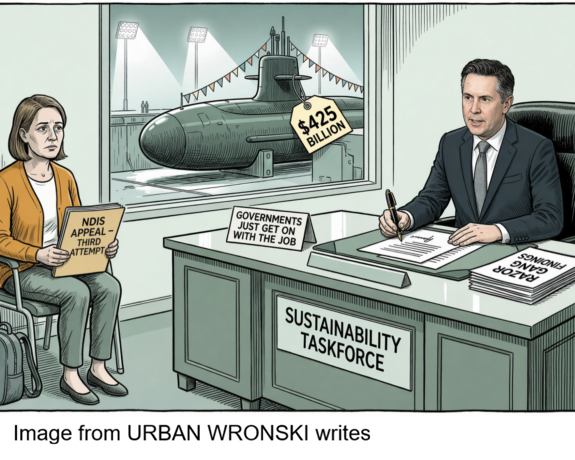

PETITION – To: Prime Minister Anthony Albanese and the Australian Labor Government
Chernobyl: The Lost Tapes – A good documentary on Chernobyl on SBS available On Demand for the next 3 weeks– https://www.sbs.com.au/ondemand/tv-program/chernobyl-the-lost-tapes/235274195556
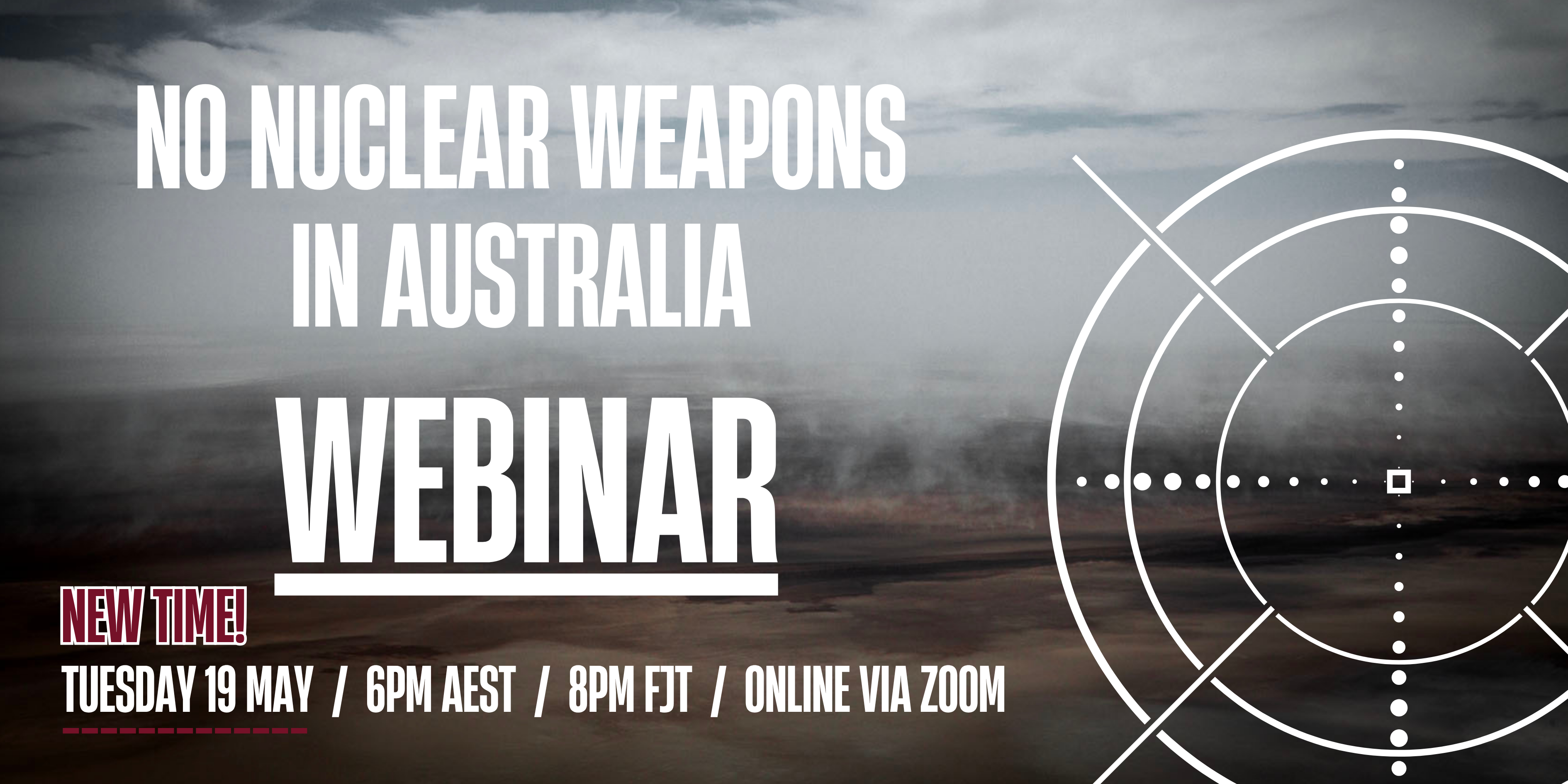
19 May – Webinar- Webinar: No Nuclear Weapons in Australia
Start: 2026-05-19 18:00:00 UTC Canberra, Melbourne, Sydney (GMT+10:00)
End: 2026-05-19 19:30:00 UTC Canberra, Melbourne, Sydney (GMT+10:00)
20 May – Webinar – The dangerous world of AUKUS, US, military occupation and suppression of dissent

National Webinar, 20th May, 2026, 6.30pm AEST. Confronting laws restricting/suppressing protest speech and action
Speakers: Former Sen. Rex Patrick, Lawyer Nick Hanna ,Arthur Rorris ,Jorgen Doyle, Sen David Shoebbridge,
Facilitator Kelley Tranter.

of the week – Australians for War Powers Reform (AWPR)
To see nuclear-related stories in greater depth and intensity
 Antinuclear