Changing from a consumer economy to a conserver economy – painful but necessary


Political leadership is about telling it as it is, not pretending it is all painless.
Adjusting back to a sustainable consumption path would be painful in the short term, but not in the longer term — and it will be a lot less painful than continuing with Plan A.
Dieter Helm: One definition of madness is said to be persisting with Plan A in the face of all the evidence that it is not working, and avoiding even thinking about a Plan B. But, after 30 years and 26 COPs — Conferences of the Parties to the UN’s 1992 Framework Convention on Climate Change — that pretty much sums up our approach to climate change.
Every year since1990, we have added another two parts per million to the concentration of
carbon dioxide in the atmosphere — including in the lockdown years 2020 and 2021. The case for “one more heave” looks pretty slim.
The current preoccupation with economic growth based on stimulating demand, Keynesian-style, with negative real interest rates and quantitative easing, and ever greater borrowing for the next generation to repay, suggests the omens are not good.
This sort of economics is pretty obviously not environmentally sustainable. Yet the obvious consequence is ignored: it will not be sustained. With 3C or more of warming, the loss of a big chunk more of biodiversity, and the rainforests gone, all those new ideas and technologies will not be enough to stave off the costs of the environmental downhill our unsustainable consumption is causing.
Political leadership is about telling it as it is, not pretending it is all painless. Adjusting back to a sustainable consumption path would be painful in the short term, but not in the longer term — and it will be a lot less painful than continuing with Plan A.
FT 19th Jan 2022
https://www.ft.com/content/13702f42-a923-4cd8-a6c7-03f775a0742b
Drones sighted over Sweden’s nuclear power stations
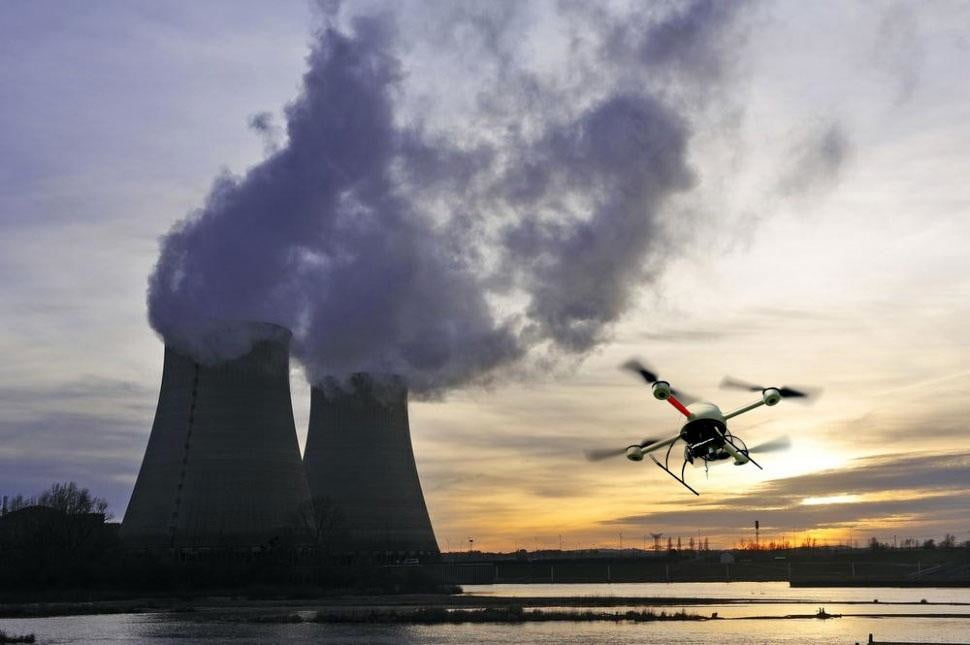
Days of sightings of drones over key Swedish sites including nuclear plants have prompted the country’s security service to take the lead in an investigation. Three nuclear sites have been targeted and sightings have been reported over airports and the royal palace. Authorities have not speculated on who is behind the mysterious drones. Police and the coastguard are searching the sea and islands around Stockholm, local media reports say.
The latest sightings on Monday evening involved a drone above the Forsmark nuclear plant, but security agency Sapo said it was also investigating earlier drone flights near the Ringhals and Oskarshamn power
plants. Police appealed to the public to come forward with information. Sapo said the drones were suspected of “grave unauthorised dealing with secret information”.
BBC 18th Jan 2022
https://www.bbc.co.uk/news/world-europe-60035446
January 19 Energy News — geoharvey

Opinion &c: ¶ “Meet The Environmental Scientist Who Wants To Decolonize Conservation” • Jessica Hernandez first learned of conservation science and environmental justice through her grandmother. Maria de Jesus showed her granddaughter how to tend the family milpa, a plot where they harvested beans, corn, squash, medicinal plants, and even grasshoppers. [CleanTechnica] Central American Milpa […]
January 19 Energy News — geoharvey
Nuclear Power for Australia?
FRIENDS OF THE EARTH AUSTRALIA PRESENTS Is nuclear power a viable climate solution?’
at National Sustainability Festival Sat Feb 26, 2pm to 3.30pm Website: http://www.slf.org.au/event/nuclear-power-australia/
Can nuclear power help with the climate change abatement in Australia?
This forum will unpack the debates and provide factual information to help participants decide.
The aim of this event is to raise awareness about global trends with nuclear power and renewable energy with an emphasis on climate impacts.
SPEAKERS
Dr. Jim Green is the National Nuclear Campaigner with Friends of the Earth. He has an honours degree in public health and a PhD in science and technology studies for his doctoral thesis on the Lucas Heights research reactor debates. Jim is the author of the September 2005 report, ‘Nuclear Power: No Solution to Climate Change’. He has 25 years of research on nuclear issues.
Dr. Jillian Marsh is an Adnyamathanha Traditional Owner currently working as a Lecturer in Indigenous Studies at Victoria University. Her PhD thesis dealt with the imposition of uranium mining on Adnyamathanha country by General Atomics / Heathgate Resources in collusion with the South Australian government.
Victoria pushes ahead with 1.5GW network upgrade in windy south-west — RenewEconomy

Victoria pushes ahead with major transmission upgrade, to open way for 1,500MW of additional renewable capacity and ease wind farm constraints. The post Victoria pushes ahead with 1.5GW network upgrade in windy south-west appeared first on RenewEconomy.
Victoria pushes ahead with 1.5GW network upgrade in windy south-west — RenewEconomy
New research hub to tackle energy transition’s toughest challenges — RenewEconomy

A new hub for energy market expertise will tackle some of the toughest challenges of transitioning the Australian electricity grid to net-zero emissions. The post New research hub to tackle energy transition’s toughest challenges appeared first on RenewEconomy.
New research hub to tackle energy transition’s toughest challenges — RenewEconomy
King’s voice thundered: “It costs $500,000 to kill every enemy soldier while we spend only $53 a year for every poor person. — limitless life
On May 17, 1967, Rev. Martin Luther King Jr. spoke from the steps of Sproul Hall at the University of California’s Berkeley campus, before a massive crowd of 7,000 students. The NAACP had recently released a statement calling King’s growing criticism of the US war in Vietnam a “serious tactical mistake.” King was unwavering. He […]
King’s voice thundered: “It costs $500,000 to kill every enemy soldier while we spend only $53 a year for every poor person. — limitless life
Nuclear weapons must be relegated to the past – Treaty for the Prohibition of Nuclear Weapons
The letter also marks the first anniversary of Pope Francis’ statement prior to the entry into force of the treaty on Jan. 22, 2021; the Pope said nuclear weapons “strike large numbers of people in a short space of time and provoke long-lasting damage to the environment.” On Tuesday, the archbishop said, “It is the duty of the Archdiocese of Santa Fe, the birthplace of nuclear weapons, to support that treaty while working toward universal, verifiable nuclear disarmament.”
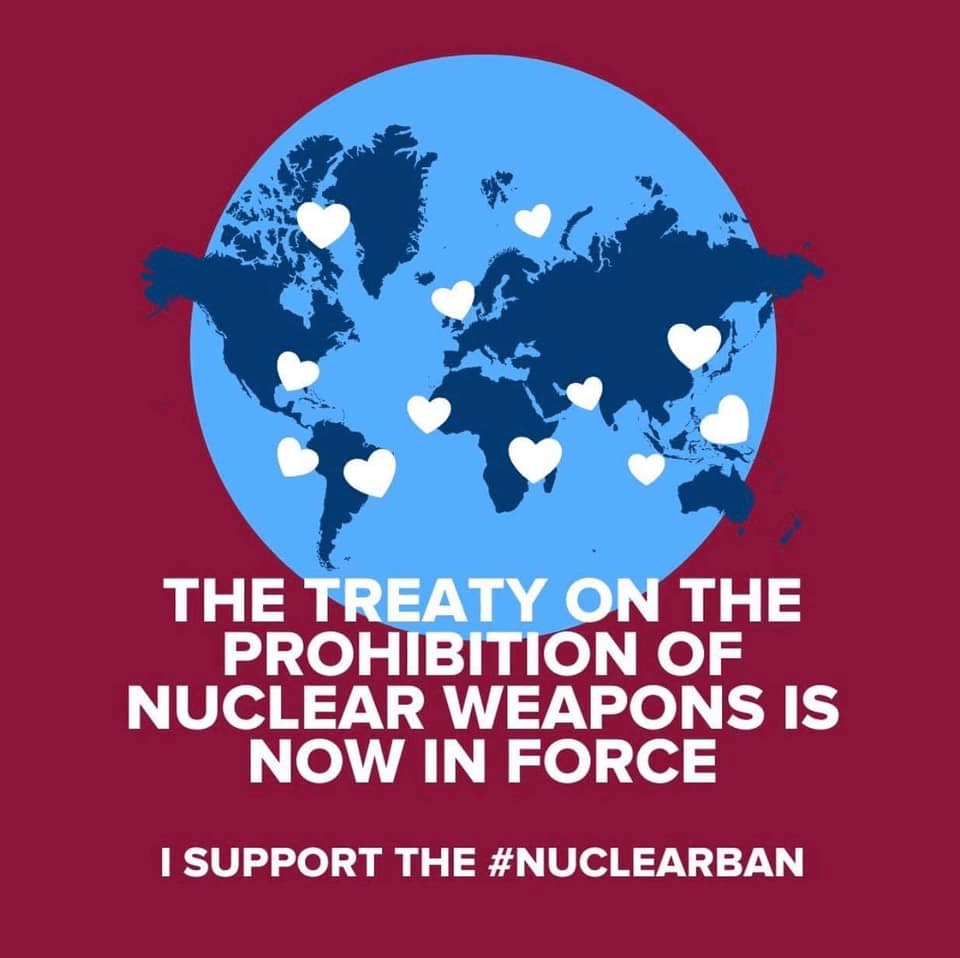
As of this week, the treaty has 59 member nation signatories. The purpose of the treaty is to outlaw the manufacture, testing, possession, stockpiling and use or threat of use of nuclear weapons. It is the legal form chosen by 122 nations who, in 2015, sought a route toward disarmament that would be more effective than the United States’ languishing 1970 promise to disarm “at an early date.”
 | |||
Nuclear weapons must be relegated to the past, https://www.santafenewmexican.com/opinion/my_view/nuclear-weapons-must-be-relegated-to-the-past/article_d247c8d8-7559-11ec-ab06-bfa71f3f3b1e.html, By Basia Miller, Jan 16, 2022 .
On Jan. 11, the Archbishop of Santa Fe, John C. Wester, shared his pastoral letter, “Living in the Light of Christ’s Peace: A Conversation Toward Nuclear Disarmament” (“Archbishop decries labs’ weapons production,” Jan. 12).
His letter, a timely, courageous and powerful call for a culture of peace, comes at a time when the United States appears to be entering a new arms race, one in which contamination of the waters and lands of the Rio Grande watershed with radioactive, toxic and hazardous pollutants is often accepted passively, without questioning the deadly — and growing — enterprise behind it.
In his summary, the archbishop makes a link between the costs of military spending and the reciprocal effect on civilian life. He says, “Moreover, we are robbing from the poor and needy with current plans to spend at least
$1.7 trillion to ‘modernize’ our nuclear weapons and keep them forever.”
The archbishop presented his letter six days before the Dr. Martin Luther King Jr. holiday and 10 days before the first anniversary of the entry into force of the International Treaty on the Prohibition of Nuclear Weapons, on Jan. 22.
The letter also marks the first anniversary of Pope Francis’ statement prior to the entry into force of the treaty on Jan. 22, 2021; the Pope said nuclear weapons “strike large numbers of people in a short space of time and provoke long-lasting damage to the environment.” On Tuesday, the archbishop said, “It is the duty of the Archdiocese of Santa Fe, the birthplace of nuclear weapons, to support that treaty while working toward universal, verifiable nuclear disarmament.”
As of this week, the treaty has 59 member nation signatories. The purpose of the treaty is to outlaw the manufacture, testing, possession, stockpiling and use or threat of use of nuclear weapons. It is the legal form chosen by 122 nations who, in 2015, sought a route toward disarmament that would be more effective than the United States’ languishing 1970 promise to disarm “at an early date.”
The long-range expectation is the dynamic among the treaty’s signatory nations (including the NATO countries) will gradually curb the United States’ appetite for building more weapons. The purpose was once “deterrence,” but even that rationalization has been undermined.
In this way, a new legal norm will have been created by which nuclear weapons follow the pattern of the worldwide ban on landmines and chemical and biological weapons.
An occasion to honor Dr. Martin Luther King Jr. and celebrate the first anniversary of the Treaty for the Prohibition of Nuclear Weapons is planned by local activists and veterans groups at Ashley Pond in Los Alamos from 1 p.m. to 3 p.m. on Saturday, Jan. 22. The public is invited. Basia Miller is a board member of Concerned Citizens for Nuclear Safety. She has lived in Santa Fe for over 30 years.
On Cape Cod, a nuclear nightmare arrives
On Cape Cod, a nuclear nightmare arrives, https://news.yahoo.com/column-cape-cod-nuclear-nightmare-095201547.html, Brent Harold Columnist, Mon, January 17, 2022,
We’re living in E.F. Schumacher’s nightmare future.

Fifty years ago, before there was much nuclear power to worry about, before Three Mile Island, Chernobyl, or Fukushima, he was already worrying about it in his 1973 book “Small is Beautiful: A Study of Economics As If People Mattered.” The book was ranked by The Times Literary Supplement as one of the 100 most influential books published since World War II.
It’s striking that the main argument against using nuclear energy was there from the very start.
“The biggest cause of worry for the future is the storage of the long-lived radioactive wastes,” he wrote. “In effect, we are consciously and deliberately accumulating a toxic substance on the off-chance that it may be possible to get rid of it at a later date.”
No amount of convenience or efficiency — or profits — he argued “could justify the accumulation of large amounts of highly toxic substances which nobody knows how to make ‘safe’ and which remain an incalculable danger to the whole of creation for historical or even geological ages. To do such a thing is a transgression against life itself.”
We are in that “later date” and as we know, there still is no solution to the problem of how to get rid of the radioactive waste that is a systematic byproduct of generating nuclear energy .
We are in that future Schumacher warned against.
A few years ago, when Pilgrim Nuclear Power Plant was still limping along, a documentary titled “Containment” played in Wellfleet, showing in convincing detail the nuclear future Schumacher warned against, especially the ongoing problem of containment of lethal radioactive wastes.
There is no mopping up as with oil spills. You don’t flush this, clean it up and move on. There is no getting rid of the mess we’ve made. All we can do is try to contain it, on and on farther into the future than the 10,000 years often cited as the age of “civilization” — perhaps longer than our species has been around.
There’s an interesting segment in the film about attempts to come up with a sign to warn our distant descendants of the lethal mess we have bequeathed them.
Containment is the job and the company that owned Pilgrim, when it closed the plant, handed the job of cleanup and containment off to a company named Holtec, which thought it could make a go of it while making a profit for its shareholders.
Containment is the job. But only in its first year or two, Holtec recently announced, almost off-handedly, that it was considering dumping a million gallons of radioactive waste in our Cape Cod Bay. ”What?” asked many. “Can they get away with that?”
Apparently they are within their legal rights. Certainly, the company has emphasized it has no obligation to be guided by those whose lives will be most affected by it.
In reaction to the outcry Holtec has said it will put off the dumping for a spell. To make us feel better it noted that Entergy had for years, when Pilgrim was still operating, been dumping radioactive water in the bay.
Fifty years ago Schumacher wrote: “It was thought at one time that these wastes could safely be dumped into the deepest parts of the oceans…but this has since been disproved…wherever there is life, radioactive substances are absorbed into the biological cycle.”
Containment is the job. Dumping a million gallons of radioactive waste into Cape Cod Bay seems like the opposite of containment.
Once again, as with Entergy, we find ourselves in the situation of having our present and future safety in the hands of a bottom line-oriented company.
Call it a nuclear energy problem. Call it a corporation/capitalism problem. It is both.
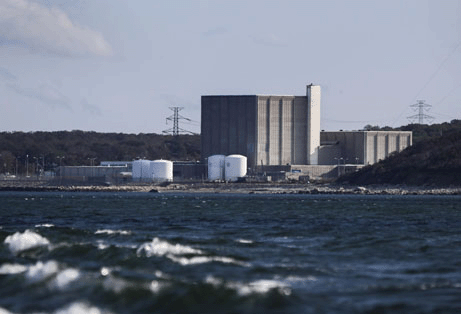
There is a decades-long history of opposition to Pilgrim. Diane Turco and others founded Cape Downwinders in the early 1990s, a group that worked toward the shuttering of Pilgrim..
This newspaper kept Cape citizens informed with its strong coverage of the deterioration of Pilgrim and wrote editorials advocating its closure.
The closure of the plant in 2019 was considered by activists a victory and there has been a natural tendency (for people whose name isn’t Diane Turco) to become complacent about the still-dangerous site. Certainly it does seem less glamorous being the first generation of citizens, of who knows how many, to practice ongoing wariness about containment and the company in charge of it. But that’s the reality of our situation.
A place to start getting involved or re-involved is a gathering for a speak-out on Jan. 31 at 5 p.m. at Plymouth Town Hall Great Room, to be followed at 6:30 p.m. by a meeting of the Nuclear Decommissioning Citizens Advisory Panel.
Brent Harold, a Cape Cod Times columnist and former English professor, lives in Wellfleet. Email him at kinnacum@gmail.com.
This article originally appeared on Cape Cod Times: pilgrim nuclear plant and holtec’s plan to dump contaminated water.
Meet the scientist moms fighting climate change for their children
Looking for climate optimism? Meet the Science Moms.
Amid climate “doomerism,” what can be done to fight global warming? A lot, it turns out. And female scientists are at the forefront.
January 17 Energy News — geoharvey

Opinion: ¶ “From Asthma Alley To Renewable Row: Transform This Stretch Of Queens” • As a City Council member from Astoria, I worked to reduce New York City’s heavy dependence on fossil fuels because of the serious dangers of climate change. But for me, clean energy is personal. My son has been diagnosed with childhood […]
January 17 Energy News — geoharvey
Nuclear news week to 18 January

The undersea volcano near Tonga is bad enough. But one wonders what would be the effect of disrupting nuclear wastes undersea, whether they be from atomic bomb testing, or from the dumping of nuclear trash.
Coronavirus. It’s not that I have given up on studying this: it’s just that the news, and changes, come thick and fast, and we all live in uncertainty.
Climate change. It’s all happening. Keep up with the latest at Radio Ecoshock – Arctic Will Change Your Life. Nitrous Oxide, Sea Ice, & Western Fires.
Nuclear. This week, Ukraine stalemate, and the same old issues drag on – Europe’s struggle to depict nuclear as ”green”, UK’s struggle to finance the nuclear industry, France’s struggle with old, (and some cracking) reactors. And Fukushima’s crisis springs eternal.
Some bits of good news. By the way, – biggest response ever this newsletter has received on any subject – about the butterfly story last week! Some wins for the planet in 2021. Nice stories about animals – including several ”non-extinctions”. Beavers Saved From Euthanasia Transform and Replenish Rivers in the Utah Desert.
AUSTRALIA.
Nuclear. . AUKUS an unwelcome guest at the table of nuclear disarmament.
In Western Australia, first Cameco’s Kintyre uranium project was disallowed, now Toro’s uranium project also rejected. Toro Energy misses deadline to start work at Wiluna uranium mine
Climate. Federal Labor pledges climate resilience funding, Nationals pledge allegiance to coal — RenewEconomy
It’s not just WA: Sydney and Melbourne will see dangerous 50C temperatures soon enough.
South Australia breaks record, runs for a week on renewable energy
Charities are sick of fighting off attacks by the Morrison government
INTERNATIONAL
Is US extradition inevitable for Julian Assange? https://www.youtube.com/watch?v=-aw4Yz0Va1c
In 2022, nuclear power’s future looks grimmer than ever. Nuclear: economically unsustainable, inherently dangerous and absolutely unfeasible as a solution to climate change. A hopeless pursuit? National efforts to promote small modular nuclear reactors and revive nuclear power. Small modular reactors (SMRs) offer no hope for nuclear energy.
Climate change crisis ranked as the biggest threat facing the global economy ahead of wars and pandemics. The environmental impact of emissions from space launches: a comprehensive review .
The Guardian view on The Green Planet: verdant and necessary
We study ocean temperatures. The Earth just broke a heat increase record.
Global heating linked to early birth and damage to babies’ health, scientists find
Stoltenberg: NATO ready for war in Europe.
Horrors of Hiroshima, a reminder nuclear weapons remain global threat.
ARCTIC. Climate change destroying homes across the Arctic. Fieldwork in the High Arctic found cataclysmic impact of climate change happening 70 years ahead of what the scientific models expected.
UKRAINE. The media downplays Ukraine’s ties to Nazism, as they promote weapons sales, and war against Russia. This is how I feel about the Ukraine crisis.
AUKUS an unwelcome guest at the table of nuclear disarmament.
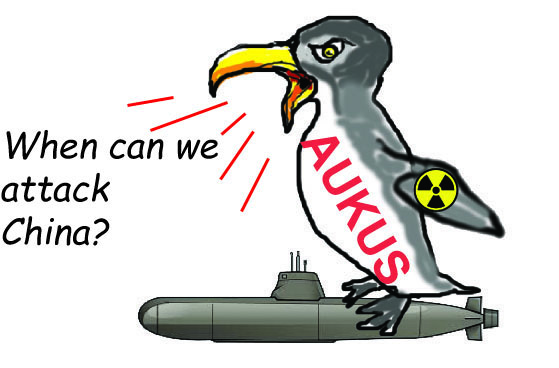
AUKUS is emblematic of a belligerence that is at odds with moral and ethical demands for the future. It posits a vision of military aggression and confrontation that increase the risk of war and war turning nuclear; and concedes authoritarianism and lack of debate as defining principles for the present
AUKUS an unwelcome guest at the table of nuclear disarmament, Pearls and Irritations,
By Sanjay BarboraJan 16, 2022 Despite many shortcomings, the Non-Proliferation Treaty remains a symbol of an inconsistent effort to ensure a world without threats of nuclear war.
The 2022 Review Conference (RevCon) of the Parties to the Nuclear Non-Proliferation Treaty (NPT) which was to meet from January 4 to 28 in New York has been postponed because of the resurgent virus. Consultations are under way to set a new meeting time.
………………As governments and civil society consider their priorities for the review conference, what then are we to expect? This question assumes greater significance for Australia, as the country’s leaders respond to the changing climate following the hastily announced AUKUS trilateral pact for the supply of nuclear-powered submarines to Australia in 2021.
Three closely related aspects ought to be considered by the country’s decision makers as they address the review conference. They are (a) Australia’s commitment to international obligations, (b) security implications of the proposed AUKUS submarines, and (c) reactions within civil society, either as they exist now or as may be anticipated in the future.
………………. In the past, Australia’s stated position was to aim for greater accountability from the Nuclear Weapons States (NWS), while widening the scope of non-nuclear weapons states (NNWS) to pursue the development of domestic nuclear energy. However, this position was undermined by its active opposition to and attempts to derail the Treaty on the Prohibition of Nuclear Weapons (TPNW) adopted by the UN General Assembly in 2017.
A decision to acquire nuclear-powered submarines under the AUKUS partnership would threaten this fraught history with further uncertainties. It would offer the United States an even greater say in Australian foreign policy in the Asia-Pacific-Indian Ocean region.
The specious defence that eight-nuclear propelled submarines do not constitute a breach of Australia’s commitment to nuclear disarmament and non-proliferation has two obvious problems.
Firstly, politicians and political commentators have made it clear that current tensions with China have played a substantial role in the current government’s decision to override earlier agreements for creating domestic capacities to build submarines with French support.
Secondly, this dystopian vision of a future world of nuclear showdowns could encourage governments of other NNWS in the region and elsewhere to follow a similar disingenuous narrative for nuclear militarisation.
In any case, the pathway from civil use to military weaponisation remains an issue of concern, that any sovereign country might follow. This could undo several decades of Australian diplomacy that sought to place the country as a reliable partner for securing peaceful policies and development in the Asia-Pacific-Indian Ocean region.
AUKUS is emblematic of a belligerence that is at odds with moral and ethical demands for the future. It posits a vision of military aggression and confrontation that increase the risk of war and war turning nuclear; and concedes authoritarianism and lack of debate as defining principles for the present…………..
The NPT Review Conference, therefore offers an opportunity to revive Australian civil society’s responsibility to reiterate its commitment to regional and global peace and a world free of nuclear weapons.
Professor Sanjay Barbora, Tata Institute of Social Sciences, India, is a Research Affiliate with the University of Melbourne’s Initiative for Peacebuilding. This article was stimulated by a closed-door roundtable discussion, “Would AUKUS undermine the NPT?” hosted by the Initiative for Peacebuilding on December 10. https://johnmenadue.com/aukus-an-unwelcome-guest-at-the-table-of-nuclear-disarmament/
South Australia breaks record, runs for a week on renewable energy
South Australia breaks record, runs for a week on renewable energy
Analysts believe South Australia’s more than six-day run on green energy may be a global first for a power grid supporting an advanced economy.
‘We’ve worked our whole life, this is our family home’: What the future of climate change means for coastal property owners
For decades
For decades Australians have happily paid a premium for their very own piece of coastline. But with up to a metre of sea-level rise all but locked in by the end of the century, will waterfront living remain a viable option?
1 This month.
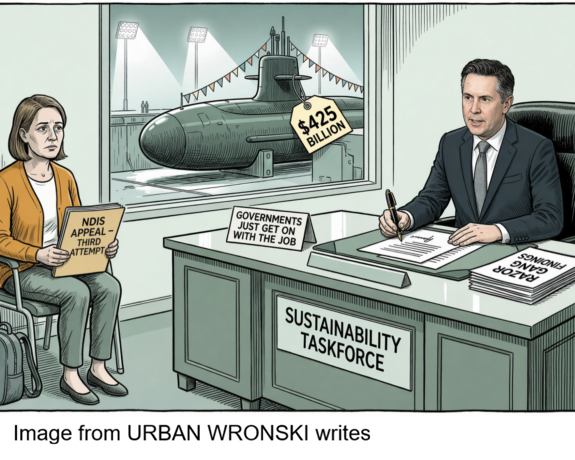

PETITION – To: Prime Minister Anthony Albanese and the Australian Labor Government
Chernobyl: The Lost Tapes – A good documentary on Chernobyl on SBS available On Demand for the next 3 weeks– https://www.sbs.com.au/ondemand/tv-program/chernobyl-the-lost-tapes/235274195556
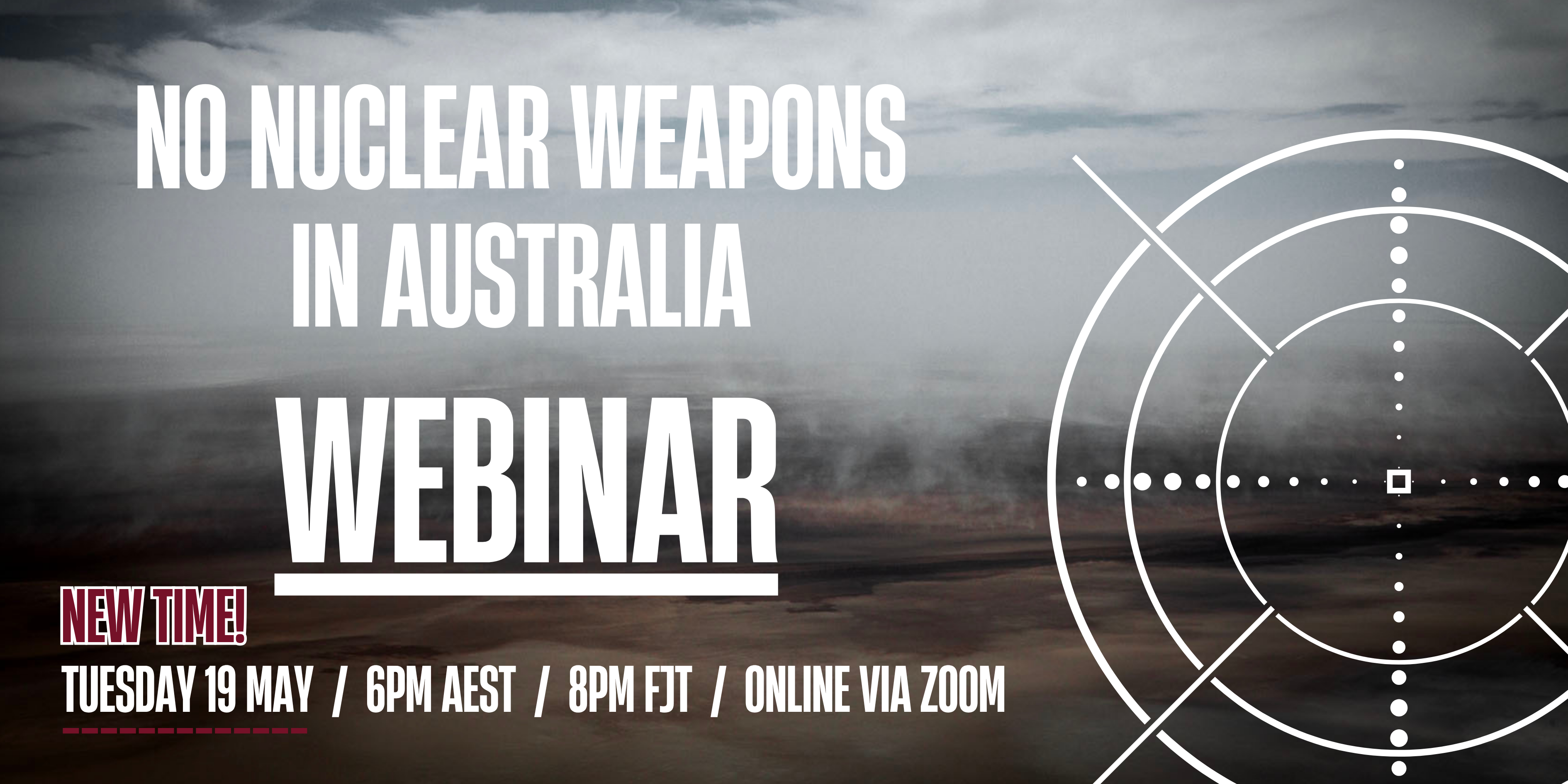
19 May – Webinar- Webinar: No Nuclear Weapons in Australia
Start: 2026-05-19 18:00:00 UTC Canberra, Melbourne, Sydney (GMT+10:00)
End: 2026-05-19 19:30:00 UTC Canberra, Melbourne, Sydney (GMT+10:00)
20 May – Webinar – The dangerous world of AUKUS, US, military occupation and suppression of dissent

National Webinar, 20th May, 2026, 6.30pm AEST. Confronting laws restricting/suppressing protest speech and action
Speakers: Former Sen. Rex Patrick, Lawyer Nick Hanna ,Arthur Rorris ,Jorgen Doyle, Sen David Shoebbridge,
Facilitator Kelley Tranter.

of the week – Australians for War Powers Reform (AWPR)
To see nuclear-related stories in greater depth and intensity
 Antinuclear