Norway Activists Protest After Docking Of US Nuclear Submarine In Tromso: Reports

Norway Activists Protest After Docking Of US Nuclear Submarine In Tromso: Reports, https://www.republicworld.com/world-news/us-news/norway-activists-protest-after-docking-of-us-nuclear-submarine-in-tromso-reports-articleshow.html
Protest intensified in Norway as an American nuclear submarine has docked in Tromso– a city in northern Norway, news agency Sputnik reported.
By Ajeet Kumar 12 Jan 22, Protest intensified in Norway as an American nuclear submarine has docked in Tromso, a city in northern Norway. According to a report by news agency Sputnik, the US nuclear submarine was docked on January 11, the second time in a year. The media report said that the submarine was loaded with arms and missiles and tasked with patrolling the northern waters. As the news of an American submarine docked in Tromso hit headlines of several national media outlets, hundreds of protesters marched towards the guarded gates of the Tonsnes harbour. The protestors termed the recent move of America “a destructive game between superpowers.”
US nuclear submarine arrival in Norway sparks strong reactions
Hakon Elvenes, who represents the protestors, asserted the United States should not dock its submarine in Norway and added the act has a long “symbolic effect”. “This represents a dangerous mix of military and civilian purposes. It is a mixture that may be in conflict with international law, and which hasn’t been assessed well enough by the Norwegian authorities,” Sputnik quoted Elvenes as saying to the national broadcaster NRK. “There is always a risk that something can happen to any nuclear reactor, we have plenty of examples of that. And if something happens first, the consequences will be great,” added Hakon Elvenes.
Tension between two countries soar
Meanwhile, Alberta Tennoe Bekkhus, who represent, the youth wing of the Reds Party argued that the recent action by the US will contribute to unnecessary provocations and further conflict. “The fact that we invite American forces in the way we do makes us more insecure. It contributes to unnecessary provocations and further conflict,” Sputnik quoted Bekkrus as saying. “The way NATO is doing now, I believe it makes the world more insecure. This puts Norway in a more dangerous situation,” she added.
It is worth mentioning that the tension between US and Scandinavian countries has soared in the past few years due to action taken by the US Naval forces. Earlier in November last year, US Defense Secretary Lloyd Austin met with Norway’s new Defense Minister, Odd Roger Enoksen, in his first visit to the US since taking the position. According to AP, both said the commitment to NATO and the challenges posed by Russia would be topics high on the agenda during their meeting. The duo also discussed the recent activities of the US Navy in northern Norway and added the matter would be solved with discussions.
UK’s Nuclear Financing Bill – very strange logic – with £40 billion to £60 billion for a new nuclear power station seen as a good thing.

Last week Tim Farron MP sent the following reply to Radiation Free Lakeland when we urged him to vote NO to the public paying for new nuclear build in the Nuclear Financing Bill yesterday. Our MP’s opposition to new nuclear is heartening. But this opposition was not reflected in the vote of
458 for to 53 against (how many others opposed did not vote?) the Bill at third reading.
The Bill will now be considered in the House of Lords. This vote is truly shocking. Alan Brown MP said during the debate Government “has been very good at telling us about the mythical savings that will
accrue via the regulated asset base funding model introduced by this Bill—they are estimated at between £30 billion and £70 billion. What the Government are not so good at is telling us what money they want to commit for the likes of Sizewell C. In effect, they are telling us, ”Let’s save money for bill payers by signing up to a less bad deal for a new nuclear project.”
According to the impact assessment, the capital and financing cost is going to be in the region of £40 billion to £60 billion for a new nuclear power station.
It is a strange logic to tell us that £50 billion being added to our energy bills at the time of a cost of living energy crisis is somehow a good thing. By default, the Government are also confirming just how much of a stinking, rotten deal Hinkley Point C was for bill payers if we are saying that we can save that much money compared with the contracts for difference model for Hinkley C.”
Radiation Free Lakeland 11th Jan 2022
You thought Rolls Royce’s Small Nuclear Reactors would be for electricity on Earth?

Rolls-Royce team moves into Space Park Leicester to work on nuclear powered space travel, BusinessLive, 13 Jan 22,
Rolls-Royce already signed contract with UK Space Agency to study future nuclear power options for space exploration.
Rolls-Royce has moved a team onto Space Park Leicester to push forward its work on nuclear power for space travel.
The engineering giant has taken space in the new £100 million facility which was launched as a breeding ground for out-of-this-world tech by bringing together industry and academia.
Rolls-Royce is reported to be the only UK company focussing on the line of work and staff with a pedigree in nuclear power will collaborate with new space park head Professor Richard Ambrosi, Professor of Space Instrumentation and Space Nuclear Power Systems at University of Leicester and other experts in space science.
Last January, Rolls-Royce signed a contract with the UK Space Agency to study future nuclear power options for space exploration………………… https://www.business-live.co.uk/technology/rolls-royce-team-moves-space-22728938
Al Jazeera fact sheet on NATO expansion and wars, with graphics — Anti-bellum

Infographic: NATO’s members, mission and tensions with Russia Founded in 1949, the North Atlantic Treaty Organization now has 30 members and a budget of 1.56 billion euros. By Hanna Duggal On 12 Jan 202212 Jan 2022 Members of the world’s most powerful military alliance, the North Atlantic Treaty Organization (NATO), met in Brussels, Belgium on Wednesday to […]
Al Jazeera fact sheet on NATO expansion and wars, with graphics — Anti-bellum
The Treaty on the Prohibition of Nuclear Weapons and the world’s future — IPPNW peace and health blog

Late January of this year will mark the first anniversary of the entry into force of the UN Treaty on the Prohibition of Nuclear Weapons. This momentous international agreement, the result of a lengthy struggle by the International Campaign to Abolish Nuclear Weapons (ICAN) and by many non-nuclear nations, bans developing, testing, producing, acquiring, possessing, stockpiling, and […]
The Treaty on the Prohibition of Nuclear Weapons and the world’s future — IPPNW peace and health blog
January 12 Energy News — geoharvey

Science and Technology: ¶ “A Year In Review: Advancing Energy Storage And Conversion Research” • Over the past year, researchers at NREL (National Renewable Energy Laboratory) have pioneered innovative, interdisciplinary, and integrated R&D for advancements in electrochemical, molecular, thermal, and mechanical energy storage systems. [CleanTechnica] Particle thermal energy storage built from retired thermalplant (Jeffrey Gifford […]
January 12 Energy News — geoharvey
What future for Small Nuclear Reactors (SMRs) in Australia ?

Small nuclear reactor? It’s a lemon!
Large taxpayer subsidies might get some projects, such as the NuScale project in the US or the Rolls-Royce mid-sized reactor project in the UK, to the construction stage. Or they may join the growing list of abandoned SMR projects
In 2022, nuclear power’s future looks grimmer than ever, Jim Green, 11 Jan 2022, RenewEconomy
”……………………………………….. Small modular reactors
Small modular reactors (SMRs) are heavily promoted but construction projects are few and far between and have exhibited disastrous cost overruns and multi-year delays.
It should be noted that none of the projects discussed below meet the ‘modular’ definition of serial factory production of reactor components, which could potentially drive down costs. Using that definition, no SMRs have ever been built and no country, company or utility is building the infrastructure for SMR construction.
In 2004, when the CAREM SMR in Argentina was in the planning stage, Argentina’s Bariloche Atomic Center estimated an overnight cost of A$1.4 billion / GW for an integrated 300 megawatt (MW) plant, while acknowledging that to achieve such a cost would be a “very difficult task”. Now, the cost estimate is more than 20 times greater at A$32.6 billion / GW. A little over A$1 billion for a reactor with a capacity of just 32 MW. The project is seven years behind schedule and costs will likely increase further.
Russia’s 70 MW floating nuclear power plant is said to be the only operating SMR anywhere in the world (although it doesn’t fit the ‘modular’ definition of serial factory production). The construction cost increased six-fold from 6 billion rubles to 37 billion rubles (A$688 million), equivalent to A$9.8 billion / GW. The construction project was nine years behind schedule.

According to the OECD’s Nuclear Energy Agency, electricity produced by the Russian floating plant costs an estimated A$279 / MWh, with the high cost due to large staffing requirements, high fuel costs, and resources required to maintain the barge and coastal infrastructure. The cost of electricity produced by the Russian plant exceeds costs from large reactors (A$182-284) even though SMRs are being promoted as the solution to the exorbitant costs of large nuclear plants.
SMRs are being promoted as important potential contributors to climate change abatement but the primary purpose of the Russian plant is to power fossil fuel mining operations in the Arctic.
A 2016 report said that the estimated construction cost of China’s demonstration 210 MW high-temperature gas-cooled reactor (HTGR) is about A$7.0 billion / GW and that cost increases have arisen from higher material and component costs, increases in labour costs, and project delays. The World Nuclear Association states that the cost is A$8.4 billion / GW. Those figures are 2-3 times higher than the A$2.8 billion / GW estimate in a 2009 paper by Tsinghua University researchers.
China’s HTGR was partially grid-connected in late-2021 and full connection will take place in early 2022.
China reportedly plans to upscale the HTGR design to 655 MW (three reactor modules feeding one turbine). China’s Institute of Nuclear and New Energy Technology at Tsinghua University expects the cost of a 655 MW HTGR will be 15-20 percent higher than the cost of a conventional 600 MW pressurised water reactor.
NucNet reported in 2020 that China’s State Nuclear Power Technology Corp dropped plans to manufacture 20 additional HTGR units after levelised cost of electricity estimates rose to levels higher than a conventional pressurised water reactor such as China’s indigenous Hualong One. Likewise, the World Nuclear Association states that plans for 18 additional HTGRs at the same site as the demonstration plant have been “dropped”.

The World Nuclear Association lists just two other SMR construction projects other than those listed above. In July 2021, China National Nuclear Corporation (CNNC) New Energy Corporation began construction of the 125 MW pressurised water reactor ACP100. According to CNNC, construction costs per kilowatt will be twice the cost of large reactors, and the levelised cost of electricity will be 50 percent higher than large reactors.

In June 2021, construction of the 300 MW demonstration lead-cooled BREST fast reactor began in Russia. In 2012, the estimated cost for the reactor and associated facilities was A$780 million, but the cost estimate has more than doubled and now stands at A$1.9 billion.
SMR hype
Much more could be said about the proliferation of SMRs in the ‘planning’ stage, and the accompanying hype. For example a recent review asserts that more than 30 demonstrations of ‘advanced’ reactor designs are in progress across the globe. In fact, few have progressed beyond the planning stage, and few will. Private-sector funding has been scant and taxpayer funding has generally been well short of that required for SMR construction projects to proceed.
Large taxpayer subsidies might get some projects, such as the NuScale project in the US or the Rolls-Royce mid-sized reactor project in the UK, to the construction stage. Or they may join the growing list of abandoned SMR projects.
A failed history of small reactor projects. A handful of recent construction projects, most subject to major cost overruns and multi-year delays. And the possibility of a small number of SMR construction projects over the next decade. Clearly the hype surrounding SMRs lacks justification.
Everything that is promising about SMRs belongs in the never-never; everything in the real-world is expensive and over-budget, slow and behind schedule. Moreover, there are disturbing, multifaceted connections between SMR projects and nuclear weapons proliferation, and between SMRs and fossil fuel mining.
SMRs for Australia
There is ongoing promotion of SMRs in Australia but a study by WSP / Parsons Brinckerhoff, commissioned by the South Australian Nuclear Fuel Cycle Royal Commission, estimated costs of A$225 / MWh for SMRs. The Minerals Council of Australia states that SMRs won’t find a market unless they can produce power at about one-third of that cost.
In its 2021 GenCost report, CSIRO provides these 2030 cost estimates:
* Nuclear (SMR): A$128-322 / MWh
* 90 percent wind and solar PV with integration costs (transmission, storage and synchronous condensers): A$55-80 / MWh
Enthusiasts hope that nuclear power’s cost competitiveness will improve, but in all likelihood it will continue to worsen. Alone among energy sources, nuclear power becomes more expensive over time, or in other words it has a negative learning curve.
Dr Jim Green is the national nuclear campaigner with Friends of the Earth Australia and the author of a recent report on nuclear power’s economic crisis. , https://reneweconomy.com.au/in-2022-nuclear-powers-future-is-grimmer-than-ever/
The European Union will need to invest 500 billion euros ($568 billion) in new generation nuclear power stations!
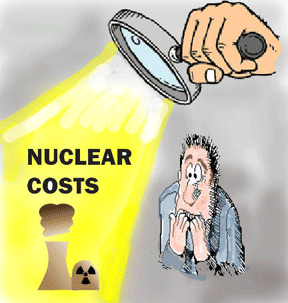
France24 9th Jan 2022
The European Union will need to invest 500 billion euros ($568 billion) in new generation nuclear power stations from now until 2050, the bloc’s internal market commissioner said in an interview published at the weekend.
“Existing nuclear plants alone will need 50 billion euros of investment from now until 2030. And new generation ones will need 500 billion!” Thierry Breton told the Journal du Dimanche newspaper. Breton also argued that an EU plan to label energy from nuclear power and natural gas as “green” sources for investment was a vital step towards attracting that capital. The EU is consulting its member states on that proposal, with internal disagreement on whether the power sources truly qualify as sustainable options.
France24 9th Jan 2022
In 2022, nuclear power’s future looks grimmer than ever.

As new renewable energy capacity continues to boom, nuclear power generation declined in 2021 and the industry’s future is grimmer than it has ever been. The post In 2022, nuclear power’s future looks grimmer than ever appeared first on RenewEconomy.
In 2022, nuclear power’s future looks grimmer than ever — RenewEconomy Renew Economy, Jim Green 11 Jan 22,
The decline was marginal (<1 per cent): a net loss of two power reactors (six start-ups and eight 8 permanent closures) and a net loss of 2.5 gigawatts (GW) of nuclear capacity.
The marginal decline makes for a striking contrast with renewables. The International Energy Agency calculates that new renewable capacity added in 2021 amounted to nearly 290 GW – that’s more than four times Australia’s total electricity generating capacity.
Nuclear power’s contribution to global electricity supply has fallen from a peak of 17.5 percent in 1996 to 10.1 percent in 2020. Renewables reached an estimated 29 per cent share of global electricity generation in 2020, a record share.
The ageing of the world’s reactor fleet is a huge problem for the nuclear industry, as is the ageing of its workforce — the silver tsunami. The average age of the world’s reactor fleet continues to rise and by mid-2021 reached 30.9 years. The mean age of the 23 reactors shut down between 2016 and 2020 was 42.6 years.
Primarily because of the ageing of the reactor fleet, the International Atomic Energy Agency estimates up to 139 GW of lost nuclear capacity from 2018-2030 due to permanent reactor shutdowns, and a further loss of up to 186 GW from 2030-2050.
So the industry needs about 10 new power reactors (or 10 GW) each year just to maintain its 30-year pattern of stagnation. And there were indeed 10 reactor construction starts in 2021, six of them in China.
But the average annual number of construction starts since 2014 has been just 5.1. Thus, slow decline of nuclear power is the most likely outcome. An extension of the 30-year pattern of stagnation is possible, if and only if China does the heavy lifting. China has averaged just 2.5 reactor construction starts per year since 2011.
Phasing out nuclear power
The number of countries phasing out nuclear power steadily grows and now includes:
Nuclear power generation declined in 2021 and the industry’s future is grimmer than it has ever been.
The decline was marginal (<1 per cent): a net loss of two power reactors (six start-ups and eight 8 permanent closures) and a net loss of 2.5 gigawatts (GW) of nuclear capacity.
The marginal decline makes for a striking contrast with renewables. The International Energy Agency calculates that new renewable capacity added in 2021 amounted to nearly 290 GW – that’s more than four times Australia’s total electricity generating capacity.
Nuclear power’s contribution to global electricity supply has fallen from a peak of 17.5 percent in 1996 to 10.1 percent in 2020. Renewables reached an estimated 29 per cent share of global electricity generation in 2020, a record share.
The ageing of the world’s reactor fleet is a huge problem for the nuclear industry, as is the ageing of its workforce — the silver tsunami. The average age of the world’s reactor fleet continues to rise and by mid-2021 reached 30.9 years. The mean age of the 23 reactors shut down between 2016 and 2020 was 42.6 years.
Primarily because of the ageing of the reactor fleet, the International Atomic Energy Agency estimates up to 139 GW of lost nuclear capacity from 2018-2030 due to permanent reactor shutdowns, and a further loss of up to 186 GW from 2030-2050
So the industry needs about 10 new power reactors (or 10 GW) each year just to maintain its 30-year pattern of stagnation. And there were indeed 10 reactor construction starts in 2021, six of them in China.
But the average annual number of construction starts since 2014 has been just 5.1. Thus, slow decline of nuclear power is the most likely outcome. An extension of the 30-year pattern of stagnation is possible, if and only if China does the heavy lifting. China has averaged just 2.5 reactor construction starts per year since 2011.
Phasing out nuclear power
The number of countries phasing out nuclear power steadily grows and now includes:
Germany: Fourteen reactors have shut down since the 2011 Fukushima disaster and the final three reactors will close this year.
Belgium: The country’s seven ageing reactors will all be closed by the end of 2025.
Taiwan: Final reactor closure scheduled for 2025. Four reactors were shut down from 2018 to 2021 and only two remain operational.
Spain: Nuclear power capacity is expected to decline from 7.1 GW in 2020 to 3 GW in 2030 with the final reactor closure in 2035.
Switzerland: The government accepted the results of a 2017 referendum which supported a ban on new reactors and thus a gradual phase-out is underway. The Mühleberg reactor was shut down in 2019 and most or all of the remaining four ageing reactors are likely to be shut down over the next decade.
South Korea: Long-term (2060) phase-out policy with concrete actions already taken including the shut-down of the Kori-1 and Wolsong-1 reactors in 2017 and 2019 respectively, and suspension or cancellation of plans for six further reactors. The current plan is to reduce the number of reactors from a peak of 26 in 2024 to 17 in 2034.
Too cheap to meter or too expensive to matter?
Despite the abundance of evidence that nuclear power is hopelessly uncompetitive compared to renewables, the nuclear industry and some of its supporters continue to claim otherwise.
Those economic claims are typically based on implausible cost projections for non-existent ‘Generation IV’ reactor concepts. Moreover, the nuclear lobby’s claims about the cost of renewables are just as ridiculous.
Claims about ‘cheap’ nuclear power certainly don’t consider real-world nuclear construction projects. Every power reactor construction project in Western Europe and the US over the past decade has been a disaster.
The V.C. Summer project in South Carolina (two AP1000 reactors) was abandoned after the expenditure of at least A$12.5 billion leading Westinghouse to file for bankruptcy in 2017. Criminal investigations and prosecutions related to the project are ongoing, and bailout programs to prolong operation of ageing reactors are also mired in corruption.
The only remaining reactor construction project in the US is the Vogtle project in Georgia (two AP1000 reactors). The current cost estimate of A$37.6-41.8 billion is twice the estimate when construction began. Costs continue to increase and the project only survives because of multi-billion-dollar taxpayer bailouts. The project is six years behind schedule.
In 2006, Westinghouse said it could build an AP1000 reactor for as little as A$2.0 billion, 10 times lower than the current estimate for Vogtle.
The Watts Bar 2 reactor in Tennessee began operation in 2016, 43 years after construction began. That is the only power reactor start-up in the US over the past quarter-century. The previous start-up was Watts Bar 1, completed in 1996 after a 23-year construction period.
In 2021, TVA abandoned the unfinished Bellefonte nuclear plant in Alabama, 47 years after construction began and following the expenditure of an estimated A$8.1 billion.
There have been no other power reactor construction projects in the US over the past 25 years other than those listed above. Numerous other reactor projects were abandoned before construction began, some following the expenditure of hundreds of millions of dollars.
Western Europe
The only current reactor construction project in France is one EPR reactor under construction at Flamanville. The current cost estimate of A$30.1 billion — yes, over A$30 billion — is 5.8 times greater than the original estimate. The Flamanville reactor is 10 years behind schedule.
The only reactor construction project in the UK comprises two EPR reactors under construction at Hinkley Point. In the late 2000s, the estimated construction cost for one EPR reactor in the UK was A$3.8 billion. The current cost estimate for two EPR reactors at Hinkley Point is A$41.6-43.5 billion, over five times greater than the initial estimate of A$3.8 billion per reactor.
In 2007, EDF boasted that Britons would be using electricity from an EPR reactor at Hinkley Point to cook their Christmas turkeys in 2017, but construction didn’t even begin until 2018.
One EPR reactor (Olkiluoto-3) is under construction in Finland. The current cost estimate of about A$17.4 billion is 3.7 times greater than the original estimate. Olkiluoto-3 is 13 years behind schedule.
Nuclear power is growing in a few countries, but only barely. China is said to be the industry’s shining light but nuclear growth has been modest over the past decade and it is paltry compared to renewables (2 GW of nuclear power capacity added in 2020 compared to 135 GW of renewables).
There were only three power reactor construction starts in Russia in the decade from 2011 to 2020, and only four in India……………………………… https://reneweconomy.com.au/in-2022-nuclear-powers-future-is-grimmer-than-ever/
Factoring in the full cost of the radioactive wastes, the price to pay for nuclear power is astronomic.
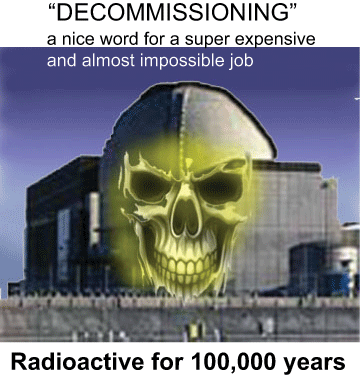
The price to pay for nuclear power is too high, https://www.scotsman.com/news/opinion/letters/the-price-to-pay-for-nuclear-power-is-too-high-readers-letters-3520498 Tim Flinn, Garvald, East Lothian, 10 Jan 22,
It doesn’t seem 30-odd years since I went with a group of sixth form A Level physics students on a tour of Dunbar’s Torness nuclear power station, now scheduled for decommissioning.
Most of them now have their PhDs and families of their own, but hopefully they all share my view that nuclear electricity remains the most toxic and expensive domestic fuel in regular use – and will remain so unless and until the problems associated with its deadly wastes are finally solved.
As things stand now the next 500 human generations will be stuck with the human and financial costs consequent upon coping with the radioactive detritus of the very first nuclear electricity generated some 80 years ago. Factoring in inflation the final price of just a single nuclear kWh will total more £s than there are particles in the universe. If anyone doubts that, let them do their own sums, or get a copy of mine (I hope they can cope with logarithms and discounting cash flows).
If the investment into nuclear energy (originally so we could keep up with the Jonses and have our own A and H bombs) had instead been ploughed into research and development of clean, safe, renewables we would long ago have had endless energy to spare and green devices to export. But we didn’t and so we haven’t. To replace one nuclear power station with yet another is to refuse to learn. Are we that stupid still?
January 10 Energy News — geoharvey

Opinion: ¶ “Here’s How To Solve The UK Energy Crisis For The Long Term – Store More Power” • The key to making sure there is enough affordable, low-carbon energy is more storage to make the most of the renewable energy available. A storage boom has been forecast over the coming decade as governments race […]
January 10 Energy News — geoharvey
Nuclear News – Australia and beyond
It’s a critical time for the world, as Russia and USA face off over Ukraine – the mainstream media showing an extraordinary ignorance on the background for all this. In Australia we get only the USA government’s point of view – I don’t know about other countries.
The UK government is poised to legislate for electricity consumers to pay for nuclear reactors long before they are built, and to cop the costs of delays, things going wrong, or the wonderful new reactors not actually operating anyway.. Meanwhile Europe continues to contort itself with the conundrum of deciding that nuclear is ”green” and worthy of tax-payer funding.
Coronavirus news– it’s all too much for me. We’re all in limbo – and a kind of mental paralysis sets in !
Climate Change. No, it hasn’t gone away. The last seven years were the hottest on record.
Some bits of good news . To cheer myself up, I’ve been reading a lot about butterflies. AND, the nearly endangered Monarch Butterflies are back – in their many thousands, Developing food crops that can thrive in dry and hot conditions.
AUSTRALIA.
The Australian government is complicit with USA and UK imperilling the health of Julian Assange, may well cause his death. The Australian media colludes with USA, UK and Australian governments’ persecution ofJulian Assange -”Crikey journal” typifies this .https://www.youtube.com/watch?v=R-OEJks1ldA .
Australia’s ambitious weapons plan -Joint Air Battle Management System (JABMS) AIR-6500.
Climate wars to die down in federal election as major parties dodge risks
Would the Murray-Darling Basin survive another Millennium drought?
New record caps stunning year of Australian solar milestones, sets tone for 2022.
INTERNATIONAL.
Extraditing Julian Assange Threatens Journalists Worldwide.
Treaties, Constitutions, and Laws Against War — limitless life What if deterrence doesn’t work?
Ukraine crisis. US-Russia Talks May Be the Last Chance . What War With Russia Would Look Like. NATO chieftain to Russia: Georgia, Ukraine belong to us, take it or leave it. On eve of Biden-Putin, NATO-Russia talks, Blinken blasts Russia as threat to European continent.
Emissions from the five major economies set to cause a doubling of extremely hot years in many nations. “Don’t Look Up:” Hollywood tackles the myths that fuel climate denial — RenewEconomy
Nuclear energy backers say it’s vital for the fight against global warming. Don’t be so sure. Nuclear is not a practicable means to combat climate change.
Six reasons to say ‘no’ — Beyond Nuclear International
To preserve the planet, we must reduce our consumption of resources..
UN chief welcomes P5 statement on nuclear war prevention . Five world powers vow to prevent spread of nuclear weapons.
Changing patterns for spreading misinformation on pandemics and climate change.
Going nuclear: Should nations unilaterally decide?
Hundreds of thousands of satellites brightening the night sky with negative effects on the ecosphere.
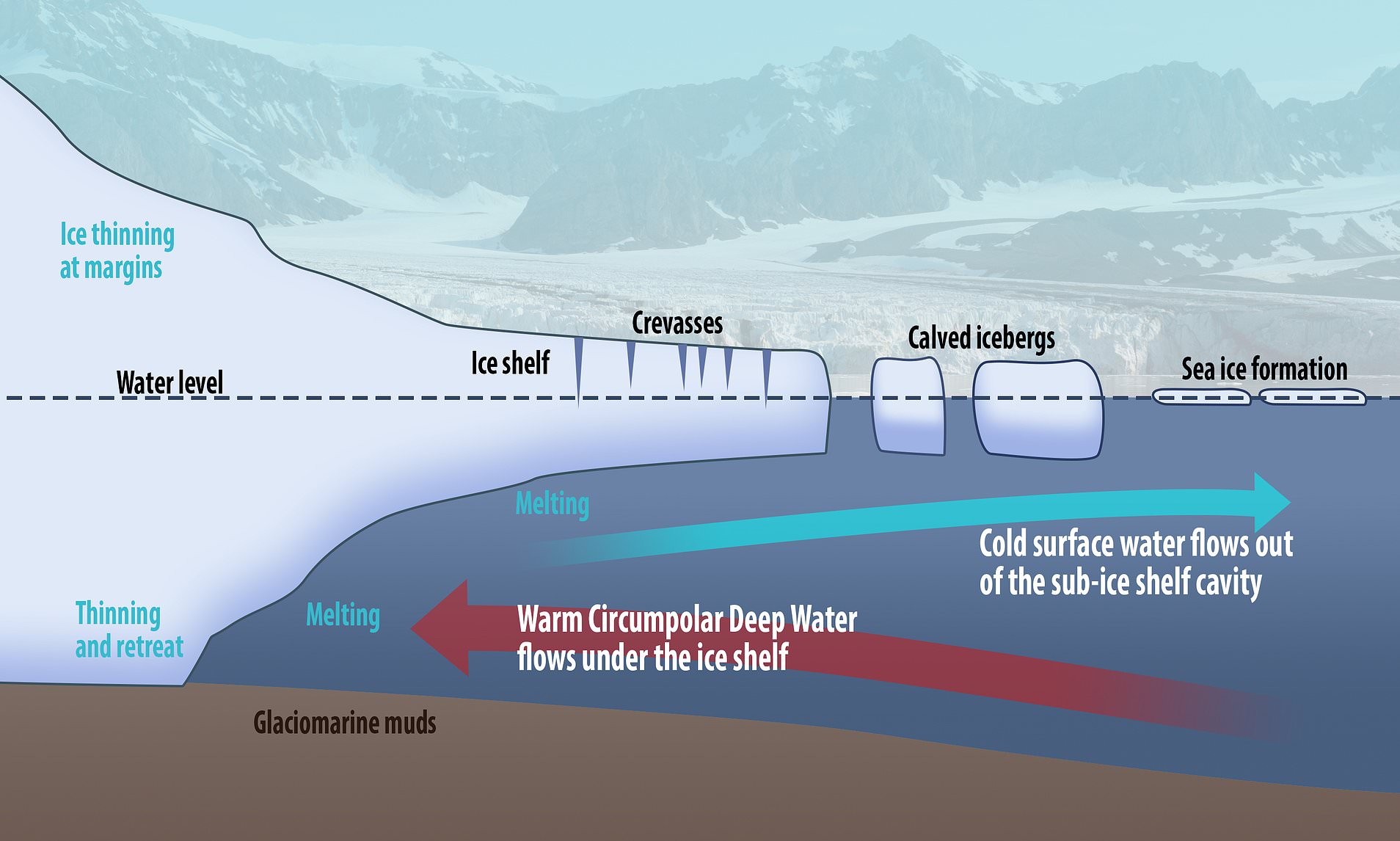
ANTARCTICA. Enormous Antarctic glacier becoming unstable. Maori workers exposed to radiation in cleaning up USA’s failed nuclear reactor in Antarctica.
New record caps stunning year of Australian solar milestones, sets tone for 2022 — RenewEconomy

Australia’s stunning solar year that was 2021 ended with a final flourish, after December delivered a record for utility-scale PV generation. The post New record caps stunning year of Australian solar milestones, sets tone for 2022 appeared first on RenewEconomy.
New record caps stunning year of Australian solar milestones, sets tone for 2022 — RenewEconomy
Sun Metals taps gravity energy storage tech in shift to “green zinc” — RenewEconomy

Korea Zinc’s boosts bid to make its Australian operations greenest in the world, in deal with Swiss “giga-scale” energy storage company, Energy Vault. The post Sun Metals taps gravity energy storage tech in shift to “green zinc” appeared first on RenewEconomy.
Sun Metals taps gravity energy storage tech in shift to “green zinc” — RenewEconomy
1 This month.


PETITION – To: Prime Minister Anthony Albanese and the Australian Labor Government
Chernobyl: The Lost Tapes – A good documentary on Chernobyl on SBS available On Demand for the next 3 weeks– https://www.sbs.com.au/ondemand/tv-program/chernobyl-the-lost-tapes/235274195556
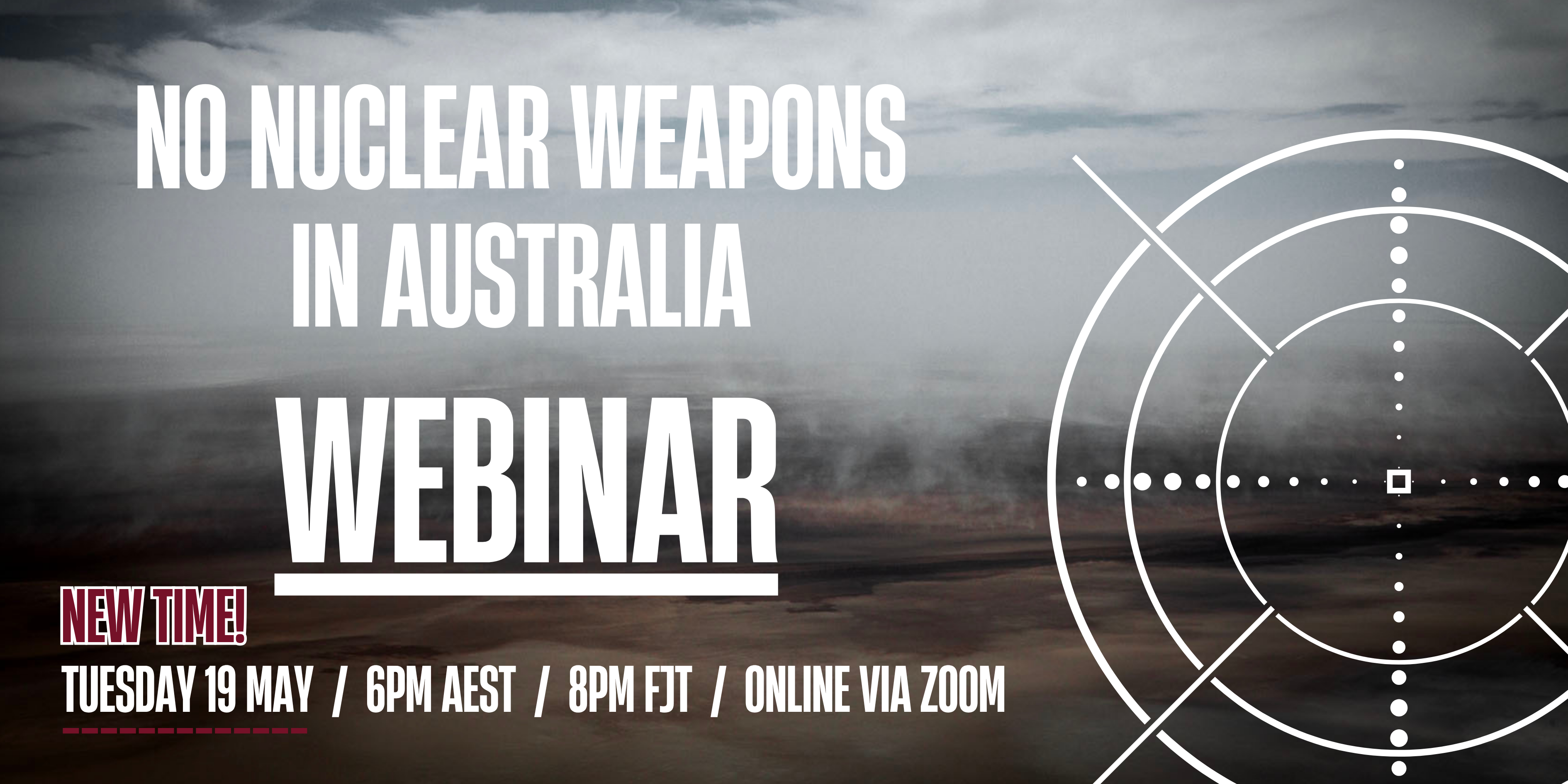
19 May – Webinar- Webinar: No Nuclear Weapons in Australia
Start: 2026-05-19 18:00:00 UTC Canberra, Melbourne, Sydney (GMT+10:00)
End: 2026-05-19 19:30:00 UTC Canberra, Melbourne, Sydney (GMT+10:00)
20 May – Webinar – The dangerous world of AUKUS, US, military occupation and suppression of dissent

National Webinar, 20th May, 2026, 6.30pm AEST. Confronting laws restricting/suppressing protest speech and action
Speakers: Former Sen. Rex Patrick, Lawyer Nick Hanna ,Arthur Rorris ,Jorgen Doyle, Sen David Shoebbridge,
Facilitator Kelley Tranter.

of the week – Australians for War Powers Reform (AWPR)
To see nuclear-related stories in greater depth and intensity
 Antinuclear