More fusion folly — Beyond Nuclear International

Fusion reactors present unsolved risks and still produce nuclear waste
More fusion folly — Beyond Nuclear International
Britain’s National Infrastructure Commission (NIC) advises government against new nuclear power projects.
UK NIC backs alternatives to nuclear, Renew Extra Weekly, 2 Jan 21, The UK Government asked the National Infrastructure Commission (NIC) for its advice on whether an additional new nuclear plant, beyond the proposed Sizewell C project, was needed to deliver the UK’s sixth Carbon (reduction) Budget, due in 2035. In response, the NIC said no, it was not needed or viable for 2035, since new nuclear was slow to deploy. It asserted that ‘it is highly unlikely that a new large scale nuclear plant is deliverable in the next 15 years; trying and failing would jeopardise delivery of the sixth Carbon Budget’. Instead it backed renewables, hydrogen and low/negative carbon technology- which is said could be deployed faster.
It noted that ‘since 1990, nuclear projects have faced significant delays all around the world. Even just in Europe around half of all plants have faced at least a 50% delay in construction, and 1 in 4 plants have faced at least a 90% delay in construction’. So it said that ‘any nuclear project schedule estimate should be expected to take at least 50% longer than planned. If a new project began development next year and took the same amount of time as the Hinkley Point C project is expected to take to complete, it would not come online until at least the mid 2040s’. So that put it well outside the 2035 timeframe.

Small Modular/advanced reactors might be a faster option, but the NIC said ‘relying on significant capacity being deployed before 2035 would be risky’. It pointed out that ‘no SMR has gone through the Generic Design Assessment process and some developer proposals are conditional on government support to progress project development. There are no SMRs in operation in countries similar to the UK.
To fill the same capacity gap illustrated in the BEIS modelling, at least six SMRs would be needed by 2035, if not more. This would require compressing the normal delivery timeline and doing things in parallel rather than in sequence, significantly increasing the risk of delays. Delivery success will also be dependent on the capability of the developer.’
Alternatives likely to be faster
Instead of these nuclear options, for delivery within the timeframe to 2035, it backed ‘renewables with a combination of gas power plants with carbon capture and storage, hydrogen fired gas plants and bioenergy with carbon capture & storage’. It said ‘these alternatives are more likely to be deliverable at scale in the next 15 years’. …………………..
even without costing analysis, it said its analysis clearly demonstrated ‘that a third new nuclear plant is not necessary to reach the 2035 emissions target and that more gas CCS, hydrogen powered gas plants, and BECCS could be deployed instead. Whilst these technologies are yet to be deployed at scale, the Commission considers them to be a lower delivery risk than nuclear.’ And it claimed that its proposed alternative technology mix was supported by analysis previously conducted for the Commission and by other bodies such as National Grid ESO & the Climate Change Committee. …………………
It’s odd that the NIC plunge into CCS and Hydrogen, rather than talking about renewables more. Maybe they are taken for granted. But if, led by wind and solar, they could be expanded much faster than BEIS and NIC envisage, then maybe we could forget about fossil CCS, BECCS and also Sizewell C. That might be helped if tidal stream technology could also get going- with CfD help, it ought to be able to by 2030. Geothermal too, for heat and power. All NIC says is that, from the BEIS analysis, it’s clear that ‘significant volumes of renewables are needed to deliver a low carbon power system by 2035. This is supported by previous analysis for the Commission and others. Rapid cost reductions and short and reliable build profiles mean that renewables will be the backbone of any future GB power system’. OK, fine, but we need details & plans now for faster expansion, along with a much improved commitment to energy saving! https://renewextraweekly.blogspot.com/2022/01/uk-nic-backs-alternatives-to-nuclear.html
January 2 Energy News — geoharvey

Opinion: ¶ “Sands Of Time Are Slipping Away For England’s Crumbling Coasts Amid Climate Crisis” • Norfolk is a real-time lesson in how weather and sea can drastically alter a landscape. One man said, “You hear about erosion, but you don’t know what it means, what it involves, until you witness it. And it’s a […]
January 2 Energy News — geoharvey
European Commission drafts plan to label gas and nuclear investments as ”green”

EU drafts plan to label gas and nuclear investments as green, Reuters, By Kate Abnett and Simon JessopSummary
EU drafts plan to label gas and nuclear investments as green Reuters, By Kate Abnett and Simon JessopSummary
EU drafts plan to label gas and nuclear investments as green Reuters, By Kate Abnett and Simon JessopSummary 2 Jan 22
- European Commission drawing up green investment rules
- Draft proposal labels nuclear, some gas plants as green
- Countries disagree on the fuels’ green credentials
- EU advisors said gas not compatible with climate goals
Jan 1 (Reuters) – The European Union has drawn up plans to label some natural gas and nuclear energy projects as “green” investments after a year-long battle between governments over which investments are truly climate-friendly.
EU countries and a panel of experts will scrutinise the draft proposal, which could change before it is due to be published later in January. Once published, it could be vetoed by a majority of EU countries or the European Parliament.
Brussels has also made moves to apply the system to some EU funding, meaning the rules could decide which projects are eligible for certain public finance.
A draft of the Commission’s proposal, seen by Reuters, would label nuclear power plant investments as green if the project has a plan, funds and a site to safely dispose of radioactive waste. To be deemed green, new nuclear plants must receive construction permits before 2045.
…………………. Gas and nuclear power generation would be labelled green on the grounds that they are “transitional” activities – defined as those that are not fully sustainable, but which have emissions below industry average and do not lock in polluting assets.
…………….. The policy has been mired in lobbying from governments for more than a year and EU countries disagree on which fuels are truly sustainable.
……………. Some environmental campaigners and Green EU lawmakers criticised the leaked proposal on gas and nuclear.
“By including them… the Commission risks jeopardising the credibility of the EU’s role as a leading marketplace for sustainable finance,” Greens president Philippe Lamberts said………. https://www.reuters.com/markets/commodities/eu-drafts-plan-label-gas-nuclear-investments-green-2022-01-01/
Australia’s nuclear-free collective efforts and achievements in 2021.

Dave Sweeney, 31 Dec 21,
- Nuclear weapons made illegal: Climate change and nuclear weapons are the two existential threats facing our planet – one reduces our chances every day while the other could end our chances in a day. ICAN – the International Campaign to Abolish Nuclear Weapons – was recognised with the 2017 Nobel Peace Prize and the Treaty on the Prohibition of Nuclear Weapons entered into force and became part on international humanitarian law in January 2021. Our planets worst weapons are now illegal.
- International support is growing for the Treaty and the first meeting of state parties is planned to be held in Vienna in March – https://icanw.org.au/
- Superannuation and pension funds are among those divesting from companies involved in nuclear weapons – https://quitnukes.org/
- Pushing for the Treaty is an important counterpoint to the AUKUS driven lurch to ever greater militarisation
- Resistance, rehab and repair: our efforts to stop further, and clean up former, uranium mines saw important results.
- All mining and mineral processing at the Ranger mine in Kakadu ceased in January 2021. Nuclear free advocates are now working closely with the Mirarr Traditional Owners to ensure that primary mine owner Rio Tinto does a credible and comprehensive rehabilitation and in supporting an Aboriginal centred post mining regional economy in Kakadu.
- A federal commitment to ‘full’ funding of a new clean up of the former Rum Jungle site in the NT was confirmed in the 2021 budget
- Despite extensive efforts there was a disappointing outcome in WA with the recent further approval of the Mulga Rock project east of Kalgoorlie. It is a long journey from a signed paper to a commercial mine and the project faces strong contest – https://www.ccwa.org.au/nuclearfreewa
- International collaboration continued with efforts to track the impacts of Australian uranium miners in Africa, Spain and Greenland. Opposition to the planned Kvanefjeld uranium project, driven by Perth based Greenland Minerals, was a dominant issue in the 2021 Greenland election which was won by nuclear-free politicians who have since introduced a national ban on uranium mining.
- Responsible radioactive waste management: the federal government push for a national radioactive waste facility in regional South Australia is not responsible or necessary.
2021 saw deeper co-operation with Barngarla Traditional Owners and Kimba region farmers along with media and political advocacy to highlight and delay the heavy handed federal legislation. Movement advocates welcomed the federal budget allocating $60 million to advance extended interim waste storage at the Australian Nuclear Science and Technology Organisation’s Lucas Heights nuclear site. This means Australia’s worst waste can effectively stay in place until a longer term approach is developed and that Kimba is a political choice, not a nuclear necessity.
Unsurprisingly, the federal government has to date ignored the potential this move offers for a constructive circuit breaker in this debate.
2022 will see elevated attention to radioactive waste issues with a Barngarla legal challenge – kick in if you can at –https://www.gofundme.com/f/nbp8f8-barngarla-help-us-have-a-say-on-radioactive-waste – the SA state election in March and growing community awareness and engagement – https://nodumpalliance.org.au/
- Renewable, not radioactive: in the year that saw the 10th anniversary of Fukushima lots of work went into keeping the door closed to domestic nuclear power and contesting nuclear industry promotion of SMR’s – so called small modular reactors – and other distractions to effective climate action. Efforts have focussed attention on the urgent need for proven and renewable energy solutions – renewable, not radioactive. Australian advocates played a key role in a new dedicated website and co-ordinated the development of a global civil society non-nuclear statement released at CoP 26 in Glasgow that was endorsed by 480 organisations across multiple nations
- – https://dont-nuke-the-climate.org/ There was increased collaboration with regional partners in Japan, the Pacific, the Philippines and Taiwan – including around next steps in the Fukushima waste water story and the recent positive referendum that has ended plans for a new reactor in Taiwan. 2022 is sure to see more chatter and challenge on the domestic nuclear front ahead of the federal election.
Nuclear waste returning from UK to Australia

Dealing safely with nuclear waste, THE AUSTRALIAN, DECEMBER 30, 2021,Australia’s lack of a long-term storage plan for nuclear waste is a serious gap the Morrison government needs to address. The issue has been highlighted by the return from Britain in coming months of a two-tonne shipment of nuclear waste generated in Australia. The nation is committed to receiving the waste after 114 spent fuel rods from the Australian Nuclear Science and Technology Organisation were sent to Scotland to be reprocessed in 1996. It will be the second shipment of intermediate-level nuclear waste returned to the country in recent years under tight security. In the absence of a permanent secure storage facility, the waste will be stored temporarily at ANSTO facilities at Lucas Heights in Sydney’s south.
Preparations for the shipment have been in train for years, with all safeguards to be implemented. The waste is being returned in a more condensed form than what was originally sent to Scotland. It has been vitrified in four glass containers, then encased in an outer container made of specialised steel. Details of its movement, and the timing, will be kept secret. ANSTO previously received intermediate-level nuclear waste in 2015 when 25 tonnes of similar-level nuclear waste were returned from France. Australia can expect to have to receive further shipments of returned waste every six or seven years……..
As an alternative to Lucas Heights, a temporary storage facility for intermediate waste is being considered for a site near the town of Kimba in South Australia. But the proposal is being contested, with a judicial review requested by the traditional landowners. https://www.theaustralian.com.au/commentary/editorials/dealing-safely-with-nuclear-waste/news-story/5bbe6898c49206c64fe987e9949d88b4
Why a U.S.-Russia War Would Inevitably Be a Globe-Annihilating Nuclear War
https://moderndiplomacy.eu/2021/12/31/why-a-u-s-russia-war-would-inevitably-be-a-globe-annihilating-nuclear-war/ December 31, 2021, By Eric Zuesse Even Russia acknowledges that any conventional war between the U.S. and Russia would destroy Russia but not destroy the U.S. Consequently, for Russia, any such war will not be waged. Only idiots would choose to engage in a war that they are certain to lose, and which would utterly destroy themselves. This means that if the U.S. strikes Russia by a conventional (i.e., non-nuclear) invasion, then Russia has only two options: (1) to respond with conventional weapons and assuredly be destroyed while achieving nothing; or, else (2) promptly release at least enough of its 6,255 nuclear warheads so as to maximally weaken the U.S.A.-and-allied retaliatory capability so as to be able then to go into a “Round Two” nuclear attack against the U.S.-and-allied side by having a much stronger military position than all of its many enemies (America and its allies) do.
That second option would leave BOTH SIDES, and (because of the then-inevitable nuclear winter) actually the entire planet, either doomed or else being close to being so. However, the U.S. and its many allies would be in far worse condition than Russia would be (because they’d have been greatly weakened by Russia’s nuclear first-strike); and then, MAYBE, Russians could survive that war by having lives that might be worth living.
The second option, for Russia, would be enormously less horrible than the first option; and here is why:
First of all: Russia would still retain its sovereign independence, not become a slave-nation (which the survivors in any U.S.-and-allied nation would then be: slaves, then, to Russia).
Secondly: Russia wouldn’t need to worry any longer whether the U.S.-and-allied side would be the first to go nuclear. Instead, the war would be over.
This is the reason why, ever since at least 2006, the U.S. has been planning and building its war against Russia for the U.S. side to be the first to go nuclear. (That plan is called “Nuclear Primacy,” and it replaces the previous system, which still continued on in Russia, and which was called “M.A.D” for “Mutually Assured Destruction.”)
Consequently: any idea that Russia would likely respond to a non-nuclear invasion of Russia without promptly going nuclear against the invading powers is stupid. Russia now knows how voracious America’s rulers (America’s billionaires) are. Ever since 24 February 1990, the U.S. had been secretly informing its allies that though the Soviet Union would soon end, and Soviet communism would soon end, and the Soviets’ Warsaw-Pact that they had built up in response to America’s NATO military alliance would also soon end, the U.S. side of the Cold War was to be secretly continued against Russia, until Russia itself becomes conquered and swallowed-up by the U.S. side, and the U.S. thereby becomes the unchallengeable dictator over the entire world.
Russia’s recent demand that all U.S.-and-allied weaponry that is less than a ten-minute flying-distance from Moscow be removed, and that NATO expansion be permanently halted, is a desperate attempt by Russia to avoid becoming yet-another slave-country to the U.S. regime. Russia doesn’t have good options. But, given the insatiably voracious appetite for expanding yet further America’s power that America’s rulers have, neither does any other country. And even Russia’s enormous nuclear force can’t protect Russians against so evil an enemy. But, perhaps, Russia’s nuclear force will be able to prevent Russians from becoming slaves to the U.S. regime. And that would be something worthy of achieving.
This entire matter was brought to a head because Barack Obama perpetrated in 2014 a coup-takeover of Ukraine, which has the longest European border with Russia. He had planned to seize Russia’s largest naval base, which was (and remained) on Crimea, but Russia was able to block that part of Obama’s plan. (Obama’s team had started by no later than 23 June 2011 to plan that coup.)Attachments areaPreview YouTube video Ukraine Crisis – What You’re Not Being ToldUkraine Crisis – What You’re Not Being Told

 | |||

Germany shuts down half of its remaining nuclear plants
Germany shuts down half of its remaining nuclear plants Aljazeera, 31 Dec 21,
Decision to close three facilities comes a year before decades-long use of atomic power winds down for good………
One of the plants – Brokdorf, located about 40 kilometres (25 miles) northwest of Hamburg on the Elbe River – became a particular focus of anti-nuclear protests that were driven by the 1986 Chernobyl catastrophe in the Soviet Union.
The other two plants are Grohnde, about 40km (25 miles) south of Hannover, and Grundremmingen, 80km (50 miles) west of Munich.
……………… the German government said this week that decommissioning all nuclear plants next year and then phasing out the use of coal by 2030 will not affect the country’s energy security or its goal of making Europe’s biggest economy “climate neutral” by 2045.
“By massively increasing renewable energy and accelerating the expansion of the electricity grid we can show that this is possible in Germany,” Economy and Climate Minister Robert Habeck said.
Several of Germany’s neighbours have already ended nuclear power or announced plans to do so, but others are sticking with the technology. This has prompted concerns of a nuclear rift in Europe, with France planning to build new reactors and Germany opting for natural gas as a compromise until enough renewable power is available, and both sides arguing their preferred source of energy be classed as sustainable.
Germany’s remaining three nuclear plants — Emsland, Isar and Neckarwestheim — will be closed by the end of 2022.
While some jobs will be lost, utility company RWE said more than two-thirds of the 600 workers at its Gundremmingen nuclear power station will continue to be involved in post-shutdown operations through to the 2030s. Germany’s nuclear power companies will receive almost $3bn for the early shutdown of their plants.
Environment Minister Steffi Lemke has dismissed suggestions that a new generation of nuclear power plants might prompt Germany to change course yet again.
“Nuclear power plants remain high-risk facilities that produce highly radioactive atomic waste,” she told the Funke media group this week.
A final decision has yet to be taken about where to store tens of thousands of tonnes of nuclear waste produced in German power plants. Experts say some material will remain dangerously radioactive for 35,000 generations. https://www.aljazeera.com/news/2021/12/31/germany-shuts-down-half-of-its-remaining-nuclear-plants
Why nuclear power is a bad way to balance renewable energy
Why nuclear power is a bad way to balance renewable energy https://100percentrenewableuk.org/why-nuclear-power-is-a-bad-way-to-balance-renewable-energy
David Toke, Ian Fairlie and Herbert Eppel from 100percentrenewableuk discuss how nuclear power effectively switches off wind and solar power and how a 100percent renewable energy system is much better for the UK than one involving nuclear power.
The Government, backed by a lot of public policy reports paid for by pro-nuclear interests, constantly pushes out the view that nuclear power is ‘essential’ to balancing wind and solar power. But what they never mention is the massive waste of renewables that occurs in such a scenario. Under the scenarios planned by the Government nuclear power is paid very high prices to generate power even when there is excess electricity, which pushes renewables to close down. The Government also refuses to undertake serious investigations of how a system that uses excess renewables to create short and long term storage is a much better way of organising our energy needs rather than wasting more money on building nuclear power stations.
Look at our video which, drawing upon research on the role of nuclear and renewables, discusses these issues.
If you agree the aims of 100percentrenewableuk please join the discussion via our email group.
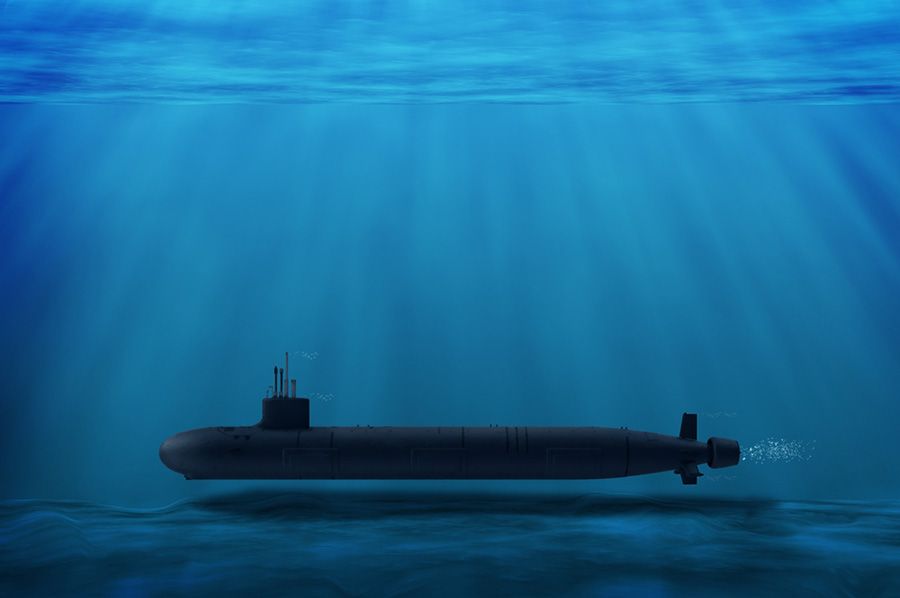
South Korea presidential contender vows to seek nuclear-powered submarines, months after Australia’s Aukus deal.
South Korea presidential contender vows to seek nuclear-powered submarines, months after Australia’s Aukus deal, Guardian, 31 Dec 21,
Lee Jae-myung aims to counter North Korea threats and pledges to restart stalled talks between Pyongyang and Washington
South Korea’s ruling party presidential candidate said he will seek US support to build nuclear-powered submarines to better counter threats from North Korea and proactively seek to reopen stalled denuclearisation talks between Pyongyang and Washington.
In an interview with Reuters and two other media outlets, Lee Jae-myung also pledged to put aside “strategic ambiguity” in the face of intensifying Sino-US rivalry, vowing pragmatic diplomacy would avoid South Korea being forced to choose between the two countries………………
Lee said he will persuade the US to win diplomatic and technology aid to launch nuclear-powered submarines, which can operate more quietly for longer periods, amid renewed calls for building one in the military and parliament after North Korea test-fired a new missile from a submarine in October.
Lee cited the deal Australia struck under a trilateral security partnership with the US and Britain in September to build its own nuclear-powered submarines…………………………… https://www.theguardian.com/world/2021/dec/30/south-korea-presidential-contender-vows-to-seek-nuclear-powered-submarines-months-after-australias-aukus-deal
UK’s fossil fuel use at an all-time low , as renewables generate 67% of Britain’s electricity

Fossil fuel use on the UK’s power grid dropped to an all-time low this week, in a sign analysts say is further evidence of the “renewables revolution” under way on the British electricity generation.
Just before midnight on Wednesday evening coal and gas were providing just six per cent
of electricity, according to Drax Electric Insights. “Renewables generated 24.19 GW – 65 per cent of the country’s entire electricity needs – while fossil fuels were at a new record low,” the analysts said
in statement on Thursday.
iNews 30th Dec 2021
https://inews.co.uk/news/fossil-fuels-power-wind-renewable-1375827
December 31 Energy News — geoharvey

Opinion: ¶ “Our Completely Impartial, Unbiased Review Of ‘Don’t Look Up’” • “Don’t Look Up” is a satirical movie that skewers climate deniers. The movie is simplistic in the extreme. Some will love it, and some will hate it. But one NASA scientist said it is “the most accurate film about society’s terrifying non-response to […]
December 31 Energy News — geoharvey
The murky world of financing Small Nuclear Reactors (SMRs)
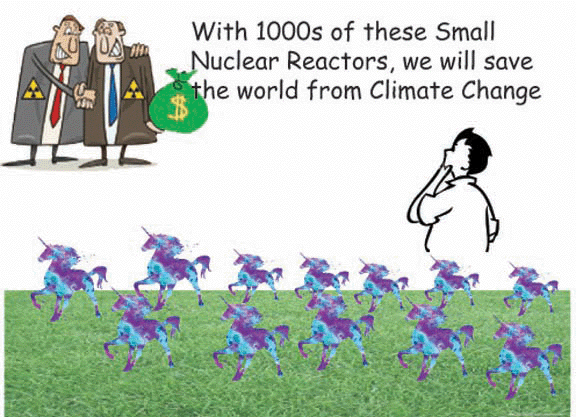
IKEA it ain’t: don’t go looking for friendly nuclear option, no matter the spin
MICHAEL WEST MEDIA, By Noel Wauchope|December 30, 2021 Despite the Murdoch media hype over small nuclear reactors as a solution for Australia’s “clean energy” future, this is costly technology which barely exists in a commercial sense. Noel Wauchope explores the murky world of funding for Small Nuclear Reactors (SMRs).
Small nuclear reactors are being proposed as the solution for Australia’s ‘clean energy’ future. Australians should be aware of the financial gymnastics going on in the USA, with NuScale, and in the UK, with Rolls-Royce. That’s just to single out the two most advanced of the many dubious SMR projects still at the starting gate.
The Murdoch media is enthusiastic about SMRs. Missing from the hype are a lot of unanswered questions. For a start — the ”M” stands for ”modular” — meaning that these reactors will be built in pieces, sort of, and transferred to a site, where they will be assembled, like a piece of IKEA furniture. But in fact there are at least 50 designs being promoted, and not all are modular.
The critical question comes down to – the money
The enthusiasm of the SMR lobby for the economic viability of SMRs is not matched by the facts.
For one thing to consider – there’s the price of the electricity to be eventually delivered by these small nuclear reactors. The Minerals Council of Australia estimates that by 2030 and beyond, SMRs could offer power to grids from $64-$77MWh, depending on size and type.
An analysis by WSP / Parsons Brinckerhoff, prepared for the 2015-16 South Australian Nuclear Fuel Cycle Royal Commission, estimated a cost of A$225 / MWh for a reactor based on the NuScale design, about three times higher than the MCA’s target range. CSIRO estimatesSMR power costs at A$258-338 / MWh in 2020 and A$129-336 / MWh in 2030.
Then there are the costs of actually getting SMRs in the first place.
In Russia, China, France, and Argentina, the construction is done entirely or largely at taxpayers’ expense, and there is little or no transparency about the costs. But generally in the Western world, electricity production is supposed to be a commercially viable operation. In the context of promoting low -carbon technologies, SMRs are promoted as being cheaper than large ones. It is generally acceptable for the government to kick-start the process, with some funding, but with the understanding that the industry will become successful, profitable.
NuScale financing contortions………………….
Now NuScale is to go public by merging with what’s known as a special purpose acquisition company, or SPAC……..
US Securities and Exchange Commission Chair Gary Gensler wants to tighten regulations on SPACs:
Glitzy corporate presentation decks, hyped press releases and celebrity endorsements can balloon a SPAC’s equity well beyond a reasonable value long before proper disclosures are filed, Gensler said.
SPACs have had a chequered history — they enable the sponsors to avoid financial loss, even if the business fails, as many did, in the 1990s. Sixty-five per cent of deals completed in 2021 at a valuation above $1bn are trading below $10 — the price at which they were floated. All of the companies are trading below their stock market highs with some of them down by as much as 70%. Senator Elizabeth Warren and three other Democrats are investigating the imbalance between the financial results for the sponsors and banks versus the early investors.
Rolls-Royce still looking for money
The process of getting funding for the UK’s SMRs is equally tortuous. ……………….
Rolls-Royce will be seeking more investment for the project to help fund the building of actual SMRs.
The government is currently passing legislation that will allow investors to back projects like SMRs using a regulated asset base (RAB) model, which allows them to recoup upfront costs from the consumers, over the construction period, long before those consumers actually get any electricity from the project.
Mythical beasts
So — what it all boils down to is an agreement to spend about £400 million over the next three years — to perhaps produce a design for a reactor, which might get approved by the regulators, and might find investors who might be willing to pay what will be at least £2 billion to build each one.
Where does all this leave Australia? Confused, probably like everyone else? It’s not at all clear who is going to end up paying the most for small nuclear reactors, or indeed, if that fleet of SMRs will ever become a reality. It will probably be the taxpayers. I haven’t mentioned all those ancillary costs — of winning community approval, of security, waste disposal. In all the hype about solving the climate crisis, it’s not likely that Australia will have the necessary thousands of small nuclear reactors operating in time to have any effect on the climate.
In the meantime, it’s worth being wary about the financial aspects, given the obscure manipulations going on in the US and UK, and remembering that not yet does one of these mythical beasts, Small Modular Nuclear Reactors actually exist.
Renewables remain the cheapest “new-build” source of energy generation. They exist. They work. https://www.michaelwest.com.au/ikea-it-aint-small-modular-nuclear-reactors/
.
Nuclear waste from Britain heading to Lucas Heights – first load of many.

Nuclear waste from Britain heading to Lucas Heights, THE AUSTRALIAN, JACQUELIN MAGNAY 30 DECEMBER 21, LONDON@jacquelinmagnay,
Australia is to receive a two-tonne shipment of nuclear waste from Britain that will arrive under tight security and amid high secrecy in the coming months.
The shipment of intermediate-level nuclear waste has been prepared for delivery to the Australian Nuclear Science and Technology Organisation facilities at Lucas Heights, in Sydney’s south.
It will be just the second tranche of intermediate-level nuclear waste returned to the country, and its arrival shines a spotlight on Australia’s lack of a long-term storage plan for nuclear waste classified above low-level material.
The radioactive uranium and plutonium waste has been vitrified in four glass containers and then encased in an outer container made of specialised steel, known as a TN81 cask.
ANSTO says its previous experience in receiving intermediate-level nuclear waste – which occurred in 2015 when a larger shipment was returned from France – will mitigate any risks.
In that shipment, all local roads along the route were shut for more than five hours, and the operation involved the NSW Riot Squad and other police units to contain antinuclear protesters.
In the coming weeks, the nuclear waste will be moved by rail from the decommissioned nuclear plant at Sellafield in Cumbria to the British coast before being loaded onto a ship operated by Nuclear Transport Solutions.
It is expected to travel through Australian waters, including some maritime parks, before berthing.
The cargo is likely to be unloaded at Port Kembla in Wollongong under heavy guard, arriving sometime before the middle of next year.
Wherever the ship berths, the container will be loaded onto a truck for transport through residential and industrial areas, as well as along the Princes Highway through the Royal National Park south of Sydney and on to the Lucas Heights facility.
ANSTO says the final route will be a closely guarded secret and will be decided in consultation with NSW authorities.
NTS confirmed that the return of the intermediate-level waste in the form of vitrified residue to Australia had first been expected to take place last year.
Preparations for the shipment have been carried out since 2014……..
The Australian Radiation Protection and Nuclear Safety Agency has recently certified “the transport package”, and it will allow ANSTO to “temporarily” store the nuclear waste in the Interim Waste Store at Lucas Heights before another temporary storage facility for intermediate waste – currently being considered for Napandee, near the town of Kimba in South Australia – is ready to receive it.
This planned alternative storage solution, which is known as the National Radioactive Waste Management Facility, would bring together all the low-level radioactive waste from 100 different sites around the country and allow temporary storage of intermediate-level waste.
However, the proposed site in Kimba is being contested, with a judicial review requested earlier this month by traditional landowners the Barngarla Determination Aboriginal Corporation.
Longer-term storage plans for the intermediate waste are yet to be considered.
Despite this uncertainty, Australia is committed to receiving the waste after 114 ANSTO spent fuel rods were sent to Dounreay, Scotland, to be reprocessed of plutonium and uranium in 1996.
The processed waste being returned is of an equivalent radioactive level, but in a more condensed form than was originally exported to Scotland, and it has now been transported to the old Sellafield power station.
This means that instead of 52 500-litre drums of cemented waste, the British shipment will comprise four canisters of glass waste of an equivalent level.
It is classified by British authorities as having radioactivity levels greater than four GBq/tonne for alpha emitters and Beta/gamma emitters greater than 12 GBq/tonne – which puts it in the intermediate category.
ANSTO says it has experience in handling and storing such waste, citing the 2015 arrival of 25 tonnes of similar-level nuclear waste from France.
The new shipment will be stored next to that waste……………..
It is unclear if local councils positioned along the expected transport route will be notified when the shipment lands.
Previously, some export transportation of spent nuclear fuel rods from ANSTO to France for reprocessing has been carried out in the middle of the night with tight secrecy and no prior notice. Several councils, including Wollongong through which the nuclear waste will be carried, have called for Australia to sign and ratify the Treaty on the Prohibition of Nuclear Weapons.
Australia can expect to have to receive further shipments of returned waste every six or seven years, including spent fuel elements from the Opal reactor sent to La Hague in France for reprocessing before being returned. https://www.theaustralian.com.au/world/nuclear-waste-from-britain-heading-to-lucas-heights/news-story/e5e8511403cd24de66c79be3d1d96fe6
Nuclear power in the EU taxonomy and Germany’s position

Q&A: Why is Germany phasing-out nuclear power and why now? 28 Dec 2021, Kerstine Appunn ”……………………………..Nuclear power in the EU taxonomy and Germany’s position
Observers have called France’s push to include nuclear power projects in the EU taxonomy as a sustainable investment a “political nightmare” for Germany. Backed by a group of other European countries such as Bulgaria, Croatia, Czechia, Finland, Hungary, Poland and Romania, French President Emmanuel Macron tries to make nuclear power a pillar of the EU’s decarbonisation strategy, while Germany is betting heavily on wind and solar power. It is supported in its push for a nuclear-free taxonomy by Portugal, Austria, Luxembourg and Denmark. Germany’s new Chancellor Olaf Scholz, of the Social Democrats (SPD), has told Macron that he has always been opposed to nuclear power, much like his coalition partner, the Green Party.
If included in the taxonomy, nuclear power investments could be part of green funds, banks could declare loans to nuclear projects as sustainable investments – all in aid of getting more private investment to flow into climate friendly economic activities and businesses.
Agora Energiewende’s Müller says the German approach is still more future-proof. “The idea that nuclear power stations can be built at predictable costs and by a predictable schedule has not proven to be realistic. We also still have the unresolved problem of nuclear waste storage as well as the possibility of a major accident. Germany’s decision to focus on the expansion of renewables instead of nuclear is reflected also by the markets as renewables dominate electricity investments internationally.”
The European Commission is set to come out with a proposal for the taxonomy in January 2022, which EU member states will then decide on with a majority vote. Instead of an in-or-out decision on nuclear (and natural gas), the commission is likely to present a compromise that would classify nuclear as a temporary, transitional technology which has to be labelled and declared in funds so that consumers and investors have the choice between “entirely green” products, e.g. renewable energies, or second or third tier products that include nuclear or gas technology.
Whatever the decision, Müller says Germany and France should focus more on the common ground concerning the energy transition. “Recent French studies show – independently of the future of nuclear energy – that a massive expansion of renewables is needed to reach the climate targets. And there are also opportunities for cooperation between Germany and France on green hydrogen.”
Shouldn’t Germany – like other countries – embrace and support the use of new small modular reactors?
Using a large fleet of small modular reactors (SMR) to secure climate neutral electricity supply in the future – as proposed by billionaire and philanthropist Bill Gates – has been hailed as a climate change solution. In Belgium, which is set to shutter its two remaining nuclear power stations by 2025, the government agreed to invest 100 million euros in the research on SMR.
SMR proponents claim that, once produced in bulk, these small plants are cheaper and safer thanks to advanced reactor designs and can be operated with converted short-lived radioactive materials, solving the waste problem.
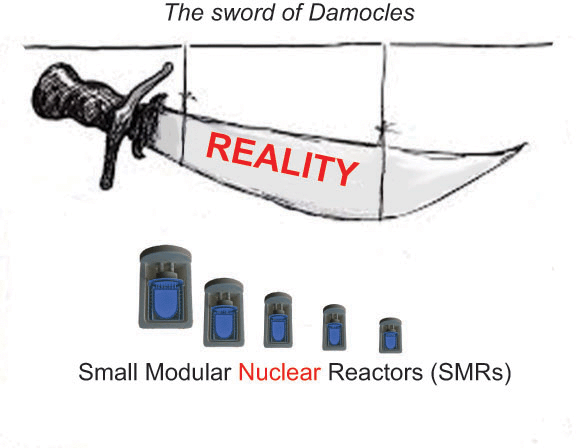
But two assessments commissioned by the Federal Office for the Safety of Nuclear Waste Management (BASE) have found that these tens of thousands of small reactors would carry enormous risks with regard to the proliferation of weapons-grade materials and will probably never be as cheap as their advocates say.
What is different in Germany compared to other countries in Europe which embrace nuclear as a CO2-free solution?
Germany not only has strong public support for, and a long history of, anti-nuclear sentiment, it also has only 11 percent of nuclear left in its power mix. Leaving it behind entirely is therefore a more obvious and easy decision than for other countries, such as France, where the share of nuclear power in domestic generation stands at 70.6 percent, but also in Bulgaria with 40.8 percent, in Sweden with 29.8 percent (in Spain: 22.2%, Russia at 20.%, United States at 19.7%, UK 16%, all in 2020).
Historians also explain the different attitude towards nuclear with the different reactions to the Chernobyl accident, which was felt much closer and more threatening to Germans compared to French or UK citizens. Another explanation for Germany’s sensitivity to nuclear power is that early on, the post-war critique of nuclear weapons was linked to the civilian use of nuclear fission. (A second wave of the German peace movement in the 1980s would also bolster a younger generation’s resistance to nuclear power.)
And even if there are people who make a case for nuclear for climate protection reasons, the exit has now proceeded too far to be reversed, and there is simply no influential political power that would consider re-opening the painful, decade-long debate on nuclear power that has finally been put to rest. https://www.cleanenergywire.org/news/qa-why-germany-phasing-out-nuclear-power-and-why-now
1 This month.
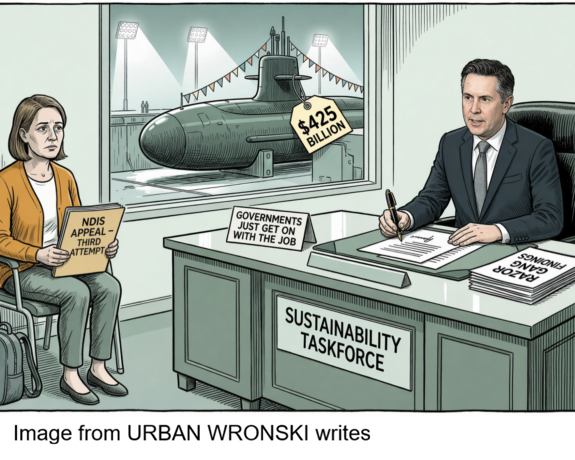

PETITION – To: Prime Minister Anthony Albanese and the Australian Labor Government
Chernobyl: The Lost Tapes – A good documentary on Chernobyl on SBS available On Demand for the next 3 weeks– https://www.sbs.com.au/ondemand/tv-program/chernobyl-the-lost-tapes/235274195556

19 May – Webinar- Webinar: No Nuclear Weapons in Australia
Start: 2026-05-19 18:00:00 UTC Canberra, Melbourne, Sydney (GMT+10:00)
End: 2026-05-19 19:30:00 UTC Canberra, Melbourne, Sydney (GMT+10:00)
20 May – Webinar – The dangerous world of AUKUS, US, military occupation and suppression of dissent

National Webinar, 20th May, 2026, 6.30pm AEST. Confronting laws restricting/suppressing protest speech and action
Speakers: Former Sen. Rex Patrick, Lawyer Nick Hanna ,Arthur Rorris ,Jorgen Doyle, Sen David Shoebbridge,
Facilitator Kelley Tranter.

of the week – Australians for War Powers Reform (AWPR)
To see nuclear-related stories in greater depth and intensity
 Antinuclear