I MAY VOMIT
Australia, the United States and the United Kingdom officially signed the Exchange of Naval Nuclear Propulsion Information Agreement in Canberra, giving Australia access to nuclear-powered submarines technology.
Nuclear news – Australia, France and more
Nuclear. The interesting thing right now is France’s struggle to get Europe to agree that nuclear power is ”clean” and ”green”. The background to this is that France’s nuclear industry is in a pretty bad state. Debts, scandals and safety problems. Most reactors getting near their use-by date. Strangely, the prestigious and independent Court of Audits has reported that nuclear power has a dubious future, but President Macron is ignoring that report, and promising a global nuclear revival, led by France.
Coronavirus – it’s all still happening.
Climate: COP 26 is over – but global heating is all still happening, too.
Some bits of good news: The EU drafted legislation to tackle deforestation. The UK’s largest urban rewilding project was approved. Refugees in Cameroon Have Turned aTreeless Desert Camp Into a Thriving Forest.
AUSTRALIA.
New files expose Australian govt’s betrayal of Julian Assange and detail his prison torment. https://www.youtube.com/watch?v=I185pwCWNo8
- Australian TV blatantly advertises weapons sales, in absurd claims about China invading Australia. Morrison’s tactless belligerence towards China, while USA moves to mend relationship to China. Australian Parliament should urgently review the potentially dangerous AUKUS deal.
- The endless civil war among conservatives over nuclear power. Renewable technology is highly suitable for Australia – compared to the severe wastes problem of nuclear power.
- Australia needs independent Inquiry on nuclear production and wastes. Kimba nuclear dump plan is not supported by facts. Kimba, South Australia, as a nuclear ”sacrifice zone”. Kimba Consultative Committee draft Minutes reveal what a mess the Federal Radioactive Waste dump project is in.
INTERNATIONAL
The consumerism that destroys life is also the cause of the environmental emergency.
The 2015 Paris climate agreement – a weak ‘treaty’, but it is working up to a point. Nuclear energy: a distraction on the road to climate solutions.
Global agreements against the dumping of nuclear waste into the world’s oceans.
America’s relentless pursuit of Australian Julian Assange is a threat to any journalist who might expose a USA massacre of civilians.
Gorbachev: claims that nuclear weapons guarantee peace are a delusion. The elimination of nuclear weapons a moral imperative – Vatican. New film: The ‘Mothers of the Revolution’ Who Stared Down Nuclear Weapons. https://www.youtube.com/watch?v=OWirc-uWGgQ Voices for a World Free of Nuclear Weapons Takes a New Approach With Informative Videos for Children and Young Adults.
Low dose radiation has its medical benefits, but has harmful effects on the immune system.
Use Less Stuff Day-Thursday November 18th
ANTARCTIC. Antarctic ice sheet changed alarmingly quickly in past – and may be happening again now.
Kimba Consultative Committee draft Minutes reveal what a mess the Federal Radioactive Waste dump project is in.
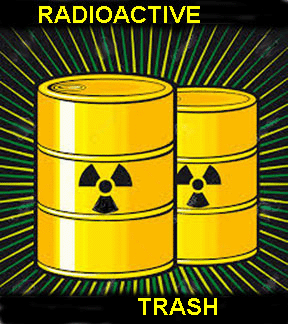
The most important part the draft minutes is the first item relating to the nature and activity of the radionuclides in the immediate level waste proposed to be stored at Kimba but there was no discussion recorded on this issue.
This should have probably been the main item of business of the meeting considering it is the major aspect of community safety but received scant attention
Peter Remta, 22 Nov 21, I was recently asked to comment on the draft minutes of the Kimba joint community meeting held on 24 October 2021 and attach them for your reference
The draft minutes are available on https://www.industry.gov.au/sites/default/files/2021-11/kimba-consultative-committee-kimba-economic-working-group-meeting-minutes-oct-2021.pdf?fbclid=IwAR3Ej8KsyWH8KtvfRlL5JXc8C3mubLJ5K5tThB1HMZfIfpI2c2M9_QO3Mdg
Suffice to say that the federal government is ill prepared to choose and pursue the Napandee site near Kimba and as I have previously shown it is a grossly unsuitable and highly expensive exercise
It tests common sense to continue with the plans for the facility as it will surely not be approved for the required licences
KIMBA COMMUNITY MEETING COMMENTS
I cringe when I read the draft minutes of the joint meeting at Kimba on 14 October 2021 and the explanations and reasons by the federal government’s personnel as recorded in those minutes relating to the proposed nuclear waste management facility at Kimba.
In most instances they are unconvincing and inconsistent explanations even bordering on the nonsensical considering that this is a most important and serious issue for this country deserving far better attention than has been given to it over the past few years.
From all of this is it is quite obvious that the radioactive waste management facility at Kimba is still in its infancy of planning and prematurely unprepared for its objectives which is hard to understand as the government has been assessing the various locations at Kimba for over five years and has so far spent up to $100 million for that purpose.
It is also a gross indictment on the competence of the government and its various agencies all of which has been aided and abetted by the responsible ministers involved which should be gauged in the light of
the imminent ministerial declaration of Napandee near Kimba as the site for the management facility as mentioned in section 2 of the draft minutes
The most important part the draft minutes is the first item relating to the nature and activity of the radionuclides in the immediate level waste proposed to be stored at Kimba but there was no discussion
recorded on this issue.
This should have probably been the main item of business of the meeting considering it is the major aspect of community safety but received scant attention.
I have pointed out previously that based on the best available scientific and technical information internationally the details and levels of the radionuclide activity in any nuclear waste to be stored (as that at Kimba) is of prime importance since it becomes the determining factor for the selection of an appropriate site for storage and the manner in which the storage is undertaken.
This means that there can be no realistic designs – however conceptual of any storage facility until that information on the radionuclides is fully disclosed and understood and hence the conceptual designs for
Kimba so far put out by the government are nothing more disingenuous and misleading promotional material to try and convince a rather sceptical public.
What is more the details of the radionuclides inventories and activity should have been given to the community at Kimba when the various locations were initially identified as possible sites for the facility
but this has still not been done to this day
The endless civil war among conservatives over nuclear power

https://johnmenadue.com/the-endless-civil-war-among-conservatives-over-nuclear-power/ Pearls and Irritations, By Jim GreenNov 22, 2021
The case for nuclear power in Australia is overwhelmingly weak, but that doesn’t deter the culture warriors in the Morrison government or the Murdoch media.
Wars usually have a beginning, a middle and an end. Not so the nuclear power culture wars which just keep rolling on and on and on.
Australia’s nuclear culture war is best thought of as a civil war: conservative politicians — and to a lesser extent Murdoch/Sky media loudmouths — are at each other’s throats while the rest of us watch on in bemusement. Ironically, attempts to wedge the Labor Party and the environmental movement are at the heart of the conservative nuclear push, but those efforts have been singularly unsuccessful and the culture warriors succeed only in wedging themselves.
The Murdoch media’s recent pivot towards accepting climate science and the need for action immediately degenerated into a push for nuclear power. Sky News can’t get enough of it. In addition to dozens of news stories promoting nuclear power, Sky produced a “documentary” called Going Nuclear: The Clean Energy Debate aired on October 25.
Academic Barry Brook opined in the Sky “documentary” that nuclear power was the “silver bullet” to tackle climate change. A decade ago, Brook was insisting “there is no credible risk of a serious accident” at Fukushima even as multiple nuclear fuel meltdowns were in progress.
Brook told the “documentary”: “We are not ever going to get beyond about 50 per cent renewable energy and continue to have the type of energy use in a modern society that we have today.” Brook lives in Tasmania, fully powered by renewable electricity thanks to the state’s wind and hydro projects.
And he used to live in South Australia, where, according to a new report by the Australian Energy Market Operator, wind and solar has delivered 62 per cent of local power generation in the past 12 months, wholesale sales were the lowest on the mainland at an average of $48 per megawatt-hour MWh, and grid emissions have fallen to a record low. South Australia is on track to comfortably meet the state government’s target of 100 percent net renewables by 2030.
Pro-nuclear environmentalists
The Sky “documentary” also featured one pro-nuclear environmentalist, Zion Lights, to prove the point that environmentalists are falling in love with nuclear power. Lights was recruited to the pro-nuclear cause by the notorious Michael Shellenberger.
A 2013 article in Grist summed up the nonsense about pro-nuclear environmentalists:
“There is no budding environmentalist movement for nukes… This handful of converts is always cited with the implication that it’s the leading edge of a vast shift, and yet it’s always the same handful. Shellenberger says, ‘I have a sense that this is a beautiful thing… the beginning of a movement.’ I fear he has once again mistaken the contents of his navel for the zeitgeist.”
The same could be said for Australia: you could count the number of pro-nuclear environmentalists on the fingers of one hand, and still have fingers left over to organise your next Zoom call or to pick your nose.
Zion Lights told Sky that climate change “could be solved overnight” with nuclear power. But an analysis by economist Professor John Quiggin concludes that it would be “virtually impossible” to get a nuclear power reactor operating in Australia before 2040. Quiggin notes that, in practice, support for nuclear power in Australia is support for coal. The promotion of nuclear power muddies the energy debate and helps to delay the transition from fossil fuels to renewables. Presumably that is the goal of at least some of those supporting nuclear power.
An Australian Workers Union representative featured on Sky’s pro-nuclear “documentary”. No mention was made of the unions opposing nuclear power, i.e. pretty much all of them: the ACTU, Unions ACT, Unions WA, Unions SA, Victorian Trades Hall Council, Unions NT, Tasmanian Unions, United Voice, AEU, AMWU, ANMF, ASU, CWU, ETU, IEU, MUA, NUW, and the UFU firies who would prefer not to have to fight nuclear fires.
No space for critical voices
The Murdoch/Sky media empire has made almost no space for critical voices. There are a couple of notable exceptions, however — recent commentaries by former NSW premier Bob Carr in The Australian and on Sky, and Paul Kelly’s column in The Australian on November 10. Carr, a former supporter of nuclear power, notes that “nuclear is lumbering, subject to breakdowns and cripplingly expensive” and that “the contrast with the surge to renewables is stark”.
He’s right, the comparison is indeed stark. Last year, 256 gigawatts of new renewable capacity were installed around the world (that’s four times greater than Australia’s total capacity) compared to just 0.4 gigawatts of nuclear power.
Kelly’s column in The Australian points to the “popular pull of renewables” and their falling costs. He notes that “nuclear plant construction remains poor in advanced OECD nations, the main reason being not safety but its weak business case”. Kelly also questions the rhetoric around small modular reactors given that “none has so far been built in developed nations”.
On the politics, Kelly writes:
“The populist conservatives have form. Before the 2019 poll, they campaigned on the mad idea that Morrison follow Donald Trump and quit the Paris Agreement. Now they campaign on the equally mad but more dangerous idea that he seek to split the country by running on nuclear power… As for those conservatives who say Morrison’s job is to fight Labor, the answer is simple. His job is to beat Labor. That’s hard enough now; vesting the Coalition with an unnecessary ideological crusade that will crash and burn only means he would have no chance.“
Coalition wedging itself
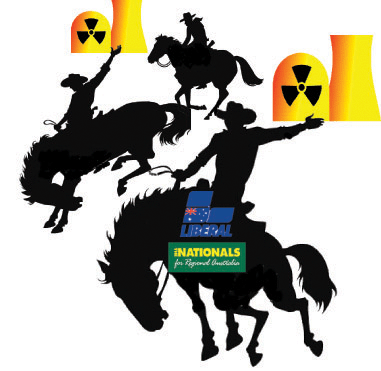
The Coalition’s civil war over nuclear power reached its zenith just before the COP26 climate conference in Glasgow, with media reports that the repeal of laws banning nuclear power might be a requirement for the Nationals to support a net-zero-emissions policy. But if such a demand was made by the Nationals, it was quickly retracted.
Prime Minister Scott Morrison spoke bluntly to Sky: “Right now, there’s a moratorium on nuclear power here in Australia and the Labor Party are totally opposed to it. I’m just not going to put Australia through the argument which doesn’t get us anywhere… and for the Labor Party to run around at the next election and get themselves elected on the basis of a scare campaign.”
An interesting feature of the 2019 federal parliamentary nuclear inquiry was that a number of state Coalition governments and parties made submissions opposing nuclear power while none made submissions supporting it.
The South Australian Liberal government’s submission said that “nuclear power remains unviable now and into the foreseeable future”. The Tasmanian Liberal government’s submission said that “Tasmania will not pursue nuclear energy … and considers that Australia’s energy needs are best met by pursuing renewable energy options, such as pumped hydro, with additional firming capacity supported through greater grid interconnection.”
The Queensland Liberal-National Party’s submission said that “the LNP does not support lifting the bipartisan ban on nuclear energy generation”, citing “unacceptably high health and safety risks” and “significant negative consequences for the environment”. The submission said that “Australia’s rich renewable energy resources are more affordable and bring less risk than the elevated cost and risk associated with nuclear energy”.
Likewise, the NSW government isn’t interested in nuclear power. Treasurer Matt Kean recently said that nuclear power was like “chasing a unicorn” and “doesn’t stack up at the moment on practical grounds or on economic grounds”. Kean said that nuclear is several times more expensive than renewables backed up with energy storage — a claim supported by CSIRO research.
Former prime minister Malcolm Turnbull described nuclear power as the “loopy current fad … which is the current weapon of mass distraction for the backbench”.
Still, the Murdoch/Sky culture warriors continue to promote “the idiot’s choice“. As do culture warriors within the Coalition. Senator Matt Canavan campaigned furiously against a commitment to net zero emissions by 2050. He opposes policies that will drive up power prices but supports nuclear power even though he has himself noted that nuclear power would increase power bills.
Confused? So is Matt Canavan.
ScoMo Ingenious EV Plan: Australian Prime Minister Scott Morrison, leading climate action blocker, stretching the truth again? — One Finite Planet

“This is coal”: Scott Morrison’s ‘Coalaphobia’ speech. After a long history resisting action on climate change, the Australian government finally ‘committed’ to net zero by 2050, and then did an about face, and announced support for electric vehicles. Or did they? Background. Relevance: A Series On Political Influencers. The Australian Government And The Democracy Failure […]
ScoMo Ingenious EV Plan: Australian Prime Minister Scott Morrison, leading climate action blocker, stretching the truth again? — One Finite Planet
Architect of Integrated System Plan to leave AEMO as staff exodus continues — RenewEconomy

AEMO announces departure of another two key executives, including the person who led the preparation of the Integrated System Plan. The post Architect of Integrated System Plan to leave AEMO as staff exodus continues appeared first on RenewEconomy.
Architect of Integrated System Plan to leave AEMO as staff exodus continues — RenewEconomy
Rooftop solar helps send South Australia grid to zero demand in world first — RenewEconomy

South Australia on Sunday became the first gigawatt scale grid in the world to reach zero operational demand on Sunday when the combined impact of rooftop solar and other small scale solar installations met all the customer load requirements. The landmark events was observed by several energy analysts, including at Watt Clarity and NEMLog, where…
Rooftop solar helps send South Australia grid to zero demand in world first — RenewEconomy
November 21 Energy News — geoharvey

Opinion: ¶ “Revisiting Elon Musk’s 2018 Predictions On Tesla’s Market Cap” • Remember the compensation plan that Tesla unveiled back in 2018? At the time, the New York Times called it “perhaps the most radical in corporate history,” and its “experts” called “laughably impossible. It was based on the company being worth $1 trillion by […]
November 21 Energy News — geoharvey
New files expose Australian govt’s betrayal of Julian Assange and detail his prison torment
The documents obtained by Tranter and provided to The Grayzone provide an unobstructed view of the Australian junior ally’s betrayal of one of its citizens to the imperial power that has hunted him for years. As Julian Assange’s rights were violated at every turn, Canberra appears to have been complicit.
New files expose Australian govt’s betrayal of Julian Assange and detail his prison torment https://thegrayzone.com/2021/11/17/files-australian-julian-assange-prison/ KIT KLARENBERG· NOVEMBER 17, 2021
Documents provided exclusively to The Grayzone detail Canberra’s abandonment of Julian Assange, an Australian citizen, and provide shocking details of his prison suffering
Was the government of Australia aware of the US Central Intelligence Agency plot to assassinate Julian Assange, an Australian citizen and journalist arrested and now imprisoned under unrelentingly bleak, harsh conditions in the UK?
Why have the country’s elected leaders refused to publicly advocate for one of its citizens, who has been held on dubious charges and subjected to torture by a foreign power, according to UN Special Rapporteur on Torture Nils Melzer? What does Canberra know about Julian’s fate and when did it know it?
The Grayzone has obtained documents revealing that the Australian government has since day one been well-aware of Julian’s cruel treatment inside London’s maximum security Belmarsh Prison, and has done little to nothing about it. It has, in fact, turned a cold shoulder to the jailed journalist despite hearing his testimony of conditions “so bad that his mind was shutting down.”
Not only has Canberra failed to effectively challenge the US and UK governments overseeing Assange’s imprisonment and prosecution; as these documents expose in stark detail, it appears to have colluded with them in the flagrant violation of an Australian citizen’s human rights, while doing its best to obscure the reality of his situation from the public.
Continue readingKimba, South Australia, as a nuclear ”sacrifice zone”

Below is an article from the Port Lincoln Times. Like most articles from the region, it appears to be written with breathless delight over the joys of Kimba, South Austraklis getting a ? temporsry nuclear waste dump.
It was the headline that got me.
What do they mean – ”SACRIFICE ZONE’? Does it simply refer to what everyone knows – that the dump will be a financial white elephant, trashing the area’s previous clean green agricultural reputation?
Or does it carry the more sinister meaning, of damage to health and environment, as Rusdsia’s Mayak site, and Fukushima, have been labelled as ”sacrifice zones”?
Grants recognise Kimba’s sacrifice Bianca Iovino, 17 Nov 21,
The Kimba region will benefit from another $2 million in grants, acting as a recognition of the strain the anticipated National Radioactive Waste Management Facility has had on the community.
Kimba Mayor Dean Johnson said the grants rewards community engagement in what’s been a long and difficult conversation about the facility.
“I think there’s a real air of excitement and expectation in the community at the moment, but the truth is not everyone agrees on this, there are people who strongly appose it and that hasn’t changed,” he said.
“But to have another $2 million to spend in our community is really exciting, and I can’t wait to see the projects that get put forward.”
Resources and Water minister Keith Pitt said the program recognises the significant amount of time, effort and disruption caused to the town following an over five years consultation process regarding the facility….. The official location of the site is yet to be confirmed, but a Notice of Intention to Declare has been lodged and and an announcement is imminent. https://www.portlincolntimes.com.au/story/7511178/grants-recognise-kimbas-sacrifice/?cs=1500&fbclid=IwAR3qWas_23kw_rcX6yKFSUePG8zM1WydYsVXgV8CN2Rz-KGaiz0AoJWnG5Q
Australian TV blatantly advertises weapons sales, in absurd claims about China invading Australia

Australian War Propaganda Goes Off the Rails https://consortiumnews.com/2021/11/17/australian-war-propaganda-goes-off-the-rails/ November 17, 2021 In a blatant advert for arms sales masquerading as news, 60 Minutes tries to tie Taiwan to the fantasy of China randomly invading a continent of white foreigners thousands of miles away, writes Caity Johnstone. By Caitlin Johnstone
CaitlinJohnstone.com
60 Minutes Australia has churned out yet another fear-mongering war propaganda piece on China, this one so ham-fisted in its call to beef up military spending that it goes so far as to run a brazen advertisement for an actual Australian weapons manufacturer disguised as news reporting.
This round of psychological conformity-making features Australian former major general Jim “The Butcher of Fallujah” Molan saying that in three to ten years a war will be fought against China over Taiwan and that Australians are going to have to fight in that war to prevent a future Chinese invasion of the land down under.
He argues Australia will need to greatly increase its military spending in order to accomplish this, because it can’t be certain the United States will protect it from Chinese aggression.
“Australia is monstrously vulnerable at the moment; we have this naive faith that American military power is infinite, and it’s not,” says Molan, who is a contributor to government/arms industry-funded think tanks Lowy Institute and Australian Strategic Policy Institute.
Decrying what he calls “panda huggers” (meaning people who aren’t China hawks), Molan claims that “the Chinese Communist Party’s aim is to be dominant in this region and perhaps dominant in the world.” Asked when war might break out, he claims “Given the power that they have in their military they could act any time from now on, and that’s what frightens me more than anything.”
“The next war is not going to be ten or twenty years away, it’s going to be in the next three to ten years,” Molan asserts.
“My estimate is that in a serious fight the Australian Defense Force only has enough missiles for days. This is not going to be resolved in days. And of course we’re not big enough. We should expand the defense force significantly… We should fund defense now based on our assessment of the national security strategy which is based on the war that we want to win.”
“In short do you think Australia needs to prepare for war tomorrow?” the interviewer asks Molan.
“Absolutely,” he replies.
Molan makes the ridiculous argument that if Australia does not to commit to defending Taiwan from the mainland then it won’t be long before they can expect a Chinese invasion at home, as though there’s any line that could be drawn between the resolution to a decades-old Chinese civil war and China deciding to invade a random continent full of white foreigners thousands of miles away.
Suppose we said okay Taiwan you’re on your own up there and the Chinese snapped it up, and the Chinese started looking around the world and they might snap up other liberal democracies like Australia,” Molan argues. “And we might then turn to America and say America well could you give us a bit of a hand here? And the Americans might say what we said to Taiwan. Where do you draw the line? This situation that is developing now is an existential threat to Australia as a liberal democracy.”
Incredibly, the 60 Minutes segment then plunges into several minutes of blatant advertising for Australian defense technology company Defendtex which manufactures weaponized drones designed to be used in clusters, saying such systems could handily be used to defeat China militarily in a cost-effective manner.
The segment also promotes bare-faced lies which have become commonplace in anti-China propaganda, repeating the false claim that Chinese fighter planes have been “breaching Taiwanese airspace” and repeating a mistranslation of comments by Xi Jinping which it used in a previous anti-China segment made to sound more aggressive than they actually were.
This segment follows a cartoonishly hysterical fear porn piece on China put out by the same program this past September which featured Australian Strategic Policy Institute ghouls insisting that Australians must be prepared to fight and die in defense of Taiwan and that a Chinese invasion of Australia is a very real threat. That 60 Minutes segment was preceded by an equally crazy one in May which branded New Zealand “New Xi-Land” for refusing to perfectly align with U.S. dictates on one small foreign policy issue.
To be perfectly clear, there is no evidence of any kind that China will ever have any interest in an unprovoked attack on Australia, much less an invasion, and attempts to tie that imaginary nonsense threat to Beijing’s interest in an island right off its coast which calls itself the Republic of China are absurd.
As we’ve discussed previously, anyone who’d support entering into a war against China over Taiwan is a crazy idiot. In the unfortunate event that tensions between Beijing and Taipei cannot be resolved peacefully in the future there is no justification whatsoever for the U.S. and its allies to enter into a world war between nuclear powers to determine who governs Taiwan.
The cost-to-benefit ratio in a conflict which would easily kill tens of millions and could lead to the deaths of billions if it goes nuclear makes such a war very, very, very far from being worth entering into, especially since there’s no actual evidence that Beijing has any interest in attacking nations it doesn’t see as Chinese territory.
There’s so much propaganda going toward generating China hysteria in westerners generally and Australians in particular, and it’s been depressingly successful toward that end.
Watching these mass-scale psyops take control of people’s minds one after another has been like watching a zombie outbreak in real time; people’s critical thinking faculties just fall out their ears and then all of a sudden they’re all about cranking up military spending and sending other people’s kids off to die defending U.S. interests in some island.
Please don’t become a zombie. Keep your brain. Stay conscious.
While the French government promises a nuclear revival, its supreme auditing body warns of serious obstacles to this.

The Court of Auditors (Cour des comptes) is the supreme body for auditing the use of public funds in France. It is independent from the Government and Parliament. It has financial jurisdiction and is in charge of auditing, issuing rulings and certifying the State and Social Security accounts, as well as contributing to the evaluation of public policies.
Nuclear revival: the Court of Auditors highlights many obstacles https://reporterre.net/Relance-du-nucleaire-la-Cour-des-comptes-pointe-de-nombreux-obstacles 19 Nov 21,
In a report published this Thursday, November 18, the Court of Auditors questions our “ability to build a new fleet of [nuclear] reactors on time and at reasonable costs”. This, while “maintaining a 50% nuclear share in electricity production (…) beyond 2050 would require ultimately not having seven EPR or EPR2, but 25 to 30 in the assumption that the current reactors would almost all be shut down by this time, ”the text specifies. And that the composition of the new mix must be decided between 2022 and 2027, believes the institution, given the delays in the construction of new plants.
The report from the Court of Auditors
In this document entitled “The choices of electricity production: anticipating and controlling technological, technical and financial risks”, the wise men of the rue Cambon recall the slippages of cost – 19 billion euros instead of the 3 billion planned – and of deadlines – at least eleven years late – of the Flamanville EPR site. “The gaps are similar for the Olkiluoto RPE in Finland,” they said. In July 2020, the Court of Auditors detailed these troubles at length in a report dedicated to the EPR sector.
Several points of real concern are mentioned.
One is the locations of these new reactors, “as climate change can make the installation of sites along rivers more complicated”.
Management of spent fuel and waste: the construction of new reactors planned to operate until 2100 would in fact involve “either renewing the fuel reprocessing plant at La Hague (…) and creating new sites for ‘warehousing and then disposal of nuclear waste, or to propose another mode of management of spent nuclear fuel and waste which would be, in such a hypothesis, much more voluminous ”, we read in the note.
Another imperative element for the implementation of this half-nuclear mix emphasized by the Court is “the start of the Cigeo radioactive waste disposal project” – a project that is also marred by many uncertainties.
The cost, finally. “EDF will not be able to finance the construction of new nuclear reactors on its own when it has to bear the cost of extending the current fleet and of the“ post Fukushima ”safety investments, face the future costs of dismantling and the uncertain evolution regulated access to historic nuclear power since its inception in 2011, and that it is already indebted to the tune of 42 billion euros, ”warns the Court of Auditors. The project to build six new EPRs had been estimated at 46 billion euros by EDF and could be half-financed by the state, as reported by Reporterre. The cost of the investment has since been reassessed from 52-56 billion euros to 64 billion euros, according to a working document released at the end of October by the media Context.
The implementation of a 100% renewable energy mix also represents many challenges, nevertheless warns the Court of Auditors. It would thus be necessary to define modalities for storing energy (batteries, etc.) at an affordable cost and to overcome implementation difficulties linked to geography, regulations and even social acceptability.
In any case, “the holding of an informed democratic debate would encourage choices made with full knowledge of the facts and then followed up with lasting effects”, recommends the institution. This debate could take place in 2023 during the preparation of the next multiannual energy program, the roadmap for France’s energy policy.

The publication of this report comes at a time when debates rage on the definition of the electricity mix of the future. On October 25, the electricity transmission manager unveiled its six electricity scenarios for 2050: three give pride of place to the atom. Less than three weeks later, Emmanuel Macron promised the construction of new nuclear reactors in France during a televised address.
Scientists Warn Experimental Nuclear Plant Backed by Bill Gates Is ‘Outright Dangerous’
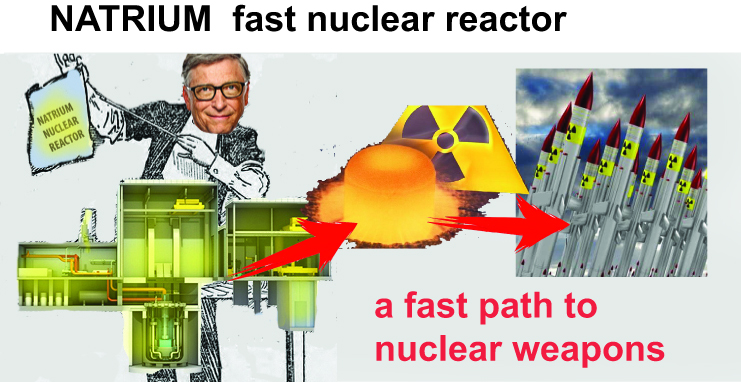
“fast breeder reactor” types “are proliferation nightmares.“
Continuing to support nuclear energy at the expense of faster and cheaper alternatives for cutting greenhouse gas emissions is a losing strategy.“
Scientists Warn Experimental Nuclear Plant Backed by Bill Gates Is ‘Outright Dangerous’ “Gates has continually downplayed the role of proven, safe renewable energy technology in decarbonizing our economy.” Common Dreams ANDREA GERMANOS, November 17, 2021 Officials announced Tuesday that the small city of Kemmerer, Wyoming would be the site of a new Bill Gates-backed nuclear power project—an initiative whose proponents say would provide climate-friendly and affordable energy but which some scientists warn is a dangerous diversion from true energy solutions.
The experimental Natrium nuclear power plant will be at the site of the coal-fired Naughton Power Plant, slated for retirement in 2025, though siting issues are not yet finalized. The company behind the project is TerraPower. Gates, who helped found TerraPower, is chairman of the board.
Mr. Gates,” nuclear expert Arnie Gundersen wrote in an open letter in August, Natrium “is following in the footsteps of a 70-year-long record of sodium-cooled nuclear technological failures. Your plan to recycle those failures and resurrect liquid sodium again will siphon valuable public funds and research from inexpensive and proven renewable energy alternatives.”………….
A feature of the future plant, TerraPower says, is “a molten salt-based energy storage system”—technology it claims represents “a significant advance over the light water reactor plants in use today.”
At a June press conference, Gates said Natrium was poised to “be a game-changer for the energy industry.” In a Tuesday tweet, Republican Sen. John Barrasso of Wyoming gave a similar message, saying “the Natrium reactor is the future of nuclear energy in America.”
While the company asserts the safety of Natrium’s sodium-cooled fast reactor, a report released in March by the Union of Concerned Scientists, entitled “Advanced” Isn’t Always Better, casts doubt on those claims.
UCS’s Elliott Negin highlighted the analysis in a June blog post, writing:
In fact, according to the UCS report, sodium-cooled fast reactors would likely be less uranium-efficient and would not reduce the amount of waste that requires long-term isolation. They also could experience safety problems that are not an issue for light-water reactors. Sodium coolant, for example, can burn when exposed to air or water, and the Natrium’s design could experience uncontrollable power increases that result in rapid core melting.
“When it comes to safety and security, sodium-cooled fast reactors and molten salt–fueled reactors are significantly worse than conventional light-water reactors,” says [report author Edwin] Lyman. “High-temperature gas-cooled reactors may have the potential to be safer, but that remains unproven, and problems have come up during recent fuel safety tests.”
Fast reactors have another major drawback. “Historically,” the report points out, “fast reactors have required plutonium or [highly enriched uranium]-based fuels, both of which could be readily used in nuclear weapons and therefore entail unacceptable risks of nuclear proliferation and nuclear terrorism.” Some fast reactors, including the Natrium, will initially use a lower-enriched uranium fuel, called high-assay low-enriched uranium, which poses a lower proliferation risk than highly enriched uranium, but it is more attractive to terrorists seeking nuclear weapons than the much lower-enriched fuel that current light-water reactors use.
Continue reading‘The graveyard of the Earth’: inside City 40, Russia’s deadly nuclear secret
The city’s residents know the truth, however: that their water is contaminated, their mushrooms and berries are poisoned, and their children may be sick. Ozersk and the surrounding region is one of the most contaminated places on the planet, referred to by some as the “graveyard of the Earth”.
City 40’s inhabitants were told they were “the nuclear shield and saviours of the world”
From the late 1940s, people here started to get sick and die: the victims of long-term exposure to radiation.
‘The graveyard of the Earth’: inside City 40, Russia’s deadly nuclear secret, https://www.theguardian.com/cities/2016/jul/20/graveyard-earth-inside-city-40-ozersk-russia-deadly-secret-nuclear Samira Goetschel, Wed 20 Jul 2016 Ozersk, codenamed City 40, was the birthplace of the Soviet nuclear weapons programme. Now it is one of the most contaminated places on the planet – so why do so many residents still view it as a fenced-in paradise?
“Those in paradise were given a choice: happiness without freedom, or freedom without happiness. There was no third alternative.” (From the dystopian novel We, by Yevgeny Zamyatin, 1924)
Deep in the vast forests of Russia’s Ural mountains lies the forbidden city of Ozersk. Behind guarded gates and barbed wire fences stands a beautiful enigma – a hypnotic place that seems to exist in a different dimension.
Codenamed City 40, Ozersk was the birthplace of the Soviet nuclear weapons programme after the second world war. For decades, this city of 100,000 people did not appear on any maps, and its inhabitants’ identities were erased from the Soviet census.
Today, with its beautiful lakes, perfumed flowers and picturesque tree-lined streets, Ozersk resembles a suburban 1950s American town – like one of those too-perfect places depicted in The Twilight Zone.
Continue readingScoMo Ingenious EV Plan: Australian Prime Minister Scott Morrison, leading climate action blocker, stretching the truth again? — One Finite Planet
“This is coal”: Scott Morrison’s ‘Coalaphobia’ speech. After a long history resisting action on climate change, the Australian government finally ‘committed’ to net zero by 2050, and then did an about face, and announced support for electric vehicles. Or did they? Background. Relevance: A Series On Political Influencers. The Australian Government And The Democracy Failure […]
ScoMo Ingenious EV Plan: Australian Prime Minister Scott Morrison, leading climate action blocker, stretching the truth again? — One Finite Planet
1 This month.


PETITION – To: Prime Minister Anthony Albanese and the Australian Labor Government
Chernobyl: The Lost Tapes – A good documentary on Chernobyl on SBS available On Demand for the next 3 weeks– https://www.sbs.com.au/ondemand/tv-program/chernobyl-the-lost-tapes/235274195556
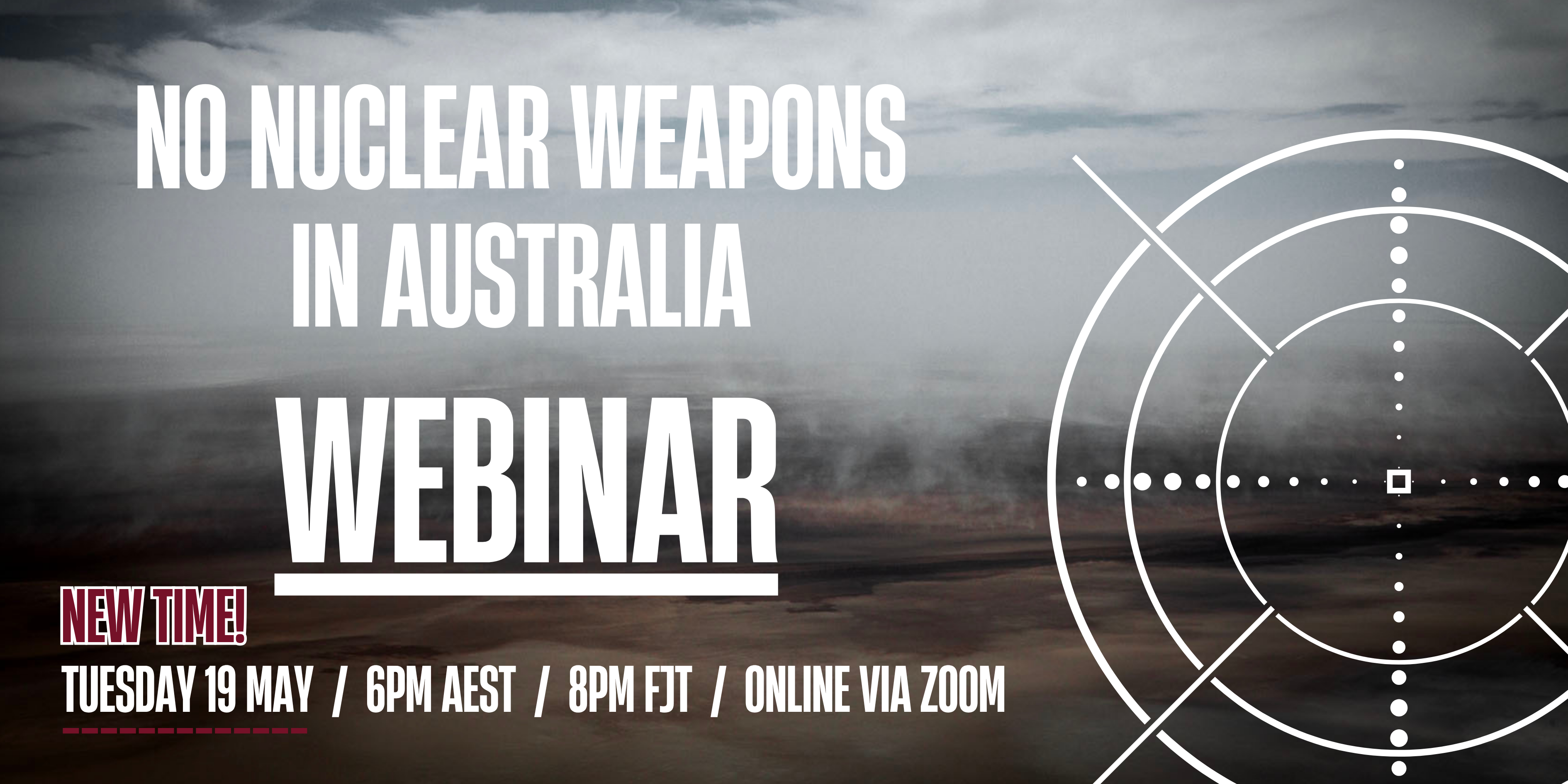
19 May – Webinar- Webinar: No Nuclear Weapons in Australia
Start: 2026-05-19 18:00:00 UTC Canberra, Melbourne, Sydney (GMT+10:00)
End: 2026-05-19 19:30:00 UTC Canberra, Melbourne, Sydney (GMT+10:00)
20 May – Webinar – The dangerous world of AUKUS, US, military occupation and suppression of dissent

National Webinar, 20th May, 2026, 6.30pm AEST. Confronting laws restricting/suppressing protest speech and action
Speakers: Former Sen. Rex Patrick, Lawyer Nick Hanna ,Arthur Rorris ,Jorgen Doyle, Sen David Shoebbridge,
Facilitator Kelley Tranter.

of the week – Australians for War Powers Reform (AWPR)
To see nuclear-related stories in greater depth and intensity
 Antinuclear