Questions still remain on the suspicious death of nuclear worker Karen Silkwood


Karen Gay Silkwood (February 19, 1946 – November 13, 1974) was an American chemical technician and labor union activist known for raising concerns about corporate practices related to health and safety of workers in a nuclear facility. Following her mysterious death, which received extensive coverage, her estate filed a lawsuit against chemical company Kerr-McGee, which was eventually settled for $1.38 million. Silkwood was portrayed by Meryl Streep in Mike Nichols‘ 1983 Academy Award-nominated film Silkwood.
She worked at the Kerr-McGee Cimarron Fuel Fabrication Site plant near Crescent, Oklahoma, United States. Silkwood’s job was making plutonium pellets for nuclear reactor fuel rods. This plant experienced theft of plutonium by workers during this era. She joined the union and became an activist on behalf of issues of health and safety at the plant as a member of the union’s negotiating team, the first woman to have that position at Kerr-McGee. In the summer of 1974, she testified to the Atomic Energy Commission about her concerns.
For three days in November, she was found to have plutonium contamination on her person and in her home. That month, while driving to meet with David Burnham, a New York Times journalist, and Steve Wodka, an official of her union’s national office, she died in a car crash under unclear circumstances.
Her family sued Kerr-McGee on behalf of her estate. In what was the longest trial up until then in Oklahoma history, the jury found Kerr-McGee liable for the plutonium contamination of Silkwood, and awarded substantial damages. These were reduced on appeal, but the case reached the United States Supreme Court in 1979, which upheld the damages verdict. Before another trial took place, Kerr-McGee settled with the estate out of court for US $1.38 million, while not admitting liability. https://en.wikipedia.org/wiki/Karen_Silkwood
Questions Still Remain In Suspicious Death Of Karen Silkwood
Anniversary of the mysterious death of Karen Silkwood

Massimo Greco https://www.facebook.com/groups/361888987167863/ 13 Nov 21, Museum of the Gulf Coast
This Day In History.…..On November 13, 1974, 28-year-old Karen Silkwood, who is from Nederland, is killed in a car accident near Crescent, Oklahoma, north of Oklahoma City. Silkwood worked as a technician at a plutonium plant operated by the Kerr-McGee Corporation, and she had been critical of the plant’s health and safety procedures.
Silkwood had an appointment with a union staff representative and a New York Times investigative reporter. At this meeting, she was to provide documentation to the reporter, showing charges that Kerr-McGee had been negligent in quality control and had falsified records were justified.
Police were summoned to the scene of an accident along Oklahoma’s State Highway 74: Silkwood had somehow crashed into a concrete culvert. She was dead by the time help arrived. An autopsy revealed that she had taken a large dose of Quaaludes before she died, which would likely have made her doze off at the wheel; however, an accident investigator found skid marks and a suspicious dent in the Honda’s rear bumper, indicating that a second car had forced Silkwood off the road.
The documents she was to have turned over to the reporter were never found.Silkwood’s father sued Kerr-McGee, and the company eventually settled for $1.3 million, minus legal fees. Kerr-McGee closed its Crescent plant in 1979.
Is nuclear power theway forward to combat the climate crisis – Allison Macfarlane cautions.
 | |||
|

Is nuclear power the way forward to combat the climate crisis?
Nuclear power can go horribly wrong and is notorious for cost overruns, but it is gaining high-profile champions. Aljazeera, By Patricia Sabga 12 Nov 2021 ”’ ………………………
Allison Macfarlane is a professor and the director of the School of Public Policy and Global Affairs at the University of British Columbia. Before that, she was chair of the US Nuclear Regulatory Commission.
She wrote an article for Foreign Affairs (paywall) this summer on the subject of nuclear energy and climate goals. Her arguments generated some pointed pushback (paywall) as world leaders descended on Glasgow, Scotland for COP26.
Macfarlane describes herself as neither a proponent nor a detractor of nuclear power, but an analyst who prefers to give a “measured analytical response” to questions surrounding nuclear energy.
She recently shared her views with Al Jazeera Digital’s Managing Business Editor Patricia Sabga about nations building more nuclear power plants to battle the climate crisis.
Allison Macfarlane: ……………… But I live in a pragmatic, realistic world. And I don’t think, at least in the next 10 or 20 years, that nuclear power will be able to have a big impact on reducing carbon emissions because we can’t build new plants fast enough.
PS: And why is that? Why can’t we build new plants fast enough?
AM: It’s complicated. These are mega projects, and they require a level of quality control and programme management that doesn’t exist in a lot of other industries. And though people may promote some of the newer reactor designs as being easy to produce in factories, if we look at the existing reactors that have been produced in factories – for instance, the ones that are under construction in Georgia, the Vogtle plant [where two additional reactor units are under construction] – the experience in factories has not been good.
The factory that built the modules for the Georgia plant built them incorrectly for years. They welded them incorrectly and they had to be rewelded at the reactor site. That factory led in large part to the bankruptcy of Westinghouse.
PS: You mentioned newer reactor designs. What are these designs and what challenges do they face?
AM: First of all, a lot of them aren’t new. A lot of these designs are 70 years old or older. But given that, there are new sorts of twists to some of these designs.
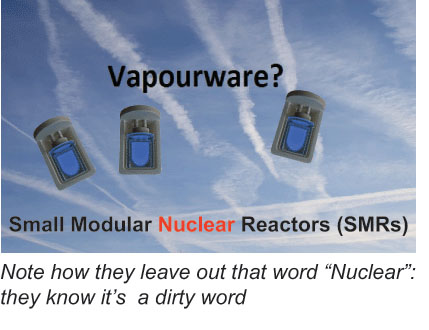
Many of them exist only on paper, or as small-scale models. And the way engineering works is that you design something – these days, it’s computer-assisted – and then you build a scale model. When you build the scale model, you see where you are wrong in your computer design, and so you fix that. Then you have to build the full-scale design. And when you scale up again, there will be things that you’ve gotten wrong in the scale model, and you’re going to have to fix that.
And so, for many of these designs, we’re still at the computer model stage. We haven’t done the other steps. And those steps take years. And when you get to the full-scale model, that’s really expensive. Where’s that money coming from?
PS: Let’s talk about expense then. In terms of just cost, how does nuclear stack up to say wind or solar?
AM: It’s significantly more expensive. Of course, it depends on what solar you’re talking about. But if you look at Lazard’s recent analysis of levelized costs of energy [an analysis that takes into account how much it costs to finance and build a power plant and to keep it running throughout its lifetime and then divides that cost by how much energy it kicks out each year] and you look at solar PV [photovoltaic] utility scale, and wind, they are significantly cheaper than nuclear.
AM: Expenses are dominated by the capital costs of plant construction. These plants are very expensive to build. I think we’re up to at least $14bn a plant for the Vogtle plants in Georgia. That’s for a thousand gigawatts generation capacity. They’re just really expensive to build and they take a long time to build. And so not only do you have the cost of the capital of building the plant, but you have the cost of the interest on the capital, which becomes a big cost.
That’s really what hurts nuclear. Now there are claims made about the small modular reactors that they’ll be cheaper. But because nobody’s ever built one, and nobody’s established the supply chains to build them and to operate them, we really have no idea what those will cost……………..
[on intermittency] Ten years ago, it was a really big deal. It’s becoming less of a deal, I think. What’s interesting to note is that when you talk to utility companies, they are really interested in having plants be load following [responding to surges and ebbs in power demand]. They’re really orienting themselves towards dealing with intermittency. But that means they need a plant that can ramp up and down quickly. Nuclear can’t do that. The existing nuclear fleet can’t do that. They’re either on or they’re off, and it takes a long time for them to ramp up to full scale on………….. https://www.aljazeera.com/economy/2021/11/12/is-nuclear-power-the-way-forward-to-combat-the-climate-crisis
More of the same on nuclear weapons? — Beyond Nuclear International

Biden’s nuclear weapons spending differs little from Trump’s
More of the same on nuclear weapons? — Beyond Nuclear International
Glasgow Wrap: Reactions to the ‘Glasgow Climate Pact’ — RenewEconomy

“Glasgow Pact” receives mixed reviews; praise for delivering a turning point for coal, while falling short of bridging gap to 1.5 degrees. The post Glasgow Wrap: Reactions to the ‘Glasgow Climate Pact’ appeared first on RenewEconomy.
Glasgow Wrap: Reactions to the ‘Glasgow Climate Pact’ — RenewEconomy
November 14 Energy News — geoharvey

COP26: ¶ “COP26 Climate Deal Includes Historic Reference To Fossil Fuels But Doesn’t Meet The Urgency Of The Crisis” • Nearly 200 nations reached a climate agreement at COP26. It references the role of fossil fuels in the climate crisis for the first time. India made an 11th-hour objection, however, that watered down the language […]
November 14 Energy News — geoharvey
The Australian Radiation Protection and Nuclear Safety Agency (ARPANSA) must be required to fully inform the Kimba community of the safety and financial risks of the nuclear dump

[importance of] the community at Kimba getting their own full and independent assessment and report on the government’s intentions for Napandee assisted by both government funding and by access to all records and information for that purposeAnother issue forThe Australian Radiation Protection and Nuclear Safety Agency (ARPANSA)
NAPANDEE ASSESSMENT
It is the intention of ANSTO to store intermediate level nuclear waste at the proposed nuclear waste management facility at Napandee near Kimba in South Australia for an indefinite period but suggested to be 30 years

Since it is merely the storage of the intermediate level waste ANSTO is suggesting that it is not necessary to obtain any licences from ARPANSA for that purpose and consequently will not be making any application to ARPANSA in that regard
This is clearly against the concept of the enabling legislation and irrespective of this suggestion ARPANSA as the statutory regulator must insist on ANSTO having an appropriate licences for both the storage of the intermediate waste at Napandee and for the construction of the required facility for the increased storage capacity at Lucas Heights
Should there be any reluctance by ARPANSA in enforcing the licensing compliance by ANSTO then legal action will need to be taken by way of mandamus by interested parties which would be the Kimba community to make certain that the required licences will be sought by ANSTO
In order to ensure that the community position is fully protected ARPANSA should provide adequate funding either directly or by
government grant to the community to enable them to obtain proper and detailed legal advice and to undertake any appropriate actions that may be required or necessary to protect their position
This should be coupled with the community at Kimba getting their own full and independent assessment and report on the government’s intentions for Napandee assisted by both government funding and by access to all records and information for that purpose
This is an essential requirement for enabling the community at Kimba to understand and negotiate with full knowledge of the safety case required for the Napandee facility as the independent assessment will no doubt be critical of the inappropriate and unsuitable site selection and nature of the facility by way of above the ground storage
The special rapporteurs of the United Nations Human Rights Council for the sound management and disposal of hazardous substances including nuclear wastes and for the rights of indigenous peoples are aware of the Kimba community concerns and will monitor the situation and if necessary take appropriate action to ensure protection of their human rights
Issue for The Australian Radiation Protection and Nuclear Safety Agency (ARPANSA): IS ANSTO’s NUCLEAR REACTOR VIABLE?
ISSUES FOR URGENT RESOLUTION BY ARPANSA
The Australian Radiation Protection and Nuclear Safety Agency (ARPANSA) is the national regulator of all federal government aspects of nuclear and radiation sources and activities with the prime objective of protecting and keeping safe the nation’s population and environment from the harmful effects of radiation and other nuclear pursuits.
In its regulatory role ARPANSA will shortly have to address issues linked to nuclear waste and collectively are probably the most important and significant situation that has had to be dealt with by ARPANSA since its foundation over twenty years ago
ANSTO VIABILITY
The first is the need for ARPANSA to obtain an independent andcomprehensive assessment and report on the proposed increased
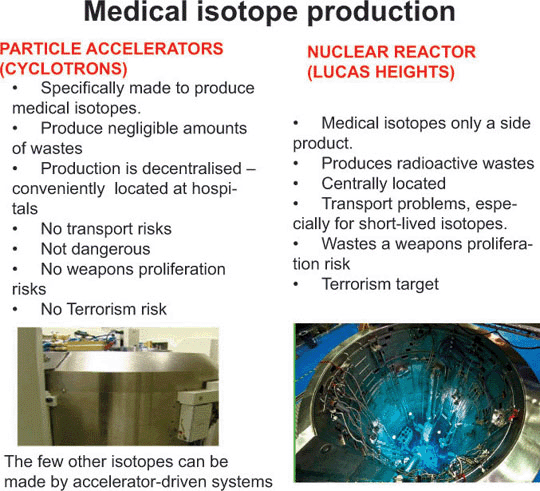
production of nuclear medicine by reactor generation by the AustralianmNuclear Science and Technology Organisation (ANSTO) at its Lucas Heights precinct
The reason behind this is that ANSTO is relying on its production of nuclear medicine as the mainstay of its activities and intends to become a major international producer and exporter of reactor generated nuclear medicine.
However this appears to be a misconceived and purposeless intention since nuclear medicine generated by reactor isotopes is in significant decline throughout the world due to its dangerous inherent state in being used in medical diagnosis and treatment
There is a world wide turning away by the medical profession from using reactor generated nuclear medicine because of its sever danger to patients coupled with its extremely high production costs.
More alternatives to this form of nuclear medicine are already extensively used as they are far safer and pose little risk to patients and additionally are much cheaper to produce with the involvement of major international drug companies
ARPANSA should seek the independent and expert assessment and review of the proposal and intentions by ANSTO as part of the licensing process for the increased storage facility for nuclear waste at Lucas Heights recently proposed by ANSTO
The assessment and review must include a financial examination to determine commercial and economic viability of the activities and proposals by ANSTO as this is an essential ingredient of the qualifications for the licence for the increased storage capacity
Since the suitably qualified experts for the assessment are not in Australia (as in any case this could create a conflict situation) ARPANSA will need to rely on and engage the highly qualified experts in this field available
from overseas
From the general tenor and prescriptions of the Australian Radiation Protection and Nuclear Safety Act 1998 and applicable regulations – which are referred to as the enabling legislation – it seems quite certain that the commercial and financial aspects must be included by ARPANSAin considering an application for a licence
This should be even more imperative since the funds sought by ANSTO for the increased storage capability at Lucas Heights are being provided by the federal government which is in direct and colloquial terms taxpayers’ money and it is an obligation of the government to protect public revenue and expenditure
There has never been any publicly released information by ANSTO on the financial aspects of the production and sale of its nuclear medicine but as justification for the production ANSTO has relied on the emotivearguments that in their lifetime everyone has or will have a need for nuclear medicine.
ANSTO claims that it has given to the government a recently commissioned independent study into future nuclear medicine supply in Australia and this study should be given to ARPANSA with all supporting information for assistance for its assessment and review as part of the licensing process.
Glasgow Brief: Australia given “Colossal Fossil” award as COP26 goes into overtime — RenewEconomy

Australia recognised as the worst performer in Glasgow, as the COP26 talks set to run for at least one extra day. The post Glasgow Brief: Australia given “Colossal Fossil” award as COP26 goes into overtime appeared first on RenewEconomy.
Glasgow Brief: Australia given “Colossal Fossil” award as COP26 goes into overtime — RenewEconomy
Taylor’s latest $500m carbon capture fund may already be headed for scrapheap — RenewEconomy

Taylor’s $500 million ‘low emissions tech’ fund that will support carbon capture and storage technologies is heading for defeat in the Senate. The post Taylor’s latest $500m carbon capture fund may already be headed for scrapheap appeared first on RenewEconomy.
Taylor’s latest $500m carbon capture fund may already be headed for scrapheap — RenewEconomy
Morrison chooses fossil fuels over farmers in “laughable” net zero modelling — RenewEconomy

Government modelling shows Morrison had a choice between two scenarios – one that favoured fossil fuels and another that favoured farmers. It chose fossil fuels. The post Morrison chooses fossil fuels over farmers in “laughable” net zero modelling appeared first on RenewEconomy.
Morrison chooses fossil fuels over farmers in “laughable” net zero modelling — RenewEconomy
Australia has highest coal power emissions per capita in the world — RenewEconomy

Australia has the most emissions per capita from coal power in the world, new analysis reveals. The post Australia has highest coal power emissions per capita in the world appeared first on RenewEconomy.
Australia has highest coal power emissions per capita in the world — RenewEconomy
One pumped hydro project still standing as South Australia heads to 100pct wind and solar — RenewEconomy

There appears to be only one pumped hydro project left in the race to deliver long term storage to South Australia as it charges to 100 per cent wind and solar. The post One pumped hydro project still standing as South Australia heads to 100pct wind and solar appeared first on RenewEconomy.
One pumped hydro project still standing as South Australia heads to 100pct wind and solar — RenewEconomy
It’s time to reform solar rebate scheme and adapt it for household batteries — RenewEconomy

Simple modifications to the SRES program could deliver 10,000MW of batteries by 2030, and provide a buffer to help manage coal closures. The post It’s time to reform solar rebate scheme and adapt it for household batteries appeared first on RenewEconomy.
It’s time to reform solar rebate scheme and adapt it for household batteries — RenewEconomy
Australia’s biggest battery discharges at full capacity for first time — RenewEconomy

Australia’s biggest battery discharges at full capacity for first time, suggesting it will be ready in time for the peak summer period. The post Australia’s biggest battery discharges at full capacity for first time appeared first on RenewEconomy.
Australia’s biggest battery discharges at full capacity for first time — RenewEconomy
1 This month.

PETITION – To: Prime Minister Anthony Albanese and the Australian Labor Government
Chernobyl: The Lost Tapes – A good documentary on Chernobyl on SBS available On Demand for the next 3 weeks– https://www.sbs.com.au/ondemand/tv-program/chernobyl-the-lost-tapes/235274195556

19 May – Webinar- Webinar: No Nuclear Weapons in Australia
Start: 2026-05-19 18:00:00 UTC Canberra, Melbourne, Sydney (GMT+10:00)
End: 2026-05-19 19:30:00 UTC Canberra, Melbourne, Sydney (GMT+10:00)
20 May – Webinar – The dangerous world of AUKUS, US, military occupation and suppression of dissent

National Webinar, 20th May, 2026, 6.30pm AEST. Confronting laws restricting/suppressing protest speech and action
Speakers: Former Sen. Rex Patrick, Lawyer Nick Hanna ,Arthur Rorris ,Jorgen Doyle, Sen David Shoebbridge,
Facilitator Kelley Tranter.

of the week – Australians for War Powers Reform (AWPR)
To see nuclear-related stories in greater depth and intensity
 Antinuclear