Those non existent ”small nuclear reactors” are a dangerous fantasy

Extract from The nuclear industry’s updated songsheet remains outdated, Pearls and Irritations, By Mark Diesendorf, 22 Oct 21,
” ……………….Misleading new nuclear songs
Many people understand that existing nuclear reactors are dangerous, very expensive, produce dangerous wastes that must be managed for thousands of years, and can assist governments to develop nuclear weapons. To deflect attention, the nuclear industry is nowadays creating the false impression that new reactors exist that could solve these major problems while contributing to climate mitigation. These hypotheticals are the so-called “small modular reactors” (SMRs), small enough to be distributed around a country and modular in the sense that they could be mass-produced by the thousand in factories and erected rapidly.
However, the actual situation is that SMRs don’t exist — they are paper reactors fuelled on ink and hot air. They could not be installed in Australia for at least 15 years, if ever. By that time, given the political will, we could have an electricity system that’s entirely powered by renewable energy, mainly solar photovoltaics (PV) and wind, supplemented by hydro.
The reason why past and current generations of commercial nuclear power reactors are very big is to obtain economies of scale. Even so, nuclear electricity costs three to five times that of large-scale wind and solar PV (see Lazard and CSIRO). After adding storage to smooth the variability of wind and solar, renewables are still cheaper than nuclear. Nuclear costs have been increasing while wind and especially solar costs continue to fall. SMRs would have to be mass-produced in hundreds, possibly thousands, to overcome the loss of economy of scale and, even then, their electricity would still cost much the same as from existing big nuclear power stations.
Fortunately, there are no orders for multiple SMRs, because the risk of proliferation of nuclear weapons would be greatly increased by distributing SMRs around the countryside. Reducing proliferation risk or increasing safety or improving waste management would all increase cost. SMRs that simultaneously solve proliferation, safety and waste management, while reducing costs, are a dangerous fantasy…………….. https://johnmenadue.com/the-nuclear-industrys-updated-songsheet-remains-outdated/
ARPANSA admits that no safety assessment exists, for nuclear submarines in Adelaide
Following a search from ARPANSA’s senior scientist, the agency determined that such a planning or safety document “does not exist”.
No safety assessment for nuclear subs in Adelaide https://indaily.com.au/news/2021/10/22/no-safety-assessment-for-nuclear-subs-in-adelaide/
The federal government has not undertaken a safety assessment or planning study for the prospect of docking nuclear-powered submarines in Adelaide, according to documents obtained by independent senator Rex Patrick. Thomas Kelsall@Thomas_Kelsall
The Port Adelaide and Outer Harbour docks are set to be the building spot for at least eight nuclear-powered submarines under the terms of the new “AUKUS” trilateral security pact, announced by Prime Minister Scott Morrison in September.
But the controversial deal, which saw Australia scrap its $90 billion contract with France to build 12 diesel-powered boats, drew criticism from anti-nuclear activists and local residents concerned about the prospect of nuclear reactors in their suburbs.
No nuclear-powered warship has ever visited Port Adelaide or Outer Harbour.
Patrick, a former submariner and critic of the new subs deal, on September 21 filed a Freedom of Information request to the Australian Radiation Protection and Nuclear Safety Agency (ARPANSA) for “any documents that go to the planning or prospects of a nuclear vessel visiting Port Adelaide or Outer Harbour”.
ARPANSA is responsible for providing safety assessment to the Visiting Ships Panel (Nuclear) – an interdepartmental committee overseeing arrangements for visiting nuclear ships and associated safety requirement.
Following a search from ARPANSA’s senior scientist, the agency determined that such a planning or safety document “does not exist”.
“The ARPANSA Senior Scientist, who holds the responsibility for searching ARPANSA records of documents that go to the planning or prospects of a nuclear vessel, … has instructed me that ARPANSA, at this point in time, does not have a document specifically relating to the terms of your request,” ARPANSA FOI Officer John Templeton wrote to Patrick on Thursday.
A spokesperson for the agency confirmed to InDaily it has not been asked by the Defence Department to undertake a safety assessment or planning study of the site.
Patrick said the revelation shows that the Morrison’s Government’s nuclear submarines program is “a huge exercise in filling in the blanks”.
“One might have thought that some work would have been undertaken to consider Adelaide’s suitability for at least nuclear powered warship visits before the Prime Minister’s big announcement last month,” Patrick said.
“That is a task that ARPANSA undertakes on a regular basis in relation to other locations including HMAS Stirling, Fremantle, Darwin and Brisbane.
“While the safety assessments required for nuclear submarine construction and long-term berthing facilities would be a very complex undertaking, a port visit safety assessment of Port Adelaide and Outer Harbour would have been minimum due diligence before the Prime Minister promised his nuclear subs would be built in Adelaide.”
Patrick said the lack of safety assessment means Adelaide’s docks “could not currently host even a single-day visit by any nuclear powered submarine”.
“As is so often the case, Scott Morrison’s Government hasn’t done the basic preliminaries. It’s big on announcements, but fails conspicuously on due diligence and competent project management,” he said.
ARPANSA CEO Carl-Magnus Larsson told a parliamentary last week that the agency was briefed on the plan to shift from diesel to nuclear submarines around the beginning of July.
A spokesperson for ARPANSA said the agency “has not been asked to undertake a safety assessment and/or planning study on docking nuclear submarines in Port Adelaide or Outer Harbour”.
“ARPANSA will only undertake a radiological port assessment if Defence (Navy) determines that a nuclear-powered vessel can visit a specified port,” the spokesperson said.
“Neither Adelaide nor Outer Harbor have been subject to a visit of a nuclear-powered vessel.”
InDaily contacted the Department of Defence for comment.
Greenland soon to reinstate its ban on uranium mining
Within weeks, Greenland’s parliament, the Inatsisartut, is expected to
pass a bill reinstating a ban on uranium mining that was lifted in 2013
following pressure from mining companies. “The Greenlandic minister with
responsibility for minerals has publicly stated that a ban on uranium
mining will put an end to all future uranium mining, full stop,” Mariane
Paviasen, a Greenland MP and leading activist in the anti-uranium mining
movement, Urani? Naamik (Uranium? No), told Green Left.
Green Left 20th Oct 2021
https://www.greenleft.org.au/content/greenland-set-restore-uranium-mining-ban
There are no real climate leaders yet – who will step up at Cop26? – Greta Thunberg
Greta Thunberg Like other rich nations, the UK is more talk than action on the climate crisis. Something needs to change in Glasgow.
The UN secretary general, António Guterres, called the recent IPCC report on the climate crisis a “code red” for humanity.
“We are at the verge of the abyss,” he said. You might think those words would sound some kind of alarm in our society. But, like so many times before, this didn’t happen. The denial of the climate and ecological crisis runs so deep that hardly anyone takes real notice any more.
Since no one treats the crisis like a crisis, the existential warnings keep on drowning in a steady tide of greenwash and everyday media news flow. And yet there is still hope, but hope all starts with honesty. Because science doesn’t lie. The facts are crystal clear, but we just refuse to accept them. We refuse to acknowledge that we now have to choose between saving the living planet or saving our unsustainable way of life. Because we want both. We demand both.
Guardian 21st Oct 2021
The nuclear industry’s new spin is the same old outdated propaganda
The nuclear industry’s updated songsheet remains outdated https://johnmenadue.com/the-nuclear-industrys-updated-songsheet-remains-outdated/By Mark DiesendorfOct 21, 2021 The campaign for nuclear power stations in Australia defies the unstoppable rise of renewables and should be rejected by governments and the electorate — it’s a technology whose time has passed.
With the Glasgow climate summit approaching and the government’s announcement that Australia would buy nuclear-powered submarines instead of diesel, the nuclear industry is campaigning more vocally for nuclear power stations in Australia. Their revised songsheets include both resuscitated old lines that have been rejected many times and several relatively new songs of a pernicious nature.
Revival of old songs
It is claimed that electricity grids need baseload power stations, such as coal or nuclear, that can run 24/7 at full rated power, except when they break down or undergo maintenance and refuelling. But nowadays energy experts who are not committed to the nuclear industry recognise that the variability of wind and solar must be balanced with storage, new transmission links, demand response, and/or flexible power stations that can start up in seconds to minutes and can vary their output rapidly. These include hydroelectricity with a dam, pumped hydro (with two dams at different elevations), batteries, concentrated solar thermal with storage, and open-cycle gas turbines that can burn biofuels and green hydrogen and ammonia.
Even modern nuclear reactors cannot compete in flexibility of operation with these technologies and measures. Furthermore, operating in a more flexible mode carries economic penalties for nuclear, which is already exorbitantly expensive…………………….
Another item on the revised nuclear songsheet is the claim that the disaster at Fukushima Daiichi was entirely the fault of the tsunami, that it was all just “a natural event”. Yet the choice of technology cannot be exonerated, because it resulted in mass evacuation, compensation payments (huge in total but inadequate for individuals), destruction of the local agriculture and fishing industries, temporary loss of national tourism, temporary collapse of the electricity grid, massive removal of radioactive soil and plants, a multi-decades-long continuing process to decommission the reactors, and the need to import vast quantities of fossil fuels. (The latter would have been greatly reduced if the government’s prior commitment to nuclear hadn’t resulted in its neglect of renewable energy.) Total costs have been estimated at over US$500 billion, while the nuclear power station was insured for only US$1.5 billion.
The scale of the disaster resulted from the choice of nuclear technology. Yet at Kamisu, on the coast to the south of Fukushima, a wind farm located in the surf survived the tsunami and continued to generate electricity until the grid went down.
Another new pro-nuclear song identifies a spike in the wholesale electricity price and blames it on renewables and the absence of nuclear. Yet wholesale prices in electricity markets fluctuate up and down according to supply and demand. With increasing penetration of wind and solar PV into the grid, these fluctuations are superposed on a declining trend in wholesale electricity price. This decline results from the fact that the costs of operating a wind or solar farm are almost zero, and so these technologies have the top priority to operate (see Merit Order Effect). In the UK, electricity prices are higher than necessary because the government has overruled market principles and given priority in operation to nuclear power, despite the fact that it has much higher operating costs than wind and solar PV.
Another tactic used by nuclear supporters in recent years is to claim that 100 per cent renewable electricity scenarios would occupy vast areas of land, compete with food production and reduce biodiversity. Yet the reality is that most wind and solar farms are erected on agricultural or marginal land. Although wind farms can span large areas, the land area actually occupied by the turbine, access roads and substation typically amounts to 1 to 2 per cent of the land spanned. Wind farms are compatible with almost all forms of agriculture. Although the presence of solar farms excludes some agriculture, they can be erected sufficiently high above ground for sheep to shelter beneath them. Both wind and solar farms contribute valuable rent to farmers. Rooftop solar occupies no land.
A rather desperate tactic used by a few pro-nuclear debaters is to claim falsely that a recent report by a leading solar research organisation has admitted that solar energy has failed. Without seeing the actual report, it is difficult to refute the claim in the heat of debate and so the lie may score a debating point. However, when it is checked and exposed after the debate, it can backfire on the perpetrator and their case.
Introducing nuclear power to Australia — including convincing the electorate, local governments and local populations, and building the infrastructure — would take at least 15 years, while taking financial resources away from renewables. But new nuclear power stations could not contribute in time to assist the rapid electricity transition needed for climate mitigation. And once 100 per cent renewable electricity is established with the bulk of energy generation by cheap solar and wind, nuclear power could not compete economically. It’s a technology whose time has passed.
Too slow for climate mitigation
If a national government commits to net zero emissions by 2050 (which may be too late for keeping global heating below 1.5 degrees), then it must achieve zero emissions from all energy (electricity, transport and heat) by about 2040. This is because energy is the least difficult sector to transition to zero emissions. Agriculture and non-energy industrial processes will need more time to reduce emissions and, if possible, to remove carbon dioxide to offset emissions they cannot reduce. Achieving zero energy emissions by 2040 entails achieving zero emissions from electricity by 2035 or preferably 2030, because electrifying transport and heat will take longer than transitioning electricity to renewables. Wind and solar farms can be planned and built in just three years. https://johnmenadue.com/the-nuclear-industrys-updated-songsheet-remains-outdated/
Nuclear power has no place in a green energy future-because of – time delay, success of renewables, huge costs, dangers, weapons connection, and wastes

from Yahoo News, 21 Oct 21, ”…….Practical concerns also temper enthusiasm for a nuclear future. The next generation of reactors, heralded as a game changer by supporters, still haven’t been proven in the real world. Even if those technologies are as revolutionary as advertised, skeptics say it could take decades before they make a real difference in the global energy grid — too long if the worst outcomes of climate change are to be avoided.
Renewable energy technologies can be enough on their own
“The drawbacks to nuclear are compounded by the burgeoning success of renewables — both solar and wind are getting cheaper and more efficient, year after year. There is also a growing realisation that a combination of renewables, smart storage, energy efficiency and more flexible grids can now be delivered at scale and at speed — anywhere in the world.” — Jonathon Porritt, Guardian
The world doesn’t have time to wait for next-gen nuclear
“When it comes to averting the imminent effects of climate change, even the cutting edge of nuclear technology will prove to be too little, too late. Put simply, given the economic trends in existing plants and those under construction, nuclear power cannot positively impact climate change in the next ten years or more.” — Allison Macfarlane, Foreign Affairs
A major ramp-up in nuclear technologies isn’t economically feasible
“While nuclear power may have once been cheaper than wind or solar, the economics have since changed dramatically. Nuclear power plants are very expensive to build and the economics of nuclear power are getting steadily worse. By contrast, renewables continue to come down in price.” — Ian Lowe, Conversation
There’s no way to guarantee that nuclear plants will be safe
“People around the world have witnessed the Three Mile Island, Chernobyl and Fukushima accidents. It is more than enough to believe that a safe nuclear power plant is nothing but a myth.” — Jang Daul, Korea Times
More nuclear power could lead to more nuclear weapons
“Some nations — India and Pakistan, and in all probability Israel — became nuclear powers after originally seeking nuclear technology for research or to develop nuclear power. … This is important: The technology used to turn on lights or charge mobile phones shouldn’t need to involve national or international defence apparatus.” — Editorial, Nature
Nuclear waste is still a major problem
“Nuclear waste lasts for hundreds of thousands of years before they are half-decayed. Our United States government — perhaps the longest continuous government in the world — is only 232 years old. Who will be around to manage uranium wastes?” — David Ross, Courier-Journal
Coal and silicon: The speech that Morrison can use to wow his Glasgow audience — RenewEconomy

The speech that Scott Morrison could give in Glasgow, holding a lump of coal in one hand, and a lump of silicon in the other. The post Coal and silicon: The speech that Morrison can use to wow his Glasgow audience appeared first on RenewEconomy.
Coal and silicon: The speech that Morrison can use to wow his Glasgow audience — RenewEconomy
On net zero, Morrison has forgotten that you don’t negotiate with terrorists — RenewEconomy

Rather than showing leadership, Morrison has allowed the Nationals to dictate the terms of a net zero target. An error that could cost Australia billions. The post On net zero, Morrison has forgotten that you don’t negotiate with terrorists appeared first on RenewEconomy.
On net zero, Morrison has forgotten that you don’t negotiate with terrorists — RenewEconomy
CBA backs mass rollout of small solar farms with hydrogen battery storage — RenewEconomy

Plans to pilot a UNSW-developed “hydrogen storage” solution across tens of sub-5MW solar farms have been underwritten by the Commonwealth Bank. The post CBA backs mass rollout of small solar farms with hydrogen battery storage appeared first on RenewEconomy.
CBA backs mass rollout of small solar farms with hydrogen battery storage — RenewEconomy
Big win for battery storage in another landmark energy market reform — RenewEconomy

Battery storage to get boost from another landmark reform after AEMC dumps failed “do no harm” rule on system strength. The post Big win for battery storage in another landmark energy market reform appeared first on RenewEconomy.
Big win for battery storage in another landmark energy market reform — RenewEconomy
Gina Rinehart needs to re-think her sums on solar and battery storage — RenewEconomy

Australia’s richest person has produced some strange numbers to demonise solar and batteries, as Murdoch media presses nuclear button on renewables. The post Gina Rinehart needs to re-think her sums on solar and battery storage appeared first on RenewEconomy.
Gina Rinehart needs to re-think her sums on solar and battery storage — RenewEconomy
Charging hub: Sydney electric bus depot to lay blueprint for EVs and grid — RenewEconomy

Transgrid and Zenobē Energy join forces to deliver Australia’s most sustainably advanced, electrified depot in NSW – a critical first step 100% electric buses by 2030. The post Charging hub: Sydney electric bus depot to lay blueprint for EVs and grid appeared first on RenewEconomy.
Charging hub: Sydney electric bus depot to lay blueprint for EVs and grid — RenewEconomy
Dead ducks in the middle of the grid: Coal output pushed to record lows by solar — RenewEconomy

Coal generators have been fearing the duck curve for some time. They may never have imagined it would grow this steep, this quickly. The post Dead ducks in the middle of the grid: Coal output pushed to record lows by solar appeared first on RenewEconomy.
Dead ducks in the middle of the grid: Coal output pushed to record lows by solar — RenewEconomy
Rooftop solar sends Victorian power prices to zero every day for two months — RenewEconomy

AEMO’s latest quarterly energy report highlights more negative pricing events, and an average daytime price in Victoria of zero over two months. The post Rooftop solar sends Victorian power prices to zero every day for two months appeared first on RenewEconomy.
Rooftop solar sends Victorian power prices to zero every day for two months — RenewEconomy
October 22 Energy News — geoharvey

Science and Technology: ¶ “This Might Just Look Like Grass, But It Has The Power To Absorb A Load Of Our Carbon Emissions” • Forests, peatlands, deserts, and tundra can all absorb and hold stocks of CO₂. Of all the carbon held in land-based ecosystems, around 34% can be found in grasslands, data from the […]
October 22 Energy News — geoharvey
1 This month.
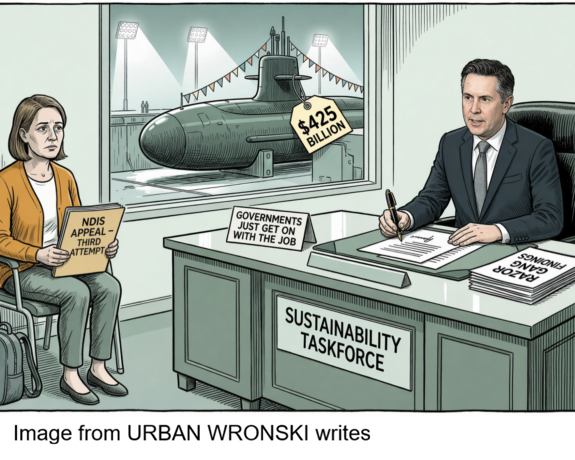

PETITION – To: Prime Minister Anthony Albanese and the Australian Labor Government
Chernobyl: The Lost Tapes – A good documentary on Chernobyl on SBS available On Demand for the next 3 weeks– https://www.sbs.com.au/ondemand/tv-program/chernobyl-the-lost-tapes/235274195556
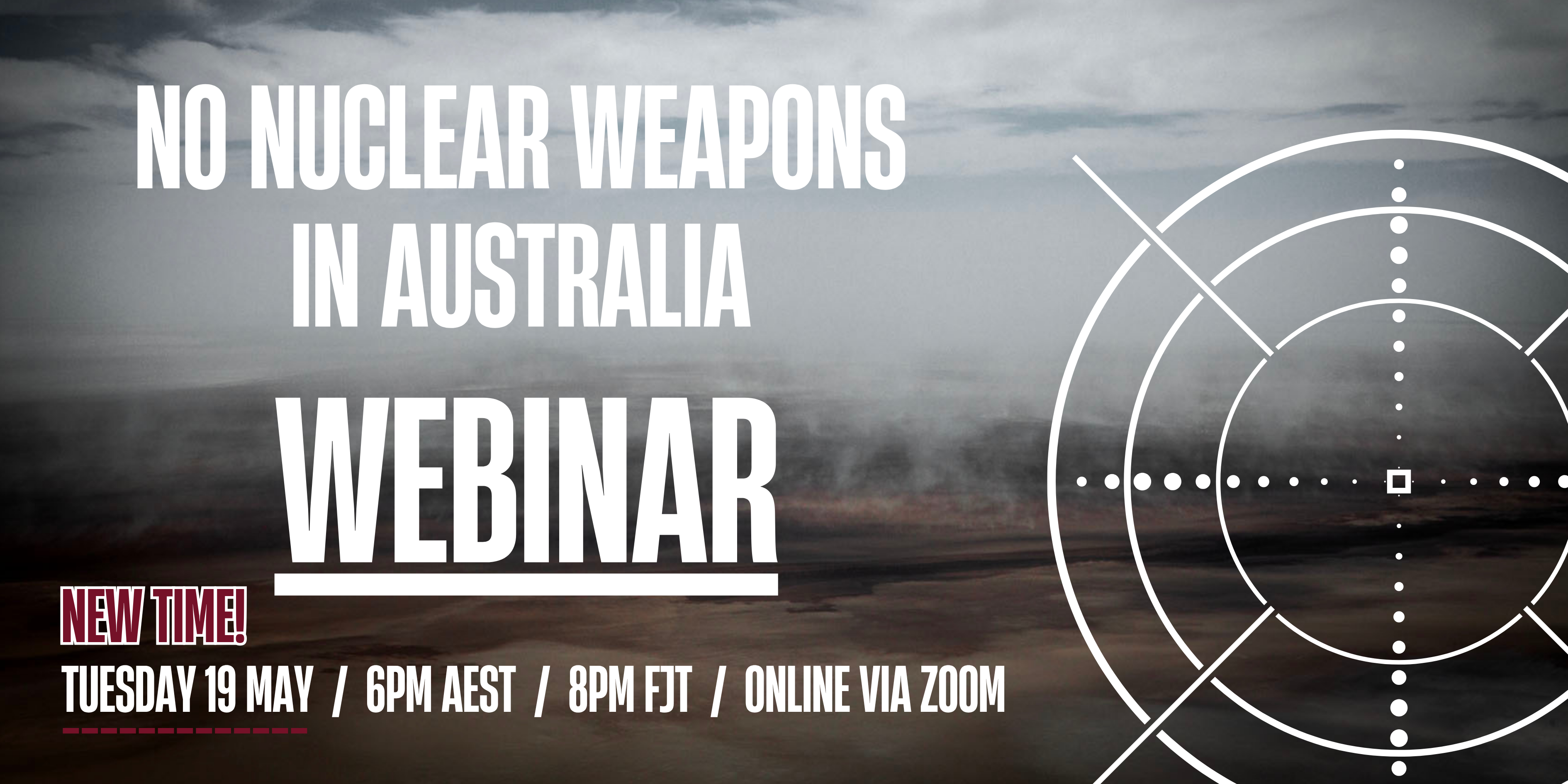
19 May – Webinar- Webinar: No Nuclear Weapons in Australia
Start: 2026-05-19 18:00:00 UTC Canberra, Melbourne, Sydney (GMT+10:00)
End: 2026-05-19 19:30:00 UTC Canberra, Melbourne, Sydney (GMT+10:00)
20 May – Webinar – The dangerous world of AUKUS, US, military occupation and suppression of dissent

National Webinar, 20th May, 2026, 6.30pm AEST. Confronting laws restricting/suppressing protest speech and action
Speakers: Former Sen. Rex Patrick, Lawyer Nick Hanna ,Arthur Rorris ,Jorgen Doyle, Sen David Shoebbridge,
Facilitator Kelley Tranter.

of the week – Australians for War Powers Reform (AWPR)
To see nuclear-related stories in greater depth and intensity
 Antinuclear