‘Sacrifice’: Four Corners looks at the Australian War Memorial’s weapons ties.
Tonight, ABC’s Four Corners, with Michelle Fahy as a researcher, investigates the War Memorial’s ties to weapons makers and its controversial transformation and expansion.
Undue Influence, Michelle Fahy Mar 10, 2025
This is an update on what’s been happening at Undue Influence.
As this newsletter shows, our detailed work last year on Australia’s weapons exports to Israel and the National Anti-Corruption Commission’s refusal to investigate the Robodebt referrals proved critical, given the mainstream media’s lack of interest in properly pursuing either of these issues.
Revolving door database update
You may recall that in August 2023 we announced that we had been successful in securing a grant to research and develop a database to highlight the extent of the revolving door between the government/military/public service and the weapons industry in Australia. We had expected to complete the project in 2024.
However, then came the shocking and deadly terror attacks led by Hamas on southern Israel on 7 October 2023. These were followed by the vastly disproportionate response from Israel against Palestinians in Gaza in what had already been termed a “plausible” genocide by the world’s highest court in January 2024. (Amnesty International has since concluded Israel is conducting a genocide. See Amnesty’s December 2024 report.)
The Israeli military has been using its F-35 fighter jets during its indiscriminate carpet bombing of Gaza. Every F-35 fighter jet built, including Israeli ones, contains Australian parts and components.
To our dismay, the Australian government developed and repeated for many months a simplistic, misleading sentence claiming that Australia was not sending weapons to Israel and had not done so for five years. The Australian mainstream media failed in its duty to scrutinise and expose this propaganda.
As a result, we decided we had to set aside the database project temporarily and dig out what facts we could about Australia’s weapons exports to Israel.
Weapons exports
We lodged a freedom of information request for weapons export approvals data for several Middle East countries, including Israel.
The Defence Department ignored our request that the data be supplied in the same format the department had been willing to use in previous years (showing munitions list and dual use export approvals separately). Instead, the department amalgamated the data into a single set of figures, obscuring the picture of recent weapons exports to Israel. The department neither acknowledged nor explained its refusal to meet the terms of our FOI request using the same format it had been happy to use previously.
We next researched and produced a list of Australian companies involved in the F-35 supply chain as part of a collaborative global project being coordinated by researchers in the UK (see it here).
Then we investigated the government’s misinformation about Australia’s arms exports – into the F-35 global supply chain in particular – in a series of ground-breaking articles. See here, here and here.
Our detailed reporting forced additional disclosures from the Defence Department during parliamentary hearings. It also forced senior government ministers into admitting – after months of stonewalling – that Australia was still supplying parts and components into the F-35 global supply chain, something that international law prohibits when there is a risk those exports would or could be used in serious human rights violations.
Both Deputy Prime Minister (and Defence Minister) Richard Marles and Foreign Minister Penny Wong attempted to gloss over this forced disclosure by describing Australia’s F-35 exports as “non-lethal”.
This was one of the lowest points in public commentary on weapons exports by senior members of the Australian government we have witnessed, particularly given the grave context.
National Anti-Corruption Commission (NACC) and Robodebt
The second half of last year was equally intense………………………………………………………………………………………………………………………… We have so far published three articles on this subject. The investigation is continuing.
WATCH! Four Corners, 8:30pm tonight (Monday 10 March)
In the final months of what was an exceptionally full year, Michelle was invited to join the ABC’s Four Corners team as a researcher for a program reported by Mark Willacy and produced by Jonathan Miller.
The program, Sacrifice, investigates the Australian War Memorial’s ties to weapons makers and its controversial expansion and transformation.
** Watch the promo here. **
Revolving door database: where to next?
Our main priority for this first half of 2025 is to complete work on this, our largest investigative project to date…………………..
We are continuing with additional smaller investigative projects alongside the database project. We’ll keep in touch about developments with those. https://undueinfluence.substack.com/p/sacrifice-four-corners-looks-at-the?utm_source=post-email-title&publication_id=297295&post_id=158694610&utm_campaign=email-post-title&isFreemail=true&r=1ise1&triedRedirect=true&utm_medium=email
Radioactive pollution is increasing at Britain’s nuclear submarine bases.

7 Mar 25 https://cnduk.org/radioactive-pollution-is-increasing-at-britains-nuclear-bases/
Radioactive air emissions have been increasing year-on-year at Coulport one of Britain’s nuclear submarine bases in Scotland. This development is of some concern as it would lead to increased health risks wherever the emissions were inhaled.
Investigations by The Ferret and The National newspaper found that emissions of radioactive tritiated water vapour had doubled at the Royal Navy’s nuclear weapons storage depot at Coulport on Loch Long between 2018 and 2023. According to the Scottish Pollution Release Inventory, tritiated water vapour emissions at Coulport were 1.7 billion becquerels (units of radioactivity) in 2018, rising steadily to 4.2 billion units in 2023. Tritiated water vapour is harmful when inhaled, ingested or absorbed through the skin as its radiation causes cancer and cardiovascular diseases including strokes.
The investigation also found that eight miles from Coulport at Faslane, where Britain’s nuclear submarines are based, tritiated water containing over 50 billion units of radioactivity had been dumped into the Gareloch. The level of dumping peaked in 2020, when 16.6 billion units were discharged.
The Ferret noted that in 2019, the Scottish Environment Protection Agency (SEPA) “changed the rules to allow certain tritium-contaminated effluents from nuclear submarines at Faslane to be discharged into the Gareloch.” Both SEPA and the MoD claim these emissions are within official safety limits.
However Dr Ian Fairlie, CND’s science advisor, states that these limits are unreliable, as official estimated doses from tritium contain “large uncertainties.”
CND General Secretary Sophie Bolt said:
“From faulty nuclear-armed subs on dangerously extended patrols to crumbling nuclear waste sites, Britain’s nuclear industry is putting us all at great risk. Instead of enforcing the highest levels of environmental standards, the government is just redefining what ‘acceptable risk’ means. All so it can allow the dumping of radioactive water, putting local people at greater risk of cancer. This is beyond reckless. It’s time to scrap Trident and its replacement, and decommission the nuclear industry.”
‘In Defence of Dissent’

Mapping the repression of protest rights in Australia and identifying strategies communities can use to protect them.
Our new report in collaboration with Grata Fund analyses key trends in the restriction of protest rights in Australia – corporate clampdown on opposition, criminalisation of peaceful protest, over-policing, government misuse of emergency powers and the use of notification systems as approval regimes for protests. Using data from legal observer organisation and independent media sources, the report provides a picture of protest repression around Australia between 2019-2024.
The report identifies litigation and legislative pathways to protecting the right to protest that can be used by protestors, advocates, community organisations and campaigners.
Email the report to your MP
1. Find your local State and Federal MP’s email using this tool: https://heymp.com.au/
2. Email your State and Federal MP and cc’ing in anastasia.radievska@australiandemocracy.org.a
3. If you don’t get a response and have capacity, please call your MP to follow up.
A report from Australian Democracy Network and Grata Fund has found that protest rights in Australia are being severely restricted through corporate clampdown on opposition, criminalisation of peaceful protest, over-policing, government misuse of emergency powers and the use of notification systems as approval regimes for protests.
Key findings include:
Imprisonment sentences for civil disobedience have increased ten-fold in the last five years, with nine activists engaged in civil disobedience have been sentenced to a combined total of 50 months imprisonment.
Police appear to be engaging in over-policing, particularly at protests by marginalised groups including protests carried out by First Nations communities and South West Asian and North African (SWANA) communities.
Communities peacefully engaging in protest have been increasingly subject to heavy-handed militarised policing, including more frequent deployment of dangerous police weapons such as OC spray (pepper spray), tear gas, batons, rubber bullets and flash-bang grenades.
The use of OC spray has increased in the last year, having been used at 11 protests in 2023-24, compared to seven in the five years prior.
People with physical disabilities and children are being seriously impacted by heavy-handed, militarised policing. For example, three incidents involved people with disabilities, with police removing a person from their wheelchair in one instance, and forcefully moving and damaging a wheelchair in another. Four involved children, including four children aged 16 and under being pepper sprayed and a child in a pram caught up in a police kettle, a controversial police tactic also known as containment or corralling.
Protest notification and pre-approval regimes are increasingly operating as de facto ‘authorisation’ systems, which runs counter to Australia’s democratic obligations under international law. The use of permit systems as de-facto authorisation regimes has had a particular influence on First Nations groups, with a First Nations group in the NT having been required to pay for their own traffic control in January 2024 as a precondition to obtaining authorisation from police to carry out protests when there are no recorded instances of other groups having to do so.
Sign the Declaration of our Right to Protest
Nuclear fallout: why Karina Lester is calling on Australia to sign the treaty banning atomic weapons

The late Yami Lester was blinded due to fallout from British nuclear testing at Emu Field. His daughter Karina addressed the UN in New York this week.
In the 1950s the British Government conducted a series of nuclear weapons tests at Maralinga and Emu Fields in South Australia.
Yankunytjatjara-Anangu woman Karina Lester, whose father the late Yami Lester went blind due to effects from the tests, wants to ensure no-one forgets.
On Thursday she spoke at the United Nations in New York as part of an International Campaign to Abolish Nuclear weapons (ICAN) delegation at the Third Meeting of States Parties to the Treaty on the Prohibition of Nuclear Weapons.
“Australia hasn’t signed and ratified the treaty on the prohibition of nuclear weapons,” Ms Lester told NITV from New York.
“It’s really important to voice our concerns, and in particular as victims or affected communities of the British nuclear testing, so as a second generation survivor.”
On October 15, 1953, the British Army, with the support of the Australian Menzies Government, detonated a 9 kiloton nuclear bomb, called Totem 1, at Emu Field, 480km north-west of Woomera in South Australia, without warning any of the Anangu communities living nearby.
“Totem 1 was the first mainland test in Australia. The radiation fallout drifted over Dad’s community, Walyatjatjara community, where Anangu and Yankunytjatjara people were living and working on their traditional lands none the wiser of what was being conducted under 160km south,” Karina said.
“But they did witness the black mist rolling over their traditional lands, and there was huge impact for our people.
“For Dad, four years after those tests, his world turned into complete darkness.
“People on that day became really ill. Many of the older, weaker generation passed.”
Karina says there were ripples that are still felt today, more than 70 years later.
“Because we had the fallout fall onto our environment, our trees, animals, our sand dunes, our grasses, our food that we eat as well.
“So it’s been a long, generational story for my family, where the onus is always on the victim to be continuing to speak about these things and to speak about nuclear injustice.”
As part of the Aukus security treaty between Australia, the United Kingdom and the US, Australia has signed up to acquire nuclear-powered attack submarines and will be responsible for radioactive waste generated through operations, maintenance and decommissioning.
“Us South Australians are very concerned because we often are pressured to be the nuclear waste dump of the nation,” Karina said.
“There’s been many struggles in that area where Indigenous peoples and Aboriginal people of South Australia have needed to fight against government pressure looking for a nuclear waste dump and nuclear powered submarines will produce this waste.”
Karina also has concerns about Opposition Leader Peter Dutton’s plan for nuclear power.
“These power plants are on traditional lands of Indigenous peoples across our nation and while there are seven locations that have been identified, yet the Coalition has not come to address and talk to Aboriginal people of those communities,” she said.
“There’s a strong message coming from South Australia that we certainly do not want nuclear power in our state, when we have been struggling and fighting against nuclear mining, nuclear waste dumps and nuclear testing.”
The nuclear industry has impacts on Indigenous peoples across the world, Karina pointed out.
“In our very own state of South Australia, they mine uranium, they tested in the 50s and 60s, they put pressure on the Aboriginal community to be the waste dump of the nuclear waste that is produced by industry,” she said.
“And now coming up with a bright idea of nuclear power.
“Aboriginal voices of South Australia have been strong to say ‘no nuclear power plants in our state’.
“So our strong message is, ‘no, we don’t want nuclear power’.”
Karina is disappointed that Prime Minister Anthony Albanese has not yet ratified the treaty against nuclear weapons.
“For us affected communities in very remote South Australia who carry the scars and carry this burden and this trauma of this lived experience through generations, now our government has failed us,” she said.
“We are out of sight and out of mind.”
It’s time to ditch Virginia subs for AUKUS and go to Plan B

In this op-ed, Henry Sokolski argues Australia should switch its focus from buying Virginia-class submarines and instead put that money towards Pillar 2 technologies.
Breaking Defense Henry Sokolski March 06, 2025
Earlier this month, the Australian government made its first payment of $500 million toward eventually obtaining US nuclear-powered submarines under the 2021 AUKUS agreement. Because the submarine deal is unlikely to overcome budgetary, organizational, and personnel hurdles, that payment should be Australia’s last.
Rather than sacrificing much of its defense program to buy nuclear submarines, Canberra should instead adopt an AUKUS Plan B that would field new defense technologies such as uncrewed systems and hypersonic weapons that would enhance Australia’s security faster, and for far less.
Most experts believe funding AUKUS’s nuclear submarine plans will be challenging. Australia’s defense budget this year is almost $35 billion USD, and is planned to rise to almost $63 billion annually by the end of this decade when Australia would begin buying US nuclear submarines. At more than $3 billion per boat, each Virginia sub will eat up five to ten percent of the Australia defense budget that year, assuming Australia can double its defense spending in five years. Already, a former top officer has warned that the submarine pact will “cannibalize” other priorities and require deferring future surface warships or eliminating some ground units.
Another potential stumbling block is what’s needed to manage a nuclear propulsion program. More than 8,000 people work for the US Naval Nuclear Propulsion program. Today only about 680 people work at the Australian Submarine Agency. If Australia wants a sovereign submarine force that isn’t dependent on Washington’s oversight, it will need thousands of additional skilled civilian workers.
Military personnel is also a challenge. The Royal Australian Navy (RAN) includes about 16,000 sailors today. Each Virginia-class submarine has a crew of about 130 people, and about 400 sailors per ship to account for training, shore duty, and maintenance. With retention already difficult for the Australian Defence Force, the RAN may be hard-pressed to find and keep the thousand-plus highly-qualified personnel it needs to crew the nuclear sub fleet……………………………..
https://breakingdefense.com/2025/03/its-time-to-ditch-virginia-subs-for-aukus-and-go-to-plan-b/
Surface tension: could the promised Aukus nuclear submarines simply never be handed over to Australia?
Guardian, Ben Dohert, 7 Mar 25.
The multi-billion dollar deal was heralded as ensuring the security of the Indo-Pacific. But with America an increasingly unreliable ally, doubts are rising above the waves.
Maybe Australia’s boats just never turn up.
To fanfare and flags, the Aukus deal was presented as a sure bet, papering over an uncertainty that such an ambitious deal could ever be delivered.
It was assured, three publics across two oceans were told – signed, sealed and to-be-delivered: Australia would buy from its great ally, the US, its own conventionally armed nuclear-powered attack submarines before it began building its own.
But there is an emerging disquiet on the promise of Aukus pillar one: it may be the promised US-built nuclear-powered submarines simply never arrive under Australian sovereign control.
Instead, those nuclear submarines, stationed in Australia, could bear US flags, carry US weapons, commanded and crewed by American officers and sailors.
Australia, unswerving ally, reduced instead to a forward operating garrison – in the words of the chair of US Congress’s house foreign affairs committee, nothing more than “a central base of operations from which to project power”.
Reliable ally no longer
Officially at least, Aukus remains on course, centrepiece of a storied security alliance.
Pillar one of the Australia-UK-US agreement involves, first, Australia buying between three and five Virginia-Class nuclear-powered submarines from the US – the first of these in 2032.
Then, by the “late 2030s”, according to Australia’s submarine industry strategy, the UK will deliver the first specifically designed and built Aukus submarine. The first Australian-built version will be in the water “in the early 2040s”. Aukus is forecast to cost up to $368bn to the mid-2050s.
But in both Washington and Canberra, there is growing concern over the very first step: America’s capacity to build the boats it has promised Australia, and – even if it had the wherewithal to build the subs – whether it would relinquish them into Australian control.
The gnawing anxiety over Aukus sits within a broader context of a rewritten rulebook for relations between America and its allies. Amid the Sturm und Drang of the first weeks of Trump’s second administration, there is growing concern that the reliable ally is no longer that…………………….
‘The cheque did clear’
On 8 February, Australia paid $US500m ($AUD790m) to the US, the first instalment in a total of $US3bn pledged in order to support America’s shipbuilding industry. Aukus was, Australia’s defence minister Richard Marles said, “a powerful symbol of our two countries working together in the Indo-Pacific”.

“It represents a very significant increase of the American footprint on the Australian continent … it represents an increase in Australian capability, through the acquisition of a nuclear‑powered submarine capability … it also represents an increase in Australian defence spending”.
………….. just three days after Australia’s cheque cleared, the Congressional Research Service quietly issued a paper saying while the nuclear-powered attack submarines (known as SSNs) intended for Australia might be built, the US could decide to never hand them over.
It said the post-pandemic shipbuilding rate in the US was so anaemic that it could not service the needs of the US Navy alone, let alone build submarines for another country’s navy…………………………………………………………………………………………………..
‘Almost inevitable’
Clinton Fernandes, professor of international and political Studies at the University of New South Wales and a former Australian Army intelligence analyst, says the Aukus deal only makes sense when the “real” goal of the agreement is sorted from the “declared”.
“The real rather than declared goal is to demonstrate Australia’s relevance to US global supremacy,” he tells the Guardian.
“The ‘declared goal’ is that we’re going to become a nuclear navy. The ‘real goal’ is we are going to assist the United States and demonstrate our relevance to it as it tries to preserve an American-dominated east Asia.”
Fernandes, author of Sub-Imperial Power, says Australia will join South Korea and Japan as the US’s “sentinel states in order to hold Chinese naval assets at risk in its own semi-enclosed seas”.
“That’s the real goal. We are demonstrating our relevance to American global dominance. The government is understandably uneasy about telling the public this, but in fact, it has been Australia’s goal all along to preserve a great power that is friendly to us in our region.”
Fernandes says the Aukus pillar one agreement “was always an article of faith” based on a premise that the US could produce enough submarines for itself, as well as for Australia.
“And the Congressional Research Service study argues that … they will not have enough capacity to build boats for both themselves and us.”
He argues the rotation of US nuclear-powered submarines through Australian bases – particularly HMAS Stirling in Perth – needs to be understood as unrelated to Aukus and to Australia developing its own nuclear-powered submarine capability.
“Submarine Rotational Force-West (SRF-W) is presented by the spin doctors as an ‘optimal pathway’ for Aukus. In fact, it is the forward operational deployment of the United States Navy, completely independent of Aukus. It has no connection to Aukus.”
The retired rear admiral and past president of the Submarine Institute of Australia, Peter Briggs, argues the US refusing to sell Virginia-class submarines to Australia was “almost inevitable”, because the US’s boat-building program was slipping too far behind.
“It’s a flawed plan, and it’s heading in the wrong direction,” he tells the Guardian.
Before any boat can be sold to Australia, the US commander-in-chief – the president of the day – must certify that America relinquishing a submarine will not diminish the US Navy’s undersea capability.
“The chance of meeting that condition is vanishingly small,” Briggs says.
It now takes the US more than five years to build a single submarine (it was between three and 3.5 years before the pandemic devastated the workforce). By 2031, when the US is set to sell its first submarine to Australia, it could be facing a shortfall of up to 40% of the expected fleet size, Briggs says.
Australia, he argues, will be left with no submarines to cover the retirement from service of the current Collins-class fleet, weakened by an unwise reliance on the US.
The nuclear-powered submarines Australia wants to buy and then build “are both too big, too expensive to own and we can’t afford enough of them to make a difference”.
He argues Australia must be clear-eyed about the systemic challenges facing Aukus and should look elsewhere. He nominates going back to France to contemplate ordering Suffren-class boats – a design currently in production, smaller and requiring fewer crew, “a better fit for Australia’s requirements”……. https://www.theguardian.com/world/2025/mar/07/surface-tension-could-the-promised-aukus-nuclear-submarines-simply-never-be-handed-over-to-australia
$480 million facility to train Australia’s nuclear submarine builders

COMMENT. I wonder which services will be cut to fund this folly? Health? Education? Welfare? The regular military?
By Gus Macdonald • State Political Reporter Mar 5, 2025, https://www.9news.com.au/national/training-centre-australia-nuclear-powered-submarines-aukus/772e5e1d-4cae-4ee1-bab7-d048b46e7241
Australia’s nuclear-powered submarines are one step closer to fruition, with work starting on the academy to train builders in South Australia.
The $480 million facility is being described as the cornerstone of the nation’s naval future under the AUKUS partnership, and promised to provide students in South Australia with safe and sustainable employment for life.
“This is the single biggest industrial endeavour that our nation has ever attempted and today is a day that marks that endeavour is well underway,” Deputy Prime Minister and Defence Minister Richard Marles said.
The Skills and Training Academy in Osborne will provide education in various disciplines, ranging from new trades to nuclear engineering.
It aims to accommodate 800 to 1000 students, mirroring the successful model of the Barrow-in-Furness academy in the United Kingdom, where students contribute to building Britain’s nuclear-powered fleet.
While sourcing teachers to skill workers with the tools to create nuclear submarines will be a challenge, the government confirmed today it will recruit internationally with the intention to eventually have Australians teaching at Osborne.
How US Military Bases in Australia Threaten Our Future & How to Remove Them

March 5, 2025 AIMN Editorial, By Denis Hay, https://theaimn.net/how-us-military-bases-in-australia-threaten-our-future-how-to-remove-them/
US military bases in Australia endanger our environment and security. Discover the damage they cause and how Australians can push for their removal.
Introduction
Picture this: A farmer in Williamtown, NSW, watches helplessly as his once-fertile land becomes toxic. His water source is contaminated, his livestock is sick, and his family’s health is deteriorating. The culprit? The nearby U.S. military base is leaking toxic PFAS chemicals into the environment.
Australians have long been told that hosting U.S. military bases makes the country safer, but at what cost? The presence of these bases has led to severe environmental degradation and heightened national security risks. This article explores the damage caused by U.S. military installations in Australia and how citizens can push for their removal.
The Environmental Destruction Caused by U.S. Military Bases in Australia
PFAS Contamination – Poisoning Our Water and Soil
Families in towns like Williamtown and Oakey are forced to buy bottled water because their groundwater is contaminated with per and poly-fluoroalkyl substances (PFAS). These toxic chemicals, used in firefighting foams on U.S. military bases, have been linked to cancer, liver damage, and immune system disorders.
Environmental reports indicate that PFAS contamination from military bases has made land unusable and driven down property values. This is not an isolated issue—similar contamination has been reported in the U.S. and other host countries.
Real-World Example: Residents of Oakey filed a class-action lawsuit seeking compensation for the damage caused by PFAS contamination, highlighting the devastating impact on their health and livelihoods.
Land Degradation and Destruction of Ecosystems
Military exercises have wreaked havoc on Australian ecosystems. Take Puckapunyal, where years of heavy military training have led to severe soil erosion, deforestation, and destruction of native habitats. The Australian Defence Force (ADF) has had to implement large-scale rehabilitation projects to restore these lands, but the damage is still significant.
Additionally, invasive species such as fire ants have spread due to poor biosecurity measures on military bases, further threatening Australia’s fragile biodiversity.
Historical Context: During World War II, military use of Australian land led to long-term damage, including unexploded ordnance in training zones, which is still an issue today.
Greenhouse Gas Emissions – A Major Polluter
The ADF is one of Australia’s largest carbon emitters, generating over 1.7 million tonnes of CO₂ annually. The U.S. military is even worse – if it were a country, it would rank as the world’s 47th largest carbon emitter. Hosting U.S. military operations means Australia bears part of that environmental burden, contradicting national climate goals.
Expert Opinion: Environmental scientists have called for stricter regulations on military emissions, arguing that they undermine Australia’s commitment to reducing its carbon footprint.
The National Security Threat of Hosting U.S. Military Bases
U.S. Military Presence Makes Australia a Target
Imagine a future conflict between the U.S. and China. Australia automatically becomes a military target with Darwin, Pine Gap, and Tindal bases. A Chinese missile strike on these bases would devastate Australian communities, dragging us into wars we did not choose.
Experts warn that hosting U.S. bases places Australia in a dangerous position, increasing the likelihood of conflict instead of deterring it.
Military Analysis: Former Australian Defence officials have voiced concerns that U.S. bases undermine our national security by making Australia an extension of American military strategy.
Imagine a future conflict between the U.S. and China. Australia automatically becomes a military target with Darwin, Pine Gap, and Tindal bases. A Chinese missile strike on these bases would devastate Australian communities, dragging us into wars we did not choose.
Experts warn that hosting U.S. bases places Australia in a dangerous position, increasing the likelihood of conflict instead of deterring it.
Loss of Sovereignty – Who Controls Our Defence Policy?
Successive Australian governments have signed defence agreements with the U.S. without public consultation. AUKUS, the latest military deal, commits Australia to long-term U.S. military priorities, undermining our independence.
When Australia allows U.S. forces to operate freely on its soil, it loses control over its military decisions. This compromises Australian sovereigntyand prioritises American interests over national security.
Political Insight: Documents leaked in 2023 revealed that U.S. military officials exert considerable influence over Australian defence planning, reinforcing concerns about eroded sovereignty.
How Australian Citizens Can Demand the Removal of U.S. Military Bases
Raising Public Awareness
The first step is education. Many Australians are unaware of U.S. bases’ environmental and security risks. Sharing this information through independent media, social movements, and community discussions can build momentum for change.
Pressuring Politicians to Take a Stand
• Demand transparency in defence agreements.
• Call for national referendums on foreign military bases.
• Support politicians who prioritise Australian sovereignty over U.S. interests.
Protesting and Direct Action
• Organise mass demonstrations against U.S. military expansion.
• Boycott defence contractors profiting from war.
• Push for divestment from institutions supporting militarism.
Historical Success: The Philippines removed U.S. bases in the 1990s after public outcry and political pressure, proving that citizen activism can lead to change.
Conclusion – Time for an Independent Australia
For decades, Australia has allowed foreign military bases to dictate its defence policies. These bases have contaminated our environment, threatened our sovereignty, and increased our risk of war.
The time for action is now. Australians must demand accountability, advocate for policy changes, and work towards a truly independent national defence strategy.
Australian nuclear news headlines – week to 11 March
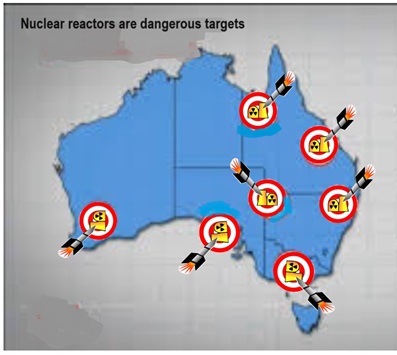
Headlines as they come in:
- ‘Sacrifice’: Four Corners looks at the Australian War Memorial’s weapons ties.
- ‘In Defence of Dissent‘
- Nuclear fallout: why Karina Lester is calling on Australia to sign the treaty banning atomic weapons
- Surface tension: could the promised Aukus nuclear submarines simply never be handed over to Australia?
- It’s time to ditch Virginia subs for AUKUS and go to Plan B.
- Nuclear memo to the L-NP: Less enthusiasm and more evidence.
- $480 million facility to train Australia’s nuclear submarine builders
- How US Military Bases in Australia Threaten Our Future & How to Remove Them.
- Delve into details before voting for Dutton’s nuclear vision.
- Reactors thirsty for water .
- Nuclear could cost households an extra $450 or more a year by 2030 .
- Peter Dutton’s nuclear plan could blow out household electricity bills by up to $600 a year by 2030.
Delve into details before voting for Dutton’s nuclear vision

John Bushell, Surry Hills, NSW, https://www.afr.com/politics/federal/delve-into-details-before-voting-for-dutton-s-nuclear-vision-20250304-p5lgrs 4 Mar 25
Examination of detail will quickly demonstrate that the (would be) emperor has no clothes (“Dutton’s nuclear bid short on detail, but who cares?”).
From 2018 to 2023, electricity delivered globally to customers from various energy sources changed as follows: utility solar, plus 193 per cent; onshore wind, plus 80 per cent; nuclear, minus 1.1 per cent.
Independent international investment bank Lazard advised last year that the average electricity costs from these same energy sources, in US dollars per megawatt hour, were: utility solar 61; onshore wind 50; nuclear 182.
The International Energy Agency advised in January that solar and wind energy generation is being installed five times faster than all other new electricity sources combined, and it forecasts that renewable generation capacity globally from 2024 to 2030 will be triple that added from 2017 to 2023.
So, who do you think is right? Peter Dutton or the rest of the world?
It might be a good idea to find out before the federal election rather than after it.
Nuclear could cost households an extra $450 or more a year by 2030
Australians for Affordable Energy , https://theaimn.net/nuclear-could-cost-households-an-extra-450-or-more-a-year-by-2030/
New modelling confirms a shift to nuclear power could significantly increase household electricity bills, with Australians for Affordable Energy (AFAE) urging policymakers to back the most affordable energy option.
The analysis, released by the Clean Energy Council, found households could face a 30 per cent increase in power bills by 2030 under a nuclear pathway, with households paying an additional $450 annually.
“Australians want affordable and reliable energy now. Every independent study we’ve seen suggests nuclear power will be a guaranteed hit to household budgets now and in future,” AFAE spokesperson Jo Dodds said.
“The cost of living is what it’s all about for most Australians, with energy prices a major concern. From everything we know so far, nuclear is the far more expensive option, and cheaper practical alternatives exist.
“While we wait decades for expensive nuclear plants Australians will be forced to rely on expensive gas and aging coal plants, driving bills even higher. A 30 per cent hike in power bills would place even more strain on Australian households who are already grappling with cost-of-living pressures. Our energy policies must prioritise affordability.”
The findings mirror concerns raised in the Climate Change Authority’s recent report, which found nuclear energy could add 2 billion tonnes of emissions and delay Australia’s clean energy transition until 2042.
“It says small businesses could expect an $877 increase in their bills by 2030 if we slow down our clean energy rollout,” Ms Dodds said.
“There’s a clear choice here between affordable energy now or higher bills for decades to come.”
“Any energy policy that doesn’t put affordability front and centre is out of touch with what voters actually want. These are tough times for households, we shouldn’t allow energy policy to make them worse.”
Australians for Affordable Energy is urging policymakers to focus on practical, cost-effective energy solutions that can deliver more affordable power right now.
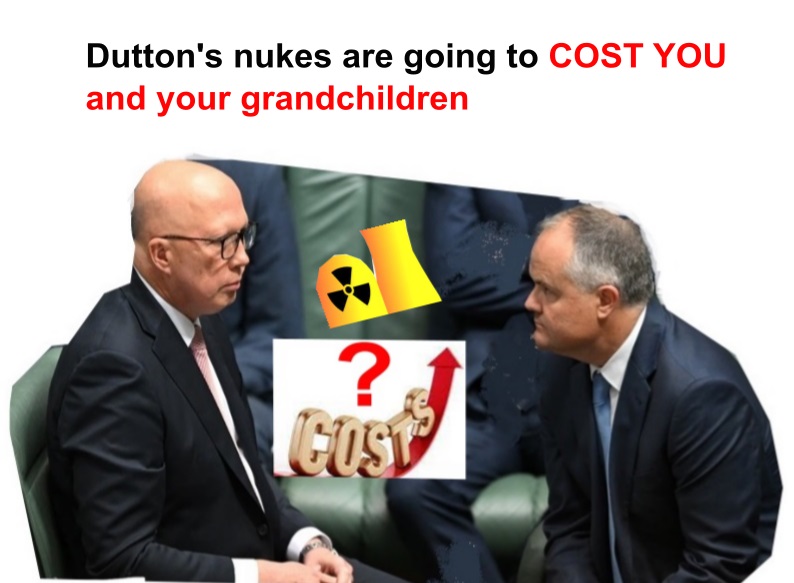
Peter Dutton’s nuclear plan could blow out household electricity bills by up to $600 a year by 2030
https://reneweconomy.com.au/peter-duttons-nuclear-plan-will-blow-out-household-electricity-bills-by-up-to-600-a-year-by-2030/ Sophie Vorrath, Mar 4, 2025
A new report has torpedoed Peter Dutton’s claim that the Coalition’s nuclear power plan for Australia would be 44 per cent cheaper than Labor’s plan for renewables, finding instead that it would inflate average consumer electricity bills by up to 41 per cent between now and 2030.
The report, commissioned by the Clean Energy Council, models the outcomes on electricity prices across Australia’s main grid, the NEM, if the build rate of utility scale renewable generation capacity was reduced significantly – as it promises to be under a Coalition government.
The modelling, conducted by global consultancy, Jacobs, sets a base case using the Australian Energy Market Operator’s (AEMO) Integrated System Plan Step Change Scenario, where 26 gigawatts (GW) of renewables in 2025 grows to 72.7 GW by 2030.
This base case is then contrasted against two scenarios based on the modelling by Frontier Economics for the federal Coalition, which restricts renewables to 49.1 GW by 2030 and relies on coal and gas while waiting for nuclear power.
In that report, Frontier Economics reduced the build rate for renewables, in particular, onshore and offshore wind, big solar and big batteries, in a world where longer term, post 2035 nuclear capacity is installed to meet customer electricity needs.
Frontier’s economic modelling has since been used to underpin claims from Liberal Peter Dutton that his plan for a power system including a significant role for nuclear will be 44% cheaper than a system relying predominantly on renewables.
As Tristan Edis writes in a series of articles starting here, a range of energy analysts and economists have found an array of problems with how this number was derived, but this hasn’t stopped the LNP leader from repeating it every chance he gets.
The Clean Energy Council has therefore decided to fight fire with fire.
Reactors thirsty for water
Anne O’Hara, Wanniassa, ACT, https://www.afr.com/politics/federal/delve-into-details-before-voting-for-dutton-s-nuclear-vision-20250304-p5lgrs 4 Mar 25
Thanks to The Australian Financial Review for a balanced and informative article on the Coalition’s nuclear policy (“Dutton’s nuclear bid short on detail, but who cares?”). It’s no wonder numerous studies show nuclear power to be one of the least popular energy sources for Australian voters
Cost and time are two major drawbacks. The 10-year delay in building the reactors is set to blow Australia’s carbon budget right out of the water. Speaking of which, where will the water come from to operate these reactors? The proposed reactors would use up to three times the amount needed for coal, posing a threat to drinking supply and irrigation for farms.
Despite the loud opposition to wind and solar projects by a small minority, research shows that over two-thirds of people in the regions already support renewables. A nuclear energy policy will hardly be a vote-winner in rural areas, where water supply is crucial.
Nuclear power struggling to maintain current level of stagnation, let alone achieve any growth
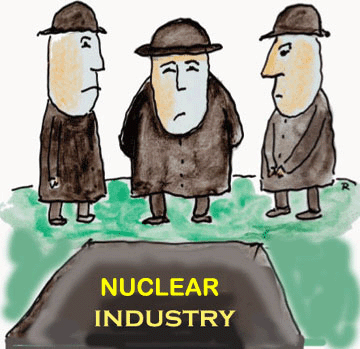
Alongside the risk of Fukushima-scale disasters, the weapons proliferation risks, the risk of attacks on nuclear plants (and the reality of attacks on nuclear plants in Ukraine), and the intractable nuclear waste legacy, the reality is that nuclear power just can’t compete economically.
The industry’s greatest problem at the moment is a recognition of this by investors, resulting in a capital strike.
Darrin Durant, Jim Falk & Jim Green, Mar 3, 2025, https://reneweconomy.com.au/nuclear-power-struggling-to-maintain-current-level-of-stagnation-let-alone-achieve-any-growth/
The current push in Australia to deploy nuclear power reactors once again contrasts an excessive optimism by nuclear proponents against the continuing stagnant situation of nuclear power worldwide. That contrast is the subject of our new report for the EnergyScience Coalition.
The latest nuclear proposals are built on three speculations.
First, projected AI-related energy demand where – as with nuclear power proponents in the 1970’s who projected huge demand that never eventuated – there are already signs demand is overblown. For example the new leading AI entrant DeepSeek requires just 10 per cent of the energy of competitors.
Second, speculative techno-optimism that new technologies such as small modular reactors will resolve industry project management issues. Yet these small reactors are unproven.
Third, prospective wish-fulfilment, where dozens of nuclear ‘newcomer’ countries are offered as saviours, despite not having reactor approvals and funding in place in a large majority of cases.
So what is the state of nuclear power in 2024? A review by the World Nuclear Industry Status Report notes that seven new reactors were connected to grids last year while four reactors were permanently closed. The net increase in operating nuclear capacity was 4.3 gigawatts (GW).
Worldwide nuclear power capacity was 371 gigawatts (GW) at the end of 2024. That figure is near-identical to capacity of 368 GW two decades earlier in 2005.
As of 1 January 2025, the mean age of the nuclear power reactor fleet was 32.1 years. In 1990, the mean age was just 11.3 years. Due to the ageing of the reactor fleet, the International Atomic Energy Agency projects the closure of 325 GW of nuclear capacity from 2018 to 2050 – that’s 88 per cent of current worldwide capacity. Thus the industry faces a daunting challenge just to maintain its pattern of stagnation, let alone achieve any growth.
There were no ‘small modular reactor’ (SMR) startups in 2024. Indeed there has never been a single SMR startup unless you count so-called SMRs not built using factory ‘modular’ construction techniques, in which case there is one each in China and Russia.
The SMR sector continues to go nowhere with setbacks in 2024 including the suspension of the Nuward project in France (following previous decisions to abandon four other SMR projects) and the bankruptcy of US company Ultra Safe Nuclear.
Nuclear growth dwarfed by renewables
In striking contrast to nuclear power’s net gain of 4.3 GW in 2024, the International Energy Agency’s October 2024 ‘Renewables 2024’ report estimates 666 GW of global renewable capacity additions in 2024. Based on the Agency’s estimate, renewables capacity growth was 155 times greater than that of nuclear power.
The International Energy Agency expects renewables to jump sharply from 30 per cent of global electricity generation in 2023 to 46 per cent in 2030.
Conversely, nuclear power’s share of global electricity generation has fallen steadily since the 1990s. As of 1 January 2025, nuclear power accounted for 9.15 per cent of global electricity production, barely half of its peak of 17.5 per cent in 1996.
A Bloomberg analysis finds that renewable energy investments reached $A1.17 trillion in 2024, up 8 per cent on the previous year, whereas nuclear investment was flat at $A55.1 billion. Thus renewable investments were 21 times greater than nuclear investments.
In contrast to massive cost overruns with nuclear projects, renewable costs have fallen sharply.
Lazard investment firm data shows that utility-scale solar and onshore wind became cheaper than nuclear power from 2010-2015. From 2009-2024, the cost of utility-scale solar fell 83 per cent; the cost of onshore wind fell 63 per cent; while nuclear costs increased 49 per cent.
Nuclear newcomer countries
Claims that 40-50 countries are actively considering or planning to introduce nuclear power, in addition to the 32 countries currently operating reactors, do not withstand scrutiny.
As of 1 January 2025, reactors were under construction in just 13 countries, two less than a year earlier. Seven percent of the world’s countries are building reactors; 93 percent are not.
Of the 13 countries building reactors, only three are potential nuclear newcomer countries building their first plant: Egypt, Bangladesh and Turkiye. In those three countries, the nuclear projects are led by Russian nuclear agencies with significant up-front funding from the Russian state.
The World Nuclear Association observes that apart from those three countries, no countries meet its criteria of ‘planned’ reactors, i.e. “approvals, funding or commitment in place, mostly expected to be in operation within the next 15 years.”
The number of potential newcomer countries with approvals and funding in place, or construction underway, is just three and those projects are funded heavily by the Russian state. That is the underwhelming reality underlying exaggerated claims about 40-50 countries pursuing nuclear power.
There is no evidence of a forthcoming wave of nuclear newcomer countries in the coming years and decades. At most there will be a trickle as has been the historical pattern with just seven newcomer countries over the past 40 years and just three this century.
The number of countries operating power reactors in 1996–1997 reached 32. Since then, nuclear newcomer countries have been matched by countries completing nuclear phase-outs and thus the number is stuck at 32. And less than one-third of those countries are building reactors (10/32).
It is doubtful whether the number of nuclear newcomer countries over the next 20-30 years will match the number of countries completing phase-outs.
Capital strike
Alongside the risk of Fukushima-scale disasters, the weapons proliferation risks, the risk of attacks on nuclear plants (and the reality of attacks on nuclear plants in Ukraine), and the intractable nuclear waste legacy, the reality is that nuclear power just can’t compete economically.
The industry’s greatest problem at the moment is a recognition of this by investors, resulting in a capital strike. Even with generous government/taxpayer subsidies, it has become difficult or impossible to fund new reactors – especially outside the sphere of China and Russia’s projects at home and abroad.
Who would bet tens of billions of dollars on nuclear power projects when the recent history in countries with vast expertise and experience has been disastrous?
In France, the latest cost estimate for the only recent reactor construction project increased seven-fold to A$39.4 billion for just one reactor. Construction took 17 years. No reactors are currently under construction in France.
In the US, one project in South Carolina, comprising two Westinghouse AP1000 reactors, was abandoned in 2017 after $A14.3 billion was spent. Westinghouse declared bankruptcy and its debts almost forced its parent company Toshiba into bankruptcy. All that remains is the nukegate scandal: an avalanche of legal action including criminal cases.
The only other reactor construction project in the US – the twin-reactor Vogtle project in the state of Georgia – reached completion at a cost 12 times higher than early estimates. The final cost was at least $A27 billion per reactor. Completion was six to seven years behind schedule.
No power reactors are currently under construction in the US. Thirteen reactors have been permanently shut down over the past 15 years.
The situation is just as bleak in the UK where there have been 24 permanent reactor shut-downs since the last reactor startup 30 years ago, in 1995.
The 3.2 GW twin-reactor Hinkley Point project in Somerset was meant to be complete in 2017 but construction didn’t even begin until 2018 and the estimated completion date has been pushed back to 2030-31.
The latest cost estimate – A$46.6 billion per reactor – is 11.5 times higher than early estimates. The UK National Audit Office estimates that taxpayer subsidies for the Hinkley Point project could amount to $A60.8 billion and the UK Parliament’s Public Accounts Committee said that “consumers are left footing the bill and the poorest consumers will be hit hardest.”
The estimated cost of the planned 3.2 GW twin-reactor Sizewell C project in the UK has jumped to $A81 billion or $A40.5 billion per reactor, twice the cost estimate in 2020. Securing funding to allow construction to begin is proving to be difficult and protracted despite a new ‘Regulated Asset Base’ funding model which foists the enormous risk of enormous cost overruns onto taxpayers and electricity ratepayers.
Lessons for Australia
Those three countries – France, the US and the UK – have vast nuclear expertise and experience. They all enjoy synergies between civil and military nuclear programs – President Macron said in a 2020 speech that without nuclear power in France there would be no nuclear weapons, and vice versa.
All of the above-mentioned construction projects were (or are) on existing nuclear sites. All projects were (or are) long delayed and tens of billions of dollars over-budget.
Claims that potential nuclear newcomer countries such as Australia, without any of those advantages, could build reactors quickly and cheaply are not credible.
Our report expanding on these issues is posted at the EnergyScience Coalition website.
Darrin Durant is Associate Professor in Science and Technology Studies at the University of Melbourne. Jim Falk is a Professorial Fellow in the School of Geography, Earth and Atmospheric Sciences at the University of Melbourne and Emeritus Professor at the University of Wollongong. Dr. Jim Green is the national nuclear campaigner with Friends of the Earth Australia and a member of the Nuclear Consulting Group.
Global Ocean Treaty two years on: Australia’s chance for international cooperation
Greenpeace SYDNEY, Tuesday 04 March 2025 – Two years after the United Nations agreed to bring the historic Global Ocean Treaty into force, Greenpeace is urging the Australian government to make good on its pledge for ocean protection and finally ink the treaty into law.
The UN treaty to protect the high seas was agreed two years ago today in 2023. It is a legally binding pact to conserve international waters, a crucial component in global efforts to protect 30% of the world’s oceans and lands by 2030. While 110 countries have signed the treaty, only 18 countries have ratified the treaty into law so far.
Greenpeace Australia Pacific Senior Campaigner Georgia Whitaker said:
“The government has been sitting on the Global Ocean Treaty for two years while other countries rapidly move to ratify and bring the treaty into force. We are an ocean-loving nation, and the Australian government could act as a proud leader on the world stage by making good on its promise to protect the high seas now. Our oceans don’t have the luxury of time – we need to ratify now, then deliver protected ocean sanctuaries in our big blue backyard: the Tasman Sea.”
Once the treaty is in force, governments can propose ocean sanctuaries for the high seas. A 2023 scientific report by Greenpeace identified the South Tasman Sea and Lord Howe Rise – the high seas between Australia and New Zealand – as being of critical importance for protection.
Until the treaty enters into force, the management of our global oceans is very fragmented. There is no legal global instrument that allows for the creation of sanctuaries in international waters. To this day, less than 1% of the high seas – the largest habitat on Earth, comprising 64% of the world’s ocean – is fully or highly protected from human activities.
The countdown is on, as the pivotal UN Ocean Conference (UNOC) will take place in Nice, France, in less than 100 days.
“UNOC is a unique chance for Governments to show global leadership for ocean protection. Australia must use this opportunity and ratify the treaty before arriving in Nice,” added Whitaker.
1 This month

of the week – Australians for War Powers Reform (AWPR)
To see nuclear-related stories in greater depth and intensity
 Antinuclear