October 1 Energy News — geoharvey

Opinion: ¶ “As Gas Prices Soar, People Are Mulling Alternatives To Heating Their Homes. Here’s What To Know” • Soaring natural gas prices have raised the specter of cold homes and inflated energy bills for millions of people over winter across Europe and the US. At the same time, pressure is mounting to reduce use […]
October 1 Energy News — geoharvey
Ionising radiation – the forgotten health disaster – theme for October 21

Today, it is fashionable to ingore the topic of ionising radiation. Indeed, as Australia moves towards proudly(?) becoming a part of the global nuclear chain, with the government’s rather vague plan to get nuclear submarines, the last thing anybody wants to talk about is nuclear radiation.
Australia has a sad history of prioritsing ”defence” and ”industry” over health. So, we ignored the health effects of atomic bomb tgests in the 1950s and 60s – the ”black rain” that fell on Aboriginal people (heck our government pretended that those people were not even there!). We ignored the health of uranium miners, and of the environment around uranium mines (still toxic to this day) In the interests of the uranium industry, to this day, it seems bad form for an Australian to talk about ionising radiation.
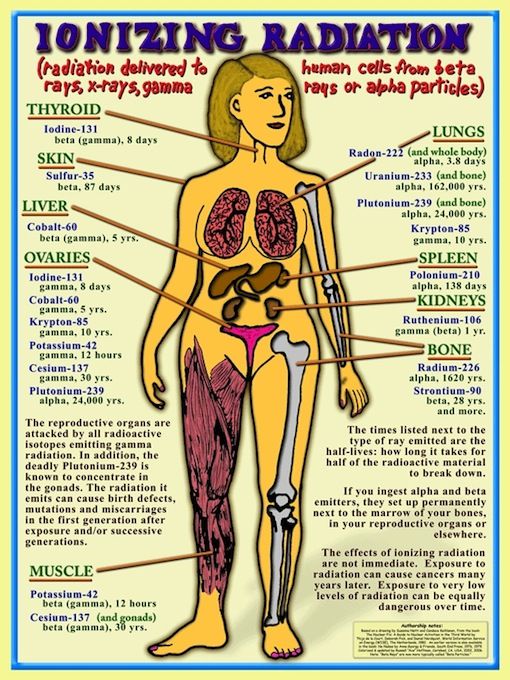
At the same time, Australia is in a panic over tiny viruses that can cause ill-health very quickly. It seems OK to ignore tiny radioactive particles that can cause illness and death decades later – especially as they affect children and women more than they affect men. Children are 10 to 20 times more sensitive to the carcinogenic effects of radiation than adults (little girls are twice as sensitive as boys) and fetuses are thousands of times more sensitive – one X ray to the pregnant abdomen doubles the incidence of leukemia in the child – Helen Caldicott,)
Worldwide, in the interests of the nuclear industry, and their paid politicians, there has been a concerted effort to NOT do the necessary laboratory and epidemiological research to clearly show the effects of nuclear activities on human health. One glaring example is that in what little research is encouraged, they’ll study the effcts of external radiation, – such as the waves of radioactive particles hitting people from an explosion – (e.g. Hiroshima, Fukushima) , but not the effects of longlasting internal radiation, – that is, of radioactive particles breathed in, or swallowed.
Today the big thing is – Wow – Australia’s going to ?grow up – join the global nuclear push! It is timely now to remember that slow global threat of ionising radiation. As Helen Caldicott has put it – ‘‘Recommending nuclear power as a solution to climate change is like recommending smoking as a solution to obesity’‘
Australia the sucker for cash-strapped U.S, and U.K submarine companies General Dynamics and BAE Systems

UK Prime Minister Boris Johnson is close to BAE, the UK defence contractor whose nuclear subs program is struggling. The submarine program in the US too is foundering, so the game plan by our AUKUS partners is to rope in the dopey Aussies for a hundred billion dollars-plus to finance their distressed submarine sectors.
Both US submarine builder General Dynamics and its British counterpart BAE are looking for a new income stream from Downunder.
$66 Billion Reasons: did Scott Morrison get the French submarines right? By Michael West| September 30, 2021 ….. Michael West investigates the awkward AUKUS alliance and whether Scott Morrison made the right call on French submarines.As if ……….being dead last in the developed world on climate action , Scott Morrison and his Coalition have now burnished their reputation for incompetence on the global stage.
In one fell swoop, the sudden AUKUS declaration, they have achieved a stunning betrayal of the French, further peeved our biggest trading partner China, upset half of Europe, shown the bird to New Zealand and our neighbours in the Asian region, and waved an open cheque-book at the US and the UK military industrial complex.
Yet, in their ardour to crawl back to the Mother Country and bat their debutante eyes at Washington, they appear to have got something right: axing the French submarines. Are our self-described band of “Superior Economic Managers” accidental heroes, or did they mean to get it right?
If they double down and splash $100b plus on nuclear submarines, they will have got it doubly wrong.
Defence correspondent Michelle Fahy has documented here the $90b shocker which is Australia’s deal with French shipbuilder Naval Group. Naval itself has an ugly history of corruption and there are serious questions about how the deal came about in the first place, indeed serious questions about the billions in public money smoked every year in Defence procurement.
Murder, corruption, bombings – the company at centre of Australia’s submarine deal
The arms company at the centre of a deadly criminal saga and numerous global corruption scandals, Naval Group, was selected by the Australian government to build our new fleet of submarines – a deal heralded as ‘one of the world’s most lucrative defence contracts’. How did this happen? In this special investigation Michelle Fahy discovers significant gaps in anti-bribery and corruption measures.
Yet there is upside. Scott Morrison and co have junked a deal which would have delivered a fleet of expensive, obsolete submarines 20 years too late for the war which the government’s champions in the media keep telling us we might have to fight against China. Even though a war with China is nothing more than a grotesque proposition, scaremongering by the weapons lobby and media to distract from corruption and mismanagement at home. Media war porn.
The same might be said of the F-35 Strike Fighter debacle and the BAE frigates scandal. Every large defence procurement is marred by billions of dollars in waste. But here’s the thing with the subs; there is a solid body of work which suggests submarines are already obsolete, nuclear or not. They can be tracked; they are a titanic waste of money.
The National Security College (Federal Government and ANU) published a working paper in May 2020 saying nuclear powered ballistic missile submarines will be detectable at sea.
Meanwhile, the French are complaining we owe them $US66 billion for reneging on the deal with Naval. That’s an ambit claim, to be sure. It might cost the government $5b-$10b all up, some already sunk, the rest to stave off an embarrassing court action; but the result so far is: one, no obsolete subs deal with the French, and two, only a mooted nuclear subs deal with the Brits and Americans which may never happen. Hopefully.
UK Prime Minister Boris Johnson is close to BAE, the UK defence contractor whose nuclear subs program is struggling. The submarine program in the US too is foundering, so the game plan by our AUKUS partners is to rope in the dopey Aussies for a hundred billion dollars-plus to finance their distressed submarine sectors.
The doctrine of the gullible Aussie is getting airplay in the US press. According to war contractor expert Charles Tiefer in Forbes:
“Under the cloud of smoke around the Australian submarine deal, are the unspoken aspects of the enrichment of American military contractors. There is no public mention of which American contractors will build the expensive parts of the expensive Australian submarines.”
Both US submarine builder General Dynamics and its British counterpart BAE are looking for a new income stream from Downunder.
Should the Coalition stay true to its track record of dithering though, it may soon become evident that submarines in general are a leviathan waste of money and public money ought to be expended on something less wasteful.
Scott Morrison might, unwittingly, have got it right. He might not have to spend much on submarines at all. The question then becomes, what has he got us into?
Back to the future
As three former prime ministers in Paul Keating, Malcolm Turnbull and Kevin Rudd have already pointed out, AUKUS puts Australians in greater danger, renders Australia a vassal to foreign power and antagonises our neighbours in the region.
Depending on how you count them, there are probably already four US bases in operation now:
- Pine Gap near Alice Springs, Northern Territory,
- Naval Communication Station Harold E. Holt, north of the town of Exmouth, Western Australia,
- Robertson Barracks in Darwin, Northern Territory,
- Australian Defence Satellite Communications Station near Geraldton, WA.
However, the US military already has access to all major Australian Defence Force (ADF) training areas, northern Australian RAAF airfields, port facilities in Darwin and Fremantle, and probably future access too to an expanded Stirling naval base in Pe
Under AUKUS, this may just be the beginning. It was largely ignored during the AUKUS media blitz and the dramatic cuckolding of the French but Peter Dutton had this to say at his press conference on September 16,
Unveiling plans for new facilities on Australian soil for US naval, air, and ground forces would entail “combined logistics, sustainment, and capability for maintenance to support our enhanced activities, including … for our submarines and surface combatants”. That is on top of “rotational deployments of all types of US military aircraft to Australia”.
If the plan is to shred Australia’s sovereignty and make us a target for China, he is succeeding with aplomb. We are about to be swamped by US military.
Forward to the past
It is poetic too, that at this very time we are striking even stronger and even more unnecessary ties with Westminster and Washington. Boris Johnson’s government is beset by the chaos which is Brexit, such chaos now that it has spawned a global energy emergency. While the EU has the wobbles on its trade deal with Australia, Boris is in the market for a friend.
It is poetic too, that at this very time we are striking even stronger and even more unnecessary ties with Westminster and Washington. Boris Johnson’s government is beset by the chaos which is Brexit, such chaos now that it has spawned a global energy emergency. While the EU has the wobbles on its trade deal with Australia, Boris is in the market for a friend………… https://www.michaelwest.com.au/aukus-french-submarines-scott-morrison/
Australia’s nuclear submarines – a grand announcement leading to a grand shambles.
Bitter truth is we will likely never get any nuclear subs, https://www.theaustralian.com.au/commentary/yes-weve-cancelled-the-french-but-now-what/news-story/99b43465c2124c01a579672d8ef19349 Greg Sheridan, 30 Sept 21, As things stand, it is unlikely Australia will ever get a nuclear submarine. All that we have done so far is cancel the French submarine. My guess is this delays any submarine at all by at least 10 years. It fills me with regret to say this, but analytically the conclusion is inescapable that the nuclear subs under the AUKUS rubric will probably proceed the way of all our other submarine announcements. They will enjoy a brief flower of credibility before doubts creep in, critics become mobilised, the prime minister who ordered them moves on and eventually they are consigned to the dustbin for a new submarine announcement that can enjoy its brief season in the sun.
Our submarine acquisition process remains a complete shambles and the chances of anything significant emerging from it remain remote.
My colleague Dennis Shanahan reported from the recent prime ministerial trip to the US that the government was not interested in leasing a nuclear submarine from the US over the next several years. Instead it wanted to add new submarines to the allied fleet, rather than take a sub or two out of the existing US and British lines. On its own, this approach probably guarantees that nothing of consequence comes of this initiative.
It is impossible to understand why the Brits are in the mix, apart from PR. If we choose the British Astute sub and don’t modify it, that means ditching the jewel of our defence technology, the US combat system that we have on the Collins, as well as most of the US weapons we use on the Collins. So the US, at the end of all this, would be getting billions of dollars less work from us and our navies would be less integrated.
Malcolm Turnbull was savage in his National Press Club attack on the Morrison government’s decision to ditch the French subs and go nuclear. Turnbull exaggerates the diplomatic cost. However, his technical critique of the nuclear subs proposal was substantial. He drew attention to obvious contradictions in the process.
All we have done so far is cancel the French subs. As of now, we have no future submarine program at all. The Morrison government scored a diplomatic triumph in getting the Americans to agree to transfer nuclear submarine propulsion to us and in the way AUKUS was presented.
But the global reaction was based on the idea, wholly mistaken, that we would be getting the nuclear subs some time soon.In his first press conference, Scott Morrison said the subs would be built in Adelaide and he hoped we might start the build before the end of this decade and get the first one into service before the end of the next decade; that is, 2040. Here are some laws of the physical universe and the operation of logic that cannot be contradicted or transcended. If we do not lease a sub and instead make them all in Adelaide we will not get the first one before 2040. Frankly, even that date involves almost miraculous virtuosity.
Every major, complex naval build we’ve undertaken has come in way over budget and long over schedule.In the history of human habitation of this continent, nothing remotely comparable in complexity to building a nuclear submarine has ever been attempted.
Obviously, it makes no industrial or military sense to build the subs in Adelaide. Doing so will add years to the schedule and tens of billions of dollars to the cost. The French are criticised for prospective delays in their conventional subs, but we could have had them much more quickly if they were built in France.But here is a moral certainty. The dialectics of Australian politics will force both the Coalition and Labor, before the next election, to commit to building all the subs in Adelaide.
Say by some miracle the process stays on track and we actually get a boat in the water by 2040 – pretty unlikely, but not absolutely impossible – that does not mean we have our replacement submarine fleet by 2040. If we can build one nuclear sub every three years after that we will be doing very well. That means we would get our fleet of eight subs by 2061.In terms of military capability in the face of the strategic challenges we face in the next decade or two, that is truly a sick joke. It’s the three-card trick all over again.
The capability gap we have to bridge is not up to 2040 but up to, say, 2055, when we might get the sixth nuclear boat and can therefore replace, one for one, the Collins boats. Of course the nuclear subs will be much more capable than the Collins, but they’re no good at all if they don’t actually exist.
Australian submarine policy right now requires the Collins boats to remain our frontline submarine capability until at least the 2040s. No living Australian prime minister has commissioned a sub that actually got built. The last prime minister to do so was Bob Hawke. The Collins boats were commissioned in the 1980s, yet must serve into the 2040s. The frankly batshit crazy quality of our circumstances is evident in this comparison: it would be as if Britain commissioned a new weapons system under Queen Victoria in 1901 and it was still in service as the main British weapons system at the time of the Beatles in the 1960s.
It is impossible to understand why the Brits are in the mix, apart from PR. If we choose the British Astute sub and don’t modify it, that means ditching the jewel of our defence technology, the US combat system that we have on the Collins, as well as most of the US weapons we use on the Collins. So the US, at the end of all this, would be getting billions of dollars less work from us and our navies would be less integrated.
Alternatively, there is talk of choosing the Astute but putting a US combat system, US weapons and even US propulsion system into it. Dear God in heaven, if we embrace the insanity of designing a new nuclear sub just for Australia, even 2060 will be optimistic for the first boat.Or if we choose the Virginia, as we must, the Brits get nothing, yet Boris Johnson was assuring the British public that AUKUS meant hundreds and hundreds of well-paid jobs in Britain’s north. We made a mistake choosing the British Type 26 frigate, which still is not in service even in Britain and is two years behind schedule and counting. Just imagine a Brit submarine saga.
So the government has solved only the problem that its own incompetent, lazy and inexplicable failure to champion its own defence programs brought about, but so far has substituted nothing concrete for it.
The result is likely no submarine capability for us at all, except museum piece Collins boats and whatever submarine visits the Americans or Brits send along. We should have kept the French subs going, perhaps at a reduced number of six or even three, then gone nuclear in an orderly way.
Instead we have once more followed our own traditions of grand announcement leading to grand shambles.
A cynical interpretation might be that the Liberals never explained, championed or campaigned for their own choice of the French sub. Choosing Marise Payne and then Linda Reynolds as defence ministers was grotesque, by Turnbull and Morrison respectively, as neither could carry the debate or the portfolio.
So the government has solved only the problem that its own incompetent, lazy and inexplicable failure to champion its own defence programs brought about, but so far has substituted nothing concrete for it.The result is likely no submarine capability for us at all, except museum piece Collins boats and whatever submarine visits the Americans or Brits send along. We should have kept the French subs going, perhaps at a reduced number of six or even three, then gone nuclear in an orderly way.
Instead we have once more followed our own traditions of grand announcement leading to grand shambles.
Australia’s nuclear submarine deal a distraction from international climate action

the main focus of Australia’s government has remained on the continuing mining and export of fossil fuels (for reasons I’ve detailed in The Hill previously). Even while Australian Prime Minister Scott Morrison was in Washington his government was attempting to persuade the Australian States to adopt a “Coalkeeper” policy that seemingly would continue to protect the fossil fuel industry and constrain new renewable energy projects
 |
Is Australia’s nuclear submarine deal a distraction from international climate action? The Hill, BY DAVID SHEARMAN, — 09/28/21 Climate warming and environmental degradation are damaging humanity each and every day and all the decisions we make must be questioned for their human health and survival implications.
The fundamental issue at the UN climate conference COP26 is not the distant target of zero emissions by 2050 but the need to focus on the huge task of delivering emission reductions of 45 percent or more by 2030 to limit a temperature rise to 1.5 degrees Celsius. Currently, the contribution of nations in the Paris Agreement will lead to an emissions rise of 16 percent and a 2.7 degree Celsius rise.
Australia and indeed some other countries must ask themselves if nuclear submarines will be relevant to their likely plight in 2050 or whether the $90 billion (AUD) should be a small down payment on the huge ongoing costs of survival from the predicted climatic ravages which have already commenced worldwide.
One positive has arisen from Australia’s shameful diplomatic treatment of France, whose earlier defense deal with Australia was abruptly canceled and replaced with AUKUS. There will now be much greater scrutiny of the proposed Australia-EU trade deal to ensure Australia complies with climate and environmental needs, as well as with means to assess compliance. Such pressure on Australia’s trading future is already having an impact on policy.
Impact on Australia’s Pacific policy
Trust and cooperation between Australia and France are essential for the needs of the Pacific Island nations. It had been expected that the French through their Pacific territories and commitment to climate change would encourage Australia to recognize its responsibilities.
Over many years, Australia has continued to dismiss the pleas of the islands for a climate policy that would help them avoid inundation. At the time of the 2019 Pacific Island Forum in low-lying Tuvalu, Australia’s Deputy Prime Minister Michael McCormack infamously said that Pacific island nations affected by the climate crisis will continue to survive “because many of their workers come here to pick our fruit.”…………
Even more shaming is Australian indifference to the needs of the Torres Strait Islanders who are the Indigenous peoples of this Australian territory. They have claimed before the UN Human Rights Committee that Australian inaction infringes their human rights. Australia has opposed their claim………
In 2050, conflicts will likely be within countries and between close neighbours over resources such as water and productive land — not based on nuclear threat. Defense services including those of the United States and China will be engulfed in saving lives and infrastructure from fire, flood, storm and drought.
Such conflicts are already with us and U.S. Secretary of State Antony Blinken has cited war in Syria, Mali, Yemen, South Sudan and Ethiopia due to water shortages.
Currently, Australia spends $45 billion (AUD) or 2.1 percent of GDP on defense. It has spent $130 billion on the economic recovery from COVID-19 much by increasing gas mining for export, but less than 2 percent of which has been spent on solutions to reduce emissions and even less on climate adaptation. Indeed, Australia does not have a national coordinated national adaptation policy.
The relevant questions are whether the defesnse agreement between the U.S., UK and Australia to provide nuclear submarines, dubbed AUKUS, has encouraged or coerced Australia to accept and deliver even a 2050 emission target —and how Australia can now cooperate on emission reduction within the Asian Pacific region and particularly the Pacific Island States.
Impact on Australian climate policy
The AUKUS agreement has already resulted in the re-examination of climate policy but discussion has been distracted by worries about AUKUS compromising our sovereignty in the event of armed conflict — and by the diplomatic failure to discuss the issue with Pacific neighbours. There are also concerns about the weakness of U.S. democracy and the possible irrationalities of any future president that could lead to Australian involvement in unnecessary conflict.
However, the main focus of Australia’s government has remained on the continuing mining and export of fossil fuels (for reasons I’ve detailed in The Hill previously). Even while Australian Prime Minister Scott Morrison was in Washington his government was attempting to persuade the Australian States to adopt a “Coalkeeper” policy that seemingly would continue to protect the fossil fuel industry and constrain new renewable energy projects
No wonder many Australian eyebrows were raised when U.S. House Speaker Nancy Pelosi (D-Calif.) hailed Australia as a global leader on climate change.
Currently, Australia is ranked 15 highest of 90 countries for domestic emissions and fifth or sixth if exports of fossil fuels are included. Clearly, Australia is the world’s laggard when the country has the wealth and expertise to take action.
Australia’s nuclear submarines likely to be obsolete and useless.
When Australia decided to buy a fleet of new nuclear-powered attack submarines earlier this month, it sparked international outrage. China labelled it a “cold war, zero sum mentality”. France was enraged at
being left out.
The deal will cost Australia $100 billion, and hand UK and US technology to a fleet of attack submarines, the apex predators of naval warfare. But by the time they are delivered in 20 years’ time, these submarines could be obsolete.
No one really knows how these submarines would perform in a conflict situation. It’s true that submarines have occasionally launched cruise missiles at land targets, but there has been no real submarine combat since 1982, when HMS Conqueror torpedoed the General Belgrano off the Falklands. Exactly how well submarines fareagainst modern anti-submarine warfare (ASW) forces is a continuing debate.
Wired 29th Sept 2021
https://www.wired.co.uk/article/aukus-nuclear-submarines-australia-warfare
The giant question: is Australia able to deal with submarine nuclear wastes?

So, what are the parts of the submarine that require dismantling and does Australia have the capability?
Retired submarines generate three levels of radioactive material, which raises challenges for how parts can be handled, transported and stored. The NAO report summarises the submarine parts as:
- Irradiated fuel from within the submarine’s reactor core. As it continues to generate heat, fuel will be stored under water at the Nuclear Decommissioning Authority’s (NDA’s) Sellafield site.
- Intermediate-level waste, primarily the Reactor Pressure Vessel (RPV) and other parts from within the reactor compartment, which had been close to the nuclear fuel. This waste comprises about 1 per cent (50 tonnes) of the boat; and
- Low-level waste that needs to be handled and disposed of within the regulatory framework but does not meet the criteria for intermediate-level waste. This covers the remainder of a submarine’s reactor compartment such as pipework and comprises around 4 per cent (176 tonnes) of the boat, to be disposed of in a low-level waste repository…………………
The giant question mark over SA’s role in nuclear submarine push, InDaily, Kevin Naughton, 30 Sep 21, Australia’s nuclear submarine ambition has few knowns and many unknowns – and one of these casts a giant shadow over South Australia’s role. Kevin Naughton analyses the uncertainties and responsibilities that come with owning a set of submarine-encased nuclear reactors and more than 220 tonnes of nuclear waste per boat.
The UK is one of the three partners in the recently announced AUKUS alliance, whose first major initiative will be to “deliver a nuclear-powered submarine fleet to Australia”, as Prime Minister Scott Morrison trumpeted on Thursday, September 16.
Australian govt will take 18 months at least to find out if we’re leasing nuclear submarines
Will the RAN lease nuclear-powered submarines? ADM By Max Blenkin | Canberra | 30 September 2021
There’s much we don’t yet know about how we will acquire our new submarines. Even the Government and Defence don’t know, which is why they have launched a task force, led by Vice Admiral Jonathan Mead, to consider the way ahead, reporting back in around 18 months.
There appear to be just two contenders – the US Virginia-class SSN and the British Astute-class SSN, both in-service and in current production.
Of the Astutes, seven are planned, with four in service and two under construction. Boat number one, HMS Astute, was laid down in 2001 with the last, HMS Agincourt, to be commissioned in 2026.
Of the Virginias, 66 are planned, with 19 completed and 11 under construction. The first boat, USS Virginia, was laid down in 1999. No date has been set for the last, but, assuming it happens and the current production schedule is maintained, it’s likely to be in the late 2030s with service life through to the 2060s.
On the face of it, the Virginias seem the best boat for Australia, with live production in the period Australia stands up its line and significant commonality of combat system and weapons with the Collins boats.
On the other hand, the Astute’s Thales and Atlas sensors have significant commonality with Collins…………
Defence Minister Peter Dutton acknowledged on September 21 he’s amenable to leasing, which isn’t a new idea.
Here’s analyst Professor Ross Babbage in a paper published by the Kokoda Foundation in 2011:
“A variant of this military off-the-shelf (MOTS) approach with yet other potential advantages would be to enter into a long-term leasing arrangement with the USN whereby the RAN simply operated ten or twelve Virginia boats for a specified number of years (say 25) with the USN contracted to provide all, or most, of the logistic support within its own supply system.”
The big question is: will this approach get Australian submariners into nuclear submarines a decade or more sooner than waiting for Australian-manufactured boats?
With AUKUS comes reports from the UK that Britain will base some of its Astute-class nuclear attack submarines in Australia under the agreement to achieve a persistent presence in the Indo-Pacific.
The Times newspaper quoted unnamed UK government sources saying AUKUS opened opportunities for basing in Australia which could include deep maintenance, so boats did not need to return to their home port in Faslane, Scotland, for upkeep.
This is still a long way off, with The Times report saying this would happen once Australia began building a fleet of nuclear boats.
The report seems to indicate this would be more like extended deployments down under, rather than permanent basing of RN boats and their crews in Australia.
It would surely follow that this applies just as well to US submarines, which currently make only occasional port visits…… https://www.australiandefence.com.au/news/will-the-ran-lease-nuclear-powered-submarines
Malcolm Turnbull on nuclear submarines – nothing is agreed. There is no design, no costing, no contract.
But nothing is agreed. There is no design, no costing, no contract. The only certainty is that we won’t have new submarines for 20 years and their cost will be a lot more than the French subs. However, high hopes and good intentions are in abundance. But there were plenty of them when we did the deal with France too.
Is it credible to have a hands-off plug and play nuclear reactor filled with weapons grade uranium and not inspect it for 35 years? The US and UK will know for sure in about thirty years. And until then if something does go wrong, both nations have extensive nuclear facilities and expertise to deal with it.
The French nuclear propulsion system however uses low enriched uranium (LEU) – somewhat more enriched than that used in civil nuclear plants. By law they inspect their reactors and refuel them every ten years. All submarines go in for a lengthy, year or more, refit every decade. The refueling of the French naval reactor takes a few weeks. In this regard at least, French naval nuclear reactor safety standards are stricter than those applied in the United States and the UK.
Australia does not.

Address to the National Press Club Malcolm Turnbull, September 29 2021 With the swirl of media soundbites, the impression has been created that the Australian Government has replaced a diesel electric French designed submarine for a nuclear powered American, or British, one. This is not the case.Australia now has no new submarine programme at all. We have cancelled the one we had with France and have a statement of intent with the UK and the US to examine the prospect of acquiring nuclear powered submarines.
Over the next eighteen months there will be a review of the possibilities – the biggest probably being whether the new submarine should be based on the UK Astute[1] submarine or the larger US Virginia class[2].
The hyperbole around the new AUKUS partnership has been dialed up to 11. No three nations in the world already have closer security, intelligence, and technology collaboration than Australia, the US and the UK. And it has been getting closer in recent years. As Canada’s Justin Trudeau observed this is all about selling submarines to Australia[3].
The Australian Government has chosen to terminate a contract with France’s largely state-owned Naval Group to build 12 Attack class submarines. While based on the design of France’s latest nuclear sub they were to be conventionally powered – a modification stipulated by Australia in the competitive tender process begun in 2015 and concluded in April 2016 when it was approved by my Government’s NSC of which the current Prime Minister, Defense Minister and Foreign Minister were all members.
But nothing is agreed. There is no design, no costing, no contract. The only certainty is that we won’t have new submarines for 20 years and their cost will be a lot more than the French subs. However, high hopes and good intentions are in abundance. But there were plenty of them when we did the deal with France too.
The first of the Attack class[4] submarines was to be in the water by 2032, with the rest of the fleet coming out of the shipyards every two years until the full complement had been constructed. It was the largest defence procurement in our history – a partnership of generations between France and Australia……………….
One of the attractions of the French subs was that they were originally designed for nuclear propulsion. So, if we decided to switch to nuclear we had a partner that had the expertise to do it with us.
n its natural state uranium is 99% made up of a stable isotope U238, the unstable radioactive isotope U235 is only about 0.7%. The more U235, the more radiation, reactivity and energy. Highly enriched Uranium (HEU) has a concentration of 20% or more U235. Low enriched uranium (LEU) as used in nuclear power stations is typically between 2-5%.
The United States, United Kingdom and Russia are the only countries still to use HEU in their naval reactors. It is enriched to about 95% and is drawn from stockpiles built up for nuclear weapons.
For Australia, a non-nuclear weapons state, using HEU in a submarine is not a breach of the Treaty on Non Proliferation (NPT), but it does set a precedent which other currently non-nuclear weapons states, like Iran, will seek to exploit as a justification for producing HEU.
Following the AUKUS announcement, I was advised by the Government that the work I had commenced on nuclear options continued and it had been concluded that Australia could use the modular HEU reactors currently deployed in the UK Astute and US Virginia class submarines which, because of their HEU fuel, do not require replacement during the 35 year life of the sub. This, it is contended, means that Australia could have a nuclear-powered submarine without any need to maintain, service or refuel the nuclear reactor.
This is very different advice to that given to the Government as recently as three years ago. It sounds too good to be true; Australia would have submarines powered by nuclear reactors running on weapons grade uranium. And we would not need to have any of our own nuclear facilities or expertise?
Is it credible to have a hands-off plug and play nuclear reactor filled with weapons grade uranium and not inspect it for 35 years? The US and UK will know for sure in about thirty years. And until then if something does go wrong, both nations have extensive nuclear facilities and expertise to deal with it.
Australia does not.
The French nuclear propulsion system however uses low enriched uranium (LEU) – somewhat more enriched than that used in civil nuclear plants. By law they inspect their reactors and refuel them every ten years. All submarines go in for a lengthy, year or more, refit every decade. The refueling of the French naval reactor takes a few weeks. In this regard at least, French naval nuclear reactor safety standards are stricter than those applied in the United States and the UK.
The new AUKUS submarines, we are told, will still be built in Adelaide. But if there are no nuclear facilities there, that must mean the submarine hulls will be transported to the US or the UK to have the reactor installed together with all of the safety and other systems connected to it.
You don’t need to be especially cynical to see it won’t be long before someone argues it looks much simpler to have the first submarine built in the US or the UK, and then the second, third and so on…..
Australia will be the first country without any civil nuclear industry to operate a nuclear submarine and the first non-nuclear weapon state to use HEU in a naval reactor. So, if we are not going to develop nuclear facilities of our own (as Mr Morrison has promised) then we will no more be sharing nuclear technology with the US than the owner of an iPhone is sharing smartphone technology with Apple.
A new submarine, under the new AUKUS arrangement, would not be in the water until 2040, we are told. That is about eight years after the first Attack class sub would have been in service. So, we are now without any new submarines for the best part of 20 years.
…………. Of course, now that the flurry of the media announcement is over, the question remains whether we will be able to negotiate a satisfactory deal with the US and UK to deliver a nuclear-powered submarine for Australia. If the Astute is preferred because of its size, then for practical purposes we will be price takers.
…………..the way we are getting there has been clumsy, deceitful, and costly. Too many questions are not being asked, and fewer answered. The blustering attempts to wedge those who seek answers do not serve our national interest.
Our national security does not rely on fleets and armies alone. And that is just as well, for we will never have military might to match that of potential rivals.
…..Diplomacy matters, and at the heart of diplomacy is trust. Australia’s reputation as a trusted and reliable partner has been an enormous asset to us on the international stage, just as a trustworthy reputation is an enormous asset to someone in business.
………….. . It was only a few years ago that our partnership with France was to be one for generations. As the sun set over Sydney Harbour in March 2018, from the deck of HMAS Canberra, President Macron described the partnership with Australia as the cornerstone of France’s Indo Pacific strategy. This was not just a contract to build submarines, it was a partnership between two nations in which France chose to entrust Australia with its most sensitive military secrets – the design of their latest submarines.
France is an Indo Pacific power. With two million citizens and 7,000 troops across the two oceans, drawing closer to France as a security partner made enormous sense both for us and the United States……….
Mr Morrison has not acted in good faith. He deliberately deceived France. He makes no defense of his conduct other than to say it was in Australia’s national interest. So, is that Mr Morrison’s ethical standard with which Australia is now tagged.: Australia will act honestly unless it is judged in our national interest to deceive?
It was as recently as 30 August that our Defence and Foreign Ministers met with their French counterparts and publicly re-emphasised the importance of the submarine programme. Two weeks later, on the day Mr Morrison dumped the President of France with a text message, the Department of Defence formally advised Naval Group that the project was on track and ready to enter into the next set of contracts.
The media has been gleefully briefed that Mr Morrison struck the deal with Boris Johnson and Joe Biden at the G20 in July shortly before going to Paris where the PM confirmed to President Macron his continuing commitment to the submarine deal.
France’s Foreign Minister has described Australia’s conduct as a stab in the back, a betrayal. Macron recalled his Ambassadors to Canberra and Washington. Dan Tehan can’t get a meeting with the French Trade Minister any more than he can with the Chinese Trade Minister.
France’s Europe Minister has already poured cold water on the prospects of concluding an EU-Australian free trade agreement. Australia has proved it can’t be trusted, he has said.
France believes it has been deceived and humiliated, and she was. This betrayal of trust will dog our relations with Europe for years. The Australian Government has treated the French Republic with contempt. It won’t be forgotten. Every time we seek to persuade another nation to trust us, somebody will be saying “Remember what they did to Macron? If they can throw France under a bus, what would they do to us?”
…………….. As Paul Kelly records[10] (with approbation), Scott Morrison deliberately and elaborately set out to persuade the French their deal was on foot and proceeding until he knew he had an alternative deal whereupon he dumped the French and his deceitful conduct was exposed………… https://www.malcolmturnbull.com.au/media/address-to-the-national-press-club-september-2021
Taylor and Pitt pour another $250m into CCS projects that not may not be complete until 2031 — RenewEconomy

Taylor and Pitt will spend another $250 million on controversial carbon capture projects – which may not be operational for almost a decade. The post Taylor and Pitt pour another $250m into CCS projects that not may be complete until 2031 appeared first on RenewEconomy.
Taylor and Pitt pour another $250m into CCS projects that not may be complete until 2031 — RenewEconomy
NSW greenlights network link to unlock wind and solar in state’s south-west — RenewEconomy

Stage one of the new Project EnergyConnect transmission link gets NSW planning approval, set to underpin the South-west REZ. The post NSW greenlights network link to unlock wind and solar in state’s south-west appeared first on RenewEconomy.
NSW greenlights network link to unlock wind and solar in state’s south-west — RenewEconomy
Iberdrola boosts renewable capacity with purchase of NSW solar project — RenewEconomy

Iberdrola to begin construction of 190MW solar farm in south-west NSW after sealing purchase from RES Australia. The post Iberdrola boosts renewable capacity with purchase of NSW solar project appeared first on RenewEconomy.
Iberdrola boosts renewable capacity with purchase of NSW solar project — RenewEconomy
NSW unveils plan to transition biggest coal state into renewable energy superpower — RenewEconomy

NSW to slash emissions by 50% by 2030 and become a renewable energy superpower, as state Coalition underlines divide among federal counterparts. The post NSW unveils plan to transition biggest coal state into renewable energy superpower appeared first on RenewEconomy.
NSW unveils plan to transition biggest coal state into renewable energy superpower — RenewEconomy
Turnbull challenges Morrison to go to Glasgow: “History is made by those who turn up” — RenewEconomy

Turnbull says Morrison’s absence from COP26 will send a message about his priorities, slamming the “nonsense of a gas led recovery.” The post Turnbull challenges Morrison to go to Glasgow: “History is made by those who turn up” appeared first on RenewEconomy.
Turnbull challenges Morrison to go to Glasgow: “History is made by those who turn up” — RenewEconomy
September 29 Energy News — geoharvey

World: ¶ “The Energy Crunch Is Roiling Markets” • Global markets are stumbling as energy prices soar. One big problem has been shortages of natural gas, triggered by low stocks and a jump in demand as activity recovers from its Covid-19 lull. In the US, natural gas futures have also jumped, and China is contending […]
September 29 Energy News — geoharvey
1 This month.


PETITION – To: Prime Minister Anthony Albanese and the Australian Labor Government
Chernobyl: The Lost Tapes – A good documentary on Chernobyl on SBS available On Demand for the next 3 weeks– https://www.sbs.com.au/ondemand/tv-program/chernobyl-the-lost-tapes/235274195556
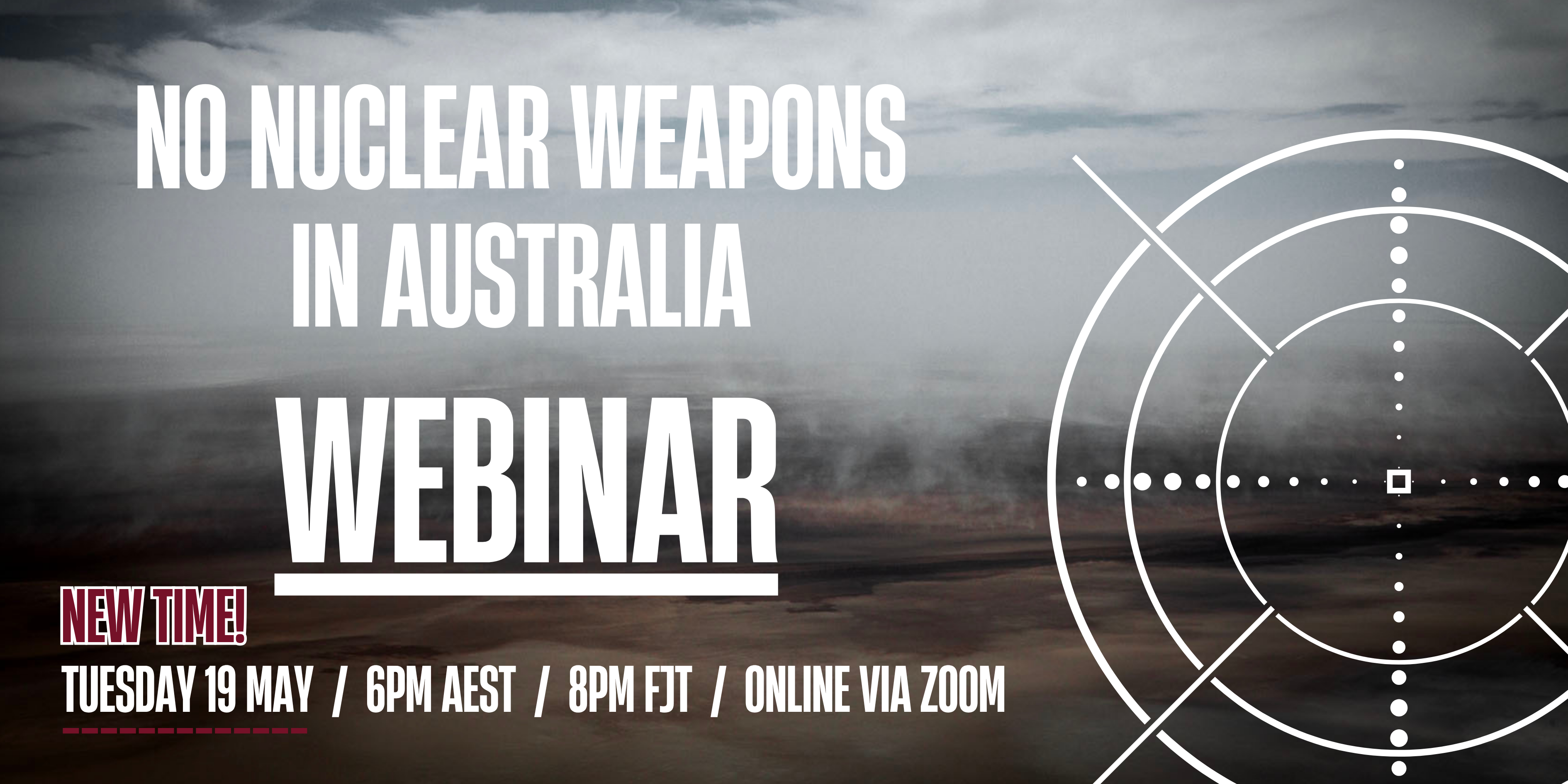
19 May – Webinar- Webinar: No Nuclear Weapons in Australia
Start: 2026-05-19 18:00:00 UTC Canberra, Melbourne, Sydney (GMT+10:00)
End: 2026-05-19 19:30:00 UTC Canberra, Melbourne, Sydney (GMT+10:00)
20 May – Webinar – The dangerous world of AUKUS, US, military occupation and suppression of dissent

National Webinar, 20th May, 2026, 6.30pm AEST. Confronting laws restricting/suppressing protest speech and action
Speakers: Former Sen. Rex Patrick, Lawyer Nick Hanna ,Arthur Rorris ,Jorgen Doyle, Sen David Shoebbridge,
Facilitator Kelley Tranter.

of the week – Australians for War Powers Reform (AWPR)
To see nuclear-related stories in greater depth and intensity
 Antinuclear