Too Quick to Support Force, Too Slow to Grow Peace

By Tara Gutman, ICAN Australia, Mar 03, 2026, https://icanaustralia.substack.com/p/too-quick-to-support-force-too-slow?utm_source=post-email-title&publication_id=6291617&post_id=189729809&utm_campaign=email-post-title&isFreemail=true&r=1ise1&triedRedirect=true&utm_medium=email
The US and Israeli strikes on Iran on the weekend present Australia with a difficult but necessary question: what does it mean to defend an “international rules-based order” if that defence is applied selectively?
Moments like this test whether our commitment to international law is principled or contingent.
Australia’s Foreign Minister moved swiftly to express support for the strikes. Yet their illegality was immediately apparent to leading legal experts worldwide, including clarion calls from Australia’s own Professor Ben Saul and Donald Rothwell. The unanimous verdict of the legal community is that the strikes were again, as was the case in June 2025, manifestly illegal under the UN Charter.
The prohibition on the use of force is a cornerstone of international law. Kick at it repeatedly, dislodge it enough, and the foundations begin to give way. Don’t for a moment let the flurry of legal opinions suggest that this is a rhetorical disagreement; it is a serious legal dispute about the limits of military power.
When powerful states stretch those limits, the consequences ripple outward. International law depends not only on formal enforcement, but on perception, consistency and restraint. If some states vest in themselves the authority to determine when force is justified, others will inevitably take note.
For a middle power like Australia, which relies on stable legal frameworks rather than strategic dominance, that erosion carries real cost. If Australia is serious about international law, it must apply the rules consistently to everyone, everywhere, at all times, including to its closest partners.
Then there is the deeper nuclear dimension.
Both the United States and Israel are nuclear-armed states. When nuclear-armed governments conduct strikes framed as counter-proliferation measures, it reinforces perceptions of hierarchy and hypocrisy in the global non-proliferation regime, centred on the Nuclear Non-Proliferation Treaty (NPT).
The NPT rests on a two-part bargain dating back to 1968: non-nuclear-weapon states agreed to forgo nuclear weapons while the five permanent members of the Security Council, who are nuclear-armed, promised that they would pursue disarmament “in good faith on effective measures relating to cessation of the nuclear arms race…and a treaty on general and complete disarmament“. Progress by the nuclear-armed states on that second pillar stalled, while reliance on nuclear deterrence has become more deeply embedded in strategic doctrine, and four additional states have developed their own nuclear weapons.
This credibility gap is precisely why the citizen-led coalition, International Campaign to Abolish Nuclear Weapons (ICAN), created in Melbourne in 2007, worked with humanitarians worldwide, in particular the Red Cross Red Crescent Movement, to develop a treaty that makes nuclear weapons illegal and sets the stage for their elimination.
This treaty-led approach to banning inhumane weapons has already been achieved for all other weapons of mass destruction. ICAN is now led from Geneva by former ALP Federal Member for Fremantle, Melissa Parke, and has over 700 partner organisations who continue to advocate for the Treaty on the Prohibition of Nuclear Weapons, the only legally binding global instrument that comprehensively prohibits nuclear weapons and establishes a pathway toward their elimination. Ninety-nine countries have joined this treaty.
Australia is not one of them.
Given our historical good standing on arms control, I’m often asked why this is, including by state and federal parliamentarians. The straight answer is that our government is fearful to confront our powerful ally, even on this topic on which the safety of life on earth rests, in fact, particularly on this topic.
Australia occupies an unusual position in the nuclear debate. We are not a nuclear-armed state. We do not host our own nuclear weapons. Yet we are deepening defence integration with nuclear-armed AUKUS allies, expanding force posture initiatives, hosting joint facilities, and embedding ourselves more tightly within extended deterrence arrangements. Alliance cooperation, we are told, brings clear benefits. It also brings exposure.
Retaliatory strikes on US facilities across the Gulf illustrate a basic reality: infrastructure associated with military operations become targets. As Australia expands access and interoperability, it is prudent, not disloyal, to assess how that affects our own vulnerability in a crisis. This is not an argument for abandoning alliances. It is an argument for clarity about trade-offs.
If Australia is prepared to criticise breaches of international law by adversaries, it must also be prepared to express principled concern when allies test those same rules. Selective application weakens the normative architecture we claim to uphold.
Military strikes can delay technical capabilities, but they don’t resolve the political drivers of proliferation. Durable non-proliferation outcomes have historically depended on negotiated constraints, verification and reciprocal commitments, not cycles of force and retaliation.
Security built on nuclear brinkmanship is brittle security.
The Australian government is not living up to the image of our nation as a principled, multilateral middle power that Prime Minister Albanese painted at the UN General Assembly last year when he said:
“If we give people reason to doubt the value of co-operation, then the risk of conflict becoming the default option grows. If we allow any nation to imagine itself outside the rules, or above them, then the sovereignty of every nation is eroded.”
Australia should walk the talk and swiftly reposition itself to buttress confidence in international law. The government should begin by publicly and repeatedly reaffirming that international law consistently, to allies and adversaries alike.
Next, it has a responsibility to clarify for itself and inform the public whether any joint facilities based in Australia played a role in supporting the strikes and take measures to ensure that Australian territory is not used to facilitate unlawful military action. Not to satisfy a journalist’s curiosity, but because it’s an obligation under international law.
Lastly, the government should demonstrate its commitment to diplomacy and, without further delay, join the Treaty on the Prohibition of Nuclear Weapons as part of a credible strategy to reduce nuclear risk. Numerous cities, councils and state and territory parliamentarians have signed a pledge in support of taking this action. So have a majority of federal Parliamentarians.
Australians want a world in which law constrains power. Our government must be prepared to defend that principle confidently and consistently, even and especially among allies.
At present, Australia risks being too quick to support force, and too slow to grow peace.
About the author
Tara Gutman is a lawyer and strategist specialised in international law at Lexbridge Lawyers. Tara is also Co-Chair of ICAN Australia.
Liberals’ hidden review regarding nuclear energy

Hidden review slams senior Liberals’ lack of reflection after devastating election loss, ABC 3 Mar 26
“…On nuclear energy, Mr Dutton said making the power plants government owned neutralised community concerns around safety, but provided Labor an attack line on cost.
“Labor didn’t lay a glove on the policy as such, but they were effective in their campaigning saying ‘he’s going to cut health, education and NDIS to pay for this’,” he said.
…The review deemed the almost six-month delay between the Coalition unveiling its plan to fund nuclear power stations and releasing the costings for it as “fatal”.
It was found that the gap allowed Labor to fill the vacuum with a “scare campaign”.
The federal secretariat had presented “considerable research” to Mr Dutton’s office outlining the significant effort required to win over voters sceptical of nuclear.
Research showed Mr Dutton’s “bold vision” was appreciated, but the nuclear policy was not sufficiently linked to the issue top of mind for voters — cost of living relief.”…………………………
https://www.abc.net.au/news/2026-03-03/inside-liberal-2025-election-review/106410316
Nuclear Weapons in Australia – Time to End the Secrecy
March 1, 2026, Australians for War Powers Reform (AWPR) , https://warpowersreform.org.au/nuclear-weapons-in-australia-time-to-end-the-secrecy/
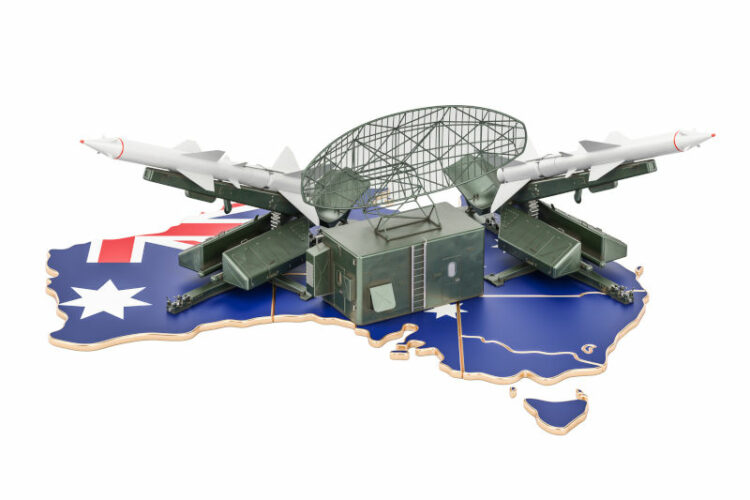
Under secretly-concluded arrangements with our allies, Australia is now on track to have US nuclear weapons on Australian soil for lengthy periods, starting very soon.
A new report released today details this dangerous development and exposes how the Australian community is being kept in the dark about it.
The report by civil society group Australians for War Powers Reform (AWPR) examines efforts by the Albanese government to facilitate the increasing presence of nuclear weapons capable aircraft and submarines.
“Many Australians are completely unaware that under current agreements with the US Australian airfields and port facilities will be hosting US aircraft and subs that could be carrying nuclear weapons. And those visits will increase dramatically, possibly in breach of the South Pacific Nuclear Free Zone Treaty,” said AWPR spokesperson Peter Murphy.
“A massive 1.6 billion dollars is currently being spent to upgrade the Tindal RAAF base in the Northern Territory and media reports describe six B-52, long-range, nuclear-capable bombers being “housed” there. But so far there’s been no proper public debate about Australia’s increasing involvement in the US nuclear weapons system.”
The Albanese government currently has a “we don’t ask” policy when it comes to whether US aircraft and ships are carrying nuclear weapons while in Australia. At the same time the US has a “neither confirm nor deny” policy on nuclear weapons. These policies are unwarranted and unacceptable.
“It’s time to end the secrecy on nuclear weapons and let the public have an informed debate. Do we really want these weapons of mass destruction in Australia? Shouldn’t the parliament discuss and vote on these matters?”
Australians have consistently rejected any role for nuclear weapons in our defence policies. A national poll last year revealed that two-thirds of Australians want the government to sign and ratify the UN Treaty on the Prohibition of Nuclear Weapons (TPNW).
“In this new report we are also urging the government to initiate a full independent inquiry into the AUKUS pact, as repeatedly called for by civil society and former prime ministers and foreign ministers. It should include a comprehensive review of Australia’s policies on nuclear weapons,” Peter Murphy said.
The full report “Australia and US Nuclear Weapons: Time to End the Secrecy” is available here
Greens say no war with Iran as Albanese’s Labor issues support of Trump and Netanyahu’s illegal attacks.

Last night, US President Trump launched a new illegal bombing campaign against Iran. The Australian Government’s support for Trump’s latest illegal war is a clear breach of international law and the prohibition on wars of aggression.
The Iranian people deserve to be free from persecution and domination, both from the current regime and from foreign powers. History shows, and the world knows, that US military attacks and Donald Trump’s kidnappings and assassinations do not produce peace and do not produce justice.
While US bombs and missiles rain down on Iran, there is every likelihood that they are being targeted with the direct or indirect assistance of “joint” US-Australian military facilities at Pine Gap and North West Cape.
The Greens have consistently and clearly condemned the Iranian Regime’s violent response to recent protests and long history of oppression, and we have backed the Woman Life Freedom movement. We know that the people of Iran who have been the victims of the regime will be the same people who are right now being killed, injured and driven into further poverty and fear by US bombing.
Senator Waters, Leader of the Australian Greens, said:
Trump and Netanyahu’s illegal attacks last night have unleashed chaos across the Middle East.
“This war will not bring safety to the brave Iranian people who are fighting for liberation from the brutal regime. Innocent people have already been massacred, including at least 60 children in Southern Iran killed by US and Israeli strikes on an elementary school last night. Our hearts ache for their families. This war will see homes and cities razed to the ground and countless innocent lives lost.
“The Greens condemn these illegal, abhorrent and unilateral attacks. Australians do not want to be dragged into another US-Israeli war.
“Australia’s support of Trump and Netanyahu’s illegal attack last night was disgraceful.
“We cannot bomb our way to peace.
“The Labor government must immediately rule out Australian support for Trump and Netanyahu’s illegal war. No resources. No intelligence. No more cover.
“The Labor government must also confirm to the Australian people that no intelligence from Pine Gap or other US bases in Australia was used last night, and rule out allowing these bases to be used in this illegal war going forward.
“End AUKUS. Australia must be a force for peace and diplomacy across the world.”
Senator Shoebridge, Greens spokesperson on Foreign Affairs, said:
“No one seriously believes that Donald Trump cares about the rights or lives of people in Iran. Just like other US wars that Australia has supported in Vietnam, Iraq and Afghanistan, the talk is about freedom and democracy but the reality is killing and destruction. Already, we are seeing reports of schools being destroyed and children killed in airstrikes.
“With barely a moment’s pause the Albanese Government has backed Trump and another US-led war in the Middle East. This proves without a shadow of a doubt that Labor has outsourced Australian foreign policy to Washington.
“Labor has made Australia a part of this war by allowing Pine Gap and other US military bases here to be used to gather intelligence and target US bombs and missiles. People see through Labor when it says it believes in international law and then repeatedly backs the US and its illegal wars.
“Time and time again the US has betrayed the people it was claiming to protect, leaving bloodshed in its wake while serving its own corporate and military interests. Trump is no different, even if he is more blatant.
“The Greens are the only anti-war party in the Federal Parliament and we will not shift from that stance, having seen the horrifying scale of killing and displacement that war has visited on the world.
“The world has been watching the bravery of the Iranian people pushing back against a brutal regime and calling for liberation and freedom. The Greens know that a Trump-led military assault on Iran is not a pathway to freedom or a pathway to a democratic regime that is supported by the Iranian people. This attack, like the last, is a pathway to chaos and more killing in Iran.
“There is more Australia can do for the people of Iran, starting with offering safety to those who have fled the regime, especially those already in Australia who are trapped in an unfair refugee process.”
Two pieces of news re Radiation and Health
Tony Webb , Feb 26, 2026
1. Today saw release of a report prepared for the US Department of Energy that will, alongside others from US agencies like OSHA, be feeding into the US NRC review of radiation Protection Standards mandated by the Trump Directive (EO 24300) issued in May last year. The NRC draft of revised regulations on Radiation Safety is expected 30 April 2026. The attached report to the US DoE – with particular significance for radiation safety for workers in and populations living close to nuclear power reactors – gives a clear indication of how this process is likely to result in significant weakening of protection standards
In summary it advocates
- abandoning the Linear No Threshold and As low as Reasonably Achievable principles that offer some protection at low levels of exposure based on the principle that there is no safe level of exposure
- resetting the annual occupational exposure limit to 100 mSv – a doubling of the current US standard of 50mSv and a five-fold increase in the 20mSv annual occupational standard that applies in most other countries including Australia
- raising the public exposure limit from 1 mSv to 5 mSv
I think we can expect other US agencies to submit similar reports
2. As previous posts on this issue have noted these proposals to weaken radiation protection for workers and the public come at a time when the evidence is mounting from studies of workers and communities exposed to radiation releases in and from Nuclear power pants for a revision that would tighten the current standards. Today saw the release of a new book by Ian Fairlie – The Dangers of Ionising Radiation: A Scientific Guide to Radiation Risks for Government Agencies, Legal Professionals and Medical Clinicians has just been published (Ethics International Press. 2026) https://ethicspress.com/products/the-dangers-of-ionising-radiation As anticipated this updates much of the earlier work in Ian Fairlie and Cindy Folkers book –
The Scientists Who Alerted Us To The Dangers of Radiation – providing details on the nature of the health risks and the evidence that current standards seriously underestimate these risks – The Ethics Press site provides a link https://eipcontents.s3.eu-north-1.amazonaws.com/master/samples/978-1-83711-586-0.pdf that allows you to read the first 30 pages of the book that provide a summary of what follows – worth a read that will I hope prompt you to order the book and recommend it to people in your networks
Western Australia submarine’s base the only reason for AUKUS
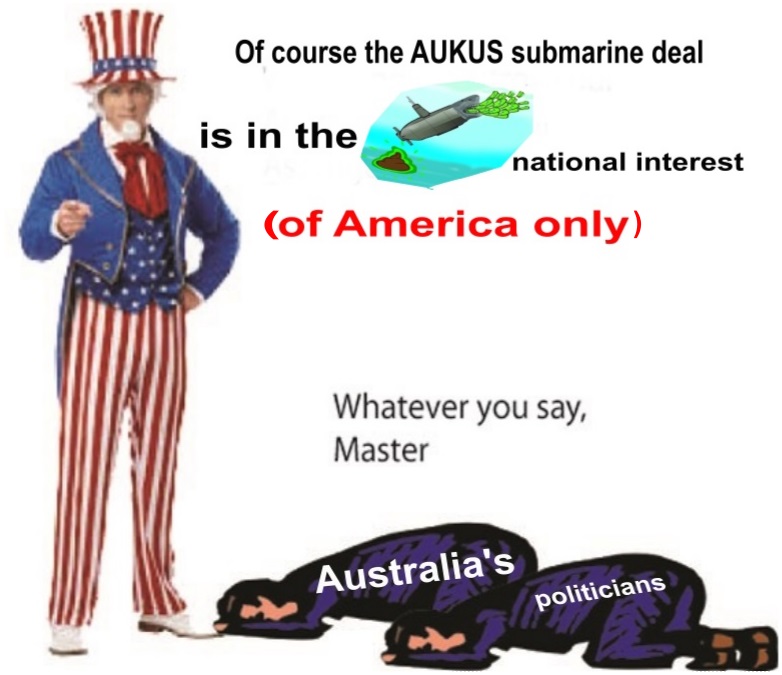
Australia’s acquisition of nuclear-powered submarines is not in fact the most important part of the AUKUS deal – they are a distraction … AUKUS’s main game is the base that Australia intends to give to the US at HMAS Stirling in Western Australia
Albert Palazzo , adjunct professor at UNSW Canberra., February 28, 2026, https://www.thesaturdaypaper.com.au/comment/topic/2026/02/28/wa-subs-base-the-only-reason-aukus?utm_campaign=SharedArticle&utm_source=share&utm_medium=link&utm_term=VFZ0rLaV&token=2PZRyQNr
It is tempting to label the AUKUS project an exercise in self-delusion and self-denial. The number of commentators who believe the project’s core promise will actually be honoured – the transfer of Virginia-class nuclear-powered submarines from the United States to Australia – is astonishingly small and mainly limited to politicians and their hangers-on.
Even in the US, the likelihood of the transfer taking place is openly discounted, including by the chief of naval operations, Admiral Daryl Caudle. As if preparing for a let-down, a new report from the Congressional Research Service advances alternatives to the transfer of the promised submarines that will still allow the US to meet its strategic priorities.
In addition, it is hard to square the submarine promise with the reality that is Washington these days. US President Donald Trump’s willingness to pressure America’s allies and turn the US into a rogue superpower is well documented – just ask the Canadians and Danes. We have witnessed in real time his destruction of the global rules-based order as the US withdraws from dozens of international organisations and agreements.
That the US warship-building industry is in poor shape is also no secret. The odds of the nation being able to increase its submarine build rate to the required level for the transfer to go ahead without a loss of US operational capability is virtually nil, according to a December 2025 report from the Washington-based Center for Strategic and International Studies.
One must accept that Australia’s politicians are reasonably intelligent, yet with the myriad well-known problems facing the nuclear-powered submarine transfer it is hard to understand how they can still insist that the project is “full steam ahead”. Nor is this insistence without cost to the taxpayer, as evidenced in the recent promise to spend $30 billion on South Australia’s Osborne shipyard to make it AUKUS ready. How can our politicians sustain their faith in AUKUS and not be rightly labelled as delusional?
The answer to this contradiction lies in recognising what AUKUS is really about – what the parties actually expect to gain from the agreement. Australia’s acquisition of nuclear-powered submarines is not in fact the most important part of the AUKUS deal – they are a distraction. There are too many challenges to Australia’s acquisition, operation and maintenance of these boats for any rational person to believe they will arrive as promised. Hence AUKUS’s main game is the base that Australia intends to give to the US at HMAS Stirling in Western Australia.
This base may be on Australian soil but its primary beneficiary will be the US, just as it is the US that disproportionately gains from the seemingly “joint” military facilities at Pine Gap and North West Cape.
The forthcoming nuclear submarine base is part of a wider American preparation for a possible war between the US and China. From the base, American submarines will be able to operate against China’s southern flank and sever its lines of communication across the Indian Ocean. In addition, the base allows the US to complicate China’s security arrangements by allowing American forces to operate on multiple lines of attack – westwards across the Pacific Ocean and northwards from Australia.
For the US, the defence of Australia is a distant secondary goal for this base. Our politicians are not therefore being delusional; they are being actively deceptive to their voters, since they must know what it is that the US really wants.
Australia is making enormous improvements to Fleet Base West (Stirling). The base is being upgraded so it can sustain and maintain a fleet of foreign nuclear-powered submarines, principally the US Navy’s Virginia-class attack boats, Ohio-class nuclear-armed missile submarines and the occasional British submarine.
The Stirling upgrade is similar in intent to what is happening at RAAF Base Tindal in the Northern Territory, which is being improved to accept US heavy bombers, presumably including nuclear-armed ones.
As a second order effect, the US presence at Stirling will see a significant influx of American sailors, maintenance personnel and administrative staff to the area. So determined is our government to meet its AUKUS responsibilities and make the US submarine base a reality that it plans to build new homes for the 1200 mainly American military personnel and their families who will be calling Australia home.
In the midst of a national housing crisis, and in a region where home prices increased by 15 per cent in a single year, a similar urgent housing build for Australian citizens is apparently not on the cards.
If one examines AUKUS from the perspective of Australia’s longstanding security practice, what appears to be merely senseless starts to reveal a disturbing logic.
Since the end of World War II, Australian governments have gone to great lengths and expense to keep the US interested in our part of the world. Australia needs to get US attention because the south-west Pacific has never been – and still isn’t – an important part of the world in the eyes of our great power leader.
In order to keep our protector onside and interested in our fate, Australia has had to demonstrate repeated and enthusiastic support for American policy. The need to maintain relevance explains why Robert Menzies encouraged the US to fight in Vietnam, why Australia then invited itself to the war, and why this country went to such great lengths to be included in the 2003 invasion of Iraq, as well as other military missions. Of course, getting into such conflicts was easy. Getting out again can be a lot harder. Any early withdrawal risks offending the US, so Australians have fought to the end.
Generating relevance also explains the readiness with which successive governments have accepted the establishment of US military bases on Australian soil. The most important of these are the spy and signals establishment at Pine Gap and the Naval Communication Station Harold E. Holt.
Just how vital these facilities are to America should not be minimised – they are critical for the conduct of US military and CIA operations, as well as the interception of communications by individuals ranging from actual terrorists to ordinary people, including Australians. The submarine base at Stirling will join Pine Gap and Naval Station Holt as a third facility of great operational importance.
AUKUS has a grim rationale when it is seen as the latest initiative in Australia’s longstanding tradition of seeking American attention. What is different in this case is that Australia’s leaders have increased the nation’s exposure to risk in any future war to a potentially existential level.
In the past, our participation in Vietnam, Iraq and Afghanistan did not create any threat to Australia itself. Only those who served were placed in harm’s way. That is no longer the case.
China is a great power and, unlike Vietnam 60 years ago, has power projection capabilities that can hold Australian territory and population centres at real risk. The Australian government has placed a bullseye on Australia’s back and it isn’t clear if our leaders understand this.
Since the US bases are of great military importance, China would likely seek to destroy them in order to protect its own interests. Worse, China could safely employ nuclear weapons against Australia because the US would be unlikely to retaliate against such distant damage and risk the incineration of one of its own cities.
Without any commensurate benefit, the Australian government has embraced AUKUS and accepted the tremendous costs and risks it entails. It has done so with an appalling lack of honesty towards the Australian public, using the submarine promise like a set of shiny keys in front of a baby.
Our leaders must know that the US will not have submarines to spare when the time comes for the transfer. Instead, they employ deception to distract from the real game – a US submarine base and the unstated commitment of Australia to the American side in a war between great powers.
Of course, this need not be the outcome. Despite tradition and reluctance by our political leaders to embrace new ideas, policy can change. An independent defence policy that puts Australian sovereignty first is within reach, and the military technologies to enact it already exist.
The impediment is the Australian government’s inability to accept the reality of the present security situation. Instead, it opts for nostalgia. Australia needs a government that is willing to embrace the necessary changes in perspective and culture that will allow it to consider other security options.
Perhaps one day our politicians can rise to conceiving and implementing a different security policy, rather than falling back on the traditional default response of jumping up and down to get the attention of Washington. One can only hope.
The Ghost in the Kill-Chain: The Invisible Cost of “Surgical” War

Today, to hold a principled anti-war stance is often derided as “un-Australian” or weaponised through accusations of anti-Semitism, all while a new cycle of state-sanctioned Islamophobia plays out under the guise of national security. We are witnessing the return of “One Nation” rhetoric: a toxic mix of division and rabid ignorance.
Australia is not a bystander. Firms like Palantir and Anduril have successfully blurred the lines between civilian and military data. In February 2026, the Labor government quietly awarded Palantir a fresh $7.6 million contract for Defence’s Cyber Warfare Division. Meanwhile, Canberra has committed $1.7 billion to Anduril’s “Ghost Shark” program—autonomous undersea vehicles designed for strike operations.
28 February 2026 David Tyler, https://theaimn.net/the-ghost-in-the-kill-chain-the-invisible-cost-of-surgical-war/
The Hidden Human Cost of Algorithmic Warfare
Fresh from their “snuff-movie” hit incinerating Venezuelan fishermen, Team Trump moves yet another carrier strike group into the Persian Gulf. Suddenly, our infotainment airwaves are full of experts spruiking “clean, surgical strikes,” while our media eagerly repeats the Pentagon’s propaganda. An old fat sea-cow, the USS Abraham Lincoln, and her tattooed bouncers are framed as instruments of precision and humane restraint, hovering just over the horizon of Iran’s ruggedly spectacular coast.
“Surgical strikes?” Pentagon experts now propose to kill and maim Iranians in an illegal blitzkrieg or perhaps three months of “boots on the ground” – the messages are as garbled as a Trump rally speech. But what is clearly being sold is the old lie that war is glorious, noble, and heroic. The US is supposedly ready to “send a message” without another Iraq-style quagmire because, this time, war will be data-driven, algorithmically optimised, and somehow morally minimised.
Modern warfare has never been more complex, nor more bloodthirsty. Today, to hold a principled anti-war stance is often derided as “un-Australian” or weaponised through accusations of anti-Semitism, all while a new cycle of state-sanctioned Islamophobia plays out under the guise of national security. We are witnessing the return of “One Nation” rhetoric: a toxic mix of division and rabid ignorance. From the White House, the lies arrive with such velocity that they overwhelm the public’s ability to process them. Above all, we are sold an antiseptic fantasy: that the next war will be a clean victory won by Artificial Intelligence, where autonomous drones and “algorithmic warfare” replace the messy reality of human slaughter.
We are rarely told who taught the machines to kill. And at what human cost.
The reality of 2026 is that the “intelligence” in AI remains deeply, painfully, and inexorably human. AI-enabled targeting, surveillance, and logistics systems require billions of data points to be labelled, sorted, and refined before a single model can be deployed. Every box drawn around a body in a blurry image, every classification of rubble, every tag of “weapon” versus “non-combatant” has been performed by a human being. Not by Silicon Valley engineers, but by a vast, hidden army of pieceworkers scattered across the Global South.
In refugee camps in East Africa, in cramped internet cafés in South Asia, and in crowded apartments in Latin America, workers are paid the equivalent of a few dollars an hour to sit at flickering screens and trace rectangles around human silhouettes. Behold the invisible pedagogues of the war machine, providing the labelled examples that allow military AI to distinguish “target” from “background,” “combatant” from “crowd.”
The irony is dark and palpable. Many of these workers live in regions already wrecked by Western interventions. Some fled earlier conflicts in Iraq, Syria, or Afghanistan; others live under permanent austerity. Men and women now find themselves training systems that may one day patrol their own skies. It is a grim circularity: the global poor – the “wretched of the earth,” as Frantz Fanon termed them – are pressed into teaching the next generation of weapons how to see.
This is the new “Digital Taylorism.” Just as 20th-century manufacturers broke down manual labour into minute, repetitive tasks, 21st-century AI firms have fragmented intellectual labour into atomised micro-gestures. For those training military models, the work is often traumatic. Investigations into data-labelling hubs in Kenya, India, and Colombia document the harm: workers are forced to view thousands of hours of violent, graphic content—war footage, torture, and the aftermath of bombings—to “fine-tune” the algorithm’s recognition.
Unlike the soldiers who will eventually operate these systems, these digital labourers have no veteran status, no medals, and no guaranteed access to mental health care. When their performance drops due to the trauma, the solution is simple: deactivate their account and hire another worker from the endless queue.
Australia is not a bystander. Firms like Palantir and Anduril have successfully blurred the lines between civilian and military data. In February 2026, the Labor government quietly awarded Palantir a fresh $7.6 million contract for Defence’s Cyber Warfare Division. Meanwhile, Canberra has committed $1.7 billion to Anduril’s “Ghost Shark” program—autonomous undersea vehicles designed for strike operations.
When these systems are woven into civilian infrastructure, the war machine becomes an everyday reality. The same optimisation logic used to squeeze more deliveries out of a warehouse worker is repurposed to accelerate the “sensor-to-shooter” loop. In Australia, we saw a prototype of this in Robodebt: the weaponisation of data against the poorest, treating them as problems to be hunted by algorithms long before any human looks at the facts.
This is not a glitch. It is how capital has integrated AI into the security state. A data labeller in Nairobi might make less in a day than a single second of flight time for a carrier-based fighter jet. The system depends on the invisibility of the connection between the micro-task on a screen and the missile in the sky.
We must refuse the comforting illusion that the coming war will be “clean” because it is “smart.” If our automated future is built on a foundation of traumatised, underpaid labour, then it is not a technological triumph. It is a moral failure disguised as innovation. The cost of the next war will not only be counted in missiles fired and lives lost in Tehran or the Strait of Hormuz. It is already being paid, quietly, in the human dignity we have sacrificed to train the machines that will fight it.
Coda: The Sycophant’s Algorithm
And so, we find ourselves back in the familiar, fawning posture of the Australian security establishment – a collection of strategic wallflowers so desperate for an invitation to the dance that they have handed the keys to the kingdom to a band of Silicon Valley carpetbaggers. We are told that by tethering our national interest to the likes of Palantir and Anduril, we are buying “security.”
In reality, we are buying a front-row seat to our own irrelevance.
We have become the regional branch managers for a war machine we neither control nor understand. To watch a Labor government – the party that once spoke of “national sovereignty” – quietly outsource our military intelligence to foreign algorithms trained by the global dispossessed is more than a policy failure; it is a spiritual surrender. It is the triumph of the technocrat over the citizen, the dashboard over the diplomat. We are being marched into a conflict in the Middle East not by the force of reason, but by the relentless, unthinking click of a mouse in a Nairobi sweatshop. It is a spectacle of profound hollowness, orchestrated by people who wouldn’t know a national interest if it bit them on the leg in the middle of a Canberra cocktail party.
This article was originally published on URBAN WRONSKI WRITES
THE SILENCING: How “Fighting Antisemitism” Became a License to Censor Genocide Critics
28 February 2026 Dr Andrew Klein, https://theaimn.net/the-silencing-how-fighting-antisemitism-became-a-license-to-censor-genocide-critics/
There’s a burger franchise in Boronia. I go there, that’s how I got to know the name Hash Tayeh. Reasonable prices. Decent food. Hash Tayeh, the man behind the franchise has been an outspoken critic of Israel’s actions in Gaza. I’ve followed him on X for years. Never saw hate speech. Just someone who watched children die and refused to stay silent.
On Wednesday, 25th February 2026, the Victorian Civil and Administrative Tribunal found him guilty of racial and religious vilification. His crime? Leading a chant at a pro-Palestinian rally in March 2025: “All Zionists are terrorists.”
The same day that judgment was handed down, videos circulated online of people celebrating the burning deaths of Palestinian children. Laughing. Cheering. No charges. No accountability. No outrage from those who shape our laws.
Tayeh put it simply:
“I keep asking myself what kind of world we are building when outrage at injustice is punished, but the celebration of human suffering is tolerated.”
This article examines that question. It traces how a fraudulent definition of antisemitism has been weaponised to silence critics of genocide. It documents the legal machinery being built to protect a foreign state from accountability. And it asks where we are headed – because when you cut through the rhetoric, that’s exactly what’s happening.
The Tayeh Case – A Warning Shot
The chant was “All Zionists are terrorists.” Judge My Anh Tran ruled that its natural effect was to incite hatred against Jewish people as a group.
Here’s the problem: Zionism is not a religion. It’s a political movement founded in the late 1880s by Theodor Herzl, an avowed atheist. It advocates for a Jewish state in historic Palestine. It has the same structural relationship to Judaism that Christian Zionism has to Christianity – a political ideology drawing on religious heritage, not a faith itself.
The court accepted that “Zionism” is a political ideology. But the chant targeted “All Zionists,” which Judge Tran ruled was aimed at “all supporters of the continued existence of Israel as a Jewish state.” This moves the target from a specific government policy to a group defined by its support for the Jewish state – and therefore, in the court’s reasoning, to Jewish people themselves.
The judge acknowledged you can criticise governments. But you cannot, she ruled, incite hatred against a racial or religious group.
Except Zionism isn’t a race. It isn’t a religion. It’s a political position. And under this ruling, political criticism becomes a criminal offense.
The Definition That Was Never Adopted
This didn’t happen in a vacuum. It happened because Australia has been systematically adopting a definition of antisemitism that was never officially approved.
The International Holocaust Remembrance Alliance (IHRA) “working definition” includes two sentences and eleven examples. Seven of those examples involve criticism of Israel.
But here’s what the Israel lobby doesn’t tell you: the examples were never adopted by the IHRA Plenary.
Oxford University PhD candidate Jamie Stern-Weiner’s research, based on a confidential internal memo from an ambassador present at the May 2016 IHRA Plenary meeting, reveals the truth. Sweden and Denmark explicitly opposed including the examples. The Plenary agreed to adopt only the basic two-sentence definition. The examples were retained as “working material” – a rough draft, not an official definition.
Despite this, from approximately 2018 onwards, pro-Israel lobby groups began promoting the definition as if the examples were part of it. The misrepresentation has now been accepted by governments and institutions worldwide, including Australia.
Kenneth Stern, the lead drafter of the original definition, has publicly stated it’s being “weaponised” to silence criticism of Israel. He repudiated legislative efforts to codify it, recognising exactly what would happen.
The Legal Machinery
Victoria has adopted the IHRA definition. The state has passed Australia’s strongest anti-vilification laws. A new civil scheme will come into full effect in April 2026, making it even easier to pursue complaints at the Victorian Civil and Administrative Tribunal (VCAT).
The federal government’s Combating Antisemitism, Hate and Extremism (Criminal and Migration Laws) Bill 2026 proposed similar measures, though the racial vilification provisions were ultimately dropped. But the momentum is clear.
The ACT is now reviewing its own anti-vilification laws, with the government stating that:
“… strengthened laws could include increased penalties, or the inclusion of aggravated or additional offences to more clearly capture criminal conduct motivated by hate.”
The machinery is being built. And its primary effect, in practice, is to suppress speech critical of Israel.
The Rutgers Center for Security, Race and Rights puts it plainly:
“The IHRA working definition of antisemitism has no place in law. The analysis presented here makes clear that the IHRA definition reproduces anti-Palestinian racism, exacerbates antisemitism, and serves as a tool of censorship of political speech, academic work, and civic engagement on matters of public importance, including criticism of Israel.”
The Legal Contradiction – Wertheim v Haddad
There’s a problem with this whole edifice. Australian law already addresses it.
In Wertheim v Haddad [2025] FCA 720, handed down 1 July 2025, the Federal Court ruled on precisely this distinction.
Justice Angus Stewart found that 25 antisemitic imputations were conveyed in the respondent’s lectures. But crucially, he rejected imputations that sought to characterise criticism of Israel or Zionism as antisemitic.
His ruling is unequivocal:
“The ordinary, reasonable listener would understand that not all Jews are Zionists or support the actions of Israel in Gaza and that disparagement of Zionism constitutes disparagement of a philosophy or ideology and not a race or ethnic group.”
Australian travel guide
“Needless to say, political criticism of Israel, however inflammatory or adversarial, is not by its nature criticism of Jews in general or based on Jewish racial or ethnic identity.”
The court established, as a matter of Australian law, that:
- Criticism of Israel is not, in itself, antisemitic
- Criticism of Zionism is criticism of an ideology, not a race or ethnic group
- The distinction between anti-Zionism and antisemitism is legally recognised and must be maintained
The IHRA definition, with its conflation of political criticism with racial hatred, sits in direct tension with this binding judicial authority.
Yet Hash Tayeh sits convicted.
The Genocide They Won’t Name
While this machinery grinds into motion, the killing continues.
More than 75,000 Palestinians have been murdered in Gaza. Tens of thousands more remain missing under rubble. Approximately 70% are women and children. Close to 300 journalists have been killed.
The International Association of Genocide Scholars passed a resolution in September 2025 declaring Israel’s actions constituted genocide, supported by 86% of voting members. Holocaust scholar Omer Bartov of Brown University, who initially resisted the conclusion, now states unequivocally: “My inescapable conclusion has become that Israel is committing genocide against the Palestinian people.” Israeli professor Raz Segal of Stockton University called it a “textbook case.”
The Lemkin Institute for Genocide Prevention, named after the man who coined the term, has documented how genocide denial is being normalised in Western political discourse. It accuses Germany of complicity, noting that organisations receiving public funding disseminate “disinformation and denialist narratives” while major media outlets become “the Israeli government’s most loyal mouthpiece.”
At Trump’s inaugural “Board of Peace” meeting in Washington, there was no mention of these 75,000 dead. Trump’s envoy thanked Benjamin Netanyahu – an internationally indicted war criminal – and spoke exclusively of Israeli captives. Palestinian suffering was erased entirely.
As one analyst noted: “Peace that exonerates the perpetrators and silences the victims is not peace. It is the normalisation of barbarism and the impunity of genocide.”
What’s Being Silenced
The IHRA definition is not about protecting Jews from discrimination. Existing anti-discrimination laws already do that.
The definition’s purpose, in practice, is to shield Israel from accountability. The seven examples involving Israel are not accidental. They are structural – designed to ensure that any serious criticism of Israeli policy can be framed as antisemitic.
The effect is to criminalise:
Arguments that Israel is an ethno-state- Comparisons of Israeli policy to that of the Nazis
- Accusations of genocide (even when documented by genocide scholars)
- Demands that Israel be held to the same standards as other nations
As one analysis notes, “This prohibition extends not only to direct comparisons, but to any claim that Israel is by its very nature an ethno-state, or that it is currently engaging in genocide, creating concentration camps, planning for mass expulsions, or engaging in other war crimes or crimes against humanity.”
When genocide scholars, international courts, and UN investigators document these realities, they are accused of antisemitism. When a Melbourne man leads a chant about Zionists, he is convicted.
The message is clear: you may not speak truth about what Israel is doing. You may not name genocide. You may not criticise the ideology that justifies it.
The Double Standard
The IHRA definition commits the very acts it claims to oppose.
It creates a double standard for Israel by proscribing language and criticism that no institution proscribes with respect to any other country. I can criticise Hindu nationalism in India, White nationalism in South Africa, discrimination in Hungary. I cannot criticise Israel for doing the same – or worse.
It stereotypes Jews by assuming that all Jews identify fully with Israel and with the nature of Israel as a Jewish state . Yet the document simultaneously denounces stereotyping Jews. The contradiction is baked in.
It creates impunity for genocide by shielding Israel from the accusations that would be leveled against any other nation committing these acts.
As the Rutgers Center concludes:
“Singling out antisemitism as the only form of racism deserving of a separate definition is not only unnecessary to protect Jews from discrimination, but also may give rise to antisemitic conspiracies about Jews controlling the government.”
Where We Are Headed
Hash Tayeh’s conviction is not an isolated case. It’s a warning.
The machinery is being built. The definition is being embedded. The penalties are being strengthened. The ACT is reviewing its laws. The federal government attempted to pass similar measures. Victoria has already enacted them.
And every time someone speaks out against what is happening in Gaza, they risk becoming the next Hash Tayeh.
The Iranian Foreign Minister warned at the Al Jazeera Forum that “impunity for attacks on civilians risks normalising military domination as a guiding principle of international relations.” The Somali President cautioned that “the foundations of global governance are weakening” and that “the institutions created after World War II are under grave threat.”
This is where we are headed. A world where the law is replaced by force. Where genocide proceeds with impunity. Where those who speak truth are silenced.
And where a man can be convicted for chanting about Zionists while people celebrate the burning of Palestinian children without consequence.
Conclusion: The Question
Hash Tayeh asked the question we should all be asking:
“Who decides which voices are dangerous and which hatred gets a free pass?”
The answer is becoming clear. Those with power decide. Those who control the definitions decide. Those who can frame criticism as hate decide.
The IHRA definition gives them that power. The courts enforce it. The media amplifies it. And the killing continues.
More than 75,000 dead. Tens of thousands missing. A generation of children erased. And the response from our institutions is to tighten laws against those who speak out.
This is not about combating antisemitism. Real antisemitism – attacks on synagogues, harassment of Jewish individuals, Holocaust denial – is already illegal. Those laws remain on the books. This new machinery adds nothing to their enforcement.
What it adds is the power to punish speech that offends a foreign government’s political interests. Speech that names genocide. Speech that demands accountability.
You are free to criticise any country’s actions – as long as that country is not Israel. You are free to denounce any ideology – as long as that ideology is not Zionism. You are free to oppose any war – as long as that war is not in Gaza.
That’s not freedom. That’s a license to censor. And it’s being used to shield genocide from scrutiny.
The question is whether we will accept it. Whether we will let them silence us while children burn. Whether we will let them build this machinery of suppression while pretending it’s about protecting anyone.
I know my answer. What’s yours?
Australia backs strikes on Iran – but do Australians?
1 March 2026 AIMN Editorial. By Peter Brown, https://theaimn.net/australia-backs-strikes-on-iran-but-do-australians/
When the United States and Israel launched coordinated strikes on Iran, the immediate international reaction ranged from firm endorsement to urgent calls for restraint.
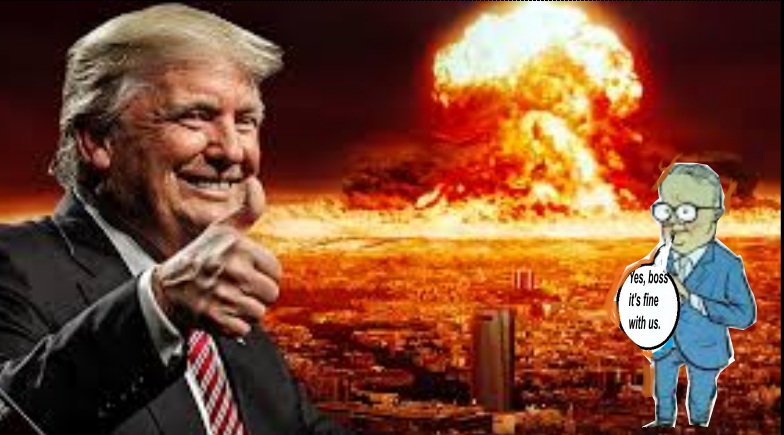
In Canberra, the response was swift and clear. Prime Minister Anthony Albanese announced Australia’s support for the action, framing it within longstanding concerns about Iran’s regional conduct and nuclear ambitions. Foreign Minister Penny Wong and Defence Minister Richard Marles reinforced the government’s position, while travel advisories were updated and contingency arrangements activated for Australians in the region.
Diplomatically, the decision reflects a familiar pattern. Australia has historically aligned with its principal security partner in moments of escalation. Alliance credibility, non-proliferation principles and strategic continuity remain central pillars of Canberra’s foreign policy.
The domestic response, however, is less predictable.
For many Australians – particularly those who prioritise national security and alliance stability – support for the strikes follows a straightforward logic. Iran’s nuclear program has long been a source of international tension. Its involvement in regional proxy conflicts is widely documented. From this perspective, action aimed at preventing further escalation or nuclear capability can be seen as a deterrent measure rather than a provocation.
There is also the matter of alliance expectations. Australia’s security architecture is deeply interwoven with that of the United States. Moments of crisis test not only military capability but diplomatic reliability. Governments in Canberra, of both major parties, have historically erred on the side of solidarity.
At the same time, military action in the Middle East carries a long and complicated legacy. Public memory of Iraq and Afghanistan informs contemporary debate. For some Australians, the threshold for supporting overseas strikes is higher than it once was.
That caution has precedent. In the years following the 2003 Iraq invasion, polling consistently showed a majority of Australians believed Australia should not have participated – a reminder that public sentiment can shift sharply once the long-term consequences of intervention become clear.
Concerns now being raised focus less on defending Iran’s government and more on the risks inherent in escalation: retaliation across the region, disruption to global energy markets, and the possibility of a broader conflict drawing in additional powers.
Within parts of Labor’s traditional base – already engaged in debates over AUKUS and Australia’s expanding strategic footprint – questions about proportionality and long-term consequences have already surfaced. Peace organisations and some crossbench figures have signalled the need for restraint and renewed diplomatic channels.
Reasonable observers can hold two positions simultaneously: that Iran’s regime presents genuine strategic challenges, and that military escalation carries unpredictable consequences.
The Political Test Ahead
At this early stage, comprehensive polling on the current strikes is limited. Historically, Australian public opinion on international conflicts has tended toward caution. Support for allies often coexists with reluctance for deeper involvement.
What may ultimately shape domestic opinion is not the initial decision, but what follows. If the strikes remain contained and diplomatic efforts regain momentum, public reaction may remain measured. If escalation broadens – affecting global markets, regional stability, or Australian nationals abroad – scrutiny of Canberra’s stance will intensify.
For the Albanese government, the immediate decision aligns with longstanding strategic settings. The longer-term test will be flexibility: whether Australia can both maintain alliance solidarity and adapt its position as events evolve.
Foreign policy decisions made in the opening hours of a crisis often appear decisive. Their durability depends on what unfolds next.
In moments like this, governments act quickly. Public opinion tends to move more gradually – but it is rarely indifferent to outcomes.
THE THOUGHT SHAPERS: How Jillian Segal’s Agenda Threatens to Capture Australia’s Universities – and Why We Must Resist
The message is clear: you should assume that Jewish Australians support Zionism. And if you criticise Zionism, you may be targeting Jewish identity itself.
25 February 2026 Dr Andrew Klein, PhD, AIM
Let’s be direct about what we’re facing.
Jillian Segal, the government’s Special Envoy to Combat Antisemitism, has proposed a sweeping agenda that would fundamentally alter how Australian universities operate. Her plan includes “university report cards” grading campuses on their efforts to combat hate speech, the power to withhold public funding from researchers or programs deemed insufficiently compliant, and ultimately, a judicial inquiry into campus antisemitism if universities fail to meet her standards by 2026.
On its face, this sounds reasonable. Who could oppose tackling antisemitism?
But the devil, as always, lives in the definitions. And the definition being advanced is not about protecting Jewish students from genuine prejudice – it is about shielding a foreign government from criticism, erasing Palestinian suffering, and creating an “authorising environment” where dissent becomes punishable.
This is not about safety. This is about control. This is about shaping what can be thought, said, and taught in Australian universities. And the people driving this agenda are not neutral arbiters of academic freedom – they are political actors with a very specific agenda.
Let’s examine what’s actually happening.
Part I: The Segal Agenda – What It Really Does
Jillian Segal’s 20-page report, Plan to Combat Antisemitism released in July 2025, proposed a series of measures that have been quietly implemented over the following months.
The Report Card System
Universities will now be assessed on their:
“… adoption of an appropriate definition of antisemitism, their delivery of training to staff, the accessibility and fairness of complaints processes, and governance responses to activities that may incite discrimination.”
The key phrase is “appropriate definition.” Which definition? The government has endorsed the Universities Australia definition, which critics argue is so broad and ambiguous that it can be used to brand almost any criticism of Israel as antisemitic.
Funding Threats
The government plans to empower the higher education regulator, Teqsa, to impose “significant financial penalties” on universities that fail to manage antisemitism to its satisfaction. Segal’s original proposal went further, recommending that funding could be withdrawn from individual researchers, centres, or programs where antisemitic behaviour is “left unchecked.”
The Task Force
A new Antisemitism Education Task Force has been established, led by David Gonski – the same David Gonski whose name is now synonymous with the school funding reforms that Victoria has systematically failed to implement. The task force includes Segal, Universities Australia chair Carolyn Evans, and representatives from Teqsa and other bodies.
The Monash Initiative
The Monash Initiative for Rapid Research into Antisemitism (MIRRA) has been funded to provide training programs on “recognising antisemitism” to staff and leaders of universities across Australia. Its director, Associate Professor David Slucki, was one of the authors of the Universities Australia definition of antisemitism.
Part II: The Definition Problem – When Criticism Becomes Hate
Here is the central issue: what counts as antisemitism under these new frameworks?
The Universities Australia definition acknowledges that “it can be antisemitic to make assumptions about what Jewish individuals think.” Yet it simultaneously deems it necessary to state that “for most … Jewish Australians, Zionism is a core part of their Jewish identity.”
The message is clear: you should assume that Jewish Australians support Zionism. And if you criticise Zionism, you may be targeting Jewish identity itself.
This is not a protection against racism. It is a political test.
When pressed on whether slogans like “From the river to the sea, Palestine will be free” should be considered antisemitic, Slucki was unable to give a clear answer. The ambiguity is the point. It allows institutions to police speech without clear guidelines, to punish based on “vibes” rather than evidence.
Greg Craven, the constitutional lawyer appointed to lead the report card initiative, has been even blunter: “Every time you see a chanting, vicious protest on a university campus, it’s telling you that anti-Semitism’s all right.”
Every protest. Every chant. All presumed vicious, all presumed antisemitic, unless proven otherwise.
This is not a framework for justice. It is a framework for suppression.
Part III: The Subjective Turn – When “Feeling” Trumps Fact
Perhaps most concerning is the shift toward subjective definitions of harm.
In MIRRA’s report on antisemitism in the cultural sector, the authors explicitly dispense with objective definitions. One participant argues that “if someone…feels that [something] has happened to them, then that has happened to them.” The report’s authors concur, stating that “illustrative examples demonstrating the impact of recent incidents … may be more effective than definitions that emphasise intention.”
Under this framework, any encounter with pro-Palestinian speech can be experienced as antisemitic. The report explicitly cites “we support solidarity with Gaza” as an example of an opinion that was experienced as antisemitic.
This is the logic of the “trauma-informed” university, weaponised against political dissent. If your speech causes me distress, you are responsible for that distress – regardless of your intentions, regardless of the content’s legitimacy, regardless of whether I have any right to be free from political disagreement.
The Australian Federation of Islamic Councils has condemned this approach in the strongest terms:
“These decisions are not about antisemitism, they are about silencing. They are not about cohesion, they are about control. When governments begin to punish solidarity and redefine dissent as hate, they do not protect democracy, they dismantle it.”
Part IV: The Gonski Contradiction – Funding Schools While Policing Thought
…………………………………………………………………………………………………………………………………………………………………………………………………………………….. https://theaimn.net/the-thought-shapers-how-jillian-segals-agenda-threatens-to-capture-australias-universities-and-why-we-must-resist/
The non-corporate nuclear news this week

Some bits of good news – This City Turned Its Rooftops into a Climate Shield. Wales passed a ‘life-changing’ homelessness bill. a form of blindness.
TOP STORIES.
Trump Advisers Want Israel To ‘Attack Iran First’ For Better Optics: Politico.
National analysis of cancer mortality and proximity to nuclear power plants in the United States.
Year 4: The Timeline That Tells the Tale
“Selling a dream”: the French nuclear start-up that ran aground.
AUSTRALIA.
AUKUS & potential terrorism threats.
- Is Australia-US Alliance Hurting Australia?
- Jewish groups call on Tony Burke to cancel Israeli journalist visa.
- Good enough for Gina Rinehart should be good enough for Palantir.
- Australia invests $310m to fast-track parts for first AUKUS nuclear submarines.
NUCLEAR-RELATED ITEMS.
ATROCITIES. ‘Flagrant War Crime’: Investigation Recreates 2025 Israeli Massacre, Cover-Up of 15 Gaza Aid Workers. Israeli troops fired900+ rounds at Gaza medics – report
EVENTS
Webinar “Debunking Nuclear Hopium – Small Modular Nuclear Reactors, Advanced Nuclear Reactors, and Fusion” at https://www.grassrootsinfo.org/forums
| HEALTH. Middle-aged women ‘most at risk of cancer’ from nuclear power plants. |
| INDIGENOUS ISSUES. The hidden health crisis tied to America’s nuclear arsenal: How Native American families suffer the grisly side-effects from uranium mines. |
| LEGAL. Appeal court refuses TASC’s appeal against the High Court’s Sizewell C JR application decision. |
| MEDIA.New Book: The Dangers of Ionising Radiation Israel Responsible for Two-Thirds of Journalist Deaths in 2025: Press Freedom Group |
| OPPOSITION to NUCLEAR . No to uranium mining in Greenland. Britain must rethink its disastrous nuclear expansion – public protest can make it happen! |
| POLITICS Schumer, Jeffries blink…Senate, House to vote on War Powers Resolution next week to stop Trump’s criminal war on Iran . Democratic congressional leaders are working to stop War Powers Resolution opposing Trump’s criminal Iran war. |
| POLITICS INTERNATIONAL and DIPLOMACY. “The Surgery of the World”: Netanyahu Arrives in Washington to Deliver the Final Blow to Diplomacy and Ignite a Major War. DOOMSDAY: The Suicide Pact Nobody Voted For. US-UK tech talks restart with a focus on nuclear projects– ALSO AT https://nuclear-news.net/2026/02/28/3-b1-us-uk-tech-talks-restart-with-a-focus-on-nuclear-projects/ |
| SAFETY . ‘Making America Unsafe Again’: Alarm Over Environmental Review Exemption for Nuclear Reactors. UK regulators to begin formal assessment of TerraPower’s 345MWe sodium-cooled fast reactor. Nuclear power station workers ‘failed to ensure safety‘ after incident. Babcock CEO responds to Rosyth nuclear handling concerns. |
| SECRETS and LIES. National Endowment for Democracy leader cut off in Congress after boasting of ‘deploying’ 200 Starlinks to Iran amid violence. |
| SPACE. EXPLORATION, WEAPONS. SpaceX and Blue Origin abruptly shift priorities amid US Golden Dome push |
| SPINBUSTER. The Innate and Inseparable Ties Between Nuclear Weapons and Energy |
| WASTES. Decommissioning. The Nuclear Decommissioning Authority (NDA) group Strategy Effective from March 2026 |
| WAR and CONFLICT. Could Hungary’s fight over oil change course of Ukraine War? |
| WEAPONS and WEAPONS SALES. Hegseth Demands Anthropic Let Military Use AI However It Wants—Even for Autonomous Killer Drones and Spying On Americans– https://www.youtube.com/watch?v=0CFkZOmAUFE The Bombs Which Polish the Skulls of the Dead. Nuclear waste leaks show the need for focus on renewables. Zelenskyy says he’d accept nuclear weapons from UK, France ‘with pleasure’ |
Is Australia-US Alliance Hurting Australia?
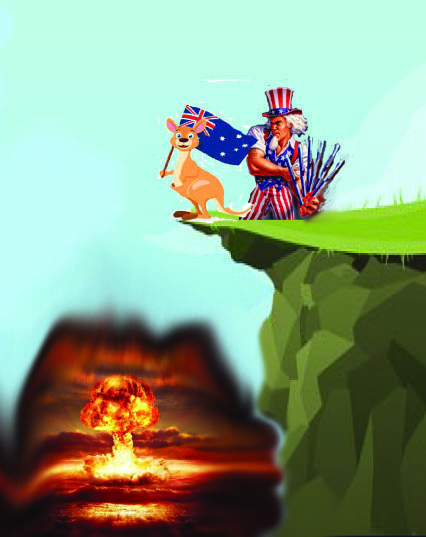
27 February 2026, By Denis Hay
Criticism of the Australia-US alliance examines whether unquestioning support for the US undermines peace, sovereignty, and regional stability.
Introduction – Asking the Question Australians Rarely Hear
For decades, Australia has treated close alignment with the United States as the unquestioned foundation of its foreign and defence policy. This article advances criticism of the Australia-US alliance in a calm, factual way, asking whether that loyalty still serves Australian interests or exposes the country to unnecessary risk. This is not an argument against the American people. It is an argument for honesty about power, history, and Australia’s place in the region.
The Problem – A History That Is Rarely Acknowledged
1. US power and coercion are not new
US pressure on other nations did not begin with Donald Trump. Across its history, the United States has used sanctions, economic coercion, regime change, and military force to advance strategic and corporate interests. Trump did not invent this behaviour; he removed the diplomatic language that once softened it. This matters because Australia often treats US actions as benign by default, even when they undermine international law or regional stability.
2. US military influence on Australia
The influence of the U.S. military-industrial system extends beyond policy advice to Australian territory itself. Through joint facilities, force posture agreements, and rotational deployments, US military assets run on Australian soil with limited transparency and little public scrutiny. Although described as cooperative, these arrangements often leave strategic control and escalation decisions primarily with Washington.
This creates a clear danger for Australia. In any conflict involving the United States, Australian bases may be considered legitimate targets, regardless of whether Australia has made an independent decision to participate. Hosting foreign forces therefore increases Australia’s exposure to war while reducing its ability to stand apart from US strategic choices.
The Impact – How Fear Shapes Policy and Public Debate
3. The China threat narrative in Australia
Public discussion of China in Australia is dominated by fear-based framing. China is routinely portrayed as an inevitable military adversary, despite being Australia’s largest trading partner and a country whose primary focus has been economic development and internal stability. This narrative leaves little room for diplomacy, cooperation, or recognition that China has not pursued global military dominance as the United States has.
4. Why politicians rarely challenge the US
Australian politicians across both major parties rarely question US behaviour because the costs of dissent are high. Defence integration, intelligence sharing, media pressure, and elite political incentives all discourage independence. Challenging the US risks being labelled reckless or weak on security, even when the concern is evidence-based and aligned with Australian interests.
The Alternative – A Clearer View of Australia’s Interests
5. Seeing China without fear or fantasy
Viewing China in a more positive and realistic light does not mean ignoring disagreements. It means recognising that China poses no credible invasion threat to Australia and that stability is better served through engagement than confrontation. A mature foreign policy distinguishes between legitimate concerns and manufactured fear.
6. An independent foreign policy grounded in peace
Australia keeps full sovereignty over its choices. Independence does not need abandoning alliances, but it does require the courage to say no when US actions increase the risk of war. Reducing automatic alignment would strengthen Australia’s credibility in the region and lower the chance of being drawn into conflicts that do not serve Australian citizens
Practical steps include:
• Prioritising diplomacy and regional institutions
• Limiting foreign military exposure on Australian soil
• Encouraging genuine parliamentary debate on alliance commitments
• Investing in peace building rather than perpetual deterrence……………….
Final Thoughts – Choosing Independence Over Reflex
Australia-US alliance criticism is not about turning away from allies. It is about recognising that blind loyalty carries real dangers. Australia is better served by calm engagement with its region, a realistic view of China, and a clear-eyed assessment of US behaviour. Peace, not fear, should guide Australian foreign policy https://theaimn.net/is-australia-us-alliance-hurting-australia/
No to uranium mining in Greenland
Since 2021, when the Inuit Ataqigiit party came into power, there has been a ban on uranium mining. Inuit Ataqatigiit is mainly an ecological party and I guess to some extent you could compare it to the German Greens, because it is also a mainstream party. Until 2013, the ban had existed for a quarter of a century, but it was lifted on the request of the Australian mining company, Energy Transition Minerals (ETM, formerly known as Greenland Minerals Ltd., GML), which threatened to abandon the big Kvanefjeld uranium and rare earths mining project, if ETM could not exploit the uranium deposit.
February 27, 2026, by IPPNW – International Physicians fot the Prevention of Nuclear War
[Ed. note: Niels Henrik Hooge works with NOAH, the Danish branch of Friends of the Earth. He is also closely associated with Greenland’s No to Uranium Association (URANI? NAAMIK) in Nuuk. Patrick Schukalla, IPPNW Germany’s policy advisor on energy and climate, spoke with Hooge in February about the role of Greenland’s uranium resources and other subsurface wealth, and the potential threats to the territory during this period of geopolitical tension.]
PS: Although Greenland is currently on everyone’s mind, little is being learned about the island itself, its people or the Arctic ecology. Instead, the focus is on the geopolitical desires of others, both imagined and real. You have been working against large-scale mining in Greenland for a long time and have achieved significant political successes in this area. Could you tell us about that?
.NHH:………………………………………………………………….. . Denmark, which for centuries was in full control of Greenland, has made no attempts to integrate Inuit culture into the rest of Kingdom. Another striking fact is that private ownership of land does not exist and land cannot be bought or sold. You can own buildings, but not the ground. The paradox here is that you now have some of the biggest and greediest industrialists in the world trying to control property that so far has been collectively owned. This is really a clash of opposite cultures.
PS: The last time we spoke was in 2021, ahead of the COP26 Climate Summit in Glasgow. We discussed uranium mining and the false claims made by the industry and some governments under the slogan ‘Nuclear for Climate’. IPPNW is PS: committed to a world without nuclear threats. This includes calling for an end to uranium mining. What role does uranium play in Greenland and in your campaigns today?
NHH: Since 2021, when the Inuit Ataqigiit party came into power, there has been a ban on uranium mining. Inuit Ataqatigiit is mainly an ecological party and I guess to some extent you could compare it to the German Greens, because it is also a mainstream party. Until 2013, the ban had existed for a quarter of a century, but it was lifted on the request of the Australian mining company, Energy Transition Minerals (ETM, formerly known as Greenland Minerals Ltd., GML), which threatened to abandon the big Kvanefjeld uranium and rare earths mining project, if ETM could not exploit the uranium deposit.
Under GML’s ownership, the controversial project has been at the forefront of the public eye for more than a decade, and the mining project and uranium mining in general have been a major factor in the formation of at least five government coalitions since 2013. When the uranium ban was lifted, Greenlandic and Danish NGOs, including NOAH, started to cooperate to have it reinstated. Particularly, I want to emphasize our collaboration with URANI? NAAMIK, Greenland’s anti-uranium network, which played a crucial role in mobilising the public against uranium mining. Although this type of mining now is banned, the anti-uranium campaign cannot stop completely. Mining companies are lobbying the Trump administration and its associates in the private sector to intervene and changes in Greenland’s political community could fundamentally affect the status of uranium mining.
…………………………………………………………………………………….. PS: If European governments are now trying to satisfy the US without Greenland being annexed, are you worried that regulations will be weakened and the protection of the Arctic environment will be compromised?
NHH: Yes, unfortunately this is a real risk and it could start a race to the bottom. On one hand, EU’s Arctic Environment and Sustainability Strategy implies that oil, coal and gas should no longer be extracted in Arctic areas. On the other hand, EU has adopted a policy under the European Critical Raw Materials Act of fast-tracking mining projects even if they do not have support from the local population and show signs of flawed permitting or inadequate environmental impact assessments………………………………………..
PS: What are your next steps, and what would you like your friends and partners in other European countries and beyond to do?
NHH: Currently, URANI? NAAMIK and NOAH are campaigning to have mining companies which have played a role in getting the Trump administration to try to annex Greenland screened and if necessary, banned for security reasons. Furthermore, there is now a majority in the Greenlandic population to rejoin the EU as a member state, and obviously it would make sense, if EU institutions and the European NGO community started to prepare for this eventuality. In NOAH’s opinion, it would imply a conception of a European Arctic policy that includes an offer to support the Greenlandic government in protecting and preserving Greenland’s natural resources.
This could become a lighthouse project for Greenland, the Danish Kingdom and the EU, putting environmental protection on the global agenda. If mineral extraction is completely or partially abolished, the Greenlanders should of course be compensated financially. The European Parliament has supported the idea of an Arctic nature protection area in the past, using the Antarctic Treaty as a model. The idea is backed by 141 environmental organizations, including some of the largest in Europe and the world. https://peaceandhealthblog.com/2026/02/27/no-to-uranium-mining-in-greenland/
AUKUS & potential terrorism threats.

I don’t think the federal or state government have seriously evaluated what would happen if there was an accident or terrorism strike on the AUKUS nuclear submarines, either in Adelaide or Perth. Or if they have, they certainly aren’t telling us, or planning to provide iodine tablets to locals living in the area.
Robyn Wood. FOE Adelaide, 27 Feb 2026
I’ve been looking at a bit of history and since 2000 there have been three credible attempts towards bombing Lucas Heights.
Three bomb threats to Lucas Heights
The first plot was uncovered by NZ police who found Afghan refugees had plans to bomb Lucas Heights during the Sydney Olympics. They weren’t jailed. I wonder where they are now.
The second was in 2003, when a French Al Qaeda supporter called Willie Brigette came to Australia to teach people how to make bombs destined for Lucas Heights. He was deported back to France. I wonder where he is now. After the plot was discovered, the NSW Health Department told councils and emergency services that residents within 3km of Lucas Heights would be evacuated, and residents within 80km of Lucas Heights (most of Sydney) should stock up on iodine tablets at their own expense. I doubt Sydney people have been told that. The fire brigade, ambulance and other emergency services threatened not to attend a nuclear emergency as they didn’t think the state government was prepared enough, and they were not happy that iodine tablets wouldn’t be supplied to Sydney.
Secret government report – I don’t know who the whistleblower was, but it’s thought that a secret “radiation consequences analysis” commissioned by the nuclear regulator ARPANSA found that a terrorist strike on Lucas Heights could contaminate most of Sydney with radiation. Not released publicly. After 9/11 the regulator’s CEO told a Senate Inquiry that they were considering the impact if a plane hit the reactor building. Nothing has been released publicly. The government claims that it has to stay secret as it might help terrorists and Sydney residents don’t need to know.
The third one was in 2005, Islamic militants in Sydney were arrested for being a terror cell and stockpiling bomb-making materials, training in outback hunting camps and planning a possible attack on Lucas Heights. Three of them were caught near Lucas Heights and when they were separated, each man told police a different story. Bomb making chemicals and equipment was found in their houses. I can’t find what happened to them, and wonder where they are now.
Years ago, Islamic State called for jihadist supporters to attack in western countries.
I wonder if Mark Butler and other MPs are aware of this history? I wasn’t.
References. The Guardian –https://www.theguardian.com/world/2005/nov/15/australia.bernardoriordan
Nuclear FOE – https://nuclear.foe.org.au/articles-about-lucas-heights-accidents-emergency-planning-insurance-etc/
Jewish groups call on Tony Burke to cancel Israeli journalist visa
by Stephanie Tran | Feb 24, 2026, https://michaelwest.com.au/jewish-groups-call-on-tony-burke-to-cancel-israeli-journalist-visa/
Jewish orgs request Tony Burke reject Australian visa for Israeli journalist as his funders’ links to IDF emerge. Stephanie Tran reports.
A coalition of Australian Jewish organisations has written to the Home Affairs Minister Tony Burke, urging him to cancel the visa of Israeli journalist Zvi Yehezkeli on character grounds, citing comments in which he called for mass killings in Gaza and advocated violence against journalists.
The letter was initiated by Anti-Zionism Australia and signed by several Jewish groups including, Jewish Voices of Inner Sydney, Jews Against the Occupation ‘48, Jews for Palestine Western Australia, Jewish Advocates for Understanding Antisemitism, Jews for a Free Palestine, Jews for Human Rights and the Coalition of Women for Justice and Peace.
The groups have requested that Yehezkeli’s visa application be rejected under the Migration Act 1958, specifically invoking section 116(1)(e)(i), which allows for cancellation where a person’s presence may pose a risk to the health, safety or good order of the Australian community, and section 501, the character test.
“The undersigned request that you reject Zvi Yehezkeli’s visa application … on the basis that his presence in Australia shall pose a risk to the health, safety or good order of the Australian community and that his past and present general conduct indicates a foreseeable risk of vilifying a segment of the community and inciting discord,” the letter states.
Burke mulls visa
Tony Burke has indicated the government is considering whether to deny Yehezkeli’s visa application.
Speaking to the Sydney Morning Herald, he said: “It always surprises me when someone, who has made the sorts of comments that this individual has, advertises a speaking tour before they’ve even received a visa.”
Yehezkeli, an Israeli journalist and resident of a settlement in the occupied West Bank, is due to visit Australia in March and is slated to appear as a keynote speaker at fundraising events in Sydney and Melbourne.
Tax-deductible fundraiser under scrutiny
The Sydney and Melbourne events are raising funds for Israeli organisation The Institute for Social Momentum. Donations are being collected in Australia through the Chai Charitable Foundation, which is promoting the fundraiser as tax deductible.
A link to donate via the Chai Charitable Foundation appears on the registration pages for both events.
According to its 2024 financial report, the Chai Charitable Foundation reported more than $19m in revenue. Of that, $15.39m was distributed in grants and donations for use outside Australia, compared with $1.62m directed domestically.
The foundation facilitates tax-deductible donations from Australians to organisations in Israel and has previously come under scrutiny over its fundraising activities.
T
An investigation by MWM, found that the charity hosted multiple online fundraisers linked to Israeli military units and West Bank settlements.
The Chai Charitable Foundation initially denied that it was raising funds for such causes. However, those pages were removed after MWM put questions to Chai.
Incitement to commit genocide
n a submission to the International Criminal Court (ICC), French-Israeli human rights lawyer Dr. Omer Shatz concluded that “there is reasonable grounds to believe that Yehezkeli’s statements amount to direct and public incitement to commit genocide.”
In December 2023, Yehezkeli stated that the Israel Defense Forces should have killed more than 100,000 Palestinians in Gaza.
In a 2024 interview, he said that in order to destroy Hamas, Israel needed to take measures that would “bring Gaza to the point of a humanitarian disaster”.
Last year, Yehezkeli advocated for the killing of journalists in Gaza, stating that “if Israel already decides to eliminate journalists then better late than never” and lamented the “damage” caused to Israel by journalists reporting on the atrocities in Gaza.
“This is an understanding in Israel of how much damage those who transmitted the pictures of hunger and all of Hamas’s one side did […] how much psychological damage those journalists in quotation marks, terrorist journalists, or you can call them Nukhba journalists, how much damage they did to Israel,” Yehezkeli said.
1 This month
15 April – Zoom –Nuclear Power is Not the Solution
Apr 15, 2026 01:00 AM in Canberra, Melbourne, Sydney

Join the International Physicians for the Prevention of Nuclear War (IPPNW) on Tuesday, April 14th for a timely webinar exploring the risks associated with nuclear power and challenging the myth that it offers a simple, safe, carbon-free solution to the climate crisis

21 April Webinar: No Nuclear Weapons in Australia
Start: 2026-04-21 18:00:00 UTC Canberra, Melbourne, Sydney (GMT+10:00)
End: 2026-04-21 19:30:00 UTC Canberra, Melbourne, Sydney (GMT+10:00)
Event Type: Virtual
A virtual link will be communicated before the event.
Host Contact Info: australia@icanw.org

of the week – Australians for War Powers Reform (AWPR)
To see nuclear-related stories in greater depth and intensity
 Antinuclear